JF Ptak Science Books LLC Post 799
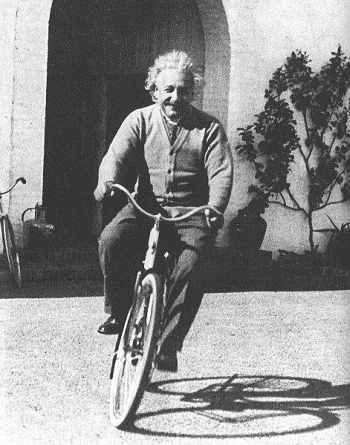 How much was Einstein affected by the many pieces of what was the greatest
revolutionary period in history? The
period from, say the pre-Impressionists (1860 or so) to the period just after
Cubism (again, say 1920), saw epochal changes across the sciences, medicine,
the arts, literature….virtually everything. I cannot think of any period in
intellectual history that approaches this 60-year period. Actually, the gargantuan
changes can be shaved down to the period of Einstein’s living memory beginning with the stunning discovery of Roentgen’s
x-rays in 1895 to the invention of non-representational painting in 19111. Breathtaking, really.
In all of this, I wonder how Einstein saw the vast changes that were not in
the fields of physics or mathematics?
Poincare, Boltzmann, Planck were analyzed and understood and appreciated
and etc. But what about Strindberg, and
Schoenberg, and Seurat, and Leger, and Joyce, and Malevich, and Duchamp, and
Kandinsky, and Klee? Einstein certainly
loved music and had a deep understanding of it, but it was with Mozart and Bach
that he found beauty. The music of the
sphere, the primum mobile, the hand
of the creator, were found in these two men. Beethoven was too melodramatic; Wagner (in
1939) was disgusting. Others were just
too simple, too light.
I don’t know what he felt about Schoenberg, or Joyce, or Klee. Perhaps they were too messy, too
unstructured, too removed from the fundamentals of nature that he felt Mozart
found and displayed. I just don’t know. As the architect of one of the most fundamental changes in the history of science, I wonder if (and why) he stood so seemingly unaffected by so many of these other enormous changes.
Notes:
1. There are a number of books that address these revolutionary changes, but only one, I think, that looks at the great broad swath of revolutionary activity across many fields: William Everdell’s The First Moderns (U Chic). A lovely book.