JF Ptak Science Books LLC Post 839 Blog Bookstore
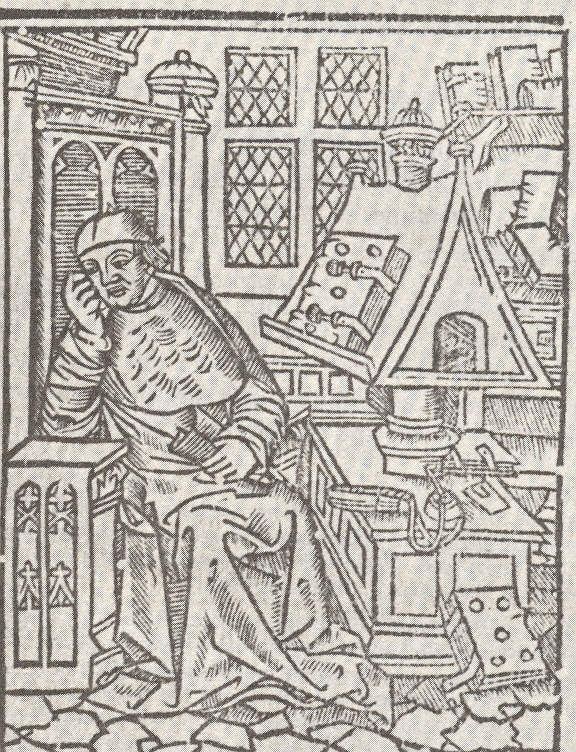 What struck me about this print–instantly–was the emotion of our languid reader: ennui. Ennui is a very uncommon emotion in early prints, at least for my experience. As a matter of fact only .75% of all published prints exhibited “ennui” as its “reigning and ruling emotion”. Of course that’s an imaginary statisitc–after all, made-up and imaginary statistics (yes, there is a difference) are much more reliable to their subjects than are real statistics, which can offer problems in envisioning a particular reality. But ennui really is uncommon, and this man is wrapped in nothing but.
Perhaps we don’t see ennui, or boredom, earlier on in art (and
in literature for that matter) because the free time for feeling these emotions
hadn’t yet been invented. So to speak. Boredom is a luxury affordable by the few. Certainly this reader, seated near his Jacobian
bookcase with several large books in a comfortable setting, could certainly afford
the idea of free time and thus the added fabulousness of boredom. And so it is that we see him enjoying his shroud,
here.
The woodcut comes from a famous and early work on family medicine,
hygiene really, Healthe, for all manner of
syckenesses and diseases…by Andrew Borde, and printed in 1557.