JF Ptak Science Books LLC Post 919
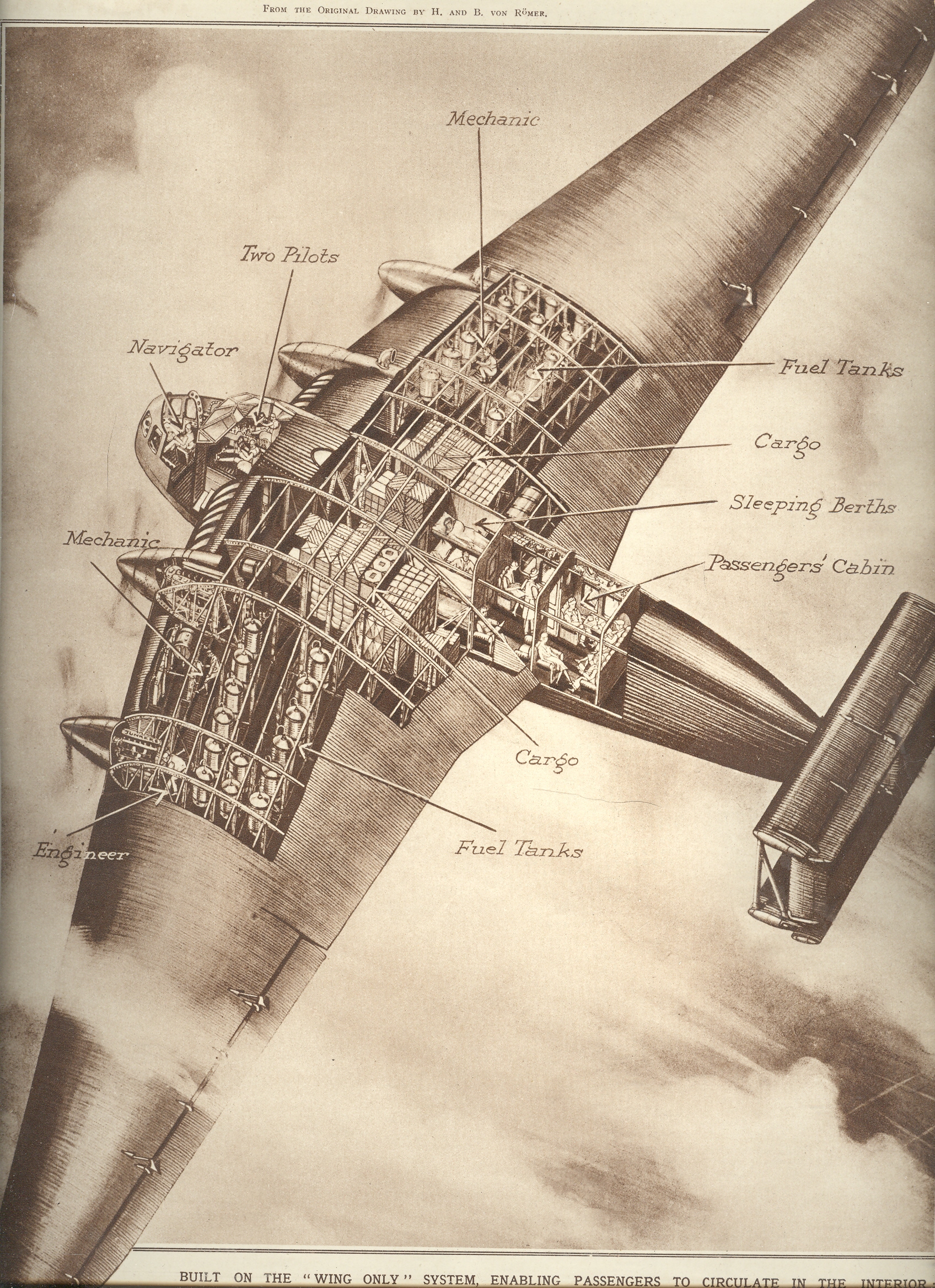
 What can I say? I just like the flying wing. Also I should point out that the Illustrated London News is an excellent resource for schematic cut-aways like this–I think that I have 125 or so of them here for the 1910-1945 period.
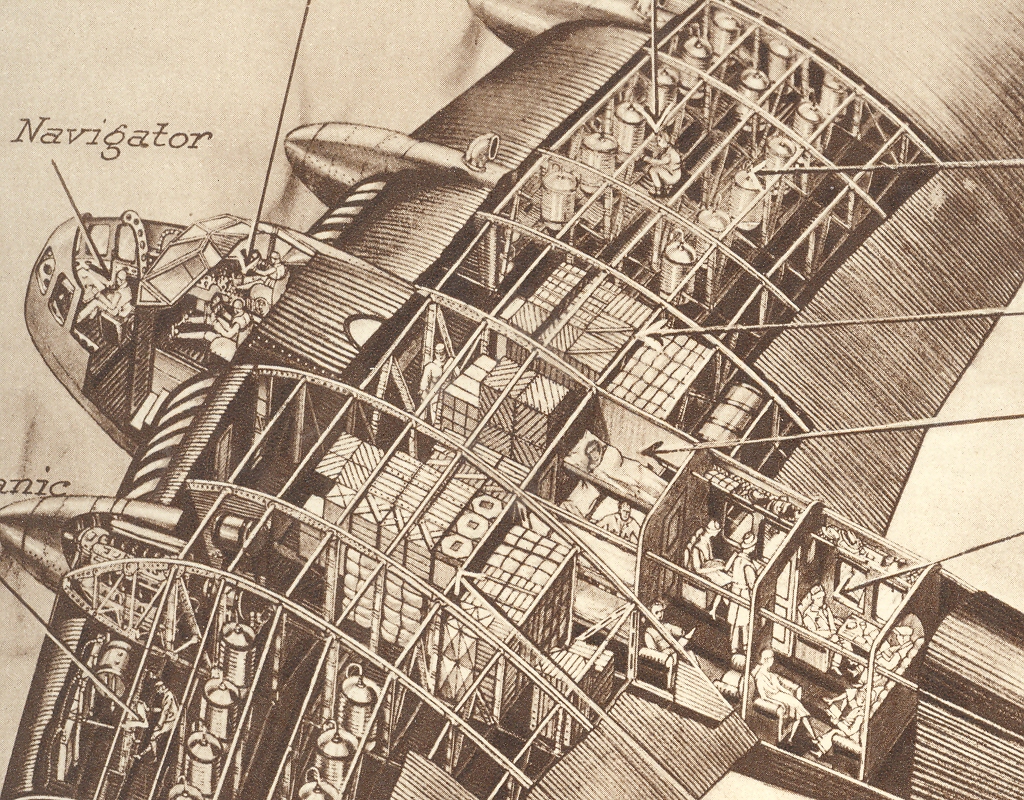
Junkers built this fabulous flying (“inhabited”) “wing only”
aircraft, sending it up for commercial service in 1929 as the largest airplane
in the world. Only two were built (though a Japanese military knock-off ran to a production quantity of six), and I imagine that it was quite expensive making the Berlin-London flight, cruising in around at 109 mph.

Notes
1. Plane specifications:
Crew: Seven (including a full-time engineer who could
service the plane’s four engines from inside the plane).
Capacity: between 30 and 34 passengers, depending upon
variation of the aircraft.
Length: 75 ft
Wingspan:
144 ft
Height: 23 ft
Wing area: 3,122 sq ft
Empty weight: 32,893 lbs
Loaded weight: 52,900 lb
Max takeoff weight: 46,826 lb
Maximum speed: 140 mph
Cruising speed: 109 mp
Range: 2,150 miles
Service ceiling: 12,100 ft