JF Ptak Science Books LLC Post 934
I’ve
written several times in this blog about unusual perspectives in antiquarian
images—namely, views looking straight up and straight down. They really don’t exist, much, in the
post-Daedalus pre-flight days, what with given the difficulty of fabricating non-cartographic
images from the ground.
Next
on what might seem to be a very obvious list of non-obvious interests are images
with layers, levels, sections, plans, projections…sideways columnar views, locating objects
in space and time. But mostly looking at things straight-on, ad then showing
their relational layers. As it turns
out, these sorts of creations aren’t very much seen in the pre-modern
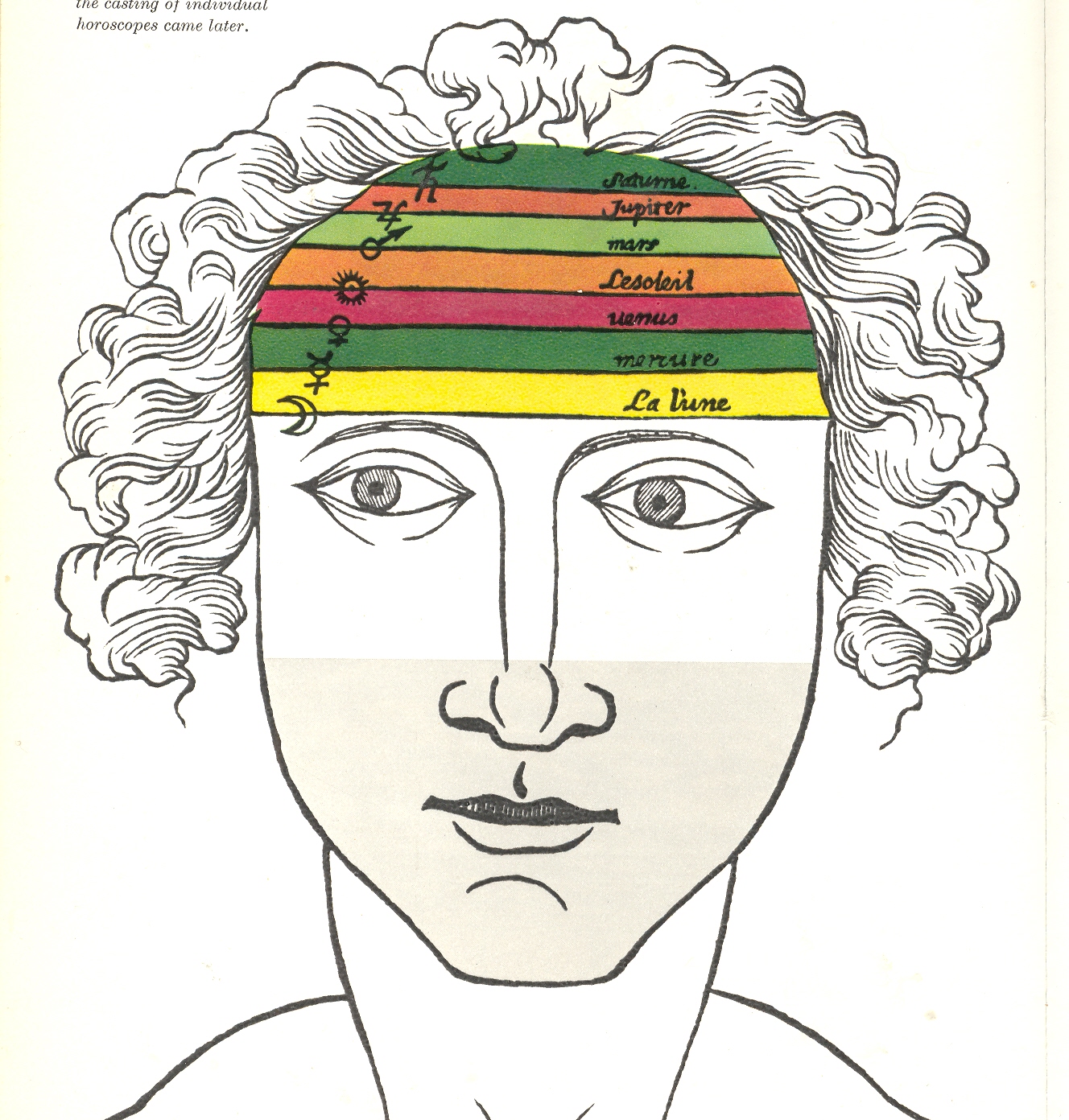
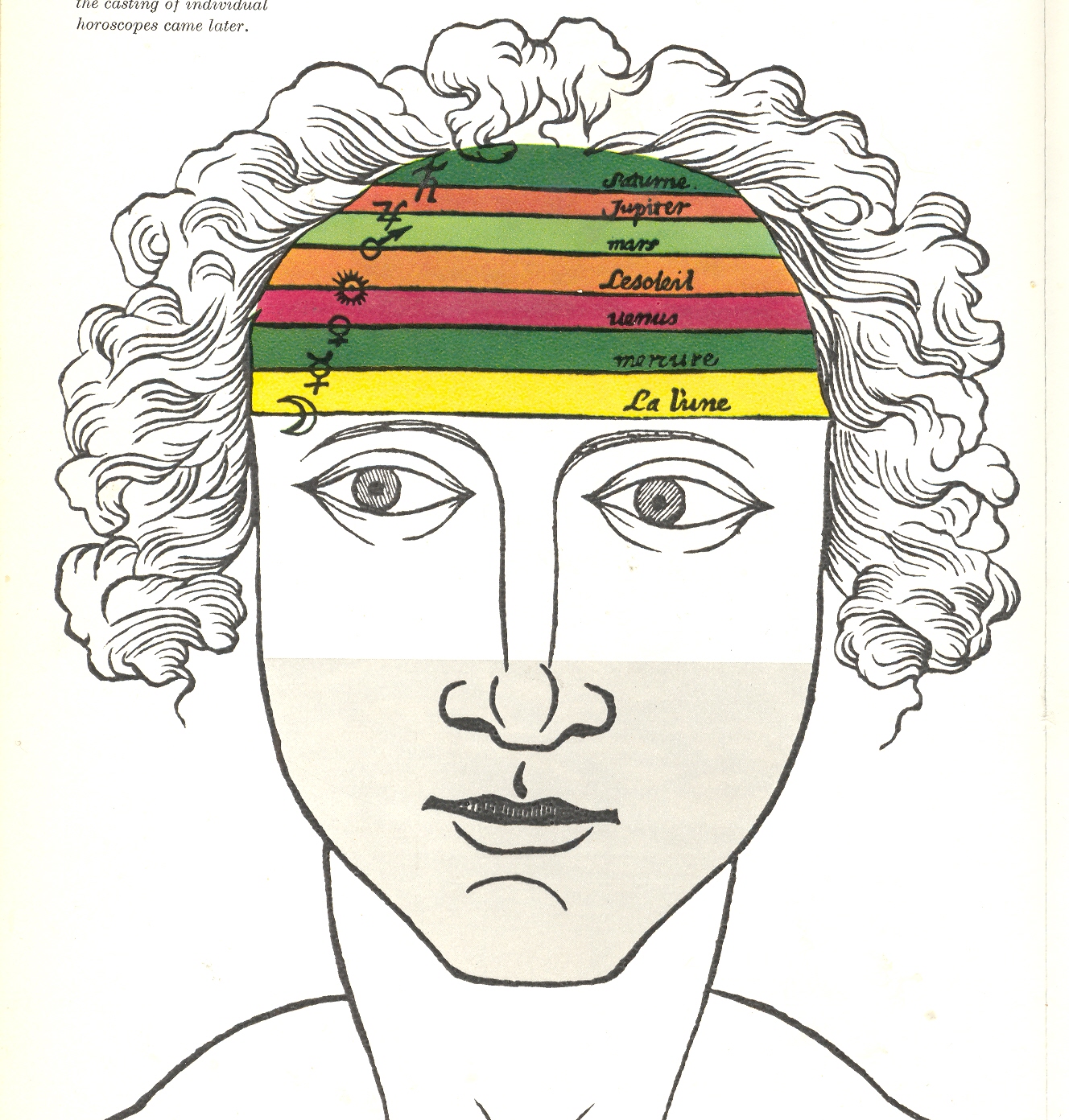
geological era (say, prior to the 1790’s).This is a good example, an astrological man, showing the influence of the planets (and sun and moon) on the different layers of the brain:
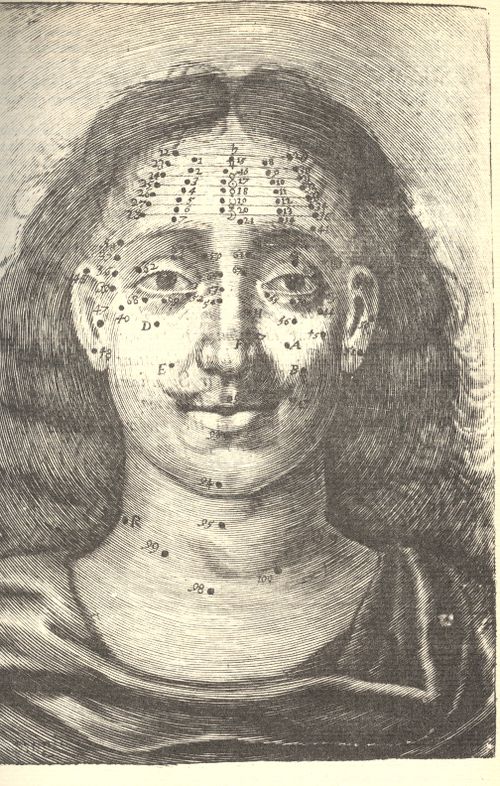
Differentiated, say, from Richard Saunders’ Mole-map man, (right) where facial (and etc.) moles were used as maps to determine some sort of specific actions on the organs underneath (and also by a tea-leaf divination, where the mole lines were connected and disconnected, and interpreted, according to the needs/whims of the observer):
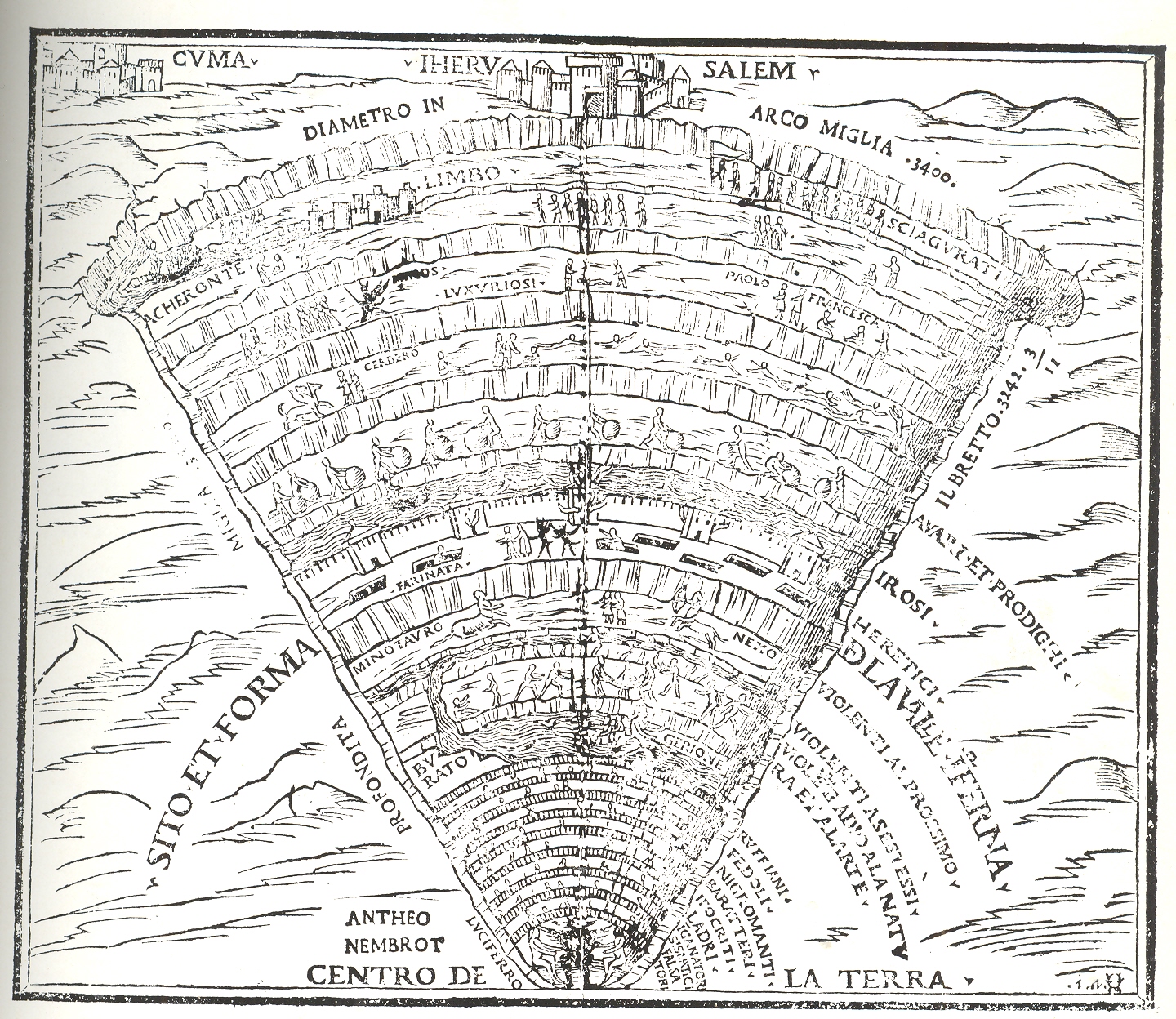
The classic sort of image may be something like this fantastic depiction of the Inferno of Dante (shown here in the Comedia published in Venice by Gregorio de Gregoriis in 1515:
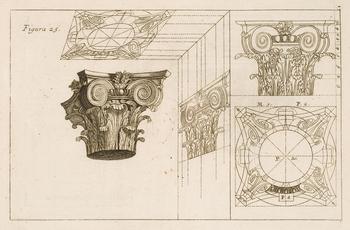
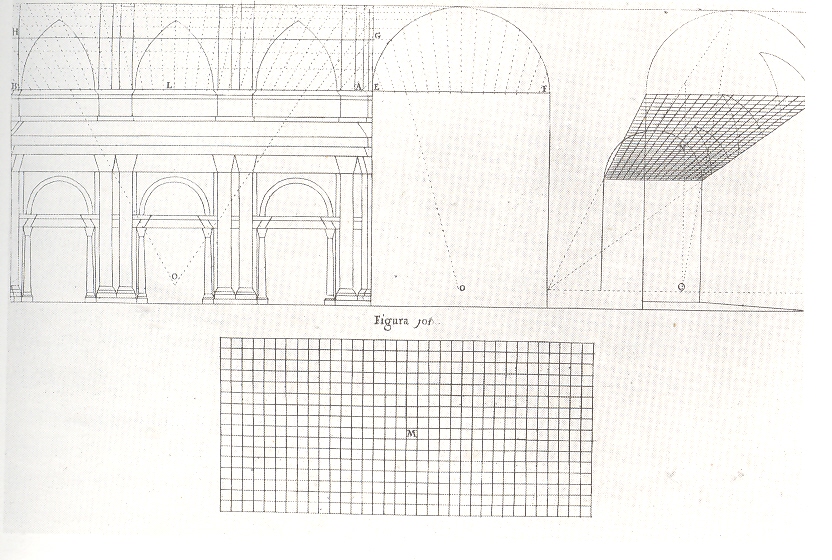
The fantastic Jesuit Andrea Pozzo published results of his researches on perspective in his Perspectiva pictorum et architectoru (1693), explaining how he was able to compellingly, unbelievably represent three-dimensional images on two-dimensional spaces, this image showing plan and projection and profile, effectively giving you a three-dimensional cross section of the architectural element:
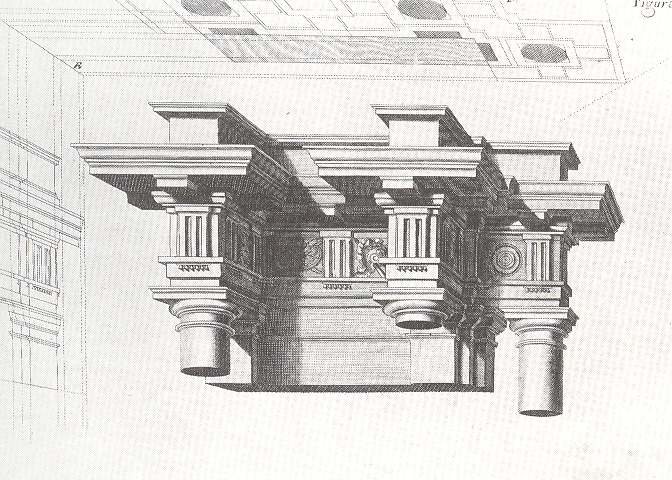
And again:
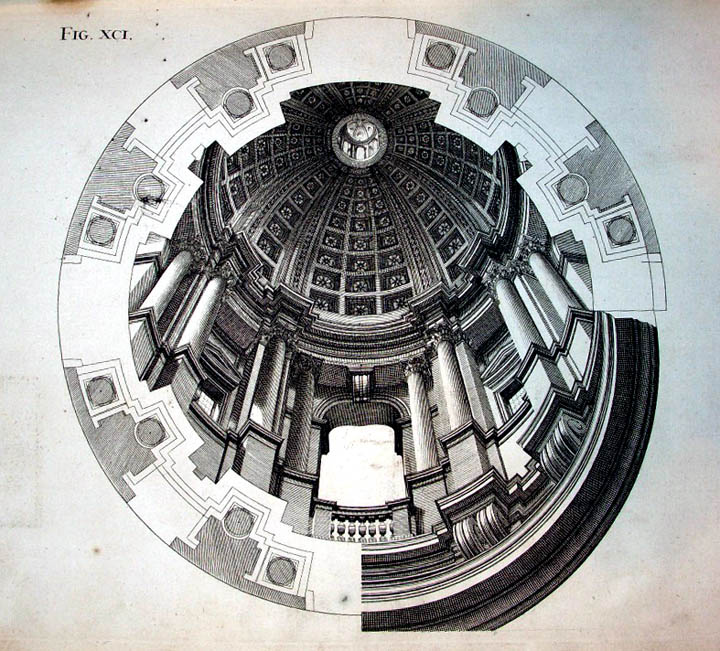
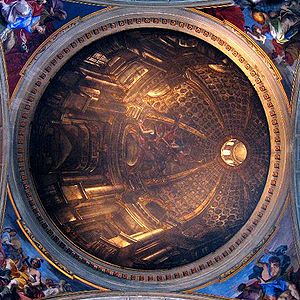
And of course his masterpiece displayed, which is an engraving showing the plan of a flat ceiling of St. Ingacio in which he painted his magnificent trompe l’oeil masterpiece:
Also in a way appropriate to this ramble is the explanation diagram by Pozzo’s found in Martin Kemp’s The Science of Art, Optical; Themes in Western Art from Brunelleschi to Seurat, showing the imaginary depth of a deeply illusory painting on a (basically) flat ceiling surface:
Also in consideration for this area is Sir Sandford –the inventor of Standard Time–Fleming’s wonderful idea for a G-o’clock world, a same-time-everywhere planet, with his 1879 diagram illustrating the earth-penetrating time principles so:
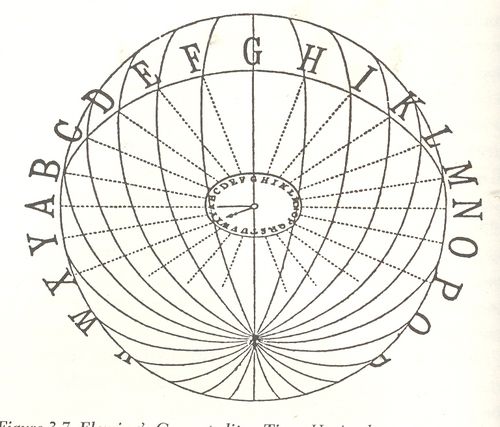 (Image source: “Time-reckoning and the selection of a prime
meridian to be common to all nations” in the Proceedings of the Canadian Institute,
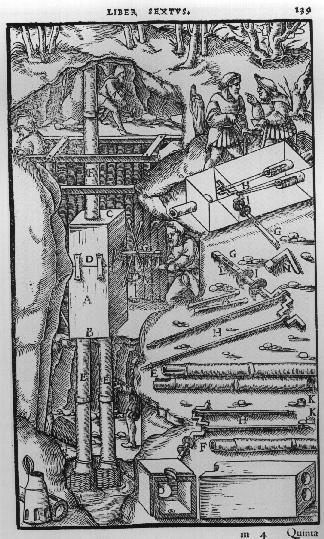
Agricola’s De Re Metallica (from the first Latin edition f 1556) displays many interesting cross sections of Renaissance mines:
There’s much more to come in this area, of course–this is just what I had time to deal with this afternoon, though the this task is much more complicated in the 18th century world than in the 19th, when we find cross sections of the earth and the oceans. But I’ll close here, with all faults.