JF Ptak Science Books LLC Post 936
“Ring
around the rosies, a pocket full of posies,
Ashes,
ashes, well all fall down.”
This
old nursery rhyme has more to do with plague than a skipping-and-falling song, more
like the Tom Wait’s version of the “Dwarf’s Marching Song” (“Heigh Ho”, see
below) than anything t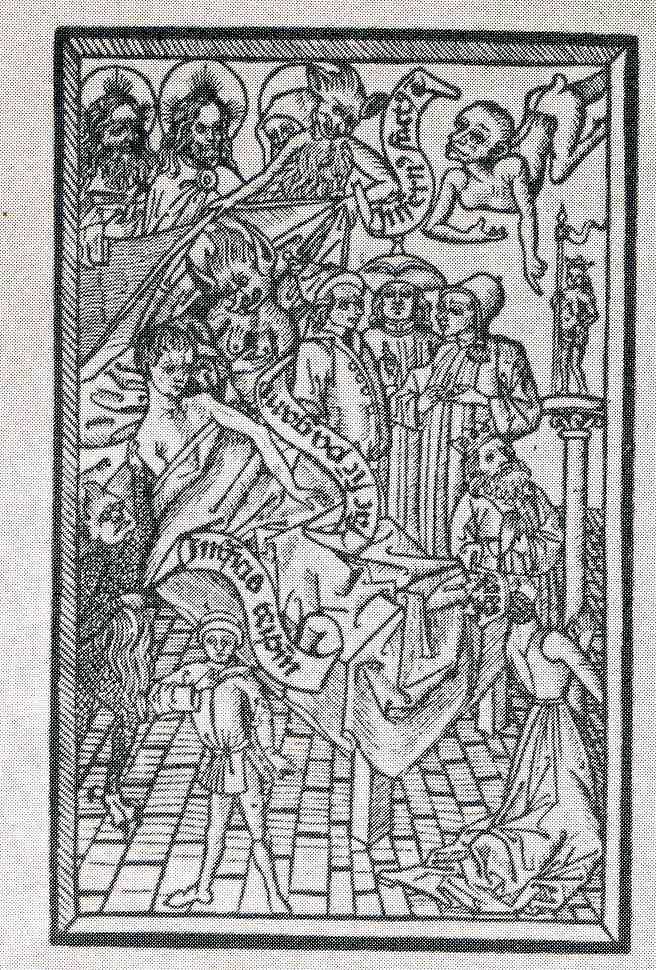 hat could ever be dreampt of in a Disney film. It was the
mater-of-fact way of dealing with the vast death brought on by the various
Plagues: saying a round of rosaries to
try and invoke divine intervention to keep the disease away from the prayer-mender;
posies as a fragrant flower to mask the stench of those actually afflicted with
the disease; and then of course the ashes from the piles of burnt corpses of
Plague victims, fallen down to death.
These
two images show different aspects of segregating—if not hiding—disease. The first is a propagandistic portrayal of a
man dying of the Plague. This snippet of
plaguaganda was an ars morendi
published in the 1460’s, and depicts a not-gruesome portrayal of what was
generally a very gruesome death. The
inflicted lies there in bed, with sheets
and a pillow, looking faint and removed in the retiring Victorian fashion
(removed 400 years), surrounded by images of his faith/belief.
I
suspect that anyone who knew anything about the Plague knew that this scene
wouldn’t be truthful, necessarily, but I guess if it could even momentarily confuse
the viewer into thinking that the visitation of Death could be so composed in
the face of this horrendous disease, I guess that’s the hope you hang
onto. There is a minor battle between
the possible claimants of the soul of The Sick, but that would be going on
anyway whether the coming death was relatively peaceful, or not. There wasn’t
much to be done—as the feeble attempts of preventing the disease would
indicate, what with choices like urine baths, bleeding, leeching, bell ringing,
pus-sucking, rotten animal corpse talismans, incense burning being some of the
preventative choices—so like a belief in Heaven or Nirvana or whatever, the hopeful
consolation of a possibly decent dying could keep people from running
amok.
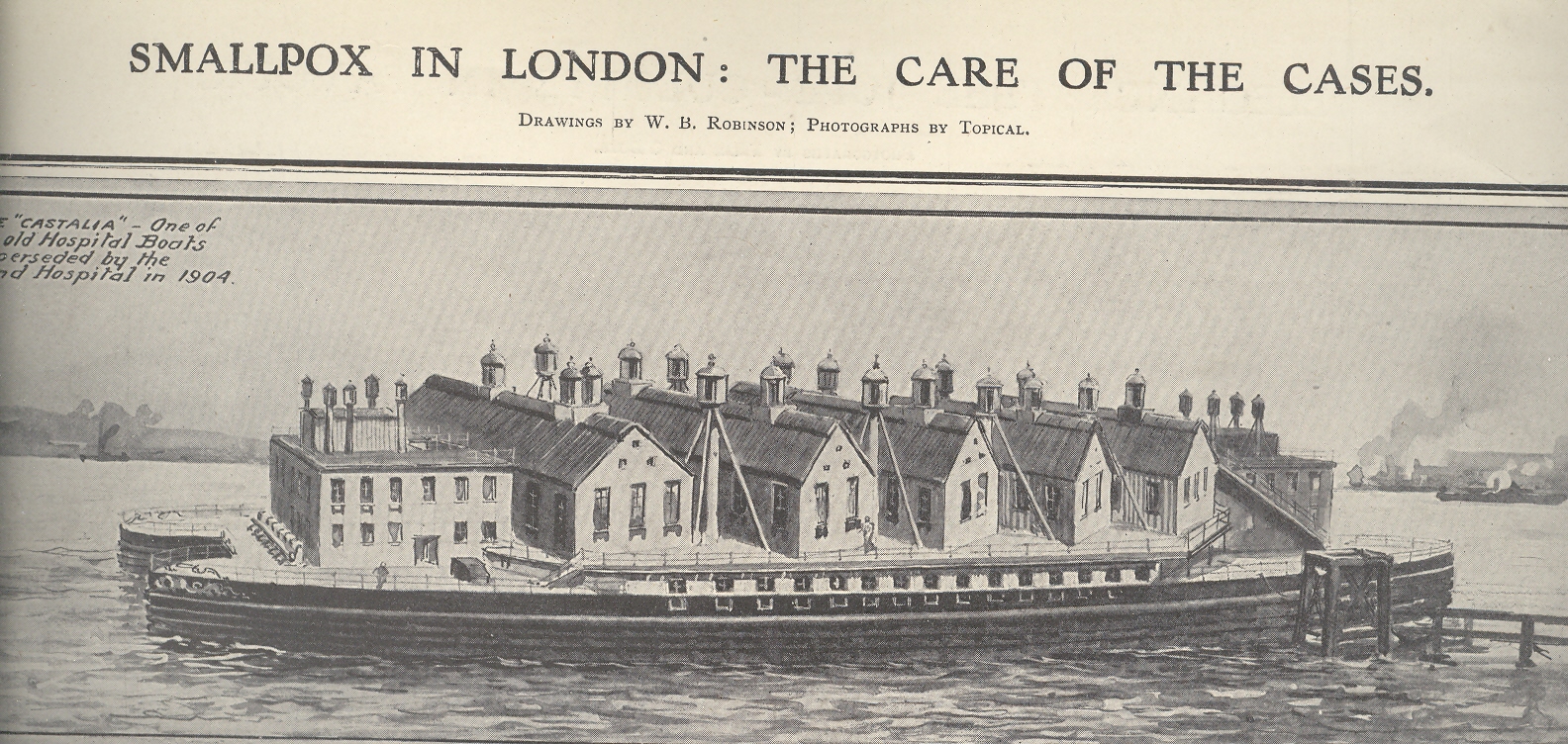
The
second shows the hospital hulk Castalia, “one of the old Hospital Boats superseded
by land hospitals in 1904”, which was more a floating street than a hospital. It was a complex of five buildings nested on the
hulk of the double-hulled paddle steamer Castalia—appropriately named, as it refers
to the Delphian fountain that Apollo fabricated
from the nymph “Castalia” and alludes to the possibility of rejuvenation and
cleanliness, or health, perhaps). The
hospital held hundreds of smallpox patients, sent there by the Metropolitan
Asylum Board in an effort to stem the flow of the disease and infection rates
from the rest of the population of
was still a vast killer in mid-/late-Victorian
available at the time this was a good social inoculation by distance and
segregation. (It is interesting to note
that out-of-service de-masted, defrocked and striped ships of the line were
used to house prisoners (though generally prisoners of war); in particular,
those kept in the East River housing American soldiers inflicted vast death
tolls via maltreatment and urgently hideous living conditions.) This really doesn’t fit with the
propagandist/suppressing model of the above, and its removal did prevent the
contagion from spreading, but, well, it does look like the Asylum Board was trying to hide the sick.
Notes: