JF Ptak Science Books LLC Post 964
In
the history of life there is a virtual geology of buried ideas of how living
things came to be. The belief in
spontaneous generation is ancient and evidently still holds a comforting sway
(in a scrubbed-up way) among some moderns. There was a lot written on the
subject over the centuries: for example, Virgil (Georgics) gives us directions
on how to make bees, and the great mathematician Cardan/Cardano passed along
instructions on how fishes are made of water, no doubt drawing on the more
ancient moisture-related beliefs of Anaximander (600BCE). Aristotle was more circumspect on the issue
of
spontaneous generation, though he did cast a fairly wide and more cautious
net: “sometimes animals are formed in putrefying soil, sometimes in
plants, and sometimes in the fluids of other animals.” Even the beautiful,
polymathic and occasionally very wrong (but way ahead of his critics) Jesuit Athanasius
Kircher stated (in his masterwork Mundus
Subterraneus, 1646) that he had seen mice generated out of nothing but
plants and water. So it goes.
The
more modern variations on this theme attract a varied collection of some very
big names. Though the spontaneity now takes place in the extraterrestrial realm,
with comets and meteors and such impacting with the earth with life debris from
god knows where (literally), seeding life on earth—though the theories usually
beg the question of where the stuff on the meteors and etc. came from. These names include Svante Arrenhius, Lord
Kelvin, the beautiful Hermann von Helmholtz, Fred Hoyle, and many others.
Generally
the more-modern view is attributed with the name of cosmic panspermia (it seems
to my memory that the first of the most modern life-generating panspermia
theories is published in the Comptes
rendus in the id 1850’s but I cannot right now remember who it was that
wrote it). And it is this cosmic seed
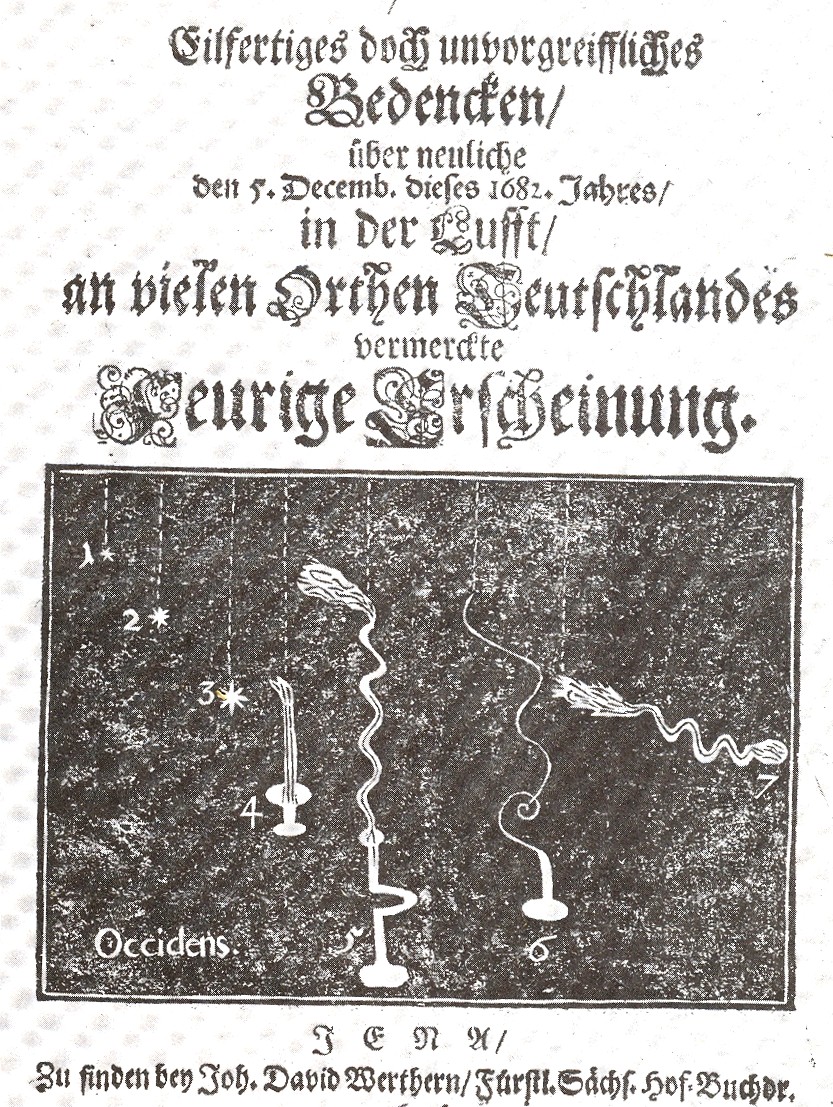
bit that struck me when I first saw this title page (above) of a very rare work by
Caspar Posner (1626-1700)—Eilfertiges doch
unvorggreiffiches Bedencken… published in 1682. It seems that Posner recorded these verities
of “shooting stars” in
on the night of 5 December 1682, quickly writing this four-page work describing
them.
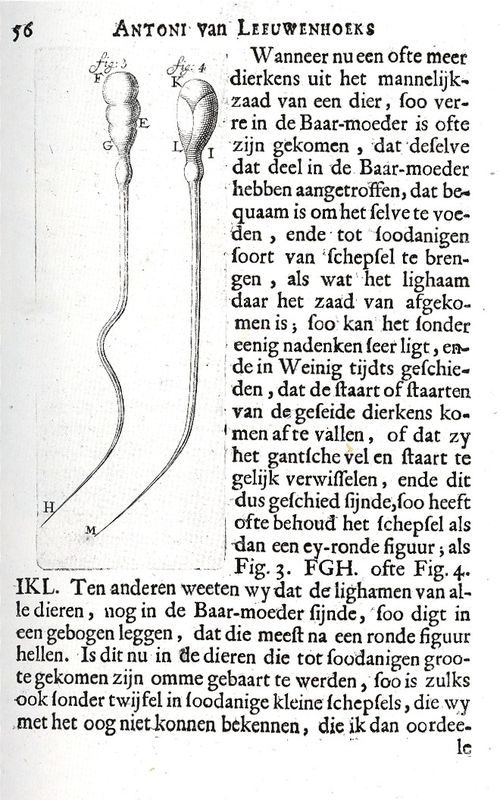
The
images reminded me instantly of the first spermatozoa images published by Anton
von Leeuwenhoek (1632-1723)—and actually they were the first images of live and
dead (left and right, respectively) dog spermatozoa. He did absolutely superb work, a great
pioneer working with a hand-held single-lens (barely recognizable as a) 200x
microscope.
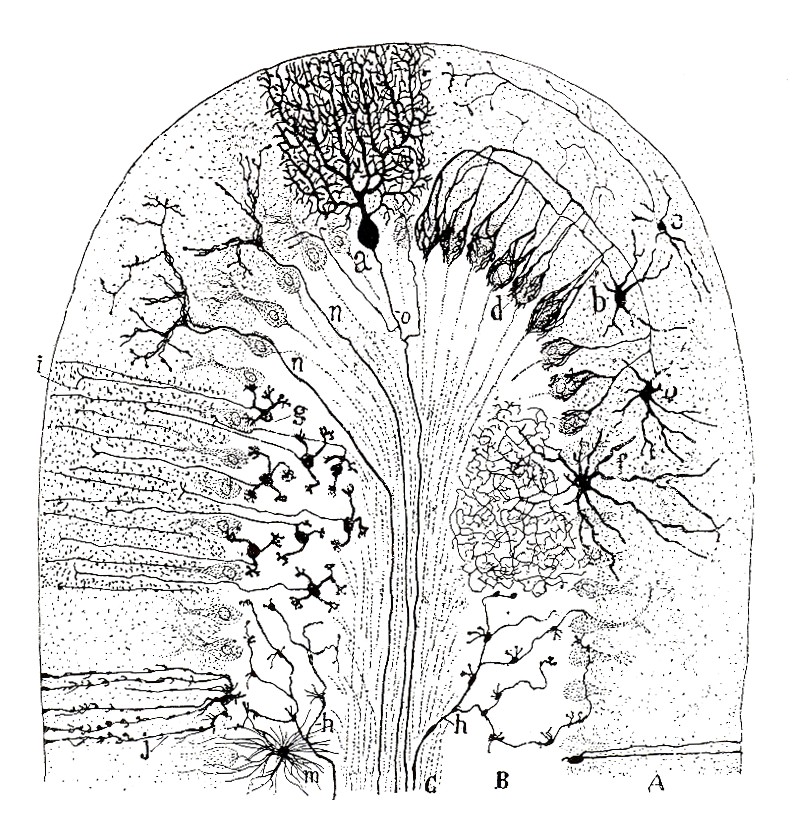
And
there too there’s the detail in this image by the great Santiago Ramon y Cajal
( 1852-1934), who drew the first accurate picture of nerve cells in the
cerebellum (found in one convolution of a mammalian cerebellum), which helped
formulate his theory that the basic structural unit of the nervous system as
the neuron.
Perhaps
it is a simple artistic fittingness to connect the 1682 meteorite shower with
cosmic panspermia and Leeuwenhoek and Cajal; in a squinty-eyed way they look
pretty good together. On the other hand
of course these are just random bumped-together thoughts having nothing to do
with one another. I vote for artistic
nothingness.