JF Ptak Science Books Post 1047
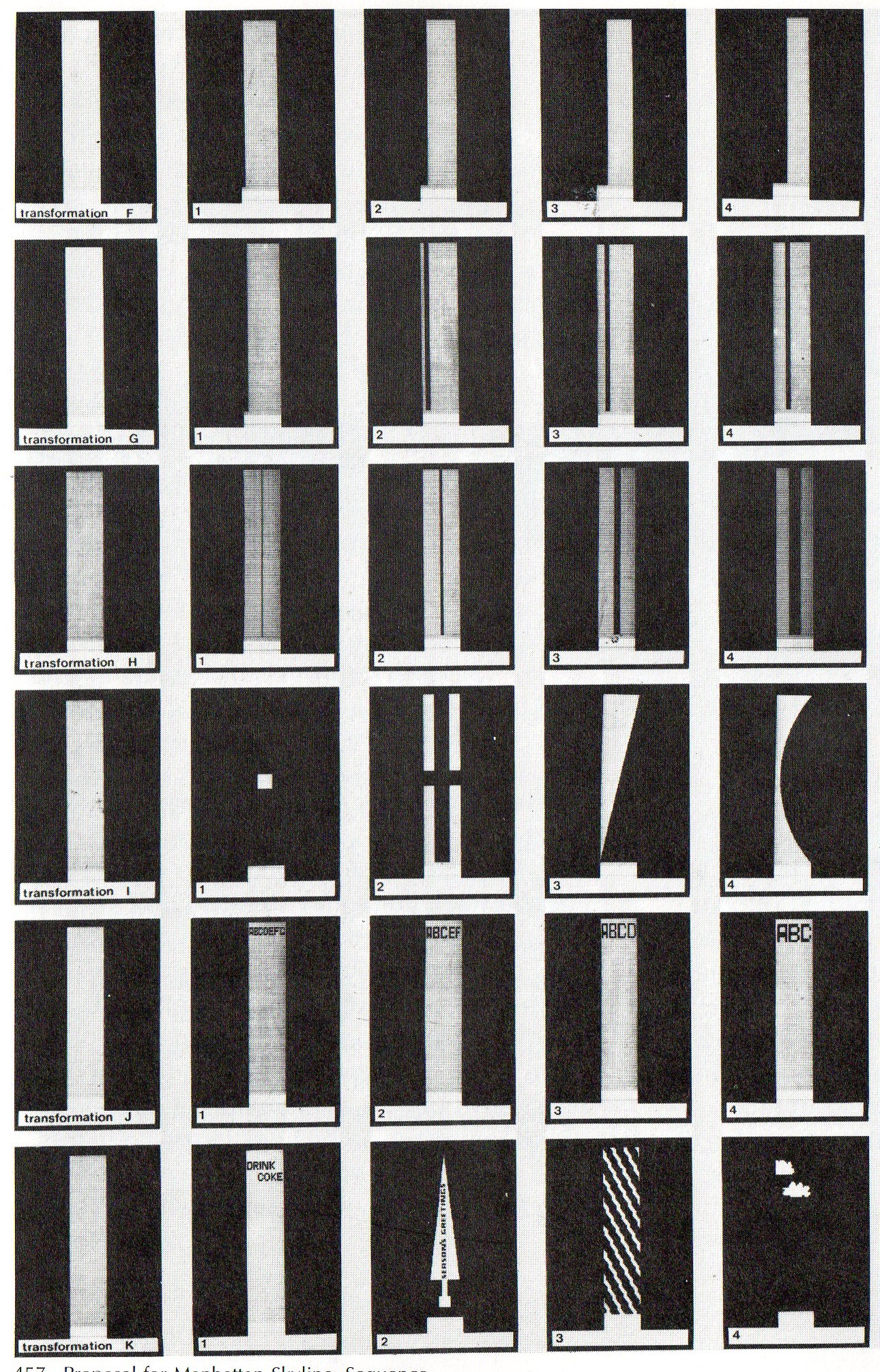
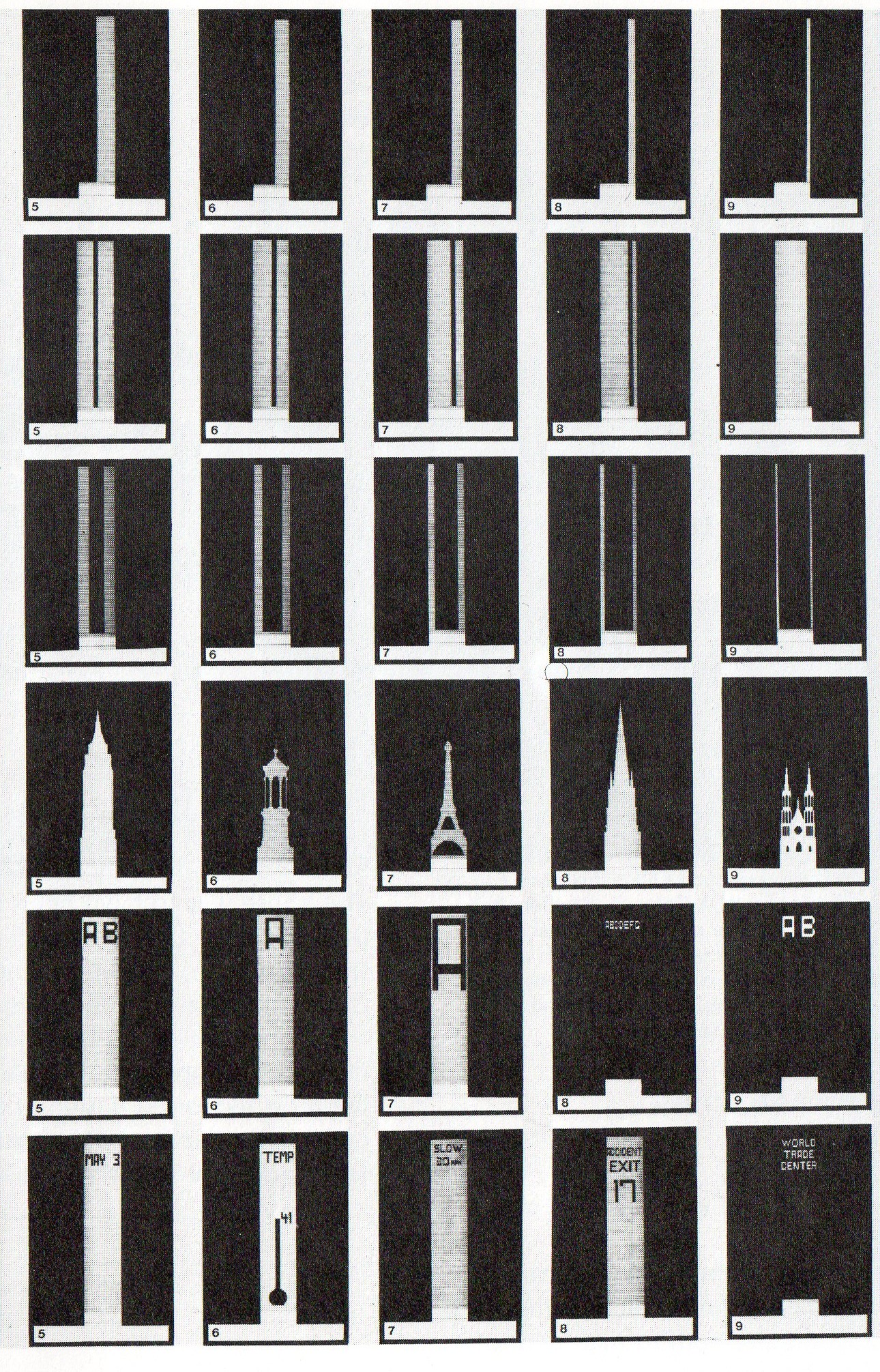
Allan Wexler (b. 1949), a conceptual artist, came up with a splendid idea for using the newly-completed WTC as a canvas for optical art. The buildings–which were far from being universally admired in its early life–would be used to illustrate the outlines of other famous nearby structures, the lighting being coordinated with the offices to leave slights on or off (whatever was appropriate) to construct the massive 100-story -tall displays.
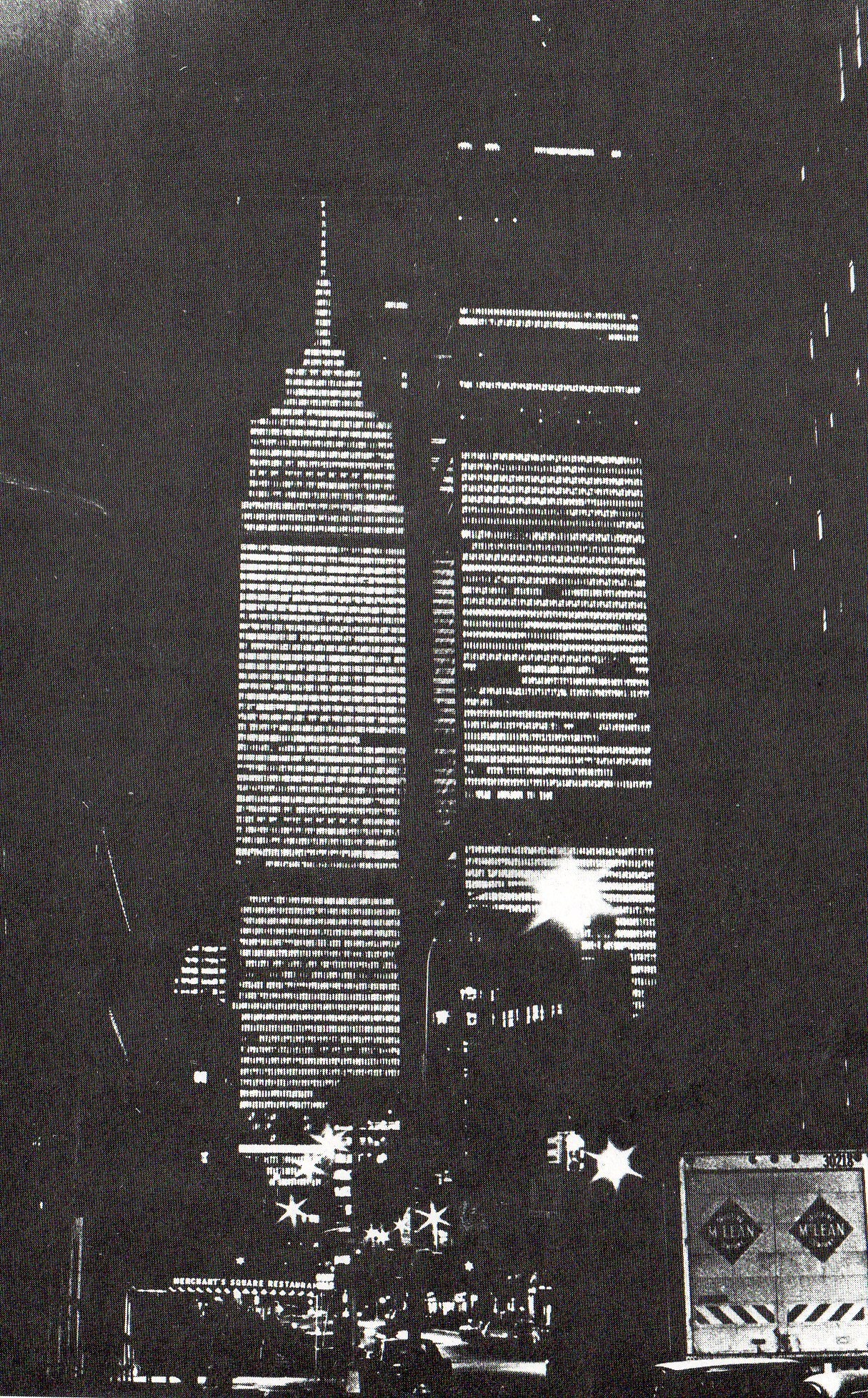
[Source: Unbuilt America, McGraw Hill. 1976, edited by Alison Sky and Michele Stone.]
Tall structures have certainly been used as billboards in the past–the Eiffel Tower, for example long displayed electrically-lighted ads for Citroen)–but using the interior sources of illumination in a building as part of an exterior artistic display is very uncommon. (Architect Richard Haas has created faux surfaces using images of buildings, and perhaps none more famous than his idea to paint the full-scale shadows of the Chrysler Building and the Empire State Building right there on the facade of the WTC towers.) It was a lovely idea, really, but the whole of it was struck down during the great gas crunch and economic crisis of that year. It would’ve been a great cooperative effort to produce monumental works of art but conspiring elements of uncontrollable economic problems and controllable painterly ones kept the project from happening.