JF Ptak Science Books Post 1143
“You can have it all, my Empire of Dirt”–Mr. Cash “We are but dust and shadow”–Mr. Horace
Can there be anything more comforting than for a believer to see the
skeletons of Adam and Eve, the proof of the origins of all anxiety?
Probably not. But their skeletons displayed in this engraving by
WiIllem Swanenburgh (after
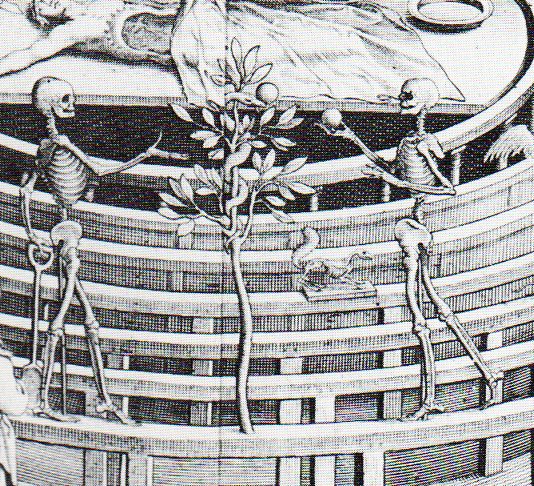
the painting by J.C. Woudanus) published in 1616 were recognized as pure iconographic ornament. They decorated the last layer of the dissecting laboratory/pit, an immortal reminder of mortality–perhaps aggressively so, since people were there to watch other people take apart humans and animals and such, which would seem to be a nice reminder of the Big Sleep that awaits all. But no matter, they wer there, Eve with apple, Adam with spade (?), the tree with the forbidden fruit flourishing still around all of the bones, the snake surviving as well.
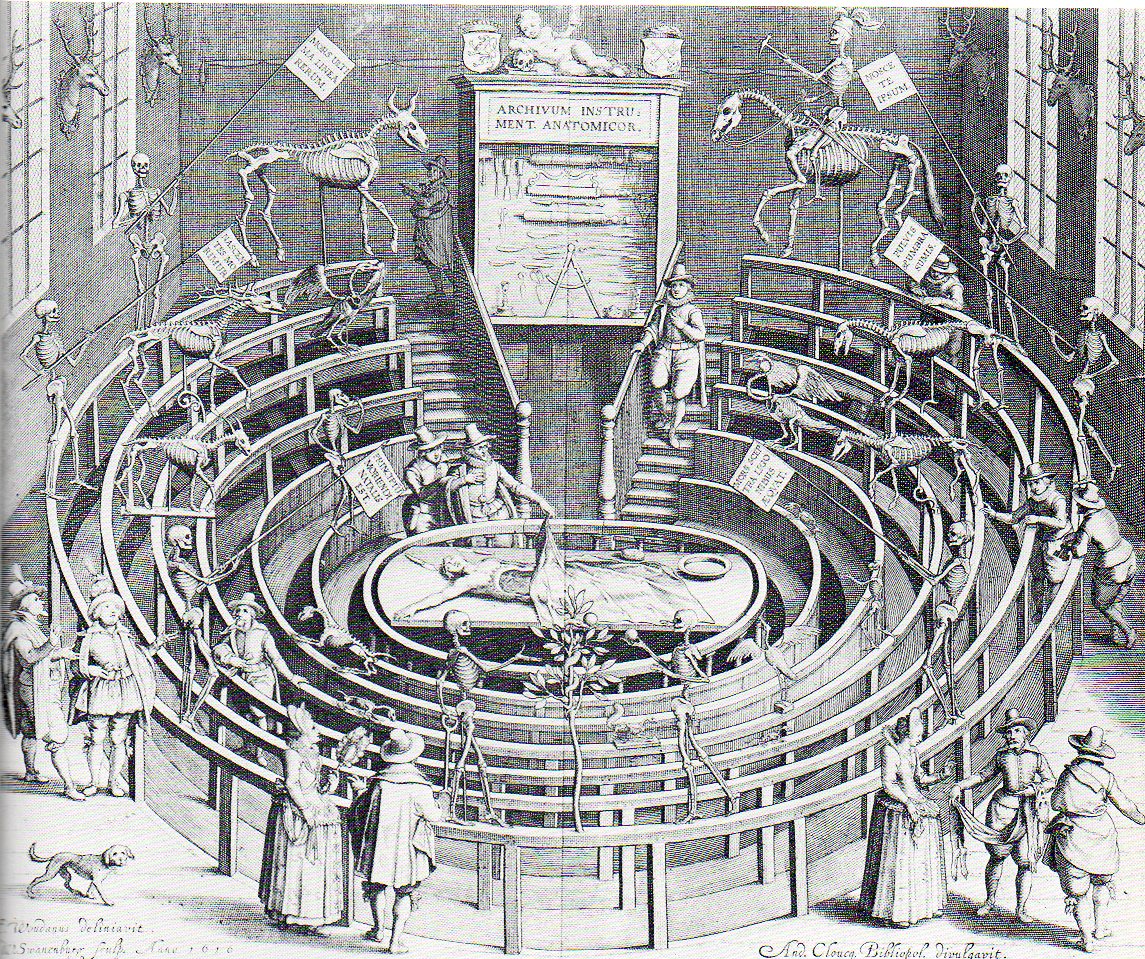
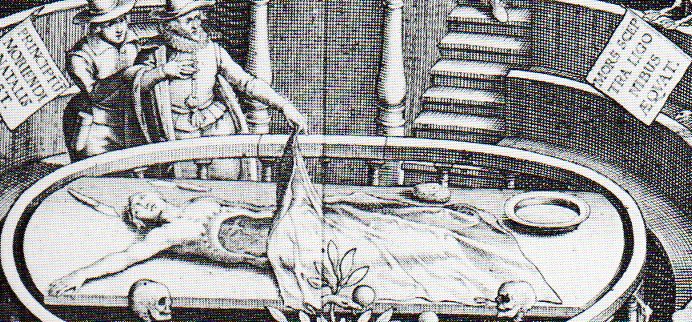
Visitors to the dissecting amphitheatre here in Leiden were treated to a bone museum during the days in which the place was not being used for its main purpose, though we do see here that a cadaver is being semi-privately displayed, a burgher taking a reticent look (cloth held between thumb and index finger?) while the compatriot takes cover behind him.
There are plenty of other onlookers to this scene, though most of them are dead,. It doesn’t prevent them from holding up sings/banners with messages for the living, though.
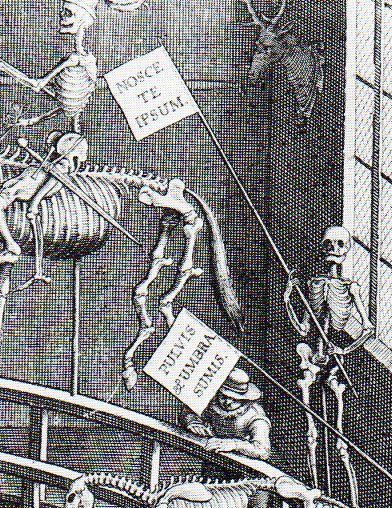
“Pulvis et umbra sumus” (“we are but dust and shadow”, Horace) hangs just above the head of the man who looks as though he might be anxiously fiddling with a mole.
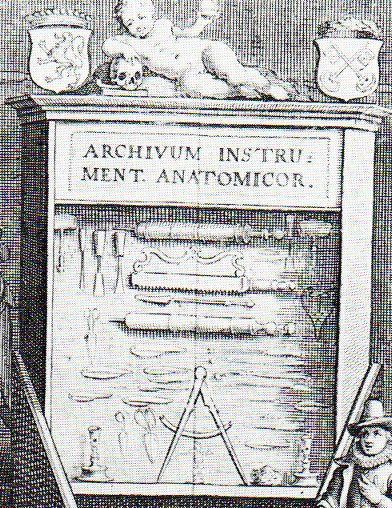
The tools of the trade hang in an auspicious place, attracting only the attention of two horse skeletons.–scalpels, scissors, maws, a crowbar, a big backsaw-like device, and of course two giant syringes for drawing out “fluids”.
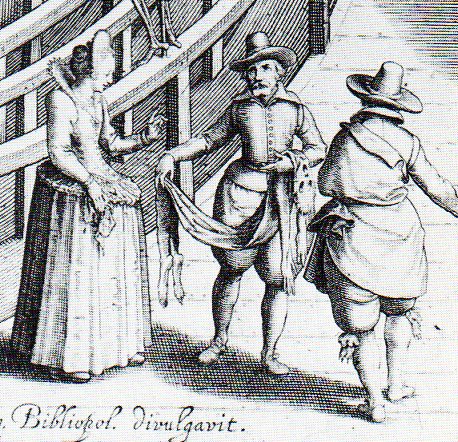
Lastly, I couldn’t tell what the people were doing in the far right bottom corner until I magnified the image a bit–the man is holding the entire envelope of skin of a human, flayed in one piece. What is it that they’re saying? What does one say when offered an armful of skin? The image of whole-body flayed skin isn’t terribly uncommon in 16th and 17th century anatomy books–except that they’re usually being held by the disectee, and not by a living/walking/talking person.