JF Ptak Science Books Quick Post (Part of the series on Blank, Empty, and Missing Things)
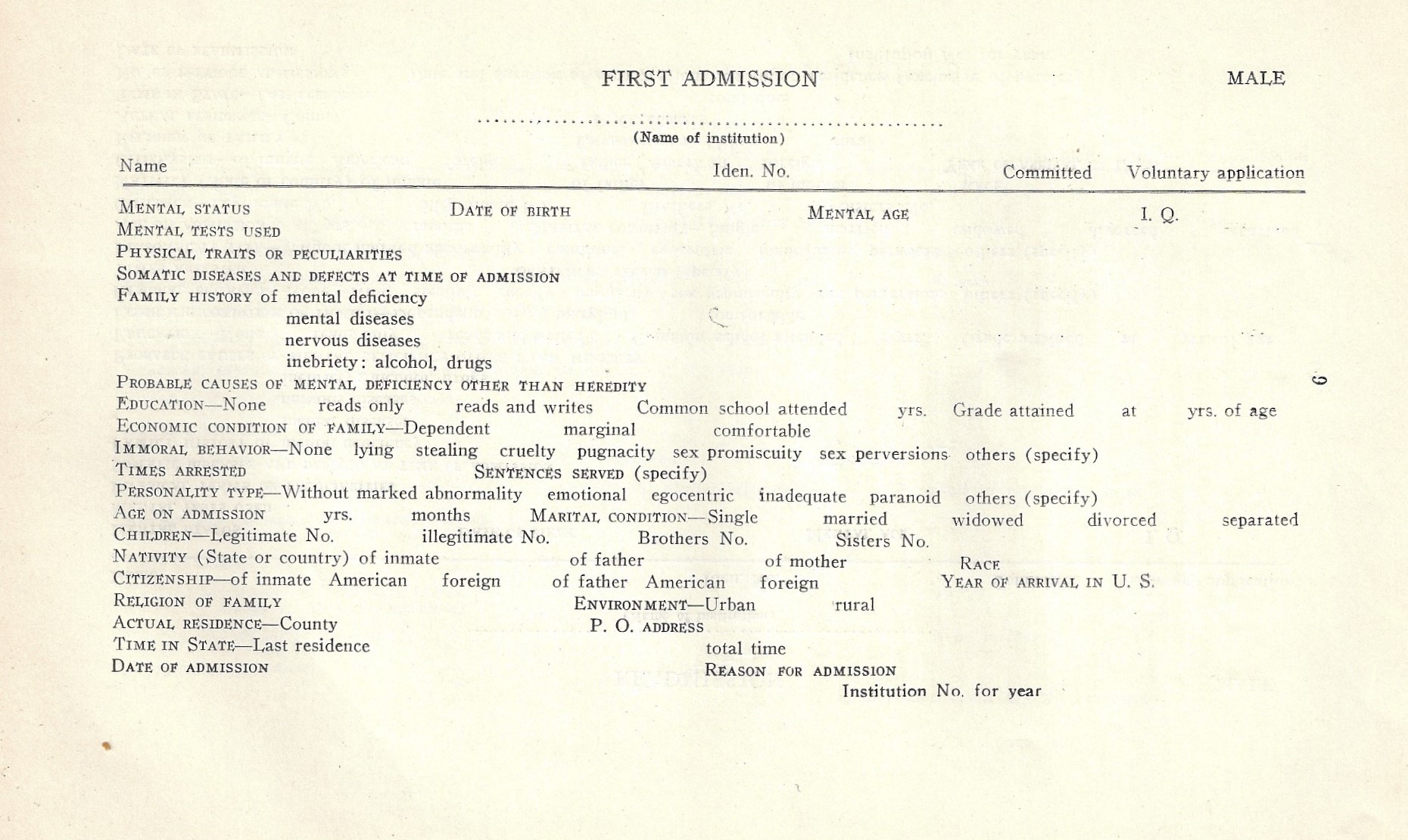
The following form is one of six1 presented in a 1921 publication2 on institutions for the “feebleminded3“. It was published by the National Committee for Mental Hygiene (370 Seventh Ave, NYC) and states that the forms represent a marked improvement in collecting and standardizing mental health data. Many of the terms are narrowly defined (or as narrowly as could be in a 40-page document), though when you consider the time in which it was accomplished this does seem to represent step forward in the creation of uniform statistics for people being treated for various sorts of mental diseases.
The “mental status” criteria to choose from includes “idiot, imbecile, or moron” while personality type classification included “emotional”, egocentric”, “inadequate”, “paranoid”, and “others to be specified”. It is interesting to note that “egocentric” “includes those who are “egotistic, selfish, individualistic, superficial, and shallow in their moral feelings, inconsiderate of others, unappreciative, etc.” which could have included a lot of people, then as now.
I should point out that the most discriminatory remarks for identifying the nationalities is in regards to Jewish people. For example, this guideline (based on the U.S. 1920 census guidelines) is offered to the admissions people:
- “ENGLISH. Care must be given to exclude Hebrew who are born in England…”
And this for “Hebrew”:
- “HEBREW. No difficulty will be experienced in identifying Hebrews and they should be so classified without regard to the country from which they come.”
Notes:
- The other forms are for readmission, parole, death, discharge, and transfer.
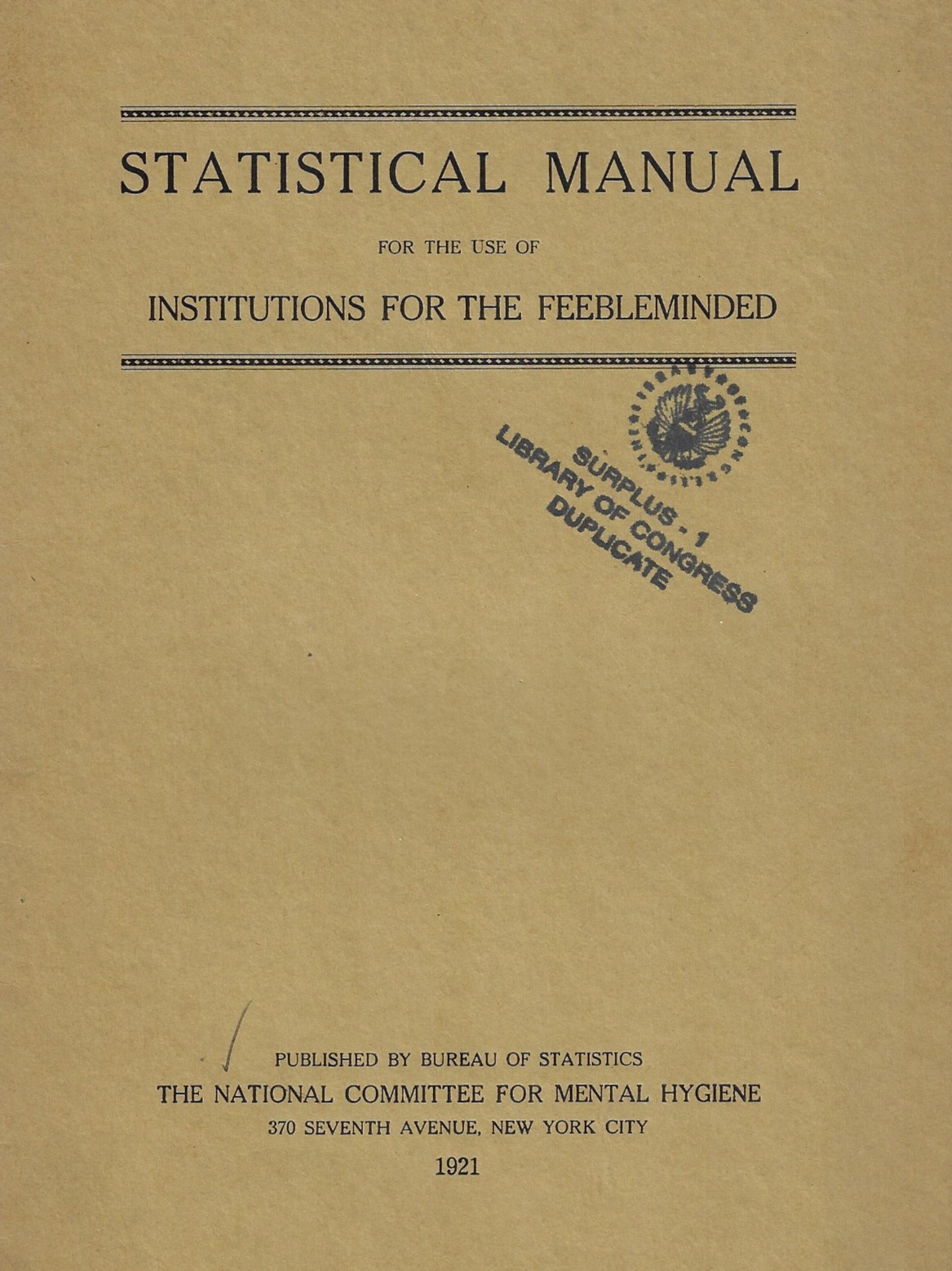
- The cover for this work:
3. “Feebleminded” appears as a compound word in the OED, making an appearance as far back as 1534 in the Tyndale Bible, ” Comforte the feble mynded.”. The other uses of feeble-____ seem to all appear after that, including Feeble-bodied, -eyed, -framed, -hearted, and -winged.