JF Ptak Science Books Post 1166
On a hot 7 July, 1865, photographer Matthew Brady was the only photographer present at the old Washington Penitentiary to make images of the execution of the Lincoln assassination conspirators Mary Surratt, Lewis Powell, George Atzerodt and David Herold. All of these stories of the assassination are best told elsewhere–in many other elsewheres, a story that is legion–but I can’t seem to find anything about one special, particular person captured in two of the series of these photos.
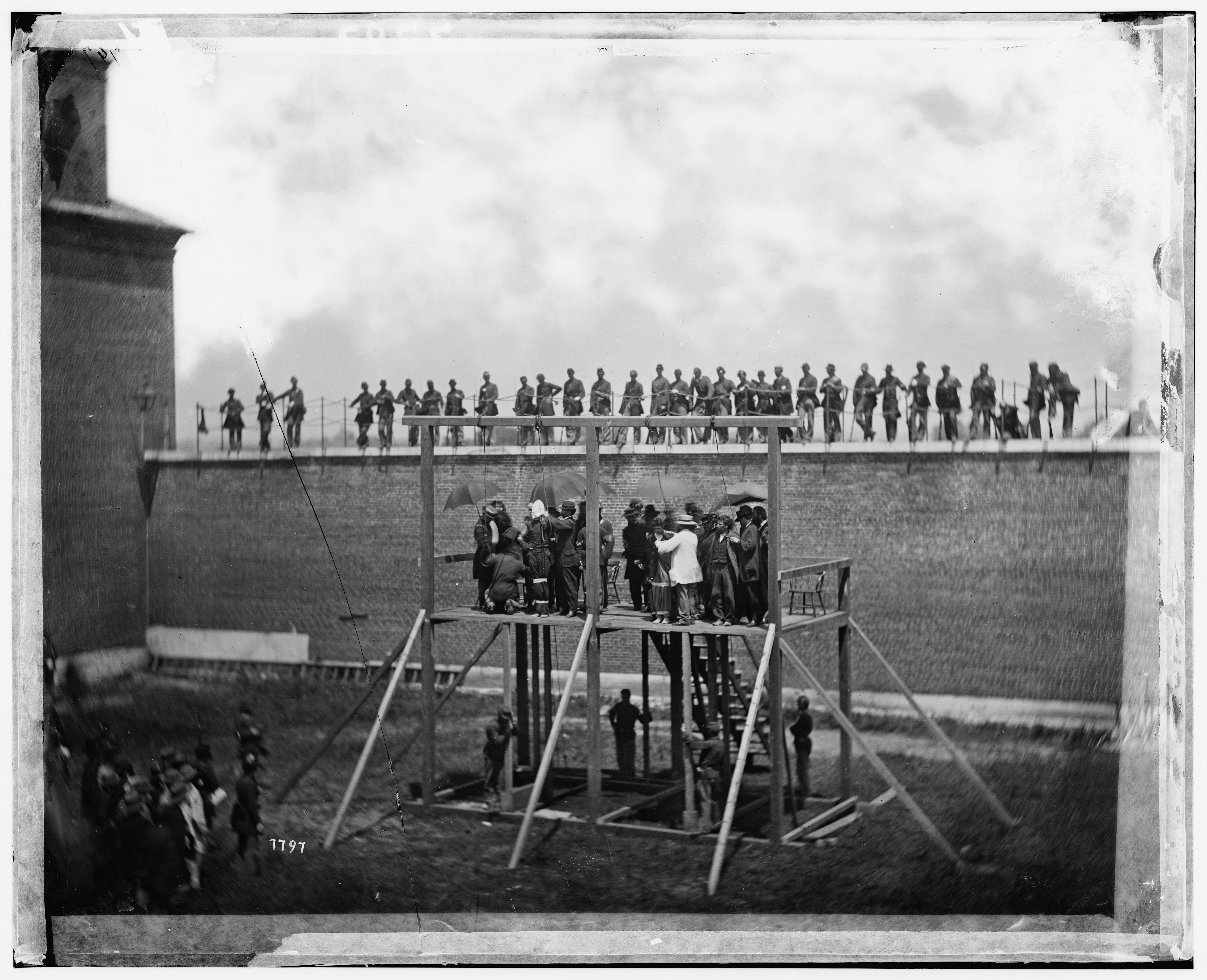
If you look closely at the first photograph, there is a man leaning against a pole that is directly under the first condemned conspirator, Mary Surratt. That pole, a substantial 6x6x10′ or something like that, is the only thing that is holding the trapdoor closed on which Surratt stands. Actually, I think that two conspirators occupy one trapdoor–there is a second pole just to the right, another man standing nearby.
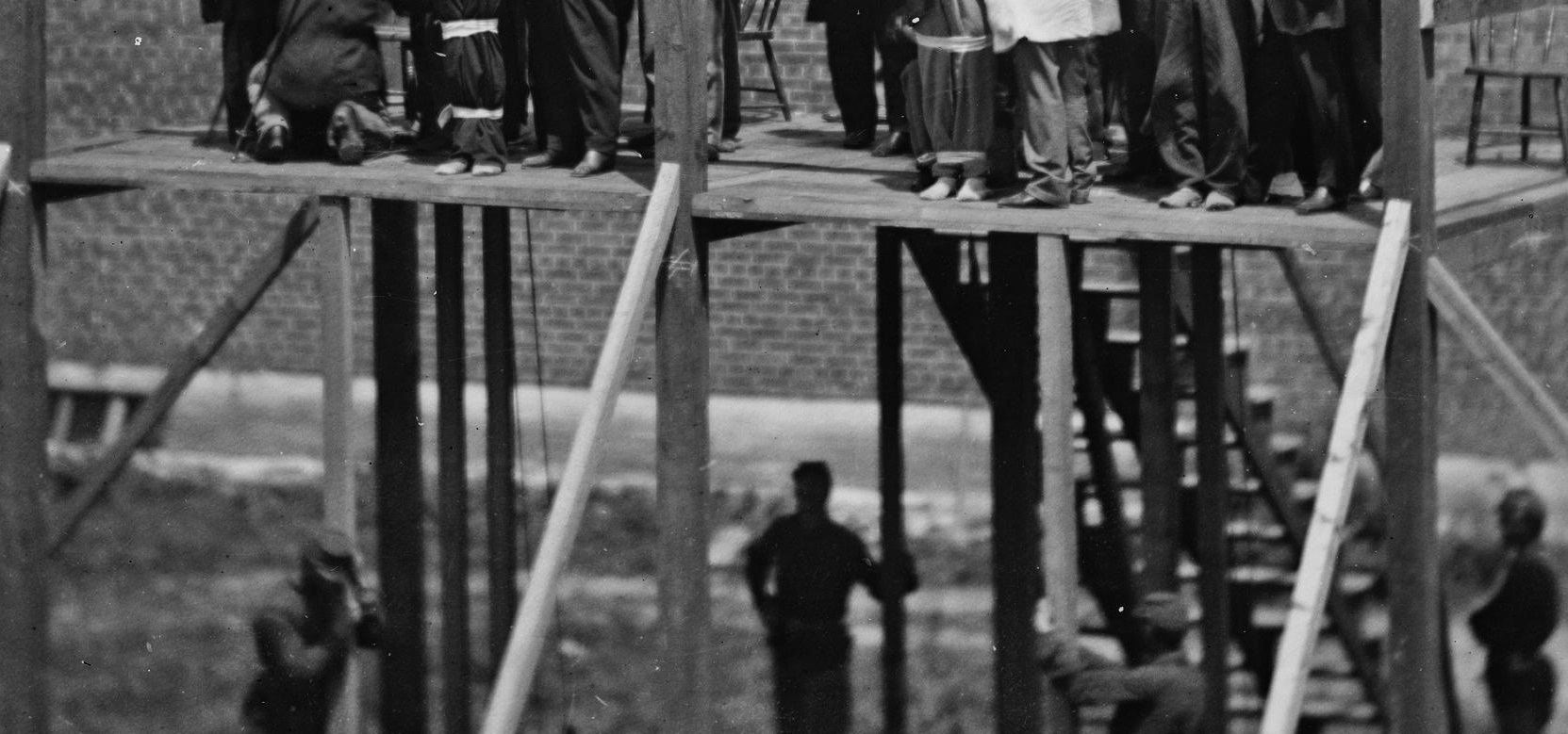
I guess the execution was at high noon. The shadows seem to be falling straight down, our man–standing just out of the reach of the shadow of the gallows–has his face obscured by the shadow of the brim of his cap. Like a mask.
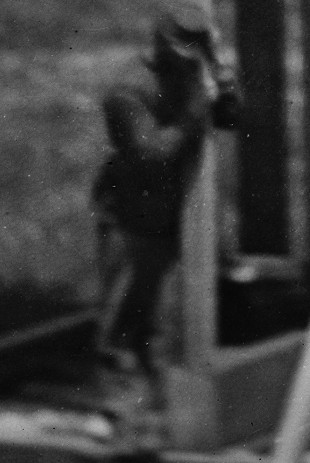
What was that first man doing, exactly? He seems to be in a nonchalant attitude, given his position and circumstance, as well as the crowds and significance of the event. Why was he leaning on the pole? Was this just the last part of a long morning? Was the pole not terribly secure? Was he bored? Was he overcome?
He was surrounded on all sides, and he was hearing the boots-on-wood above him, the conversations in the preparations of the nooses, the shuffling of the shackled feet of the condemned, and perhaps the last words of the people waiting now for the last noose to be fitted over the last man. At that point, an order would be given, and our man–who was now positioned behind the gibbet–would simply push another long pole against the bottom of the supporting pole, dislodging it, and allowing the trapdoor to open, the conspirators dropping to their deaths with broken necks. Or I hope for their sake that their necks were broken–by the looks of the position of one of the nooses, its in a bad spot so far as assuring a quick death is concerned. Maybe the noose’s position was changed after this picture was made Maybe not. What did our man do after pushing the beam out of position? He would’ve been very close to the action, within a few feet.
I wonder what the trapdoor pole pushers do afterwards? What were their jobs? From the looks of the last picture, someone put the beams in order, placing them alongside the execution structured, tidied up.
Where did the man go? Since they were the few folks right at the base of the scaffold, right there where the mandrake were supposed to grow, did these men wind up with th job of cutting the bodies free from their ropes and burying them? Someone did it. I wonder what that someone thought as they returned home, or to the barracks, and st down to dinner. What did they see in their dinner plate?
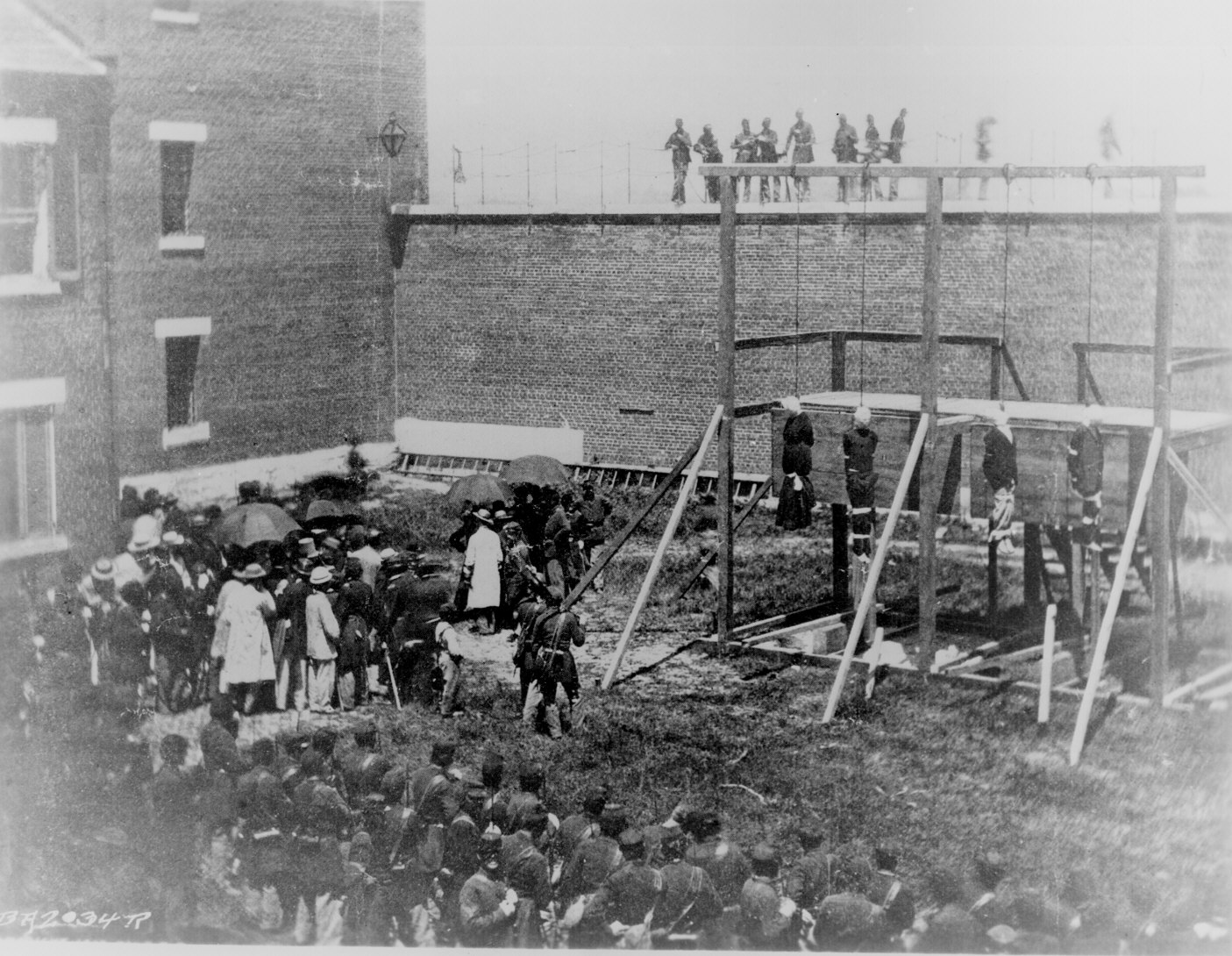
This contemporary print of the scene gets little correct, though the chairs for the conspirators are about right. The scaffolding is much nicer than in the original, and the place looks certainly far less austere than the penitentiary. The awful thing here is the actual, physical manner of the hanging–the attitudes depicted here would have been even more bestial, the lack of a trapdoor suggesting that the were all dropped or raised a few inches and basically strangled to death. Also in the real scene of the execution there were four coffins for the condemned nearby–except that three of them were piled one on top of the other. I’m not sure why they were stacked. It seems to me that they were within the visual range of the conspirators.
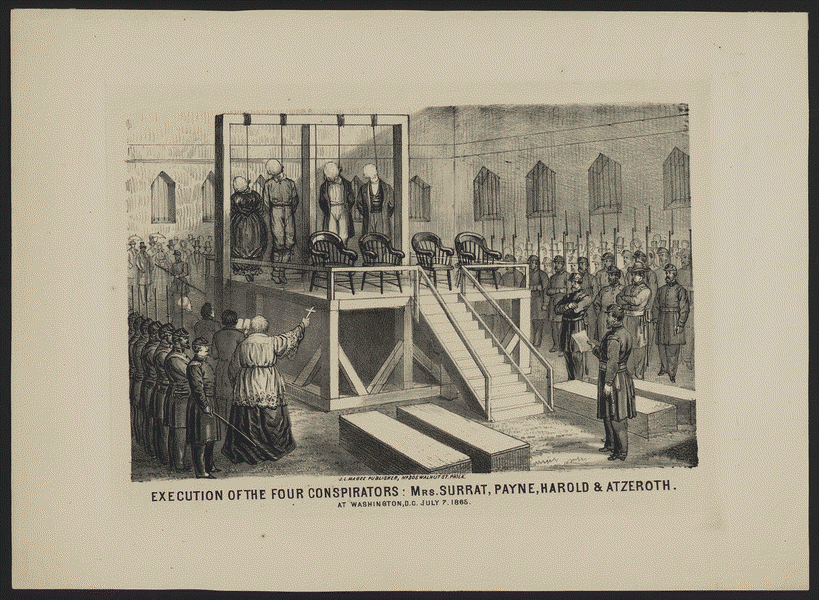
The next contemporary print gets a little more of the reality of the scene correct, both mechanically and emotionally, and shows how our own character of interest did his job. The actual hanging part–the ropes and the nooses–is again wrong, suggesting strangling more than hanging.
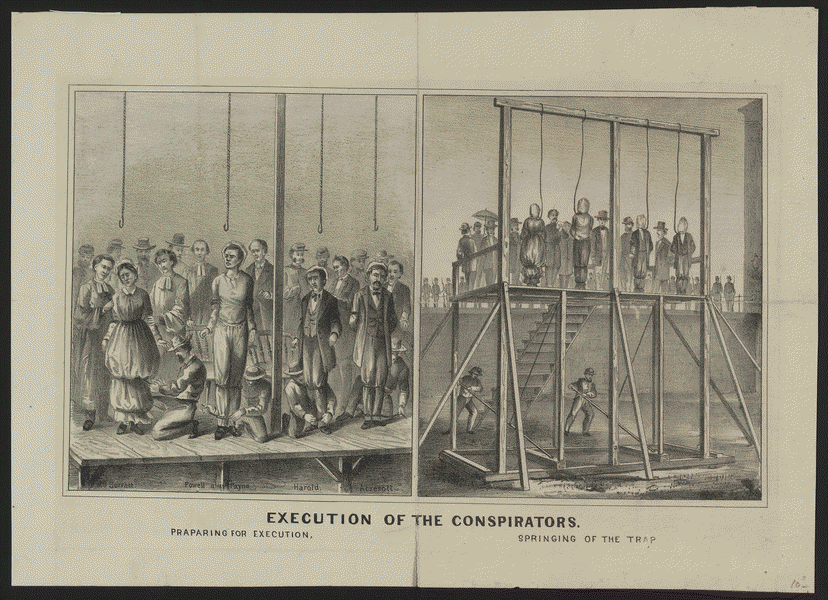
The pictures raise far more questions to me than anything else, as witnessed by my personal record use of the question mark in this post. .
[Sources: photographs courtesy of the U.S. National Archives; prints, courtesy of the Stern Collection, U.S. Library of Congress.]