JF Ptak Science Books
Grazing through a couple of weekly issues of the documentarian’s dream, The Illustrated London News, for April 1932, I stumbled upon a few images that really set me back. The one below is one of them, but we’ll get to that in a moment.
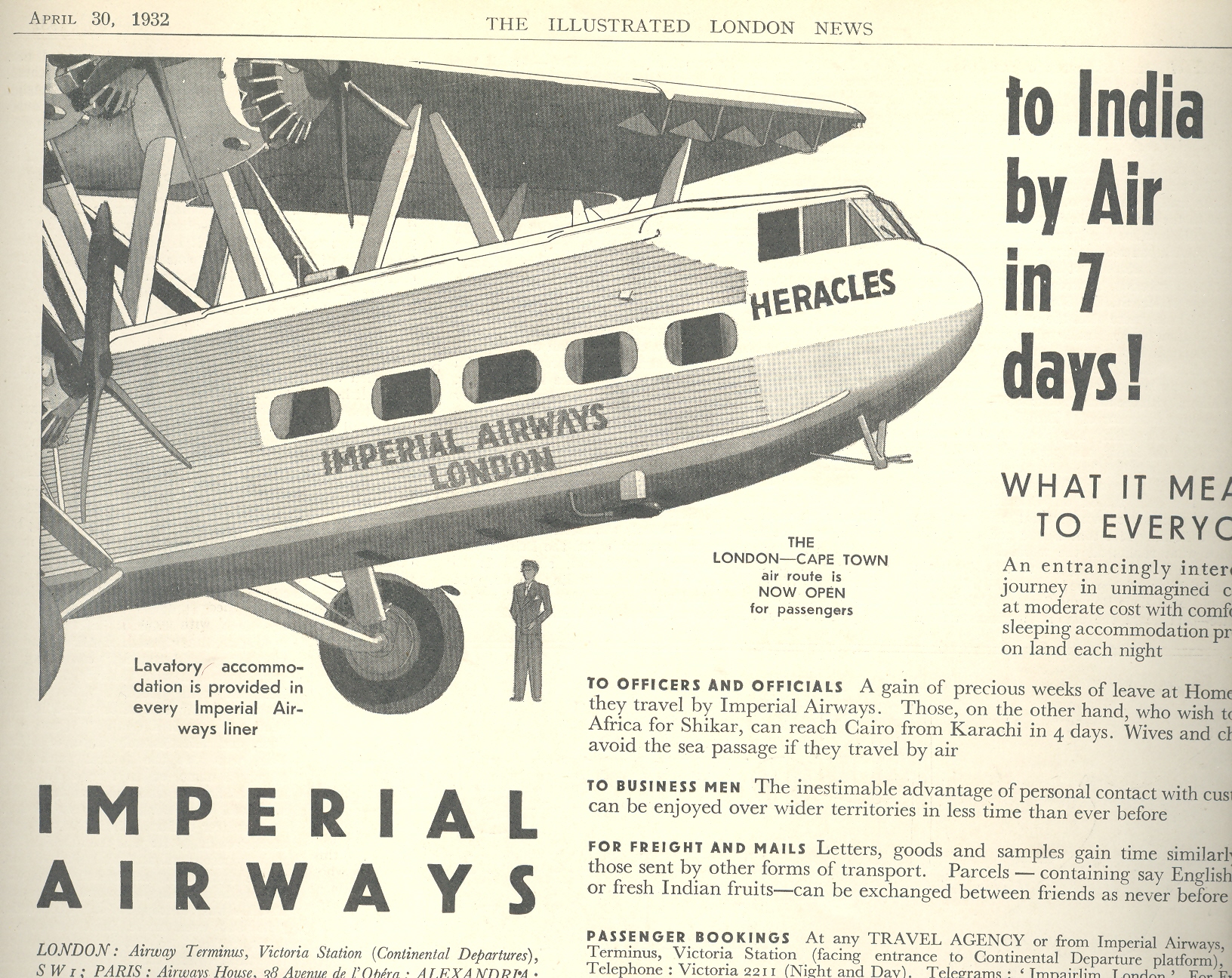
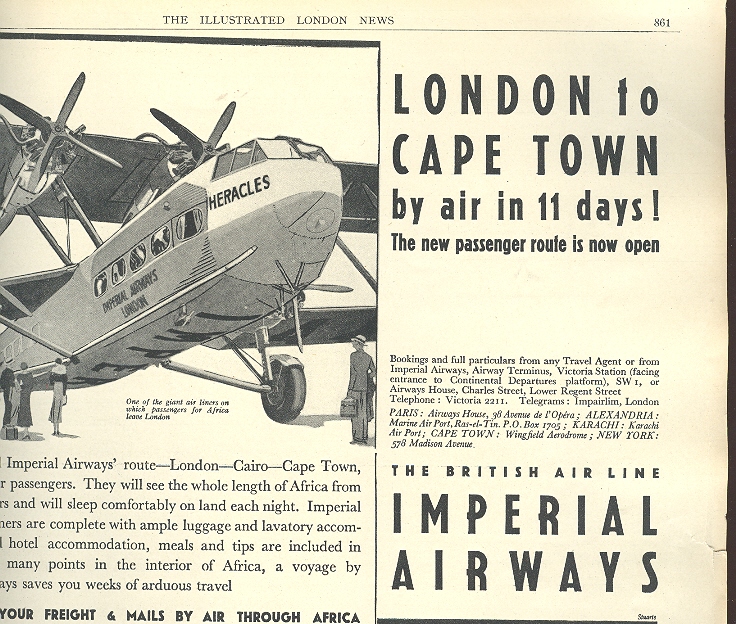 What stopped me first was this advertisement for air travel from London to Cape Town, taking somewhat less than two weeks. Even though I know something about the history of aviation, I was still shocked to see the 11-day schedule. I knew better, I expected it, but still, to see this remarkable statement in print snapped me to attention. Same too for air travel to India–7 full days of travel. This is the same year that my father was born, so it isn’t as though these times are a hundred years old. Perhaps this is the shock of recognition.
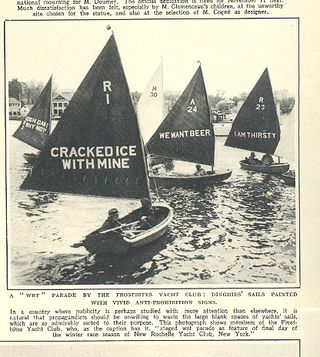
 A few pages later came this lighthearted image depicting a convoy of the New Rochelle (NY) Yacht Club, “the Thirsty Crew”, protesting in their small sailboats against Prohibition, and suggesting that they could go for some number of stiff ones–“propagandists unwilling to waste their large blank spaces…”.
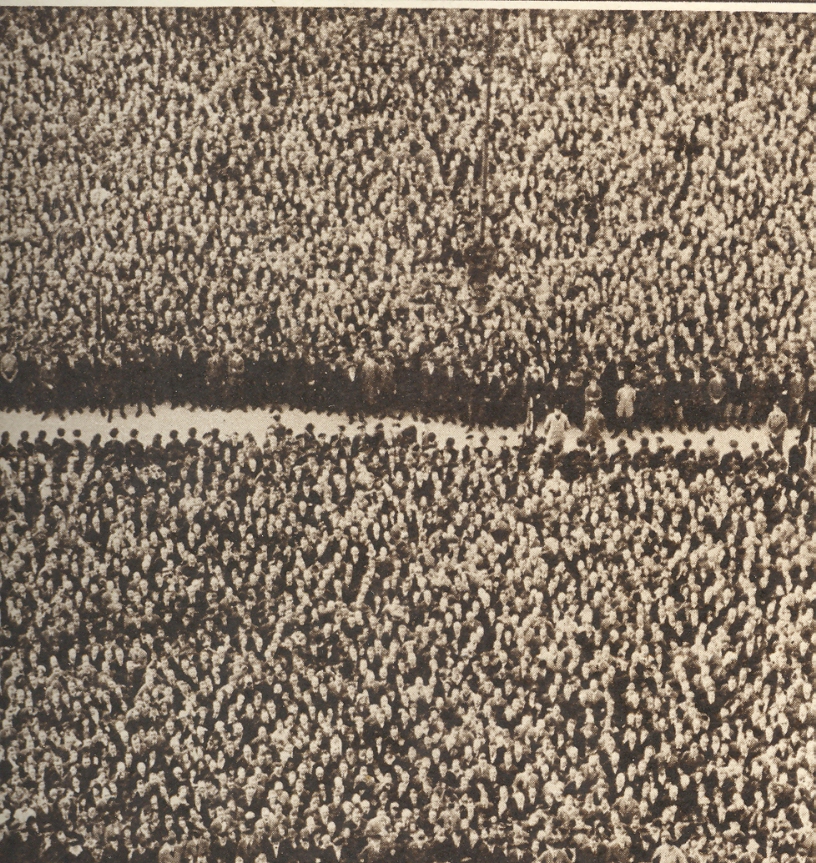
I flipped through another few dozen pages, enjoying the ads, the small stories, the domestic intrigues, the human follies and triumphs. Then came the issue for 9 April, 1932, and the lightheartedness was drained by the reality that was to come. The first picture in this series is a small detail from a larger crowd gathered in Berlin’s Lustgarten (“Pleasure Garden”), on 4 April, listening to several speeches by a candidate for the Germany presidency, Adolf Hitler. The election–and the very beginning of the end for 60 million people–was a week away.
In February, 1933, more than 200,000 people massed there to protest the new Nazi leadership. Hitler was defeated by von Hndenburg in the second round of the election on that April 10th (Hitler receiving 36% of the vote to von Hindeburg’s 51%), but he was appointed Chancellor in January 1933, which was really the beginning of the totality of Nazi power. Soon afterwards, political demonstrations like that were banned, overtaken by Nazi spectaculars, with Hitler addressing more than a million people there at a time. By the end of the war, much like the rest of Berlin, the Lustgarten–whose grass had been replaced by pavement by Hitler for parades–was a bombed-out skeleton.