JF Ptak Science Books Post 1704
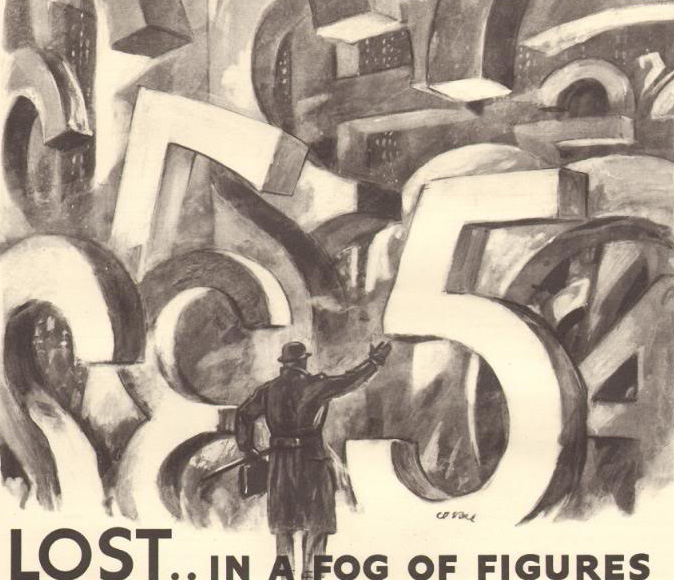
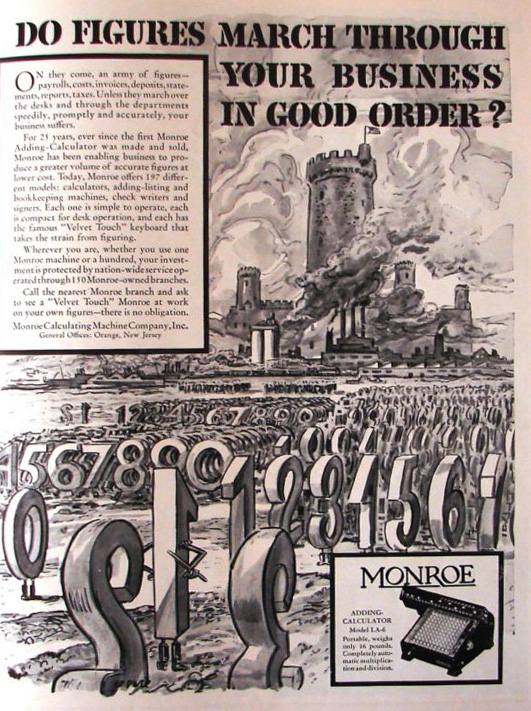
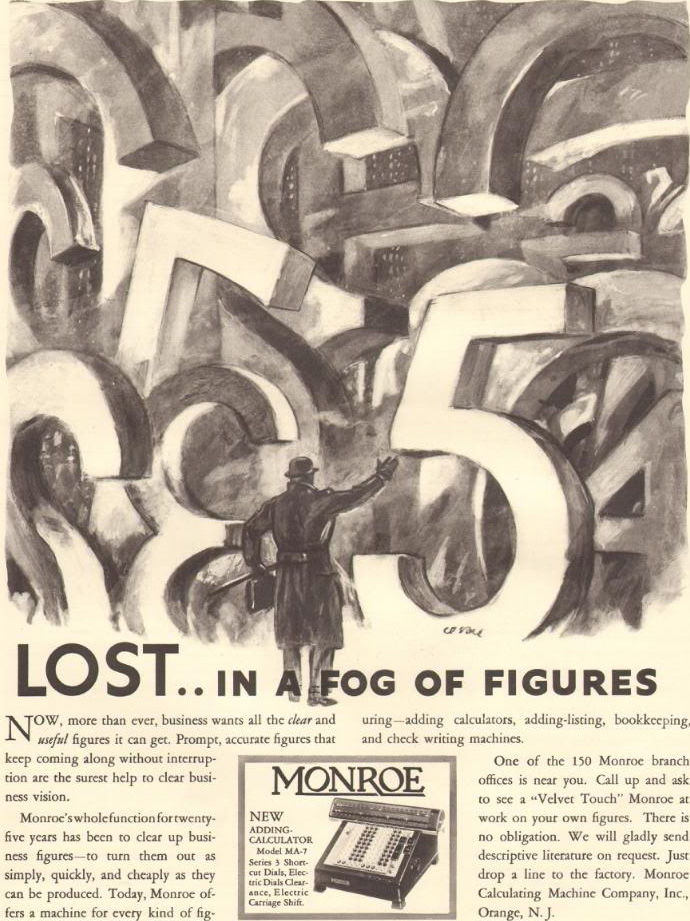 The Monroe calculator must have seemed the same sort of inspired salvation to the 1930’s generation as the hand-held Texas Instruments calculator (with paper feed!) that I saw displayed in a glass-domed pedestal at Barnes and Noble in Manhattan in 1973. Small, compact, and with fantastic calculatign capacity–and expensive. It was in a very real sense a glimpse into the future. For the general, garden-variety Monroe, it certainly offered its users a much smaller, tidier machine than some of the brutes of the decade or two preceding it–make no mistake, there were some big bruising accounting Monroes that were truck busters.
But the Monroes that appeared in these ads from LIFE magazine in the late 1930’s 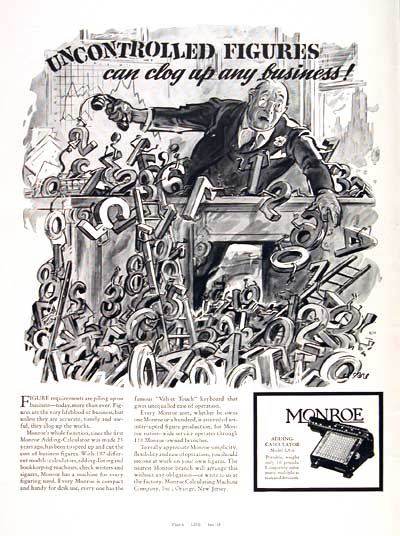 were certainly populist, and easily transportable. And they cost about as much (with some smoke/mirrors adjusting for inflation and etc) in 1937 as the $450 TI cost in 1973. (The TI machine was produced just seven years or so after its first hand-held was introduced–I’m unsure of the 450 price tag, though I think it about correct. The TI SR-50 without a paper trail cost about $150 in 1974.)
Monroe is an old company (begun in 1912) company that produced hand-cranked and electromechanical calculating devices. The Monroe salesman’s handbook that I have here from 1929 shows versions of their machine that were lightweight and versatile (at 38 pounds) to behemoths for insurance companies that were truck-haulable. Monroe became part of Litton before reappearing again on its own, trying to compete in the hand-held market with its own electronic display calculator–a device that cost $269 in 1972. Monroe was basically “done” by the 1960’s.

I think that for most people Texas Instruments is produced hand-held calculating devices–it is of course a vast concern, with a long history that gets catapulted during WWII when the formerly geology-based company gets involved in military electronics. Fast forward, TI created FLIR and MERA, laser-guided control systems for PGMs (laser-guided bombs/precision-guided munitions), launch and leave glide missiles, and so on. IT was also involved in the earliest work in microminiaturization, producing (by Gordon Teal) the first commercial silicon transistor (1954) and the first integrated circuit (by Jack Kilby) in 1958. And so on. Its a big, old company.
And as much as each company was offering a similar god-send to their generationally-distanced mathematician/number cruncher, TI simply didn’t have ads like Monroe. And I’ve always iked to see numbers-on-the-move.