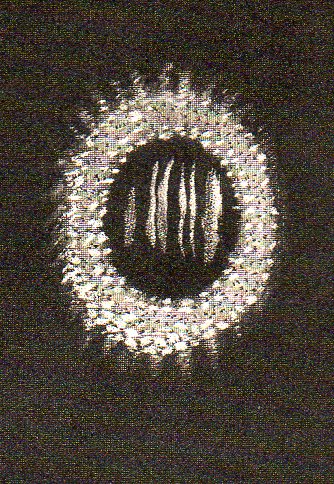
JF Ptak Science Books Post 1768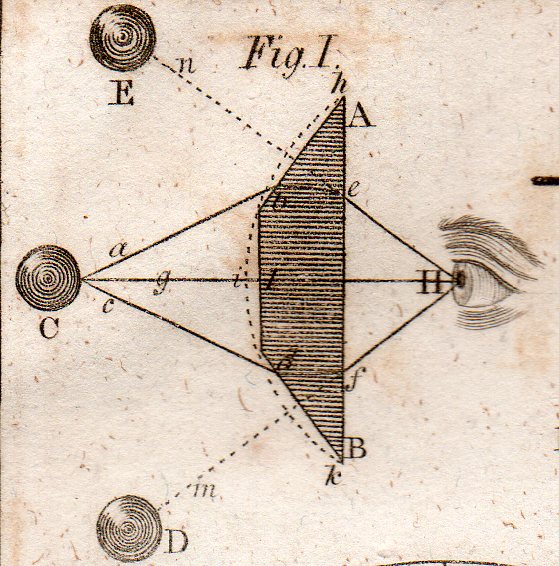
Sometimes when you look hard enough you will see (if not actually “find”) what you’re looking for; determined to make a discovery, you can sometimes force yourself into believing that what you’re seeing is what it was that was needed to be seen .
The microscopical world of astonomical antiquarian prints is an interesting one–and in some ways, modern ways, are on the Robert Hooke/Micrographia magnitudes for the remarkable magnified worlds that their detail reveal–but mostly right now I’m interested in the odd/beautful designs that are hidden in larger scientifc engraved presentations.
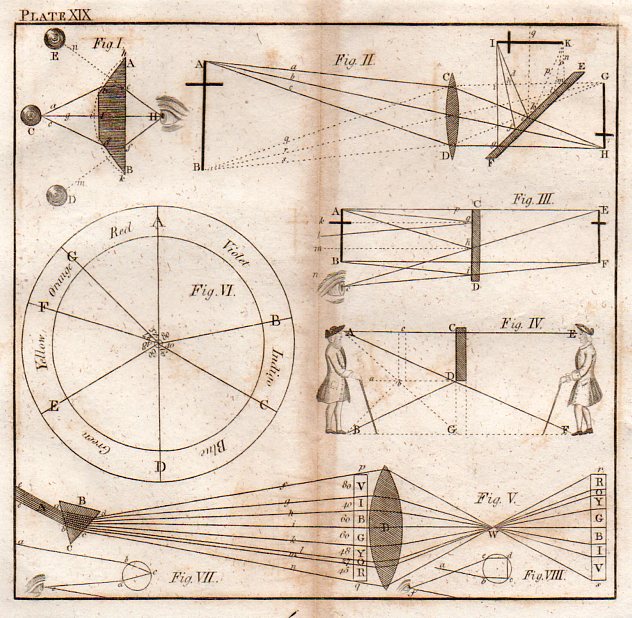 [Even in fairly famous scientific images lke the one above–explaining the rainbow–there are all manner of unexpected artistic finds outside of their significant scientific contributions.]
These images from the title of this post, on the other hand, are just simply “there”–all you need is a little magnification and some sharp vision, and the things come to life. When looking hard at these images and seeing the teaming non-representational artforms that swim through so many of them it seems remarkable to me that these things weren’t seen as art before Kandinsy finally “discovered” this artform in 1911.
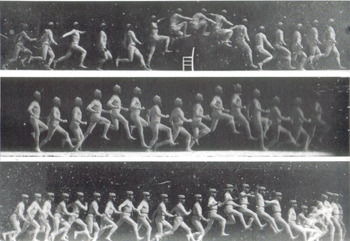
(For example Mr. Marey produced a very remarkable Nude descending-like series of photographs 40 years before Duchamp–but the Marey images were observed scientifically, and I’m unaware of anyone who ever wrote an artistic appreciation of that work before 1900. [Marey left, Duchamp right.] But that is another story.)
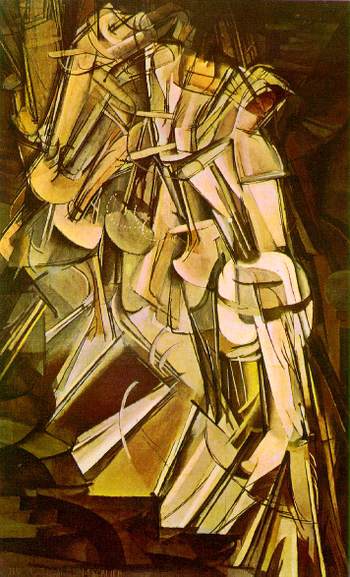
For us today with almost 100 years of Kandinsky/Klee/Duchamp/Braque/Malevich under our belts it is relatively easy to see the artfullness of the pieces and bits of these engravings–not so a hundred-plus years ago, and harder yet for 200+.
For example, there are some things that take on an absolutely pre-biotic flavor, like material that we’d come to see a half-century ago, as in these details from an 1850’s French lithograph on nebualae: