JF Ptak Science Books Post 1879 (Following an earlier post on the appearance of the first (?) suicide on a title page, here.)
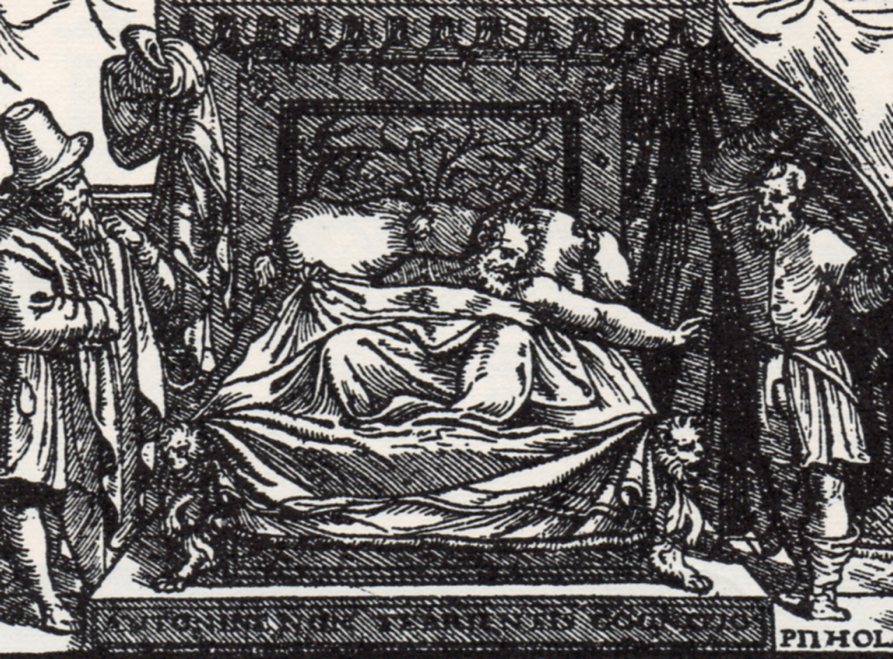
No doubt there are many examples of finding people in bed on title pages of books printed in the high Renaissance and Baroque–I found two pretty quickly. Of course it would make sense to look at medical titles, as in the case of many examples where the borderland images of decorated title pages surrounding the text describing the book were often filled with allegrocial tales, which means that at some point in the allegroy involving medicine that sooner or later someone is going to wind up in bed, overseen by their physician.
This is definitely the case with the following image (found at the National Library of Medicine, here):

The book is by Maritn Pansa (b. 1580), and the title to the Appendix consilii antipodagrici specialis darinnen X consilia specialissima (printed in 1615) shows lives that were led basically in pursuit of pleasures and vice and crime that would eventually lead to the big bad straight bed at the end of their perceived crooked road. The title page tells of lives lived in pursuit of hunting, and wine, and women and song, as well as the abuse of children–creature comforts and vices which would eventually lead the practionner to a sick-bed for their pursuit of foul ends. The baseline here is a warning for those living a High Life in perhaps-exalted states would more than likely pay for their lifestyles with sickness in the end.
Another good example is fond in Galen’s Tertia Classis uarias morborum differnetias, obseruationes, tempora, successius, causasqe & signficatio nes amplectitur…, which was published in Venice in 1541 with a beautfiul woodcut title page illustrated by a follower of Titian. First and foremost, the capstone of the border images shows a sick patient being attended by doctors of classical greatness including Galen himself (at the extreme right of the first image, above).
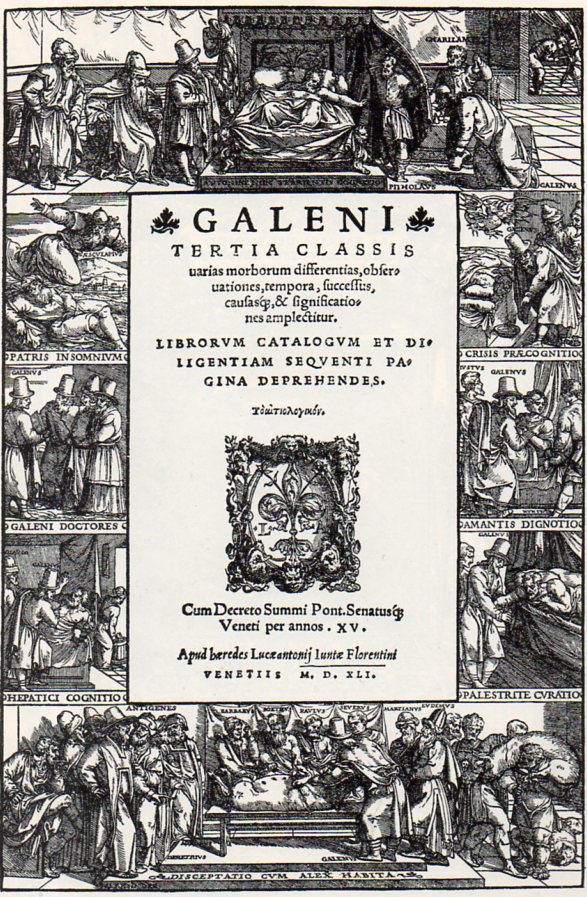
Galen (Aelius Galenus or Claudius Galenus (AD 129– c. 200)), was an ancient too, and taking this little trip through time he must’ve seen some surprising things, not the least of which would have included this bed. It should be noted that until the publication of the revolutionary work of Vesalius, Galen was the largely-unimpeachable source of medical knowledge for some 1300 years.
And of course there is another sort of bed in the Vesalius book’s (De humani corporis fabrica libri septum…) title page, though this is the most uncomfortable of all: