JF Ptak Science Books Post 1912
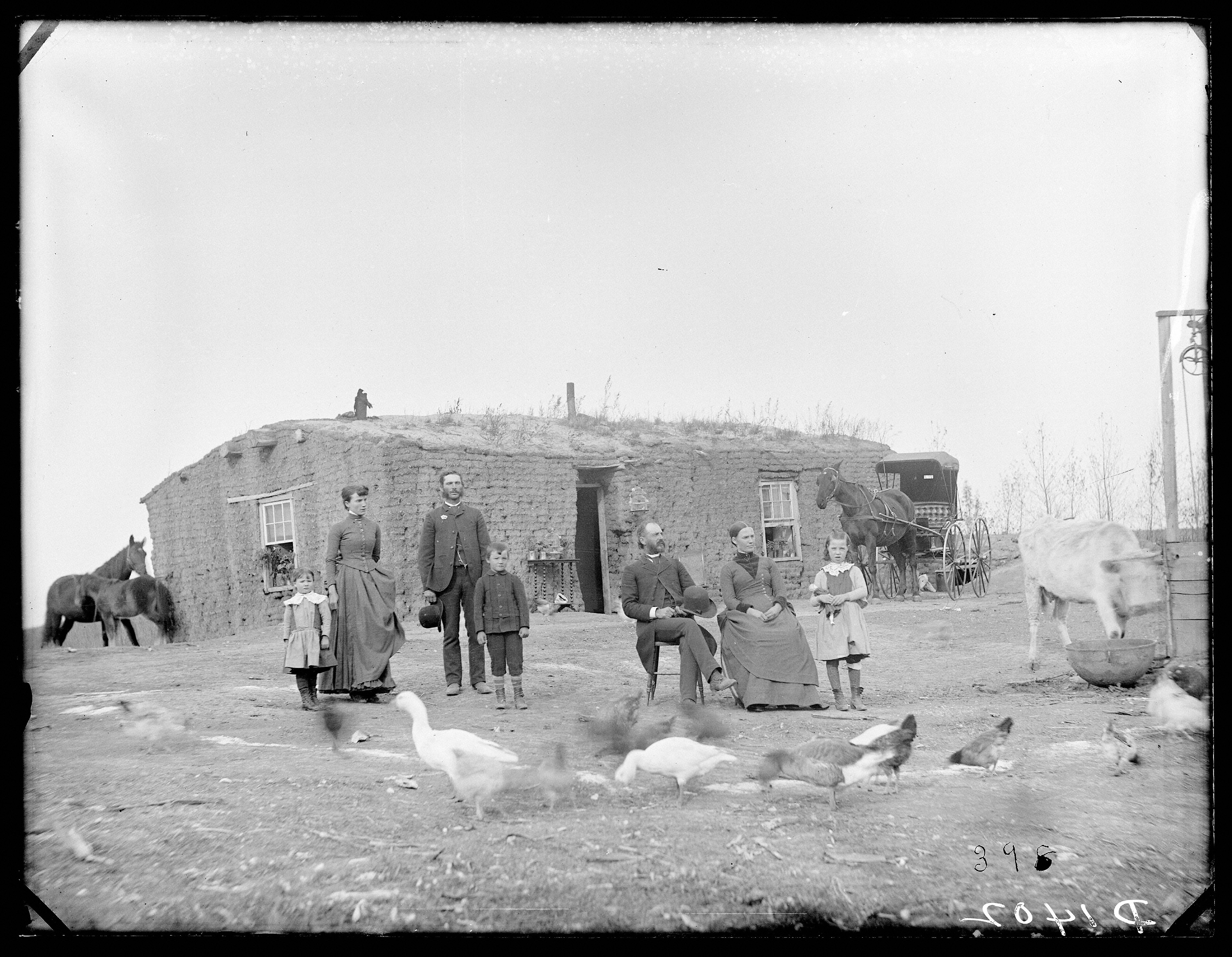
When Solomon Butcher laid his head down on his final pillow he evidently thought of himself as a half-failure. His work as a photographer in a life full of travel through the Great Plains lead to not-much-“success” save for one book1, and his work wasn’t recognized for the impact that it would have in the decades to come. Perhaps he wondered if his ways were all worth it, hauling his family and his enormously heavy collection of full-plate glass negatives from one house to the next. Of course that would change in death–not the money part, but certainly the recognition. His photographs are outstanding glimpses into late 19th century American frontier life, and especially so for the work he did making images of families and their belongings in the long rolling landscape of pioneer Nebraska.
I’m
not sure exactly what Solomon Butcher told his subjects when he photographed them
outside of their frontier houses out there in the Great
Plains in the 1880’s. His spectacular
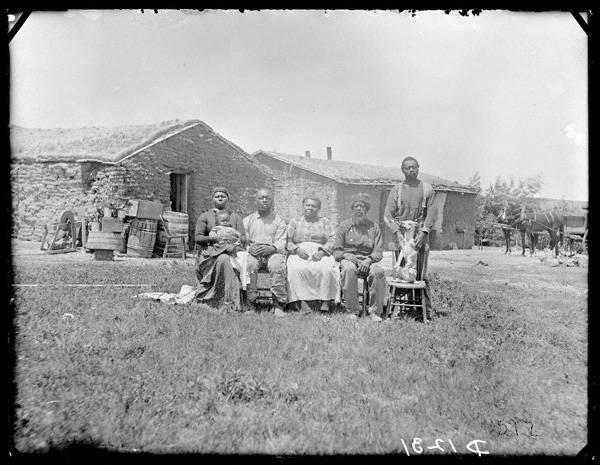
portraits included not only the family of the house, but in many cases, everything
that the family owned. Possessions were
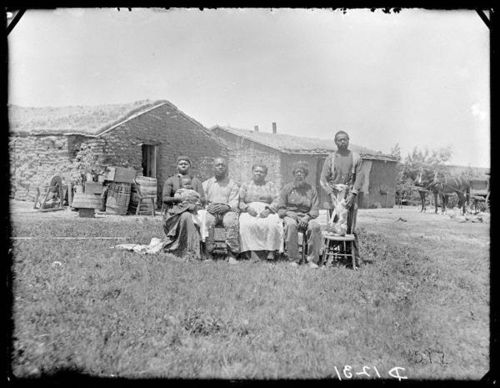
(Image via the Nebraska State Historical Society, with caption2 below.)
especially if you didn’t have very many to begin with. These families—the first generation in their
mostly sod-built houses—would’ve been farmers scratching out a minimum trade
and decent subsistence. City/town goods
would’ve been not-usual in these circumstances, and evidently whatever it was
they had of these things wound up outside, displayed around the house and on
the roof, when Mr. Butcher arrived in his photographer’s wagon.
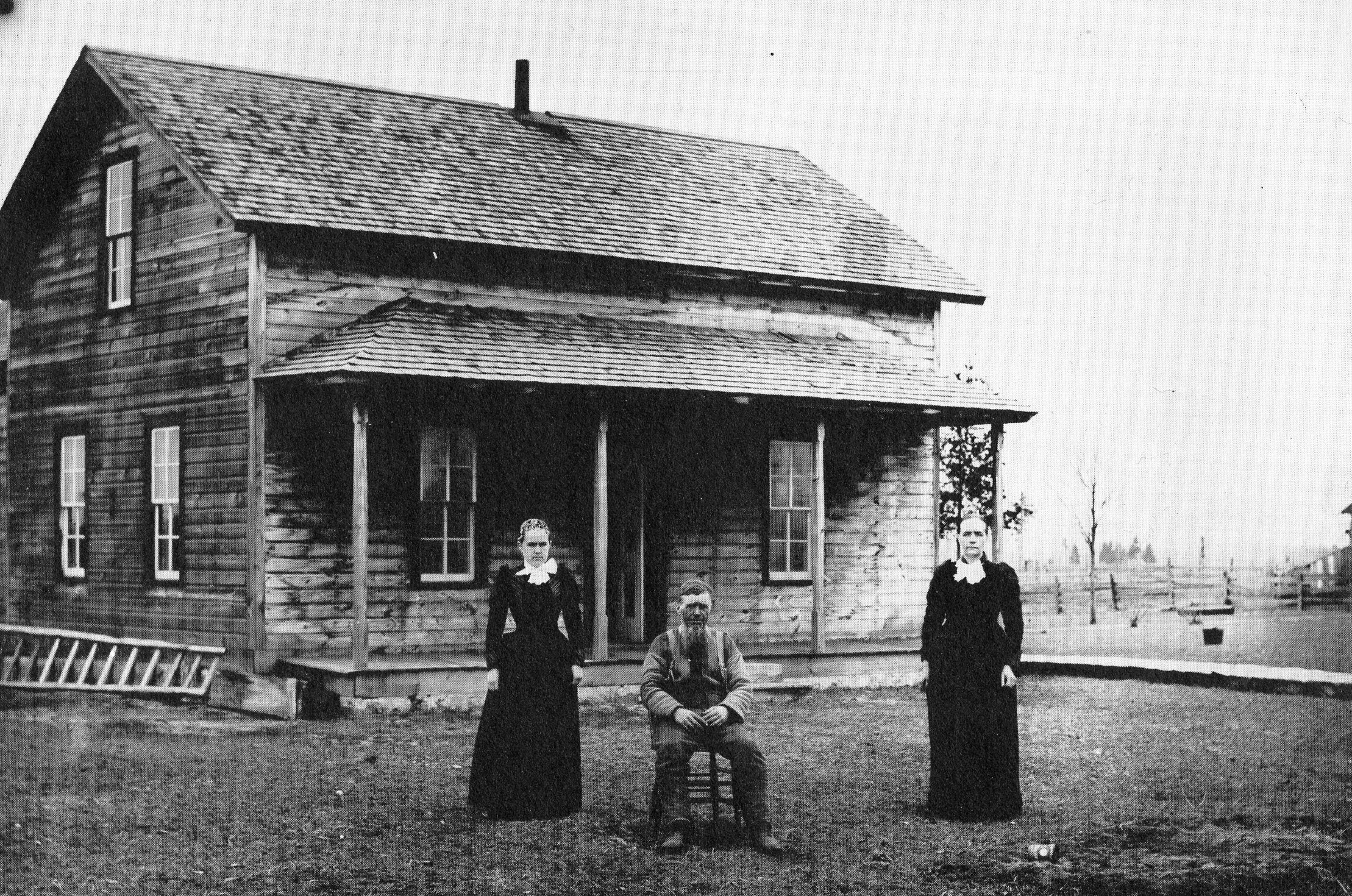
(Who
was it, I wonder, who came up with the initial idea of displaying the
family’s possessions: did Butcher set
out with that idea, or did it happen spontaneously? I wonder what it was the families thought as
Butcher was packing up his equipment, his horse fed, his cameras stowed away,
climbing up onto the driver’s bench. Did
they wait until he was a spot on the horizon to put away their things? Did they gather everything up as Butcher
gathered up his own material, or did they just wait for the stranger to
disappear before pulling the family back together? Sitting their surrounded by
the things that they owned, did these families feel a quiet pride, or were they
embarrassed have their pictures made together with their frontier opulence?)
There’s much to look at in these images, and the Nebraska Historical Society does a very good job at it here, espcially when they work at some digital magic, making some of the disappeared stuff that lurks in the shadows of the interiors of the cabins appear. What is of interest to me today are the sunburns–this issue was brought up yesterday in another post on the invention of the satirical photograph, where the self-portrait shows a man with heavily sunned face and hands, the marks of a working man with dark settling on light becomes a little remarkable.
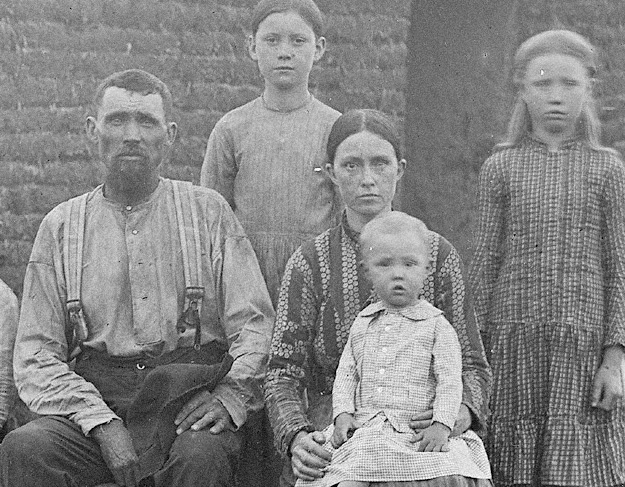
This is seen in Butcher’s photographs from time-to-time. In the series of photographs of homesteads, he often captured images of men without hats–seldom the case, I guess, in the normal routine of a day. The men’s faces are deeply tanned except for where the hat is pulled down to the middle of their forehead, where we see a much lighter complexion:

Which makes sense, of course, since these were pioneers and farmers, and working pretty much all of the time outdoors.
I remember being surprised the first few times I noticed this, and then not so. This is much like seeing all of those non-smiling photographic portraits of the 19th century and wondering about the sombreness, when the general explanation for the seriousness was far simpler: given the length of time for an exposure, it was took simply too much effort to hold the same smile for a minute or three, and so the rigid face became a necessity. The brands of the faces of these men was there simply because they wore hats outdoors doing hard work in the High Plains sun.
There’s a world going on in these photographs, but for right now I’m just looking at faces.The Library of Congress site has an excellent collection of this images online, and there’s a lot of micro-photo inspection to be done.
Another example, here:
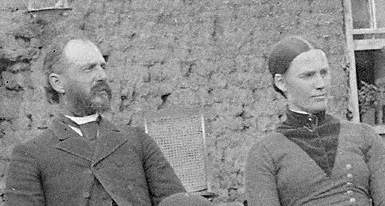
Which is a detail from:
(Source: The Library of Congress, “Rev. and Mrs. E.D. Eubank on Clear Creek west of Lee Park, Custer County, Nebraska”.)