JF Ptak Science Books Quick Post
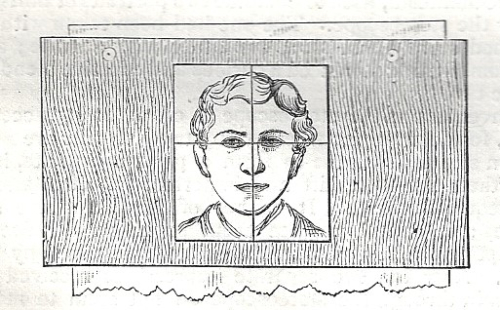 Sir Francis Galton’s “Composite Portraits” article in May 23, 1878 volume of Nature (pp 97-100) came early on in the prehistory of cognitive and computational aspects of “facial recognition”, though more like an analog development for a later digital environment. In this paper he discusses his attempts to see the face of criminality before crime was committed. Galton put together and projected a number of portraits of criminals to see if a fundamental picture of criminality arose–what he found was the opposite, and poetic. He started with a first set of eight portraits of people convicted of murder, manslaughter, or robbery accompanied by violence. What he found I’m sure must’ve been surprising to him: the composite of the eight were “much better looking” than the individual components, and that the “special villainous irregularities…have disappeared”. It was the “common humanity that underlies each of them (that) has prevailed”.
Galton continues to state that the composite “represents not the criminal, but the man who is likely to fall into crime”.
There is then a fair amount of discussion of the many uses of the composite photograph, though I think for our purposes we can stop right here.
[A sample composite image, above.]