JF Ptak Science Books Post 1993 
There are times when the future turns up in unexpected places–and sometimes that imagery is quite unintentional, and belongs only to the viewer in that future, looking back. It seems to me that many of these examples belong in the history of scientific illustration
Thomas Dick’s Celestial Scenery, or, The wonders of the planetary system displayed
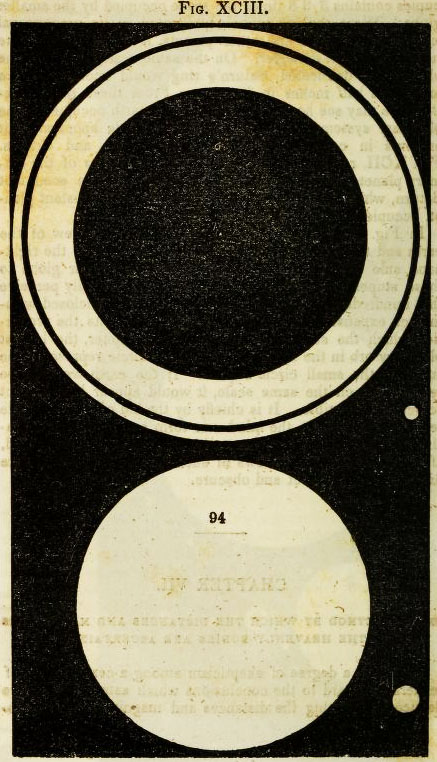
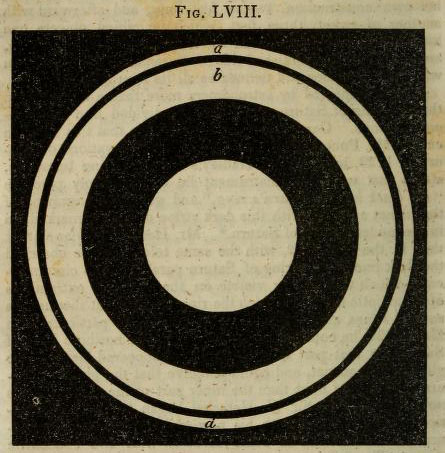
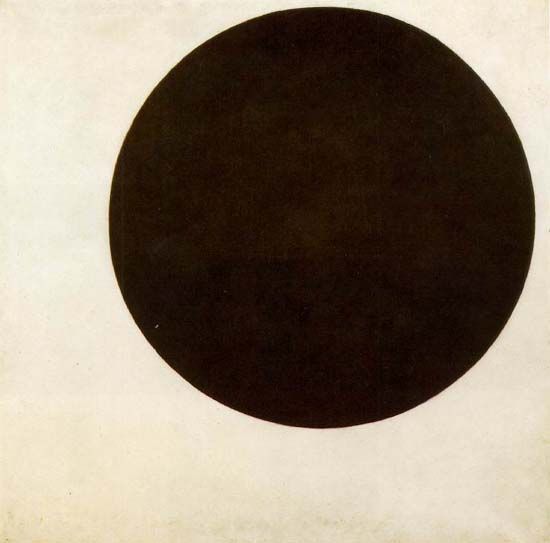
was published by Harper & Brothers in New York in 1838 is a good example for a home of some of these flashes of future brilliance. What we’re seeing in the pages of this chunky book–which was an influential object in the early reading of a number of people who were to become influential astronomers, one including E.E.. Barnard–are lovely, simple, and include some relatively simple images of size comparisons. The result seems to my eye to suggest Suprematist art, geometrical art that would come into being another 75 years hence or so. (This movement was founded by the great Kazimir Malevich in the 19-teens, who said of it: “Under Suprematism I understand the primacy of pure feeling in creative art. To the Suprematist, the visual phenomena of the objective world are, in themselves, meaningless; the significant thing is feeling, as such, quite apart from the environment in which it is called forth.“) Of course the Dick images were simple comparatives and not-yet-art–but they certainly do suggests themselves as something more than what they are. The full text of the book is located at the Internet Archive, here. (Thanks to Trevor Owens and his interesting Pinterest collection here who brought my attention to the Dick book via images of the Martian canals.)
A plan of the rings of Saturn relating their size and some of their imagined composition:
Kazimir Malevich, Black Circle, 1915:
Comparative of the Earth to Saturn’s rings; image bottom, depicts the Sun and Jupiter