JF Ptak Science Books Post 2018

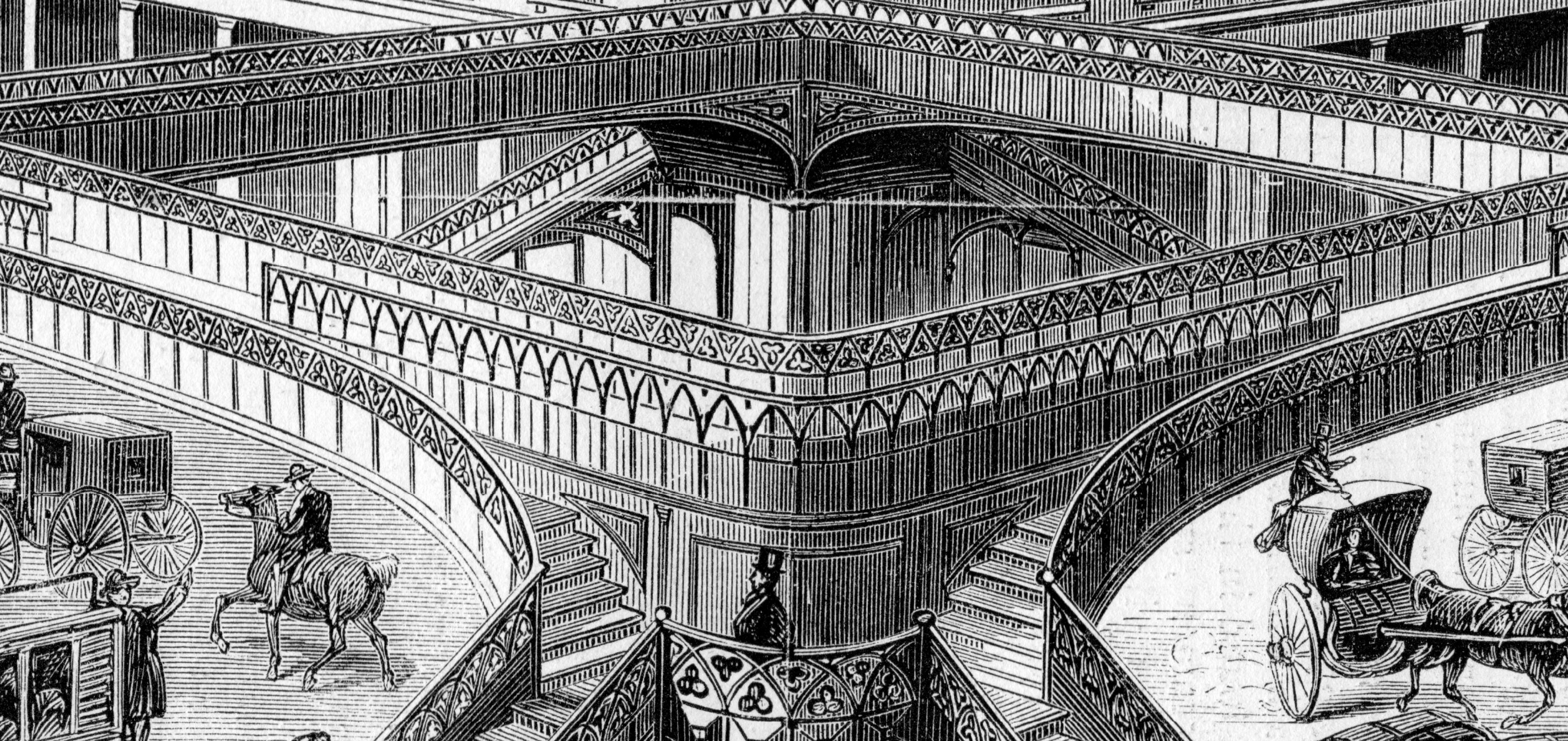
Here we have an enormously IronPunk-laden solution to the pedestrian vs carriage traffic problem, playing out in a somewhat Escher-like way, drawn by the engineer Joseph Mitchell for a crossing “over Broadway, New York”. It was published in Engineering, a magazine published in London, in 1868, intended as an example of what could be done to make London’s streets safer–evidently, they weren’t all that safe.
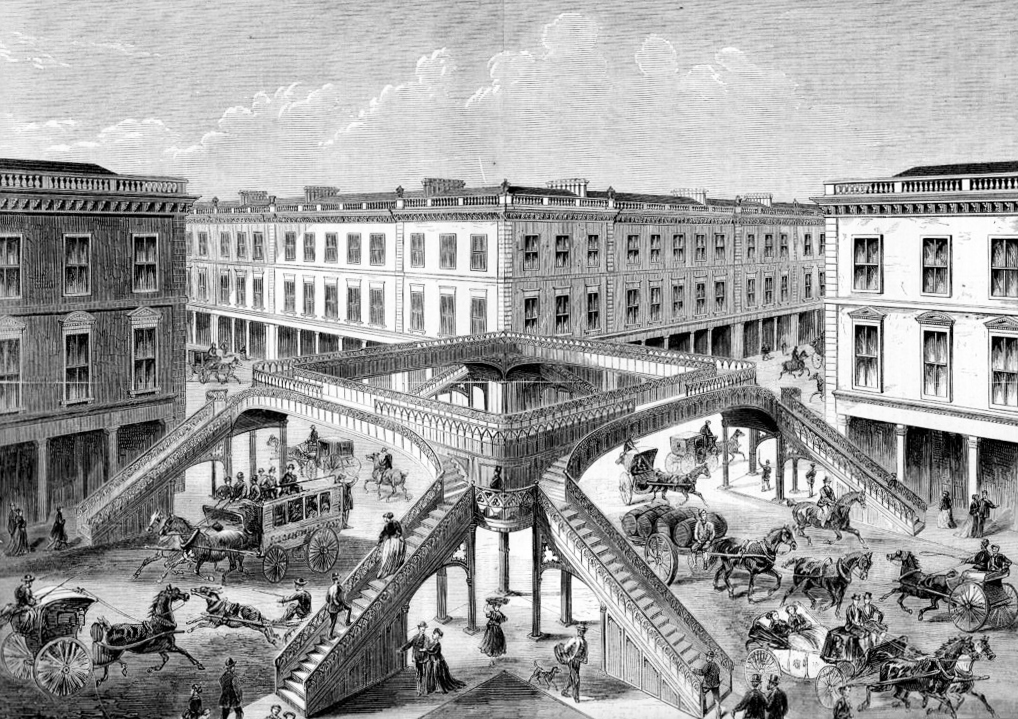
The article reports that there were 164 street deaths in London in 1867. These included 48 accidents with carriages; 59 children (6 months to 15 years); 12 women (including a 110 year old); and 44 daily workers (“in the pursuance of their calling, as carmen, bakers, coachmen, laborers”). The article insists that the dead were of the “humble class” with some degree of intoxication involved.
All (read “many”) things considered, London had a population of 3.3 million in 1871 (with NYC at 942,000 for he same period, not including the city of Brooklyn which held 340,000) and considering the state of traffic safety, 164 deaths (one every other day or so) was perhaps not too terribly high–except of course to the dead and their families. In modern London with a population of 8 million there were 3,227 traffic fatalities in the city in 2009, and 116 pedestrian deaths. That’s more than half as many as 1871 with 150% more people. Probably this is all apples and oranges…though in 1871 pollution from the traffic wasn’t really killing anyone–which is not true in 2013.
Here’s an elevation of a structure that was actually built in NYC, an elevated quad-crossing”the first practical experiment in overhead street crossings”:
It was 17’8″ high, 14′ wide, with access via 30 steps, and crossed one of the busiest intersections of Broadway. It was intended to save people from their carriage-laden fate–but people hated it, and stayed away in droves, which I think was the lasting lesson for the Brits. I guess people preferred to trust the traffic and dash across the street rather than make the 30-step climb up and then descend to the other side–too much effort.