JF Ptak Science Books Post 2124 
Several years ago I purchased part of an archive of David Katcher, who was the founding editor of the journal Physics Today.
Before that, several years before that, in 1945, David Katcher was Lt.
Katcher, serving as a correspondent/writer in the public relations
office of the U.S. Army Headquarters of the Western Pacific (GHQ
USAFPAC). There’s a 6-inch stack of paper here with what seems to be his
(and associated) mimeographed offprints of the daily grind of running
the PR department of the Army in the Philippines, which, taken as a
whole, is pretty interesting, showing the concerns and trials of the
Army in reestablishing the government and infrastructure of the
country. Some of the individual reports/publications are stand-alone,
straight-up fabulously interesting things, and so far as I can
determine, have not been published anywhere else. These two examples
are both related to the subduing of the last remnants of the Japanese
Army still fighting in the dense nether lands of northern Luzon, the
Philippines, fighting after the surrender had been made (14 August 1945)
and signed (formally, on the USS Missouri, 2 September) , fighting after the war had ended.
And in all of this comes this unexpected item, dated 1 October 1945, from “Headquarters. United States Army Forces Western Pacific, Public Relations Office, APO 707, General Release 56–Manila” and which–in the midst of the end of the war and the dropping of two atomic weapons–concerns a brave and battle-distinguished and heroic pigeon, “Blackie Halligan”.
“Blackie carried a number of messages to this location, one of which was
extremely important because it gave the location of some 300 Japanese
troops. He carried out this message despite being badly wounded. Word of
his accomplishment reached General Patch, Commander of the American
Division, who made a special trip to the loft where he decorated
Blackie. Later, Blackie saw action at other islands in the Pacific.”–CECOM Historical Site, U.S. Army, source.
Sometimes, in the midst of great loss in the throes of great victory, in the balance of stories great and true and tried, the small story of sacrifice may be the perfect antidote for large needs.
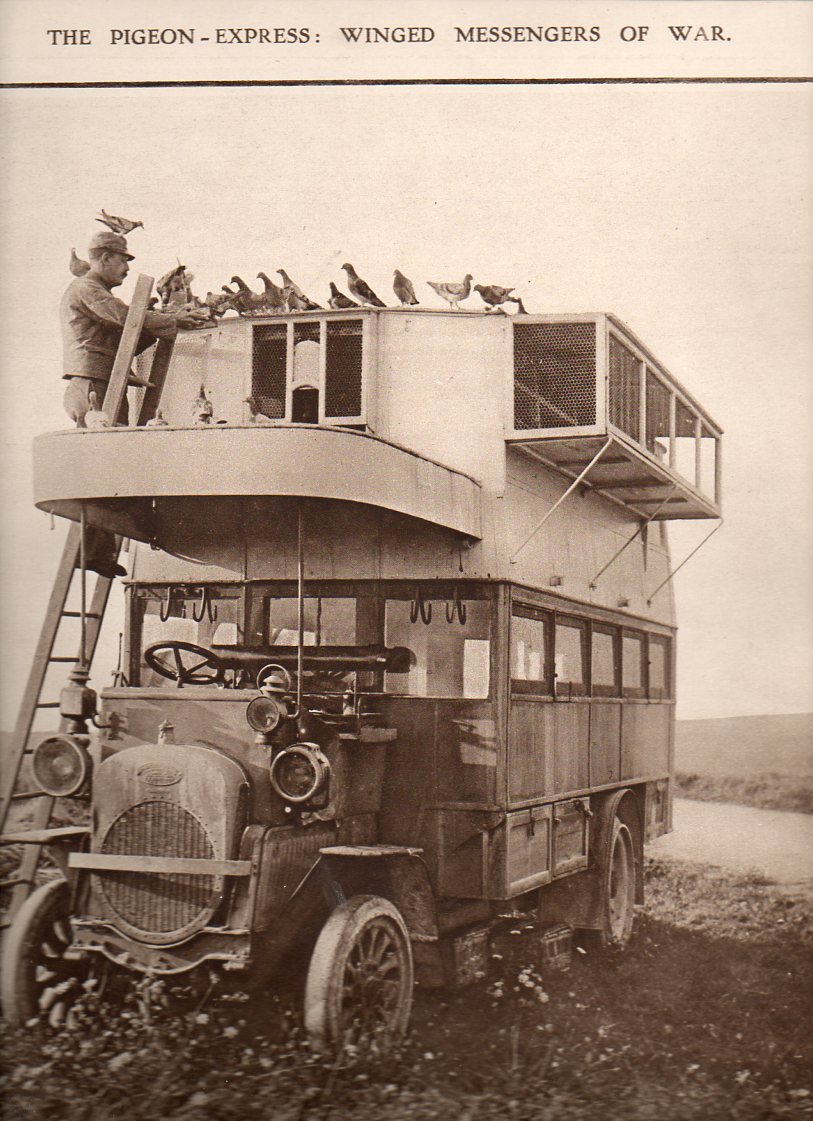
There is of course a long history to the pigeon in war, and frankly I was surprised to find this story in 1945. Most of the famous pigeons of war come from the First World War:(the image below coming from The Illustrated London News for 2 October 1915):