JF Ptak Science Books Quick Post
One of the great powerhouse collaborations in the history of earlyish modernism came on 8 May 1917, in the performance of the 15-minute operette, Parade. Spearheaded by Jean Cocteau, the piece used stage and costume designs by Picasso, was scored by Erik Satie, and performed by Diaghilev’s Ballets Russes. (It was not received indifferently–there was a major upset in the world of the critics and many hated negative response from the audience, evidently much like that received by Stravinsky’s Rite of Spring at its premier seven years earlier, also featuring Diaghilev’s Ballets Russes.)
The image below is a maquette of the stage by Picasso:
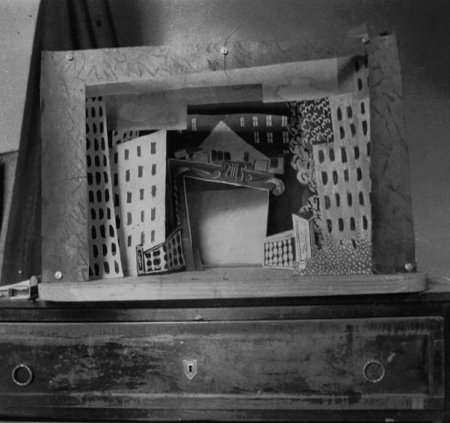 [Source]
The spirit of this object reminds me of Paul Klee’s private puppet theatre productions for his son Felix, which includes this fantastic stage:
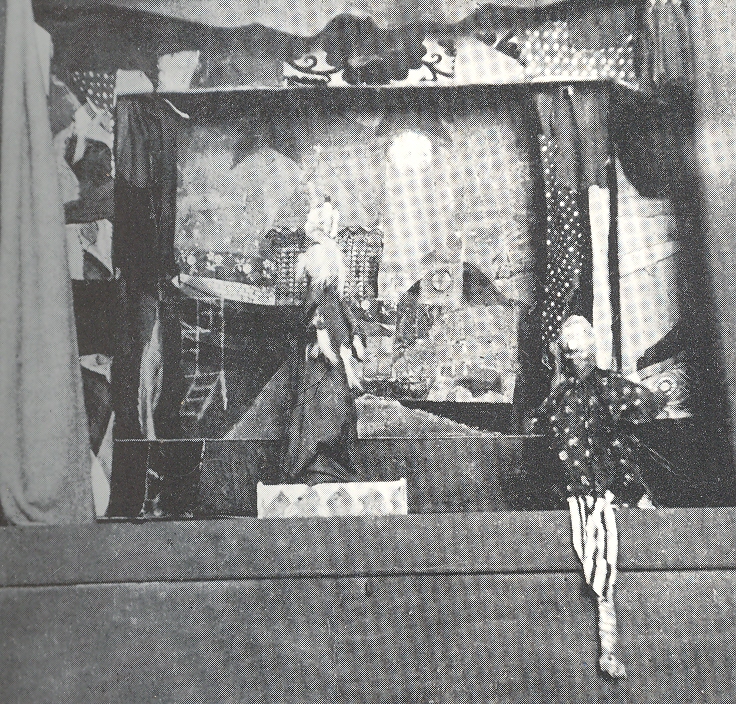
[Source: earlier post on this blog, here.]