JF Ptak Science Books Post 2820
“The Most Awful Spectacle in History” screams the headline of this full-page (16″ tall) Illustrated London News advertisement for the “Save the Children” fund, appearing 22 May 1920. There was good reason for the screaming–following the Great War there were millions and millions of people in dire need of food in the months and years following 11.11.18. Hundreds of thousands–millions–of these people were children. The ad makes a direct plea for the sake of the children, where the reader is told that in some districts there is “not a child under the age of 7 years”, as all have died. To not donate a penny or a shilling and allow the catastrophe to continue would mean that “we are for ever humiliated in the eyes of God and Man”.
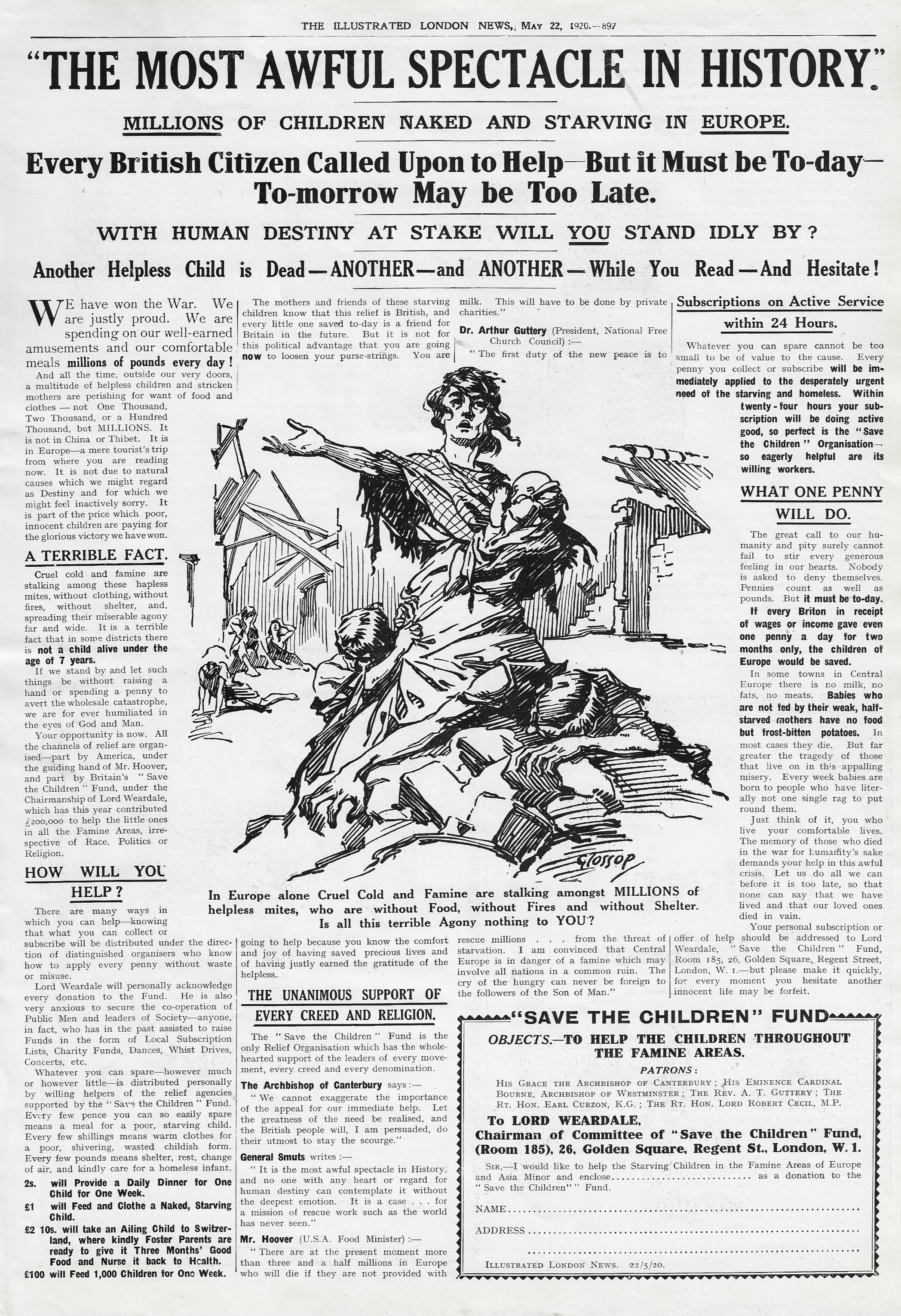
With assistance from other countries–including the U.S. where the effort was spearheaded by Herbert Hoover–the Fund raised more than a million pounds and averted an enormous catastrophe. Unfortunately, a larger disaster loomed to the east–the Great Famine in Russia of 1921-1922 (following by just thirty years the Russian Famine of 1891-2)–and in rhis circumstance the relief efforts failed. The Russian famine began with a natural disaster which was then inflamed by complete (sometimes intentional) mismanagement by the government, the result of which caused the deaths of between five and eight million people. Hoover–as Secretary of Commerce–guided the Russian Famine Relief Act spending of 20 million dollars for the purchase of U.S. foods to be sent to Russia, but the combinations of political intrigue, capital mismanagement, and of course natural disasters leading to more disease and death, left millions dead.
As the 1920 ad sums the situation: “the cry of the hungry can never be foreign to the followers of the Son of Man”–but they were, and are.