JF Ptak Science Books Quick Post
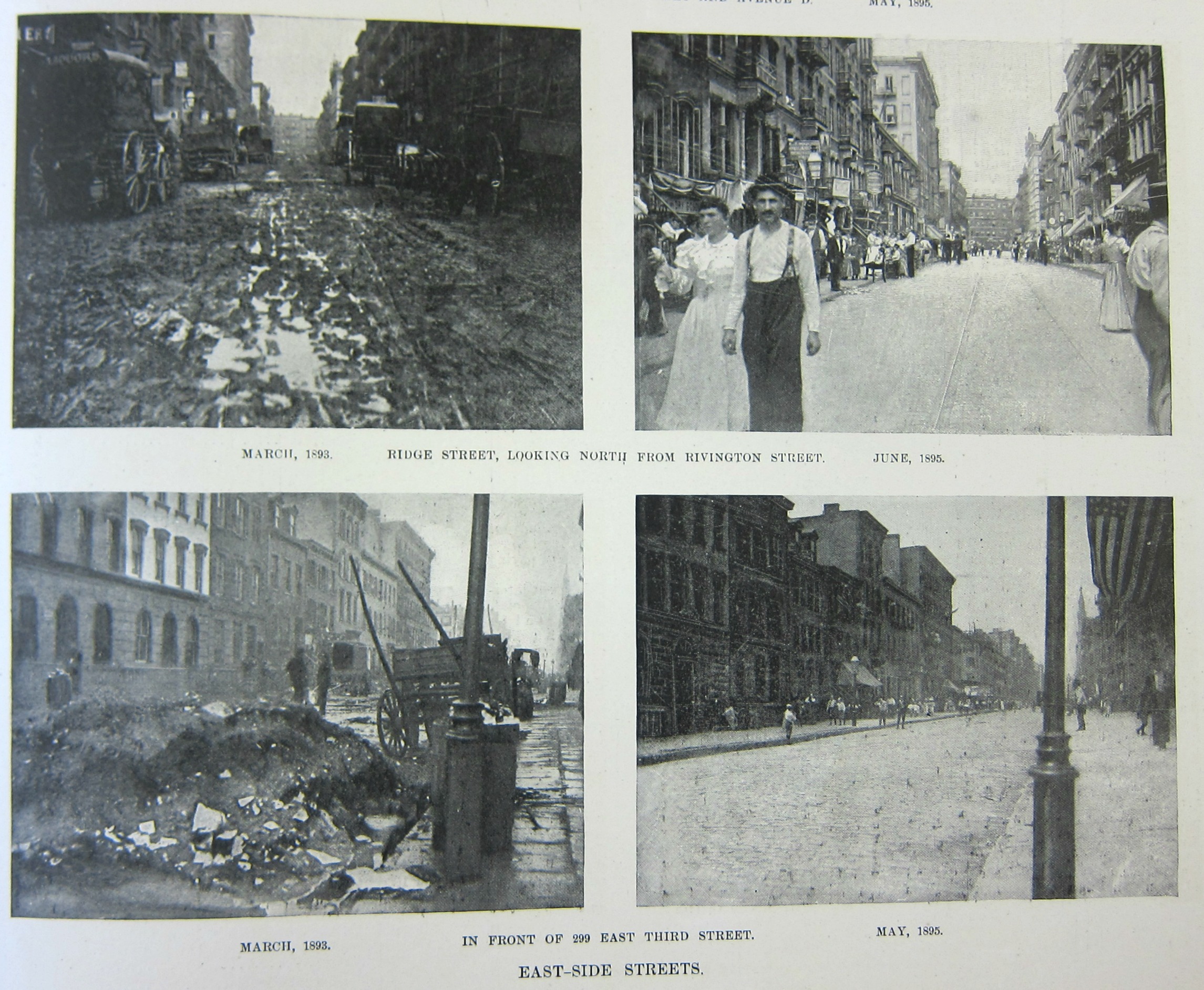
This is one of four images from the May 25, 1895 issue of Harper’s Weekly, and they show eight different views of before-and-after photos of filthy city street cleaned up and maintained by the Civil War vet Colonel George E. Waring. Waring (1833-1898) was also an engineer and a sewer pioneer, and was responsible for instituting a real department of sanitation in New York City. To that end he hired some 2000 men and put them in white uniforms to perform their functions–the uniforms gave the workforce a dignity and also made the population at large aware that there was a serious and dedicated effort to clean the city–it was a brilliant success.
This story is told in the six pages (located below) from the great social observational/photo-documentarian Jacob Riis’ The Battle with the Slum (1902) describing Col. Waring’s efforts to clean the streets of Lower Manhattan. Riis is vicious with his treatment of the Tammany political machine for not undertaking any real effort to reduce the amount of street waste/filth, and heaped much praise on Waring, who he declared as the first to open the slums up to the light. That is just about right, and probably understates the case somewhat, as he was responsible through these efforts in saving the lives of thousands of people and improving the living condition for most of the city, in general.
Evidently the photos from Harper’s are sometimes credited to Riis, though evidently it seems that the experts say he only used these images made by someone else for his 1902 book. No matter–Riis did much else.