JF Ptak Science Books Quick Post
The following pamphlet covers are just a few of the hundreds of Joie de Huh? examples of Pamphlets With Big and Cumbersome Titles Collection. They have a sustained abstract poetic transcendental-Outsider feel to them, which certainly fill up a page with their confusing bigness. I might be able to make a whole wall of these things, which I would suggest to be a bad wall for a bedroom.
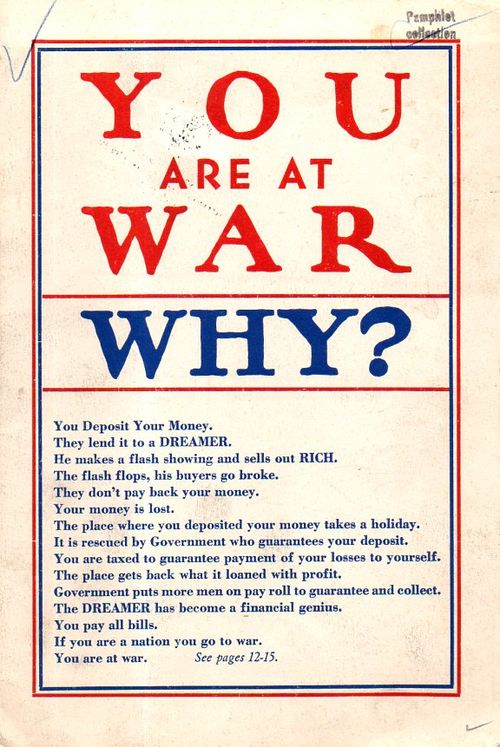
The first has a definite feel of 1918 to its design, but was actually published in 1940, before the U.S. was actually at war. There is an inescapable feel of an uncorrected take-home assignment for a logic course to it:
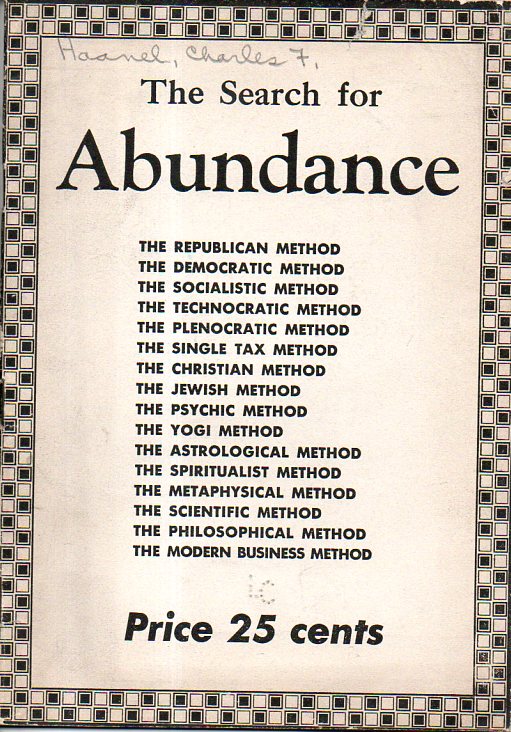
Next, Charles F. Haanel’s abbondanza-y The Search for Abundance, which was published in St. Louis, Mo. in 1937, and seemingly so by the author. (It is a simple 31 pages long, and didn’t seem to get spread out very much–there are no copies located via WorldCat/OCLC, and my copy from the Library of Congress seems to be one of the copyright deposit copies. After considering the list of names on the front cover for their attainment of “abundance” the writer decides that none have been successful, and that the true method is via an AynRandian Natural Law something, which really doesn’t get explained. The work may have been swallowed up by the abundances of the future that it tried to portray.
And to go with your next sip of coffee/tea (Mr. D.) is this bouncing title, which is sort of the way the entire pamphlet reads. There are many exclamation points inside along with a lot of very (to me) obscure references to not-obvious political figures, all of which is wrapped around a comedic sense of irony that makes it very difficult to figure out exactly what the complaint is, and on what side of the aisle the author comes down on. Nowadays that would be a masterful stroke by a politician, but the author here definitely had an agenda, though given everything I can’t really determine what it was.
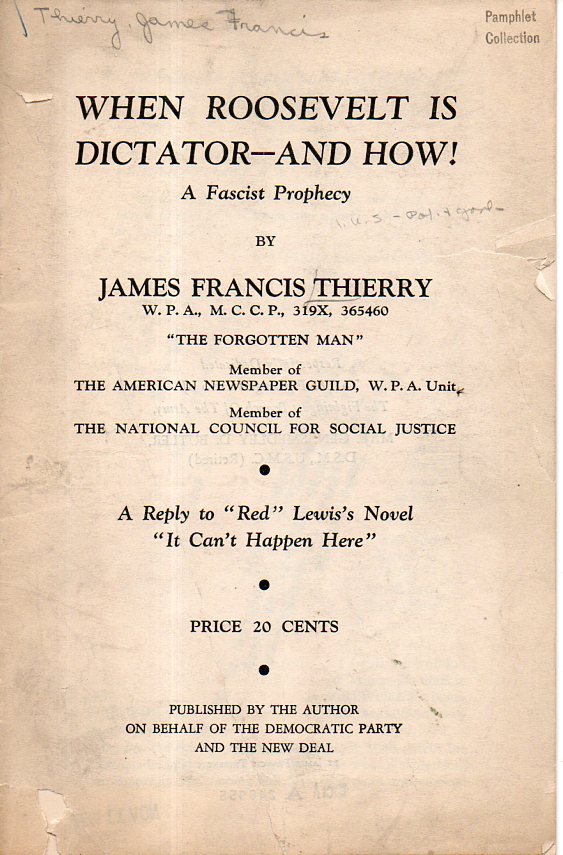
(This one didn’t seem to survive, either–again my copy appears to be a copyright deposit copy, and WorldCat/OCLC lists only one lonely copy in the Yale library.)