A Daily History of Holes, Dots, Lines, Science, History, Math, Physics, Art, the Unintentional Absurd, Architecture, Maps, Data Visualization, Blank and Missing Things, and so on. |1.6 million words, 7500 images, 4.9 million hits| Press & appearances in The Times, Le Figaro, Mensa, The Economist, The Guardian, Discovery News, Slate, Le Monde, Sci American Blogs, Le Pont, and many other places… 5000+ total posts since 2008.

Category: Perception

  • Layers of Influence: Dante’s Inferno and Pozzo’s Perspective

    JF Ptak Science Books LLC  Post 934

    I’ve
    written several times in this blog about unusual perspectives in antiquarian
    images—namely, views looking straight up and straight down.  They really don’t exist, much, in the
    post-Daedalus pre-flight days, what with given the difficulty of fabricating non-cartographic
    images from the ground.  

    Next
    on what might seem to be a very obvious list of non-obvious interests are images
    with layers, levels, sections, plans, projections…sideways columnar views, locating objects
    in space and time. But mostly looking at things straight-on, ad then showing
    their relational layers.  As it turns
    out, these sorts of creations aren’t very much seen in the pre-modern
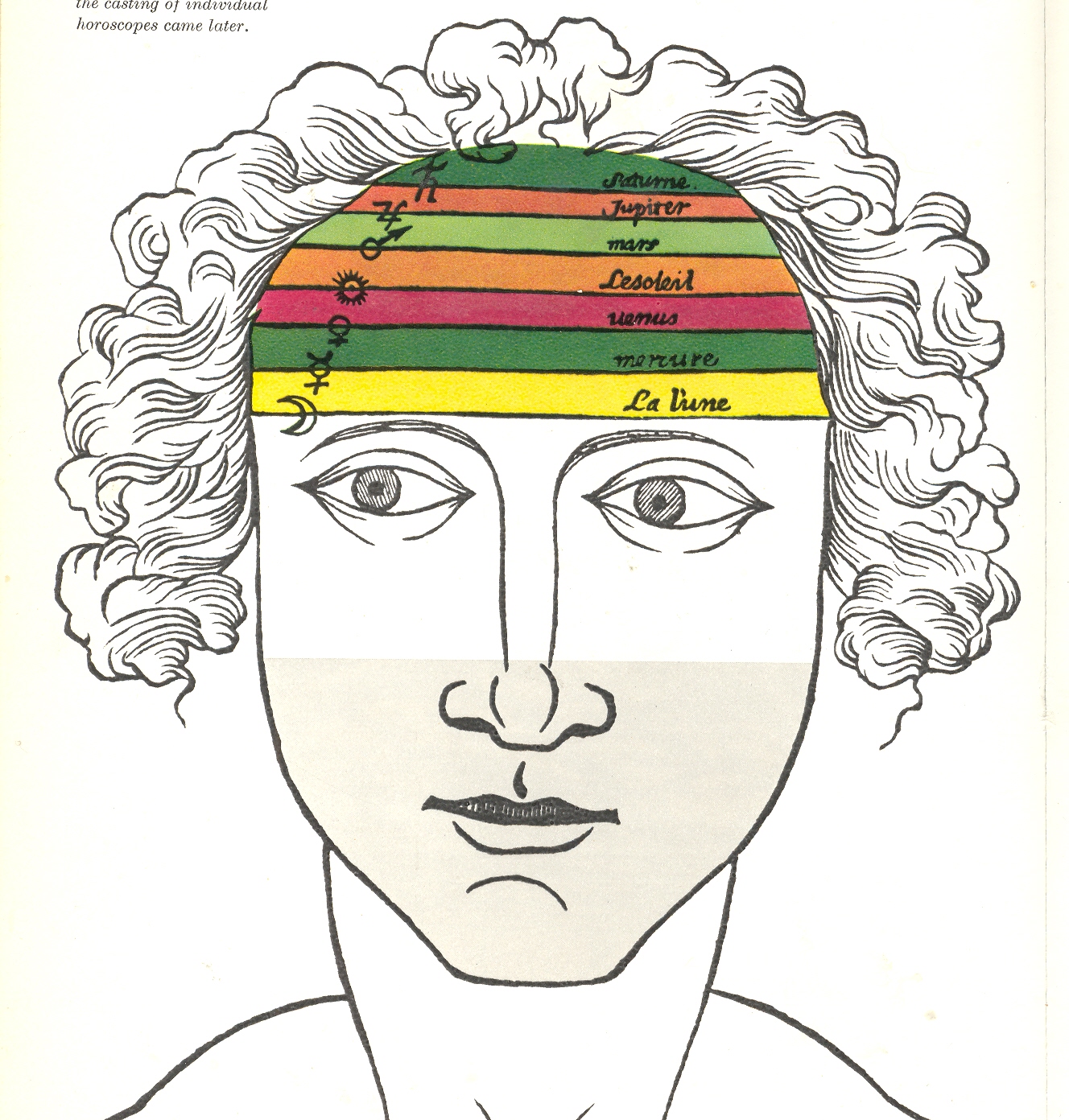
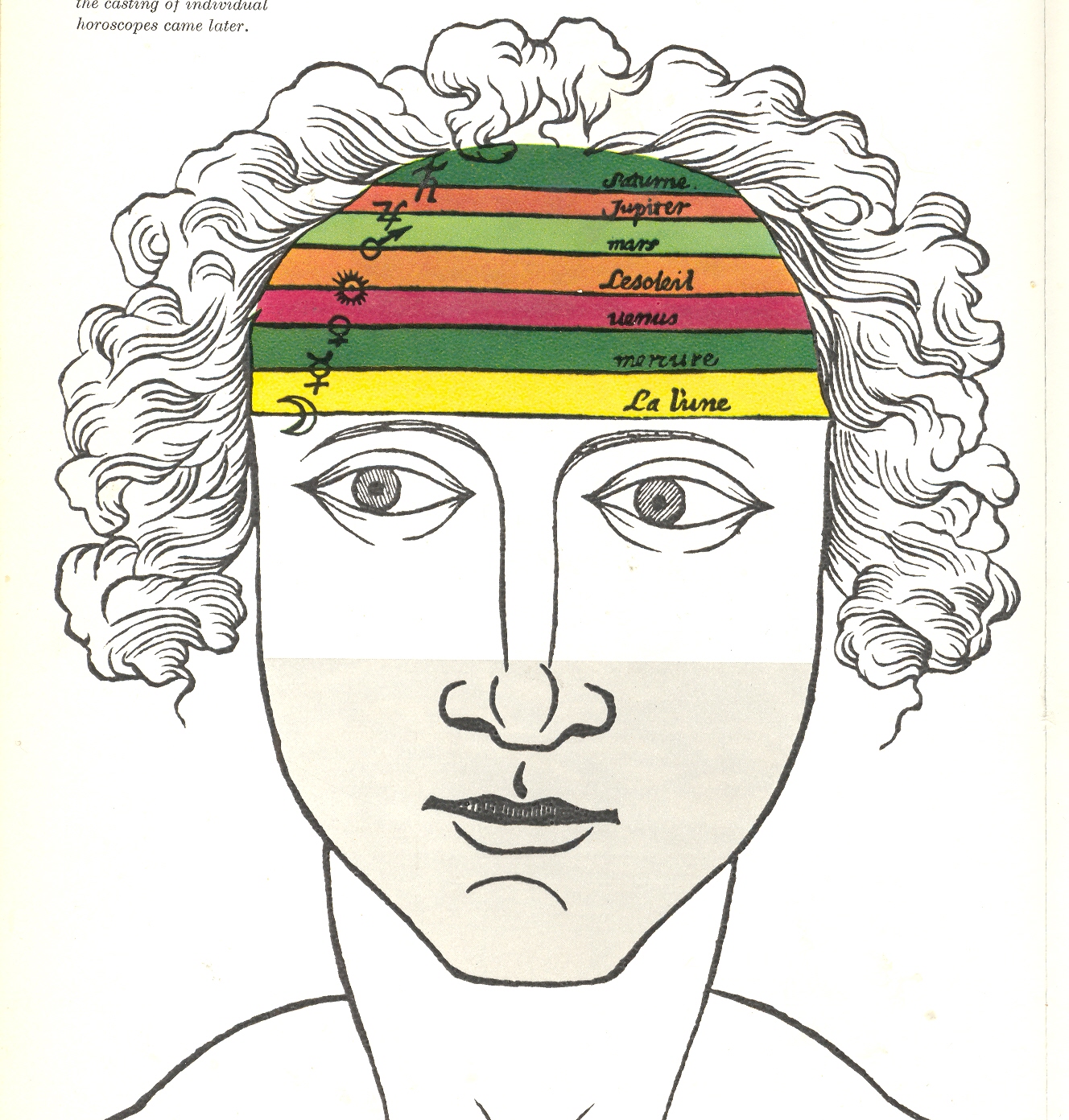
    geological era (say, prior to the 1790’s).This is a good example, an astrological man, showing the influence of the planets (and sun and moon) on the different layers of the brain:

    Blog--feb 9--arstro man Blog--fe 9--mole map


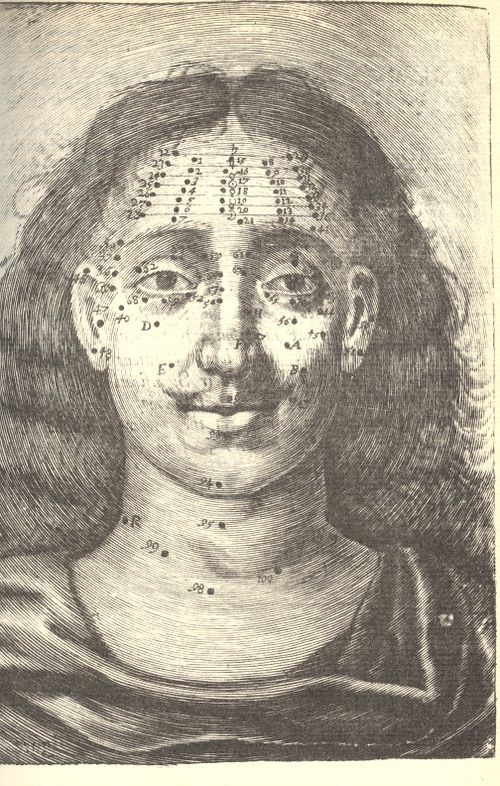
    Differentiated, say, from Richard Saunders’  Mole-map man,  (right) where facial (and etc.) moles were used as maps to determine some sort of specific actions on the organs underneath (and also by a tea-leaf divination, where the mole lines were connected and disconnected, and interpreted, according to the needs/whims of the observer):

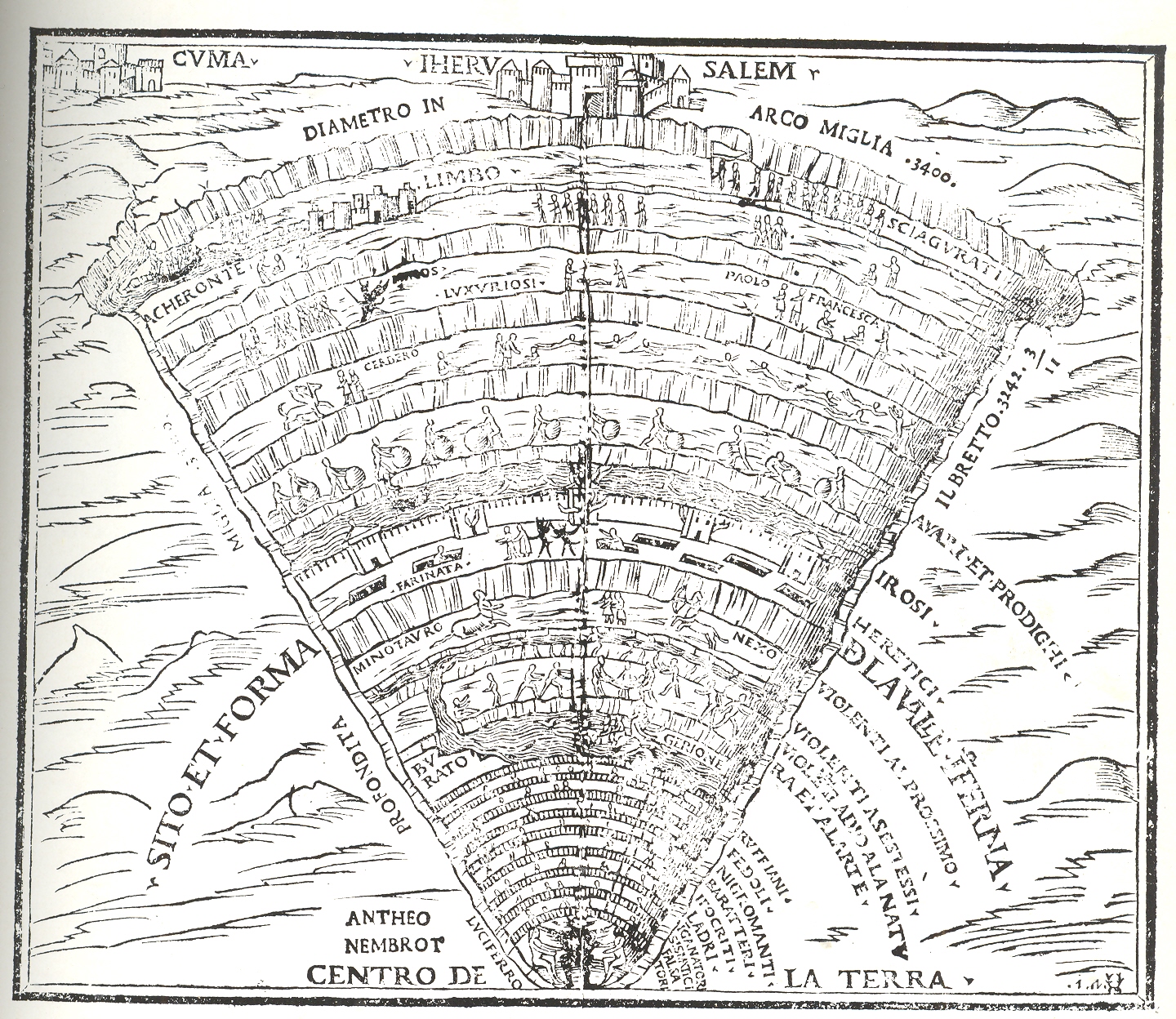
    The classic sort of image may be something like this fantastic depiction of the Inferno of Dante (shown here in the Comedia published in Venice by Gregorio de Gregoriis in 1515:

    Blog--feb 9--dante

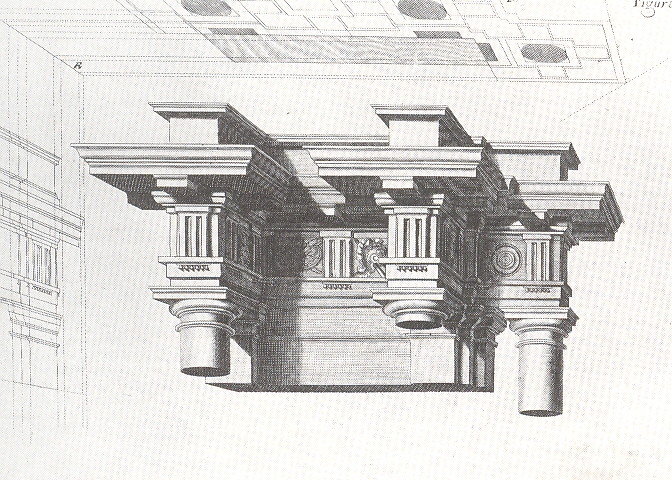
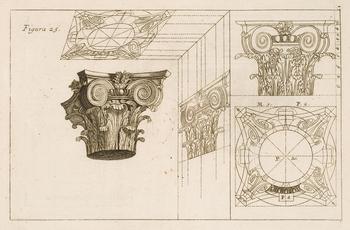
    The fantastic Jesuit Andrea Pozzo published results of his researches on perspective in his Perspectiva pictorum et architectoru (1693), explaining how he was able to compellingly, unbelievably  represent three-dimensional images on two-dimensional spaces, this image showing plan and projection and profile, effectively giving you a three-dimensional cross section of the architectural element:

    Blog--feb 9--pozzo column 

    And again:

    Blog--levels--pozzi column 

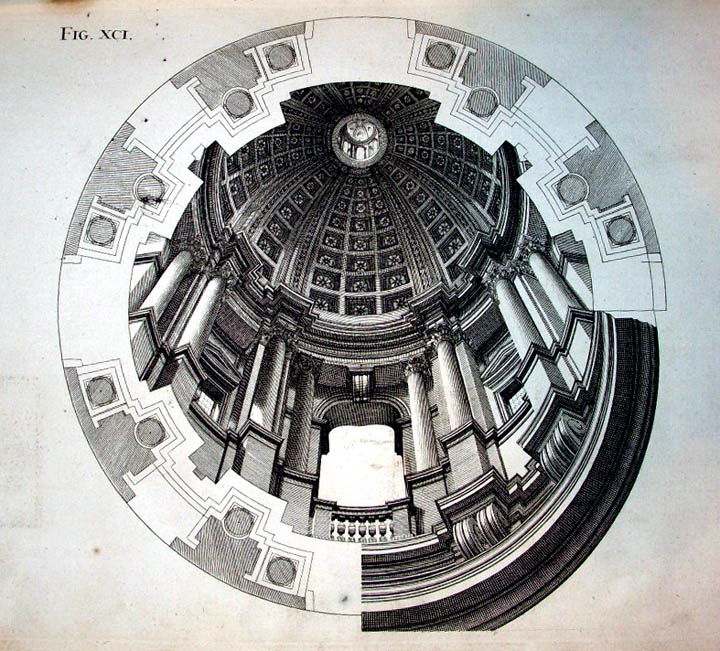
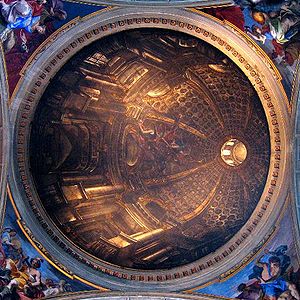
    And of course his masterpiece displayed, which is an engraving showing the plan of a flat ceiling of St. Ingacio in which he painted his magnificent trompe l’oeil masterpiece:

    Blog--levels--pozzi dome 

    Pozzo color

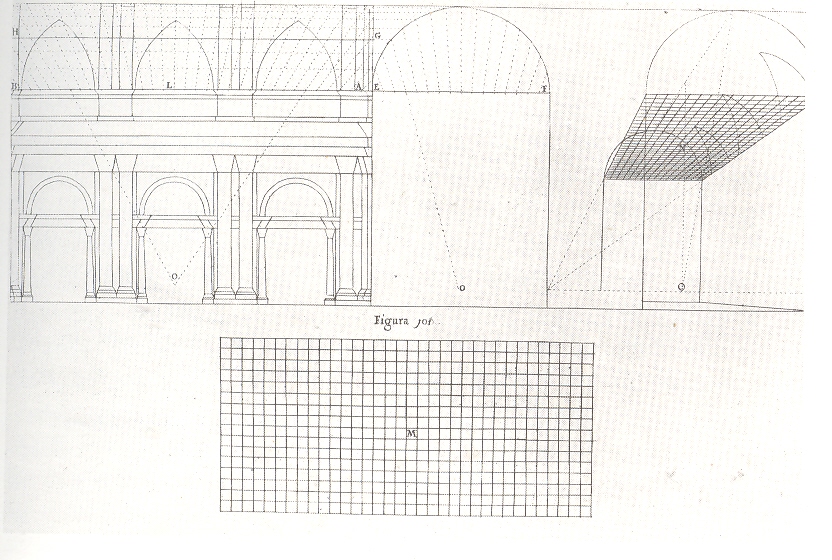
    Also in a way appropriate to this ramble is the explanation diagram by  Pozzo’s found in Martin Kemp’s The Science of Art, Optical; Themes in Western Art from Brunelleschi to Seurat, showing the imaginary depth of a deeply illusory painting on a (basically) flat ceiling surface:

    Blog--feb 9--pozzo ceiling

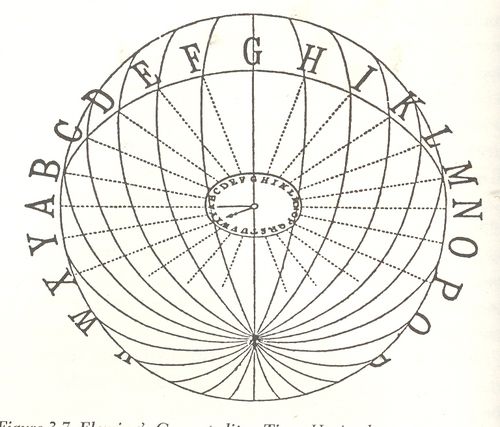
    Also in consideration for this area is Sir Sandford –the inventor of Standard Time–Fleming’s wonderful idea for a G-o’clock world, a same-time-everywhere planet, with his 1879 diagram illustrating the earth-penetrating time principles so:

    Blog--feb 9--fleing clock(Image source: “Time-reckoning and the selection of a prime
    meridian to be common to all nations” in the Proceedings of the Canadian Institute, Toronto, 1879 published by Copp, Clark)

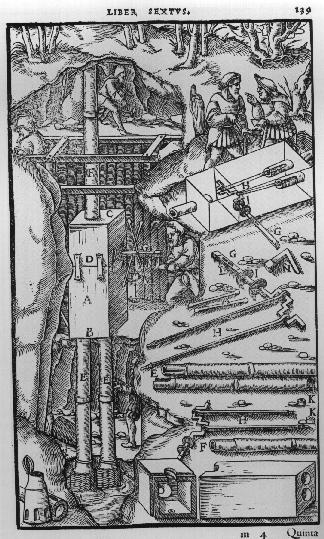
    Agricola’s De Re Metallica (from the first Latin edition f 1556) displays many interesting cross sections of Renaissance mines:

    Agricola 

    There’s much more to come in this area, of course–this is just what I had time to deal with this afternoon, though the this task is much more complicated in the 18th century world than in the 19th, when we find cross sections of the earth and  the oceans. But I’ll close here, with all faults.


  • A Short Look at Fifths and Fives: Joltin’ Joe, Legal Sausage and the Structure of Mathematics

    JF Ptak Science Books LLC  Post 925 

    I’m going to take a drive through five
    fifths—all of which don’t come close to making a whole—to get to my ultimate
    destination, a ribbon of numbers circling the earth.

    In
    American lDimaggioaw, “taking the fifth (Amendment)” allows you the prohibition of
    incriminating yourself, giving the supposed ability to look innocent whole not
    saying anything about anything for fear of legal repercussions, though this
    sausagey implosion from guilt seldom looks pretty. 

    There’s
    the fifth column (as in Hemingway’s play by this name), the
    not-fourth-but-fifth force, the musical perfect fifth of highest consonance,
    the Keplerian nestling of the five Platonic solids,  Beethoven’s Fifth, a fifth of (good) scotch,
    the fifth cardinal direction (the center), the five books of the Torah, the
    five pillars of Islam, the worst categorization of hurricanes and tornadoes, living
    in the fifth Mayan world, the fifth Fibonacci number, and on and on.

    And
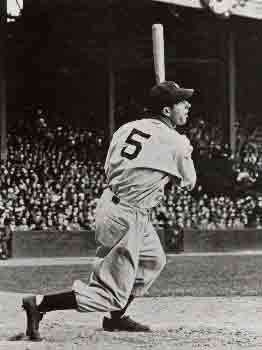
    aside from being the number that Joe DiMaggio wore on his pinstripes, it is
    also the number of the  Euclidean postulate that called to all those who were
    interested in the possibilities of the postulate not being so—that there exists
    as perfect a non-Euclidean system as there is for the Euclidean.  The fact of the matter is that this calls
    into question the foundation, the very basis, of mathematics.  Or used to.

    Blog feb 1

    All
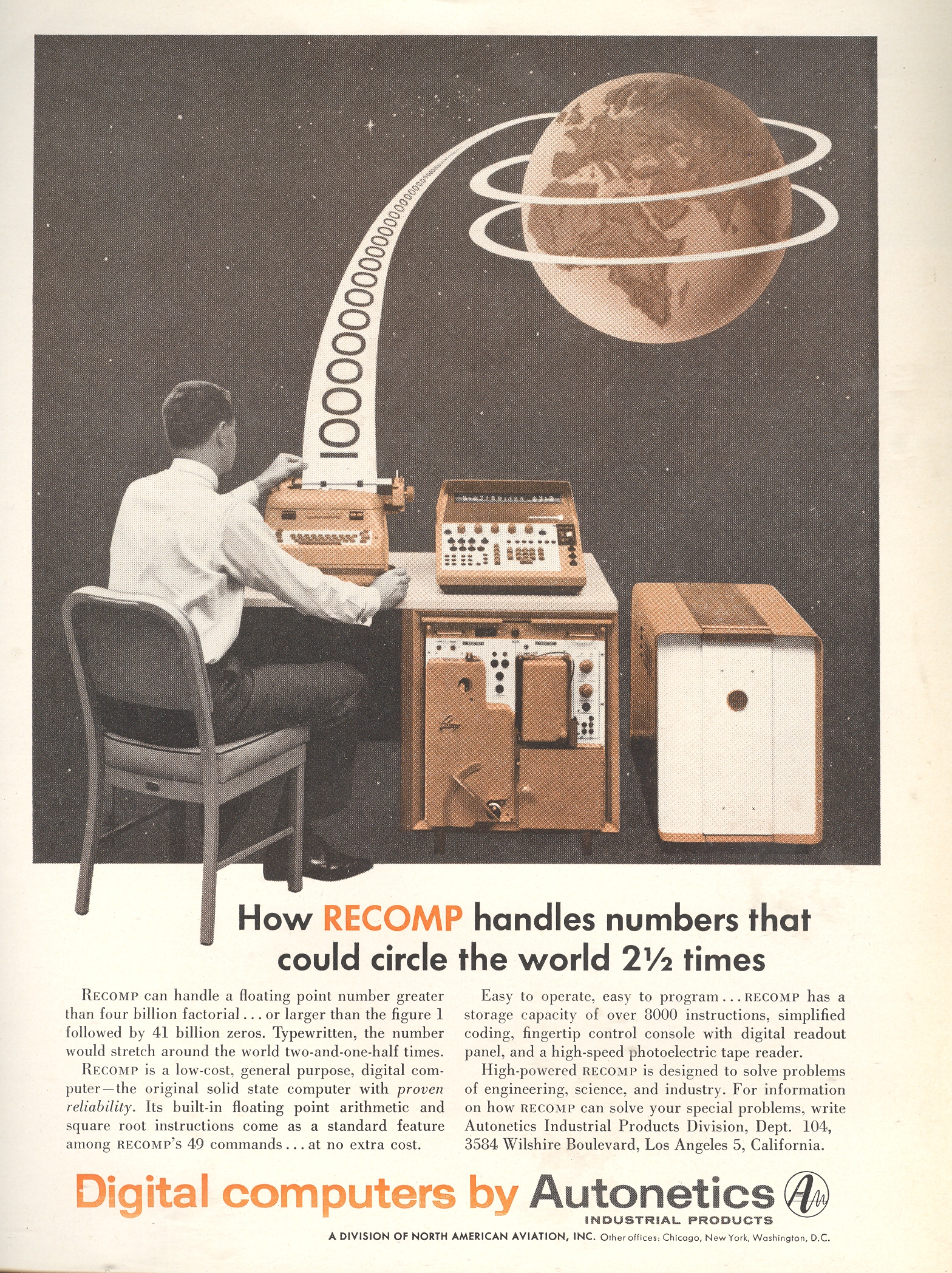
    of this was brought into mind by this 1957 ad for the RECOMP computer produced
    by Autonetics.  The image of a sheet of
    numbers circling the earth1, the product of digital computation, suggested
    structure, mathematical imperative and solidification of numbers.  But the point of this was the bottom line:
    what was the point, and for that matter, what was the point?  They were hardly physical things floating in
    space, but ideas (except of course in the worlds of Flatland). 

    Euclidean
    structure was the infallible, rigid, predictive, explanatory structure and the
    most accurate descriptor of physical space. 
    This had certainly been the case for fifteen hundred years or so, or at
    least until the struggling fifth postulate of Euclid’s Elements became really, well,
    unwieldy.  More to the point, the axiom,
    the parallel postulate axiom, wasn’t as self-evident as the first four, and
    wasn’t provable from the other nine of the first ten axioms.  And so came the unbelievable question, what
    if the fifth postulate wasn’t true?  What
    if there were other geometries—non-Euclidean geometries—that were as provable
    as that of the Master?  The possibility
    of relegating the understanding of nature and the physical surroundings to
    something other than the existing geometry was simply, positively,
    extraordinary. 

    The
    origins for this movement away from Euclid started with Girolamo Saccheri (his
    book published in 1733 but not “discovered” for its non-Euclidean importance
    for another 150 years) Georg Kluegel (1763), Johann Lambert (Theorie der
    Parallellinien,
    1766) and Adrien-Marie
    Legendre (1752-1833, who was sort of in a similar boat with Saccheri in that
    his work wasn’t actually published until after that of the next two
    mathematicians); and coming to a point of real invention in the work of Nikolai Lobachevsky (1792-1856) and Janos Bolyai3 (1802-1860). (It would be
    incorrect to credit these last two men [plus Gauss] with the creation of
    non-Euclidean geometry given the longish and complex history of its
    development.)

    This
    work brought into question the way in which the world was seen, and the very
    foundation of recording visualized space. 
    This is all much messier than had been planned (so to speak) by almost all
    previous mathematicians, questioning the very foundations of mathematics.  The orderliness of the earth-circling numbers
    doesn’t seem to be quite as they were, but as Henri Poincare stated, the “new”
    system isn’t anything better or worse, just different,  a new and more convenient way of looking at
    things4.

    Notes

    1. To be honest about it, the
      foundations of math bit didn’t suggest itself right away.  The first thing I thought when looking
      at what this paper trail was supposed to represent—a string of numbers 41
      billion zeroes long—didn’t look right. 
      Given the size of the numbers coming out of the “printer” there
      would need to be five times as many rings around the earth.  But when you read the text the numbers
      are supposed to be “hand written”. 
      Therefore if you assume the numbers to be less than an inch high
      and with no spaces in between, then this 2.5 times around the earth works
      out to be accurate to the number of inches in the circumference. 
    2. Still earlier work is found
      in the work of  Omar
      Khayyam
      ‘s Discussion of Difficulties in Euclid, John
      Wallis
      and Nasir
      al-Din al-Tusi
      … among others.
    3. Bolyai’s work—published as an
      appendix to his father’s work on the foundations of geometry—was privately
      reviewed by the great and impossibly smart Carl Gauss, who gave it a backhanded
      series of compliments while at the same time saying “I thought so…”  Which was true, evidently, as it looks
      as though he was working on the problem beginning in 1799.
    4. “If geometry were an
      experimental science, it would not be an exact science. it would be
      subject to continual revision … the geometrical axioms are therefore
      neither synthetic a priori intuitions nor experimental facts. They are
      conventions. Our choice among all possible conventions is guided by
      experimental facts; but it remains free, and is only limited by the
      necessity of avoiding every contradiction, and thus it is that postulates
      may remain rigorously true even when the experimental laws which have determined
      their adoption are only approximate. In other words the axioms of geometry
      (I do not speak of those of arithmetic) are only definitions in disguise.
      What then are we to think of the question: Is Euclidean geometry true? It
      has no meaning. We might as well ask if the metric system is true and if
      the old weights and measures are false; if Cartesian coordinates are true
      and polar coordinates are false. One geometry cannot be more true than
      another; it can only be more convenient.” –from:  M J Greenberg, Euclidean
      and non-Euclidean geometries: Development and history.
      (1980).

  • How FDR Made Women (1) Nervous and thus (2) Older. An Appeal to Vote Republican, 1936

    JF Ptak Science Books LLC  Post 921

    Blog jan 28 protext women

    {This continues “The Coming Sex War of 1919“)

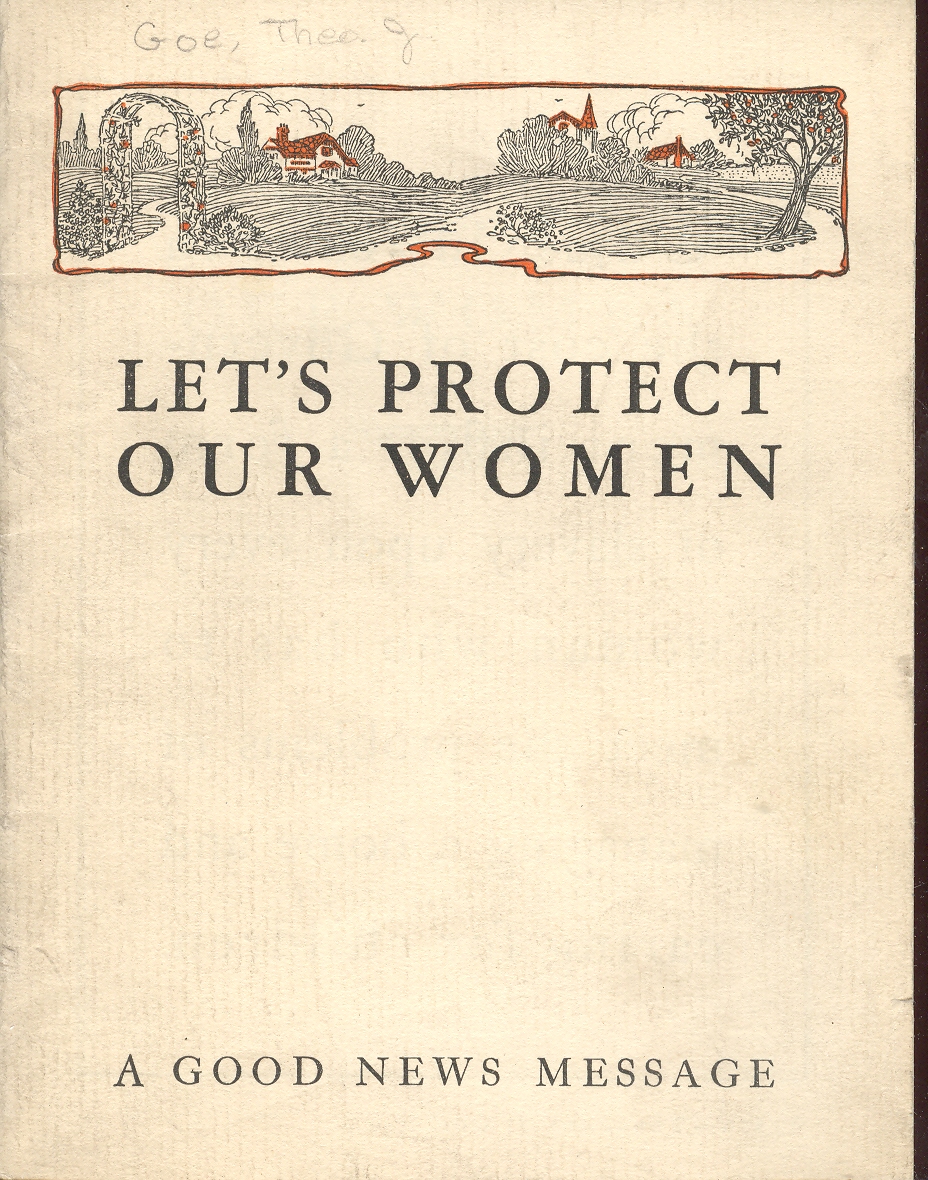
    Theodore J. Goe, the author of “Let’s Protect our Women”, must
    have been a synesthete, with the ability to smell the future.  My copy of this pamphlet used to be the
    Copyright Deposit copy, and is dated January 18, 1936, and what Mr. Goe was
    smelling were the winds of the November presidential election; and since he was
    a Republican—or at least an anti-Rooseveltian—what he smelled was outrageous
    defeat for his cause. 

    And so he wrote this elegantly-produced little oddness,
    trying to dip into the wellspring of the enfranchised female vote (just sixteen
    years old at this point), trying with fatherly will to scoop women out of the
    harmful ways of Roosevelt’s policies.

    The “protection” that women needed was for uncertainty which
    led to nervousness and which attacked their youth to send them into a slavery. The
    thinking here went sort of like this:  women were being attacked by FDR, who was “cruelly
    prolonging the depression” by not helping people with jobs, thus depriving their men of a fair wage which is what made
    women happy; without the “happiness” of a husband with a good job, “life
    becomes more serious than it should be”; this fights against “national
    influence which tends to rob [women] of their youth”, making women older
    sooner. And it was this premature aging that the women are to vote against in
    1936.

    Mr. Goe may well have been a crank, but to him and his
    readers this thinking might’ve made some sort of contemporary sense, after a
    fashion.  He did forget that women made
    up more than 30% of the workforce at this point, and had more sources of
    happiness and youth than a man with a decently-paying job, plus having a life
    and opinion outside of serving home/hearth/husband, but no matter. (This, by the way, is where Mr. Goe thought American women lived:)

    Blog jan 28 protext women det Women didn’t rush to aid FDR’s competition in the ’36 race,
    when Roosevelt redefined “landslide” by crushing
    his Republican challenger, Kansan Alf Landon. 
    There wasn’t any election like it since the two-party system became nationalized
    80 years earlier, Landon loosing to Roosevelt by
    an electoral balance of 523-8. Landon swept Vermont
    and Maine,
    with FDR taking everything else.  (No one
    would quite clear the plate like this ‘till Reagan turned Walter Mondale
    inside-out in 1984, 525-13.)

    Landon was a decent man who had an interesting
    post-political career—even so, it’s a good thing that he lost.


  • Red Sky in the Renassiance: the Reverse of Geometry

    JF Ptak Science Books LLC  Post 913

    What
    if our eyes worked in the “opposite” way? 
    What if we somehow broadcast the lines of reality from our eyes1 rather
    than receive photonic emissions from the physical world, that we didn’t specify
    the wavelength and frequency of light, and that somehow electromagnetic rumblings
    in the “visual range” didn’t apply to our sense of sight?

    Blog jan 17 francke

    This
    would certainly make for an interesting  existence
    if somehow the elements around us weren’t necessarily so.  Perhaps this is sort of replacement reality
    is just what has been going on in the entire history of humans, altering the
    landscape to make it more suitable for our existence, a long history of
    painting the physical landscape with something more “suitable”, an
    individualized creation. 

    This
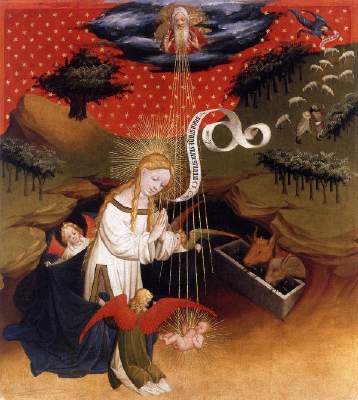
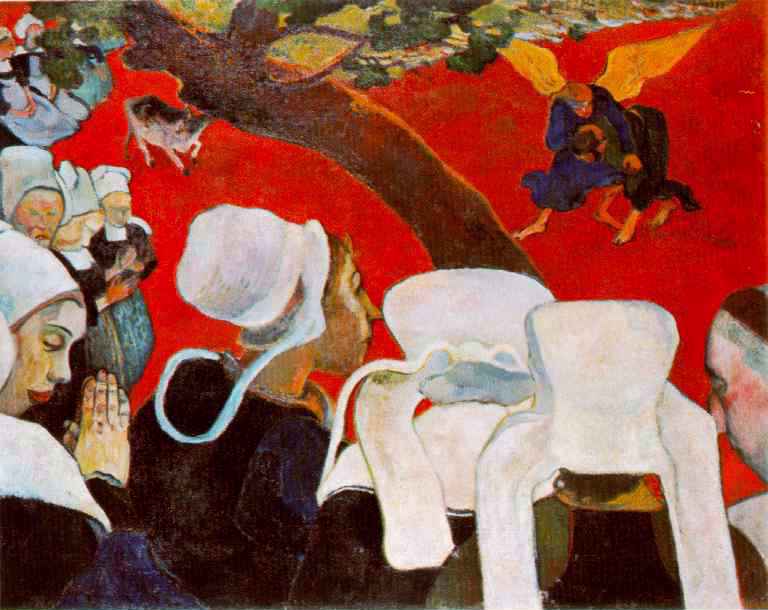
    all came up wondering about this fantastic sky, produced 475 years before
    non-representational art and 455 years before Gauguin started applying big blankets of red2 :  it seems to me
    in a distant impression that it is a representation of vision that is more a projector
    than a camera..  The end result of this
    emission and wayward thought is the fabulous red sky in the painting Nativity by Master Francke3 (ca.
    1424-1436) is a fantastic red sky with lustrous stars.

    The
    painting is otherwise filled with the common reliables of Renaissance iconography
    concerning the nativity:  the place of “birth”
    (a stable or barn-like building, also sometimes appearing as a classical ruin
    or cave), a flock of sheep, a stand of trees, and the watch sensate gazes of the near by
    beasts.  Mary is ecstatic in the same ways
    that Joseph is usually not—to me, he usually seems pretty detached from the
    whole deal, lost in another space.  The
    baby Christ is again just a little man (and not a baby) laying there on the barren
    ground.  [I’ve wondered about Joseph’s
    detachment:  perhaps the whole scene is
    nothing but mysterious, a complexity far removed from his reach and
    understanding, a notion of an act that is so phenomenal that there is no
    retrievable reaction for it, and so he looks away.  Later on in the history of Mary and Joseph,
    and deep into the 19th century when the Immaculate Conception—that is,
    the sexless conception of Mary the mother of Christ which she would later accomplish
    for her own baby—the issue of Joseph’s own virginity comes up, mounting the
    confusion no doubt in Joseph’s already-full head.]

    But
    back to the sky:  certainly skies and
    backgrounds of pure gold and blue painted by the masters in Sienna
    and Florence
    abound during this time, but red is quite unusual.  The sky is accented by the terrific red of
    the wings of the angels and more softly so in the hair of the (long-fingered) Madonna. 

    There
    is also the issue of the hole in the sky, revealing the large-handed Creator with glimpses
    of the alternate, higher, existence visible in the background, a taste of the
    alpha (or omega?) part of the long arch of Earth-borne humanity.

    Notes

    1.The discussion of optics and vision is one of the most spectacular conversations ever held in the history of science and philosophy (along with “time”, “motion” and “the void”.  I think that Leonardo would’ve come closest in relatively-modern times to understanding vision if he had the real capacity of dissecting the eye (which in spite of many approaches to experiment) would always go flat, leaving him with an unsatisfying mess.

    In Aristotle’s Physics (Book II, Part II) we find the following fascinating thought:

    “Similar evidence is supplied by the more physical of the branches of mathematics, such
    as optics, harmonics, and astronomy. These are in a way the reverse of geometry. While
    geometry investigates physical lines but not qua physical, optics investigates
    mathematical lines, but qua physical not qua mathematical”

    A classical position of the emission theory of optics is stated by Hero in his Definitions:

    “Optics does not deal with physical questions and does not study whether given rays
    flowing out from the eyes go forth to the boundaries of objects or whether images that are
    detached go forth from corporeal objects [and] enter the eye along a rectilinear path or
    whether the intervening air is stretched or contracted by the ray-like pneuma from the
    eye. It is only concerned whether, at each reception (of an image) the right direction of
    movement or tension is maintained as well as the requirement that the convergence to a
    point occurs at an angle when objects are seen that are larger or smaller than the eye.”

    (My thanks to Dr. Kim Veltman for these quotes from her Continuity and Discovery in Optics and Astronomy, Studies on Leonardo da Vinci http://www.sumscorp.com/books/contin/title.html)

    2. I had Gauguin’s 1888 “After the Sermon/Jacob Wrestling the Angel” in mind for an example of this.

    Gauguin.sermon

    3. Master Francke active (c. 1424 –
    36 ), Nativity, in the Kunsthalle, Hamburg; oil on oak,
    39×35 inches.
    Hamburg, Kunsthalle. “German painter who worked in Hamburg, where in 1424 he painted a huge altarpiece for the company of merchants who traded with England, the so-called ‘Englandfahrer Altar’, originally placed in their chapel in the Johanniskirche (remnants in Hamburg, Kunsthalle). When closed, the double-winged altarpiece displayed four scenes from the life of S. Thomas Becket, the patron saint of the company, above four scenes from the life of the Virgin (e.g. Nativity;).
    Opened, the altarpiece showed scenes from the Passion of Christ.
    Francke was a leader of the northern German version of International
    Gothic
    . He had close links with French book illumination (he may
    have worked in
    Paris for some time) and the
    paintings of the
    Rhineland, especially those
    of
    Conrad van Soest
    , though it is not known where he received his training.”

    Other Nativity scenes as follows:

    ·Posted by :

    ·in:

    — — —

  • Nazi Propaganda: the British Threat to Germany, pre-War 1939

    JF Ptak Science Books LLC  Post 897                                                          

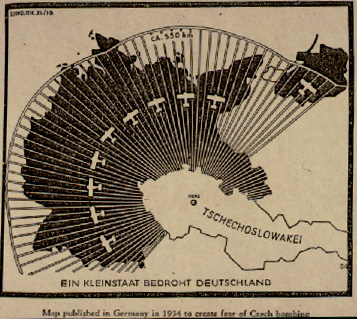
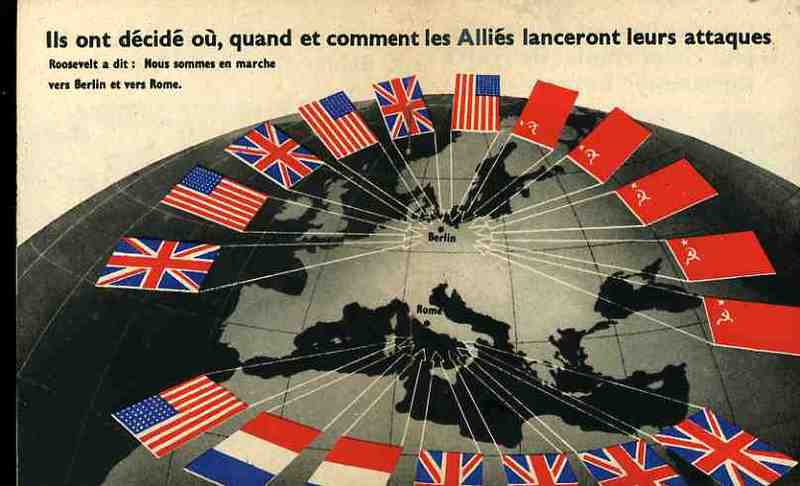
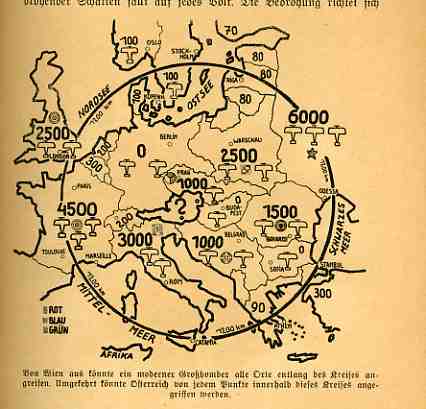
    I’ve written twenty or so posBlog jan 3 czech airts here about (mostly) graphical propaganda of World War II, and most of that coming from the Axis (and mainly Nazi) end.  A popular theme among this limited exposure seems to be the Germany-surrounded meme:  Germany under attack from all sides: massive attacks being directed by the British from air and sea,

     Blog jan 3 german surround

    airstrikes coming in from thousands of planes in Czechoslovakia, Poland moving on the ground and in the air to invade south-eastern Germany, retaliation mounting from the French, and on and on.  And somehow when all of this is presented in cartographical form to the average reader, and when it is presented over and over again, the propaganda must take its toll.  

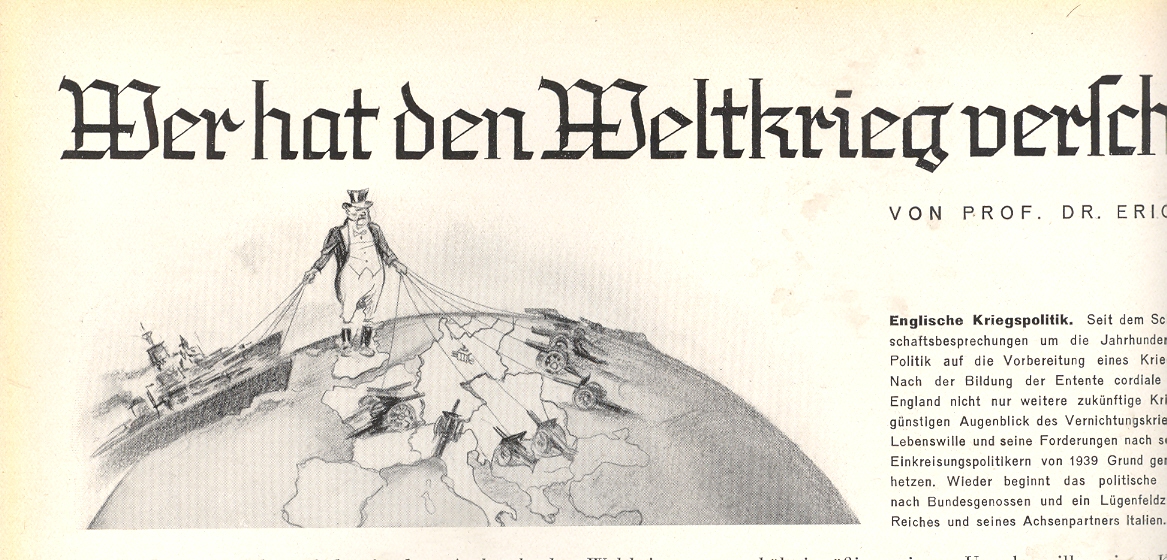
    Blog jan 3 germany surrounded Tonight’s installments come from the Illustriete Zeitung (Leipzig), and were printed just before and just after the start of the general hostilities of WWII (meaning the invasion of Poland, and not the actions against Austria or Czechoslovakia, and not the war in the east beng waged against China by Japan).The first comes in the 27 July 1939 issue–featuring a remembrance of WWI on the cover, showing a devastated field of battle with a spanking-new heavy dagger thrust into the heart of the field–and shows John Bull pulling strings of an advancing/attacking navy in the one hand while the other controls a firing network for cannons facing Germany based in its contiguous-bordered countries.  (The image was created by the prodigious Richard Lipus and titled “Englishe Kriegspolitik”.)

    Blog jan 3 john bull

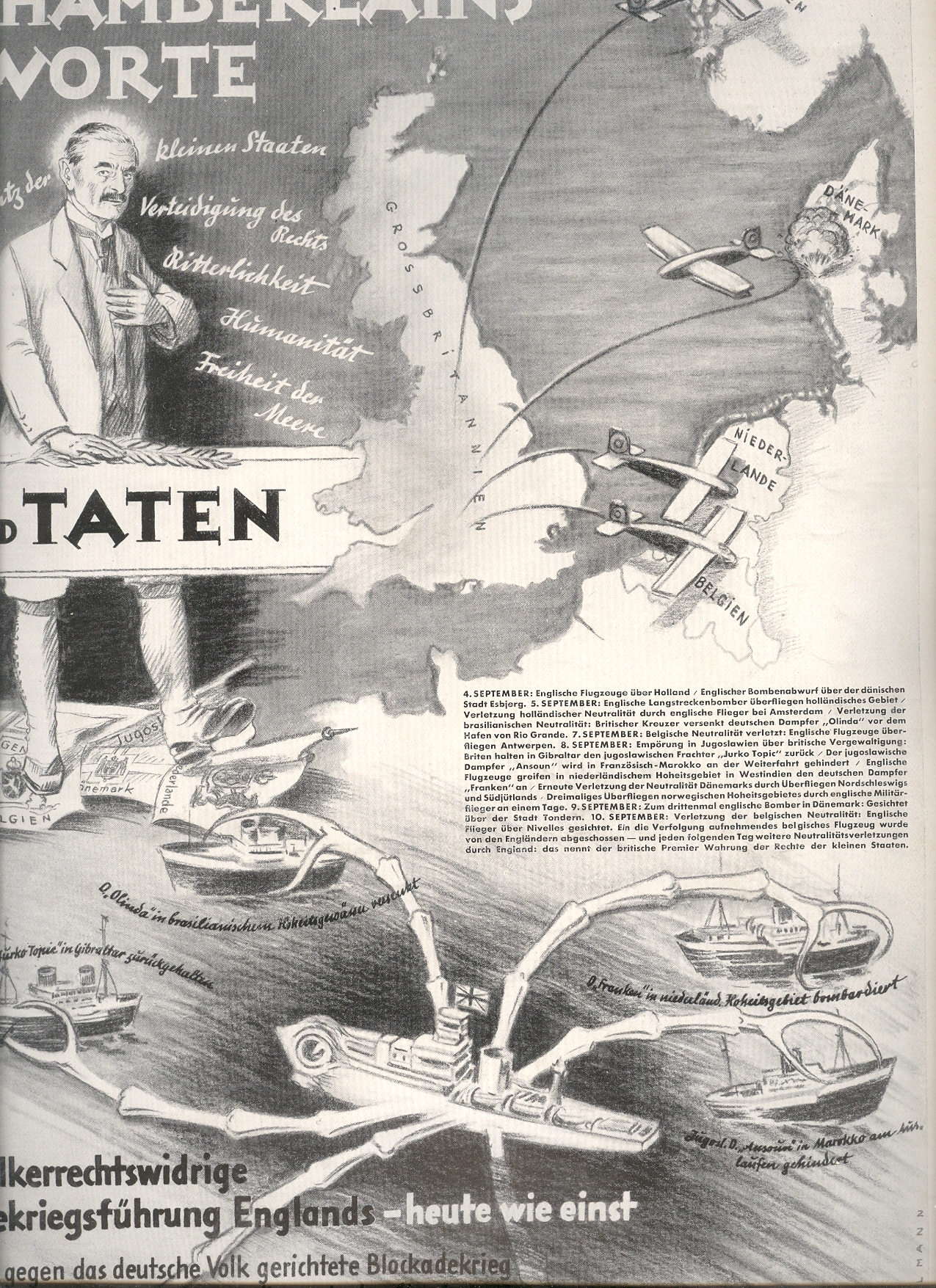
    The second piece was published just after the start of the war (21 September 1939) and attacks Neville Chamberlain (contrasting words and deeds) and his “treacherous” involvement with neutral countries.

    Not particularly virulent, these maptoons undoubtedly helped to form a Nast-ian image in the commonplace psyche of the German people about the treacherousness of the Brits and of their dire situation of being surrounded by potent and threatening enemies.

    Blog jan 3 chamberlain  

    Some of the other posts on this blog relating to WWII propaganda:

    Maps
    as Propaganda https://historyofideasblog.com/thesciencebookstore/2008/08/maps-as-propaga.html

    Maps
    of the Polish “Corridor” https://historyofideasblog.com/thesciencebookstore/2009/09/propaganda-in-maps-the-polish-corridor-1939.html

    Maps
    of Naval Disaster https://historyofideasblog.com/thesciencebookstore/2009/05/jf-ptak-science-books-llc-post-624-the-admiralty-regrets-to-announce–was-for-years-the-standard-beginning-to-an-offici.html

    Anti-Nazi
    Propaganda https://historyofideasblog.com/thesciencebookstore/2009/08/antinazi-propaganda.html

    Nazi
    Propaganda and the Threat From Czechoslovakia
    https://historyofideasblog.com/thesciencebookstore/2008/08/propaganda-maps.html

    Humanitarian
    propaganda for Allied families with family members who were POWs https://historyofideasblog.com/thesciencebookstore/2008/09/humanitarian-pr.html

    Nazi
    Germany and Scaring the Will to War (Germany surrounded, again) https://historyofideasblog.com/thesciencebookstore/2008/10/nazi-propaganda.html

    Nazi-directed
    scare tactics published in English https://historyofideasblog.com/thesciencebookstore/2008/08/nazi-propagan-1.html

    The
    Luftwaffe and RAF present their (graphical) popular cases https://historyofideasblog.com/thesciencebookstore/2008/09/graphical-and-a.html


  • Technology as Language: the Kindle & Edison’s Phonograph

    JF Ptak Science Books LLC  Post 894

    My wise friend Jeff Donlan wrote me the other day about
    being momentarily stopped in his tracks on hearing a friend saying that they
    were reading their (news)paper on a kindle. Being a bookman and a librarian, his
    mind’s eyebrows were raised at the irony of the digital “paper”, and then
    pressed on.  Kindle may well be on its
    way to transforming our concept of the “paper” part of “newspaper” and paper
    –printed books in general, and again may be the biggest leap in the
    transformation of the distribution of knowledge since the beginnings of the
    mass popularization of the internet. I wonder if kindle-esque innovations will
    put and keep the word “paper” in quotation marks (or in a Maris-like asterisk*)
    and place paper-based info distribution into the antiquarian’s domain. Seems that this is the natural order, a steady progression,
    to make communication among our kind simpler—and if not more simple, then
    providing more data with greater ease than previously imagined.  And I’m not talking here about discussing some
    sort of massive abecedary, working from Ugaritic proto-Canannite pre-Phoenician
    pre-Greek- alphabet and so on; just an outline of the major deals:  moving from spoken word like Thucydides
    oceanic memorization and recitation of the Greek cultural cornerstones of the Iliad and Odyssey) to dramatic traditions to written stories to Medieval
    copyists to woodblock printing to movable type1 to, well, what, the
    internet?  And then to kindle-like
    machines?  
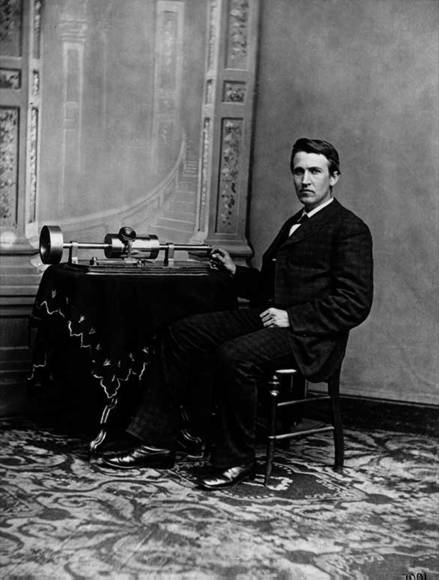
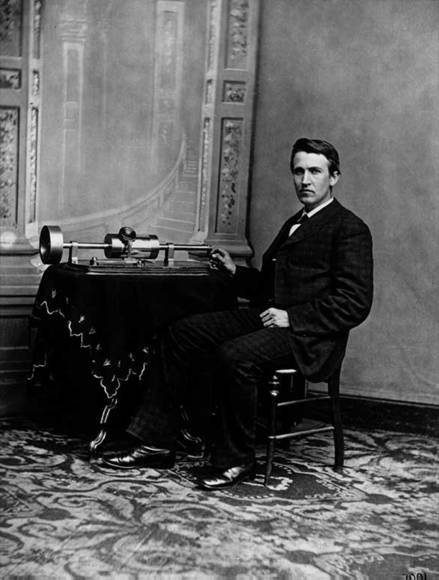
    Edison phonograph But before the modern kindle there was perhaps a kindle-like
    precursor that snakes its way in history to (at least) the very capable hands
    of Thomas Edison, who in a furious few years in the mid 1870’s2 invented the
    light bulb and the phonograph3 (the later coming as a direct byproduct on work
    done on the telephone and telegraph).. He celebrates his phonograph in the North American Review (May 1878)4 and
    then lists what he saw as the readymade faits
    acomplis
    of the phonograph, the first of which was weirdly/spectacularly
    worded:   “1. The captivity of all manner
    of sound-waves heretofore designated as fugitive, and their permanent
    retention.”  Do you hear a soundtrack
    with that description?  I did.  He proceeded with less fanfare: “2. Their
    reproduction with all their original characteristics at will, without the
    presence or consent of the original source, and after the lapse of any period
    of time. 3. The transmission of such captive sounds through the ordinary channels of
    commercial intercourse and trade in material form, for purposes of communication
    or as merchantable goods. 4. Indefinite multiplication and preservation of
    such sounds, without regard to the existence or non-existence of the original source. 5. The
    captivation of sounds, with or without the knowledge or consent of the source
    of their origin.”

    Edison then goes on to list what he saw as distinct
    “possibilities” for the use of the phonograph in the not-too-distant future.
    There are ten major prospects, the “bookish” aspect and the first major assault
    on the way we read is listed fourth (though he wasn’t necessarily weighting his
    list in any way).  Some of the others in
    this list (all of which cam to fruition) include: 1.Dictation and letter writing—using the phonograph to
    record letters and correspondence, which was baldly aimed at the business and
    corporate trade as the machine was relatively difficult to operate and
    expensive. 2  Phonographic
    “books”. I noticed that that Edison did not
    change the word “book” in any way, even though the book is no longer there with
    the application of the phonograph, just the read and spoken words.  “Books may be read by the charitably-inclined
    professional reader, or by such readers especially employed for that purpose,
    and the record of such book used in the asylums of the blind, hospitals, the
    sick-chamber, or even with great profit and amusement by the lady or gentleman
    whose eyes and hands may be otherwise employed; or, again, because of the
    greater enjoyment to be had from a book when read by an elocutionist than when
    read by the average reader.” 3. Family records. “For the purpose of preserving the sayings,
    the voices, and the last words of the dying member of the family [emphasis
    mine] as of great men the phonograph will unquestionably outrank the
    photograph.”4. Toys:  “A doll which
    may speak, sing, cry, or laugh, may be safely promised our children for the
    Christmas holidays ensuing. Every species of animal or mechanical toy such as
    locomotives, etc. may be supplied with their natural and characteristic
    sounds.”

    Edison
    continued, writing on the phonograph’s application for the study of elocution,
    speaking clocks, language preservation (as in documentation of the proper way
    of speaking a certain language, something that would’ve come in handy in the
    spike of disappearing languages at the end of the 19th century),
    telephone recorders and pedagogical lessons.

    But
    this is all a little far afield from the kindle aspect. Is
    the development of things like the kindle another step in the metaphorical
    development of a technological alphabet? 
    Like developing an alphabet for a language, where there are a finite
    numbers of symbols that elegantly possess the capacity to transmit all of the
    words of a spoken language, is there a corollary for something that makes
    systemic sense for the technological transmission of knowledge? I guess the
    question would be whether the development of the kindle (and so on) provides
    another step towards the completeness of what now stands as a chaotic
    environment of information and knowledge distribution?=I
    don’t think that there is yet a driving, poetic sense to these new
    technologies. The new media provide the means to information but not
    necessarily the way to it.  They also
    don’t lend themselves to memorization, which in the old semi-mnemonic days was
    a way to not only record info but also to help understand it by enforcing
    prolonged exposure and thought.  With as
    much data that is daily available, perhaps new information is simply filling
    memory holes on the vast hole-ridden plane that is the fabric of the new way of
    gathering information.  I have little
    doubt that in the next revolutionary step in this whole process will be more
    knowledge-based than suffering under the weight of primitive
    search-engine-based data retrieval of today. 
    I’d say that once the alphabet of technology is more complete, and that
    the issues of search, organization, storage and retrieval makes more sense,
    that it may well then leave paper behind. 
    And perhaps after the power and elegance of having a knowledge system
    like this that the next giant step would be not having the devices simply with
    us, but in us.

    Notes

    1. It is interesting to note that among the first items
    printed on movable type presses were 
    packs of tarot cards and religious indulgences (get-out-of-hell cards).

    2. For an annotated chronology of some of Edison’s
    career see HERE.

    3.Edison presented his invention at the offices of the Scientific
    American
    in New York City, the magazine reporting the event in
    its  22 December 1877 issue:
    “Mr. Thomas A. Edison recently came into this office, placed a little
    machine on our desk, turned a crank, and the machine inquired as to our
    health, asked how we liked the phonograph, informed us that it was very
    well, and bid us a cordial good night.” Edison
    applied for his patent for the highly original invention on 24 December,
    receiving it on 19 February 1878 (patent # 200,521). He would soon lose
    interest in this invention and move onto other big things (inventing, for
    example, the biopolar dynamo in the next year); it would be Emile Berliner
    (1851-1929, and who invented the microphone in this same year) to improve
    the phonograph and make it more affordable and accessible and increase its
    utility immeasurably. 1877 also saw the publication of Rayleigh’s superb Theory of Sound and Boltzmann’s
    revision of the second law.

    4. Source here.

    Of further interest:

    For general browsing in 19th century journals see
    the invaluable Library of Congress contribution

    Rutgers houses the Edison papers here.

    “Clocks Which Will Talk: The Wonderful Possibilities of
    Edison’s Invention.”
    New
    York
    Sun (April 28, 1878). TAEM
    25: 173-174.

    “The Phonograph and Its Future.” Scientific
    American Supplement
    124 (May 18, 1878): 1973. TAEM 25: 269.

    “The Phonograph and Its Future.” North
    American Review
    126 (May-June 1878): 527-536. Reprinted widely. TAEM
    25: 198-199.

    “To the Editor.” New York Tribune (June 8,
    1878): 5.

    “The Phonograph and Its Future.” Telegraphic
    Journal
    6 (June 15, 1878): 250. TAEM 25: 265.

    “To the Editor.” New York Tribune (June 27,
    1878): 5. Reprinted in Engineering [see below]. Not selected.


  • Examination Photos, 1895-1943

    JF Ptak Science Books LLC  Post 891

    I suddenly found myself with a short virtual stack of interesting early-century photos featuring examinations of one sort or another.  There’s nothing here for exams at school (which makes me think about when the first graded school test was invented), but there are some other interesting images of exams.

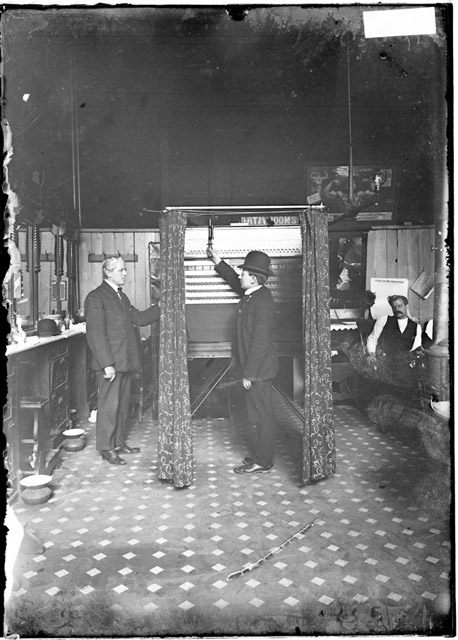
    For example, there’s this odd picture of two guys inspecting the installation of a voting booth in Chicago in 1905.  There’s nothing wrong with this, no sir, not since we’re in Chicago, which never has had any sort of voting irregularity–perhaps that’s why I get such a creepy feeling from this image.

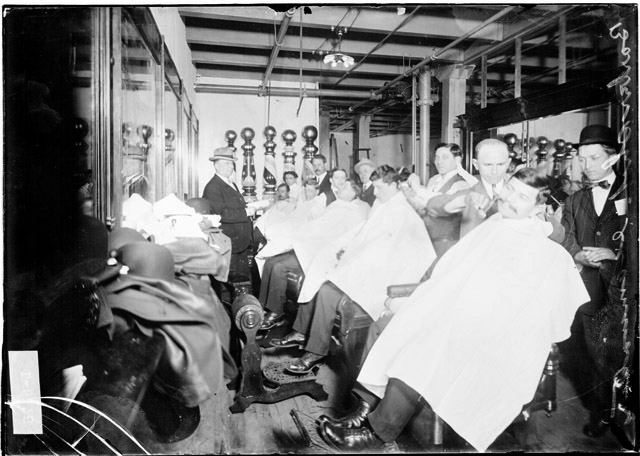
    Blog dec 29 exam voting barber

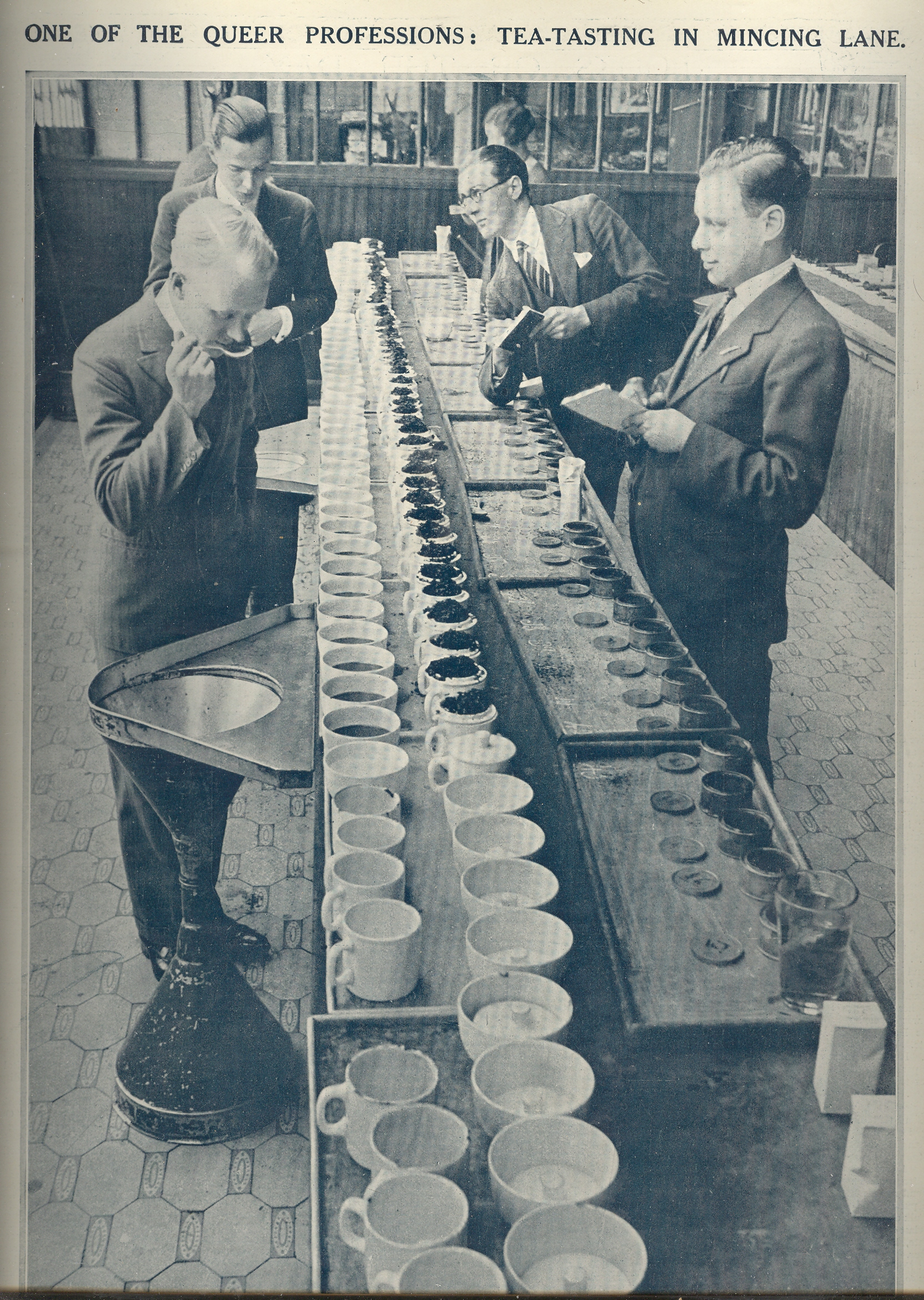
    This picture has everything going for it in a fabulous way, from the poses of the tester and the examiner (who is standing in a Hitchcockian manner, a thin man in a fat man pose) to the row of cups, to the size of the spittoon, to the slightly dirty and occasionally chipped cups, to the title of the whole thing.  Mincing Lane.  I understand and commend the need for quality control, but the picture does have its odd elements.  (I’d like to know the name of the interpids pictured here; or, rather, their nicknames.)

    Blog dec 29 tea

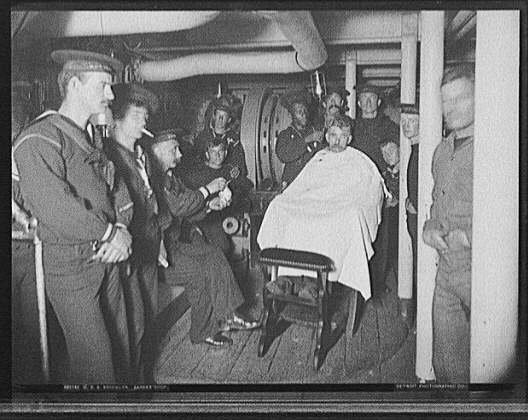
    Evidently the men aboard the USS Brooklyn  had little to do during unspecified doldrums than to watch and critique the ship’s barber.

    Blog dec 29 barber exam ship 

    Then there are the professional barber-and-haircut-watchers, shown here at a barbering school examination in 1903:  five crowded chairs and a few men in hats.

    Blog dec 29 exam barber 

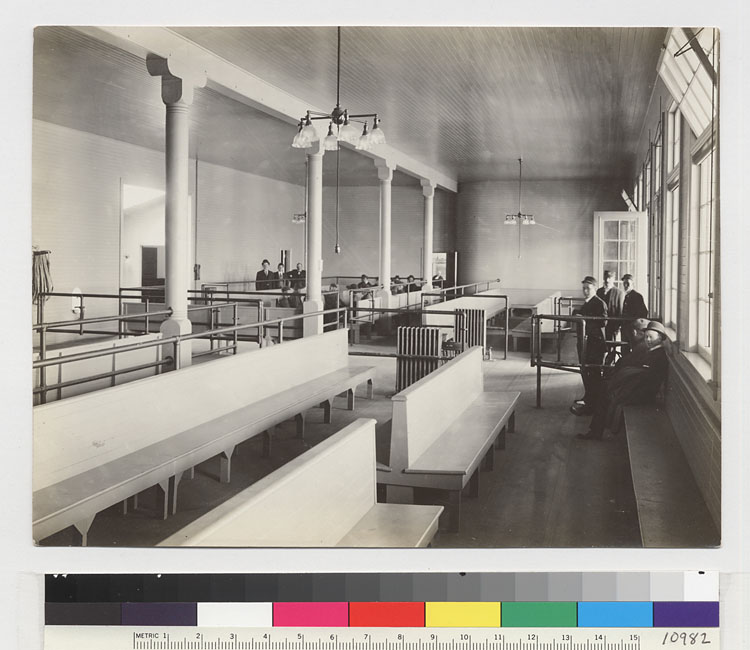
    The big, white, filled-but-lonely room at Ellis Island, where you either got in, got quarantined, or got sent back home.

    Blog dec 29 exam room ellis island

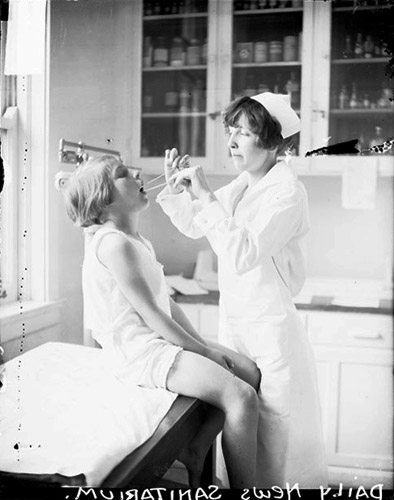
    I’m not sure what this nurse is doing.

    Blog dec 29 nurse exam

    This nurse is administering an exam to a newcomer at one of the American Japanese internment/prison camps sometime around 1943.

    Blog dece 29 japanese exam 

    There are undoubtedly many more of course, but that’s the lot available on the desktop right now.


  • “Irish Tommies”, German-Conquered England, and Loyalties

    JF Ptak Science Books LLC  Post 888

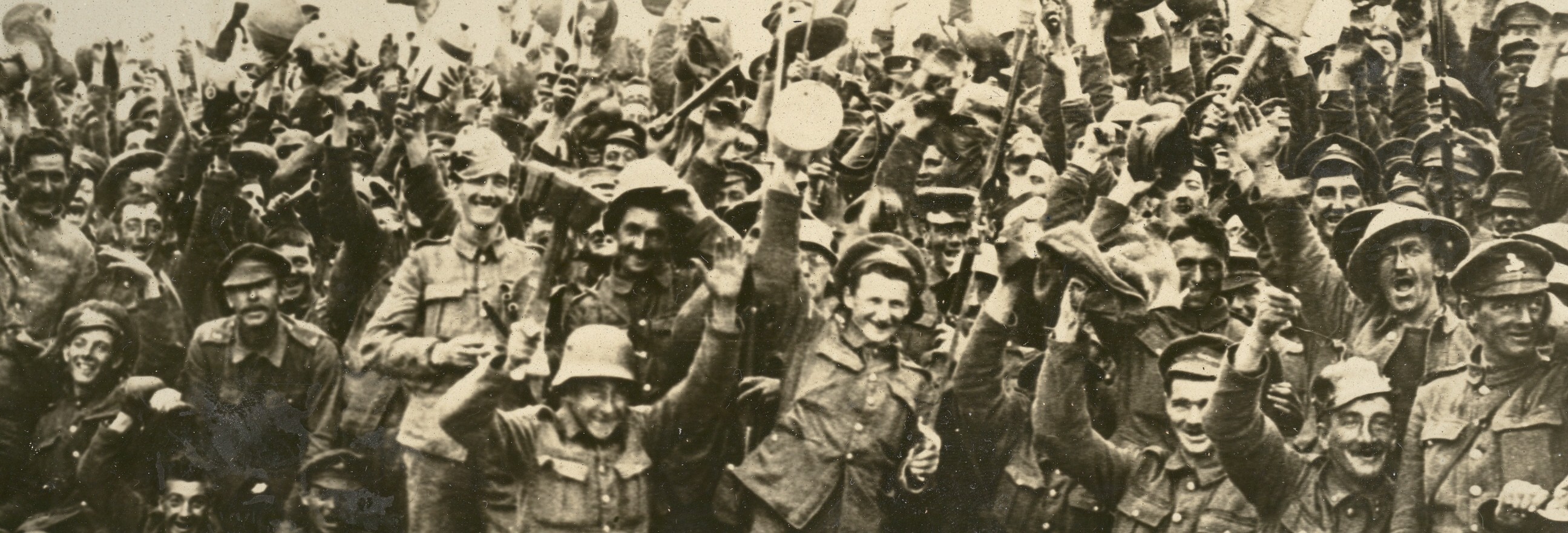
    Blog dec 26 irsh tommies

    In the heavy mist of the Civil War, where brother fought brother, there was another sort of fratricide, of countrymen removed from their homes, finding themselves in America and there fighting against one another in opposition. Such is the case of the Irish in the American Civil War, where 180,000 of the immigrants fought in the war, with 30,000 fighting in butternut, and 150,000 fighting in blue.   The Irish faced one another across battlefields like of Appomattox, Malvern Hill, and especially Antietam, along the Sunken Road.

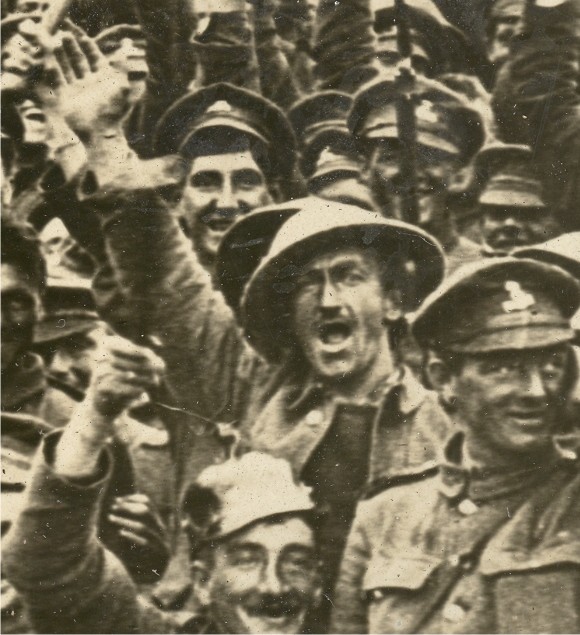
     Blog dec 26 irsh tommies det


    Blog dec 26 irsh tommies det2

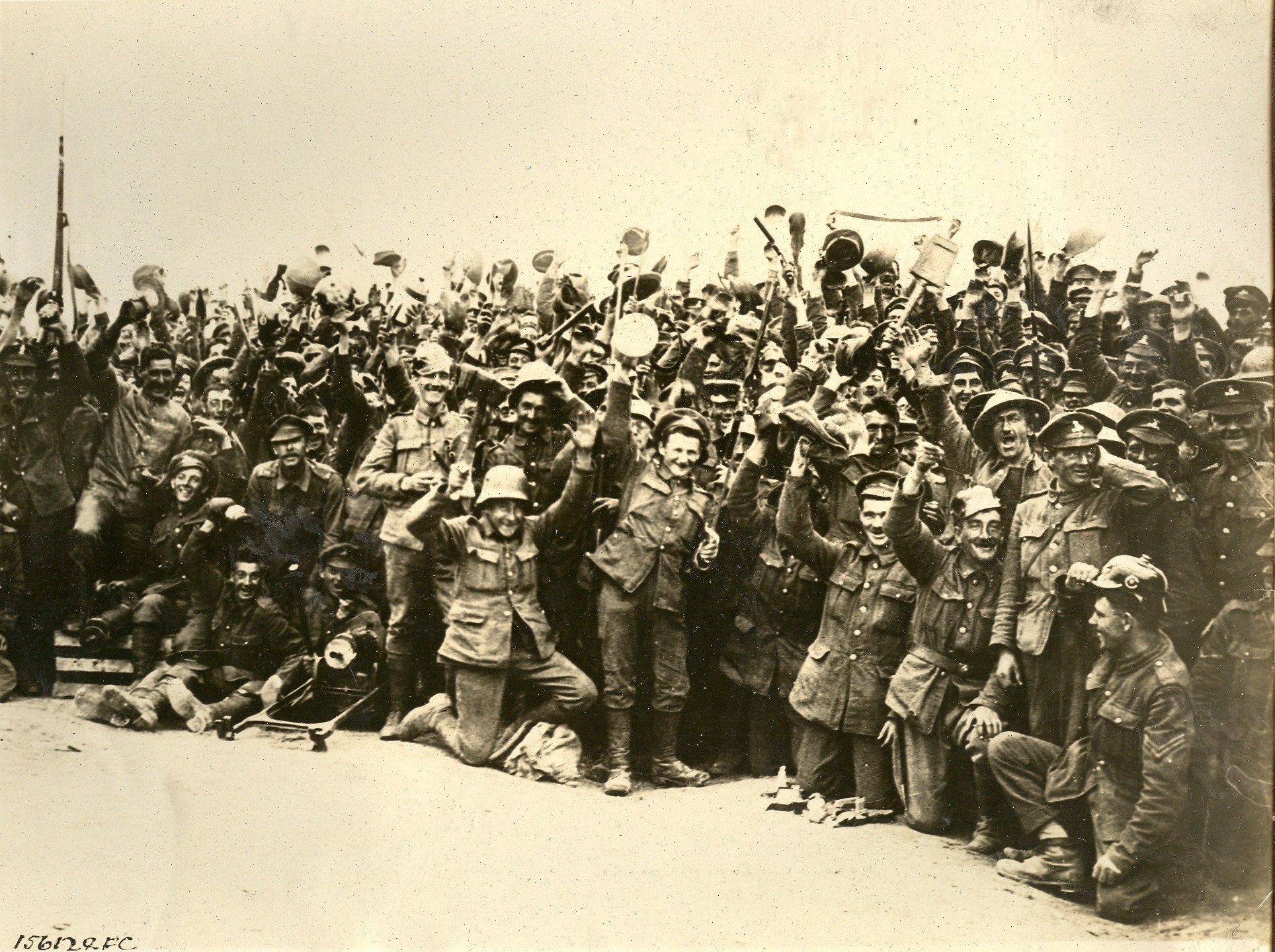
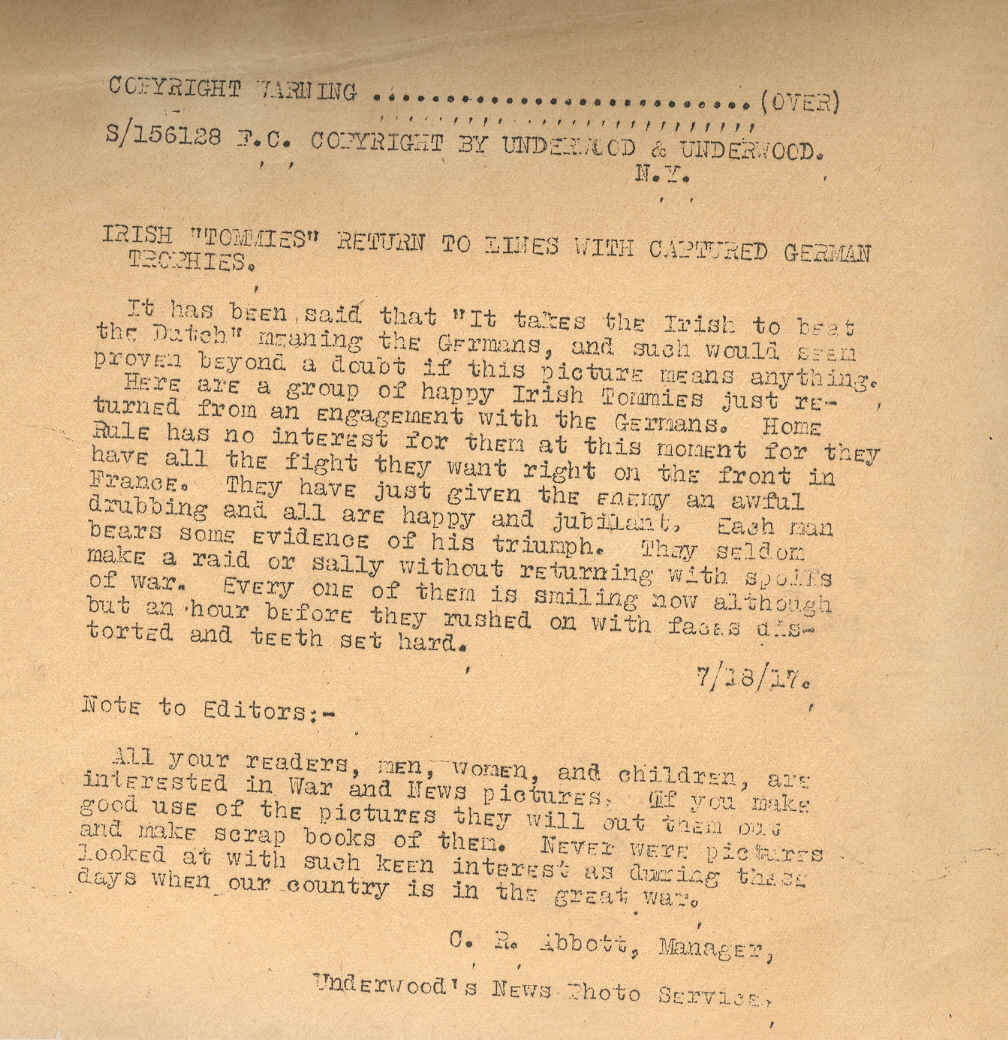
    I was thinking about the American Irish of New York and Pennsylvania and Louisiana and Texas of 1864 while looking at this Underwood & Underwood New Photo Service photograph of the “Irish Tommies” of WWI.  It shows a large group of Irishmen displaying their trophies taken from Germans, and dated 18 July 1917. This was also a period of terrific change and hardship, what with the Easter Rising of 1916 and the Proclamation of the Irish Republic (24 April 1916) having taken place just a year earlier

    Blog dec 26 irsh tommies text  

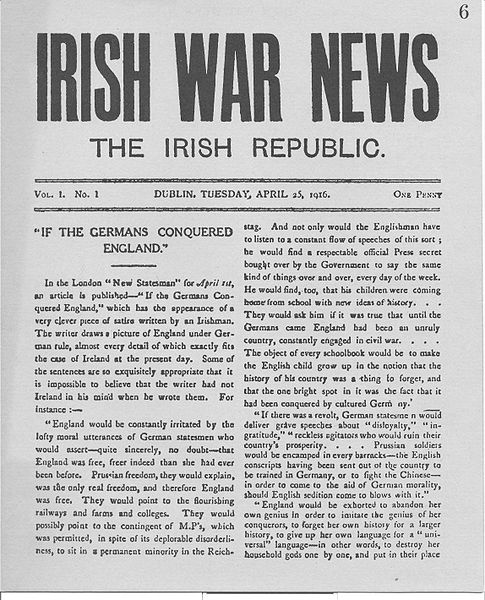
    I don’t know what it meant to be Irish and fighting with the Brits during the war, during this time of Trouble and upheaval (the enemy of my enemy bit come to mind).  It is interesting to see this piece by Sinn Feinist and Irish Republican Robert Lynd in the Irish War News, “If the Germans Conquered England”, and making elegantly and cleverly making the case of superior similarity between the British in Ireland and the Germans in England.  I know it is far off the mark to think about black slaves

    owned by the Cherokees sold into service to fight for the Confederacy, but maybe not so very far off….

    Irish news (Irish War News source)

     
    Read the full text by Robert Lynd IF THE 
    GERMANS CONQUERED ENGLAND, AND
    OTHER ESSAYS
    Printed by George Robert, Dublin, 1917.


    The article begins:

    “When a small tradesman applies for exemption from military service on the ground that his business would be ruined by his absence, a question that is often put to him is: “What do you think will happen to your business if the Germans win the war ? ” As a rule the tradesman does not know what to think. He has no means of measuring world-catastrophes. He has not Dr. Johnson’s short way with questions to which there is no answer. In the first place, the small tradesman does not believe in the possibility of a German victory. In the second place, he has not the slightest idea what would happen to his business as the result of one. Perhaps, however, he knows as much about the matter as the members of the tribunals. All of us know that a German victory which involved the conquest of England would make life intolerable for Englishmen until the conquest was undone. But as to its effect on small businesses, that is another matter. It is quite possible that the little grocery, the little tobacco-shop, and the confectioner’s would be able to hold up their heads under German rule as under English. The valid argument against a German conquest is not that it would make an end of the small business man ; it is that it would make an end of a free England. If it could be proved that a German conquest would add twenty-five per cent, to the incomes of all Englishmen, even that would not make it tolerable. Most men in all nations are ready to sacrifice their lives in order that their country may be free.”


  • On the History of Normalcy: Oskar Sclemmer & Dance, 1927

    JF Ptak Science Books LLC  Post 876 

    Jean Bouillard (the famous physician), Joseph de Lalande
    (astronomer and director of the Paris Observatory), the Paris Academy of
    Sciences, the French Academy of Sciences, Jacques Babinet, and the University
    of Bologna are examples of people and entities sharing something fantastically
    uncomfortable—they all ridiculed the initial presentations of what would become
    some of the most magnificent achievements of the last 500 years.  Bouillard incredibly and improbably insisted
    that Edison’s phonograph was impossible and a hoax, Lalande thought it utterly
    impossible to fly, the Paris Academy found it absurd that steam could be applied
    to locomotion, the French Academy rejected Lavoisier’s findings that meteorites
    do indeed come from space, and the great Bologna
    spat on the idea of Galvani’s researches. So it goes.  There are thousands and thousands of cases
    like these.  Jenner, Semmelweis, Galileo,
    Harvey, Copernicus—all produced monumental achievements, and all faced
    incredible scorn and rebuke. Some had it even worse than this: Dante, Marco Polo,
    Walter Raleigh, Cervantes, Cellini, Voltaire, Pushkin, Turgenyev, Dostoyevsky,
    Baudilaire, Verlaine, Machiavelli, and etc.(and Galileo) not only found vast
    rejection, but were also imprisoned. (Some actually produced works in prison
    that would also be rejected: Raleigh wrote his
    history of the world in the White Tower, Pushkin, Eugene
    Onyegin; Marco Polo, his travels.  Plato
    of course was also sold as a slave.) This list in general could go on and
    on–an encyclopedia of mistaken thought and stubbornness could easily be
    produced from centuries of thought like this, thinking that went outside the
    boundaries of “normalcy”. 

     Blog Dec 14 schlemmer

    The funny thing about “normalcy” is that all it seems to
    measure is the time it takes to move from one state of “normalcy” to the next.  People should know better than to expect that
    there should be no periods of extended non-change.

    It is interesting to think about how new ideas like these
    are perceived.  I came to think about
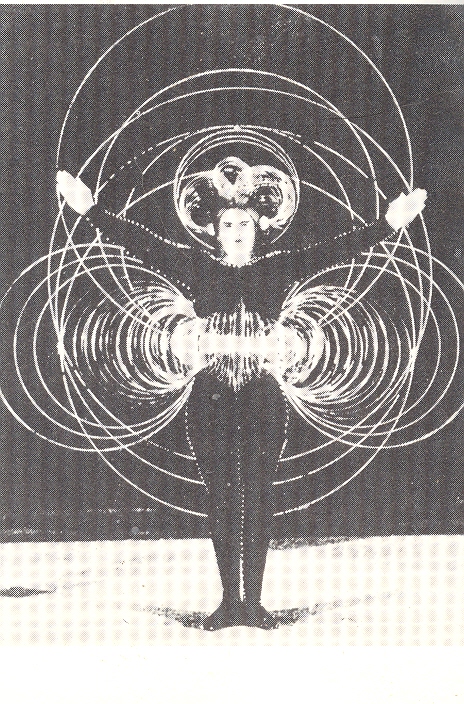
    this searching for a picture of the wire costume for the black series in Oskar
    Schelmmer’s (1888-1943, designer, artist, dancer and by 1923 the Master of Form
    at the Bauhaus) Triadic Ballet (“Triadisches Ballett”)1 of 1927. Better
    than a still, I actually found clips of the dance on youtube, which just floors
    me.

    I imagine that Schlemmer didn’t find a very happy reception
    to his dance and costumes.  He was
    outside the sphere of even those re-inventing dance in Germany in the early
    1920’s.  His concept of movement, among
    other things, differed from those of the other pioneers of this period, people
    like Mary Wigman, Francois Delsarte, Emile Jacques-Dalcroze and Rudolf von
    Laban—his inspiration came not from the center of the dancer’s experience, but
    from the costume itself, “which eliminates the torso” and “which the dancers
    measure out rather than feel out or explore”2. 


    It is phenomenal to me to see these changes in dance in such
    a short time, and how much of this movement would have been nearly impossible
    to conceive as an art form only a decade or so earlier. Except to the minority
    of people like Isadora Duncan and Ruth St. Denis,
    who had already rejected the restricting forms of classical ballet—the work of
    Schlemmer must’ve felt like a lightning strike.


    1. See this on Musikperformance.

    2..From Germany in the Twenties, the artist as Social
    Critic, a Collection of Essays
    , 1980, pg. 91.


    ·Posted by :

    ·in:

    — —

  • The Battle of Berlin, 1935

    JF Ptak Science Books LLC  Post 869

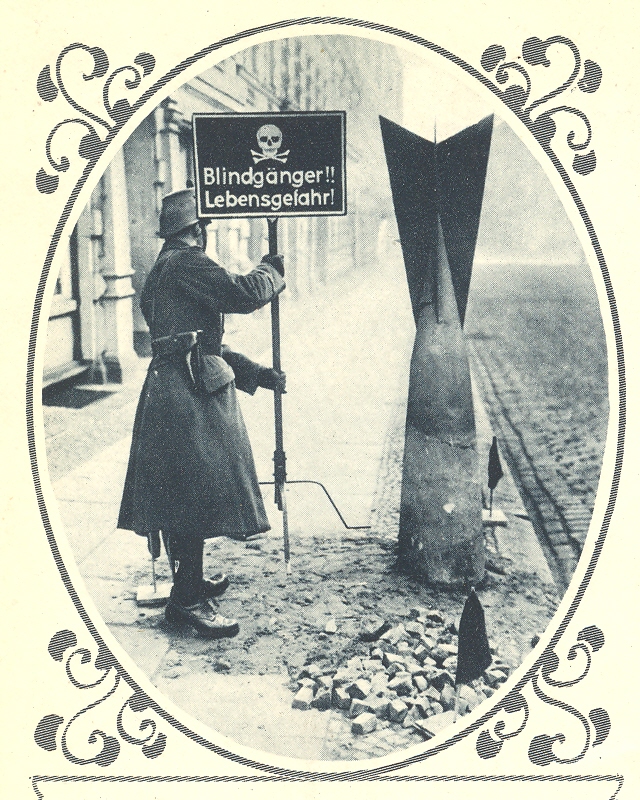
    Blog 12 8 bomb


    Well, it wasn’t really a battle, but the Nazi government was
    getting ready for one. As reported in this 30 March 1935 issue of The
    Illustrated London News
    .  There was an
    elaborate preparedness drill conducted in the Kreuzberg district of south Berlin ten days earlier—“the
    most realistic air raid exercises ever planned”. 

    The Germans attacked themselves with scores of low flying
    planes that dropped “deafening” false bombs; meanwhile the streets were swirling
    with gases that smelled like poison gas, cars were blaze, abandoned buildings were
    lit up with pyrotechnics, and there were heaps of rubble here and there.  The population not otherwise engaged in
    defense measures were all sent to evacuation shelters and centers.  There were drills for gas attacks and
    subsequent decontamination, firefighting, saving people from collapsed
    buildings, caring for children and the elderly, aid stations, medical triage,
    and so on.  Anti-bombing measures were also
    taken for nighttime raids, with blackouts, and general light-lessening measures
    on all levels and quarters—for example, streetlights and street sign lamps were
    replaced with much lower wattage bulbs.  It
    looks like it was a pretty big event–I’ll have to check my Illustriete Zeitung/Leipzig for the
    German coverage.


    Without being an historian of the 1930’s preparations for
    war defense, it seems to me that there was an awful lot of this going on in England, France
    and Germany
    through most of the decade.

    [The illustration above is a charming overstatement of the obvious, right down to the little flaglettes on either side of the (500-pound ?) bomb.  The sign reads “Closed Thoroughfare//Danger to Life” (sorta).

    I doubt that there would be that much need for a sign or flags, but if I was going to use anything at all I might place it a little further away from the unexploded device.  (I can just imagine people inching forward to be able to read what the relatively small print on the sign actually said…)


    At this point it may be interesting to have a look at an
    older post here on the creation of the false Paris.