A Daily History of Holes, Dots, Lines, Science, History, Math, Physics, Art, the Unintentional Absurd, Architecture, Maps, Data Visualization, Blank and Missing Things, and so on. |1.6 million words, 7500 images, 4.9 million hits| Press & appearances in The Times, Le Figaro, Mensa, The Economist, The Guardian, Discovery News, Slate, Le Monde, Sci American Blogs, Le Pont, and many other places… 5000+ total posts since 2008.

Category: Perception

  • Bio-Mathematics in Busby Berkeley Musicals–Image Dump

    JF Ptak Science Books  Post  1133   

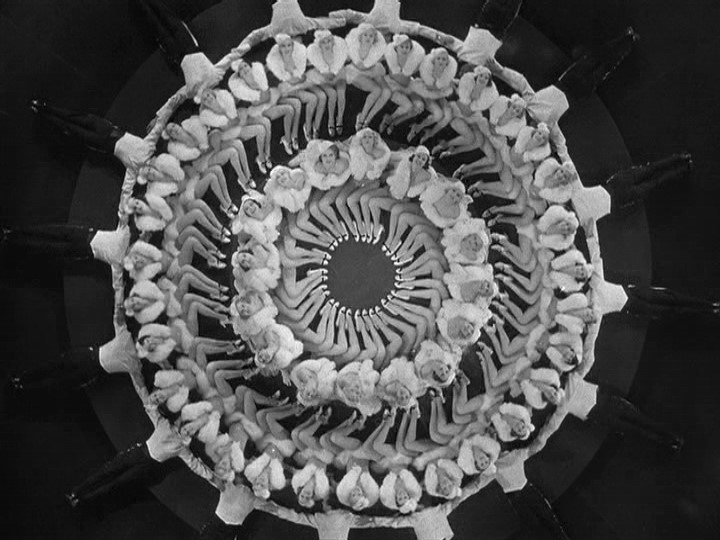
    There’s a certain amount of Leggy Geometry going on in the many films of the great and often-troubled Busby Berkeley.  Berkeley was about 38 when he came into great prominence as a choreographer for movies with music–they were grand and spectacular, intricate dances involving dozens, many times employing overhead shots looking straight down on a full-kaleidoscope productions.  (A kaleidoscope mirrors the great majority of its displayed image; Berkeley mirrored almost nothing, And he didn’t really produce movie musicals per se, I think; those would come later with Fred Astaire and the like, where there were story lines and plots and associated happenings along with the terrific dancing and music. “Plot” was a throw-in with Berkeley, but everything else was just so grand that storyline really didn’t get in the way of entertainment.)  The motion, the offset camera work, the constant motion, almost gives you the sensation of falling into a Phoenix Set.  Between 1931 and the end of WWII, Busby choreographed more than 30 films, many of which are now considered high classics, his very name now associated with fabulous stage productions.

    There’s a big dollop of natural history geometry in his work, as we can see by this selection of still images below. They’re tessellated (if you squint hard and make sure there are no margins) and fractal-like, very organic, very much looking like diagrams outlining the mathematical forms of nature.  And they’re pretty.

    Berkeley 42 nd st 

    Berkeley h

    ·Posted by :

    ·in:

    — —

  • Children’s Questions, Bernard Berenson and Paulo Uccello

    JF Ptak Science Books  Post 1093

    I love the idea of being able to look at things like a child.  To come towards things with such an authentic and unpolluted curiosity would be an enormous gift for anyone past this age of discovery and exploration–its where some of the great questions are asked.  I have learned so much from my daughters and their friends over the years that it makes me want to be around kids all of the time.  (Well, maybe not “all”…)

    In the history of benchmarks of creativity I’d have to say that the one for the Child’s Question stands among the greatest–at the very least it can show a careful listener how look at things differently–and sometimes savagely so. 

    For me these attempts come in strange ways–sometimes it comes in the form of just imagining that I knew nothing whatsoever about the topic.  (I remember a story about told by the mother of the American dustbowl-era artist Thomas Hart Benton.  Benton was a late speaker–nothing came out of him until he was one and a half years old.  But when it came, it came with a bang: standing on his porch in the early evening and looking at the Moon, he turned to his mother and said “What is that?”.  Magnificent.)

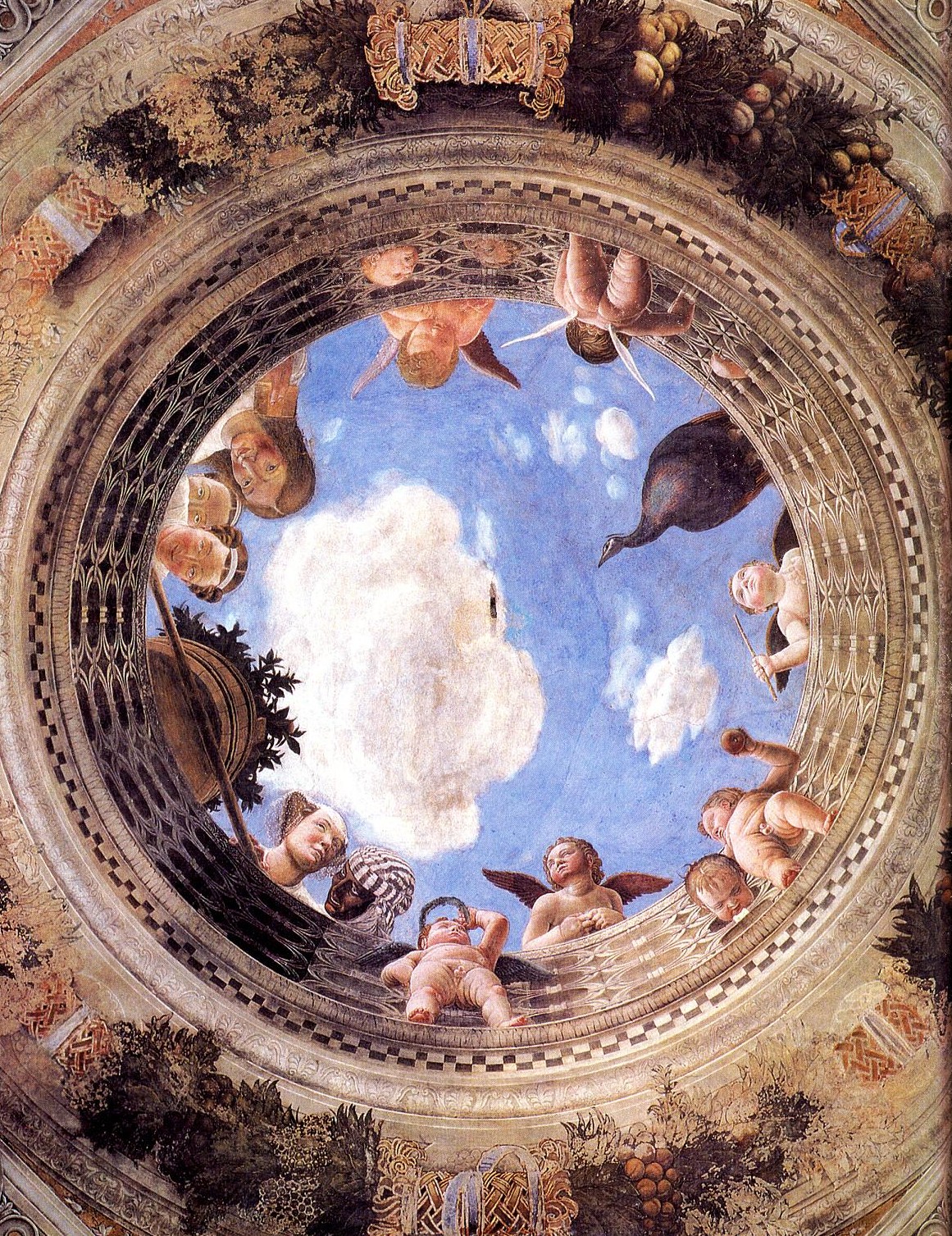
    For example there’s the glorious work by by Andrea Mantegna (1431-1506) in the Castello di San Girogio in Mantua (mainly La Camera degli Sposi).  The oculus is the focal point of a ceiling that stands over what some people consider to be the most beautiful room in the world, painted in almost every aspect and surface by the great Mantegna.

    Mantegna-large It is a magnificent thing created by a great Renaissance master.  But what in the world is going on up there above everyone’s heads?  I guess that you could infer all sorts of mythological and symbolic bric-a-brac to explain the scene, but, if you forgot about all of that, what it looks like is that everyone up there is waiting for a bucket of water (or something) to be poured down on the folks below.  Simple explanations are sometimes the best–and so are the obvious ones. 

    And so I turned to a book that I’ve breezed through but never read, a staple I guess for anyone interested in the  history of art, Bernard Berenson’s The Italian Painters of the Renaissance (1952) to see what he had to say about this work.  But before I got there I stumbled my way through Berenson’s long and thick paragraphs, filled with commas and very long sentences, tumbled my way across the name of Paulo Uccello.  And it wasn’t a pretty fall.

    I was introduced to real appreciation of the great Uccello (1397-1475) by my wife Patti Digh, who had thought long and hard about him through the Great American Novel The Recognitions, by William Gaddis. (Credit where credit is due: I never read the book before meeting Patti, and it is she who first supported the GAN claim for the problematic Gaddis.)  It’s a long and complex book, The Recognitions, and we won’t get into it here–just the part about Uccello.  And it is here that Gaddis makes a wonderful operation about the solids in Uccello. 
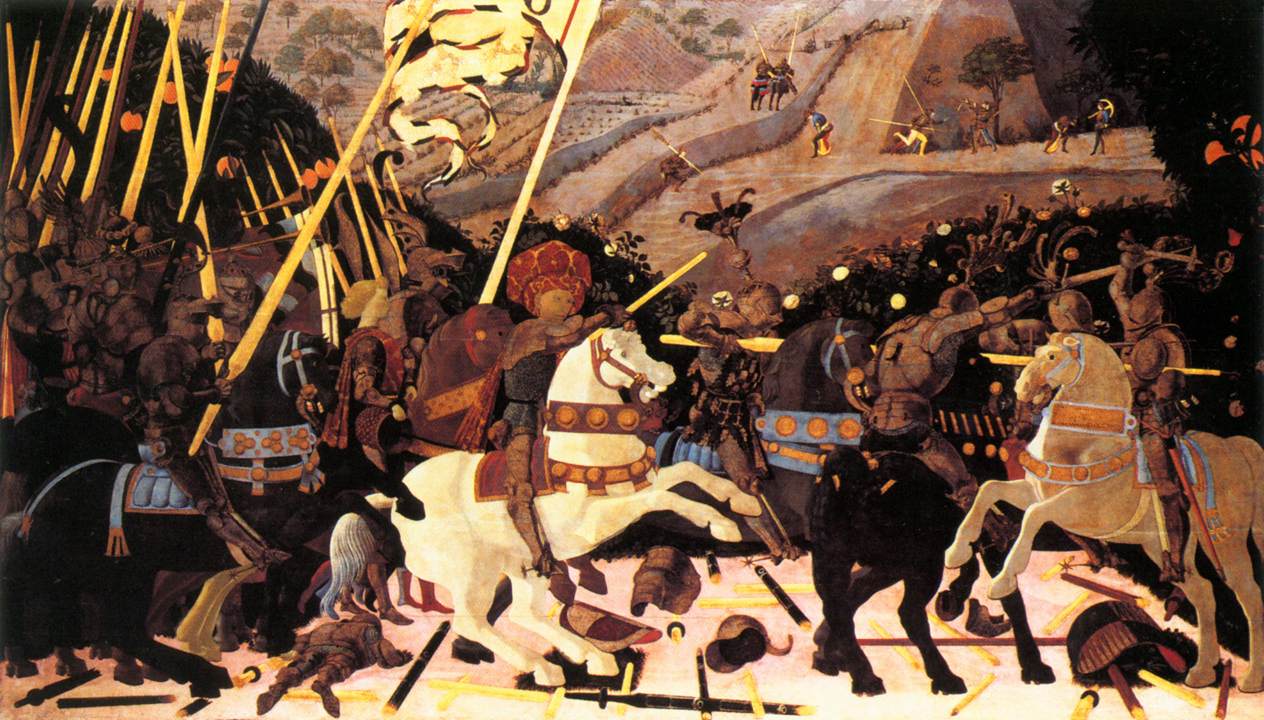
    Uccello

    Uccello was coming out of the Gothic era (sort of) and into the Renaissance (sort of) with a remarkable and just-about revolutionary control of the idea of perspective.  Maybe it was gotten through the polishing of the early doors of Lorenzo Ghiberti, or something else, I don’t know–he was a very private, deeply secretive man whose life (and philosophy) is mostly mystery.  Anyway, he was among the first scientifically-based artists to work in perspective, and he was just simply an important guy in the history of art.  But what Gaddis recognized that in all of this fabulous detail and naturalism, that there are great expanses of pure, unmodified, non-detailed colors.  Horse rumps can be simply white; parts of armor, just big flat blacks.  Beautiful.  The question was: what was he thinking?  In this great porridge of color and scientific delight, where was the detail?  Why did he leave out muscles and shadow and sinew and sweat and whatever, content for some reason to just dress that particular part of the painting in pure color?  It seems very 20th century to me.

    And so now that I had moved away from Mantegna, I wanted to see what Bereneson had to say about Uccello. And with an open mind I was completely invaded: Berenson didn’t really see Uccello as a artist, at all.

    As a matter of fact, Berenson wrote that there wasn’t much of a difference between Uccello’s paining and a map, and didn’t think of Uccello’s efforts “as a work of art”.  He felt that Uccello was more of a scientist whose interest and ability didn’t necessarily relate its subject in an artistic way.

    “Uccello had a  sense of tactile values and a feeling  for colour, but in so far as he used these gifts at all, it was to illustrate scientific problems” Berenson wrote. Ouch. He continues, “In Uccello’s “Sacrifice of Noah’…there is mathematical certainty but certainly…no psychological significance”, which is where he sees no difference between Uccello’s painting and a map.  He claims that Uccello and his successors “accomplished nothing artistically” but did provide the tools for more gifted artists who would come later. 

    Strong stuff from someone who knew his stuff–I only knew the book by looking at the pictures. Berenson isn’t out there alone in his feelings for the beautiful Uccello * and I tried to open my head up to seeing what these guys saw.  But, as Patti said, “they’re just wrong”. 

    I’ll take that over trying to figure out a new way of looking at the fabulous Uccello.   
                                               
    * For example, Donatello found his friend to be lacking in a certain creativity, lacking a depth of uncertainty; also Alberti does not include him in hist famous list of artists in De Pictura.

    ·Posted by :

    ·in:

    — — —

  • Raising Greatness: James Hutton’s Deep View of Time, 1795

    JF Ptak Science Books   Post 1032

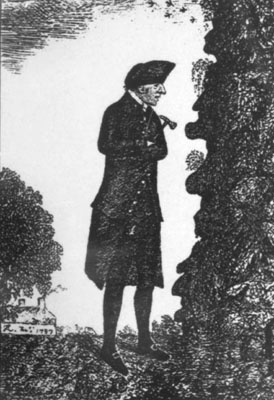
    I think that I’d like to start a series here on significant works in the history of ideas that were originally highly problematic or not accessible due to writing style or place of publication or misplaced appearance or, well, simply bad timing.   The storyline would be one of these great works whose significance suffered as a result of one or more of these issues, and then which was raised above its suffered complications to a place of higher (or more popular) esteem, allowing it to get to a place where the work could generate the new set of ideas that it was intended to help create in the first place. The first of these stories belongs to James Hutton and his revolutionary idea of deep time.  James_hutton
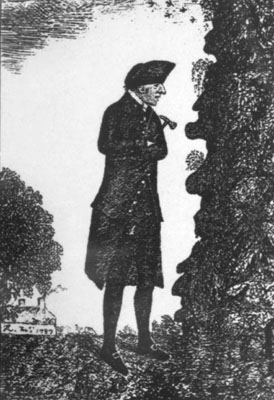
    Seeing more deeply into scientific time than anyone else in history, seeing the entirety of Earth’s history explained  in the sloping  red sandstone at Siccar Point (above the vertical greywacke), James Hutton worked through his theory of the earth in two stout volumes (The Theory of the Earth, with Proofs and Illustrations... in 1795), wrapping up geological evidence with a dogged, comma-ridden and usually-unwieldy prose. He had in fact written a much more elegant paper presenting the main thrust of his theory in outline in 17851, though this paper received a much more limited distribution.  In the long term it really didn’t matter, though, how pretty his writing was–but in the short term, it did.  He made the case for the vastness of time in an elegant way, even without the prospect of being able to know the age of the rocks he was looking at.  The processes of sedimentation, transportation and weathering of solids,  vertical elevation of the Earth’s surface in response to natural causes, and so on, were just not known to him; no matter, as Hutton trusted his theoretical inspiration to tell him that the 6,000-year old earth history clock on the wall was telling a tenth of a tenth of a tenth of a tenth (and on) of the larger, truer story of the age of the earth.  He knew that there were many orders of magnitude of age involved in the telling of the story–he just didn’t know how many. 

    He ended his great work bowing to the enormity of the sight of time:

    “Here are three distinct successive periods of existence, and each of these is, in our measurement of time, a thing of infinite duration. …
    The result, therefore, of this physical inquiry is, that we find no vestige of a beginning, no prospect of an end.”
                   
    Hutton’s work is inestimably important, Archibald Geike (the great 19th century geologist) commenting that it is impossible to praise the work too highly.  But then there was the problem of the density and just flat-out difficulty in reading Hutton’s writing, which restricted the book’s message to a dedicated academic class. Hutton did find his champion in James Playfair, who would strengthen Hutton’s work with new data and who would also help along the troubled Huttonian prose.  Playfair’s work is in of itself2 an important contribution to the history of geology and also of course evolution. His Illustrations of the Huttonian Theory of the Earth (1802), popularized and made the Huttonian work far more acceptable to a larger audience, and as the DNB says “presenting Hutton’s momentous theory in a clear and palatable form (which Hutton himself had failed to do), and in adding materially to the geological knowledge of the time”.

    It was Playfair’s treatment of Hutton that found its way into the mix of genius of Charles Lyell, whose own Principles of Geology3 found its way onto the Beagle and which were voraciously studied by Charles Darwin4 and then put to further use.
               
    Notes

    1. “Theory of the Earth; or an investigation of the laws observable in the composition, dissolution, and restoration of land upon the Globe”, presented in two parts, in Transactions of the Royal Society of Edinburgh, vol. 1, Part 2, pp. 209-304.  An earlier, related pamphlet was written and privately published for a very restricted and private distribution in 1785:   Abstract of a dissertation read in the Royal Society of Edinburgh, upon the seventh of March, and fourth of April, MDCCLXXXV, Concerning the System of the Earth, Its Duration, and Stability. Edinburgh. 30pp.   

    Eventually the book would wind up in a final form as An Investigation of the Principles of Knowledge and of the Progress of Reason, from Sense to Science and Philosophy in 2,138 pages, causing Playfair to remark that “The great size of the book, and the obscurity which may justly be objected to many parts of it, have probably prevented it from being received as it deserves”.
       
    This paper privately printed 1785 paper stated:
    “The solid parts of the present land appear in general, to have been composed of the productions of the sea, and of other materials similar to those now found upon the shores. Hence we find reason to conclude:
    1st, That the land on which we rest is not simple and original, but that it is a composition, and had been formed by the operation of second causes.
    2nd, That before the present land was made, there had subsisted a world composed of sea and land, in which were tides and currents, with such operations at the bottom of the sea as now take place. And,
    Lastly, That while the present land was forming at the bottom of the ocean, the former land maintained plants and animals; at least the sea was than inhabited by animals, in a similar manner as it is at present.
    Hence we are led to conclude, that the greater part of our land, if not the whole had been produced by operations natural to this globe; but that in order to make this land a permanent body, resisting the operations of the waters, two things had been required;
    1st, The consolidation of masses formed by collections of loose or incoherent materials;
    2ndly, The elevation of those consolidated masses from the bottom of the sea, the place where they were collected, to the stations in which they now remain above the level of the ocean.”

    2. Returning again to Geike, who  remarked (1905): “How different would geological literature be to-day if men had tried to think and write like Playfair!”

    3.  The Principles was an enormously influential book, and went through six editions in the first 11 years of its printing (1830-1840), seeing 12 editions during the author’s lifetime (the last edition corrected and added to by Lyell appearing just after the author’s death in 1875). 

    4.  Darwin had volume 1 when he shipped off, receiving volume 2 en route.  A quick look online reveals that there is no mention of Playfair or Hutton in either the Voyages or Origin.; Lyell is noted 14 times in the Voyages and 30 times in the 6th edition of the Origin.
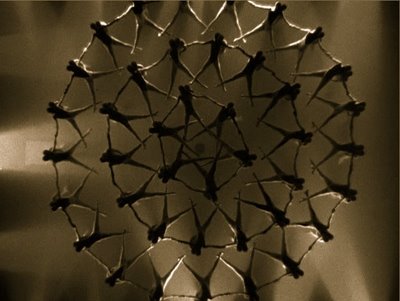
  • A New Perspective on Multitudes of Soldiers

    JF Ptak Science Books LLC  Post 1019

    Yesterday while trying to entertain our six-year-old ,
    sitting in a small waiting room to an office with nothing to do, I estimated
    the number of holes there were in the boring acoustic ceiling tiles. A short
    distraction later I realized that if each one of those holes was a dollar bill,
    that the national deficit would require those titles to be laid out over an
    area roughly the size of D.C. and Alexandria
    (about a hundred square miles).  That
    sort of brought some perspective to what trillions of dollars might mean, but not
    really—it was still too weird and vast a number.

     
    1--may 5 medals 01

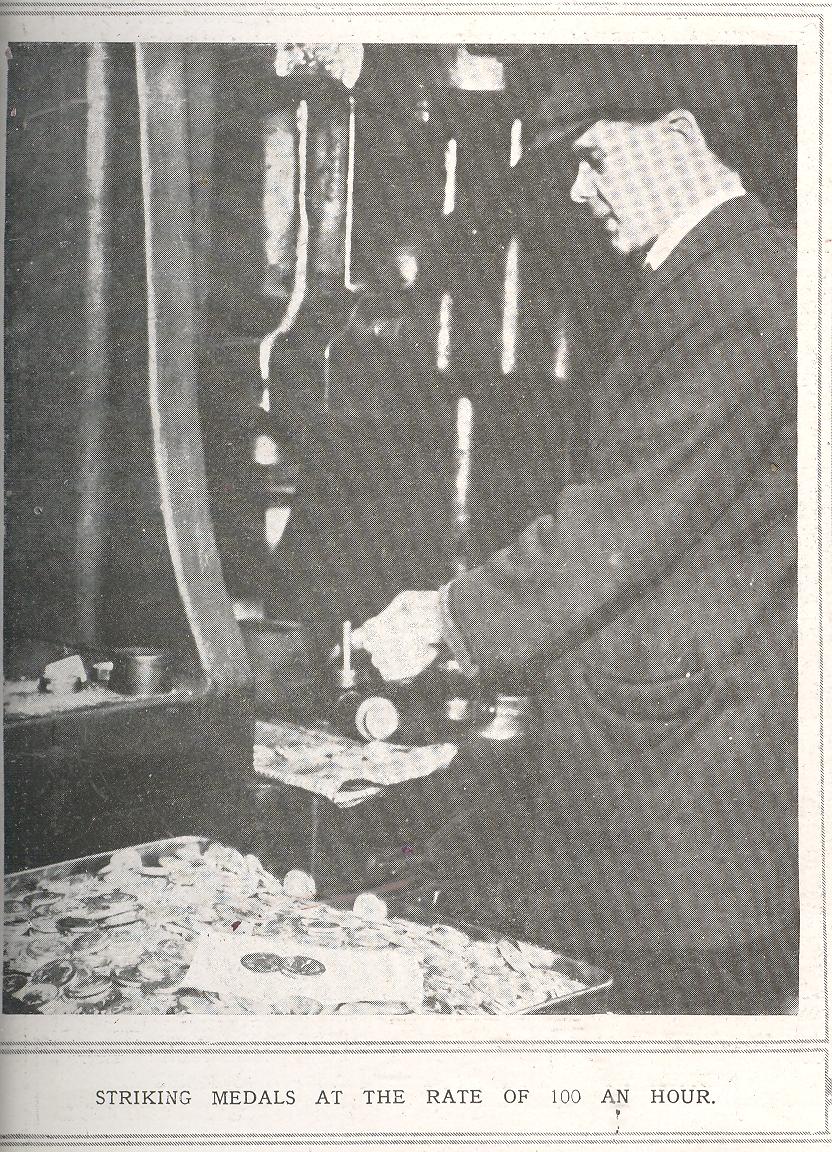
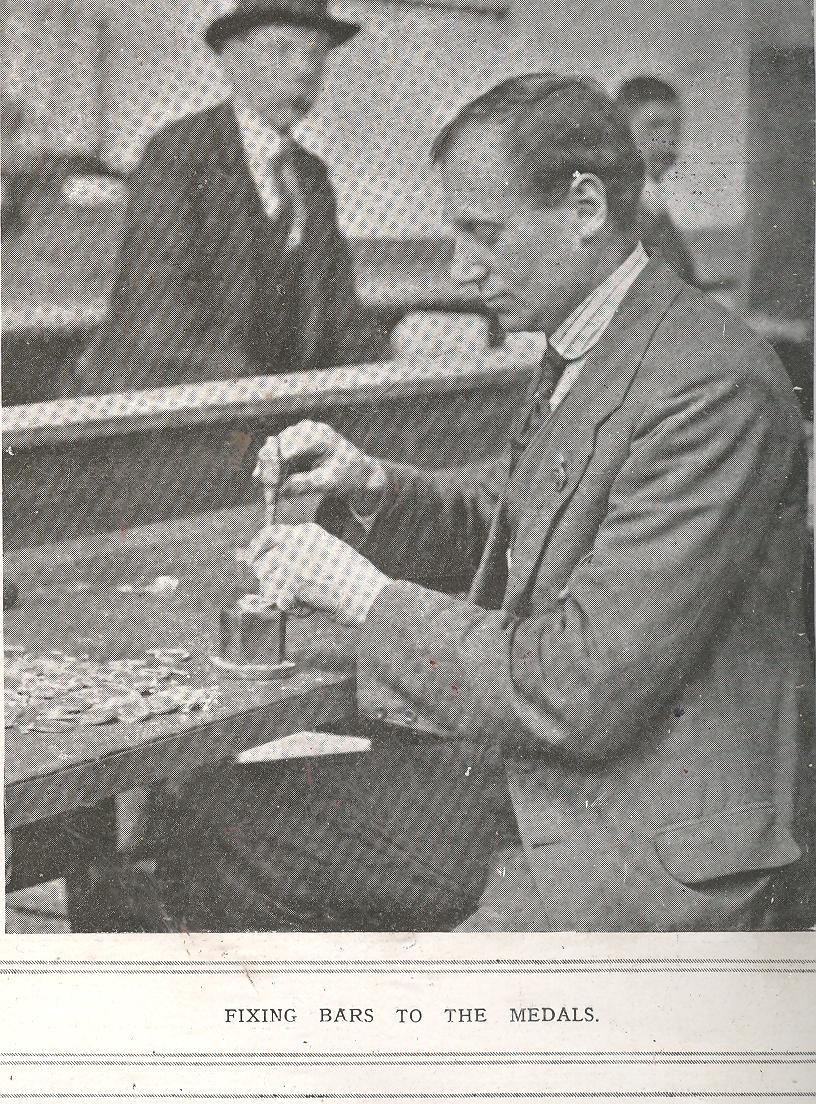
    I had the same sort of feeling seeing this picture essay
    (yesterday as well) on soldiers and war. 
    The photos appeared in the July
    1 1920
    issue of the Illustrated London News and spoke of the new
    management of manufacturing British war medals. 
    The vastness of the casualties of that war are well known, but somehow
    this story seemed to put the big numbers into a more understandable
    perspective.

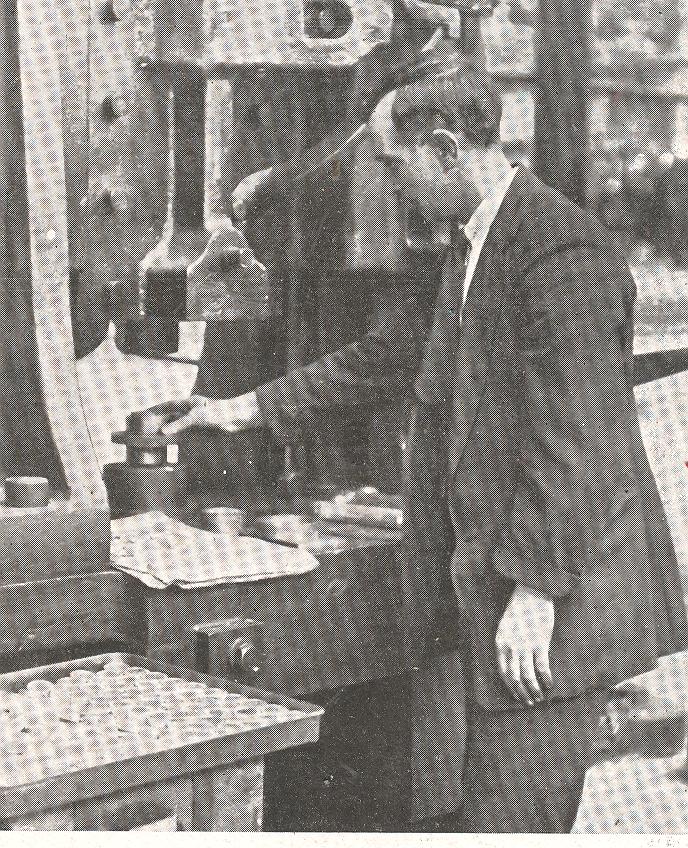
    I learned that there were 300 men who worked full-time on
    producing these medals, making about 67,000 a week–in 1920, two years after
    the end of the war.  Not only that, since
    the Royal Mint and the Royal Ordnance Factory would be working jointly on the
    project, the Army Council expected production to increase to 120,000 medals a
    week.  That’s six million medals a
    year. 


    1--may 5 medals 01b

    It seems extraordinary that even after the fighting that
    production levels would need to be so high. 
    But there were millions who fought, and so these 300 workers would still
    have to work for several more years to produce enough medals to honor those who
    fought in WWI.

      
    1--may 5 medals 1

    I read somewhere—a citation now long lost—that in America every Purple
    Heart that has been given out since 1945 was struck in that same year.  This  mountain was made in preparation for the
    hundreds of thousands of soldiers who were expected to be made casualties in
    the Allied assault on the Japanese homeland in 1945/6—a figure that would come
    close to half of the total number of 1.6 million Purple Hearts that have been
    awarded since 1932


    1--may 5 medals 2

    ·Posted by :

    ·in:

    — — —

  • Image Archaeology–Images within Images Department, 1934

    JF Ptak Science Books LLC  Post 978


    Ebay mar 15 LIBERYbig eye

    This
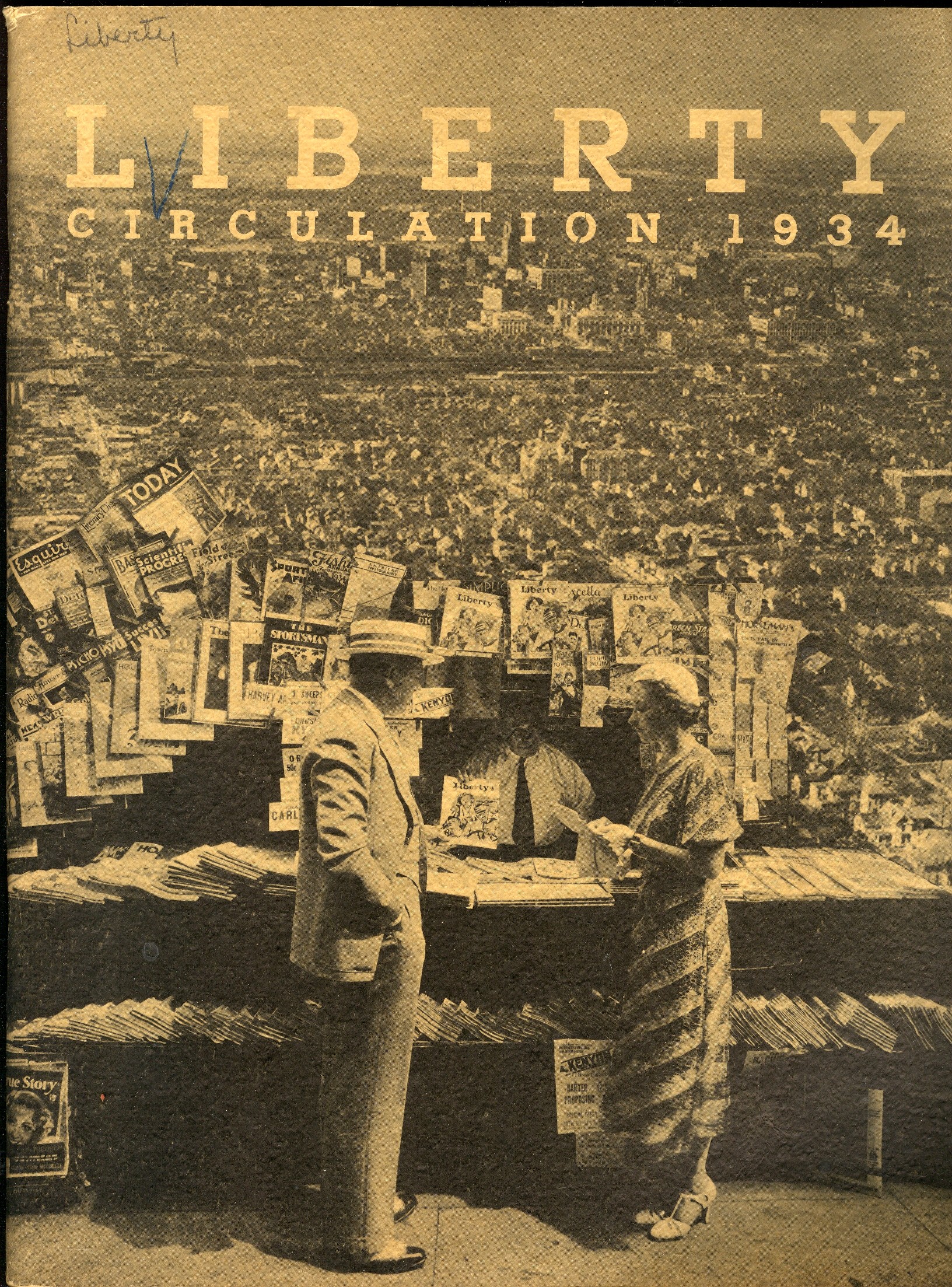
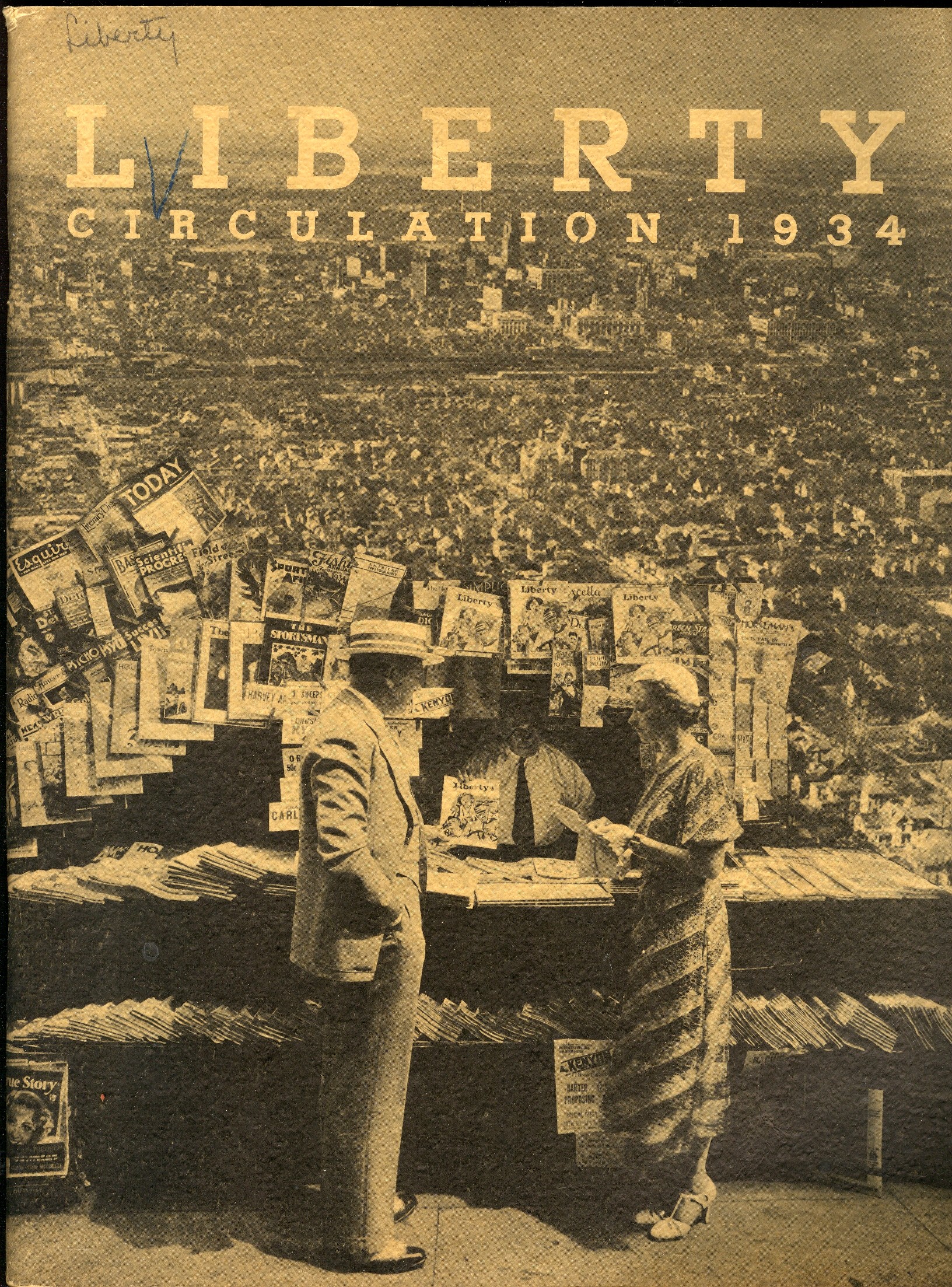
    short post comes in the can’t-judge-a-book-by-its-cover category, as the cover
    is absolutely the  most interesting component of this publication.  Unless of course you’re interested in knowing
    how many paid subscribers Liberty had in Asheville, North
    Carolina
    in 1934. 
    Or Salida, Colorado.

    Ebay mar 15 LIBERY

    Ebay mar 15 LIBERYman2

    That’s all there is to the innards of this pamphlet: circulation numbers
    for a prancing, popular magazine.  This
    would’ve been of great concern to the folks trying to sell and distribute Liberty, showing
    potential customers how far and wide the magazine was read. (And evidently it
    was very popular:  with a circulation per
    issue of about 2.2 million, it was the sixth most popularly-read magazine in
    the country, following Collier’s, McCall’s,
    Ladies Home Journal
    and The Saturday
    Evening Post
    , all of which had circulations between 2.3 and 2.9 million, so
    Liberty was not far off from being
    one of the most widely-circulated magazines in the country. It actually rose to
    the number two spot for a little while during the war.) 

    Ebay mar 15 LIBERYman
     
    This
    is not to say that the magazine itself was a bore, what with writers like P. G.
    Wodehouse,  Robert Benchley,  Edgar Rice Burroughs, Robert W. Chambers, F.
    Scott Fitzgerald, Murray Leinster,  Sax
    Rohmer and others making contributions here and there. 

    An
    odd bit about Liberty—they “timed” their articles.  The reader was told about how long, on average,
    it would take to read each piece, taking about three hours to read the entire
    issue.  That’s something I’ve never seen
    before. 

    So
    the contents turned out to be a bit of a bore—the cover, on the other hand, is just
    lovely, a beautiful and seamless piece of photo montage with some interesting
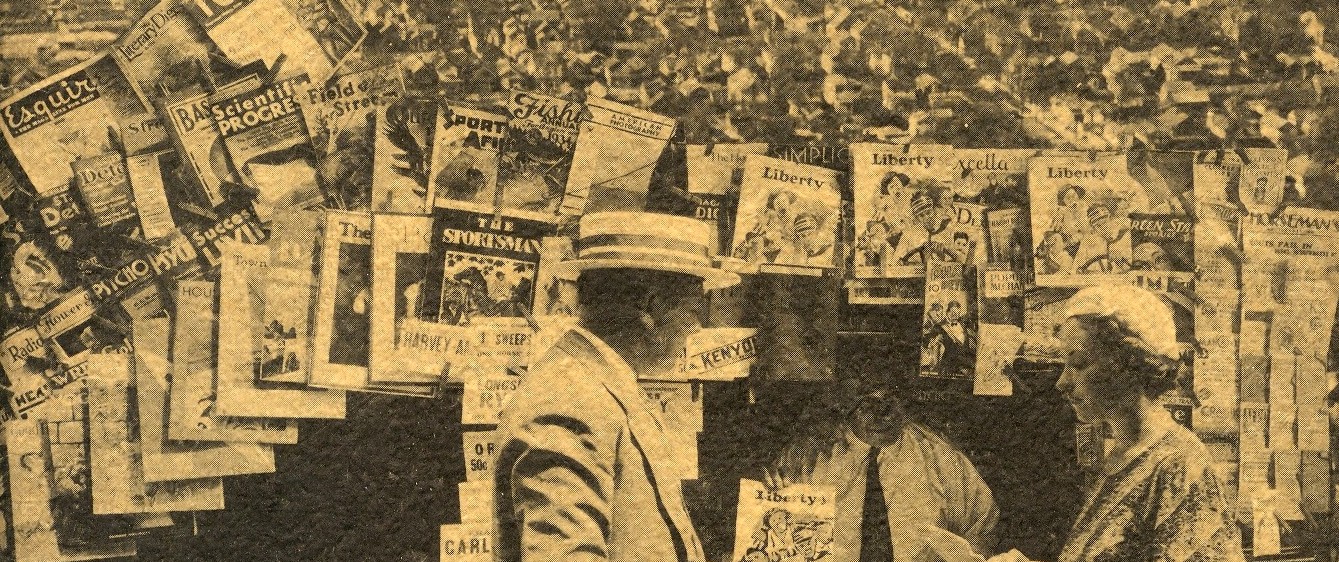
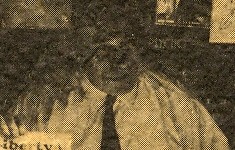
    semi-hidden images. I quite like the image of the white-shirt-tie magazine stand purveyor that emerges from the shadows (above). And also the face that emerges from underneath the rear brim of the boater on the fellow standing in front of the stand.

    Ebay mar 15 LIBERYface hat 

    This is just a lovely example of what ephemeral play one can draw from an unexpected source.

    Ebay mar 15 LIBERYbig eye


  • Popular Culture Images–The Long Road, Allegories of Life’s Stages

    JF Ptak Science Books LLC  Post 969

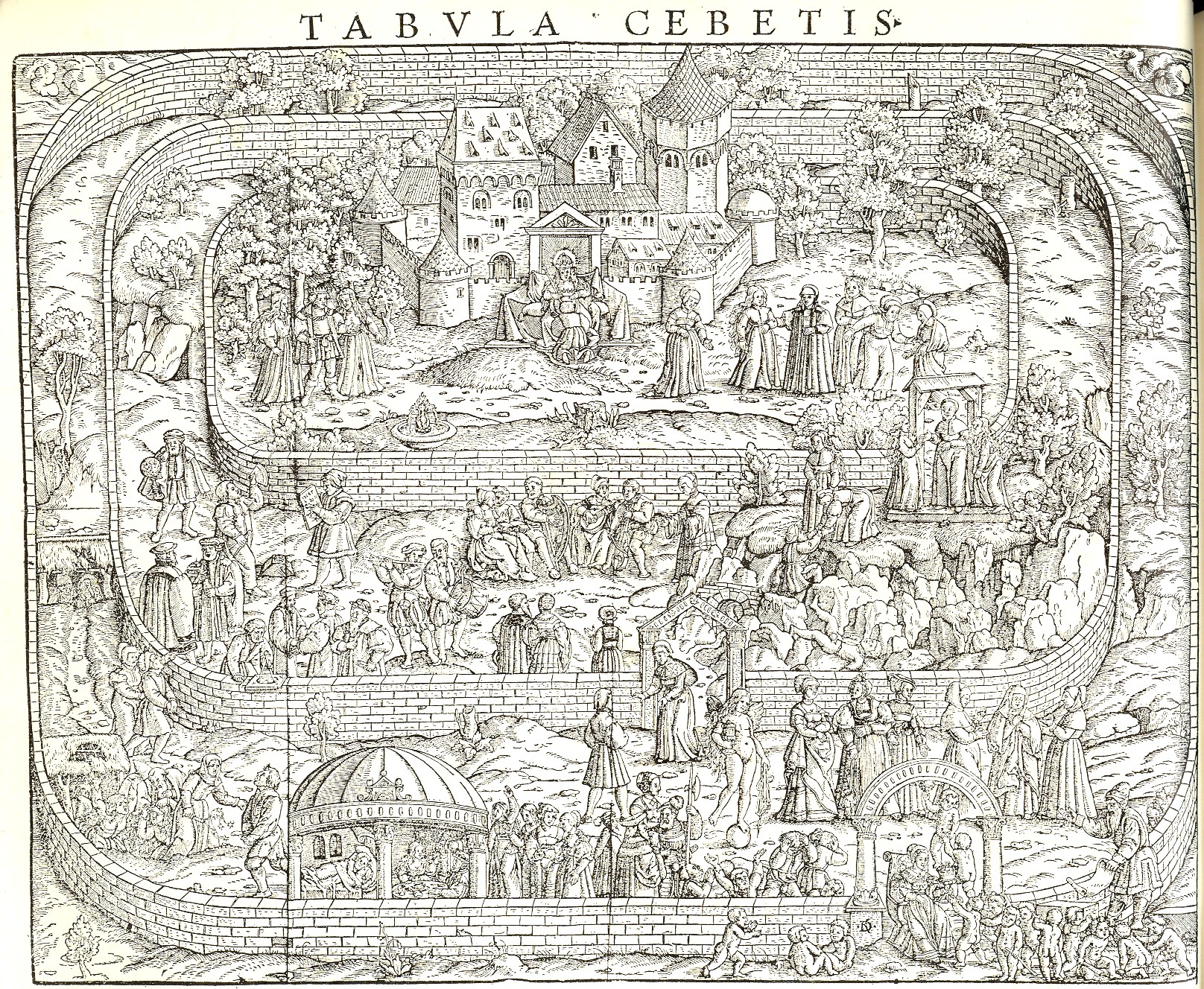
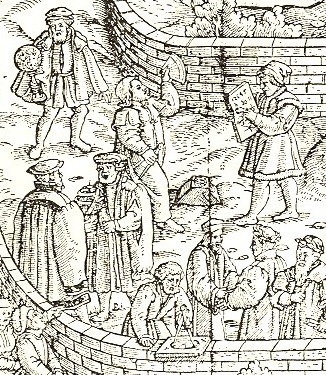
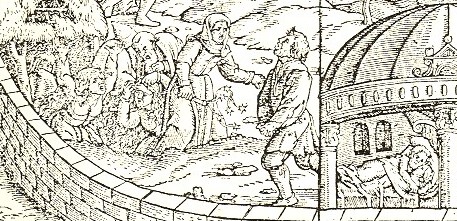
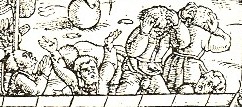
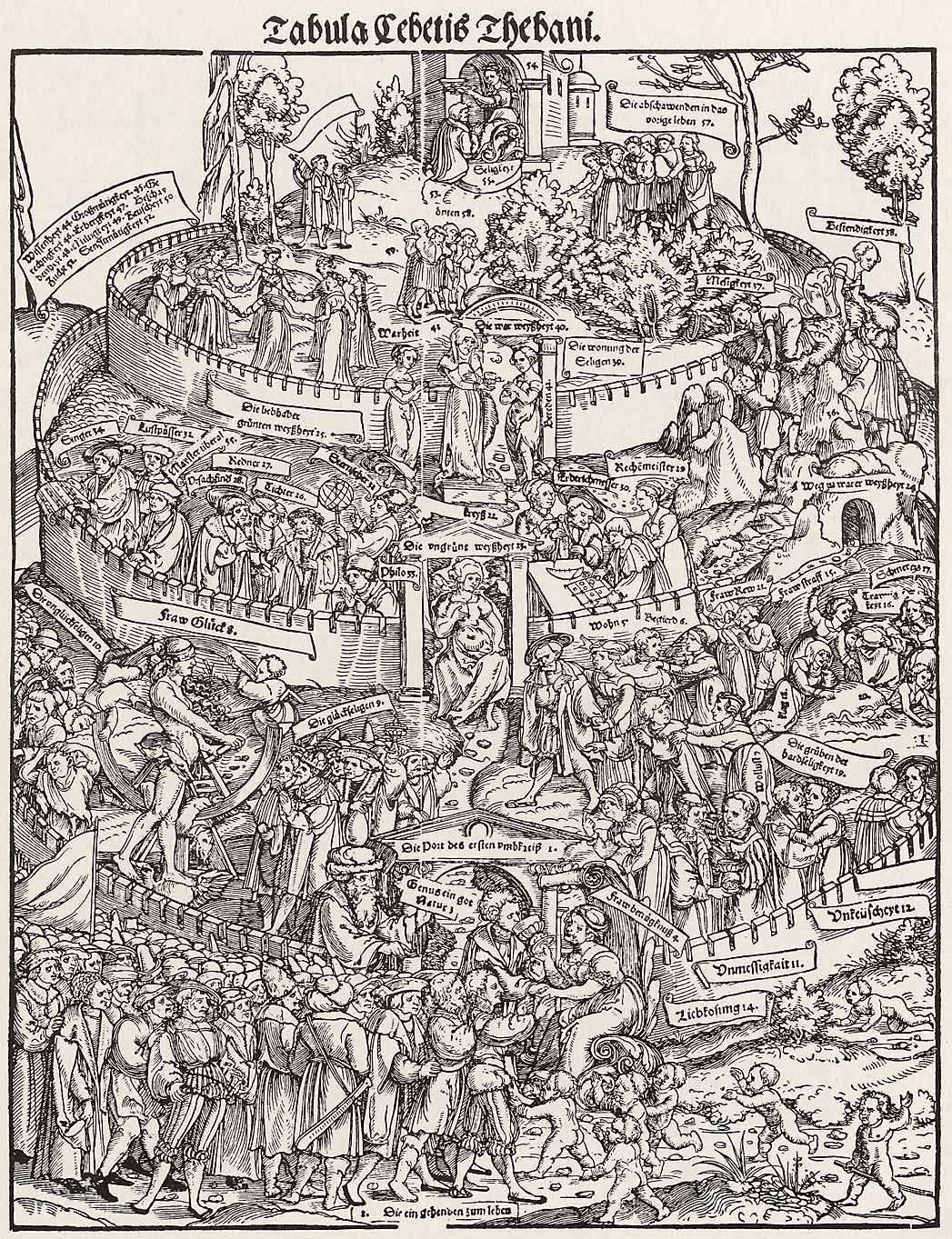
    This remarkable woodcut appears in Epictetus’ Enchiridion (1563), and is one in a long history of images portraying the moral life of humanity.  The longitudinal study of birth, corruption, vice, penance, achievement, want, lewdness, cowardice, sloth, and a penetrating multiple visits of the seven deadlies was intended to show the rough rode that lay ahead of us all on the way to the crowning glory.

    The full image appears below, with details following:

    Mar 9 life

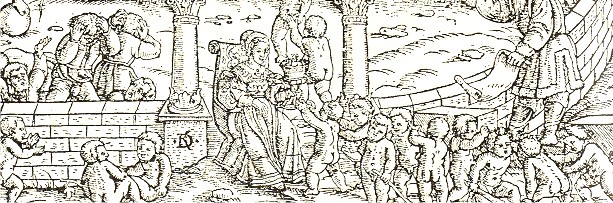
    This is a detail from the lower right, showing the beginning of life, an abundance of babies, with the foot of Fortuna seen at upper left, she observing (or not) the toddlers’ advances along the walls of life. 

    Mar 9 life beginning 

    The achievements of middle life are clearly seen:

    Mar 9 life middle age

    As are the temptations of immoral life and the sins that await:

    Mar 9 life punishment

    Unfortunate sinners turned away at the foot of Fortuna:

    Mar 9 life punishmen2t

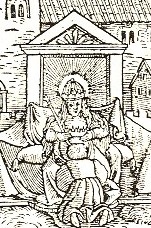
    And at the end of the journey, following the three concentric walls leading to finality:

    Mar 9 life end2t 

    This image looks a little suspect, but when you look at other woodcuts of the Tubula you can see this action a little more clearly (and from the side)–and what they reveal is Mother Church rewarding the supplicant with a crown.  This is more clearly seen below, in the 1551 versin of teh morality play by Johann Kramer (and published in Munchen);

    Mar 9 tabula

    The interpretations of these images areas varied as each of their characters, the details of which can be explained one way one day, and another the next; the morals and the end-tale stay the same. 

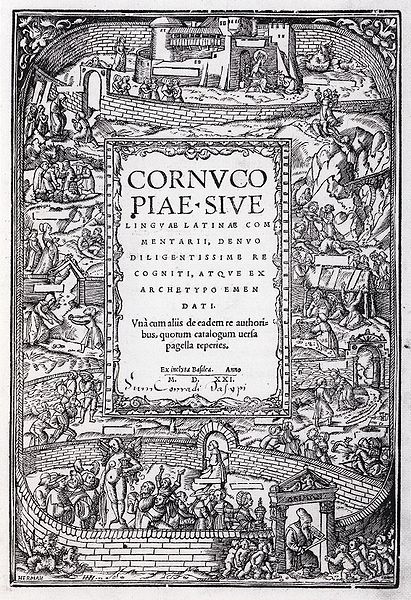
    Another example, this one from 1521 and after a work by Hans Holbein:

    Mar 9411px-Tabula_Cebetis_B,_woodcut_after_Hans_Holbein_the_Younger

    ·Posted by :

    ·in:

    — — —

  • The real Alice in Wonderland: Plus Alice in Miniland and Guinness Stout

    JF Ptak Science Books LLC Post 966Alice Liddell det

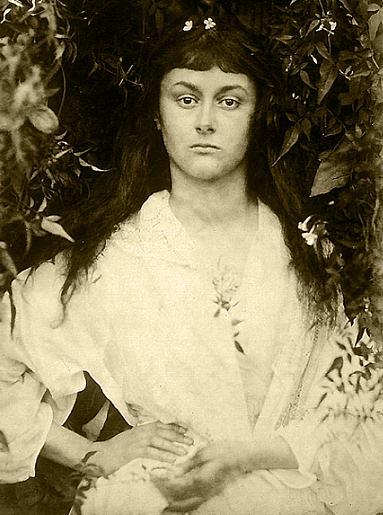
    Now that the new Tim Burton Alice film is out, let’s not forget that there was a real Alice on which Lewis Carroll’s Alice was based.  She looks, well, pretty formidable. (Alice Liddell.)


    Alice Liddell

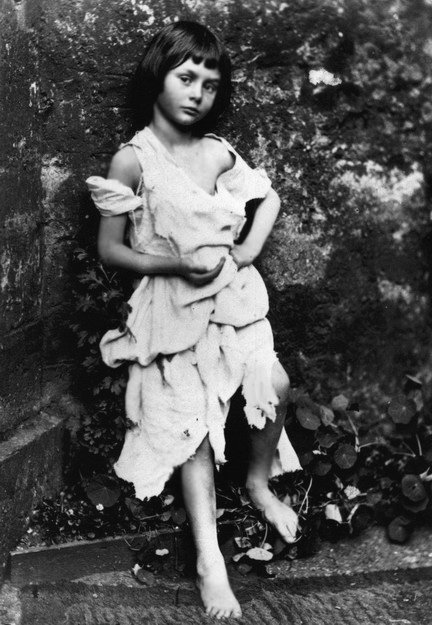
    A photo by Carroll of Alice at a younger age.  In spite of his logic and math and Snark and Alice, Carroll’s “artistic” photos of children are pretty creepy to me. 

    Alice_Liddell_2

    ·Posted by :

    ·in:

    — —

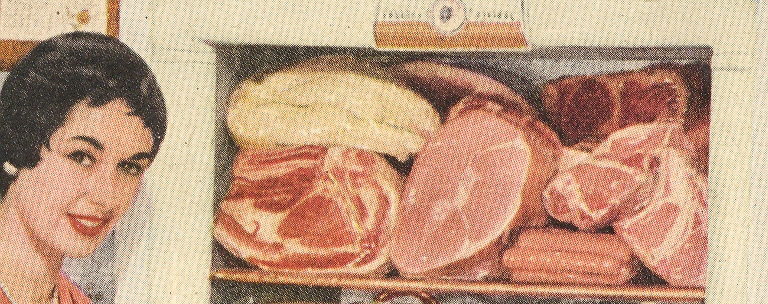
  • States of Perfection: Refrigerated Food & the Archaeology of Meat, 1954

    JF Ptak Science Books LLC  Post 965Icebox250–extended

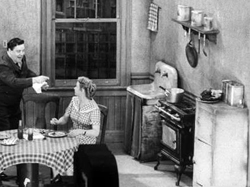
    Like Greek statues, orders of architecture, the golden ratio and Vitruvian man, these ads from LIFE Magazine in 1954 measure a sort of highest-attainable-state, though directed at middle class America.  The ads are for refrigerators, but the interest really is in what is displayed inside of them: they offer an insight into what was seen to be the greatest level of sophistication, the highest stage of want for the most important/essential daily need, and then turned into luxurious accommodation.  Far beyond rice and beans and eggs and ham, far beyond the tiny, perpetually empty icebox of the Kramdens (“The Honeymooners”, ca. 1952).

    [This continues another post, States of Perfection:Images of TV within TV Ads, 1950.]

    You will come to notice (if you look closely enough) that there are a lot of gelatin-thing plates, often located next to a meat plate, or plates.  Funny thing, that.  

    March 6 refer meat

    The top shelf is of great interest, a virtual archaeology of meat:

    March 6 refer meat det 


  • Artistic Nothingness: Cosmic Panspermia, Spermatozoa and Neurons.

    JF Ptak Science Books LLC  Post 964

    In
    the history of life there is a virtual geology of buried ideas of how living
    things came to be.  The belief in
    spontaneous generation is ancient and evidently still holds a comforting sway
    (in a scrubbed-up way) among some moderns. There was a lot written on the
    subject over the centuries: for example, Virgil (Georgics) gives us directions
    on how to make bees, and the great mathematician Cardan/Cardano passed along
    instructions on how fishes are made of water, no doubt drawing on the more
    ancient moisture-related beliefs of Anaximander (600BCE).  Aristotle was more circumspect on the issue
    of

    March 6 sperm

    spontaneous generation, though he did cast a fairly wide and more cautious
    net:  “sometimes animals are formed in putrefying soil, sometimes in
    plants, and sometimes in the fluids of other animals.” Even the beautiful,
    polymathic and occasionally very wrong (but way ahead of his critics) Jesuit Athanasius
    Kircher stated (in his masterwork Mundus
    Subterraneus
    , 1646) that he had seen mice generated out of nothing but
    plants and water.  So it goes. 

    The
    more modern variations on this theme attract a varied collection of some very
    big names. Though the spontaneity now takes place in the extraterrestrial realm,
    with comets and meteors and such impacting with the earth with life debris from
    god knows where (literally), seeding life on earth—though the theories usually
    beg the question of where the stuff on the meteors and etc. came from.  These names include Svante Arrenhius, Lord
    Kelvin, the beautiful Hermann von Helmholtz, Fred Hoyle, and many others.

    Generally
    the more-modern view is attributed with the name of cosmic panspermia (it seems
    to my memory that the first of the most modern life-generating panspermia
    theories is published in the Comptes
    rendus
    in the id 1850’s but I cannot right now remember who it was that
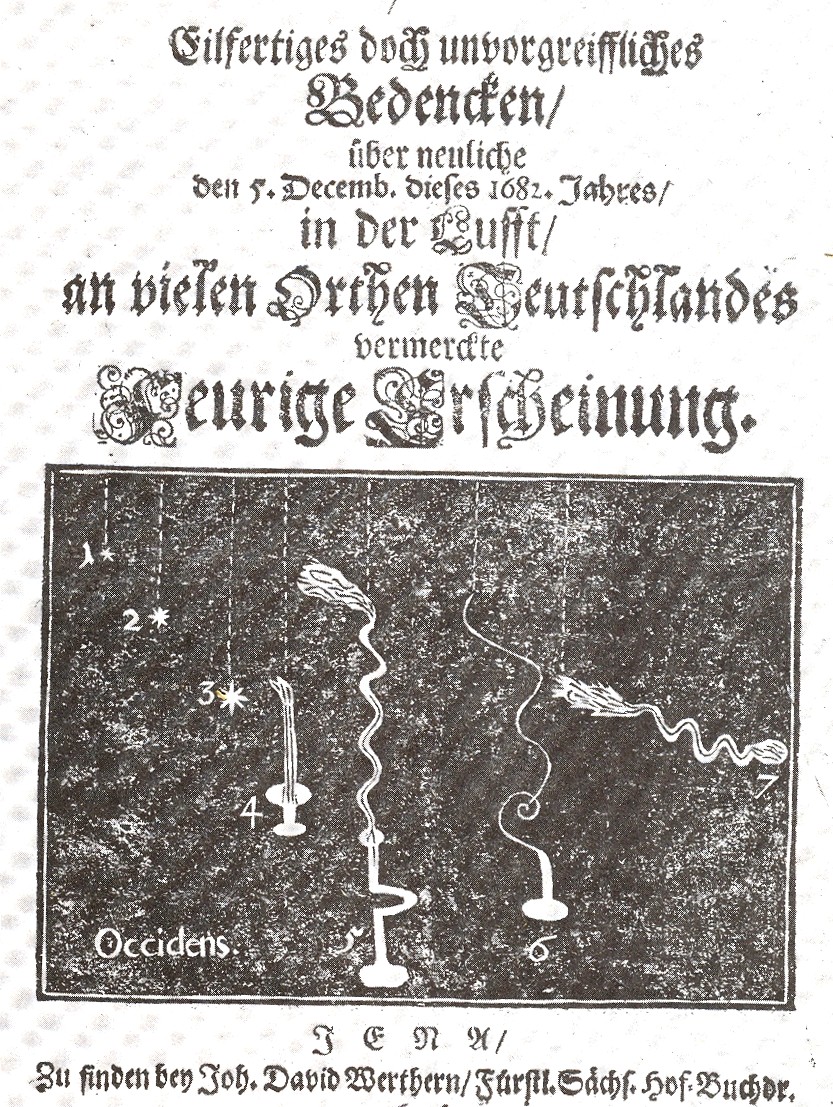
    wrote it).  And it is this cosmic seed
    bit that struck me when I first saw this title page (above) of a very rare work by
    Caspar Posner (1626-1700)—Eilfertiges doch
    unvorggreiffiches Bedencken…
    published in 1682.  It seems that Posner recorded these verities
    of “shooting stars” in Jena
    on the night of 5 December 1682, quickly writing this four-page work describing
    them.

    March 6 sperm leeuw

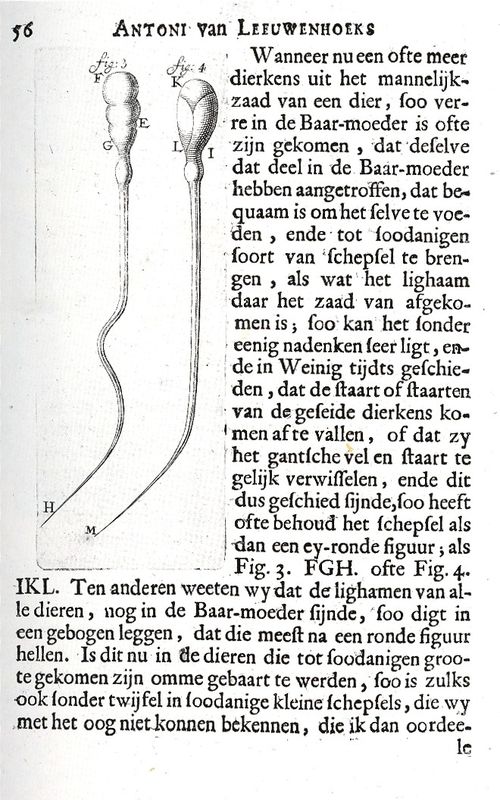
    The
    images reminded me instantly of the first spermatozoa images published by Anton
    von Leeuwenhoek (1632-1723)—and actually they were the first images of live and
    dead (left and right, respectively) dog spermatozoa.  He did absolutely superb work, a great
    pioneer working with a hand-held single-lens (barely recognizable as a) 200x
    microscope.

    And
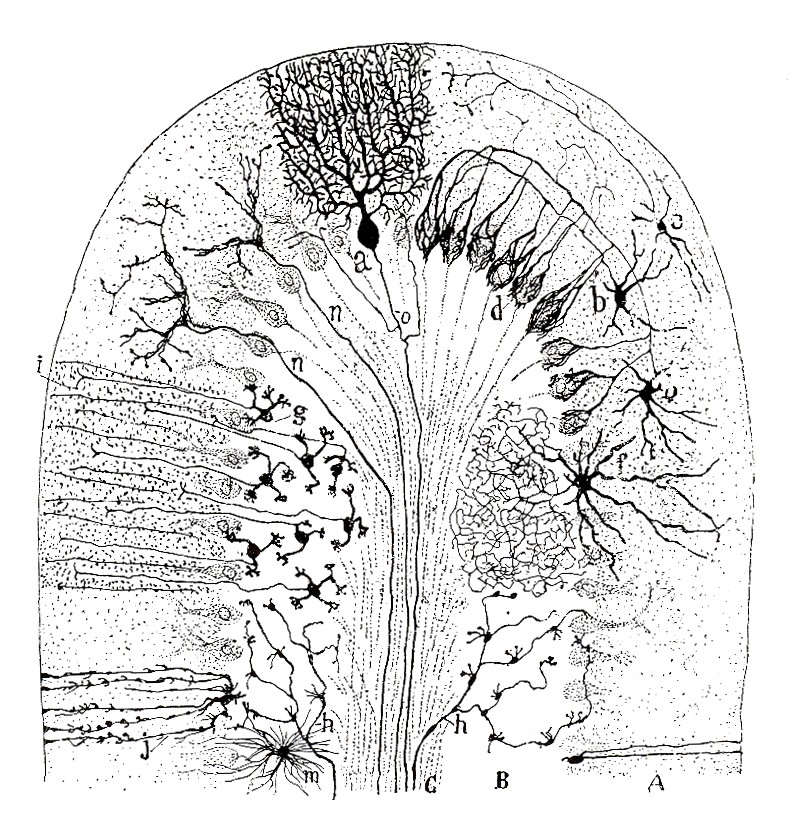
    there too there’s the detail in this image by the great Santiago Ramon y Cajal
    ( 1852-1934), who drew the first accurate picture of nerve cells in the
    cerebellum (found in one convolution of a mammalian cerebellum), which helped
    formulate his theory that the basic structural unit of the nervous system as
    the neuron. 

    March 6 sperm cajal


    Perhaps
    it is a simple artistic fittingness to connect the 1682 meteorite shower with
    cosmic panspermia and Leeuwenhoek and Cajal; in a squinty-eyed way they look
    pretty good together.  On the other hand
    of course these are just random bumped-together thoughts having nothing to do
    with one another.  I vote for artistic
    nothingness.


  • The Great Battle of Sitting and Spitting: Whitney, Texas, 1949.

    JF Ptak Science Books, LLC   Post 953 

    “Why,
    they must spit two or three gallons a day! 
    They ain’t died fast enough, these old men!”—Mrs. T.E. Bagley, Whitney, Texas,
    1949

    0--whitney 01

    This
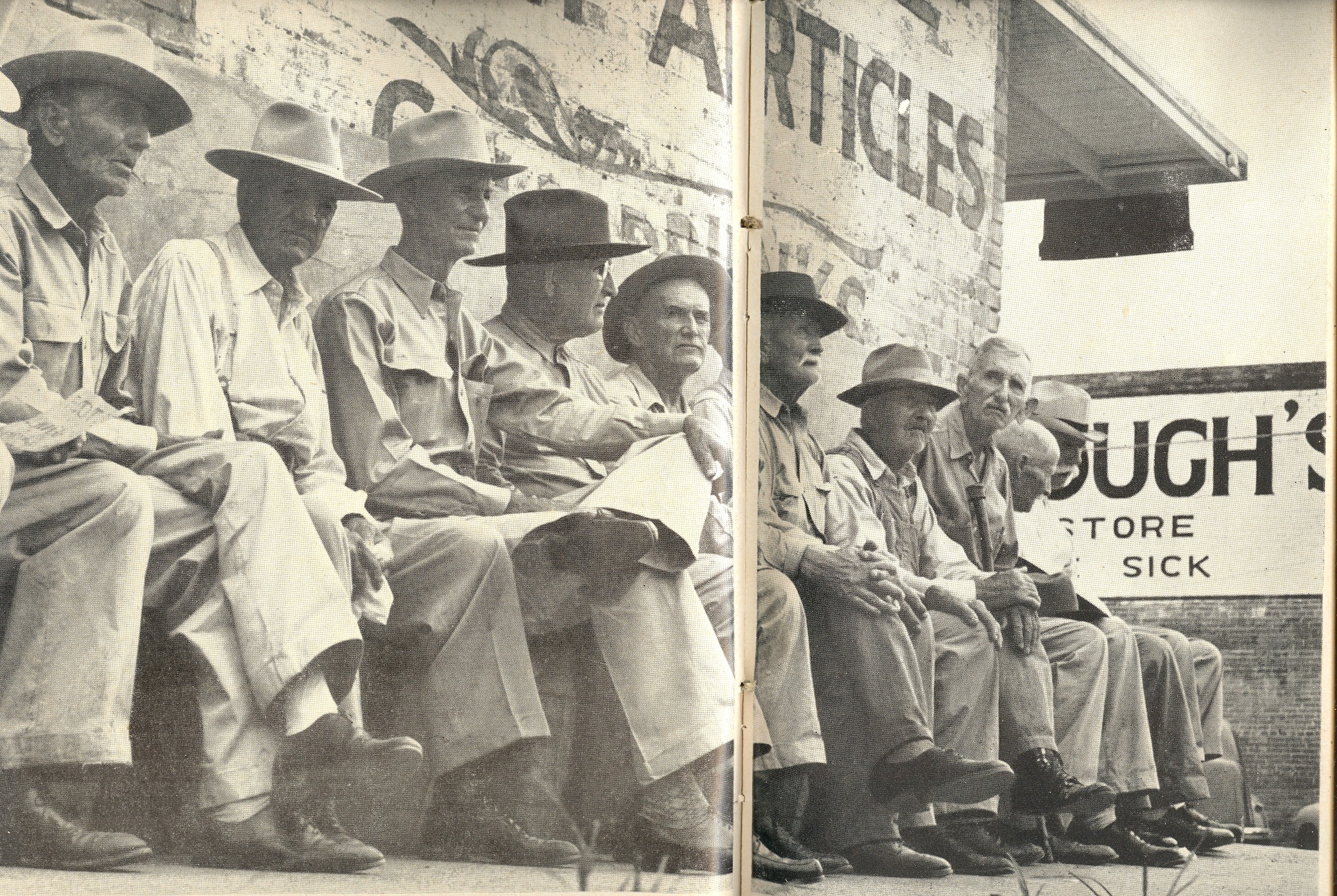
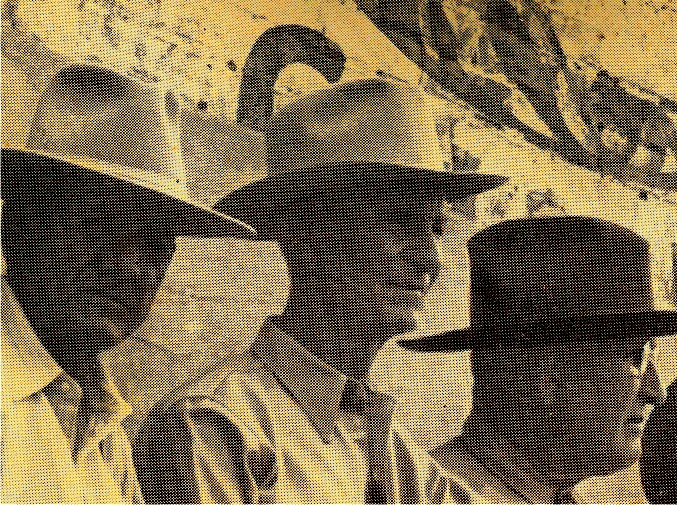
    is a great small America story about sitting. Or old men sitting, and spitting.  Sitting and spitting on a long piece of thick
    timber outside a drug store, bricks and advertisements as back support, in
    Whitney, Texas (population ca. 1,500), in 1949. 
    I can just about hear them on a hot summer evening, right now, only
    probably I couldn’t—they’d probably’ve shut up until the stranger walked by,
    giving me their silence and keeping their confidences.  Or not. 
    Maybe I would’ve been invisible, and the whittled bits would’ve fallen to the street along with the tobacco juice, cusses and gossip, unabated.
    Maybe they surrounded themselves with a stained-moat of spittin’s across
    or close to which no one would stray. 

    It
    isn’t, I guess, so much a story about their sitting as it is a story about
    their not sitting, about how it came to be that their lumber was removed and
    the men forced to find another place to take in the sights and construct their
    great edifices of commentary and asides.0--whitneydetail 3 men 01

    The
    story appears in LIFE Magazine of 15 August 1949, and lays the whole drama out
    in two splash pages, with bare editorializing and some great photos.

    The
    story goes like this: “In 1922 D. (Doctor Dee) Scarborough,
    the druggist in Whitney,
    Texas
    , put
    up a bench outside his store, and immediately it became a loafing headquarters
    for the gaffers of .the Brazos
    River Valley
    .
    ‘Year after year they sat there looking like a jury of irritable terrapins,
    whittling, spitting and passing judgment on everything that passed. But finally
    reform caught up with them.” It caught up to them, even if everyone was wearing a collared shirt.

    0--whitney 02 sherrif

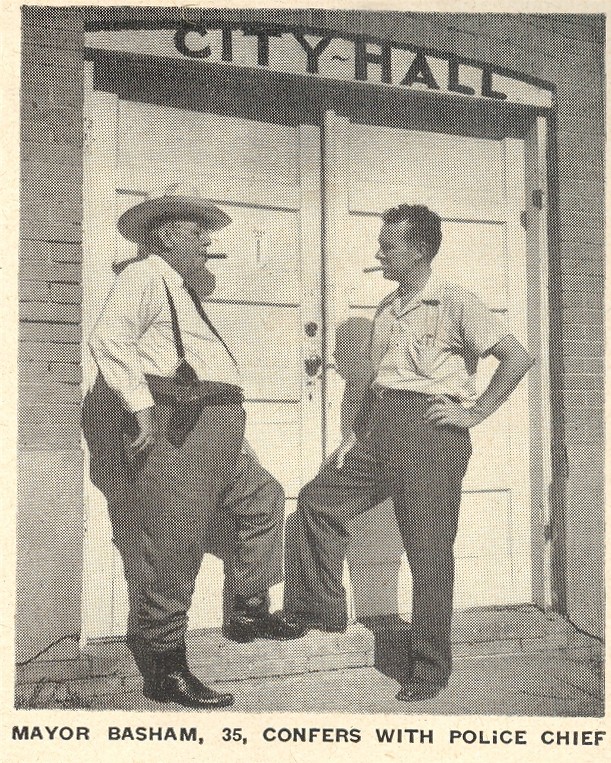
    It came to the mayor of Whitney, Frank Basham, to appease “a
    delegation of local housewives” who were fed up with the old men, and wanted
    the “unsightly bench” gone.  It was
    probably a lot more than the bench, as the quote above by Mrs. T.E. Bagley contends:

    “Why, they must spit two or three gallons a day!  They ain’t died fast enough, these old men!”.
     Perhaps a dozen old
    farmers/ranchers/cowboys sitting on a bench all day long spitting and watching
    the world go by wasn’t the most attractive thing for downtown Whitney.0--whitney 02 sherrif fat close up

    And
    so it came to pass that the lumber was removed, but not the men—they returned
    with nail barrels and took up residence, unabated, “sitting wrathfully” on the
    kegs.  The police then threatened to
    confiscate the kegs, and then the men: tensions flared, and a special election
    was held, a referendum on whether or not to restore the bench.

    0--whitney 03 old lady

    “I’ve
    never heard of such foolishness”, ‘cried 97-year-old Tom Rose, dean of the
    bench sitters’. “Come here in ’77 from Tennessee.
    Been married 76 years, and my wife ain’t whipped me yet.”

    The
    vote was held and the forces of bench-removal-evil were “horribly” beaten, the
    vote for favoring restoration coming in at a convincing 124 to 67.

    The
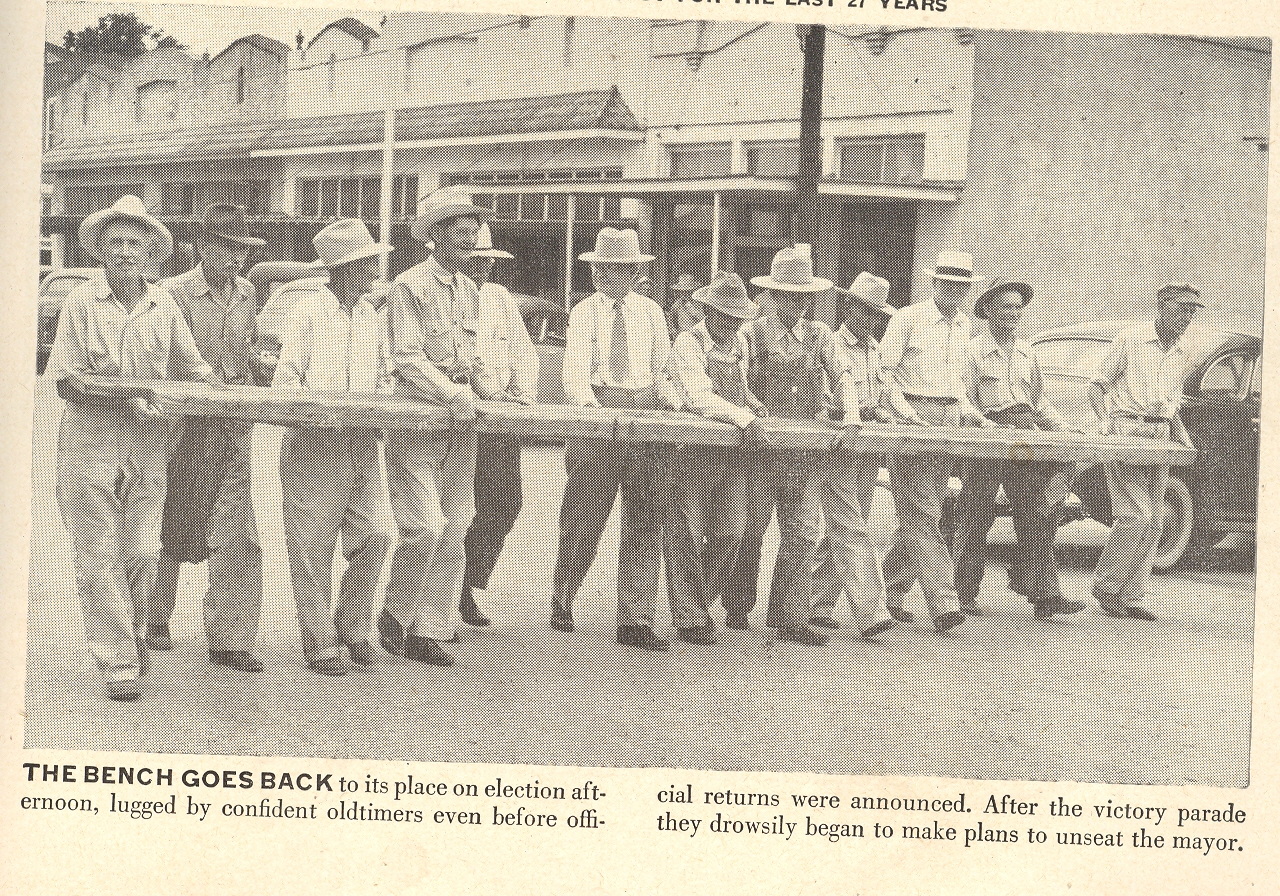
    picture below shows the men “triumphantly” hauling the bench back into
    position, sitting back down once more, “loafing, whittling, spitting and
    passing judgment on everything that passed”.

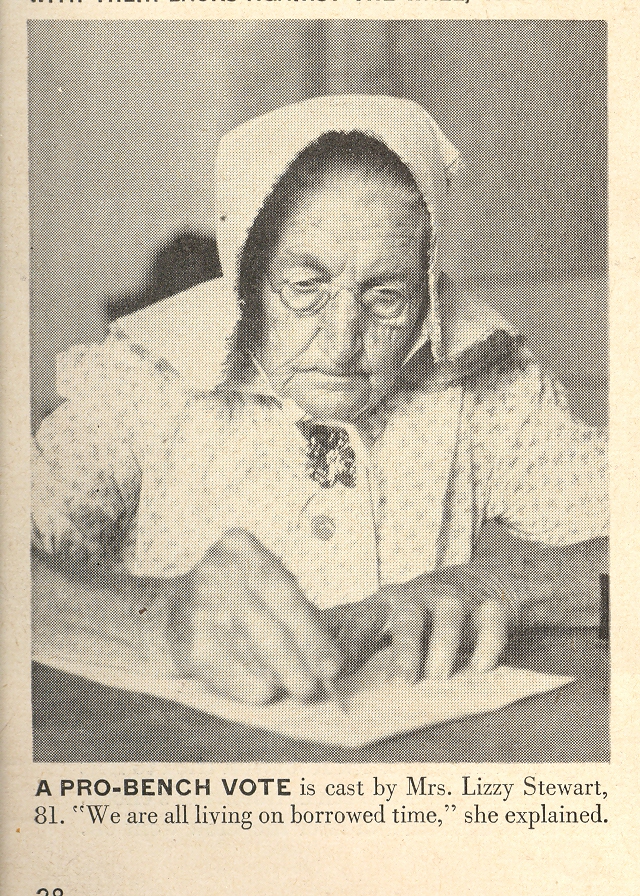
    As I said, this is a beautiful drama of high emotion, way-of-life small consequence played big, a heaping slice of American life witnessed in a small East Texas town just after World War II.  I would love to hear the voice of Mrs. Lizzy Smith (pictured here) as she was thinking-out-loud, casting her vote in this debate with a pencil no longer than a finger joint. (Where did that hat/shawl come from? Is it her mother’s? Mrs. Stewart’s  mother would’ve been born around 1840, which means that the sensibility for that head cover was at the very least of pioneer vintage, and possibly older. It looks like living history to me, a snapshot into something from the deep past, right there in the present. This doesn’t happen very often; but when it does, it is a celebration.)

    “We’re all living on borrowed time” she is quoted as saying, and I imagine that she voted for the men to be able to return to their bench to use what time they had left to holding up the walls of that pharmacy.  [I made a call to Whitney, this morning, and spoke with a gentleman about the Battle of the Bench.  He eloquently relayed the story, and the place that it holds in the town’s history, its small action carried into the future as a very large sensibility– I’m thankful for his insight.  I couldn’t resist asking what it was that was directly opposite the bench; what were these men looking at when they weren’t looking down.  “Not very much” he said. But the story isn’t in the looking, its in the talking; and as my wife Patti Digh finely points out, stories seem to be best told side-by-side.

    And
    in here is a great little play. Maybe not so little.

    0--whitney 03 carrying bench