A Daily History of Holes, Dots, Lines, Science, History, Math, Physics, Art, the Unintentional Absurd, Architecture, Maps, Data Visualization, Blank and Missing Things, and so on. |1.6 million words, 7500 images, 4.9 million hits| Press & appearances in The Times, Le Figaro, Mensa, The Economist, The Guardian, Discovery News, Slate, Le Monde, Sci American Blogs, Le Pont, and many other places… 5000+ total posts since 2008.

Category: Future, History of the

  • Maps of Invasions of Great Britain and the United States

    JF Ptak Science Books  Post 1274–Real and Imagined

    America has almost never been invaded. I should clean that statement up a bit: the United States has almost never been invaded.  America–which included North/Central/South once upon a time long in the dim past–was constantly invaded until the invasions no longer counted themselves as such, which I guess means that the “invasion” forces became  “resupply”. (Perhaps an invasion is over once you surpass a certain ratio of houses : forts.)

    “Invasion” does not include “attacks”.  A few guys getting off a Nazi sub and wandering around until they got picked up (with some (all?) being executed) does not an invasion make.  9/11 was not an invasion, though the subsequent invention of impending and pervading fear was–that’s why we have “storm centers” rather than “weather reports” on broadcast news–but even that fear business was more home-grown than anything else.

    The Japanese Army were on two small islands in the Aleutian chain (which may have been closer to Tokyo than NYC) for a bit in WWII–also does not make for an invasion, even if they were there for a long time.  Or even if they were still there.  Nor does sending hundreds or thousands of paper incendiary balloons across the Pacific an invasion make. 

    UFOs don’t count, either.  (I still find it remarkable that such a large percentage of the hundreds of thousands of “sightings” has the UFO with landing or whatever lights on it. I figured out at one point that there has been a report on one of these critters every ____ minutes since Roswell. And in all of those hundreds of thousands or reports, if you took them all and stacked them one on top of the other, they would reach perhaps the height of a grain of sand.)  The Beatles don’t count, either.   

    What also doesn’t count (but probably should) but which is not military–not really, though it may have the impact of a military force at some time in the future–are Chinese-made imports of, well, everything.   At Thanksgiving I wondered how much of a dinner could be composed of foods that were shipped from China and to no great amazement an almost-complete table of food could be set, plus napkins, flatware, plates, candles, tablecloths, tables, chairs, paper turkey decorations, carpet, flooring, wallpaper, paint for the walls and ceiling, screws for the Chinese-made door hinges, lighbulbs, tubes for the McIntosh preamps, all of the clothing worn by the guests, and so on.  The electricity is still American-made. The fact that Mott’s Apple Juice is coming from Chinese apples is a bad sniff of the future. The country of origin is usually on juice bottle necks-check it out.)  

    Certainly something that does count is the invasion by Great Britain of the United States in the War of 1812–they invaded long and deep enough to burn the White House and cause general havoc.  We won that one.  But of course the Brits were otherwise involved on the Continent.

    Perhaps this non-invaded bit explains why the most-viewed post on this blog (with at last count was 400,000 views) was a LIFE magazine article from 1942 on the possible invasion routes to the U.S.  Maybe the volume was driven by war-gamers, though I suspect it was made up largely of the curious who weren’t used to seeing “Invasion of” and “America” together in a military sense.
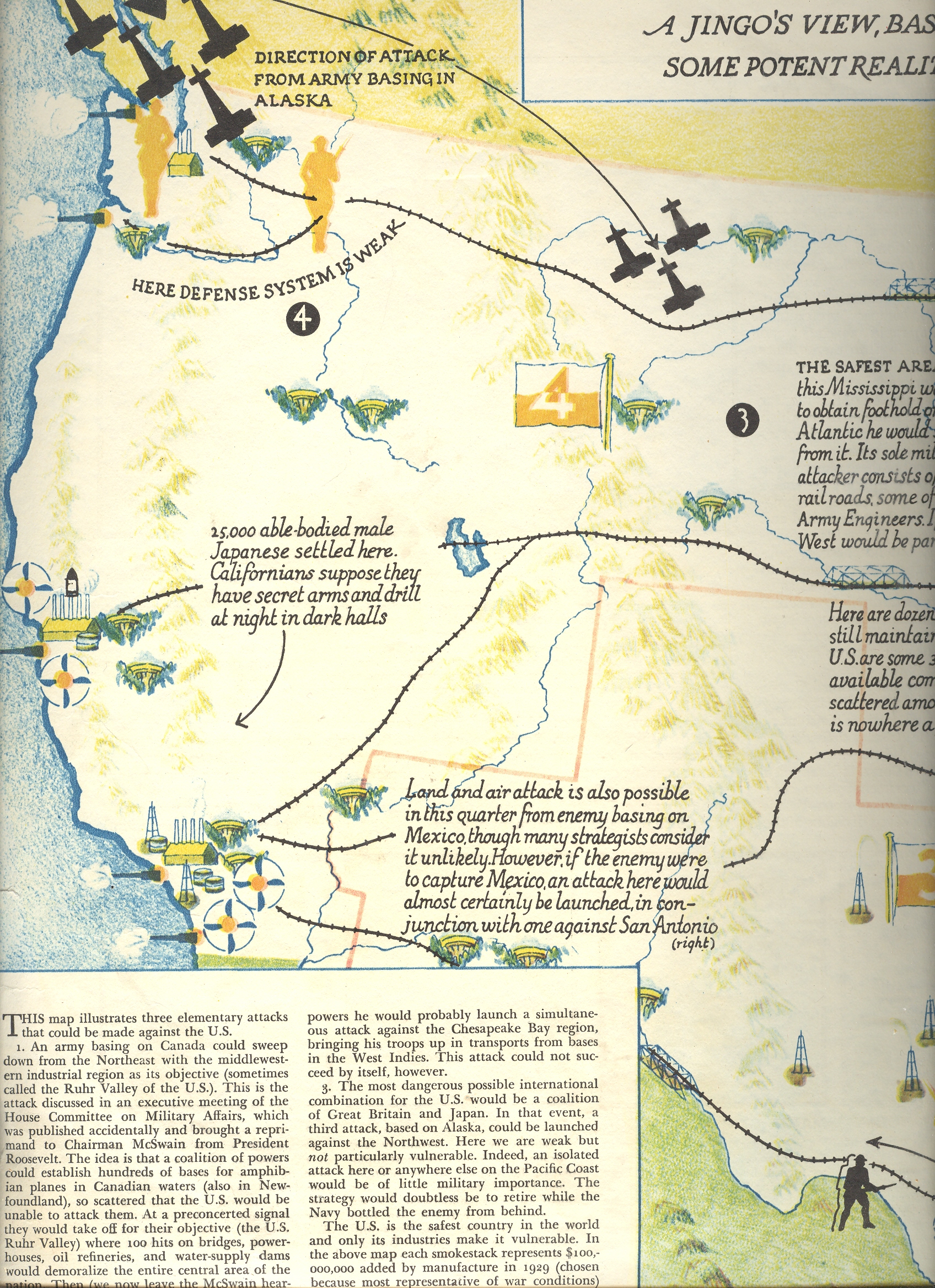
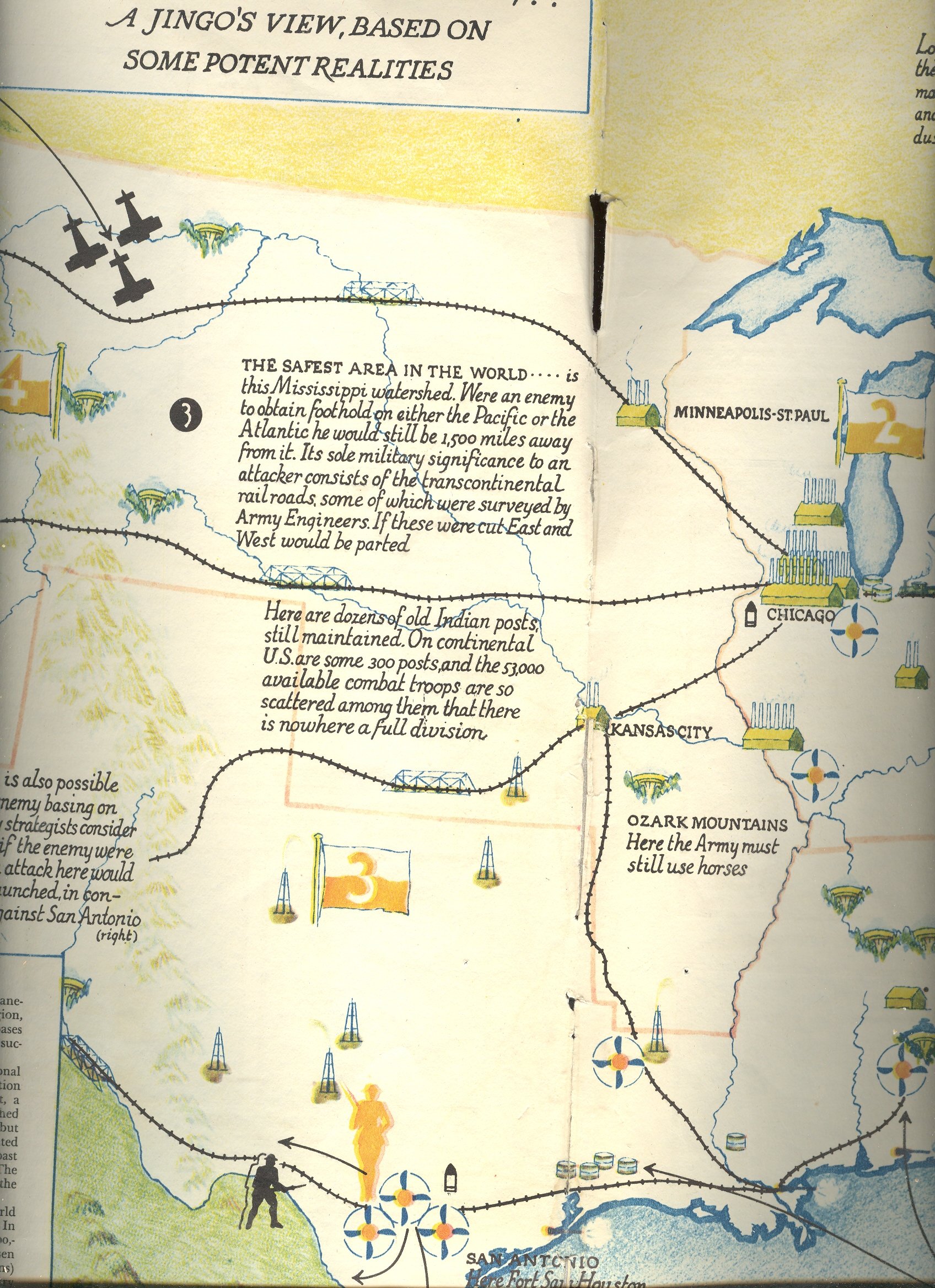
    https://historyofideasblog.com/a/6a00d83542d51e69e20120a7a3225e970b-pi

    https://historyofideasblog.com/a/6a00d83542d51e69e2012876a5a4b4970c-pi

    https://historyofideasblog.com/a/6a00d83542d51e69e2012876a5a5e4970c-pi

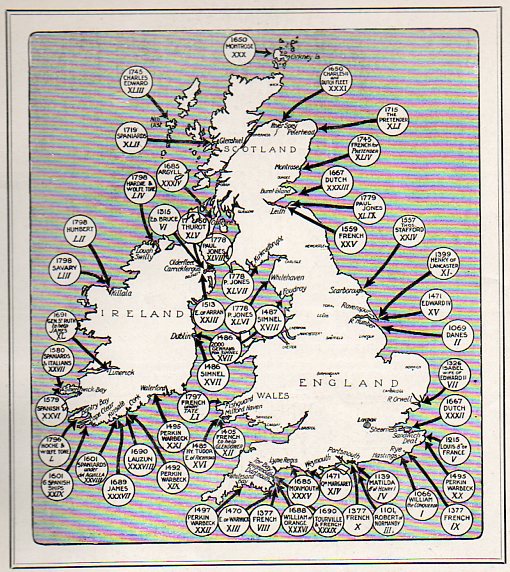
    But now for the  real stuff:  a map of the 54 invasions of Great Britain (and “the places at which foreign troops have landed on British soil since 1066 (and all that), seen in the Illustrated London News for 27 March 1909):
    Invasion--Us and England120

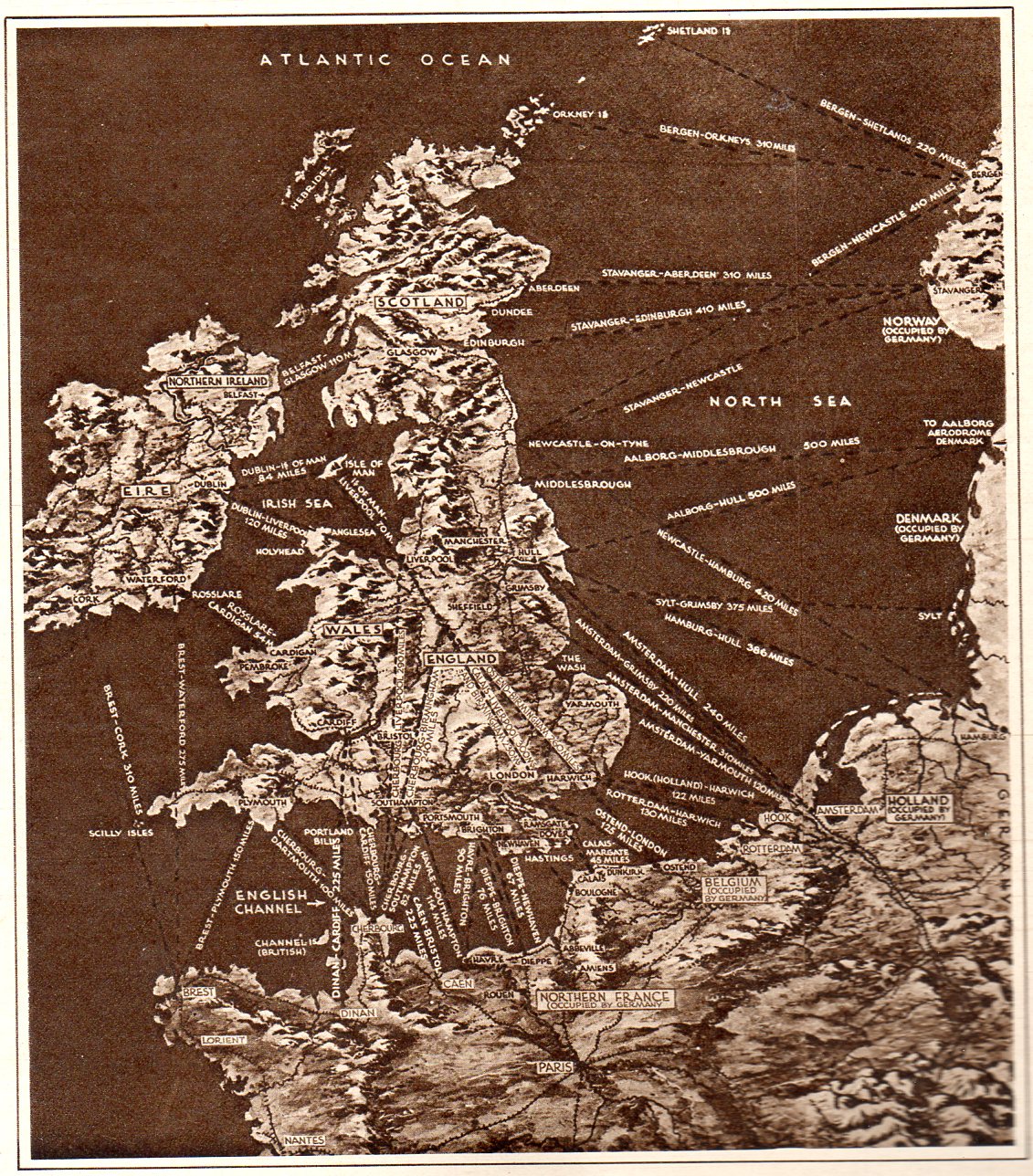
    And then this, where the WWII invasion routes were turned around: 
    Dunkerque124

    This map pretty well tells the story of the perilous situation of Europe and England at the beginning of June, 1940.  It appeared in the Illustrated London News on the heals of Churchill’s “Blood, Soil, Sweat and Tears” speech, and was a very frank presentation of the wearing of the war.  By this point in the war Nazi Germany had successfully invaded Belgium, France, Luxembourg and the Netherlands, sweeping across Europe in a broad westward movement, backing up British and French troops all the way to the sea at Dunkerque, where a monumental rescue operation (“Operation Dynamo”) saved them.  (There was an enormous amount of materiel left there on the beach, a devastating loss for the British Expeditionary Force, nearly crippling it.) This was a bad time for the Allies, this part of the war coined by Winston Churchill in 18 June 1940 in the House of Commons by:  “The Battle of France is over. I expect the Battle of Britain is about to begin”. There was very little good that came of these few months for the U.K and the Allies, though four things do stand out: (1) as I just mentioned, the saving of 300,000+ troops at Dunkerque; (2) the resignation of Neville Chamberlain, (3) the coming of Winston Churchill  as Prime Minister of the U.K., and (4) the first deciphering of the Enigma at Bletchley.  Other than that, the situation was dim, and these invasion routes (published at t he very time that Germany was studying such a feat in its “Operation Sea Lion“, or “Unternehmen Seelöwe”). The endgame at Dunkerque took place almost four years to the day of the invasion of Europe, when the intent (though not placement) all of these arrows were turned around for the Allied operation at the Normandy beaches on 6 June 1944..

    And so, there it is–a presentation of several maps showing invasions, real and imagined 

  • Protopunk: Steampunk during the High Steam/Low Electric Age

    JF Ptak Science Books  Post 1270

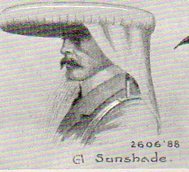
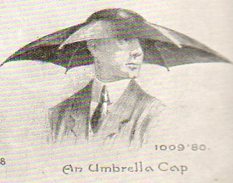
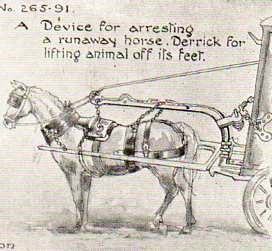
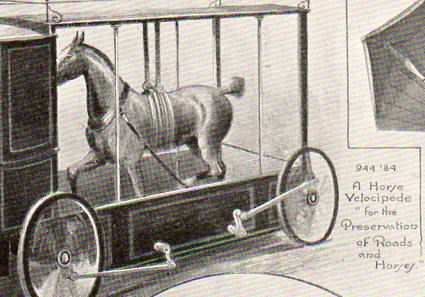
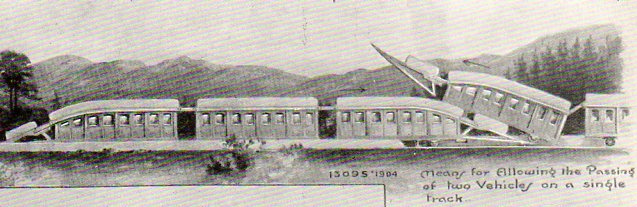
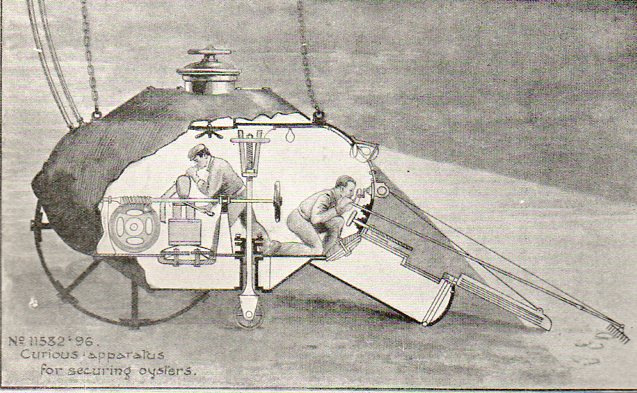
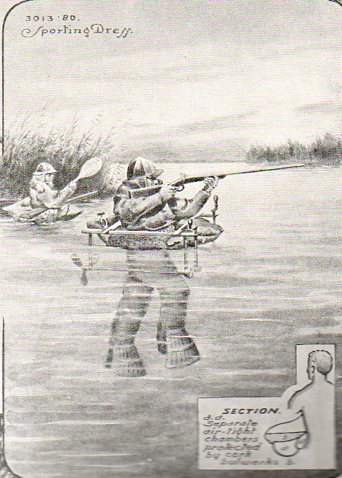
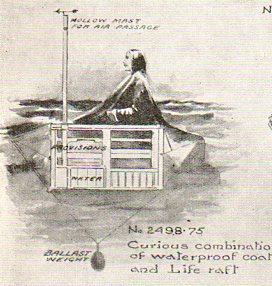
    I was drawn to this Steampunky collection of inventions because they were semi-futuristic inventions done at the time when the inventions could actually be fabricated–the idea was there and so was the material and expertise.  The only thing left was the will to do it and the fortitude to use it.  Perhaps the only thing lacking in all of it was that last part. 

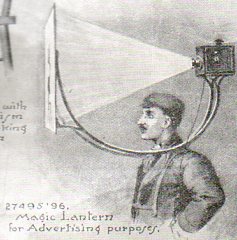
    Certainly people were getting used to technical and physics breakthroughs when these images were published in 1908:  the advancement of powered heavier-than-air flight since 1903, wireless transmission across the Atlantic in ’01, quanta in 1900, X-Rays in ’95, radium in ’98, automobiles, motion pictures, electric toasters, Gilette’s disposable razor (use and throw away!), and so on  (I’ll not mention Einstein because he wasn’t really in the public eye in 1908), so taking an extra and probably unnecessary step in these inventions seen below felt natural.  They were just a little on beyond necessary.

    Steampunk 2  magic lantern104

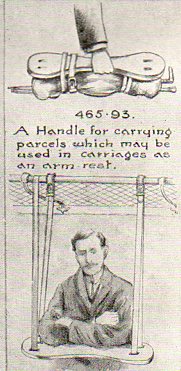
    Steampunk 2 armrest094
    Steampunk 2 cigar holder095

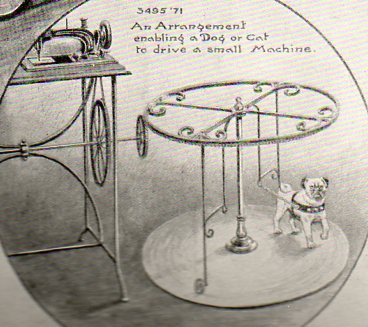
    Steampunk 2 dog walker102
    Steampunk 2 hat a096
    Steampunk 2 hat b097
    Steampunk 2 horse093
    Steampunk 2 horse b101
    Steampunk 2 lsingle train trac100
    Steampunk 2 oyster collection091
    Steampunk 2 shooting103
    Steampunk 2 watrproof coat092

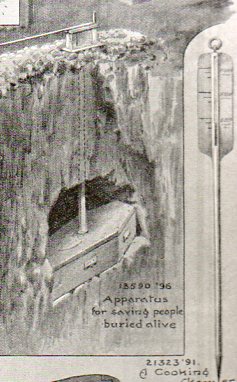
    Steampunk 2  burial105


  • Steampunk Anatomy–Cancer Holes, Nut and Bolts, Oil, Outer Space Belly Shirts and Heavy Things of the Future

    JF Ptak Science Books  Post 1269

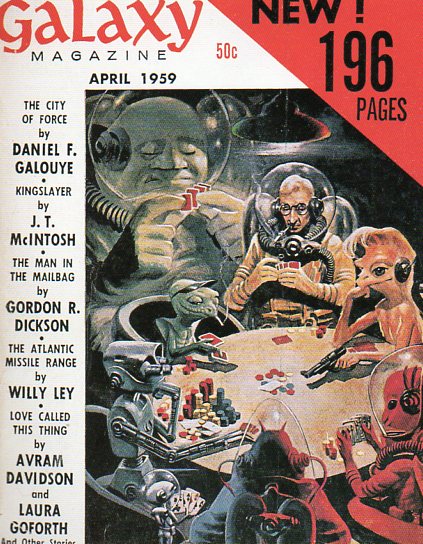
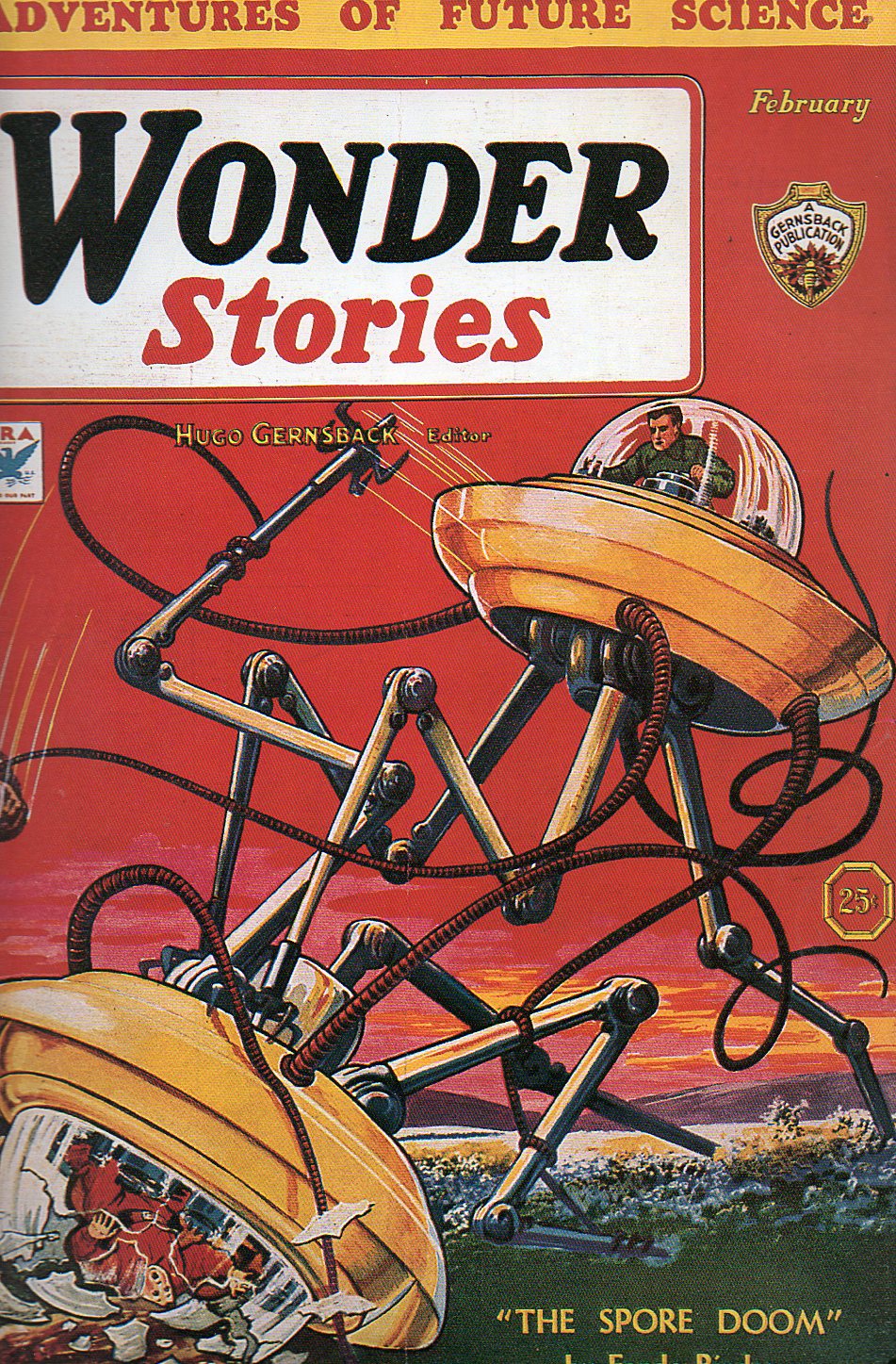
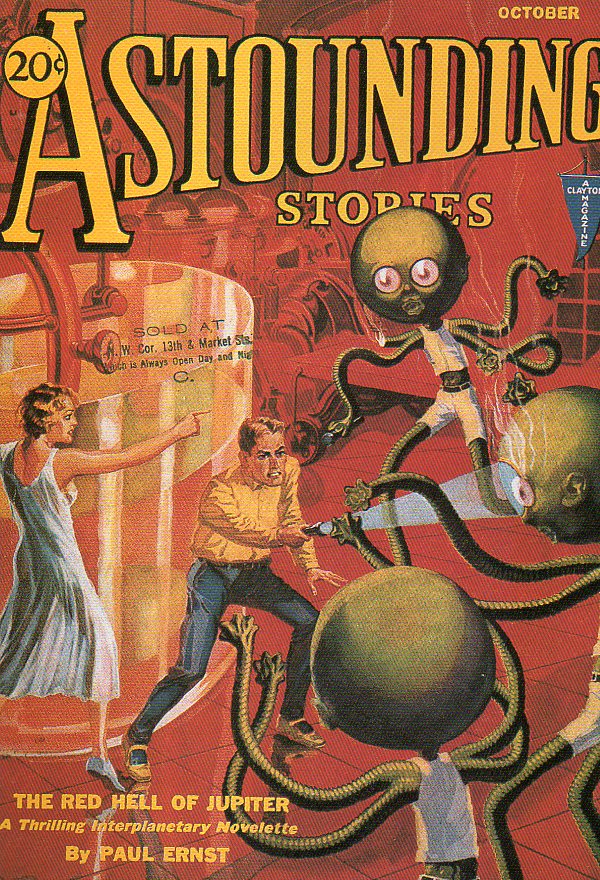
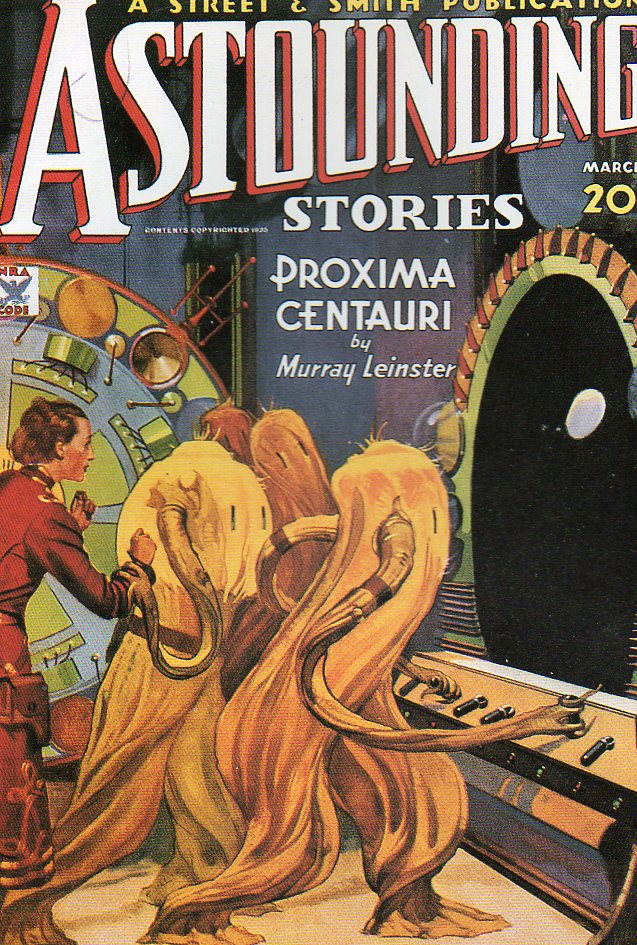
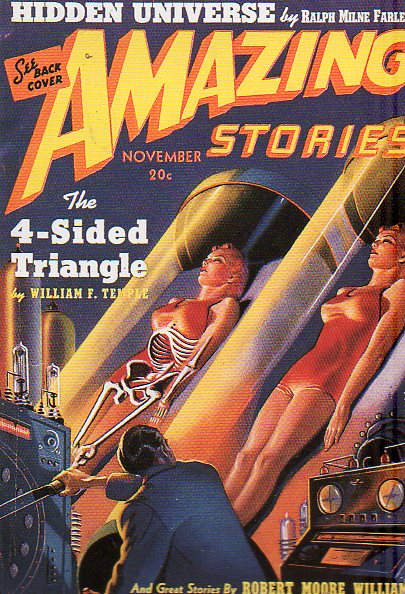
    What is it about science and the future and how the scifiction of the past (pre-1950’s) almost never could encapsulate the superior scientific innovation and discovery of its near future?  It is marvelous and wickedly magnificent to look at some cover art and illustration for the pulp and not-so-pulpy science ficton, images that not only have a certain look and feel, but also a smell, a particular bookstore/basement pulp-paper-not-exposed-in-forty-years smell.

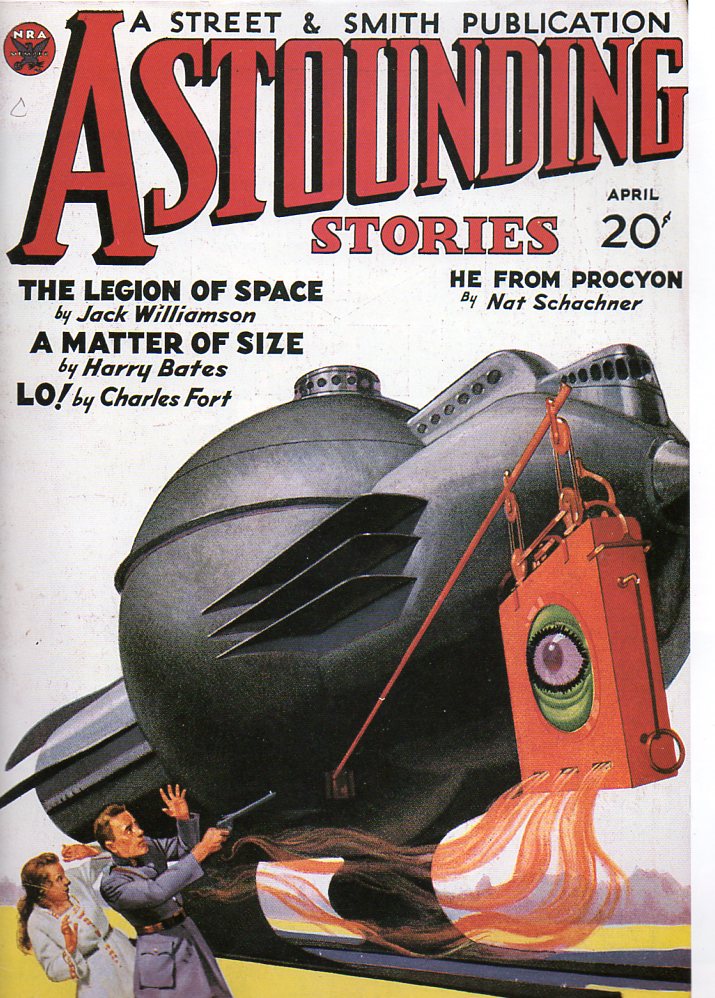
    Steampunk Eye–that enormous ship, governed by a long, long pole with a small box witn an eye in it, being raised and lowered on pulleys:

    Steampunk a077

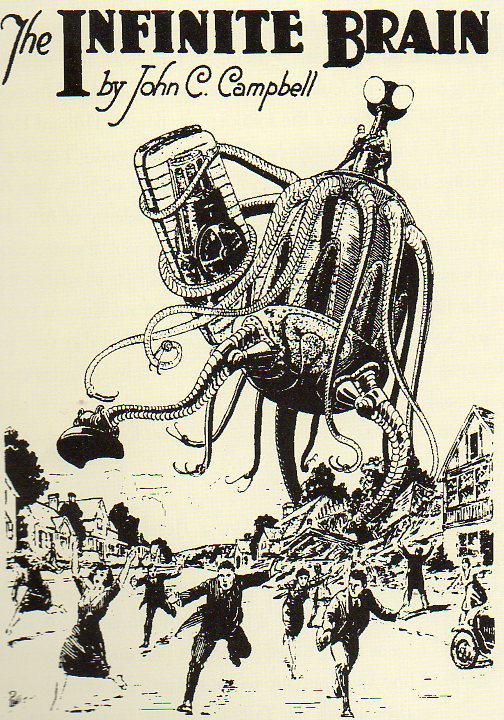
    The Steampunk Gigantic Enormous Stupendous Infinite Brain (also notice that folks are fleeing, running for their lives, witt heir arms thrown high into the air, running like SpongeBob SquarePants–its hard to run like that):

    Steampunk brain084

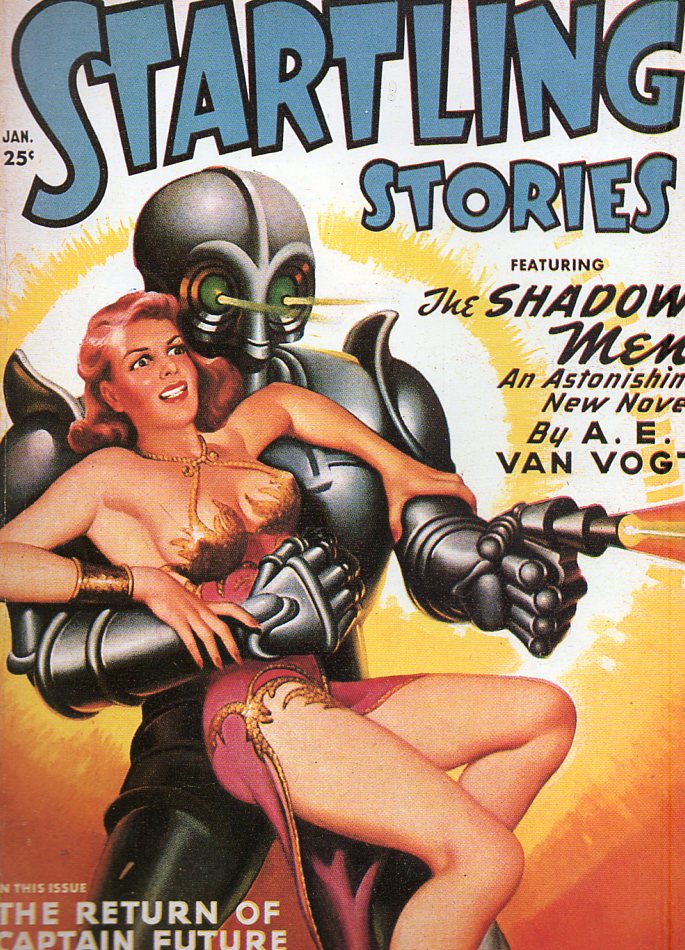
    Steampunk Lust:

    Steampunk lust085

    Steampunk Addiction & Cancer Hole:

    Steampunk cancer hole088

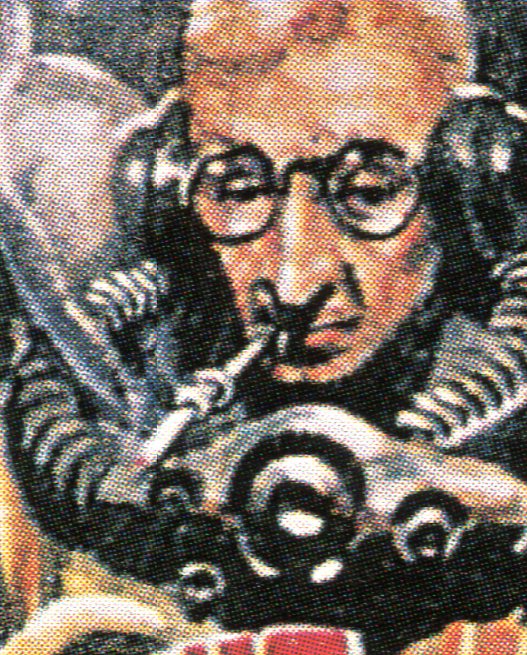
    And the Philip -Morris contribution for smoking in alien space:

    Steampunk cancer hole089
    Steampunk Humano-Robot Replicant:

    Steampunk human robot081

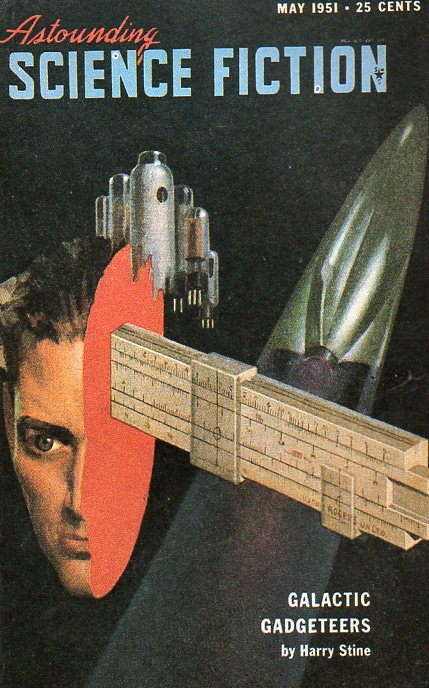
    Steampunk Thinking (the slide rule really didn’t give out until around 1970):

    Steampunk calculating086 Steampunk Legs:

    Steampunk legs083

    Steampunk Abs:  humans are surrounded by arm-waving large-headed belly-shirted aliens, the man using a flashlight for defense )burning the alien eye even though they’re all in bright light) while the woman points really hard:

    Steampunk abs090
    Steampunk Hair–and with all of that vast technology and futurismo, there are still unruly locks here and their:

    Steampunk hair082
    Electro/Steampunk Body Replicator

    Steampunk body replicator087


  • Millions of Miles of Hole-Filled Paper–Dystopia, Entertainment, Vonnegut and Prison

    JF Ptak Science Books  Poat 1236

    {Part of this blog’s History of Holes and History of the Future series.]

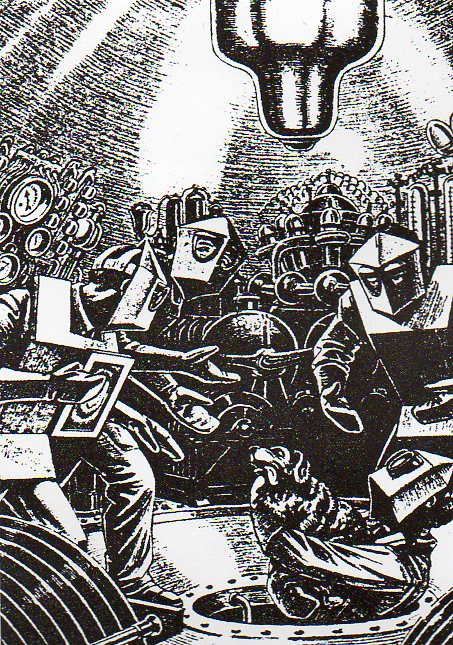
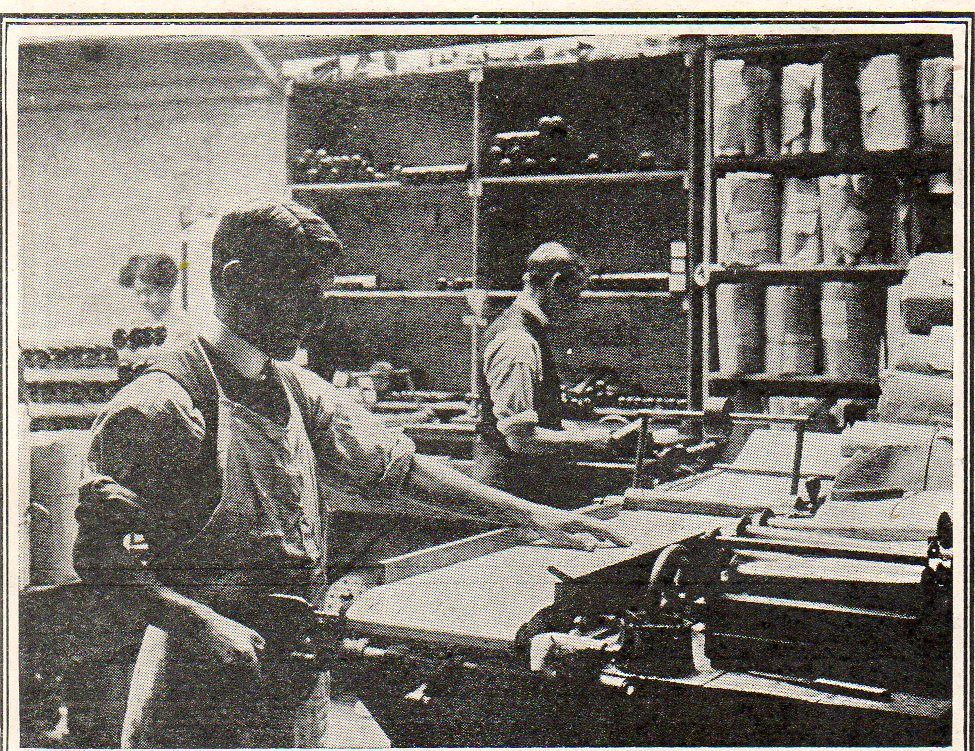
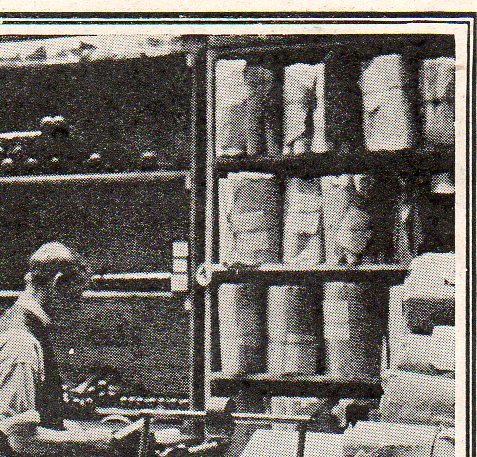
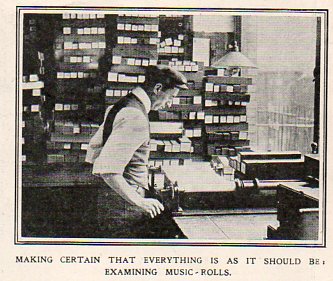
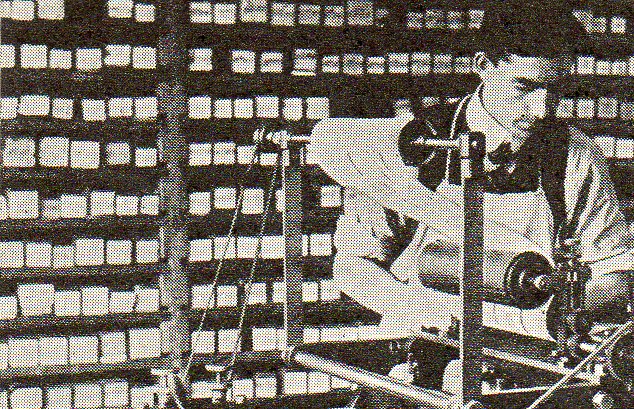
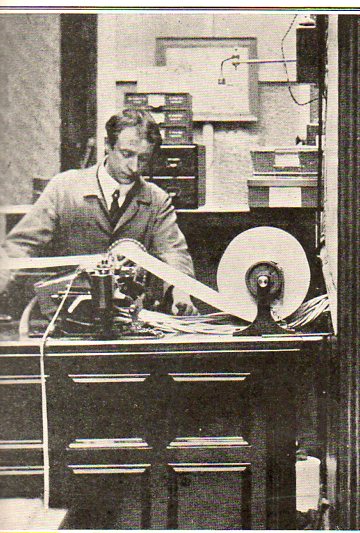
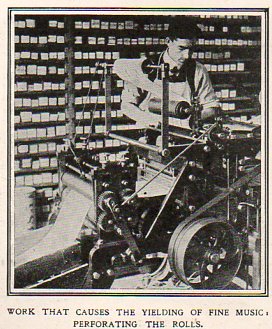
      Music role making--1871 There is a certain layered, geological dystopic quality to the  images of these men laboring at producing piano rolls for player pianos (and found in The Illustrated London News for 18 December 1909). This is true especially for the details, the small boxes in the background to where the rolls are being “processed”–music pounded out with metal points on a hard surface, as though produced by whatever it was that was in those little labeled wooden containers, far removed from the artistry of melody. These are images of a culture being made into hundreds of thousands of miles of hole-filled paper.

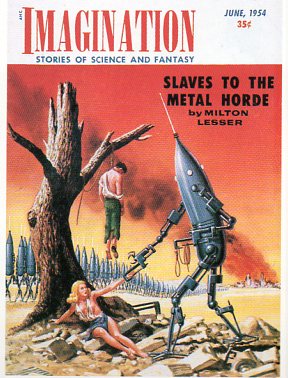
    The piano roles remind me of automatons replacing humans in entertainment, and then replacing the humans making the piano roles; of machines taking over the jobs of people writ large.  There’s a long and rich literary history of this idea, not the least (or first) of which is the appropriately-named Player Piano, Kurt Vonnegut’s first novel, written in 1952.  Like a tiny idea-machine, Vonnegut manufactured part of his tale from Brave New World, with Huxley having taken his bit from an earlier novel, We, written by Yevgeny Zamyatin in 1921–they’re all bleak images of a future dominated by machines, the humans acquiring numbers for names, like the replaceable and expendable units they became. 
    (Artwork by Malcolm Smith for Imagination, June 1954.)

    Robots in ocntrol--hanging human879

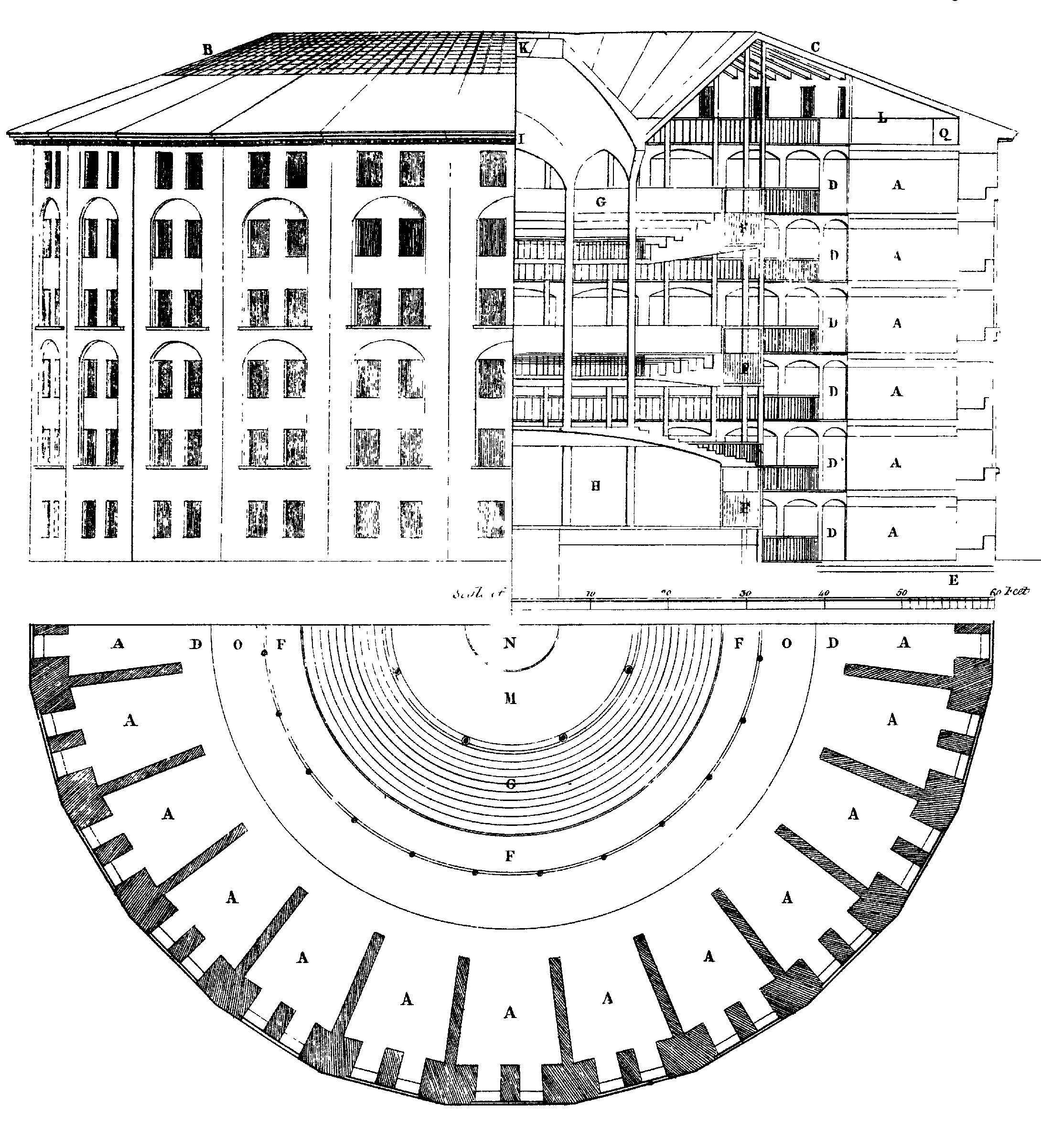
    The devices for producing the roles remind me of Jeremy Bentham’s panopticon, a functional prison designed so that all of the prisoners could be viewed from one central point.  The profile of the place reminds me of the geared punch machine for the piano roles; I’m not at all sure about what the function of the prison reminds me of.  But in the history of holes, I guess all it foes it fill u its empty holes with people, keeping them there for months or years or decades, and then replacing them with other people, part of a long and continuing series.

    File:Panopticon.jpg

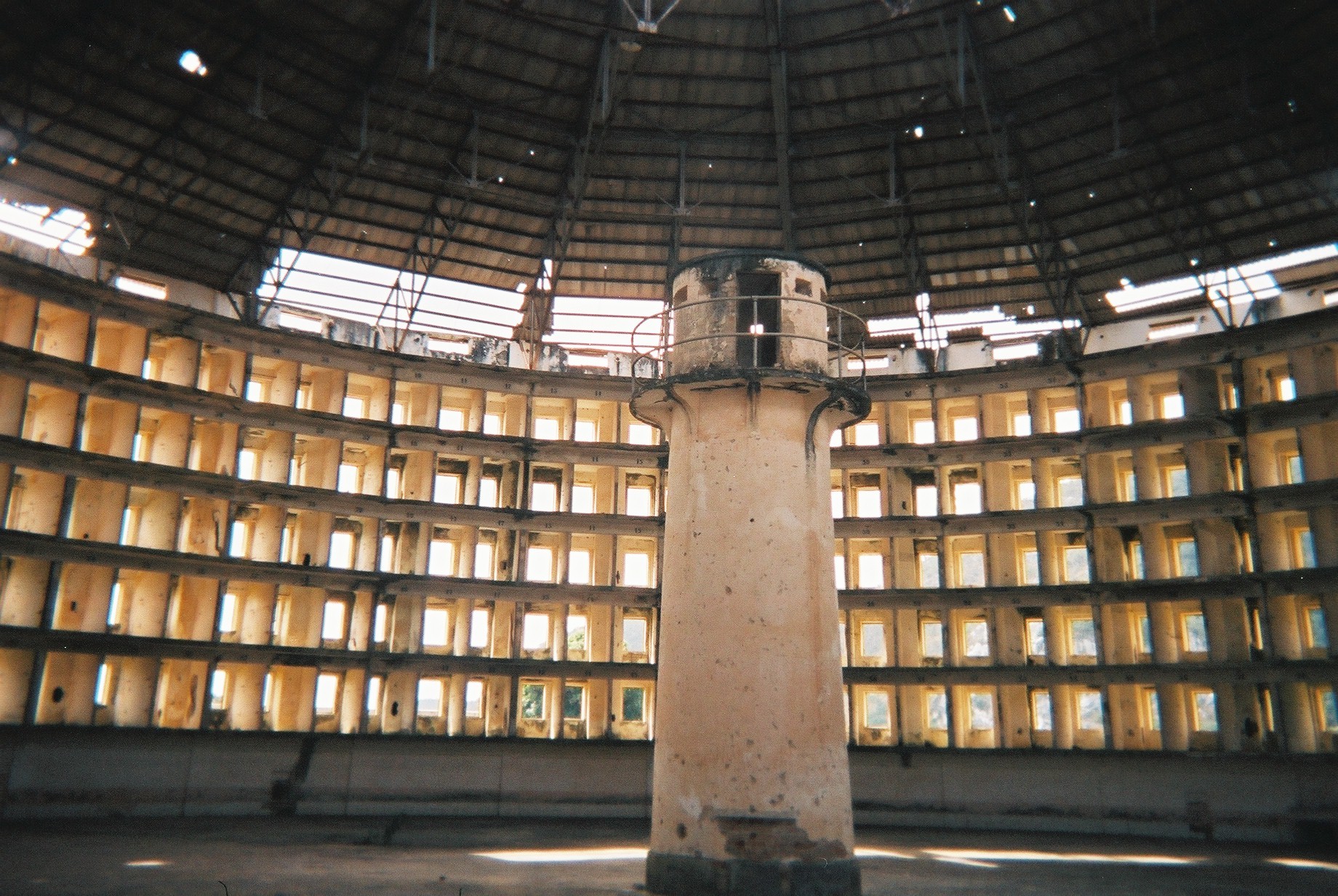
    Here’s the panopticonal prison at Presidio Modelo, Isla De la Juventud, Cuba–with the walls laid flat, and some cells filled-up, and reduced, you may be able to make a certain music with it, like reading the scores made by pigeons roosting on a five-wire-strung staff of utility poles. My daughter Emma just suggested that there could be a Morse Code crossover as well!)

    File:Presidio-modelo2.JPG

    The plan and elevation of these prisons relate to the player paino paper, like the early dots and dashes of communication, like the punched cards that Vonnegut had in mind when he was writing his early classic. 

    Now, the rest of the Illustrated London News story (available here on my blog bookstore):

      Music role making--1det872
      Music role making--3865

    Music role making--4866

    Music role making--4det870
    Music role making--5867


  • Modern Antique Occupations

    JF Ptak Science Books   Post 1233

    Earlier in this blog I looked at the diminishing importances in antiquarian times–some occupations, formerly integral and important, have now become sufficient, occasionally a luxury to be afforded by folks who can pay for reigniting past importance.  This earlier example was found in William Pyne’s great-ish 1845 work, Picturesque groups for the embellishment of landscape..– it was a work of clip art for its day, really, showing, detailing, the attitudes and occupations of working people.  It was a book filled with the people who might ordinarily have gone missing from the work of the artists needing their images displayed in their brains by someone else’s labor; a book filled with figures to plug-up the blank spaces, round out that unkind bits that called out for a human touch. This new example’s lists (below) are interesting in this same way, though the jobs listed are less general and more “professional”, or technical, than the Pyne work–fishmongers and rat-catchers are not listed here. 

    The work is that of Edward Hazen who in 1837 described 68 specialized jobs in his Panorama of Professions and Trade. Unlike many other occupations from a less specialized list, nearly all of these jobs still exist, though many have been lowered to deep depths of obscurity (say, for “lithographer”), while others are changing whole-cloth but still quite popular (like my own profession as “bookseller”.  A bookseller from 1837 could see that some small percentage of the booksellers he met were indeed selling books in a way he recognized–but then there’s that knotty majority who even though were brothers-in-trade would seem I think to be almost entirely foreign to his antiquarian eyes.)

    Of all the professions listed below, only five, I think, are almost entirely removed from the public picture–jobs held by people now but by people who would be difficult to find. The short list–type founder, turner, wheelwright and stereotyper.  As I said, there are people who practice these positions, but their services are more luxuries than necessities, now.  Whereas my earlier post on the Pyne occupations was listed as a “Domesday tour” of disappeared professions, it it remarkable to see how many of the Hazen jobs continue to survive. 

    http://krisdedecker.typepad.com/.a/6a00e0099229e888330120a5f04659970b-pi

    http://krisdedecker.typepad.com/.a/6a00e0099229e888330120a6473e20970c-pi

    http://krisdedecker.typepad.com/.a/6a00e0099229e888330120a6473e20970c-pi


  • Strange Things in the Sky Department: Aircraft, 1919

    JF Ptak Science Books   Post 1222

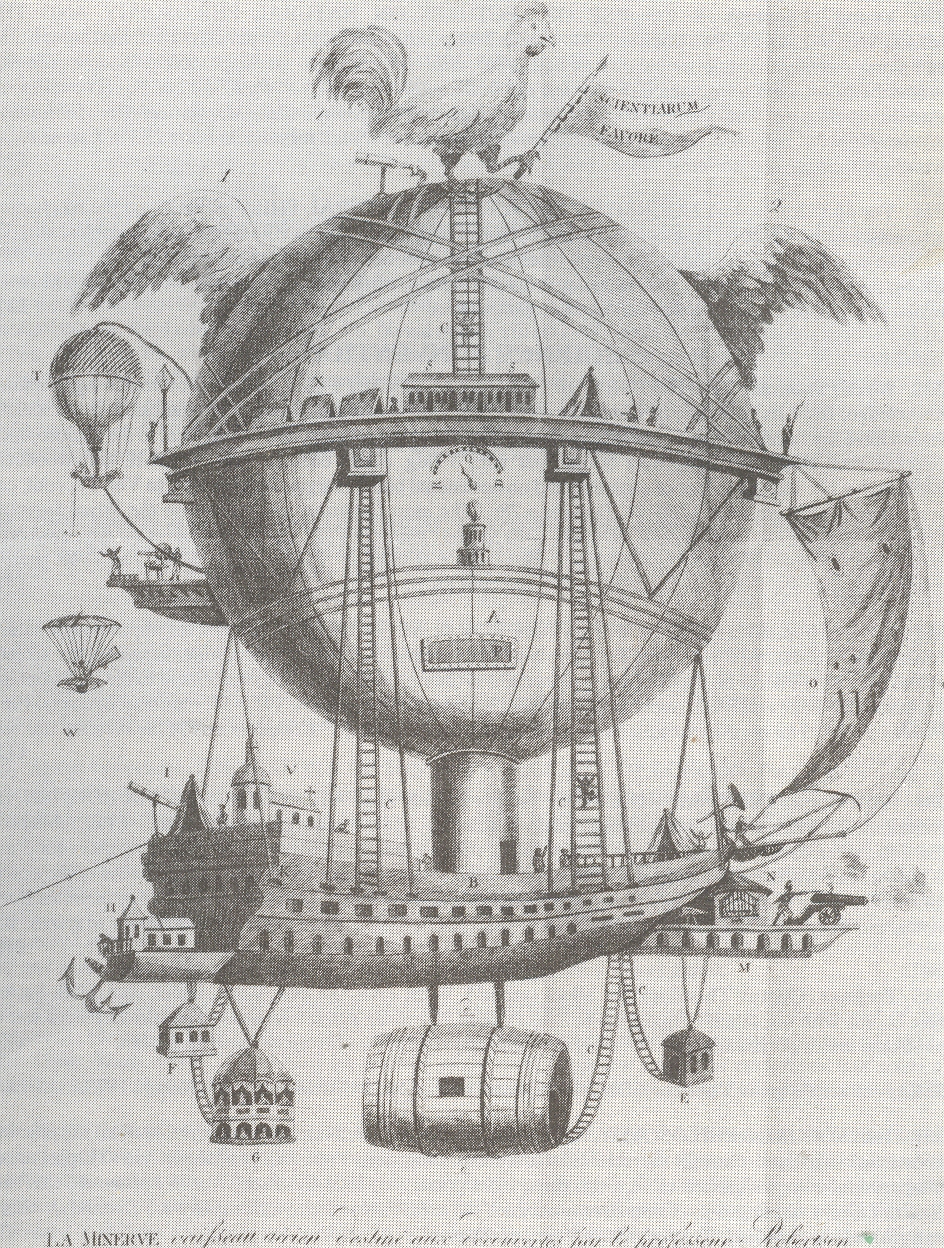
    Blog--May 20--minerveA

    I’ve written earlier in this blog about odd things found in the sky, some of which is imagined  (holes, extra Earths, blank Heavens, disembodied hands/feet/eyes/ears,proto-human empty aliens,  rat) and some of which were/are possibily real (like this fabulous aircraft with an escape pod for women, located here). [Both of these images are available from our blog bookstore, here.]
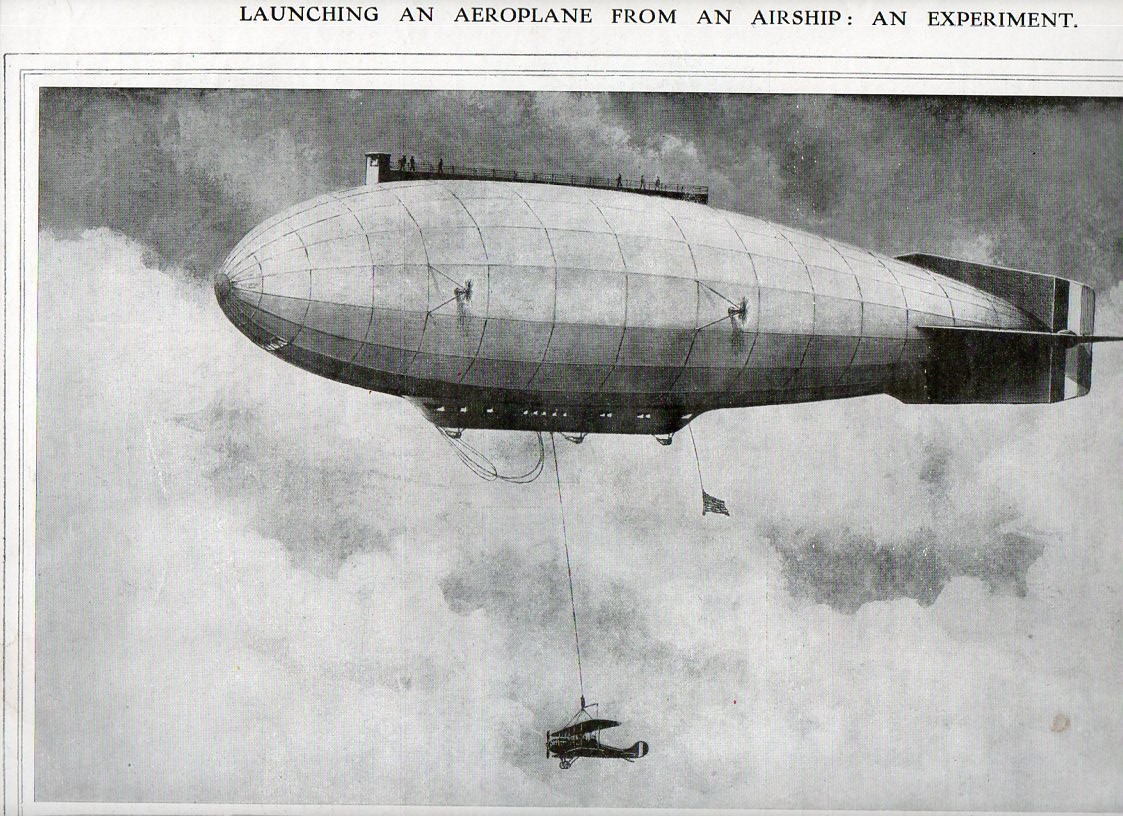
    These images present incredible, indelible ideas to us here in 2010, images of creations that look more like created steampunk for a retro-futurist novel than something real.  But they were actually state-of-the-art techno advances for their times, decent ideas, solutions for knotty problems that had no better answers than those presented. 

    Strange sky--launch plane839

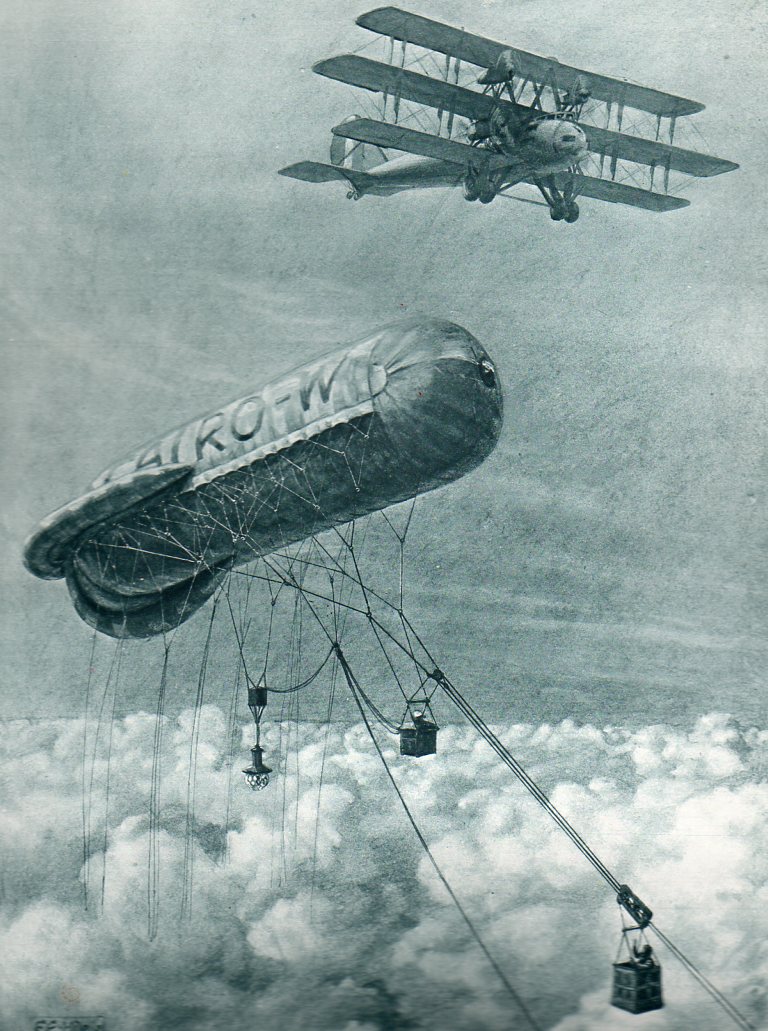
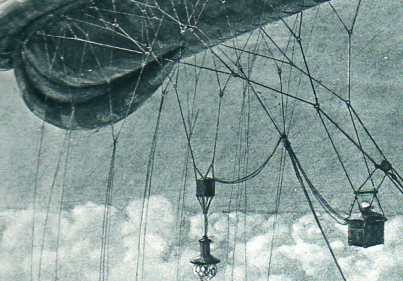
    The first is “The Clapham Junction of the Air, a Cloudland Signal-box”, seen in The Illustrated London News for 15 March 1919.  The idea was simple–cloud cover prevented aircraft from seeing their objective (lacking RADAR, which wouldn’t appear for another 23 years) and so something needed to be done to communicate with them above the clouds to relay data on ground conditions.  And so we have the tethered kite balloon with a mobile travelling car, the man in which would relate the necressary info to the waiting aricraft above.  (The description of the image notes that the aircraft is “one of a coming type”.)

    Strange sky--launch plane crowd det840

    Strange sky--launch plane det841

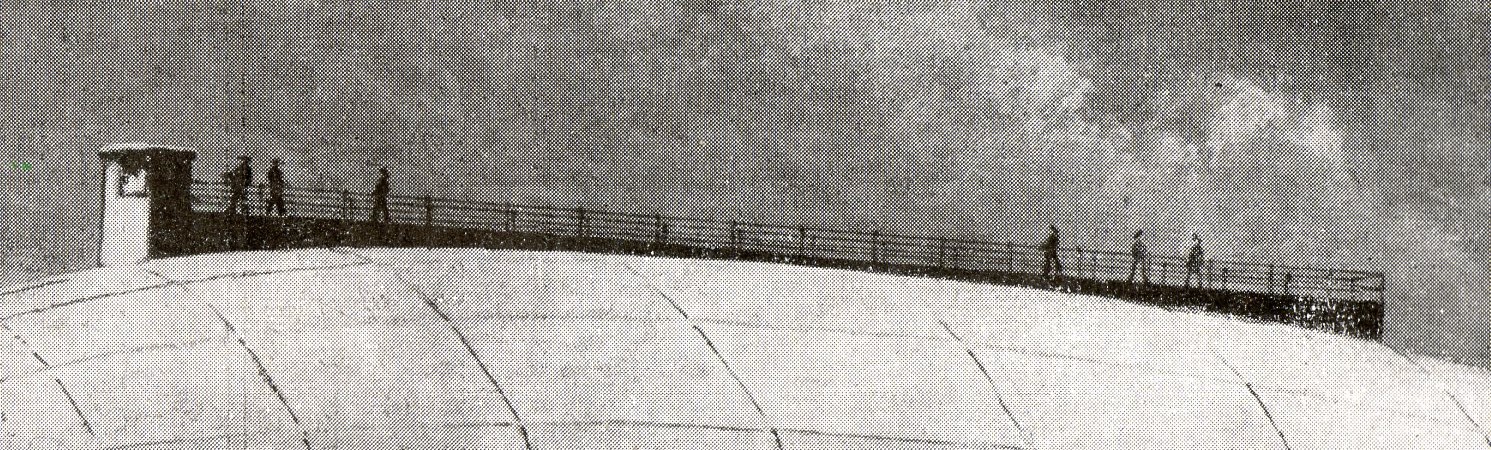
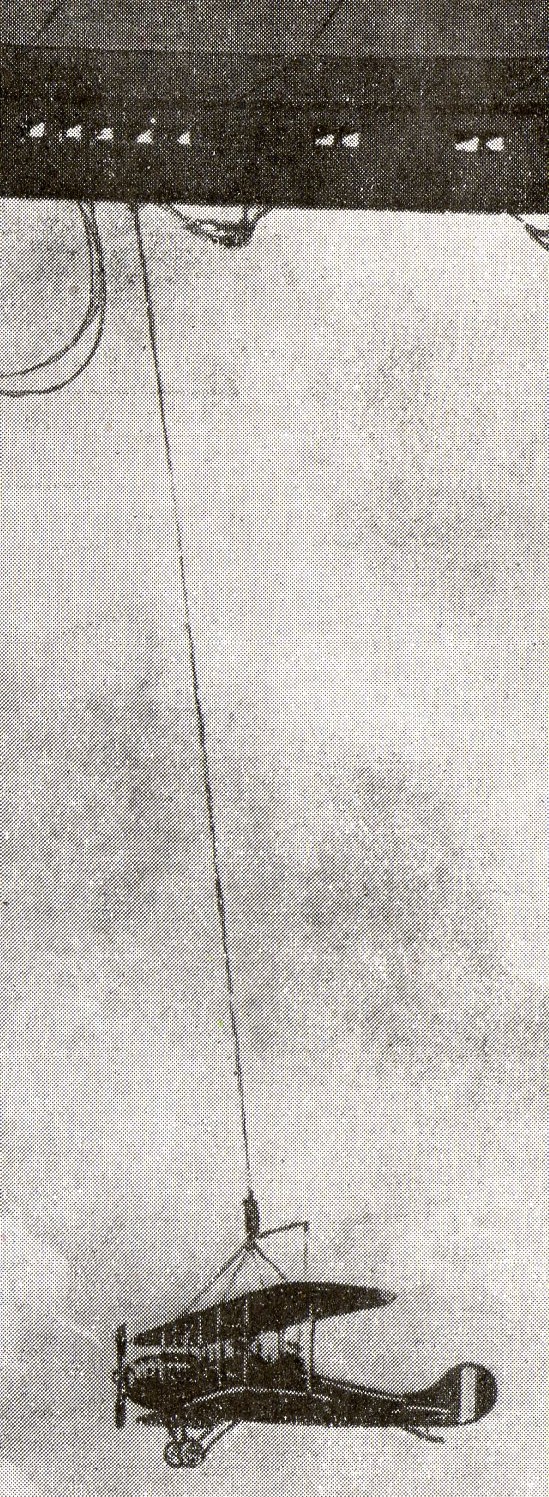
    The second image appears in The Illustrated London News for 1 March 1919 and is entitled “Launching an Aeroplane from an Airship, an Experiment”, and shows a helium-filled airship (“of the near future”) about to drop an aircraft.  The airship would have risen to some height with the aircraft already at tether, travelled a distance far beyond the normal range of the airplane-in-tow, and then release it–after a fall of a thousnad feet or so, the engines would start, and the plane would be operational.  that was one way of advancing air cover far beyond what woul dhave normally been feasible. 

    The set of problems encountered here woul de remedied in relatively short order, say with a few years of the publication of these pictures–but for teh time being, in 1919, this was the best that could be offered. 

    Strange sky--lmessages842
    Strange sky--lmessages det843


  • What I Learned from Johnny Cash’s 1949 Report Card
    JF Ptak Science Books   Post 1181

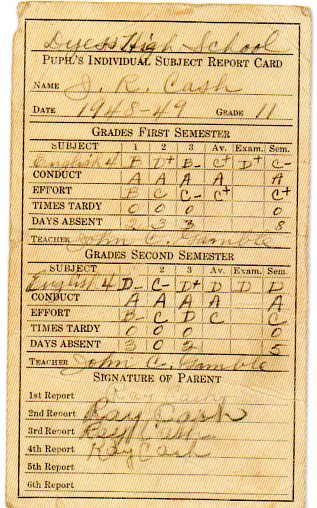
    This great relic of Americana–the report card of Johnny Cash from Dyess High School in 1949 –is the stuff of deep emotion.  It means that John R. Cash walked this (“Pupil’s Individual Subject Report Card”)  English report card home to his parents for review, the 17-year-old wondering about how they might react to his not-great grades in English and “effort”.  Or perhaps he wasn’t worried at all, perhaps he didn’t care.  He missed very few classes, and was never late.  He received straight A’s in conduct from his teacher, John C. Gramble.
    Johnny cash report card584
    [Image source: Cash, by the editors of Rolling Stone Magazine, 2007.]

    So, the young Cash, who had grown up lyrical, with music and words swimming in his head, was unmoved by “English” (which was probably more like “composition” than what we think of it today) and was not interested in trying to overcome his disinterest, overly.  Be that as it may, even though he was a D student, he was respectful of the class and teacher and classmates, always getting A’s in conduct.

    Mr Cash signed the report card each time, and I suspect that he knew exactly what was going on with J.R. in spite of the grades.

    Only six years later, in 1955, Johnny Cash had his first national hit in “Cry Cry Cry”.

    And so where was Dyess High School?

    As it turns out, Johnny Cash lived in a place in his early youth that owed its life to deep government intervention in the lives of its citizens.  The short story is that people–almost entirely farming families–who had lost everything in the Great Depression and the resulting drought were given an advance1 of money to buy a house and land and a chance to start life anew.  Ray Cash, Johnny’s father–born in 1897 in Rison, Arkansas–entered his family on the relief rolls and was one of 500 families selected  to settle a 15,000 timber-cut swath of Arkansas bottom land up in the north-east corner of Arkansas in Mississippi County, basically due north of Memphis Tennessee just this side of the border.
           
    The program brought to bear on this situation was the Federal Emergency Relief Agency (FERA), which was administrated on the national level by Harry Hopkins and in Arkansas by Alabama-born former teamster William R. Dyess.  The farms and farmland was administered through the Rural Rehabilitation program, which under Dyess’ direction in Arkansas started the “Colonization Project No. 1″ in May 1934.

    Ray Cash and family moved into House 266 on its 20 acres in 1936, one of five families selected from Cleveland County, and the same year in which Colonization Project No. 1 was incorporated as Dyess Colony.  In a short period of time construction in the new Colony included  “an administration building (and a )…town center (which)  included a community bank, beauty salon/barbershop, blacksmith shop, café, cannery, cotton gin, feedmill, furniture factory, harness shop, hospital, ice house, library, theater, newspaper (the Colony Herald), post office, printing shop, service station/garage, sorghum mill, and school. Members of the colony often performed community tasks on a cooperative basis, though the farms were worked individually.”2   
    ________
    Notes

    * “Criteria for the all-white community included that applicants be destitute from the economic crisis, come from the lowest poverty level, be of “good moral background,” and that husband and wife each have the physical ability to clear the land and farm their acreage. Each farmer would draw a subsistence advance to buy twenty to forty acres of land and one of the new five-room houses, plus a mule, a cow, groceries, and supplies until the first year’s crop came in. All were expected to pay back the advance. The town would operate as a cooperative in which seed was purchased and crops were sold communally.”Encyclopedia of Arkansas History and Culture.

    2. Encyclopedia of Arkansas History and Culture.

    Dyess had population of 2500 in 1936, now a town of 550 or so.  I cannot see any remnants of the wagon-wheel design of the farm houses that were built there in 1934/5 from Google satellite images.

    An excellent reference for the movement of families into the Mississippi River bottomlands is The final frontiers, 1880-1930: settling the southern bottomlands, by John Solomon Otto.

    And now for this musical video about Dyess:


  • Young Communists: Service with a Smile, ca. 1922

    JF Ptak Science Books   Post 1179

    This dapper young man with the sharply snapped salute is a communist, and as he tells you, he’s at your service.  But the Young Communist League (of the United States) in the 1920’s–when this pamphlet was printed–was a semi-underground organization with few members who wanted to serve you and which was also “devoted to the interests of all young people and is dedicated to the revolutionary cause of the working class of our country, the transformation of the United States through mass democratic struggle into a socialist society”. 

    Young communists583

    So the YCL service venture may have been more helpful to someone with Communism in mind than anything else.  It did have a diffident bit of patriotism in the design of the pamphlet’s covers, but they wanted a United States that wasn’t the United States that very many other people wanted.

    Perhaps the October Revolution wasn’t what the people of Russia wanted, either. They certainly wanted their freedom from Tsarist rule, but the revolution orchestrated in the name of freedom was hardly that. Significant American thinkers and writers on the plight of the people in Russia at the end of the 19th century–including George Kennan, author of the still very readable and absorbing Siberia and the Exile System (1891)–pretty much jumped off of the bandwagon by WWI.  I can understand a haphazard interest in the Communist Party and the idea of socialism in the United States in the 1920’s and even the support of the still relatively new Soviet Union, but this was a period in which the member in the cascade of three-letter acronyms of Communist political affiliates and parties had a weak draw.  Interest in them picked up in the United States in the 1930’s, though this was also the period during which the atrocities of the monster Stalin were being discussed.  I’m not sure why this popularity grew in the light of these revelations–I just don’t know the history.  (Even though this was supposed to be Stalin’s quote but wasn’t, it fits quite well: “death of one man is a tragedy, death of a million is a statistic”–as a murderer of millions of people, he was very well versed in statistics of genocidal sadism.) 

    In any event, I simply liked the public face that the YCL engraved for themselves–it looks much like any other face you’d see in any other magazine hawking coats or cigarettes or Dunlop tires.  A face like any other. 
    ______
    Notes
    Kennan wrote in 1923: “The Russian leopard has not changed its spots… The new Bolshevik constitution … leaves all power just where it has been for the last five years–in the hands of a small group of self-appointed bureaucrats which the people can neither remove nor control.”


  • Footnotes in the Future–Swift, Lull, Borges and the End of Writing

    JF Ptak Science Books   Post 1155

    “The most ignorant person at a reasonable charge, and with little bodily labor, may write books in philosophy, poetry, law, mathematics, and theology, without the least assistance from genius or study.”   Jonathan Swift, in Gulliver’s Travels

    “Hell is the kingdom of the animal that swallows up the memory of all things… Between life and death there is no destiny except memory. Memory weaves the destiny of the world..”  Carlos Fuentes, Terra Nostra

    “A people without history/ is not redeemed from time, for history is a pattern of timeless moments” — T.S. Eliot, Four Quartets.

    The future history of writing–it will tell us–was already written before it was written.   In the future, when everything that can be written has been written and everything spoken has already been spoken, perhaps the first footnote in the history of already-done things will be to Jonathan Swift.  The experience belongs to us through Lemuel Gulliver1, who after surviving two trips (one to Lilliput in which Gulliver is twelve times the size of

    Written468

    everything else, and the second to Brobdingnag where he is one-twelfth the size of everything) comes to a third (of four2) in the land of Laputa.  It is here where he encounters a conversation machine that, when cranked, produces anything and everything, the known and unknown, the original and the copied, and have the thought and spoken
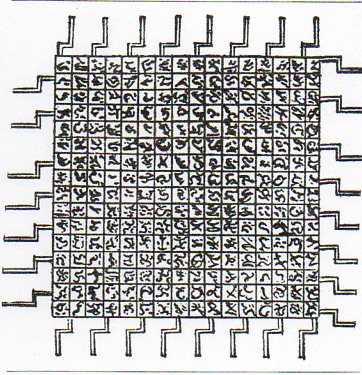
    word belong to the manipulator of the machine.  Everything that can be said is in that box, waiting to come.  The 20′ square was occupied by cubes with words on their sides, with 40 cranks and 40 handles and 40 operators to manipulate the mechanical vocabulary and associated scribes to record anything that made sense, and would be the springboard of “knowledge”operating without a manual or an intelligent primum mobile. (The image of the machine–which bears some resemblance to an integrated chip–appears in the third edition of Swift’s book, and as you can see is not a well-drawn thing, missing a row and a column and a crank here and there. A fuller description is found below.)

    Writtenc machine470

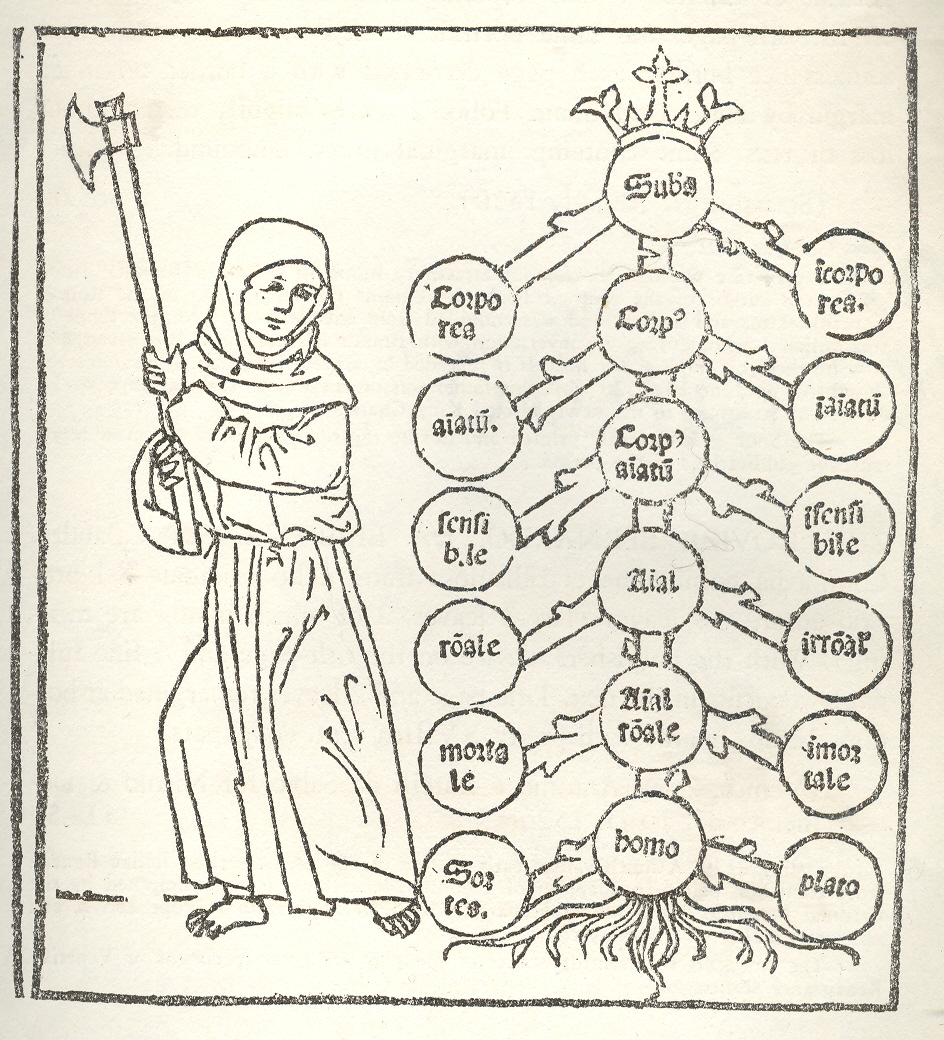
    The idea of a universal knowledge or an expanding, forever-library is very old, particularly if you expand the concept a bit to include Aristotle and the Tree of Porphyry3.  While not exactly a generator in the sense of Jorge Borges’ Library of Babel or the Swiftian machine, the ancients did 1--logic treeproduce very interesting, elegant, beautiful ways of story information and ordering information.  The Tree of Porphyry is far more concise–an abbreviation-compared to the infinitely expanding hexagonal rooms filed with books and attendant librarians in the Borges’ universe.  Or the Ars Magna/Thinking Machine of the 13th century Ramon Lull (also known as Ramon, Raimundo and Raymond, Raimundus and Raymundus Lull, Lully and Lullus and Lulio), the ultimate organizer of how sentences can be made and knowledge produced/uncovered (particularly if you want to please the logic of the church and the Creator), and which was almost certainly known to Swift (and which was also written about, described and worried-over by Borges4).  There are many other early figures in this category to be sure (Lewis Carroll, William Jevons, and even in a way Mr. Venn, not to mention Leibniz and his calculator,  and the changes in scientific method and (English/Dutch) mathematical concentration on applied mathematics of the 17th century that made thinking about the industrial revolution possible)), but that would be left to (at least) a longer post.  (The Lull wheel, below.)
                               

    How long will it take to digitize everything that has ever been written, or recorded, or composed? Several generations? Ten?  It may well come to pass in shorter time than we think; and when you compare this control of recorded human history to the centuries that will follow in developing “computers”, how can we possibly know what will become of all of it?  In the coming centuries and their attack on intelligence, when in the future the brain is a harvest of the computer, perhaps intelligence finally submits, and everything that can be done has been done, the progress of humanity snubbed to a stub. Or expanded exponentially.  It is such a tough call to make…

    Notes:

    1.  Jonathan Swift, Travels into Several Remote Nations of the World, in Four Parts. By Lemuel Gulliver, First a Surgeon, and then a Captain of several Ships.  1726.

    2. The third voyage was Part III. A Voyage to Laputa, Balnibarbi, Luggnagg, Glubbdubdrib, and Japan. The fourth finds humans as pets/inferiors in the island of the Houyhnhnms, a land of intelligent horses.

    3. The “tree” was a diagrammatic creation of a 3rd century Syrian mathematician/logician/philosopher named Porphyry who– much taken with Aristotle (and with the Categories in particular)– developed a systematic approach to the organization of thought in diagrammatic form.

    4. Borges J. L. (1999) ‘Ramon Lull’s thinking Machine’ in The total library: non-fiction 1922-1986 (Edited by) Weinberger, E., trans. Allen, E. Levine, S. J., and Weinberger, E. London, Penguin, on pp 155-160.

    It is interesting to note that Lull, who gave up everything to follow his calling into the church (and who was antagonized by the belief that his very act of missing his left-behind life to be a sin against god’s choice of him to follow his “career path”) was demonized by the church soon after his death, his works prohibited reading for hundreds of years.  He was resurrected in 1958 though on a path towards sainthood, a doctor of the church.  

    A description of the Swift machine:


  • Prescience of a 1953 TV Ad: the Speed of Isolation, and the Post-Forgetting Future

    JF Ptak Science Books   Post 1151 [Part of our History of the Future series]

    The History of the Speed of Things is an interesting category for a history of odd things: the speed of exploration, of curing someone with a gallbladder problem, of flashing across the White Sands desert in a rocket car, of the pulse of a human neuron, of the time it takes to go from 10 microns to 1000000 microns, of how long it takes to get to Tybee Island from Asheville North Carolina, of insurance information to tall ships coming over the horizon, of gravity, of light, of computing a billion place of pi, of calculating where to aim your anti aircraft guns at the incoming Luftwaffe, of diving to the greatest depth in a submarine, of running 100 metres, of a drop of mercury falling 1/1000 of an inch, of the speed of nightfall on the Moon, and so forth. 

    Future of thinking sparton 2449
                                                                                                                                                                 
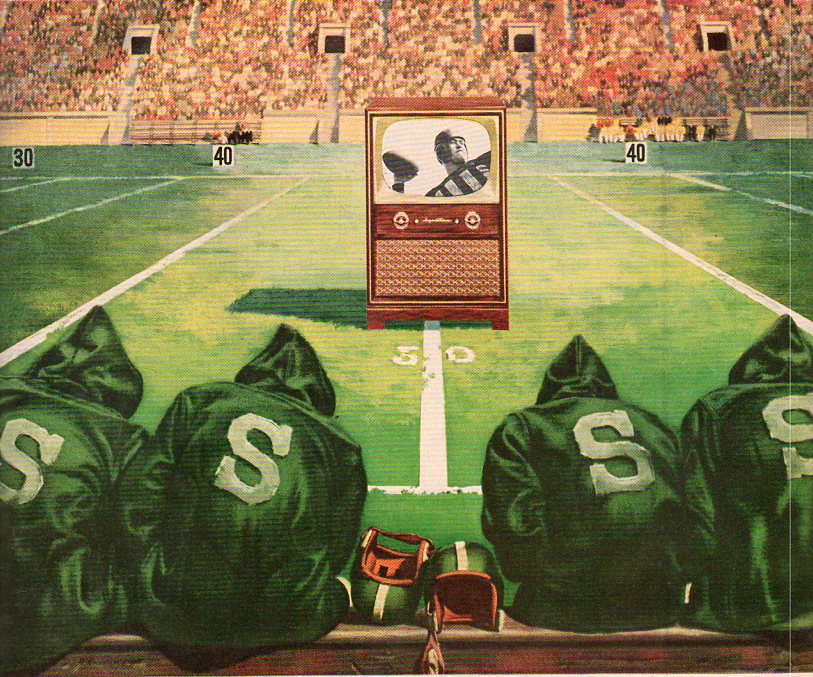
    The Speed of Things’ subcategory is the History of Speed of Knowing Things, with its interesting and proportional  subcategory of the The History of the Speed of Forgetting Things, both of which are associated with the point of today’s post, which was the sneak-peak of the future offered in a series of ads in Life magazine in 1953.  The full-page ads were formatted by Sparton Television Company to grab the attention of even the laziest semi-monied reader of the magazine, selling the promise of entertainment at home.  The cost for admission for this product was fairly luxurious and a little extreme once you translate the $400 entrance fee into its percentage of the average monthly salary (which was about equal) or of a new (general) Ford (about 25%) or of the average monthly rent (125%). The television as something to be reckoned with.              

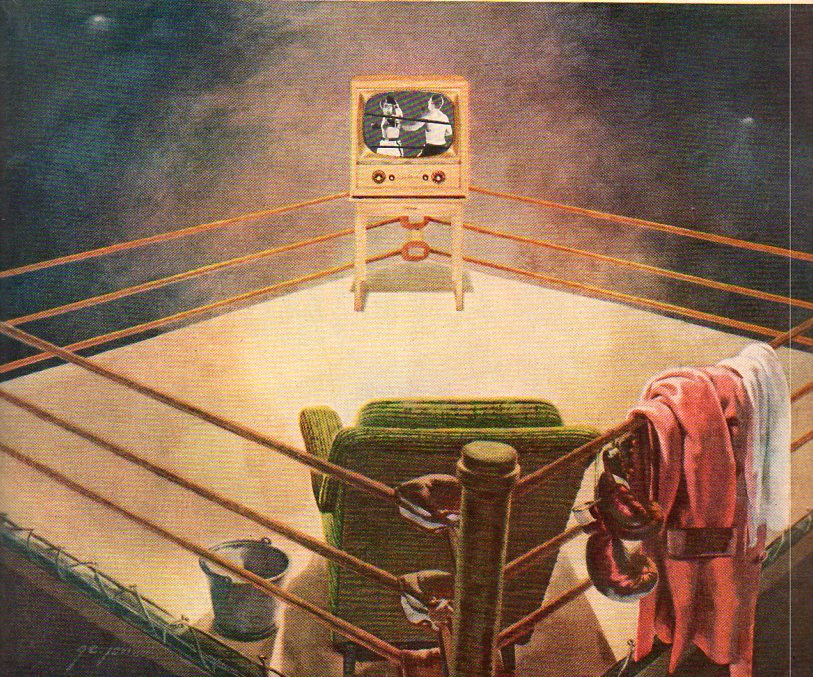
    Future of thinking sparton boxing450
    There’s something more to the ads that the designers and readers couldn’t have known at the time, though.  In the ads, the tvs are shown replacing the action that it is supposed to be transmitting–it has become the thing itself, a passive replacement to an action.  Rather than watch a baseball player at bat swinging at a pitch, we see a television with a batter in it, moving just as the pitcher is moving,.  The barcolounger in the ring of the prizefight is presented with the fight on a tv in the opposite corner, and the football players have been replaced by a black-and-white image on a television tube on a field of green. 

    The message then of course was that television was putting you into the scene, that the viewer was part of the action and not just a casual observer.  I guess.  Sitting here in 2010 though the ads seem to play to a greater truth, and might be more prescient for the coming future than the original advertisers could’ve possibly imagined.  All throughout the history of communication, I am certain that there was a  percentage of the population that viewed the newest invention as  not necessary and an affront to privacy and free time, of more deeply removing a person from the act of communicating–the semaphore, telegraph, telephone, wireless, airmail, overseas calls, email, bluetooth, twitter, and so on all presented this similar problem.  Just as these improvements were adding to the flow of information, they were also isolating the recipient from the sender.  The more access to info and data, the more it was accessed; the more access, the more time spent accessing; the more time spent accessing, the more time theoretically spent responding. And so on ‘tll you get to the so-called modern time, when there is data presented to us all of the time, inescapable info flows, gargantuan landslides of numbers and images and words and fluff, available at all times, and almost at all places.  The technology making it possible for people to more freely communicate is, in a way, replacing the person, allowing communication nodes to have a human interface connecting them.

    Now this might be a little extreme, at least for the present.  I’ve little doubt that some people feel as though they are simply connecting word threads to other word threads and passing it along, seeming as though the are piecing together the floating bits in an enormous flood of floating bits.  As my wife Patti Digh quotes the Buddha in her book Life is a Verb, “What is the appropriate behavior for a man or a woman in the midst of this world, where each person is clinging to his piece of debris? What’s the proper salutation between people as they pass each other in this flood?”

    I’m guessing that people would be uploading pictures of themselves googling the question, or receiving an image of someone in front of them, waving to them, as they are swept along in the flood waters.

    These pictures from Life tell the coming story, and I think can remind us that as foreign as they might seem then, and as uncomfortably true that they might seem to some now, that they could very well seem painfully/obviously true at some near point in the future.  The computer for all intents and purposes is only 65 years old; home computing is three decades old; the internet, two.  The changes brought on by all of this were almost invisible 25 years ago.  The coming of the future in regards to communication, even a future that is only 25 years from now,  may very well wind up being as difficult to see from 2010 as it was to see our year in 1985. 

    I wonder if in the future we’ll have to pay for silence, pay to be relieved of data, pay for relief from advertisements from a flood of products and services that we don’t ad will never actually “need”, pay for time for the silence to actually think?  When people are smoking and talking on a cell while riding a bike or texting while plasticizing their dog’s environmental offerings, when is it exactly that there will be quiet moments for extended thinking?   Where will our consumption of information be in 25 years from now, or 50? It is only too bad that the process of consuming info didn’t lead to some sort of generation of energy, like tidal power, because at least then there would be one certain positive outcome of data access. 

    And I know that accessing things will be much smarter even in the near-future than it is now, Google searches will look as quaint four-digit phone numbers.  But still there is the data, and at that point the data will be more pertinent, which means there will be more of it to spend more time on.  Its a Catch-22–we’ll waste less time, probably, on what we weren’t looking for, which means we’ll have more time to look at more things that we were looking for, except that there will be too much of it, and there won’t be enough time to read all of that, let alone to give it some thought.

     In all of this, the thing that might take more time to deal with than actual thinking might be the process of forgetting.  Perhaps in the deeper future we’ll just be born with all of this information, or have instant access to it, and then in that future where there is no forgetting we’ll just have to imagine that we’re imagining quiet time.