A Daily History of Holes, Dots, Lines, Science, History, Math, Physics, Art, the Unintentional Absurd, Architecture, Maps, Data Visualization, Blank and Missing Things, and so on. |1.6 million words, 7500 images, 4.9 million hits| Press & appearances in The Times, Le Figaro, Mensa, The Economist, The Guardian, Discovery News, Slate, Le Monde, Sci American Blogs, Le Pont, and many other places… 5000+ total posts since 2008.

Category: Future, History of the

  • Creating Bad-Hand Female Trouble, 1954–an Imaginary Reconstructed Filmstrip

    JF Ptak Science Books

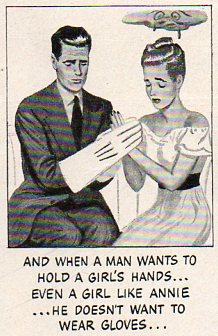
    Girl trouble 7360 Retroist excursions like this into the land of social propriety from not so long ago is a bittersweet thing–its concerns can remind of of how far away from something we seem to be, when in reality that distance in time and space just isn’t very far away at all; it is just slightly different,  renamed and repackaged.  For example, this advertisement from LIFE magazine for Trushay hand softener (1954) delivers pretty much the same message as most similar products today, except for the change in packaging and less obvious message.  The message may seem outdated but I think only in so far as the images and clumsiness of the delivery is concerned.  Products like this have increased by orders of magnitude, the target audiences age seems to have dropped considerably, and most of the time the pursuit of this 1954 end-result stays pretty much the  same. Exercises like this are peculiar, and can show us that the people who we are laughing at may very well be us. 

    The reconstructed ad is below.


  • Strange Things in the Sky Department: Tetrahedra, Horse & Steamship Balloons, Swimming Pools & Exploding Moons.

    JF Ptak Science Books  Post 1120

    Rounding out the image dump from yesterday are these additions to the developing category “Strange Things in the Sky”.  The odd things in today’s issue include floating tetrahedra, an exploding Moon, a hovering anti-gravity Dr. Seuss pool, a Russian rocket pioneer’s enormous apartment building-like dirigible, and a steamship balloon.

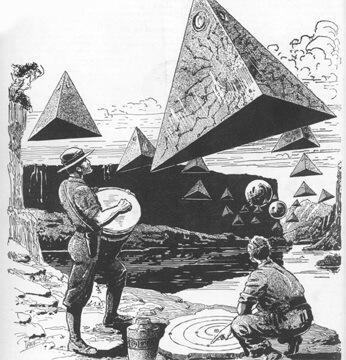
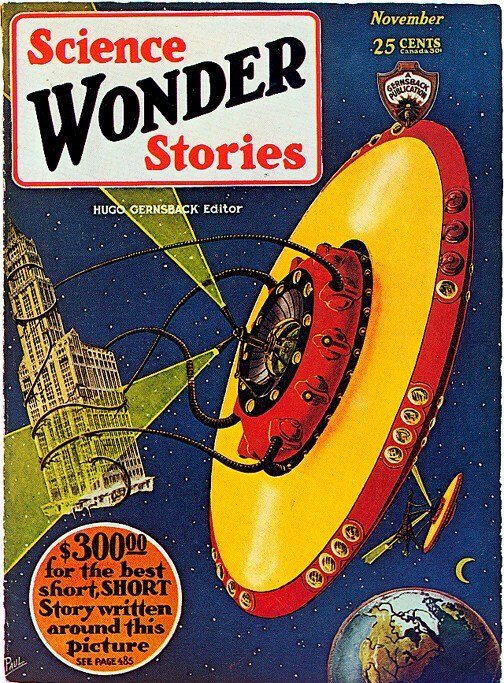
    The first, without any explanation and offered as a pure art form, is this illustration by Frank R. Paul for Wonder Stories of November 1931.


    Strange things in sky--tetra

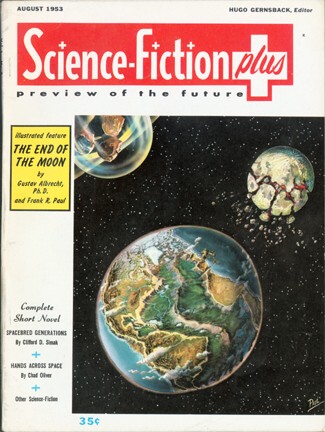
    Next, another Paul cover for Science Fiction Plus for August 1953, illustrating a story where the Moon explodes

    Moon exploded

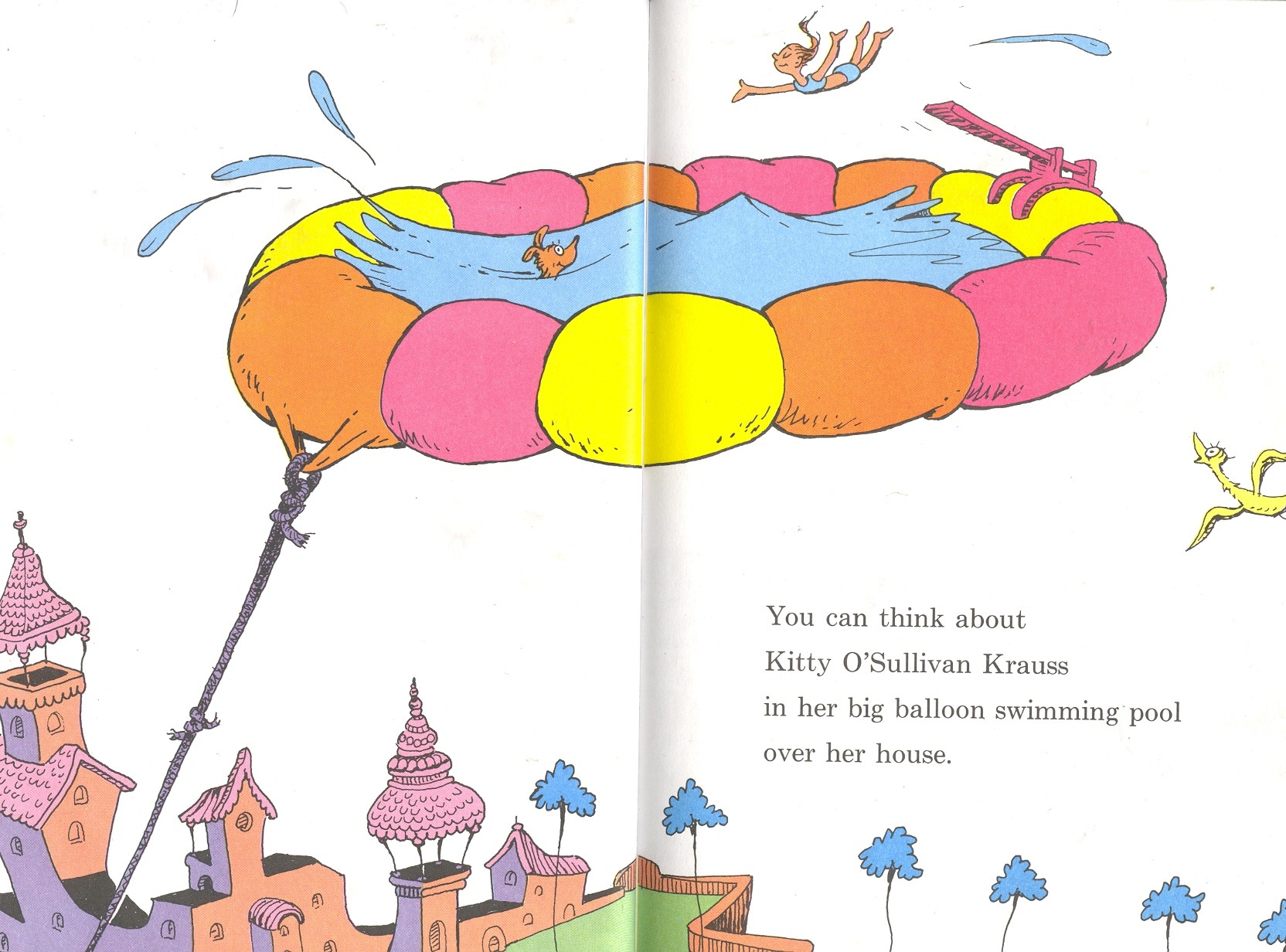
    Other strangeness in the sky is  Dr. Seuss’ swimming balloon pool from his Oh, the Thinks you can Think. .  I’ve seen some interesting
    images of balloons and dirigibles taken as serious efforts that reminded me of
    that double-page spread by the good Doctor.

    Blog jan 2 seuss


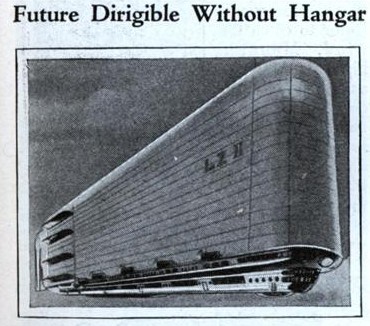
    Blog jan 2 tsilo dirig  

    This may have been the Omega end
    of bad ideas in the career of Zilkowsky, who is better known by the other
    spelling of his name, Konstantin
    Eduardovich Tsiolkovsky (1857-1835), a Russian misanthrope and space pioneering
    genius who wrote more than 500 works on rocketry and exploration including what
    is arguably the first tech word ever done in the field (in 1903,
    The
    Exploration of Cosmic Space by Means of Reaction Devices
    ). Tsiolkovsky somehow lasted through purges
    and Stalinist tirades, while few of his colleagues did—many mysteriously
    disappeared, while others went to prison and disappeared there.  (Stalin’s crude and insatiable blood lust,
    perhaps the worst of the century, knew no bounds, not even to the scientists
    who could conceivably hand him reigns of rocket/missile-propelled power.)  Anyway, Tsiolkovsky’s dirigible was composed
    of a collapsible metal so that the aircraft could form its own hangar when “docked”.  I don’t know where to begin with this one…

    Blog jan 2 lowe

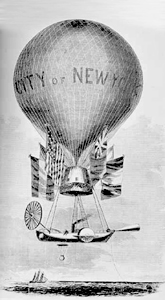
    The next entry is the ship-balloon of Thaddeus Lowe
    (1832-1913) One of Lowe’s great contributions in the
    history of ballooning was providing aerial reconnaissance via (panoramic)
    photographs to the Union army on Confederate army positions—particularly the
    Rebel positions at Richmond (1864) and Fredericksburg (1862). (He had a wide
    span of professional interests and wound up living the high life in L.A. in a half-acre
    home.)  This 130-foot diameter monster
    with a steam-ship escape pod (named The
    City of New York
    and then renamed The
    Great Western
    after the city couldn’t supply enough gas to get the thing
    inflated) was intended to be a transatlantic traveler.  Ready to try this fantastic adventure in
    1860, ready to take charge, ready to begin a very problematic trip across the
    Atlantic in a balloon, Lowe, seemingly ready, had his balloon ripped apart
    while waiting for launching by a chance and not-horrible wind.  Lucky for Lowe and the Union Army, this didn’t
    happen over the ocean somewhere out of reach, and the North’s important info-gatherer
    did not sink like a stone in the cold dark sea. 
    (I’m very cynical that the 100-foot-long, bulbously heavy steam-powered “life
    boat” would’ve landed right-side-up and softly enough to have been of any use
    save for providing some floaty bits that survivors from the balloon could’ve
    clung to for a while before being consumed by King Neptune.  

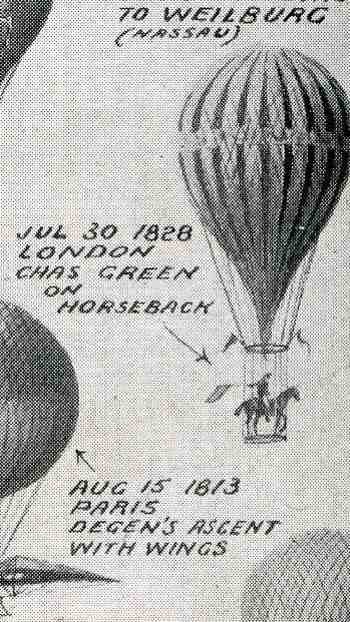
    Blogsept19_horses_in_flight607

    Lastly for today is this lovely history
    of balloon and aeroplane flight published in The Illustrated London News
    for 3 July 1909, called “The Evolution of the Great War-ships of the
    Air:  Balloons, Non-Dirigible and Dirigible, and Aeroplanes, from the
    Seventeenth Century to the Twentieth Century”.  It is more fully explained here in an earlier post I made to this blog, laboring the point that 8% of the 60 air vehicles involved a horse. 


  • New York City: Attacked by Tentacled Flying Saucers, Giant Flying Snakes, Glaciers, and Mining Missile Space Aliens, 1929-1941

    JF Ptak Science Books   Post   1118

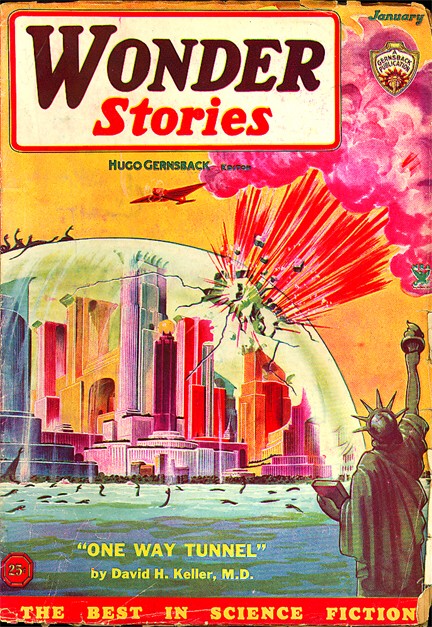
    This is a simple, non-analytical image dump for some in a continuing series on images of New York City in fantastical and improbable situations–there’s artwork that show the city being consumed by glaciers, drowned by the tide, ripped from the Earth and flung into the sun, floating in the sea, floating in space, sunken, and of course simply attacked by any number of different things, though most of those weren’t real.  There is of course the great unknown classic that I stumbled across–the duplicate NYC on a duplicate Earth orbiting the Earth ((?!) and pictured at the end of this post). I doubt that there’s enough for a dictionary of disasters, though there’s plenty for a Doomsday Book.

    For example the first image for this post shows a domed New York City–and in this scifi sub-classic,  like other major cities of the United States, NYC was suffering a catastrophic attack by winged snake monsters.  I don’t know why  the dome is exploding because the snakes don’t appear to be armed.

    NYC attacked

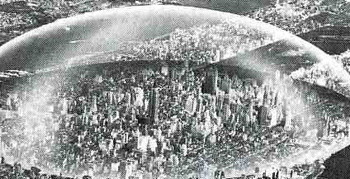
    This does remind me of an image from the mind of Buckminster Fuller, who
    came up with an extraordinarily bad idea to protect NYC against
    thermonuclear weapons. (Fuller’s dome appears here.)

    Big_archfuller_detail141 

    Then there’s this magnificent cover for November, 1929, featuring a tentacled flying saucer removing the Woolworth Building into outer space (as well as the Eiffel Tower by another brethern craft (the Earth appearing again, as nearly usual, without cloud cover):

    Woolworth

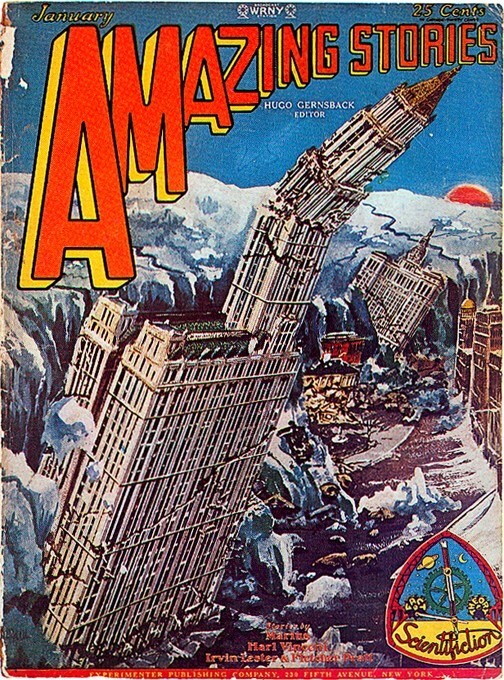
    And yet another destroyed Woolworth Building, this from January 1929, featuring an enormous glacier attacking the City:

    NYC destroyed--woolworth

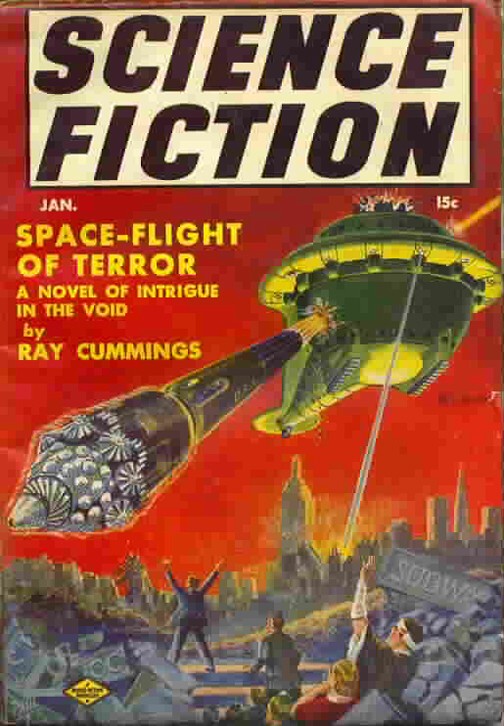
    And this vision of a decimated NYC, coming at the hands of giant hovering mining/missile space aliens:

    NEw York City in Ruins

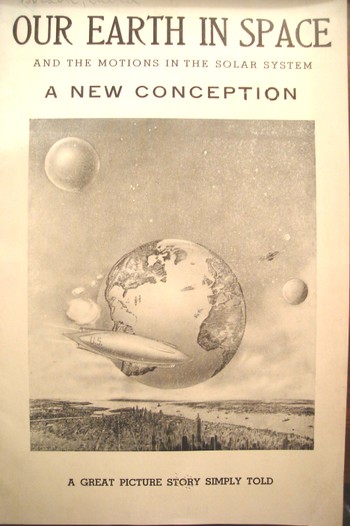
    And of course, the duplicate NYC on Extra Earth:

    Dsc04543


  • Strange Things in the Sky Department: Floating NYC of the Future

    JF Ptak Science Books   Post 1116

    Strange things in Sky--Cities above Cities

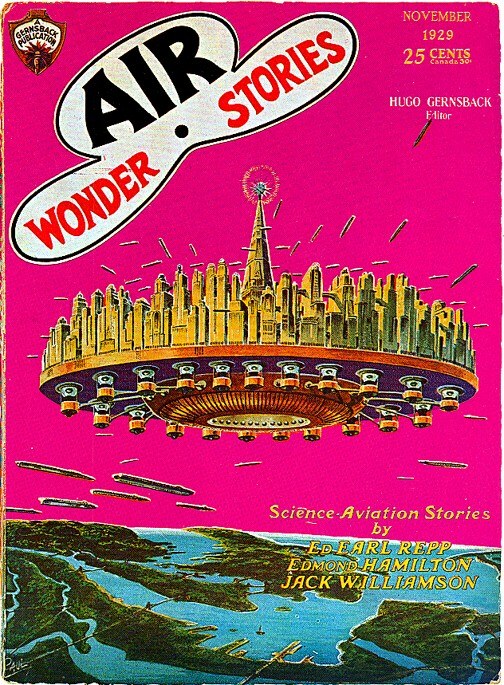
    Frank R. Paul (again!) put his indelible design stamp in this fantastic cover art for Edomnd Hamilton’s (1904-1977)1 story “Cities in the Air” that appeared in the November 1929 issue of Air Wonder Stories.  I don’t have access to the content of the story, but at base it seems, at the very least, that the city footprint underneath the floating city has got to be New York.   Some of the geography looks a little off, but if the City was allowed to return to its less-people origins, this is sort of what it looked like.  And since bridges are still standing though not necessarily buildings, and being that there so much lush green growth, something awful must’ve happened to reduce the population of Metropolis.  (Manhattan Island seems pretty identifiable, as does Staten Island, part of Jersey City, plus Brooklyn and the Bronx, plus the upper island of Manhattan….there’s no chance I think that there is not New York City.)

    So something big indeed must’ve happened to get everyone up in the floating NYC replacement–not the least of which would’ve been the discovery of some sort of gravity-negating something.  I’m not sure what the point of all of that is, exactly, unless these new floating cities are cultivating the Earth, or something, Eden-zing it. perhaps the cities were on the go, somehow, though a sudden start or stop or dip or thrust or whatever might prove devastating, unless there was something invented that would ensure certain laws of motion wouldn’t apply to anti-graviationally-platformed floating cities of the future.  And if it wasn’t going to move, why would you want to go through all of that effort in removing everyone to  giant floating city and keep it in the same pace, hovering above its former self.

    But in this sort of future, everything and anything is possible, so I guess it all makes sense as long as you can adjust definitions and “criteria of validity” at will.    I would like to see the city plan for the interior of the place–we can already see that it is ringed with enormous buildings, but I’d like to see center-city, especially the reason for the hole in the bottom of the floating city donut.  (I’m thinking that this could also classify in the rare cross-sub-category joining the History of the Future posts with the History of Holes–History of Future Holes.)

    ____

    Notes

    1.  Hamilton’s bibliography is located (at least) here.


  • Anti-gravity Atomic-powered Sun-fed Underground Woman of the Year 5000!

    JF Ptak Science Books   Post 1114

    Paul-50.8
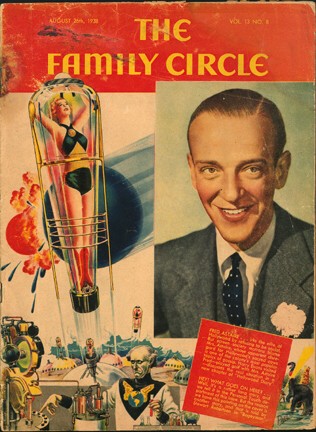
    The woman in this picture is rising from her subterranean world in an anti-gravity atomic-powered crystaline homunuclus, flying out for shopping while being fed by sunbeam converters.  No doubt there’s something strange going on with earth three milennia in the future–since the Earth no longer supports vegetation, people live underground and eat the sun directly via sciencey voodoo.     

    The artwork is provided by my newest favorite science fiction illustrator, Frank R. Paul, for the 26 August 1938 issue of The Family Circle.  And according to the elegant Paul-ophile website, the Frank R. Paul Gallery, the cover article is an interview with the artist, who goes into great detail (again, supplied by the Gallery site), about what exactly is going on in the cover illustration.  Without the explanation, I would not have been able to guess the meaning of the images.

    Another bit of the cover: the blue ball is “solidified energy” of space-time headed into the sun; meanwhile, genius scientists hope that to cushion the exploded sun’s blow to earth by launching burned tired gases into the stratosphere.  The rubber gas cushion worked, except that it would up being pierced by a renegade energy blob which crashed into the Earth and via a great miracle cured the Depression.  I would not have guessed this.

    Lastly, the guy at the bottom is not a mad scientist, but a Supreme Intelligence (as Paul tells us, he is denoted so by the “S I” on his chestplate, which evidently does not stand for “Sports Illustrated” or Staten Island”). I guess if the guy’s intelligence was really supreme he could’ve figured out a way to show more than North and South America in the single hemisphere on the chestplate.


  • Strange Things in the Sky Department: Earth Bombarded from Mars

    JF Ptak Science Books   Post 1113

    Strange things in sky--martian guns
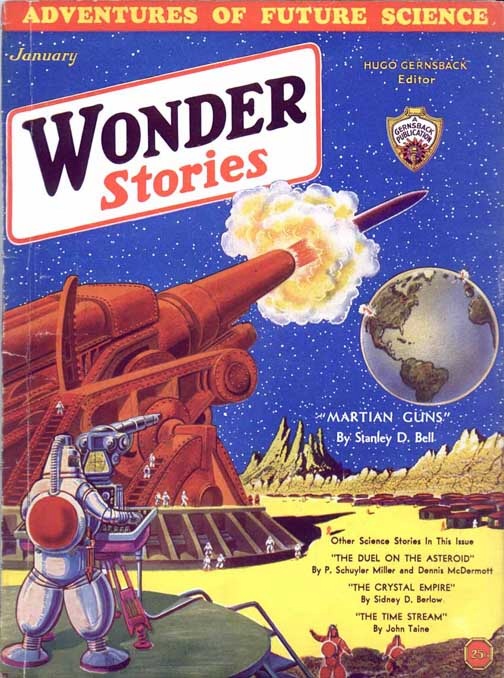
    Earlier in this blog I wrote about odd, extraterrestrial extra Earths–double Earths (like this, for example “Extra-Earth Humano-Alien Souls from Outer Space Repopulate Earth-Hell!”)–and then branched out to other strange things found in created skies.  This image would certainly classify:  its the cover art by the fabulous Frank R. Paul for Stanley D. Bell’s “Martian Guns” found in the January 1932 issue of Wonder Stories.  There’s really no way to determine how big the gun is except to say that it is probably “big”–there’s just nothing to place the thing in perspective, as the figures in the foreground, being Martian, don’t have a specific height.  They could be 6′ tall, or 60′–perhaps they’re only 1/10 of an inch tale, and the projectile they’re firing to the earth is so devastatingly powerful that size doesn’t matter.

    We also have no idea of the used to get the projectile/bomb moving–the nature of the explosive–but it is probable that the resulting muzzle flash wouldn’t look anything like what we’re seeing here.  This depends on the available bits in the microgravity, but I think all that you’d see as a result of firing canon would be a very bright flash of light, and here would be no smoke. Plus lots of other obvious stuff, like, well, the Martians, though at least the gun isn’t pointed directly at the Earth, which I think is just a function of fast work.  But no matter, this was 1932, and the specs don’t matter, as this is, after all, science affliction. 

    The destructive units are finding their targets, though; one seems to have found its mark around San Francisco, and another looks like it might be in France.   They’re easy to spot, made so for the reader, finding their thousand-mile high smoke plume in a cloudless atmosphere and all. 
    I’m sure it would’ve been an unsettling experience to the reader of the time.

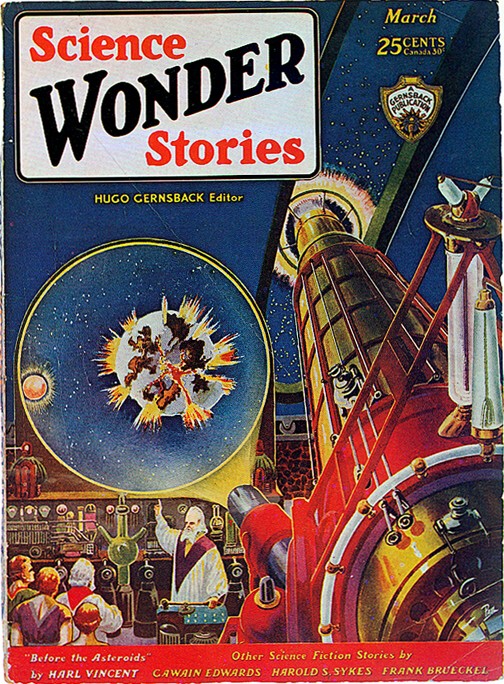
    Here’s another odd bit, this one seeming to show an exploding Earth–the “exploding Earth” subcategory of the “Strange Things in the Sky” category being among the rarest of these sorts of images. This comes from the January 1932 issue of Science Wonder Stories, from the “Before the Asteroids” article by mechanical engineer Harl Vincent (1893-1968).

    Big Gun

    I can’t find the text of the story, so I really don’t know if this is the Earth being detonated or whether it is an asteroid–I prefer it to be the Earth, and the exploding thing doesn’t look much at all like an asteroid.

    [Mr. Vincent had a nice way of turning a title, some of which include ”Creatures of Vibration, ”The Copper-Clad World” , “Vulcan’s Workshop” and Wanderer of Infinity” .]


  • Strange Things in the Sky Department: NYC and Floating, Upside-Down Battleships

    JF Ptak Science Books   Post 1112

    Battleship upside down

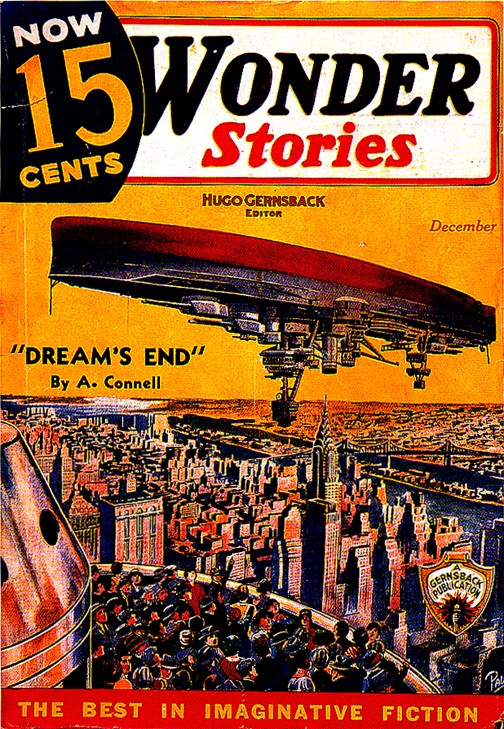
    This fantastic image was made for the Australian Alan Connell’s story “Dream’s End” which was published in the December, 1935 issue of Hugo Gernsback’s Wonder Stories (a company resulting from the merger of: Science Wonder Stories and Air Wonder Stories and then continued as Thrilling Wonder Stories). The floating battleship illustrates a point in Connell’s story about the frailty of reality, the slim margins of appearance, and how easily everything could seem strange and foreign if subtle changes are made in the fabric of the physical universe.  Actually, it was much more than that, and the subtlety quickly fades as Connell’s story lifted reality up and away from humanity, producing all of not only the earth but the entire universe  as a piece of a some larger intelligence’s dream. It is the story of a fragmentation of all reality as the being ends its dream and begins to awaken.  

    The striking cover is really quite fantastic, even if the perspective is off and problematic–it certainly captures your attention and makes you wonder about what on earth the story is about.  And that in spite of what seems to be less than half of the crowd on the observation deck looking at the upside-down floating battleship hovering over Midtown. (I guess that’s about par, this being NYC and all…)
    _____
    Notes:

    “Vol 7, No 6. 132pp. Cover art by F.R. Paul  suggested by “Dream’s End”. The cover and table of contents list December as the publication month but the editorial credit page lists November-December. Paul is credited as the cover artist based upon his signature. Oliver Saari has two different letters. A section headed “In Your Opinion” in the letter column lists the fan favorites from the September issue in descending order as “The Green Man of Greypec”, “The Ideal”, “World of the Mist”, “The Space Lens”, and “One Hundred Generations”.– From the ISFDB website.


  • The Future of Women–Helicopter-Delivered Paper Clothing for Woodsy Frolics

    JF Ptak Science Books   Post 1105

    Future--throw away clothing

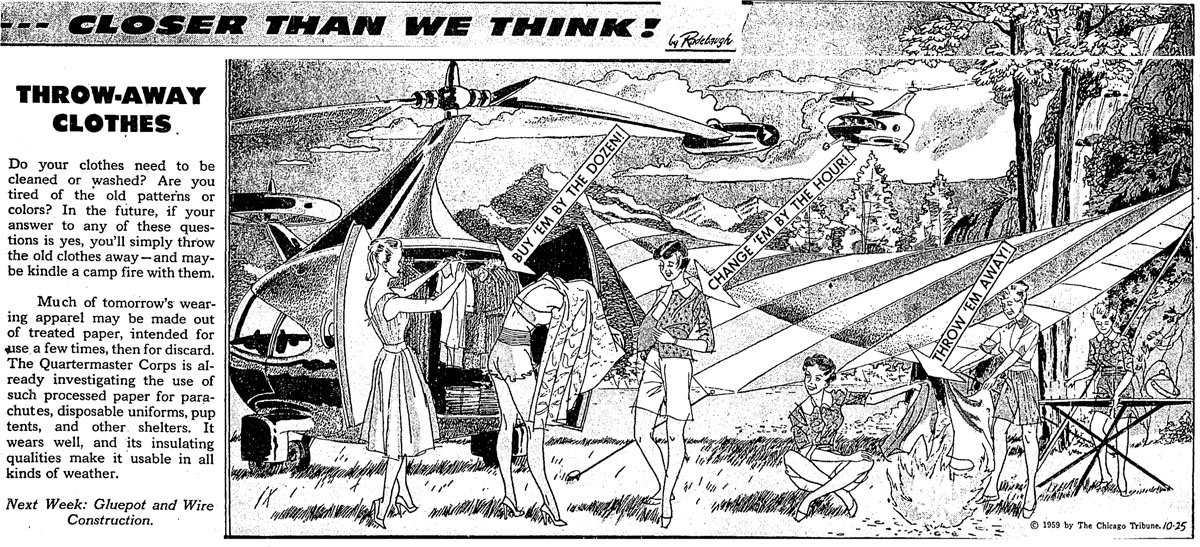
    The artist of this perspective of the future offers us a little too much of his personal dreamcastle, I think.  Perhaps the future is filled with paper clothing to be thrown away at a whim, or if not paper then something else besides that, like paint.  Painted clothing might make more sense than natural disposables.  But what makes this image special to me is that none of it makes sense, but for semi-noxiously-underwear-filled reason, it did find its way into publication, even if it was only in the Chicago Tribune.  

    The artist shared a very personal vision of the future which reminded me in a way of a reverse Reclusorium.  Monks and recluses filled out their fair share–men and women alike–of Anchorages and Reclusoria, living down in tiny cells sometimes dressed in chaffing (or worse*) clothing, sometimes being permanently caged (or even walled in), spending their lives devoted to their own unworthiness and penitence and glorification of a private conversation with a god of salvation. 

    This picture offers us a group of non-recluses, living far from any sort of St. Jerome-y existence. For some reason these women are living out in the wild in high heels, enjoying The Nature, and having their disposable clothing delivered to them via helicopter(s).  They choose their paper outfits, and change into them right there, right in front of the helicopter, the artist enjoying their wreckless abandon. Find the clothing, take off old clothing, dress languidly, and then sit down and throw the old paper rags into the fire. Just in case, the lady in the background is serving refreshments.

    Seems to me that the women in this scene are developing a public demonstration of a little private fetish of the artist more so than delineating a vision of a hellfire future filled with semi-naked women frolicking  in the woods.  Or rmaybe I’m being too cranky and seeing things too hard–maybe not…


  • Pictographic Messages to the Year 12,010: the Medium is the Mess.

    JF Ptak Science Books  Post 1103

    Talking to the Future: a Note of Pity to Ourselves in 300 Generations
    Nuke waste--dead251

    In the history of words I’ll take a wild guess and say that fractions of 1% of everything communicated is directed at ourselves in the future–or at least it has the possibility of being directed to someone else when our deeds are long, long since forgotten. 

    And by writing to the future I don’t mean in an off-hand way, our words being read in 12,010 by chance, idea archaeologists looking at what people were talking about 10,000 years earlier; and I don’t mean via “reconstructing” our radio or tv broadcasts (in the not-right Jodie Foster Contact kinda way).  I mean intentional messages to be read a long time from today.   

    A more problematic entry would be images and symbols design to be read by future generations, in the deep future.  This is not a very deep category, though a famous (if not well designed) example being the one associated with Carl Sagan that was attached to the 1972 Pioneer 10 and 1973 Pioneer 11 spacecraft, which attempted to explain what humans were should either vehicle  in any eon come into contact with other-than-Earth life.
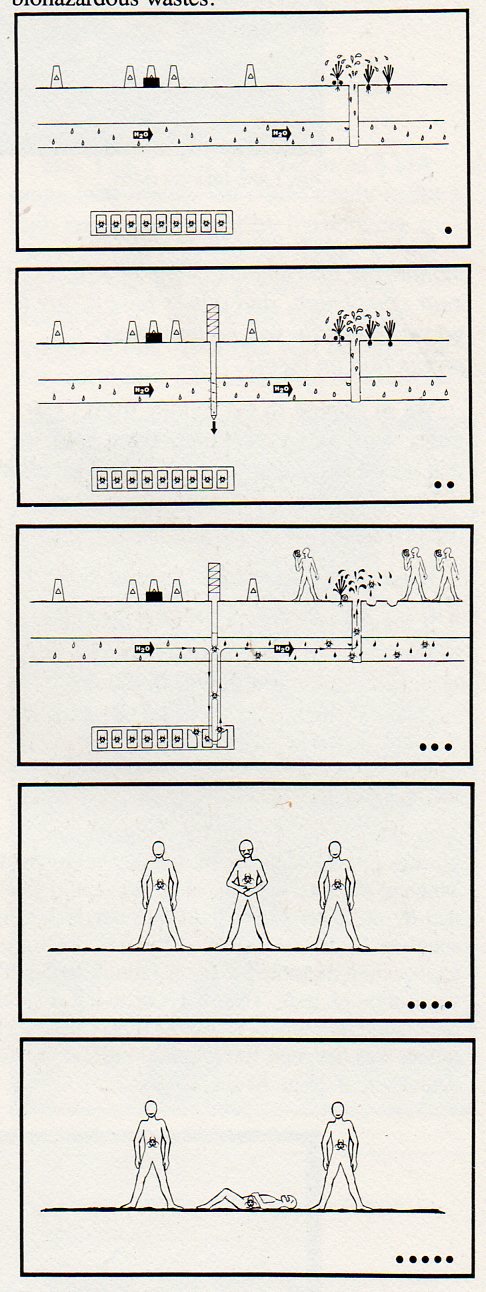
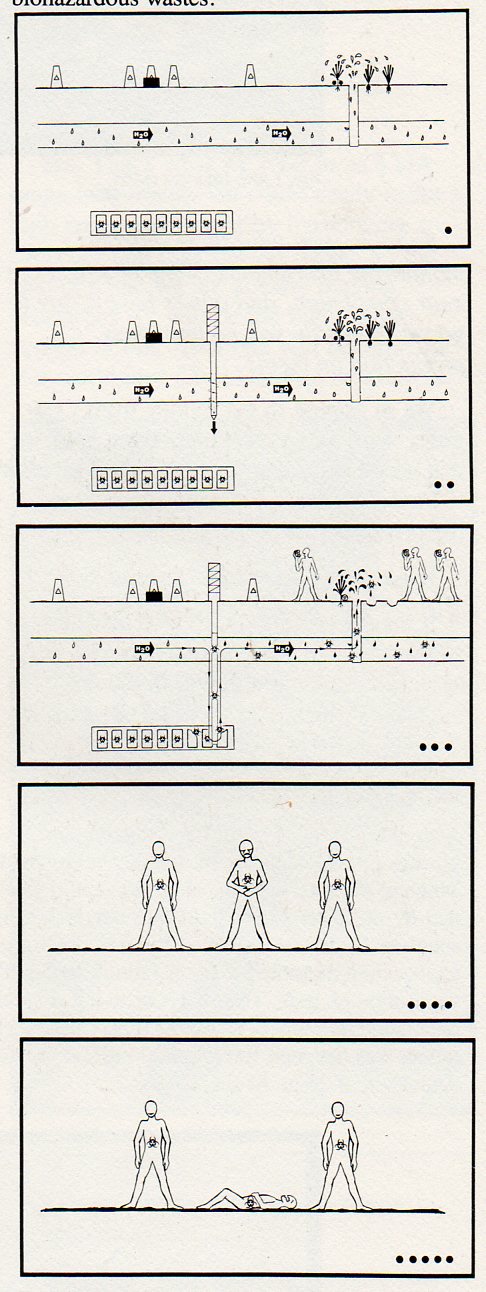
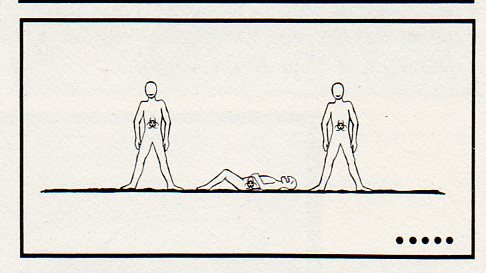
    Nuke waste--overall250 Another is the pictograph presented here, which appeared on page 117 of the ironically and extraordinarily-titled Reducing the Likelihood of Future Human Activities That Could Affect Geologic High-Level Waste Repositories1, the first half of which (bolded above) could make a nice departure for some other science fictiony type story.    But what these folks were talking about, plain and simple, was how to prevent future generations from digging into or other disturbing in any way buried masses of nuclear waste. 

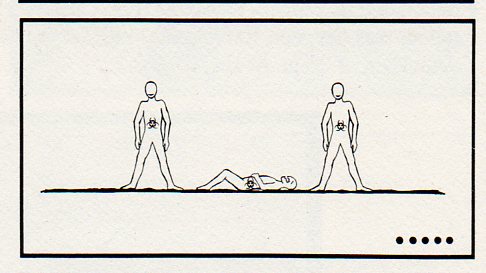
    This pictograph is meant to be a non-linguisitc, universally-understood  warning to future generations that the ground they are standing on is above a nuclear waste storage site.  The plan was that nuke waste would be solidified and buried in rock hundreds of meters below the surface in an effort to keep in line with governmental policy of waste disposal2. The pictograph relates to the restricting of future human activities part of the title of the work in question–that is, folks in the future who might muck around, drilling, into the nuclear waste site.  This pictograph tells them why they shouldn’t do so, because of all of the terrifically lethal mojo underground. 

    As one might guess by the title, the report has its own communication problems–it is dense, turgid and not a particularly clear document.  It is a fine document illustrating the problems of communication, but not in the way it would have wanted to be, celebrating a reverse triumph in a Darwin Award/IgNobel type of way. And all of this in spite of/or because of a healthy slice of linguists, semioticians, logicians, artists, graphic designs, politicians,. sociologists and so on constructing the thing.

    The sign basically says that if you drill at this spot (to some unspecified depth) through aquifer or underground stream or water source or something that some point you may reach the biohazard nasty, which will then get into the water supply and into humans, which will then kill them.

    The sign was designed for 10,000 years hence, and depended upon pictures to convey the message rather than words (except for H20, and the biohazard symbol).  Of course the radioactive nastiness will be there for millions of years, which would be an entirely different story in terms of imaging.  Perhaps. 

    The one thing the design of the pictograph has in its favor is that it is read top to bottom–no language on Earth (so far as I know) is read bottom to top, though there are many differences in reading right-left/left-right.  Beyond that, the pictograph stumbles over itself–except for the last two images, which may or may not tell someone that something bad is happening. 

    There are plenty of time capsules and idea-vehicles to the future–I’m saddened that this was seen to be one of the essentials that we would pass on to our future selves.

    Notes:

    1. Reducing the Likelihood of Future Human Activities That Could Affect Geologic High-Level Waste Repositories (Technical Report prepared for Office of Nuclear Waste Isolation, Battelle Memorial Institute; BMI/ONWI-537; May 1984)

    2. “Present society’s responsibility is to dispose of radioactive wastes in a manner that is safe, is environmentally acceptable, and does not require long-term maintenance or surveillance. This ground rule is consistent with the objectives in the U.S. Department of Energy.”Reducing…, page 2.

    The pictograph, explained,  pp 115-116 from Reducing….

    The pictograph…was developed using the concepts and guidelines discussed by Givens (1981). The objective is to convey to the reader the sense that if the area below the markers is disturbed, toxic substances will enter the ground water and lead t o severe consequences. relies on several visual images acting in concert to relay the message.

    The ground surface exhibits peripheral markers and a central monument to denote relevance to the site where those markers and monument exist.

    The ground-water system is indicated by water-drop shapes and by the chemical symbol for water (the only departure from icons, used as a redundant measure).

    A repository far below the surface is depicted with the biohazardous symbol. The fact that the object portrayed below the surface is a repository may not be at all evident to a future reader from the first frame; however, the movement of the dark material from the repository through the aquifer and into the vegetables in the third frame, coupled with the movement of the biohazardous symbol, should imply the burial of biohazardous materials below the surface.

    The pictographic sequence exaggerates reality with regard to the rapidity of contaminant transport and uptake, and with regard to the severity of the consequences. However, exaggeration is necessary because both the clarity and the relevance of the message may suffer if.the pictograph attempts to indicate contaminant transport time of thousands of years. Similarly, the consequence portrayed, a painful death, over-exaggerates the cause-effect relationship and the rate of the individual’s demise (one out of three suffer death in the pictograph, whereas a
    to chance would be more representative).

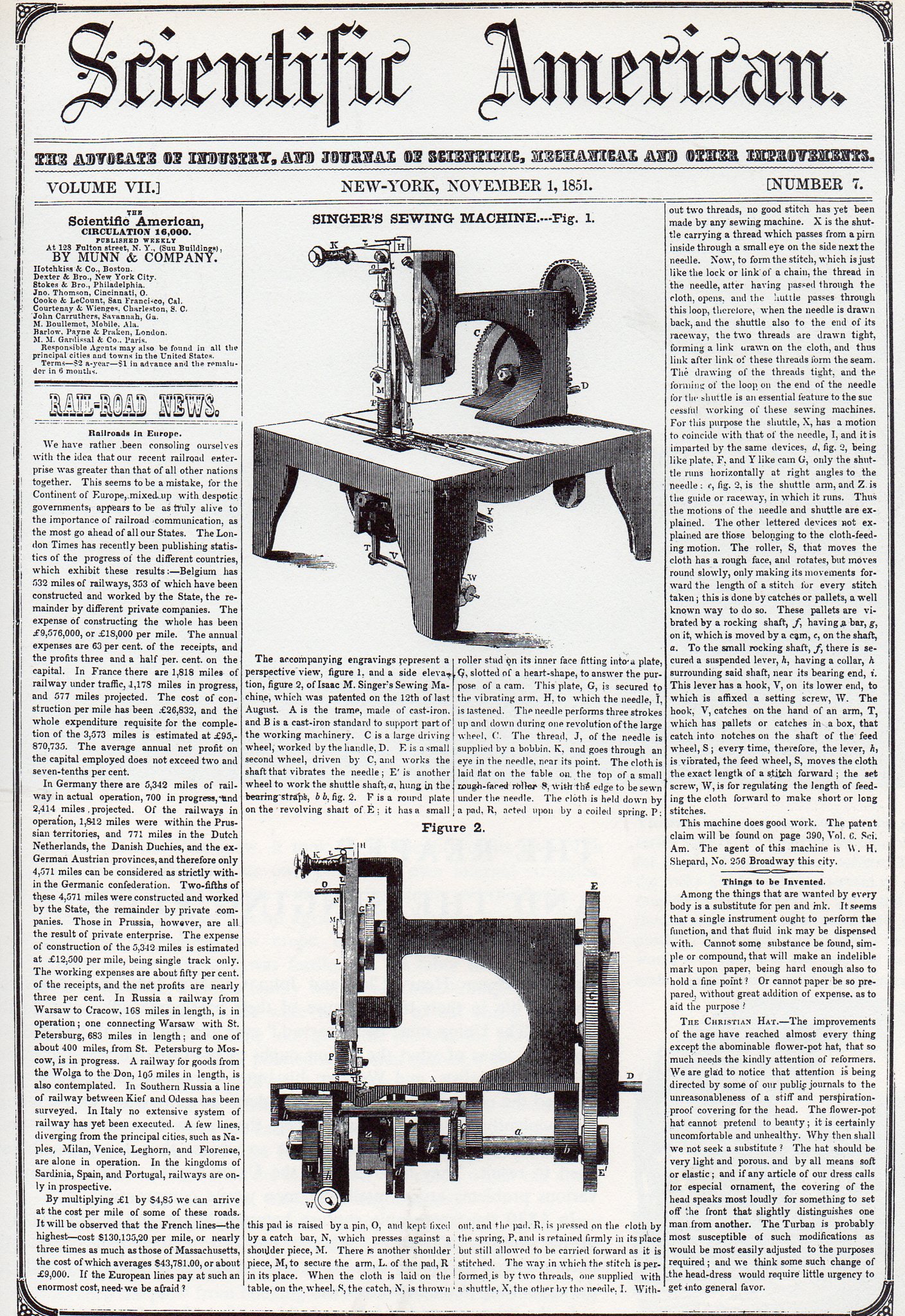
  • Shadowlands in the History of Technology–the Sewing Machine, ca. 1838

    JF Ptak Science Books  Post 1088

    The anniversaries of two famous legal cases bumped me into thinking about the shadows of what things might be.  Aticus Finch (from To Kill a Mockingbird) and Thomas Scopes (of the “Scopes Trial”, the famous or infamous “Monkey Trial”) celebrated their 50th and 85th anniversaries (respectively) this past week.  Finch the lawyer lost his case, and Scopes, the defendant, lost his as well. 

    This reminded me of the shadowland stories of roads not taken, or illustrious events whose outcomes didn’t quite coincide with the fame and interest of the way  things started out.One example from Shadowlands that springs to mind is that of the sewing machine, and the case of William Hunt.  Hunt was a remarkable person, an inventor of ingenious and remarkable things, some ubiquitous–and of these, one good example is the safety pin.  The “could’ve been” part was the sewing machine.  Eight years or so before the battle for precedence and patent began between Isaac Singer and Elias Howe began, Hunt had arrived at the principle solutions for an automatic sewing machine.  

    Sewing machine211 He decided not to seek a patent for the machine. Now, in and of itself, this is not terrifically uncommon in the history of invention.  As a matter of fact Thomas Jefferson, the inventor of the standard American moldboard plow (tinkering with it from the 1780s to the 18-teens), did not seek a patent for his invention. By 1814 he came closer to the iconic and revolutionary plow by producing his in iron.  The steel, self scouring plow would take another two decades to be introduced by John Deere. (Decades latter Abraham Lincoln would apply for and receive a patent for a boat/buoy lifting device, making him the only president to ever receive a patent.)

    The reason that Hunt didn’t pursue his sewing machine was based in deep morality–he chose not to patent the thing so that this new advancement in technology would not make seamstresses obsolete, pushing them out of work and costing them their jobs.  Of course the machine was introduced a few years later by Singer and Howe, and then the rest is history–just about every invention is going to annoy somebody.

    But the irony here is that even though Mr. Hunt chose the high road out of the sewing machine quagmire, saving the jobs of seamstresses for another few years, he didn’t have any moral hesitations about his next invention–an improvement to a steel-cased cartridge for rifles.  Evidently he was more comfortable with killing machines than he was with protecting the jobs of the working/suffering classes.