A Daily History of Holes, Dots, Lines, Science, History, Math, Physics, Art, the Unintentional Absurd, Architecture, Maps, Data Visualization, Blank and Missing Things, and so on. |1.6 million words, 7500 images, 4.9 million hits| Press & appearances in The Times, Le Figaro, Mensa, The Economist, The Guardian, Discovery News, Slate, Le Monde, Sci American Blogs, Le Pont, and many other places… 5000+ total posts since 2008.

Category: Future, History of the

  • TomorrowVision: U-235, Project Orion, and City-Sized Space Ships, 1941-1968 (+)

    JF Ptak Science Books Post 943

    “One conversation centered on the ever accelerating progress of technology and changes in the mode of human life, which gives the appearance of approaching some essential singularity in the history of the race beyond which human affairs, as we know them, could not continue.”— Stanislaw Ulam, May 1958, referring to a conversation with John von Neumann  [Ulam, S., “Tribute to John von Neumann”, Bulletin of the American Mathematical Society, vol 64, number 3, part 2, May 1958, pp 1−49.]  This is also said to be the first use of the term “singularity”, referring to the sometime-in-the-future point where artificial intelligence reaches such a level as to create a race of super-intelligent artificially-enhanced human beings.

    In the history of perfect tomorrows, what happens to people when we no longer die, or live to enormous ages, or replicate necessary organs to such a degree that cell death is no longer an issue, or are just able to get rid our biological corpus and live in something else?
    6--crowded earth


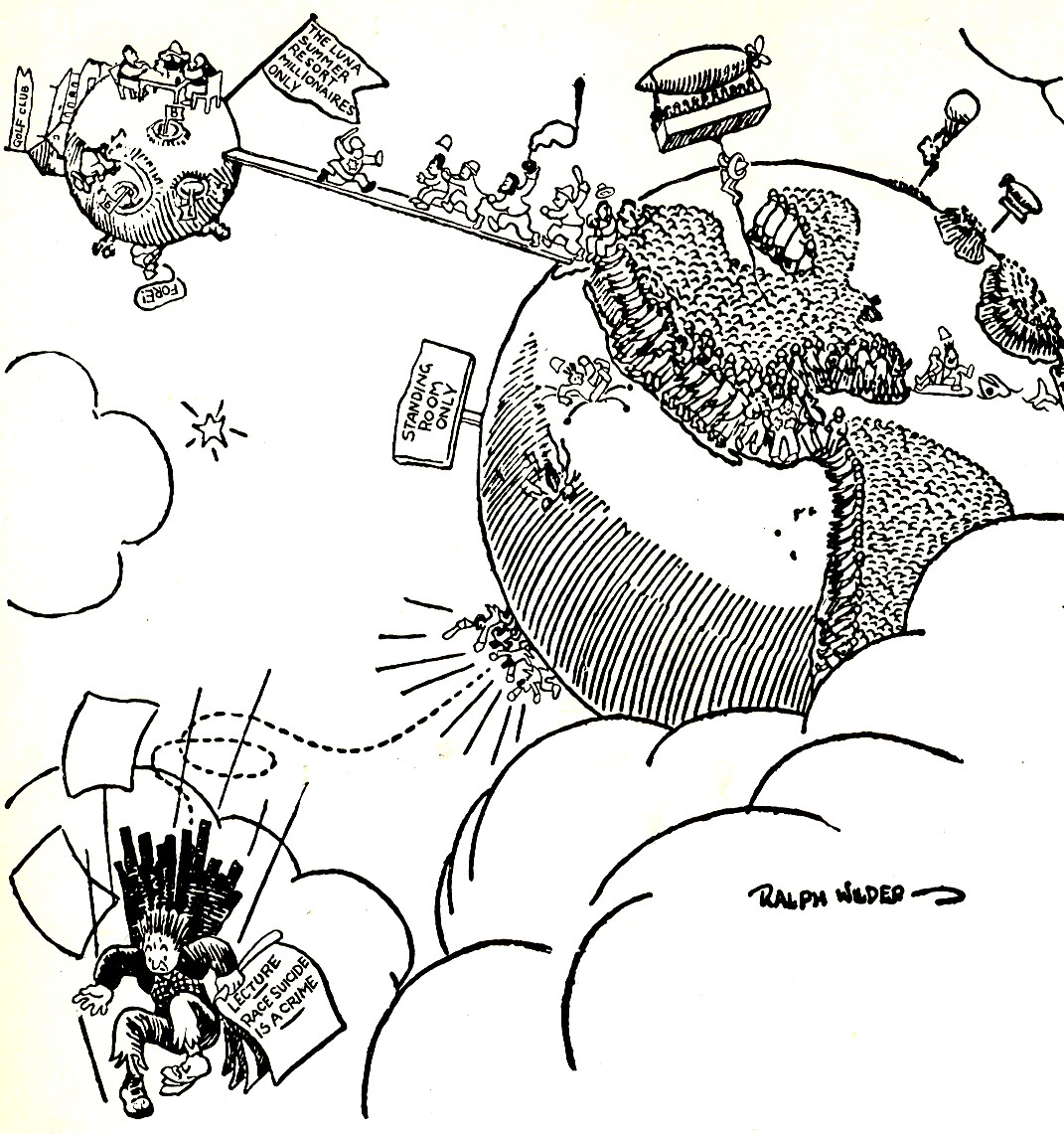
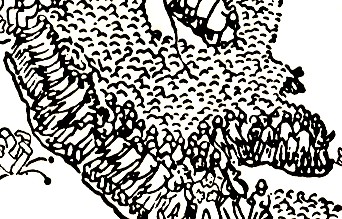
    I can’t tell when the first references start to appear in literature, scientific or otherwise, regarding the sustainability of the population of the Earth, or of simply filling up the Earth, for that matter. This cartoon (above) by Ralph Wilder, published ca. 1915 (source unknown, unfortunately), may well be in the first wave of what must have seemed at the time to be absurd speculation.

    It is impossible for me to imagine what the future of medicine and medical technology may hold for all/some of us in the next 150 years.  I chose this number as it gets us back to one of the greatest advancements in the history of surgery—sterilizing instruments and keeping the surgical room clean. 


    This is the work of Dr. Joseph Lister (remember badly via a popular consumable) who in one fell swoop (and over the course of several years) brought the survivability rate for all surgeries up by half or so, an extraordinary feat, and only four generations old.  It is less than 400 years ago that William Harvey figured out pulmonary circulation and paid hell for it for many years.  To imagine the obverse, the medical advances that will occur in 2400 may be as foreign to educated us here in 2010 as 2010 looked to William Harvey in 1628 or Joseph Lister in 1863.  DNA is only a few years older than me (discovered in 1953), and even though its discovery may seem antiqued at this point, the technologies and understanding initiated by that discovery may look as quaintly fundamental to those in 2150 as the necessity of having a clean surgical environment looks to us. 
    6--crowded earthdet

    And who knows how advancements may spiral ahead of themselves once intelligent machines start producing machines that are more intelligent than themselves leading to god-knows-what.

    But back to the cartoon, and the mathematician Stan Ulam, who is really at the base of this post.  The image depicts the Moon as an escape pod for those who could afford it, the signs suggesting that money would determine who had space to lie and who didn’t.  Of course, there was the problem of actually getting there, which in 1915 or thereabouts was still science fantasy (being twelve years after the Wrights and four years before Goddard).6--u-235 space ship
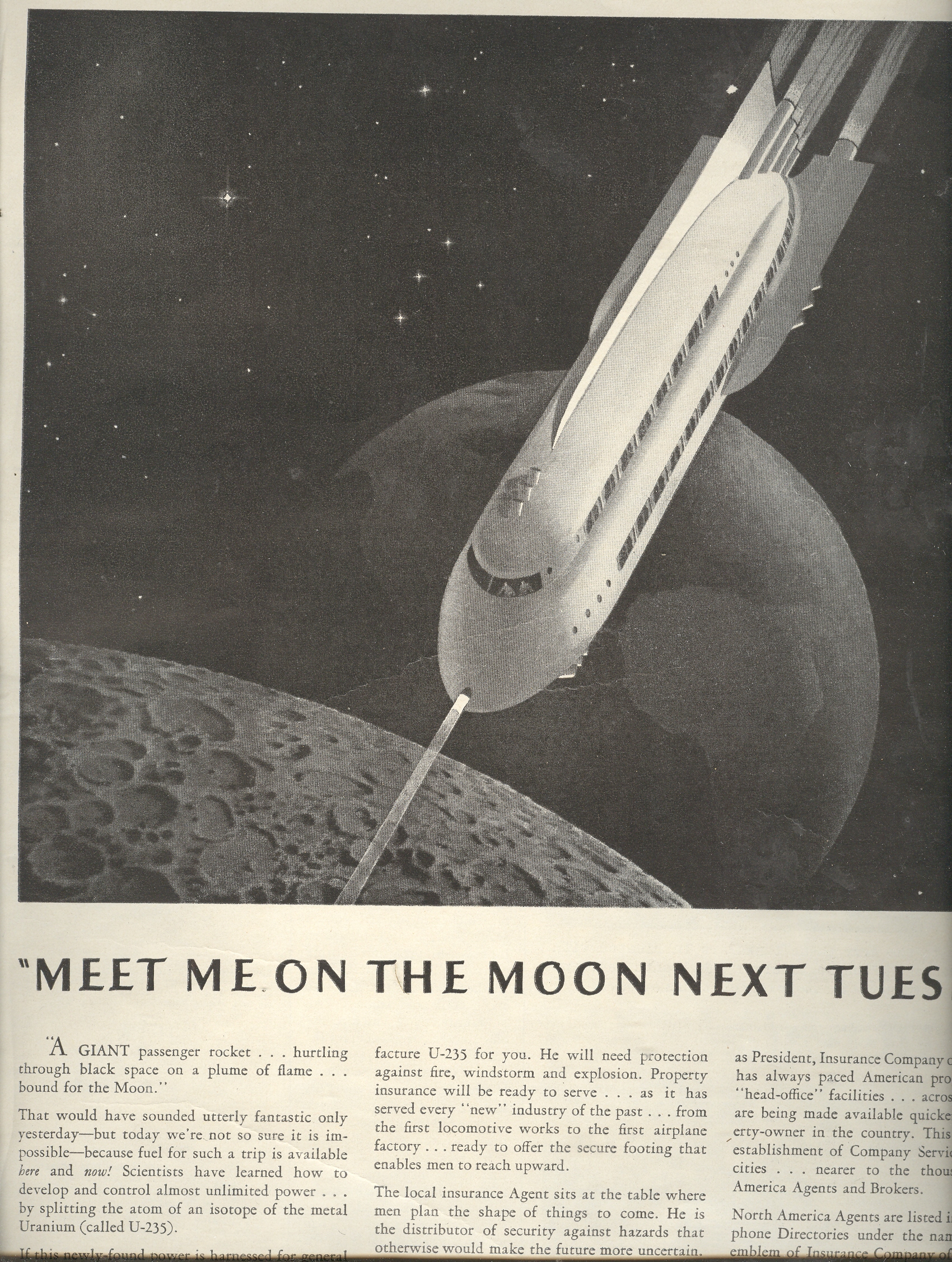
    The second image, from LIFE magazine in 1941, shows a rather massive space vehicle powered by U-235. Discovered by Arthur Jeffrey Dempster in 1935, U-235 was a fissile material capable of sustaining a fission chain reaction. (Dempster, 1886-1950, was a Chicago Ph.D. who during the war would be the Chief Physicist of the great Metallurgical Lab at Chicago, from 1943 to 1946.) The ad (for an insurance firm) shows the ship being powered by what would be a series of nuclear explosions—quite a remarkable thing to be printing in a mass market periodical in the second year of WWII. As it turns out the Physical Review was still publishing sensitive articles on these topics ‘till right about this point, after which their appearances were suspended for the duration of the war. 

    And as it turns out the thinking here was prescient.  It was Stan Ulam who first suggested this use of atomic energy in 1947; and it was Freeman Dyson and others who (beginning in 1958)  took this many steps further with Project Orion.  In short, this project was a think-sink for a pulsed nuclear propulsion system for a class of space vehicle that would range in (three) sizes from 8,000 tons to an incredible, space-insatiable 8 million tons. 

    Yes, that’s 8 million tons.  That was for a city-sized space ship with a diameter of 400 metres and which could travel at 20,000-30,000 m/s with meganewton thrust, being pushed along by series of nuclear explosions, carrying fantastic payloads and enabling the construction of vast structures on, well, other places. 

    I don’t know how the thing would get off the ground.  Evidently this was not an issue, for even in the late 1980’s drawings and plans for this monstrous ark were still being published. But even as I write this I wonder if my own incredulity with the possibility of such travel will be seen incredulous to folks just a few generations down the road.  I suppose this is just another small stop in the history of the time it takes for absurd ideas to look not so.
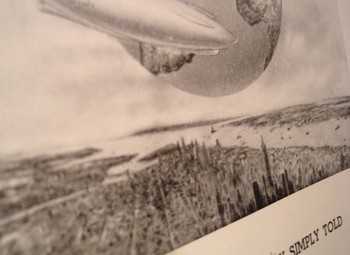
  • New York City: Missing (1902) & Reproduced in Outer Space (1941)

    JF Ptak Science Books LLC  Post 940

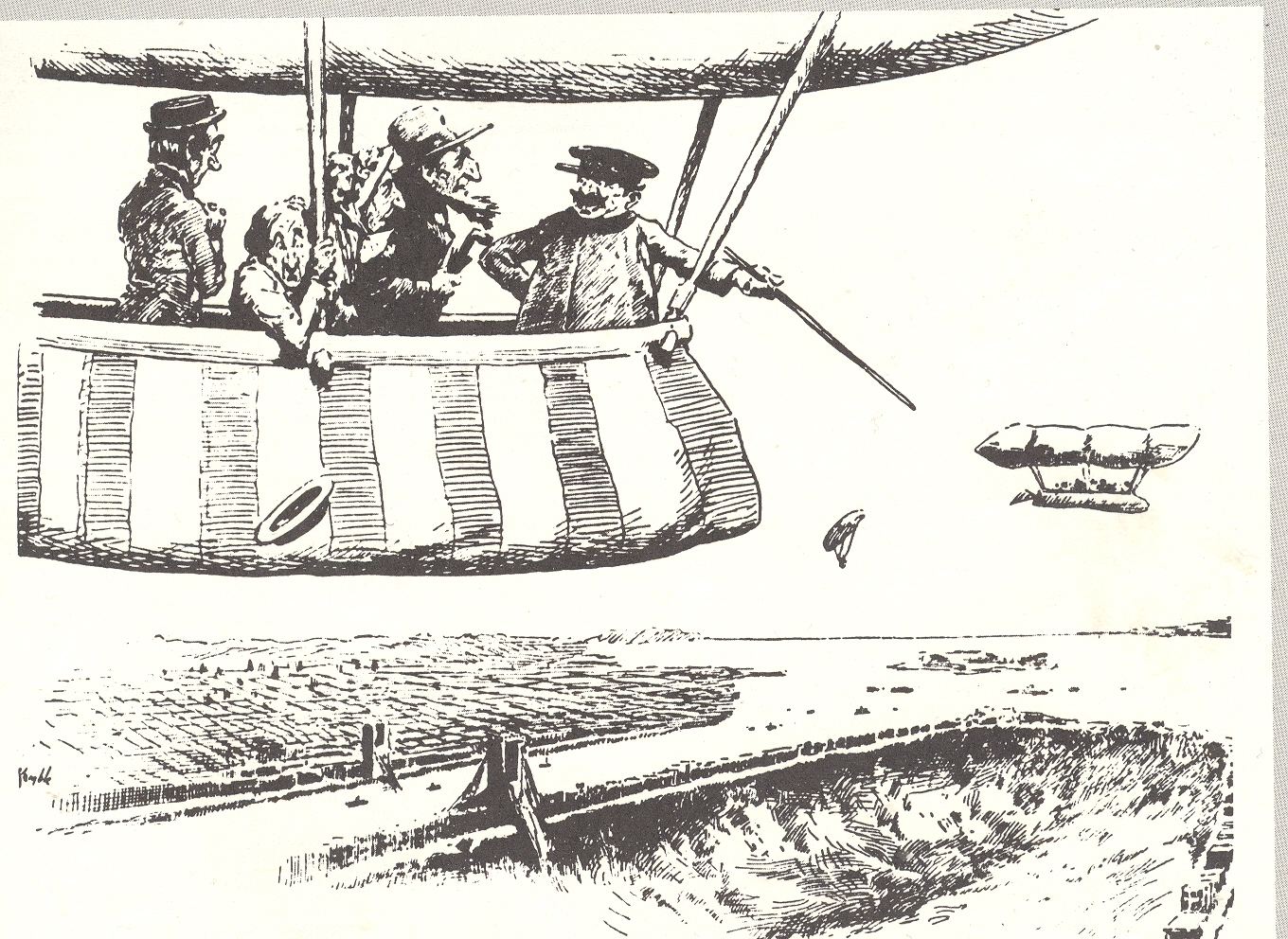
    NYC has certainly had its imaginary/creative trials and tribulations over the last 400 years or so, but I must say that these two depictions of the state of the city are the most, well, unexpected as any I’ve ever seen.  The first comes from 1902 and is a forward-looking appraisal of the chances of New York City in the near-future.  The aeronaut tourists are being told by the aviator/carny–floating above Manhattan in the future, in the year 1920–that those chances are not very good, the city having disappeared under its own weight, sunk by the growing skyscraper1 population in a ground loosened by too-numerous tunnels.  The cartoon is a joking editorial, of course, a riposte to the relatively new building jag that pushed big buildings to great new heights. [A post on more realistic views of the City of New York can be seen here]

    3--nyc gone

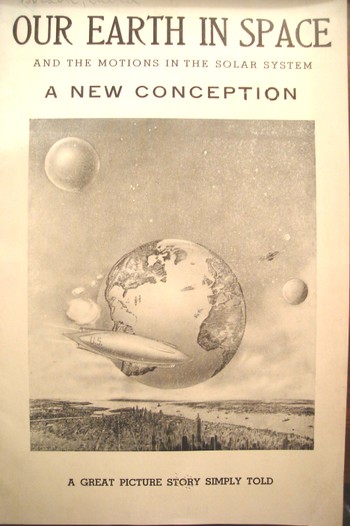
    The second image on the other hand is not a farce; it is one of the strangest (published) unintentionally Outsider, unintentionally Absurdist/Dada works that I’ve ever seen.  It appeared in a post at the very start of this blog (two years and 500,000 words ago) and it remains a capstone of Mondo Bizarro category2.

    Dsc04543

    This 1941 pamphlet isn’t so much “interesting” as it is interestingly illustrated, where all
    of the semi-coherent  interest resides, the text having left coherence far behind, somewhere, in it own intergalactic dust. 

    This is the only known example of the depiction of
    an extra-terrestrial New York City pictured with the earth in the
    background. 

    Huh?  Yes, this is the Big Apple in space—not its own
    space but THE space, outer space—somehow, impossibly, removed to some
    something-or-other (actually in this case, a “bubble”) that, while not
    being the Moon, was something like it, though not actually a solid and
    without gravity, floating on a base of floating effluvia and hope, but, well,
    you get the picture.  Whatever we’re floating on here (actually it is
    identified as the “perisohere” (don’t ask)) is very big and very very
    close to the home planet. 

    The author, David Gordon, is certainly after something, but what that “something” is I just don’t know. He starts things out for the reader asking a series of questions like “why does
    the earth and other heavenly bodies remain in the air and submerged”, answering them with other questions. 

    In all of this Mr. Gordon produced a work of staggering incredibility, more so since it wasn’t an intentional science fiction effort,  and in my book any time anyone reveals such a shocking piece of thought deserves a special kind of praise. I’m just thankful that the pamphlet was illustrated.

    Notes:

    1.  The word “skyscraper” appeared in print only nine years before this cartoon (Harper’s Weekly, April 1893), thugh the necessary elements like heating and
    cooling capacities, electrical lighting, plumbing [with appropriate, siphon jet
    toilets], elevators with dependable brakes, had been in place since the 1880’s or earlier.

    2..  One of the other capstone publications written about here is the monumentally bizarre work on sculpting in fat and lard:

    Dsc04544


  • Bad Grandeur: Predicting Post-Nuke USA (1966) and the Loss of 76% of all Authors

    JF Ptak Science Books LLC  Post 932Abomb-cvr

    [Part of the Atomic and Nuclear Weapons series.]

    I
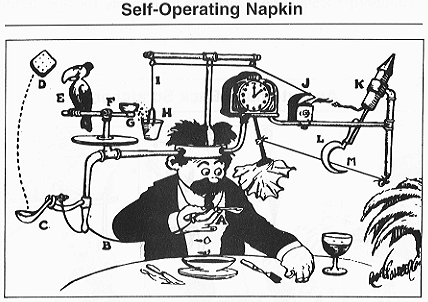
    think no plumb line was ever so worked with pulleys and wheels, strings and
    catclaws and other Rube Goldberg devices as were the demographic studies of
    nuclear warfare.  It is as though their
    compass rose had no compass, with everything centered on the center, no way
    out, no way in. just there.  A faceless
    clock face describing “G-2 o’clock” whenever it pleased.  These studies seem to me the nuclear warfare
    equivalent of the Bellman’s map (described earlier in this blog as the most
    perfect map ever constructed): a pretty polygon describing a totally blank
    surface.

    Atomic goldberg

    I
    have a number of these things here, some of which are restricted-distribution
    publications, works of statistical fancy/fantasy meant for other eyes in the
    same community dedicated to the fancies described, a tautological audience for
    self-referential.

    One
    such bit, plucked from this pile is William W. Pendleton’s A Study of the
    Demography of Nuclear War
    produced by “Human Sciences Research, Inc.” Outside
    of its statistical foray in survivability and the procreative prospects of the
    left-overs of vast nuclear exchanges, the work is a solemn attempt at
    institutionalizing the death requirements of nuclear combat.  The necessity of overwhelming carnage is
    presented in ironic and underwhelming language, the first bits of which are
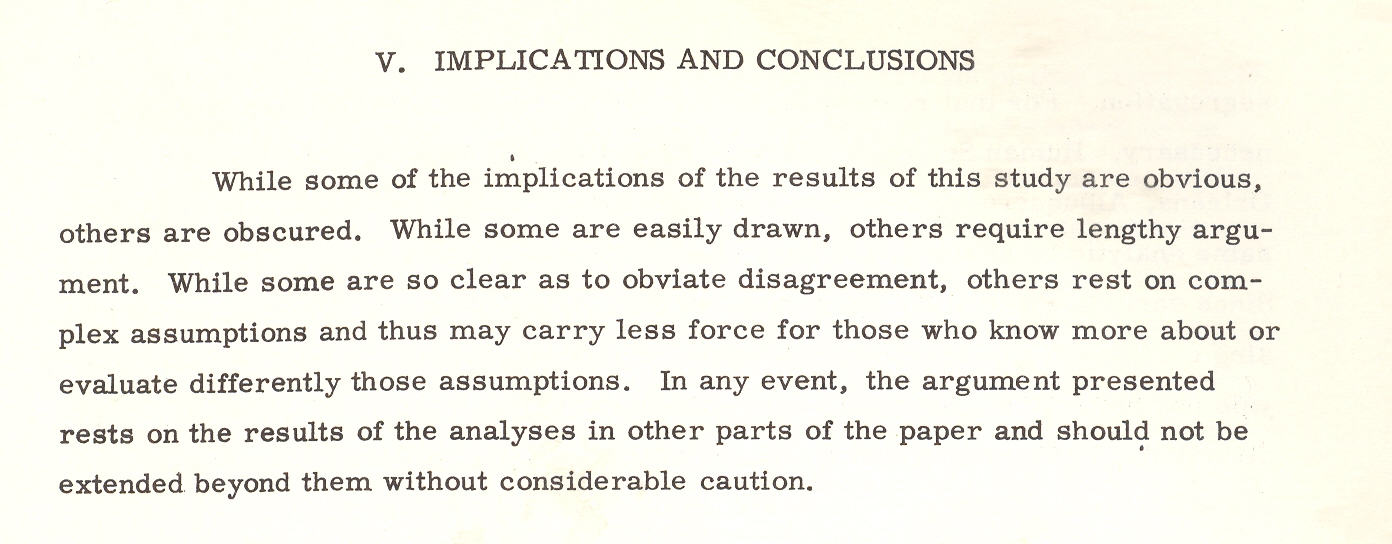
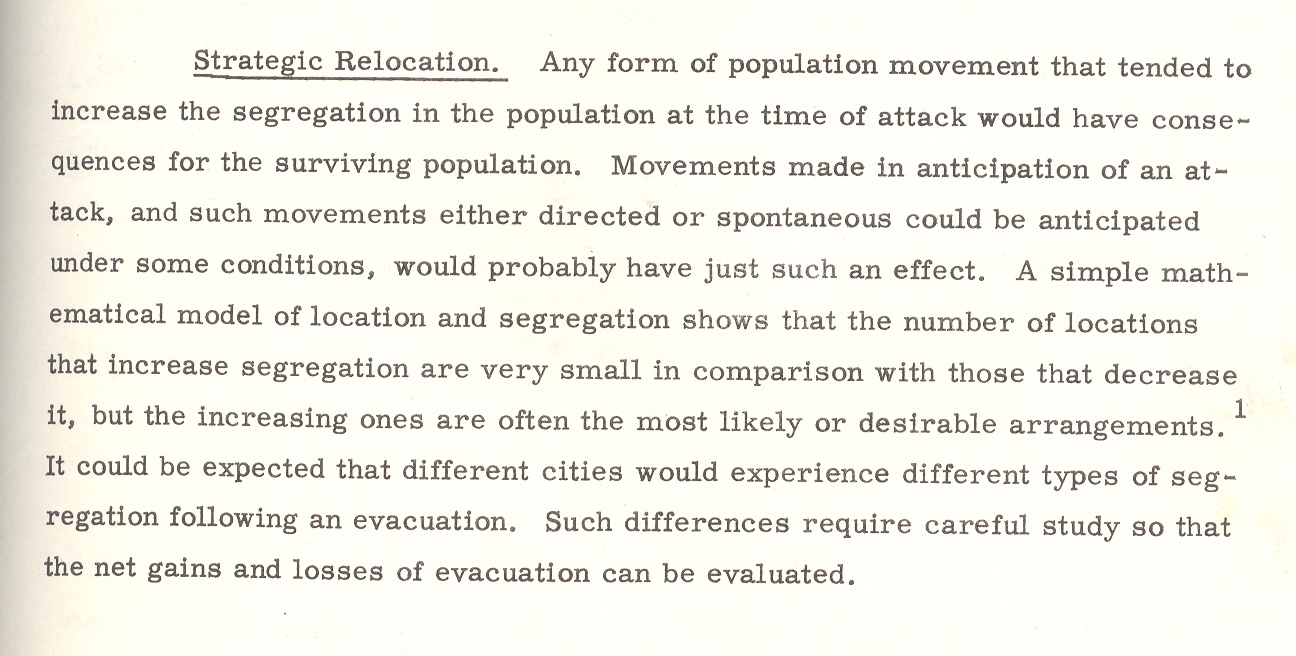
    seen in the conclusion of pamphlet’s abstract1:

    “Cities differ in the kinds and magnitudes of
    change to which they might be subjected
    . Considerable variation in the demography
    of surviving populations can be expected; that variation would be related to
    policy decisions; and those decisions should therefore be examined for their
    demographic implications.” [Emphasis mine.]

    Put
    another way, the city is the main focus of the survivability equations, and the
    chances of the humans being bombed in those cities would change with—god help
    us—the amount of bombing.

    Cities differ in the kinds and magnitudes of
    change to which they might be subjected
    .

    This
    is the key I think to understanding documents like this, making a simple
    foundation statement so convoluted and tortured that it and most of what
    follows make any sense outside of restating themselves. Which I guess is a
    strength.Abomb-conclu 1

    Back
    to the pamphlet and the interesting table that attracted my attention.  According to one study [and for the sake of
    brevity I’m not going to describe the scenarios or data estimation methods and
    so on] the U.S. would suffer 46% casualties [meaning immediate deaths and not
    as a result of radiation or illness or starvation or the encyclopedia of
    whatever that would lead to death somewhere down the road].  The resulting demographic of the “perished”
    by job description postulates that the most-killed category of worker would be:
    (#1) aeronautical engineers, 86% dead; (#2) transportation equipment salaried
    manager, with 79% killed; (#3), social scientists, with 78% of them going down
    with their clients; (#4), authors, with 76% gone.

    Abomb-casualties2

    Authors?  Of what, I wonder?  The good ones with the bad?  Are authors different from writers?  And what do you call folks who produce tv
    shows?  Since the stats here are for 70
    cities there’s no wonder that there aren’t any farmers in this table, as the
    majority target areas (some 450 cities cited elsewhere as targetable, including
    my own little burgh of Asheville,
    N.C.
    ) would naturally have city
    folk in them.  And so I’m guessing that
    three-quarters of all “authors” in 1960/6 were living in these target cities
    and were going to go up in smoke.  The
    aeronautical engineers category is more understandable as every one of those
    industries employing 50 or more people would be a target; frankly I’m surprised
    that given the possible firepower of the Soviet Union
    in 1966 that 14% would survive; I’d guess offhand that the number would be
    2%. 

    Abomb-conclu 2
    Even
    though this stuff is spread out in only 98 pages or so it would keep a person
    busy segregating the Orwellian gems from those not; it would be a tricky
    business as most of the “text” in the “not” category would be largely limited
    to prepositions. 

    Here’s
    another bit:  a parenthetic poke at the
    post-attack composition of Congress. It is stated that the “postattack”
    (hyphenated no longer) Congress would be “quite different”.It would also be (“in
    their eyes”) “more Conservative than the pre-attack (hyphenated!)  Congress. 
    It isn’t a cause for great prognosticational (?) liberty to assume that
    the Congress might be more Conservative, but why on Earth did the author
    qualify the assumption by saying “their eyes”? 
    Pish and posh.

    The
    paper goes on its merry way, connecting the necessaries of Goldbergian delight,
    and somehow nothing ever happened, which to me is a secret miracle.  Especially given the weight of papers like
    this one, which seems to medicate the effects of war, assuming that there will
    be a Congress and that people will report back to work once the factories are
    rebuilt and that there will be more segregation in the colossal world of post-attack
    America, and on and on into the red dawn. 


    Mr.
    Mencken’s view of Warren Harding comes to mind when I read this stuff and
    wonder about how it was that we didn’t blow the whole place up:

    “I
    rise to pay my small tribute to Dr. Harding. Setting aside a college professor
    or two and a half dozen dipsomaniacal newspaper reporters, he takes the first
    place in my Valhalla of literati. That is to
    say, he writes the worst English that I have ever encountered. It reminds me of
    a string of wet sponges; it reminds me of tattered washing on the line; it
    reminds me of stale bean soup, of college yells, of dogs barking idiotically
    through endless nights. It is so bad that a sort of grandeur creeps into it. It
    drags itself out of the dark abysm of pish, and crawls insanely up to the
    topmost pinnacle of posh. It is rumble and bumble. It is flap and doodle. It is
    balder and dash.”

    Notes

    1. The
    abstract from the above paper: “The basic problem with which this report
    is concerned is that of determining the kinds of demographic change that might
    result from a range of nuclear attacks, ascertaining the effects of those
    changes on the future of the surviving populations, and indicating possible
    areas for Civil Defense action and planning. Earlier studies of the demography
    of nuclear war were examined and their relevant conclusions and methodology
    incorporated in the report. A different methodology–expected to be more
    sensitive to compositional effects–was then designed. The new methodology was
    tested and found to be more effective than the old. Surviving populations
    representing a wide range of variation in attack conditions were created on the
    basis of both old and new methodologies, and the demographic significance of
    these populations was examined. Assuming a range of post-attack demographic
    conditions, a series of projections was made on the surviving populations. The
    demographic significance of the recovering populations was then examined. On
    the basis of the analysis a series of recommendations relevant to Civil Defense
    planning was made: Within the framework of this analysis the crucial variable
    is the demographic pattern of the city. Changes in composition, as well as
    size, could be of substantial magnitude and would last for generations in some
    cases. Cities differ in the kinds and magnitudes of change to which they might
    be subjected. Considerable variation in the demography of surviving populations
    can be expected; that variation would be related to policy decisions; and those
    decisions should therefore be examined for their demographic implications.”


  • History of the Future: Space Cannon Moon Flights Yield Jelly People?(1936)

    JF Ptak Science Books LLC Post 899

    Blog jan 6 wells

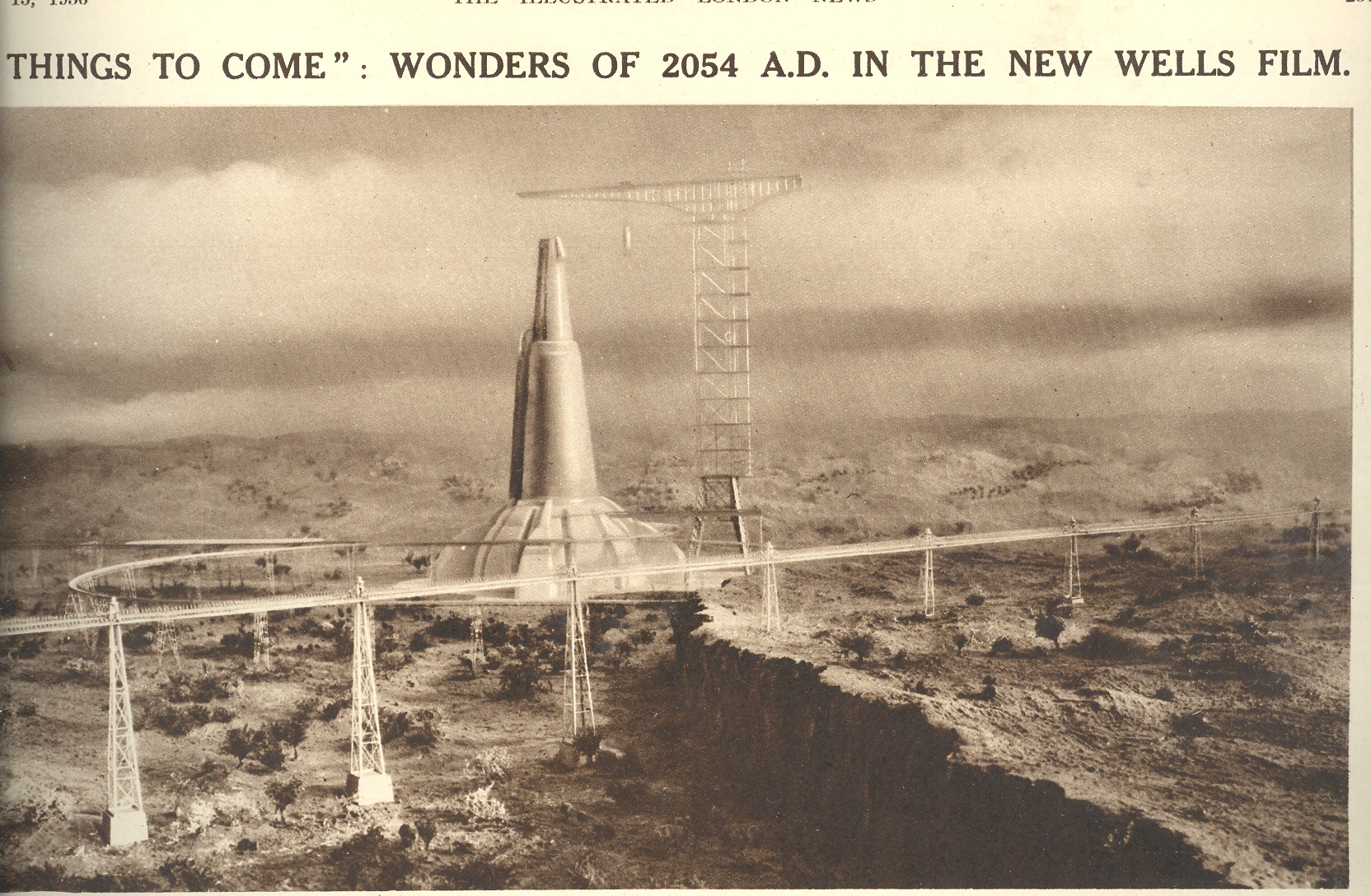
    The Babel-like tower pictured below is a still from the movie Things to Come (1936), an adaptation of H.G. Wells’ The Shape of Tings to Come (1931).  (Wells’ himself wrote the screenplay a few years before the movie appeared.)  The story is a history of the period from 1936 to 2054, including a devastating war that begins in December 1940 (complete with major air assault, poison gases and so on), followed by plague and destruction for another forty years, after which there is a confrontation between two classes of remaining humans, with big doses of New World Order, Technocracy, Fascism and glimmers of hope of science and technology saving the future.  There’s a lot that happens in the story, but the part I’m most interested in comes towards the end of the film and depicts a space gun for launching a massive capsules to the Moon–in this case, a capsule containing two “starred-crossed lovers”.

    We are told that the launching apparatus–the “gun”–is 1500 feet tall, which iterates out to a 750′  base and which also makes the capsule about 75′.  That’s impossibly massive firepower. (Don’t forget that somebody had to construct the 1700′ tower next to the gun that lifted the capsule into position, for some reason lowering the thing down the barrel.)

    In the history of big guns, this would be about the most massive ever constructed in the sci fi world so far as I can tell. In the real world, the Kaiser Wilhelm gun (or “Paris Gun”, the Kaiser Wilhelm Geshutz) was a long-barreled, light shelled monster: its 92′ long barrel (plus a 20′ extension) launched a 94kg shell about 130 km, reaching a maximum height of 40km (about 25 miles) high. For all of its mass (the gun weighed 256 tons without the railway cars) the shell that it fired didn’t weight much at all….though the shell did reach an extreme height. (Ironically, the gun was built for attacking the deepest of the deep bunkers of the fortresses along the Maginot Line; it was never needed for that, as the Maginot Line was simply left behind in the Nazi assault on France.)

    The Schwerer Gustav was a 1350 ton beast which fired a 14,000 pound shell (!) about 20 miles. A  little later came the Nazi V-3 (the lesser known of the V-weapons), the Vergeltungsewaffe 3, a 130 metre (!) long, 150mm gun built along the side of a hill, launching a 140 kg shell. The Iraqi Big Babylon gun was sort of like this one, though never built–it was to have a 500′ barrel and would be supported by a hillside. 

    Getting back to the unfortunate Well’s space gun: this thing was supposed to fire a 75′ capsule which must’ve weighed in excess of 10,000 pounds (easy, what with supply and fuels and so on, plus the structural weight) straight up (!!) and somehow reach escape velocity of 11.2 km/s, piercing the exosphere some 400 miles high or thereabouts (or 1.5 orders of magnitude higher than the Paris Gun).  I cannot intuitively imagine the tremendous explosion necessary to achieve this goal, although it could be figured out pretty easily.  Back of the napkin figuring tells me that the speed of the capsule exiting the gun’s barrel would place the occupants in the vicinity of something like 450Gs–that’s more than ten times the lethal amount of force that a human can withstand.  I’m not sure what happens to a person at 450Gs–I do know that it wouldn’t be pretty.  Anyway, none of this part of the space travel section of the movie wasn’t pretty….except for the props, which I like, and which can be seen in the clip below.

    Overall I think that this would make a lovely physics problem for discussion in a high school classroom. 


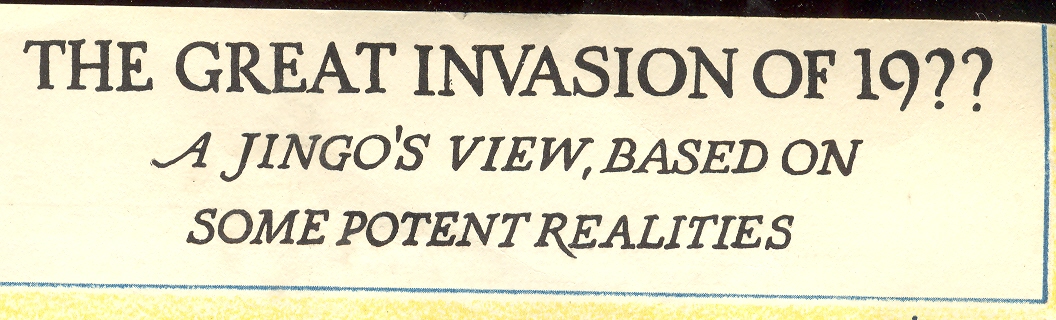
  • The Invasion of America, 19?? (1935 Scenario for Invasions via Canada, Mexico and the Caribbean)

    JF Ptak Science Books LLC  Post 898

    (This is a
    continuation of the Invasion of America
    series, started
    here.)

    Blog jan 4 us attacked ttile
    Even
    before WWII,   the American military and variously-aligned
    think-tank subsidiaries had for years hypothesized U.S. invasion scenarios.  For convenience’s sake, they were color-coded
    so as to not confuse one invadee with another: for example, there were War Plan Citron (an invasion of Brazil); War Plan Emerald (intervention in Ireland); War Plan Green (war
    with Mexico); War Plan Indigo (an
    invasion of Iceland); War Plan Lemon (an invasion of Portugal); War Plan White: (plan
    for dealing with civil disturbances cause by Communist insurgents), and many
    others. (I cannot find the color-coded plan for the 20th century
    invasion of Canada,
    but it did exist.)

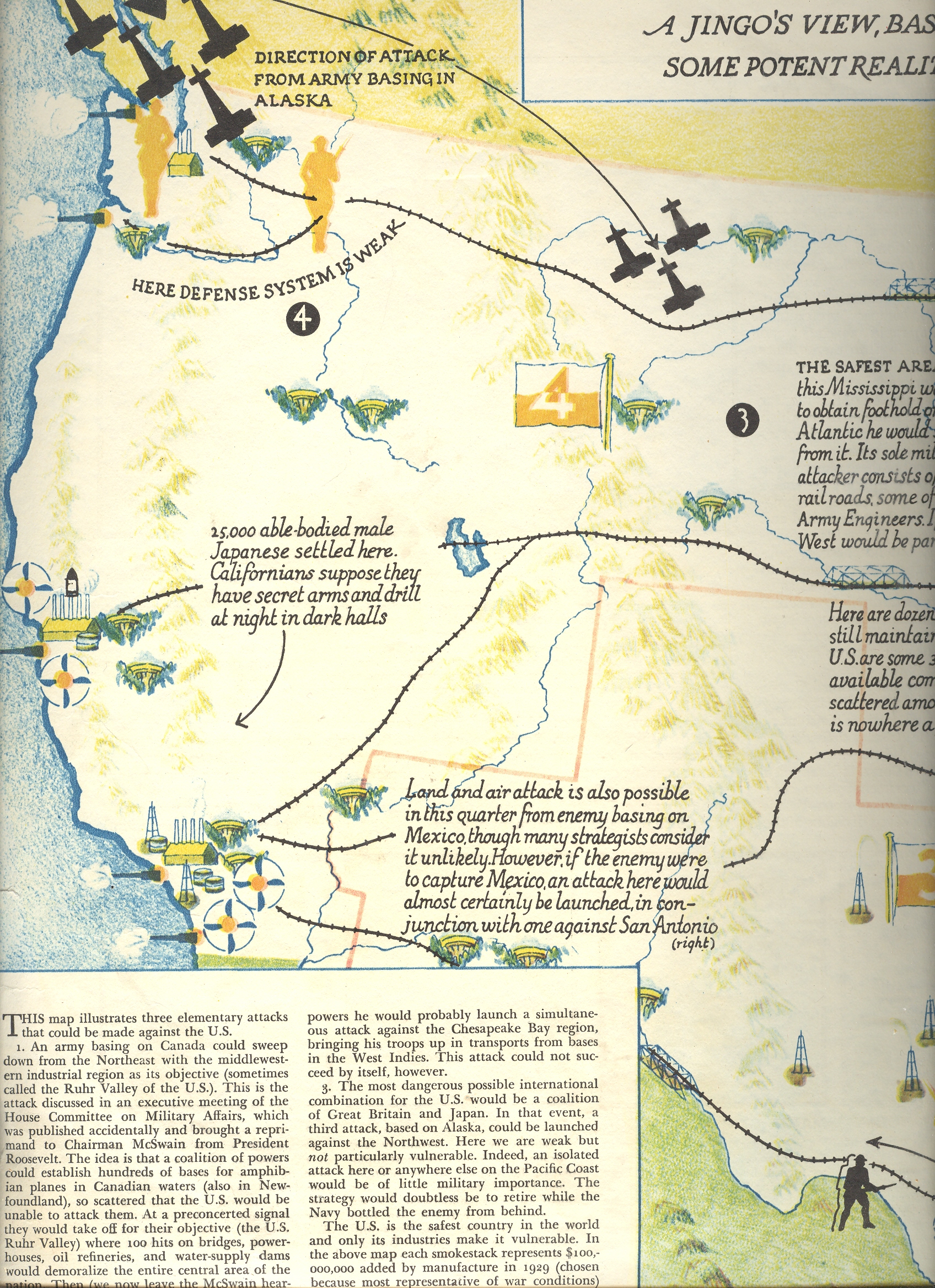
    Blog jan 4 us attacked west

    Lesser
    known are the U.S. military’s
    preparation for the invasion of America.

    This
    two-page spread (all that I have of a longer article) appeared in Fortune
    Magazine for September 1935.  It was undoubtedly generated
    by a number of causes, not the least of which was the rearming of Nazi Germany (referred
    to in this article as a ‘miracle”), which could theoretically cause some amount
    of concern in semi-fortress America.  It was also an opportunity for Chief of Staff
    General Douglas MacArthur to whip up a little hell in Congress for the federal
    government to give the military some more money so that there was more to the “fortress”
    part of America
    than two oceans. 

    Basically
    the plan seems to call for a standing, ready army of specialist forces that
    were agile and highly trained, a large network, of anti-aircraft batteries and detection
    areas, and of course a large buildup of the Army Air Force.  All of this of course cost money, and almost
    all o fit would’ve been directed towards MacArthur and his subordinates. (It is
    interesting and odd to note that the Fortune article notes that three of the
    top four major general assistants to MacArthur were Irish (“see the four big
    shots…with three Irish names”).)

    [Due
    to difficulties in the size of this map I have to present it in three sections,
    but I’m sure that the overall flavor will be maintained.] 

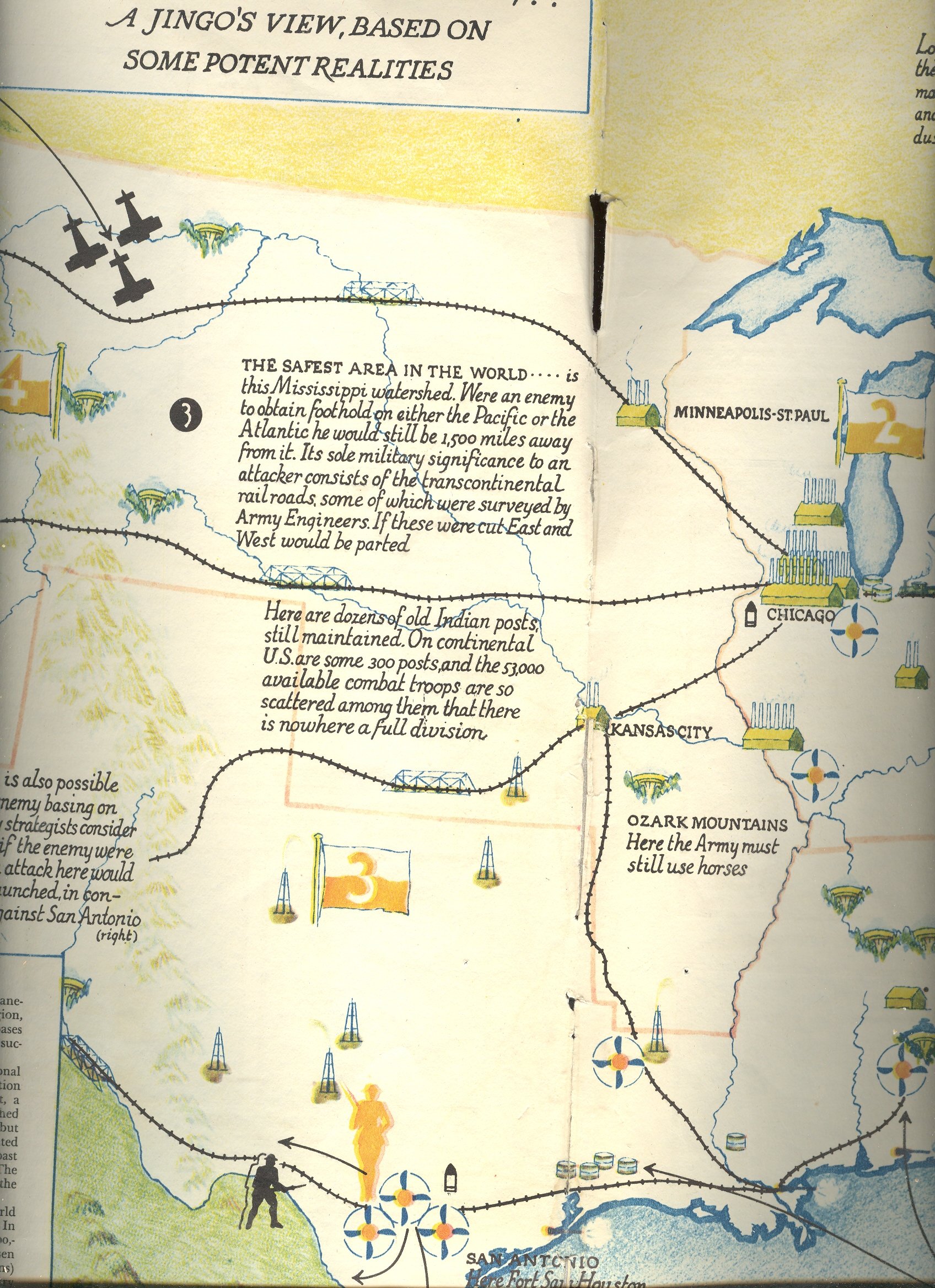
    Blog jan 4 us attacked middle

    The most prominent feature (besides the black
    invasion routes) are the terribly antiquated (even for 1936?) depictions of
    coastal defense canons.  Perhaps this was
    disingenuous to include them with such flair, what with the main point of the
    article lending itself towards air invasion, but there they are, protecting the
    American coastline from a ripping adventure from the sea. 

    But
    as we can see the successful invasion routes are coming from odd places—from Alaska,
    Canada, the Caribbean) against which the U.S. seemingly had no defense.  This was especially true in the Pacific
    Northwest (“here defense system is weak”) where America
    was entirely susceptible to attack and invasion “from army basing in Alaska”.  The rest of the west coast didn’t fair so
    well, though the only other direct threat was from “25,000 able-bodied male
    Japanese…Californians suppose they have secret arms and drill at night in dark
    halls”.

    The
    southwestern and southern California areas
    were relatively secure, except in the case of an enemy capturing Mexico; then, “an attack here would almost certainly
    be launched, in conjunction with one against San Antonio”. 
    I guess there would be long intrigue, much preparation and enormous
    effort to attack and secure Mexico,
    and I’m assuming that the thinkers behind constructing this map assumed that the
    U.S.
    would be doing nothing during this prolonged period of time. 

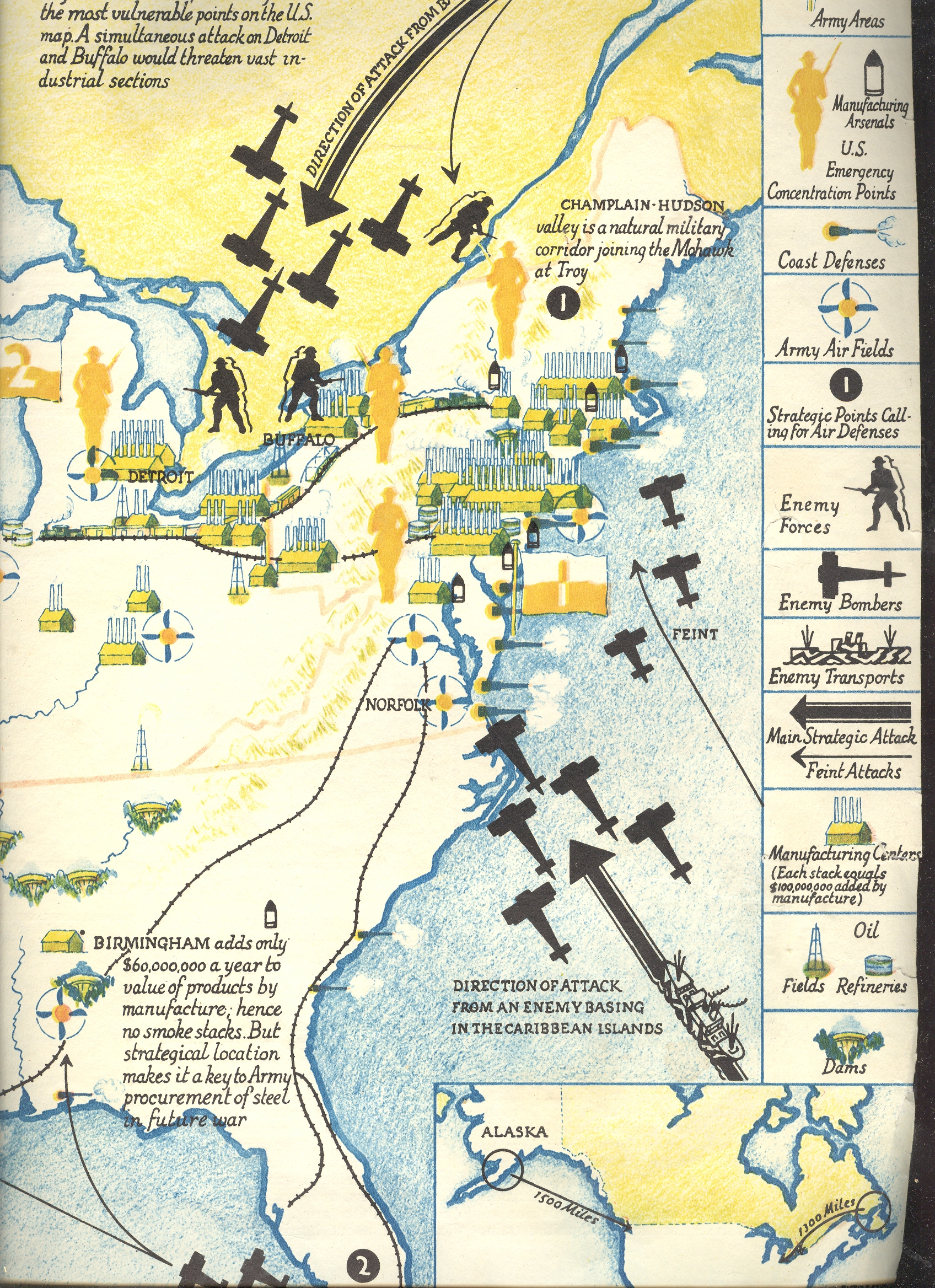
    Blog jan 4 attack east

    The
    attack on America in the
    Gulf would ostensibly come from Mexico
    and “an enemy basing in the Caribbean”, with a central interest in Birmingham and Norfolk.  But the main thrust coming to the U.S. from unnamed horribleness would be coming
    through the St. Lawrence and points east in Canada, swooping down on Lake
    Champlain, the Mohawk Valley, Troy, Buffalo and Detroit.  I know that there were bigger industrial
    concerns in these places in 1936 than there are now, but, well, my god there
    would be better places to begin an attack on the U.S.
    than from Montreal and Toronto.

    In
    all of this I see that the industrial northeast is left alone, save for a “feint”
    attack to dislodge resources and attention away from the movement against the Virginia coast. There’s
    the navy yard and industry and shipping and etc. there, but it would seem a
    terrible waste to attack here rather than a much juicer and more northerly
    series of prizes. 

    No
    attacker is named in what I own of this article, and there is a very curious
    absence of any threat coming from the already-warring Japan (save for
    the Japanese super secret nighthawks in San Fran).  The article does make a case—apart from the
    map—that national defense was at a low ebb insofar as manpower and ordnance
    were concerned.  But it scoots around the
    issue of the war of Japan
    against China
    and the vast militarization of the Nazis. 
    (Of course, this is Fortune magazine, and Krupp and Hoechst and other German firms, and Standard Oil, and the Bank for International Settlement, and Ford, and SKF, and etc. abetting
    the Nazi war machine were doing some nice business in the U.S., so perhaps it
    would’ve been best not to make Nazi money upset with some bad press.)

    Taking
    all sorts and manner of considerations into account, this is just simply a
    miserable attempt to reckon what the future might bring to America in the
    hands of unlabeled enemies—it is simply a rousing caroling of general fear of
    attack from places unknown. 


  • The Coming Sex War of 1919

    JF Ptak Science Books LLC  Post 920
    Blog jan 27 women votes
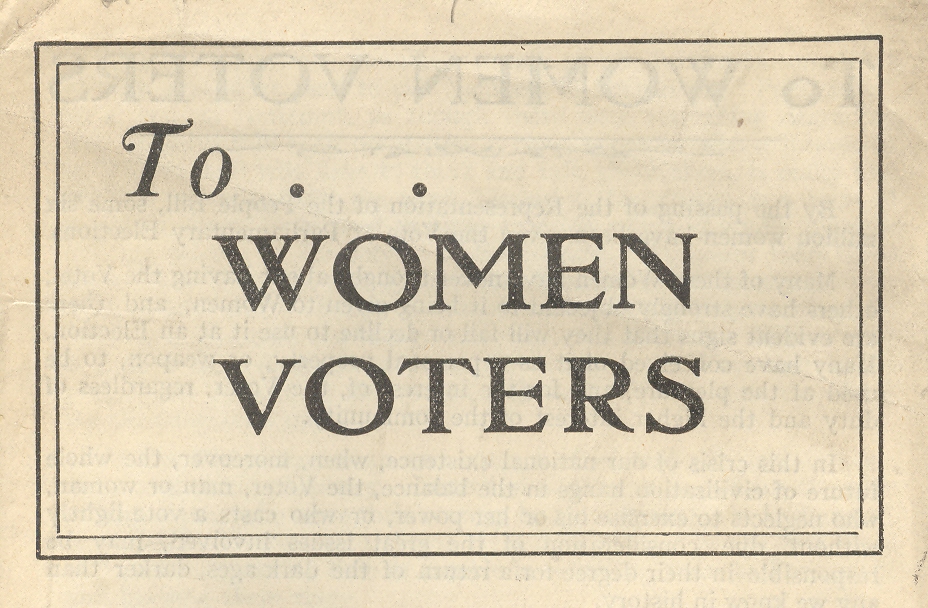
    This slight, four-page pamphlet was a flare to the newly enfranchised women of Great Britain1,  a very-shakily congratulatory bit with wide, sniffy overtones of vast male superiority.  The author takes the intended (female) reader at a very slow, almost-stopped pace about what voting is all about, turning down the rhetoric to explain what a vote “is”.  Not only that, but the following as well:
    “It seems, therefore, important to give as simply as possible a brief sketch of:
    (1)    What Politics are. [Politics is the Science of Government.] (2) The Duties of Citizenship. (3) Coalition Government”.

    Just because women got the vote (or partial vote:  they had top be over thirty years of age and have property or be
    married to a man with property; full voting rights devoid of property requirements didn’t come in until 1928) didn’t
    mean that they enjoyed a relaxation of their inferior social caste. The social consciousness of the status of women may have been slightly fragmented in 1918/19, but only enough to introduce them to the world of politics as you would a child—at least as far as this pamphlet is concerned2.

    But this work comes around a bit, retracting its insulting narrative somewhat by the end of the pamphlet, as what the writer really wanted was to snag a bunch of these women to vote for the Coalition Candidate, Mr. Lloyd George, in the General Election of December 1918.  Their votes were definitely wanted, and the need was addressed, if not without a little fear that women would retract themselves and form their won party. The pamphlet states:

    “If the Voters are mean and corrupt, they will get what they deserve…There is a movement among women at the present time, especially among those who were most active in working for the Vote, to refuse to join any of the old political Associations, but to form a Women’s Party or Federation of Women. Such a step is to be very much regretted, for it will certainly lead to a sort of sex war, men and women being divided into opposite camps, each fighting for their selfish ends.” 

    Assuring women of what a “vote” and “politics” are, and demanding that the priorities of “women’s political parties” would lead to a “sex war”, the author blandly asks his (!) readers to vote for Lloyd George.

    Notes

    1. The countries granting partial or full voting
      rights to women prior to the U.S (1920) include:  New Zealand (full voting privileges),
      1893; Australia, 1902 (partial); Finland, 1906; Norway (able to stand for
      election); Denmark (1915); Iceland (1915); Canada (1917); Austria, Estonia,
      Georgia, Germany, Hungary, Ireland, Kyrgyzstan, Latvia, Lithuania, Poland,
      Russian Federation, United Kingdom (partial) (1918);  Belarus, Belgium , Luxembourg, Netherlands,
      Ukraine (1919); Albania, Czech Republic, Slovakia, United States of
      America (1920).
    2.  As
      beautiful a thinker as
      Darwin
      was his mind regarding women of the mid-Victorian age was pretty modest,
      treating his own wife as a sort of advanced child.  She never did get a key to the key
      cabinet at
      Downs…

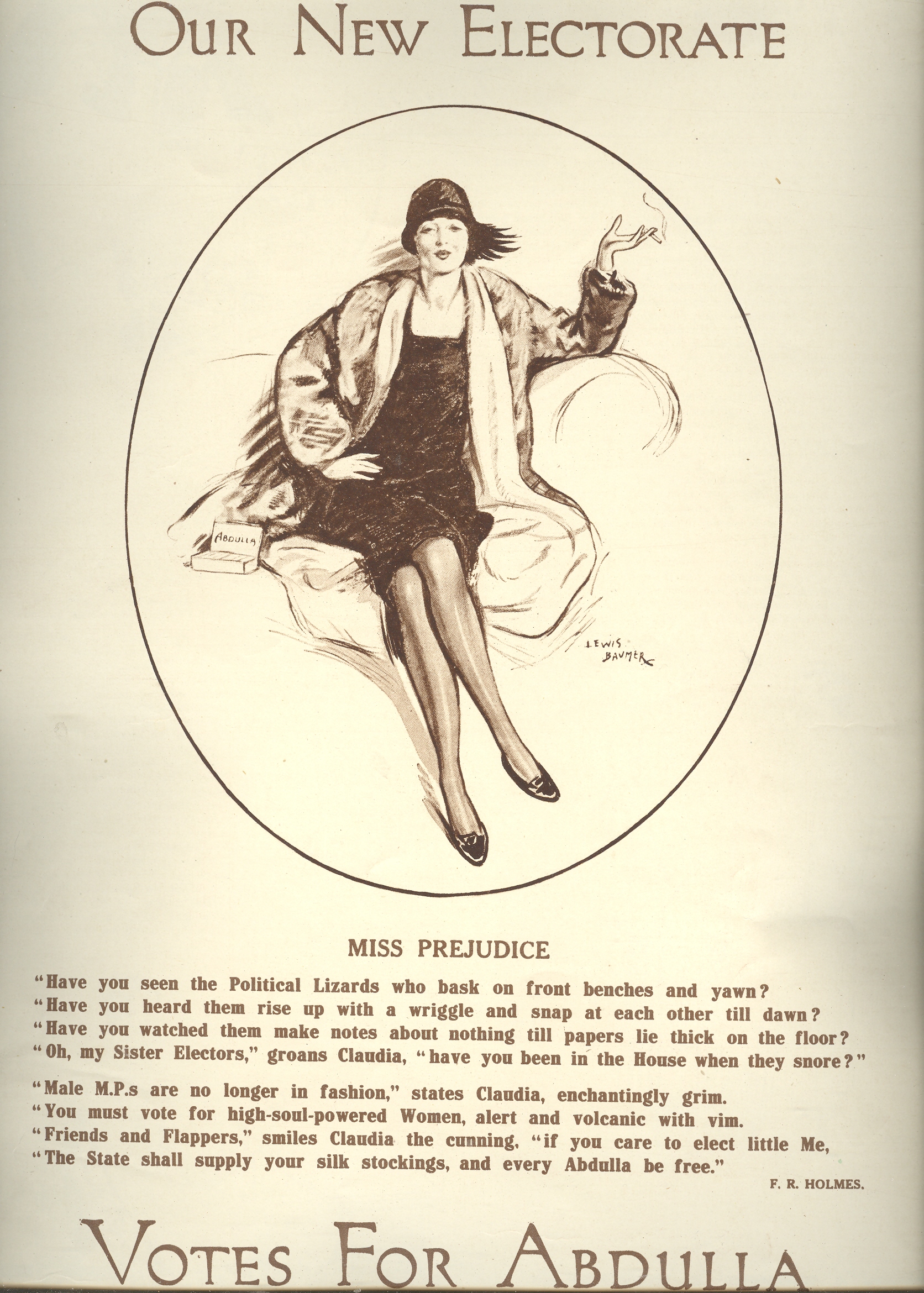
    (I should point out an earlier post that I made about the coming equality of women in voting and lung cancer, “Deathly Equality: Liberty, Lung Cancer and Women’s Rights“.)

    Blog--june 23 electorate


  • Killing London with the Future: City Planning with the Bressey Report, 1937

    JF Ptak Science Books   Post 920

    Sir Charles Bressey
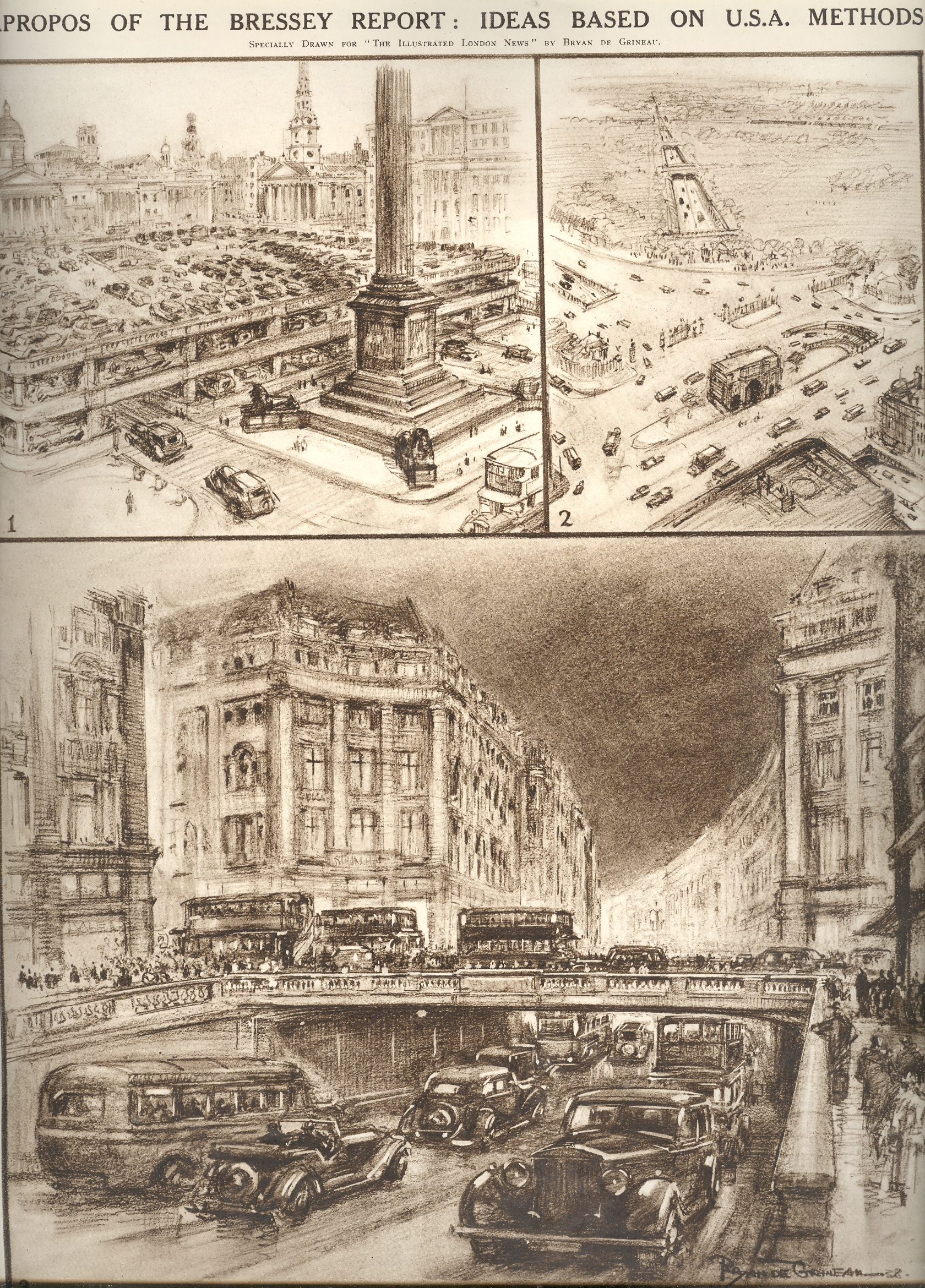
    didn’t really try to “kill” London, of course, though parts of his Greater London plan for redirecting and accommodating increasing vehicular traffic certainly would’ve destroyed some great beauty had some of his suggestions been implemented.

    Blog jan 25 traffalgar

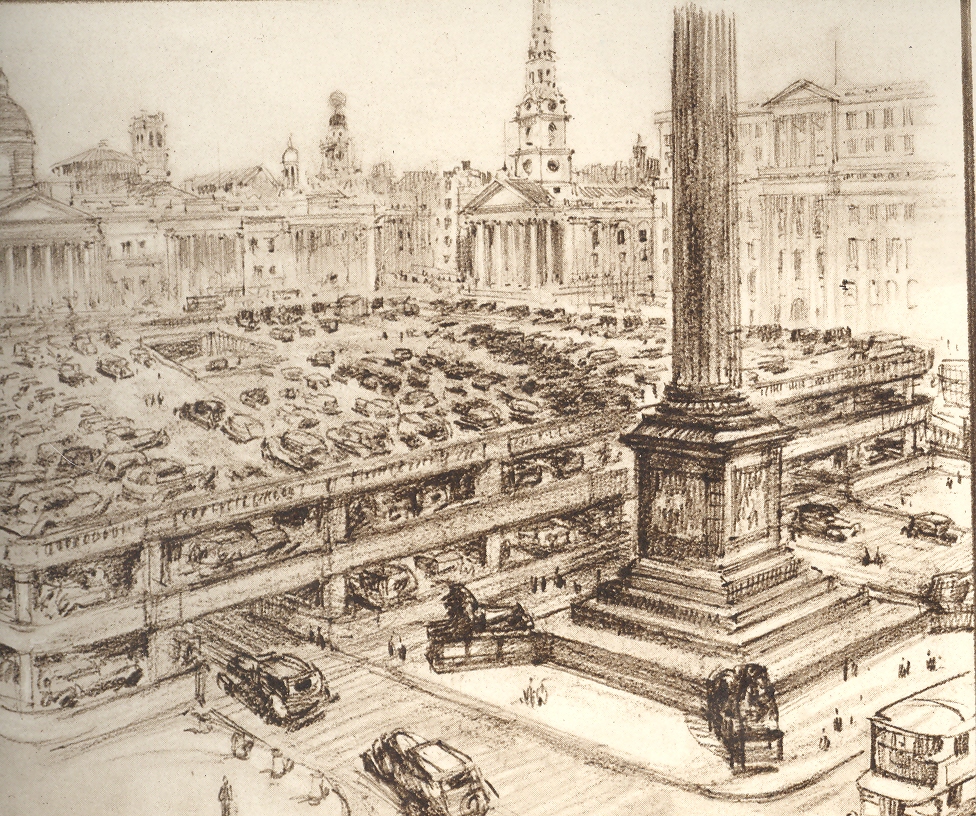
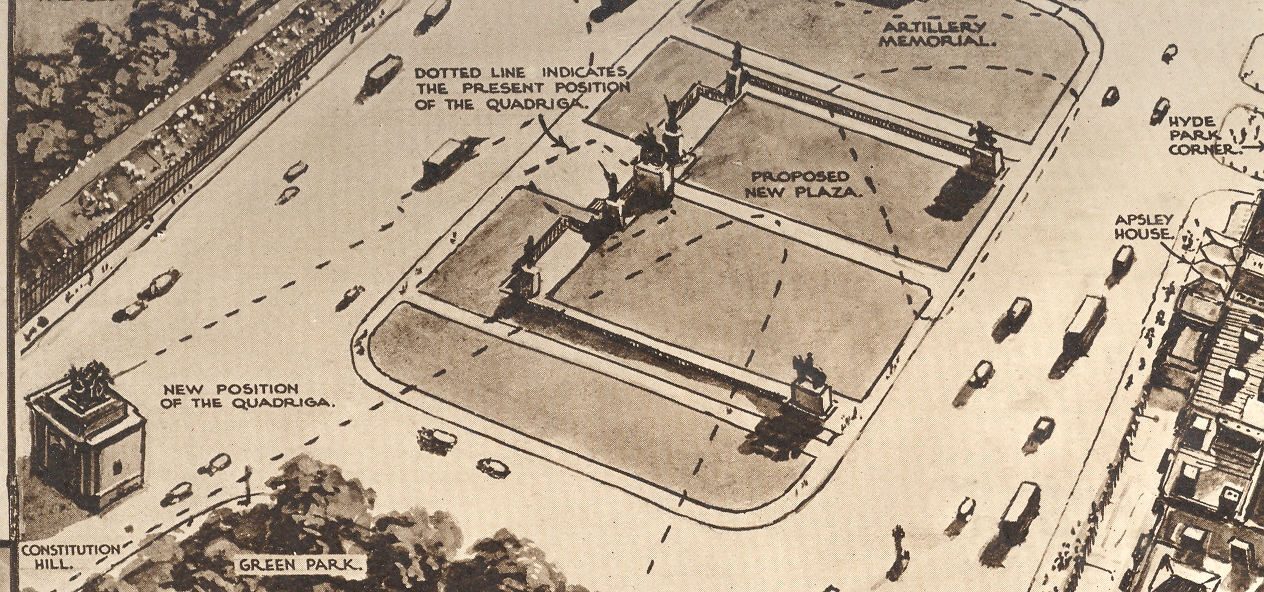
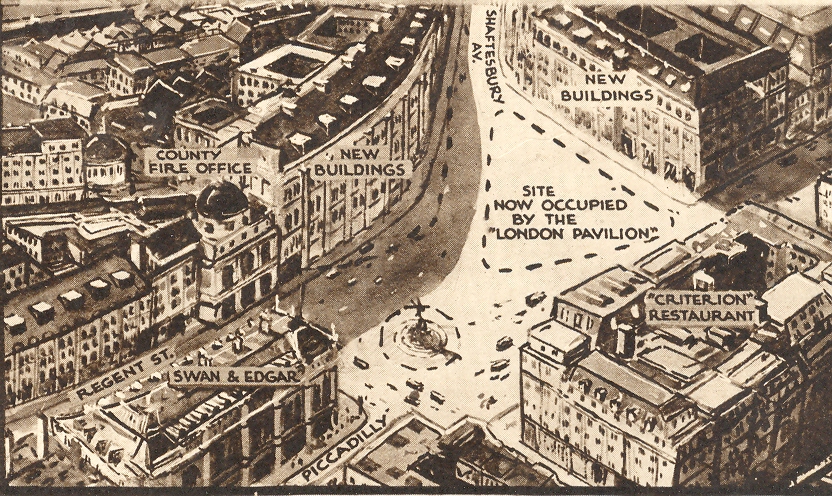
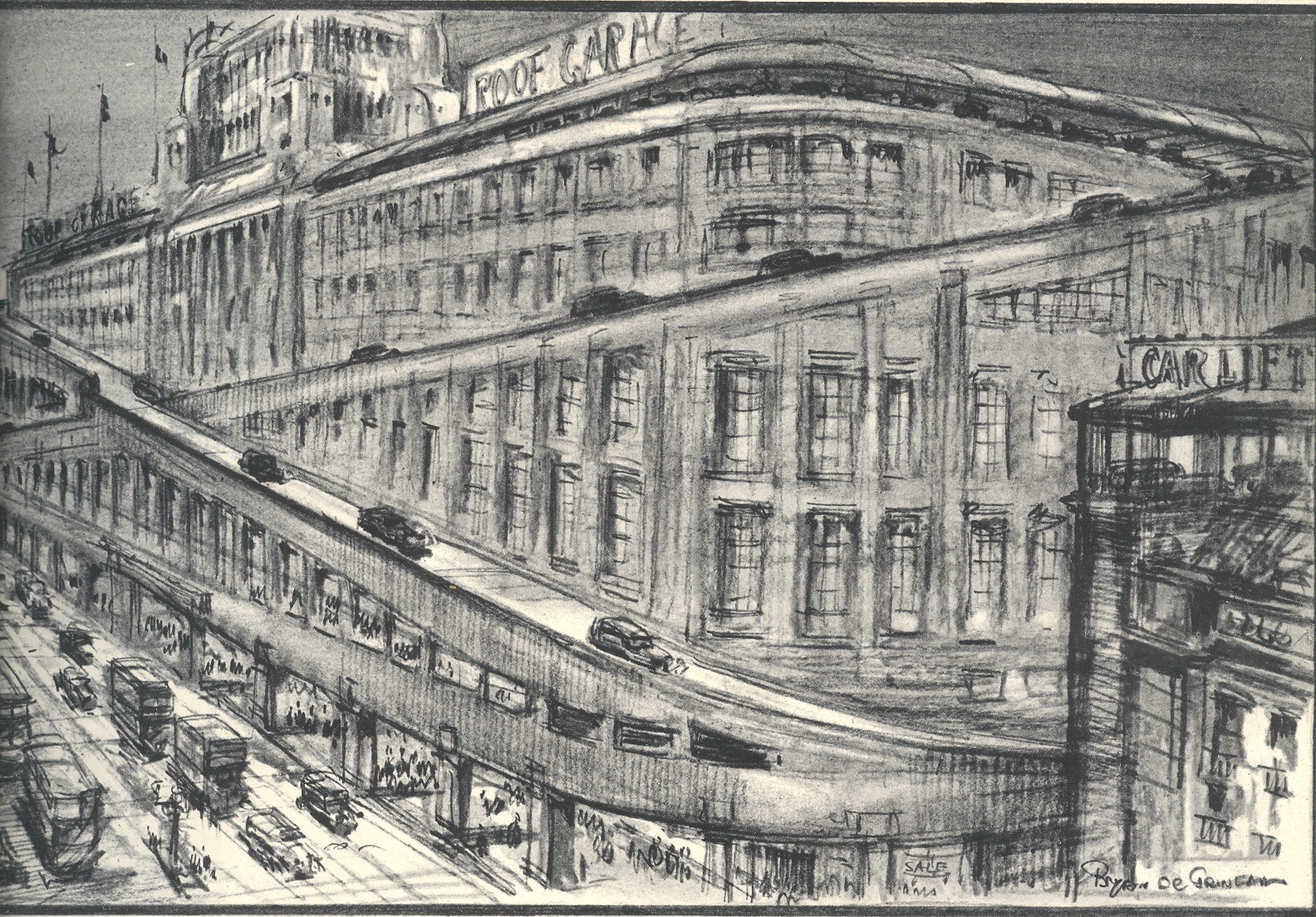
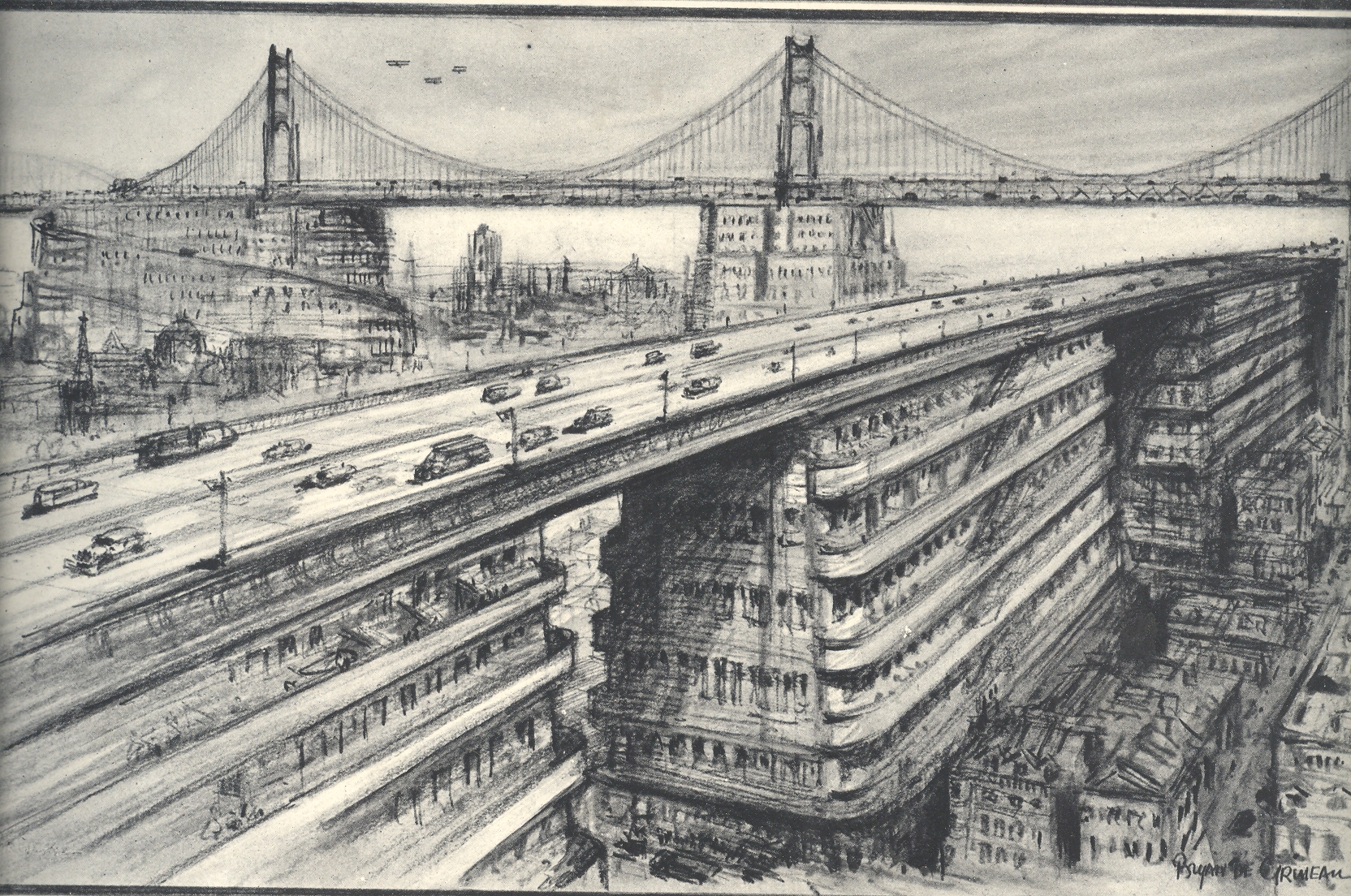
    I have no doubt that Sir Charles was on the right path to something, here and there, but all I have access to regarding his work appears as an article in The Illustrated London News (28 May 1938), and much of it looks like a absurdo-horror/sci-fi setting for a film by Terry Gilliam or Tim Burton.  I can hear the noise of this city, and it ain’t pretty:  a road through Hyde Park, floating pontoon car parks in the Thames, , elevated highways sitting on top of apartment buildings, removing Piccadilly “Circus”, removing the “park” part of Hyde Park, and so on.

    (Very slightly related is this post from 2008 featuring a self-defence plan that would semi-encapsulate London (1938))

    And so I’ll pass along these images of “traffic improvements” without too much comment, letting them speak for themselves.

    Trafalgar Square as a triple-decker parking deck. (What can one say?)

    Blog jan 25 traffalgar det


    Hyde Park, with a semi-submerged road cutting through the heart of the place.

    Blog jan 26 lhyde park

    Blog jan 26 lpicadi circus 


    Blog jan 26 london bottom right

    Blog jan 26 london bottom left 


  • When Civilians Aren’t Civilians: Blowing Up Bomb-Proof Cities, 1927-1934.

    JF Ptak Science Books LLC  Post 915

    We’re a few days past the 95th anniversary of the
    first aerial bombing of a city, the first in the long and unhappy calculus of
    eliminating things and people in civilized settings  by dropping high explosives (and etc.) on them
    from the air. 19 January 1915 saw the first bombs dropped from an airship
    during WWI, two German Zeppelins lighting up Great Yarmouth, Sheringham and
    King’s Lynn in the U.K.—the
    physical and strategic outcomes were minimal; the psychological and
    intellectual aspects were not.

    Blog jan 21 bomb rproof 1927 attack The effectiveness and temerity of bombing escalated
    exponentially–virally by the end of WWII. Aerial bombing’s future
    effectiveness and devastating potential was recognized by the early 1920’s, particularly
     in the form of the Hague Conference
    (1924), where the bombing of cities and civilians was theoretically controlled,
    if not outlawed.  Blog jan 21 bomb rproof 1927 attack det

    Of course the definitions of “bombing” and “cities” and “civilians”
    and “non-combatants” were very loosely writ and were completely open to
    (completely) wide interpretation in practice, and were especially liable to
    racist necessities. I should also add that the concepts of “defended” and “undefended”
    cities were—somehow—nebulous. Blog jan 21 bomb rproof 1927 gas cleaner

    An encyclopedia could no doubt be written on nothing but the
    these awful bits of bombing.  And for another example of this I turn to
    the French, who can supply more than their share, per capita, pound-for-pound,
    to this equation. No, not the French return to Indochina in 1945 (after having
    done business with the occupying Japanese forces for the entire war) and their
    resurgent colonialism as practiced against the Vietnamese, or the heinous
    practices against the Algerians just prior to that country’s
    independence:  it is their bombing practices in Damascus. Not the Syrian bombings of 1945
    (which also included many other places like Aleppo,
    Hama and etc.) but the French civilian bombings
    of Damascus in
    1925.  For it was in that year that the League of Nations found that the
    French really weren’t bombing and killing civilians indiscriminately when they
    were doing so; they were, ironically, bombing themselves, and so their actions
    were not illegal.  (It was problematic, identifying “civilians”, as the
    League didn’t necessarily grant the same sort of “humanness” to all human,
    finding categories for barbarians and savages.  It was acceptable to bomb
    those later two categories, but not the first.) So the French sought to subdue
    a rebellion against their oppressive rule in that country, identifying the
    Muslim population centers in Damascus
    as probable hotbeds of activities for the “bandits” that were causing them
    their problems.  October 18, 1925 is when this particular outrage
    occurred; the Syrians protested, and the League considered.

    Blog jan 21 bomb rproof 1935

    And that was
    about the size of the story for the Syrians, because as it turns out, the
    French were just maintaining an order that for them was a simple police action;
    civilians populations could not be bombed in the eyes of international law, if
    the bombing was being done to a foreign people; since the French were there and
    occupying the country, they were conducting a police action, and in a sense
    were merely bombing themselves, loosening them from the barriers of whatever
    international law could be applied to their actions by the League of Nations. 

     Blog jan 21 bomb rproof 1935 detail

    These are just a few examples from the French; there are
    plenty more for other countries for every decade, every year.  (The Brits in Teheran in 1924, the Italians
    at Harar in 1935, Franco/Luftwaffe in Guernica
    in 1937, the Japanese against Shanghai/Beijing/Tianjin (etc.) in 1937, and on
    and on.)

     Blog jan 21 bomb rproof 1927 pt 2

    The Big Fear of bombing from the air and the need to protect
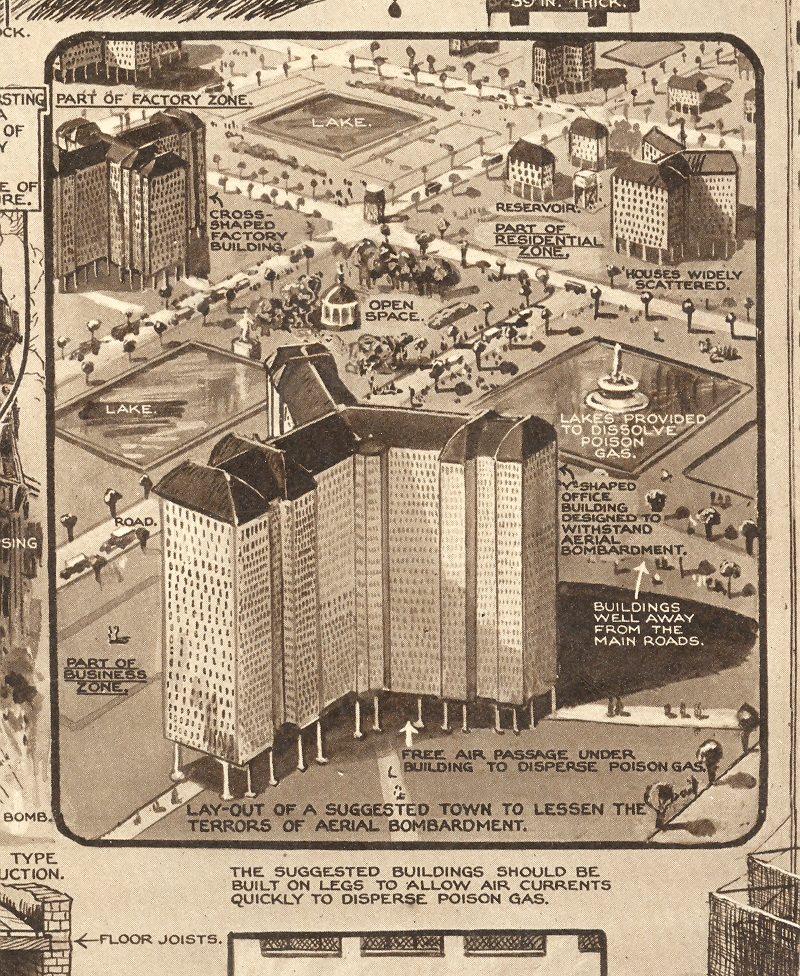
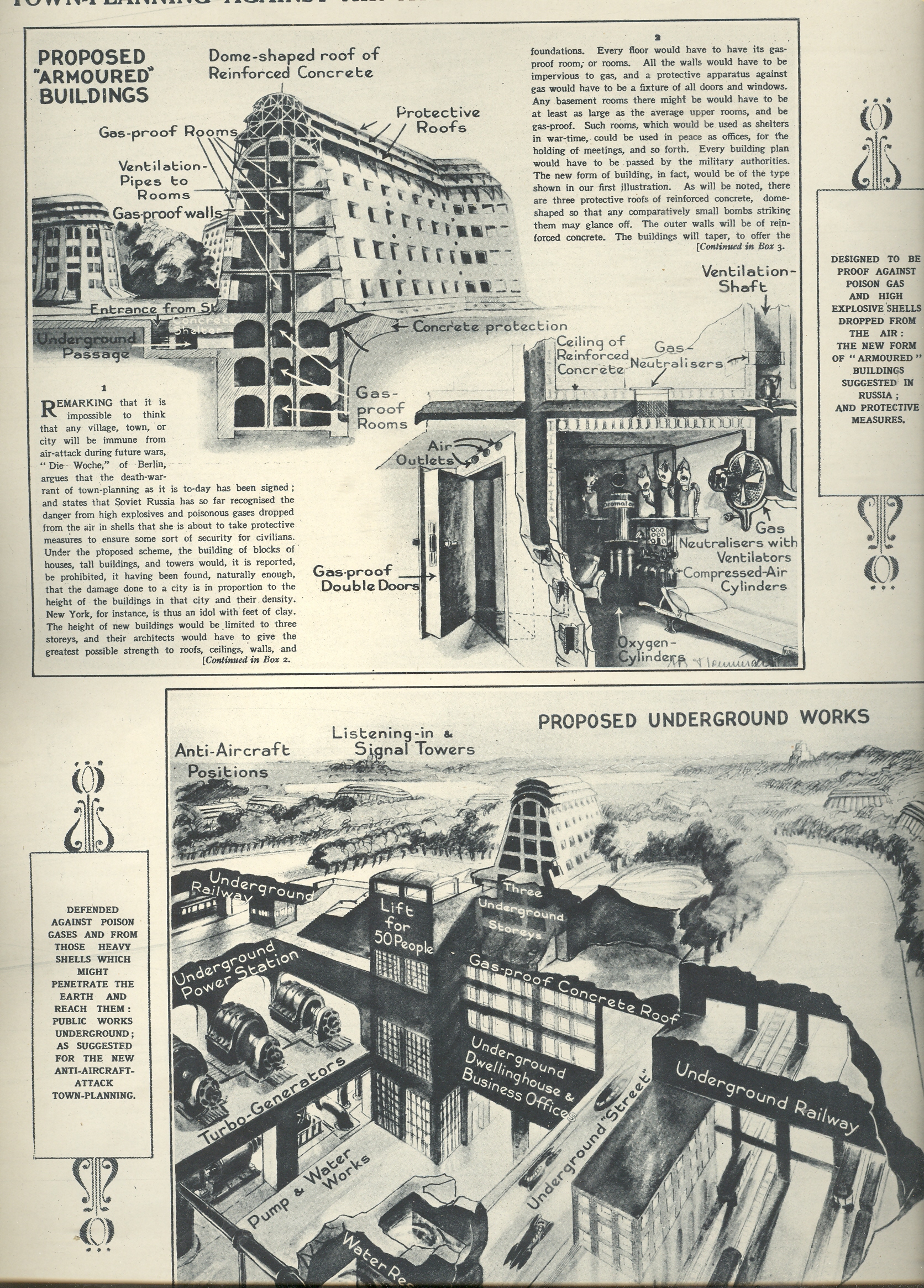
    the populations of cities led to all sorts of anti-bomb/bomb-proof
    architectural plans, most not very good and not very practical.  Such is the price of trying to make your
    people happy.  I happen to have

    a few in
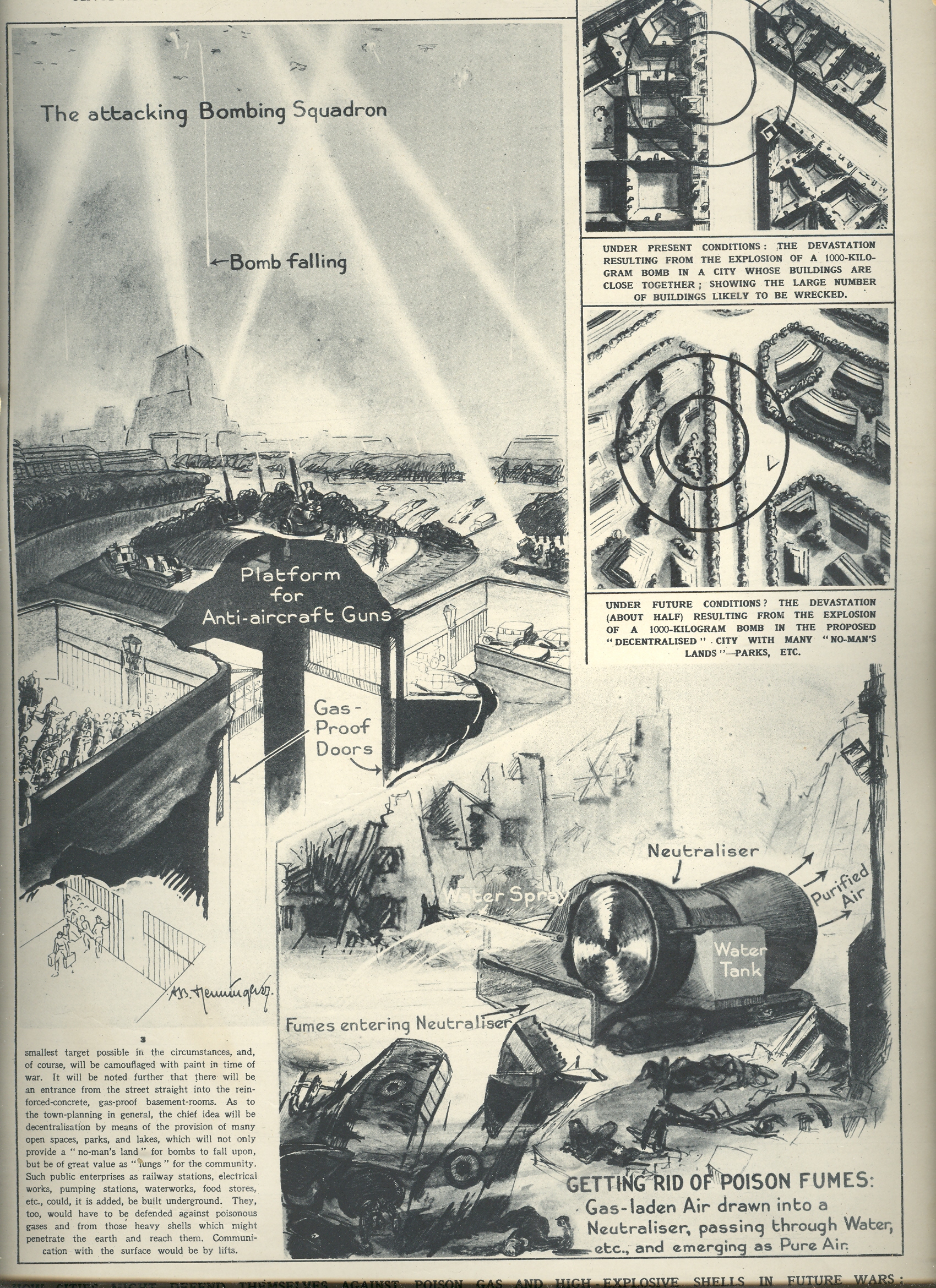
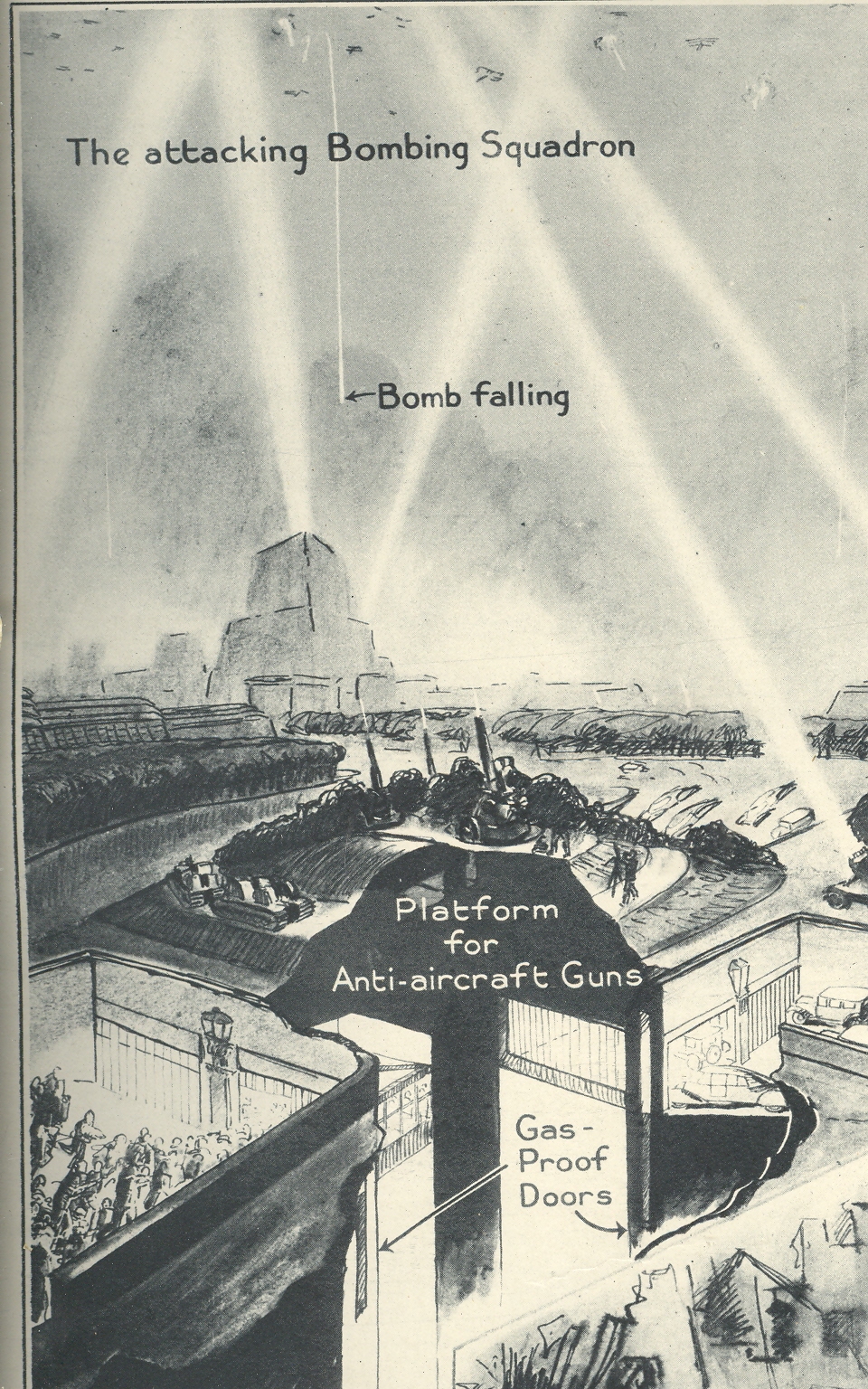
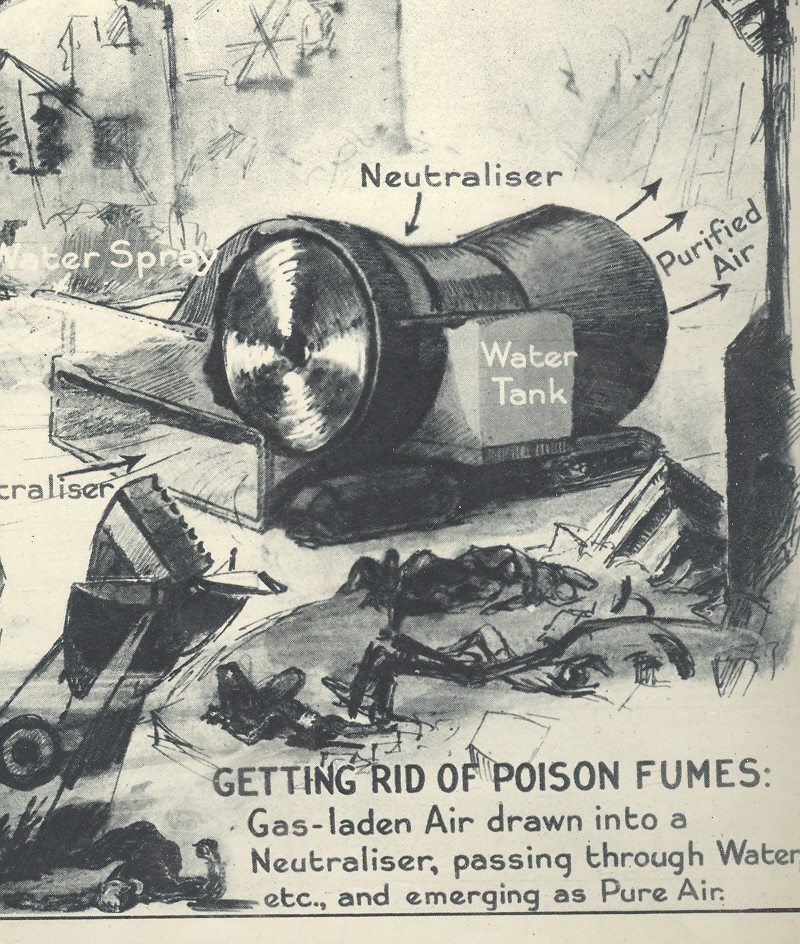
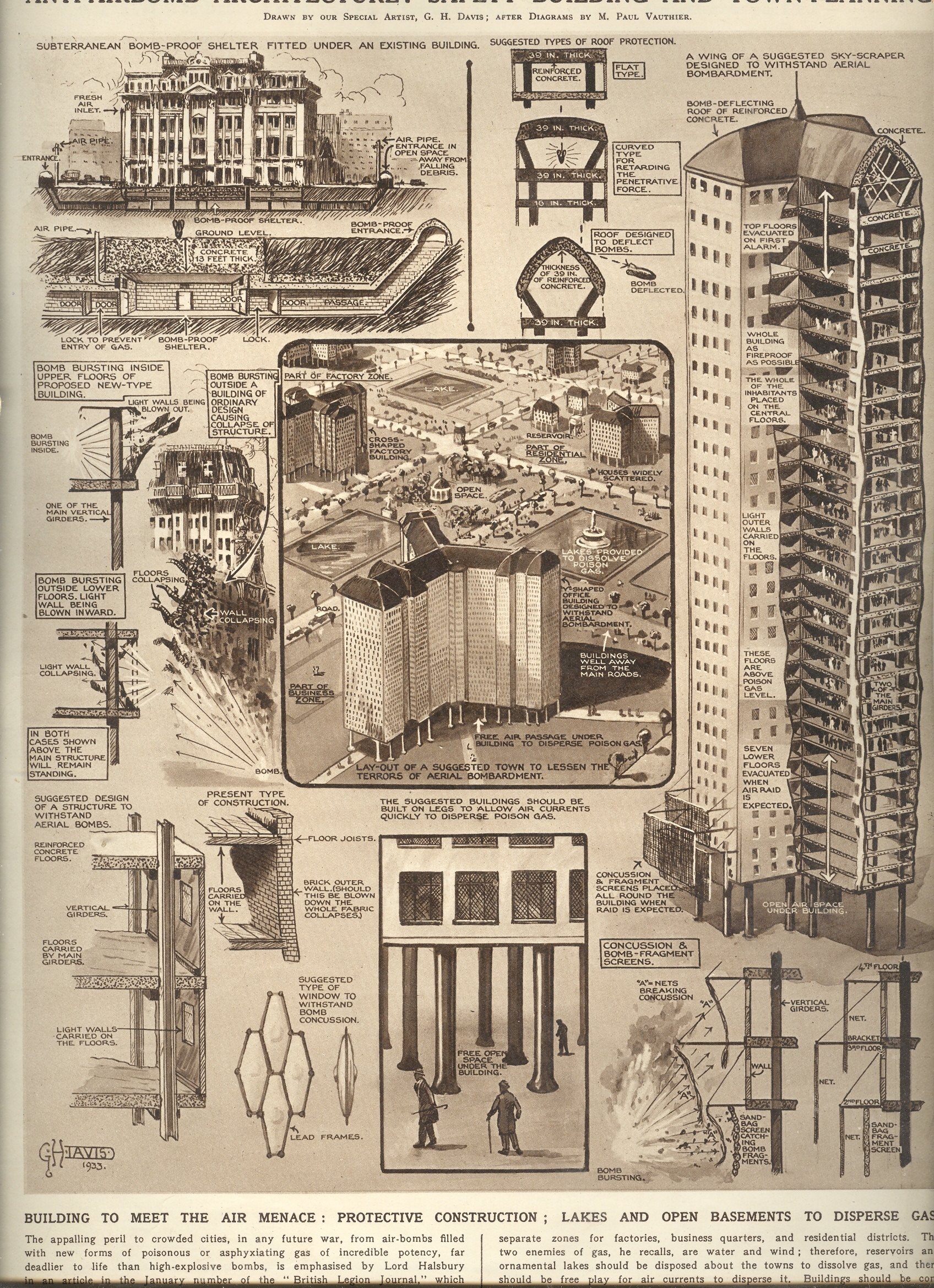
    my files, which are seen above  and below. (The top images were printed in the Illustrated London News in 134; the bottom in 1927.) The results of the plans were no doubt intended to pursue a common belief that cities could be constructed to be bomb-proof, that the future that national leaders were dragging their subjects into wasn’t necessarily as dire as the possibilities of aerial bombings hinted things might be.  Of course the resulting buildings would be massive and impossibly expensive; the prospect for underground cities (and roads!) was just a non-starter.  And these future-views would all be obsolete in less than 15 years what with the development of enormous firepower.  And I’m not talking atomic.  


  • Found Absurdist Art: 1950’s Mommy Rockets, Flannel Moon Suits & Underwater Firefighters

    JF Ptak Science Books LLC  Post 907

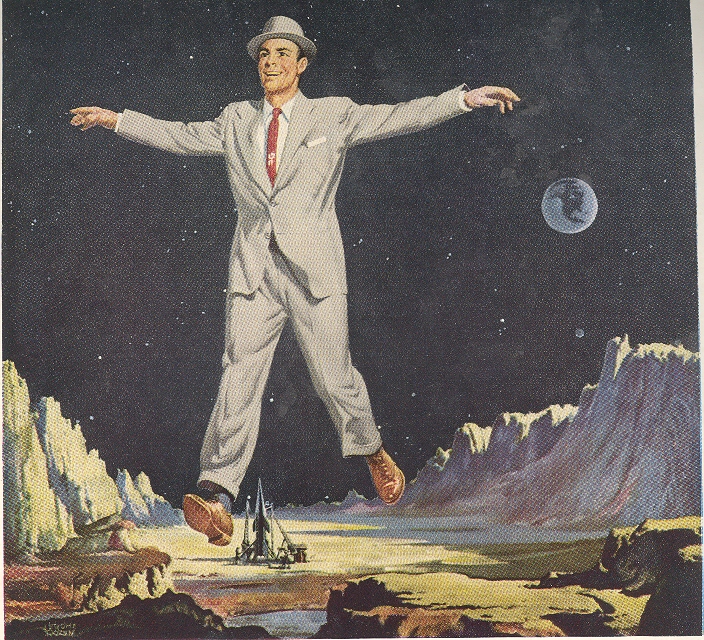
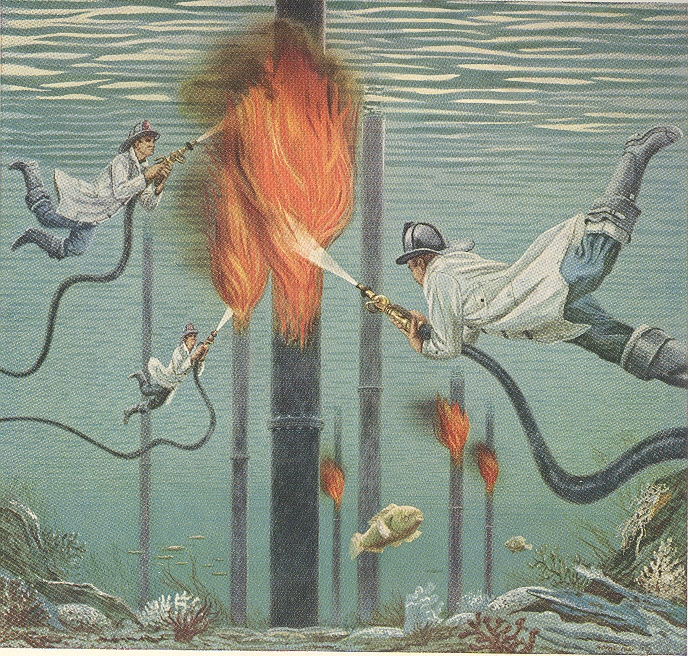
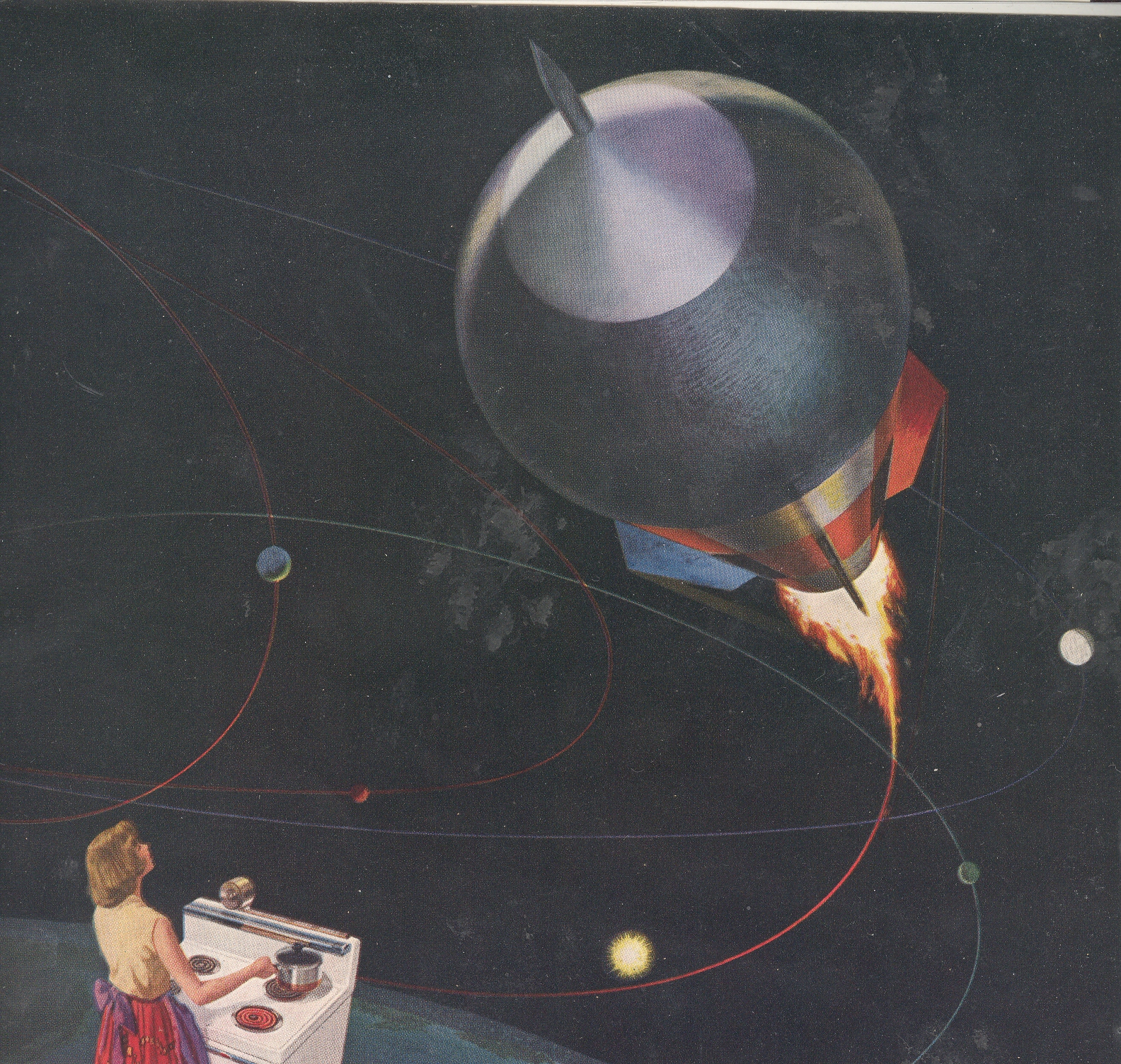
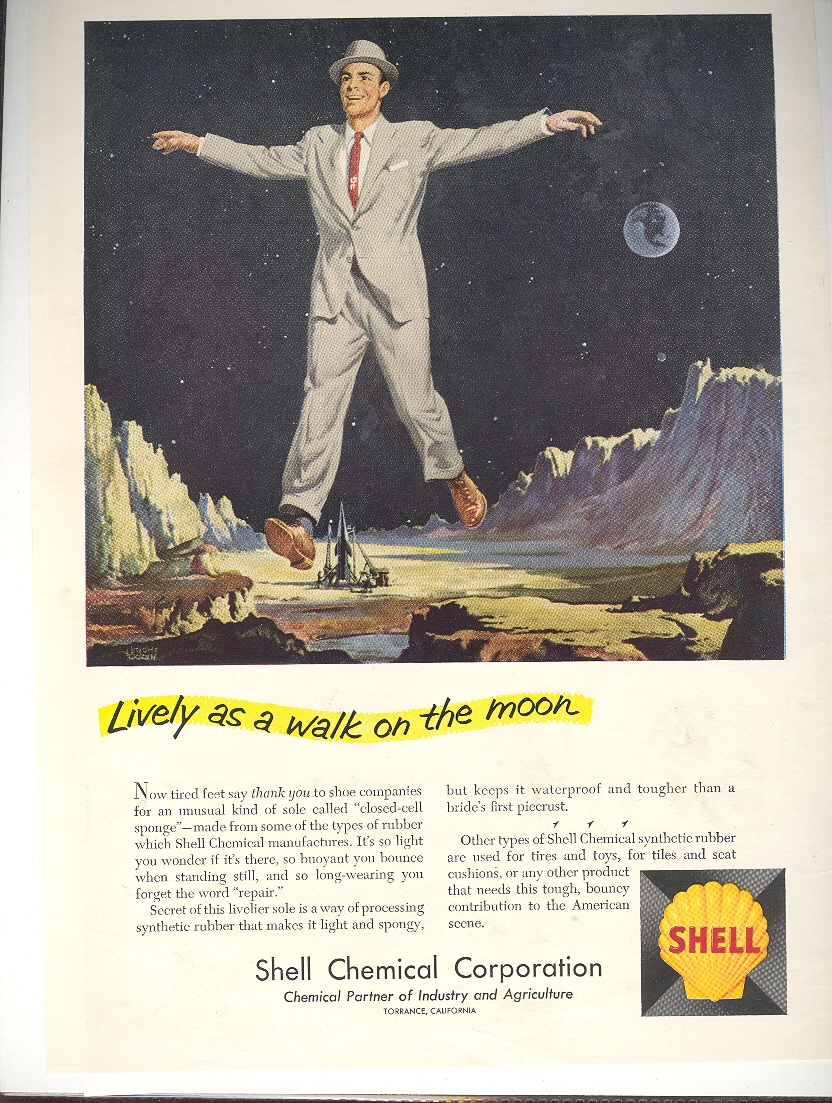
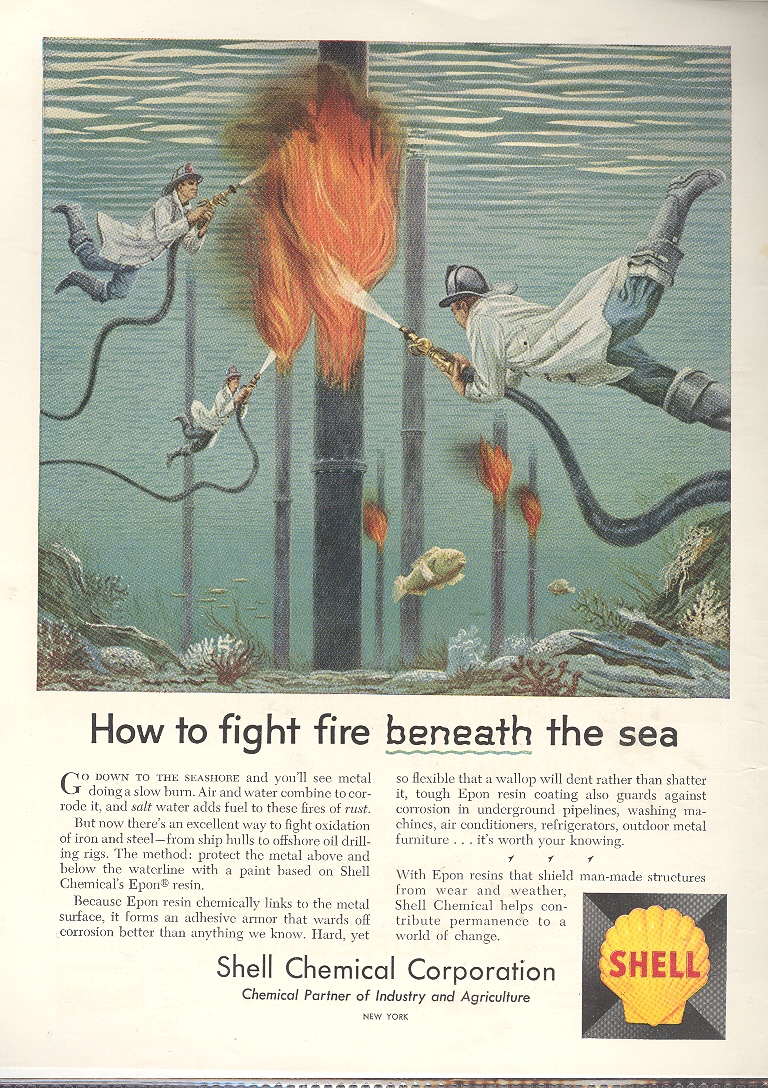
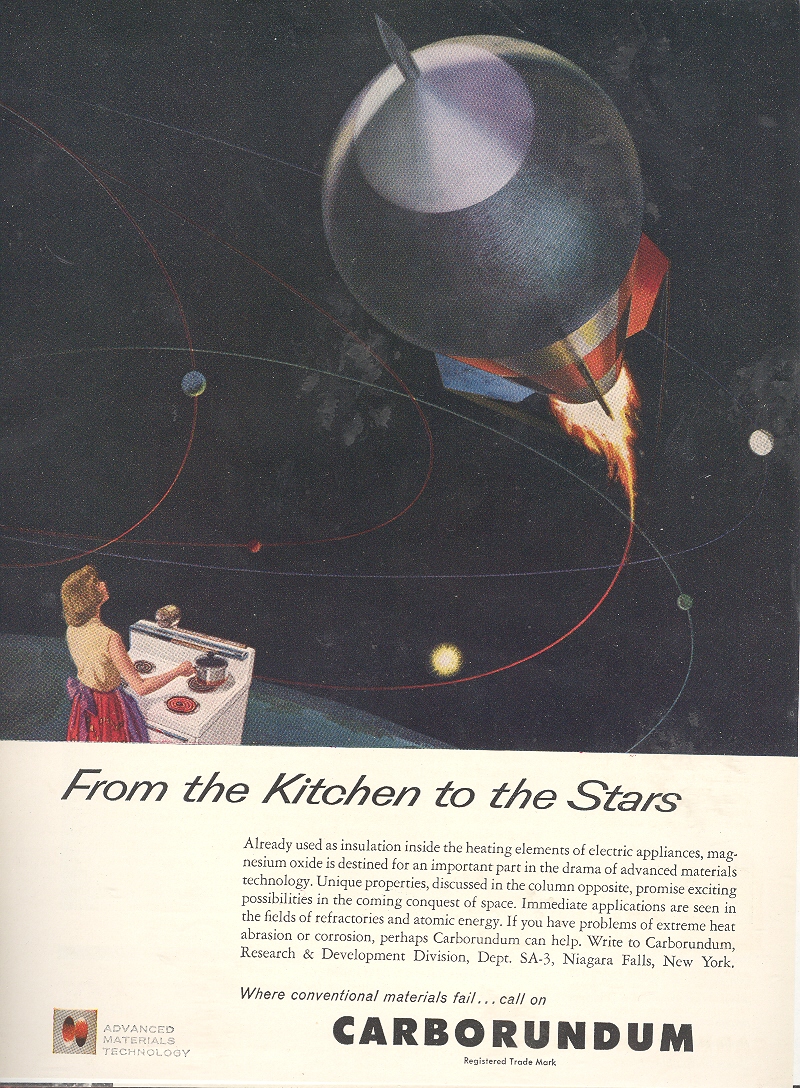
    I like Found Art categories:  Found Absurdist, Found Surrealist, Found Cubist. This is a vision of art or design produced for something specifically not absurd or surreal or cubist, but once removed from their intended environment and definers, become the thing that was beyond their specified reach.  The following examples are all from the mid-1950’s, their sources reprinted below:

    Blog jan 13 Found absurd man moon 

    And this Spongebob-like existence under water, where you can have beaches and surf and fire and etc. at the bottom of the sea:

    Blog jan 13 Found absurd underwater 

    And of course the mom at the modern electric range feeling the birth of some sort of deep outer space astronautical space travel outer  space rocket (though with no visible viewing windows which leads me to believe that perhaps no Outer Space Astronauts were on board):

    Blog jan 13 Found absurd kitchen moon 

    The image sources:

    Blog jan 13 Found absurd man moon 001 Blog jan 13 Found absurd underwater 001 

    Blog jan 13 Found absurd kitchen moon 001


  • Big Planes: Aircraft with Dining Rooms in Their Wings

    JF Ptak Science Books  Post 906

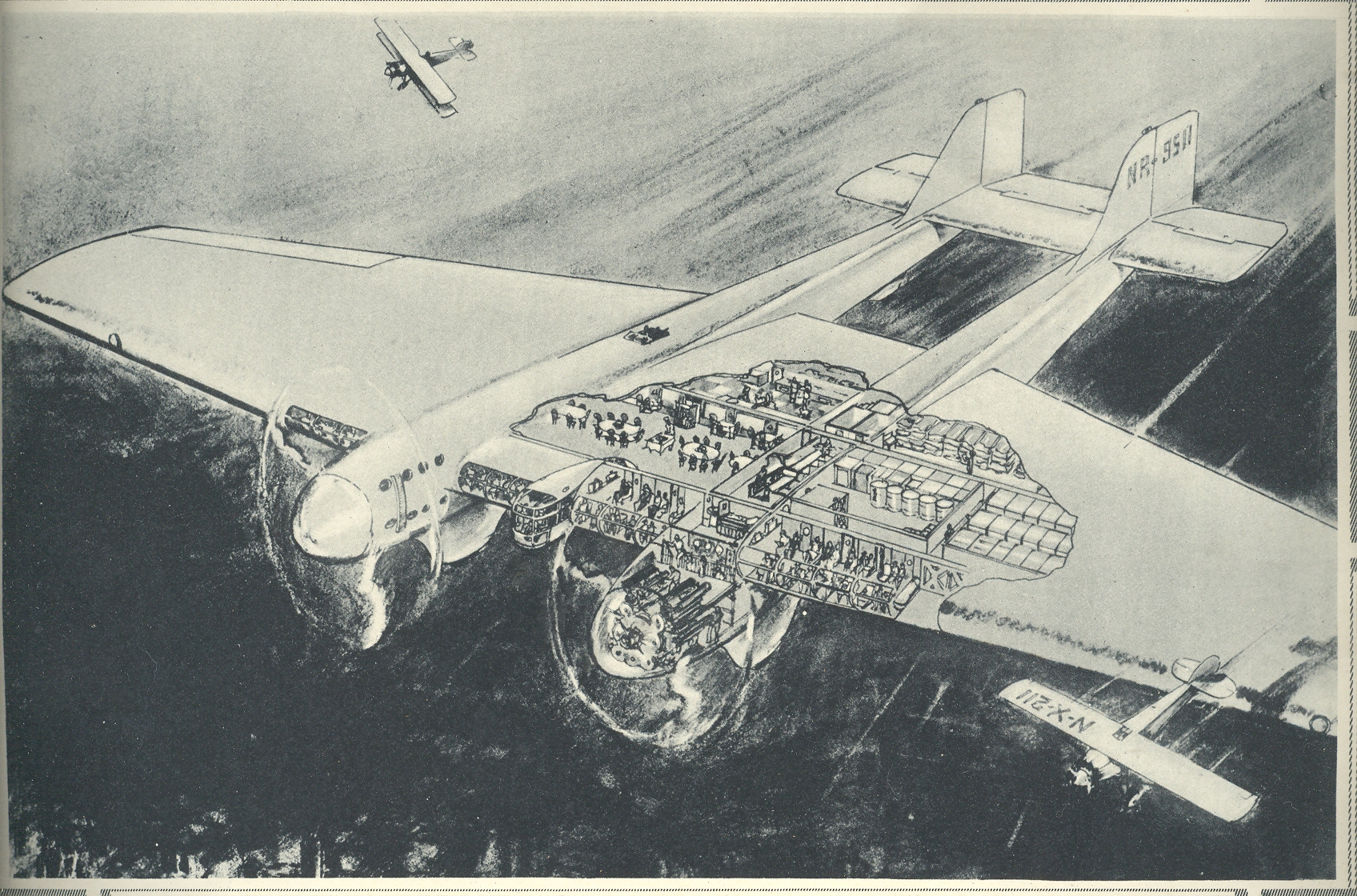
    Is it just me, or do the rest of you see Cary Grant at a teeny-tiny table when looking at this aircraft? There’s just something so horribly wonderful about the excesses washing over the passengers of high privilege in this airplane.[Source: The Illustrated London News 21 Dec 1929.] 

    Blog jan 11 big plane


    And the airplane has a name—Christmas, named for the man who provided its inspiration, Dr. William Whitney Christmas1–and was a paper plan to produce the world’s largest airplane.


    It would’ve been so by leaps and bounds.  The Christmas was to have a 262’ wingspan and a gross weight of 142,000 pounds at the time when one of the largest planes aloft—the Patrician Keystone K-78—had a wingspan of 86’ and carried 18 passenger, 2 pilots and an engineer. It also held the world’s record for hauling the heaviest payload, which for some reason was “33 girls”.  It was bigger still than the largest thing in the air, Lufthansa’s Dornier DO.X –this was an aircraft capable of moving 60-100 passengers (serviced by a crew of 10-14), a flying boat with 12 (Curtiss Conqueror 610hp) engines on wing sections 157’ long. (Was this a mile-a-minute fuel consumer?) The Dornier plane didn’t last long in service due to operating costs (1929 was a bad year to undertake an expense like this, especially in the hyperinflated Germany) and was in an aviation museum by 19342. (This plane—one of three constructed—was destroyed in a RAF bombing raid in 1943.)

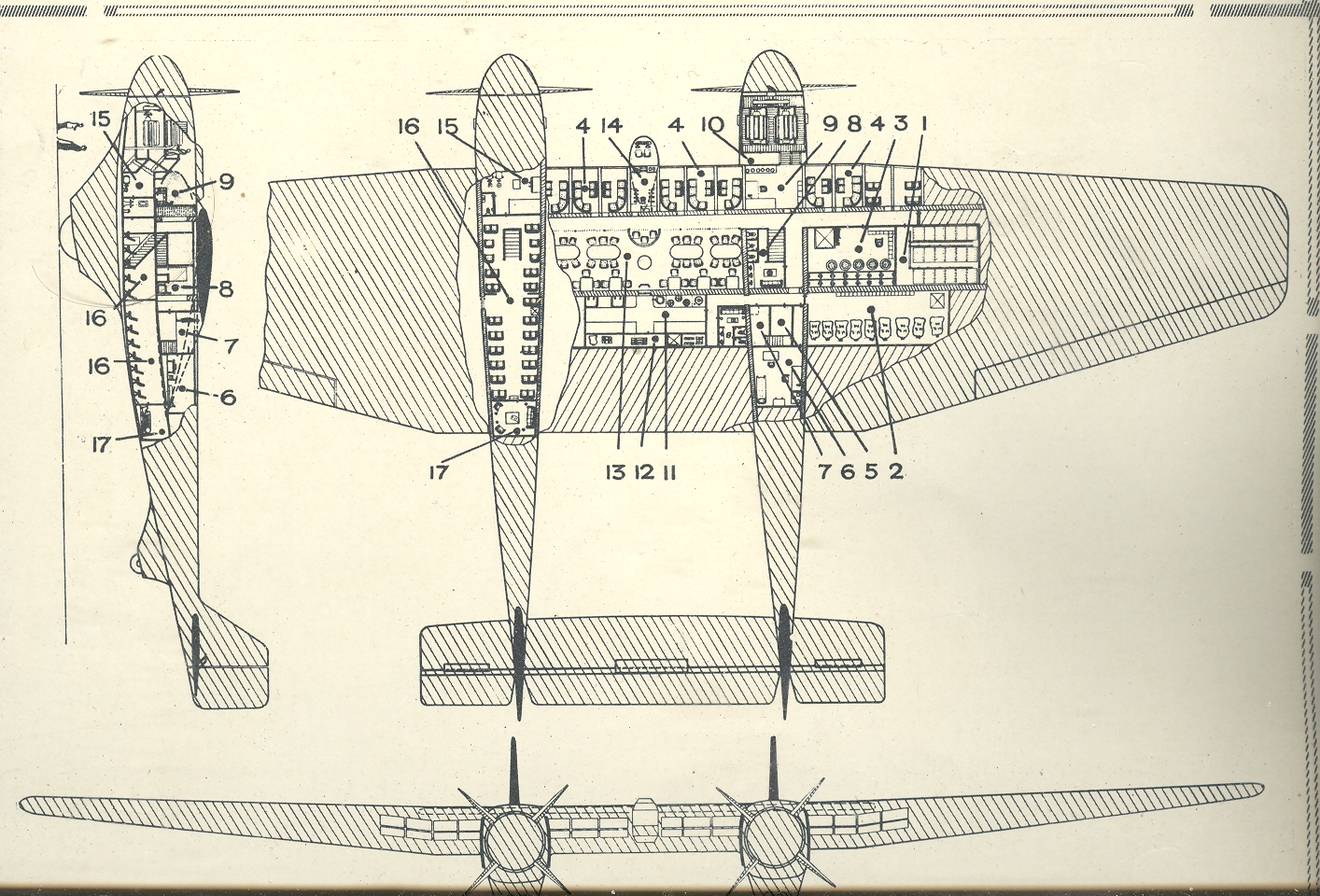
    Blog jan 11 big plane 2

    Here’s something extraordinary about the Christmas:  it had a dining room (actually, a “dining saloon”) that took up 15% of the plane’s floor plan.  There was also the spacious smoking room, the crew and officer quarters, the machinist’s shop, engine room balconies (?), and of course the staterooms that seem to run along most of the front of the plane. The side elevation shows not very much space at all allotted to what must’ve been some massive engines, seeing as how there’s only two four-blade props. (The small lateral cross section shows two people against the plane for scale—these folks must’ve been giants; I figure they should be a little more than 75% of the manikins.  I make each prop blade to be about 10 foot (?))

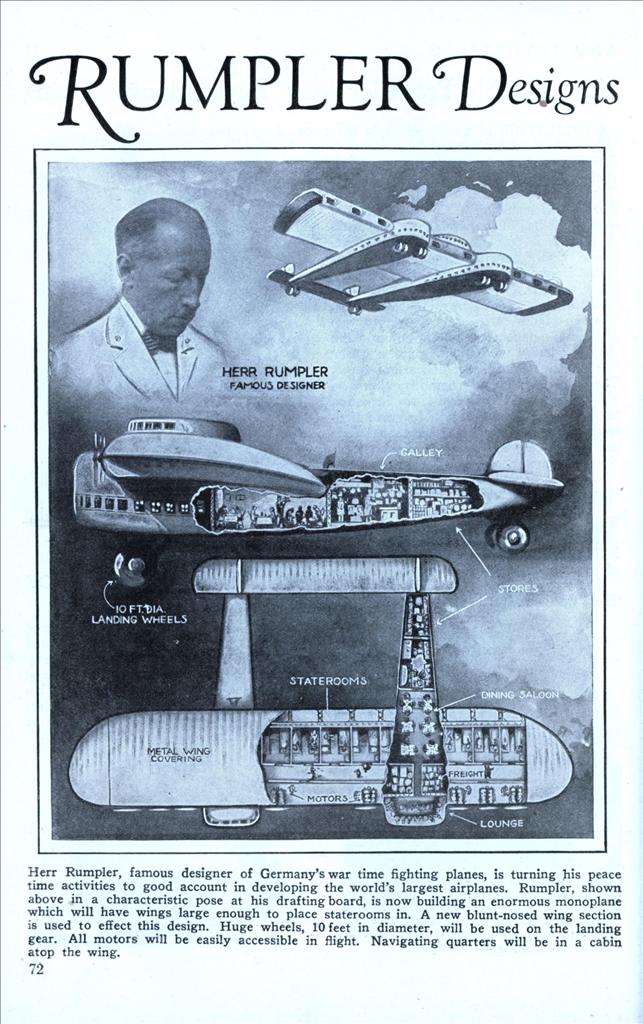
    As it turns out this aircraft looks a lot like Edmund Rumpler’s3 (1872-1940) giant.  Outfitted with a long row of staterooms along the front edge of the large wing and a huge dining room, it doesn’t seem to be equipped with an area for the engines.  Maybe this was an endemic flaw among older fast-thinkers…  

    Notes:

    1. Dr. Christmas (1865-1960) was the third American to fly and was the first to design a plane with aerilons.

    Blog jan 11 rumpler

    2. Compare this to the Antev An-225, a modern very-,limited-production monster that could haul 1.3 million pounds of cargo, and the 747 (hauling up to 900,000 pounds) and the mammoth Airbus A380—all relatively the same size but with fabulous design and power.

    3.Rumpler made very significant aeronautical contributions to the German effort in WWI, as well as designed the first aerodynamic auto—his military planes though during the war were  great triumph, partially because they were also Germany’s first mass-production-possible aircraft.  This didn’t help him much when Hitler came to power—being Jewish, Rumpler was arrested, and then released by Goering who at least could find a small part of himself to save this one Jew who served Germany so well.

    4.  Source for the Rumpler image is the wonderful ModernMechanix site here.


    Interesting comparison chart for big planes: [Source]


    Blog jan 11 aircraft size-comparison