A Daily History of Holes, Dots, Lines, Science, History, Math, Physics, Art, the Unintentional Absurd, Architecture, Maps, Data Visualization, Blank and Missing Things, and so on. |1.6 million words, 7500 images, 4.9 million hits| Press & appearances in The Times, Le Figaro, Mensa, The Economist, The Guardian, Discovery News, Slate, Le Monde, Sci American Blogs, Le Pont, and many other places… 5000+ total posts since 2008.

Category: Future, History of the

  • First and Early Impressions: Hitler, Mass Production and the Use of the Long View

    JF Ptak Science Books LLC  Post 666

    Harold, like the rest of us, had many impressions which saved him the trouble of distinct ideas  George Eliot.

    A novel is balanced between a few true impressions and the multitude of false ones that make up most of what we call life.
    Saul Bellow

    First (and other early) impressions get made once, for the very first time, and then re-invented, re-examined every time after that, especially as the first impressions start to age and get forgotten, slipping around the windsock of time.  But every so often these antique first impressions come back onto the playing field, and it is remarkable, really, what lessons can be learned of them. 

    A review of a very early biography of Adolph Hitler appeared in the pages of The Illustrated London News for 27 August 1932—this was the year before Hitler assumed formal control of the government and nine years after he began his rise to power.  The book was Hitler, by Emil Lengyel, published by Routledge in 1932; it is the subject of a very sharp-eyed review by “C.K.A” in the pages of the ILN. It was also reviewed so to speak by the Nazi leadership, which ordered that Lengyel (1898-1985) be picked up and disappeared at any early opportunity for being an enemy of the state.  Some of the interesting bits that the reviewer pulled from the Lengyel book include the following—I’ve included several here because of his particular and early insight):

    “There are no limits, however, fantastic, to which this fanaticism will not go; though what the Jews have done to Germany to deserve this frantic vendetta remains obscure.

    “It is almost incredible to Englishmen that this barbaric mania (Jew hating) should be erected to the position of a fundamental political tenet…”

    “Some of the Party principle are Olympic in their sweep and scope.  Thus:” “offenders against the interests of the community, usurers, profiteers, etc., are to be punished with death…” Much virtue in your ‘etc.”!

    “Behind all stand the emotional political impulses—repudiation of war-debts, hatred of France, hostility to the League of Nations, fanatical exaltations of race,…All this was to be expected…it is not too much to say that by the Treaty of Versailles the allies brought the Nazi movement upon themselves. The marvel is that it has been so long postponed.”

    “What Hitler’s flag stands for he has never revealed beyond irresponsible generalizations and decrepit platitudes…”

    “(On Lengyel’s Hitler):  He is a vox et praterea nihil—a shallow, paltry, neurotic person, with no constructive ability, a woodly intelligence, and little to comment except glibness and passionate prejudice. This is difficult to believe but by no means impossible.”

    “It may well be…that Hitler the man is as empty as his absurd Swastika”.
    Blog==june 26--1st impression

    The Yellow Spot, The Extermination of the Jews in Germany (1936) was the earliest printed document on the coming of the Nazi Holocaust, the earliest
    catalog on the mistreatment and systematic dehumanization of the Jews, and the
    earliest book to associate “extermination” with Nazis and the Jewish people. (The “yellow spot” part coming from the early history of racially marking Jews–it appeared first it seems in the 11th century in Islamic lands and then used periodically around Europe and the middle east for hundreds of years afterwards.  Using the Star/Shield of David seems  be a 20th century invention.)  It was also one of the earliest books on Hitler and what he represented.  (My friend Andy Moursund has published a very
    compelling poster on the early books regarding Hitler and Nazism and can be
    seen here.)  Another sort of first
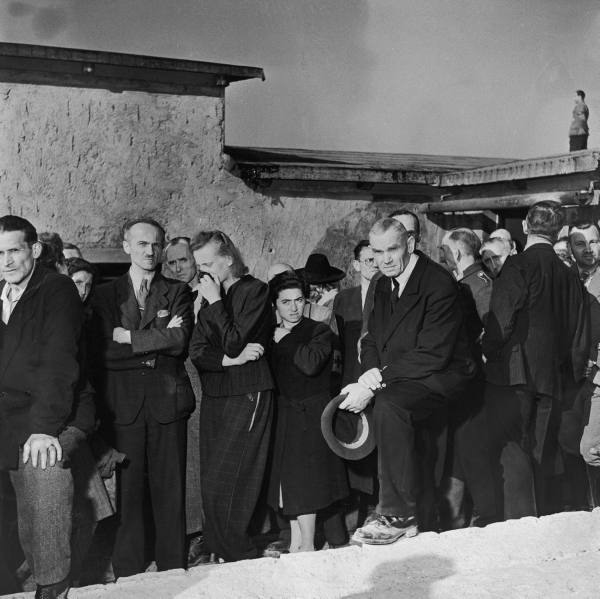
    impression that makes it mark is a series of pictures by the great Margaret
    Bourke-White (who seems to have been everywhere from the Depression to the
    Korean War and wrote and photographed what she saw brilliantly) made at the
    Buchenwald Deathcamp just after liberation. 
    She did make photographs of the horrors of the place, but she also turned
    the camera around to record the faces of the locals who were forced to tour
    and view the camp in their communal midst. You can see very clearly in the
    faces of these people—for whom Blog==june 28 chaplinthe camp could not have been a mystery unless it was internalized so—how much they wanted to not see what they were looking at.

     

     And speaking of Hitler, Henry Ford’s contribution to the
    ethos of the American standardization and robotization of the workforce—the industrial
    production line—was well portrayed in the first cinematic appreciations of the
    idea.  (Writers had long since made
    observations on the evils of industry and society, going back at least as far
    as Charles Dickens—but its representation in the most democratic medium of the
    first half of the last century–the movies–received it first treatments in two strong
    impressions in the 1930’s.  The film that
    comes quickest to mind is Charlie Chaplin’s still-brilliant and
    still-applicable Modern Times (1936,
    though originally named The Masses)—a
    dire film (in one place dissolving sheep entering a slaughterhouse with a scene
    of workers entering a factory) that offered no solution to the factory.  Aldous Huxley wrote about the sickness of
    production in his Brave New World (1932)
    which is even scarier in its own right—though the scary image of the future
    delivered with the dark humor of Chaplin is tough to surpass—if for no other
    reason than it winds up discussing the “principle of mass production applied to
    biology”.  But earlier still is the
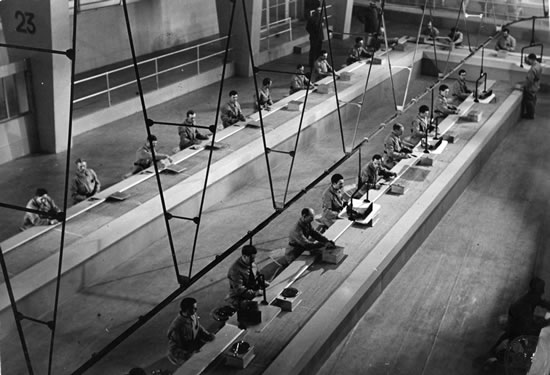
    little-seen film by Rene Clair (1931) A
    nous la libertie
    (Give Us Liberty/Freedom),
    which presents the mass production system as a thin metaphor for a prison labor
    system.  (Upton Sinclair said that the
    Ford assembly plants should be presented in “Museums of Unnatural History”.)
    Blog==jine 28 clair This really is an endless and mammoth subject as what I’m
    talking about is a history of perception, and all I’ve done here really is to
    draw a few things together that I have within reach.  It seems an interesting pursuit, following the
    threads of thought regarding early impressions of major (and minor) events, and
    one could easily construct a large Borgesian encyclopedia of them.  Check under “C”, for cable, for example:  the physicist Jacques Babinet thought it
    impractical and far too expensive to construct a communication line under the Atlantic ocean (as did many others, seeing the starts and
    fits of the various cable companies that were begun to try to capitalize the
    operation.  The cable business barely had
    a heartbeat, at times, in the mid-century even. 
    And speaking of heartbeats, William Harvey withstood blistering attacks
    on his correct statements on the circulation of the blood (costing him nearly
    all the patients in his practice). 
    Though at least Harvey
    lived to see a brighter day:  Michel
    Servetus, on the other hand, didn’t, and was burned at the stake for his heresies,
    one of which was the centering of the circulation of the blood in the heart
    rather than the brain.  The list goes on
    and on:  Semmelweis was killed but did
    wind up ion an asylum; Galileo didn’t wind up in an asylum but did wind up
    imprisoned; Copernicus wound up in neither place, escaping possible clerical
    criticisms by dying just as his revolutionary work was published.  Phillippe Lebon’s ideas for illumination by
    gas were seen as ridiculous, as were the revolutionary ideas of Edward Jenner
    and Luigi Galvani.  Einstein’s 1905 ideas
    weren’t happily received in France
    for a decade, and David Hilbert’s impressions of mathematics in the middle of
    the third decade of the 20th century was that it was “done”.  (Actually the young Einstein was also
    cautioned about going into physics because that field was seen as pretty much “completed”.)
      There was of course the other side of
    the impressions coin to all that I’ve mentioned above—for example, the resistance
    to Copernicus was not actually  as
    fearful as we think of it today, most thinking people were ready for it and
    were relieved with his 1543 publication.  The idea of looking at first impressions may actually have some utility in seeing how we view new things in our contemporary culture–or at least it would give us the sense of wideness and of the future, and to be at least circumspect about newness. 

    *A note on the production technology using interchangeable parts–this idea really did have its seat in  American industry. Colt’s “system of manufacturing” (c. 1851), Charles Tomlinson’s
    1853 Rudimentary Treatise on the Construction of Locks, rifle manufacturing at
    the Springfield Armory in the early 1850’s,  Eli Whitney and the cotton gin, Singer Sewing
    Machines,  (ca. 1865) phonograph machines
    produced on conveyors by Thomas Edison, and so on, till you get to Ford’s own
    Highland Park Factory around 1913.  All are indicators of this sort of conveyor belt, standardized parts, interchangeable units that marks this brand of manufacture. For an early, interesting reading see Charles Fitch’s “Report
    on the Manufacture of Interchangeable Mechanism” (1881)  as part of one of the reports of the massive
    overall report of the Tenth U.S. Census,
    and also  “The Rise of the Mechanical Ideal”
    in the Magazine of American History
    (1884)

  • Flying Ocean Liners: Sikorsky’s Ocean-Crossing Futurama, 1941

    JF Ptak Science Books LLC  Post 643  Blog Bookstore

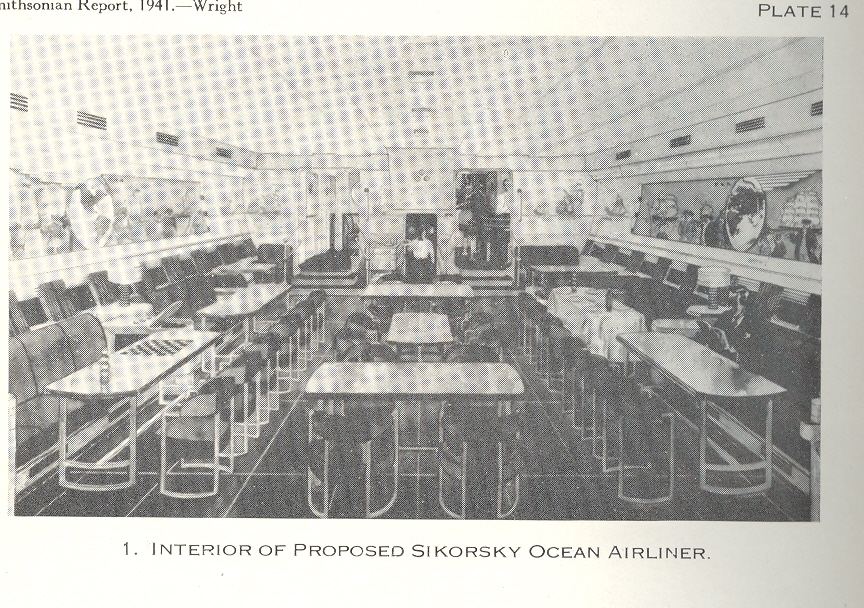
     Theodore
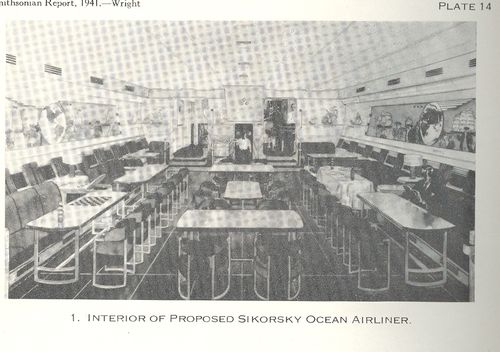
    Wright (aviation engineer, 1895-1970) wrote a lovely short piece (“Wings for
    Transportation:”)  in the Smithsonian Institution Report for 1941
    on the future of aviation and its importance in transportation.  Wright begins the article with a difficult
    paragraph on the good fortune of America‘s aviation industry to still be more concentrated on commerce than on military
    might, referring to World War II as the affair “starting with
    Munich”. 
    This is unfortunate.  But he does
    graduate from this myopic iconoclast’s future view to discuss the history of
    American aviation and its future as an essential element of the overall commercial
    transport grid.  Here he gets a lot
    correct. Blog--jun 9 sikorsky interior

    At
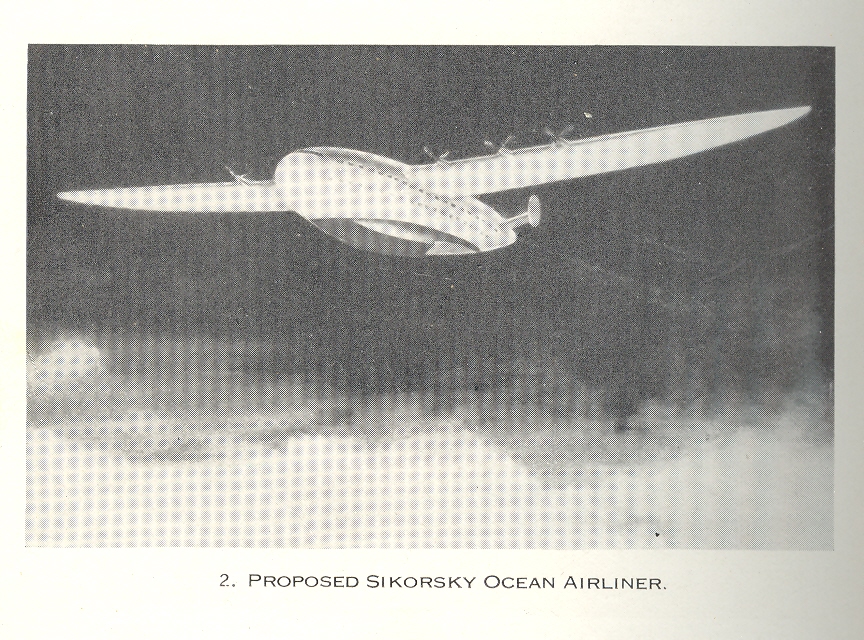
    the end of the article though comes a fantastic bit of futurology by an
    engineer and designer whose importance in aviation is unquestionable—Igor Sikorsky.  Sikorsky (1889-1972) designed the first
    multi-engine fixed wing aircraft and the great flying boats used by Pan Am to
    cross the oceans, though he is best remembered though for his enormous
    contributions in the development of the helicopter—a man of tremendous
    accomplishment.  He got an awful lot
    right.  He was also correct in the assumption
    that there would be enormous aircraft flying around the world in the near
    future—aircraft far larger than those being flown by Pan American Airways.  What he got wrong was the shape and style of
    this aircraft, which seems to be a further development of the flying boat.  Wright referred to these planes as “Ocean
    Airliners”, and that is what they certainly seemed to be:  behemoths that were ocean loners with
    wings.  They were wonderful things, and
    who wouldn’t want to be able to walk around the in-flight dining room, trying
    to pass some time on a long flight to New Zealand?  But it was not to be, of course, though
    Boeing’s superb 747 did for a while have a cocktail lounge for first
    class.  Still, these wishes die hard,
    especially when you’ve traveled with such accommodation.  (My own experiences with this is taking a
    electric tram in Helsinki
    and discovering that there was a bar in the back of the car. The open windows, the blue skies, the civility–it felt like the only way to travel: refreshed, thoughtful, and going 20 mph.)

    Blog--jun 9 sikorsky

    ·Posted by :

    ·in:


  • A Long, Low, Massive Circle: Circular Building, 1938

    JF Ptak Science Books LLC  Post 639  Blog Bookstore

    This re-surfaced idea for a
    mega-spa was very wide, very long and very low. 
    Karl Stoldeck and J. Goldmerstein—architects and planners in Berlin—published
    a broad idea in 1928 called Thermenpalast (Thermal Palace, Spa Space, something
    like that), and although it seemed to satisfy almost everyone, the idea was
    consumed in the general economic malaise of the depression of 1929.  It looks as though the idea had a little life
    again in 1934, but there was a problem with fund raising.  The idea came back again, broader, bigger,
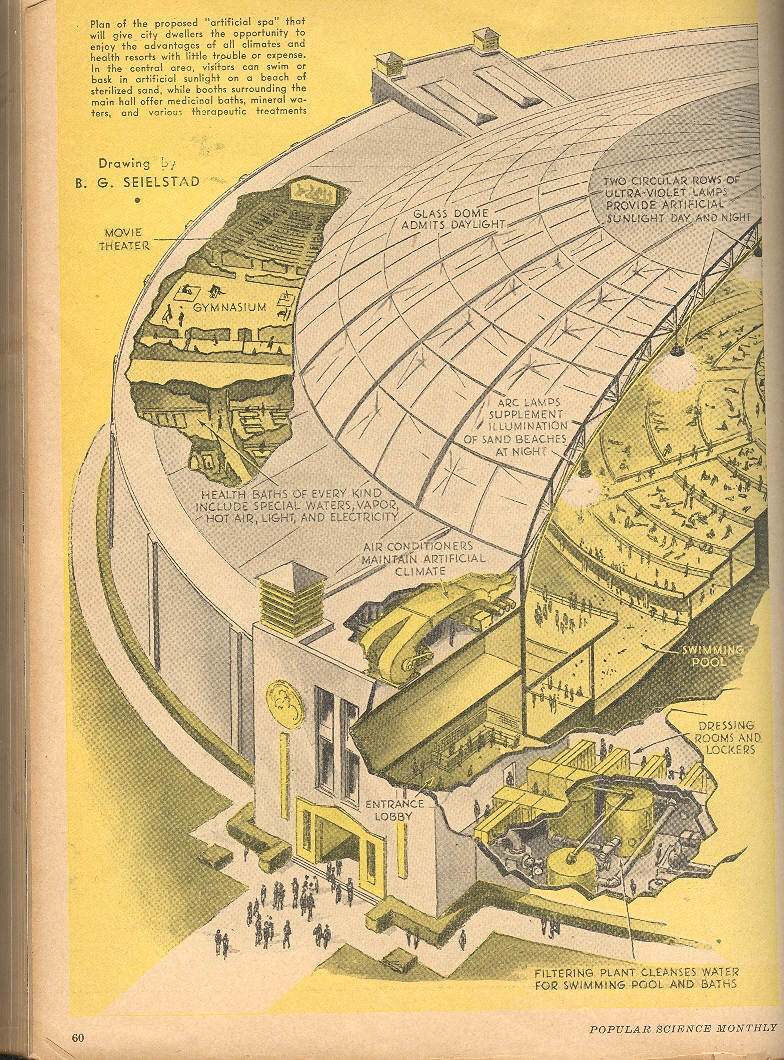
    and more defined, finding some idea-space in the Popular Science Monthly for
    March, 1938.

    Blog--jun 6 1

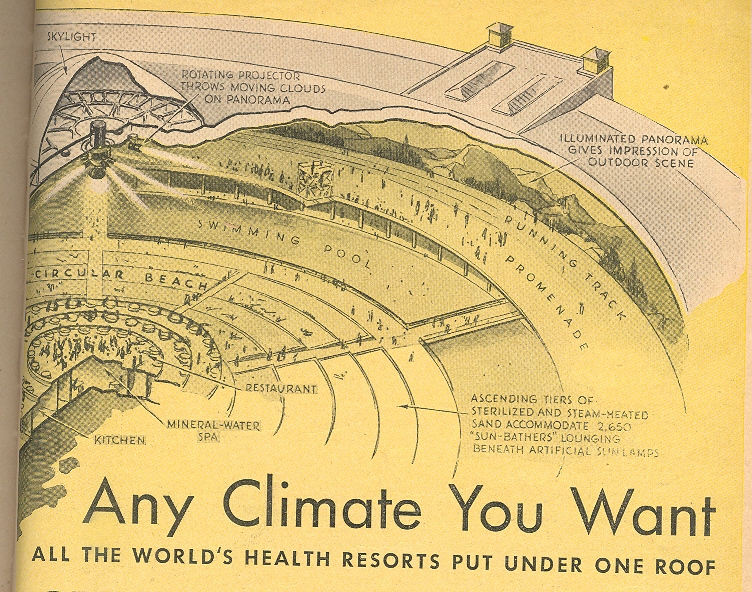
    The structure for health and
    exercise was massive—as a matter of fact, it would’ve been the most massive
    circular project in history.  The
    building had 6.5 acres under glass, which makes it 280k or so feet, giving the
    building a diameter of 1,800 feet and a circumference of something just over a
    mile.  IT looks as though the ceiling
    reached a maximum of 250’ or so; seeing that the dome would also be about 1200,
    that presents a little engineering problem. 
    But no matter:  it would never be
    built, anyway, even with Nazi dollars from home.

    The building was quite a feast
    of the body—there was a mountainside panorama around the exterior wall,
    illuminated from a  series of light sources
    from the ceiling.  In diminishing concentric
    circles: there was a mile-long running track, a promenade just inside that,
    followed by a spectacular pool which looks to be 4000’ long and 100’ wide!  Interior to the pool was a wide “beach”, a
    restaurant, park and lounging area.

    Blog--jun 6 2

    This was also a multi-floor
    building, with gyms and restaurants and a long series of health baths.  The entire spectacle would offer many
    different climates depending on the needs of the clientele. 

    The cost:  6 million, U.S. A few years earlier the Empire State 
    building was built for $24,718,000. The
    architectural firm Foster + Partners

    released designs for a the largest building (“Crystal Island”)  ever built: 
    2.5 million square meters (8.2 million feet, or 35 times bigger than
    this 1938 idea), with a tower 1476 feet tall, all sort of circular, and to be
    built in Moscow.

    Had the thing been built in Berlin and started in
    1938, it would’ve been about ready to bombed on the day of its completion. 

    Here’s an interesting read on water parks:  Water, leisure and culture: European historical perspectives, Susan C. Anderson, Bruce H. Tabb, 2002.


  • Bad Electronics Dreams–the Future Grotesques of Hugo Gernsback, 1945

    JF Ptak Science Books    Post 610   Blog Bookstore

    Blog--may 11--odd 005

     
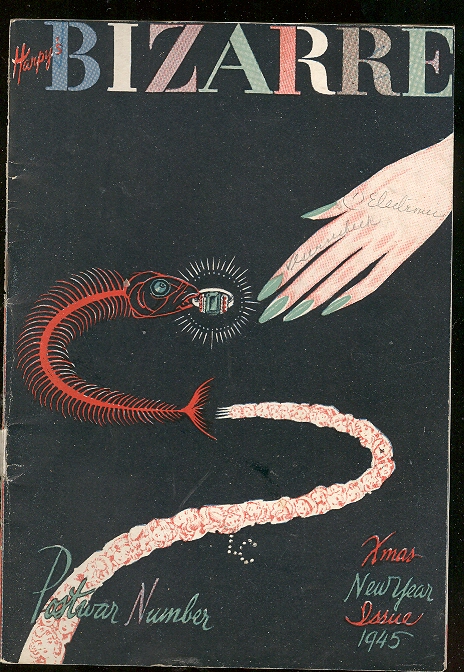
    I am very attracted to the innocence and softly bizarre category of my store’s Naïve Surreal Collection, like this little pamphlet that came out New York in 1945.   The titles in this category are odd but still understandable, and the “what the ____!” response to the subtle ones isn’t quite so high and the exclamation points not so many as in the cases of the Naive Surreal titles.  Bizarre is just that, certainly not hiding behind any lesser or ambiguous title–it seems to be a parody of  small magazines and their advertising sponsors,  and copyrighted by the very far-reaching Hugo Gernsback, who in 1926 started the first magazine dedicated to the genre of science fiction (Amazing Stories) and for whom the World Science Fiction Society’s annual award for Science Fiction Achievement is named (the “Hugo”).  Gernsback evidently had a taste for cheeky parody, producing similar magazines to this called Quip, Forecast, Jolliers, Tame and Newspeep.

    I guess that this was deeply weird for mass-production publication, and it was probably funny–now it is just weird, odd, and somewhat discomforting–a successful and intentional reach for being part of the Naive Surreal right from the start.

    Blog--may 11--odd 008


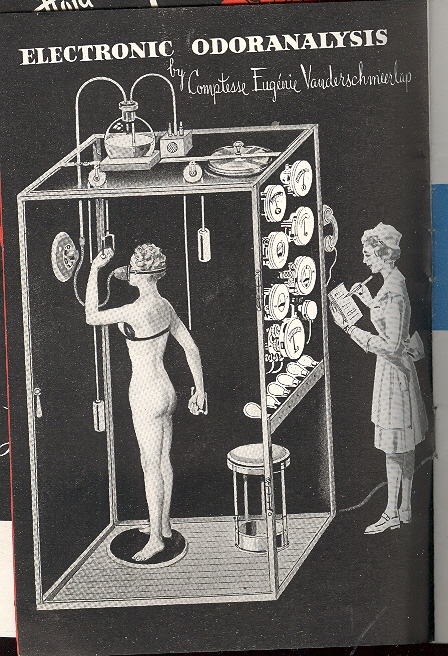
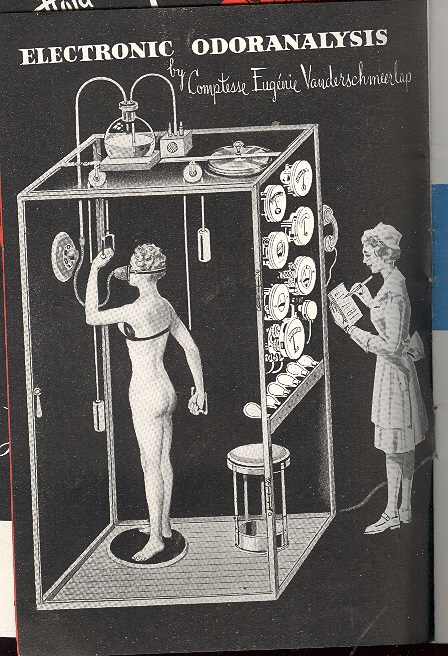
    Most of the magazine is dedicated to imaginary electronic delights–analog electronics (though it is still fairly early to be having such dreams and using the word “electronics”, as it was just barely two decades old at this point).  One of the oddest of these inventions of the near future was the Electronic Odoranalyzer, which was necessary for reasons I couldn’t discern.  There were hats of weeping willow Platina fox tails; some hats had tanks (as with the Le Chapeau Tank hat, modeled for the magazine and “worn pugnaciously at a slant”); other hats had canons (the French Mitrailsuese).  You could also relax to your favorite tunes in style with a $125,000 radio–it was made for war profiteers who couldn’t find banks enough to hold their cash and was billed as too expensive to steal.

    Blog--may 11--odd 006

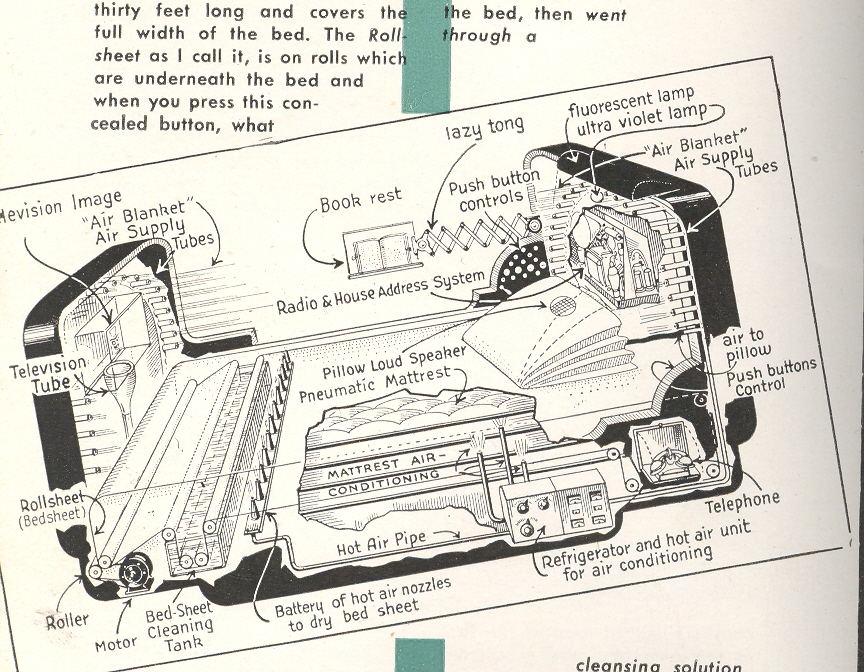
    Then there’s the EBC–the Electronic Bed Company–with their magnificent new product, an invention “by the great sage of Hackensack” so spectacular  as to make ordinary sleeping obsolete.  The bed was an air-conditioned, self-washing, self-adjusting, self covering, fiberglass-cushioned, telephone-capable, air pillowed, air conditioned masterpiece that looked like it was about ready for anything but sleep, which I guess would make it revolutionary.

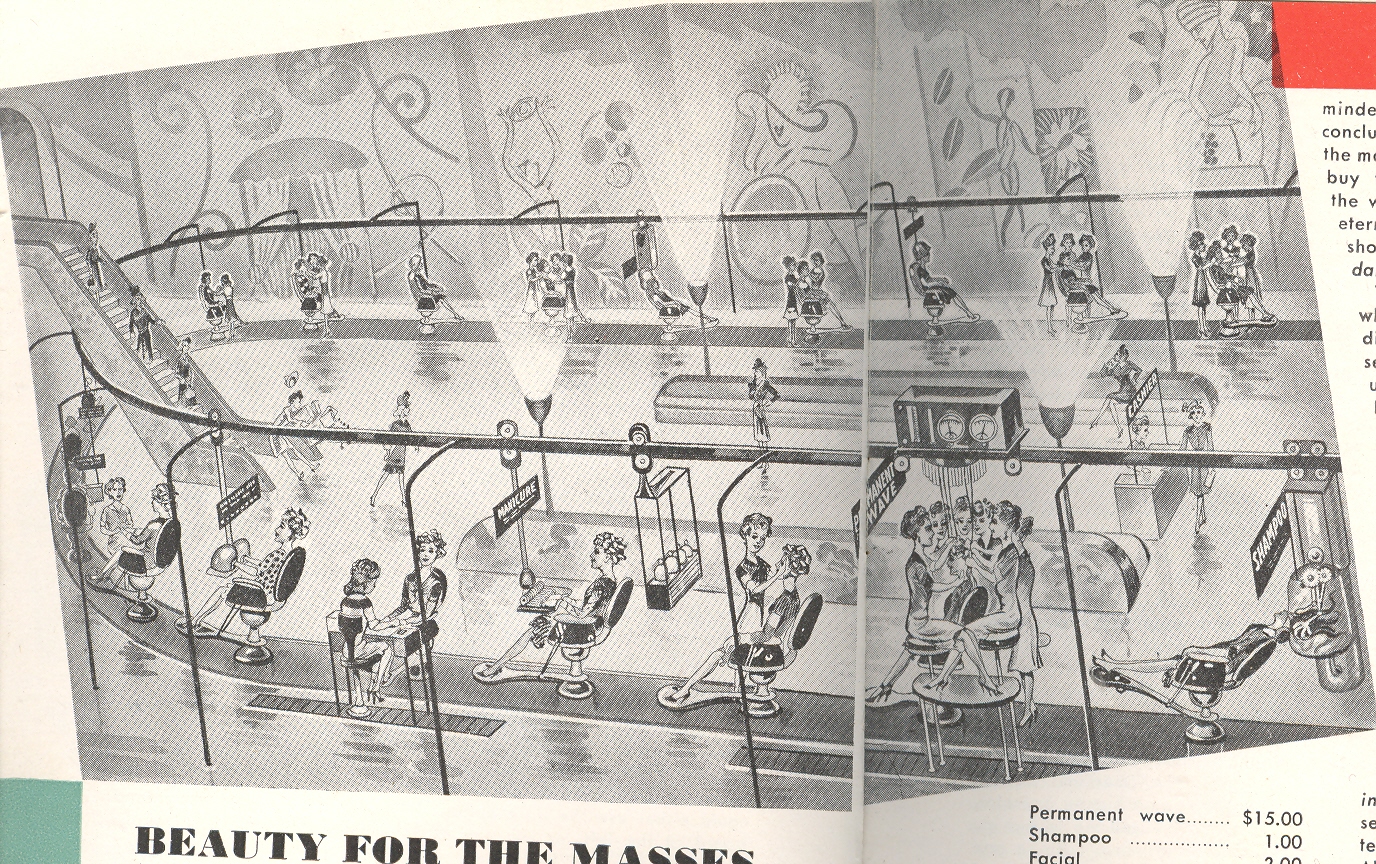
    Another wonderful bit in Bizarre was the assembly line beauty parlor that was staffed mostly by robots–I think that this is the very first display of robot-reach in the world of coiffure.  This was an attempt at “beauty for the
    masses”, producing the normal human three-hour/20-dollar “ladies’ hairstyling” experience into a 2 dollar, one hour affair.  The production room was 150 feet by 30 feet, with room for 100 women, all moving, though it did not look very satisfying, though perhaps the savings and the quickness of it all made the experience worthwhile. 

    Blog--may 11--odd 002

    There were contributions to future-think elsewhere:  the six-foot wide pocketbook was funny, as was the electronic lipstick (available in the “ultra-reckless” “strumpet pink”. The Chamembert Inferno CheeChee perfume was also interesting–the claim for this product was that it was so infernally devastating that Satan himself could succumb to it.

    All-in-all I suspect that the pioneer and inventor (and the coiner of the phrase “Science Fiction”) Gernsback had a good time with this pamphlet, enjoying a few or too many adult beverages while sharpening a skeptically fiction-laden eyeball on the wonderful world of soon-to-be electronic conveniences.

    Blog--may 11--odd 009

    Blog--may 11--odd 007


    ·Posted by :

    ·in:


  • An Unusual View: Looking into the Past and the Future–St. Quentin, 1917

      JF Ptak Science Books LLC  Post 593       Blog Bookstore

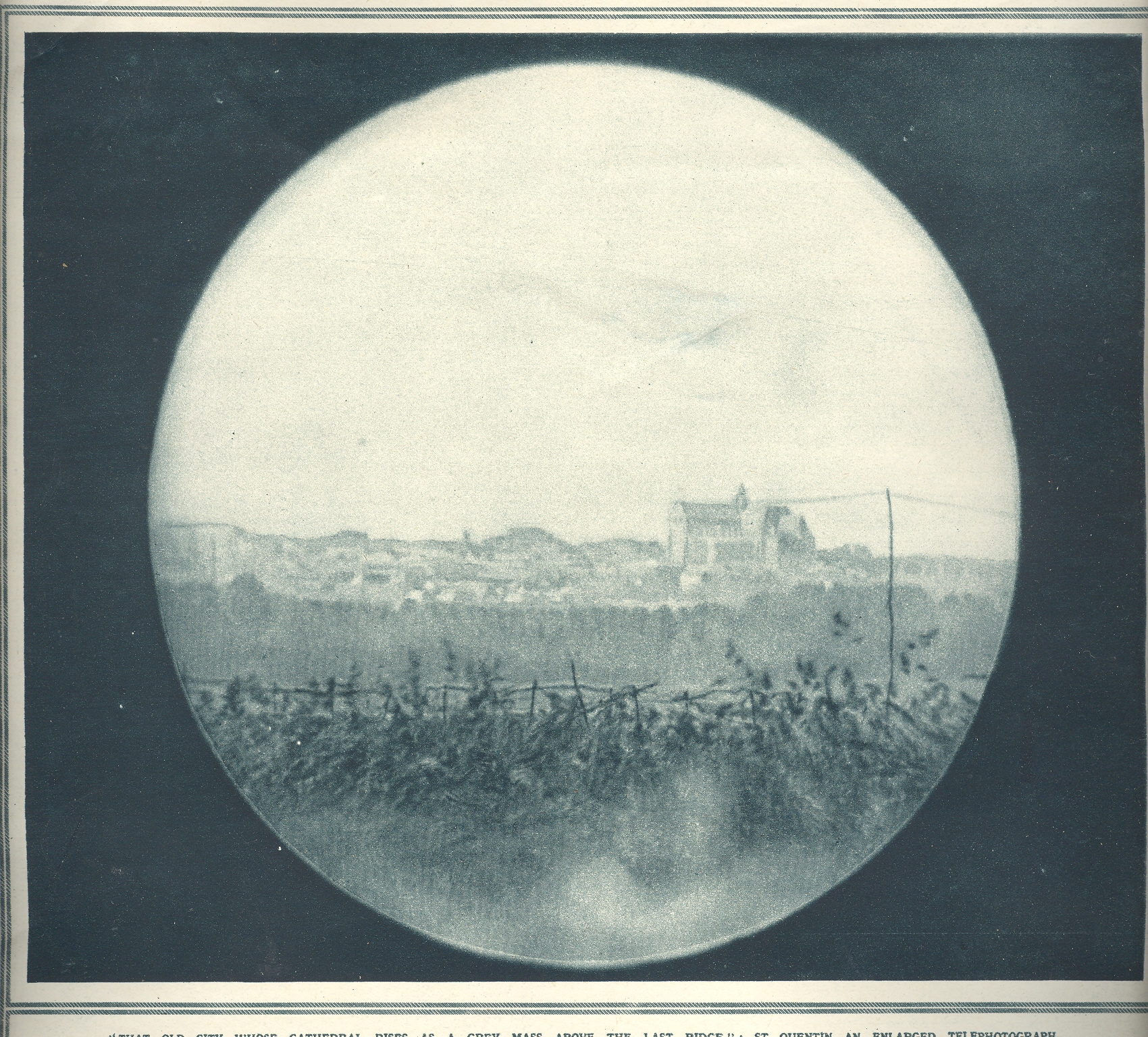
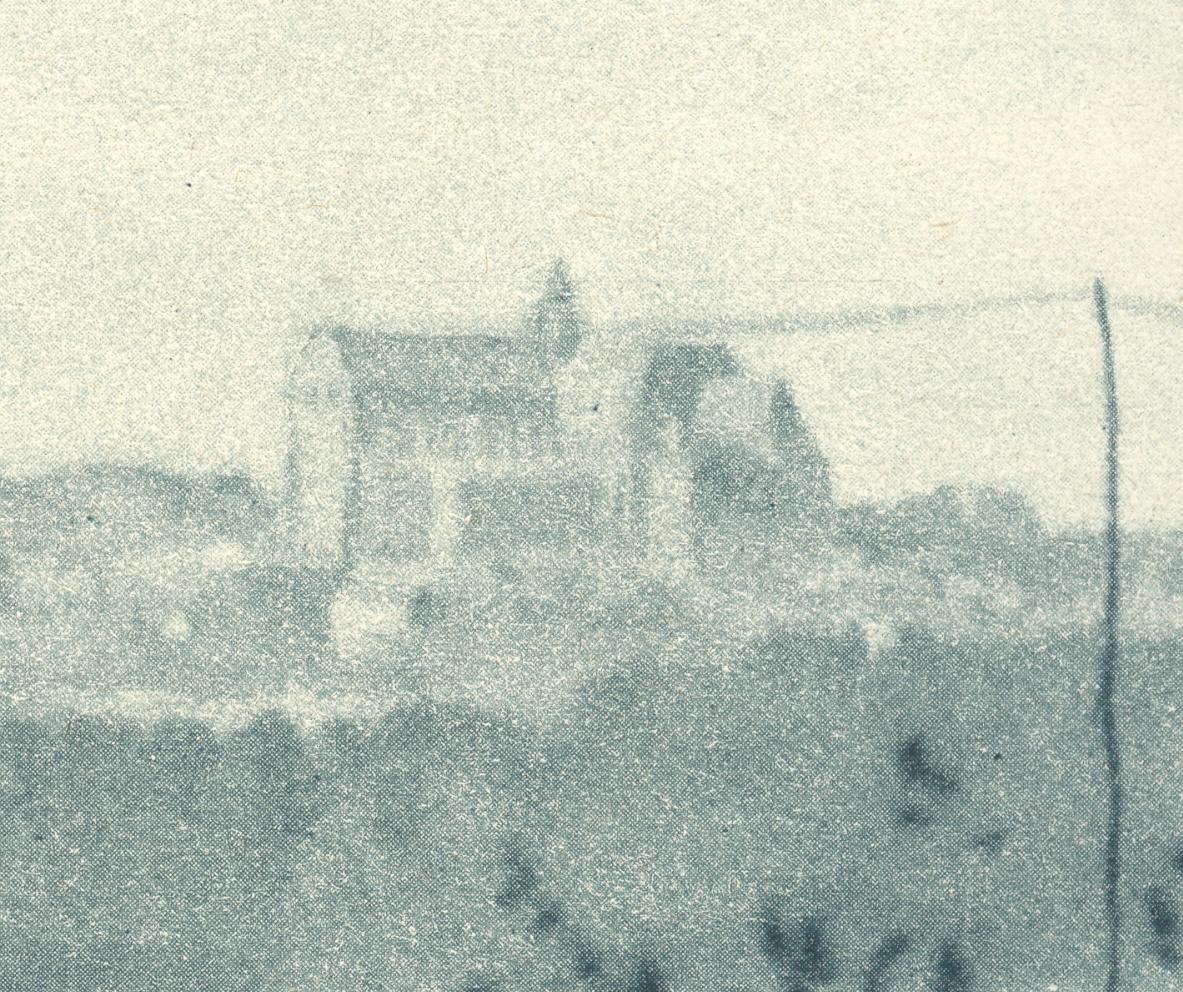
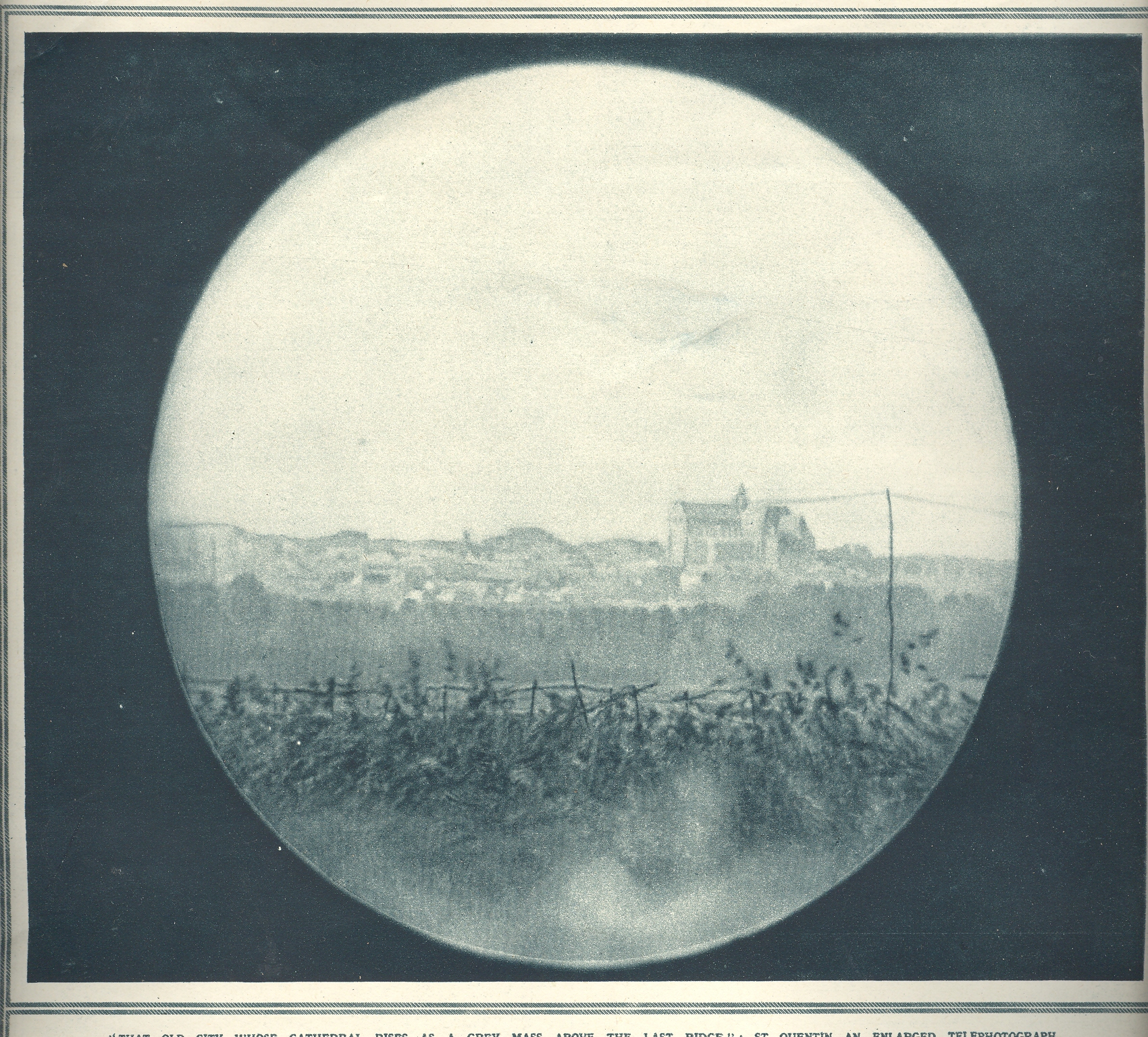
    Blog--WWI--st. quentin This lovely, seemingly antique daguerreian view is what the American Expeditionary Force (AEF) commander General JJ Pershing saw at the front lines of St. Quentin in July 1917.  The U.S. had entered the war, finally, on April 2 1917, nearly three years after the war began, landing in France 13  June 1917 and entering almost immediately into battle at Chateau-Thierry.  On 2 July Pershing estimated that the U.S. would need a million fighting men; the day that this photo was published in The Illustrated London News, he revised that estimate to three million.  The view he was seeing here was more than of a town about to be pounded by thousands of artillery shells–the magazine was sharing a view of what the European and Empire countries had been seeing for 31 months, and what the Americans would now be sharing for another 17 months. 

    Blog--WWI--st. quentin det
    It is a beautiful and deadly view, seen through French field binoculars at the tip of the front for the battle.  The large building to the right is the town’s Gothic cathedral/collegiate masterpiece:  it was old and large, with a 370-foot-long and 130-foot-high nave.  It was a highpoint for that part of France, and was the burying place for St. Quentin and St. Victorious–their graves would be covered by the rubble of the cathedral’s collapsed roof very soon after this picture was taken.  The building was shelled and burned all night long–the French blaming the Germans and vice versa. 

    If Pershing had really good sight he might’ve been able to see the 116,000 American soldiers wIraHayesArlingtonho would be killed in battle, though I suspect he had a pretty good idea of what was to come, thinking as he did that he need 3 million soldiers.  To be utterly fair I don’t think that he could’ve possibly  seen in his imagination  what 9 million dead soldiers looked like, or what 16 million dead soldiers and civilians looked like, or what 37 million dead and wound soldiers and civilians looked like, all the casualties of this war, all done in 4 years. 

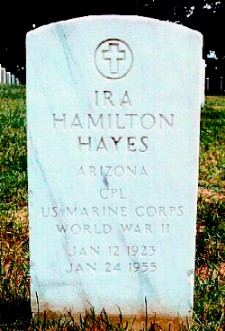
    I’ve found it odd in a way that I’ve not really been able to explain that Pershing is buried so very close to Ira Hamilton Hayes at Arlington.  I used to leave a good twig on Jackson’s headstone on Memorial Day, and then get that unusual, uncomfortable emotion on seeing the large Pershing monument just a few hundred feet away. 


  • 1932 Continued–More on the Beginning of the End

    JF Ptak Science Books LLC  Post 580

    Science Store (Blog with Books for Sale)

    BraveNewWorld_FirstEdition
    Yesterday I wrote about leafing through a 1932 issue of the Illustrated
    London News
    , piecing my way around unexpected bits of historical
    bric-a-brac, surprising myself with the oddness of it all, until I came
    to the reporting of the 1932 German election and the beginning of the
    Nazi takeover of Germany.  The beginning of the end. So it was like a
    bit of enjoyable, entertaining historical surprises until bumping into
    the Nazi cancer.  But 1932 stuck with me a bit. Thinking about it a
    little more, today, I realized that there was much more that the year
    had to offer in the way of epochal beginnings, many of which related in
    some fashion to the beginning and end of WWII (and particularly to the
    May-August 1945 period).

    1932 was a very big year in physics,
    especially in the sub-atomic world, most of which would result in
    Hiroshima and Nagasaki as well as five (!) Nobel prizes.  Irene Curie
    and Frederick Joliot produced proton emission from alpha-ray irradiated
    beryllium in January; James Chadwick discovered the neutron in February
    (getting the Nobel physics three years later); that same month E.O.
    Lawrence and M.S. Livingston developed the cyclotron (getting the Nobel
    in 1939 for it); J.D. Cockroft and ETS Walton produced the conversion
    of an element (He) (winning the Nobel in 1959); C.D. Anderson
    discovered the positron (receiving the Nobel for it in 1936);  Werner
    Heisenberg introduced the proton-neutron nuclear model; and H.C. Urey
    last in that year discovered deuterium (winning the Nobel in 1934).  It
    is an astonishing and long series of significant developments for a
    single year.

    On the seer-ing theoretical part of 1932 came Carl W. Spohr’s “The Final War”, with appeared as a short story in the magazine Astounding Stories.
    Spohr’s story involved the creation of a bi-polar world shared by two
    superpowers both of whom were kept in check with the threat of Mutually
    Assured Destruction–ultimately the MAD scenario fails and the atomic
    bombs fly, devastating the earth.  The Spohr idea of
    scientifically-induced Earth-shredding was preceded by others including
    H.G. Wells (in 1912?) and Pierrepont Noyes (1927).  (Actually, Noye’s
    first edition of his novel depicting nuclear holocaust was sleepily
    called “The Pallid Giant”; when re-issued in 1947 he renamed it with
    more teeth,  Gentlemen You Are Mad.  Noyes is also the son of
    the founder of the socialistic/semi-utopian Oneida society in upstate
    New York.  There was a complex of religious pullings going on up there,
    not the least of which was the living a new human life in the
    post-second-coming of Christ earth, complex marriage, and free love, a
    term Noyes’ father coined, and which did not go over well outside the
    community.  For his part, the younger Noyes settled on a more practical
    end to the community’s social and business life, and established a
    silver- and flat-ware company that became the world’s largest of its
    kind.)  Spohr was six years before A.G. Street’s Already Walks Tomorrow,
    probably the first science fiction/futuristic depiction of worldwide
    apocalypse via environmental disaster and dystopia.    It was also in
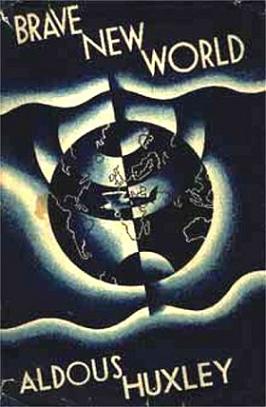
    1932 that Aldous Huxley’s Brave New World was published, which
    was the first depiction of a nightmarish end to failed and run-agog
    utopian planning. (The novel begins in the year 632 A(fter) F(ord),
    some years after civilization had been destroyed by war. Ford’s selection here is also ironic because of his heavily-disputed but well-documented anti-semitism and admiration for Hitler*) Huxley’s
    novel follows by two years the related work of Laurence Manning and
    Fetcher Pratt, whose City of the Living Dead tells another story of Utopian collapse, this time of the brain deadening possibilities of alternative and virtual realities. 

    On
    the political end–in addition to Hitler’s victory in the German
    elections–was the Japanese invasion of Manchuria, which may well be
    the true place to start the beginning of World War II. In 1933 Fritz
    Lang’s movie Das Testament des Dr Mabuse is a thinly-veiled
    tale of a brutish criminal organization taking control of the state via
    criminal means and is almost immediately banned by the new German
    government.  The Lang film is basically replaced in the next year by
    the primum mobile of Nazi propaganda films Triumf des Willens
    by the filmmaker who wouldn’t die, Leni Riefenstahl.  Riefenstahl lived
    to 101, long past the disgust that she presented so beautifully in her
    vile lickspittle hearts-and-minds film.  (Few artists have lived to
    100; I’m not so sure that any other filmmakers have.)

    And so for 1932.  This might all be too free-wheeling, but the more I thought about it, the heavier the year seemed to become.  Perhaps there is something there. 

    ·Posted by :

    ·in:


  • Redefining “the Present”: Bitter Bierce, James Joyce and H.G. Wells

    I do not define time, space, place and motion, as being well known to all.  Isaac Newton, Principia, 1687

    Books--burgess I had some lingering thoughts about my post from two days ago which briefly touched on Joyce’s dreamy Finnegan’s Wake (published in 1939, just two years before the author’s death), which led me to the language-creating, never-endingness of one day in his Ulysses* (1922).  It is also a novel of time, reprocessing its time-units lile old Zeno, finding halves of time in regressive size and in greater numbers, roiling around like fly-swatted mercury; we never do get to the bottom of time although it does slow it down considerably.  It follows a slight but powerful literary history, treating time somewhat like the earlier (earliest?) Poe, and especially like that clock ticking in Dostoyevsky’s Crime and Punishment (1866), where action is laid bar to exhaustive and minute interpretation, waiting for no person. 

    A little later on comes Ambrose (“Bitter”) Bierce, a crummudeonly misanthrope with a razor eye for criticism for everything beyond himself.  My guess is that every other person in the U.S. past the age of 30 has read his Alabama-based “An Occurence at Owl Creek Bridge” (1893) in which a lifetime or so could be lived in the moment that it takes for a man killed by hanging. (I have a feeling that this was a very apt way for Bierce to look at his own life, right up to the moment where he rode into infinity in the Mexican desert.)  The prgoression of time is interrupted to tell the tale, everything taking place in the time that it takes to travel eight feet. What I didn’t know when I read the story for the first time was how unusual, groundbreaking, it was for the distortion of time in this way in literature.  Monet and Impressionism Inc.  were at it for a little from the 1860’s or so, but it seems to me that in literature this fracturing of time was pretty scarce.

    These authors were performing experiments with the vast horizon of time, creating a new space in the very slim spectrum that we call the “present”.  In another way, Proust’s Remembrance of Things Past explores past action in a way that redefines what we can think of as a “normal” present.  Looking forward, too, can have a pulling effect on the present, as we can see in the novels of the future by Jules Verne and H.G. Wells. 

    Time in physics is the orders-of-magnitude incendiary to this discussion–it is the fundamental, measurable scalar unit from which stuff like motion  and energy and fields are derived. Things get really interesting in the history of science once you move through Galileo and Newton and Maxwell and get to the time of Planck and Einstein and Minkowski .  Interestingly, the most significant changes occurring in the treatment of time and the definition of the present come in the period from 1865-1915–a particularly fertile period of revolution and modernity, where nearly every discipline undergoes a radical, fundamental change. Everything except political studies, where the only really new thing to come into the fray at that time was the introduction of the concentration camp during the Boer War.  Everything else changes in remarkable ways:  physics, mathematics, art, music, literature, theater, dance.  Astonishing. SpongeBob-SquarePants-AM-FM_F43403B5

    If I was really clever I would find a way for this post to be circuitous, but I can’t, so I’ll just end by saying that I’m out of time.  

    *I’ve included the first lines of the Joyce novels in the continued reading section, along with a few choice others. 

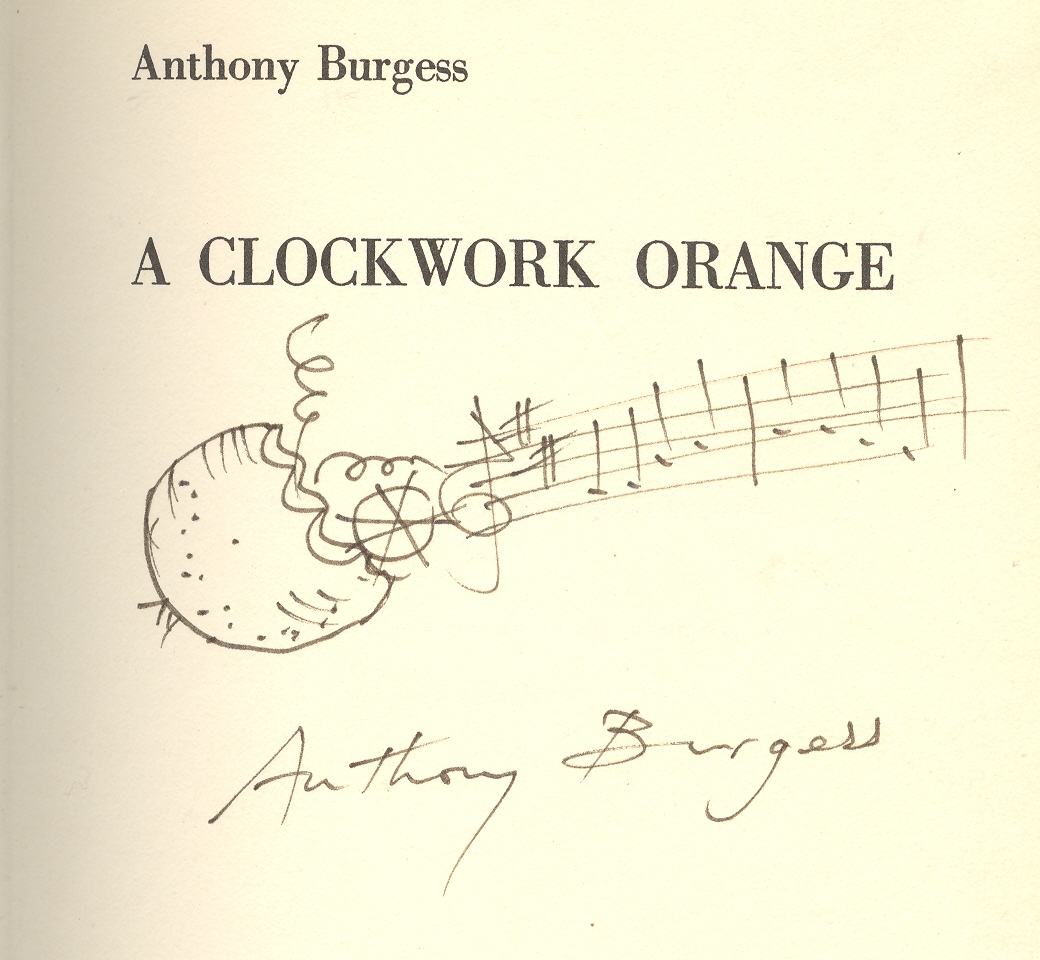
    **For several years in the early 1980’s I read all of Anthony Burgess’ novels, collecting them as well.  I always liked A Clockwork Orange for its dark humor and inventiveness, and for each of  the few times that I met Burgess I had a copy of the book for him to sign.  He was always very gracious, signing my books with appropriate flourishes–with music, or Arabic, or whatever was implied by the subject of the book. The exploding orange is far and away my favorite.


  • History of the Future: Electric Balloons, Tethered Eagles and an 18th century Space Station

    JF  Ptak Science Books LLC  Post 549

    The prehistory of heavier than air flight is loaded with some fantastic ideas, some just generally fantastical and some prescient, or recognizably prescient from some advanced point in the idea’s future.  There was an immediate and relatively massive published reaction to the Montgolfier brothers’ first balloon ascension in June 1783, much of which was useful and applicable, some of which was interesting if not practicable, and a little of which was just deeply problematic, not very considered, and all-around wrong–overall, it was interesting thinking, thinking about this brand-new issue, people trying to get their heads around new concepts and answering them with new- and not-so-new-thinking. 

     blog 16 electric balloon704
     blog 16 eagles705

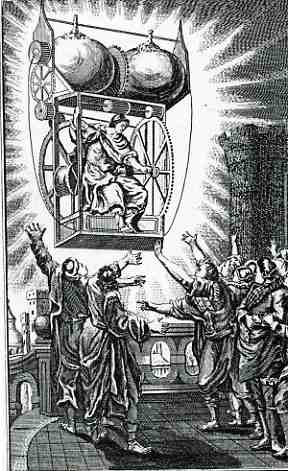
    One lovely pre-Montgolfier  example of fantastical thinking was Louis Guillaume de la Folie’s  (1733-1780) La Philosophe sans Pretension, ou l’homme rare…, published in Paris in 1775.  La Folie’s fictionall adventure is an example of early science-y sci-fi, coming as it did in the midst of the fabulous electric age of the mid-18th century.  He tells the story of a Mercurian, Ormisias, who by his own trivial care winds up flying a chariot fitted with electric balloons from Mercury to Earth.  This was more believable than previous works on space flight, which saw the vehicles powered by whirlwinds, fireworks, horses, beasts, catapults and (hello Johannes Kepler!) demons. 

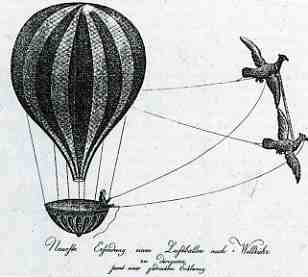
    An example of the very charming and not effectual peep-into-the-future approach to modifying the Montgolfier effort  was by Jakob Kaiserer, who in 1801 published his Ueber Meine Erfindung, einen Luftballoon durch Adler zu regieren. Kaiserer, a bookseller, confronted the issue of steering, featuring s aero-craft by using a pair of tethered eagles.  His was a picturesque

    Montgolfier

    answer to the steering and propulsion issue, meant in a way to be taken seriously, and was not really too far from the ordinary offering.  (Kaiserer really was thinking, because he also had a spare pair of eagles in the gondola, waiting to replace those in flight when exhausted.)  Leashed birds wind up in a number of designs over the years to come, not to mention bird-inspired flying machines designed to function as a bird, the most famous example of which was piloted by Otto Lilienthal to his death.)

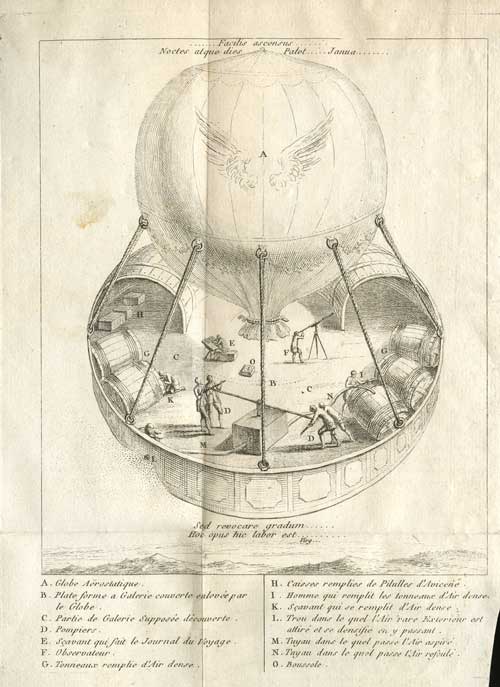
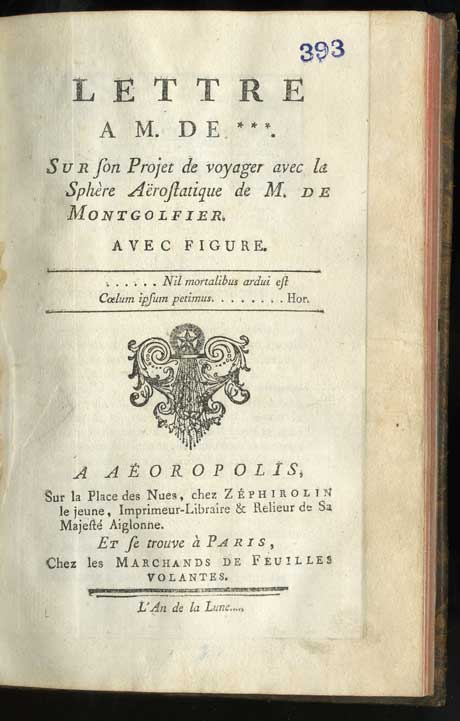
    A more prescient image  was the wonderful flying observation platform shown in Sur son projet de voyager avec la sphere aerostatique de M. de Montgolfier, published in Paris (“Aeropolis, chez Zephirolin”) in 1783.  (The images I’m using at left and below are  from the Lilly Library.) It is perhaps the first such suggestion in print of such a device–the balloon is powered by “dense air” which is evidently being pumped by the four men at the air pump in the foreground, and is host to a myriad of scientific activities, not the least of which is the astronomer and his large telescope.  It really is a remarkable effort, looking into the future of possibilities for the spanking-new invention of flight.  A space station it is not, but it was certainly within the realm of the possible, and for its time must’ve seemed like an impossible bit of fancy brought very close to reality.Aeropolis

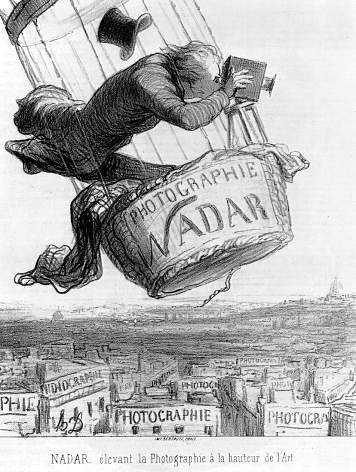
    (This image reminds me of Honore Daumier’s 1862 caricature of Nadar “elevating photography to the condition of art”.) Nadar’s issue here is not only using photography from an elevated platform, but is also using the camera as a tool, and not an artistic element.)

    Nadar


  • Bizarre & Naive Surreal Maps and Views: the North Pole

    JF Ptak Science Books LLC   Post 545

     blog 12 maps north pole692[Read last year’s post, 12 March 2008: Dr. Seuss and the 236 Words...]

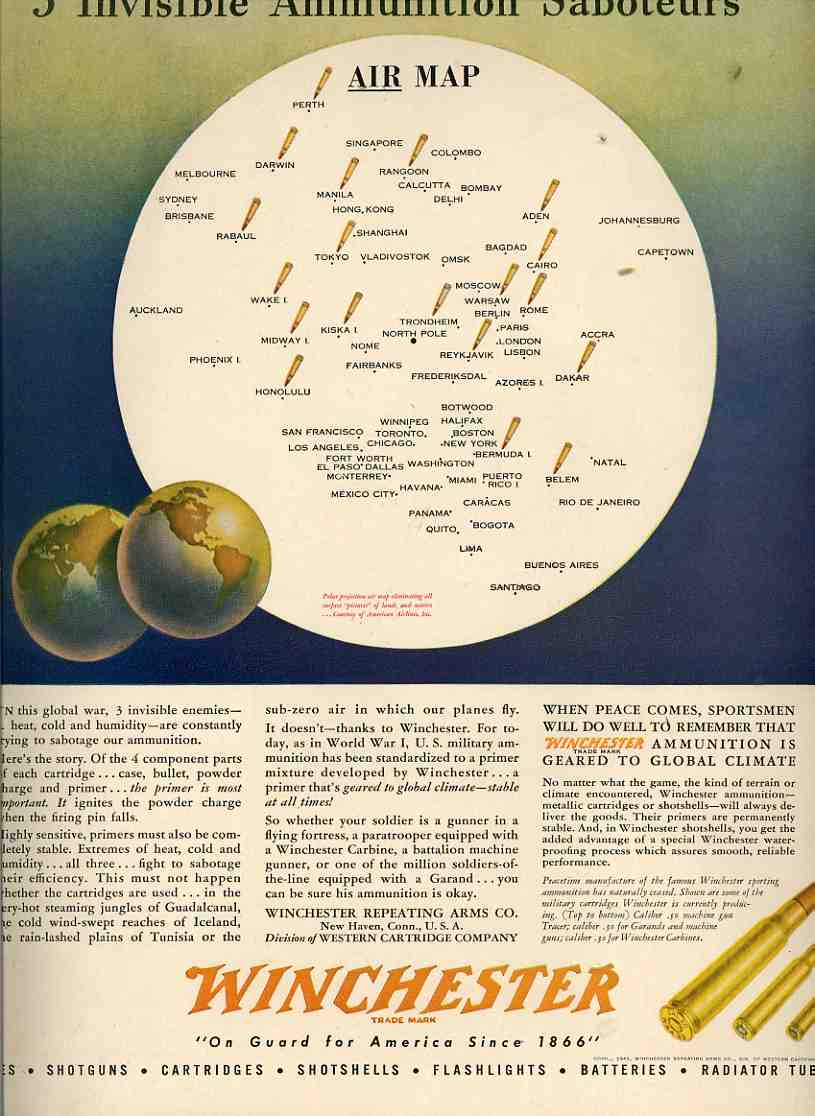
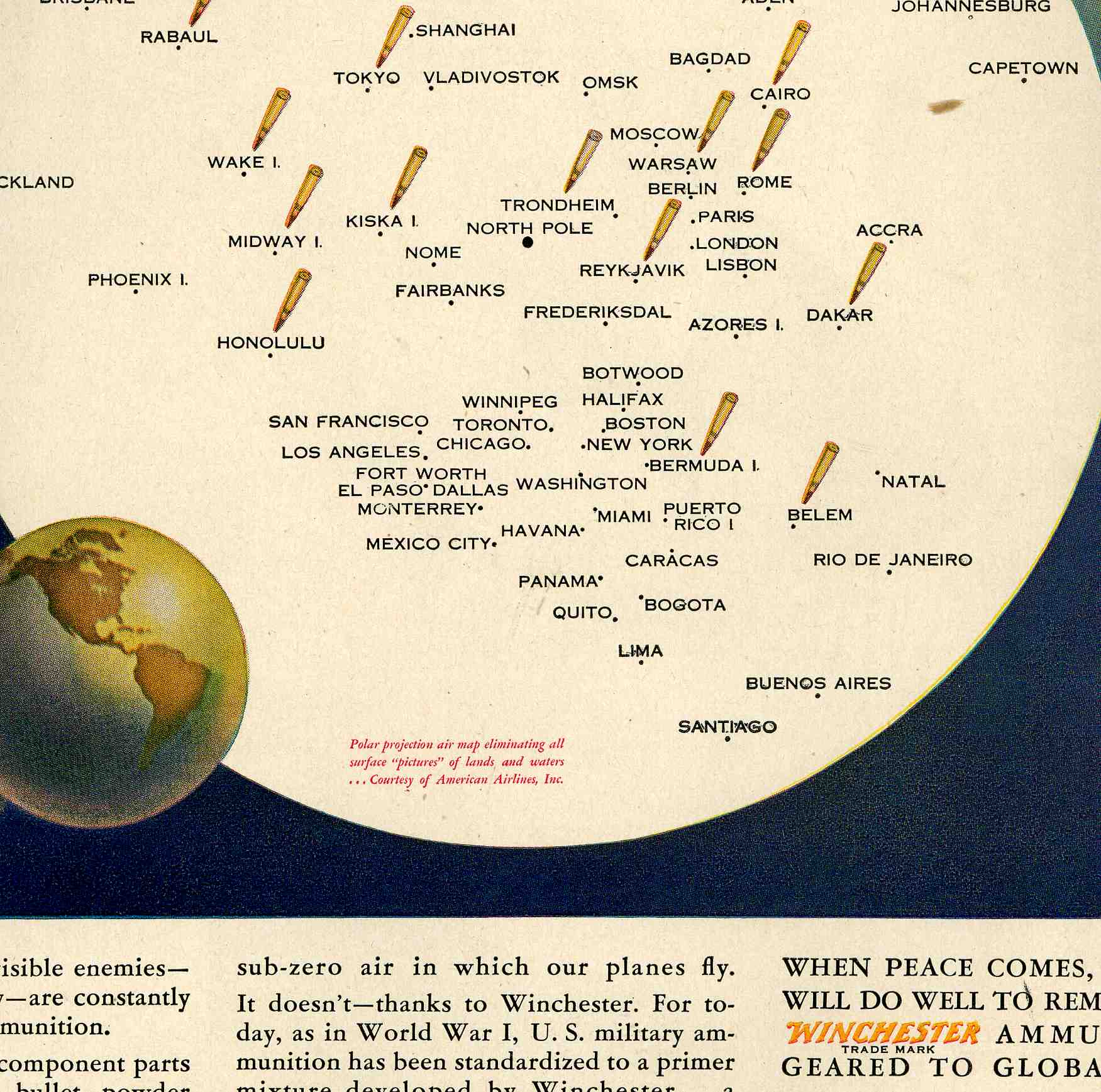
    These two maps were printed within a few weeks of one another in LIFE magazine in October/November 1943, which is unusual to my experience, as I haven’t seen too much in the way of unusual 20th century North Pole maps (especially as advertisements).  The first is a placement for Winchester  Arms, concentrating on the dependability of its ammunition, and assuring the readers of the magazine that if “your soldier” was carrying a Winchester carbine, or a Garand, or whatever Winchester product it was, “that you can be sure his ammunition is okay”.   The map is pretty odd and completed in a projection unknown to me:  it centers itself at the North Pole and includes cities in both the northern and southern hemispheres, which is an unusual thing to do on a single-hemispheric projection.
     blog 12 maps north pole693

    I know that Winchester was just trying to graphically present the notion that the ammo was suited to “global climates”, and did so using an impossible image; but, since it was wartime…

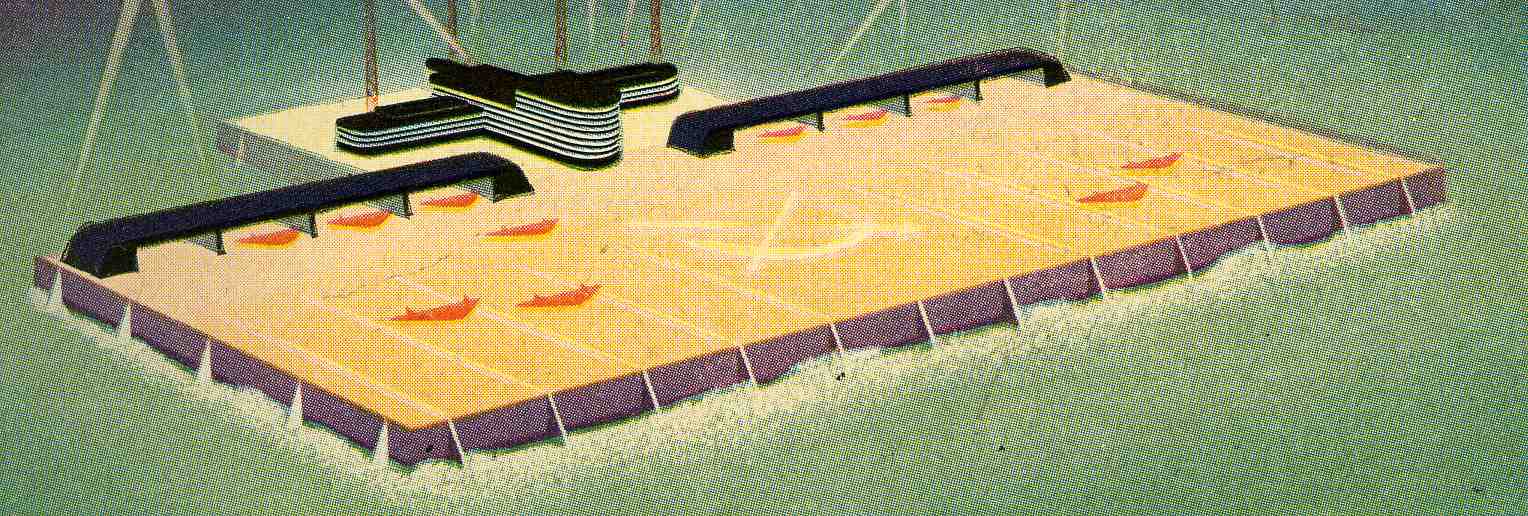
    The second image could also slide into the History of the Future category, Seagram’s Whisky somehow aligning itself with trans-polar future flight.  The airport in the ad’s image was at the North Pole, and was the layover/refueling point for the Chicago-Moscow run at some point in tomorrow.  Those little horizontal yellow rectangles are actually windows, and in my original you can see dozens of heads in there, making this one big stinking plane.  By my calculations, the plane was something like 1500′ wide, giving it a surface area of something like two square acres. In comparison, the Boeing 777 has a wingspan of about 200′ and a 4,600 square-foot wing surface, which means that five 777’s could be placed wing-tip-to-wing-tip along the visible part of this Seagram’s monster.  (And I’m being generous.) 
     blog 12 maps north pole690

    Then there’s the problem of the runway, which looks about 15,000 feet long–way more than enough for a 777, but nowhere near enough for this beast, unless of course there was some hidden sumpin’ sumpin’ that I don’t know about.  Lastly, there are eleven aircraft on the ground at this North Pole airport, which more than filled it up.  The terminal looks possibly more (relatively speaking) mammoth than the planes, and could undoubtedly provide rooms if not houses for everyone traveling  around in these Big Berthas.  Judging the building against the aircraft, it looks like it is 800 feet tall by 4500 feet by 6500 feet.  I’m not sure how many Malls of America you could fold into this thing, but it would be a lot. 

    Now I’m not saying that something like this structure wouldn’t ever be built, because “ever” and “never” are big words; as a matter of fact, I would say that it was probable that something like this would come into existence so long as we here on Earth lasted long enough. 

     blog 12 maps north pole691


  • Pre-modern Advanced Technologies and Looking at the History of the Future

    JF Ptak Science Books LLC  Post 541


    Future (Definition)  That period of time in which our affairs prosper,
     our friends are true and our happiness is assured.  
    Ambrose Bierce, Devil’s Dicitonary
    “It is by no means an irrational fancy that, in a future existence, we shall look upon what we think our present existence, as a dream.”  E.A. Poe

    Looking “into” what the future might hold  is a nasty business suited for hairshirts, geniuses and fools–except of course to say that there will be what would seem to us to be shock and awesome display that will wash over future generations like the shock of Darwin washing over those in the 1870’s.*  Looking into the past of looking into the future is far more approachable but not necessarily “easy”.  The major difficulty in finding the future amidst all the historical majors and minors is that given the optical distortions in the broadening of our depth of field to our WayBack Vision.  It is harder to see things that are out-of-place to a given tBlog--jameson satelliteime given our familiarity with it.

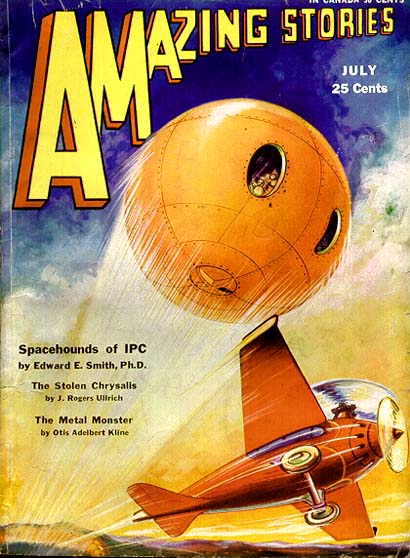
    (Neil R. Jones (1909-1988), a relatively obscure scifi writer, seems to be the first to introduce the concept of a history of the future in his Amazing Stories article of July 1930 called “The Jameson Satellite”.  (It is interesting to note that at about the same time he also introduced the word “astronaut”, and, further into the decade introduced some of the first appearances of cyborg/robotic story characters.))

          blog mar 10 future676

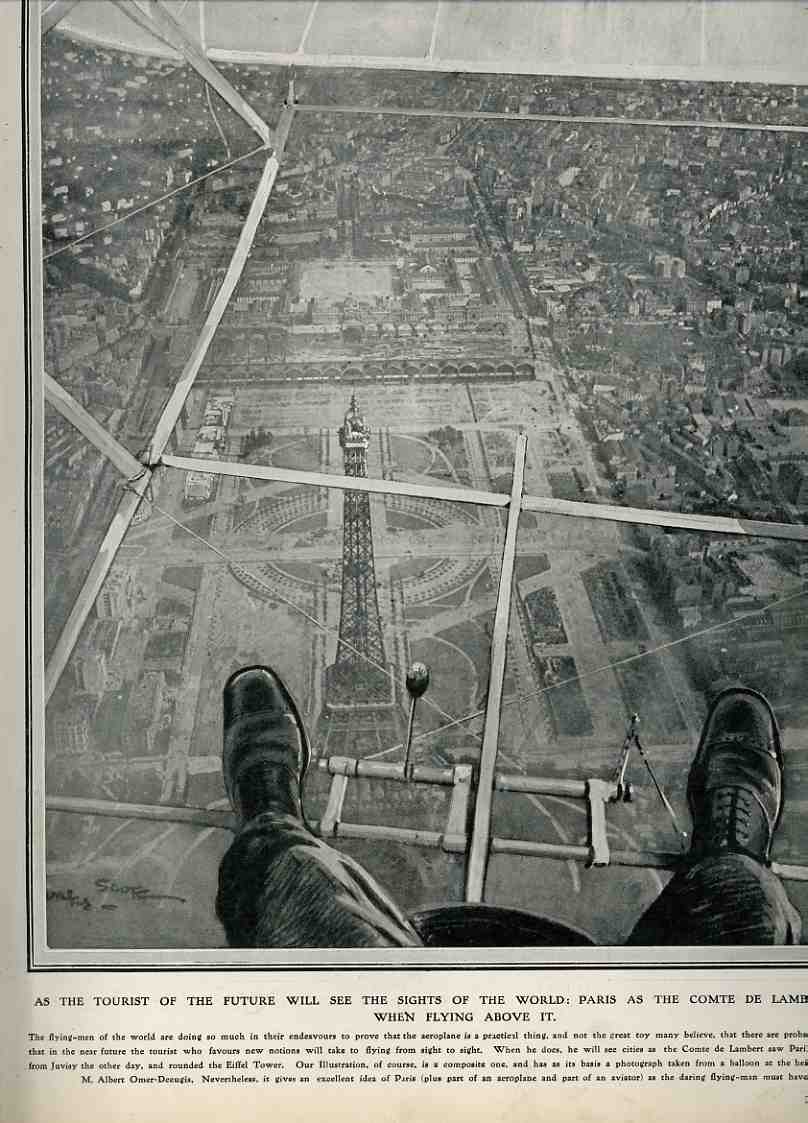
    The idea of identifying these parts of future history is certainly easier when they identify themselves so, as seen in the caption of this wonderful you-are-there image of a person flying in an aeroplane over the Eiffel tower, and printed in the redoubtable Illustrated London News for 1909.  The writer leaves himself plenty of wiggle room, though still firmly convinced that even though flying was still in its relative infancy in Europe, the time would certainly come when people would flit about it planes simply to see great wonders. 

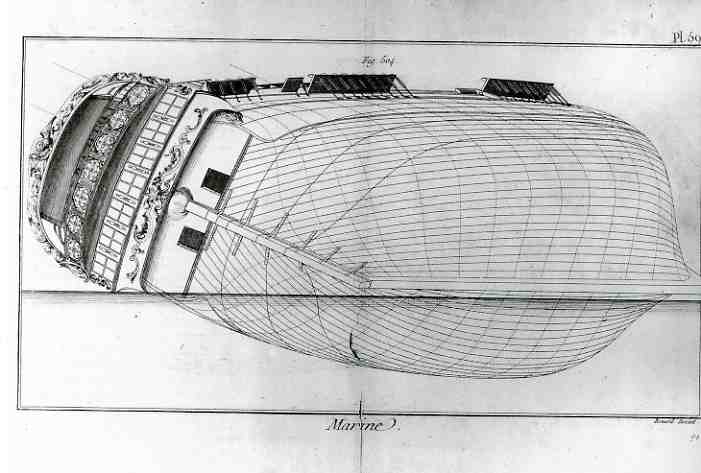
     Images of at the edges of contemporary technical capabilities and whose skill hints at bigger things to come are trickier to see. Take for example the following engraving found in the Encyclpoedie methodique*, published  in Paris from 1782 to 1830.  This engraving depicts a ship of the line in an unusual perspective, best suited I think to show th eshape of the hulol, and looking to me extremely similar to a computer-generated graphic. 

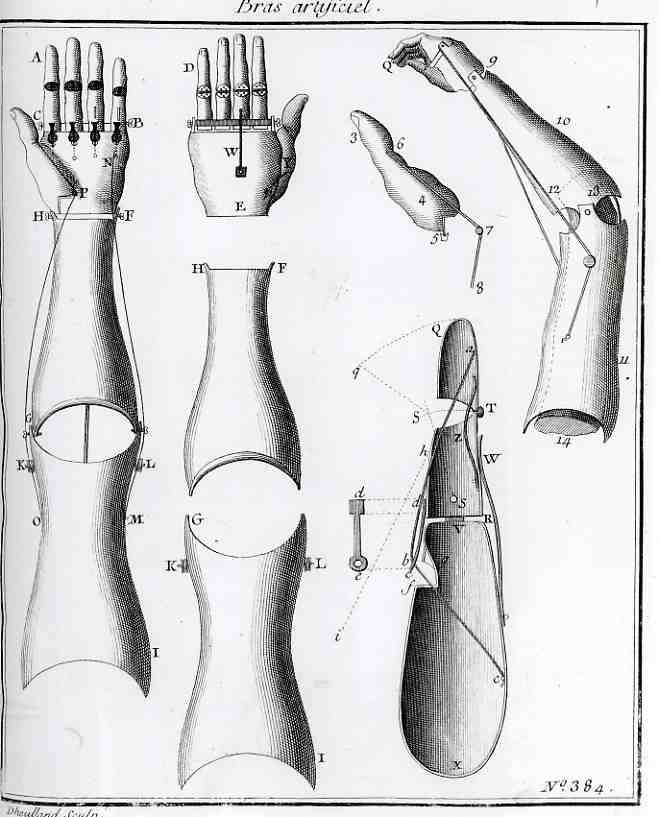
    Also, the fantasitic ebay mar 10 republican674ally articulated and probably unworkable set of metalic artificial limbs was another peep into the future–I think that the technology necessary for these limbs to be anything close to operational just escaped its manufacturer when they were designed in the 1760’s.   ebay mar 10 republican675

    In any event the exercise of finding the future in contmeporary writings of the past is interesting and fruitful, and really does make you pay attention to your sense of history and what modern prejudices one brings to it. 

    *”We may expect that a series of shocks of the type of Darwinism will
    be given to established opinions on all sorts of subjects. One cannot
    suggest in detail what these shocks will be, but since the opinions on
    which they will impinge are deep-seated and irrational, they will come
    upon us and our descendants with the same air of presumption and
    indecency with which the view that we are descended from monkeys came
    to our grandfathers. ..
    JBS Haldane, “Daedalus, or Science and the Future

    ** The L’Encyclopédie méthodique ou par ordre de matières par une société
    de gens de lettres, de savants et d’artistes; précédée d’un Vocabulaire
    universel, servant de Table pour tout l’Ouvrage, ornée des Portraits de
    MM. Diderot et d’Alembert, premiers Éditeurs de l’Encyclopédie
    appeared in over 200 volumes, and was a version of the famous Diderot encyclopedia,m though expanded, and ordering its iformation according to subject area rather than alphabetically.