A Daily History of Holes, Dots, Lines, Science, History, Math, Physics, Art, the Unintentional Absurd, Architecture, Maps, Data Visualization, Blank and Missing Things, and so on. |1.6 million words, 7500 images, 4.9 million hits| Press & appearances in The Times, Le Figaro, Mensa, The Economist, The Guardian, Discovery News, Slate, Le Monde, Sci American Blogs, Le Pont, and many other places… 5000+ total posts since 2008.

Category: Future, History of the

  • The Road to the Economic Abyss: Visual Display of Quantitative Data, 1909

    JF Ptak Science Books  Post 1084

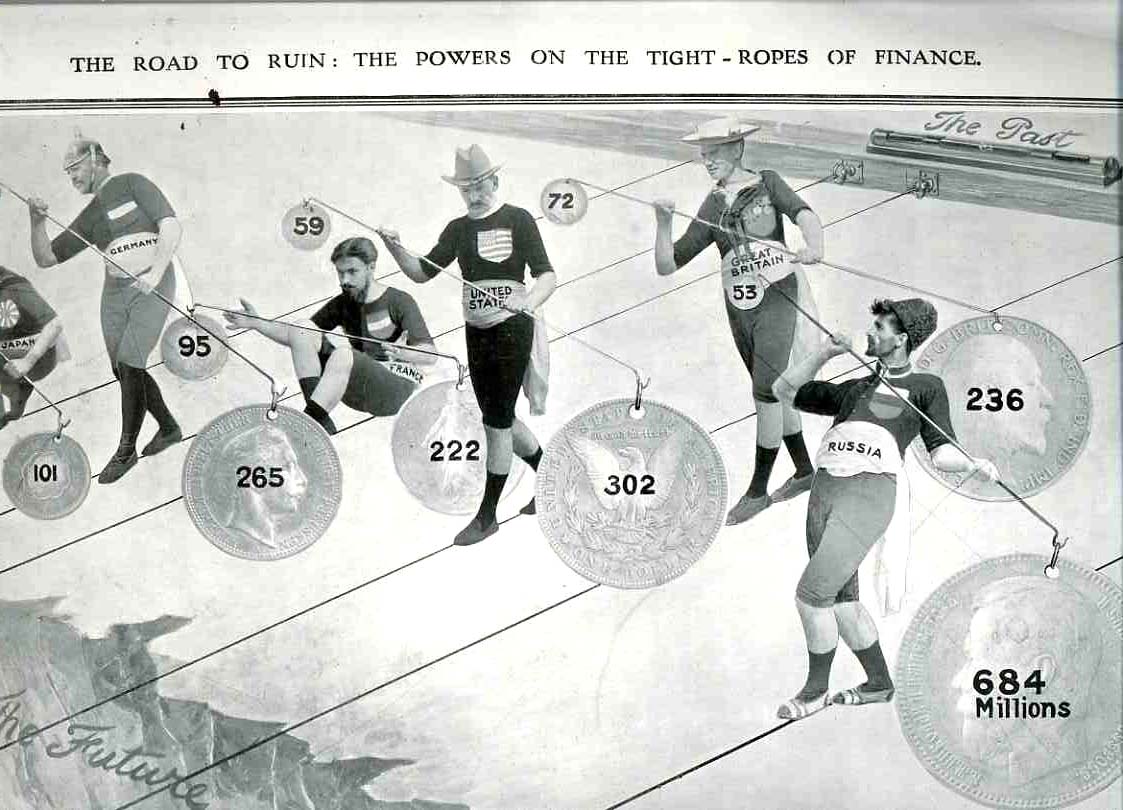
    The road to ruin is one of the oldest roads known to humanity; and, come to think of it, it was probably a road before roads existed, just an idea waiting for something concrete to show up and claim for its metaphor.  But certainly ever since the creation of money came (1) the need to have more, (2) the need to get it, in some fashion and (3) the possibility of losing it (though not necessarily in this order).  This image from the 4 September 1909 issue of The Illustrated London News is one in a long, ancient series of appreciating the way to financial doom, although this one happens to be a relatively early attempt at showing this idea via popular metaphor in the visual display.  And its pretty effective, too.
    00-blog-Oct 27 economic road to ruin938


  • Dunkerque to D-Day, from the Invasion of England to the Invasion of Europe

    JF Ptak Science Books  Post 1055

    (Including a short tale of when Winston Churchill’s nephew, John Spencer Churchill, wound up passed out on the back seat of my 1979 Chrysler New Yorker.)

    Dunkerque124

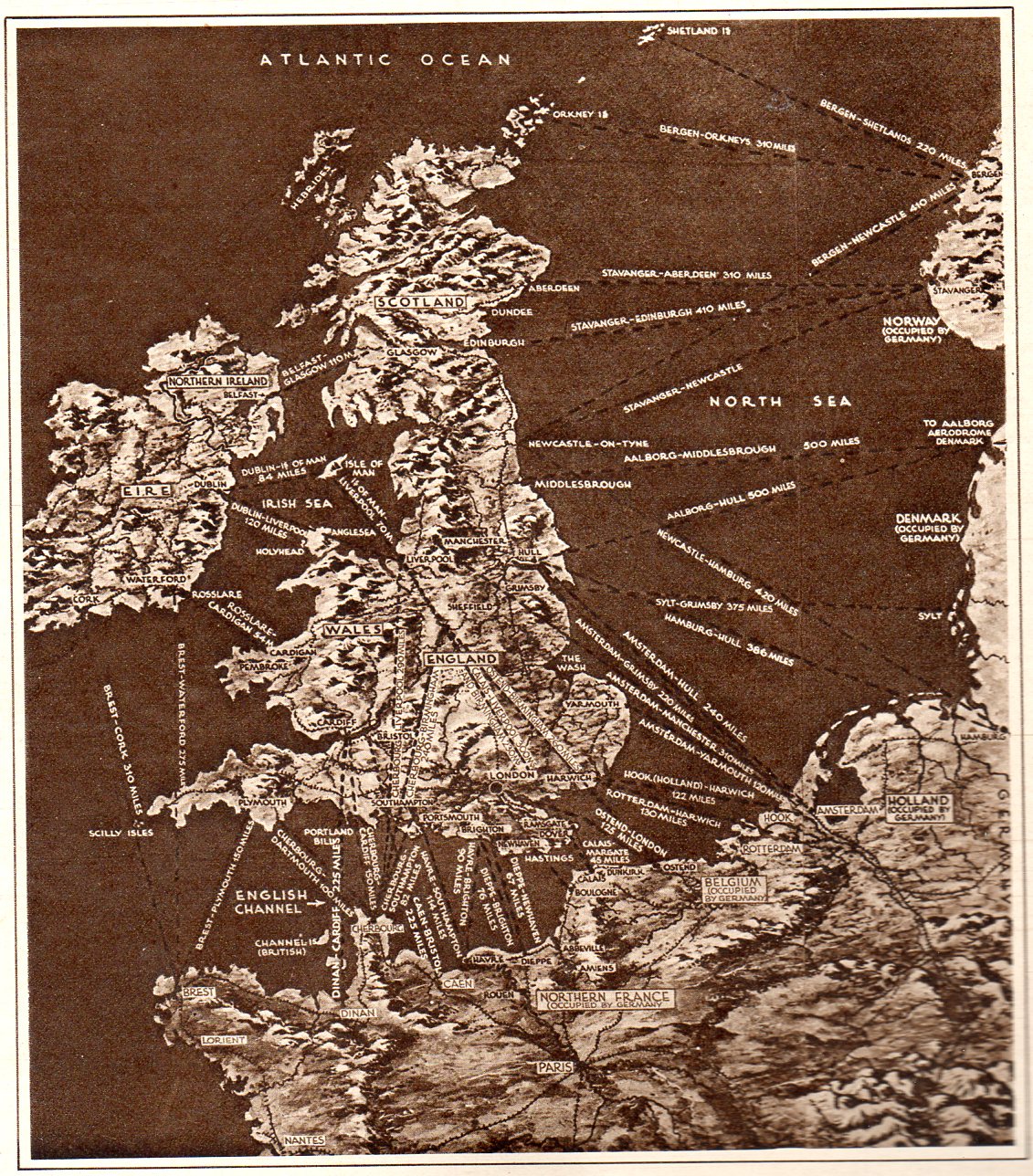
    This map pretty well tells the story of the perilous situation of Europe and England at the beginning of June, 1940.  It appeared in the Illustrated London News on the heals of Churchill’s “Blood, Soil, Sweat and Tears” speech, and was a very frank presentation of the wearing of the war.  By this point in the war Nazi Germany had successfully invaded Belgium, France, Luxembourg and the Netherlands, sweeping across Europe in a broad westward movement, backing up British and French troops all the way to the sea at Dunkerque, where a monumental rescue operation (“Operation Dynamo”) saved them.  (There was an enormous amount of materiel left there on the beach, a devastating loss for the British Expeditionary Force, nearly crippling it.) This was a bad time for the Allies, this part of the war coined by
    Winston Churchill in 18 June 1940 in the House of Commons by:  “The
    Battle of France is over. I expect the Battle of Britain is about to
    begin”. There was very little good that came of these few months for the U.K and the Allies, though four things do stand out: (1) as I just mentioned, the saving of 300,000+ troops at Dunkerque; (2) the resignation of Neville Chamberlain, (3) the coming of Winston Churchill  as Prime Minister of the U.K., and (4) the first deciphering of the Enigma at Bletchley.  Other than that, the situation was dim, and these invasion routes (published at t he very time that Germany was studying such a feat in its “Operation Sea Lion“, or “Unternehmen Seelöwe”).

    The endgame at Dunkerque took place almost four years to the day of the invasion of Europe, when the intent (though not placement) all of these arrows were turned around for the Allied operation at the Normandy beaches on 6 June 1944.. 

    It came to pass in 1985 that some friends and I had drinks with John Spencer Churchill, a man who was at Dunkerque and who reported on it to his uncle Winston.  (A slightly longer story on this meeting with Mr. Churchill appears below.)  After much else I finally asked Mr. Churchill if there was any particular sound that he remembered from being at Dunkerque.  I do not recall his phrasing, but what he said was that the beach at Dunkerque was rocky, pebbly, and that the sound made by tens of thousands of boots on that shore was “disgusting”.  He also said that the mixture of petrol, wind and grit burned the eyes and tasted bad.  It was of course fascinating to hear a first hand description, especially a memory of something so uncommon and visceral. It was unexpected to me, though now when i read about Dunkirque I can imagine its smell thanks to this encounter. 

    First Address by Winston Churchill as Prime Minister.


  • The Industrial Revolution and Inventing Luxury for the Working Poor

    JF Ptak Science Books

    One of the things that I’ve not thought of before was the invention of luxury for the working poor.

    The first comfortable chair, the first luxurious chair,. ever bought by a member of the working, laboring class was purchased in the United States on July 23, 1852 at 11.11 in the morning.

    Or perhaps not.

    But what did happen around this time was that a commodity that was over and above the absolute necessity–say for an upholstered chair with springs–did become available en masse to the vast majority of working/poor Americans.  Or at least that’s what I’m thinking.  The Industrial Revolution, now 80 years old or so, began to rub up against objects that we’re formerly only available through extended labor and craftsman but were now becoming widely accessible and for cheap because of mechanized production. 

    So, for example, the stuffed comfy chair which had been the nearly exclusive domain of the middle- and wealthy classes were now patented inventions that were mass produced, their cost coming down because of the ease of production and the vast new demand.  The industrialization of luxury found its true invention in mid-century Americas and was subject to enormous variation and tremendously expanded development–so much so that in just the next few decades there would be massively distributed catalogs containing almost nothing but eminently affordable necessaries and new luxuries.  By the 1880s the mail order catalog was becoming commonplace, as was the ability for the poorer classes to purchase formerly unaffordable objects–luxury for the masses had been discovered, and an enormous consuming class had been invented.


  • Dis-inventing the Left-Hand Turn–City Planning with Le Corbusier

    JF Ptak Science Books  Post 1038

    Somebody must’ve invented the automotive right-hand turn, and someone too must’ve come up with the idea of dis-inventing the left-hand turn–for the sake of this post and brevity that person might as well have been Le

    Right hand turn 2006

    Corbusier.  I know that city planners and traffic engineer types must’ve been working on the idea of how to push new traffic through old city streets, and the notion of making traffic not cross against itself must’ve come fairly early on, but I just offhand don’t know when.  It makes sense to me to not have cars make left-hand turns against oncoming traffic–it adds immeasurably (?) to the gas guzzling stop-and-go adventures in driving, the chain reaction of so many cars stopping and piling up behind one solitary driver waiting to make a left-hand turn against a stream of oncoming cars is just enormous.  Restricting the left-hand-turn to three right turns would slash the waiting/idling business and allow traffic to proceed quicker. (In a similar line of thinking my friend Richard Rudman from New Zealand points out that studies prove that restricting highway lane changes also makes enormous sense as well–it gets people to were they’re going quicker and with greater fuel economy if the flow isn’t interrupted by constant starts and fits of changing lanes.)            

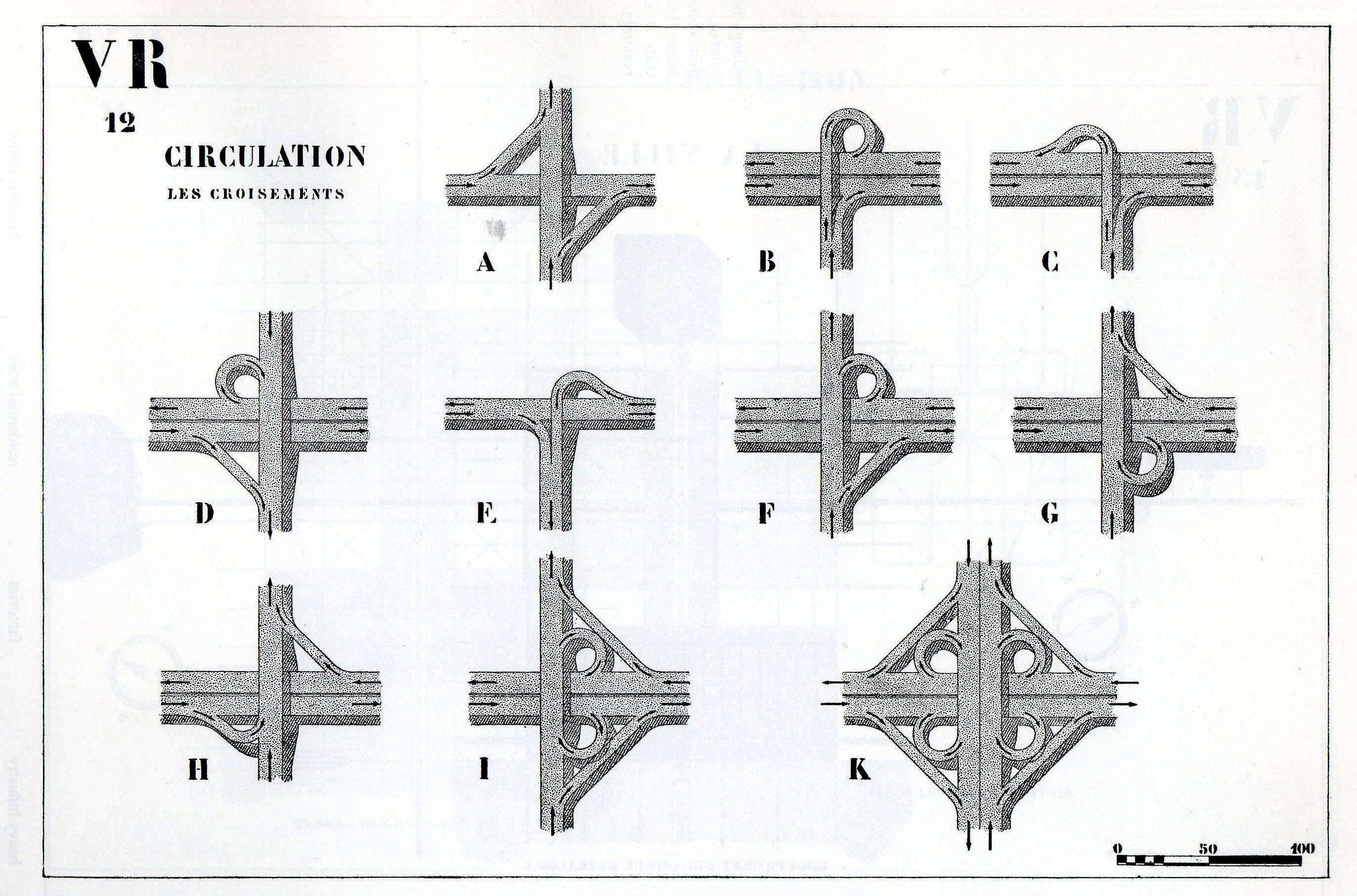
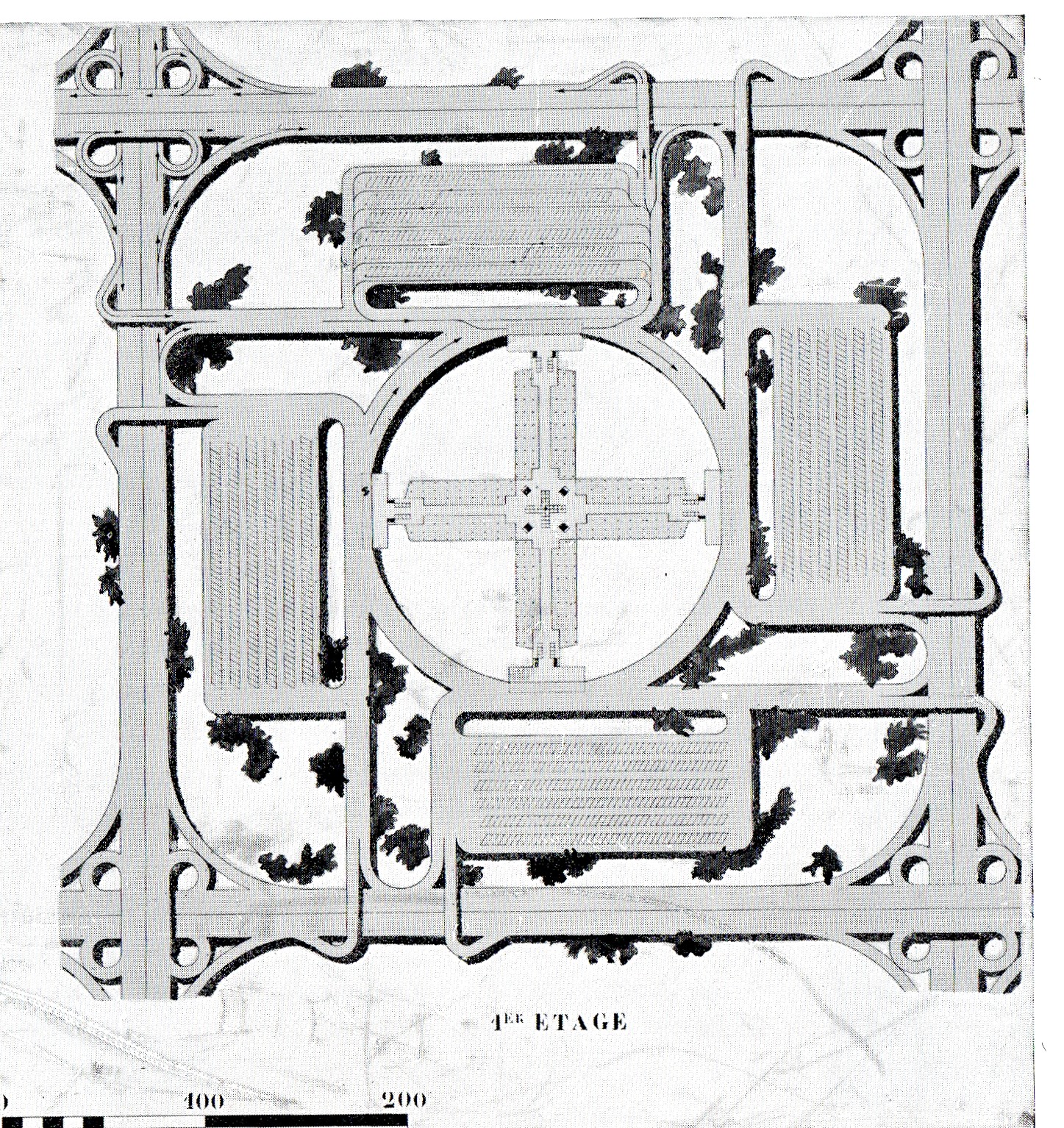
    Further on in The Radiant City we find this visual encyclopedia of right-handed turns:

    Right hand turn 10

    And so we come to this plan, a part of the 1930’s Radiant City of Le Corbusier.  It is a section of a series of “horizontal skyscrapers”, “Cartesian (works) in steel and glass”, 220 meters tall buildings set in 400 meter square sections.  All of the architecture aside, the street plan is what interests me–all of the traffic here in this section of the Radiant City is in one direction along streets that are largely lacking right angles.  Elsewhere in the book Le Corbu presents his ideas for intersections for large cities–all of the designs remove the cross-traffic turn, keeping traffic flowing without those series of infinite stops.

    I’ve not been a very big fan of this man, but this is the stuff that seems to make sense to me. 

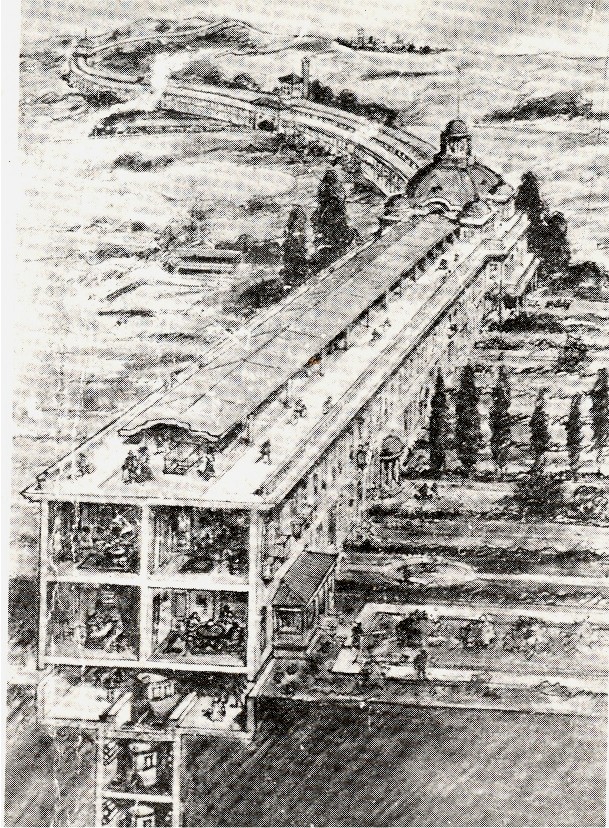
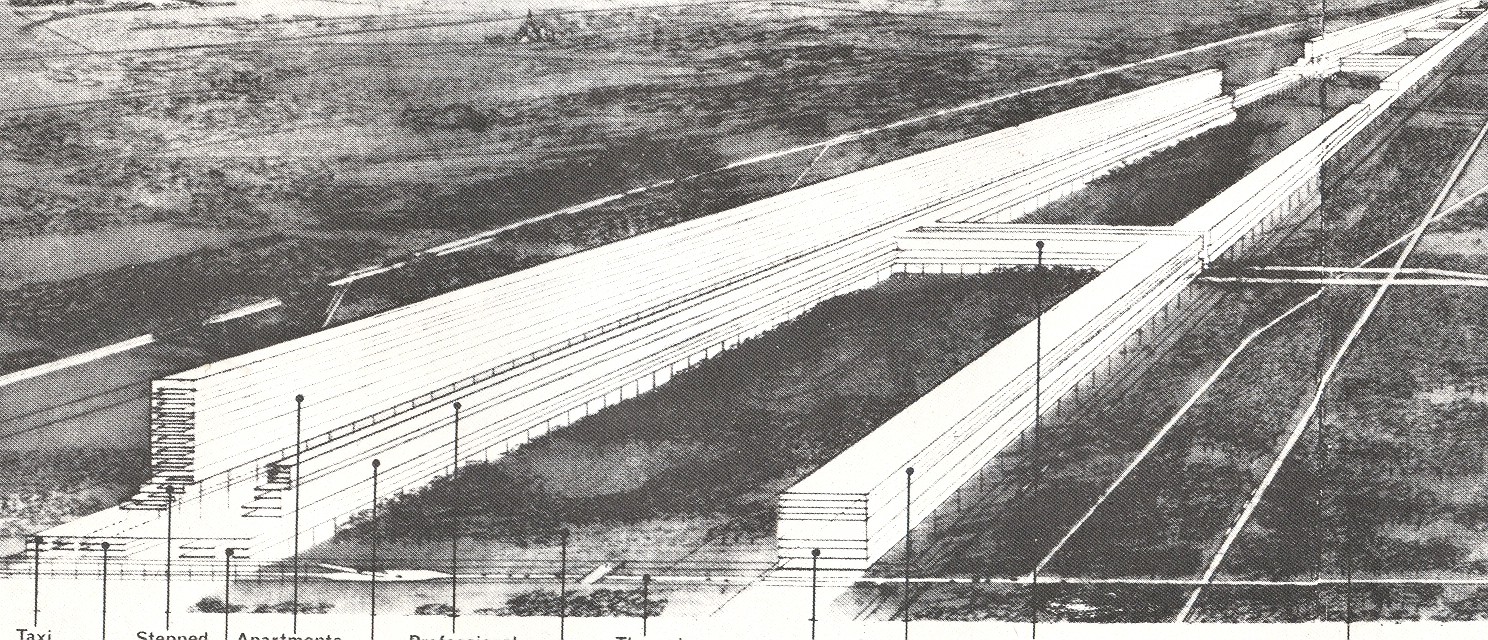
    These ideas are also in vast contrast to the city plans of linear cities (which I wrote about earlier here), seen in the 1910 Chambless image (below) and the 1932 Popular Science city (below that).

    Linear cities 2

    Linear cities

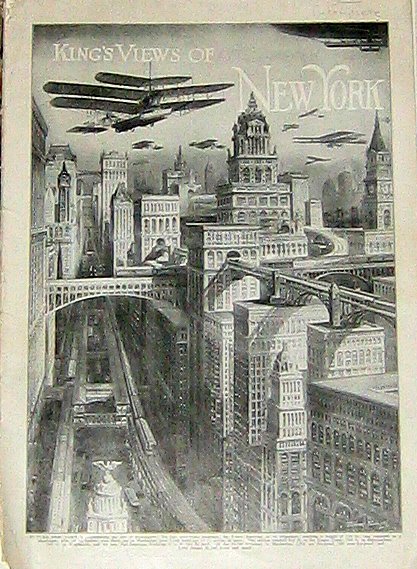
    It is also entirely different from the methods of dealing with traffic that were seemingly very popular in the early/first-third part of the century–massive 12-lane roadways, suspended garganutan affairs with traffic turning everywhere, some of which took place high in the air and in the interiors of massive skyscrapers. (Some of which I wrote about here.)

    Kings new york


  • Raising Greatness: James Hutton’s Deep View of Time, 1795

    JF Ptak Science Books   Post 1032

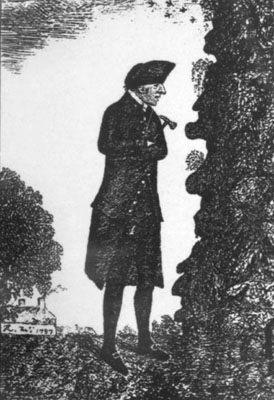
    I think that I’d like to start a series here on significant works in the history of ideas that were originally highly problematic or not accessible due to writing style or place of publication or misplaced appearance or, well, simply bad timing.   The storyline would be one of these great works whose significance suffered as a result of one or more of these issues, and then which was raised above its suffered complications to a place of higher (or more popular) esteem, allowing it to get to a place where the work could generate the new set of ideas that it was intended to help create in the first place. The first of these stories belongs to James Hutton and his revolutionary idea of deep time.  James_hutton
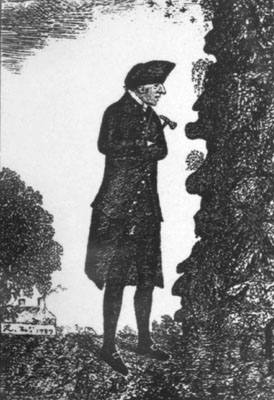
    Seeing more deeply into scientific time than anyone else in history, seeing the entirety of Earth’s history explained  in the sloping  red sandstone at Siccar Point (above the vertical greywacke), James Hutton worked through his theory of the earth in two stout volumes (The Theory of the Earth, with Proofs and Illustrations... in 1795), wrapping up geological evidence with a dogged, comma-ridden and usually-unwieldy prose. He had in fact written a much more elegant paper presenting the main thrust of his theory in outline in 17851, though this paper received a much more limited distribution.  In the long term it really didn’t matter, though, how pretty his writing was–but in the short term, it did.  He made the case for the vastness of time in an elegant way, even without the prospect of being able to know the age of the rocks he was looking at.  The processes of sedimentation, transportation and weathering of solids,  vertical elevation of the Earth’s surface in response to natural causes, and so on, were just not known to him; no matter, as Hutton trusted his theoretical inspiration to tell him that the 6,000-year old earth history clock on the wall was telling a tenth of a tenth of a tenth of a tenth (and on) of the larger, truer story of the age of the earth.  He knew that there were many orders of magnitude of age involved in the telling of the story–he just didn’t know how many. 

    He ended his great work bowing to the enormity of the sight of time:

    “Here are three distinct successive periods of existence, and each of these is, in our measurement of time, a thing of infinite duration. …
    The result, therefore, of this physical inquiry is, that we find no vestige of a beginning, no prospect of an end.”
                   
    Hutton’s work is inestimably important, Archibald Geike (the great 19th century geologist) commenting that it is impossible to praise the work too highly.  But then there was the problem of the density and just flat-out difficulty in reading Hutton’s writing, which restricted the book’s message to a dedicated academic class. Hutton did find his champion in James Playfair, who would strengthen Hutton’s work with new data and who would also help along the troubled Huttonian prose.  Playfair’s work is in of itself2 an important contribution to the history of geology and also of course evolution. His Illustrations of the Huttonian Theory of the Earth (1802), popularized and made the Huttonian work far more acceptable to a larger audience, and as the DNB says “presenting Hutton’s momentous theory in a clear and palatable form (which Hutton himself had failed to do), and in adding materially to the geological knowledge of the time”.

    It was Playfair’s treatment of Hutton that found its way into the mix of genius of Charles Lyell, whose own Principles of Geology3 found its way onto the Beagle and which were voraciously studied by Charles Darwin4 and then put to further use.
               
    Notes

    1. “Theory of the Earth; or an investigation of the laws observable in the composition, dissolution, and restoration of land upon the Globe”, presented in two parts, in Transactions of the Royal Society of Edinburgh, vol. 1, Part 2, pp. 209-304.  An earlier, related pamphlet was written and privately published for a very restricted and private distribution in 1785:   Abstract of a dissertation read in the Royal Society of Edinburgh, upon the seventh of March, and fourth of April, MDCCLXXXV, Concerning the System of the Earth, Its Duration, and Stability. Edinburgh. 30pp.   

    Eventually the book would wind up in a final form as An Investigation of the Principles of Knowledge and of the Progress of Reason, from Sense to Science and Philosophy in 2,138 pages, causing Playfair to remark that “The great size of the book, and the obscurity which may justly be objected to many parts of it, have probably prevented it from being received as it deserves”.
       
    This paper privately printed 1785 paper stated:
    “The solid parts of the present land appear in general, to have been composed of the productions of the sea, and of other materials similar to those now found upon the shores. Hence we find reason to conclude:
    1st, That the land on which we rest is not simple and original, but that it is a composition, and had been formed by the operation of second causes.
    2nd, That before the present land was made, there had subsisted a world composed of sea and land, in which were tides and currents, with such operations at the bottom of the sea as now take place. And,
    Lastly, That while the present land was forming at the bottom of the ocean, the former land maintained plants and animals; at least the sea was than inhabited by animals, in a similar manner as it is at present.
    Hence we are led to conclude, that the greater part of our land, if not the whole had been produced by operations natural to this globe; but that in order to make this land a permanent body, resisting the operations of the waters, two things had been required;
    1st, The consolidation of masses formed by collections of loose or incoherent materials;
    2ndly, The elevation of those consolidated masses from the bottom of the sea, the place where they were collected, to the stations in which they now remain above the level of the ocean.”

    2. Returning again to Geike, who  remarked (1905): “How different would geological literature be to-day if men had tried to think and write like Playfair!”

    3.  The Principles was an enormously influential book, and went through six editions in the first 11 years of its printing (1830-1840), seeing 12 editions during the author’s lifetime (the last edition corrected and added to by Lyell appearing just after the author’s death in 1875). 

    4.  Darwin had volume 1 when he shipped off, receiving volume 2 en route.  A quick look online reveals that there is no mention of Playfair or Hutton in either the Voyages or Origin.; Lyell is noted 14 times in the Voyages and 30 times in the 6th edition of the Origin.
  • Overstated Understatement: on the Future of Television

    JF Ptak Science Books Post 1024
    1--may 10 philo det good
    [I’ve written a number of posts on understatement here on this blog; two dozen or so will pop up when you put “understatement” in the google site search at left.]*

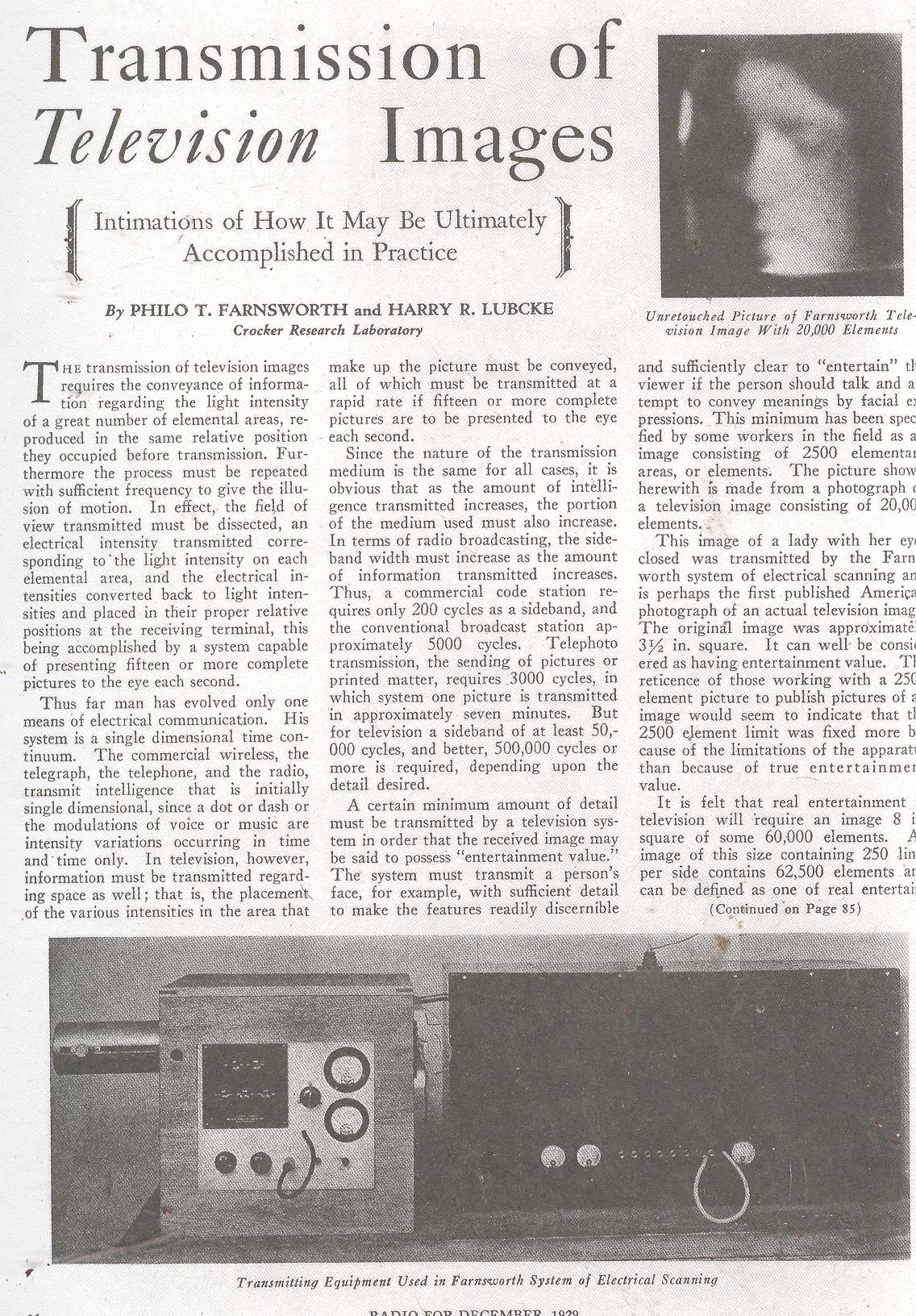
    Philo T. Farnsworth (1906-1971) may have had the best name among the earliest inventors of electronic1 television, but he didn’t necessarily have the best invention, this in spite of the fact that it is he who is remembered and counted as the technical inventor of the medium.  But that’s the way it goes, sometimes; sometimes it goes that way.  Farnsworth2 also had the better back-story: he was a teenager, brilliant of course, working out in the comparative middle-of-nowhere with little bits of money here and there from local investors.  On the other side of the coin was Vladimir Zworykin3 (1888-1982) who invented a cathode ray tube system for transmitting and receiving televised images, and who had the enormous financial support of Westinghouse (and then, later,  RCA).  Farnsworth was first off the boat, but Zworykin is the one whose work became the industry standard.         

    But the understatement is what attracts me here, and it occurs in the December 1929 issue of Radio magazine in which he reports on his successful first demonstration of his device to the general public.  I can’t tell if he was being very deliberate in his understatement or if was simply a staccato expression by a very young engineer with not-great writing abilities–I think that it was the later, really, as the statement is sandwiched in an odd, non-congruent section of its paragraph.

    1--may 10 philo

    In the article, Farnsworth also publishes the first (?) photograph of the first televised image, and states:

    “This image of a lady with her eyes closed was transmitted by the Farnsworth system of electrical scanning and is perhaps the first published American photograph of an actual television  image. The original image was approximately 3 ½ in. square. It can well be considered as having entertainment value. The reticence of those working with a 2500 element limit was fixed more because of the limitations of the apparatus than because of true entertainment value.”

    I do think that Farnsworth was in a hurry to get to the end of the article.  Later on he did try to capitalize in a major way on his invention and its distribution, but things didn’t work out so well. 
    Notes:
    * Some other great understatements in the history of science and technology include:

    -the Wright  brothers’ telegram to their father on the successful flight at Kitty Hawk, telling him to “inform Press” [sic], and misspelling Orville (“Orvelle”)

    –the announcement of the invention of the telephone, giving Mr. Bell a scant 200-word mention in the London-based journal Nature.

    –the alpha and omega element of the severe understatement of George Gamow on discovering the background radiation of the Big Bang.

    –and the atomic bomb/nuclear Armageddon bit from the National Emergency Planning Council:  ( “Because of recent changes in the technology and potential tempo of war and because of the base power of force is in being (including equipment and supplies), there is general recognition that any future war in which the United States is engaged, especially if it is an unlimited nuclear war, may be decided without significant additional military demands upon the nation’s industrial economy.” Hmm. He continues: “That is not to say, however, that the post-attack economy would not face enormous logistical support problems.” There is no human element of this equation. “The logistic requirements of survival and recovery would present very heavy demands.”)

    1. Early on there were mechanical approaches to the invention of television.                                             

    2. He was the inventor of the first functional all-electronic  image pickup device (the so-called “image dissector”) and also provided the first television system.  He was also the first to display his functioning systerm to the general public. He also started to work on replacing the mechanical-option television with electronics in 1921 at the age of 14.

    3. Zworykin’s first patent for his idea,”Television Systems”, was filed on December 29, 1923.


  • 1947 Atomic-Powered Farm Industry and the 1945 Internet–Interesting Future Visions Fueled by Booze

    JF Ptak Science Books LLC  Post 1017

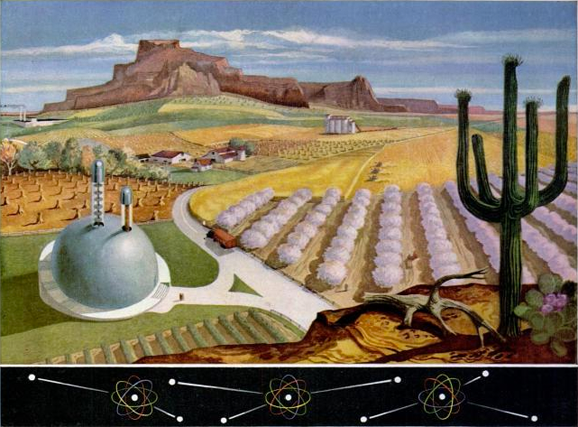
    Seagrams V.O. Canadian Whiskey powered the future through a series of a dozen or so ads for itself in the 1945-1947 period, taking a usually-strangled though occasionally interesting peep into what the future might bring.  (And of course the future is brought by men who drink Seagrams.)  In this ad, appearing in the 12 May 1947 issue of LIFE Magazine, we are told “deserts will bloom through atomic power”–how this might happen is left to the imagination. Also left to fantasy is what exactly is being farmed there in front of the incongruous “atomic energy plant”. Plastic smoke?  Taking a fractured approach to the possibilities one might say that atomic bomb mushroom clouds are being grown from seedlings here from the ground up, nurtured until the day they too will be as big as the blasts of August 1945.

    Atomic garden

    Oddly enough, the illustrator–who after all was just trying to sell alcohol–came pretty close to the truth, except that they got the power source wrong.  Rather than nuclear energy, it would be petrochemical industries that would lie there at the heart of America’s farm production (via seeds and fertilizers and so on)–I’m sure that it would’ve made more sense in a weak way back there in 1947 to believe the atomic story rather than thepossibility that it would be petroleum that would drive the entire production of food forward.  

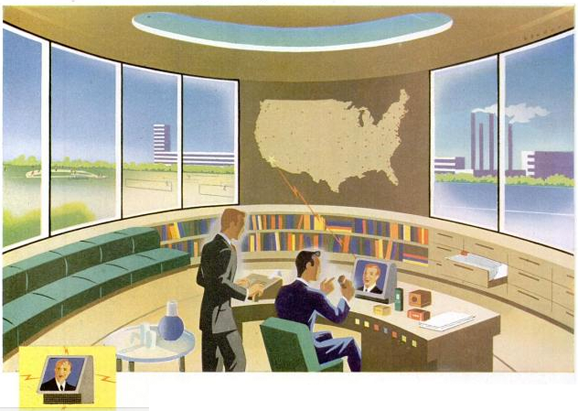
    In another weirdly prescient image–“weird” anyway for a quick effort made by an artist trying to sell drunk juice–is this proto-internet office view, made in May 1945. There’s lots of passive solar going on here(though not really very effective when you consider the other ways of directing and filtering exterior light inside) in the office of tomorrow, but more important is the desk and the file cabinets.  The seated man is talking to someone across the country  via phone/wireless, with data en masse at his fingertips, a “computer” (in the old sense of the word, that being a person–and usually a women–given the charge of adding long columns of number or whatever and then doing the arithmetic, like a comptometer) working some sort of calculating interest on the largish calculating instrument. In general we see a decision-maker awash in responsibility connecting all of the parts of his world: a primitive, secular, analog internet.  And this too just at about the same time that Vannevar Bush introduced his own vision of the informational future with his superb Memex (which I wrote about earlier on this blog here.)

    Internet 1945


  • Bombing and the End of the World: the Physics of 1932 And All That

    JF Ptak Science Books 

    1932 in my book turns out to be one of the most collectively epochal years in the history of science.  Certainly others stand out for individual achievements, like 1905 (Einstein’s four papers over two volume of the Annalen), 1687 (Principia), but there are other yeas with fabulous achievements by numerous people.

    Mar 7 airmen det


    1543 is one.  That year witnessed the published of Copernicus’ De revolutionibus and Andreas Vesalius’ De humani corporis fabrica, two giant achievements for the outer and inner worlds, one challenging the structure of the universe and the other the Galenic tradition of physiology and anatomy. (To a lesser extent is Peter Ramus’ Animadversions on Aristotle which was a very sustained and elegant attack on the ancient-precept Aristotle an physics.)

    1859 saw the publication of On the Origin of Species…JC Maxwell’s work on the kinetic theory of gases, Riemann’s hypothesis, and the spectacular invention of the spectroscope of Kirchhoff and Bunsen (that turned much of the invisible universe visible).

    Mar 7 airmen det 2


    1939 (nuclear fission, chain reaction, neutron stars, magnetic moments, penicillin (advancement), Vit K, FM) and 1948 (nuclear structure, QED, transistor, Big Bang) also come quickly to mind.

    1932, though is really quite something, seeing a sweeping array of discoveries in the large and small.  Carl Anderson identified the positron while James Chadwick discovered the neutron; also, the Joliot-Curies’ made their monumental discoveries in radiation.1 Iwanenko described the neutron as a constituent f the nucleus, while Heisenberg described the nucleus as composed of protons and neutrons.  Knoll and Ruska built the electron microscope, allowing a vision of the interior parts of the interiors of the smallest things, offering images almost as spectacularly new as Hooke’s two centuries earlier.  Looking up and out, in the same year, Lev Landau postulated the existence of neutron stars while Karl Jansky invented radio astronomy. There was also the perfection of the “Polaroid” process by Ed Land, and the isolation of ascorbic acid (Vit C, by  Charles Glen King, and the beginning of a long war between him and Szent-Gyorgyi on priority of discovery).  (In the non-sciences, there was the addition of Franklin Roosevelt and Adolf Hitler to their national agendas. It was also a banner year for literature: Death in the Afternoon, Ernest Hemingway; Light in August, William Faulkner; 1919, John Dos Passos; The Thin Man, Dashiell Hammett; Tobacco Road, Erskine Caldwell; Young Lonigan, James Farrell; Little House in the Big Woods, Laura Ingalls Wilder; and Brave New World, by Aldous Huxley…)

    Mar 7 airmen 


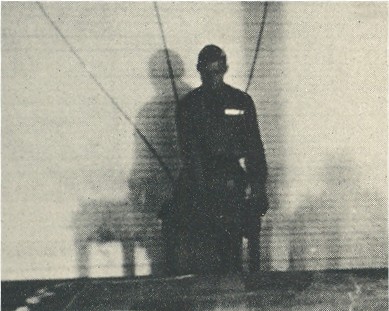
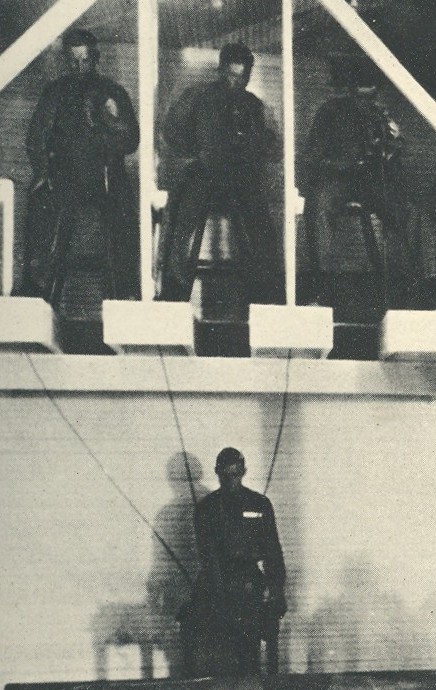
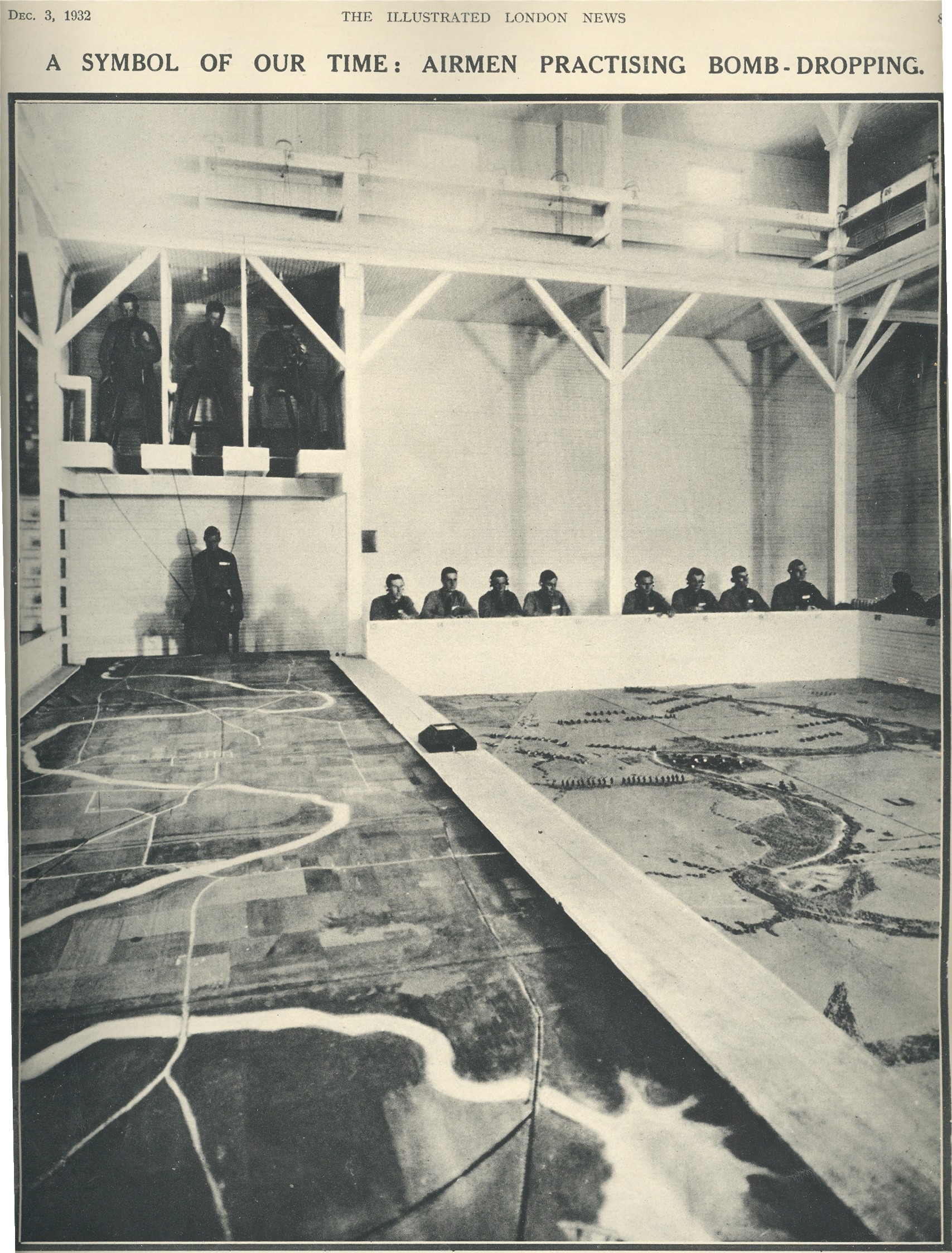
    The thread of thinking about all of this came to mind looking at this image of a bombing instruction room for aviation in England in 1932.  The image is also a great one; the aviator at far left looks like a marionette; the three men above responding to his piloting maneuvers as he concentrates on the endless panoramas of landforms that advances before him on a horizontal diorama.  It is a fabulous analog flight simulator constructed at a time of great change in aviation

    Wonder stories

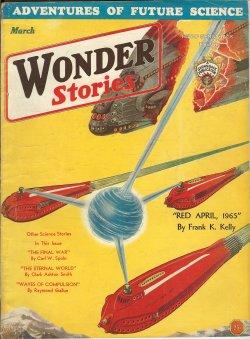
    1932 is also the year of the publication of Carl W. Spohr’s classic future-vision/speculative fiction apocalyptic-atom bomb end-of-the-world two-parter (so many hyphens!) that appeared in Wonder Stories.2 The story begins with a relatively simple series of catastrophic bombings that lead to a sort of détente, a kind of mutually assured destruction, which is then upset when the combatants discover and construct the atomic bomb.   MAD breaks down, and the ensuing massive exchanges result in a  devastated world.   Pretty prescient stuff, all-in-all, even so far as the policy goes—especially so when you wrap this sci-fi story around the elements of 1932—Chadwick, Anderson, Joliot-Curie—that made all of this stuff possible just 13 years later.

    Notes

    1 The Joliot-Curie discovery was called “one of the most important discoveries of the century… the consequences of the discovery of artificial radioactivity are immense” from Segrè, From X-rays to Quarks, 198-199).  

    2.  Part one appeared in the March issue, which also carried stories like“Red April, 1965” by Frank K. Kelly; “The Eternal World” by Clark Ashton Smith; “Waves of Compulsion” by Raymond Gallun; “Mutiny on Mercury” by Clifford D. Simak; “The Time Stream” by John Taine (Eric Temple Bell), and others.  Pretty good bumper crop of sci-fi writers in itself.


  • Mobile Maginot: Movable Land and Floating Forts, 1940

    JF Ptak Science Books  Post 959

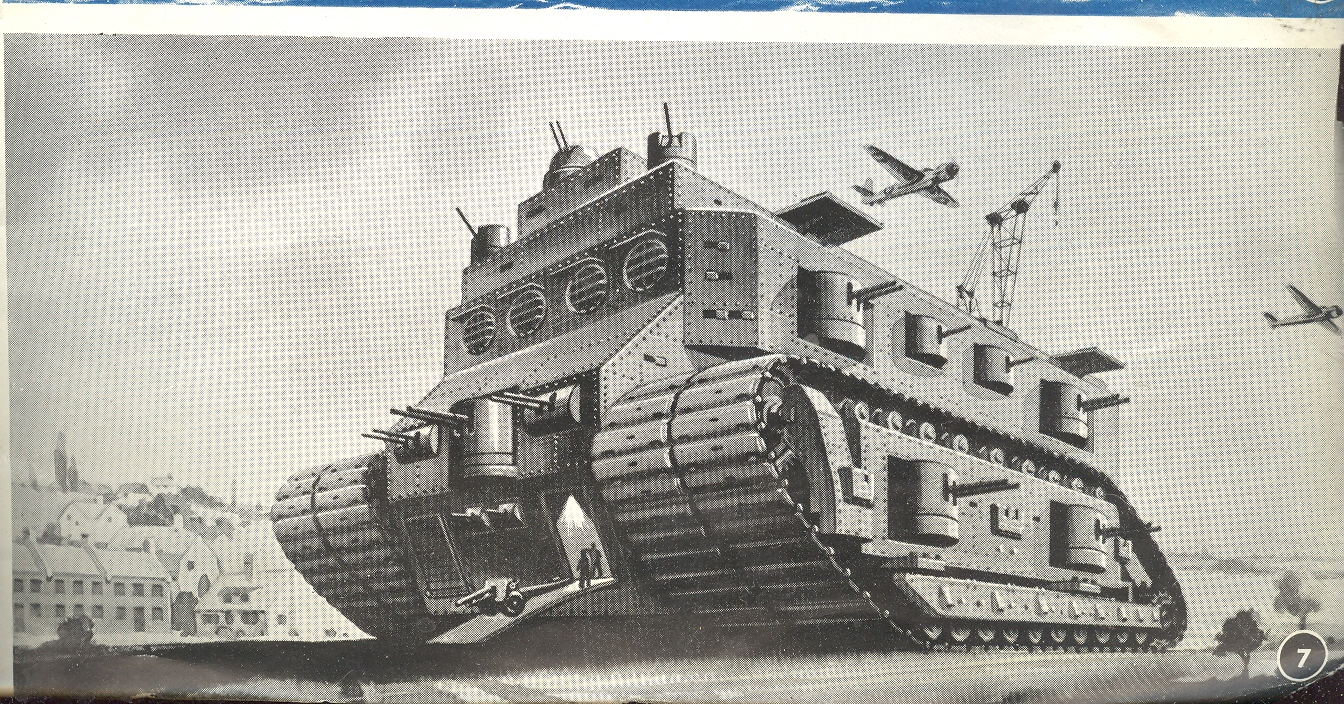
    Nothing quite exceeds like excess said Mr. Wilde (and others) , and he/they could be no more correct when looking at this picture of a Movable Maginot Line—it is a mobile fort, complete with plane launching capacity, two dozen long canons, a crane, and a host of other stuff.  

    000--win--land tank

    It looks as though it has ample room for all sorts of materiel though leaving little room for, perhaps, an engine.  I just can’t see where it might be…perhaps it is near the not-room-enough-for-it-either ammunition compartment.  Maybe they were in a smaller armed cart being pulled by the mothership?  I reckon that this beast was 66 feet high, 100 feet long and 60 feet wide, which is a very big, heavy near-cube. Good luck with driving the thing in anything that was less than perfect conditions.  A big profile like this, filled with guns and canons or not, also makes for a big target profile—a tall, broad target with flat/non-inclined sides. ( I should also point out that there are two 10’ loudspeakers mounted on the front of the fort to instill fear in the people that the thing was approaching with loud noise.  The author points out that the Nazis used noise against the French with their “screaming dive bombers”, and so the fort would use the same tactics against the Nazis in the movable fort—not that the sound of the engines and the attendant noise wouldn’t’ve been enough of a fear factor in themselves…)

    000--win--tubular ship

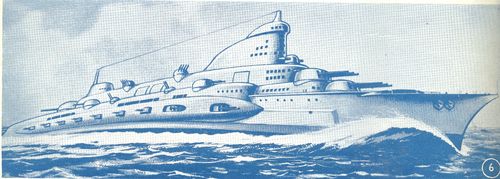
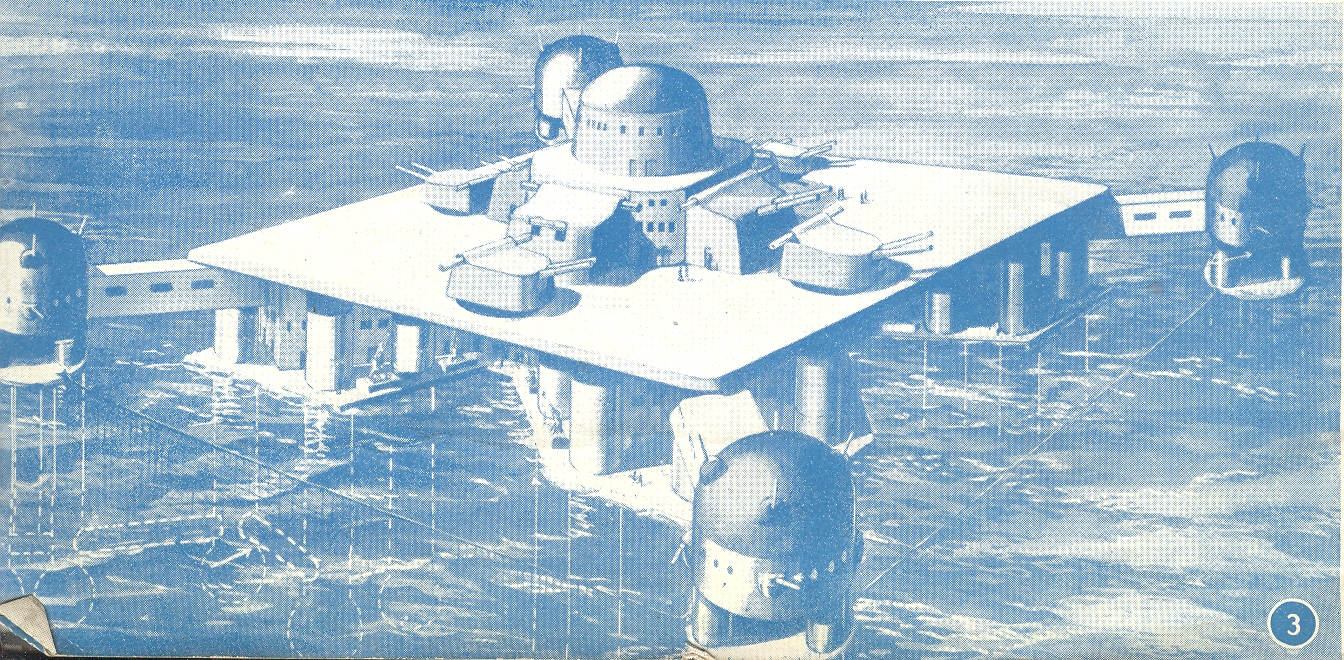
    But the image of such a monster, sensical or not, was enough for the purposes of the pamphlet in which it appeared.  The Brains to Win was a piece of British spirit/hope propaganda issued at about the time of the Battle of Britain in 1940, and it listed the sorts of technological breakthroughs that were going to push the nation over the top to victory.  Some of the stuff was real, some not—like the moving fort/Howl’s Castle above, and the floating fort, below.

    000--win--floating airport

    I’m not sure where a floating fort would make sense, especially one of that size. (Iterating the figures on deck into distance, it looks as though the deck on the floating platform was 150 or 200’ square.  It would’ve looked like a big target from above.) Given the time and expense and material  needed for such a thing, it seems that it would’ve been cheaper to make a moveable fortress not quite so big, with less of a profile, and more mobile—I think that this was called a “destroyer” or “battleship”.  

    But no matter, I’m just poking fun at some of the future vision that became archaic the moment it was drawn, punk retro-future.  All the pamphlet was trying to point out in its 32 pages was that overall the Brits were smarter than the Germans and that would be the balance for victory in the war.  “Hitler will get some very unpleasant surprises before this is over” the author very politely pointed out, no doubt with one eyebrow raised.  The scientists agreed.

    And they were right, which is all that matters.


  • Jobs of the Archaeo-Future: Airport Steerer (Bel Geddes’ Floating Airport)

    JF Ptak Science Books LLC  Post 950 

    1--bel geddes airport 2 

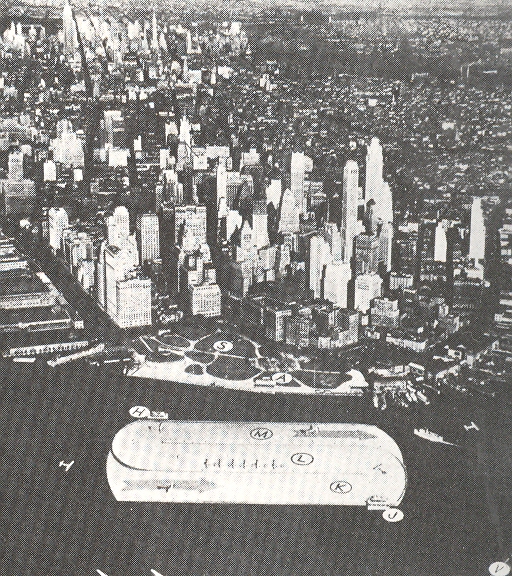
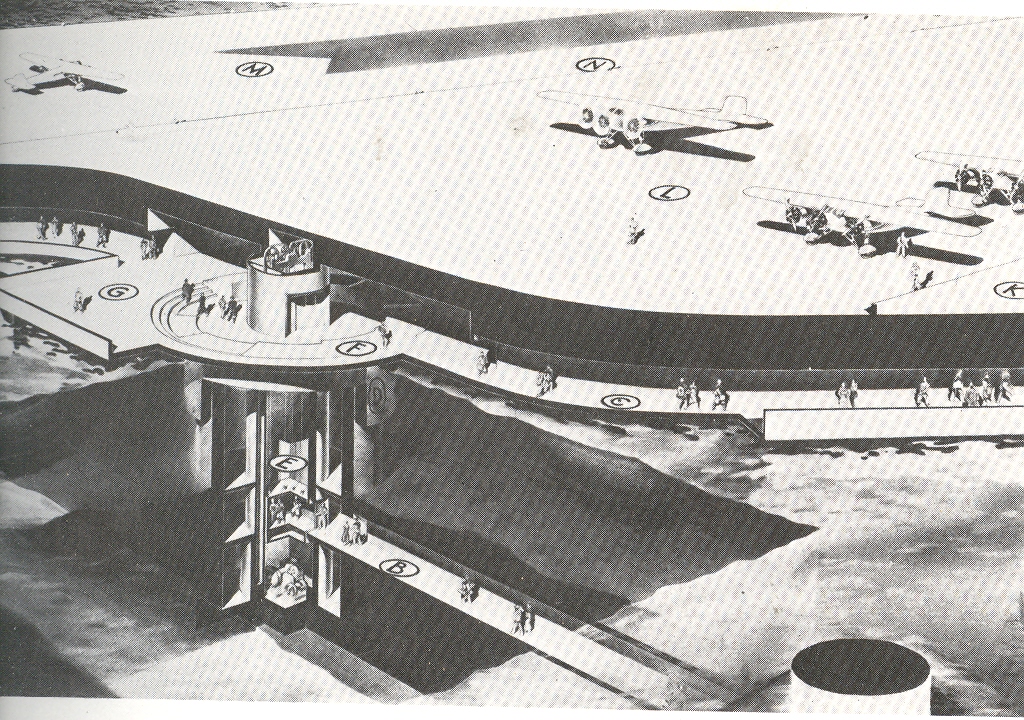
    Norman Bel Geddes (1893-1958) made fast, bulbously sleek and varyingly aerodynamic objects and ideas, and was a  vastly successful designer of things ranging from sets for the NY Metropolitan Opera House to telephones to cars to locomotives to the housing for the Mark I computer.  Ideas were his metier, and there seemed no lack of them–good, mostly; bad, sometimes. 

    Bud bad ideas can be beautiful, and elegant, if only for a very short period of time in which they might have actually functioned for the good.  One of these blisterers was his floating airport for the NYC harbor.  Passengers would access the airport via a 800-foot automatic walkway tunnel, and then up to various shuttles and such on the levels below the flight deck. This beast floated on columns floating on mobile caissons just above the harbor bottom, enabling the whole to be turned into or away from the wind, making for easy approaches and departures for the planes. But it is the pilot of the airport that seems most interesting to me, steering the giant propellers that lay under the corners of the structure, pushing the airport into/away from the wind. 

    This may well be the largest mobile steerable structure moving along the shortest courseway conceived as a possibly-buildable project of the twentieth century. 

    Associated posts on great and unbuildable architecture:

    Gigantic
    and Unbuildable Architecture: Philip Johnson and the Walled “Third City“

    Gigantic
    and Unbuildable Buildings: Leroy Buffington, 1889

    Fantastic
    and Unbuildable Architecture #6: the Pyramids of Gizeh in
    Detroit
    (
    Michigan),
    1908

    Gigantic
    and Unbuildable Architecture: Bucky Fuller’s Midtown Manhattan Dome, 1968

    1--bel geddes airport