A Daily History of Holes, Dots, Lines, Science, History, Math, Physics, Art, the Unintentional Absurd, Architecture, Maps, Data Visualization, Blank and Missing Things, and so on. |1.6 million words, 7500 images, 4.9 million hits| Press & appearances in The Times, Le Figaro, Mensa, The Economist, The Guardian, Discovery News, Slate, Le Monde, Sci American Blogs, Le Pont, and many other places… 5000+ total posts since 2008.

  • On Hot Air Balloons, Marbled Paper, Lithography, Rotary Engines, and Much More (1829)

    Journal of the Franklin Institute, Philadelphia, 1829; volume 3 (new series) and volume 7 overall, with text illustrations and four plates, 438pp Half-calf, with raised bands. Ex-library, with some scuffing on the spine; also a few stamps on the title page, and a library card pocket at the rear endpaper. Good/Very Good. $145

    G. Cumberland, “On the Origins of Air Balloons” pp 20-24.

    “On improvements in Marbling the edges of Books and Paper” , pp 246-249, (from the French, which also has been reprinted in limited editions);

    Followed by:

    “On Morocco Leather Dressing”, pp 250-254 and 297-302;

    “An Historical Account of Lithography…” pp 279-282 and 302-306;

    George Cayley, “On the Natural Zero, according to Fahrenheit’s Scale”, pp 389-392;

    William Howard, “Specification of a patent for an improved Rail-way Carriage”, pp66-68, with three copper plate engravings;

    “Observations upon Rail-roads, and the Adaptation of Carriages in such as are curvilinear”, pp 68-70

    Mark Watt, “Abstract of a Memoir…on the Principles of Attraction and Repulsion in the Lunar Rays”, pp 24-29

    “On the Natural History of the Honey Bee”, pp 36-42 and pp 81-92;

    “Observations on the connexion of Mechanical Skill, with the highest attainments in Science…”, pp 153-159, and

    “On the Rotary Steam Engine”, pp 179-184;

    And lastly, of higher interest:

    John Fleming, “On the Value of the Evidence from the Animal Kingdom, tending to prove the Arctic Regions formerly enjoyed a milder climate than at present”, pp 382-389 (or rather the “insufficiency” of evidence that is).

    And here we go:

    “Innocuous Nature of Putrid Exhalations”, p. 35

    “On the Art of the Liquorist”, pp 369-375;

    “An Account of the Fire of St. Elmo”, pp 111-113;

    “On the Spontaneous Combustion of the Human Body”, pp 31-34.
    ·Posted by :

    ·in:

  • Faraday Michael Notice Of A Means Of Preparing The Organs Of Respiration So As Considerably To Extend The Time Of Holdi

    Journal of the Franklin Institute, Philadelphia, 1834 (January-June) volume 13 (new series) and vol 17 (overall). 437pp.  Half calf. Ex-library, with evidence of a call number slip on spine bottom. There’s some bit of scuffing on the spine, which is rather nice. Very Good copy. $125  

    • FARADAY, Michael. “Notice of a means of preparing the organs of respiration, so as considerably to extend the time of holding the breath, with remarks on its application, in cases in which it is required to enter an irrespirable atmosphere…” pp 65-68;
    • John Ericsson, “The Caloric Engine”, pp 416-420 (first part)–this was a very early appearance of Ericsson’s “Caloric Engine” exhibited less than a year earlier in London (1832).
    • Jacob Green,”An Account of some experiments made with Mr. Jos. Saxton’s Electromagnetic Machine”, pp 219-222
    • “Remarks on Instruments for Measuring Distances at a single observation”, pp 11-12;
    • “On Printing by Cylinder on Roller Presses”, pp 86-89;
    • “On Final Causes”, pp 157-159;
    • Enenezer, A. Lester. “Specification of a patent for an improved Water Wheel”, pp 185-189;
    • “Magnetic Experiments on Chronometers”, pp 201-208 and pp 277-284;
    • James Espy (the early and gifted meteorologist), “Remarks on the Height of the Aurora Borealis, with a review of the accounts of some of the most remarkable Auroral Arches”, pp 294-301 and pp 363-373;
    • “Specification of a patent for an Odometer, or machine for indicating distances traveled by a Wheeled Carriage, granted to William A. Turner…”, pp 336-339, with a full page plate showing a rather intricate and delicate instrument.

    ·Posted by :

    ·in:

  • Very Early Papers on Railroads, Including an Illustration of “The Rocket” (1830)

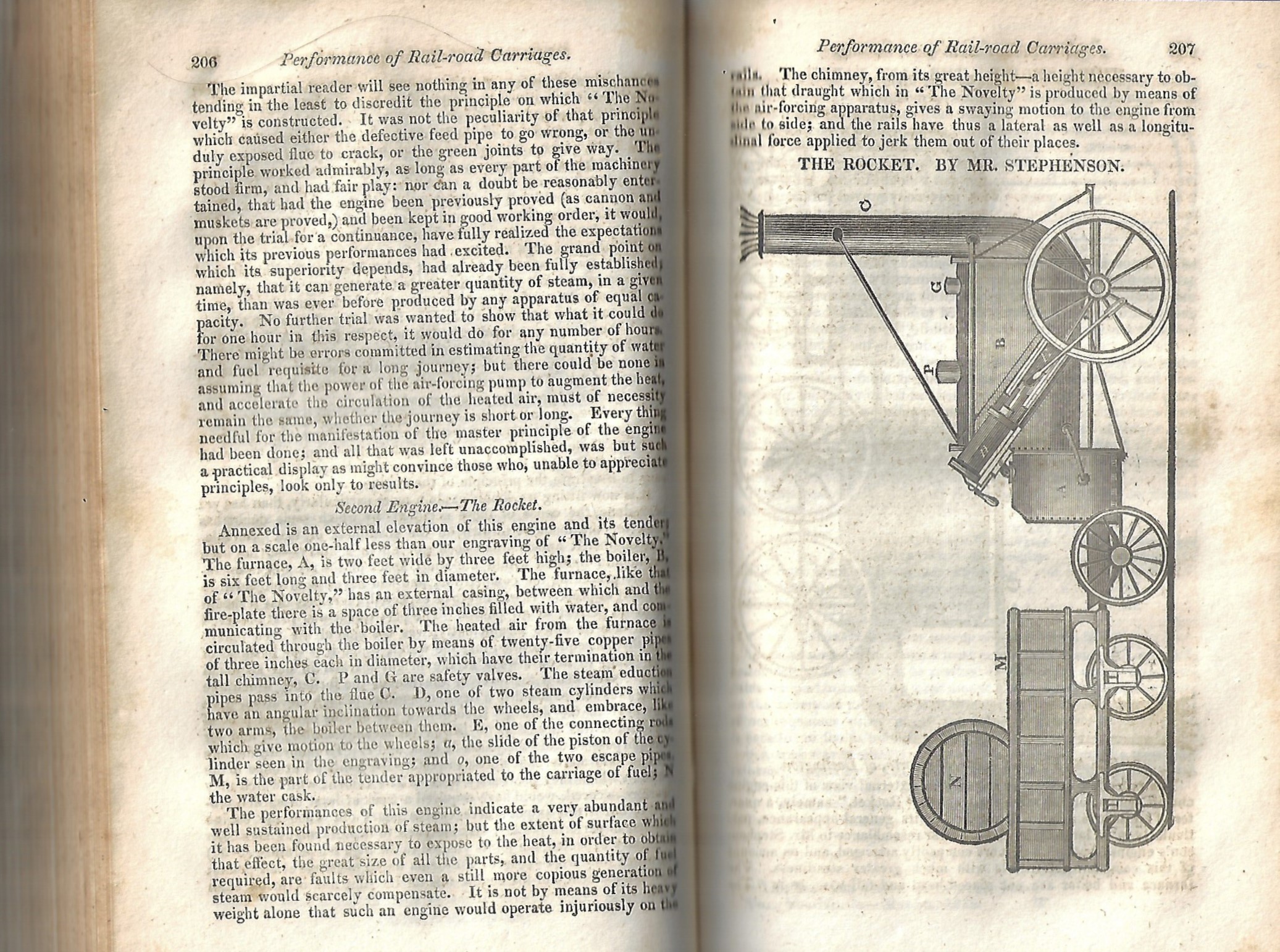
    JFI 1830 the RocketJournal of the Franklin Institute, Philadelphia, 1830; volume 5 (new series) and volume 9 overall, with text illustrations and five plates. Half-calf, with raised bands. Ex-library, with some scuffing on the spine; also a few stamps on the title page, and a library card pocket at the rear endpaper. Very Good copy.  $225 

    This volumes includes many articles of interest, including a longish early article on railroads:

    “Account of the Performance of Various Rail-road Carriages on the Liverpool and Manchester Rail-road”, pp 186-210 and pp 257-267; featuring nearly full-page illustrations of (William) Stephenson’s “The Rocket”, “Novelty No. 1” of Braithwaite & Ericsson (along with a schematic for “Novelty No 2”, and the Sans Pareil”. Note: “The Rocket” was designed by Stephenson only a year earlier, the very early locomotive appearing in 1829 (in England). The “Sans Pareil” was design by Timothy Hackworth and was first presented in that same year of 1829.

    Also the following railroad papers:

    “On the Power required to Propel Carriages on Rail-roads, compared with that for moving boats in Canals”, pp 140-141;

    “Modes of Adopting Rail-way Cars to Roads &c.” pp 151-154;

    “Remarks on the Pendulous Rail-road Car, and on the adapting Railway Cars to run on common roads”, pp 237-239;

    Also:

    Walter Johnson, “On the Relation between Rolling and Dragging Friction”, pp 57-69;

    This piece is followed by the first in what was intended to be a series by the editor called “Modern Antiques”, (pp 69-70)where the journal would “furnish, occasionally, some palpable evidences of the forestalling disposition of remote answers…who have deprived us….off the honor of being the true and original inventors, or discoverers, of various improvements in mechanics, and other useful arts; and who even peep from their graves to dispute the rights of those who have issued to the world their new born projects in the forms of letter patents…”

    And:

    “On the Preparation of Crayons, or Pastels”, pp 94-99; ;

    [Henry M. Western], “Specification of a Patent for a Tide Power…for the Purpose of Applying Power to Machinery…”, pp 154-155;

  • Early Aviation, 1843

    Cayley, George and William Henson, and others: papers in Journal of the Franklin Institute, Philadelphia, volume VI (third series) and vol 36 (overall). 429pp.  Half calf. Ex-library, with evidence of a call number slip on spine bottom and a large bookplate on front pastedown, The front joint is a bit sprung, and there’s scuffing on the spine. Good copy. $225  

    Cayley, George. “Retrospect of the Progress of Aerial Navigation, and demonstration of the Principles by Which it must be governed”,  in Journal of the Franklin Institute, August, 1843; pp 132-134.  

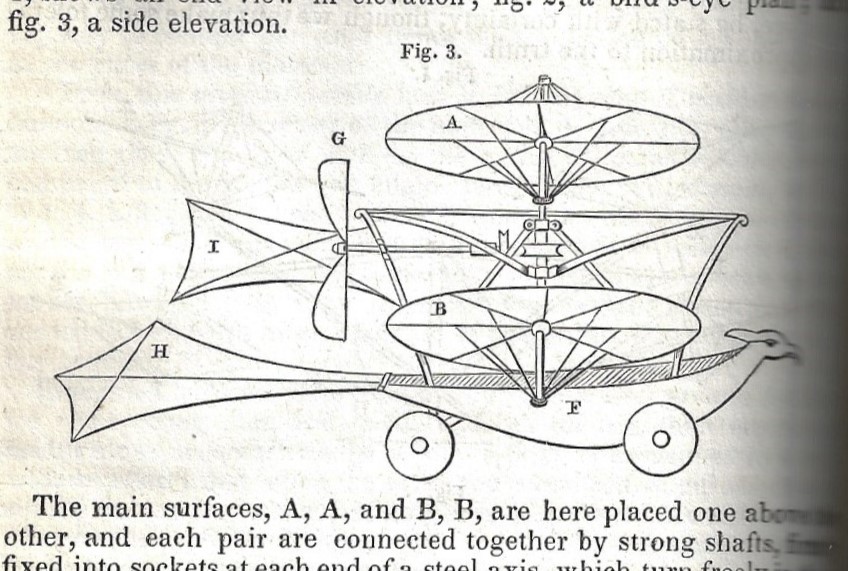
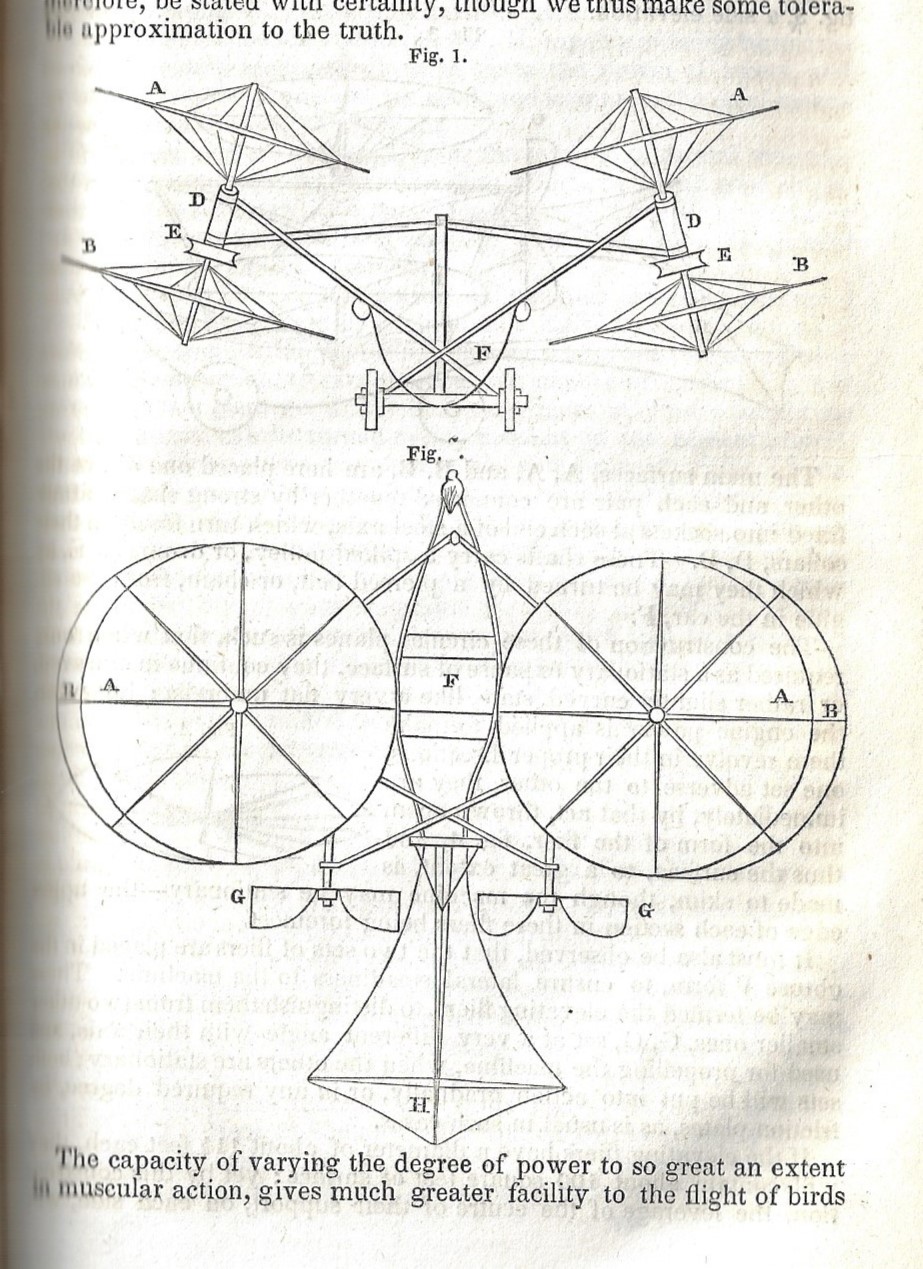
    _____.  “On the Principles of Aerial Navigation” September 1843,  volume 6 (third series) vol 36 overall; pp 203-209, 4 charming figures in text. (Original appearing in the London Mechanic’s Magazine April 2, 1842.)

    “Now widely regarded as ‘The Father of Aeronautics’, Sir George Cayley (1773-1857) evolved the idea of an aircraft with fixed wings, in which the principle of lift was separated from the propulsion system, and in which inherent stability, as well as tail-unit control-surfaces, must be incorporated.”–Royal Aeronautical Society website intro to Cayley.

    JFI 1843 Cayley _2_
    JFI 1843 Cayley _2_

    AND:

    [William S. Henson,  1812-1888]  “On the Steam Power of Mr. Henson’s Flying Machine”, pp 281-2, with 4 text illustrations.  “The aerial steam carriage, also named Ariel, was a flying machine patented in 1842 that was supposed to carry passengers into the air. It was, in practice, incapable of flight since it had insufficient power from its heavy steam engine to fly. A more successful model was built in 1848 which was able to fly for small distances within a hangar. The aerial steam carriage was significant because it was a transition from glider experimentation to powered flight experimentation.”–Wikipedia

    Michael Faraday, “Ont he Electricity evolved by the Friction of Water and Steam Against Other Bodies”, p. 283

    Also bound in this volume: J.F.W. Herschel, “On certain improvements on Photographic Processes described in a former Communication, and on the Oarathermic Rays of the Solar Spectrum”, pp 187-190. “Report on the best Modes of Paving Highways”, pp 145-168, 

    And:

    J.C. Loudon, “The Principles of Landscape-Gardening and Landscape-Architecture applied to the Laying out of Public Cemeteries  and the Improvement of Churchyards…”, a paper in four parts, on  pp 46-54, 89-98, 182-190, 265-269. 

    ·Posted by :

    ·in:

    —
  • Carr on Newton, WIlliam Walton’s Copy

    [Newton, Isaac] John Carr. The First Three Sections of Newton’s Principia, with Copious Notes and Illustrations, and a Great Variety of deductions and Problems, design for use in schools.  Cambridge, Deighton & Sons, 1826. Second edition, 187pp, six folding plates (following the first edition of 167pp of 1821). Original paper spine and boards. Condition: wear along the joints and also along the top and bottom of the spine. Tight binding, with good margins.  Good copy.  $150

    • This was the mathematician William Walton’s copy (of Trinity College), with his bookplate and signature (“Wm. Walton/Trin. Coll.”). Also rubberstamped “Magdalene College” with a hand-written “cancelled” across it. 

    ·Posted by :

    ·in:

  • David On Natural Magic and Automata; Lumber for Ship Masts, Hydrostatic Beds, and other Articles (1833)

    JONES, Thomas P., editor.  Journal of the Franklin Institute, Philadelphia, 1829. Volume 11 (new series), volume 15 overall. 8.5″x5.5″, 4301, 12pp.. Bound in half-calf, with gilt stamping and raised bands. Ex-library, with evidence of spine label removal on spine bottom, scuffing on the spine edges, and a few stamps on title page, plus a call slip envelope at the rear pastedown and endpaper–other than some foxing, the book is very tight and crisp, a very nice copy.  Good copy.  $175.00  Some of the articles in the volume include:

    David Brewster, “Selections from Letters on Natural Magic…Illusions of the Eye”, pp 138-144 and continued for “Spectral Illusions”, pp 210–215 and  “deceptions with the Concave Mirror” pp 282-287, and “Acoustic Mechanism–Automata”, pp 354-359, and “decomposition of Light by Absorption” pp 417-420. 

    Robert Hare, “Apparatus for evolving Silicon from Fluo-silic Acid Gas”, pp 289-296 (with illustrations of the instruments). Robert Hare, “remarks on the error of supposing that a communication with the Earth, is necessary to the efficacy of Electrical Machines”, pp 297-299;  “Practical Observations on the Power Expended in Driving the Machinery of a Cotton Manufactory at Lowell”, pp 6-15; “W. Baddeley, (Alfred)Cannings Life Raft”, pp 59-61 (published months earlier in London); “Dr. Arnott’s Hydrostatic Bed for Invalids”, pp 61-66; “(W) Symington’s Steam-Boat”, with a full page cross section, pp 68-9; “Effects of Trades on Health and Morals” (full title being “Are there any trades so injurious to health, or so hazardous to morals, that they ought, for that reason, to be discouraged, or abandoned?”, pp 78-84; John Fincham, “On the timber used for the Masts of Ships”, pp 135-137 and pp 196-200; Lafonde, “On the Art of Glass Blowing”, pp 254-260 and 327-336; Robert Eastman, “Specification of a patent for an improvement in the Reacting Water Wheel…” with two copperplates, pp 320-322.

    Also: full page engraving with a short description of “Mr. Symington’s Steam Carriage, 1784-6”.

  • Humphry Davy, History of the Steam Engine, Perfumery, the Greenland Whale, and more (1829)

    JONES, Thomas P., editor.  Journal of the Franklin Institute, Philadelphia, 1829. Volume 4 (new series), volume 8 overall. 8.5″x5.5″, 430pp, 5 plates. Bound in half-calf, with gilt stamping and raised bands. Ex-library, with evidence of spine label removal on spine bottom, and a few stamps on title page–other than some foxing, the book is very tight and crisp, a very nice copy.  VG $125.00  Some of the articles in the volume include:

    Humphry Davy, “On the Phenomena of Volcanoes”, pp 154-161; “On the Manufacture of French Articles of Perfumery”, pp 295-302; ;A. Ainger, “On the Early History of the Steam Engine”, pp 319-327, (concluded), pp 361-370; “On the Advantages of Machines (from Marratt’s Mechanical Philosophy)”, pp 162-164; “On a mode of Rapidly Sketching effects in Chiaro- scuro, and its applications to Lithography”, pp 371-3; Richard Walker, “On the Artificial Production of Cold”, pp 396-400; J. Harwood, “Structure and Economy of the Greenland Whale…”, – 21-31; Memoir of the Life of Joseph Frauenhofer…”, p 96-103. Lastly, “Description of a MAchine for Scattering Manure”, pp 277-8, with two illustration.  

    Here’s a little spin on the “Manure Scattering Machine”

    ·Posted by :

    ·in:

  • Colossal, Super Colossal, and Mega Colossal: The “Terrible Seismical Manifestation at Java” (1883)

    Krakatoa: three early papers on the eruption:

    • (1) “The Java Upheaval” in Nature, 6 September 1883, pp 443-4, in the weekly issue of pp 433-456. Includes a half-page map of the Java area of the eruption. 
    • (2) “Scientific Aspects of the Java Catastrophe”, in  Nature, 13 September 1883, pp 457-8 in the weekly issue of pp 457-480
    • (3) “The Java Eruption”, in Nature, 11 October 1883m p 577  in the issue of pp 561-584.

    Three issues removed from a larger bound volume. VG condition. $110

    I came to this terrible majesty/rex tremendae of words browsing an 1883 volume of Nature, landing on two articles on the Krakatoa eruption of 26-7 August 1883. The editors were just then coming to grips with what scant information came their way, though they knew  that what they were trying to present to their readers was a very major event.  There was little to prepare them for what they would understand the eruption to be, no doubt filling themselves with images of dread (Quantus tremor est futurus, “what horror invades the mind”, calling again–sorry!–on Mozart’s Requiem for the appropriate language).

    The eruption is well known and the subject of innumerable stories and papers, so I’ll not get into that. I do want to look at the expansive and changling vocabulary describing these events, though. The way eruptions are categorized in modern times for relative description and is the Volcanic Explosivity Index (the VEI). a logarithmic scale which runs 0-8. The basis of categorizing the terrific nature of the eruption is made in terms of the volume of ejecta, the plume height, length of eruption, and that sort. I find the defining terms of type of eruption to be very entertaining, with eruptions being described as (level VFI 0) effusive, (1) gentle, (2) explosive, (3) catastrophic, (4) cataclysmic, (5) peroxysmic, (6) colossal, and of course (7) super-colossal, and (8) mega-colossal. (Just a quick note: “colossal” appears in the OED by 1664; “supercolossal” as an unhyphenated word appears by 1875; and “mega-colossal” just doesn’t appear.)

    Krakatoa was a VFI-6, a peroxysmic event with 10 km3 of ejecta, which is 1 billion meters3, or 1 trillion litres, or 264 billion gallons (which would weigh in at 1.8 trillion pounds, or about the equivalent of 17,819.7 Titanics), or about 10 times the ejecta of the 1980 Mt. St. Helen’s eruption. These are very messy approximations as ejecta is varied, but it does give you an idea of the magnitude of what was going on.

    ·Posted by :

    ·in:

  • Excellent Linoleum Catalog, 1930’s

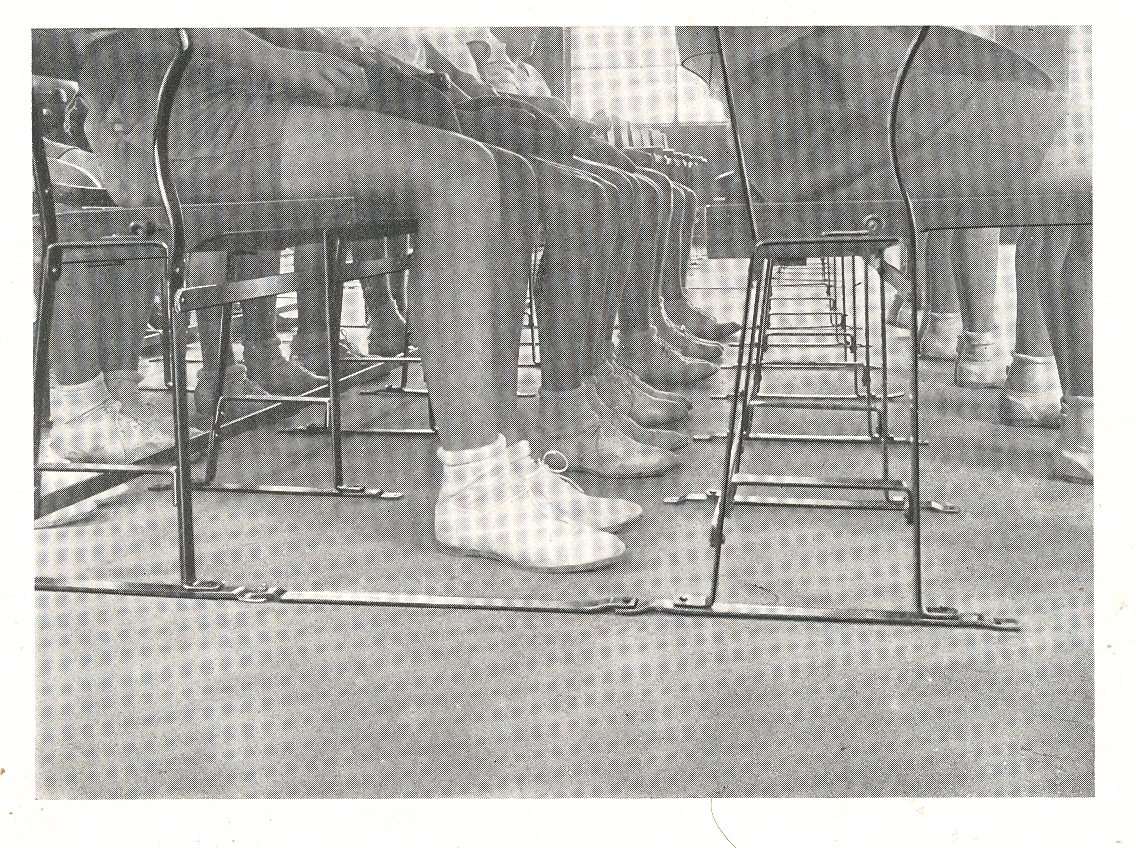
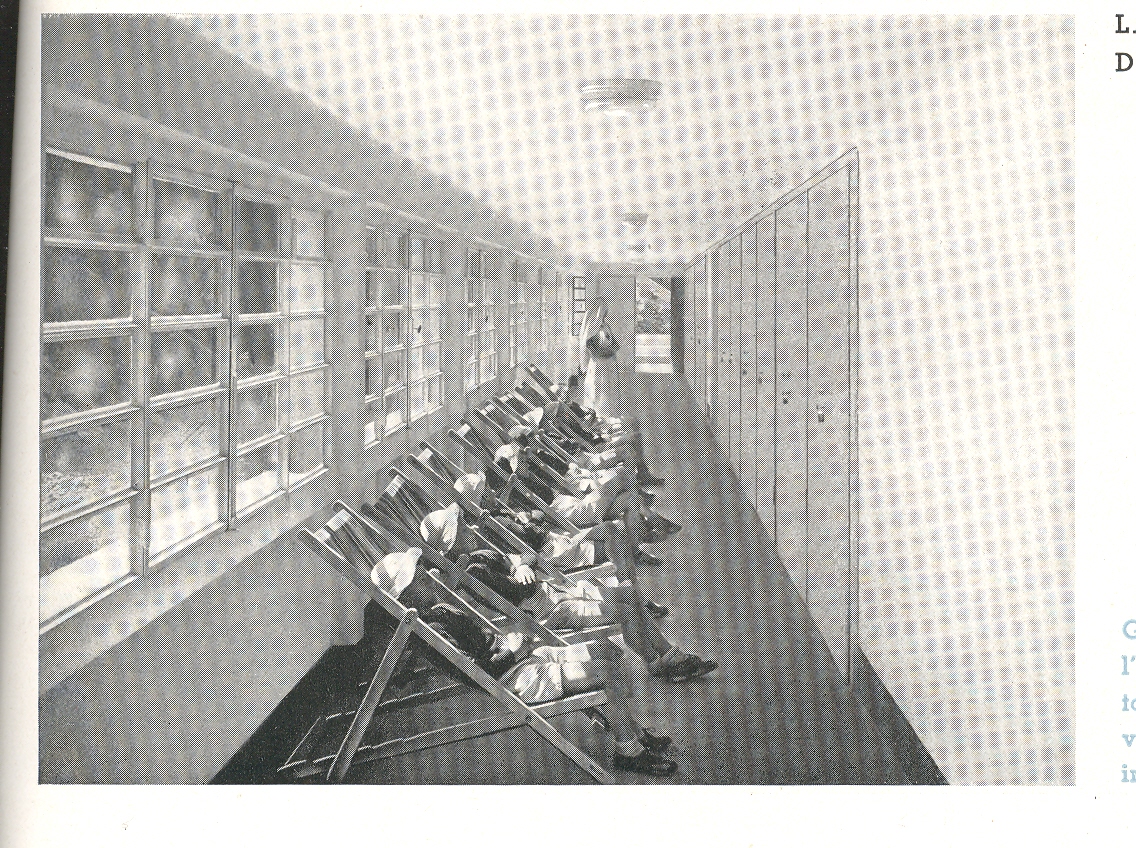
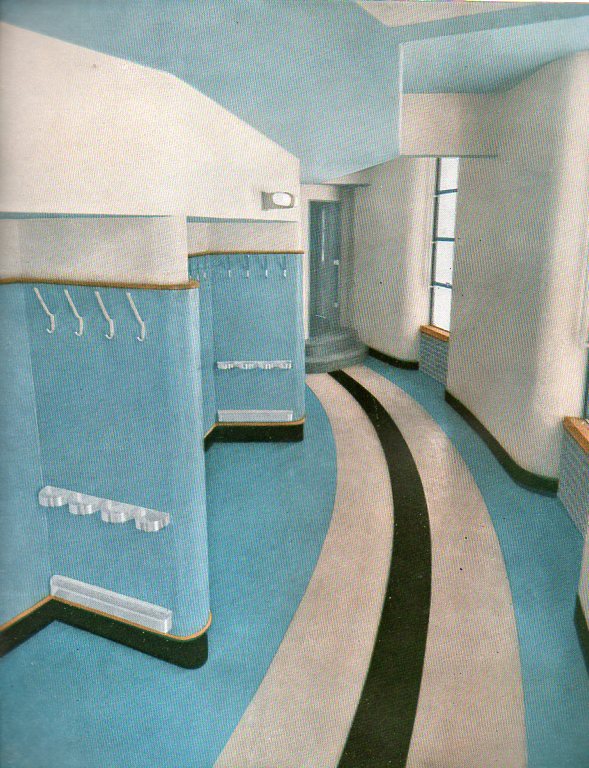
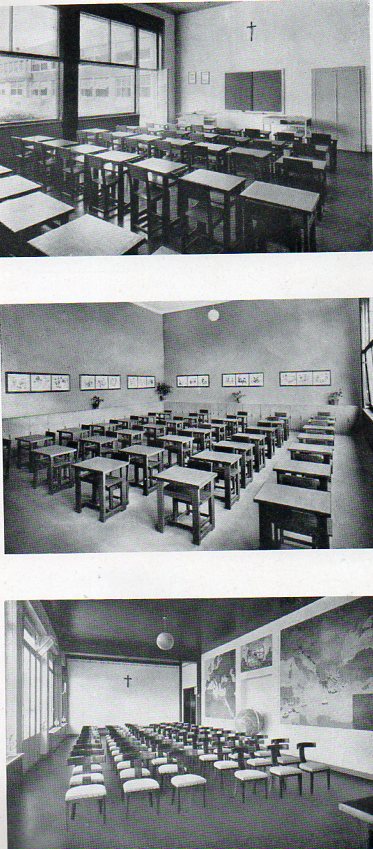
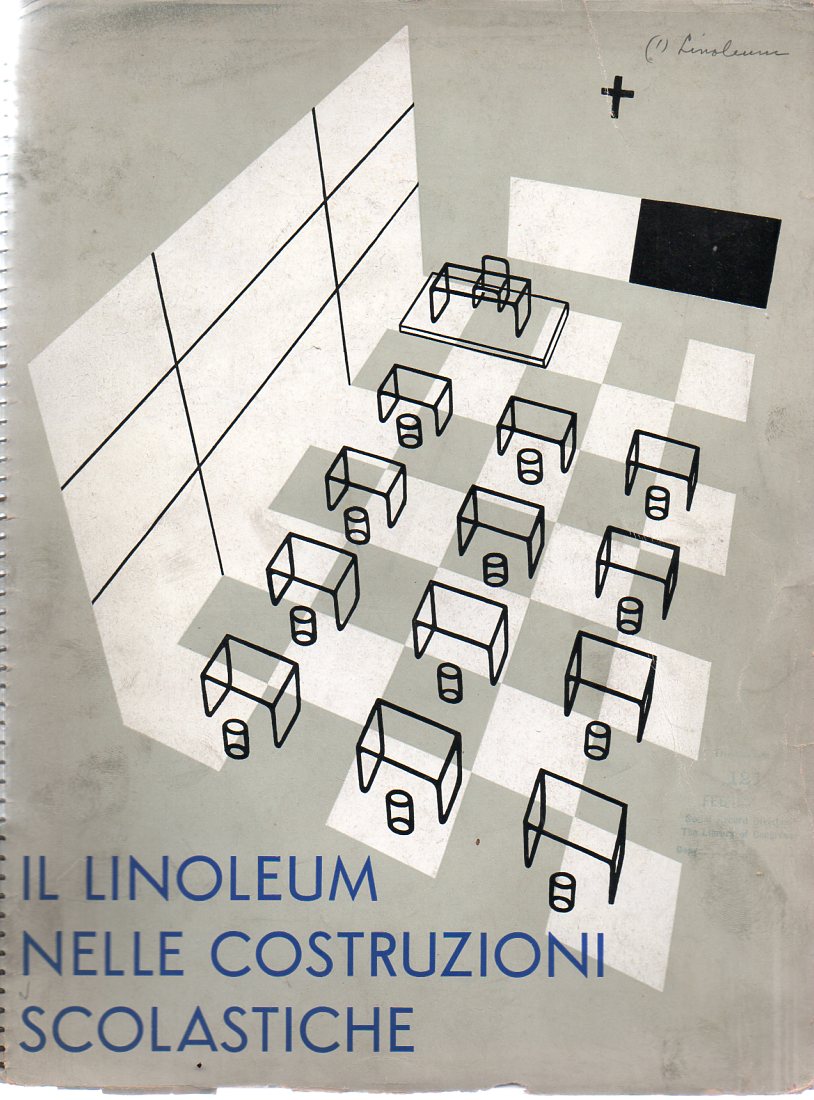
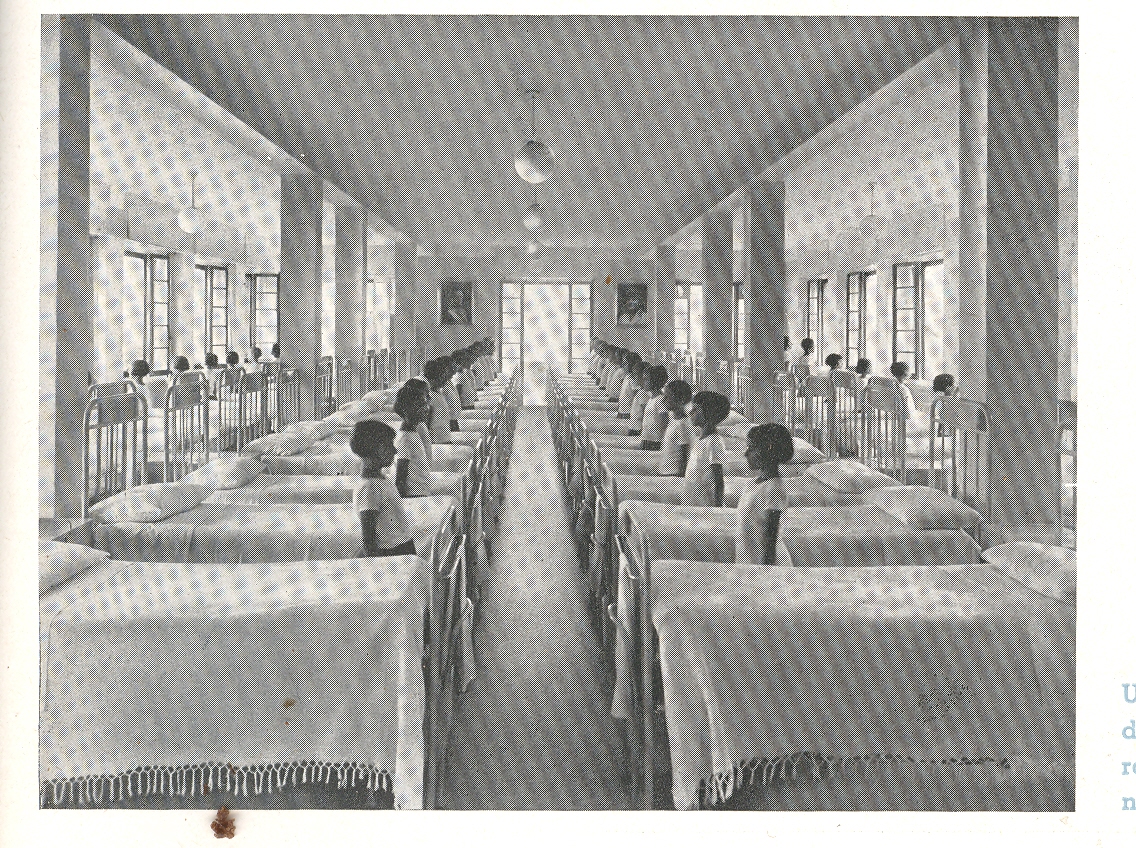
    ANNONI, Ambrogio. (Milan, 1882-1954).  Il Linoleum Nelle Costruzioni Scolastiche, printed in Milano by the Society for Linoleum, undated (ca. 1932-1939),   Metal spiral bound, printed wrappers, 11×8 inches with about 135 pages, and with illustrations throughout, printed in Milan by Vanzetti E. Vanoletti. Printed wrappers, with some short tears in the cover edges; still, a very nice copy.  There is no record of this publication whatsoever in WorldCat. SOLDBlog--june 1 feet

    Blog--june 1sick

    Linoleum italian271
    Linoleum italian272 Linoleum italian270


    ·Posted by :

    ·in:

  • A Very Early Appearance of the Famous Wimshurst Machine

    “Recent Influence Machines”, in Nature, May 3, 1883, pp 12-14 in the issue of pp 1-24, with two drawings in text featuring the Voss machine and then a larger 6”x4” engraving of the Wimshurst machine.  Offered here is the weekly issue, extracted from a larger bound volume, in Very Good condition. $100

    Also of interest is the four-page lead article “Life of Sir William Rowan Hamilton”, a biography by Robert Perceaval Graves and published by the Dublin Press the year earlier in 1882.

    “These machines belong to a class of electrostatic generators called influence machines, which separate electric charges through electrostatic induction, or influence, not depending on friction for their operation. Earlier machines in this class were developed by Wilhelm Holtz (1865 and 1867), August Toepler (1865), J. Robert Voss (1880), and others. The older machines are less efficient and exhibit an unpredictable tendency to switch their polarity. The Wimshurst does not have this defect.

    In a Wimshurst machine, the two insulated discs and their metal sectors rotate in opposite directions passing the crossed metal neutralizer bars and their brushes. An imbalance of charges is induced, amplified, and collected by two pairs of metal combs with points placed near the surfaces of each disk. These collectors are mounted on insulating supports and connected to the output terminals. The positive feedback increases the accumulating charges exponentially until the dielectric breakdown voltage of the air is reached and an electric spark jumps across the gap.”—Wiki

    I’ve seen that Wimshurst introduced his machine for the first time in 1883 but I cannot determine exactly when or where, though this seems Nature issue seems to be a good possibility.

    ·Posted by :

    ·in:

  • On Saving British Science (1835)

    The Edinburgh Review and Critical Journal, July 1834 –January 1835. Published in Edinburgh, printed by Ballantyne & Co., 1835. 9″x 6”, (2), (ii), 554pp. Recently rebound in modern linen, with new endpapers. Very crisp. Very Good copy. $250

    Includes the following articles of interest:

    • “Seven Annual Reports of the President and Directors to the Stockholders of the Baltimore and Ohio
      Railroad Company” and “The American Railroad Journal”, pp 94-125;
    • Peter Mark Roget, “Animal and Vegetable Physiology considered with reference to Natural Théology”, pp 142-180;
    • Mrs. Jameson, “Characteristics of Women, Moral, Poetical, and Historical”, pp 180-190;
    • The first three meetings of the BAAS, pp 363-395;
    • John Marshall, “Statements as to the Proceedings of the Committee for Classing the Mercantile Marine”, and James Ballingall “The Mercantile Navy Improved” and “Sea Insurance the Cause of Shipwreck”, pp 363-395.

    In addition to a substantial amount of early railroading material and the interesting insurance report on the frequency of shipwrecks there is this nugget from the review of the first three meeting of the British Association for the Advancement of Science coming from Davy, Herschel, Brewster, and Babbage, about reversing a downward trend in the sciences in England by having the government make some modest investments in scientific associations. They did so

    • “…under a deep concern for the honour of England, boldly pointed out the fact of the decline of science and the scientific arts. They investigated the causes by which so fatal a change had been produced, and suggested the means by which the sciences be fostered and revived.” They felt evidently a fair amount of pushback: “Some individuals, interested in science as a source of professional gain, and others, prompted by vanity and ignorance, endeavoured to thwart these appeals to the government and the country. A third class, already enjoying professorships, and other university appointments, repudiated the idea of a national establishment for science…[and] conceived that philosophers, like Puritans, would be disgraced by secular honours and dignities; and it was their desire that science, like virtue, should be its own reward. But in the rare and pure ether which they breathed, they had forgotten that in the two English universities, no fewer than nine professors had received from government an annual addition of L. 100 to their incomes.”

    ·Posted by :

    ·in:

Recent Posts

Archives

Categories