A Daily History of Holes, Dots, Lines, Science, History, Math, Physics, Art, the Unintentional Absurd, Architecture, Maps, Data Visualization, Blank and Missing Things, and so on. |1.6 million words, 7500 images, 4.9 million hits| Press & appearances in The Times, Le Figaro, Mensa, The Economist, The Guardian, Discovery News, Slate, Le Monde, Sci American Blogs, Le Pont, and many other places… 5000+ total posts since 2008.

Book Category: Aviation history

  • Rare Work on Aviation and Meteorology–No Record in WorldCat


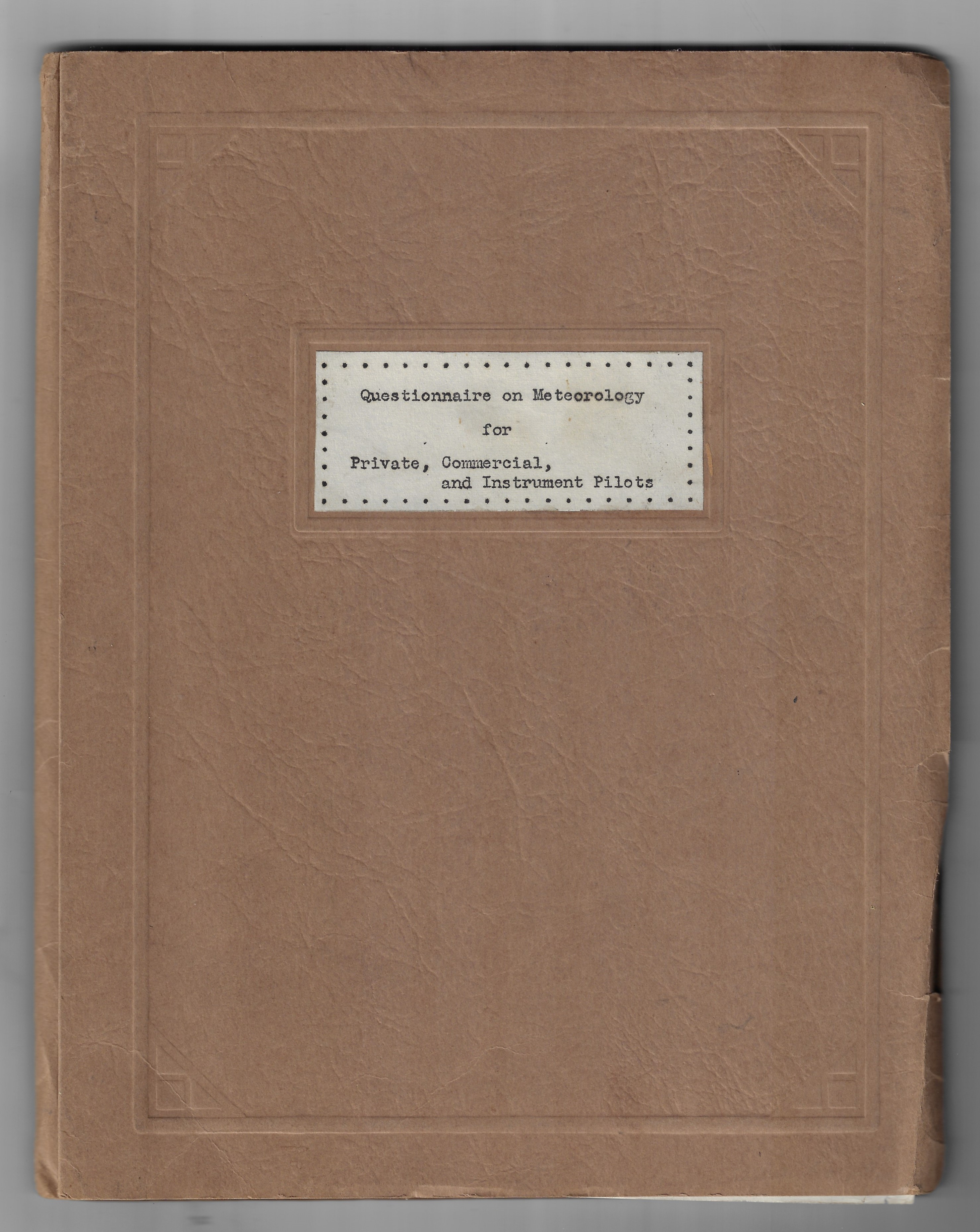
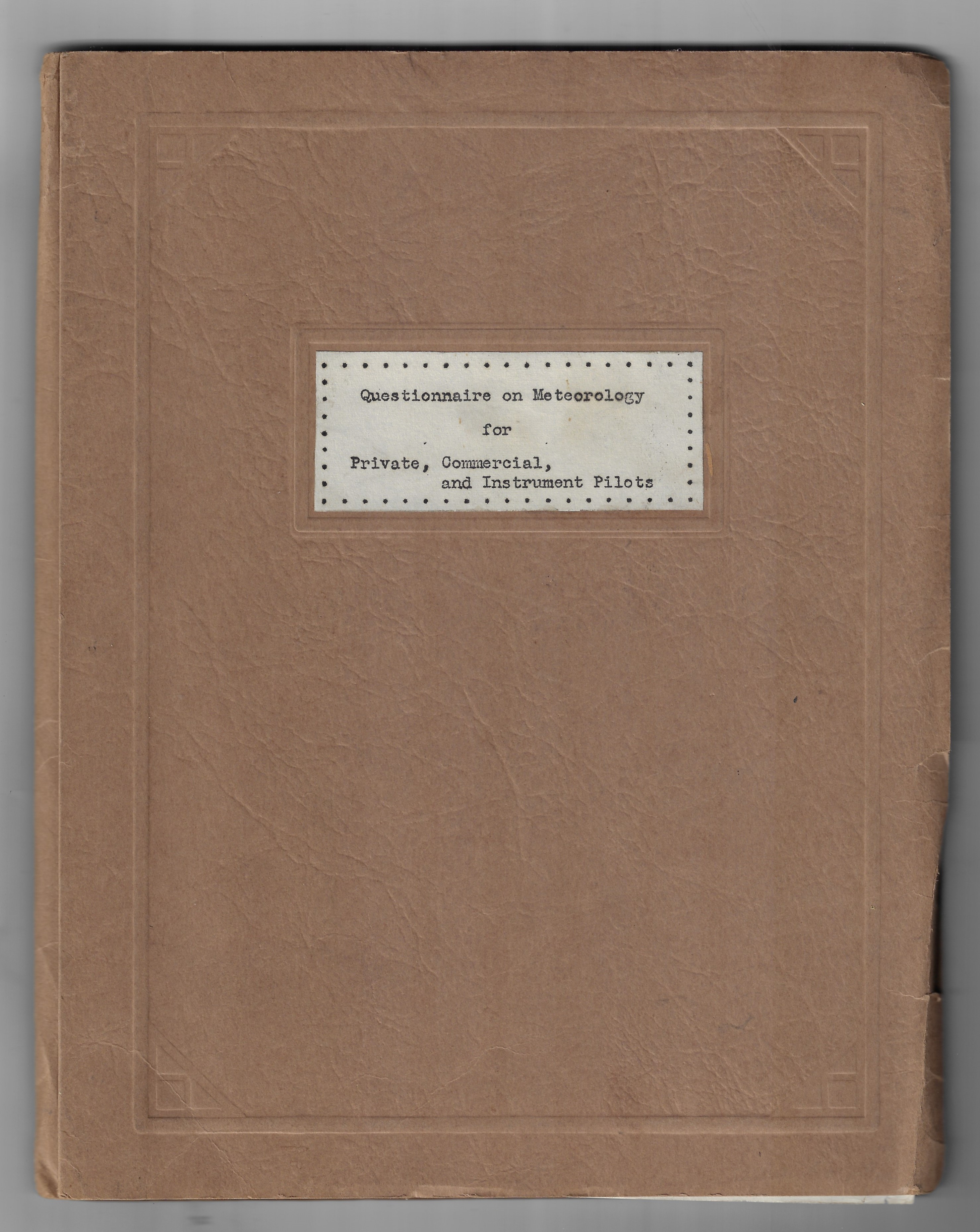
    Questionnaire meteorologyClyde H. Long, Questionnaire on Meteorology for Private, Commercial and Instrument Pilots.  Published by the Flying “L” Aero Service, Bailey, Colorado.  December 1, 1951.  11″x 8.5″, 56 leaves, printed on one side only.  Offset printed, and probably a private production.  Bound in a store-bough folder with a typed paper title.  VG copy. Provenance: Library of Congress, with their rubber stamp on inside front cover.  NO COPIES listed in WorldCat.  $150

    There are 250 multiple choice questions here for study and exam (with answers!)  These are NOT trivial questions.  

    ·Posted by :

    ·in:


  • Spaceflight and Rocketry Material

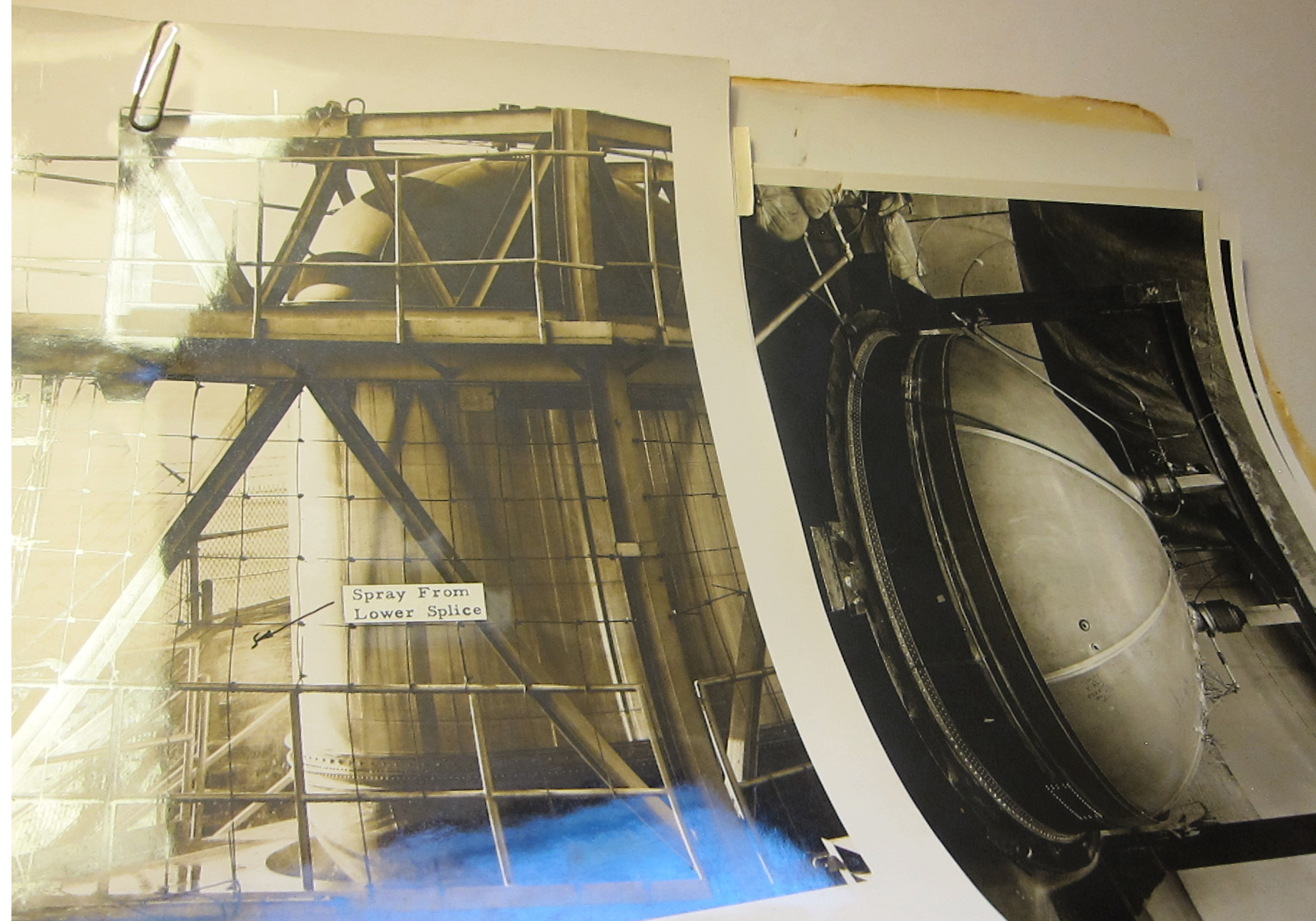
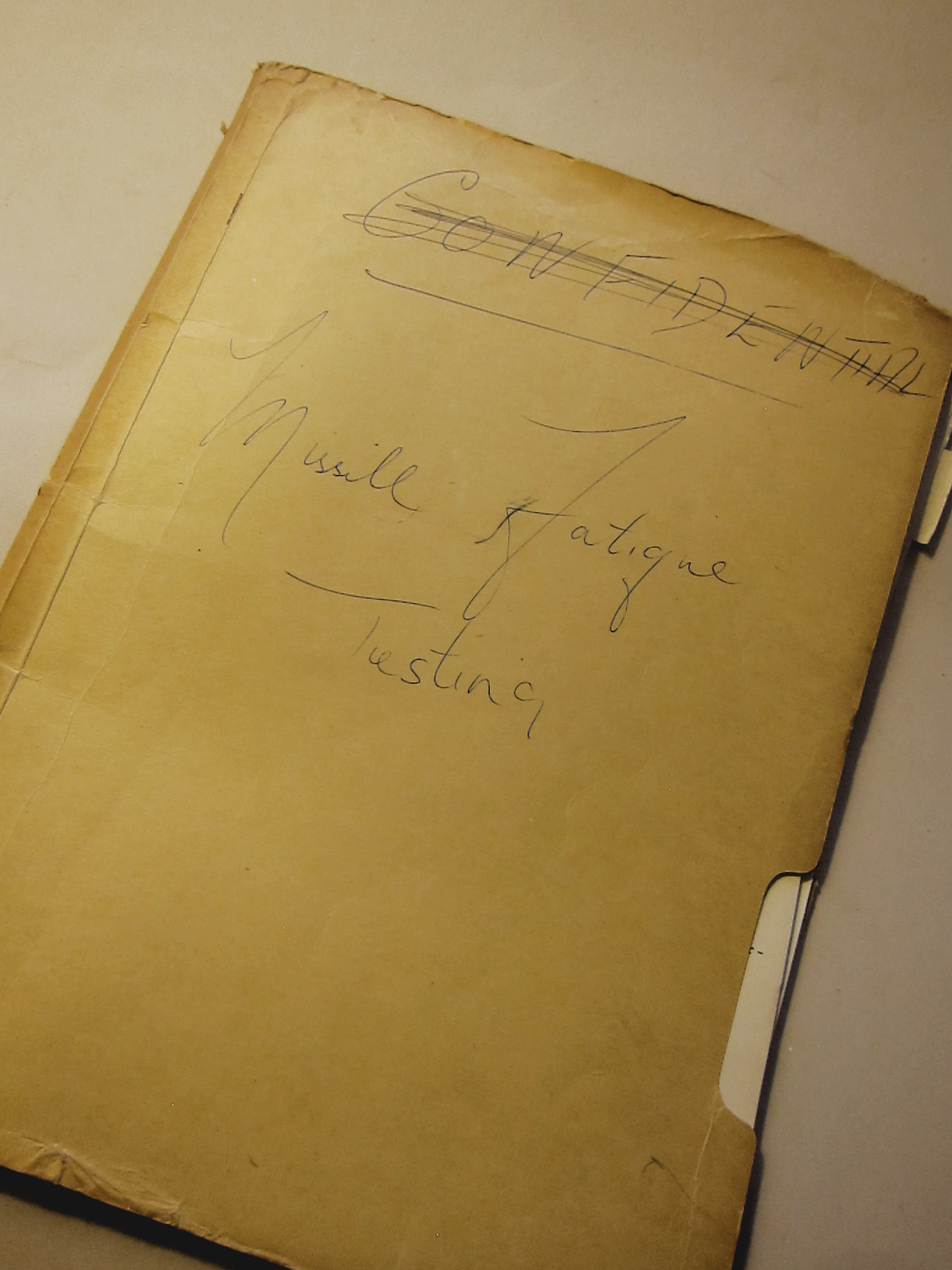
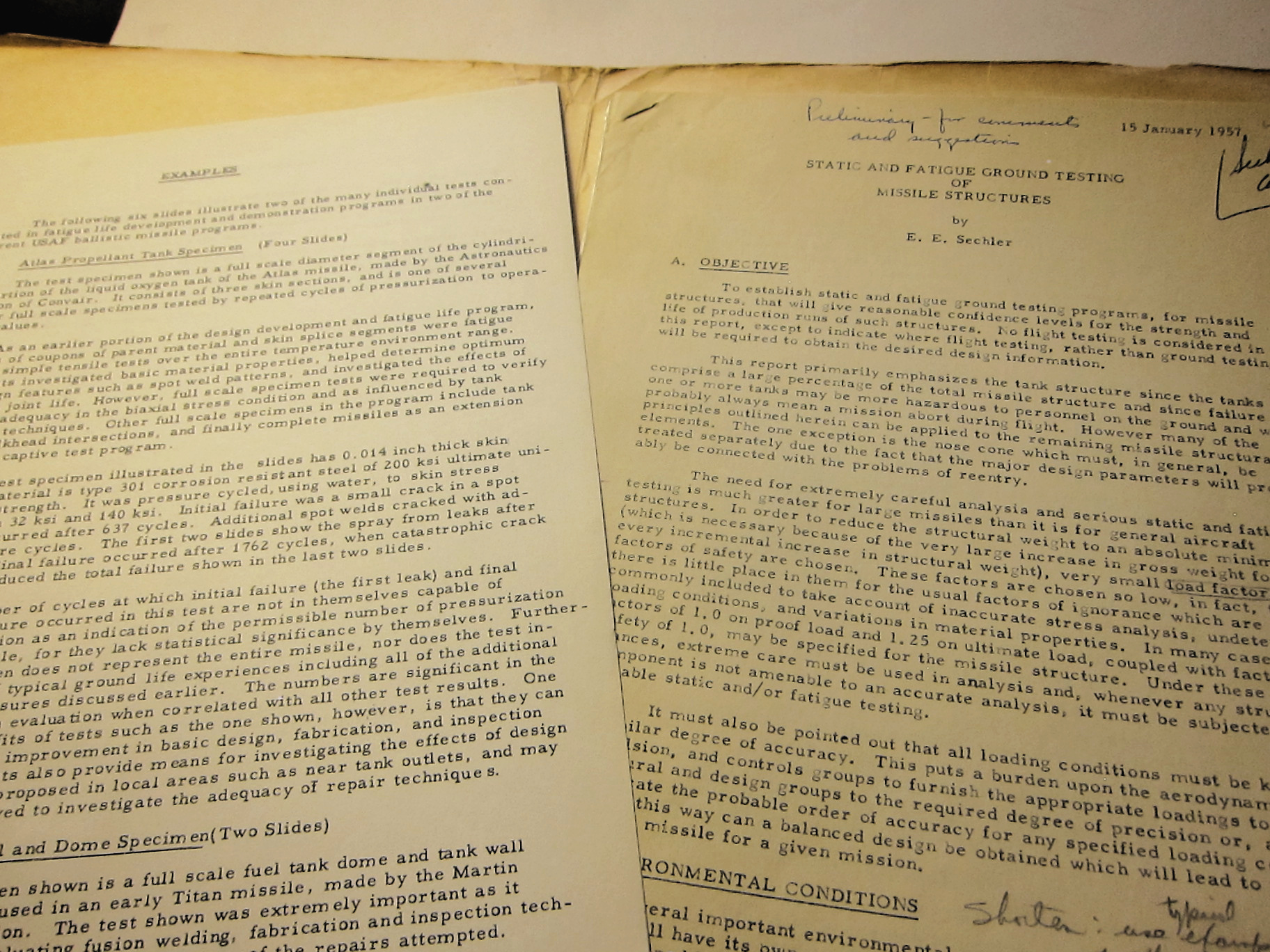
    Sechler, E.E.  Static and Fatigue Ground Testing of Missile Structures.  (“Preliminary–for comments and suggestions” written in ink at top of cover page. Also: “Sechler copy”.) 15 January 1957, 11″x 8.5″, 18 leaves. This is some sort of photomechanical reproduction, I think, with many additions and corrections in manuscript. With six original glossy photos, each 11″x 8″.  Housed in an old manila folder, with “CONFIDENTIAL” crossed out in pen. Very good condition.  $125

    “Ernest Edwin Sechler (1905-1975) was an aerospace engineer and scientist who specialized in thin-shell structures. He earned his doctorate in 1934 at Caltech as one of the early students of Theodore von Kármán with a dissertation on the mechanics of thin-plate compression. ‘A graduate student named Ernest E. Sechler (now a professor of aeronautics at Caltech) was reviewing research in the strength of thin metal plates which had been carried out by the National Bureau of Standards. Sechler reported that the engineers didn’t think that sheet metal could be used to make structural elements in an airplane because the metal would give way…Sechler’s report intrigued me.’—T von Karman, ‘The Wind Beyond’.  Von Kármán showed that by stiffening with re-enforcing strips the “effective width” of metal sheets could be increased to withstand the load aloft. In 1934 Sechler wrote his thesis, The ultimate compressive strength of thin sheet metal panels, under von Karman’s supervision. Development of light, fail-safe structure became the main theme of his professional life.”[1] His thin-wall structures included missiles, booster rockets, and a movable dome for Palomar Observatory. This work was performed as consultant to NASA and industry.”—Wikipedia

    Missile fatigue _3_
    Missile fatigue _3_
    Missile fatigue _3_


    Lewis H. Abraham (in collaboration with the NASA Research Advisory Committee on Missile and Space Vehicle Structures). Important structural research problems for the support of future space missions, prepared by Lewis H. Abraham in collaboration with the NASA Research Advisory Committee on Missile and Space Vehicle Structures. NASA, August 1963. NASA TN D-2059

    10”x 8”, 16pp. Original wrappers. Fine. $50


    M.V. Barton, Important research problems in missile and spacecraft structural dynamics. NASA, TN D-1298, May 1962.  10″ x 8″, 57pp.  Original wrappers. Fine condition.  $50


    J.D. Wood, Factors Affecting the Response of Missiles Excited by Rigid Shock. Space Technology Laboratories, 1960.  STL/TN-60-0000-09031. 11″ x 8.5″, 16pp. Original wrappers. Fine. $25


    John H. Boeckel, The Purposes of Environmental Testing for Scientific Satellites. NASA, Technical Note D-1900, TN D-1900. 1963. 11″ x 8″, 24pp.  Original wrappers. Fine.. $25


    ·Posted by :

    ·in:


  • The Great Amen–a Scarce (unlocated in WorldCat) USAAF WWII Recollection

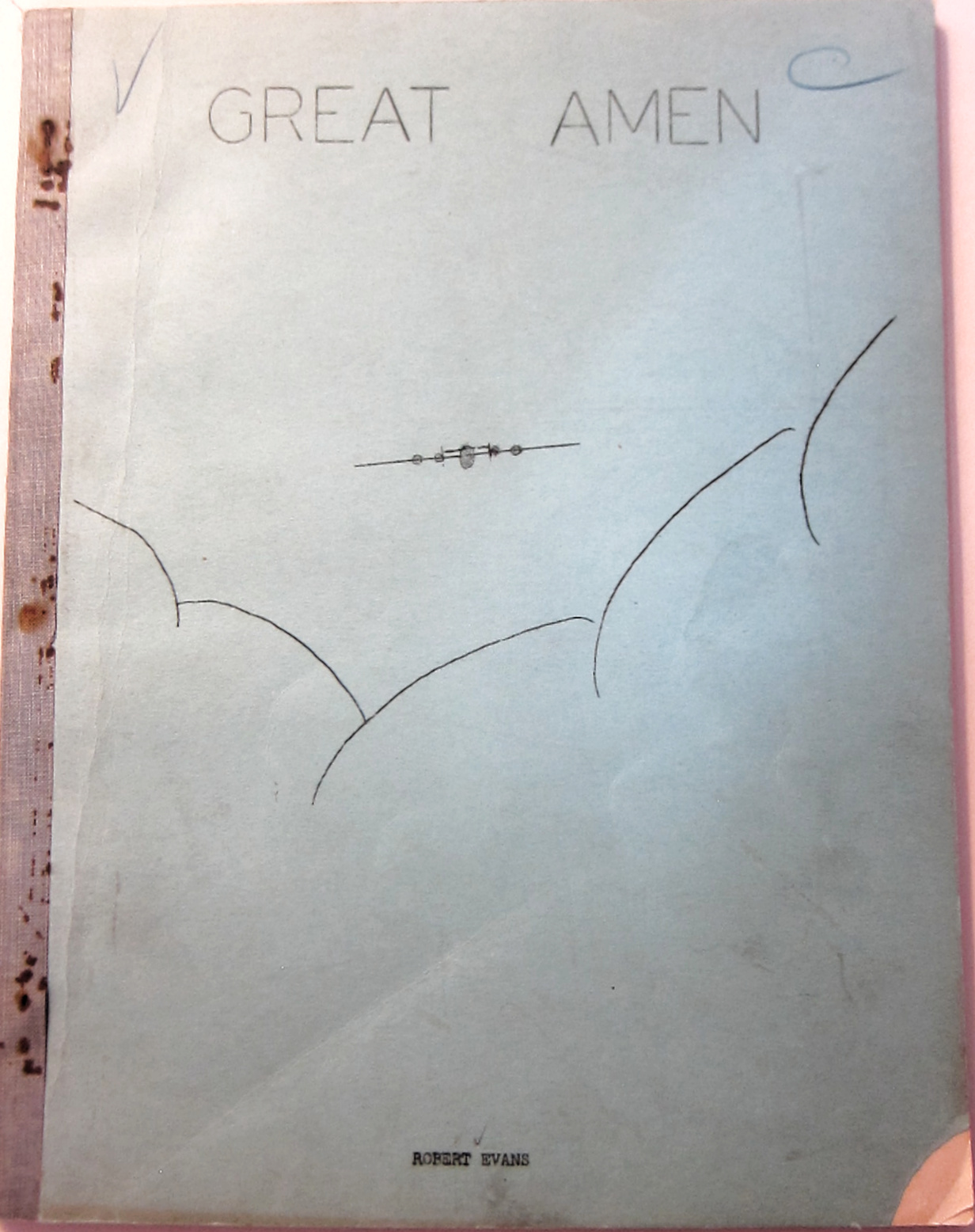
    Robert J. Evans, Great Amen. Self-published, printed by Bureau Mailing Service (Brooklyn), 1946.  11″x8.5″, 49pp. Offset printed. Bound in cloth-backed paper wrappers, which have chips here and there. Good condition. Approximately 35,000 words.  $400

    • NO copies located in WorldCat/OCLC. 
    • The table of contents tell part of the story of Staff Sergeant Robert J. Evans, who wrote of his adventures as a gunner on what I think must have been a B-24 (as there  are mentions of belly gunners, and also what seems to be the names of the crew of nine airmen…also a close look at the rudimentary drawing of the aircraft on the cover gives it a nose looking very much like a Liberator). Training in Texas with the USAAF and the trip abroad take the first 10pp, the combat experience beginning on p. 11, in Italy. There are almost no dates mentioned, oddly enough, and no mention of bomber group; though I suspect the action takes place in 1944, as there is a chapter dedicated t a bombing of the Moosbierbaum oil refinery in Austria–a target hit numerous times from June 1944 into March 1945.  This took place in 1944 as there is a mention of Christmas 1944 that comes later on in the story. In any event that was the only bombing action I could find, though it was lengthy; there’s plenty of daily life/color in these pages, though, which makes it an interesting read.
      Great Amen


    ·Posted by :

    ·in:


  • Early Aviation, 1843

    Cayley, George and William Henson, and others: papers in Journal of the Franklin Institute, Philadelphia, volume VI (third series) and vol 36 (overall). 429pp.  Half calf. Ex-library, with evidence of a call number slip on spine bottom and a large bookplate on front pastedown, The front joint is a bit sprung, and there’s scuffing on the spine. Good copy. $225  

    Cayley, George. “Retrospect of the Progress of Aerial Navigation, and demonstration of the Principles by Which it must be governed”,  in Journal of the Franklin Institute, August, 1843; pp 132-134.  

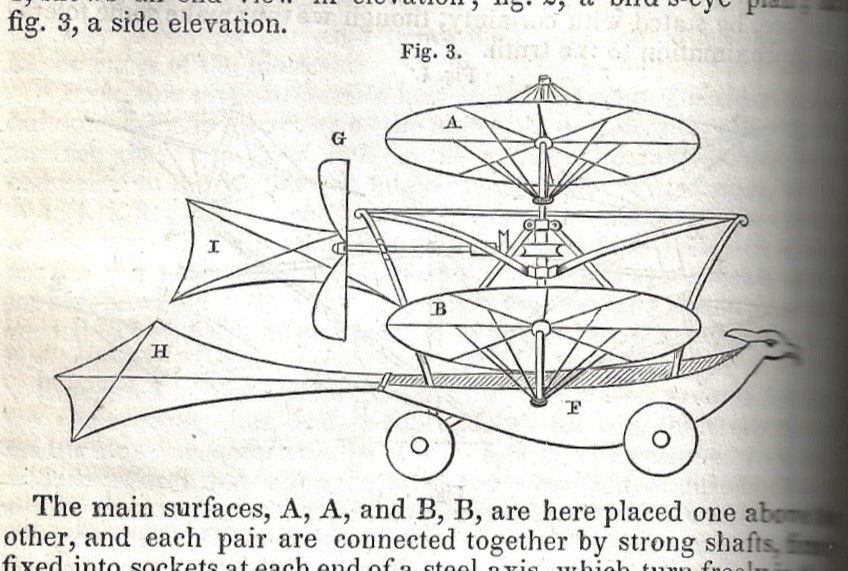
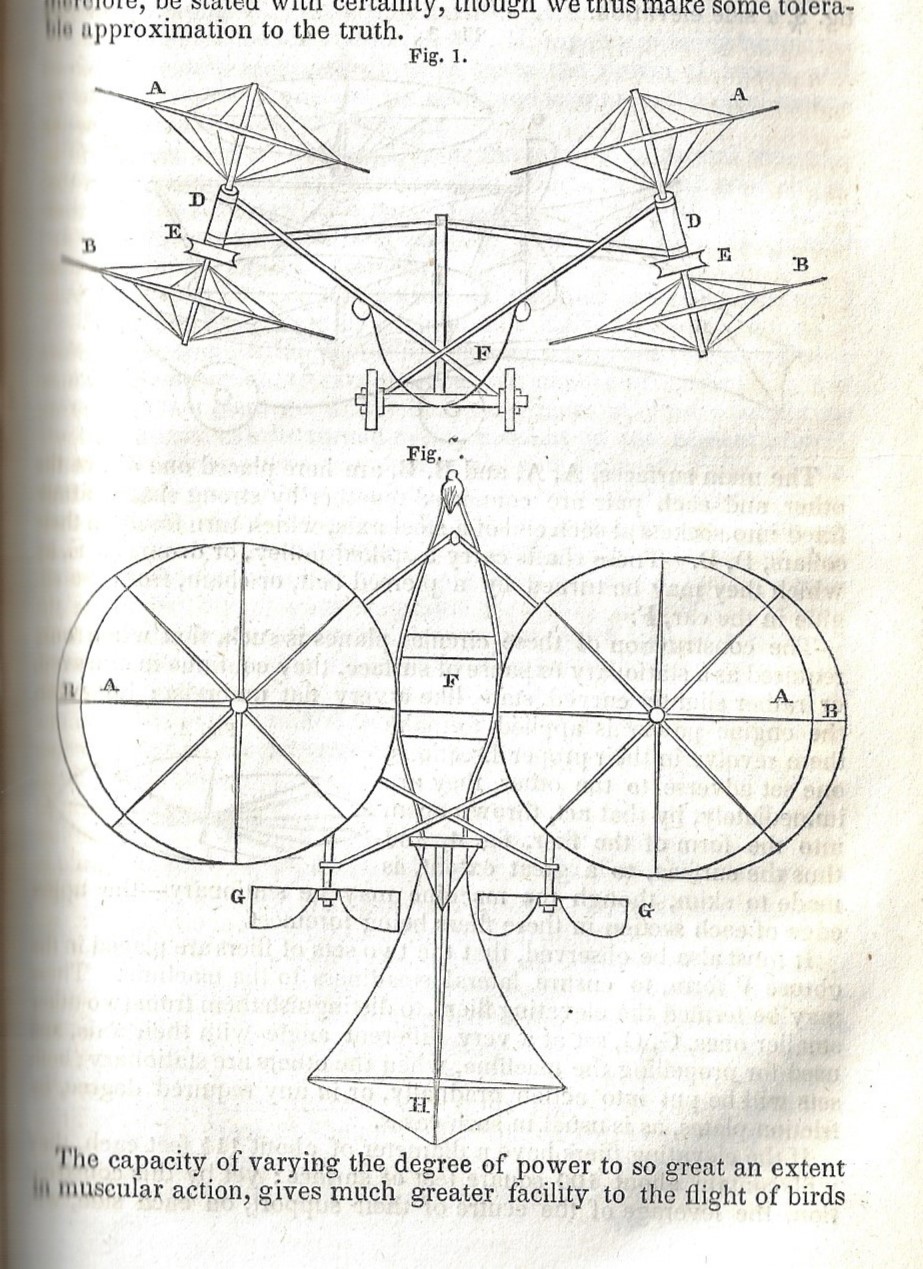
    _____.  “On the Principles of Aerial Navigation” September 1843,  volume 6 (third series) vol 36 overall; pp 203-209, 4 charming figures in text. (Original appearing in the London Mechanic’s Magazine April 2, 1842.)

    “Now widely regarded as ‘The Father of Aeronautics’, Sir George Cayley (1773-1857) evolved the idea of an aircraft with fixed wings, in which the principle of lift was separated from the propulsion system, and in which inherent stability, as well as tail-unit control-surfaces, must be incorporated.”–Royal Aeronautical Society website intro to Cayley.

    JFI 1843 Cayley _2_
    JFI 1843 Cayley _2_

    AND:

    [William S. Henson,  1812-1888]  “On the Steam Power of Mr. Henson’s Flying Machine”, pp 281-2, with 4 text illustrations.  “The aerial steam carriage, also named Ariel, was a flying machine patented in 1842 that was supposed to carry passengers into the air. It was, in practice, incapable of flight since it had insufficient power from its heavy steam engine to fly. A more successful model was built in 1848 which was able to fly for small distances within a hangar. The aerial steam carriage was significant because it was a transition from glider experimentation to powered flight experimentation.”–Wikipedia

    Michael Faraday, “Ont he Electricity evolved by the Friction of Water and Steam Against Other Bodies”, p. 283

    Also bound in this volume: J.F.W. Herschel, “On certain improvements on Photographic Processes described in a former Communication, and on the Oarathermic Rays of the Solar Spectrum”, pp 187-190. “Report on the best Modes of Paving Highways”, pp 145-168, 

    And:

    J.C. Loudon, “The Principles of Landscape-Gardening and Landscape-Architecture applied to the Laying out of Public Cemeteries  and the Improvement of Churchyards…”, a paper in four parts, on  pp 46-54, 89-98, 182-190, 265-269. 

    ·Posted by :

    ·in:


  • Early Balloon-Based Aerial Photography

    Two Early Papers on Successful Free-Balloon Aerial Photography (1880 and 1886)

    Desmarets, Paul. “Sur les moyens d’obtenir des epreuves photographiques en ballon libre. Note de P. Desmarets, presentee par M. Janssen (Extrait)”, in  Comptes Rendus, vol  91 no. 4,  26 July 1880, the article on pp 246-7  in the issue of pp 187-250. This weekly issue is extracted from a larger bound volume, but it does come with the front wrapper, which is fairly scarce.  

    Offered with:

    Tissandier, Gaston (1843-1899). “Nouvelle experiences de photographie en ballon; ascension de Mm A. and G. Tissandier et P. Nadar”, in Comptes Rendus 19 July 1886, vol 103 no 5, the article appearing on p 224-5 in the issue of pp 179-226. Offered with the original wrappers, extracted from a larger bound volume.  Good solid copy.  Tissandier discusses particulars of the work by photographer Jacques Ducom who took advantage of new photographic plate tech improvements to make a superb image of Paris in a free balloon at about 1200 metres.  (“Gaston Tissandier  was a French chemist, meteorologist, aviator and editor. Adventurer could be added to the list of his titles, as he managed to escape besieged Paris by balloon in September 1870. He founded and edited the scientific magazine La Nature and wrote several books.”–Wiki)

    The two papers: $400

    “The history of aerial photography began in 1858, when the photographer Nadar took the first photographs from a balloon. His results were only partially successful, as were those of other experimenters who followed him, and it was not until 1878, when factory-made gelatin dry plates were introduced, that aerial photography came into its own. Using gelatin plates, which were twenty times faster than the old wet-collodion plates, the photographer Paul Desmarets obtained two birds-eye views of Rouen in 1880 from a balloon at 4,200 feet. [the first paper offered above]. However, Desmarets’ results were surpassed five years later by Jacques Ducom, who, in a balloon navigated by Gaston Tissandier, was able to take superb aerial photographs of Paris from a height of 1,800 feet” [the second paper offered above]. –Jeremy Norman, from his excellent and highly useful History of Information site (section on Tissandier’s book on aerial photography, which was the first of its kind, and issued in 1886.)

    “Ducom’s view of the Ile Saint-Louis, Paris from 1,800 ft leaves absolutely nothing to be desired. Through a magnifying glass people can be counted on the bridge. The exposure of this and the other photographs taken on this flight was 1/50 second, using a specially constructed guillotine shutter which was opened pneumatically and closed automatically with a rubber spring” (Gernsheim & Gernsheim, The History of Photography 1685-1914 p. 508)–again quoting the very resourceful Mr. Norman (above).


    ·Posted by :

    ·in:


  • Otto Lilienthal and his Fabulous Ornithopter

    LILIENTHAL, Otto.  “Lilienthal’s Experiments in Flying”, in Nature, 12 December 1894, pp 177-179, with four photographic illustrations; offered in the weekly issue of pp 169-192.  Removed from a larger bound volume, with the scarce original printed wrappers (and ads).  Nice copy.  $150

    Lilienthal was an international authority on human flight, and was known to many as The Flying Man, and The Father of Flight, because, well, he flew. And he flew more often and with more recorded/documented successes in his non-powered flying machines than any other aviation pioneer of the time. In fact, he had a major influence on the Wright brothers (though not necessarily for his experimental data, which they abandoned after a while to create their own in their wind tunnel), with Wilbur Wright saying: “Of all the men who attacked the flying problem in the 19th century, Otto Lilienthal was easily the most important. … It is true that attempts at gliding had been made hundreds of years before him, and that in the nineteenth century, Cayley, Spencer, Wenham, Mouillard, and many others were reported to have made feeble attempts to glide, but their failures were so complete that nothing of value resulted.” (From the Wikipedia article on Lilienthal.)

    Lilienthal was well into making successful jumps/flights by this time, but would suffer his fatal fall in about two more years, dying August 10, 1896, after a series of 850′ flights.

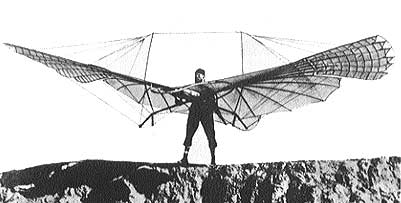
    This is an early appearance of Lilienthal in English, and also includes the famous picture of him with his ornithopter. 

    Lilienthal

    ·Posted by :

    ·in:


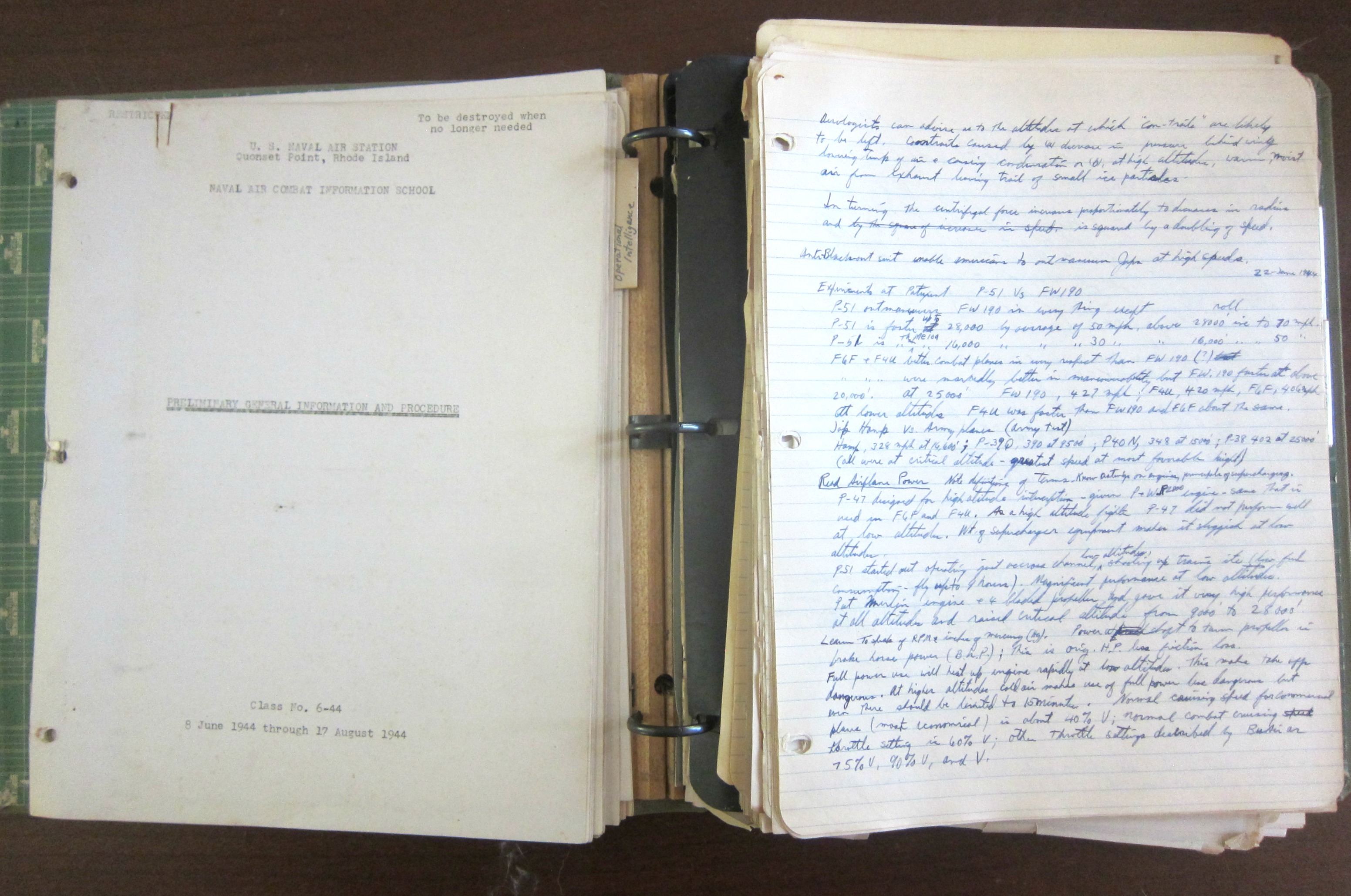
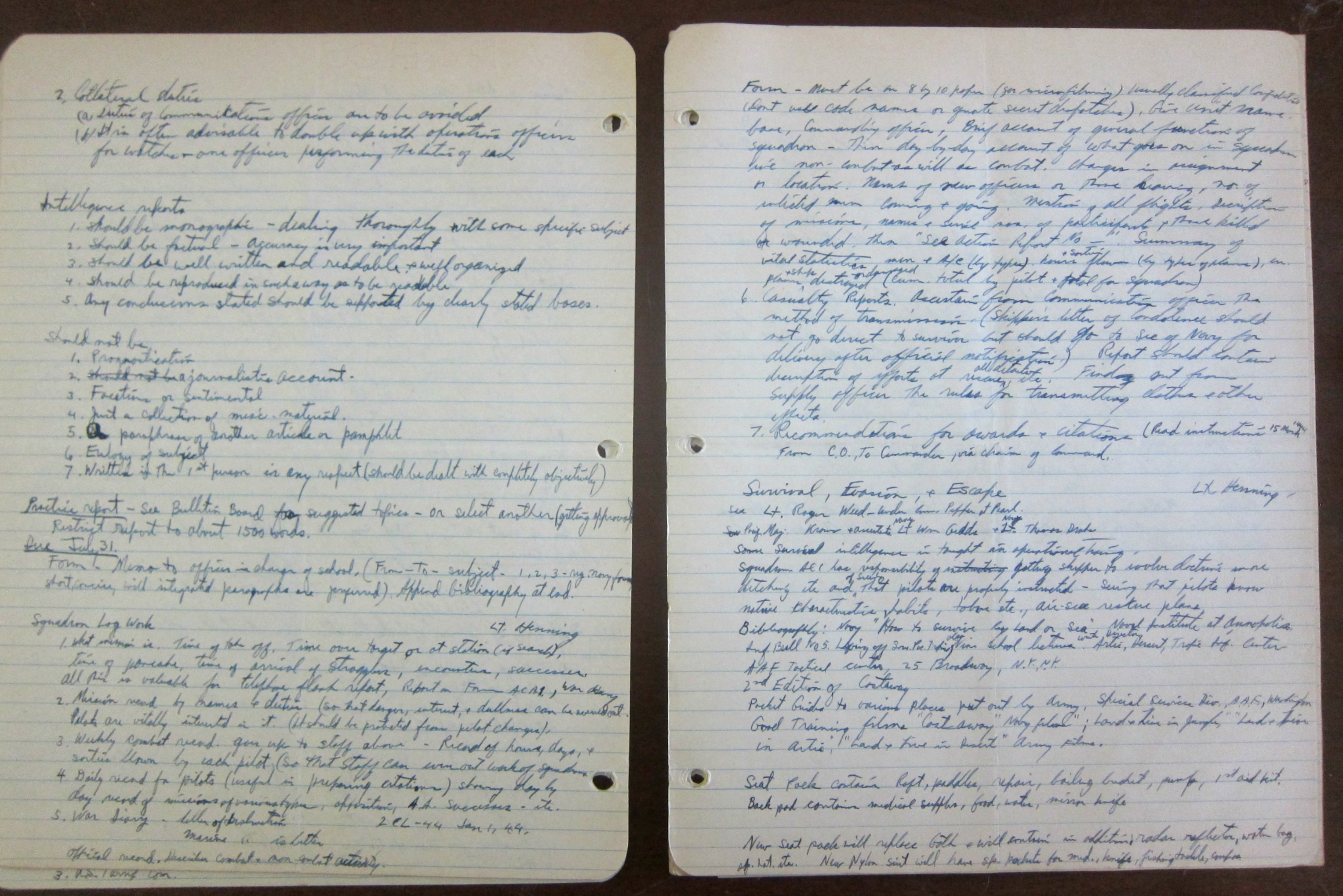
  • An Unusual Find of Information and an Insight into the Education and Training of Air Intelligence Officers, and how the US Military Analyzed Battle Data (1944)

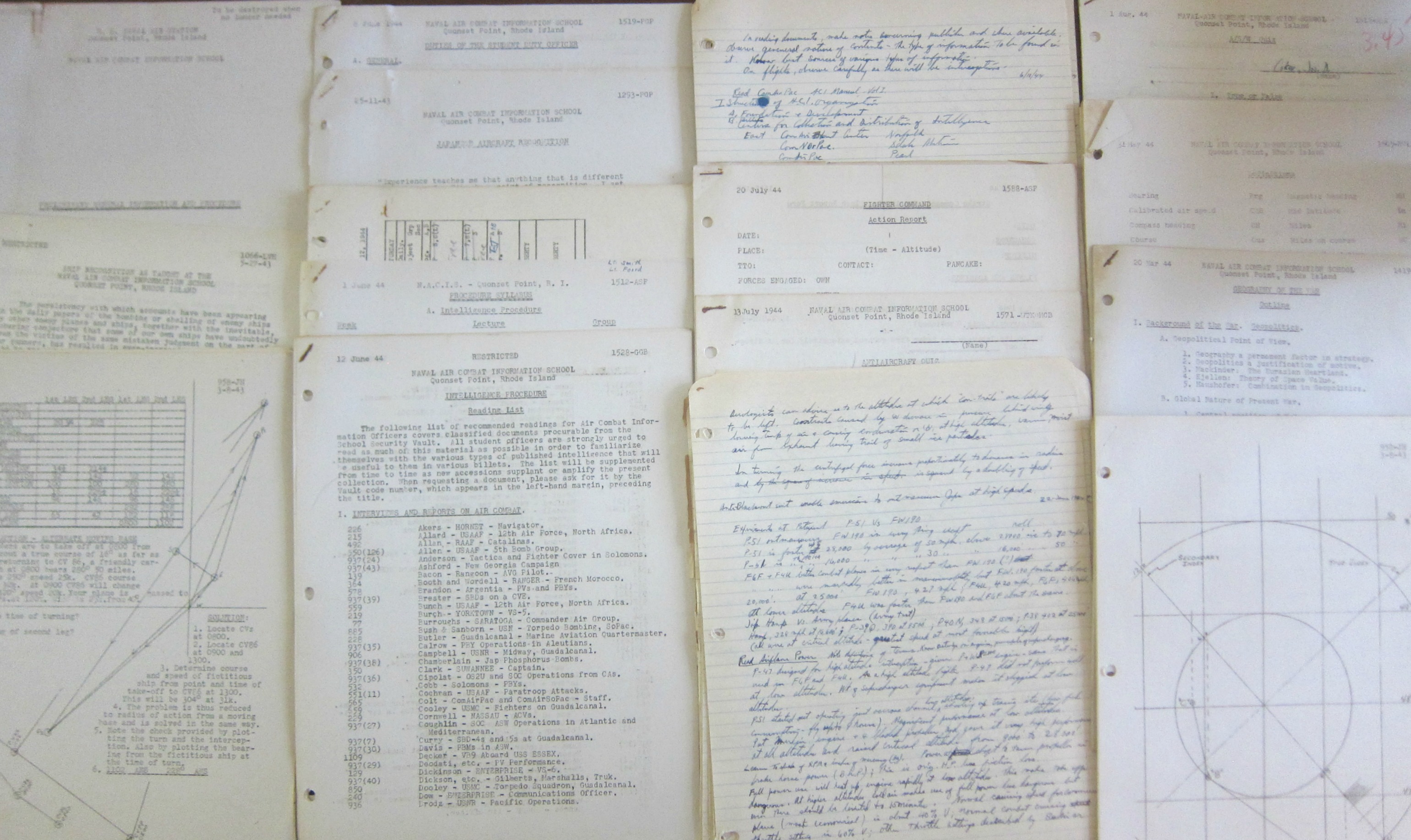
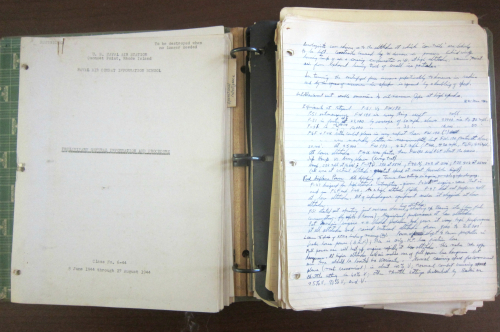
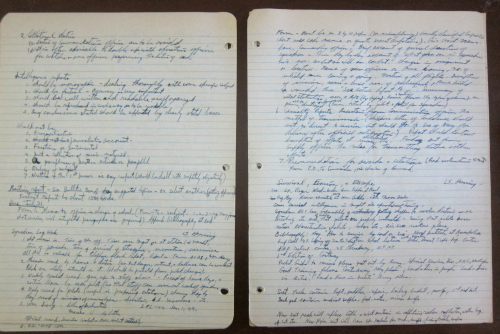
    Mixed mimeographic and manuscript notebook of an officer attending the Naval Air Combat Information School (NACIS) at Quonset Point, Rhode Island in the summer of 1944. The material is bound in the original three-ringed notebook, all of which is in Very Good condition.  The document runs 221pp, including 140pp printed documents (almost entirely mimeographed), 51pp of manuscript notes, and 30pp of mixed printed forms with manuscript additions). $1750.00

    Most of the material is mimeographed from type originals, and most of that is marked “Restricted” or “Confidential” in the original sheets.  This was the notebook of Joseph Coker, who did an excellent job of note-taking and was a superior observer, and who would continue his career post-war int eh field of defense analysis, and retire from government service as the director of the National Resource Evaluation Center in the Office of Civil and Defense Mobilization in the Executive Office of the President, which was really about preparing for nuclear attack and the world that would be left after that.
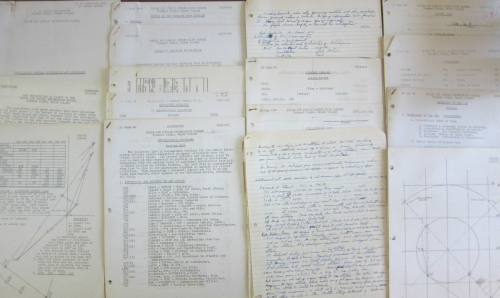


    NACIS group[Some of the notebook’s contents–the foggy bit in the upper right corner is shadow, and not a stain.]


    Contents, in order of appearance:

    –USNAS, NACIS, “Preliminary General Information and Procedure”, Class No. 6-44, 8 June 1944-17 August 1944, for the 289 hours of classwork. Marked “to be destroyed when no longer needed” and “restricted”. 2 lvs, 8pp.

    –General Notices (Daily schedule), 6pp.

    –Outlines of the Student Duty Officer”. 4pp

    –NACIS, “Japanese Aircraft Recognition” 25-11-43. 1 page. (See below for details.)

    –Ship Recognition as Taught at the NACIS. 5-27-43. 3pp. “Restricted” A full and tight 3pp on the outline of a classification scheme.

    –Course outline and schedule. 9pp of the daily regime at the school.

    –“Procedure Syllabus”, 1 June 1944. 1pp

    “Intelligence Procedure”, “Restricted”, 12 June 1944. 14pp. Includes reading list of interviews and report on air combat with about 120 named airmen; outlinnes for a course on air combat tactics, action reports, and battle notes, including amphibious warfare and ASW; airplane chracteristics; “interview and reports on air combt intelligence duties”; photographic interpretations; geographical references.

    “Sample Pilot’s Check Chart”, “Confidential” 1pp. Chart outlining altitude, RPM, max manifold pressure, mixture control,oil temp, oil pressure, cylinder head max, cowl flaps, fuel consumption, for 13 different operating conditions.

    –MANUSCRIPT: 8pp general outline of intelligence procedures.
    NACIS three ring

    –“TBF’s at Truk. Interrogatee: Pilot” 22 July 1944. Sample of a debrief after air combat over Truk Island. Second part: “F4U’s at Saipan”. 2pp.

    –“NACIS Index System”, “restricted”, 25 May 1944. 2pp

    –EXAMINATION. “Procedure Test”, 30 June 1944, with printed questions and hand-written responses. 2pp

    –EXAMINATION. “Antiaircraft Quiz”, 13 July 1944. 3pp, with printed questions and hand-written responses.

    –“Fighter Command, Action report”, 20 July 1944. Sample form, not filled in. Also includes “Mission report (Navy) FORM MIKE” with general instructions. 13pp. Also includes “Life Raft and Emergency Performance Report”, 4/1/1944, 1 sheet. Also 1 short page of ms notes.

    –“Geography of the War”, 20 March 1944. 8pp, plus 1 sheet of ms notes.

    –EXAMINATION: “Tactics Quiz”, 8 July 1944. (Sample question:“Give a reason or reasons why it would be foolish to compare the original models of the P39 and the P47 on the same basis”.) 2pp

    –MANUSCRIPT Notes: 16pp of tactics, mostly on torpedo tactics from planes, dive bombing, glider bombing (?). About 5000 words.

    –MANUSCRIPT Notes, ASW, 8pp, about 3000 words, including a printed dagram/cutaway of a U-boat.
    U.S. Depth Bombs (depth chargers), “Confidential”, 27 July 1944. 1 sheet. Table of the bomb type, weight of charge, total weight, nose, pistol, lethal radius, and impact-spacing (day and night).
    NACIS mss

    –ASW Classification, “Confidential”, 4 May 1944, NACIS. Interesting 11-point grading system for assessment of attack on sub. 1 sheet.

    –COMINCH Instructions for Briefing Squadrons on ASW Missions, “Confidential”, 29 July 1944. 1 sheet.

    –EXAMINATION: ASW Quiz. 1 Aug 1944. 3pp

    –Homework Assignments: 22 single-leaf assignments, all dated May 1944, and mostly concerned with navigation.

    –Construction of Mercator Chart, Measurement of Course and Distance, determination of longitude and latitude. March 8, 1943. 13 leaves. Also: 6pp of manuscript notes.

    –“Aerology”, by John Hamlin. Offset/mimeograph. 27pp.

    –“Performance of Fighter Command Aircraft”, 26 January 1944. Lists engine, operational ceiling, climb rates, speed, and guns in charts for 34 aircraft. Marked “Restricted”. 3pp. Wonderful data.  Accompanied by 12pp of manuscript notes outlining command structure of the Japanese, Russian, German, Italian, and British air forces. (See below for a images.) The air forces outlined in diagrams in the notebook include the U.S. Army Air Force, the Luftwaffe, the air forces of the Soviet Union, and the air force of the Imperial Army of Japan. I’m not saying that these notes are significant, just that they are from an unusual source, and so from that perspective alone they are interesting–that and the fact that the person who made the notes and took the classes became the head of the chief nuclear weapons preparedness organizations in the U.S.

    –“Performances of German Aircraft” “Restricted”. 16 February 1944. 9pp

    –“Instructions for Preparing Revised Form ACA-1 for reporting Aircraft action”, prepared by the Air Intelligence Group, Division of Naval Intelligence, June 1944. This is the only mass printed document of the lot. It is 11pp, and marked “restricted”. The document is accompanied by a printed form for the Aircraft Action Report (4pp)
    ·Posted by :

    ·in: