A Daily History of Holes, Dots, Lines, Science, History, Math, Physics, Art, the Unintentional Absurd, Architecture, Maps, Data Visualization, Blank and Missing Things, and so on. |1.6 million words, 7500 images, 4.9 million hits| Press & appearances in The Times, Le Figaro, Mensa, The Economist, The Guardian, Discovery News, Slate, Le Monde, Sci American Blogs, Le Pont, and many other places… 5000+ total posts since 2008.

Book Category: Militaria

  • Serbian Depredations in Macedonia (1933)

    TATARTCHEFF, Marthe Thibault. Appel des Femmes Macedoniennes aux peuples libres et la conscience internationale. Geneva, Imprimerie Commerciale, 1933. 9″x5.5″, 8pp (though 6 pp of text). (“An Appeal of the Women of Macedonia to Free People of the World and the International Conscience.”) Provenance: Carnegie Institute of Washington, and the Library of Congress, with three stamps for these institutions. VG condition. RARE. WorldCat locates only two copies of this work (University College London and Nanterre) and two copies of the English translation (Harvard and Harvard Law). $250

    This is a harrowing tale. The author spent years trying to escape from what is today North Macedonia, trying to return to her native Switzerland. She tells a story of vast repression, destruction, and death. Tatartcheff writes (“After eight years of uninterrupted suffering…”) on the “…misfortune of Macedonia under Serbian domination” and “addressing the present appeal to the free peoples and to the international conscience, so that they come to help, in the name of humanity, as in the name of threatened peace in the Balkans and in Europe, to a population subjected to an incredible regime of physical and moral terror on the part of the government and the Yugoslav dictatorship”.

    “The general policy pursued by the Serbian government, now known as Yugoslavia, in Macedonia since, 1912/13 and in the former provinces of the Austro-Hungarian Empire from 1918/19, can be characterized in two words: serbization by violence moral and physical.”

    After describing her own imprisonment and the condition of the country in general, the author makes a final appeal, and raises the possibility of extermination: “These methods constitute a permanent threat to the peace of the Balkans and Europe and they are a real disgrace for our century. Unfortunately, with the growing danger of the collapse of Yugoslavia, these methods are only getting worse and more cruel. In the name of human solidarity and peace, in the name of a population threatened with extermination, I address an ardent appeal to all humanitarian organizations in the world, to all international organizations working for the establishment of peace and to all upright consciences to raise their hearing voices for an end to the incredible terror of Serbian tyranny in Macedonia and Yugoslavia.”

    Keywords: North Macedonia, Serbia, Yugoslavia, Bulgaria, Greece.
    ·Posted by :

    ·in:


  • German WWI U-boote SONAR, November 1942. RARE work with schematics. NO Copies in WorldCat.

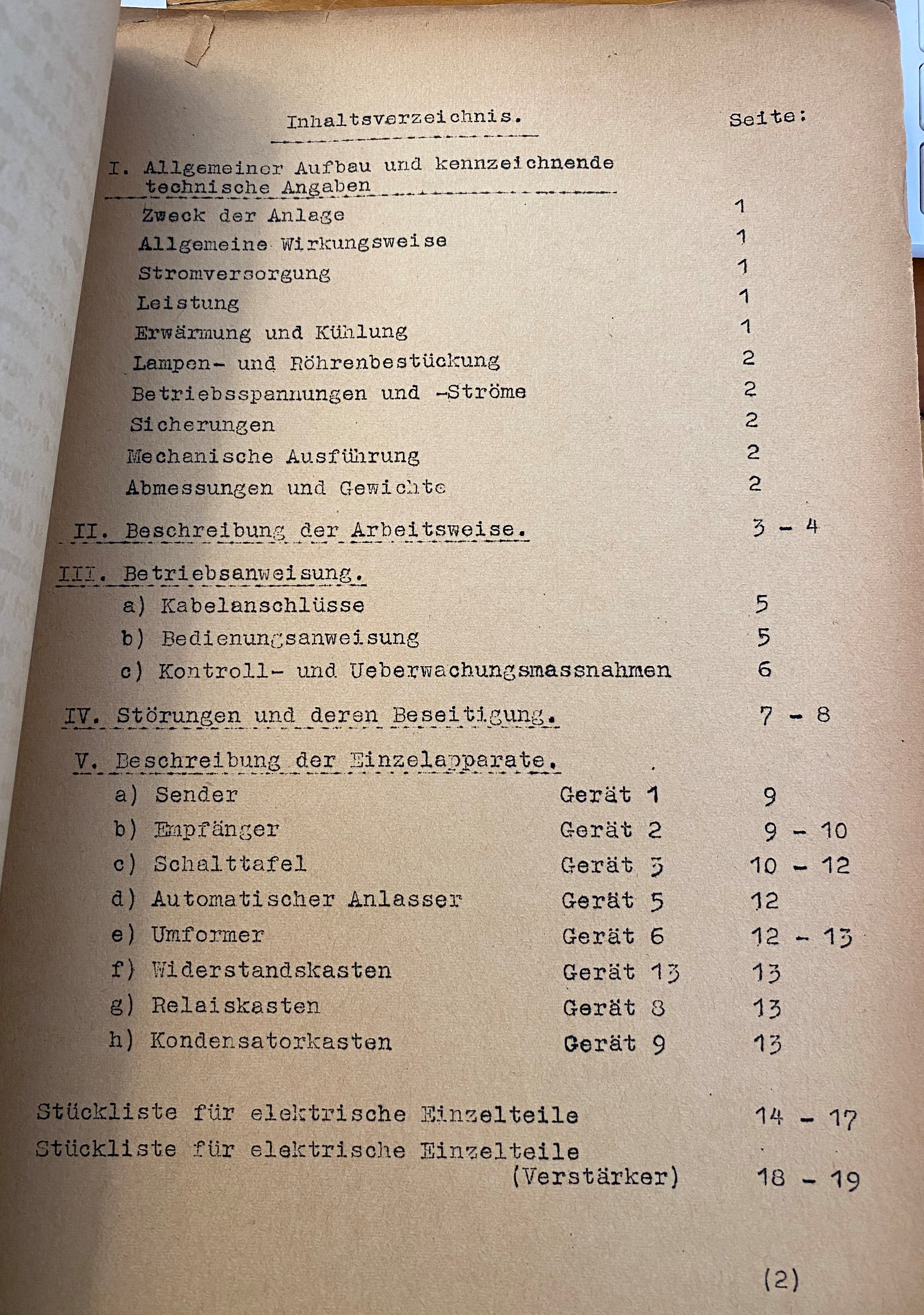
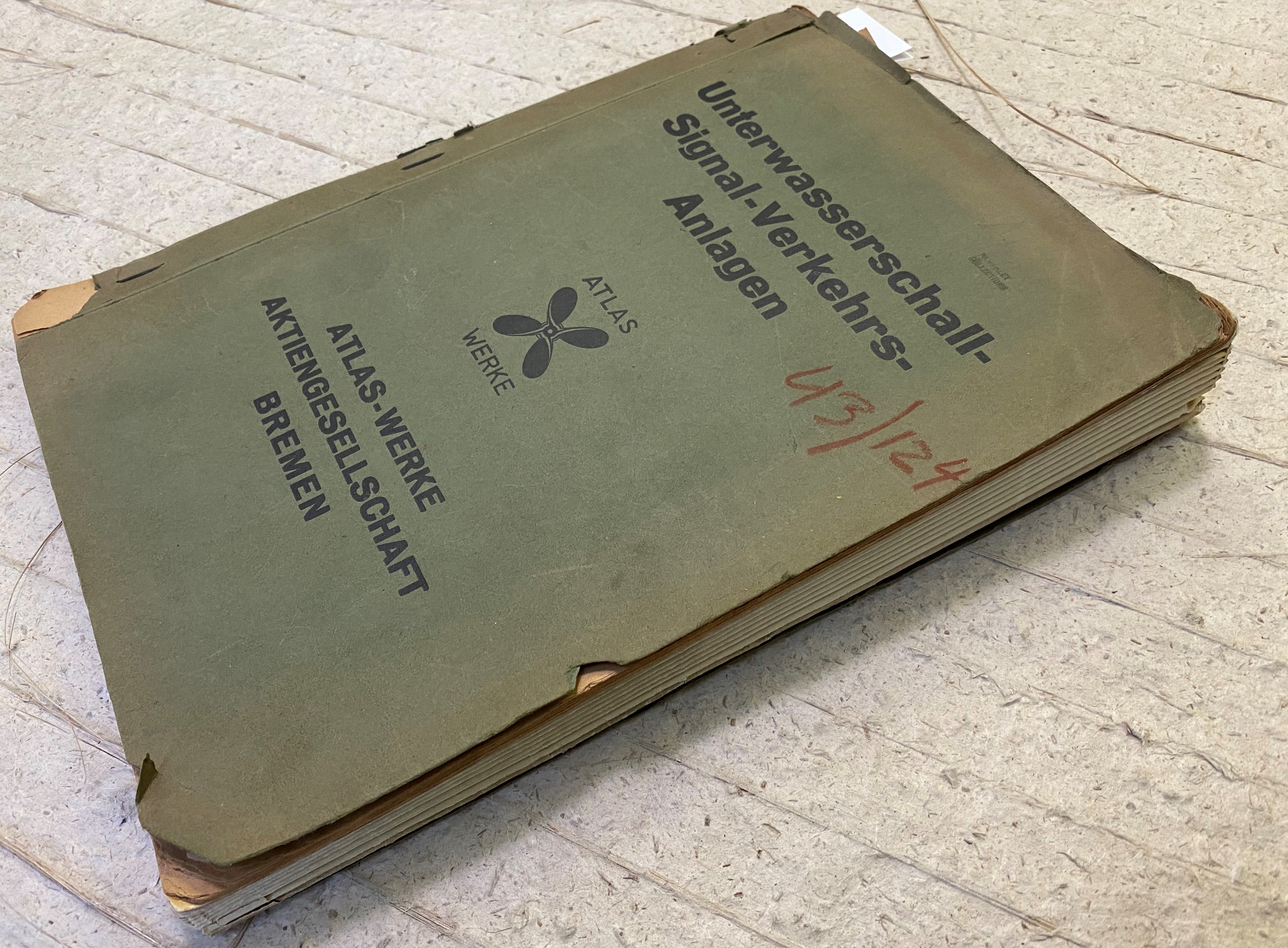
    Sonore UT-Anlgae fur U-Boote: An 501. Beschreibung durch die Prufstelle der KMW Kiel gepruft Kiel, im November 1942. (“Description checked by the test center of KMW Kiel “,)  Unterwassersdchall-Signal-Verkehrs-Anlagen. Atlas Werke. Aktiengesellschaft, Bremen. 295X208mm.  $3500

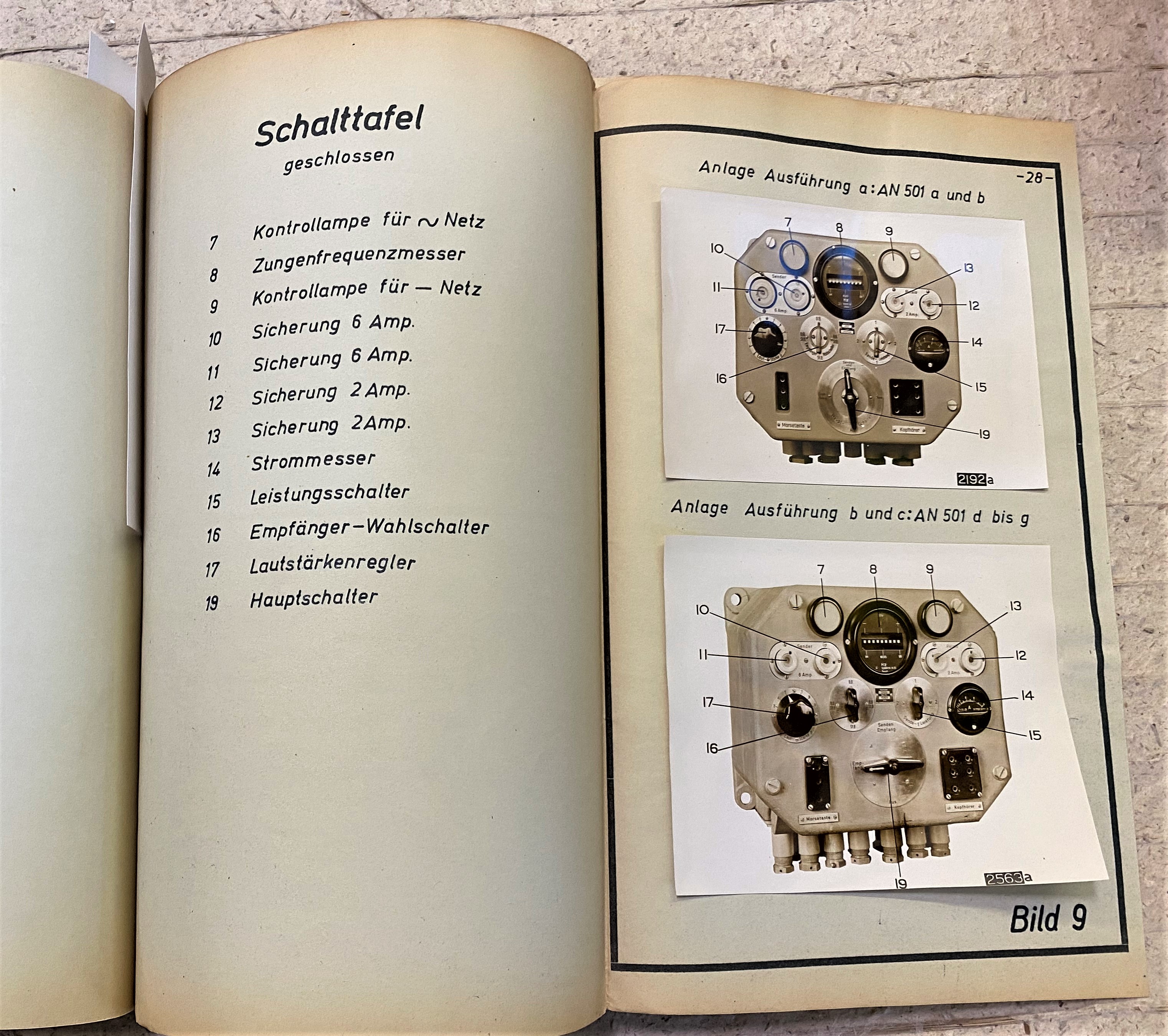
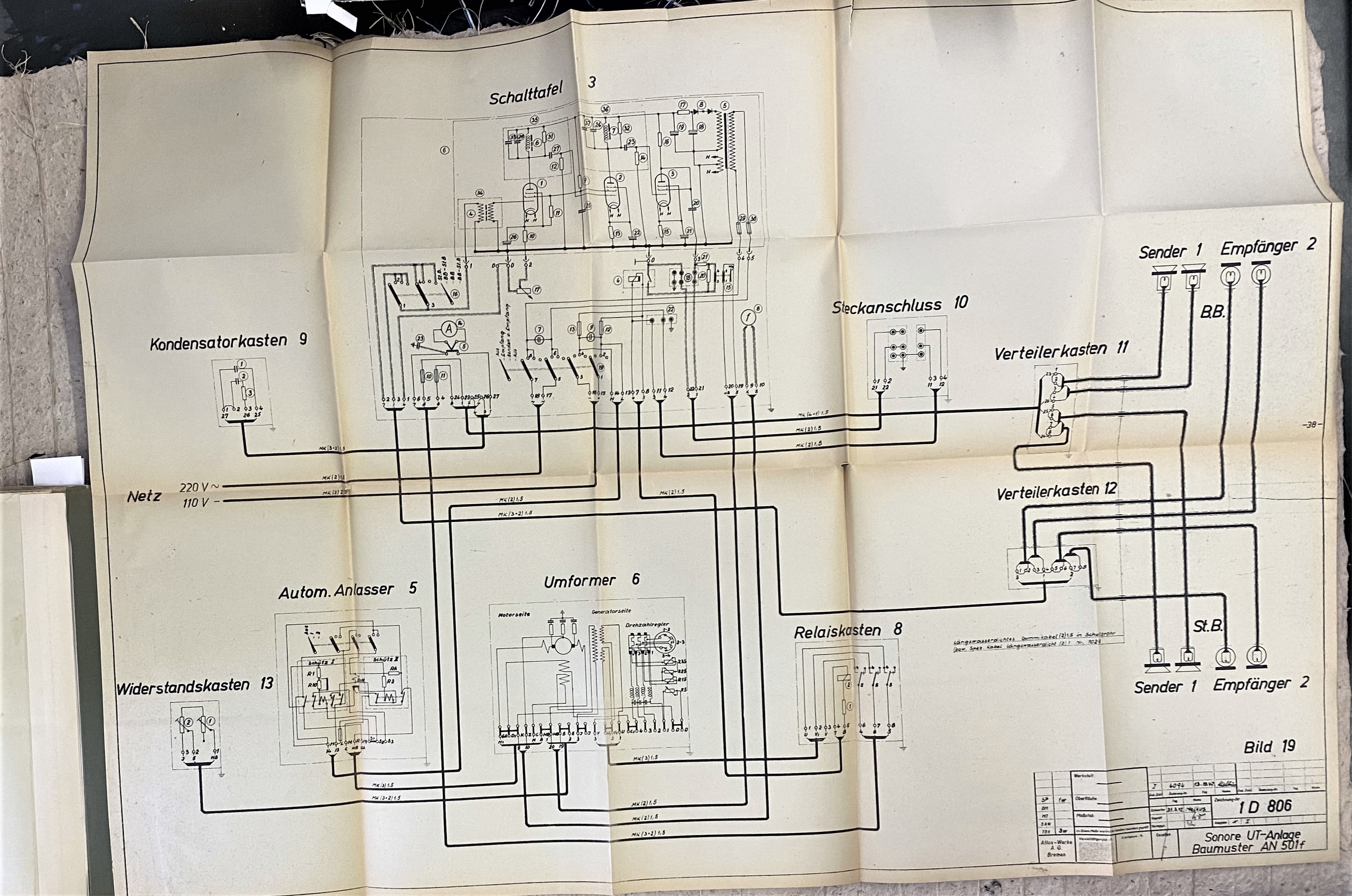
    Image-4Staple-bound in stiff boards. 35 lvs+3 unpaginated large folding schematics, including 19 plates, 17 of which are folding. The first 13 lvs (all text) were printed on an inferior stock and are browned. The plates are all printed on a better and much thinker paper and are FINE; the photos are also FINE. The covers are somewhat worn around the edges but a solid VG. The binding itself is very sturdy and the plates (which are fresh) are easily opened and closed and well-hinged to the binding. Overall: VG

    Pagination (slightly complicated): overall, 35 lvs+3 unpaginated large folding schematics, including 19 plates, 17 of which are folding. Lvs 1-13 are text/review/summary/outline; lvs 14-21 are charts and lists printed on a heavier stock. The folding plates begin at lv 20 (though lv 20 and 21 are designated Bild 1+2 are of the same style as lvs 14-21, confusingly). Folding plates begin at Bild 3-8 and Bild 16-35, which is followed by 3 further large folding plates that are not paginated. Bild 9-15 are one-fold plates (29x35cm) illustrated with original photographs of the equipment.

    Image-3 (1)

    • WorldCat describes this work (and according to their description the book seems to be complete) though it locate NO copies worldwide.

    I take it that the SONAR system described in great detail here (for boats VII c, IX c, and IX d) may related to that equipment aboard the U-boote 501 (which was a IX c, departed Kiel, and which sank 10 Sept 1941), though it may reference a particular class of U-boote…I’m not sure. I thought the cover page for the work would clarify that but it doesn, at least to me—it does point out some minutiae, for example, that the AN 501 a is used for the VII c and the AN 501 b for the IX c. That sort.


    Image (1)

    Description of the plates: (remember Bild 1 and 2 are lists of illustrations and associated and not plates in themselves, though paginated so); Bild 3, Sonore UT-Anlage, 29x53cm; Bild 4 Sonore UT-Anlage (type VIIc), 29x53cm; Bild 5 “Prinzip-Schaltbild” (Principle circuit design) 29x35cm; Bild 6 “Apparte Masskizzen 29x35cm; Bild 7 Tonsender 29x35cm; Bild 8 Tonenpfanger 29x35cm. Bild 9, Schalttafel geschlossen, w/2 photos on 29x35cm folding sheet. Bild 10-16 each are 29x35cm foldinbg sheets with one photo each (the photos all around 12x12cm to 16x12cm). Bild 17, an overall schematic, and quite large, 93x44cm. Bild 18, “Stromlaufplan”, 75x44cm. Bild 19 is another overall, 93x44cm.

    The photos are titled “automatischeranlasser”, “zumformer”, “Widersandskast”, Relaikasten”, and “Kondensatopkasten”.

    Provenance: Library of Congress, with a few of their small stamps, plus their rubberstamp “surplus”.  

    ·Posted by :

    ·in:


  • US Army Transport Shipboard Newspaper, 1929

    The Cam-Breeze.

    US Transport Cambrai on Voyage from New York Nov.13, 1929 vi Panama Canal to San Francisco, Calif., Nov. 30, 1929. 13”x 8.5”, 29pp. Complete in 14 issues, about 15,000 words. Each issue has a hand-drawn banner, usually a map, This was produced shipboard on the Cambrai.

    There seem to be no copies located in WorldCat. $500

    Provenance: Library of Congress, with their stamp on the front wrapper.

    Condition: Fair. The oversize paper was also fairly cheap to begin with, so there are some rough edges all the way around, but particularly at top (as you can see in the pics). Some of the cracked bits along the top edge have been reinforced with Japanese rice paper adhesive on back. Accpetable copy of an evidently rare document.

    The Cambrai was named after the US-involved battle of Cambrai in WWI.

    The Cam-breeze reported all manner of shipboard news, where they were in the world, plus “radio news” of national and international interest. Overall, this is somewhat delightful.

    ·Posted by :

    ·in:


  • Rare Document on a Liberal-esque Position on Girls and Women by the Founder of the CIA (1930)


    Author: Donovan, William J.

    Title: Girl Scouts as a National Asset, Radio Talk of Colonel William J. Donovan over WJZ, October 31, 1930, at 2:30pm.

    Year: 1930

    Publisher: original carbon copies (?)

    Pages and Size: 11”x 8.5”, 4 lvs, approximately 800 words.

    Condition: VG/Fine, a 7.5 on a 1-10 scale, with 10 being “new”. Nice and fresh. 

    •  (Condition grading is compared to the condition of the publication when it was new; to give a condition quote that states “good for its age” comparing something to a fluid state without a common denominator is almost without value, so the publication is compared to its condition when it was first published.)

    Interesting 800-word radio address by the head of the OSS and founding father and patron saint of the CIA on the importance of teaching leadership skills to young girls and the role of the Girl Scouts in bringing home that mission. The address was made on WJZ which at the time (and by 1927) was the flagship station of NBC Blue (which had purchased the station in 1923 from RCA and which would become ABC in 1942), and seems to me to be very modern of the 57-year old Col. Donovan. Although he maintains that the female’s “stronghold” was home and motherhood, he declared that “a highly speed civilization (will) call upon her for many other capacities and activities”.

    “Any organization that can fit America’s girlhood for true American womanhood is a nation’s asset.”

    “The Scout movement [begun in 1912 by Juliette Gordon Low] meets a demand for social education and training in leadership at a period in the girl’s life when that sort of training is most vital” he writes.

    “The Nation today demands that women be as well trained and as fully adapted to the national life as men”, which to me appears to be more a more liberated position than most significant men would have in 1930 (and beyond). “The scout troop plan gives the individual girl a sense of duty, a consciousness of ability, an ideal of courage and a recognition of he necessity of remaining an individual while she functions in a group, at the same time making the group achievement greater because of her individual contribution” he continues.

    Provenance: Library of Congress Pamphlet Collection (though there are no markings attesting to that, the document did come with others from that collection). On the bottom of the back of the first page is a penciled annotation, “Gift/Author/Dec 5 1930”, which means Gen. Donovan gave this to the LC at that time.

    Rare document. I can also find no trace of it using the normal channels. Perhaps there is a record of Donovan’s opinions on this matter deep in other sources, but not being expert in this area I would not know if that was the case or not.

    ·Posted by :

    ·in:


  • Spanish-American War in Cuba Scrapbook, 1898

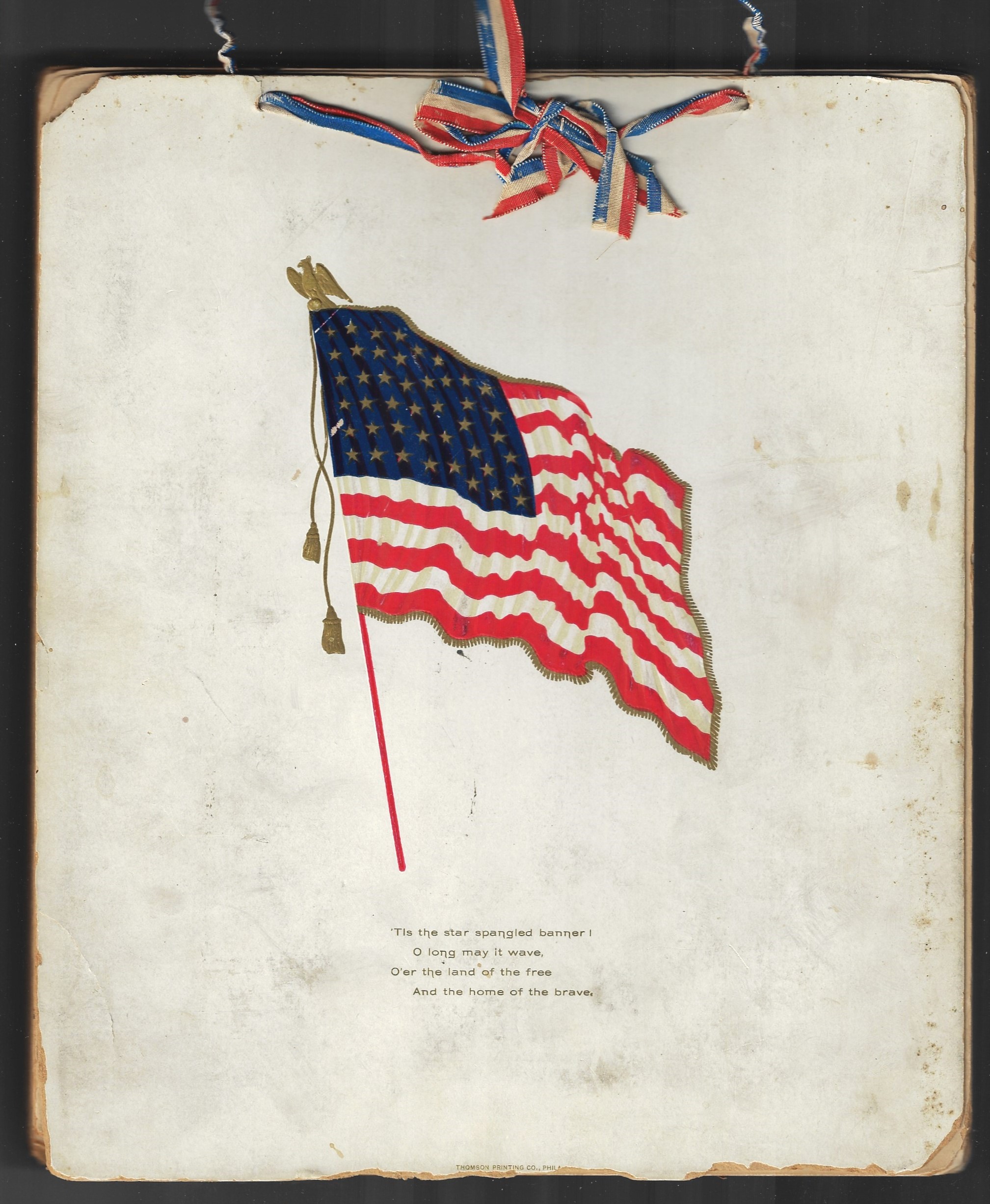
    Spanish American War scrapbook _1_Spanish-American War Scrapbook, February-July 1898. 11”x 9”, 30 cardboard sheets nicely filled front and back with newspaper clippings principally from Washington D.C. newspapers of the major events. This had been bound at top with red, white, and blue ribbon through three-hole punched (at top and bottom) ready-made scrapbook (sold by “Baum’s”, 416 7th St.,Washington DC.) $400

    The ribbon binding has come apart, and there is significant short chipping around the edges of the cardboard wrappers and page edges. Overall though the work is extremely tidy, and the glue used to adhere the clippings to the boards has not bled through (as it does in many cases of these home-made efforts). VG condition. $400

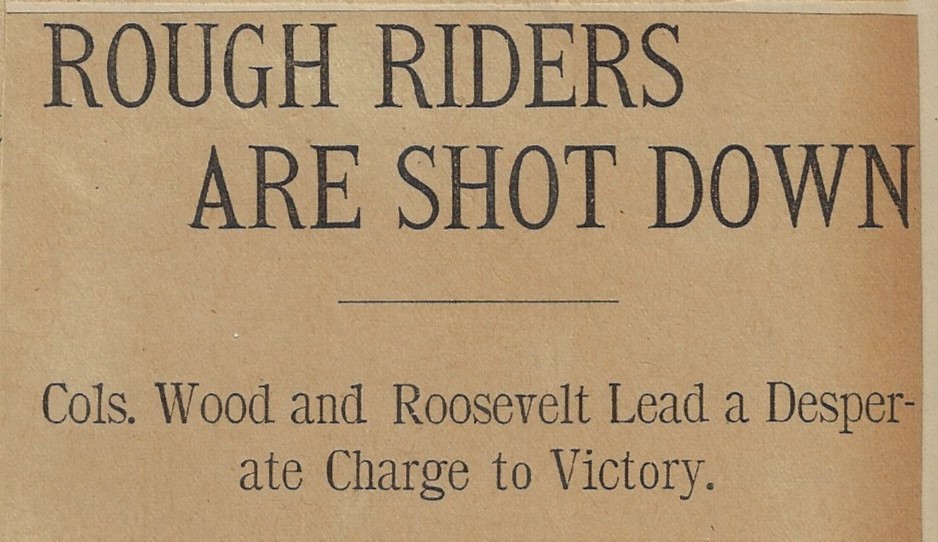
    This scrapbook follows the course of the short-lived war in Cuba between Spain and the United States. (The war/insurrection in the Philippines that is another result of this war was an entirely different and much more complicated and bloody matter.) Most of the major aspects of the Cuba 1898 conflict are seen in these pages, along with a few references to Col. Theodore Roosevelt and the Rough Riders.

    Spanish American War scrapbook rough riders

    ·Posted by :

    ·in:


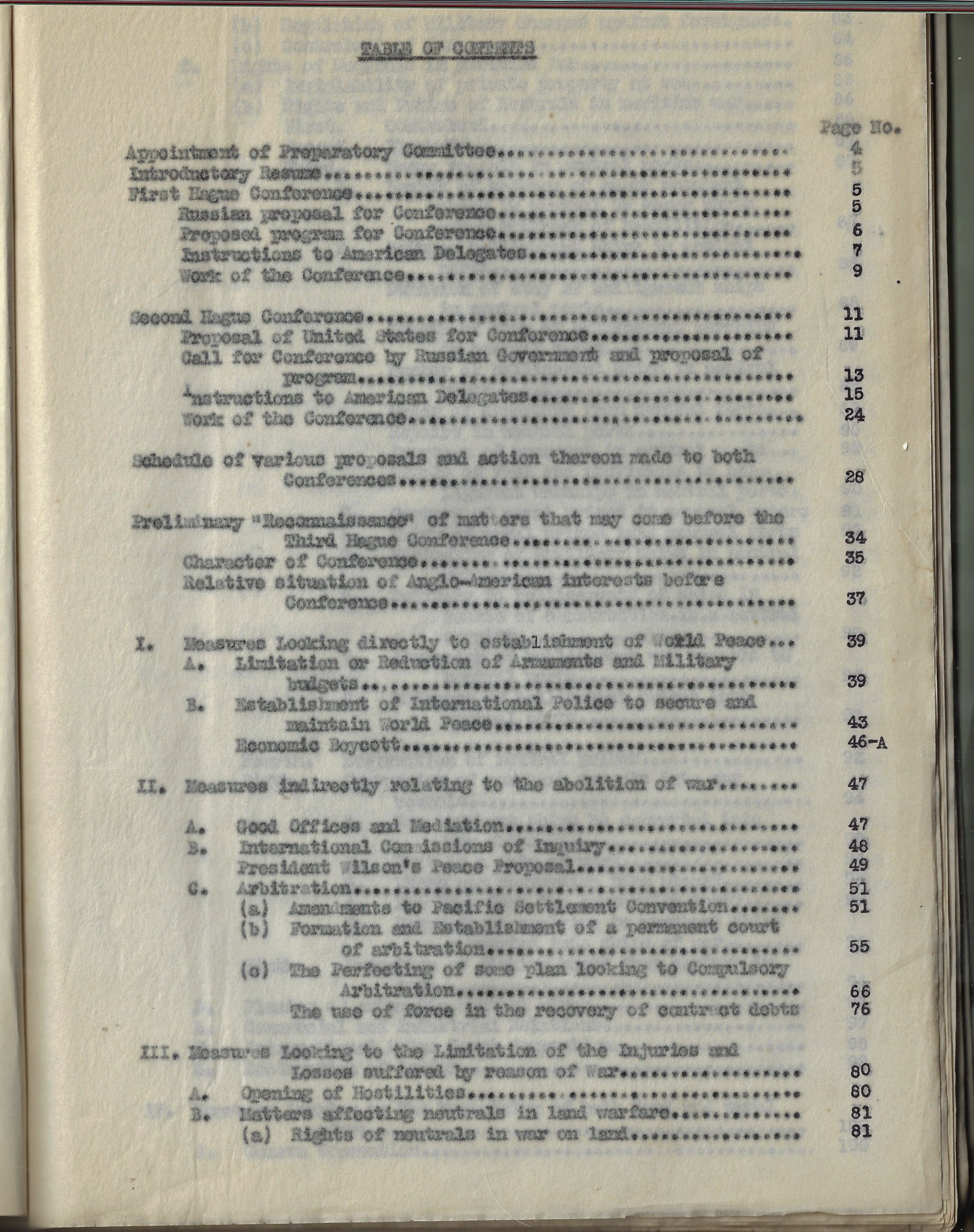
  • Admiral Wainwright’s Working Copy of the Preliminaries for the Third Hague Conference

    Wainwright _1_
    WAINWRIGHT, Richard, Admiral. Spanish-American War hero, Medal of Honor, Superintendant of the US Naval Academy (1900-1902), and etc.

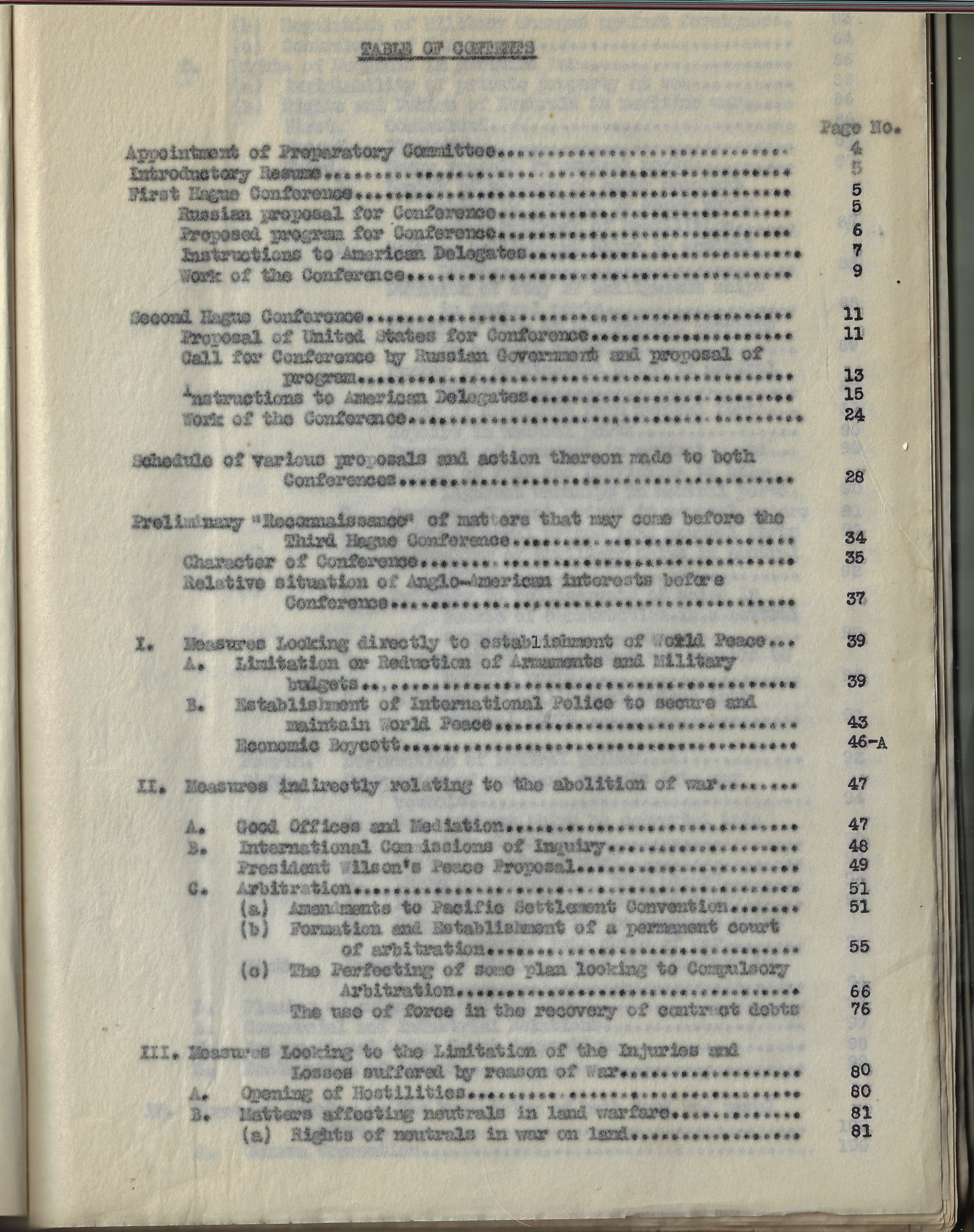
    Memorandum, Preliminary Study, Preparatory Committee of the United States for the Third Hague Conference.

    Carbon copy on very thin, onion-skin-like paper. Ca. 1913. 11”x 8.5”, 296 leaves, partially paginated: (3),134 lvs, (14 lvs), (41 lvs), (6 lvs), (3 lvs), (13 lvs), (82 lvs); approximately 75,000 words. Bound in a contemporary store-bought “Shipman’s Common Sense binder”. VG copy.

    WorldCat does NOT locate this version of a subsequently-published report. $1750

    Provenance: Admiral Richard Wainwright, then to the Navy Department library (received 30 Sept 1926), then to the Library of Congress

    Various library stamps: mostly-removed Navy Department ex-libris; rubber stamp “Discarded/Navy Department Library”, rubber stamp of receipt by Navy on front free endpaper; “Admiral Wainwright” in a fine hand in ink at the top of front free endpaper; rubber stamp “Surplus Library of Congress Duplicate” on rear endpaper.

    This seems to be a preliminary edition of Preliminary Report of the Preparatory Committee of the United States for the Third Hague Conference, to which Admiral Wainwright and two others were appointed by President Taft. “The committee appointed by President Taft June 10, 1912 consists of Hon J Reuben Clark ex Solicitor for the Department of State; Gen Enoch H Crowder, Judge Advocate General of the United States Army; and Rear Admiral Wainwright of the United States Navy. The report begins with the letter of Secretary Knox to President Taft April 5 1912 recommending the appointment of such a committee This letter suggests the importance of such a committee that the Government of the United States might be informed precisely of its relations to the Hague Conference The committee was appointed with the understanding that it represent the United States upon the international preparatory committee contemplated by the Second Hague and that the members should be technical delegates to the Third Hague Conference This letter also sets forth that since in the practical application of the principles and rules of international law all responsibility falls upon the Department of State the War Department and the Navy Department therefore the committee might well be made up of a representative of each department The committee which is to serve continuously until the close of the Third Hague Conference was set the task of preparing a general program for the participation of the United States in a Third Hague Conference While as suggested by the title the report submitted is but preliminary to the formal report hereafter to be submitted the general …”–Advocate of Peace, Washington D.C., 1914., Vol 76 #1.

    ·Posted by :

    ·in:


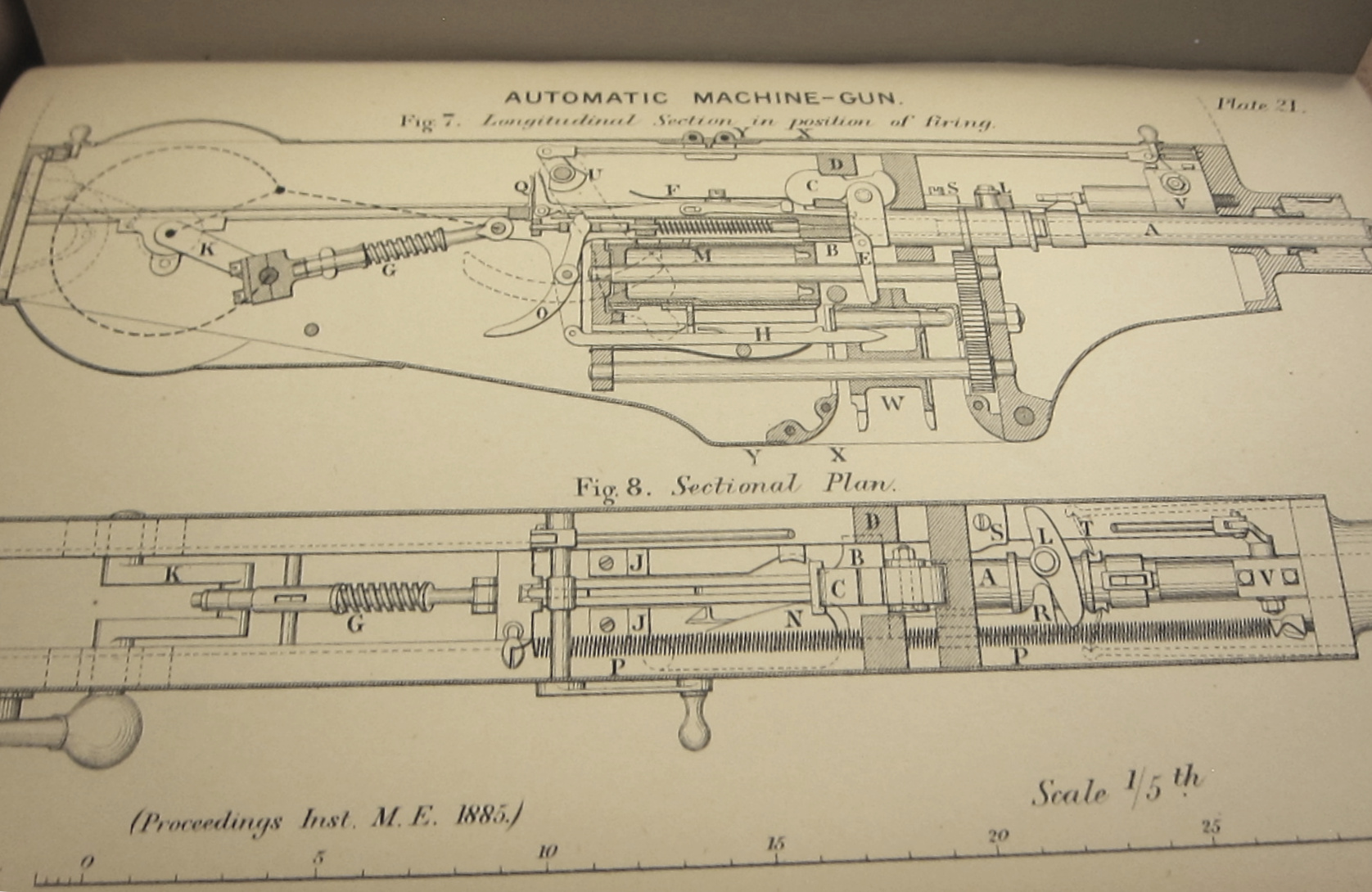
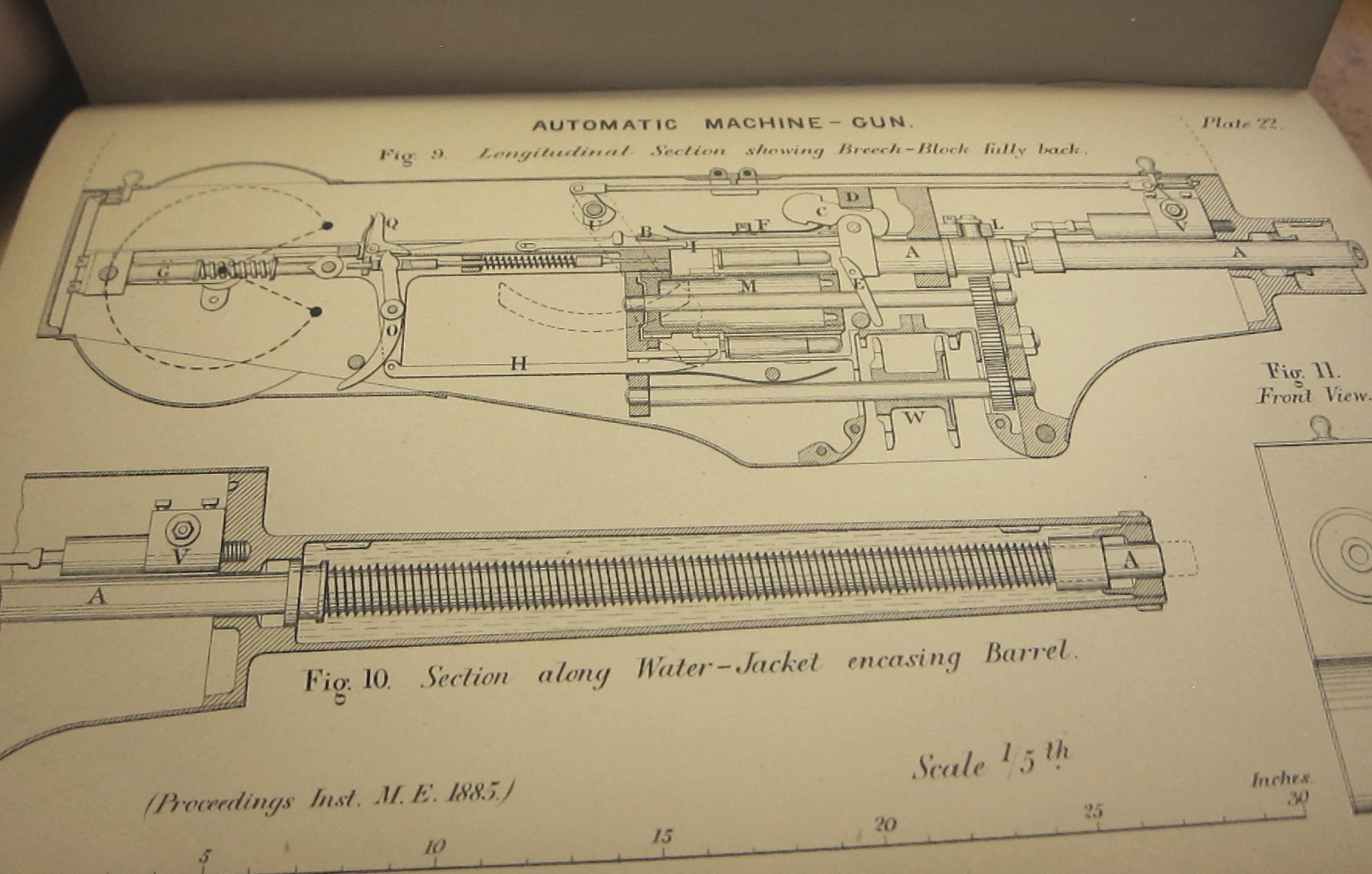
  • One of the Earliest Technical Reports on Maxi’s Automatic Gun (1885)

    MAXIM, Hiram S. “Description of the Maxim Automatic Machine Gun.” In: Institution of Mechanical Engineers, Proceedings, published by the Institution, 1885.

    This article appears on pp 167-197 in the April 1885 issue (of pp 167-302), with this article illustrated with plates 20-26. This paper appears very shortly after Maxim introduced his revolutionary gun in 1884—the first recoil-powered automatic weapon in production, a vast improvement over the hand-cranked weapons like Hotchkiss, Nordenfelt, and Gardner. This paper is illustrated with 7 very detailed plates, including longitudinal schematics of the gun, with 35 figures of varying complexity. Fine production.

    This is article appears in the quarterly issue of April for 1885, removed/detached from a larger bound volume. VG condition. $250

    Maxim gun _2_
    Maxim gun _2_

    ·Posted by :

    ·in:


  • Circassia and Daghestan, 1919

    [Bammate, Haidar}  Circassia and Daghestan. Printed at Lausanne, Imprimeries Reunies, (1919). 9×6″, 15pp. Original wrappers. Good condition.  Scarce: it looks like there are only 3 print copies located by WorldCat. $125

    • Provenance: “Bureau de Presse Nord-Caucasien, Paris”, and then the Library of Congress (with the LC surplus/duplicate stamp on front wrapper upper right corner

    “Translated in part from the “Probleme de Caucase” in la Revue Politique Internationale, vol 10, Nov-Dec. 1918.”–Hoover institution on war, revolution and peace (Stanford, Calif.), A Catalogue of Paris Peace Conference Delegation Propaganda in the Hoover …”, p 30

    ·Posted by :

    ·in:


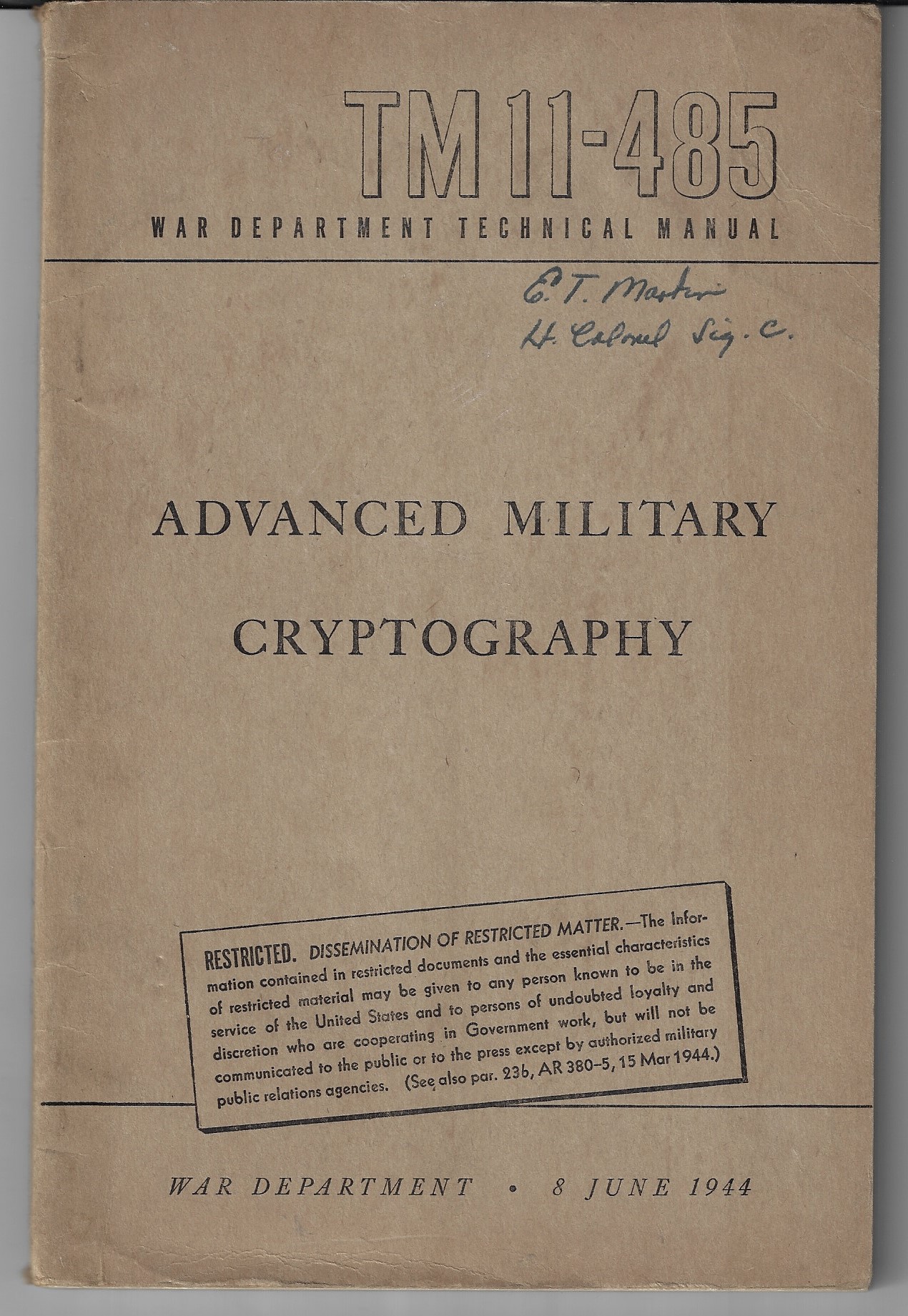
  • Cryptography, 1944

     Advanced Military Cryptography, War Department Technical Manual, TM11-485.

    Published by the War Department, 8 June 1944. 9×6″, 113 pretty dense pages, with numerous diagrams, and a folding table.

    Paper wrappers. Former owner’s name (Lt. Col., Signal Corps) in ink on front wrapper. formerly a “Restricted” document.  Very Good.  $75

    Cryptography military _1_

    ·Posted by :

    ·in:


  • Airborne RADAR, 1945.

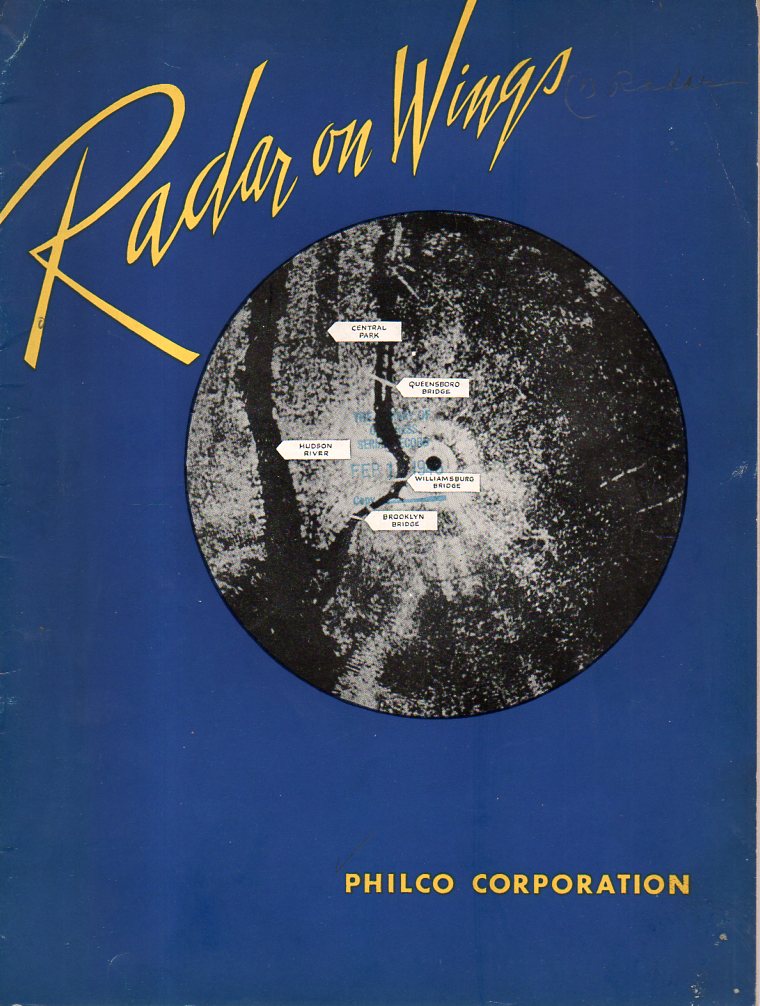
    RADAR on Wings, Philco, 1945.  10×8″, 30pp (unpaginated) with lots of photographs and an occasional schematic. Original wrappers.  Fine copy. Provenance: Library of Congress, with their very faded surplus/duplicate stamp on the front cover.  Only 7 copies located in WorldCat/OCLC.  $50

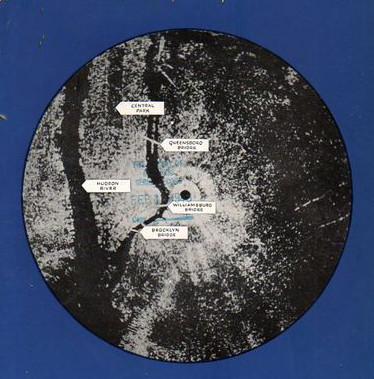
    Radar map nyc

    The history of RADAR (RAdio Deection And Ranging, and something I’ve always written in caps, for whatever that is worth) is absolutely not what I’m thinking about now–that is a long story with lots of twists and turns, complicated, complex–and it ranges depending upon location as for the most part RADAR (from the 1930’s anyway) was developed in secret, kept as a military secret.  And that’s because it was a very important development, with the victor of the Battle of the Beams being the possible victor, period.  

    Radar246

    All I want to do presently is note the significance of this particular pamphlet in the history of RADAR. This work was printed by PHILCO Corporation, (and dated January 4, 1946), and has an inserted leaflet stating that this “makes public for the first time the salient facts about the Corporation’s development and production of airborne radar equipment for the United States Army and Navy”.  PHILCO and other companies made significant contributions to the war capacity of the Allied forces, and–for this company in particular–much of that went unknown for quite some time afterwards, and of course there are some stories that just won’t get told. But for PHILCO the story gets told here.  

    This is also a fabulous nighttime map of NYC–produced by RADAR.  


    ·Posted by :

    ·in: