A Daily History of Holes, Dots, Lines, Science, History, Math, Physics, Art, the Unintentional Absurd, Architecture, Maps, Data Visualization, Blank and Missing Things, and so on. |1.6 million words, 7500 images, 4.9 million hits| Press & appearances in The Times, Le Figaro, Mensa, The Economist, The Guardian, Discovery News, Slate, Le Monde, Sci American Blogs, Le Pont, and many other places… 5000+ total posts since 2008.

Book Category: Social History

  • Serbian Depredations in Macedonia (1933)

    TATARTCHEFF, Marthe Thibault. Appel des Femmes Macedoniennes aux peuples libres et la conscience internationale. Geneva, Imprimerie Commerciale, 1933. 9″x5.5″, 8pp (though 6 pp of text). (“An Appeal of the Women of Macedonia to Free People of the World and the International Conscience.”) Provenance: Carnegie Institute of Washington, and the Library of Congress, with three stamps for these institutions. VG condition. RARE. WorldCat locates only two copies of this work (University College London and Nanterre) and two copies of the English translation (Harvard and Harvard Law). $250

    This is a harrowing tale. The author spent years trying to escape from what is today North Macedonia, trying to return to her native Switzerland. She tells a story of vast repression, destruction, and death. Tatartcheff writes (“After eight years of uninterrupted suffering…”) on the “…misfortune of Macedonia under Serbian domination” and “addressing the present appeal to the free peoples and to the international conscience, so that they come to help, in the name of humanity, as in the name of threatened peace in the Balkans and in Europe, to a population subjected to an incredible regime of physical and moral terror on the part of the government and the Yugoslav dictatorship”.

    “The general policy pursued by the Serbian government, now known as Yugoslavia, in Macedonia since, 1912/13 and in the former provinces of the Austro-Hungarian Empire from 1918/19, can be characterized in two words: serbization by violence moral and physical.”

    After describing her own imprisonment and the condition of the country in general, the author makes a final appeal, and raises the possibility of extermination: “These methods constitute a permanent threat to the peace of the Balkans and Europe and they are a real disgrace for our century. Unfortunately, with the growing danger of the collapse of Yugoslavia, these methods are only getting worse and more cruel. In the name of human solidarity and peace, in the name of a population threatened with extermination, I address an ardent appeal to all humanitarian organizations in the world, to all international organizations working for the establishment of peace and to all upright consciences to raise their hearing voices for an end to the incredible terror of Serbian tyranny in Macedonia and Yugoslavia.”

    Keywords: North Macedonia, Serbia, Yugoslavia, Bulgaria, Greece.
    ·Posted by :

    ·in:


  • “What Shall We Do With Them?” (Dustbowl & Great Depression, 1938)

    Taylor, Paul S. “What Shall We Do With Them?” Address before the Commonwealth Club of California, San Francisco, April 15, 1938. 11″x 8″, 7 lvs, single-spaced typewritten sheets, mimeographed. $450

    Paul S. Taylor is the Paul S. Taylor as in Mr. Dorothea Lange, partner to the great photographer and co-author of one of the greatest illustrated works of the 20th century, The American Exodus, a Record of Human Erosion. Taylor provided a lyrical and insightful text and Lange contributed her incredible photographs, producing one of the leading documents of life in the Great Depression era of the USA. This was one of the great documentarian centerpieces of the 1930’s, and it was published in the same year as The Grapes of Wrath and the release of the Wizard of Oz. (Two years later—1941–came the superb James Agee (text) and Walker Evans (photographs) finally saw their long-developing Let Us Now Praise Famous Men come to life.)

    The document offered here is an interesting and well-written appraisal of the great American exodus of the 1930s. The “Them” in the title refers being the Dust Bowler, the migrant workers, the dispossessed, people eaten away by the weather, and banks, and ill wind.  Paul Taylor was at this time three years into his marriage with Lange—he was a progressive thinker and a FSA operative who helped Lange land her job and was a part of an extraordinary team of very expansive ability that documented a pivotal period in American life. He was also co-creator with Lange of their great

    In this pamphlet Taylor gave testimony on migrant workers and nearly the height of the Depression—he was an expert, having traveled and lived among them and written academic papers on what he found. He outlined possible answers to the question, which had mainly to do with stability, which of course was the primary concern for the many of thousands of individuals and families who were once-stable but now very mobile, not having place to live or places to go. Taylor thought that opening dams and supplying irrigation and affordable government-owned houses would be the first of many steps to take to relieve the widespread suffering.  In all of the alphabet-soup programs undertaken by the Roosevelt administration, none were nearly as “successful” in ending the national social erosion as the events that were to unfold less than a year later.

    This document is an interesting read, particularly when you consider what he and Lange published just a year later.

    ·Posted by :

    ·in:


  • Carbon Copy of a Classic Paper


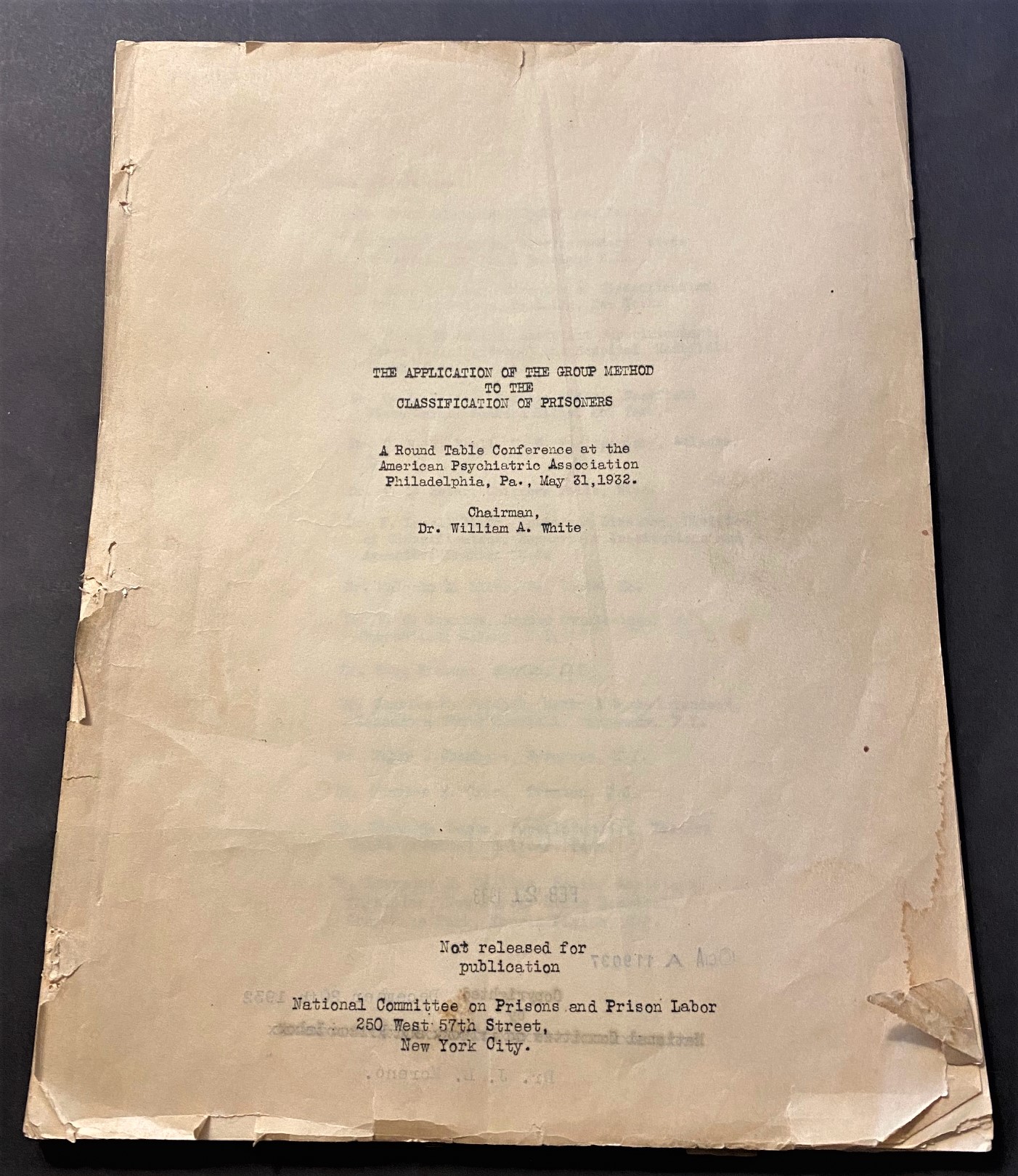
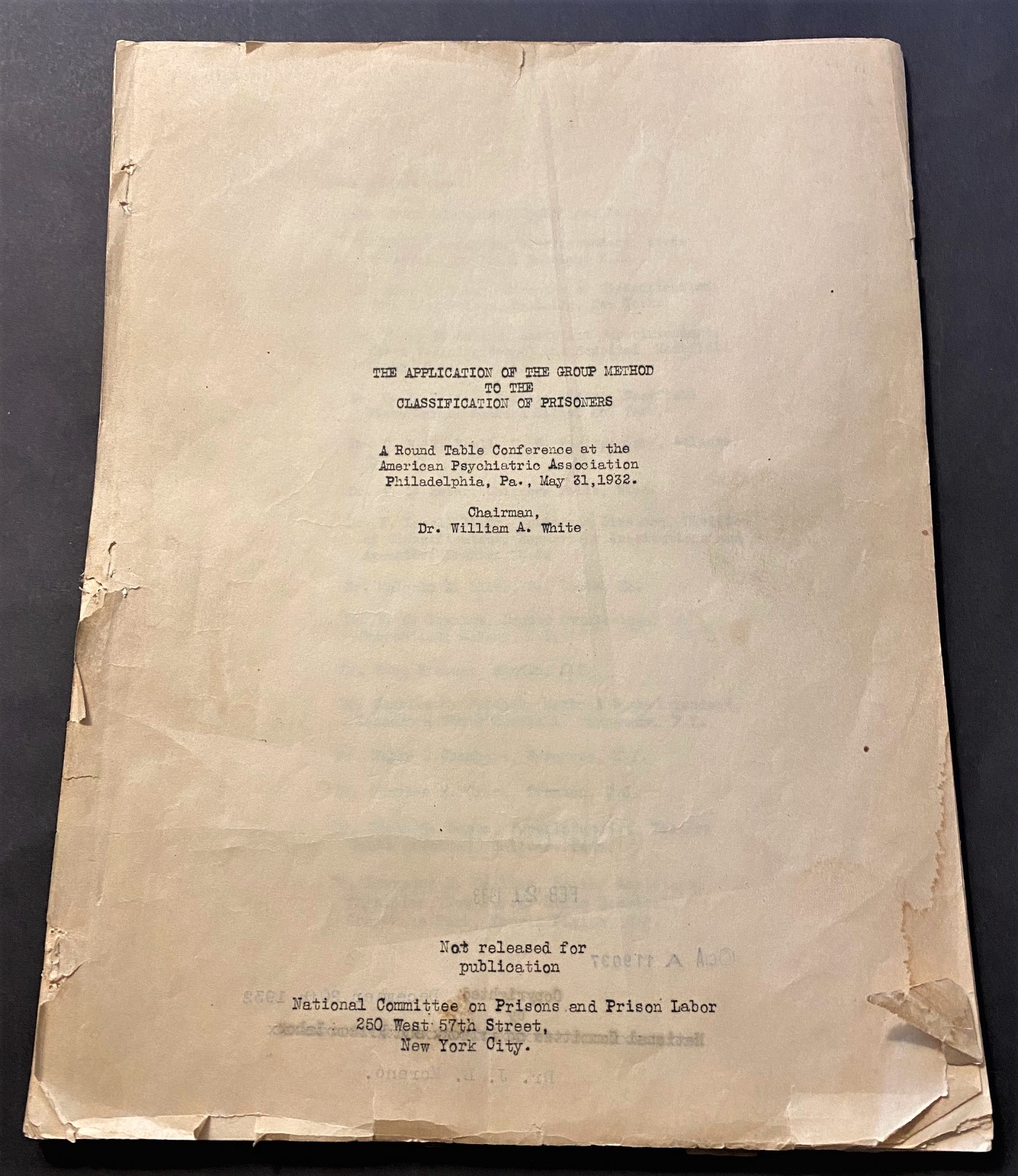
    IMG_4068MORENO, Jacob Levy. (b. 1889) The Application of the Group Method to the Classification of Prisoners. A Round Table Conference at the American Psychiatric Association, Philadelphia, Pa., May 31 1932. Printed by the National Committee on Prisons and Prison labor, NYC. “Not released fir/publication.” Copyrighted by Dr. J.L. Moreno, December 20th, 1932. 11″x 8.5″, 39 leaves. I believe that his is a Carbon Copy.

    Pp 1-7 includes a list of participants and a short introduction.

    Condition: this is, so far as I can tell, a carbon copy of the typed committee/meeting reports, on thin (but not onion) paper. There are chips and minor tears on the first few and last few pages, and the whole had been previously “bound” with three staples, though now those are gone and the report is unbound. Provenance: from the Library of Congress “Pamphlet Collection”, though it is not stamped so.

    Rare. No copies of this work are located in WorldCat.

    Moreno was a pioneer in psychotherapy and psychodrama, and this seems to be a very early application of the Moreno theory.

    (This paper was published a dozen years later as “The Application of the Group Method to the Classification of Prisoners.” in Moreno’s Sociometry volume 8, no. 3/4 (1945) 15-39, and also as a 308-page book in the same year. From J.L. Henderson’s review of “Group Therapy, a Symposium: Edited by J. L. Moreno, M.D.” (New York: Beacon House, Inc., 1945): “This book contains the proceedings of two round table conferences on group psychotherapy. The title of the first, held in 1932, was The Application of the Group Method to the Classification of Prisoners. It was sponsored by Dr. William A. White, who had read Dr. Moreno’s monograph and had talked with him, and was interested in the possible importance of the group approach to treatment. Although much of the discussion centered about the treatment of prisoners, the broader implications and possibilities of the group method were discussed. The talks were largely exploratory. Dr. Moreno concluded the discussion with what seemed to be a defensive explanation of his theory.”–Psychoanalytic Quarterly, (1947), vol 16:420-422

    “In 1925, Moreno moved to New York City, where he worked as a psychiatrist and continued experimenting with psychodramatics. He introduced group therapy into schools and prisons, such as Sing Sing, and he compiled the results of his research there into a book titled Who Shall Survive?: Foundations of Sociometry, Group Psychotherapy, and Sociodrama, published in 1934. He established the Beacon Hill Sanitarium, renamed the Moreno Sanitarium and later, the Moreno Institute, where he was the physician in charge between 1936 and 1968. Moreno started several journals, including Impromptu, Sociometry, Group Psychotherapy, and the International Journal of Sociometry and Sociatry. He was an adjunct professor of sociology at New York University from 1952–1966, and a guest lecturer at a number of universities, including the New School for Social Research, from 1937–1938, and Columbia University, from 1939–1940. Moreno also founded the Impromptu Theatre at Carnegie Hall and the Psychodramatic Institute in Beacon. He was directly responsible for the American Psychiatric Association’s recognition of group psychotherapy as a credible and viable form of treatment.” AND “While in school, Moreno began to develop his own theories for therapeutic practice that were distinctly different from those of Sigmund Freud’s. Rather than analyzing clients’ pasts, Moreno preferred to focus on the present and future through the use of interpersonal relations. Moreno’s interest in theater led him to develop his psychodrama technique. A psychodrama session focuses primarily on one person, called the protagonist. Techniques such as mirroring the behavior of the protagonist and role reversal are used to help participants better understand their own behavior and feelings, as well as the behavior and feelings of others.”–Amar, Nadine. (2005). Jacob L. Moreno. International Dictionary of Psychoanalysis. Also see: Moreno, Jacob L. (n.d.). American National Biography Online.

    ·Posted by :

    ·in:


  • Equal Rights for Women, League of Nations, 1936

    [Women, Equal Rights for. ] “Annual Meeting of Women’s Consultative Committee of the League of Nations.” Information Bulletin from Committee of Representatives of Women’s International Organizations, created in accordance with a resolution of the Council of the League of Nations, Hotel de Russie, Geneva, September 29, 1936.

    • Four leaves, 13″x 8.5″. Mimeographed (?) Printed on cheap newsprint. Paper browned and brittle, and heavily chipped at top. Fair condition. 10 or so short tears are repaired on reverse with archival Japanese tissue paper. NO copies located in WorldCat. Rare. Provenance: Library of Congress, with their rubber stamp on the back of leaf 4. $500

    This is a resolution presented to the League of Nations in September 29, 1936 (addressed to the president of the Seventeenth Session of the Assembly of the League of Nations, Saavedra Lamas [Argentina, 187801959]) on the subject of adopting equal rights for women in the League’s covenants. This was a combined meeting of the International Council of Women, Louise C.A. Van Eeghan (Holland) and Renee Girod (Switzerland); Women’s International League for Peace and Freedom, Madeleine G. Doty with Lola Maverick Lloyd, (USA); Inter American Commission of Women, Abby Scott Baker and Alice Paul (USA), with Leonor Cespedes (Columbia). Also: Equal Rights International, Juanita Frances (England), Helene Granitsch (Austria), Linda P. Littlejohn (Australia), Lilian von Matsch (Austria); and the All Asian Conference of Women, Rosa Welt Straus (Palestine).

    ·Posted by :

    ·in:


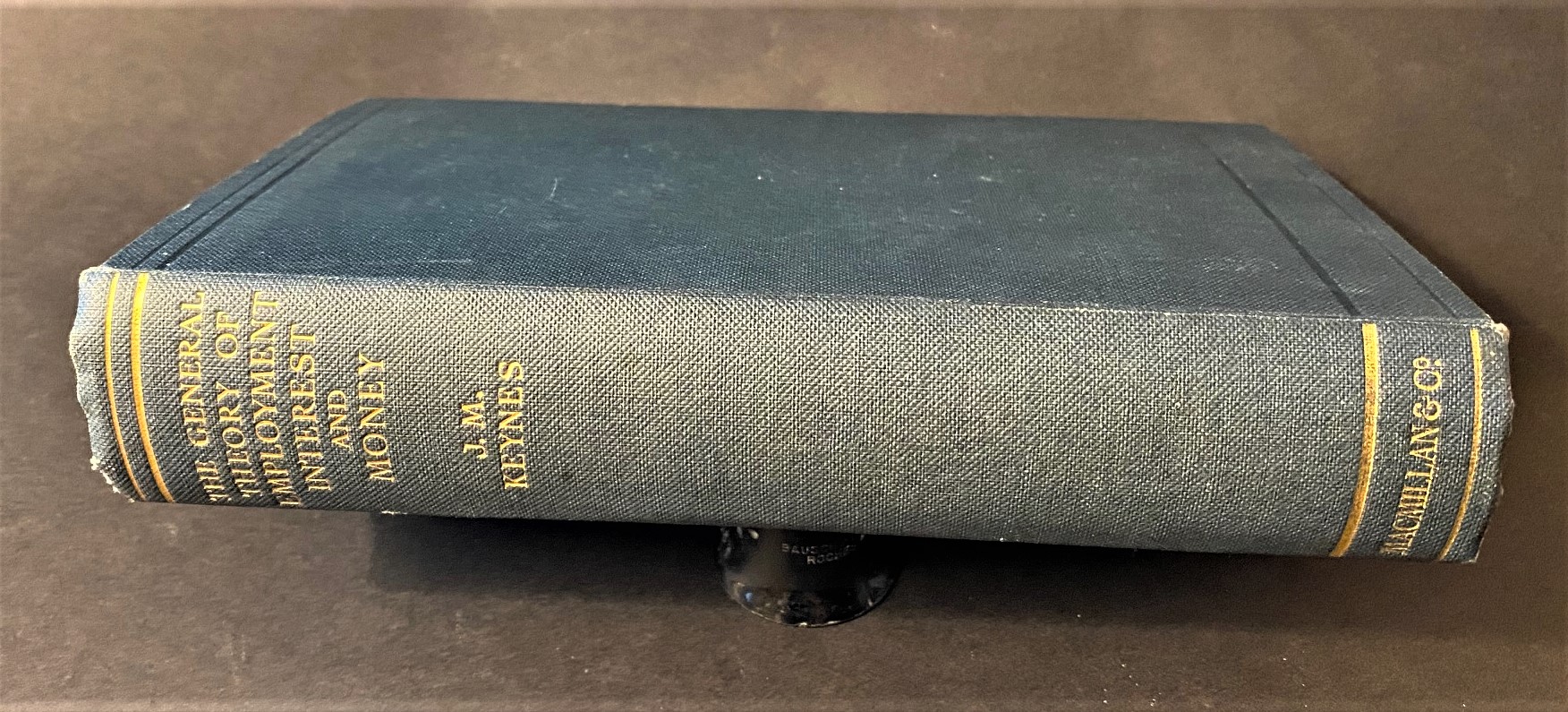
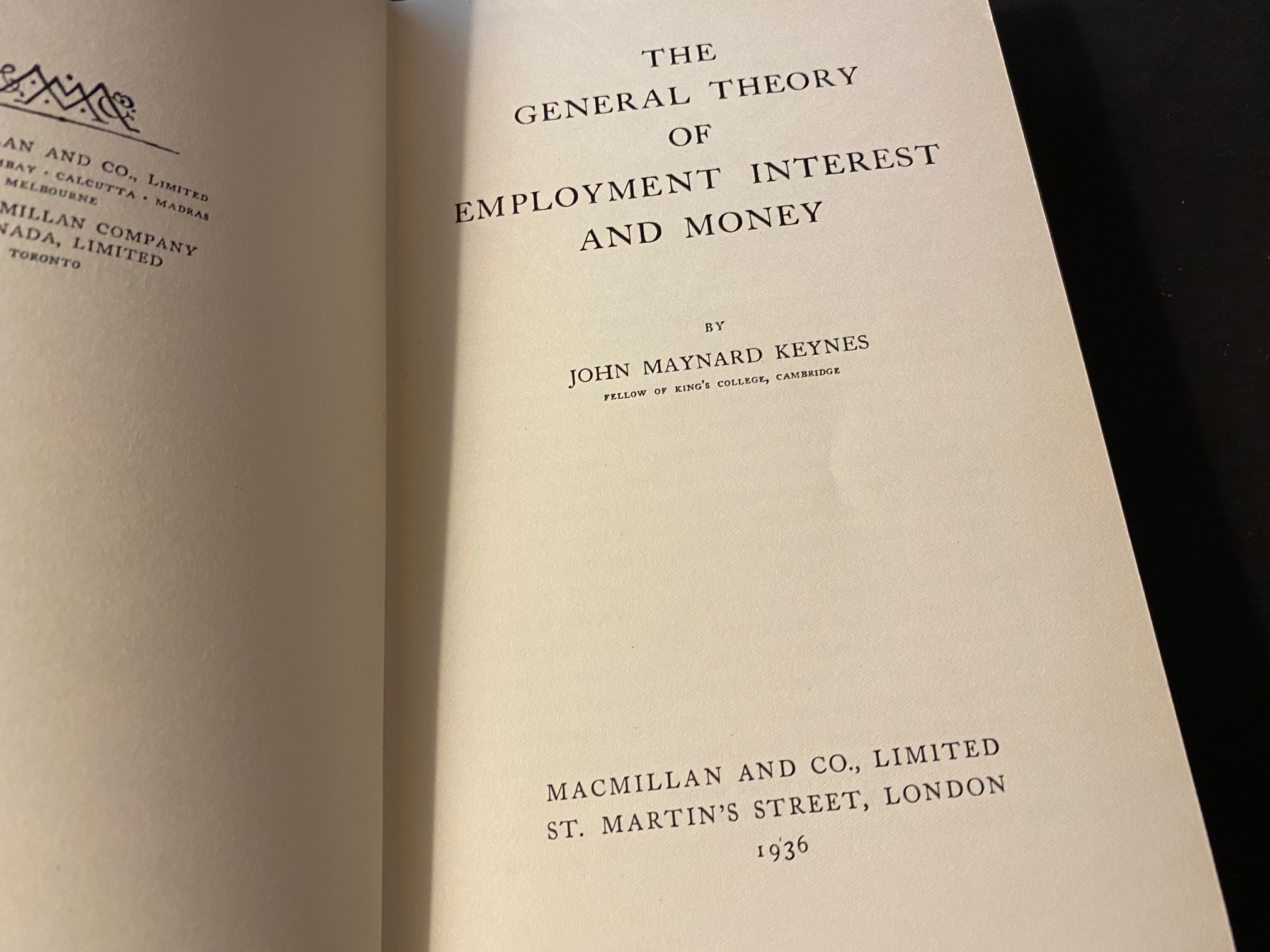
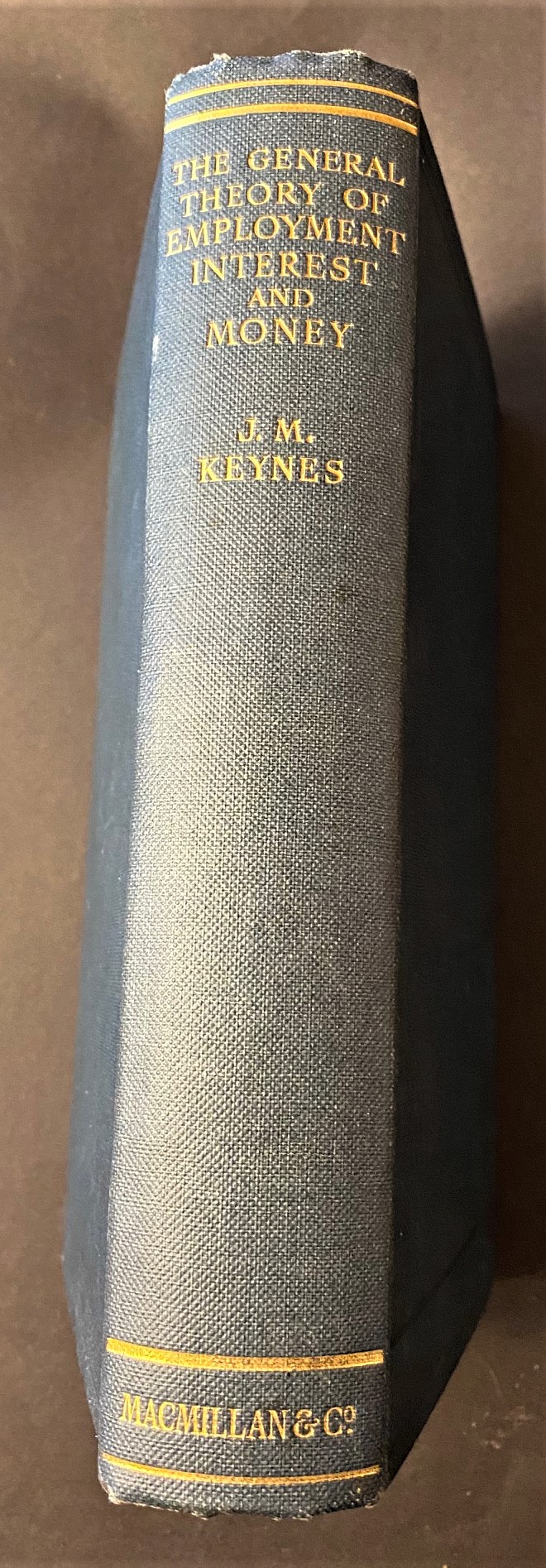
  • Keynes’ Big Book (1936)

    John Maynard Keynes, The General Theory of Employment, Interest, and Money. London, Macmillan & Co.. First edition, 2nd impression, March 1936. 8vo; xii, 403pp. Diced cloth.  Lovely copy. About fine. There is a signature on the front pastedown and a name stamped on the front free endpaper. Crisp, strong, fresh, and clean copy.  $450

    IMG_2387
    IMG_2387
    IMG_2387

    ·Posted by :

    ·in:


  • A Proposed Solution for Traffic Congestion, Los Angeles, 1939 (Suspended Roadways and Monorails) RARE

    A Proposed Solution for Traffic Congestion, Los Angeles, 1939

    Suspended Roadways and Monorails

    DAVINO, Alphonso (1888-1965?). A Brief analysis of the Traffic Congestion Problem and its Economical Solution. Self-published, Los Angeles, 1939. 11”x 8.5”, 8 leaves, four folding plates (two graphic displays, one map, one display of the suspended thoroughfares, the last two printed on heavy blueprint stock. Rare. No copies located in WorldCat. $4500

    Provenance: Library of Congress (with their surplus stamp on title page).

    Condition: contemporary store-bought manila document holder with flexible metal pins, title on paper pasted on cover. The blueprints are in excellent condition—there are no breaks at any of the folds, and the paper is quite heavy. The blueprints are also uniformly dark blue (the photo images I made of them make them appear a little variable though they are not—the light catches the various folds and distorts the color, and I just didn’t want to force the prints flat to make a better picture. The blueprints are lovely.)

    IMG_2251

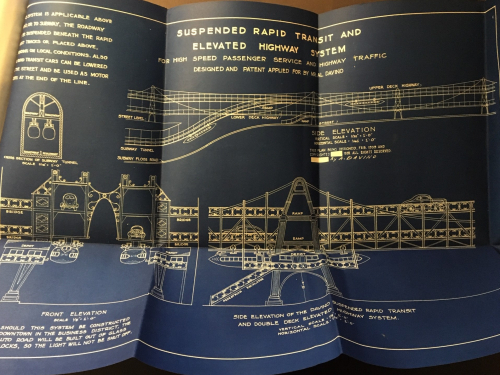
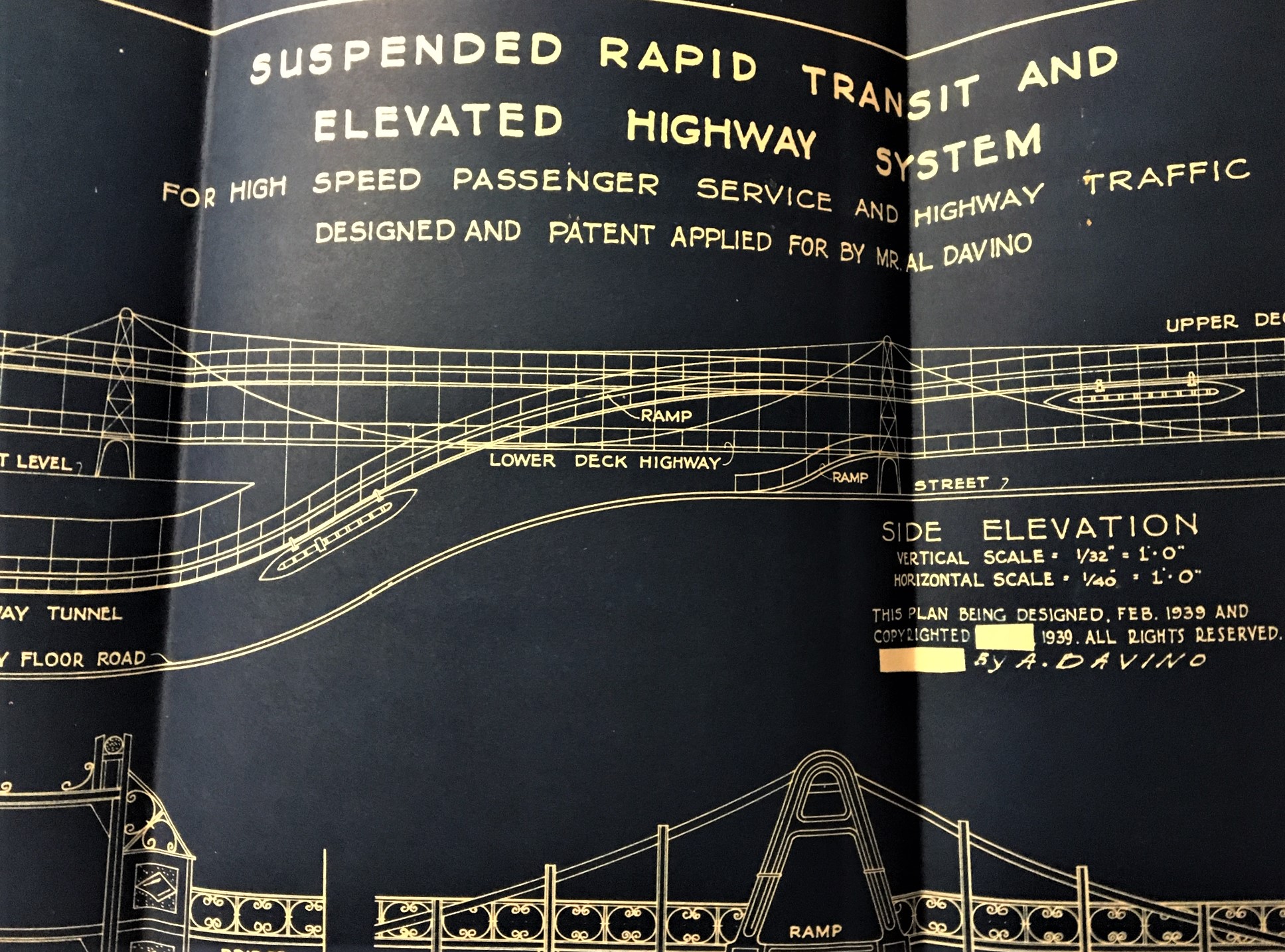
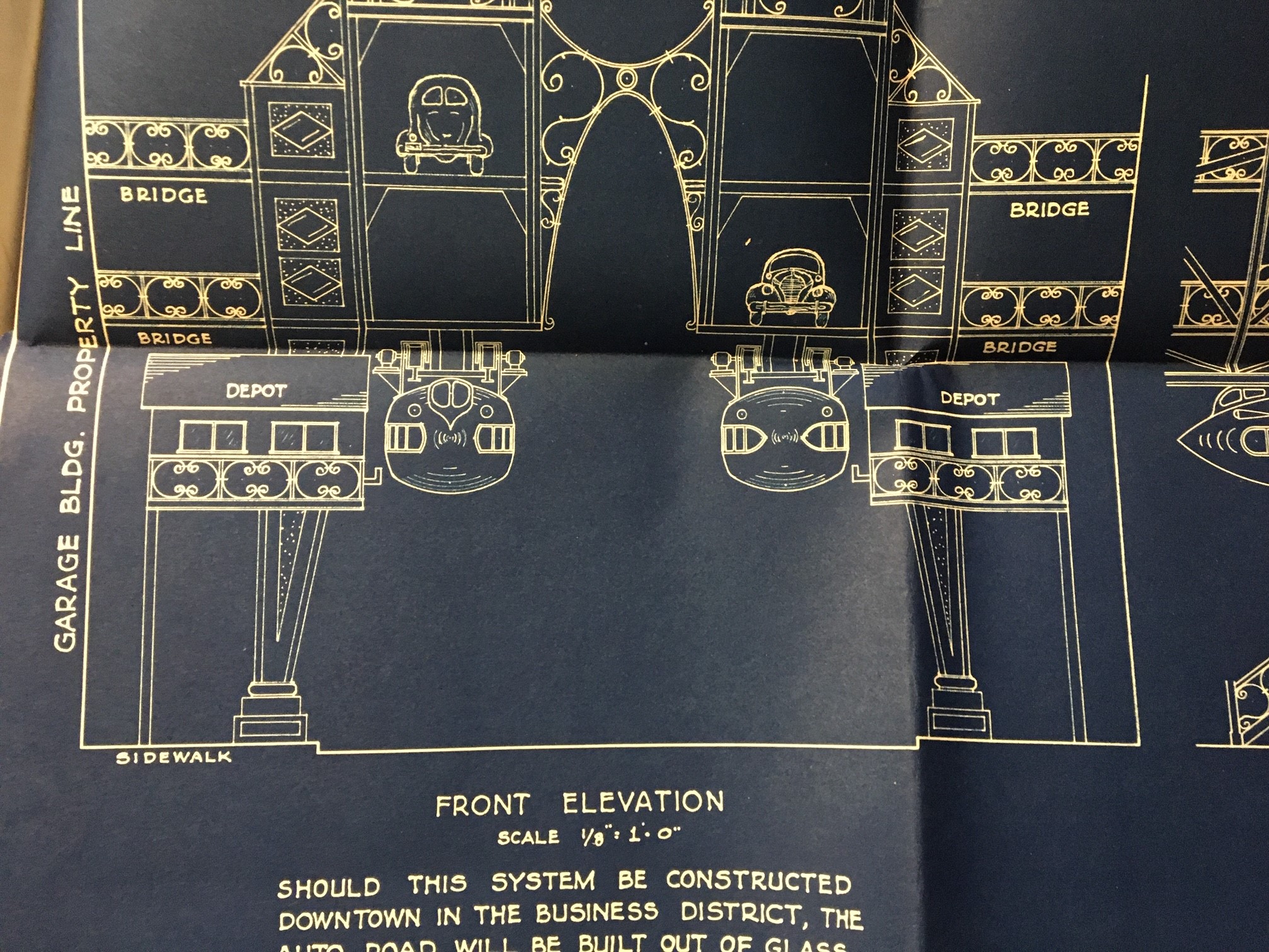
    “Suspended rapid transit and elevated highway system for high-speed passenger service” is what Mr. Davino was suggesting here, all of which was of his own design. I can not find very much at all for Mr. Davino, though he is a patent holder for at least three associated designs/ideas dating from 1926 to 1950. [Semirigid Suspended Railway Structures, 1607875, (1923);Aerial Railway Apparatus patent 2234487 (1943); Suspended Rapid Transit System 2781001A (1950), (suspended vehicles with self-propelled vehicles).] I also found a reference to a suspended transportation system of some sort offered by him through his business “Aerial Apparatus” of Los Angeles (in the Mining Journal, vol 110, 6 November 1920, p 910).

    Details of the large folding blueprint:

    IMG_2254

    The folding plates:

    1. “Graphic Time Schedule”. 17.5”x 24”. Shows difference in travel time car vs bus compared to NYC “rapid transit” for moving over the same distance, and then compared to the proposed Davino system.

    2. Graphic Table Outlining Coats of Davino’s Train System…” 11”x 15”.

    3. Blueprint. Suggestive Tentative Plan of the Davino Suspended Rapid Transit nd Elevated Highway System. Lovely!

    4. Blueprint. “Sketch Map of Los Angeles and Vicinity” showing the connections and possible routes of the Davino system. 11”x 15”.

    IMG_2254

    ·Posted by :

    ·in:


  • Business Ledger for the “Wichita Advertiser” (Wichita Falls, Texas), 1938-1940

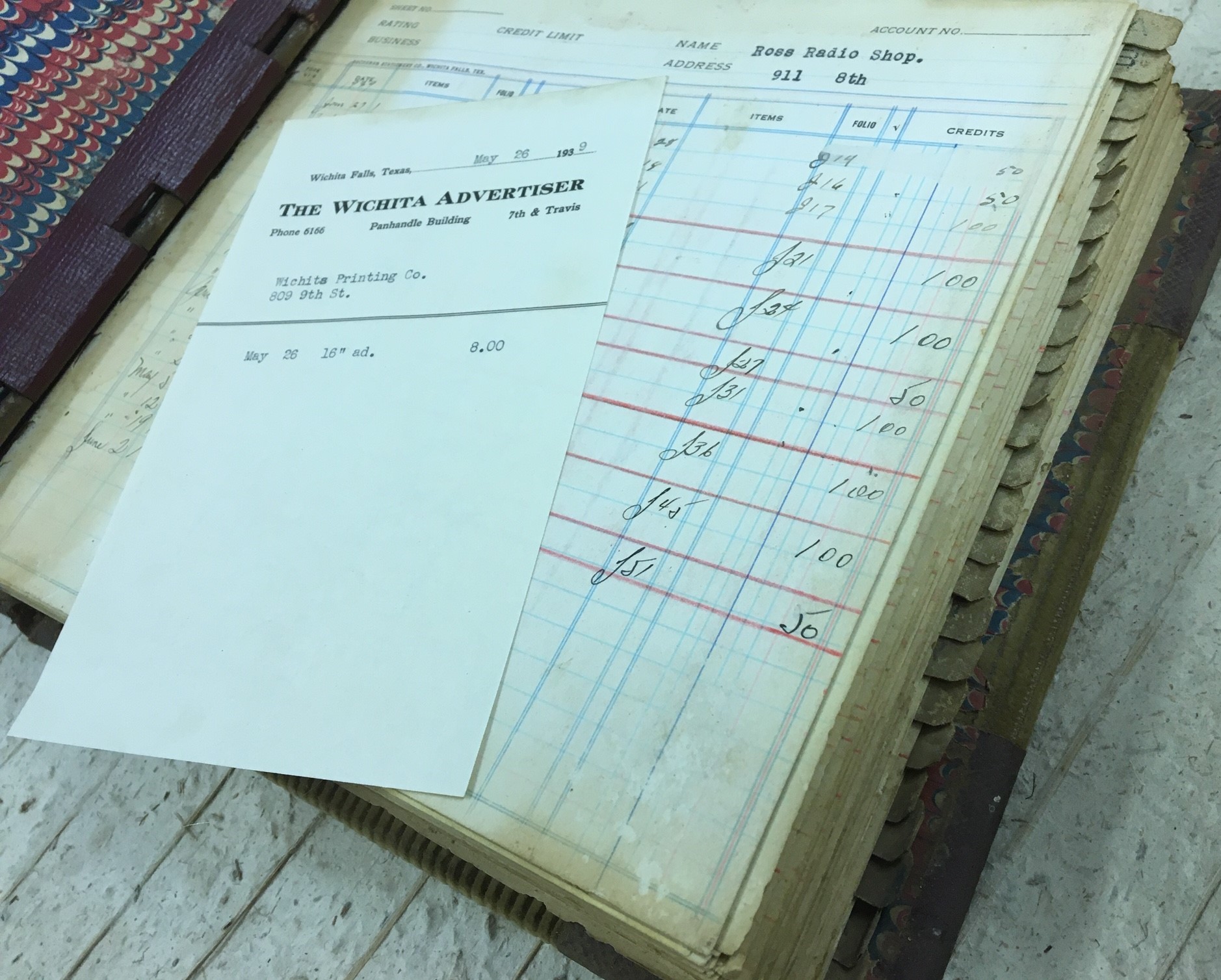
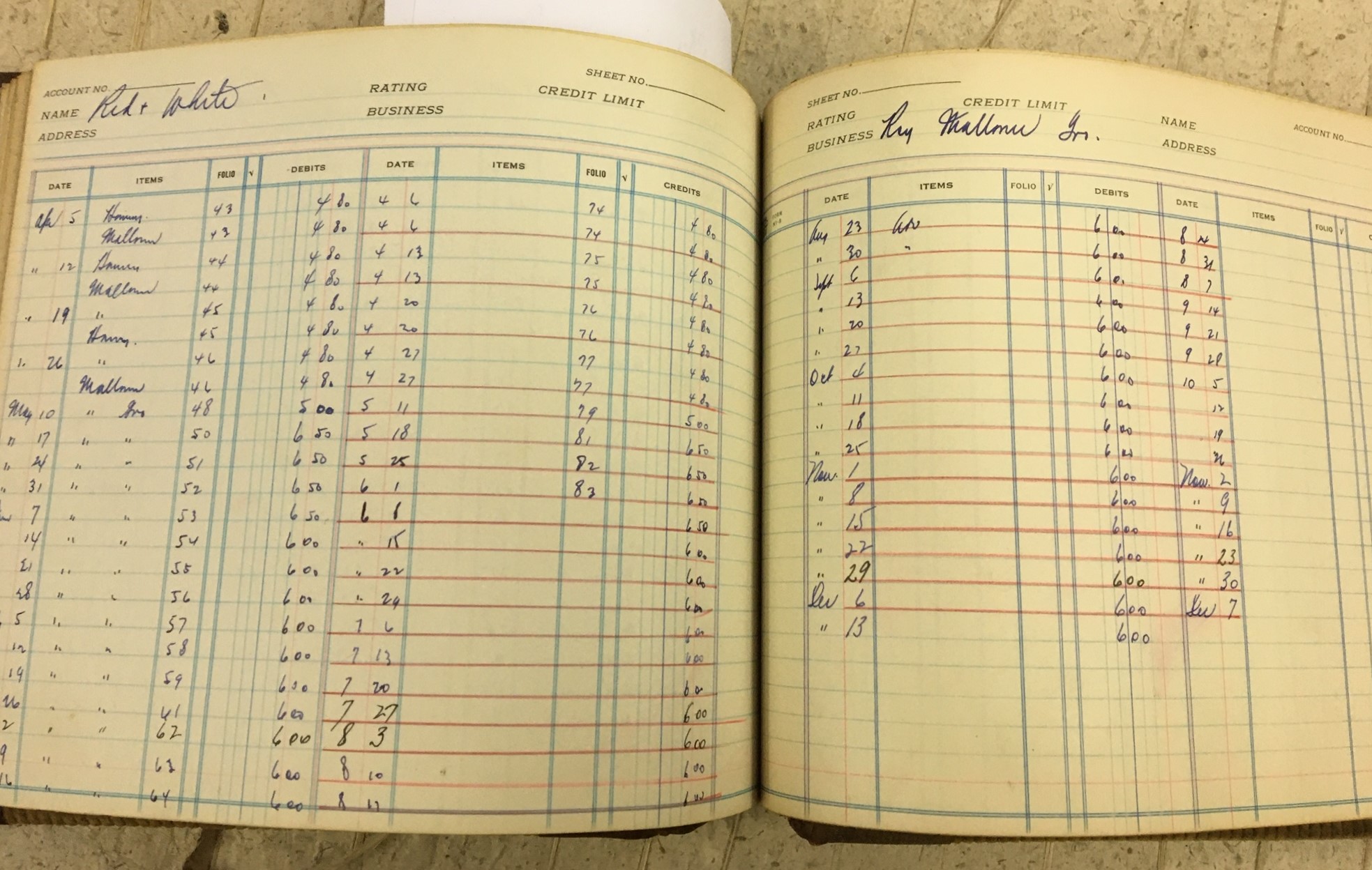
    IMG_2164Ledger from the advertising department of the Wichita Advertiser newspaper, Wichita Falls, Texas, 1938-1940. 8”x 10” (x 3” thick), approximately 270pp, much more than half with entries, featuring 75+ business in Wichita Falls. Bound in very heavy corduroy boards with leather edges and cover label, in a heavy spring-loaded metal spine. Very Good condition. $500

    This seems to indicate the size of an ad, the date, and the cost, all written in a neat hand. The business name appears on upper right for each entry, virtually all with an address.

    Some of the names of businesses include: Texan Theater (Indiana Street), August’s Pie Shop, Reiss Radio, Orvel Beauty, Artistic Beauty Shop, Bowen Motor Coach, Cain’s Cosy Corner, Health Food Store, Ice Service Co., Brumley Funeral, Ray’s Chick Hatchery, Modern Shoe Shop, Muller Furniture (606 Indiana where there is STILL a furniture store), Health Spot Shoe Store, The Famous, Burch Cafe, Brooks Grocery, and many others.

    Note: this is a repurposed ledger for the Nicara Mining Company which seems to have been in Nevada—this has nothing to do with the Wichita Advertiser.

    IMG_2166


    ·Posted by :

    ·in:


  • Cocaine, the Princess of Perdition (1939)

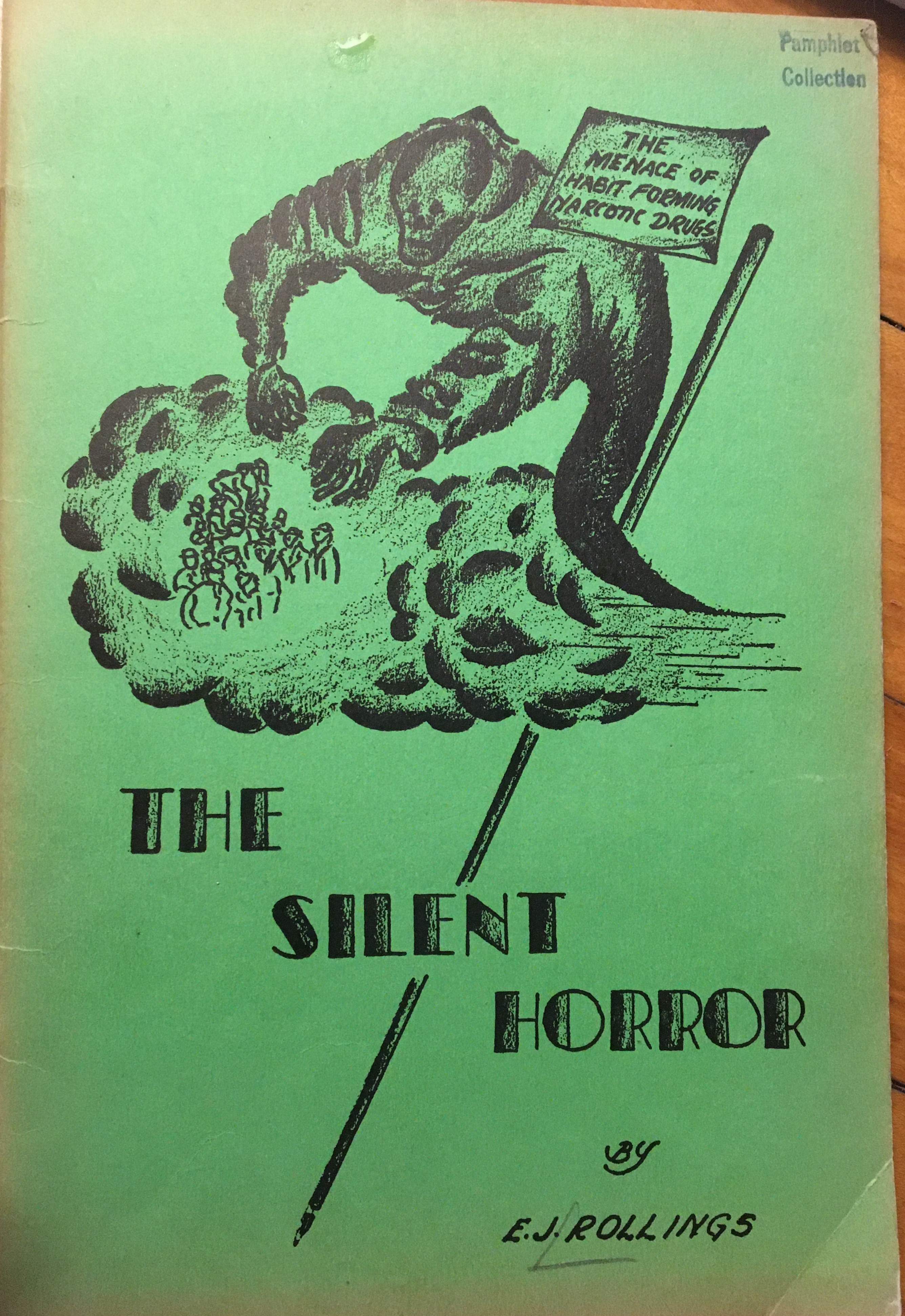
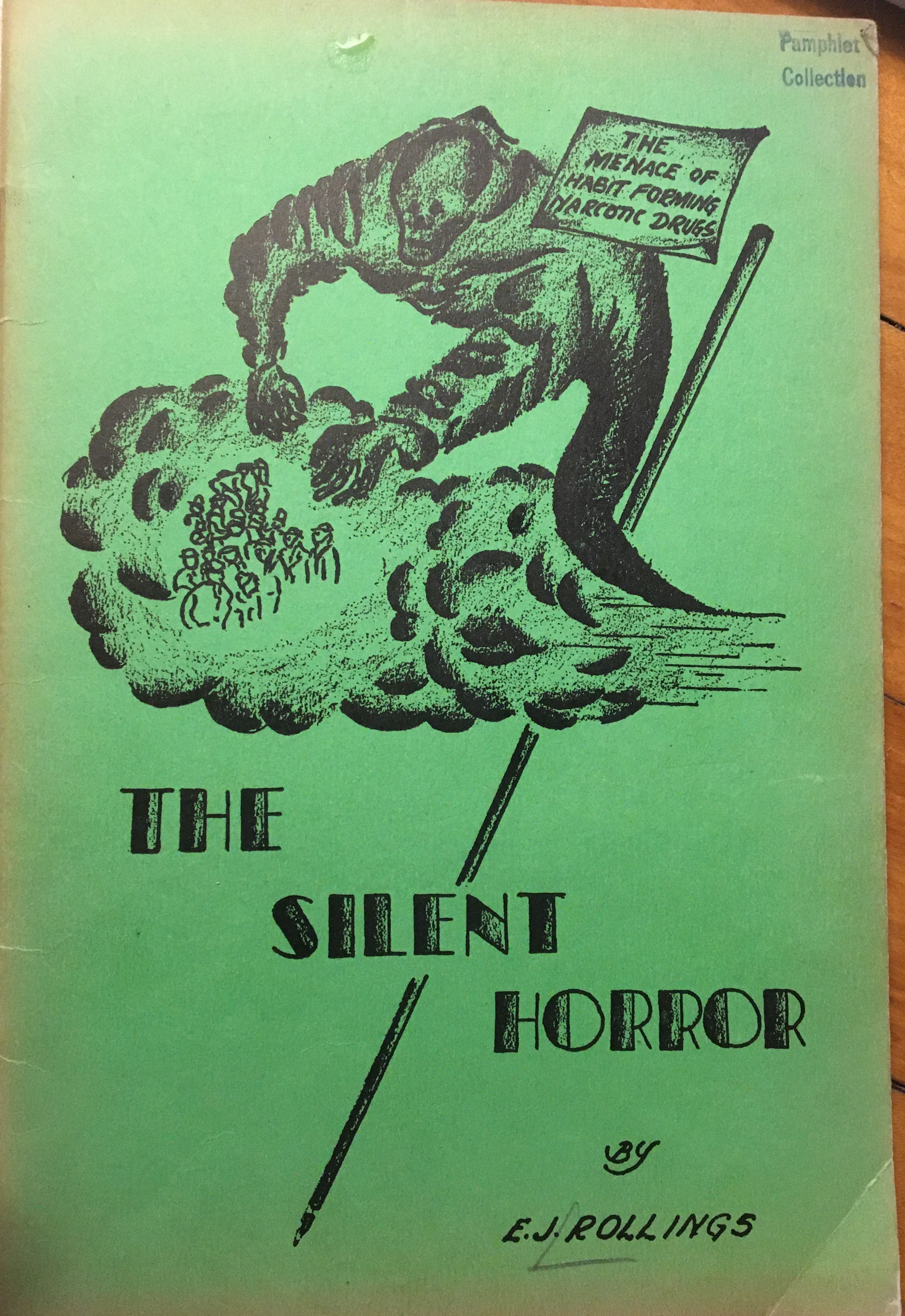
    IMG_2037 (1)Elmer James Rollings, The Silent Horror. Published in Wichita, Kansas by the Defender Press, 1939. 8.5”x 5.5”, 45pp. Cover art plus four photos. Green wrappers. Provenance: Library of Congress, with their surplus stamp on rear wrapper and a tiny “Pamphlet Collection” on front cover. The wrappers were originally a deep green but have faded around the edges. VG copy. ALSO: includes a carbon copy of the LC card catalog card!  Rare. NO COPIES located in WorldCat. $250

    Rollings contributed at least four other narcotics-related works (“Your Girl or My Boy May be Next”. “Marijuana—the Weed of Woe”, “Junk, Junk Peddler and Junkers”, “Perils of the Poppy” and “I Saw Him Die”. There were a few other short works non-drug-related, including something on cowboy songs and also a book on bible prophesy.  

    The major chapters deal with the shades of narcotics: Opium, the King of Dope; Crown Prince, Morphine; Cocaine, the Princess of Perdition; Marijuana, the Dutchess of Despair; the Dope Peddlers; and Addicts.
    Here’s an excerpt:
    “An eighteen-year-old boy in a Midwestern city smoked two “reefers” and an hour later choked his sweetheart to death because she refused his shocking, lustful advances, born in a marijuana-crazed brain… A sixteen-year-old boy shot his mother and father to death with his father’s shotgun after smoking several “Mary Anns” given to him by a new friend whose acquaintance he made by chance. He could neither explain nor remember the killing when the effects of the drug had worn off and sobbed himself into hysterical grief when told of his crime. And so, on and on, runs the record of thievery, forgery, banditry, kidnapping, brutal murder, degeneracy, and rape, all chargeable to this paralyzer of conscience and inflamer of depravity — Marijuana! “

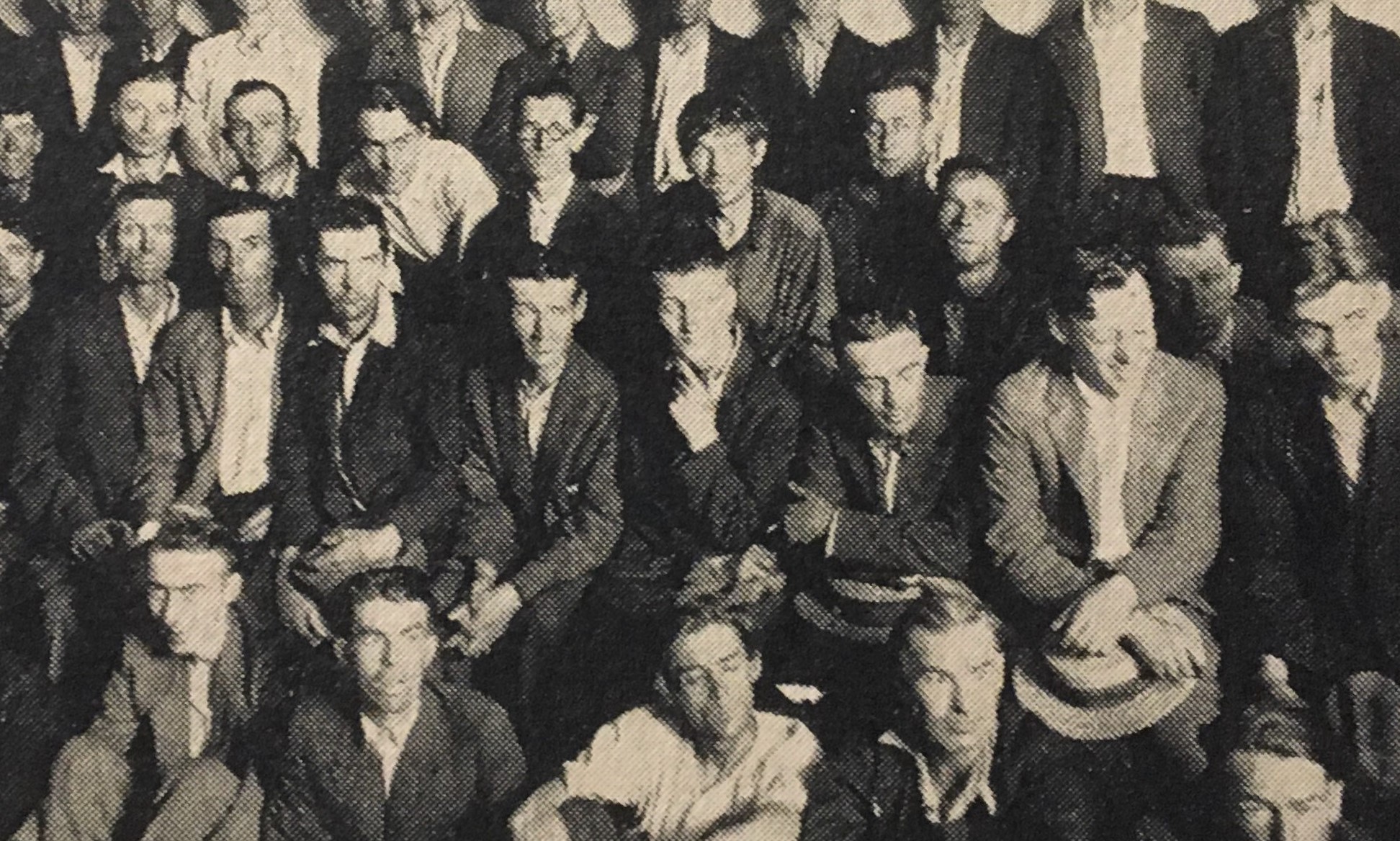
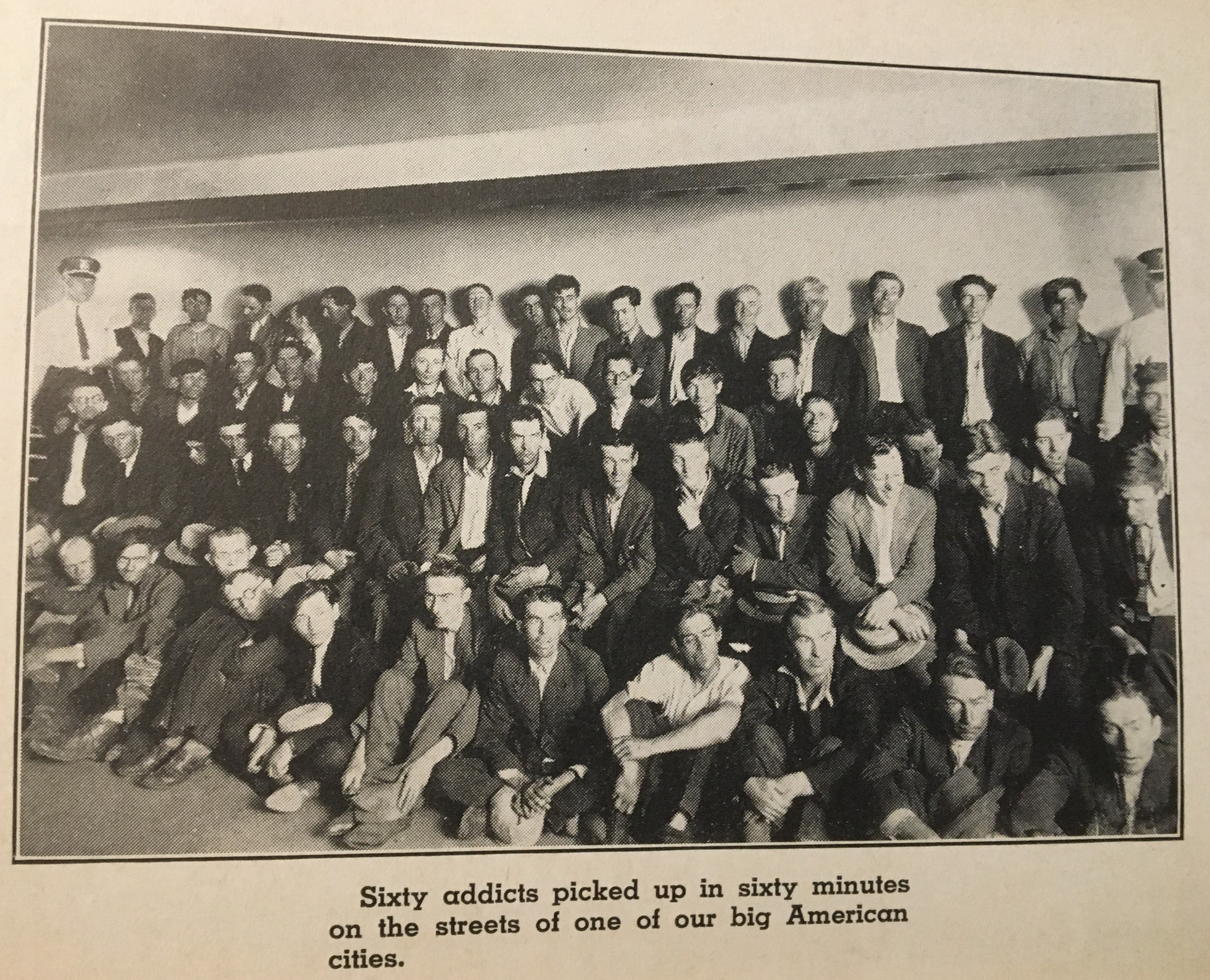
    Here’s a detail of one of the photos–this one has a caption stating that 60 addicts were picked up in 60 minutes, though Mr. Rollings declined to say where this all took place:

    IMG_2036

    IMG_2038

    ·Posted by :

    ·in:


  • On the German Versailles Reparation and Economic Crisis of 1932 by a Future Member of the German Resistance

    O.C. Kiep, German Consul General in New York, before the Eastern Regional Conference of the Savings Bank Association of the State of New York in the Hotel Roosevelt, New York, Thursday, January 28th on Germany’s Attitude Towards the Present Crisis. $500

    Mimeograph, 1932. 11”x 8.5”, 7 leaves.

    Provenance: from H.L. Mencken, to the Library of Congress, with the rubber stamp of the LC on the rear leaf. Written in pencil on the rear of the first leaf: “Gift/H.L. Mencken/Feb 5 1932”.

    This is in GOOD condition, a 4 or so out of 10. There are two ancient horizontal folds from when the paper was folded in thirds (all of the Mencken material I received in this purchase were folded one way or another). There are some short tears at these folds at the page edges on each leaf. These can be reinforced with Japanese archival tissue tape, though I haven’t yet done so.

    “From December 1926 to 1929 Kiep served as Counselor to the German Embassy in Washington,D.C. And then in 1932 he as the German Consul General in NYC. Because of his public support in 1933 of Albery Einsteoin hew was forced to resign his government position. Kiep returned to public life in 1936with the German Foreign Ministry in business negotiations in South America and East Asia, and later in the year he was chosen as the German representative to the International Committee on Non-Intervention in London, England. At the start of the war in September 1939 Kiep was recruited into the Abwehr, working with Admiral Canaris, but would soon become part of the resistance (along with Canaris and many others).”–Paraphrased from “The German Resistance: The WWII Story of Otto and Hanna Kiep” (online), adapted from Ice Set Free: The Story of Otto Kiep by Bruce Clements.

    Kiep and Canaris and many others would both be ratted out in 1943/, with Kiep turned in by Dr. Paul Reckzeh. He would face the terrible People’s Court of Roland Freisler in July 1944 and be found guilty, and was hanged two months later.

    This paper details the considerable direness of the economic situation in Germany in early 1932—part of the downfall of the German economy was due to the reparations payments demanded by the Versailles Treaty, and Kiep made a case for lifting the German debt obligations. He warned that Germany wasn’t presently in a position to make payments and suggested a temporary halt to them for one to three years. For the signatories to pursue the demands Kiep stated “that reverts to the most dangerous practices of warfare and can never hope to establish the peace and confidence necessary for a return of prosperity”.

    In another paper three months later Kiep warned that Germany was still dealing with the debt situation mildly in the political arena but that may all come to change if the debt payments were pursued. This of course turned out to be the case, with Hitler becoming chancellor in January 1933.

    ·Posted by :

    ·in:


  • Jacqueline Kennedy Letter from Georgetown University Hospital, 5 December 1960

    Typed and ALs, Jacqueline Kennedy writing from the hospital, 5 December 1960.

    Date: 5 December 1960

    Pages and Size: 11”x 8.5”

    Rarity or scarcity: unique

    Provenance: from the estate of Gladys Beauchamp, press secretary to Mrs. Kennedy, 1960.

    Price: Hold

    Condition:  VG condition, with two old horizontal folds and a couple of very light old vertical fold impressions. There is also a tiny 3mm tear along the bottom left horizontal fold. (Condition grading is compared to the condition of the publication when it was new;  to give a condition quote that states “good for its age” comparing something to a fluid state without a common denominator is almost without value, so the publication is compared to its condition when it was first published.)

    The images I’ve included here accentuate the old folds–in “real life” (so to speak) the letter is nicer looking than in the scan.  (Better to be pleasantly surprised than the opposite.)  

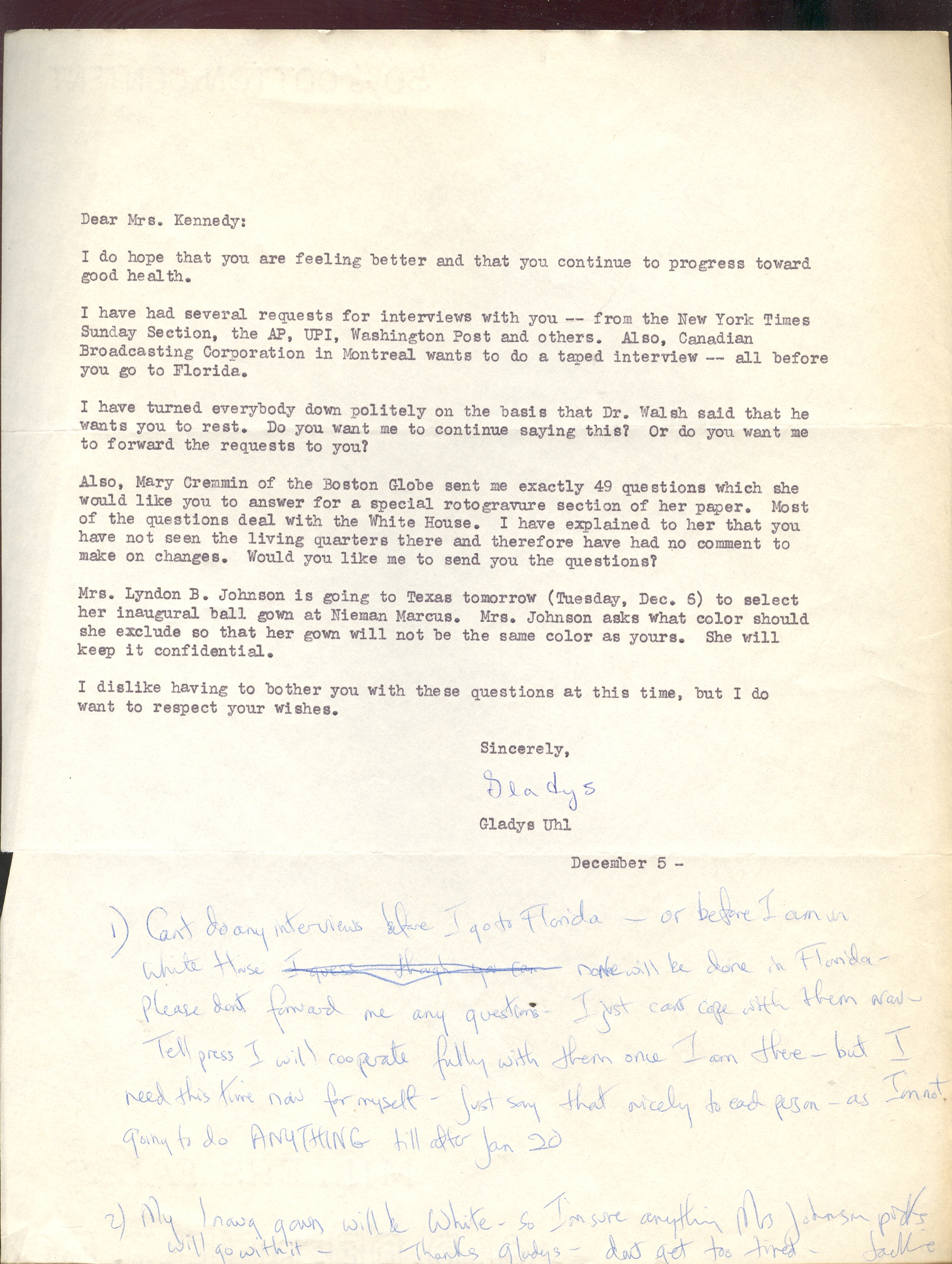
    This is a typed letter written to Jackie Kennedy from her press secretary, Gladys Beauchamp, in December 1960. This is the period following John Kennedy’s election (3 November) and the birth of their son John Kennedy Jr. (25 November, 1960). Mrs. Kennedy was in Georgetown University Hospital from (at least) 25 Nov to her release on either 9 or 10 December following a difficulty and Cesarean delivery; the family left for Florida that day. Ms. Beauchamp reiterates that one of Mrs. Kennedy’s doctors—Dr. Walsh—wants her to rest.

    Ms. Beauchamp runs interference for Mrs. Kennedy, shielding her from inquiries and requests from correspondents and reporters for interviews and to respond to submitted questions. She does need to be clear that Mrs. Kennedy wants no interference from the media.  

    To Ms. Beauchamps’ letter Mrs. Kennedy sends her handwritten responses at the bottom of the letter:

    Mrs.. Kennedy’s response:

    • “Can’t do any interviews before I get to Florida—or before I am in White House. None will be done in Florida. Please don’t forward more any questions. I just can’t cope with them now—Tell press I will cooperate fully with them once I am there—but I need this time for myself. Just say that very nicely to each person—as I am no doing ANYTHING till after Jan 20.

    [And in response to a query about possible clashes between her inaugural gown and Lady Bird Johnson:]

    • “My Inaug gown will be White—so I’m sure that anything Mrs. Johnson (wears?) will go with it. Thanks Gladys. Don’t get too tired. Jackie”  

    Certainly Mrs. Kennedy wasn’t feeling up to the images that were portrayed of her leaving the hospital–she was clearly not well. 

    Kennedy in hospital


    ·Posted by :

    ·in: