A Daily History of Holes, Dots, Lines, Science, History, Math, Physics, Art, the Unintentional Absurd, Architecture, Maps, Data Visualization, Blank and Missing Things, and so on. |1.6 million words, 7500 images, 4.9 million hits| Press & appearances in The Times, Le Figaro, Mensa, The Economist, The Guardian, Discovery News, Slate, Le Monde, Sci American Blogs, Le Pont, and many other places… 5000+ total posts since 2008.

Category: Perspective

  • A New Perspective on Multitudes of Soldiers

    JF Ptak Science Books LLC  Post 1019

    Yesterday while trying to entertain our six-year-old ,
    sitting in a small waiting room to an office with nothing to do, I estimated
    the number of holes there were in the boring acoustic ceiling tiles. A short
    distraction later I realized that if each one of those holes was a dollar bill,
    that the national deficit would require those titles to be laid out over an
    area roughly the size of D.C. and Alexandria
    (about a hundred square miles).  That
    sort of brought some perspective to what trillions of dollars might mean, but not
    really—it was still too weird and vast a number.

     
    1--may 5 medals 01

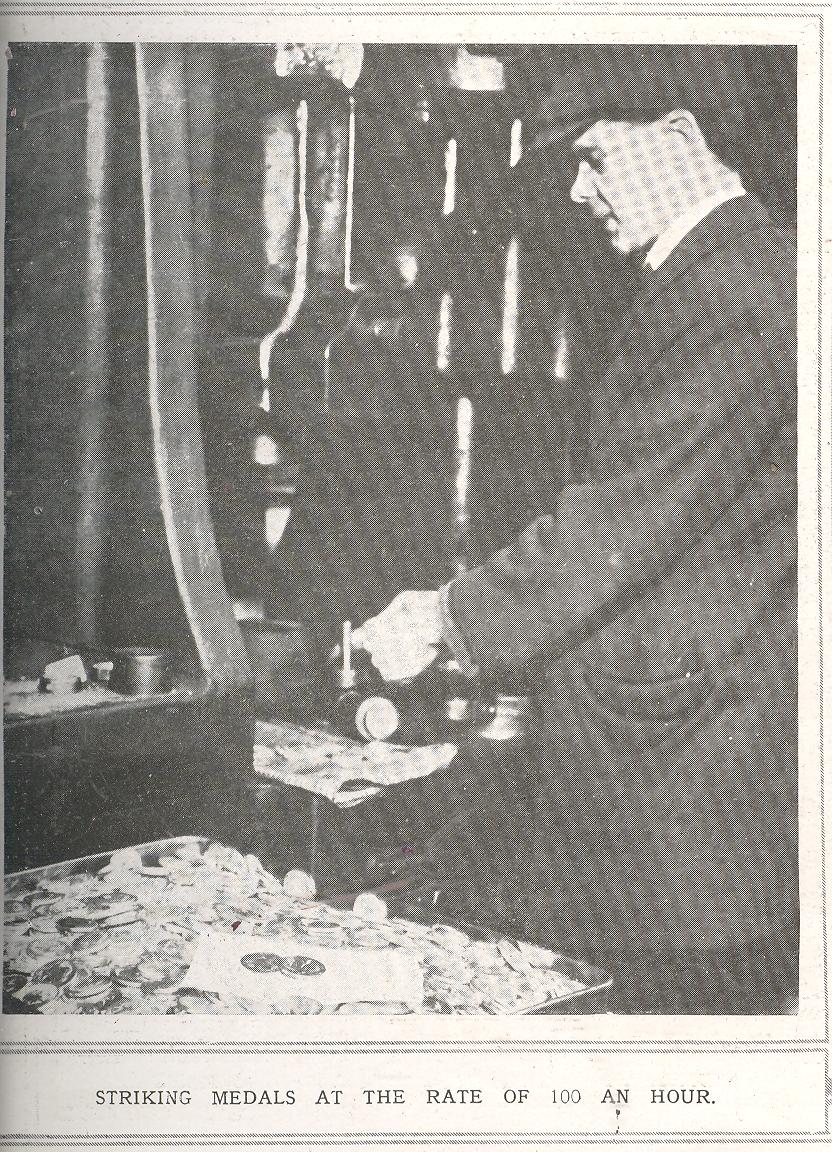
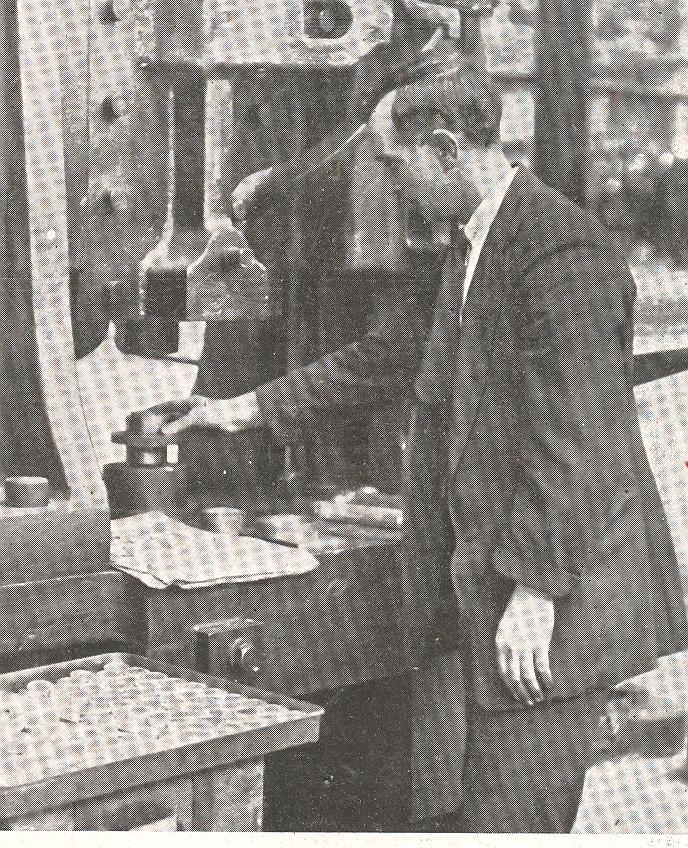
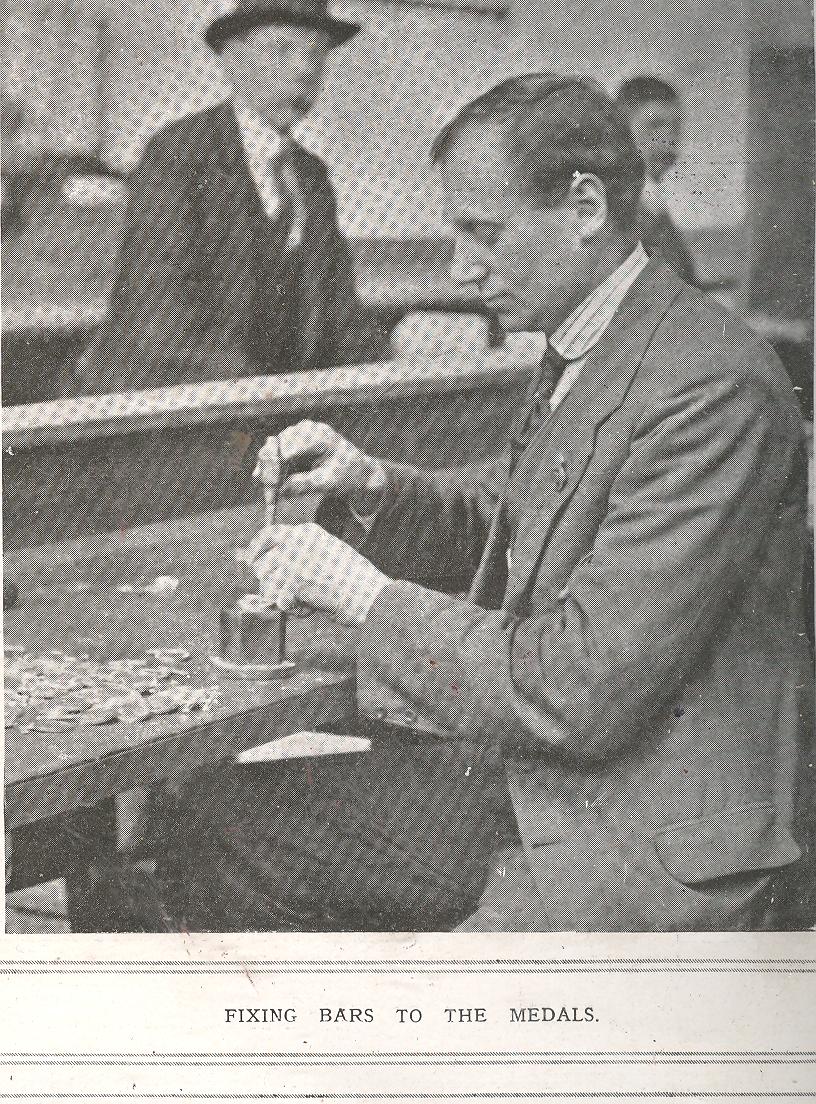
    I had the same sort of feeling seeing this picture essay
    (yesterday as well) on soldiers and war. 
    The photos appeared in the July
    1 1920
    issue of the Illustrated London News and spoke of the new
    management of manufacturing British war medals. 
    The vastness of the casualties of that war are well known, but somehow
    this story seemed to put the big numbers into a more understandable
    perspective.

    I learned that there were 300 men who worked full-time on
    producing these medals, making about 67,000 a week–in 1920, two years after
    the end of the war.  Not only that, since
    the Royal Mint and the Royal Ordnance Factory would be working jointly on the
    project, the Army Council expected production to increase to 120,000 medals a
    week.  That’s six million medals a
    year. 


    1--may 5 medals 01b

    It seems extraordinary that even after the fighting that
    production levels would need to be so high. 
    But there were millions who fought, and so these 300 workers would still
    have to work for several more years to produce enough medals to honor those who
    fought in WWI.

      
    1--may 5 medals 1

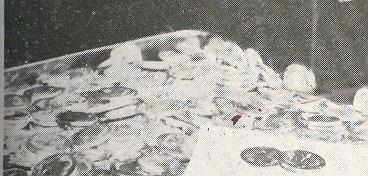
    I read somewhere—a citation now long lost—that in America every Purple
    Heart that has been given out since 1945 was struck in that same year.  This  mountain was made in preparation for the
    hundreds of thousands of soldiers who were expected to be made casualties in
    the Allied assault on the Japanese homeland in 1945/6—a figure that would come
    close to half of the total number of 1.6 million Purple Hearts that have been
    awarded since 1932


    1--may 5 medals 2

    ·Posted by :

    ·in:

    — — —

  • States of Perfection: Refrigerated Food & the Archaeology of Meat, 1954

    JF Ptak Science Books LLC  Post 965Icebox250–extended

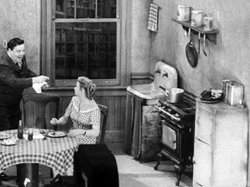
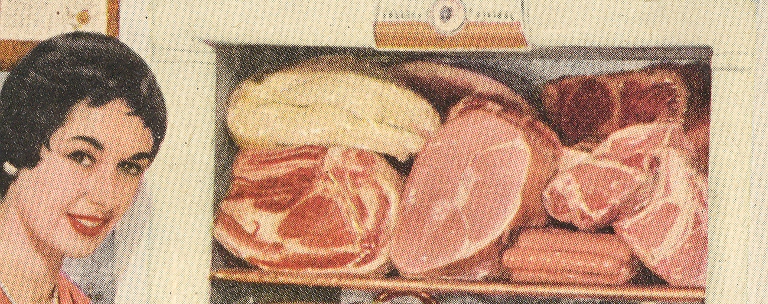
    Like Greek statues, orders of architecture, the golden ratio and Vitruvian man, these ads from LIFE Magazine in 1954 measure a sort of highest-attainable-state, though directed at middle class America.  The ads are for refrigerators, but the interest really is in what is displayed inside of them: they offer an insight into what was seen to be the greatest level of sophistication, the highest stage of want for the most important/essential daily need, and then turned into luxurious accommodation.  Far beyond rice and beans and eggs and ham, far beyond the tiny, perpetually empty icebox of the Kramdens (“The Honeymooners”, ca. 1952).

    [This continues another post, States of Perfection:Images of TV within TV Ads, 1950.]

    You will come to notice (if you look closely enough) that there are a lot of gelatin-thing plates, often located next to a meat plate, or plates.  Funny thing, that.  

    March 6 refer meat

    The top shelf is of great interest, a virtual archaeology of meat:

    March 6 refer meat det 


  • Artistic Nothingness: Cosmic Panspermia, Spermatozoa and Neurons.

    JF Ptak Science Books LLC  Post 964

    In
    the history of life there is a virtual geology of buried ideas of how living
    things came to be.  The belief in
    spontaneous generation is ancient and evidently still holds a comforting sway
    (in a scrubbed-up way) among some moderns. There was a lot written on the
    subject over the centuries: for example, Virgil (Georgics) gives us directions
    on how to make bees, and the great mathematician Cardan/Cardano passed along
    instructions on how fishes are made of water, no doubt drawing on the more
    ancient moisture-related beliefs of Anaximander (600BCE).  Aristotle was more circumspect on the issue
    of

    March 6 sperm

    spontaneous generation, though he did cast a fairly wide and more cautious
    net:  “sometimes animals are formed in putrefying soil, sometimes in
    plants, and sometimes in the fluids of other animals.” Even the beautiful,
    polymathic and occasionally very wrong (but way ahead of his critics) Jesuit Athanasius
    Kircher stated (in his masterwork Mundus
    Subterraneus
    , 1646) that he had seen mice generated out of nothing but
    plants and water.  So it goes. 

    The
    more modern variations on this theme attract a varied collection of some very
    big names. Though the spontaneity now takes place in the extraterrestrial realm,
    with comets and meteors and such impacting with the earth with life debris from
    god knows where (literally), seeding life on earth—though the theories usually
    beg the question of where the stuff on the meteors and etc. came from.  These names include Svante Arrenhius, Lord
    Kelvin, the beautiful Hermann von Helmholtz, Fred Hoyle, and many others.

    Generally
    the more-modern view is attributed with the name of cosmic panspermia (it seems
    to my memory that the first of the most modern life-generating panspermia
    theories is published in the Comptes
    rendus
    in the id 1850’s but I cannot right now remember who it was that
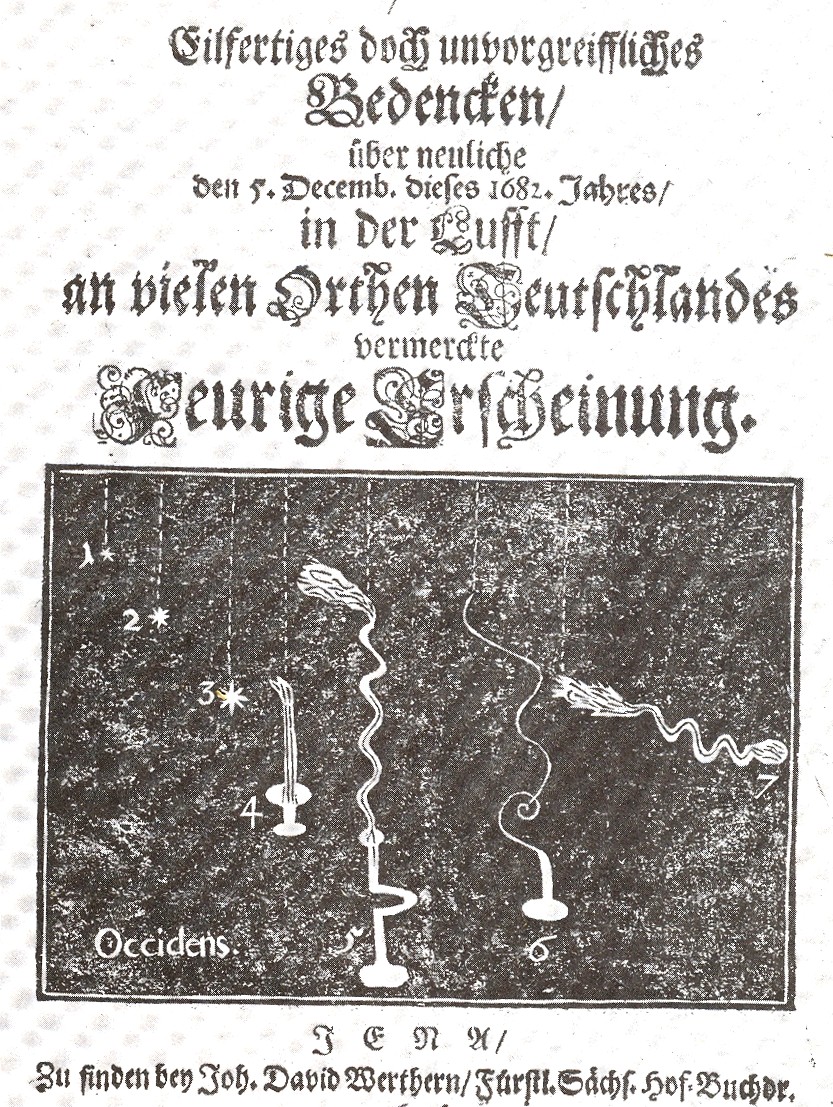
    wrote it).  And it is this cosmic seed
    bit that struck me when I first saw this title page (above) of a very rare work by
    Caspar Posner (1626-1700)—Eilfertiges doch
    unvorggreiffiches Bedencken…
    published in 1682.  It seems that Posner recorded these verities
    of “shooting stars” in Jena
    on the night of 5 December 1682, quickly writing this four-page work describing
    them.

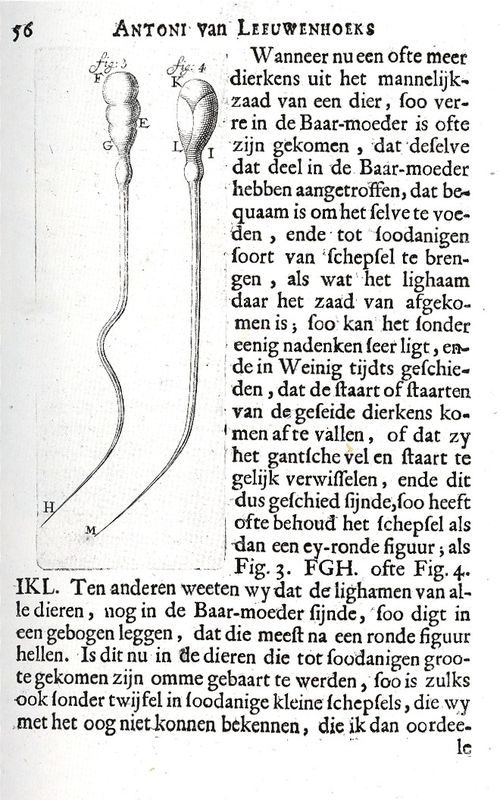
    March 6 sperm leeuw

    The
    images reminded me instantly of the first spermatozoa images published by Anton
    von Leeuwenhoek (1632-1723)—and actually they were the first images of live and
    dead (left and right, respectively) dog spermatozoa.  He did absolutely superb work, a great
    pioneer working with a hand-held single-lens (barely recognizable as a) 200x
    microscope.

    And
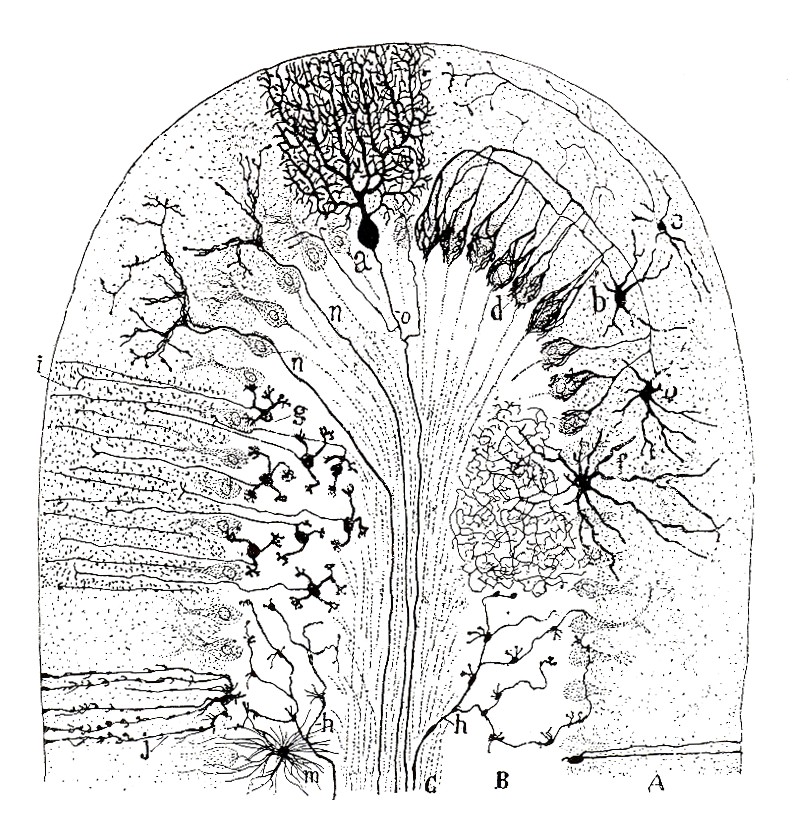
    there too there’s the detail in this image by the great Santiago Ramon y Cajal
    ( 1852-1934), who drew the first accurate picture of nerve cells in the
    cerebellum (found in one convolution of a mammalian cerebellum), which helped
    formulate his theory that the basic structural unit of the nervous system as
    the neuron. 

    March 6 sperm cajal


    Perhaps
    it is a simple artistic fittingness to connect the 1682 meteorite shower with
    cosmic panspermia and Leeuwenhoek and Cajal; in a squinty-eyed way they look
    pretty good together.  On the other hand
    of course these are just random bumped-together thoughts having nothing to do
    with one another.  I vote for artistic
    nothingness.


  • The Great Battle of Sitting and Spitting: Whitney, Texas, 1949.

    JF Ptak Science Books, LLC   Post 953 

    “Why,
    they must spit two or three gallons a day! 
    They ain’t died fast enough, these old men!”—Mrs. T.E. Bagley, Whitney, Texas,
    1949
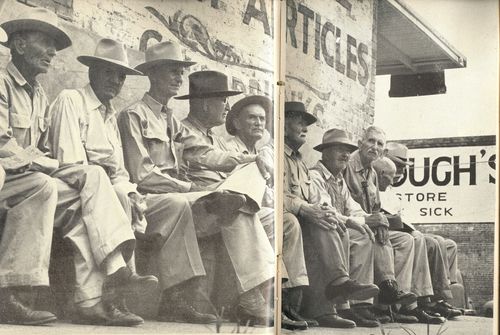
    0--whitney 01

    This
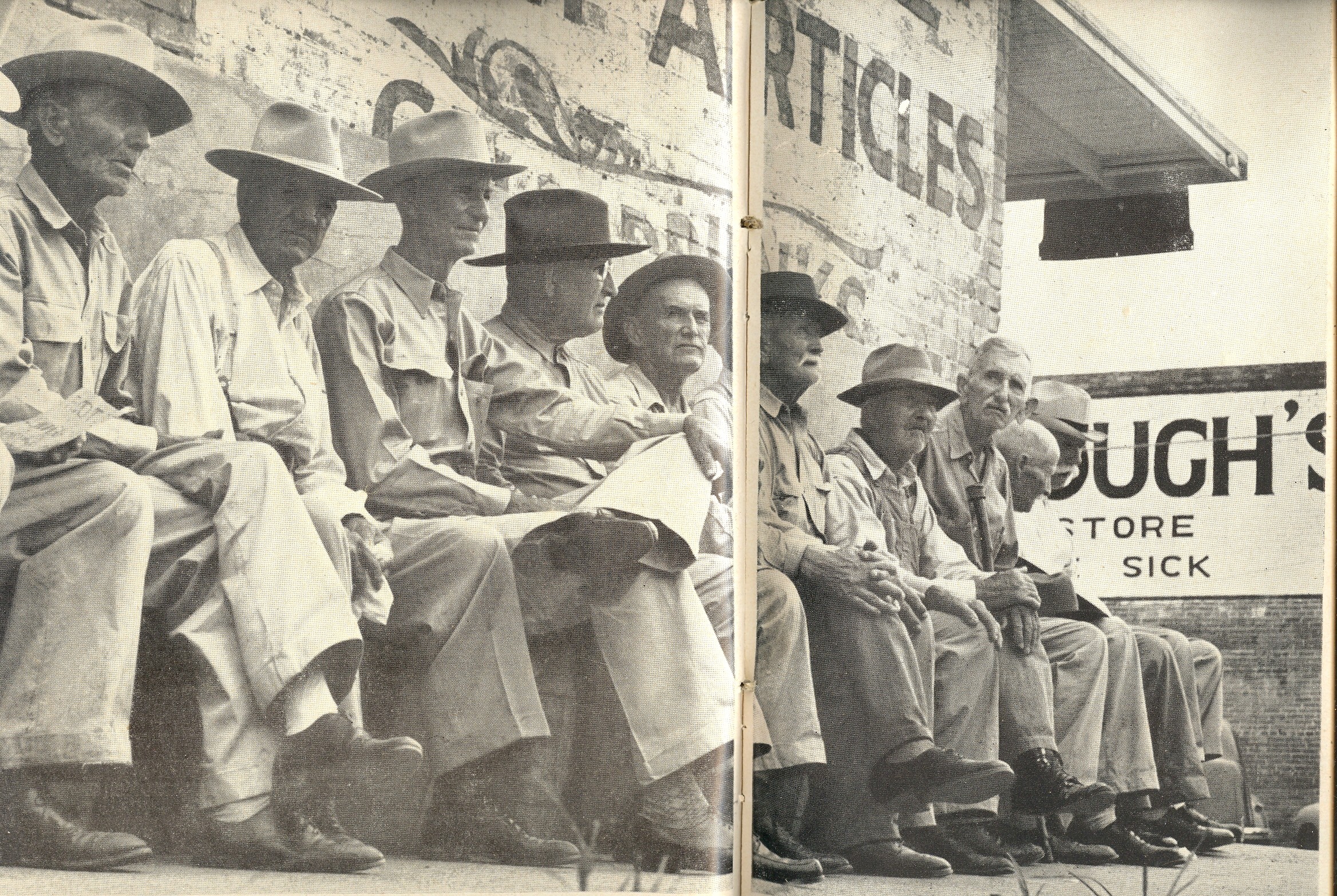
    is a great small America story about sitting. Or old men sitting, and spitting.  Sitting and spitting on a long piece of thick
    timber outside a drug store, bricks and advertisements as back support, in
    Whitney, Texas (population ca. 1,500), in 1949. 
    I can just about hear them on a hot summer evening, right now, only
    probably I couldn’t—they’d probably’ve shut up until the stranger walked by,
    giving me their silence and keeping their confidences.  Or not. 
    Maybe I would’ve been invisible, and the whittled bits would’ve fallen to the street along with the tobacco juice, cusses and gossip, unabated.
    Maybe they surrounded themselves with a stained-moat of spittin’s across
    or close to which no one would stray. 

    It
    isn’t, I guess, so much a story about their sitting as it is a story about
    their not sitting, about how it came to be that their lumber was removed and
    the men forced to find another place to take in the sights and construct their
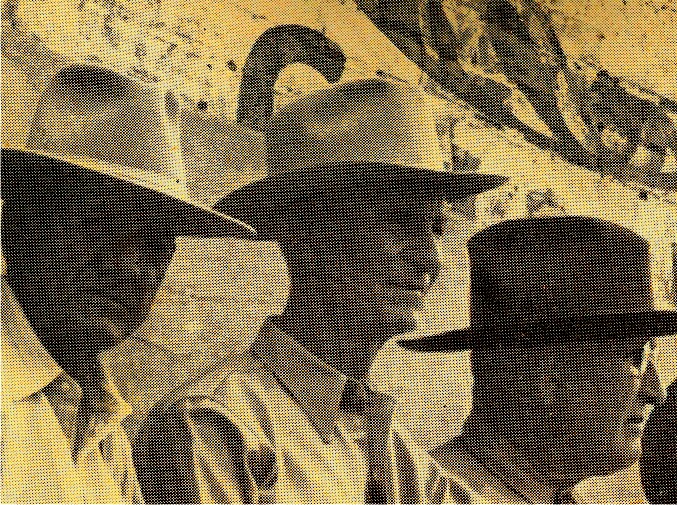
    great edifices of commentary and asides.0--whitneydetail 3 men 01
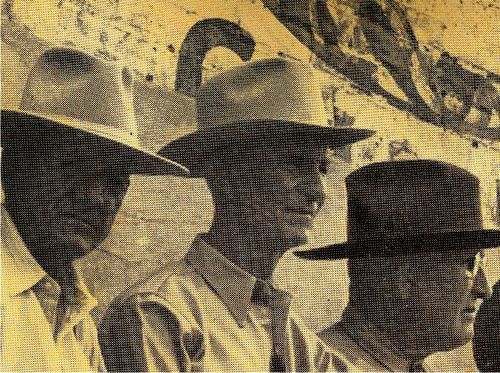
    The
    story appears in LIFE Magazine of 15 August 1949, and lays the whole drama out
    in two splash pages, with bare editorializing and some great photos.

    The
    story goes like this: “In 1922 D. (Doctor Dee) Scarborough,
    the druggist in Whitney,
    Texas
    , put
    up a bench outside his store, and immediately it became a loafing headquarters
    for the gaffers of .the Brazos
    River Valley
    .
    ‘Year after year they sat there looking like a jury of irritable terrapins,
    whittling, spitting and passing judgment on everything that passed. But finally
    reform caught up with them.” It caught up to them, even if everyone was wearing a collared shirt.
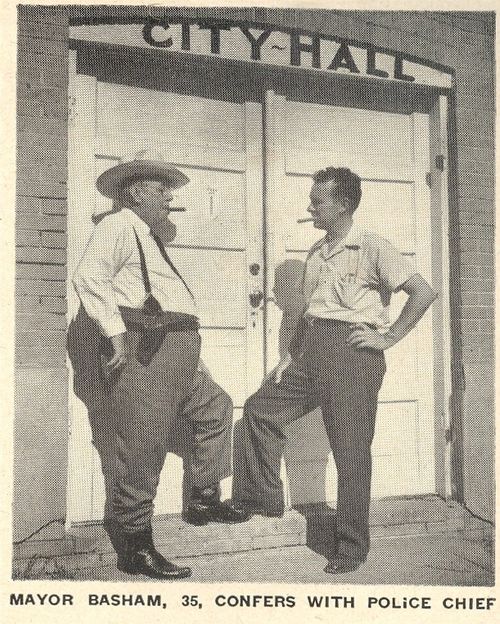
    0--whitney 02 sherrif

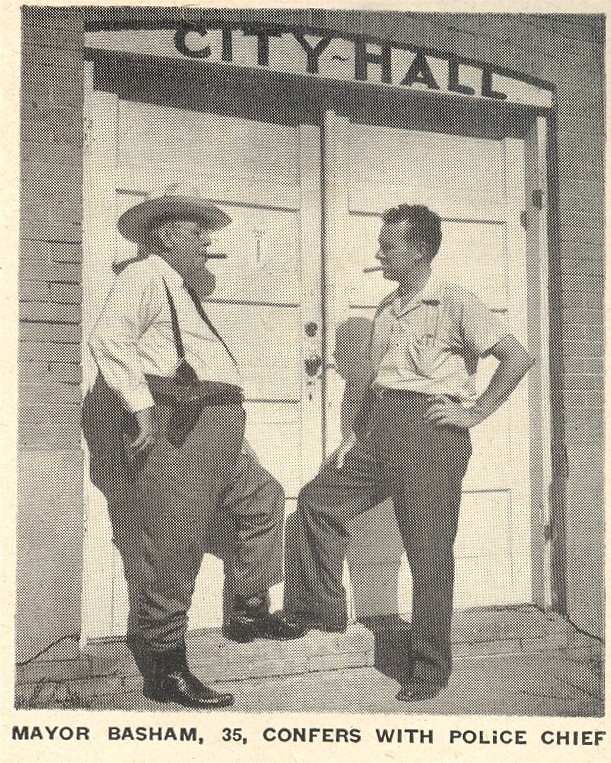
    It came to the mayor of Whitney, Frank Basham, to appease “a
    delegation of local housewives” who were fed up with the old men, and wanted
    the “unsightly bench” gone.  It was
    probably a lot more than the bench, as the quote above by Mrs. T.E. Bagley contends:

    “Why, they must spit two or three gallons a day!  They ain’t died fast enough, these old men!”.
     Perhaps a dozen old
    farmers/ranchers/cowboys sitting on a bench all day long spitting and watching
    the world go by wasn’t the most attractive thing for downtown Whitney.0--whitney 02 sherrif fat close up
    And
    so it came to pass that the lumber was removed, but not the men—they returned
    with nail barrels and took up residence, unabated, “sitting wrathfully” on the
    kegs.  The police then threatened to
    confiscate the kegs, and then the men: tensions flared, and a special election
    was held, a referendum on whether or not to restore the bench.
    0--whitney 03 old lady

    “I’ve
    never heard of such foolishness”, ‘cried 97-year-old Tom Rose, dean of the
    bench sitters’. “Come here in ’77 from Tennessee.
    Been married 76 years, and my wife ain’t whipped me yet.”

    The
    vote was held and the forces of bench-removal-evil were “horribly” beaten, the
    vote for favoring restoration coming in at a convincing 124 to 67.

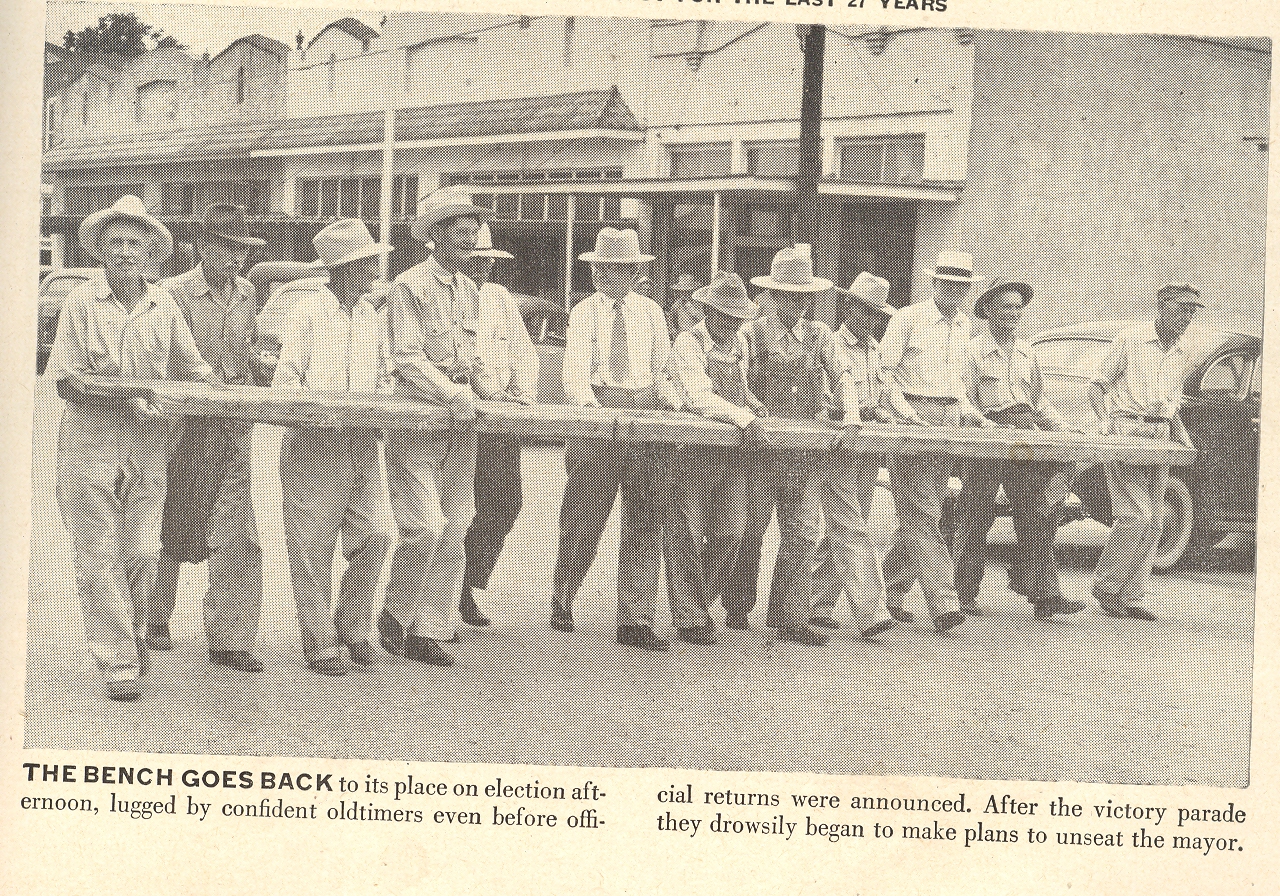
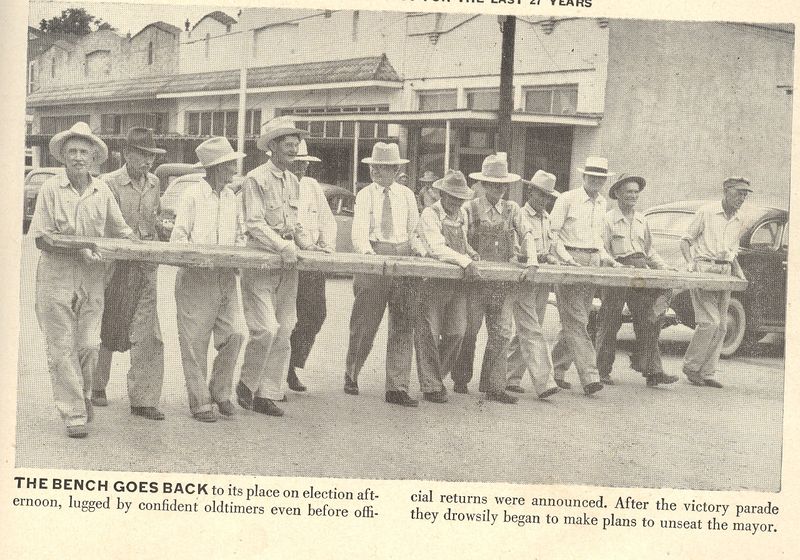
    The
    picture below shows the men “triumphantly” hauling the bench back into
    position, sitting back down once more, “loafing, whittling, spitting and
    passing judgment on everything that passed”.

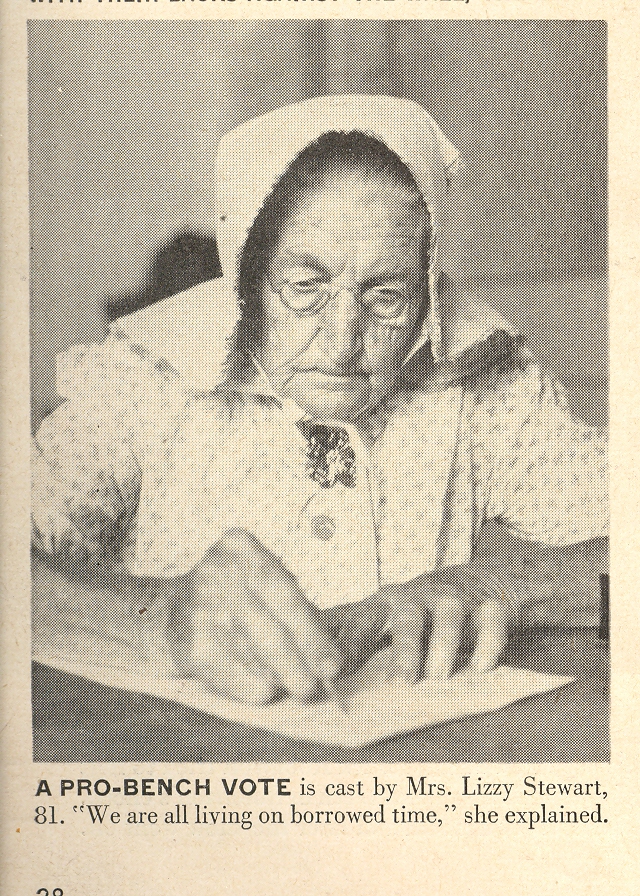
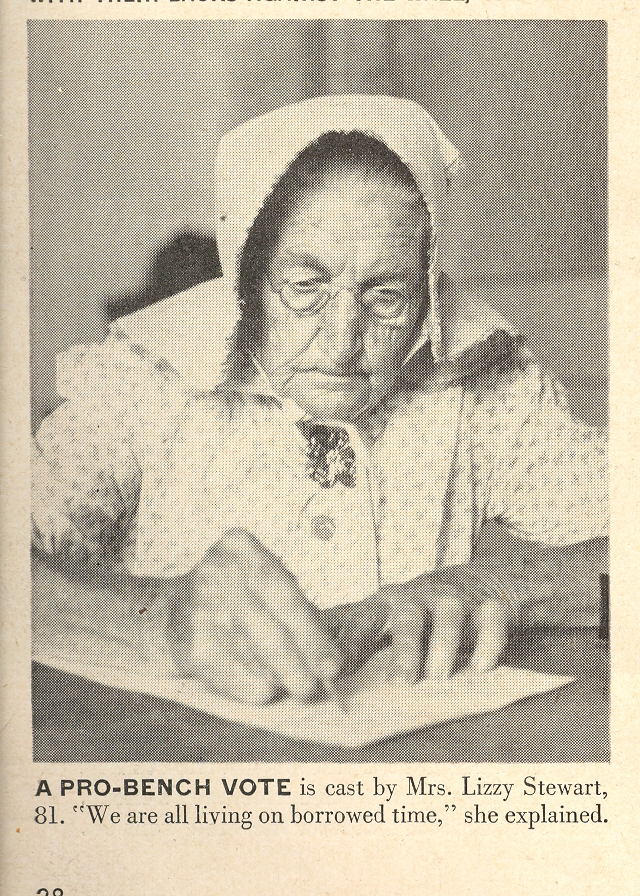
    As I said, this is a beautiful drama of high emotion, way-of-life small consequence played big, a heaping slice of American life witnessed in a small East Texas town just after World War II.  I would love to hear the voice of Mrs. Lizzy Smith (pictured here) as she was thinking-out-loud, casting her vote in this debate with a pencil no longer than a finger joint. (Where did that hat/shawl come from? Is it her mother’s? Mrs. Stewart’s  mother would’ve been born around 1840, which means that the sensibility for that head cover was at the very least of pioneer vintage, and possibly older. It looks like living history to me, a snapshot into something from the deep past, right there in the present. This doesn’t happen very often; but when it does, it is a celebration.)

    “We’re all living on borrowed time” she is quoted as saying, and I imagine that she voted for the men to be able to return to their bench to use what time they had left to holding up the walls of that pharmacy.  [I made a call to Whitney, this morning, and spoke with a gentleman about the Battle of the Bench.  He eloquently relayed the story, and the place that it holds in the town’s history, its small action carried into the future as a very large sensibility– I’m thankful for his insight.  I couldn’t resist asking what it was that was directly opposite the bench; what were these men looking at when they weren’t looking down.  “Not very much” he said. But the story isn’t in the looking, its in the talking; and as my wife Patti Digh finely points out, stories seem to be best told side-by-side.

    And
    in here is a great little play. Maybe not so little.
    0--whitney 03 carrying bench


  • New York City: Missing (1902) & Reproduced in Outer Space (1941)

    JF Ptak Science Books LLC  Post 940

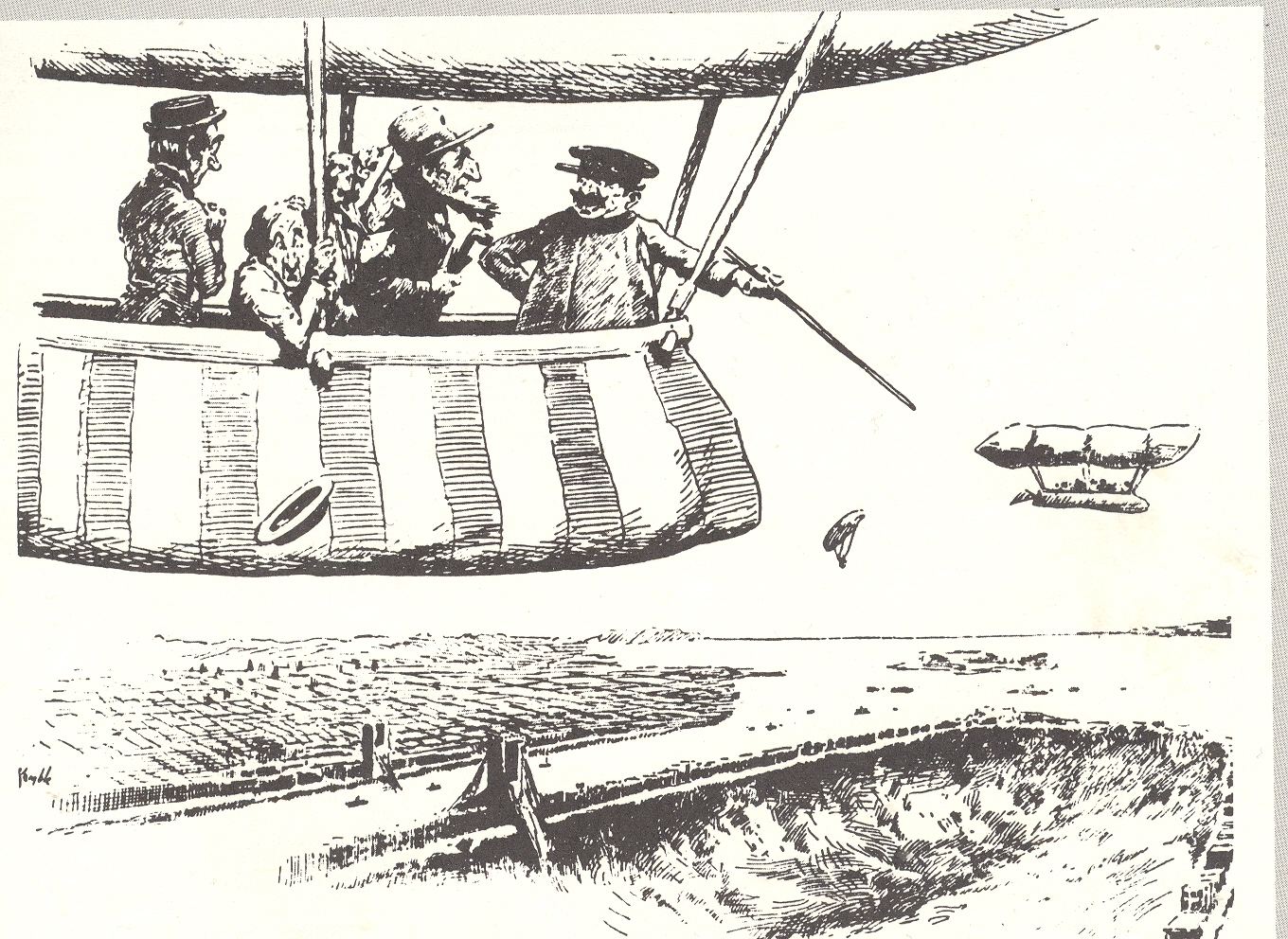
    NYC has certainly had its imaginary/creative trials and tribulations over the last 400 years or so, but I must say that these two depictions of the state of the city are the most, well, unexpected as any I’ve ever seen.  The first comes from 1902 and is a forward-looking appraisal of the chances of New York City in the near-future.  The aeronaut tourists are being told by the aviator/carny–floating above Manhattan in the future, in the year 1920–that those chances are not very good, the city having disappeared under its own weight, sunk by the growing skyscraper1 population in a ground loosened by too-numerous tunnels.  The cartoon is a joking editorial, of course, a riposte to the relatively new building jag that pushed big buildings to great new heights. [A post on more realistic views of the City of New York can be seen here]

    3--nyc gone

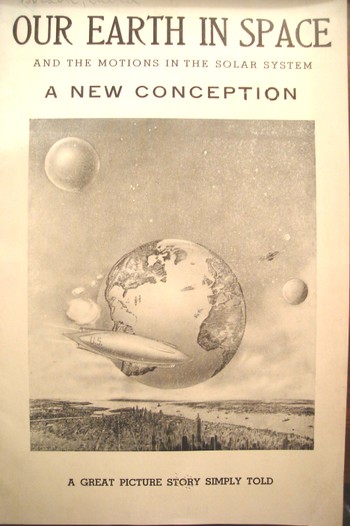
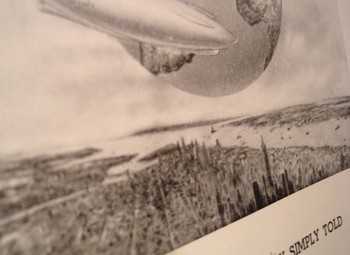
    The second image on the other hand is not a farce; it is one of the strangest (published) unintentionally Outsider, unintentionally Absurdist/Dada works that I’ve ever seen.  It appeared in a post at the very start of this blog (two years and 500,000 words ago) and it remains a capstone of Mondo Bizarro category2.

    Dsc04543

    This 1941 pamphlet isn’t so much “interesting” as it is interestingly illustrated, where all
    of the semi-coherent  interest resides, the text having left coherence far behind, somewhere, in it own intergalactic dust. 

    This is the only known example of the depiction of
    an extra-terrestrial New York City pictured with the earth in the
    background. 

    Huh?  Yes, this is the Big Apple in space—not its own
    space but THE space, outer space—somehow, impossibly, removed to some
    something-or-other (actually in this case, a “bubble”) that, while not
    being the Moon, was something like it, though not actually a solid and
    without gravity, floating on a base of floating effluvia and hope, but, well,
    you get the picture.  Whatever we’re floating on here (actually it is
    identified as the “perisohere” (don’t ask)) is very big and very very
    close to the home planet. 

    The author, David Gordon, is certainly after something, but what that “something” is I just don’t know. He starts things out for the reader asking a series of questions like “why does
    the earth and other heavenly bodies remain in the air and submerged”, answering them with other questions. 

    In all of this Mr. Gordon produced a work of staggering incredibility, more so since it wasn’t an intentional science fiction effort,  and in my book any time anyone reveals such a shocking piece of thought deserves a special kind of praise. I’m just thankful that the pamphlet was illustrated.

    Notes:

    1.  The word “skyscraper” appeared in print only nine years before this cartoon (Harper’s Weekly, April 1893), thugh the necessary elements like heating and
    cooling capacities, electrical lighting, plumbing [with appropriate, siphon jet
    toilets], elevators with dependable brakes, had been in place since the 1880’s or earlier.

    2..  One of the other capstone publications written about here is the monumentally bizarre work on sculpting in fat and lard:

    Dsc04544


  • Layers of Influence: Dante’s Inferno and Pozzo’s Perspective

    JF Ptak Science Books LLC  Post 934

    I’ve
    written several times in this blog about unusual perspectives in antiquarian
    images—namely, views looking straight up and straight down.  They really don’t exist, much, in the
    post-Daedalus pre-flight days, what with given the difficulty of fabricating non-cartographic
    images from the ground.  

    Next
    on what might seem to be a very obvious list of non-obvious interests are images
    with layers, levels, sections, plans, projections…sideways columnar views, locating objects
    in space and time. But mostly looking at things straight-on, ad then showing
    their relational layers.  As it turns
    out, these sorts of creations aren’t very much seen in the pre-modern
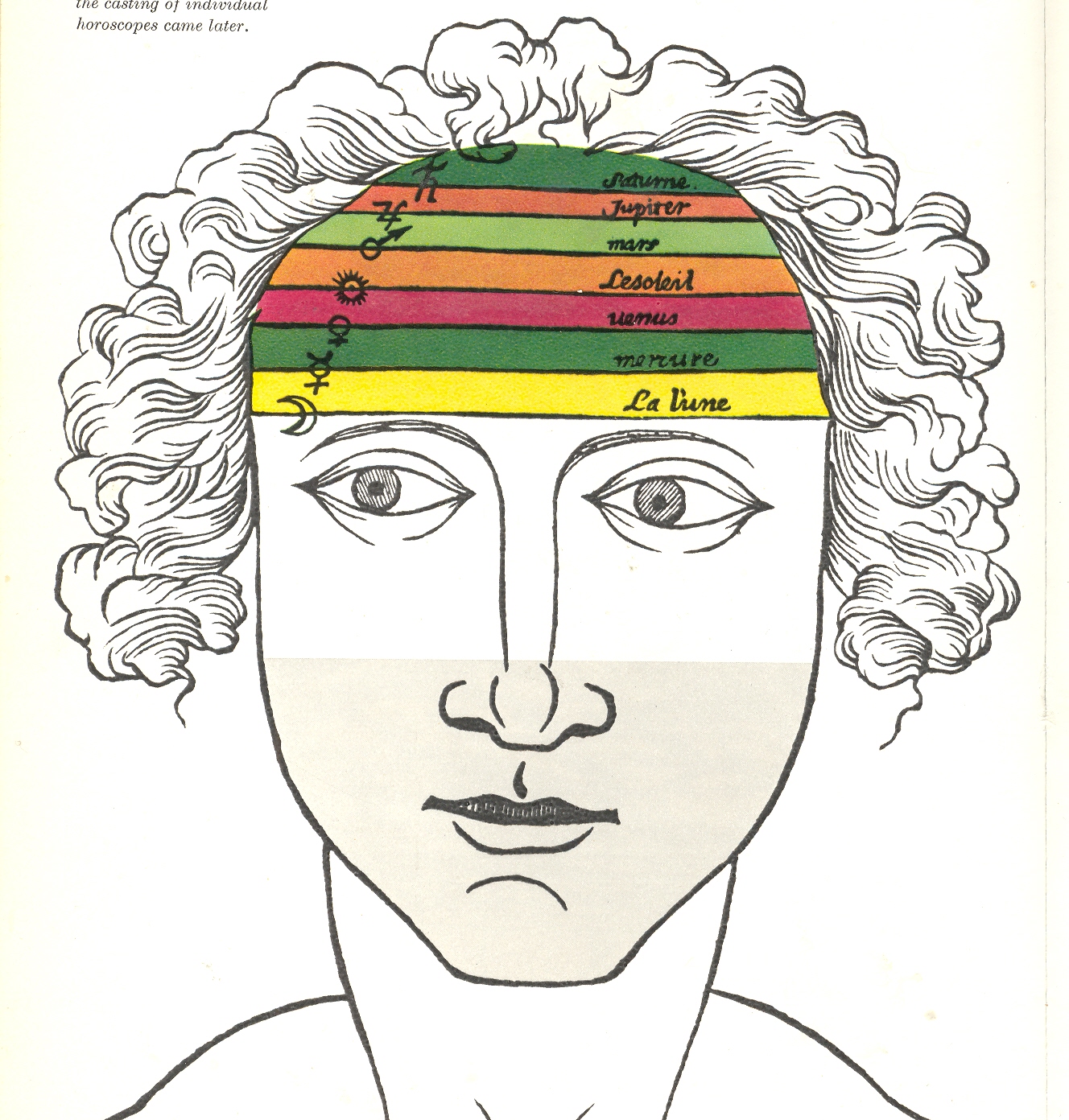
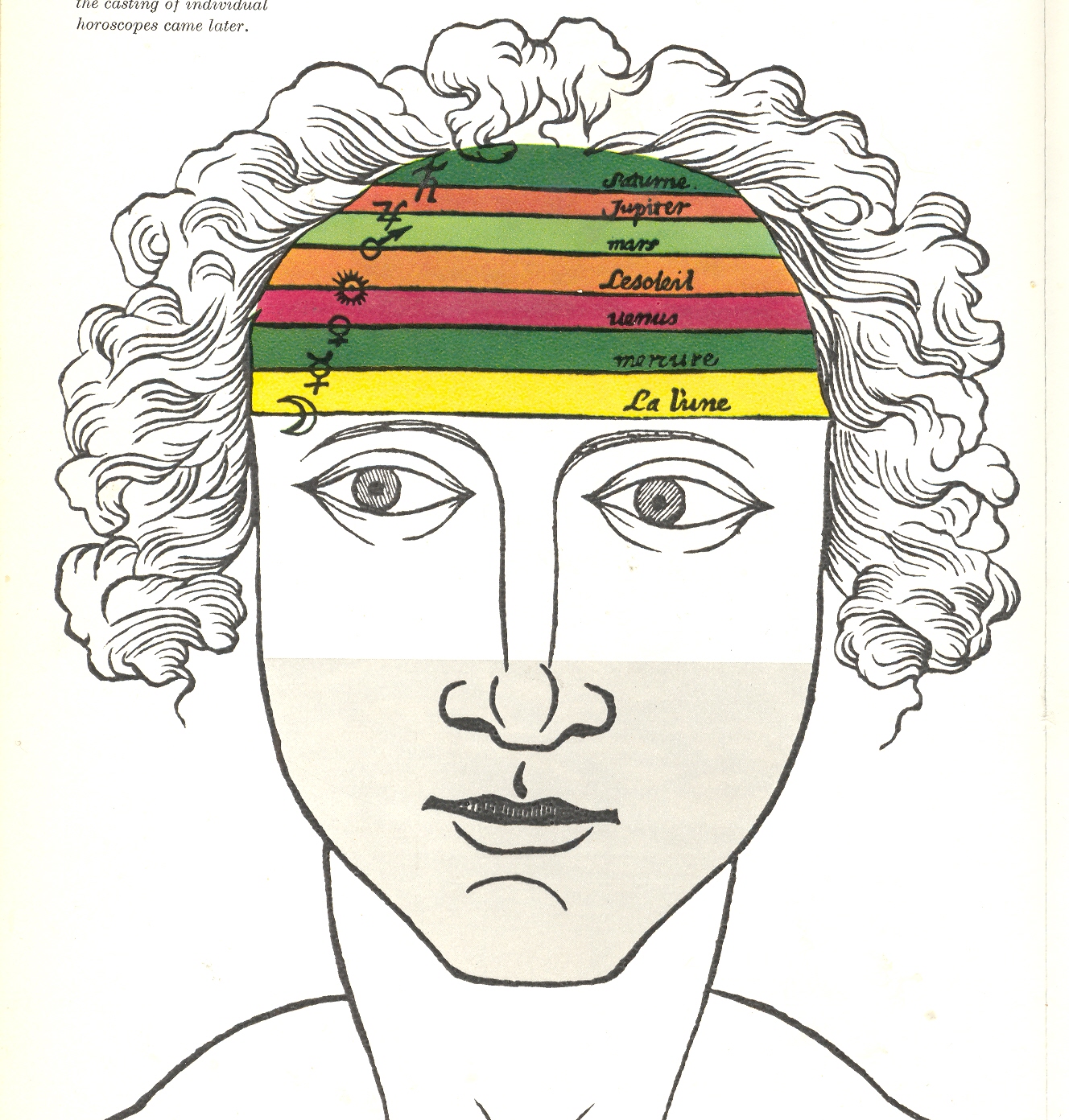
    geological era (say, prior to the 1790’s).This is a good example, an astrological man, showing the influence of the planets (and sun and moon) on the different layers of the brain:

    Blog--feb 9--arstro man Blog--fe 9--mole map


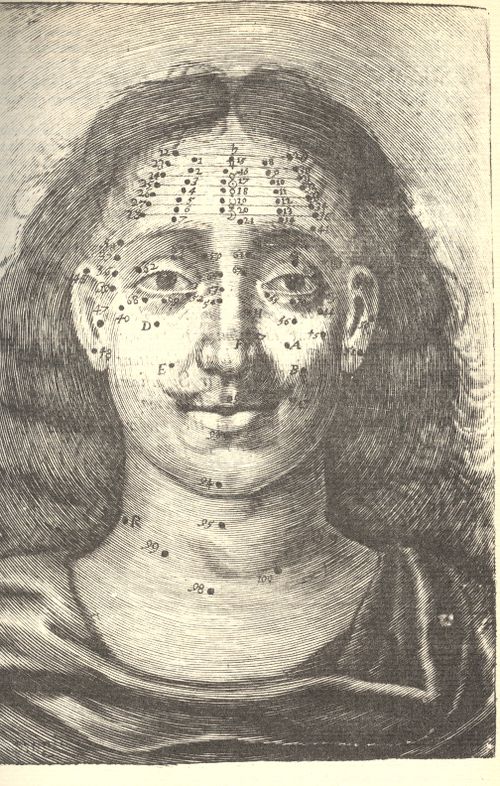
    Differentiated, say, from Richard Saunders’  Mole-map man,  (right) where facial (and etc.) moles were used as maps to determine some sort of specific actions on the organs underneath (and also by a tea-leaf divination, where the mole lines were connected and disconnected, and interpreted, according to the needs/whims of the observer):

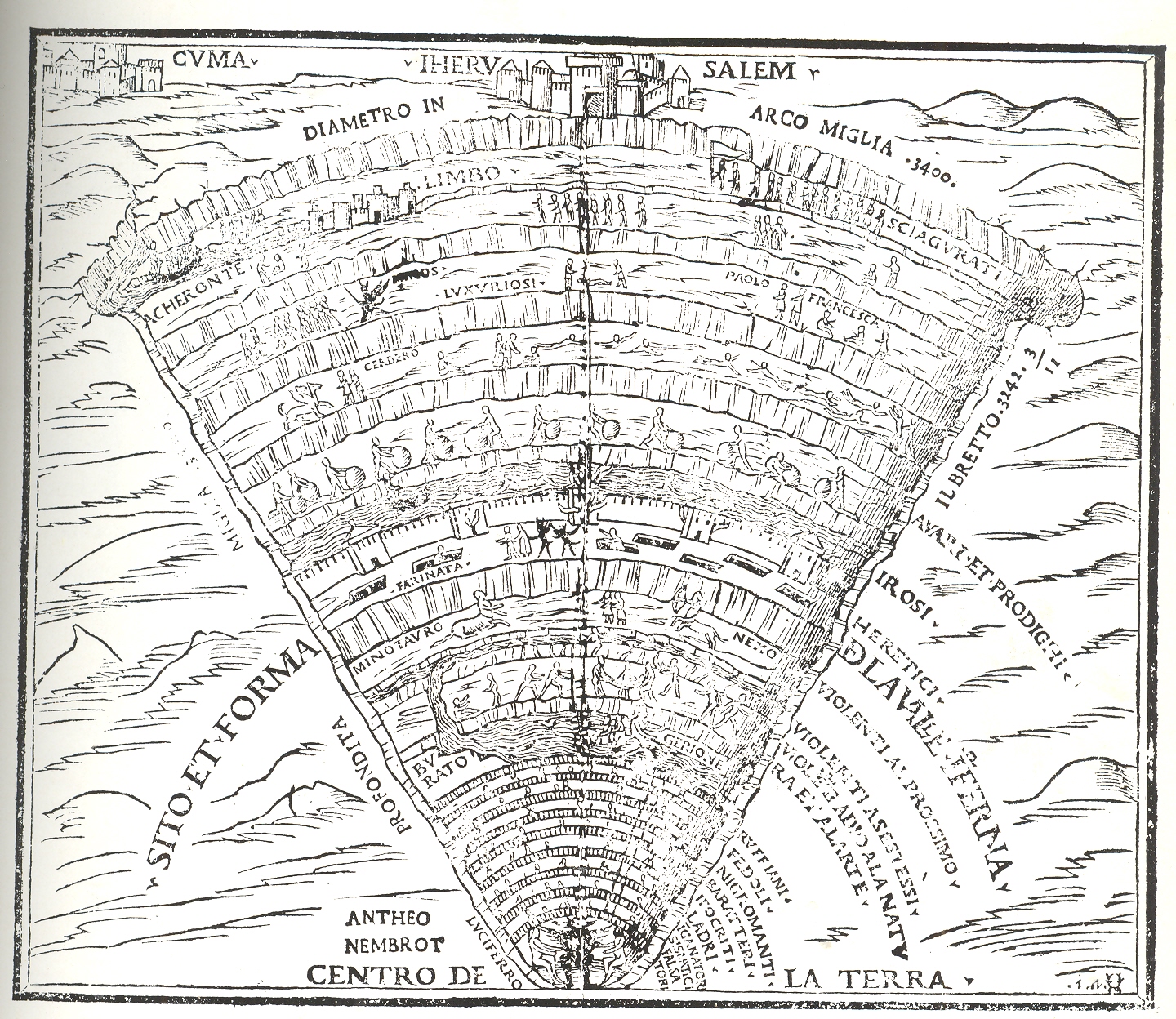
    The classic sort of image may be something like this fantastic depiction of the Inferno of Dante (shown here in the Comedia published in Venice by Gregorio de Gregoriis in 1515:

    Blog--feb 9--dante

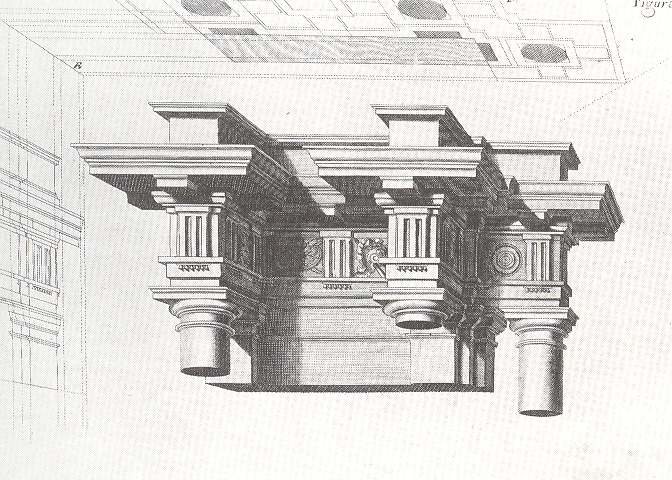
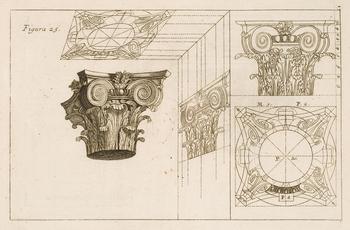
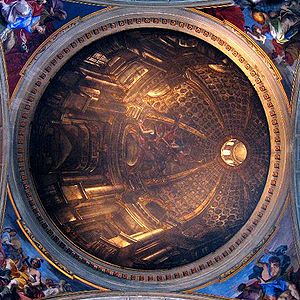
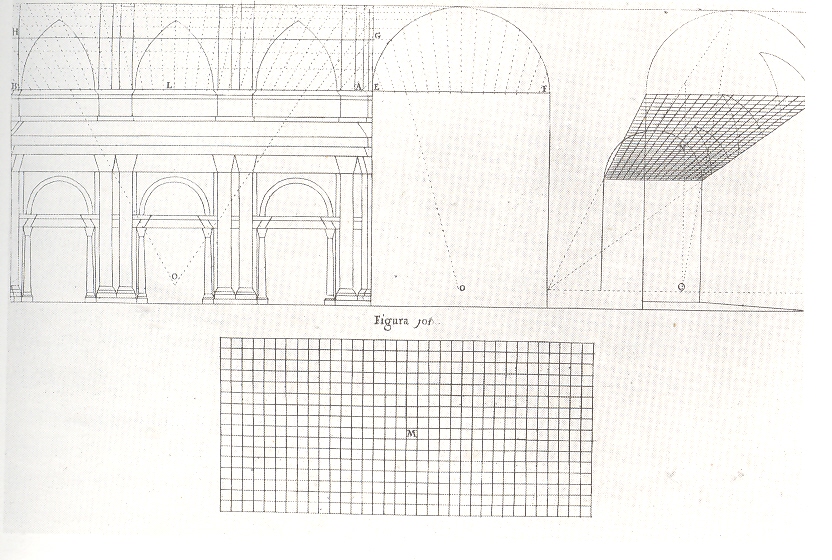
    The fantastic Jesuit Andrea Pozzo published results of his researches on perspective in his Perspectiva pictorum et architectoru (1693), explaining how he was able to compellingly, unbelievably  represent three-dimensional images on two-dimensional spaces, this image showing plan and projection and profile, effectively giving you a three-dimensional cross section of the architectural element:

    Blog--feb 9--pozzo column 

    And again:

    Blog--levels--pozzi column 

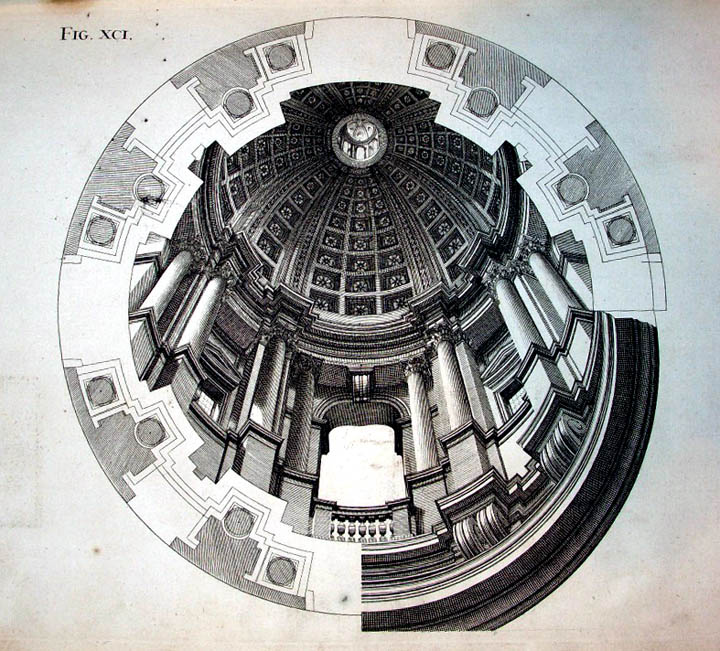
    And of course his masterpiece displayed, which is an engraving showing the plan of a flat ceiling of St. Ingacio in which he painted his magnificent trompe l’oeil masterpiece:

    Blog--levels--pozzi dome 

    Pozzo color

    Also in a way appropriate to this ramble is the explanation diagram by  Pozzo’s found in Martin Kemp’s The Science of Art, Optical; Themes in Western Art from Brunelleschi to Seurat, showing the imaginary depth of a deeply illusory painting on a (basically) flat ceiling surface:

    Blog--feb 9--pozzo ceiling

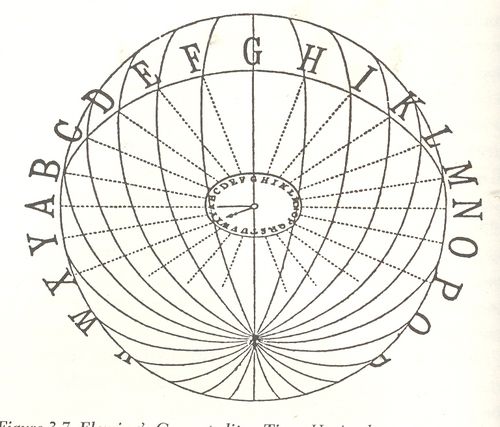
    Also in consideration for this area is Sir Sandford –the inventor of Standard Time–Fleming’s wonderful idea for a G-o’clock world, a same-time-everywhere planet, with his 1879 diagram illustrating the earth-penetrating time principles so:

    Blog--feb 9--fleing clock(Image source: “Time-reckoning and the selection of a prime
    meridian to be common to all nations” in the Proceedings of the Canadian Institute, Toronto, 1879 published by Copp, Clark)

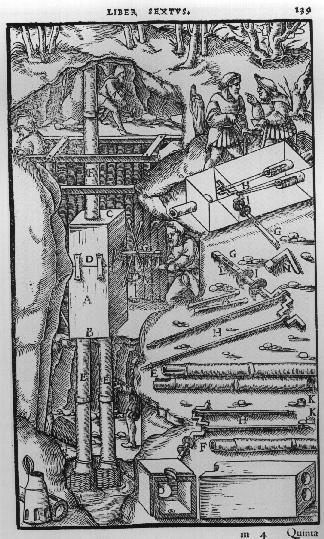
    Agricola’s De Re Metallica (from the first Latin edition f 1556) displays many interesting cross sections of Renaissance mines:

    Agricola 

    There’s much more to come in this area, of course–this is just what I had time to deal with this afternoon, though the this task is much more complicated in the 18th century world than in the 19th, when we find cross sections of the earth and  the oceans. But I’ll close here, with all faults.


  • A Short Look at Fifths and Fives: Joltin’ Joe, Legal Sausage and the Structure of Mathematics

    JF Ptak Science Books LLC  Post 925 

    I’m going to take a drive through five
    fifths—all of which don’t come close to making a whole—to get to my ultimate
    destination, a ribbon of numbers circling the earth.

    In
    American lDimaggioaw, “taking the fifth (Amendment)” allows you the prohibition of
    incriminating yourself, giving the supposed ability to look innocent whole not
    saying anything about anything for fear of legal repercussions, though this
    sausagey implosion from guilt seldom looks pretty. 

    There’s
    the fifth column (as in Hemingway’s play by this name), the
    not-fourth-but-fifth force, the musical perfect fifth of highest consonance,
    the Keplerian nestling of the five Platonic solids,  Beethoven’s Fifth, a fifth of (good) scotch,
    the fifth cardinal direction (the center), the five books of the Torah, the
    five pillars of Islam, the worst categorization of hurricanes and tornadoes, living
    in the fifth Mayan world, the fifth Fibonacci number, and on and on.

    And
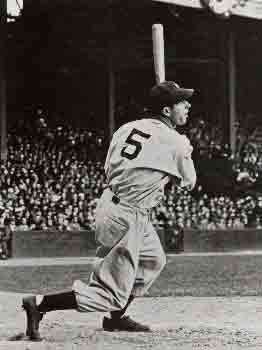
    aside from being the number that Joe DiMaggio wore on his pinstripes, it is
    also the number of the  Euclidean postulate that called to all those who were
    interested in the possibilities of the postulate not being so—that there exists
    as perfect a non-Euclidean system as there is for the Euclidean.  The fact of the matter is that this calls
    into question the foundation, the very basis, of mathematics.  Or used to.

    Blog feb 1

    All
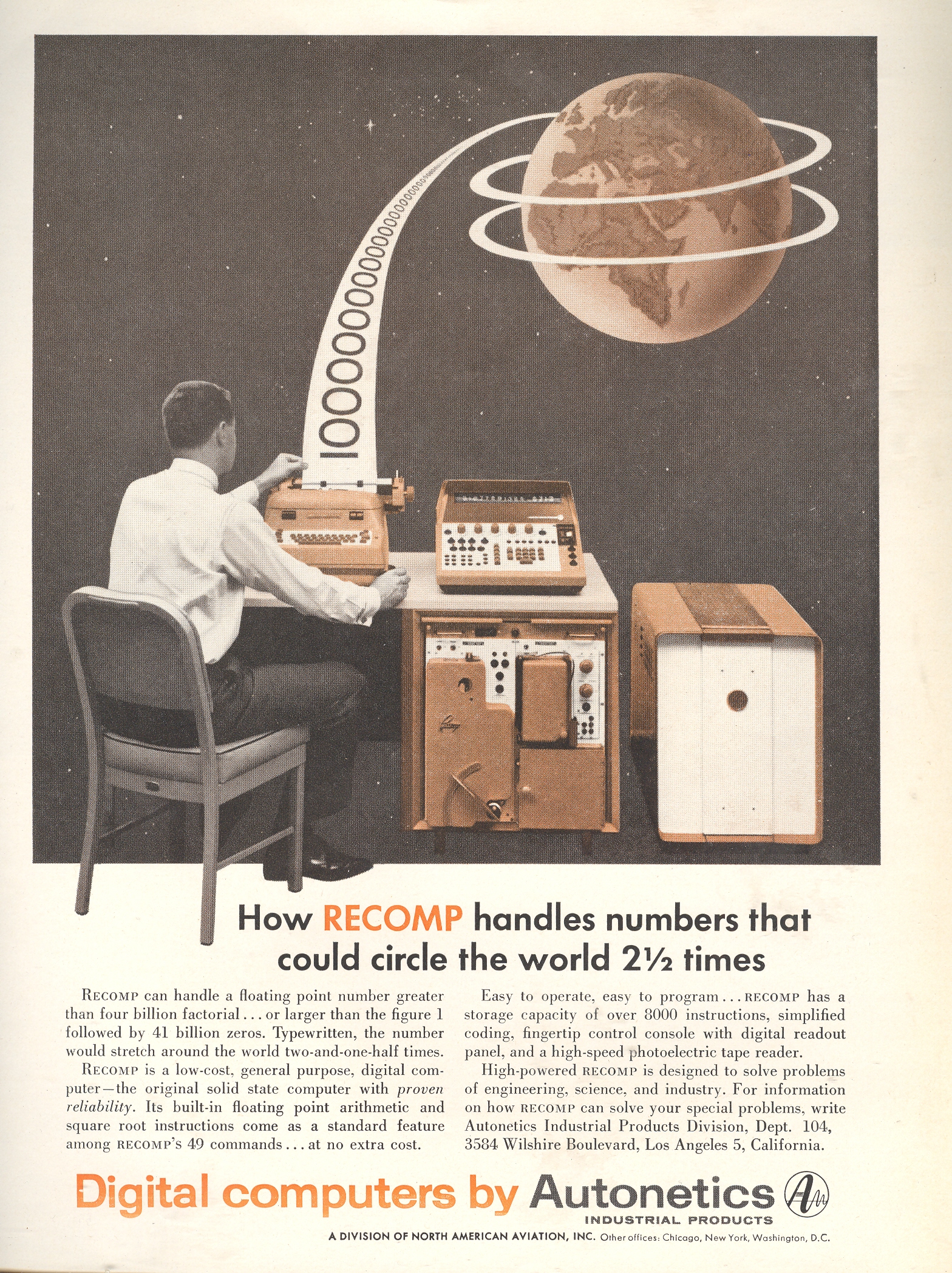
    of this was brought into mind by this 1957 ad for the RECOMP computer produced
    by Autonetics.  The image of a sheet of
    numbers circling the earth1, the product of digital computation, suggested
    structure, mathematical imperative and solidification of numbers.  But the point of this was the bottom line:
    what was the point, and for that matter, what was the point?  They were hardly physical things floating in
    space, but ideas (except of course in the worlds of Flatland). 

    Euclidean
    structure was the infallible, rigid, predictive, explanatory structure and the
    most accurate descriptor of physical space. 
    This had certainly been the case for fifteen hundred years or so, or at
    least until the struggling fifth postulate of Euclid’s Elements became really, well,
    unwieldy.  More to the point, the axiom,
    the parallel postulate axiom, wasn’t as self-evident as the first four, and
    wasn’t provable from the other nine of the first ten axioms.  And so came the unbelievable question, what
    if the fifth postulate wasn’t true?  What
    if there were other geometries—non-Euclidean geometries—that were as provable
    as that of the Master?  The possibility
    of relegating the understanding of nature and the physical surroundings to
    something other than the existing geometry was simply, positively,
    extraordinary. 

    The
    origins for this movement away from Euclid started with Girolamo Saccheri (his
    book published in 1733 but not “discovered” for its non-Euclidean importance
    for another 150 years) Georg Kluegel (1763), Johann Lambert (Theorie der
    Parallellinien,
    1766) and Adrien-Marie
    Legendre (1752-1833, who was sort of in a similar boat with Saccheri in that
    his work wasn’t actually published until after that of the next two
    mathematicians); and coming to a point of real invention in the work of Nikolai Lobachevsky (1792-1856) and Janos Bolyai3 (1802-1860). (It would be
    incorrect to credit these last two men [plus Gauss] with the creation of
    non-Euclidean geometry given the longish and complex history of its
    development.)

    This
    work brought into question the way in which the world was seen, and the very
    foundation of recording visualized space. 
    This is all much messier than had been planned (so to speak) by almost all
    previous mathematicians, questioning the very foundations of mathematics.  The orderliness of the earth-circling numbers
    doesn’t seem to be quite as they were, but as Henri Poincare stated, the “new”
    system isn’t anything better or worse, just different,  a new and more convenient way of looking at
    things4.

    Notes

    1. To be honest about it, the
      foundations of math bit didn’t suggest itself right away.  The first thing I thought when looking
      at what this paper trail was supposed to represent—a string of numbers 41
      billion zeroes long—didn’t look right. 
      Given the size of the numbers coming out of the “printer” there
      would need to be five times as many rings around the earth.  But when you read the text the numbers
      are supposed to be “hand written”. 
      Therefore if you assume the numbers to be less than an inch high
      and with no spaces in between, then this 2.5 times around the earth works
      out to be accurate to the number of inches in the circumference. 
    2. Still earlier work is found
      in the work of  Omar
      Khayyam
      ‘s Discussion of Difficulties in Euclid, John
      Wallis
      and Nasir
      al-Din al-Tusi
      … among others.
    3. Bolyai’s work—published as an
      appendix to his father’s work on the foundations of geometry—was privately
      reviewed by the great and impossibly smart Carl Gauss, who gave it a backhanded
      series of compliments while at the same time saying “I thought so…”  Which was true, evidently, as it looks
      as though he was working on the problem beginning in 1799.
    4. “If geometry were an
      experimental science, it would not be an exact science. it would be
      subject to continual revision … the geometrical axioms are therefore
      neither synthetic a priori intuitions nor experimental facts. They are
      conventions. Our choice among all possible conventions is guided by
      experimental facts; but it remains free, and is only limited by the
      necessity of avoiding every contradiction, and thus it is that postulates
      may remain rigorously true even when the experimental laws which have determined
      their adoption are only approximate. In other words the axioms of geometry
      (I do not speak of those of arithmetic) are only definitions in disguise.
      What then are we to think of the question: Is Euclidean geometry true? It
      has no meaning. We might as well ask if the metric system is true and if
      the old weights and measures are false; if Cartesian coordinates are true
      and polar coordinates are false. One geometry cannot be more true than
      another; it can only be more convenient.” –from:  M J Greenberg, Euclidean
      and non-Euclidean geometries: Development and history.
      (1980).

  • How FDR Made Women (1) Nervous and thus (2) Older. An Appeal to Vote Republican, 1936

    JF Ptak Science Books LLC  Post 921

    Blog jan 28 protext women

    {This continues “The Coming Sex War of 1919“)

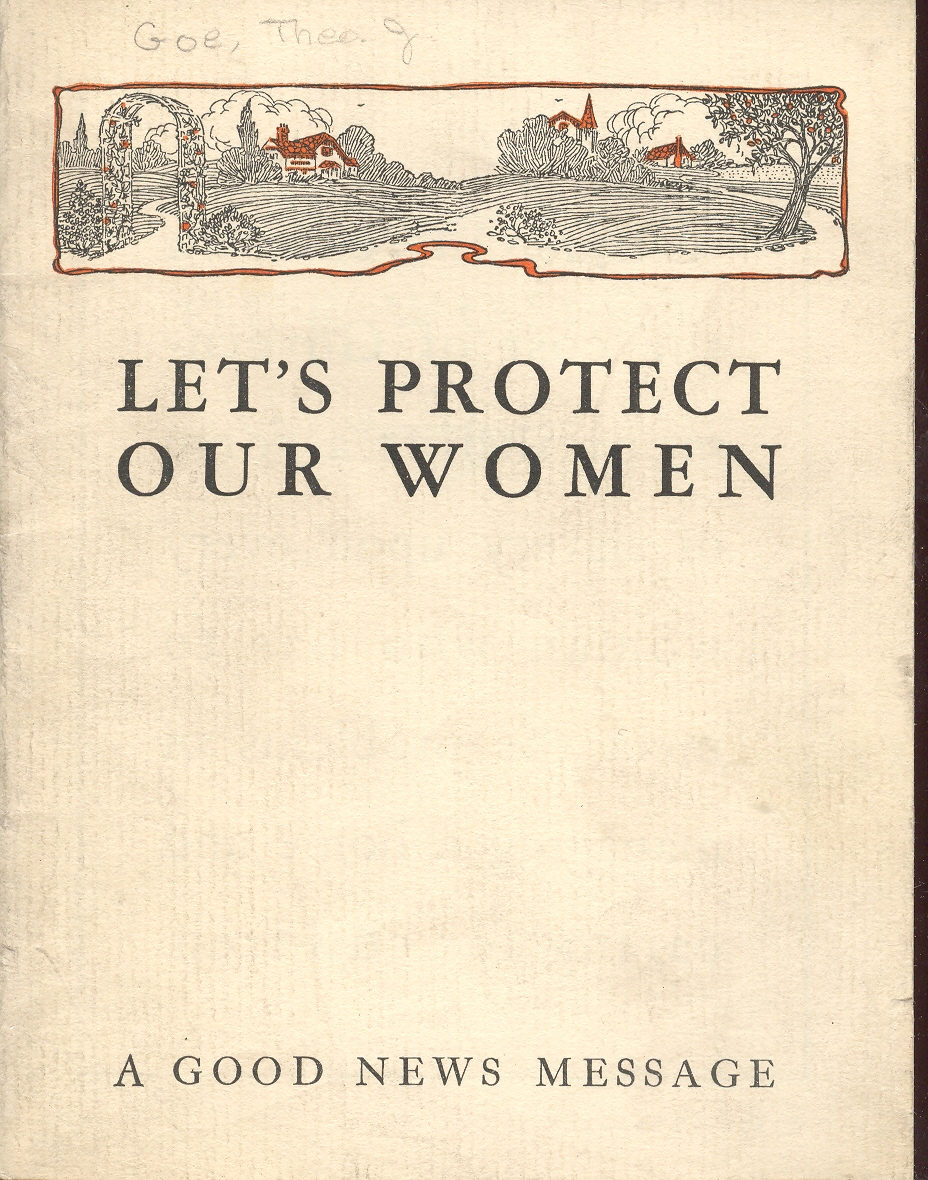
    Theodore J. Goe, the author of “Let’s Protect our Women”, must
    have been a synesthete, with the ability to smell the future.  My copy of this pamphlet used to be the
    Copyright Deposit copy, and is dated January 18, 1936, and what Mr. Goe was
    smelling were the winds of the November presidential election; and since he was
    a Republican—or at least an anti-Rooseveltian—what he smelled was outrageous
    defeat for his cause. 

    And so he wrote this elegantly-produced little oddness,
    trying to dip into the wellspring of the enfranchised female vote (just sixteen
    years old at this point), trying with fatherly will to scoop women out of the
    harmful ways of Roosevelt’s policies.

    The “protection” that women needed was for uncertainty which
    led to nervousness and which attacked their youth to send them into a slavery. The
    thinking here went sort of like this:  women were being attacked by FDR, who was “cruelly
    prolonging the depression” by not helping people with jobs, thus depriving their men of a fair wage which is what made
    women happy; without the “happiness” of a husband with a good job, “life
    becomes more serious than it should be”; this fights against “national
    influence which tends to rob [women] of their youth”, making women older
    sooner. And it was this premature aging that the women are to vote against in
    1936.

    Mr. Goe may well have been a crank, but to him and his
    readers this thinking might’ve made some sort of contemporary sense, after a
    fashion.  He did forget that women made
    up more than 30% of the workforce at this point, and had more sources of
    happiness and youth than a man with a decently-paying job, plus having a life
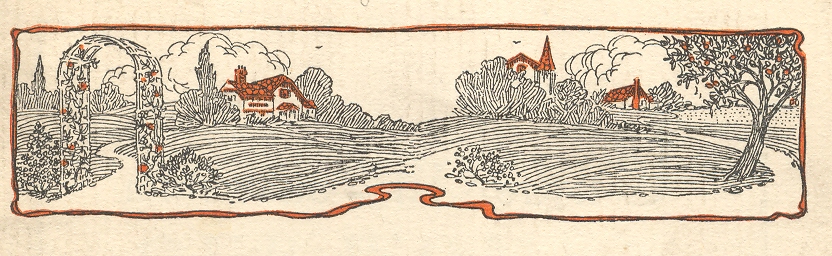
    and opinion outside of serving home/hearth/husband, but no matter. (This, by the way, is where Mr. Goe thought American women lived:)

    Blog jan 28 protext women det Women didn’t rush to aid FDR’s competition in the ’36 race,
    when Roosevelt redefined “landslide” by crushing
    his Republican challenger, Kansan Alf Landon. 
    There wasn’t any election like it since the two-party system became nationalized
    80 years earlier, Landon loosing to Roosevelt by
    an electoral balance of 523-8. Landon swept Vermont
    and Maine,
    with FDR taking everything else.  (No one
    would quite clear the plate like this ‘till Reagan turned Walter Mondale
    inside-out in 1984, 525-13.)

    Landon was a decent man who had an interesting
    post-political career—even so, it’s a good thing that he lost.


  • Red Sky in the Renassiance: the Reverse of Geometry

    JF Ptak Science Books LLC  Post 913

    What
    if our eyes worked in the “opposite” way? 
    What if we somehow broadcast the lines of reality from our eyes1 rather
    than receive photonic emissions from the physical world, that we didn’t specify
    the wavelength and frequency of light, and that somehow electromagnetic rumblings
    in the “visual range” didn’t apply to our sense of sight?

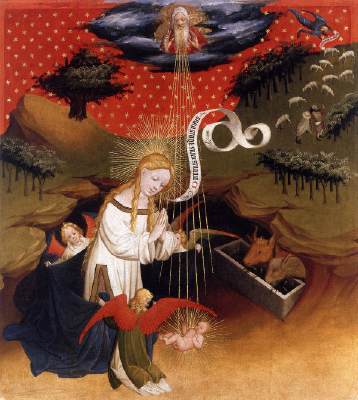
    Blog jan 17 francke

    This
    would certainly make for an interesting  existence
    if somehow the elements around us weren’t necessarily so.  Perhaps this is sort of replacement reality
    is just what has been going on in the entire history of humans, altering the
    landscape to make it more suitable for our existence, a long history of
    painting the physical landscape with something more “suitable”, an
    individualized creation. 

    This
    all came up wondering about this fantastic sky, produced 475 years before
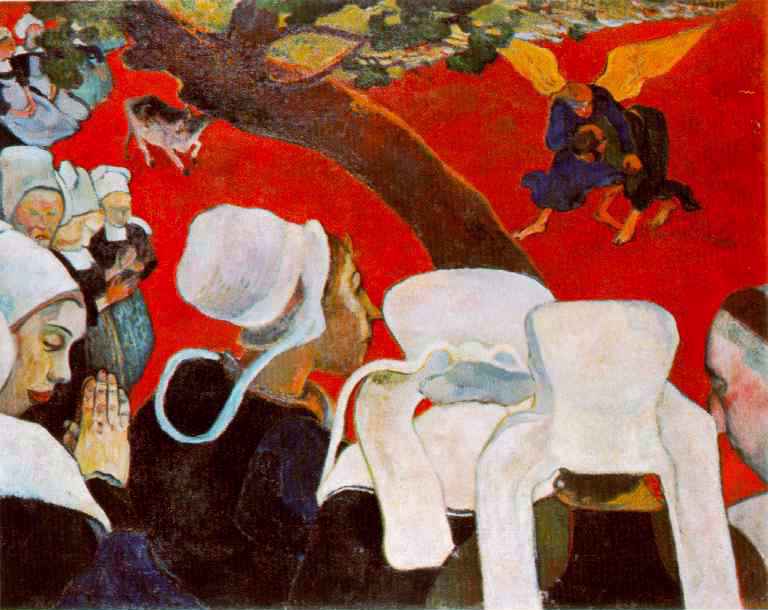
    non-representational art and 455 years before Gauguin started applying big blankets of red2 :  it seems to me
    in a distant impression that it is a representation of vision that is more a projector
    than a camera..  The end result of this
    emission and wayward thought is the fabulous red sky in the painting Nativity by Master Francke3 (ca.
    1424-1436) is a fantastic red sky with lustrous stars.

    The
    painting is otherwise filled with the common reliables of Renaissance iconography
    concerning the nativity:  the place of “birth”
    (a stable or barn-like building, also sometimes appearing as a classical ruin
    or cave), a flock of sheep, a stand of trees, and the watch sensate gazes of the near by
    beasts.  Mary is ecstatic in the same ways
    that Joseph is usually not—to me, he usually seems pretty detached from the
    whole deal, lost in another space.  The
    baby Christ is again just a little man (and not a baby) laying there on the barren
    ground.  [I’ve wondered about Joseph’s
    detachment:  perhaps the whole scene is
    nothing but mysterious, a complexity far removed from his reach and
    understanding, a notion of an act that is so phenomenal that there is no
    retrievable reaction for it, and so he looks away.  Later on in the history of Mary and Joseph,
    and deep into the 19th century when the Immaculate Conception—that is,
    the sexless conception of Mary the mother of Christ which she would later accomplish
    for her own baby—the issue of Joseph’s own virginity comes up, mounting the
    confusion no doubt in Joseph’s already-full head.]

    But
    back to the sky:  certainly skies and
    backgrounds of pure gold and blue painted by the masters in Sienna
    and Florence
    abound during this time, but red is quite unusual.  The sky is accented by the terrific red of
    the wings of the angels and more softly so in the hair of the (long-fingered) Madonna. 

    There
    is also the issue of the hole in the sky, revealing the large-handed Creator with glimpses
    of the alternate, higher, existence visible in the background, a taste of the
    alpha (or omega?) part of the long arch of Earth-borne humanity.

    Notes

    1.The discussion of optics and vision is one of the most spectacular conversations ever held in the history of science and philosophy (along with “time”, “motion” and “the void”.  I think that Leonardo would’ve come closest in relatively-modern times to understanding vision if he had the real capacity of dissecting the eye (which in spite of many approaches to experiment) would always go flat, leaving him with an unsatisfying mess.

    In Aristotle’s Physics (Book II, Part II) we find the following fascinating thought:

    “Similar evidence is supplied by the more physical of the branches of mathematics, such
    as optics, harmonics, and astronomy. These are in a way the reverse of geometry. While
    geometry investigates physical lines but not qua physical, optics investigates
    mathematical lines, but qua physical not qua mathematical”

    A classical position of the emission theory of optics is stated by Hero in his Definitions:

    “Optics does not deal with physical questions and does not study whether given rays
    flowing out from the eyes go forth to the boundaries of objects or whether images that are
    detached go forth from corporeal objects [and] enter the eye along a rectilinear path or
    whether the intervening air is stretched or contracted by the ray-like pneuma from the
    eye. It is only concerned whether, at each reception (of an image) the right direction of
    movement or tension is maintained as well as the requirement that the convergence to a
    point occurs at an angle when objects are seen that are larger or smaller than the eye.”

    (My thanks to Dr. Kim Veltman for these quotes from her Continuity and Discovery in Optics and Astronomy, Studies on Leonardo da Vinci http://www.sumscorp.com/books/contin/title.html)

    2. I had Gauguin’s 1888 “After the Sermon/Jacob Wrestling the Angel” in mind for an example of this.

    Gauguin.sermon

    3. Master Francke active (c. 1424 –
    36 ), Nativity, in the Kunsthalle, Hamburg; oil on oak,
    39×35 inches.
    Hamburg, Kunsthalle. “German painter who worked in Hamburg, where in 1424 he painted a huge altarpiece for the company of merchants who traded with England, the so-called ‘Englandfahrer Altar’, originally placed in their chapel in the Johanniskirche (remnants in Hamburg, Kunsthalle). When closed, the double-winged altarpiece displayed four scenes from the life of S. Thomas Becket, the patron saint of the company, above four scenes from the life of the Virgin (e.g. Nativity;).
    Opened, the altarpiece showed scenes from the Passion of Christ.
    Francke was a leader of the northern German version of International
    Gothic
    . He had close links with French book illumination (he may
    have worked in
    Paris for some time) and the
    paintings of the
    Rhineland, especially those
    of
    Conrad van Soest
    , though it is not known where he received his training.”

    Other Nativity scenes as follows:

    ·Posted by :

    ·in:

    — — —

  • When a Compliment is Not: Newton and Hooke and the “Shoulders of Giants”

    JF Ptak Science Books LLC  Post 912

    I
    was tooling looking for vision quotes and came upon this by Samuel Taylor
    Coleridge (an unusual stomping ground for me) from The Friend (published in 1828):

    “The dwarf sees farther
    than the giant, when he has the giant’s shoulder to mount on.
    “

    This
    made me think of the over-quoted sentiment quoted again by Isaac Newton

    “What Descartes did was a good step. You have added
    much several ways, and especially in taking the colours of thin plates into
    philosophical consideration. If I have seen a little further it is by standing
    on the shoulders of Giants.
    “

    Newton wrote this in a
    letter (5 February 1676) to the immensely creative workhorse Robert Hooke1.  He was a tireless, relentless observer and
    experimenter, who lost little effort in a stranded idea and pursued interesting
    and problematic questions relentlessly.  More than others too he chased
    his won glory—minor but long and insistent—the years of which wore thin on many
    people in the scientific community.  But there were many characteristics
    of the man that made him not quite so lovable and endearing—not that Newton was
    any of those things, as he was not, but if you are going to be a secondary luminary
    to a super nova you’ve got to have something else going for you that the other
    man doesn’t have—sharing, helpful, greatly generous—to get you into the long
    pre-dusty pages of history. Also it would’ve helped if Hooke chose his battles
    with a little more aplomb and ingenuity—the war which began in 1672 with Newton
    went very badly for Hooke and followed him to the grave (and far beyond). 
    Newton and Hooke had many disputes—most notably
    in optics—basically because Hooke pursed Newton
    (among many others) for expropriating his ideas.  Hooke was over the line on this and probably
    pushed the point too far—Newton
    was enormously annoyed by this and other Hooke contacts and wasted no effort in
    trying to pay Hooke back the favor over the years.  Newton
    was famously sharp and could fashion that intelligence and wit into a terrifically
    nasty tool against those who bothered him.

    And
    so back to the “shoulders” letter. This always struck me as a bit too
    melodramatic for a Newton,
    and also a little too congratulatory for a field that he basically owned,
    especially since he was a towering egoist (and not without cause).  But he did pay Descatres (“des Cartes” in the
    original) a compliment; though I could not at all think of Newton referring to the dreaded Hooke as one
    of the giants’ shoulders he was standing upon. 
    Newton’s
    reference to “giants” might also have been a swipe at Hooke’s physical stature,
    which was terribly slight, small and crooked. 
    SO I think that Newton
    was referring to Descartes, and decidedly not Hooke.
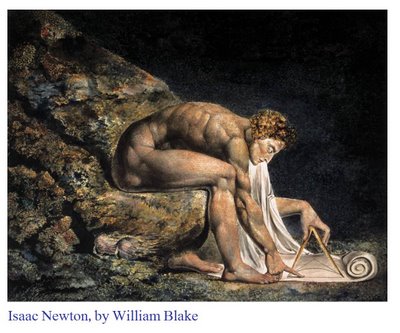
    Blake_Newton

    So
    this semi-ubiquitous scientific laudatory quote is perhaps not quite so.  Kinda like the very well known painting by
    William Blake featuring Newton
    as a naked geometer, figuring out the world, a color-tone praise of the great
    physicist.  Or perhaps not.  Blake I think simply didn’t like Newton, didn’t
    care for the scientist taking away the mystery of the world that Blake loved so
    much—especially in regards to color, which Blake needed to stay interpretative
    and mysterious.  Newton took part of that away, and I think
    Blake exercised a little payback in his artwork. 

    It
    seems to me that if one looked at the “shoulder” quote and the Blake artwork as
    works that were insults and not praises, they can be easily seen that way.  Its all a matter of perspective.

    Notes

    1.
    The 28-year old Hooke published the results in a gorgeous and revolutionary
    book, Micrographia (a lovely e-text edition appears at Gutenberg, here)
    in 1665, which became an instant best seller and highly praised and valued.
    (Samuel Pepys, perhaps among the shiniest stars whose imprimatur was like a
    royal blessing, said the book (was) “the most ingenious book that I ever
    read in my life.”) There is no telling what the people of the mid-17th
    century thought of seeing such incredible discoveries in the little
    semi-invisible stuff that made up their normal, daily lives.  The only
    thing that somewhat equates to this would be if the first images of the Hubble
    were those of Earth-bound objects whose detail had previously been
    unknown.  Hooke’s observations and drawings of things like the common flea
    were just an astonishment—that such a creature of “low order” could have such
    intricate detail and design was a complete revelation.  The drawings of
    the fly’s eye, too, was an inescapable wonder, an incredible object to consider
    as having any detail pre-microscope, and then revealed to have
    unimaginable design and elegance.