A Daily History of Holes, Dots, Lines, Science, History, Math, Physics, Art, the Unintentional Absurd, Architecture, Maps, Data Visualization, Blank and Missing Things, and so on. |1.6 million words, 7500 images, 4.9 million hits| Press & appearances in The Times, Le Figaro, Mensa, The Economist, The Guardian, Discovery News, Slate, Le Monde, Sci American Blogs, Le Pont, and many other places… 5000+ total posts since 2008.

Category: Perspective

  • A History of Blank, Empty and Missing Things: the Importance of Nothing

    JF Ptak  Science Books  Post 1145

    {This is one in a longish series on the the History of Blank, Empty and Missing Things]

    There is importance and elegance, grace, necessity in nothingness.  That nothing happens is exceptionally important in almost all areas:  the meaning of silences between notes and longer pauses in musical compositions, the essential aspect of timing in a comedic routine, the special place that one goes in meditation, the distinction of wide margins in a beautifully designed book (magic that hasn’t been remotely approached by Kindle & Co., though it said that they have their own hidden beauties), and sometimes just the place where ideas are born.  The places for the beauty of nothing are endless.

    The use of nothingness in art compositions an designs is of course essential–it is sometimes just a little odd to think of it as its own special, spatial element, as its own force of creation or design. 

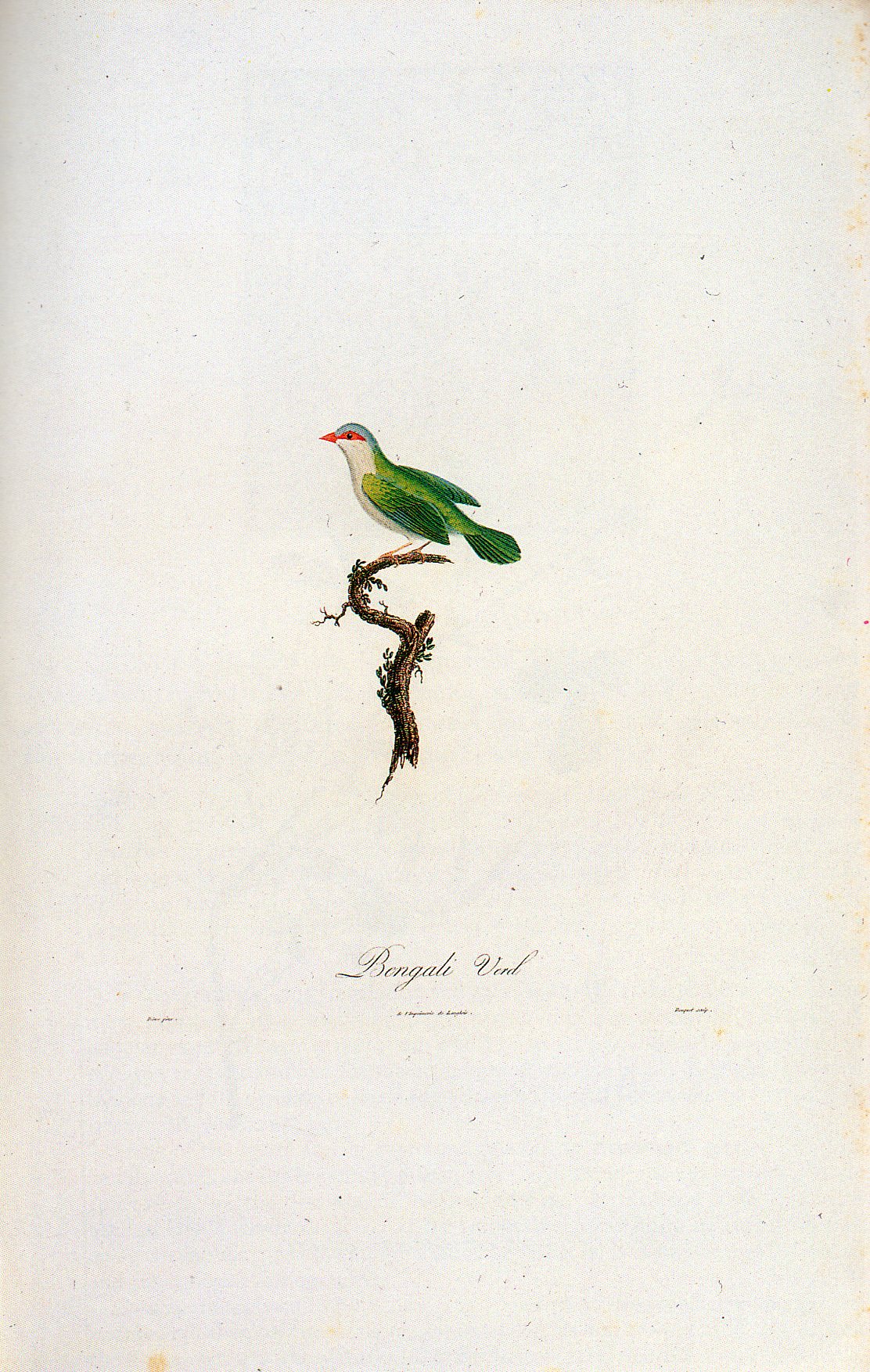
    Take for example this beautiful use of not filling up space by Louis Jean Pierre Vielliot in his 1805 work on natural history:

    Patti--WIWFY-Cover design Bird407

    It would be so easy to crop out these gorgeous margins, and so kill the power of this image–you’re left with the main ingredient of the effort, but without its necessity, or power.

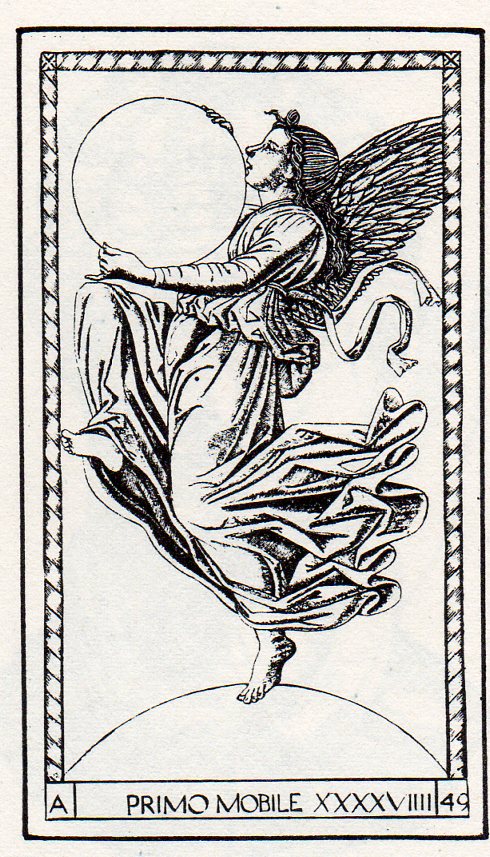
    Empty--tarocchi412 And of course there’s sometimes everything in nothing, seen here, with the universe in the hands of the Primum Mobile, (one image among 50 in a series known as the Mantegna Tarocchi,
    drawn and engraved by artists unknown ca. 1465, though it was once
    believed to be the  work of the great master Andrea Mantegna (and later
    the possible work of Bacci Baldini)). From my reading of this image, the universe is held  in the hands of the primum mobile,
    a spherical container of not-quite-nothing, waiting for the creator to
    breathe life into it.  The possibility of absolutely nothing was seen as
    an impossibility, a perfect vacuum, a space of certain nothingness, was
    a violation of theological belief.  That the sphere existed was a proof
    that–in the 15th century–you simply couldn’t have a container of
    nothingness. The very presence of the sphere confirming that there was
    something being contained by it.

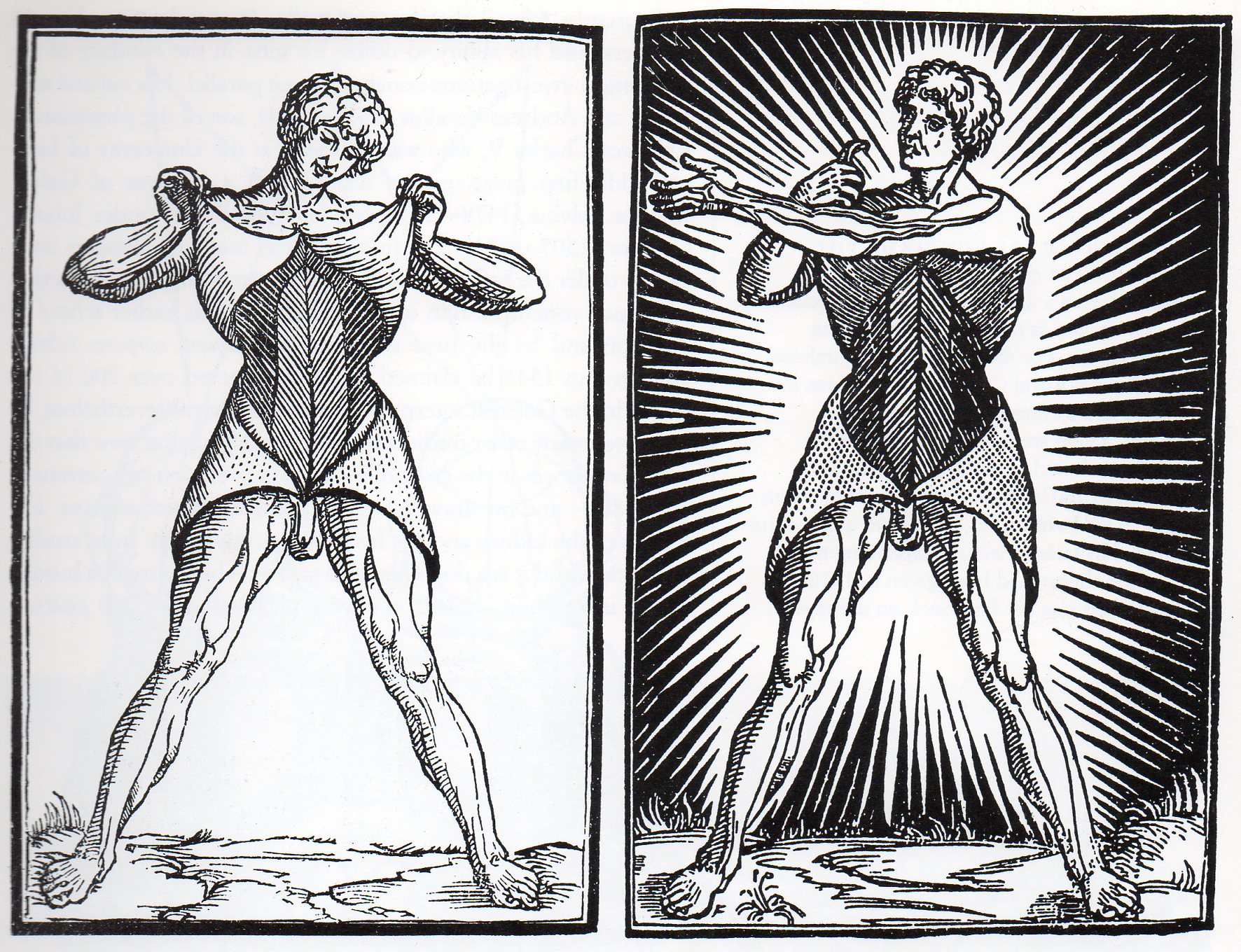
    Here’s an excellent example of the use of nothing as a design force (from Berengario da Carpi’s Commentaria siper Anatomia Mundini, published in Bologna in 1521), where we see what is basically the same exact dissection, except for changes in the internal shading and of course the lightning bolt background.  The simpler design is by far the superior.

    Empty--anatomy411

    It does take some confidence and courage sometimes to use big wide swaths of white, using complementary nothingness–and that’s a good thing.  Sometimes too much “something” isn’t nearly as useful or important as a little bit of “nothing”.


  • The Mess in the Message: Propaganda in Textbooks and the Control of Intelligence (with Examples from the Confederacy)

    JF Ptak Science Books   [A note on an idea for a future post.]

    Like my father before me, I grew up playing Cowboys and Indians.  In many respects, that game was probably not all that far removed from the history that we learned in our school textbooks.  Growing up in a myth and reading about other myths, its hard to disassociate yourself from the power of those words.

    I was thinking about this earlier, finishing a post on 19th century American occupational alphabets, and thinking of the ways in which certain classes and types of people are represented–stereotypes, radical misstatement of the truth, and outright lies were sometimes included, and as they were being used to help a young child learn the alpha-beta, they also formed the core, a foundation, of a belief system simply through association and repetition–a twisted mess that very well might have taken decades to unravel.

    In that light, I’d really like to see a history of propagandistic history as taught in American schools–that’s where early battles are fought, that’s where the power of words gain strength, and that’s where the basis of all future histories that threaten those introductory lessons come to a point of contention, if not conflict.  The power of language finds its way into the young vocabulary, and has a hard time being removed.           

    Someone wrote a book about everything that they ever needed to learn was learned by kindergarten.  That sort of education cuts both ways.

    Whether it is an assault on the integrity of the biological sciences and general logic for textbooks to include “alternative” in the teaching of the formation of species and the world, or representing geological time that began in impossibly late stages in the development of the Earth and the Solar System, or glorifying the presidency of Ronald Reagan, it is the control of language that leads to the control of thought, and it is on textbooks that many of these battles are currently being fought.  And have been fought. 

    If I had access, I would love to look at the following books, their titles suggesting a frontal assault on remedial and basic ideas of communication re-fitted to the place and time and people–language and definitions reconsidered to serve the purposes of  a new user group.  I’ve chosen these titles simply because of their titles, and also because I’m in the South. (And partially too because my wife’s great-great grandfather and three associated relatives fought in the Cause, against the Union, and that is part of their history.)

    And so the books that I’d like to see:

    Richard McAllister Smith unleashed quite a torrent over a few years:  The
    Confederate First Reader: Containing Selections in Prose and Poetry, as
    Reading Exercises for the Younger Children in the Schools and Families
    of the Confederate States
    (Richmond 1864) followed by The Confederate Primer (1863) and The Confederate Rhyming Primer [Or, First Lessons Made Easy. Designed as an Introduction to the Confederate Spelling Book] (Richmond:
    1863) and The Confederate Spelling Book, with Reading Lessons for the Young, Adapted to the Use of Schools or for Private Instruction. (Richmond 1863).

    Leverett, Charles Edward. The Southern Confederacy Arithmetic. By S. Lander, A. M.. Augusta: J. T. Paterson and Co., 1864.

    There was also the very concerted effort by Mrs. Marinda Branson Moore, including The Dixie Speller. To Follow the First Dixie Reader, ( Raleigh: Branson and Farrar, 1864), The First Dixie Reader; Designed to Follow the Dixie Prime (Raleigh: Branson, Farrar and Co., 1863), followed by her The Geographical Reader, for the Dixie Children.(Raleigh: Branson, Farrar and Co., 1863), and her  Primary Geography, Arranged as a Reading Book for Common Schools, with Questions and Answers Attached (Raleigh: Branson and Farrar, 1864). 
                                       
    Robert Fleming managed to really mix it up, and also to get all of it into the title of his book  The Elementary Spelling Book, Revised and Adapted to the Youth of the Southern Confederacy, Interspersed with Bible Readings on Domestic Slavery. (Atlanta: Franklin Steam Printing House, 1863.)

    Lemuel Johnson’s. An Elementary Arithmetic, Designed for Beginners: Embracing the First Principles of the Science. By L. Johnson. A. M., Professor of Mathematics at Trinity College (Raleigh: Branson and Farrar) published 1864

    ·Posted by :

    ·in:

    — — —

  • Bio-Mathematics in Busby Berkeley Musicals–Image Dump

    JF Ptak Science Books  Post  1133   

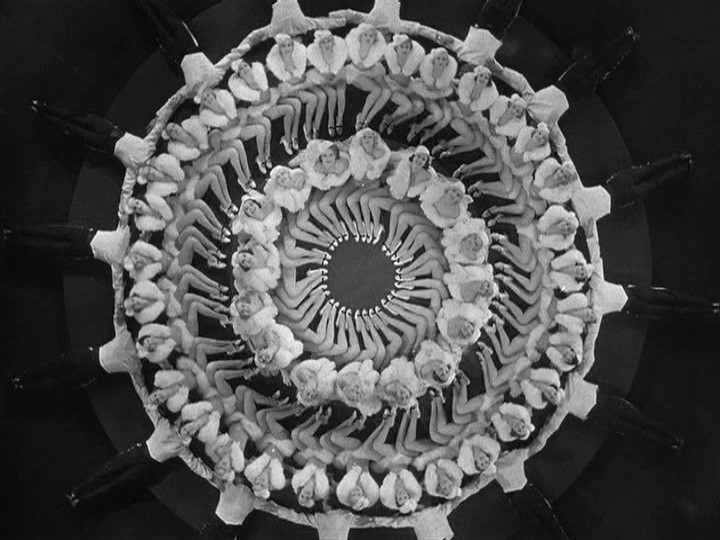
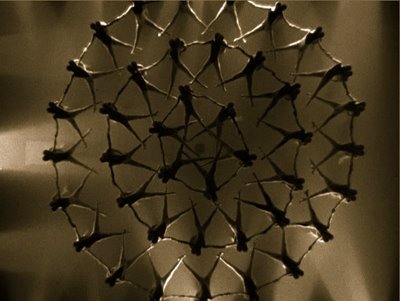
    There’s a certain amount of Leggy Geometry going on in the many films of the great and often-troubled Busby Berkeley.  Berkeley was about 38 when he came into great prominence as a choreographer for movies with music–they were grand and spectacular, intricate dances involving dozens, many times employing overhead shots looking straight down on a full-kaleidoscope productions.  (A kaleidoscope mirrors the great majority of its displayed image; Berkeley mirrored almost nothing, And he didn’t really produce movie musicals per se, I think; those would come later with Fred Astaire and the like, where there were story lines and plots and associated happenings along with the terrific dancing and music. “Plot” was a throw-in with Berkeley, but everything else was just so grand that storyline really didn’t get in the way of entertainment.)  The motion, the offset camera work, the constant motion, almost gives you the sensation of falling into a Phoenix Set.  Between 1931 and the end of WWII, Busby choreographed more than 30 films, many of which are now considered high classics, his very name now associated with fabulous stage productions.

    There’s a big dollop of natural history geometry in his work, as we can see by this selection of still images below. They’re tessellated (if you squint hard and make sure there are no margins) and fractal-like, very organic, very much looking like diagrams outlining the mathematical forms of nature.  And they’re pretty.

    Berkeley 42 nd st 

    Berkeley h

    ·Posted by :

    ·in:

    — —

  • The Movies and the Discovery of the Modern Smile

    JF Ptak Science Books  Post 1131

    [A continuation of sorts on an earlier post “Did Teeth Exist in the Renaissance?  Art and the Toothy Smile, 1300-1600”]

    Did more people in the U.S. laugh in 1924 than at any time in American history?

    The mass-consumed smile, the social laugh, the pantomime, the big grin, the sly eye, the devilish smirk, the latent laugh, the absorbed chuckle, the impish grin, were all elements of the human comedy that were difficult to see in the theatrical realm.  When performers were in front (or within, etc) a large audience, many subtleties of humor and comedy inherent in communal story telling that could be conveyed by facial expressions were simply lost.  
    Keaton
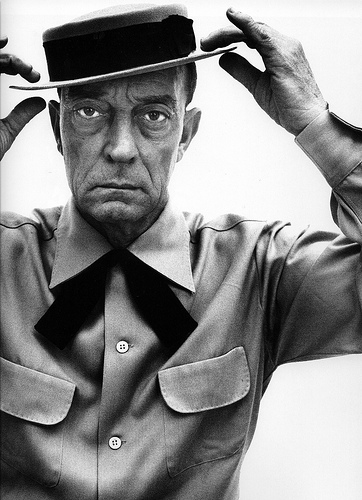
    The culture of the magnified  moment, especially in comedy, I think,  was not discovered until the motion picture was invented.  It was then, and then particularly with the invention of the closeup, that comedians were finally able to display the vast quiet parts of their craft, especially in fine pantomime.  This sort of thing was just not visible in the performers on a vaudeville or burlesque stage.  It was with the motion picture and the close-up that made the facial expressions as keen as and broadly appealing as slapstick, or the good-bad paradigm, or even The Chase.

    Fatty Arbuckle, Chester Conklin, Fred Sterling, Charlie Chaplain, Ben Turpin and especially Buster Keaton (whose facial expressions were exceptionally wide without really ever changing his expression) all came to greater prominence because of the close-up. There were more people from more different social and economic backgrounds  seeing more comedy by more comedians–and seeing more of the comedians–than at any time in human history.  And I guess we can infer that they were laughing more, because the output of comedies (Ben Turpin producing 150+ movies in one year alone, for example) continued to grow.  

    [I think that if you had to identify one single development that would allow the non-comedy to move to the top of the marquee was the invention of the serial–showing a series of episodes, which building one on the other, leading to a longer, intertwined story, developing characters and of course the audience, the returning audience.]

    In the chicken-and-egg scenario, perhaps what moved the laughter forward more so than the close-up was standardization of motion picture practices, especially in the display department.  That allowed movies to be more easily distributed, making for lower prices, more audience, more profit, more movies, more laughter (etc.).

    Standardization is an interesting story, and as much as it seems to take the creative edges off of some things, it adds to it in other ways.  “Standard Operating Procedure”, the codification of law/de jure, defining words in a consistent manner, having the same rails for all trains, establishing consistent screws threads, creating surgical procedures, developing prescription standards, having interchangeable parts for things like guns and cars and gin reapers, having standard weights and measures, and on and on, are all important things that allow us to not have to repeatedly recreate the daily bits and pieces of our lives.  (Even the “little” improvements in this area can have enormous consequences, like, for example, the British Navy standardizing sailing blocks, which went a long way in ensuring ship operation and safety.  Stuff like that seems like just a bit-and-piece, until you look at their long-term effects.

    Anyway, I could very easily be all wrong about this laughter thing, but from where I sit this morning, its an interesting thing to think about.

    ·Posted by :

    ·in:

    — — —

  • Extruding 3-D Shapes from 2-D Art to Create a Cubist vs. Art Deco Chess Set

    JF Ptak Science Books   Post 1129

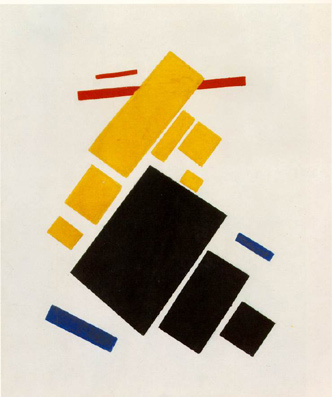
    Is there room in the history of invented art to reconstruct cubist and abstract paintings by imaging the objects that could’ve passed through the canvases to leaves their geometric footprint?  That is to say, if you took the Woolworth Building in NYC and passed it at an oblique angle through a large sheet of paper, and that paper was permeable enough and the building moving slowly enough to simply leave its “footprint” without tearing or deforming the surface of the paper, the resulting image may look a lot like figures in classic works in the history of art.

    Malevich.aeroplane-flying


    That is no revelation, really, as the Black Square or Airplanes Flying of Kasimir Malevich could’ve been made by every fourth item on your desk.  But what is interesting to me would be the reverse of this process, where you take that black square and reverse-engineer it, extruding whatever figure it was that could’ve made the black square into its three dimensional counterpart.
     
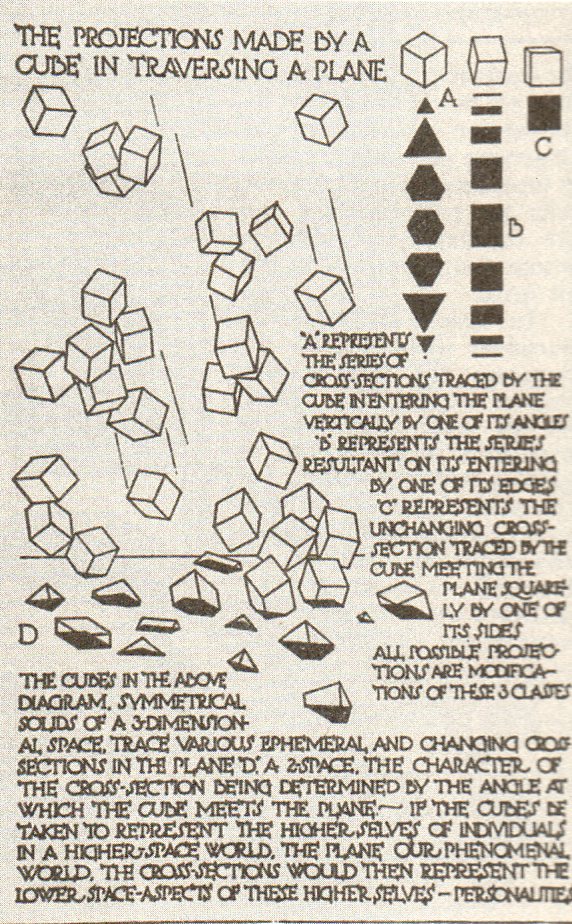
    What comes immediately to mind for me in this regard is Claude Bragdon (1866-1946),  (a New York-based architect with a long set of sleeves for writing in upper dimensional planes of Theosophy and reincarnation and other similarly squishy reaches) who wrote a few interesting books on the fourth dimension and objects and space, writing two of them at a very interesting period of t
    ime for the history of physics and art (1912 and 1913). The books are interesting enough, I guess, and seem to perhaps have had an influence on some influential artists of that time,  but what is of interest here are tow illustrations. 

    Blog--blagden 1348

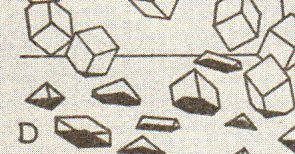
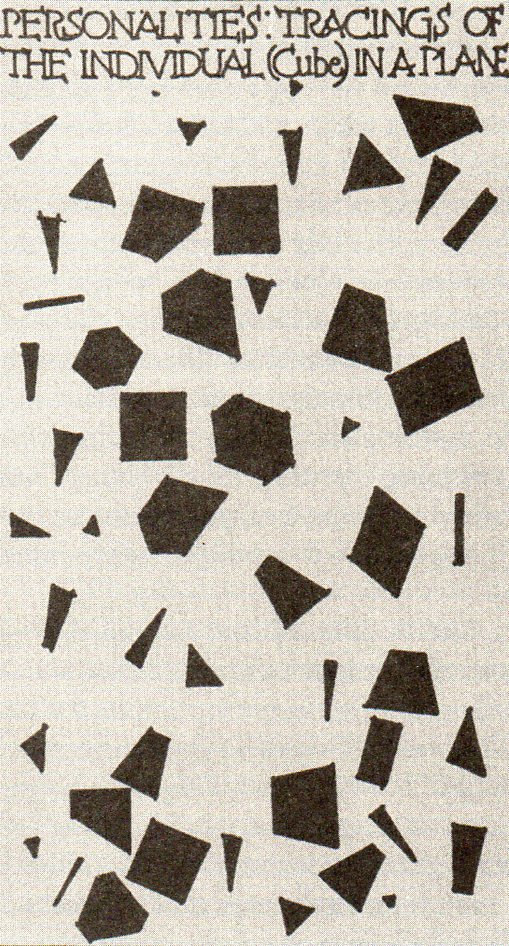
    First is “the Projections made by a Cube in traversing a Plane” from Primer1, showing the impact (at different levels) of a cube falling through a plane.  The second, “Personalities: Tracings of the Individual (Cube) in a Plane” from  Man2, shows the “shadows” of the three-dimensional figures as they lived in their two-dimensional world.  It comes close to the impact of the cubes above, but really only depicts what two-dimensional creatures would see of the three-dimensional beings inhabiting their Bragdonesque world. 

    Blog--blagden 1 det349

    I like  the tracings more as impact points than 2-D renderings of 3-D objects, and in some ways they are very similar. (I have to say that I am surprised that given Bragdon’s expanse of taste and artistic ability that he didn’t arrange these images in an artistic manner–in that sense he entirely missed the boat on adding his own bit to the newly-formed
    Cubist world. He also reminds me of Emily Vanderpoel, who in her own way completely missed the new artform that she was serendipitously creating.)    

    So when I look at something like a Malevich or Mondrian or even (but less so) at a Duchamp (Bride), I find it interesting to manufacture the base of the something that plunged itself cleanly through their canvas, pulling it out again, giving it three dimensions, and incorporating the thing as a piece in a chessboard–the chessboard being the pieces that made the shapes in the canvases resulting in the Art Deco vs. Cubist/Suprematist   Chess Set.   It would be interesting to choose two representative canvases for either style and  see if one (or a couple of ) object(s) could make all of the shapes in the two representative paintings,  populating a chessboard with sameness.

    Blog--blagden 2350

    The bottom line, then, is how different or similar would the extruded three-dimensional figures be that were responsible for this impact in a two-dimensional surface be? 

    (I am reminded too of Duchamp and John Cage sitting down to a game of chess and producing a musical composition via their moves, at  Sightssoundsystems, a festival of art and technology in Toronto, 1968. In this way too an artwork could be made with each move in a game of pieces used to make iconic shapes in the history of art.  “They did not speak. They did not sing, they remained, all of them, silent, almost determinedly silent; but from the empty air they conjured music. Everything was music…” Franz Kafka, Investigations of a Dog.)

    Notes:
       
    1..(Bragdon) A PRIMER OF HIGHER SPACE. (The Fourth Dimension). Rochester: Manas Press, 1913. 8vo, (12), 79pp, including 30 plates.Notes:

    2.. (Bragdon) MAN THE SQUARE. A Higher Space Parable. Rochester: Manas Press, 1912. 12mo, 34pp, 9 illustrations.  


  • Chess in the History of Comfort–the Dreams that Things are Made On/Of

    JF  Ptak Science Books   Post 1128

    “The stuff that dreams are made of….”  Sam Spade, The Maltese Falcon (1941).
    “We are such stuff, As dreams are made on, and our little life
          Is rounded with a sleep.”  Propsero. The Tempest Act 4, scene 1, 148–158
    Chess set
    [This is a chess set that I made of junk and fluff pitting great physicists vs. great mathematicians.]
    I’m wondering when it was that chess became more a part of what dreams were made on rather than of, when it became an attainable comfort for mostly everyone rather than a dreampt of thing, unattainable, the stuff courted by only the wealthy and the ruling class. 

    The game makes its first recorded, written appearance in the West sometime in the 10th century, and had developed as a sort of amanuensis for the upper crust, a theatre of sorts not only for itself but for some of life’s major relations, a platform for the display of relationships, and debates, and all manner of social and personal interactions. 

    Chess certainly remained out of reach for the vast majority of humans for many centuries, it seems, removed from the hands of common folks, long down the list of things that were once considered luxuries which developed into comforts and then into necessities.  I’m not sure when this happens, really, but it seems to come after the introduction of window glazing, fireplace chimneys, stoves, lamps, turned wood furniture, and so on, so on down the list.

    Judging from antiquarian engravings and images of interiors of the houses of working folks, looking around the inside of their houses to see what was becoming relatively common comforts and when, I’m guessing that chess begins to make an appearance as a suitable, affordable comfort for the mass of folks by the early 19th century.   It may well be among the first appearance of an intellectual game for the masses in the history of comfort. 

    ·Posted by :

    ·in:

    —

  • Children’s Questions, Bernard Berenson and Paulo Uccello

    JF Ptak Science Books  Post 1093

    I love the idea of being able to look at things like a child.  To come towards things with such an authentic and unpolluted curiosity would be an enormous gift for anyone past this age of discovery and exploration–its where some of the great questions are asked.  I have learned so much from my daughters and their friends over the years that it makes me want to be around kids all of the time.  (Well, maybe not “all”…)

    In the history of benchmarks of creativity I’d have to say that the one for the Child’s Question stands among the greatest–at the very least it can show a careful listener how look at things differently–and sometimes savagely so. 

    For me these attempts come in strange ways–sometimes it comes in the form of just imagining that I knew nothing whatsoever about the topic.  (I remember a story about told by the mother of the American dustbowl-era artist Thomas Hart Benton.  Benton was a late speaker–nothing came out of him until he was one and a half years old.  But when it came, it came with a bang: standing on his porch in the early evening and looking at the Moon, he turned to his mother and said “What is that?”.  Magnificent.)

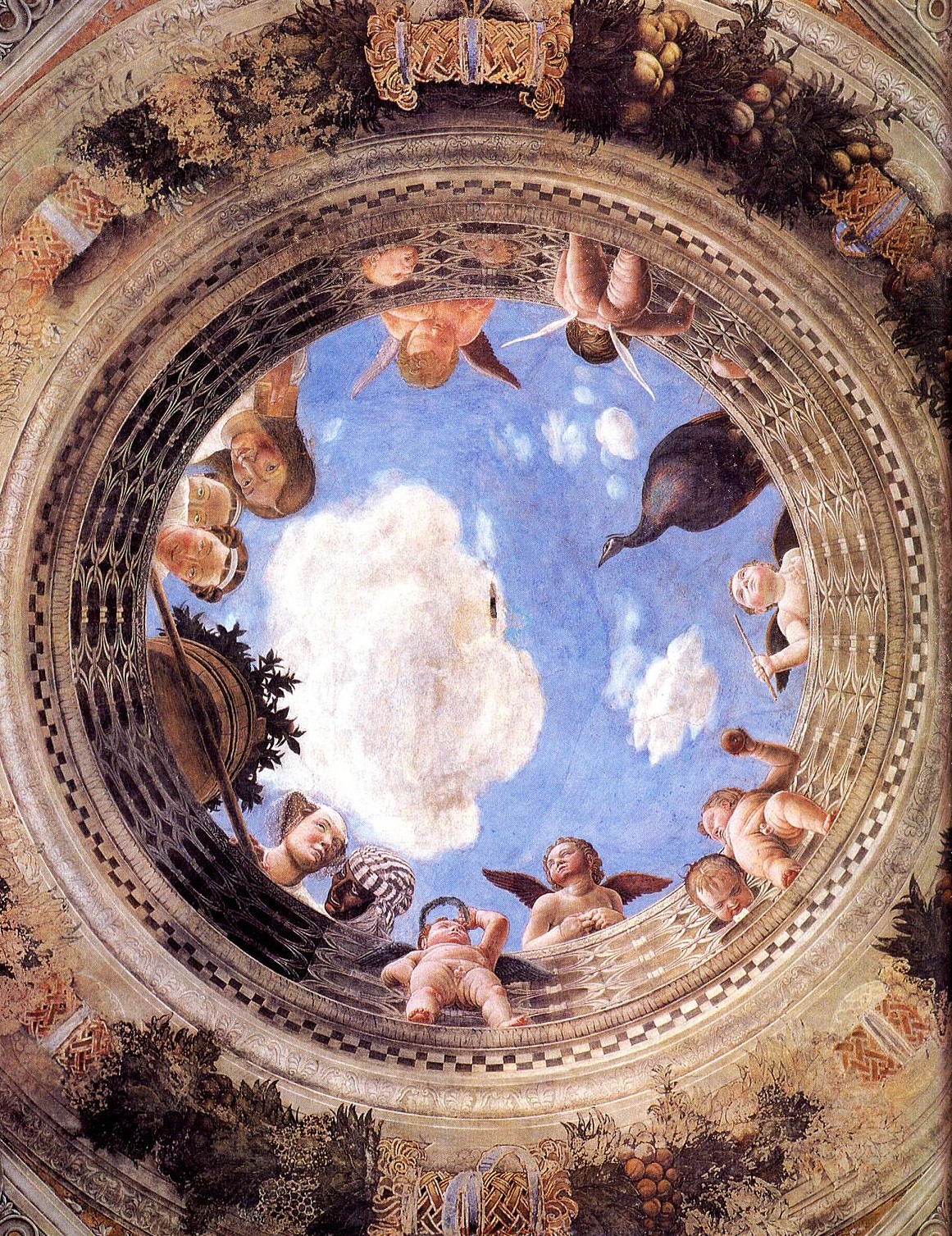
    For example there’s the glorious work by by Andrea Mantegna (1431-1506) in the Castello di San Girogio in Mantua (mainly La Camera degli Sposi).  The oculus is the focal point of a ceiling that stands over what some people consider to be the most beautiful room in the world, painted in almost every aspect and surface by the great Mantegna.

    Mantegna-large It is a magnificent thing created by a great Renaissance master.  But what in the world is going on up there above everyone’s heads?  I guess that you could infer all sorts of mythological and symbolic bric-a-brac to explain the scene, but, if you forgot about all of that, what it looks like is that everyone up there is waiting for a bucket of water (or something) to be poured down on the folks below.  Simple explanations are sometimes the best–and so are the obvious ones. 

    And so I turned to a book that I’ve breezed through but never read, a staple I guess for anyone interested in the  history of art, Bernard Berenson’s The Italian Painters of the Renaissance (1952) to see what he had to say about this work.  But before I got there I stumbled my way through Berenson’s long and thick paragraphs, filled with commas and very long sentences, tumbled my way across the name of Paulo Uccello.  And it wasn’t a pretty fall.

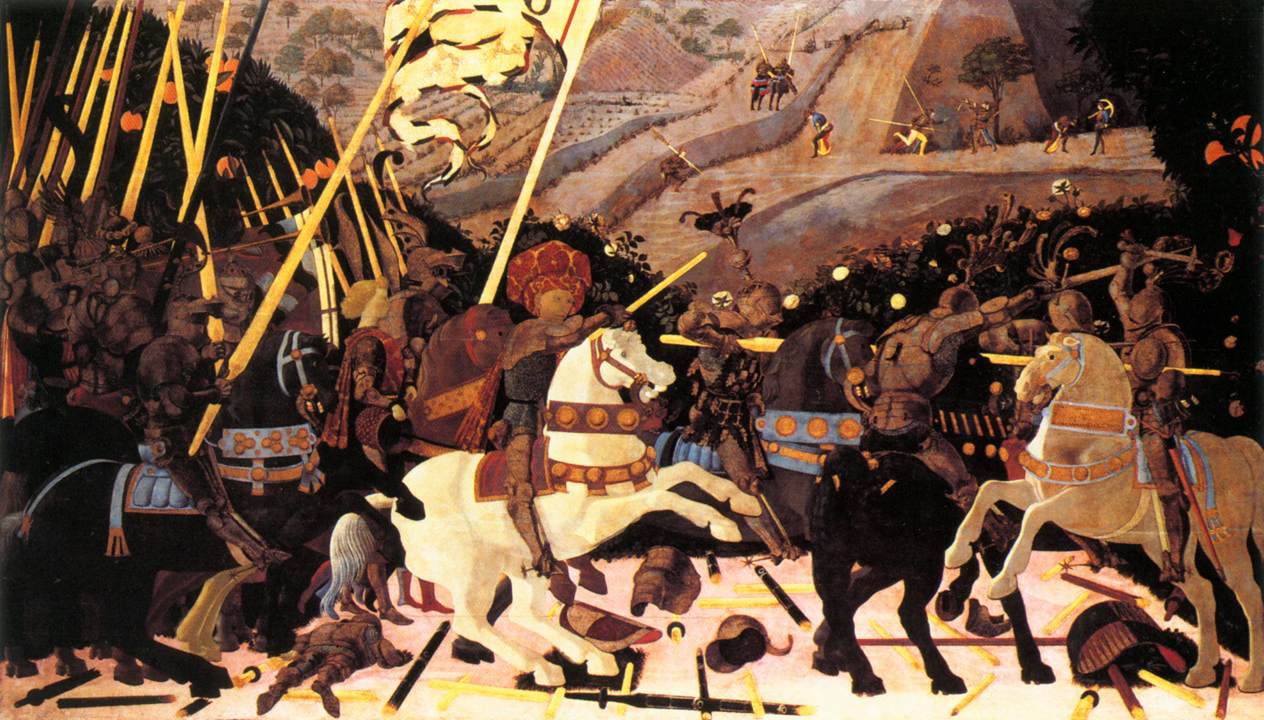
    I was introduced to real appreciation of the great Uccello (1397-1475) by my wife Patti Digh, who had thought long and hard about him through the Great American Novel The Recognitions, by William Gaddis. (Credit where credit is due: I never read the book before meeting Patti, and it is she who first supported the GAN claim for the problematic Gaddis.)  It’s a long and complex book, The Recognitions, and we won’t get into it here–just the part about Uccello.  And it is here that Gaddis makes a wonderful operation about the solids in Uccello. 
    Uccello

    Uccello was coming out of the Gothic era (sort of) and into the Renaissance (sort of) with a remarkable and just-about revolutionary control of the idea of perspective.  Maybe it was gotten through the polishing of the early doors of Lorenzo Ghiberti, or something else, I don’t know–he was a very private, deeply secretive man whose life (and philosophy) is mostly mystery.  Anyway, he was among the first scientifically-based artists to work in perspective, and he was just simply an important guy in the history of art.  But what Gaddis recognized that in all of this fabulous detail and naturalism, that there are great expanses of pure, unmodified, non-detailed colors.  Horse rumps can be simply white; parts of armor, just big flat blacks.  Beautiful.  The question was: what was he thinking?  In this great porridge of color and scientific delight, where was the detail?  Why did he leave out muscles and shadow and sinew and sweat and whatever, content for some reason to just dress that particular part of the painting in pure color?  It seems very 20th century to me.

    And so now that I had moved away from Mantegna, I wanted to see what Bereneson had to say about Uccello. And with an open mind I was completely invaded: Berenson didn’t really see Uccello as a artist, at all.

    As a matter of fact, Berenson wrote that there wasn’t much of a difference between Uccello’s paining and a map, and didn’t think of Uccello’s efforts “as a work of art”.  He felt that Uccello was more of a scientist whose interest and ability didn’t necessarily relate its subject in an artistic way.

    “Uccello had a  sense of tactile values and a feeling  for colour, but in so far as he used these gifts at all, it was to illustrate scientific problems” Berenson wrote. Ouch. He continues, “In Uccello’s “Sacrifice of Noah’…there is mathematical certainty but certainly…no psychological significance”, which is where he sees no difference between Uccello’s painting and a map.  He claims that Uccello and his successors “accomplished nothing artistically” but did provide the tools for more gifted artists who would come later. 

    Strong stuff from someone who knew his stuff–I only knew the book by looking at the pictures. Berenson isn’t out there alone in his feelings for the beautiful Uccello * and I tried to open my head up to seeing what these guys saw.  But, as Patti said, “they’re just wrong”. 

    I’ll take that over trying to figure out a new way of looking at the fabulous Uccello.   
                                               
    * For example, Donatello found his friend to be lacking in a certain creativity, lacking a depth of uncertainty; also Alberti does not include him in hist famous list of artists in De Pictura.

    ·Posted by :

    ·in:

    — — —

  • Beautiful Title Pages: the Flight of the House of the Virgin Mary, 1524

    JF Ptak Science Books   Post 1086

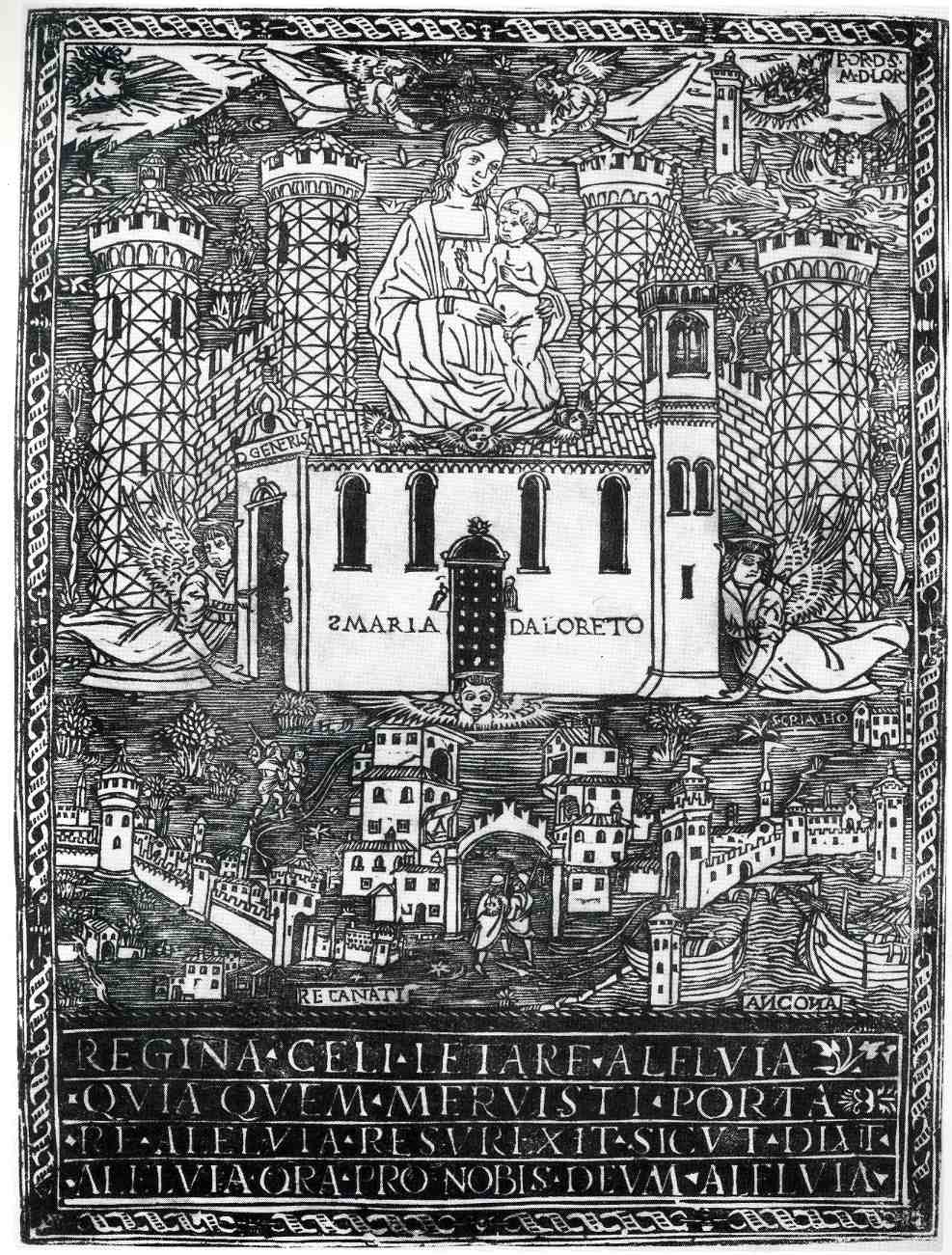
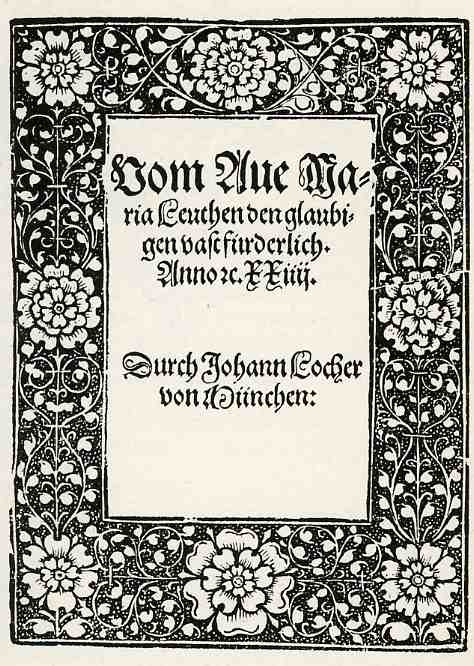
    00-blog-Oct 25 mary flying919


    This is an interesting,
    almost (?)-revolutionary and curious woodcut depicting the flight of
    Santa Maria
    di Loreto, and was printed in 1524.  At the bass of it all the
    print depicts the first of a series of moves of the house of the Virgin
    Mary (mother
    of Jesus) to safe harbors, away from the Moslem/Turkish army that
    invaded
    Nazareth in 1291.  The myth states that
    the structure was picked
    up and moved by angels from
    Nazareth to the Dalmatian town of Tersatto (near Fiume, which is today’s Rijeka, Croatia).  It then made its way to its
    final resting
    place at Loretto, Italy via the two other Italian towns (identified at the bottom corners of the print) of Recanati and Ancona.

    One of the most interesting aspects of
    the print to my eye though is its attempt to display an oblique perspective of the
    town of Loretto, the house being lowered by angels on the other side of the town’s fortifications.

     (In 1854 Pius
    IX consecrated the house as a miracle in his Bull “Inter Omnia” of 26 August 1852, declaring

    “Of all the shrines consecrated to the Mother of God, Immaculate Virgin,
    one is in first place and Shines incomparable radiance: the venerable and most
    August House of Loreto … (…)
    In Loreto, in fact, it venerates the House of Nazareth, so dear to the Heart of God, and
    that manufactured in the Galilee, was
    later (moved) from foundations, and for the divine power, was
    transported
    far beyond the seas, first
    in Dalmatia
    and then to Italy. “
    And it was for this enormous feat of air travel that Pope
    Benedict XV declared St. Mary the patron saint of aviators, on
    24 March 1920.)


    ·Posted by :

    ·in:

    — — —

  • Raising Greatness: James Hutton’s Deep View of Time, 1795

    JF Ptak Science Books   Post 1032

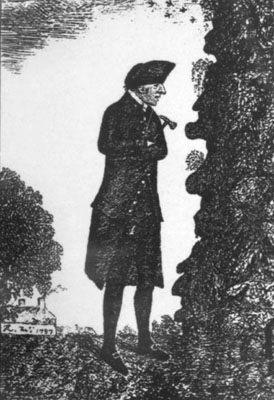
    I think that I’d like to start a series here on significant works in the history of ideas that were originally highly problematic or not accessible due to writing style or place of publication or misplaced appearance or, well, simply bad timing.   The storyline would be one of these great works whose significance suffered as a result of one or more of these issues, and then which was raised above its suffered complications to a place of higher (or more popular) esteem, allowing it to get to a place where the work could generate the new set of ideas that it was intended to help create in the first place. The first of these stories belongs to James Hutton and his revolutionary idea of deep time.  James_hutton
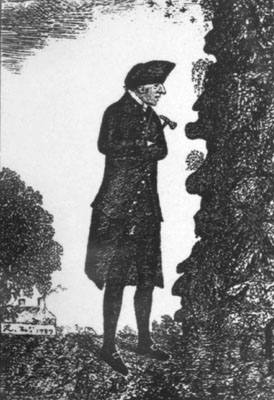
    Seeing more deeply into scientific time than anyone else in history, seeing the entirety of Earth’s history explained  in the sloping  red sandstone at Siccar Point (above the vertical greywacke), James Hutton worked through his theory of the earth in two stout volumes (The Theory of the Earth, with Proofs and Illustrations... in 1795), wrapping up geological evidence with a dogged, comma-ridden and usually-unwieldy prose. He had in fact written a much more elegant paper presenting the main thrust of his theory in outline in 17851, though this paper received a much more limited distribution.  In the long term it really didn’t matter, though, how pretty his writing was–but in the short term, it did.  He made the case for the vastness of time in an elegant way, even without the prospect of being able to know the age of the rocks he was looking at.  The processes of sedimentation, transportation and weathering of solids,  vertical elevation of the Earth’s surface in response to natural causes, and so on, were just not known to him; no matter, as Hutton trusted his theoretical inspiration to tell him that the 6,000-year old earth history clock on the wall was telling a tenth of a tenth of a tenth of a tenth (and on) of the larger, truer story of the age of the earth.  He knew that there were many orders of magnitude of age involved in the telling of the story–he just didn’t know how many. 

    He ended his great work bowing to the enormity of the sight of time:

    “Here are three distinct successive periods of existence, and each of these is, in our measurement of time, a thing of infinite duration. …
    The result, therefore, of this physical inquiry is, that we find no vestige of a beginning, no prospect of an end.”
                   
    Hutton’s work is inestimably important, Archibald Geike (the great 19th century geologist) commenting that it is impossible to praise the work too highly.  But then there was the problem of the density and just flat-out difficulty in reading Hutton’s writing, which restricted the book’s message to a dedicated academic class. Hutton did find his champion in James Playfair, who would strengthen Hutton’s work with new data and who would also help along the troubled Huttonian prose.  Playfair’s work is in of itself2 an important contribution to the history of geology and also of course evolution. His Illustrations of the Huttonian Theory of the Earth (1802), popularized and made the Huttonian work far more acceptable to a larger audience, and as the DNB says “presenting Hutton’s momentous theory in a clear and palatable form (which Hutton himself had failed to do), and in adding materially to the geological knowledge of the time”.

    It was Playfair’s treatment of Hutton that found its way into the mix of genius of Charles Lyell, whose own Principles of Geology3 found its way onto the Beagle and which were voraciously studied by Charles Darwin4 and then put to further use.
               
    Notes

    1. “Theory of the Earth; or an investigation of the laws observable in the composition, dissolution, and restoration of land upon the Globe”, presented in two parts, in Transactions of the Royal Society of Edinburgh, vol. 1, Part 2, pp. 209-304.  An earlier, related pamphlet was written and privately published for a very restricted and private distribution in 1785:   Abstract of a dissertation read in the Royal Society of Edinburgh, upon the seventh of March, and fourth of April, MDCCLXXXV, Concerning the System of the Earth, Its Duration, and Stability. Edinburgh. 30pp.   

    Eventually the book would wind up in a final form as An Investigation of the Principles of Knowledge and of the Progress of Reason, from Sense to Science and Philosophy in 2,138 pages, causing Playfair to remark that “The great size of the book, and the obscurity which may justly be objected to many parts of it, have probably prevented it from being received as it deserves”.
       
    This paper privately printed 1785 paper stated:
    “The solid parts of the present land appear in general, to have been composed of the productions of the sea, and of other materials similar to those now found upon the shores. Hence we find reason to conclude:
    1st, That the land on which we rest is not simple and original, but that it is a composition, and had been formed by the operation of second causes.
    2nd, That before the present land was made, there had subsisted a world composed of sea and land, in which were tides and currents, with such operations at the bottom of the sea as now take place. And,
    Lastly, That while the present land was forming at the bottom of the ocean, the former land maintained plants and animals; at least the sea was than inhabited by animals, in a similar manner as it is at present.
    Hence we are led to conclude, that the greater part of our land, if not the whole had been produced by operations natural to this globe; but that in order to make this land a permanent body, resisting the operations of the waters, two things had been required;
    1st, The consolidation of masses formed by collections of loose or incoherent materials;
    2ndly, The elevation of those consolidated masses from the bottom of the sea, the place where they were collected, to the stations in which they now remain above the level of the ocean.”

    2. Returning again to Geike, who  remarked (1905): “How different would geological literature be to-day if men had tried to think and write like Playfair!”

    3.  The Principles was an enormously influential book, and went through six editions in the first 11 years of its printing (1830-1840), seeing 12 editions during the author’s lifetime (the last edition corrected and added to by Lyell appearing just after the author’s death in 1875). 

    4.  Darwin had volume 1 when he shipped off, receiving volume 2 en route.  A quick look online reveals that there is no mention of Playfair or Hutton in either the Voyages or Origin.; Lyell is noted 14 times in the Voyages and 30 times in the 6th edition of the Origin.
  • Uncommon Heroes–a Bus and a Pigeon

    JF Ptak Science Books LLC  Post 1020

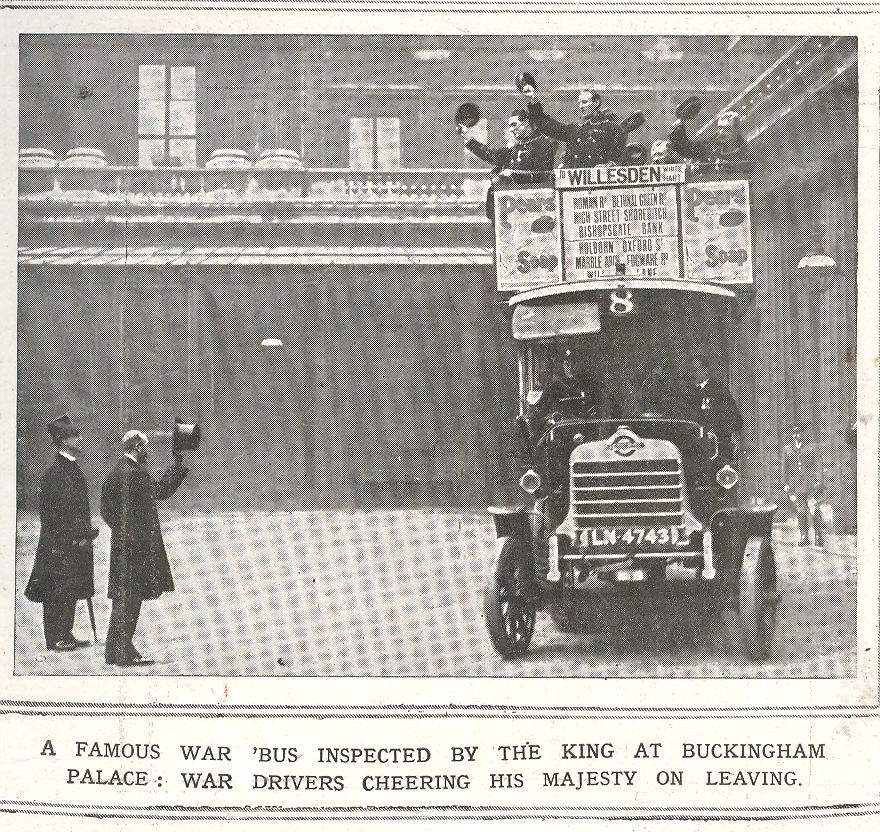
    As if to underscore what must have been brilliant and courageous actions everywhere, the “motor-omnibus” B-43 was brought to the quadrangle of Buckingham Palace to be received and cheered by the King (in 1920). In fact, the King was saluting the drivers of the bus (even though the caption understates the moment so: “a famous war bus inspected by the King at Buckingham Palace, war drivers cheering His Magesty on leaving”). B-43 saw motor transport service with the British Army from 1914 to 1919, and was at Antwerp, Ypres, Ancre, the Somme and Amiens. It was returned home, upgraded, and pressed back into street service (operating from Willesden and Old Ford). 

    1--may 5 heros bus

    That’s a lot of service.

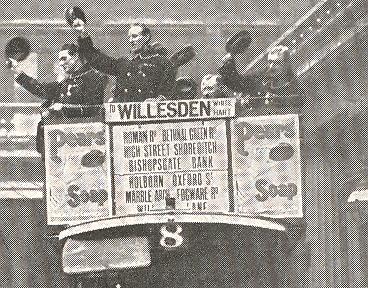
    If you look closely at the detail, you’ll see that each one of the men on the bus has got a chest-full of medals.  

    1--may 5 heros bus det 

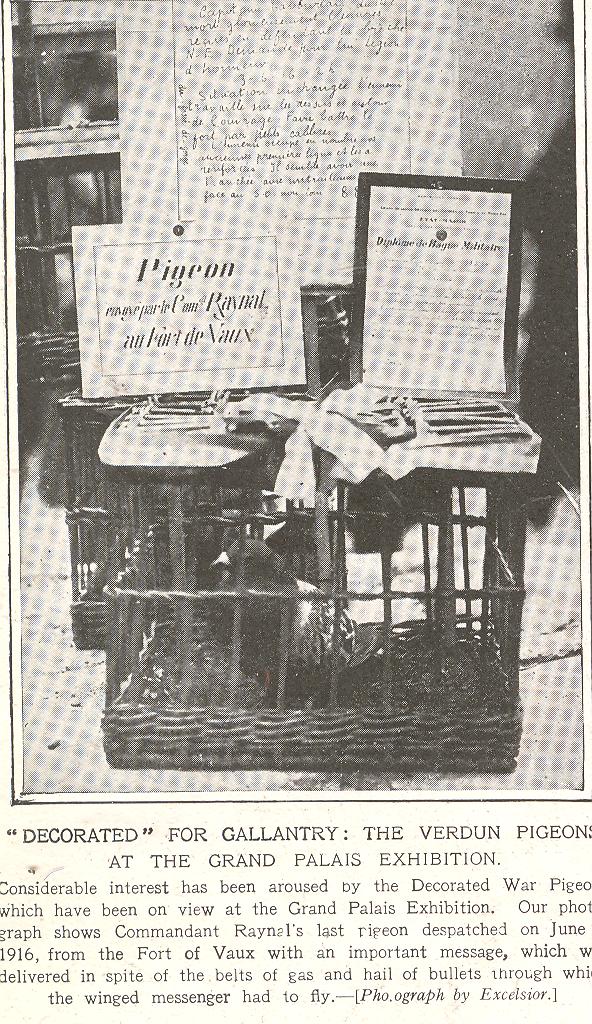
    The second hero is a pigeon whose name is not given, being ingloriously exhibited in a small cage at the Grand Palais Exhibition in 1920.  This pigeon was evidently the last of the famous “Verdun Pigeons” who delivered important messages between commands, flying back and forth with important data, dodging bullets and bombs and gas. 

    1--may 5 heros pigeon

    ·Posted by :

    ·in:

    —