A Daily History of Holes, Dots, Lines, Science, History, Math, Physics, Art, the Unintentional Absurd, Architecture, Maps, Data Visualization, Blank and Missing Things, and so on. |1.6 million words, 7500 images, 4.9 million hits| Press & appearances in The Times, Le Figaro, Mensa, The Economist, The Guardian, Discovery News, Slate, Le Monde, Sci American Blogs, Le Pont, and many other places… 5000+ total posts since 2008.

Category: Perspective

  • Ghost March–Doughboys in London and Four Years of Mist, 1918

    JF Ptak Science Books   Post 1328

    .003%  That’s what I reckon this column of soldiers would represent of the total casualties of WWI.

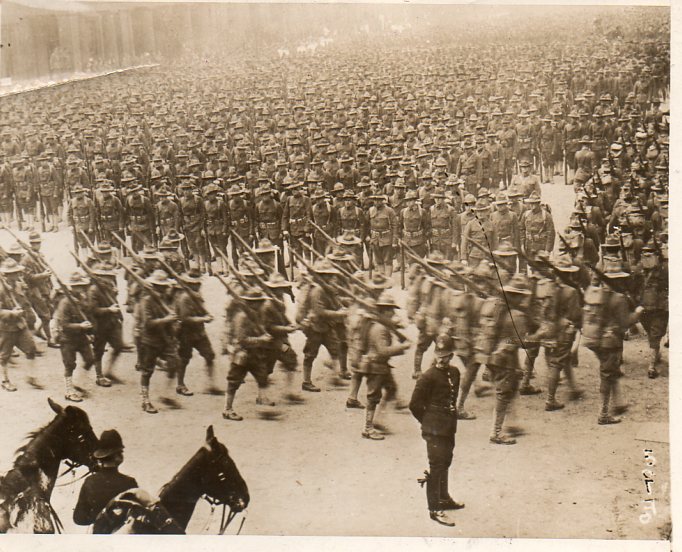
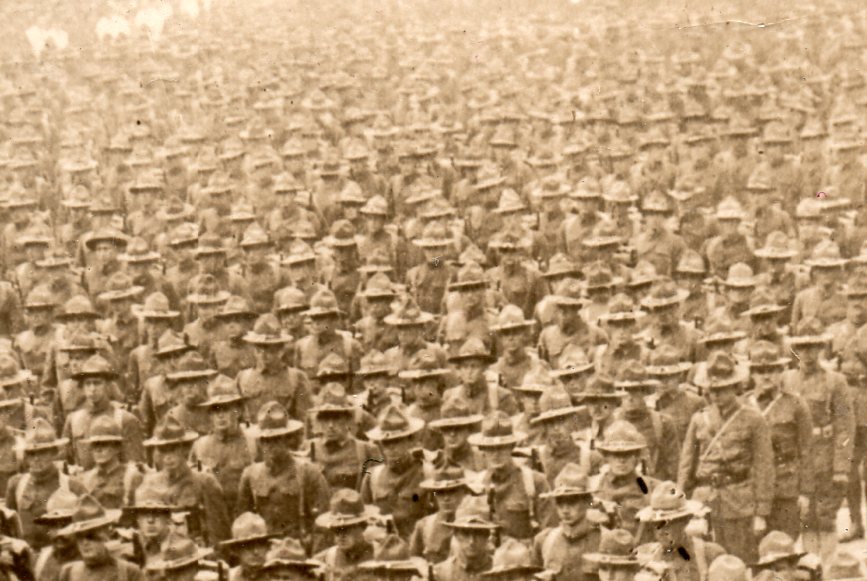
    Generally images like this are a virtual image-host for me, a bucket of ice cold water thrown onto a sizzling summer sidewalk, all sorts of ideas steaming from it.  But for photographs of Doughboys1 marching, especially assembling for parade, this one struck me a little more oddly than most, giving instant pause, making me concentrate on the haze, or dust, that allowed the columns of soldiers to blend into one another and fade, losing their boundaries with their mass receding into a dull blur. 
    Marching london 350

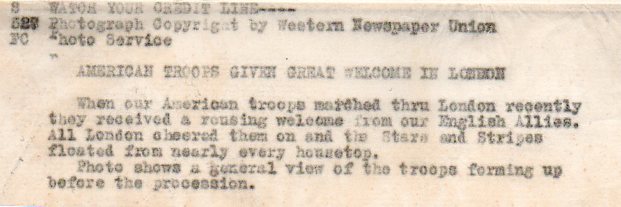
    The Western Newspaper Union was selling this image for insertion in newspaper or journal stories about the war, for a small use fee.  There were a few American organizations like Western Newspaper that were created to photographically cover the war, using pools of photographers who would distribute their work anonymously and which was available for common, general use for a small charge.  The photographs allowed out were certainly restricted and censored, though in my stash of these of objects (numbering about a thousand) I’d say that 10% of them look pretty edgy to my eyes.  Most of the action of war was not covered, but then again this aspect was still fairly technically difficult in 1918.  Images of pain were almost never allowed, and certainly not pain of Allied troops.  Aid stations were almost never covered as well, as were dead bodies, or at least those again of Americans or Brits or French or Canadian.  The imaging of the war was certainly under a fair amount of supervision and control. (The original is available for purchase through our blog bookstore. here.)
    Marching london det352

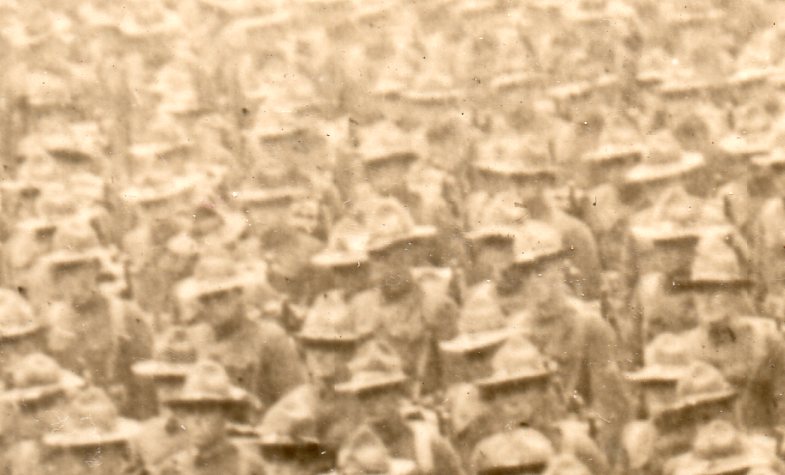
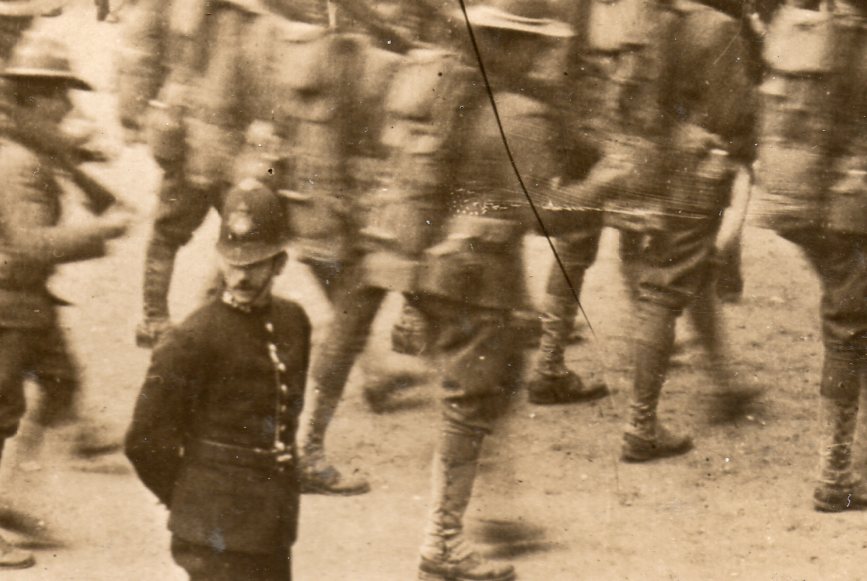
    The image shows American troops assembling for a parade through the streets of London before being deployed.  The mistiness of the composition looks like a statistic to me, these men standing for those who had come before and fallen.
    Marching london det353

     The U.S. lost .13%  of its population to casualties (125,000 killed and 205,000 wounded) during the war–a war which by the time America got here had already been visciously fought for three years, costing dozens of millions of lives.  The figures for everyone else weren’t nearly so “fortunate” as the U.S.:  New Zealand’s 18,000/41,312 killed/wounded amounted to 1.6% of its population.  The U.K. lost 2.19% (964,000/1,663,000), Italy was 3.48% (650,000/953,000 plus 650,000 civilian casualties), while France suffered a 4.29% (1.4 million/4.27 mil) blow of its total population to war.  Things were worse on the other side:  Germany 3.82% (2 mil/2.4 mil plus 426,000 civilian deaths, and the Ottoman Empire 12% (400,000/771,000 plus 2.1 million civilian deaths.   Worst of all was the Ally  Serbia, suffering a catastrophic 16% loss of its population to war, including 275,000/725,000 plus 426,000 civilian casualties.  As gruesome as the numbers were, the Americans felt only a small percentage of the total sting of war–by 11 November, more than 21 million soldiers would have been wounded, with 9.7 million soldiers and 6.8 million civilians killed.  It was an enormous price.

    And that’s what I see in the mist of what may be something like 10,000 soldiers on display n this photograph.  .003%  That’s two of these columns every day, twice a day, for the entire 1550 or so days of the war.   
    Marching london cop351

    Marching london txt354

    Notes

    1.  The origin of the term “Doughboy” is unclear, or varied, or rich, but it is at least pretty oldm beginning around the time of the Mexican American War in 1846-1848–evidently when the soldiers marched through dry, tough terrain they wound up being covered by earth with the color of dough.  Doughboy.

  • The Importance of Mistakes: Kircher’s Table of Transformations, 1664

    JF Ptak Science Books   Post 1325

    The great semi-mystifying polymath Athanaseus Kircher (1602-1680) lived for a long time and filled his life with ideas and words,  producing dozens of books during his time on Earth, some of which were never published even though written, some manuscripts lost forever. His was a massive output of extraordinary breadth.  He wasted little time what I can see, writing on a spectacular range of subjects, enlightening people, confusing people, generating great theories and some bad ideas. 

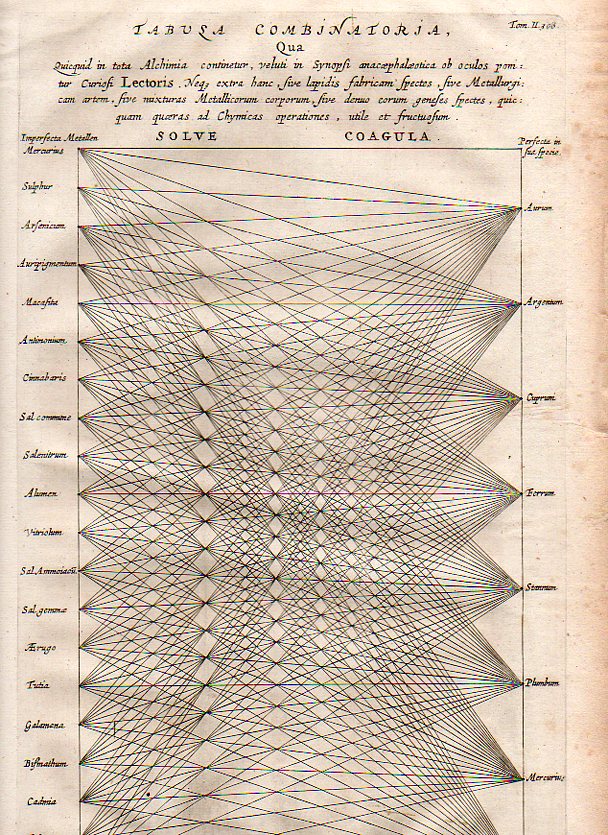
    The image below comes from his Mundus Subterraenus, published in 1664, and which was concerned mainly with geology and the theory of the Earth.  He postulated the structure of the interior of the Earth, the origin of heat, the source of the tides, the composition of light, and of course the existence of the Virgin Mary in amber.  There was also a fair amount of work on one of his side interests that populated a number of hs works, alchemy and the search for the organization of materials. 

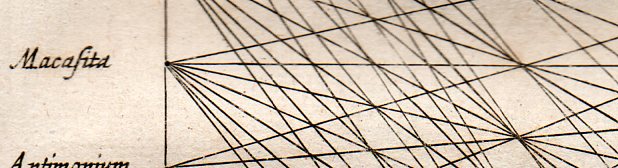
    This image, “Tabula Combinatoria” (combinatory table or table of combinations) was an attempt to classify the alchemical transformation of metals and nonmetals via solve and coagula (mediante igne solvuntur et coagulatur),  of solution and coagulation, a Curiosi Lectoris of  Chymicas operationes, in a search for the key to all transformations, the prima materia. [The original erngraving is available from our blog bookstore, here.]

    Kircher as I said exceeded his learning and logic all throughout his life, usually with positive results to us here in his future; but in this case, his alchemical quest–like the million words and countless hours and lead-based brain damage undertaken by Sir Isaac–proved to be a dry hole.  But dry holes like mistakes in general are not necessarily without importance–they are valueless if and only if nothing comes of them, or nothing is recognized in i n the method of leading to the mistake, or if by our using the mistake it didn’t allow you to pursue something else.  Science life is filled with almost nothing but error to the observer–it is our job to do something with the stuff that doesn’t work. 

    Kircher tabula345
     [the image is continued but trailed off of my scanner.]

    Kircher tabula b346

    Kircher tabula c347


  • The Big Lie–Poland as an Aggressor Against the Reich, 1939

    JF Ptak Science Books  Post  1298      (This is the second post written on this pamphlet–it is a stunner to me every time I see it. The earlier post was written in September 2008 and can be found here.)

    Here’s an interesting entry from the instrumental librarians’ tool WorldCat, a massive 75 million item book database that I use with some frequency, trying to determine whether some obscure-sounding/looking pamphlet or book is actually Not Around, like not in library collections.  (When something just isn’t there, not located, it makes the work even more interesting to me.)

    Poland’s Designs on Germany has the sound and feel of a piece of propaganda, right from the start, just from the supra-obvious title page and the very feel of the production.  Looking for my proof-in-the-pudding–the printing information and source for the information–I found none.  Another strike for the propagandist.  (And another interesting point: the phrase “Poland’s designs on Germany” is a non-starter on Google, not located on the web, or in JSTOR, or in other pay-for web commercial communities.)

    Photo

    (This item is available for purchase at our blog bookstore.)

    Then of course there was the content, which is a simple, serial distribution of The Big Lie, painting Poland as an aggressor, hungry for German land and people. So far as I can tell there is nothing truthful in this work whatsoever, or at least I should say nothing that is assertive to the point of Poland being an “aggressor”. There are seven maps illustrating the points.  These are the great hallmarks of The Big Lie–a lie so vast that no one is supposed to think it possible that someone would tell a lie so fantastic, that no broadcast lie could be so incredibly big as to have been invented and told,  and so the lie must be true.  Hitler wrote about this admiringly in Mein Kampf, expressing an idolotry for the idea in print, recognizing it as a powerfull tool of subversion and propaganda, and then went ahead and followed the instructions. 

    Then comes the entry in the WorldCat–I found that the year was 1939.  It would be in September of the year that Hitler would attack Poland and the war would begin.  Who would have thought that the Nazis were acting in self defense?

    The WorldCat entry:

    Poland’s Designs on Germany as expressed since the British guarantee.  [Berlin W 62, Rauchstr. 27]  [Dt. Informationsstelle],
    1939
    23 S. : 7 gez. Kt. ; 8.
    Other Titles:     Polnische Ansprüche auf deutsches Reichsgebiet. engl.
    Locations    Library    
    Germany    BAYERISCHE STAATSBIBLIOTHEK     
    Germany    BIBLIOTHEK DES HERDER-INSTITUTS     
    Germany    DIE DEUTSCHE NATIONALBIBLIOTHEK   
    Germany    STAATSBIBLIOTHEK ZU BERLIN

    And there it is: “Dt. Infomrationnsstelle” is the Deutsche Informationnsstelle, the German Information Centre.  The  GIC exists today in name only, but during the National Socialist period leading up to the war and during WWII it was an outlet for German propoagandistic works. There are no copies of this particular work, evidently, in libraries in the United States. This is too bad, because this is a tremendously insulting document, an insistent, insinuating, unforgiving document to the ridiculous, perverted manner of thought and logic of the Nazis.


  • The Rare Antique Vision of Looking Straight Down

    JF Ptak Science Books   Post 1295

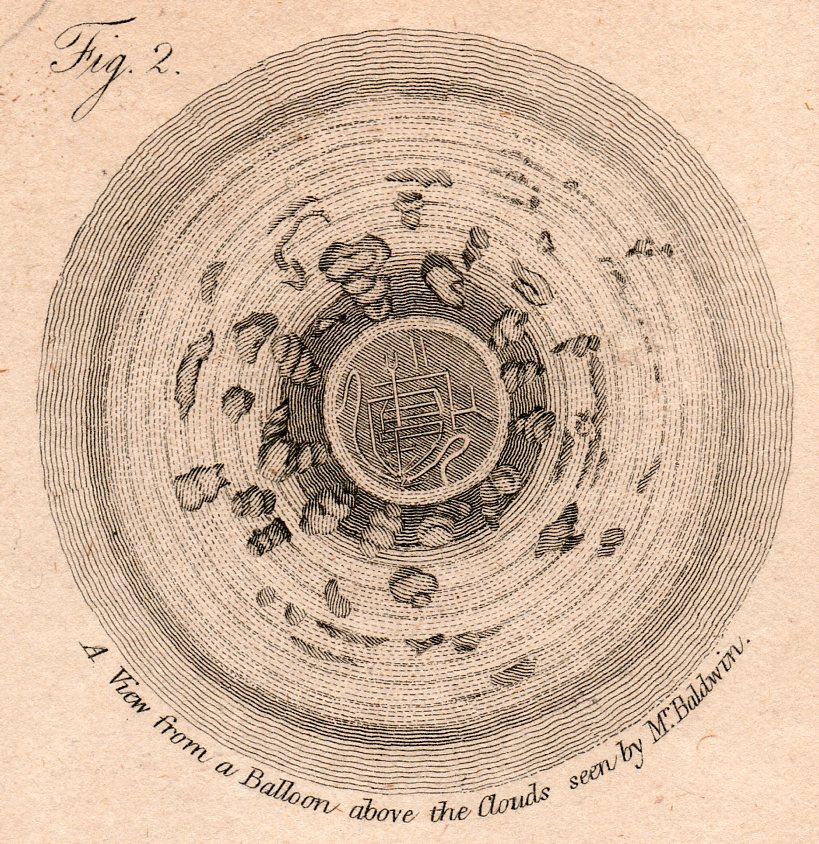
    The idea of representing a view straight down, of looking straight down from some height, is a relatively recent occurrence, this view being somewhat rare in the antiquarian world pre-balloon or pre-heavier-than-air flight.  The pre-human-flight reason for its scarcity is understandable, but even after the first Montgolfier ascension in 1787, there’s another 120+ years of scarcity yet to come before these views would start to pop up in common (and uncommon) literature..  Now I’m not talking about cartography, which is basically a straight-down view of the world—what I’m referring to is that same view but not as a map per se, but what you would see if you were dangling out of a plane or balloon.  The extraordinary map of Imola by Leonardo would certainly classify because of its you-are-there qualities:  essentially it would be like a bird’-eye or oblique view, but straight down.

    All of the images are available to purchase from our blog bookstore, here. 

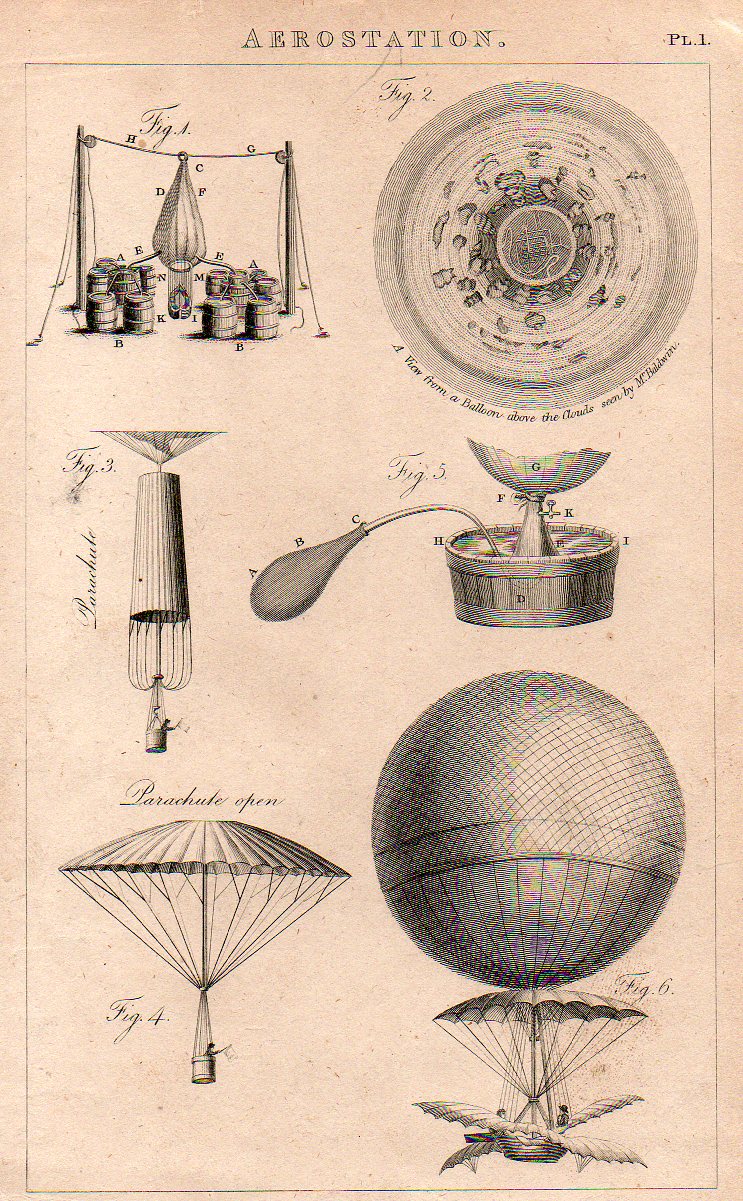
    The first image is that made from a balloon, a lighter than air affair, and engraved and printed around 1810 or so.  It has a very uncommon vertigo-ey affect, like a map of Dante’s leveled creations, though what we’re seeing is a very 

    Looking str8t Diwn-balloom det220 

    …which is a detail from this engraving, made in London around 1810. 

    Looking str8t Diwn-balloom219

    There are of course a number of other lovely design elements, not the least of which is the man in the parachute, bottom left.  (My guess is that the flag held by the man was not for patriotic reasons but rather for more practical concerns, light judging wind strength and duration.   

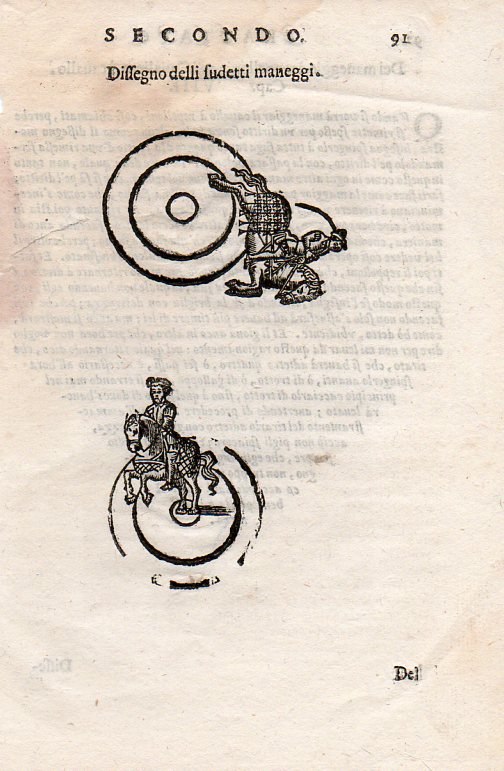
    Another interesting image is this instructional from a source printed around 1620 (I don’t know the source here, either–I purchased the print loose many years ago like many of the others here at Pageant Bookshop in NYC).  It shows a slightly oblique angle (below) and then the flat-perspective view at top: 

    Looking str8t Diwn-horse221
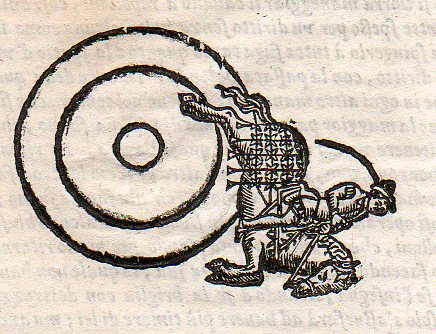
    And then the lovely detail:

    Looking str8t Diwn-horse222

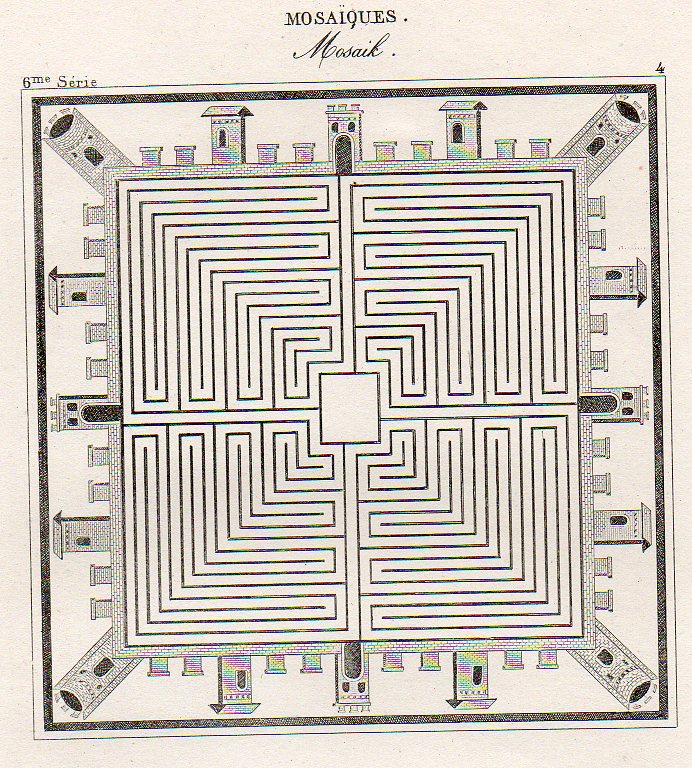
    Then there’s this beauty, showing an idealized town square, presented in mosaic as though seen from above, continuing this thread of flat-perspective–basically looking at some central part straight down, and then taking the objects surrounding the central figure and simply laying them on their backs, as so):

    Looking str8t Diwn--mosaic218

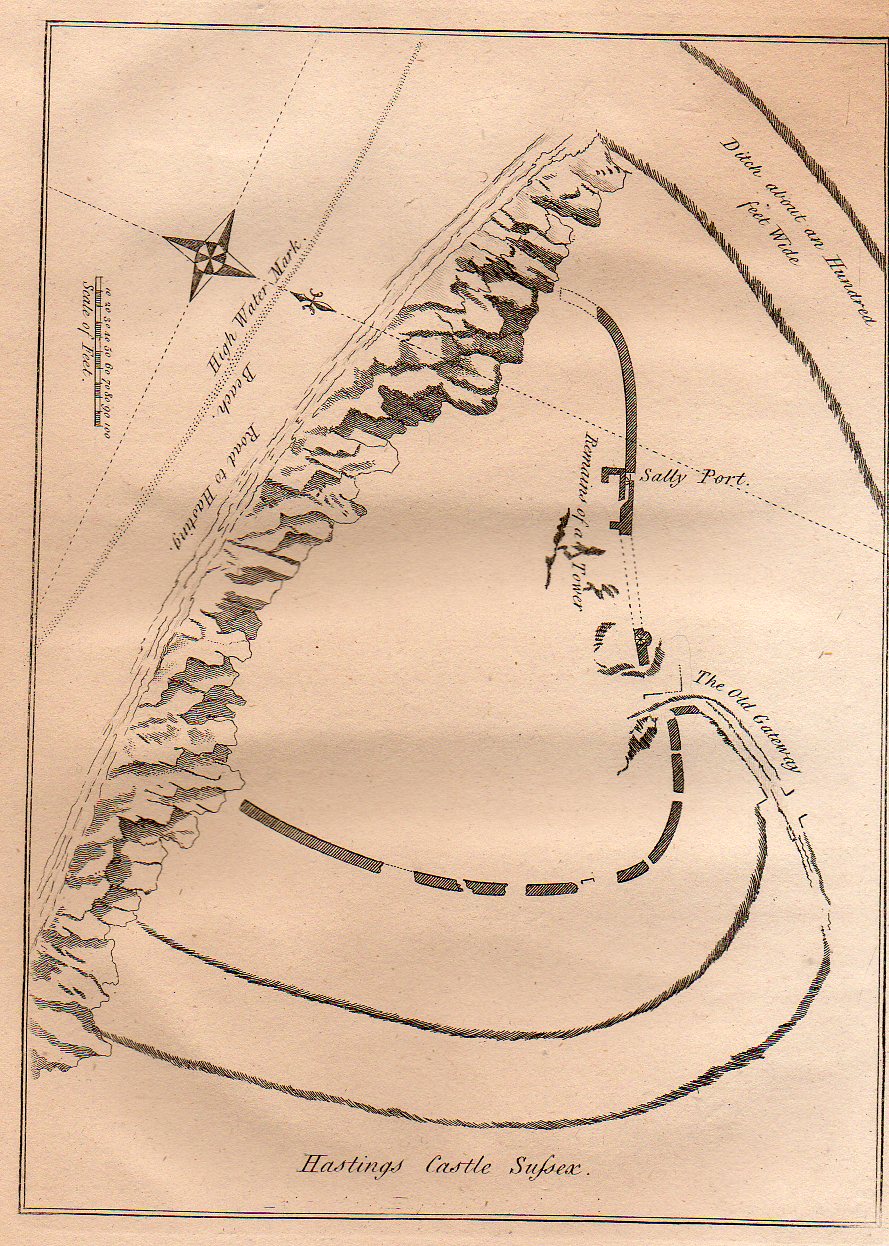
    Lastly for now is this quite flat persepective of the remains of the Hastings Castle (East Sussex), which was built right after 1066 but before the battle.  The (limestone) cliffs that did so much damage to the castle are clearly visible, though what was left of the castle is not.  The view of the area of the castle shows the grounds both in perspective and plan and also from directly above. Its a more-naive approach to imaging that was done so well (on occasion) by the U.S. Coast Survey when it rendered a coastline with an inset of what the coastline looked like from the water–both were superior efforts, but a little odd if you took the map at face value.  This map makes no pretense on perspective correctness, though it is overall a fine map, nicely displaying the necessary details accureately though not correctly (?)

    Looking str8t Diwn--hastings217


  • An Alphabet of Giants, Part II–Under and Over the Volcano with Rabelais

    JF Ptak Science Books Post 1278
    Gluttony127
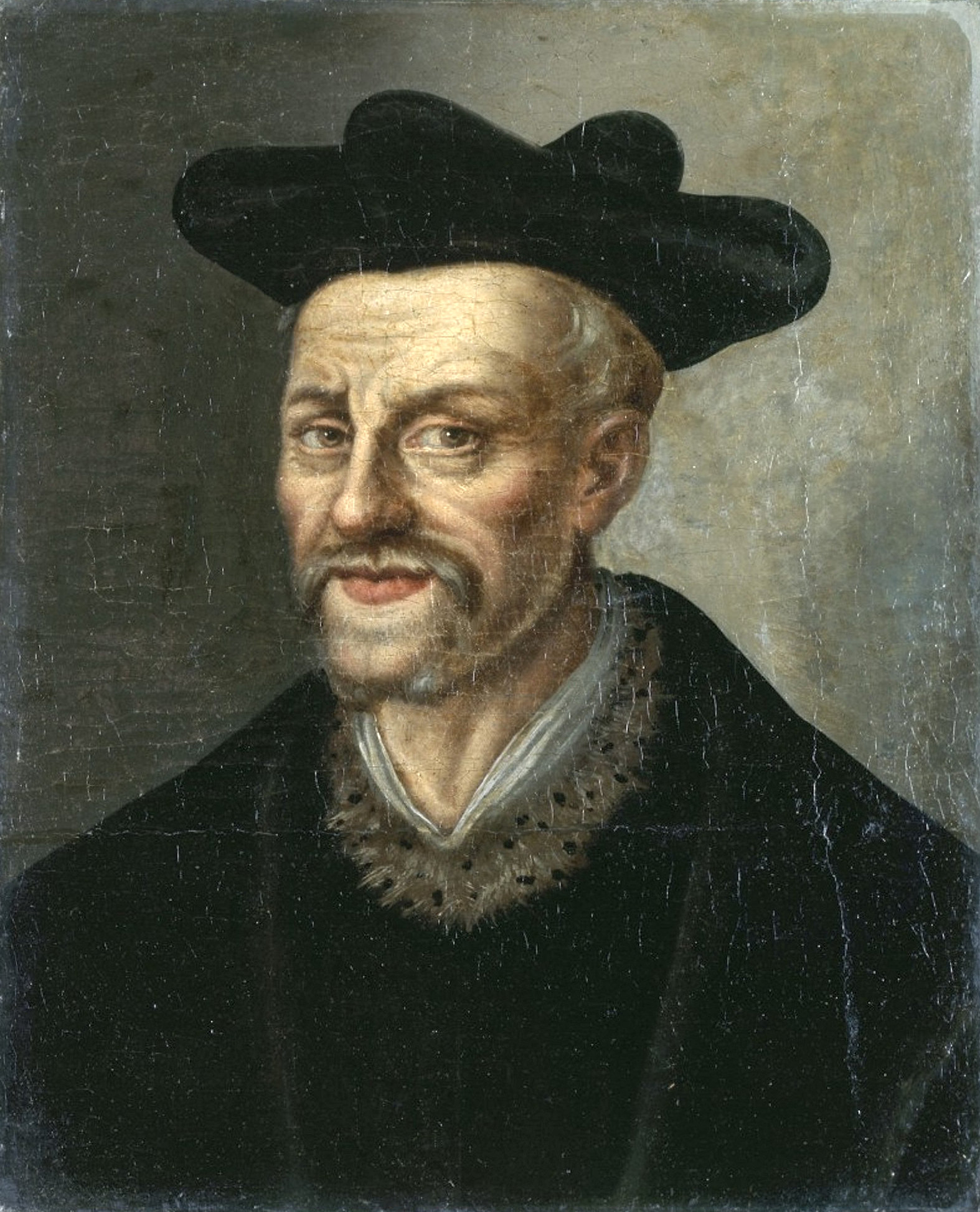
    Rabelais may be that man who lived under/in/over the volcano.

    Francois Rabelais (1490-1553, writing under the anagram Alcofribas Nasier)   was perhaps as gigantic a man in spirit, need, want and appetite as his greatest creations, Gargantua and Pantagreul, and may well be the greatest ex-monk of ex-monks, a bubbling Renaissance Humanist.  I’m not saying that Rabelais spent 11 months in the womb or smoothed his hair with a 900′ comb or drank the milk of 17,000 cows like his creation Gargantua,  but he did have a staggering appetite for life.  He ate life as Honore de Balzac ate food.  Rabelais seemed to know no boundaries, and neither did Balzac, who would typically eat a hundred oysters,  twelve lamb cutlets, a duckling, partridges, fish, fruits, assorted vegetables, coffee, liquor, liquer, wine and so on, at one sittng.  Every day. Nor did Rabelais  necessarily drink like Eugene O’Neill or F.Scott or Edgar Poe or Hart Crane or Jack London or Dylan Thomas, though he did drink beond the boundaries.Thomas, though he did drink beyond the boundaries.

    One of my favorite writers–George Orwell–didn’t have much use for Rabelais, repulsed by his abuses, but that was to be expected.  So it goes.

    File:Francois Rabelais - Portrait.jpg

    The beginning and end of Epitaph for Rabelais, by Peirre de Ronsard:

    If anything can sprout
    From  a dead man  rotted out,
    And  if further generation
    Arises  from stagnation,
    A  grapevine will  surely take birth
    From  the belly and  the girth
    Of  good Rabelais, who  contrived
    Always  to drink while  alive…

    All you who  pass his grave,
    Be  you nobleman  or knave,
    Hang  cups on  this, his shrine
    To  vessels and sparkling wine;
    Hang  sausages and ham:
    For  if he  still has sensation,
    His  soul prefers potation
    To  lilies as a gift,
    And wine  gives a better lift


  • What a Fascist Really, Really Is: Defining Things, June 1945

    JF Ptak Science Books   Post

    In the history of words and the history of writing them, the history of writing down what words mean came relatively late in the word game.  The first dictionary for the English language is difficult to establish–it wasn’t Dr. Johnson’s 1746 effort, as fabulous as it was.  There were more than a hundred earlier efforts, the earliest of which may be Robert Cowdry’s A Table Alphabeticall… as the first English dictionary, which was written in 1604. (Its more easy to determine the first American dictionary, Dr. Webster’s, 1828 .) It may be that dictionaries and assemblies of rogue/thieves language appeared well before Johnson, by perhaps as much as 175 years, providing the good readers and listeners in England with a ready tool for understanding “non-standard” (slang) words of the English language (with A New Dictionary of the Terms Ancient and Modern of the Canting Crew, by “B.E.”, being the best known of these early works, published in 1698.)

     It is interesting to me that in addition to Johnson et al another  writer–or rather set of writers–were responsible for the first Johnsonian-first dictionary in German, the  Deutsches Wörterbuch by the Brothers Grimm.  These are good examples of modernity, though there are earlier examples for other languages–Petrus de Alingio’s manuscript of 1286 and the Catholicon as the first printed alphabetical listing of Latin words appeared very shortly after Gutenberg’s Bible did on the same press.  But then these were both many centuries into the use of the language.

    WWII--Italy Fascist a042

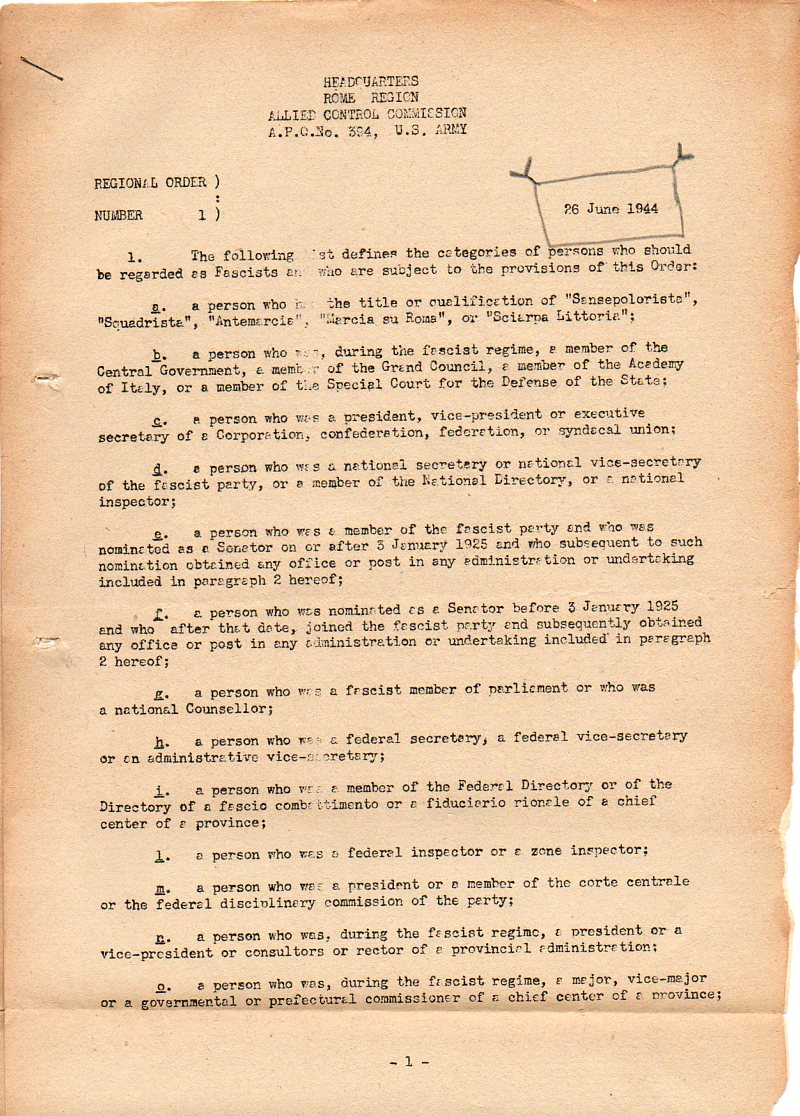
    And this just to say how much I like the road to words–especially when they come from unexpected places. One fine example of this is the directive below, issued by the headquarters of th Allied Control Commission (“APO No 394″) in Rome in the summer of 1944.  (This would actually be the American arm of the ACC, which was commission set up by the Allied Powers to deal with the administration of defeated countries at the end of the war.  Three weeks after D-Day the end of the war was in sight (Bastogne and Co. not withstanding), though far more so in Italy than just about anywhere else, and so the implementation of governing and occupying plans needed to be established.  One of the primary features here was to ensure that the old Fascists not be included in the new Italian governments (along the lines of denazification in Germany, which had a more laissez-faire approach to defining Nazis, especially wealthy and useful ones), and the primary issue in finding and excluding Fascists was to define what was meant by “fascist”1.  These are those working guidelines, at least on 25 June 1944. 

    Notes

    1. The first use of “fascism” in English reported by the Oxford English Dictionaries occurs in 1921:
    1921    19th Cent. July 148   The Fascismo was born in the provinces, where the extremistic menace was stronger.      

    Other interesting reports of the usage of the word continue in the OED:

    1922    Q. Rev. Jan. 148   A section of the Press..now veered completely round to the cause of Fascism. The Fascist terror increased in intensity.
    1923    Contemp. Rev. Jan. 44   We do not want Fascismo in this country.
    1923    Contemp. Rev. Nov. 557   Fascism in Germany will never be more than one of several factors.
    1925    Weekly Westm. Gaz. 10 Jan. 320/2   The outrages which have been associated with Fascism have gradually alienated much of the support which it won two years ago.
    1934    tr. K. Heiden’s National Socialism xvii. 354   The electoral victories all over Europe with which the Labour Parties have replied to German Fascism.
    1936    Discovery Dec. 378/1,   I have strongly criticised modern education and the methods of handling youth generally as inculcating excessive respect for authority and thereby conducing to the growth of Fascism.
    1939    A. Cobban Dictatorship v. 124   In March 1919..Fascism was still..a revolutionary and socialist movement, hostile to the monarchy, to finance, and to parliamentary government, demanding social reform and workers’ control, but separated from the other branches of the socialist movement by its intense nationalism.
       
    And the definition of the word “fascist” from the same year, 1921:
     “One of a body of Italian nationalists, which was organized in 1919 to oppose communism in Italy, and, as the partito nazionale fascista, under the leadership of Benito Mussolini (1883–1945), controlled that country from 1922 to 1943; also transf. applied to the members of similar organizations in other countries. Also, a person having Fascist sympathies or convictions; (loosely) a person of right-wing authoritarian views. Hence as adj., of, pertaining to, or characteristic of Fascism or Fascists…”


  • A Rare First-Hand Account of the Japanese WWII Surrender(s)

    JF Ptak Science Books  Post 1253

    Deglin c det956
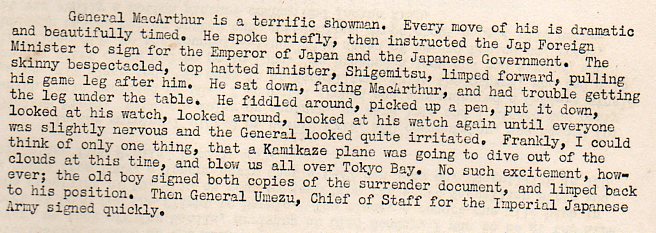
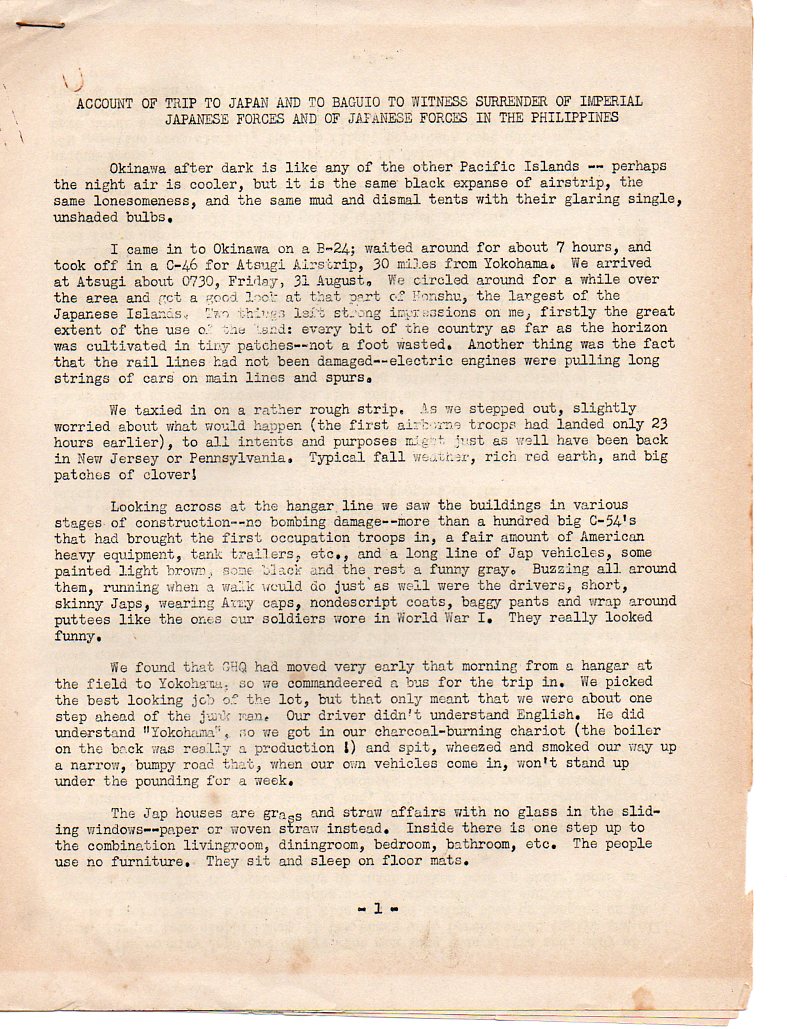
    After serving as public relations director for Madison Square Garden (1935-1942), T.L. Deglin wound up a Lt. Col. in the U.S. Army in a public relations capacity, finding himself a witness on 2 September 1945 to the Japanese surrender on the U.S.S. Missouri and at Baguio (in the Philippines). what follows below is his five-page (1750 word) description of those events.  The report is an offset-printed production, so it did see some sort of distribution, but I can find no mention of it anywhere. 

    My copy came as part of a large group of material (known as “The Pamphlet Collection”) that I purchased of the Library of Congress some years ago–the one cohesive factor to the collection-without-a-purpose was that the material was by and large no located in other libraries.  This may have been because of the great ephemeral nature of some of them, but the pamphlets saw very restricted play in the library circulation game. 

    [Content warning–there’s some very place/time/situation-specific derogatory language here.]

    Deglin a953

    I reproduce the document in full, below.  The original is also for sale at my blog bookstore. 

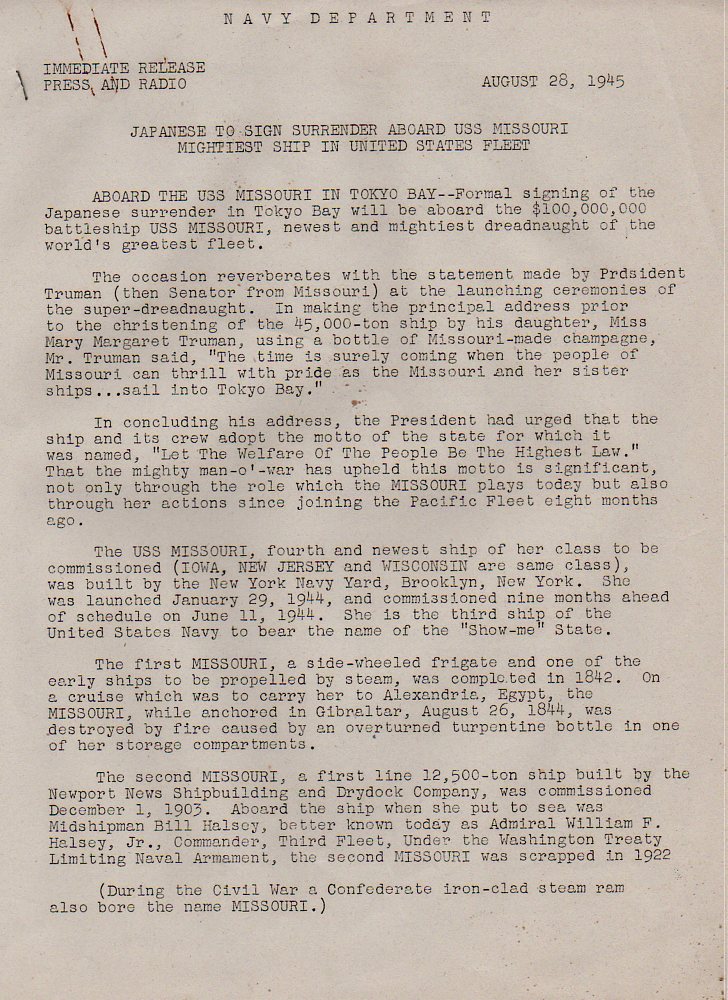
    Additionaly there is this U.S. Navy Department press relsease for announcing the surrender signing agreements, dated 28 August 1945.  This actually comes from the estate of Adm. Grace Murray Hopper via a sale through the Friends of the Arlington Library (Virginia) many years ago. 

    Japan surrender missouri959


    ·Posted by :

    ·in:

    —

  • An Alphabet of Giants, Part 1.

    JF Ptak Science Books   Post 1250

    “There were giants in the earth in those days; and also after that, when the sons of God came in unto the daughters of men, and they bare children to them, the same became mighty men which were of old, men of renown.” Genesis 6:4-5 (KJV).

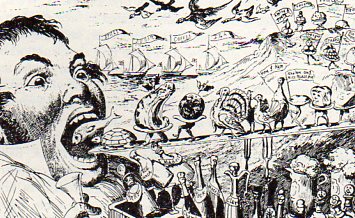
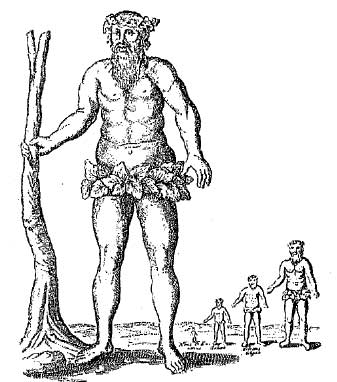
    Our dog Blue is a giant Jack Russell Terrier–mix.  He’s a Jack St. Bernard/Jack Russell–a St. Jack–and at 50+ pounds is either a Giant Jack or a mini St. Bernard.  He behaves like the St. Bernard.  One wonders about the mechanics of the thing–similar to Mr. Gulliver in Jonathan Swift’s A Voyage to Brodbingnag (1727), in which the hero (or anti-hero) though he is disgusted by the gigantic women of the place nevertheless seeks and accomplishes some sort of romantic union with the handmaidens of the giant queen.  And this all puts me in the mind of giants–actually, I’d like to put together an Alphabet of Giants, with this being the beginning. And to start at the beginning is Athanasius Kircher–the incredible Kircher, who produced thousands of pages of excellent analysis and cutting-edge technical/physical thinking as well as hundreds of pages of highly imaginative scientificiana–and his generic giant, featured in Mundus Subterraneus in 1646.

    Giants have certainly been around for a long time, though imaging that imagination is less ocmmmon early on in the history of the illustrated book. 

    There’s no lack of giants in ancient mythologies and legends–the Hindu Daitya, Mohamed’s depiction of a 100-foot-tall Adam, the Greek Antaeus (the children of Heaven and Earth, of Uranus and Gaea), the sleepy Encedladus, the Nephialim, and so on.  One of the most glorious of the big people stories is the  beautifully-named Gigantomachy, in which the gods of Olympus engage in an enormous confrontation with Chaos and Aleyoneus. The “good” (though not very) guys win.

    There’s actually about half-an-alphabet residing just within the Greek Titans (Atlas, Crius, Cronus, Coeus, Gaia, Hyperion, Iapetus, Mnemosyne, Oceanus, Phoebe, Prometheus, Rhea, Theia, Themis, Tethys), but I’d like to expand this if I can. A fuller, more diverse listing of giants and giant-groups follows: Anakim (Jewish mythology, references in the Old Testament), Argus Panoptes (Greek mythology), Bestla (Norse mythology), Cyclopes (Greek mythology), Daityas (Hindu mythology), Epimetheus (Greek mythology), Fachan (Celtic mythology), Gargantua and Pantagruel, Gigantes (Greek mythology), Gog and Magog (Jewish mythology), Goliath (Book of Samuel of the Bible), Hecatonchires (Greek mythology), Iovan Iorgovan (Romanian mythology), John Henry (American folklore), Jotuns (Norse mythology), Kaour (Celtic mythology), Menoetius (Greek mythology), Nimrod (Jewish mythology, OT), Oni (Japanese folklore), St Christopher (Roman Catholic saint),Talos (Greek mythology), Titans (Greek mythology–Atlas, Crius, Cronus, Coeus, Gaia, Hyperion, Iapetus, Mnemosyne, Oceanus, Phoebe, Prometheus, Rhea, Theia, Themis, Tethys), Zipacna (Mayan mythology).

    For the most part I’ve stayed old with these images, except for the 50-Foot Woman, the Giants are generally not from the modern fantasy/sci fi gernre. 

    So, Part 1:


    A. ALICE. John Tenniel’s Alice in Lewis Carroll’s Alice’s Adventures in Wonderland.

    File:Alice par John Tenniel 05.png


    A. Arthur.  King Arthur’s Giant.

    File:Walter Crane King Arthur and the Giant Book I, Canto VIII.jpg

    B.  Beanstalk Giant. Jack and the Beanstalk, John D. Batten 

    File:Page 59 illustration in English Fairy Tales.png


    B. Bunyan, Paul.  By Allen Lewis.

    Frontispiece from Paul Bunyan (woodcut illustration by Allen Lewis)

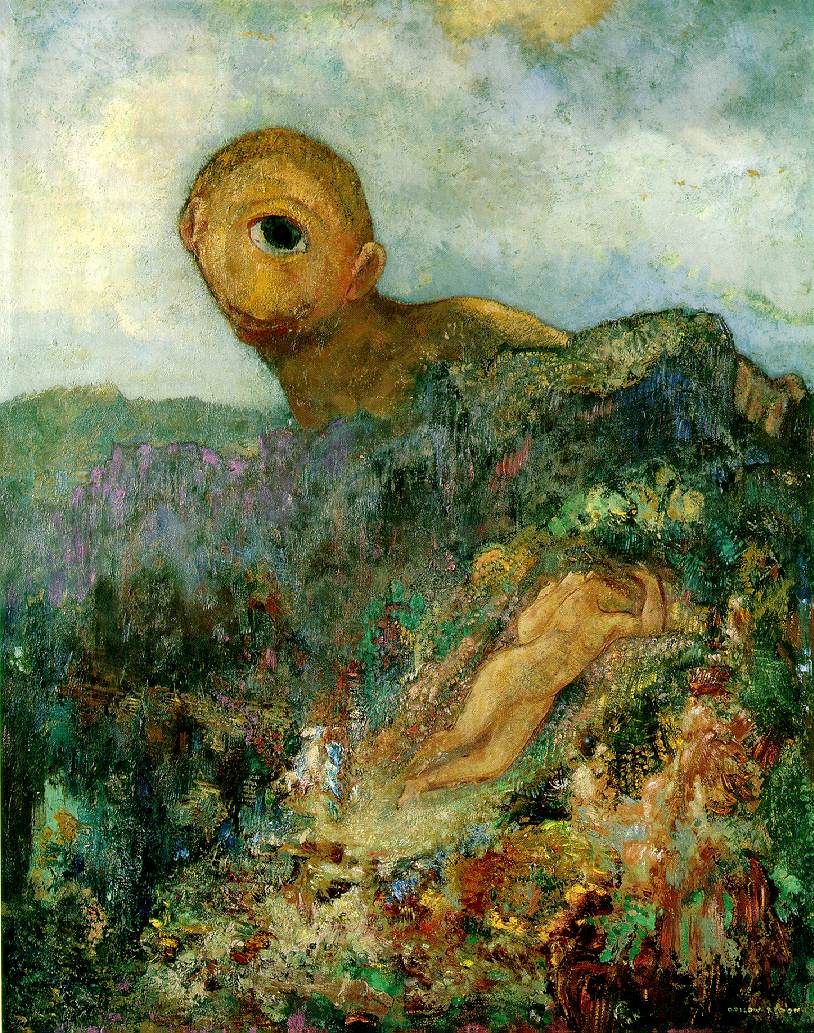
    C. Cyclopes.  By Ordilon Redon.

    .

    File:Redon.cyclops.jpg
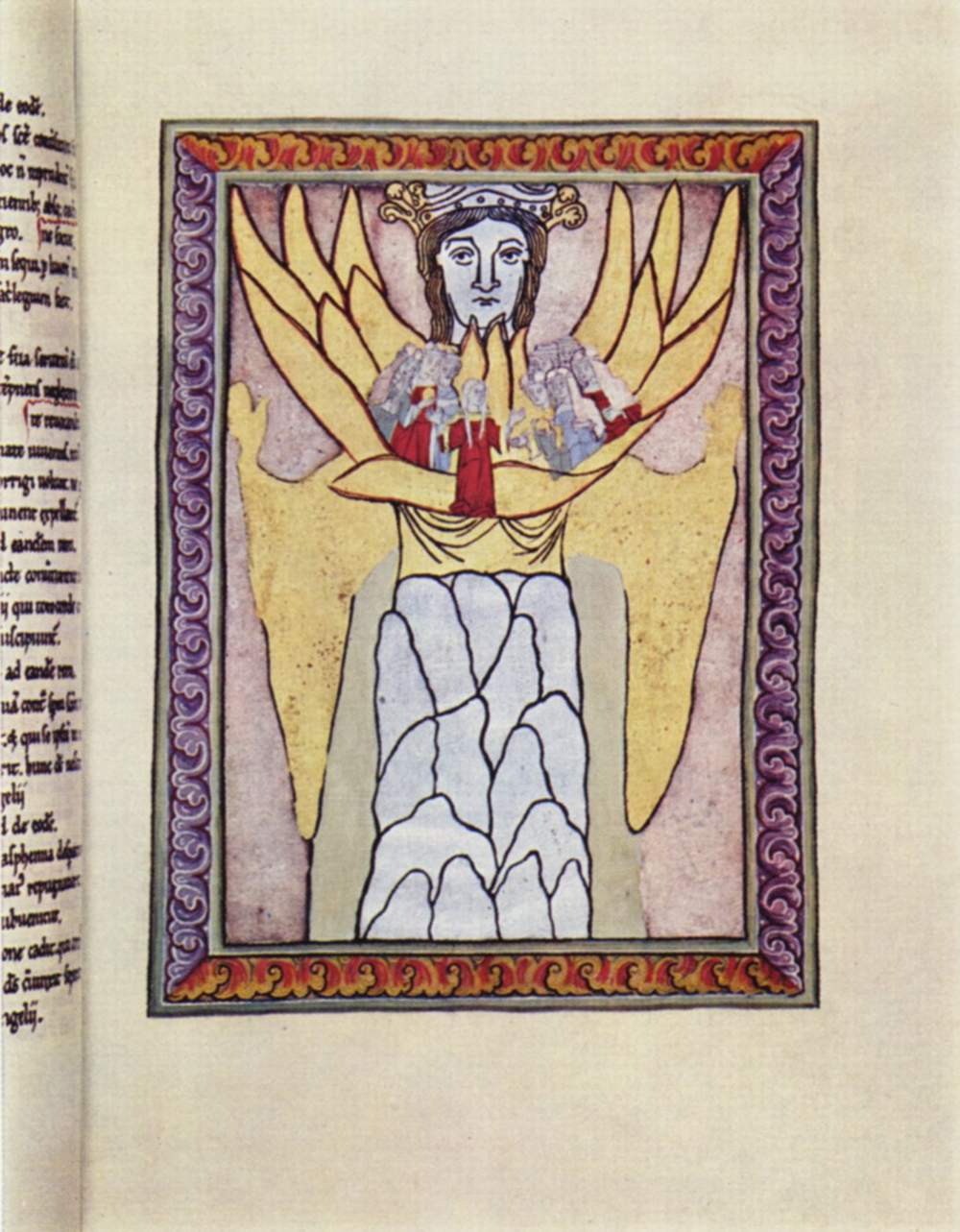
    E. Ecclesia.   “Ecclesia”, or the depiction of Church as the Bride of Christ is a representation of a woman giant, and is seen in  Scivias, by St. Hildegard of Bingen  (1098-1179).

    File:Meister des Hildegardis-Codex 002.jpg

    F. Fatna. The giants Fafner and Fasolt seize Freyja in Arthur Rackham‘s illustration of Richard Wagner‘s Der Ring des Nibelungen

    File:Giants and Freia.jpg


    G. Gargantua
    http://www.gargantua.eu/gargantua.jpg
    G. Gigantomacy.  By Perin del Vagas.

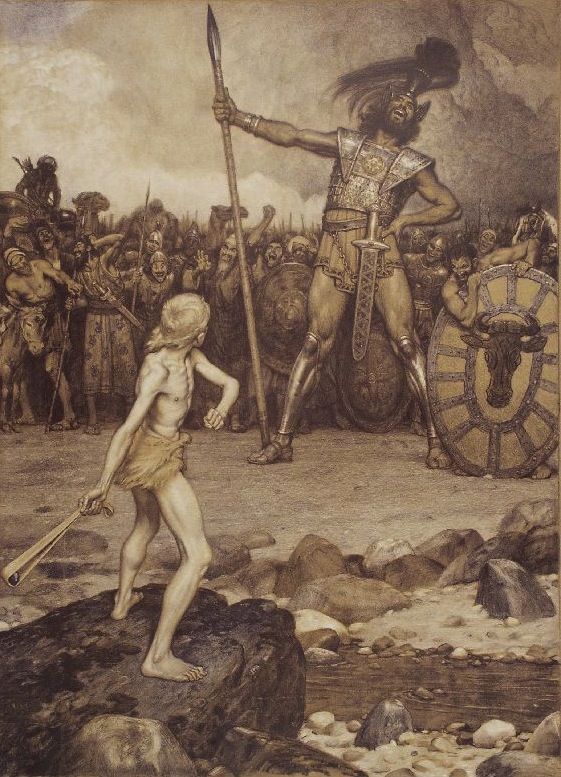
    G. Goliath. Osmar Schindler’s David with Goliath.

    File:Osmar Schindler David und Goliath.jpg

     K.  The Kraken.

    http://bogartswisconsin.com/images/kracken8.jpg

    O. Oni (Japanese folklore.)

    P. Pantegruel.

    http://dramapessoal.files.wordpress.com/2008/01/rabelais-pantegruel-by-francois-desprez-10.jpg?w=460


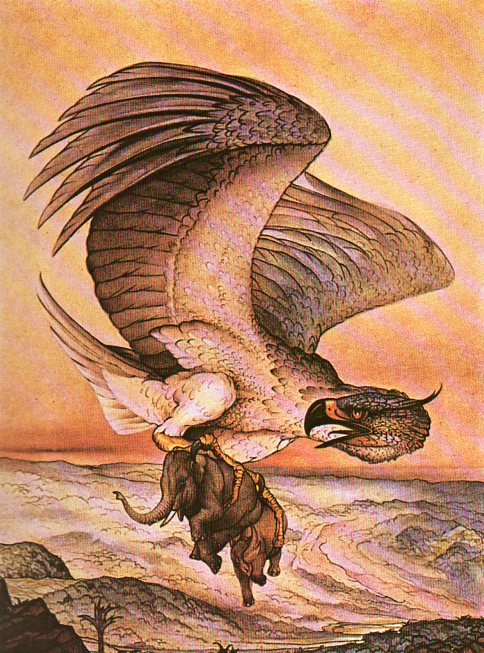
    R.  Rukh.  “The Rukh which fed its young on elephants”, by E.J. Detmold. For The Second Voyage of Sinbad the Sailor from The Arabian Nights, 1924.

    Giant--rokh944

    W. Woman, 50-Foot.

    Women don’t often appear though as giants–at least until modern times.

    Z. Zeus.

    Zeus and three Gigantes, drawing based on the Zeus Pergamon Altar.


  • Structure for Wide Thinking–Walter Gropius’ 1942 Design/Exercise Book

    JF Ptak Science Books  Post 1247

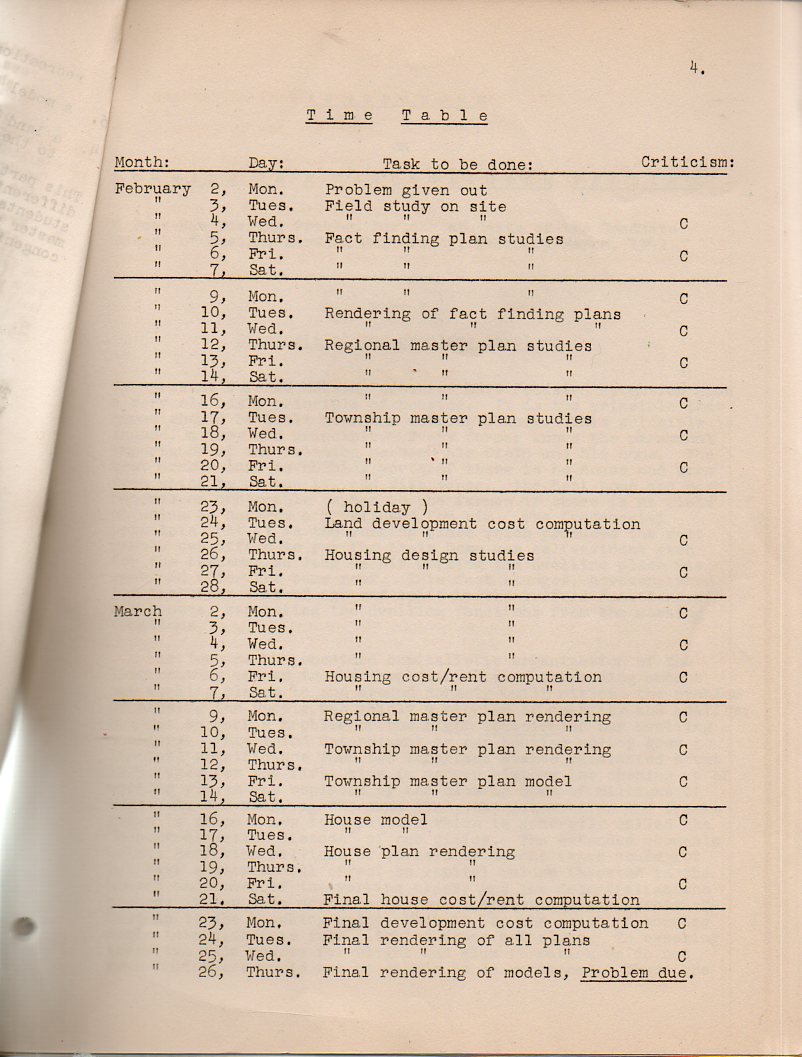
    Walter Gropius (1883-1969, founder of the Bauhaus School and one of the principle builders of modern architecture) and Martin Wagner (1888-1957) were thinking of a new type of “town”, of a different sort of settlement for people, when they wrote this exercise instructional for their Harvard course. Housing as a townbuilding1 problem, written during the war in 1942, was intended to be an exercise (or  “problem”), a case to be studied by the students in the departments of landscape architecture and the graduate school of design at Harvard. The class opened with this rare2 pamphlet as a basis for course work, given to the students on 2 Feb 1942, with the problem’s answers expected to be on Gropius desk five weeks later.  Gropius and Martin put a tough, wide-ranging, landscape-changing question and expected answers in a very short period of time, though they definitely had a very structured plan and approach to dealing with massive implications of their exercise.  The theory was outlined there in the paper, of course, and was expanded much more fully in class.  And then there was this: a full page of datelines and expectations, a way of dealing with a large problem in logical chunks, adding up the answered bits, and then delivering a larger answer at the end and on time. 

    Gropius table899
    [The original work is available at our blog bookstore.]

    I’m not an architecture or design historian, so much of this paper was a little lost on me–but I could definitely appreciate the way in which the great Gropius outlined the process of problem-thinking and solution for his students.  This may be the part of this paper that I liked the most. 

    In  “The Walter Gropius House Landscape: A Collaboration of Modernism and the Vernacular”3 (published in the  Journal of Architectural Education, 1984, 57 (3), p. 39) Eric F. Kramer wrote:

    “Sounding similar themes in a 1942 joint studio problem for landscape and architecture, Walter [Gropius] wrote of the inspiration of the vernacular landscape and of integrating with existing systems: ‘Such a landscape invites the artist planner to observe and preserve its variety of aspects, and to invent a settlement pattern that .ts into its natural beauty. Fortunately our forefathers have already traced out a settlement pattern that fits very well into the landscape.’ Gropius–the grand master builder and master teacher–set out the problem and the solution”.

    There are of course major statements in city-building and human resettlement in this work, but for now, I’m still concentrated on the Bauhaus-founder’s outline for problem solving.   

    Notes

    1.  The full title: Housing as a townbuilding problem; a post-war housing problem for the students of the Graduate School of Design, Harvard University, February-March, 1942.

    And in that publication Gropius writes: “When we speak of ‘new townships’ we think of a new type of human settlement “, with a redefined vision of what a “town” means, using an idea of “reception basins” for spheres of cities as centers of culture, art and commerce “and our open country as furtherer if an industrialized agriculture and of forestry and recreation”. (page 21).  And all of that to be manufactured along the lines of “planned super-highway systems, one branch of which is to go through New England region and will supposedly cut through the towns of Weston and Weyland”.–Gropius and Martin.

    2. This copy was in the Office for Emergency Management; only  six other copies have been found and these in excellent collections: MIT, Harvard Special Collections, Harvard College of Design, Cornell, Columbia and the NYPL (Special Collections).  So the publication is pretty scarce, and given its method of printing and distribution, it looks like not many survived, though it is difficult to say how many were actually printed.  In any event, few survived.

    3. The abstract of this paper is helpful: “The Walter Gropius House Landscape A Collaboration of Modernism and the Vernacular”. “The Gropius house landscape is a potent physical manifestation of the design debates of its era. The landscape is an element of both mediation and integration forging a reciprocal and evenhanded relationship between architecture and site. Shaped by modern architectural sensibilities translated to the landscape and developed at a moment when landscape architecture was struggling to .nd a modernist inspiration and voice, it is an object lesson in the development of a modernist landscape architecture in America…”   
    “In these studio problems, Gropius consistently encouraged students to find new form in the functional requirements of modern times and yet to integrate with existing systems through an understanding of their own functionally driven evolution.”


  • Looking Inside Out–Ernst Mach’s pre-Escher Image

    JF Ptak Science Books   Post 1243

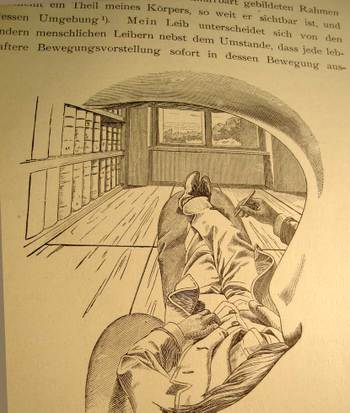
    MachbookI cannot think of another illustration by a scientist or philosopher who attempts to explain their own–literal, interior,physical–view of the world and then offer what this looks like to the reader from inside his own head, looking out through his own eye.  That’s exactly what Ernst Mach is doing right here on page 15 of his influential book Die Analyse der Empfindungen, the fourth German edition (“The Analysis of Sensations and the Relation of the Physical to the Psychical”)  (Jena, 1903)
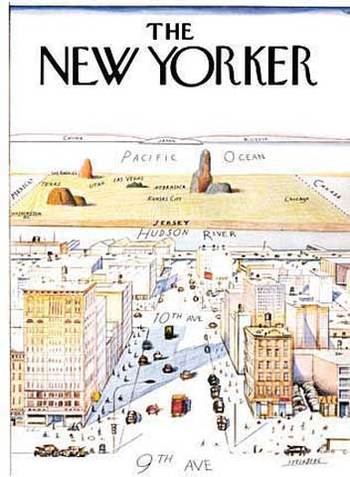
    There is nothing in this world for Mach that is not admissible to the human brain that is not empirically verifiable–that is, the world is nothing but awash in sensation and that sensation itself forms part of the experience of, well, experience. I’ve actually never been interested in the philosophy of science, and this is one of the reasons why.  Nevertheless I boldly break through my own prejudices to enjoy this phenomenally original image, drawn from the inside of Mach’s working mind, looking out through his eye socket, over his mustache, under his eyebrow, around his nose, out across his body and then leaping into the rest of the world.  I think he does make his point about the essentialSteinberg_352 nature of the observer. And much like the classic Steinberg New Yorker cartoon of the world view of the New Yorker (of course this includes only Manhattan), I know some number of people who have transposed their bodies much like Herr Mach into the Steinberg map–except that their worldview ends basically at the Hudson River (Mach’s feet) with the rest of the world being the sliver out there beyond the river (Mach’s window) until you go 359 degrees around the world to get back to the East River (and back inside Mach’s noggin).  It is an unusual world view to have, but someone has to have it so that we can at least identify it so. 
    I just like the picture.