A Daily History of Holes, Dots, Lines, Science, History, Math, Physics, Art, the Unintentional Absurd, Architecture, Maps, Data Visualization, Blank and Missing Things, and so on. |1.6 million words, 7500 images, 4.9 million hits| Press & appearances in The Times, Le Figaro, Mensa, The Economist, The Guardian, Discovery News, Slate, Le Monde, Sci American Blogs, Le Pont, and many other places… 5000+ total posts since 2008.

Category: Perspective

  • The Other Miracles of 1905–Winsor McCay, Little Nemo and Subversive Dreamscapes

    JF Ptak Science Books  Post 1453

    Okay, to be fair no one has ever had a year like Einstein’s annus mirabilis of 19051 perhaps no one has really ever come close–he defines the incomprehensibly high achievement for a single (less than) 365-day time span. There was other stuff going on in 1905–Ernest Starling2 introduced the term “hormone”, Vagn Ekman produced a beautiful paper on the mathematics of ice drift in the Arctic Sea and the ocean’s responses to different sorts of winds, Eduard Zirn performed the first cornea transplant, Ejnar Hertzprung3 published his famous diagrams, Henry Gruppy empirically established the manner of plant dispersal in the Pacific region4, Maurice Frechet’s groundbreaking work in topology, and Henrui Poincare and Howrd Ricketts and Oswald Veblen and so on. And the Wasserman test.  It was a pretty bountiful year–and this was just in the sciences and maths.

    And then there was the Russian Revolution (of 1905).

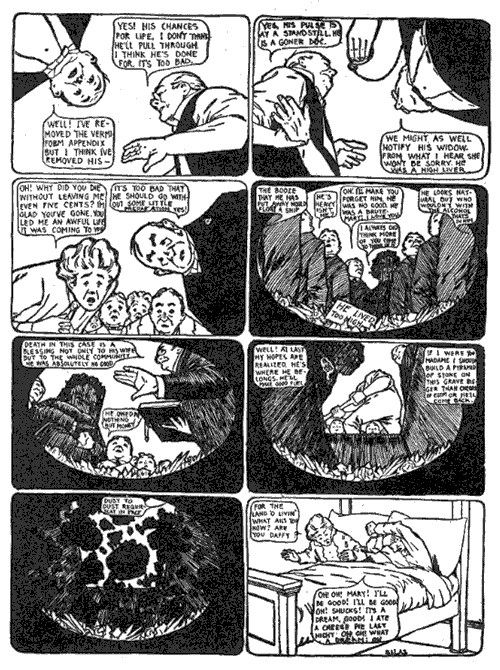
    But also back there in 1905 Winsor McCay was having a terrific year–this was the man who revolutionized the comic strip.  McKay may have been the Einstein of his field, and his work I think may still be the standard bearer for high excellence and creativity.  It was in 1905 that he began his Dreams of a Rarebit Fiend and also the crowning masterpiece of the medium, Little Nemo in Slumberland.  Nothing had really quite been seen like that before, two newspaper strips that were filled with vision and elegance and weirdness and the bizarre, beautiful stories illustrated on one sheet of paper, of great imagination and a wide stretch of subversiveness. They so captivated the readers of the time that McCay went off on illustrative lecture circuits, found movie (in their relative infancy) versions of his work, and performed in vaudeville venues along with Charlie Chaplin and W.C. Fields.

    And then he created the animated cartoon. 

    Here’s a page of Little Nemo:
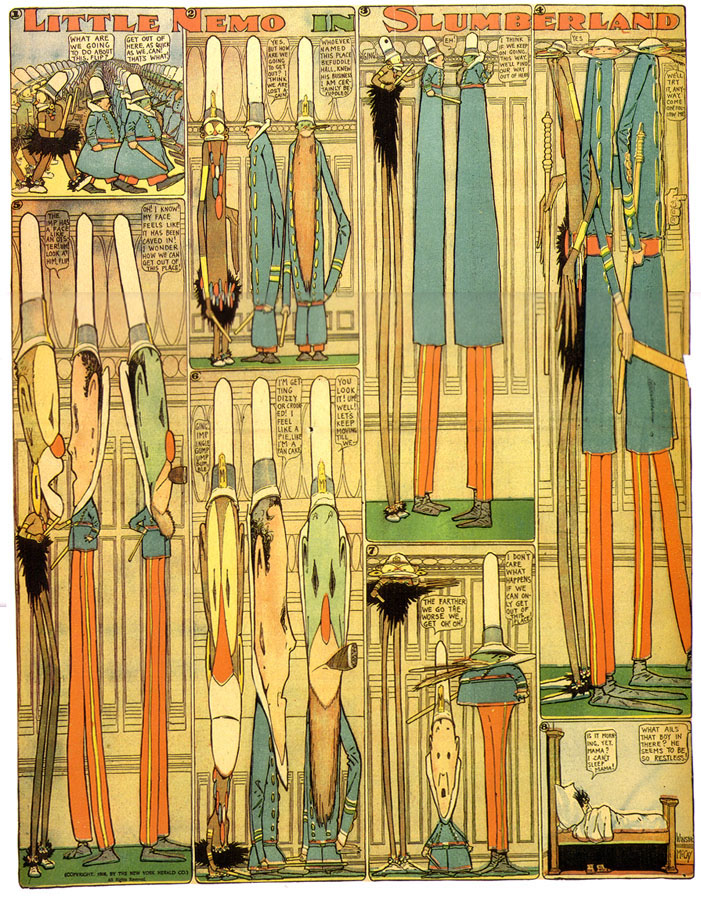
    Little_nemo_1908
    And another of the Rarebit:

    Rarebit_fiend
    I guess you can get the picture of what McCay brought to the world–examples of his work are all over the web, and have been published in eight (?) volumes of reprints.  This was a particularly sumptuous time for this sort of story telling, but this is not the place to talk about anyone else, not really. (Okay–one very high talent is the seldom heard Rodolphe Topffer, but that’s another story.)

    And a very early Rarebit movie (which takes a little while to get moving):

    And another, this an animated cartoon from 1921–it doesn’t have anything to do with McCay in 1905, I just like its motion, and also because McCay is the father of the animated cartoon:

    Can anyone say “Up”?

    And then of course there’s Gertie, the first animated cartoon:


    Notes:

    1.”Über einen die Erzeugung und Verwandlung des Lichtes betreffenden heuristischen Gesichtspunkt” Annalen der Physik 17: 132–148;  “Über die von der molekularkinetischen Theorie der Wärme geforderte Bewegung von in ruhenden Flüssigkeiten suspendierten Teilchen” Annalen der Physik 17: 549–560; Zur Elektrodynamik bewegter Körper” Annalen der Physik 17: 891–921; “Ist die Trägheit eines Körpers von seinem Energieinhalt abhängig?” Annalen der Physik 18: 639–641.

    2.  “On the Chemical Correlation of the Functins of the Body”, not only defining the term but clarifying the hormone’s function.

    3. Hertzsprung, “Zur Strahlung der Sterne”, with another paper of the same name later in 1907. 

    4.  Observations of a Naturalist in the Pacific Between 1896 and 1899, the second volume, entitled Plant Dispersal, is where (surprise!) he discusses plant dispersal.  But the really cool thing here is that he figured out that there were a lot of seeds that floated here and there in/on the Pacific, going place to place, finding out how long they could stay afloat, and so on.  It was fantastic!
     

    ·Posted by :

    ·in:

    — — —

  • Abe Lincoln in June, 1860

    JF Ptak Science Books   Post  1391

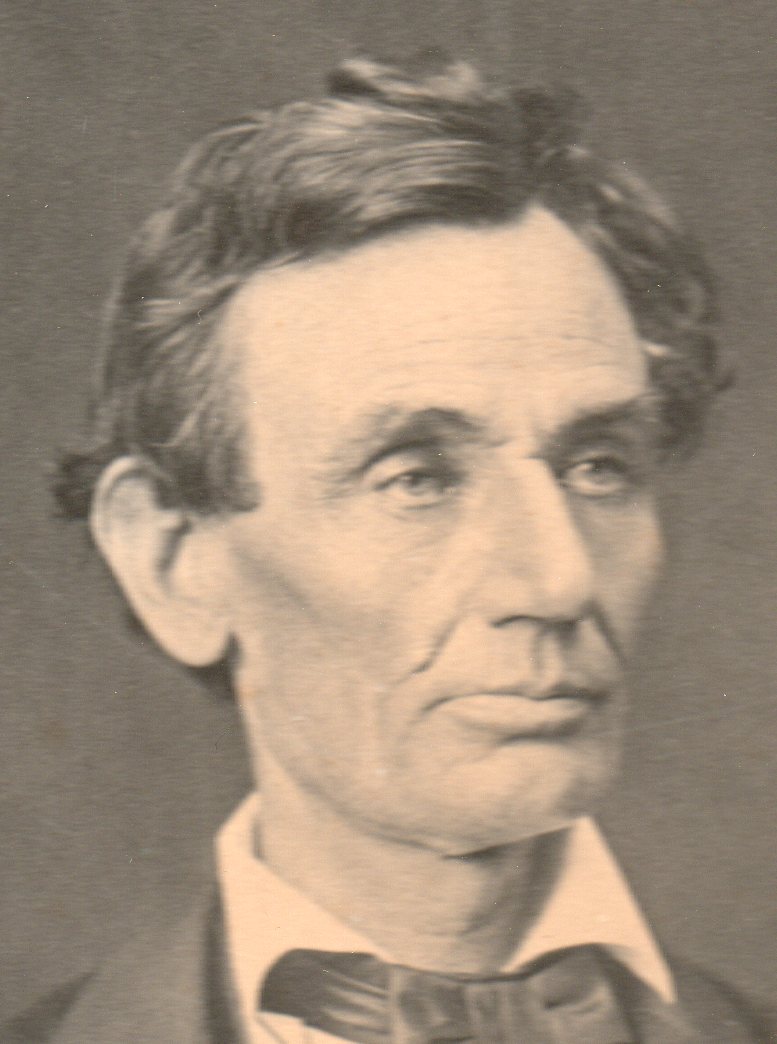
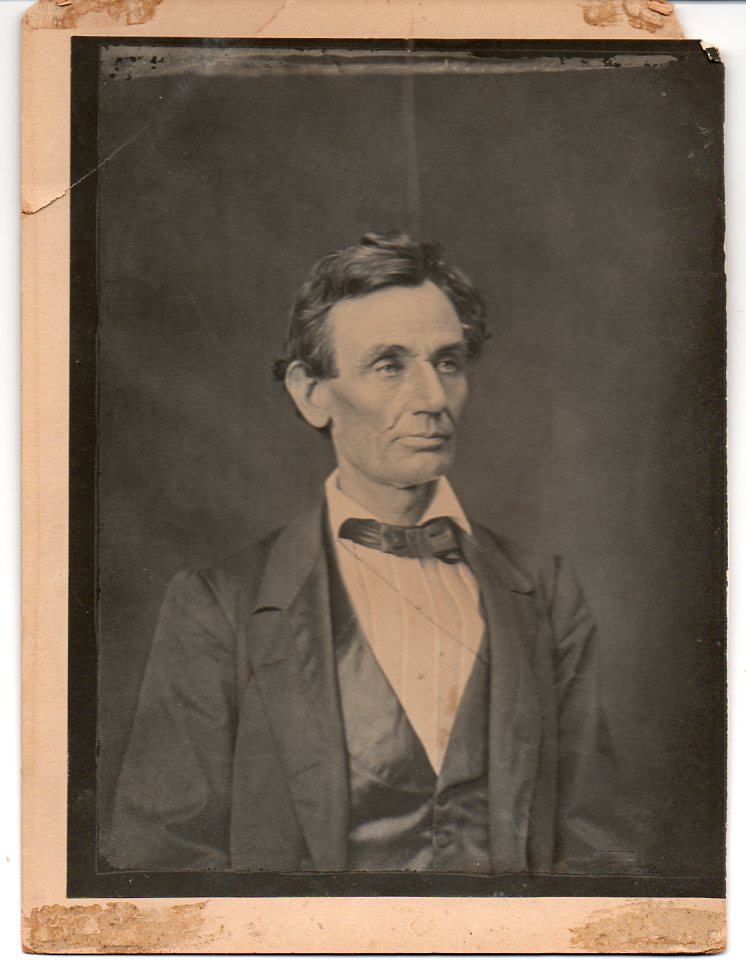
    Abe Lincoln, 1860.  I don’t know how he held everything together.  He was a master tactician, held conflicting and opposing thoughts in his mind and in his cabinet, was incredibly shrewd, and had a deep insight into the future.  He was still, even into 1862, a mocked character, even by his closest associates.  And generals–G.B. McClellan, for example, the general who never should have been actually in charge of an army outside of training it, never should’ve been in the field, never should have been given the opportunity to work more for the opposition than for the Union, saw Lincoln as a buffoon, a nuisance in his own supra-egotistical path to national office.  Lincoln not only survives all of this, but conquers .  I would love to see a two-person play of Lincoln at chess, from the point of view of the chess pieces. 

    I’m posting this as I am getting ready for a Civil War-in-the-newspapers, day-by-day, as we approach the 150th anniversary of what was the great defining moment in the history of the United States. (This image is offered for sale at our blog bookstore.)

    Lincoln--ayres big308

    THis 8.5×6.5 inch image was made in 1881 by George .B Ayres from the original glass negative made by Alexander Hesler’s photograph of Lincoln at Springfield, Illinois, 3 June 1860.  (Ayres had come into possession of Hesler’s studio and negatives after Hesler’s death.)

    And the detail:

    Lincoln--ayres big309

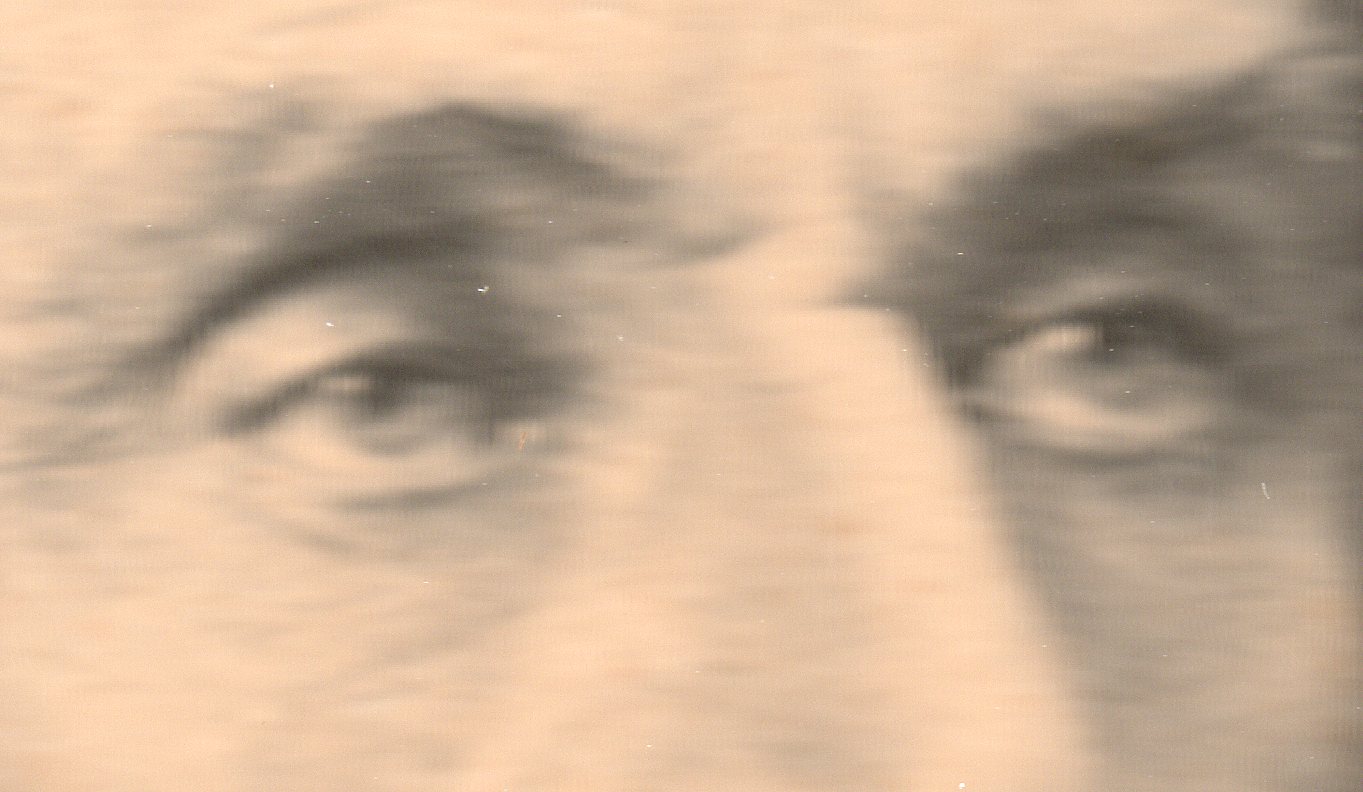
    And deeper:

    Lincoln--ayres big310


    ·Posted by :

    ·in:

    —

  • Ephemeral Uniqueness in Large Crowds, 1917

    JF Ptak Science Books  Post 1390

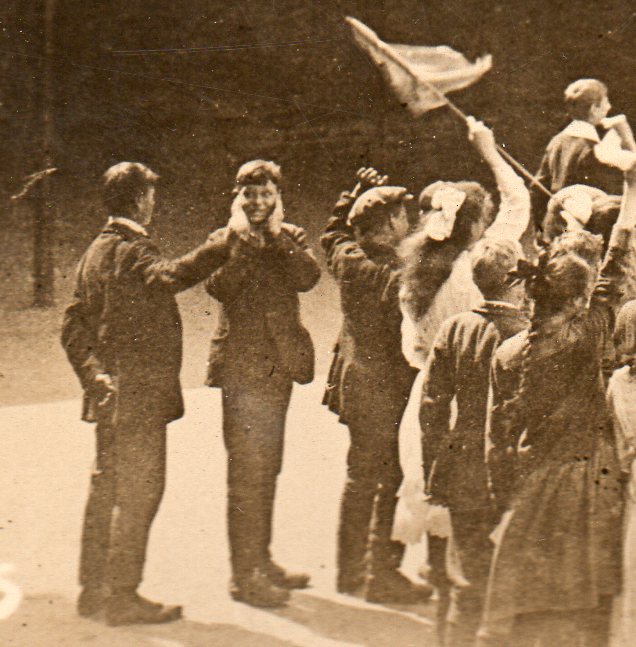
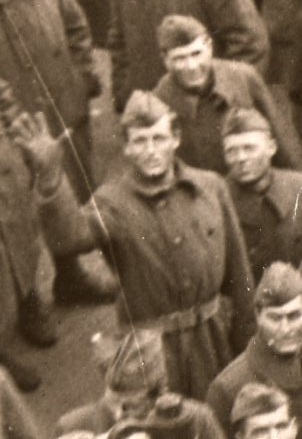
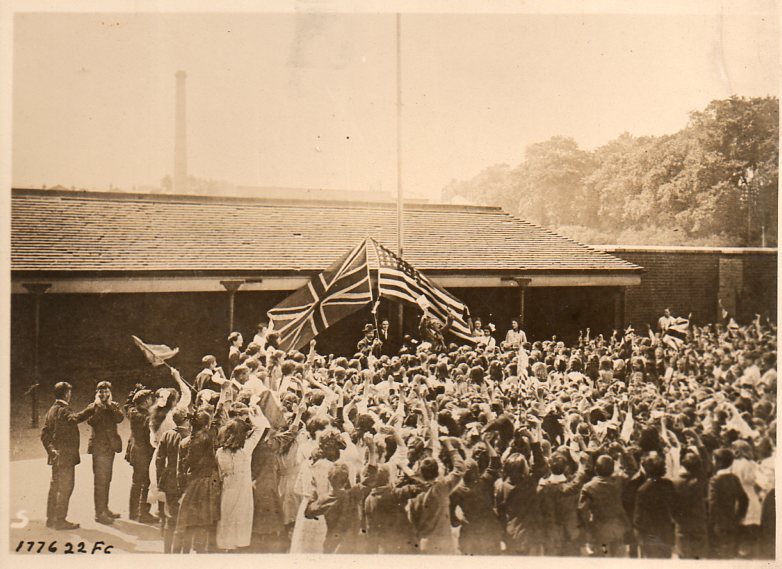
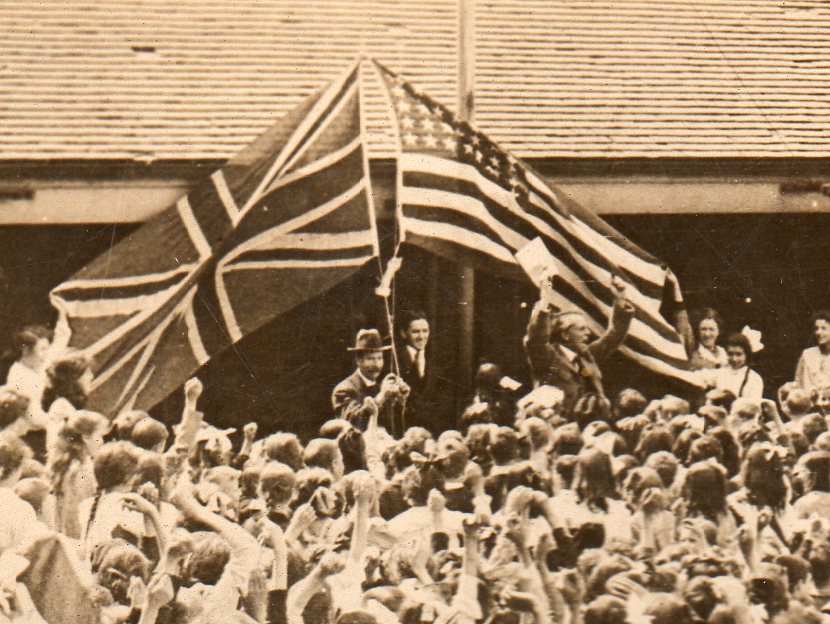
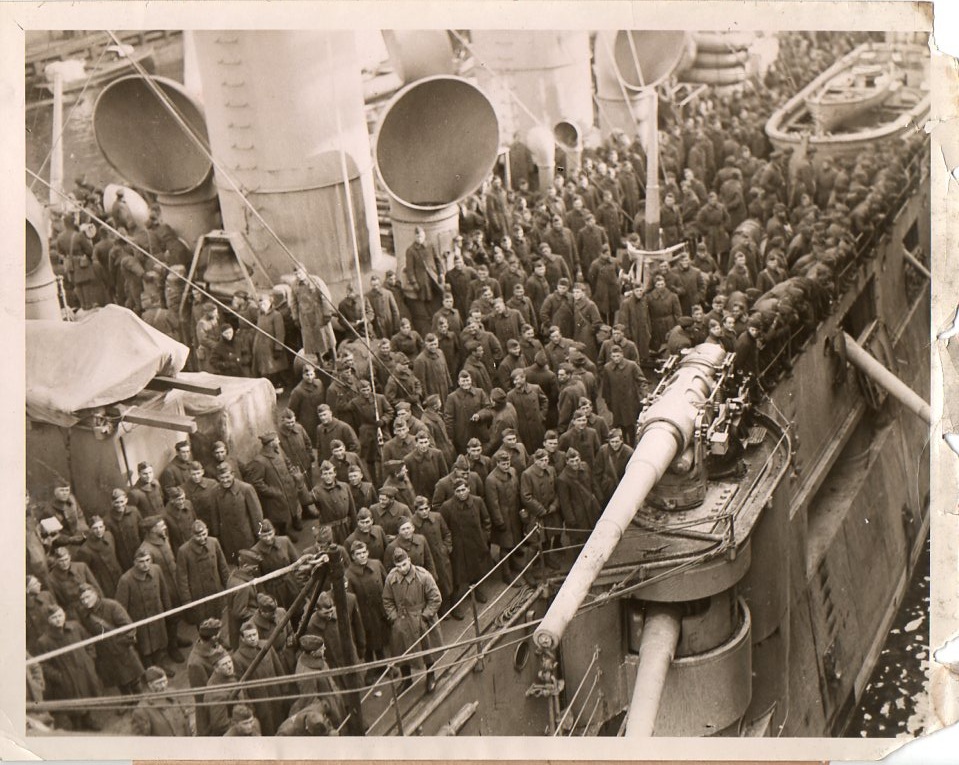
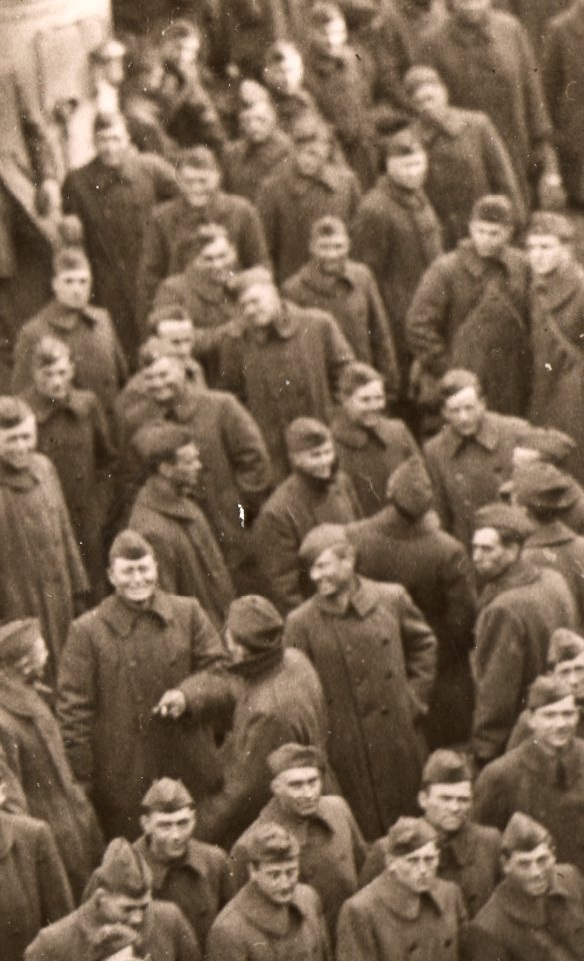
    There are 1500 or so of these news service war photographs here, and one of the remarkable things that I’ve discovered about them–trivial things to be sure compared with their overall message, ephemeral bits of semi-nothing–is that in many of the very-large-group images that there is sometimes just a single person who is doing something that no one else is doing, and it has been captured almost forever in the photo.  There are photos of thousands of troops, all facing east, with on solitary soldier facing west; there’s the solitary waver; there’s the one bare-headed man in  a sea of a thousand men with hats; there’s the one person raising his hat to the photographer in a sea of people looking at the camera but not raising their arms.  Then of course there’s the group photo of a mass of German WWI POWs, with only one soldier without a hat or helmet, and he looks just like me. 

    Here are two other examples–the first is a detail from a photo showing British children cheering their American allies in 1917, showing one man clearly reacting to the hundreds of screams by covering his ears.  And is the only one doing so.  The second detail shows a large contingent of American soldiers leaving for Europe on a steamer–there is only one man  who turns to the camera and waves.

    Both original photographs are available from our blog bookstore, here.

    WWI troops ship171

    The second detail:

    WWI troops ship167
    The entire first image, showing the children cheering the raising of the two flags:

    WWI troops ship169

    And this:

    WWI troops ship170

    And the second, showing a group of hundreds of soldiers waiting to leave Hoboken, New Jersey, for the fight in Europe, 1917.  Most are pulling themselves inside their coats as much as possible; I suspect being right there on the harbor–and seeing the floating bits of ice in the water–that it was wet and very cold.  Our one adventurous Doughboy gives the camera a spread-fingered wave….he also seems to be quite tall.  He is the lone waver.  There also seem to be a lot of smiles in the crowd. 

      WWI troops ship166

    WWI troops ship168


  • Engineering Art: Cross Sections of the HMS Olympic (1909) and Mauretania (1906)

    JF Ptak Science Books  Post 1382

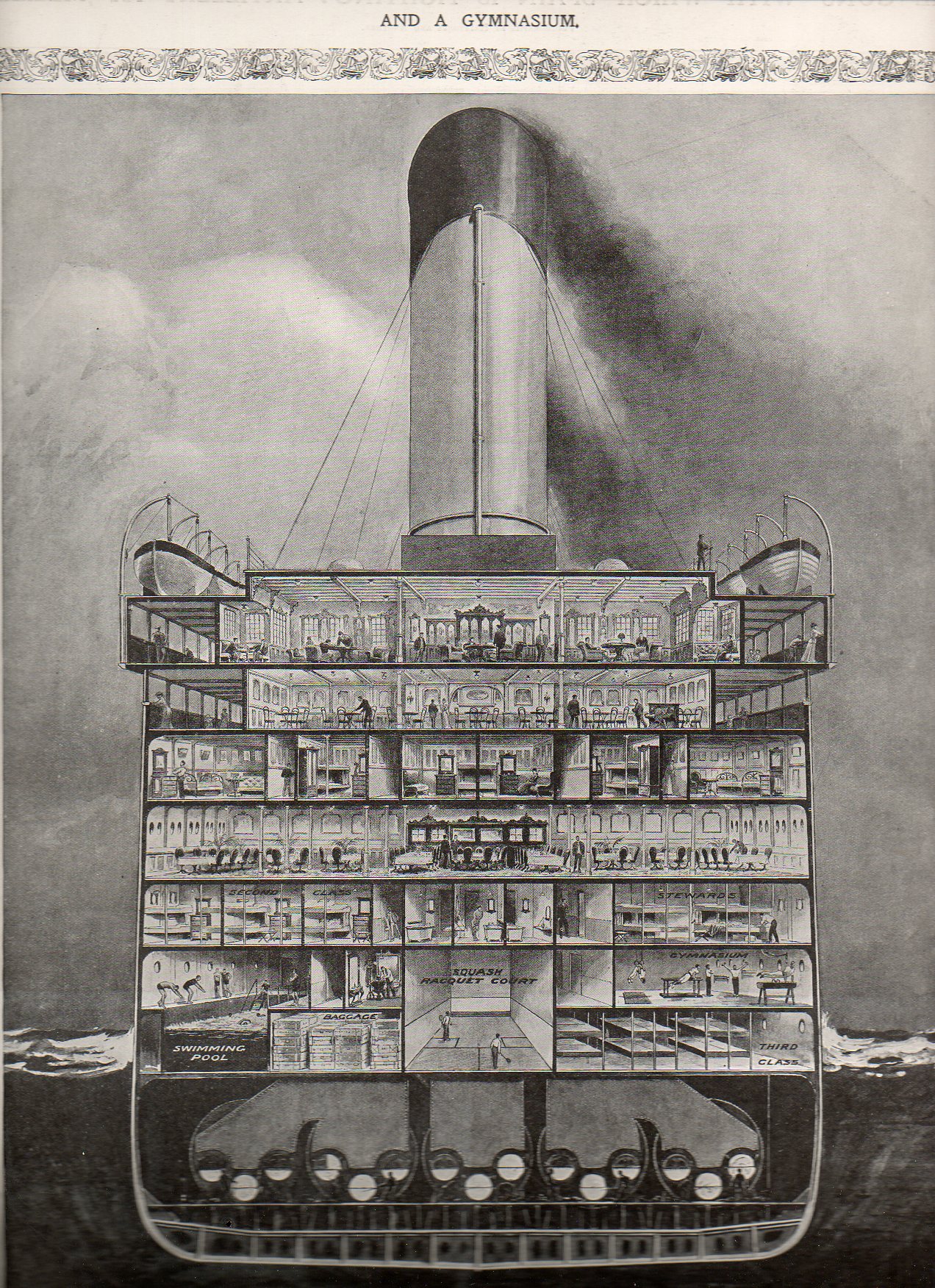
    “...And a Gymnasium.”

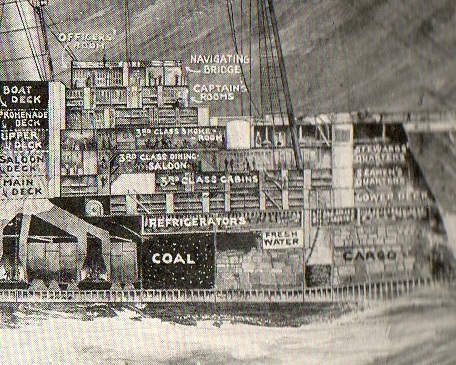
    Resting comfortably in-between this blog’s Cross Sections and Looking-At-Things-Straight-On series is this straight-on cross section of the midship section of the HMS Olympic.

    Cross-sectionship131
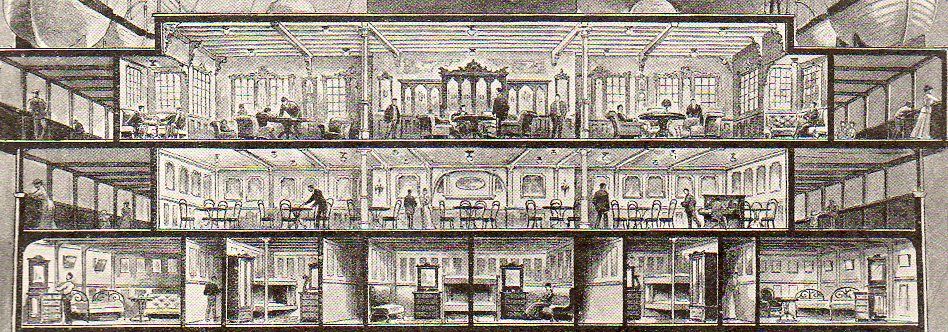
    This cross section appeared in the 14 August 1909 issue of The Illustrated London News, just six months or so after she was laid down. The Olympic was finished in 1911 and sailed through until 1935, a considerably much-longer career than her two sister ships, the Titanic and the Britannic.  The Titanic of course was launched in 1911 and went down on 12 April 1912; the Britannic lasted a little longer, though this ship never really had much of a career, launched just before the beginning of WWI and then used immediately as a hospital ship, striking and being sunk by a mine in 1916.  The three ships were beasts, about 882 feet long and about 53,000 tons displacement. The viewer certainly gets a good idea of the scope of the ship from this image.   [The original image of the Olympic and also of the Mauretania are available for purchase from our blog bookstore.]

    Cross-sectionship132
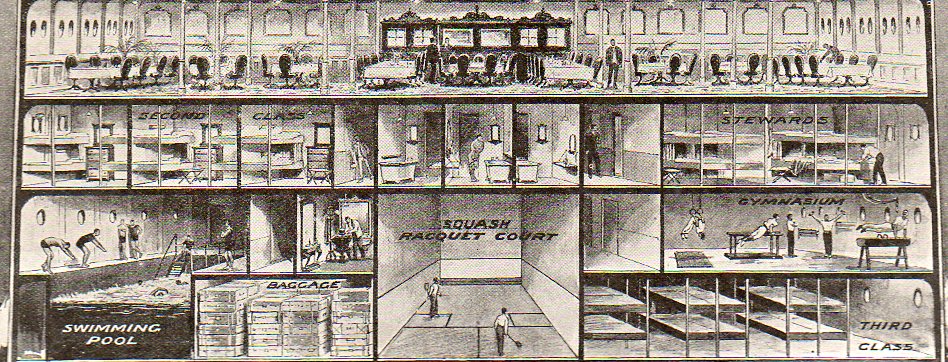
    Cross-sectionship133

    Third class looks pretty rustic, a no-bones approach to ocean travel, stuffed into the space next to the squash courts and under the gym. 

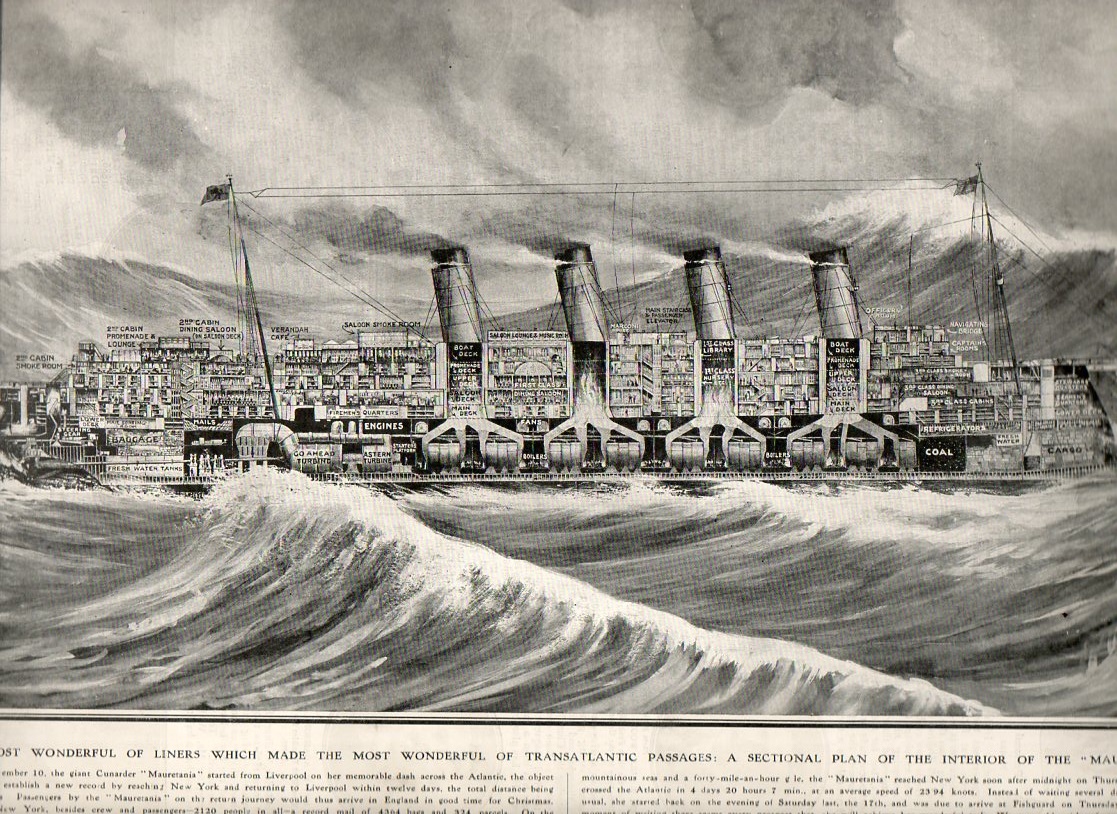
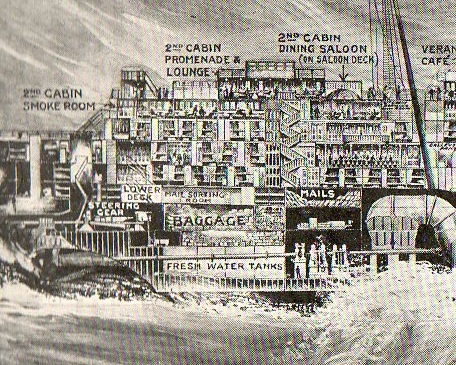
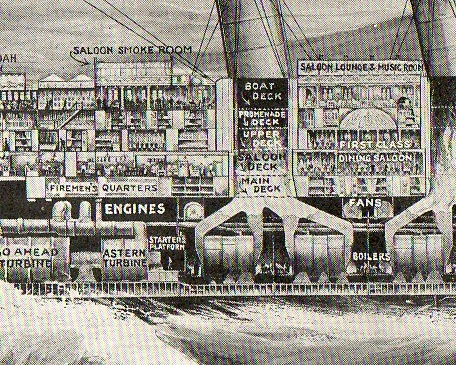
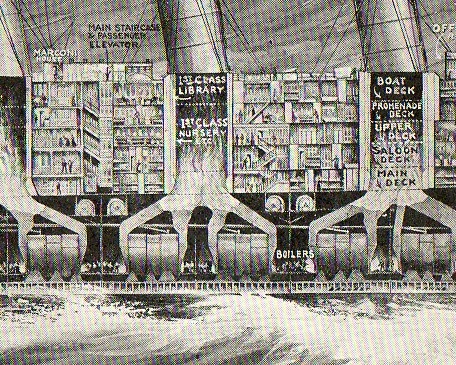
    Next comes the HMS Mauretania, again form The Illustrated London News right at the time of its record-setting speed attempt to cross the Atlantic in November 1907.  The ship was long (almost 800 feet) and about the fastest ocean-going ship in the world,. crossing and re-crossing the Atlantic in 12 days.

    Cross section mauretannia137

    Cross section mauretannia138
      Cross section mauretannia139
    Cross section mauretannia140

    Cross section mauretannia141


  • The Problem of the Expanding Universe, 1943

    JF Ptak Science Books    Post 1368

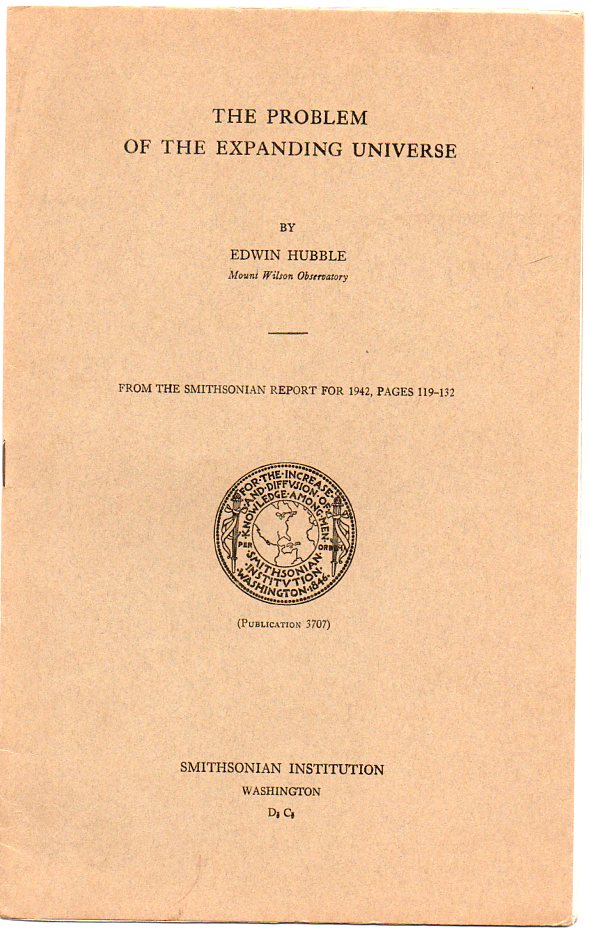
    Hubble expanding052 In his great summary (The Problem of the Expanding Universe) of the development of the velocity-distance relation, the Big Bang and all that,  Edwin Hubble offers concise appraisal of the research to this point (in which Hubble and his assistant Milton Humason were prominent members of its founding studies). Hubble provided the first experimental data supporting the expanding universe theory of Georges Lemaitre’s cosmology (the “hypothesis of the primeval atom”), Einstein’s GRT and the mathematical equations of Alex. Friedmann, finding that the distance of galaxies were proportional to their redshifts (Hubble’s Law, 1929).  The whole thing enjoyed a bigger, more explosive life once it had been given its  more provocative and user-friendly name by Sir Fred Hoyle, who called the idea “the Big Bang” in 1949.  (Sir Fred was actually attacking the idea and must’ve thought his tag was to be demeaning, but as a proponent of the steady state theory, Hoyle’s plan backfired, a proof that irony exists.) The steady state model was more or less put to sleep when the cosmic microwave background radiation (first proposed by George Gamow, Ralph Alpher and Robert Herman in 1939) was “discovered ” in 1964 by Penzias and Wilson, this providing further experimental confirmation for the Big Bang hypothesis. 

    In his characteristic way, Hubble summarized the whole package so, in the conclusion of the 13-page paper [the original of which is available for purchase from our blog bookstore]:

    “Meanwhile, on the basis of the evidence now available, apparent discrepancies between theory and observation must be recognized. A choice is presented, as once before in the days of Copernicus, between a strangely small, finite universe and a sensibly infinite universe plus a new principle of nature.”

    It is an excellent approximation for a semi-general-public speech (to the Smithsonian Institution crowd during the war in 1943), and reminds me of one of his other, similarly spot-on statements, one of the greatest understatements in 20th century astrophysics The statement appears in a further report on Hubble/Humason studies in The Velocity-Distance Relation Among Extra-Galactic Nebulae  (Mount Wilson Observatory,  1931) ,  a regarding their understanding of the phenomena and the expanding universe, the authors take many steps back, and say in the concluding paragraph:

    “…the writers are constrained to describe the apparent velocity-distance displacements without venturing on the interpretation and its cosmological significance”.

    They basically lay out the functioning of the universe and the best understanding of how we got to where we are in the cosmos (Vesto Slipher notwithstanding), and how according to their understanding that the universe is expanding and is consistent with all known laws, that they decide to not say anything, um, philosophical, in the light of disrupting the idea of the creation of all things.

    Hubble did have a way with words, his own way, though he was able to communicate a difficult series of ideas simply, as we can see in the opening of his Expanding Universe paper: 

    “Mathematicians deal with possible worlds, with an infinite number of logically consistent systems. Observers explore the one particular world we inhabit. Between the two stands the theorist He studies possible worlds but only those which are compatible with the information furnished by observers. In other words, theory attempts to segregate the minimum number of possible worlds which must include the actual world we inhabit. Then the observer, with new factual information, attempts to reduce the list still further. And so it goes, observation and theory advancing together toward the common goal of science, knowledge of the structure and behavior of the physical universe.”

    And this lovely summation:

    “Current theory starts with two fundamental principles : general relativity and the cosmological principle. General relativity states that the geometry of space is determined by the contents of space, and formulates the nature of the relation. Crudely put, the principle states that space is curved in the vicinity of matter, and that the amount of curvature depends upon the amount of matter. Because of the irregular distribution of matter in our world, the small scale structure of space is highly complex. However, if the universe is sufficiently homogeneous on the large scale, we may adopt a general curvature for the universe, or for the observable region as a whole, just as we speak of the general curvature of the earth’s surface, disregarding the mountains and ocean basins. The nature of the spatial curvature, whether it is positive or negative, and the numerical value, is a subject for empirical investigation.”

    “The second, or cosmological principle is a pure assumption – the very simple postulate that, on the grand scale, the universe will appear much the same from whatever position it may be explored. In other words, there is no favored position in the universe, no center, no boundaries. If we, on the earth, see the universe expanding in all directions, then any other observer, no matter where he is located, will also see the universe expanding in the same manner. The postulate, it may be added, implies that, on the grand scale, the universe is homogeneous and isotropic – very much the same everywhere and in all directions.”

    “Modern cosmological theory attempts to describe the types of universes that are compatible with the two principles, general relativity and the cosmological principle. Profound analysis of the problem leads to the following conclusions. Such universes are unstable. They might be momentarily in equilibrium, but the slightest internal disturbance would destroy the balance, and disturbances must occur. Therefore, these possible worlds are not stationary. They are, in general, either contracting or expanding, although theory in its present form does not indicate either the direction of change or the rate of change. At this point, the theorist turned to the reports of the observers. The empirical law of red shifts was accepted as visible evidence that the universe is expanding in a particular manner and at a known rate. This arose the conception of homogeneous expanding universe of general relativity.”

    I like Hubble.

    Notes:

    The paper begins:

    “I PROPOSE to discuss the problem of the expanding universe from the observational point of view. The fact that such a venture is permissible is emphatic evidence that empirical research has definitely entered the field of cosmology. The exploration of space has swept outward in successive waves, first, through the system of the planets, then, through the stellar system, and, finally, into the realm of the nebulae. Today we study a region of space so vast and so homogeneous that it may well be a fair sample of the universe. At any rate, we are justified in adopting the assumption as a working hypothesis and attempting to infer the nature of the universe from the observed characteristics of the sample. One phase of this ambitious project is the observational test of the current theory of the expanding universes of general relativity. ” [The entire paper is located here.]

    ·Posted by :

    ·in:

    — —

  • History of Anticipation–a Note on Not Discovering Deep Sky In England (pre-Galileo)

    JF Ptak Science Books  Post 1365

    “‘Tis all in pieces, all cohaerennce gone”–John Donne1

    I wonder why it was that the telescope didn’t get trained at the sky in Great Britain.  Its one of those “things/non-events” when everything is in place for something very big to happen, when the pieces are there and sorted, when the theory has been thought out, when the practical applied work has been done–and then, a turn-away is made, a drifting occurs, and the big thing doesn’t happen.  A deep reluctance sets in–and since it is the anniversary of Darwin’s (and Lincoln’s) birthday, it seems natural to include Darwin in a history of anticipation category, since it took him so very long to come to enough of a comfort level to actually publish his Big Idea, and that seems to have been done on the intersession of an editor and thought leader (Huxley) and the fact that someone else was going to beat him to publication (Wallace).

    But what I’m talking about here is John Dee’s work with “perspective glasses”–the telescope–in the 1560’s and 1570’s and the idea of which he writes about in his Description of Caelestiall Orbes, thirty full years before Galileo’s epochal Sidereus Nuncius of 1611.

    The promise of the telescope is also seen in the work of Dee’s pupil Thomas Digges (half of the Digges’ brother scientific team, the other brother being Leonard), who writes of it in his Alae sue Scalae MAthematicae, 1573; and again in the Treatise on the A treatise on the properties and qualities of glasses for optical purposes, according to the making, polishing, and grinding of them by WIlliam Bourne (see here) where among other things claims to have uised his instrument to see things seven miles away (beautifully put so “not only discovered things farre off, read letters, numbered pieces of money…but also seven myles of declared what hath been  doon at that instante in private places”, meaning that he was able to discern print at some distant and to also see what would have been private things from an unthinkably distant distance)2. 

    And as Marjorie Nicholson  observes in Science and Imagination (Cornell, 1956), this point is again made by yet another Englishman, Thomas Hariot, who is best remembered today for his beautiful and early work on the American southeastern coast, published in 1691 (A Briefe and True Report of the New Found Land of Virginia), in which he describes his own telescope, “a perspectiue glasse whereby was shewed manie strange sightes”. 3

    It seems though that among all of this accomplishment that the telescope–as had been the early case with Galileo, and who had also overcome the instrument’s horizontal hold–was used laterally, more an instrument for navigation and the field commanders of armies.  Why it was not pointed to the sky, I do not know, but it does seem as though Donne’s words were waiting more for Galileo than for anyone else. 

    Notes:

    1.  This is from Donne’s AN ANATOMY OF THE WORLD, Wherein,by occasion of the untimely death of Mistress Elizabeth Drury, the frailty and the decay of this whole world is represented THE FIRST ANNIVERSARY:
    “And freely men confess that this world’s spent,
    When in the planets and the firmament
    They seek so many new; they see that this
    Is crumbled out again to his atomies.
    ‘Tis all in pieces, all coherence gone,
    All just supply, and all relation…

    2. Bourne did come very close, but his work was to stay in manuscript and not published, even though he was a known scientific quantity in his day (and found in the  Philosophical Magazine, 1839):

    3. A Briefe and True Report of the New Found Land of Virginia : of the Commodities and of the Nature and Manners of the Naturall Inhabitants : Discouered bÿ the English Colonÿ There Seated by Sir Richard Greinuile Knight In the ÿeere 1585 : Which Remained Vnder the Gouerenment of Twelue Monethes, At the Speciall Charge and Direction of the Honourable Sir Walter Raleigh Knight Lord Warden of the Stanneries Who therein Hath Beene Fauoured and Authorised bÿ Her Maiestie and Her Letters Patents / This Fore Booke Is Made in English by Thomas Hariot seruant to the Aboue-Named Sir Walter, a Member of the Colonÿ, and There Imploÿed in Discouering ; CVM GRATIA ET PRIVILEGIO CÆS. MATIS SPECIALIi. Francoforti ad Moenvm, Typis Loannis Wecheli, Svmtibvs Vero Theodori de Bry anno CIC IC XC. Venales Reperivntvr in Officina Sigismvndi Feirabendiii

    he entire text, with the tremendous John WHite illustrations, is located here.

    On page 27 we see:
    “Most thinges they sawe with vs, as Mathematicall instruments, sea compasses, the vertue of the loadstone in drawing yron, a perspectiue glasse whereby was shewed manie strange sightes, burning glasses, wildefire woorkes, gunnes, bookes, writing and reading, spring clocks that seeme to goe of themselues, and manie other thinges that wee had, were so straunge vnto them, and so farre exceeded their capacities to comprehend the reason and meanes how they should be made and done, that they thought they were rather the works of gods then of men, or at the leastwise they had bin giuen and taught vs of the gods. Which made manie of them to haue such opinion of vs, as that if they knew not the trueth of god and religion already, it was rather to be had from vs, whom God so specially loued then from a people that were so simple, as they found themselues to be in comparison of vs. Whereupon greater credite was giuen vnto that we spake of concerning such matters.”


  • Technical Drawing–Superb Shadowing, Shipboard Cannons, 1887

    JF Ptak Science Books   Quick Post

      Shadow ship 515

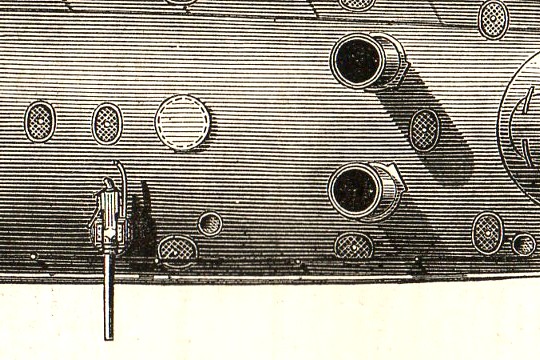
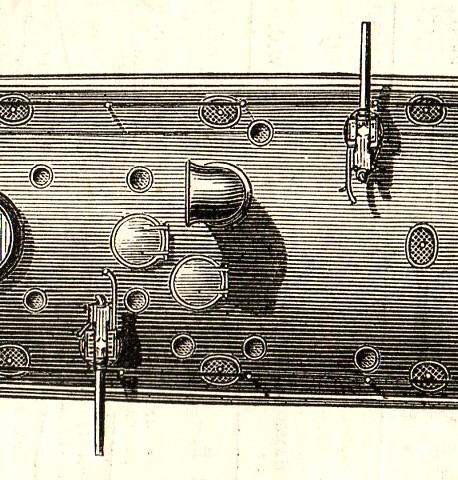
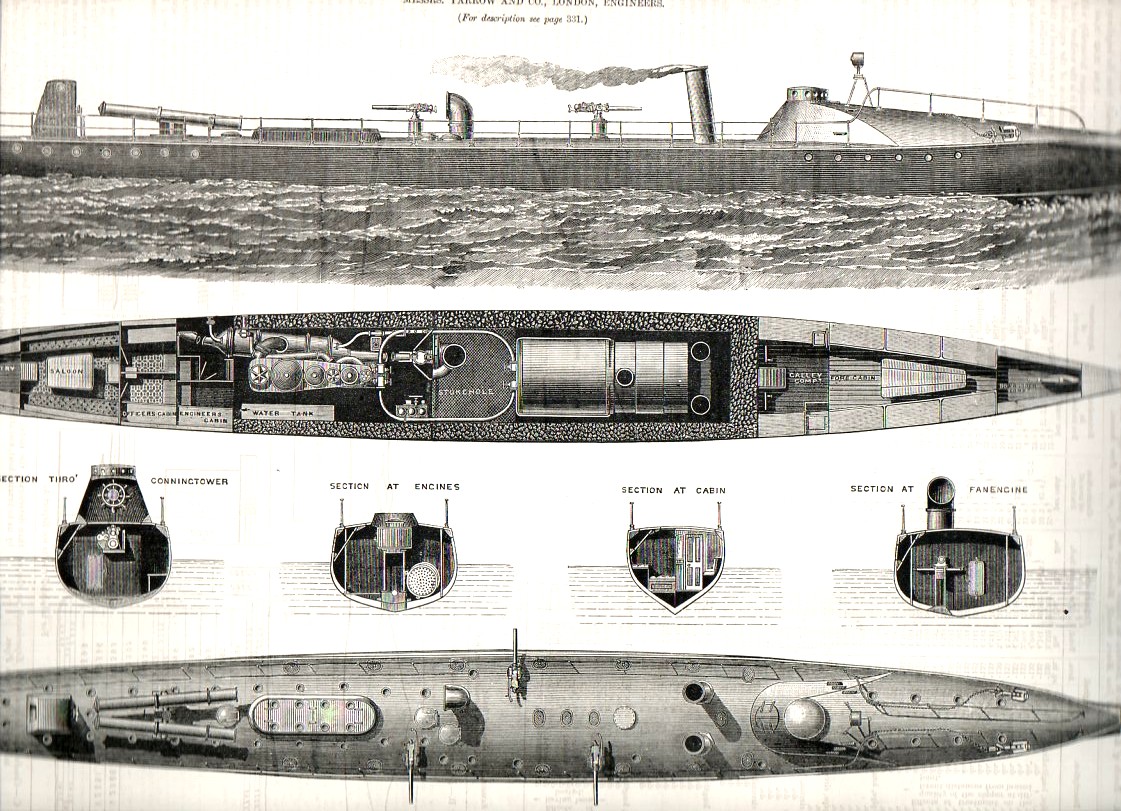
    Horace may have said “Pulvis et umbra sumus” (“We are but dust and shadow”)- and meant it, but the artist working here on this ship would definitely have replaced “dust” with “metal and wood”.  The details above and below are two very small bits (each about a half-inch long or so)  from a 15-inch long engraving of a Spanish torpedo boat, and published in The Engineer on 21 October 1887.  The workmanship is superb and the sense of design to me is absolutely glorious–the entire image of the plan of the ship is below. [The original is available from our blog bookstore.]

    And another detail:

    Shadow ship 516


    Shadow ship 513


  • An X-Ray of Cubism? Jouffret and Visualizing the Fourth Dimension, 1903 and 1906.

    JF Ptak Science Books   Post 1361

    Is this an X-Ray of Cubism?

    Jouffret

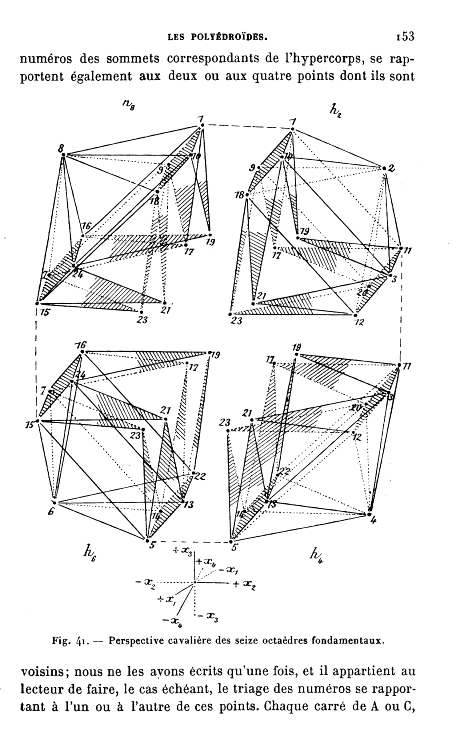
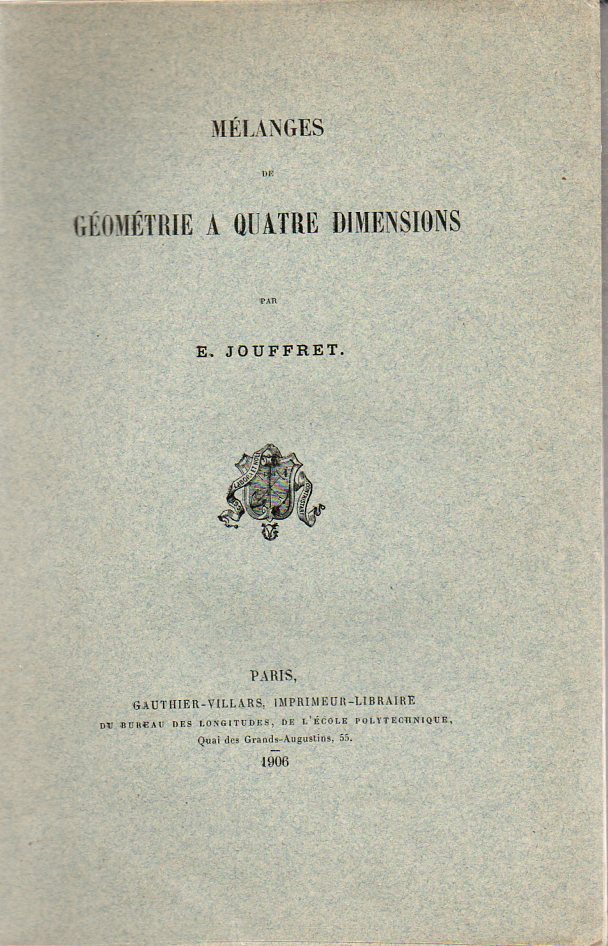
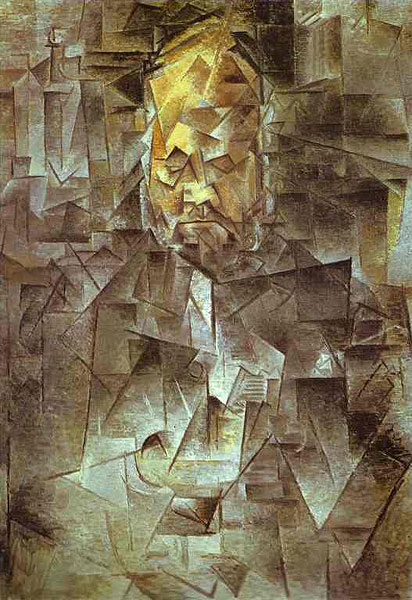
    Emile Jouffret brought an amazing and lovely pair of books to the mathematical dining table, both coming at about the mid-point of a period of perhaps the most sweeping multidisciplinary revolutions in human history.  Published in 19031 and 19062 [and both originals available at our blog bookstore] they both may have had an impact as a visualization tool for the newest movement in art since the creation of Impressionism (1850’s-1870’s): Braque and Picasso’s  Cubism. When you compare the illustrations in the Jouffret books you cannot help but to see a connection to the work of (the morally-lonely) Picasso (and especially in his 1910 portrait of the movement-molding art dealer Ambroise Vollard, below). Georges Braque and the that the two would make in 1906, the first year of the Cubist movement. 

    Jouffret’s 1903 book was hardly the first on the topic, though it may be the first of the major, book-length treatments of the topic, as well as the most  heavily illustrated.  Thinking on the fourth dimension goes back as far as Kant, at least, and the real work begins in the first half of the 19th century.

    The first major3 work arrives with Hermann Grassmann’s “Die Lineale Ausdehnungdlehre” (Theory of Linear Extensions) in 1844 (and the subsequent translations of the work as well as original work by Arthur Cayley); followed by Ludwig Shclafli (1814-1895) “Theorie der vier flachen….” (Theory of Continuous Manifolds, 1852 but not published until 1906), Riemann’s 1854 speech (which was not published until 1867 and which appeared translated by William Kingdom Clifford in Nature in 1873, G.F. Rodwells “On Space of Four Dimensions” (Nature, May 1873),  Dodgson/Carroll‘s  Through the Looking Glass (1872) deep references, Zollner “On Space of Four Dimensions” 

    Jouffret499

    (April 1878 and subsequent publications, and who is referenced in Kandinsky’s [difficult -to-me On the Spiritual in Art of 1912), W.I. Stringham (1847-1909) “Regular Figures in n-Dimensional Space” (American Journal of Mathematics, 1880), and E.A. Hamilton Gordon, “Fourth Dimension”, April 1887, to name some of the major figures.  And then of course comes Edwin Abbott’s Flatland, a Romance of Many Dimensions, by a Square (1884) and Charles Howard Hinton, who published a number of different works beginning in 1880 (“What is the Fourth Dimension?”, 1880 plus Scientific Romances 1884, and The Fourth Dimension, 1904) and lasting through the turn of the century.  There is also H.G. Wells, whose The Time Machine began to appear in parts as early as  1894, though it did appear in the same issue of the  Science Schools Journal as the Hamilton Gordon article, in April 1887, as the “Chronic Argonauts”). Wells’ also approaches the fourth dimension in “The Plattner Story”, in 1896 and The Invisible Man in 1897. Other literary contemporaries of Wells who used the fourth dimension in their work include Oscar Wilde (“The Canterville Ghost”, 1891), George Macdonald (Lilith, 1895), and Joseph Conrad and Ford Maddox Hueffer The Inheritors, (1901)–the most convincing and scientific of all of these literary efforts though lies with Wells. From about this point on–from the time that Jouffret enters the scene in 1903–the fourth dimension has become part of the culture, and a popular culture at that…especially after the Cubists begin their assault on visual representation in about  1906.

    The Jouffret books are beautiful, and very interesting–they would have been better served with a bibliography, which would have been very nice to have–that said, Jouffret does have a fair number of footnotes to earlier work, so it is not as though his work is without attribution.  But it is a very interesting adventure. (Just a note–the fourth dimension and non-Euclidean geometries would get their first bibliography in D.M.Y. Sommerville’s classic  Bibliography of Non-Euclidean Geometry in 1911, which is a must-have for all of those interested in this topic…it is massively packed with all manner of major and minor works as well as obscuriana.  It is not, unfortunately, annotated.)

    1. Jouffret, E.  Traite Elementaire de Geometrie a Quartre Dimensions et Introduction a la Geometrie a n-Dimensions. 

    2.  Jouffret. Melanges de Geometrie a Quatre Dimensions.  Paris, Gauthier-Villars, 1906.  220pp.

    3. Most of the data in this long and winding sentence has been culled from Linda Dalrymple Henderson’s terrific The Fourth Dimension and Non-Euclidean Geometry in Modern Art, Princeton, 1983–most of my references come from the first 45 pages or so of her book, which is the Bible of all modern works on the fourth dimension/math/physics/art.

    Picasso_vollard1910


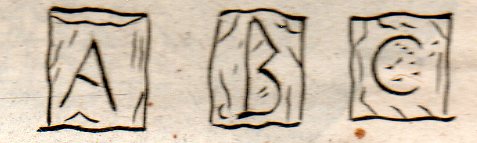
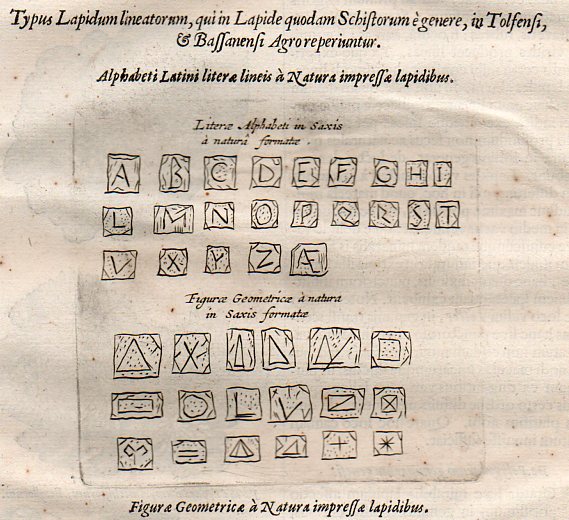
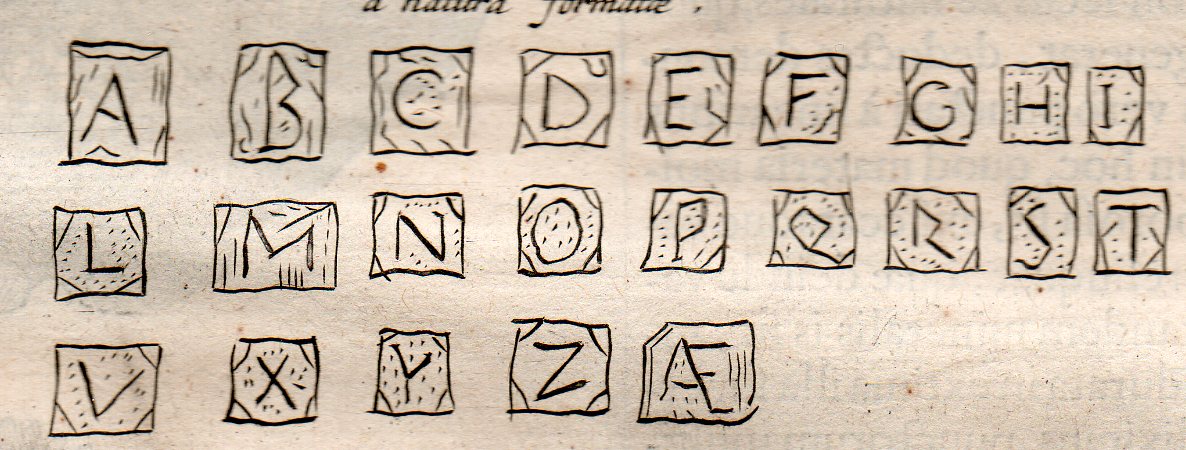
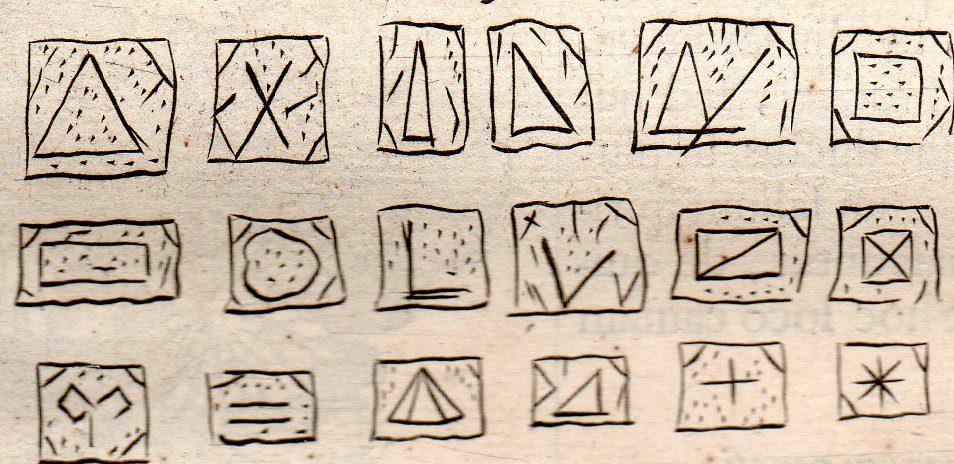
  • Found in Stone: (1) Alphabet and (2) Geometrical Forms, 1664

    JF Ptak Science Books  Post 1353

    Kircher--alpha bet477

    I wrote about Athanasius Kircher’s Mundus Subterreaneus (1664) a few days ago (in “Birds With Stone Wings”, here and elsewhere), particularly staying within the first section of the eight book of Mundus, De Lapidibus, in which he investigated stones, gems, fossils and then “found figures” in agates. 

    Kircher--alpha bet476

    Kircher did not believe that finding these symbols in stone were a direct consequence of any supreme anything, recognizing that they were formed and collected by chance. He did formulate some interesting and early and sometimes-correct observations on the evolution of languages, but was entirely constrained by the authentic history as presented in the early books of the Bible.  While recognizing that languages of a certain region are or could be relational, and that the Romance languages were a corruption of Latin and that there was a  Semitic and Graeco-Latin connection, they were all necessarily descendants of Hebrew, which was the language given by the creator to man, mystical symbols handed down from Heaven to Adam.  And so it goes–I guess that you can only take so far as imposed limits like that allow.  Horizon Aeternitatis.

    [The original image is available for purchase from our blog bookstore, here.]

    And in detail:

    Kircher--alpha bet479

    And then of course the stone-found geometrical figures:

    Kircher--alpha bet478

      These engravings of the originals in Kircher’s cabinets of curiosities did take some sharp-eyed sleuthing and gathering. 


  • Newspapers and Music in Bedlamia, 1850’s.

    JF Ptak Science Books   Post 1348

    Two short tales of attending the needs of the mentally ill in the 19th century:  asylum journals and treatment of mania via music.

    In the world of the treatment of the mentally ill, or of the possibly “deranged”, or the poor confused, or the old and demented, or the depressed of all ages, there have been some uncommon instances of creativity and rehabilitation in the constrained early days of warehousing patients, or inmates.  One example of this was the newspaper/journal called The Opal, which was published–extraordinarily–for ten years (1851-1860, in ten volumes and 3,000 pages) by the inhabitants of the State Lunatic Asylum of the State of New York at Utica.  This illustration–which is so far as I is (unfortunately!) the only image in the journal and is repeated month-to-month–depicts, I guess, the editor of the journal, in a cell, and with a terrified or manic or at least sharp-eyed thousand-yard gaze.  It is an unusual statement by the artist, perhaps, that the stone wall behind the editor’s bars look somewhat like the books bound with raised bands that are on the inside of his cell.  I’m uncertain as to whether this was a message, or whether this picture is just a picture.  But it is certainly odd to draw such a portrait of the editor of The Opal–greasy hair, sunken eyes, mouth ajar, crazy-gaze, and hardly very sympathetic.

    And the title page of the journal:

    Given the time, it is remarkable that such an enterprise occurred and lasted as long as it did.  It must have been an extraordinary aid to the people in Utica, allowed an avenue to express themselves, allow for creativity, allow for some independence of expressive thought  It was put loud and clear in the volume for 1854, on page one, in a bit called “A Message to Our Patrons”: “Forty-eight months [that’s four years since the beginning of the journal] have vibrated their moments on the engagements and extensions of the Opalians. The divine art of printing has conveyed through numerous and constant agencies the heraldry of Asylumian intellect, and in the varied developments of society, our paper hath been insinuated by the gentleness of humanity, and reciprocated in a fourfold state the harbingers of progression in kindness by exchanges, whose opening leaves hath borne refreshment from the wines on the lees of humanity, well refined by the studied graces of purity, sense, discretion and knowledge, to the great comfort of this retirement, hallowed by the superintendence of wisdom and virtue1.”

    The italicized “our paper” appears int he original. 

    And this example of trying to step somewhat beyond the modicum of dispensing agents for settling a “maniac”–a person it seems suffering from a manic stage.  Doctors and attendants tried to treat the patient with an assortment of narcotics, but they didn’t work; very liberal applications of btrandy occurred, which caused some sleepiness, but after two days the man woul dbe getting sleepy, anyway.  And then came the desperate measure (so to speak):  music.  It was certainly nothing new, really, the calming effets o fmusic having been know deep into antiquity.  Why it was not mor eliberally applied in mental institutions, I don’t know.  The case and description are found in the American Journal of Insanity (later the American Journal of Psychiatry) for 185 8:

    “The symptoms indicated, as it seemed, the prompt use of narcotics. Morphine was therefore given in doses gradually increased, till at the end of 48 hours, 3 gr. at a time, with strong laudanum injections, had been administered. This treatment seeming to have little or no effect, was abandoned and other means, such as baths, counter irritants, stimulants, djc &lc, resorted to, with but slight amelioration of the alarming symptoms. The patient had now continued in this state three days and nights, without sleep, and with little or no food. Pulse much of the time 120. Countenance anxious and sunken, presenting every appearance in fact, of approaching final prostration. Of the means above mentioned, the administration of brandy, in often repeated and large doses, seemed to act most favorably and effectually. Under its use the pulse came down to about 100. The patient also became more quiet* and manifested a slight disposition to sleep.

    “At this time, it was suggested by the father, that his son had always manifested a remarkable fondness for music, and that when a child, sleep had often been produced by it. A violin player was accordingly sent for, and the effect of his art tested upon the patient, with the most remarkable and immediate favorable effects. The nervous excitement began to abate at the sound of the fiddle, and in a very short time, the patient was in a sound sleep, from which he awoke in an hour or two much refreshed and nearly rational. By continuing the brandy, and when nervous excitement began to manifest itself, an occasional quietus from the fiddle, this singular state of mental excitement was, in a few days, entirely and permanently subdued.”

    In general, the 1850s were not a good time to be in a mental institution in the United States–or anywhere else for that matter.  There were 3700 people or so institutionalized in America at the time of the two stories (above).  It was really just about at this time that a national effort began to be organized to treat the institutionalized people more as patients than as inmates. 


    ____

    Notes:

    1. “In the diffusion of thought by the arts, its curiosity and character are enhanced by the manner in which it is communicated; and the respectful interchange of sympathy, and of emotions incident to nature that assimilate and affiliate the multiform interests and conditions of the human kind are so promoted by interchanges as to excite a brotherly regard for the correspondences, and a desire to advance their intelligences anew, when apprehended as the instrumentality of reasonable reliances.”

    Also this:

    Asylum Life; Or, The Advantages Of A Disadvantage, from The Opal


    Page 1:

     
    1  

    I have no care for copper or coin,
    I have no fear of any one’s frown;
    I’m fed by the hand that feedeth the best,
    And seldom molested is my sweet rest.

     
    2  

    I have walks to take, and news to read,
    With chit-chat and work the hours to speed;
    Good company, age, as good as the great
    Who have the charge of the “Empire State.”

     
    3  

    When ill, we have nurses; kind they be,
    And doctors too, without extra fee;
    When well, we can leave for homes far and near,
    While the Word of Life may be conned with care.

     
    4  

    Though sad, we may wait till brighter we grow,
    And health and good humor our faces make glow;
    When merry music may lend us her thrall,
    And consoling each other be less sad withall.

     
    5  

    And Love may abide, defended by prayer,
    And our hearts and our hopes be brightened elsewhere;
    We may write to our homes, and see our dear friends,
    And contented and blessed our destiny ends

    ·Posted by :

    ·in:

    — — —