A Daily History of Holes, Dots, Lines, Science, History, Math, Physics, Art, the Unintentional Absurd, Architecture, Maps, Data Visualization, Blank and Missing Things, and so on. |1.6 million words, 7500 images, 4.9 million hits| Press & appearances in The Times, Le Figaro, Mensa, The Economist, The Guardian, Discovery News, Slate, Le Monde, Sci American Blogs, Le Pont, and many other places… 5000+ total posts since 2008.

Category: Perspective

  • Technology as Language: the Kindle & Edison’s Phonograph

    JF Ptak Science Books LLC  Post 894

    My wise friend Jeff Donlan wrote me the other day about
    being momentarily stopped in his tracks on hearing a friend saying that they
    were reading their (news)paper on a kindle. Being a bookman and a librarian, his
    mind’s eyebrows were raised at the irony of the digital “paper”, and then
    pressed on.  Kindle may well be on its
    way to transforming our concept of the “paper” part of “newspaper” and paper
    –printed books in general, and again may be the biggest leap in the
    transformation of the distribution of knowledge since the beginnings of the
    mass popularization of the internet. I wonder if kindle-esque innovations will
    put and keep the word “paper” in quotation marks (or in a Maris-like asterisk*)
    and place paper-based info distribution into the antiquarian’s domain. Seems that this is the natural order, a steady progression,
    to make communication among our kind simpler—and if not more simple, then
    providing more data with greater ease than previously imagined.  And I’m not talking here about discussing some
    sort of massive abecedary, working from Ugaritic proto-Canannite pre-Phoenician
    pre-Greek- alphabet and so on; just an outline of the major deals:  moving from spoken word like Thucydides
    oceanic memorization and recitation of the Greek cultural cornerstones of the Iliad and Odyssey) to dramatic traditions to written stories to Medieval
    copyists to woodblock printing to movable type1 to, well, what, the
    internet?  And then to kindle-like
    machines?  
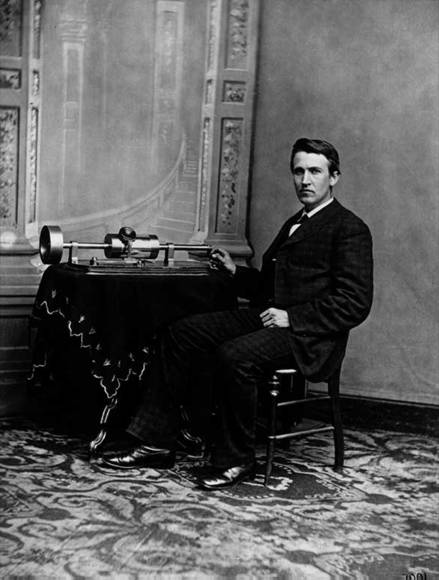
    Edison phonograph But before the modern kindle there was perhaps a kindle-like
    precursor that snakes its way in history to (at least) the very capable hands
    of Thomas Edison, who in a furious few years in the mid 1870’s2 invented the
    light bulb and the phonograph3 (the later coming as a direct byproduct on work
    done on the telephone and telegraph).. He celebrates his phonograph in the North American Review (May 1878)4 and
    then lists what he saw as the readymade faits
    acomplis
    of the phonograph, the first of which was weirdly/spectacularly
    worded:   “1. The captivity of all manner
    of sound-waves heretofore designated as fugitive, and their permanent
    retention.”  Do you hear a soundtrack
    with that description?  I did.  He proceeded with less fanfare: “2. Their
    reproduction with all their original characteristics at will, without the
    presence or consent of the original source, and after the lapse of any period
    of time. 3. The transmission of such captive sounds through the ordinary channels of
    commercial intercourse and trade in material form, for purposes of communication
    or as merchantable goods. 4. Indefinite multiplication and preservation of
    such sounds, without regard to the existence or non-existence of the original source. 5. The
    captivation of sounds, with or without the knowledge or consent of the source
    of their origin.”

    Edison then goes on to list what he saw as distinct
    “possibilities” for the use of the phonograph in the not-too-distant future.
    There are ten major prospects, the “bookish” aspect and the first major assault
    on the way we read is listed fourth (though he wasn’t necessarily weighting his
    list in any way).  Some of the others in
    this list (all of which cam to fruition) include: 1.Dictation and letter writing—using the phonograph to
    record letters and correspondence, which was baldly aimed at the business and
    corporate trade as the machine was relatively difficult to operate and
    expensive. 2  Phonographic
    “books”. I noticed that that Edison did not
    change the word “book” in any way, even though the book is no longer there with
    the application of the phonograph, just the read and spoken words.  “Books may be read by the charitably-inclined
    professional reader, or by such readers especially employed for that purpose,
    and the record of such book used in the asylums of the blind, hospitals, the
    sick-chamber, or even with great profit and amusement by the lady or gentleman
    whose eyes and hands may be otherwise employed; or, again, because of the
    greater enjoyment to be had from a book when read by an elocutionist than when
    read by the average reader.” 3. Family records. “For the purpose of preserving the sayings,
    the voices, and the last words of the dying member of the family [emphasis
    mine] as of great men the phonograph will unquestionably outrank the
    photograph.”4. Toys:  “A doll which
    may speak, sing, cry, or laugh, may be safely promised our children for the
    Christmas holidays ensuing. Every species of animal or mechanical toy such as
    locomotives, etc. may be supplied with their natural and characteristic
    sounds.”

    Edison
    continued, writing on the phonograph’s application for the study of elocution,
    speaking clocks, language preservation (as in documentation of the proper way
    of speaking a certain language, something that would’ve come in handy in the
    spike of disappearing languages at the end of the 19th century),
    telephone recorders and pedagogical lessons.

    But
    this is all a little far afield from the kindle aspect. Is
    the development of things like the kindle another step in the metaphorical
    development of a technological alphabet? 
    Like developing an alphabet for a language, where there are a finite
    numbers of symbols that elegantly possess the capacity to transmit all of the
    words of a spoken language, is there a corollary for something that makes
    systemic sense for the technological transmission of knowledge? I guess the
    question would be whether the development of the kindle (and so on) provides
    another step towards the completeness of what now stands as a chaotic
    environment of information and knowledge distribution?=I
    don’t think that there is yet a driving, poetic sense to these new
    technologies. The new media provide the means to information but not
    necessarily the way to it.  They also
    don’t lend themselves to memorization, which in the old semi-mnemonic days was
    a way to not only record info but also to help understand it by enforcing
    prolonged exposure and thought.  With as
    much data that is daily available, perhaps new information is simply filling
    memory holes on the vast hole-ridden plane that is the fabric of the new way of
    gathering information.  I have little
    doubt that in the next revolutionary step in this whole process will be more
    knowledge-based than suffering under the weight of primitive
    search-engine-based data retrieval of today. 
    I’d say that once the alphabet of technology is more complete, and that
    the issues of search, organization, storage and retrieval makes more sense,
    that it may well then leave paper behind. 
    And perhaps after the power and elegance of having a knowledge system
    like this that the next giant step would be not having the devices simply with
    us, but in us.

    Notes

    1. It is interesting to note that among the first items
    printed on movable type presses were 
    packs of tarot cards and religious indulgences (get-out-of-hell cards).

    2. For an annotated chronology of some of Edison’s
    career see HERE.

    3.Edison presented his invention at the offices of the Scientific
    American
    in New York City, the magazine reporting the event in
    its  22 December 1877 issue:
    “Mr. Thomas A. Edison recently came into this office, placed a little
    machine on our desk, turned a crank, and the machine inquired as to our
    health, asked how we liked the phonograph, informed us that it was very
    well, and bid us a cordial good night.” Edison
    applied for his patent for the highly original invention on 24 December,
    receiving it on 19 February 1878 (patent # 200,521). He would soon lose
    interest in this invention and move onto other big things (inventing, for
    example, the biopolar dynamo in the next year); it would be Emile Berliner
    (1851-1929, and who invented the microphone in this same year) to improve
    the phonograph and make it more affordable and accessible and increase its
    utility immeasurably. 1877 also saw the publication of Rayleigh’s superb Theory of Sound and Boltzmann’s
    revision of the second law.

    4. Source here.

    Of further interest:

    For general browsing in 19th century journals see
    the invaluable Library of Congress contribution

    Rutgers houses the Edison papers here.

    “Clocks Which Will Talk: The Wonderful Possibilities of
    Edison’s Invention.”
    New
    York
    Sun (April 28, 1878). TAEM
    25: 173-174.

    “The Phonograph and Its Future.” Scientific
    American Supplement
    124 (May 18, 1878): 1973. TAEM 25: 269.

    “The Phonograph and Its Future.” North
    American Review
    126 (May-June 1878): 527-536. Reprinted widely. TAEM
    25: 198-199.

    “To the Editor.” New York Tribune (June 8,
    1878): 5.

    “The Phonograph and Its Future.” Telegraphic
    Journal
    6 (June 15, 1878): 250. TAEM 25: 265.

    “To the Editor.” New York Tribune (June 27,
    1878): 5. Reprinted in Engineering [see below]. Not selected.


  • The Battle of Berlin, 1935

    JF Ptak Science Books LLC  Post 869

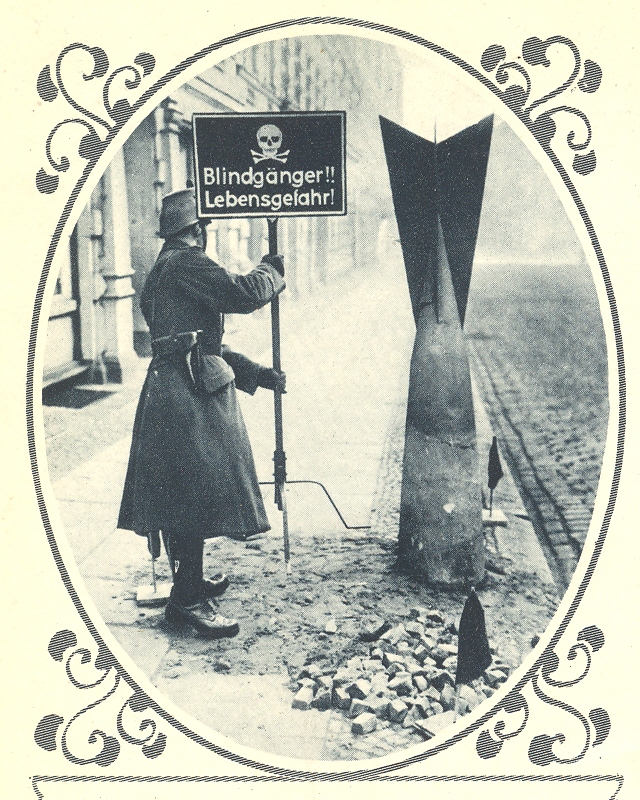
    Blog 12 8 bomb


    Well, it wasn’t really a battle, but the Nazi government was
    getting ready for one. As reported in this 30 March 1935 issue of The
    Illustrated London News
    .  There was an
    elaborate preparedness drill conducted in the Kreuzberg district of south Berlin ten days earlier—“the
    most realistic air raid exercises ever planned”. 

    The Germans attacked themselves with scores of low flying
    planes that dropped “deafening” false bombs; meanwhile the streets were swirling
    with gases that smelled like poison gas, cars were blaze, abandoned buildings were
    lit up with pyrotechnics, and there were heaps of rubble here and there.  The population not otherwise engaged in
    defense measures were all sent to evacuation shelters and centers.  There were drills for gas attacks and
    subsequent decontamination, firefighting, saving people from collapsed
    buildings, caring for children and the elderly, aid stations, medical triage,
    and so on.  Anti-bombing measures were also
    taken for nighttime raids, with blackouts, and general light-lessening measures
    on all levels and quarters—for example, streetlights and street sign lamps were
    replaced with much lower wattage bulbs.  It
    looks like it was a pretty big event–I’ll have to check my Illustriete Zeitung/Leipzig for the
    German coverage.


    Without being an historian of the 1930’s preparations for
    war defense, it seems to me that there was an awful lot of this going on in England, France
    and Germany
    through most of the decade.

    [The illustration above is a charming overstatement of the obvious, right down to the little flaglettes on either side of the (500-pound ?) bomb.  The sign reads “Closed Thoroughfare//Danger to Life” (sorta).

    I doubt that there would be that much need for a sign or flags, but if I was going to use anything at all I might place it a little further away from the unexploded device.  (I can just imagine people inching forward to be able to read what the relatively small print on the sign actually said…)


    At this point it may be interesting to have a look at an
    older post here on the creation of the false Paris. 


  • Found Dadaist Art–Floating Eyes and Ears, 1650 & 1807

    JF Ptak Science Books LLC Post 857

    Dada found--tp I’ve
    written a few times in this blog (here, here and here) about what I think is
    found/unintentional antiquarian Dadaist art and would like today to continue
    that thread with the following two unusual pieces of art.

    The first
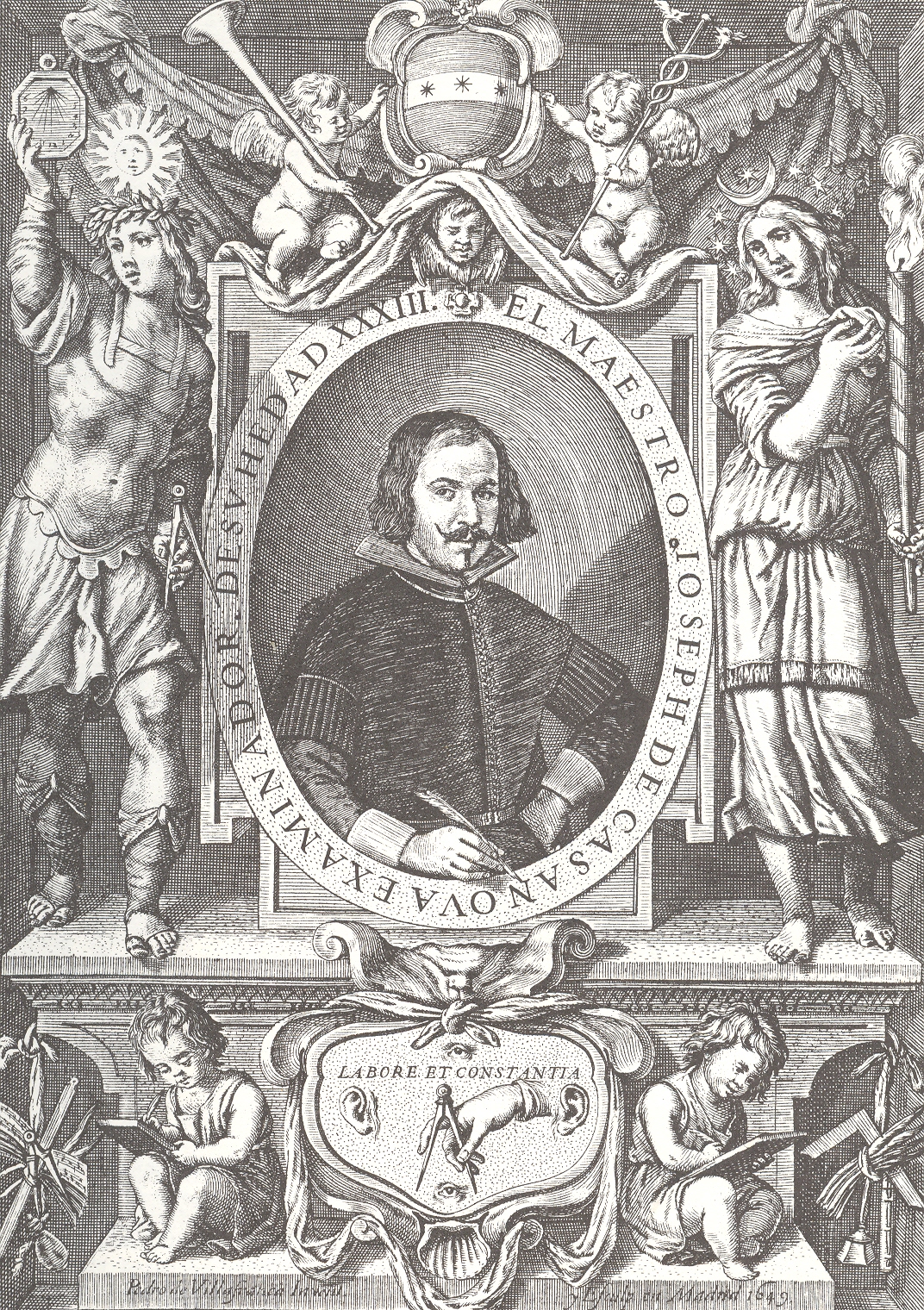
    is a detail from the title page of Joseph de Casanova’s Primera parte del
    arte de escrivir todas formas de letras
    (1650). This is not the Casanova (Giacamo,
    1725-1798) who most people would initially think of—the seductive womanizer of
    the 18th century—but another, earlier, Spanish Casanova (1613-1692)
    who was important in the history of round hand script and the lettera bastarda.  Joseph Casanova ‘s evolutionary handwriting
    style was considerably lighter and easier than most styles, and his influence
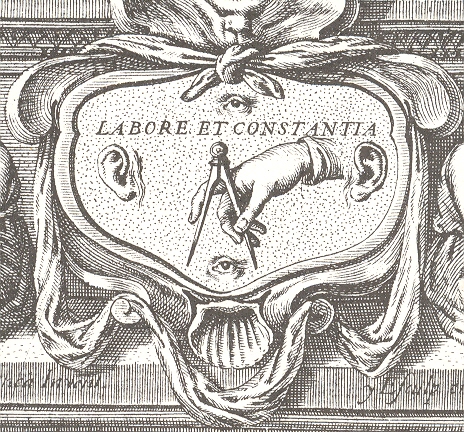
    in changing handwriting practices was substantial.  What is interesting for me is the detail at
    the bottom of the engraved title page for his book, the emblem containing  “Labore et Constantia”.  Labor and consistency, decorated with a hand
    and compass, ever watching and listening with ears and eyes above and below.Dada found--tp detail

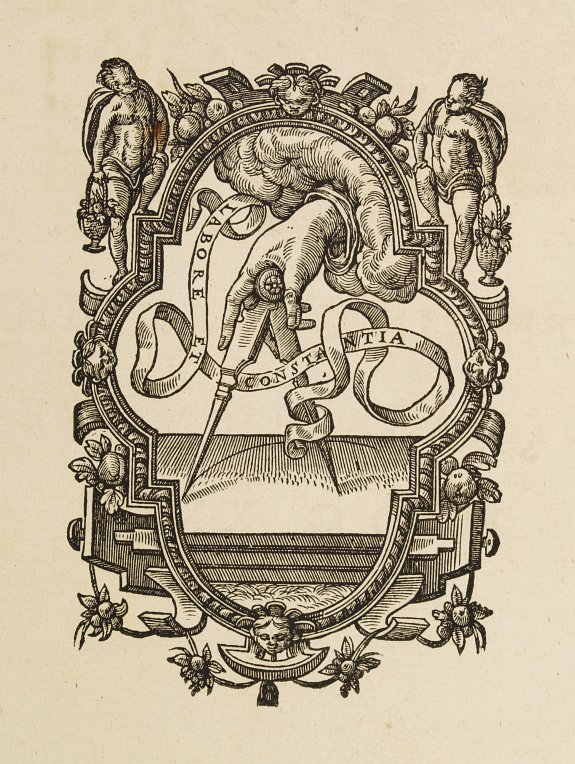
    [This
    design comes from (at least) one earlier source—the printer’s device for Christoph
    Plantijn (Antwerp,
    1583), though without the eyes (below).] I like the floating aspect of the disembodied
    body parts, floating in their little sea of constancy, ruled by a compass. 

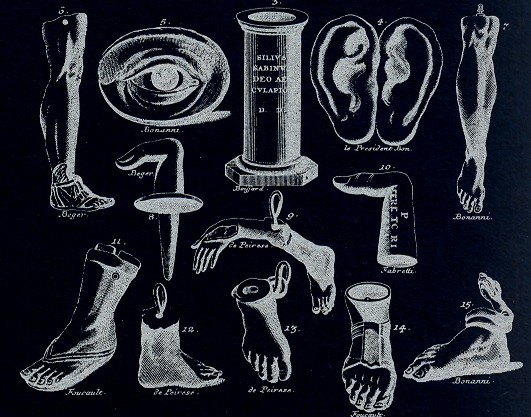
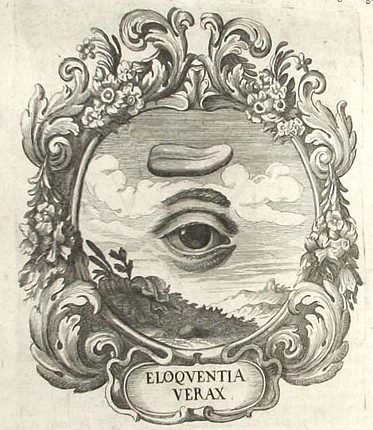
    Dada found--multiples  The
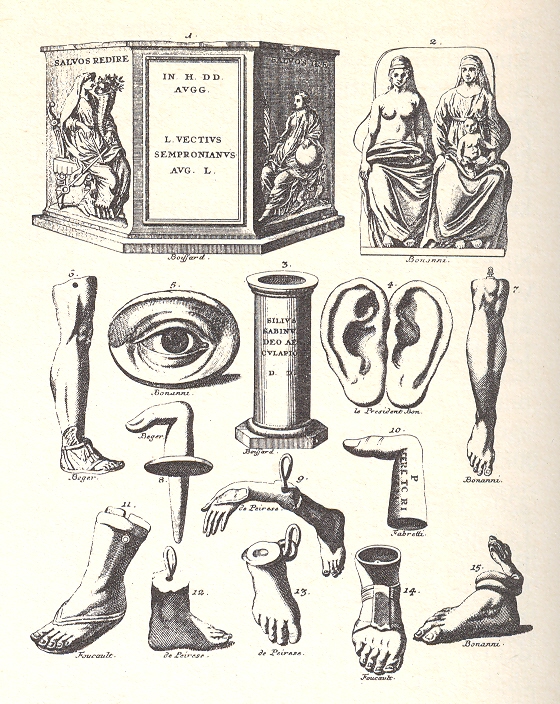
    second image has another set of disembodied eyes/ears (among other things) and
    has all the flavor of the dada/surrealist flourishes of the frammenti of Piranesi.
    This comes from Bernhard von Montfaucon’s Greichische,
    Romische und andere Alterthuemer…
    (Nurenberg, 1807). When taken out of
    context, as a disembodied image, the von Montfaucon certainly has a dadaist taste
    for me, especially if you edit the image a little.

    Dada-found labore 

    Dada found 2--multiples


  • Examination Photos, 1895-1943

    JF Ptak Science Books LLC  Post 891

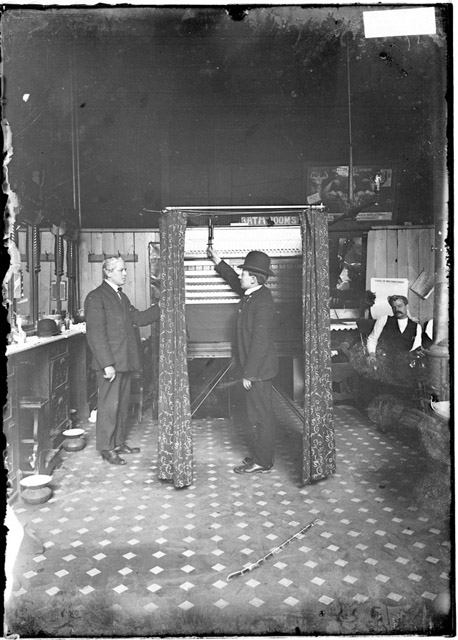
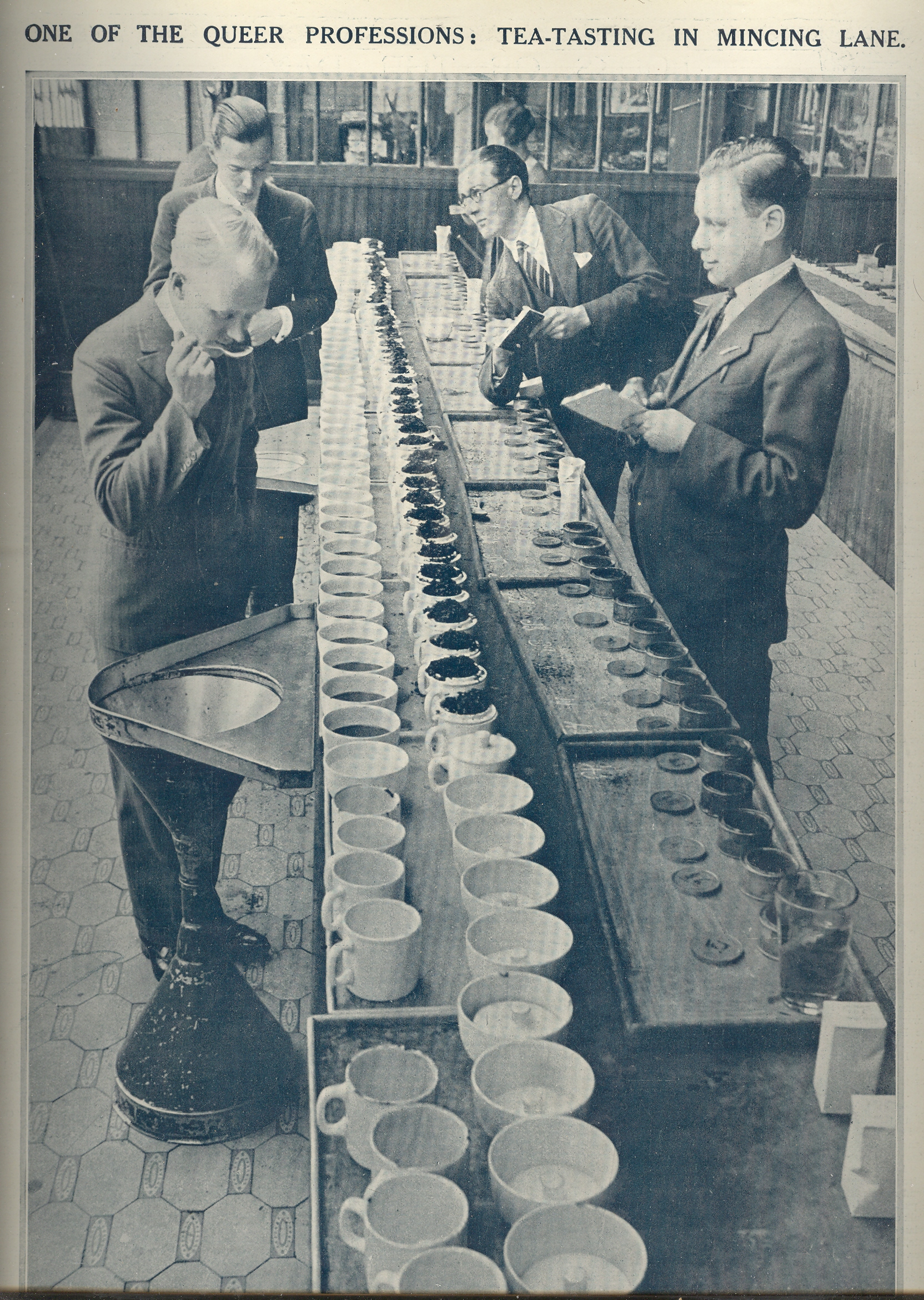
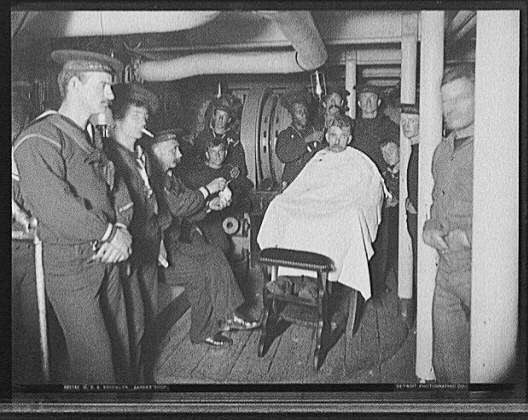
    I suddenly found myself with a short virtual stack of interesting early-century photos featuring examinations of one sort or another.  There’s nothing here for exams at school (which makes me think about when the first graded school test was invented), but there are some other interesting images of exams.

    For example, there’s this odd picture of two guys inspecting the installation of a voting booth in Chicago in 1905.  There’s nothing wrong with this, no sir, not since we’re in Chicago, which never has had any sort of voting irregularity–perhaps that’s why I get such a creepy feeling from this image.

    Blog dec 29 exam voting barber

    This picture has everything going for it in a fabulous way, from the poses of the tester and the examiner (who is standing in a Hitchcockian manner, a thin man in a fat man pose) to the row of cups, to the size of the spittoon, to the slightly dirty and occasionally chipped cups, to the title of the whole thing.  Mincing Lane.  I understand and commend the need for quality control, but the picture does have its odd elements.  (I’d like to know the name of the interpids pictured here; or, rather, their nicknames.)

    Blog dec 29 tea

    Evidently the men aboard the USS Brooklyn  had little to do during unspecified doldrums than to watch and critique the ship’s barber.

    Blog dec 29 barber exam ship 

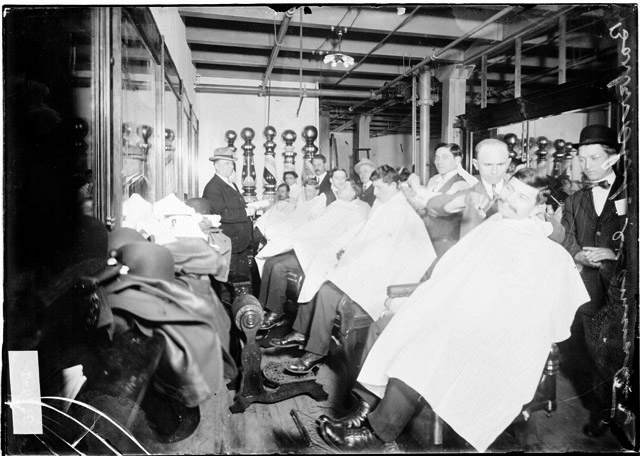
    Then there are the professional barber-and-haircut-watchers, shown here at a barbering school examination in 1903:  five crowded chairs and a few men in hats.

    Blog dec 29 exam barber 

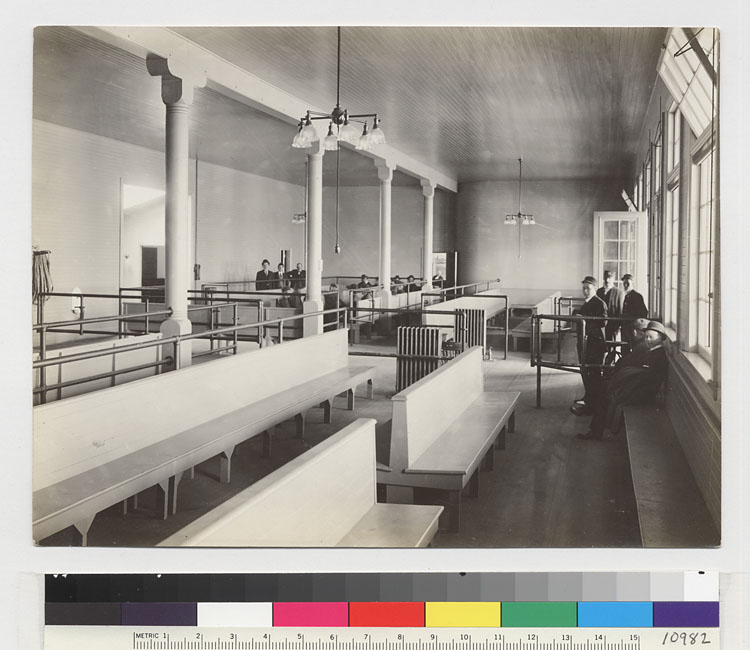
    The big, white, filled-but-lonely room at Ellis Island, where you either got in, got quarantined, or got sent back home.

    Blog dec 29 exam room ellis island

    I’m not sure what this nurse is doing.

    Blog dec 29 nurse exam

    This nurse is administering an exam to a newcomer at one of the American Japanese internment/prison camps sometime around 1943.

    Blog dece 29 japanese exam 

    There are undoubtedly many more of course, but that’s the lot available on the desktop right now.


  • “Irish Tommies”, German-Conquered England, and Loyalties

    JF Ptak Science Books LLC  Post 888

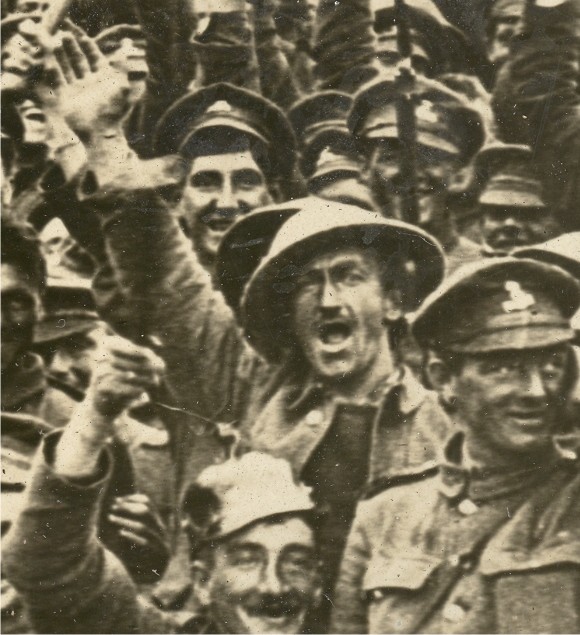
    Blog dec 26 irsh tommies

    In the heavy mist of the Civil War, where brother fought brother, there was another sort of fratricide, of countrymen removed from their homes, finding themselves in America and there fighting against one another in opposition. Such is the case of the Irish in the American Civil War, where 180,000 of the immigrants fought in the war, with 30,000 fighting in butternut, and 150,000 fighting in blue.   The Irish faced one another across battlefields like of Appomattox, Malvern Hill, and especially Antietam, along the Sunken Road.

     Blog dec 26 irsh tommies det


    Blog dec 26 irsh tommies det2

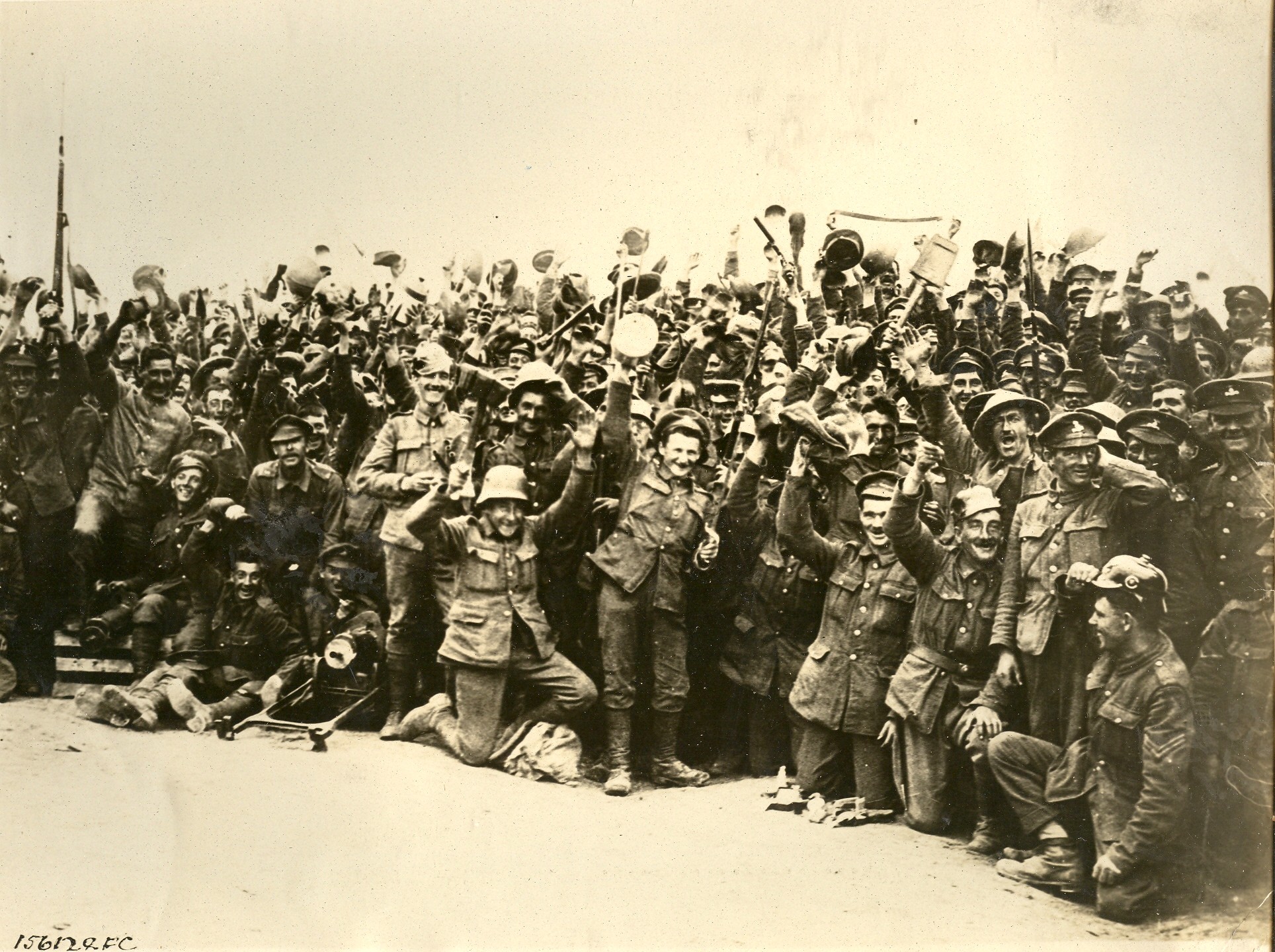
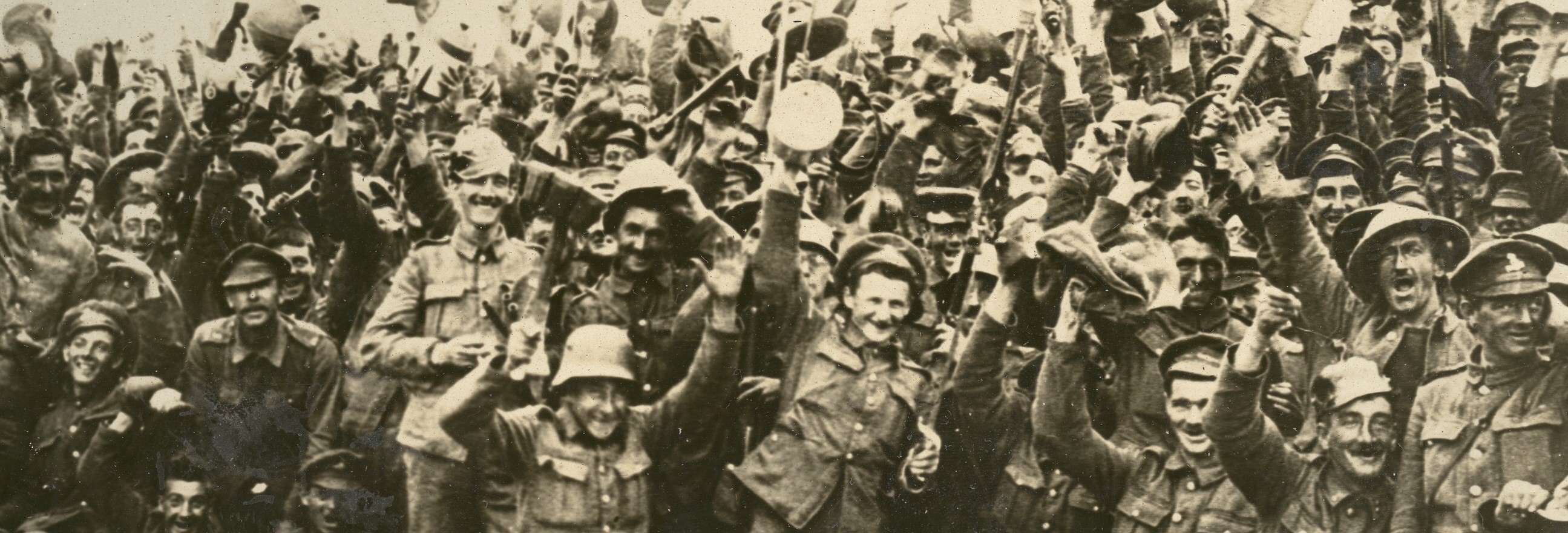
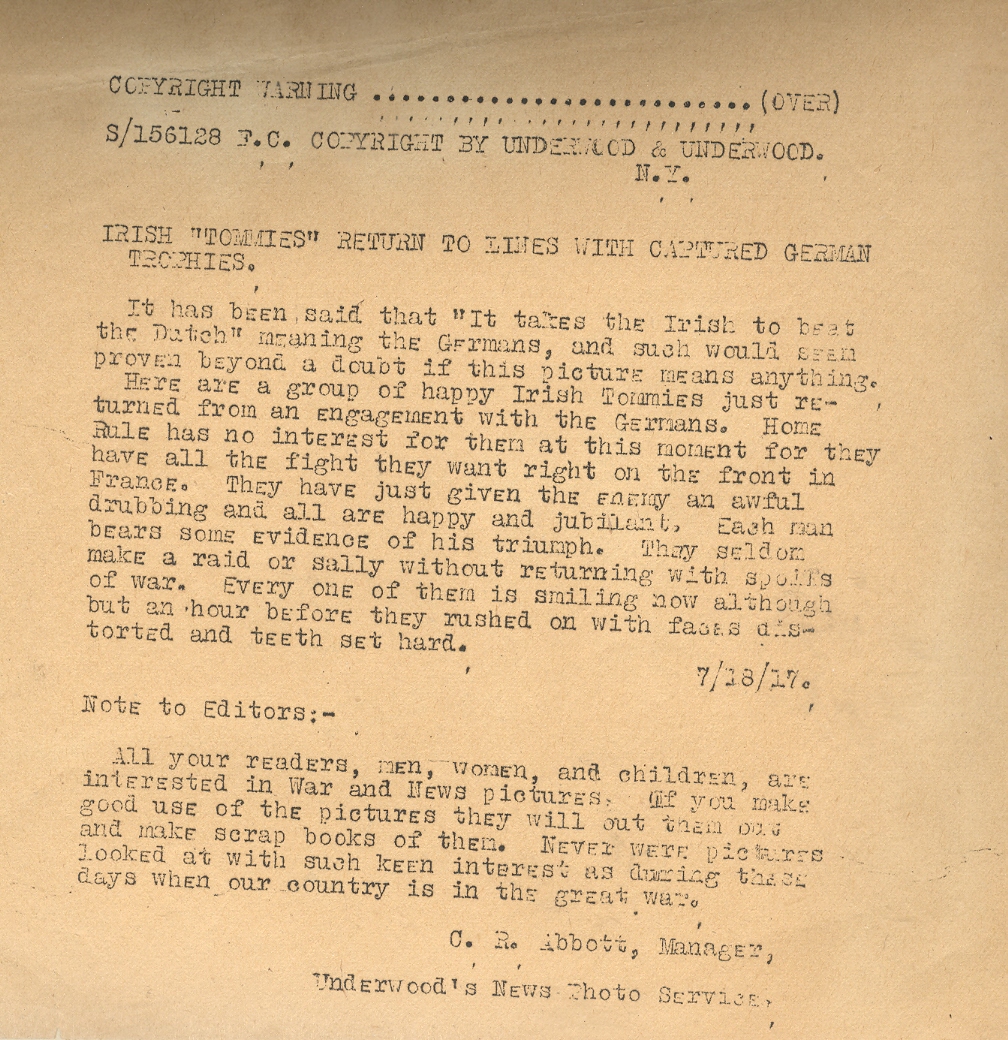
    I was thinking about the American Irish of New York and Pennsylvania and Louisiana and Texas of 1864 while looking at this Underwood & Underwood New Photo Service photograph of the “Irish Tommies” of WWI.  It shows a large group of Irishmen displaying their trophies taken from Germans, and dated 18 July 1917. This was also a period of terrific change and hardship, what with the Easter Rising of 1916 and the Proclamation of the Irish Republic (24 April 1916) having taken place just a year earlier

    Blog dec 26 irsh tommies text  

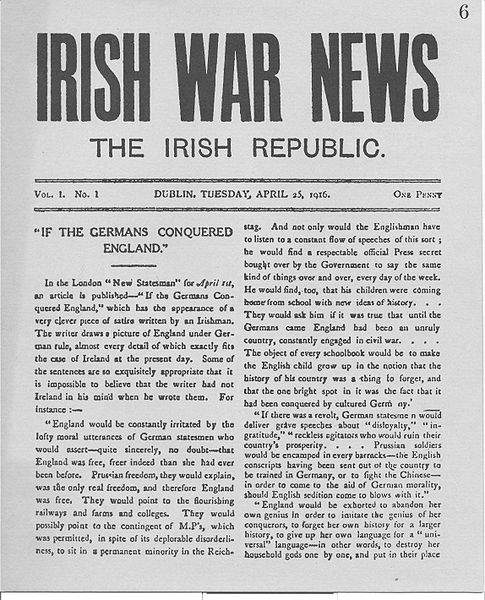
    I don’t know what it meant to be Irish and fighting with the Brits during the war, during this time of Trouble and upheaval (the enemy of my enemy bit come to mind).  It is interesting to see this piece by Sinn Feinist and Irish Republican Robert Lynd in the Irish War News, “If the Germans Conquered England”, and making elegantly and cleverly making the case of superior similarity between the British in Ireland and the Germans in England.  I know it is far off the mark to think about black slaves

    owned by the Cherokees sold into service to fight for the Confederacy, but maybe not so very far off….

    Irish news (Irish War News source)

     
    Read the full text by Robert Lynd IF THE 
    GERMANS CONQUERED ENGLAND, AND
    OTHER ESSAYS
    Printed by George Robert, Dublin, 1917.


    The article begins:

    “When a small tradesman applies for exemption from military service on the ground that his business would be ruined by his absence, a question that is often put to him is: “What do you think will happen to your business if the Germans win the war ? ” As a rule the tradesman does not know what to think. He has no means of measuring world-catastrophes. He has not Dr. Johnson’s short way with questions to which there is no answer. In the first place, the small tradesman does not believe in the possibility of a German victory. In the second place, he has not the slightest idea what would happen to his business as the result of one. Perhaps, however, he knows as much about the matter as the members of the tribunals. All of us know that a German victory which involved the conquest of England would make life intolerable for Englishmen until the conquest was undone. But as to its effect on small businesses, that is another matter. It is quite possible that the little grocery, the little tobacco-shop, and the confectioner’s would be able to hold up their heads under German rule as under English. The valid argument against a German conquest is not that it would make an end of the small business man ; it is that it would make an end of a free England. If it could be proved that a German conquest would add twenty-five per cent, to the incomes of all Englishmen, even that would not make it tolerable. Most men in all nations are ready to sacrifice their lives in order that their country may be free.”


  • On the History of Normalcy: Oskar Sclemmer & Dance, 1927

    JF Ptak Science Books LLC  Post 876 

    Jean Bouillard (the famous physician), Joseph de Lalande
    (astronomer and director of the Paris Observatory), the Paris Academy of
    Sciences, the French Academy of Sciences, Jacques Babinet, and the University
    of Bologna are examples of people and entities sharing something fantastically
    uncomfortable—they all ridiculed the initial presentations of what would become
    some of the most magnificent achievements of the last 500 years.  Bouillard incredibly and improbably insisted
    that Edison’s phonograph was impossible and a hoax, Lalande thought it utterly
    impossible to fly, the Paris Academy found it absurd that steam could be applied
    to locomotion, the French Academy rejected Lavoisier’s findings that meteorites
    do indeed come from space, and the great Bologna
    spat on the idea of Galvani’s researches. So it goes.  There are thousands and thousands of cases
    like these.  Jenner, Semmelweis, Galileo,
    Harvey, Copernicus—all produced monumental achievements, and all faced
    incredible scorn and rebuke. Some had it even worse than this: Dante, Marco Polo,
    Walter Raleigh, Cervantes, Cellini, Voltaire, Pushkin, Turgenyev, Dostoyevsky,
    Baudilaire, Verlaine, Machiavelli, and etc.(and Galileo) not only found vast
    rejection, but were also imprisoned. (Some actually produced works in prison
    that would also be rejected: Raleigh wrote his
    history of the world in the White Tower, Pushkin, Eugene
    Onyegin; Marco Polo, his travels.  Plato
    of course was also sold as a slave.) This list in general could go on and
    on–an encyclopedia of mistaken thought and stubbornness could easily be
    produced from centuries of thought like this, thinking that went outside the
    boundaries of “normalcy”. 

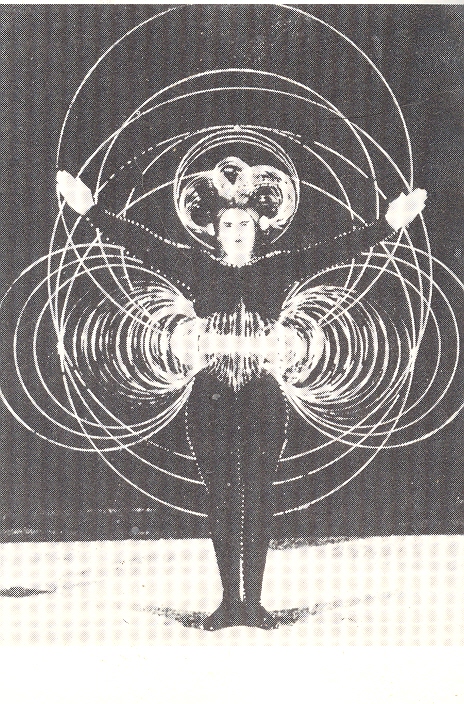
     Blog Dec 14 schlemmer

    The funny thing about “normalcy” is that all it seems to
    measure is the time it takes to move from one state of “normalcy” to the next.  People should know better than to expect that
    there should be no periods of extended non-change.

    It is interesting to think about how new ideas like these
    are perceived.  I came to think about
    this searching for a picture of the wire costume for the black series in Oskar
    Schelmmer’s (1888-1943, designer, artist, dancer and by 1923 the Master of Form
    at the Bauhaus) Triadic Ballet (“Triadisches Ballett”)1 of 1927. Better
    than a still, I actually found clips of the dance on youtube, which just floors
    me.

    I imagine that Schlemmer didn’t find a very happy reception
    to his dance and costumes.  He was
    outside the sphere of even those re-inventing dance in Germany in the early
    1920’s.  His concept of movement, among
    other things, differed from those of the other pioneers of this period, people
    like Mary Wigman, Francois Delsarte, Emile Jacques-Dalcroze and Rudolf von
    Laban—his inspiration came not from the center of the dancer’s experience, but
    from the costume itself, “which eliminates the torso” and “which the dancers
    measure out rather than feel out or explore”2. 


    It is phenomenal to me to see these changes in dance in such
    a short time, and how much of this movement would have been nearly impossible
    to conceive as an art form only a decade or so earlier. Except to the minority
    of people like Isadora Duncan and Ruth St. Denis,
    who had already rejected the restricting forms of classical ballet—the work of
    Schlemmer must’ve felt like a lightning strike.


    1. See this on Musikperformance.

    2..From Germany in the Twenties, the artist as Social
    Critic, a Collection of Essays
    , 1980, pg. 91.


    ·Posted by :

    ·in:

    — —

  • Emerging Patterns and Hidden Visible Art

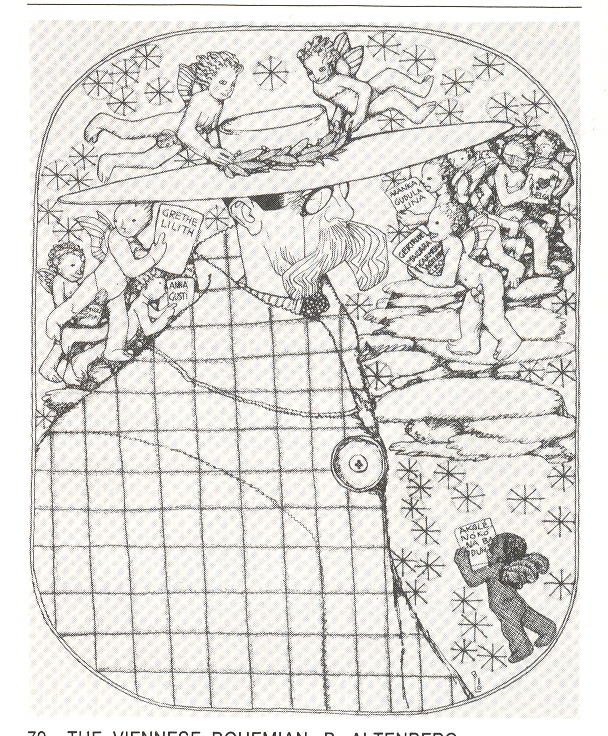
    JF Ptak Science Books LLC  Post 851  Blog Bookstore

    Even when I know
    that this picture is coming, when it is rounding the bend, I still can’t see it
    for the portrait it is supposed to be. 
    The lithograph is by Berthold Loeffler (1874-1960), a prolific Viennese
    designer, artist and
    professor at Kunstgewerbeschule (1907-1935) whose prodigious
    commercial

    ++ Nov 24 altenberg

    output covered about every other letter of the artistic alphabet.  This work is a portrait of his mostly-forgotten
    fellow-Viennese writer, Peter Altenberg1 for the Kabaerett Fledermaus of
    1909.  The portrait is all squares and
    one big button to me, and I have to consciously look for the rest of the
    picture in spite of knowing that the stuff is there. 

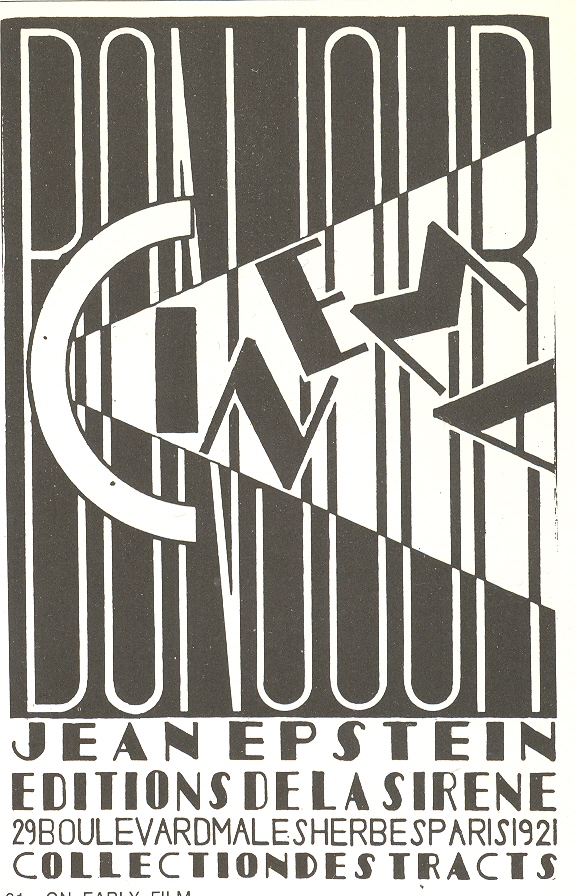
    It is an unusual picture of emergent art—for me not quite
    like, for example, the cover of the pamphlet Cinema by J. Epstein, where the letters are a jumble for just a
    moment and then snap into view.  The
    Loeffler portrait is much more densely hidden in a much more straightforward
    manner, and fools my mind every time. 

     Notes++ Nov 24 cinema

    1.Altenberg is probably a product of his time, or a time of
    his product.  Described as the bohemian’s
    bohemian, he lived an outre lifestyle in little cafes and bars, wearing capes
    and broad-brimmed hats, and was evidently something of an effeminate womanizer
    with a very deep interest in very young girls. 
    There you go.  Altenberg stood
    quite high in that world, as Alban Berg put some of his postcard-poetry to
    music in his Five songs on picture postcard texts by Peter Altenberg,
    which caused a near-riot in its premier, abruptly stopping the performance
    which would not see the light of day again for another 40 years.

    ·Posted by :

    ·in:

    — —

  • Found 17th Century Dadaist Art

    JF Ptak Science Books LLC  Post 827  Blog Bookstore

    ++ blog nov 9 scarlattini 001

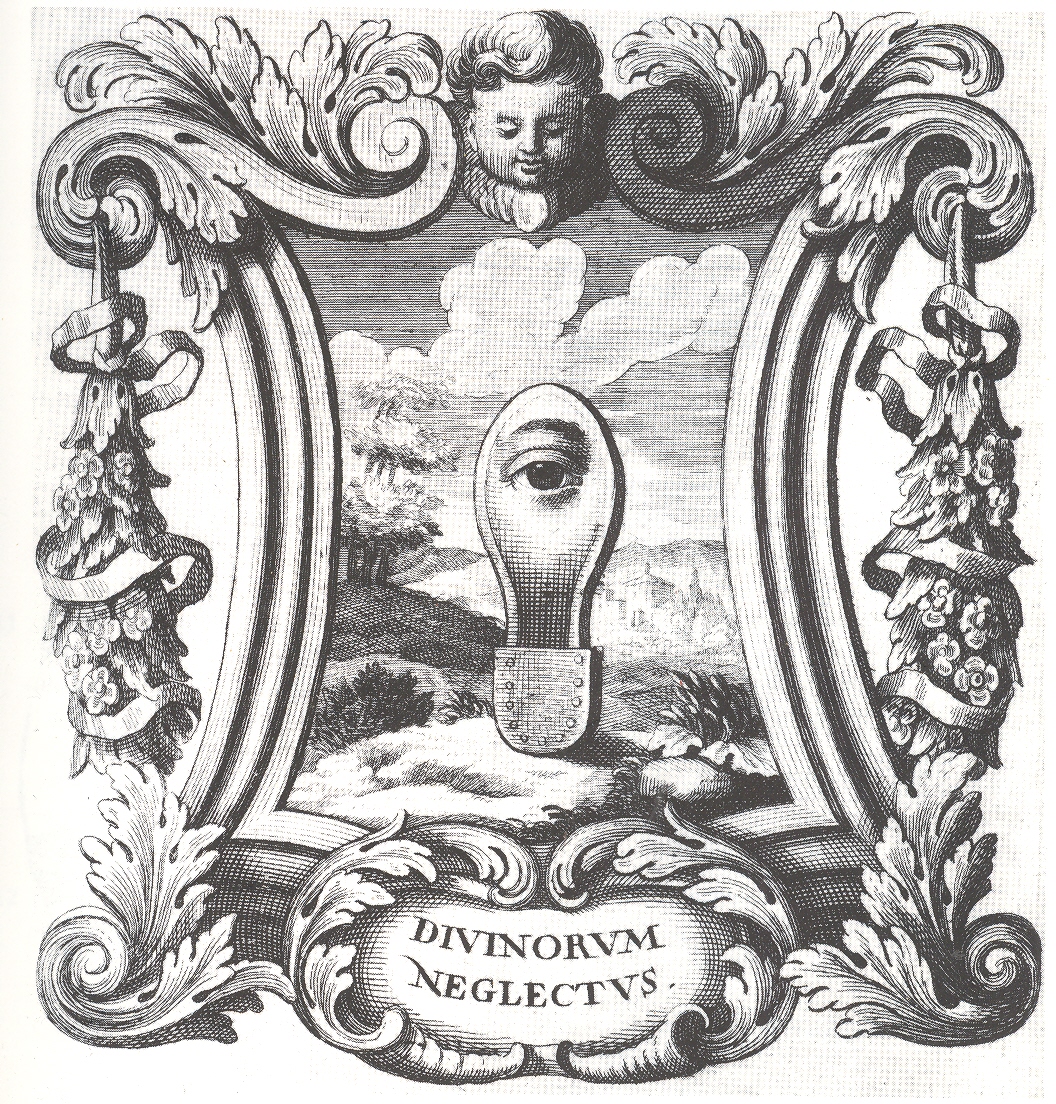
    I found these iconographic images by Ottavio Scarlattini1 (1623-1699)
    simply irresistible–and even though I really don’t quite understand them (at
    least in their correct and original sense and intention), lost to me as they
    are to a more classical education and deeper understanding of Baroque
    symbolism, I can imagine plenty of re-iconographized (?!) meanings.  Not having a more specialized knowledge to
    understand their published intentions perhaps allowed them to have a  strangely modernistic pull on me, making many
    of these Scarlattini designs seem more Dadaist than a 17th century work
    displaying visual characterizations of morality tales wrapped around human
    anatomy. .  If  you changed the vocabulary to interpret this
    artwork—or just simply removed its intention– it changes its era, and moves
    very cleanly into the genre of the surreal. 
    It feels to me that this sort of transformation is not at all common,
    especially when you move the centuries and the genres so crisply and
    elegantly. 

    Doesn’t the “Divinorum Neglectus” suggest something that could’ve
    been produced by  more-antiquarian versions of Raoul Haussmann or Hannah Hoech or Paul
    Delvaux?  It does me.  If you made this a three-dimensional piece it
    could feel like Ernst or Duchamp, its emblematic/hieroglyphic nature
    transforming before your eyes.    (I wonder if Duchamp or Dufuy were influenced
    by the iconographists from this period?)

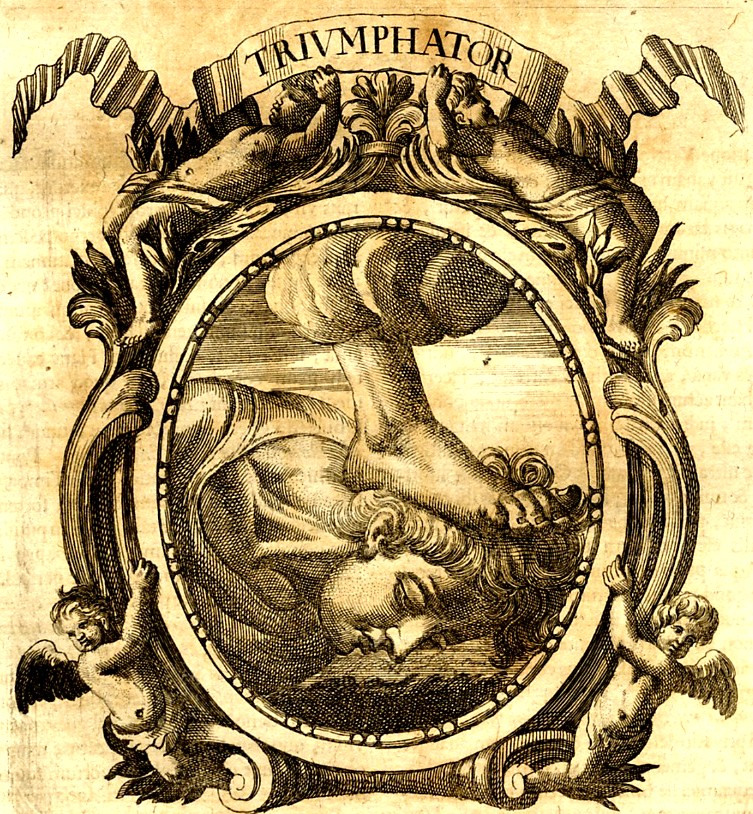
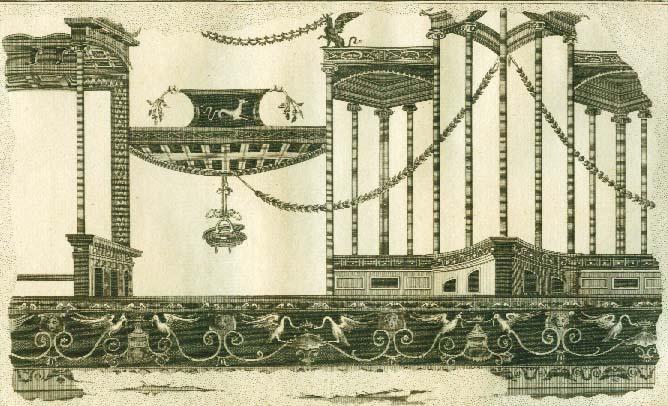
    This transference game works nicely with other emblem books, and even with some of the large and spare frescoes from Herculaneum when rendered in black and white as engravings…and also for some of the Framenti of Piranesi, but not too many other places in Western art.  Yes?

    ++ blog nov 9 scarlattini

     ++ blog nov 9 triumph

    An engraving of a fresco from Herculaneum (printed ca. 1760):

    Herculaneum Architektur5-jpg

    Notes:
    1. SCARLATTINI, Ottavio  HOMO ET EJUS PARTES, FIGURATUS ET SYMBOLICUS,
    ANATÓMICUS, RATIONALIS, MORALIS, MYSTICUS, POLITICUS, ET LEGALIS, COLLECTUS ET
    EXPLICATUS CUM FIGURIS, SYMBOLIS, ANATOMIIS. opera et studio R. D. Octavii
    Scarlatini,. nunc primum ex italico idiomate latinitati datum a R. D. Matthia
    Honcamp, (.). II volúmenes en un tomo. L. Heckenauer grabador, and printed in
    1695.


    Scarlattini produced one of the great masterworks of
    emblematic knowledge while at the same time writing on human anatomy and
    physiology. 

    The entire book located here http://www.uni-mannheim.de/mateo/camenaref/scarlattini.html

    ·Posted by :

    ·in:

    — — —

  • Odd Art Department: Art Brut in Advertising?

    JF Ptak Science Books LLC  Post 810  Blog Bookstore

     + blog 10.26 tauranga

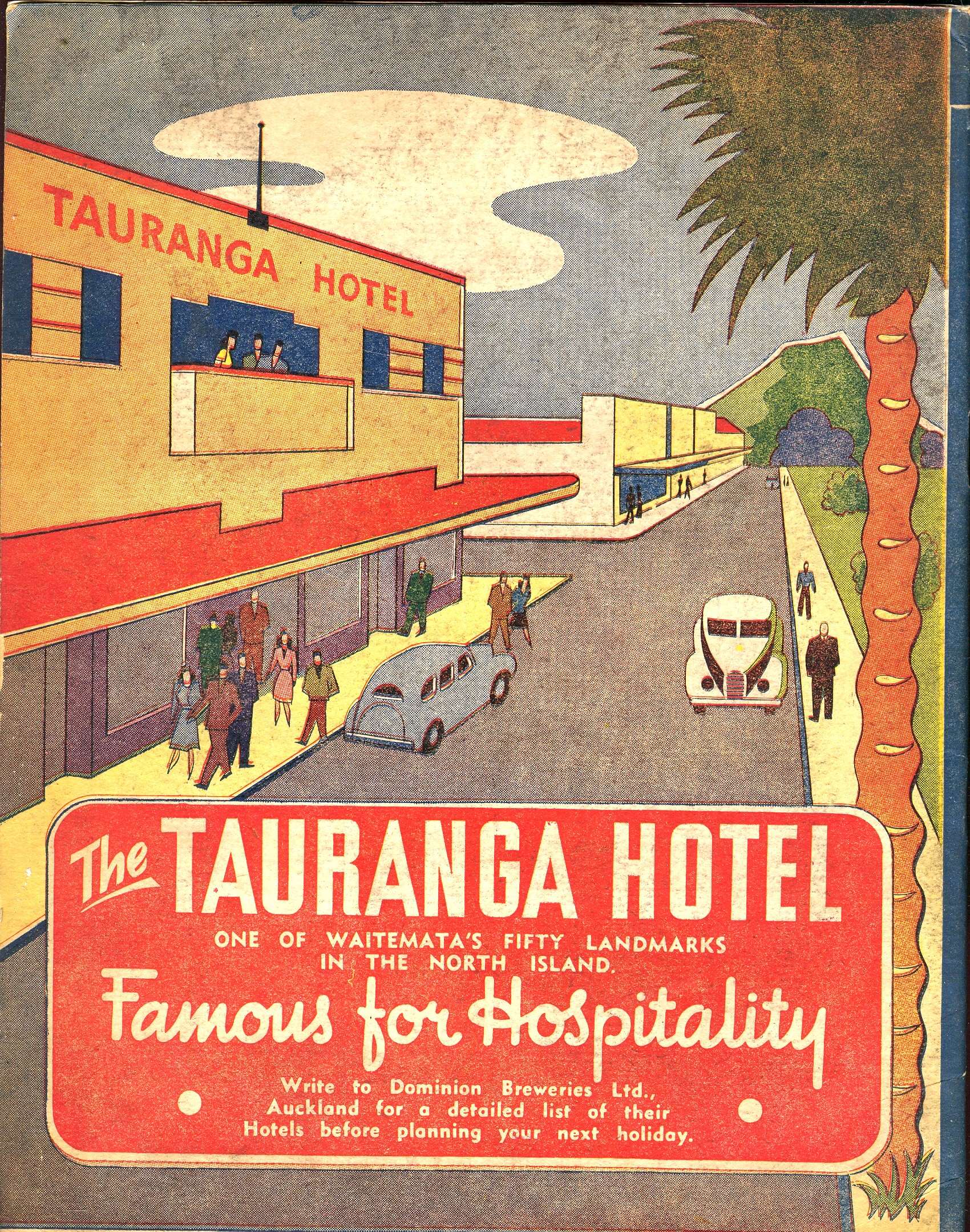
    There’s not much in this illustration–the entire back page of an oversize pulbicity tourist pamphlet–to suggest any sort of professionalism, or training, or, well, ability.  But there it is, badly drawn, with unusual (if not bad) coloring, trying to entice people to visit this seaside resort in New Zealand. 

    Maybe this is more “outsider art”
    than Art Brut.  Art Brut was a term used by
    Jean Dubuftet to describe raw/rough art produced by non-artists (and those
    mostly mental asylum residents1).  Art
    critic Roger Cardinal coined “outsider art” as a English-language adaptation of
    the Dubuffet term2, and has since come into use to describe unusual,
    technically naïve and unschooled Otherness of artworks.  This cover illustration is certainly bearing
    a pretty good-sized helping of otherness to it, from its pale, weird coloring
    to its basic inability to draw.  Somehow
    though it is attractive to me, and ultra-calming when it is not troubling.  It is just one of those peculiar works that
    is good and bad at the same time.

    Notes:

    1. A spectacular and early example
    of Art Brut is found in the phenomenally detailed, insightful-of-other-worlds
    work of  Adolf Wolfli.

    2. “Those works created
    from solitude and from pure and authentic creative impulses – where the worries
    of competition, acclaim and social promotion do not interfere – are, because of
    these very facts, more precious than the productions of professionals. After a
    certain familiarity with these flourishings of an exalted feverishness, lived
    so fully and so intensely by their authors, we cannot avoid the feeling that in
    relation to these works, cultural art in its entirety appears to be the game of
    a futile society, a fallacious parade.” – Jean Dubuffet. Place à
    l’incivisme
    (Make way for Incivism). Art and Text no.27 (December 1987 –
    February 1988).


  • Unusual Views, Continued: Looking Straight Down, Found-Dadaist, 1919

    JF Ptak Science Books LLC  Post 804  Blog Bookstore

    The idea of representing a view straight down, of looking
    straight down from some height, is a relatively recent occurrence, this view
    being somewhat rare in the antiquarian world pre-balloon or pre-heavier-than-air
    flight.  The pre-human-flight reason for
    its scarcity is understandable, but even after the first Montgolfiers’1
    ascension in 1787, there’s another 120+ years of scarcity yet to come before
    these views would start to pop up in common (and uncommon) literature..  Now I’m not talking about cartography, which
    is basically a straight-down view of the world—what I’m referring to (and where
    I’ve posed a few time before in this blog, particularly here)
    is that same view but not as a map per se, but what you would see if you were dangling
    out of a plane or balloon.  The
    extraordinary map of Imola by Leonardo would certainly classify because of its
    you-are-there qualities:  essentially it
    would be like a bird’-eye or oblique view, but straight down.

    + blog looking down berlin

    I think that this view was avoided because (in
    pre-flight days) of the high imagination that it took to picture the view, and,
    secondly, because of how this view created its own special Flatland2 and
    crunched, flattened, everything down to what becomes somewhat (and sometimes
    entirely) unrecognizable.  This point was
    just hammered home to me while trolling through an interesting book by Matthew
    Biro, The Dada Cyborg3. Biro makes a
    great find of unintended/found Dada illustration in the Berliner Illustriete Zeitung4 in which a photographer makes images
    of passing pedestrians, turning them into quite something else due to the
    squashed depth of field and non-perspective. The photos make the point
    perfectly of why artists might have avoided this straight-down
    perspective.  The Found Dadaist result is
    interesting in itself. 

    [My apologies for so many hyphenated words in this
    post! Here’s some more in case the reader demands them: – – – – – – – – – – – –
    – – -.]

    Notes:

    1. The two brothers launched 4 June 1783, just
    before the end of our Revolutionary War, rising up in a 37,000 cubic foot
    balloon of alum-coated taffeta.

    2. Edwin Abbott’s fantastic and popular 1884 satire
    of English society, depicting the world of wants and desires in terms of a
    two-dimensional world structure (and desires for a three-dimensional
    existence).  Brilliant and simple; well, maybe
    not so simple.

    3. The Dada
    Cyborg, Views of the New Human in Wiemar Berlin
    ,
    University of Minnesota
    Press, 2009.

    4.  The
    issue for 29 December 1919.  This is the Berlin version of the
    weekly newspaper that I browse through, the Leipzig
    Illustriete Zeitung
    . 

    ·Posted by :

    ·in:

    — —