A Daily History of Holes, Dots, Lines, Science, History, Math, Physics, Art, the Unintentional Absurd, Architecture, Maps, Data Visualization, Blank and Missing Things, and so on. |1.6 million words, 7500 images, 4.9 million hits| Press & appearances in The Times, Le Figaro, Mensa, The Economist, The Guardian, Discovery News, Slate, Le Monde, Sci American Blogs, Le Pont, and many other places… 5000+ total posts since 2008.

Category: History of the Future

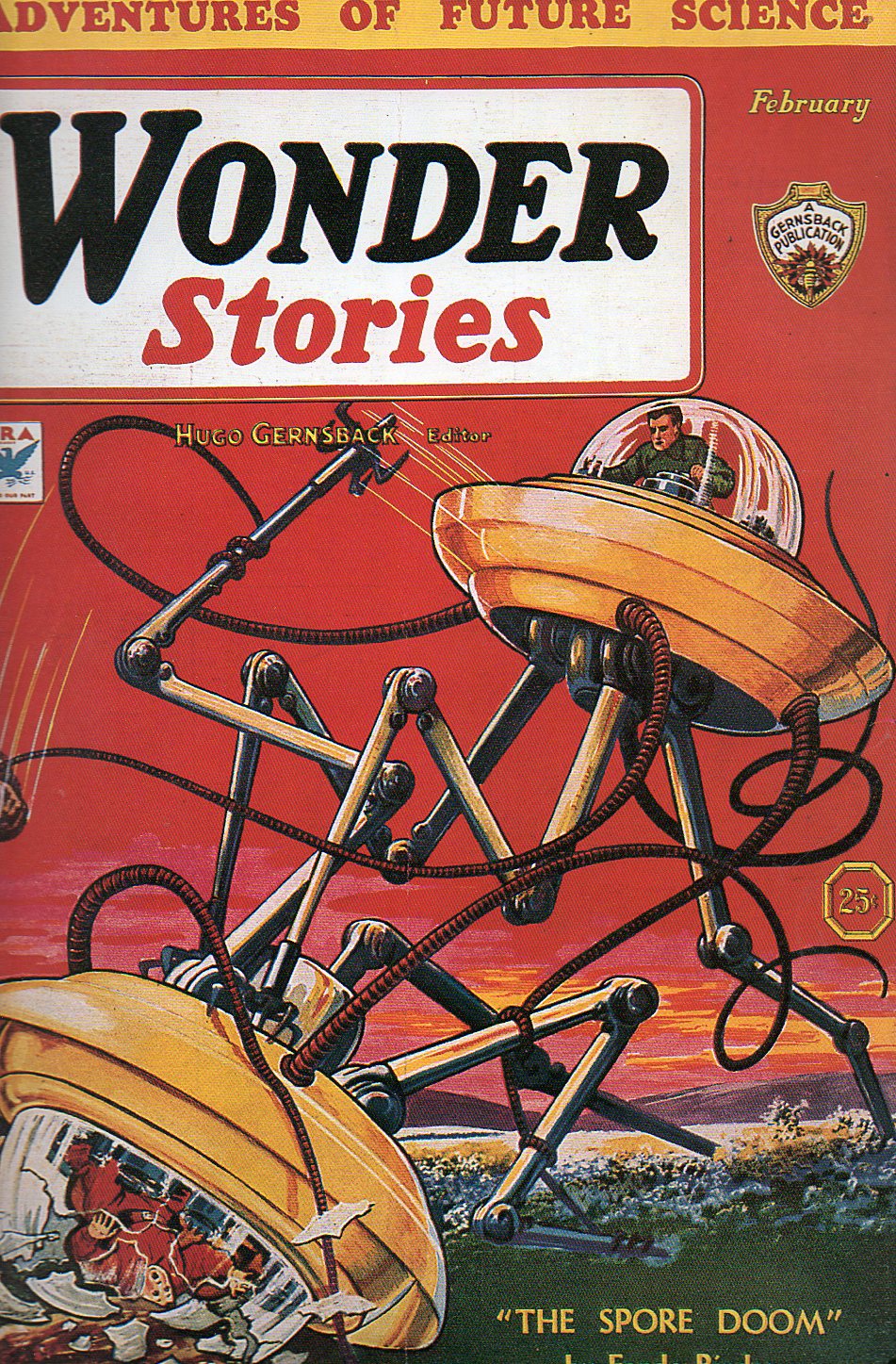
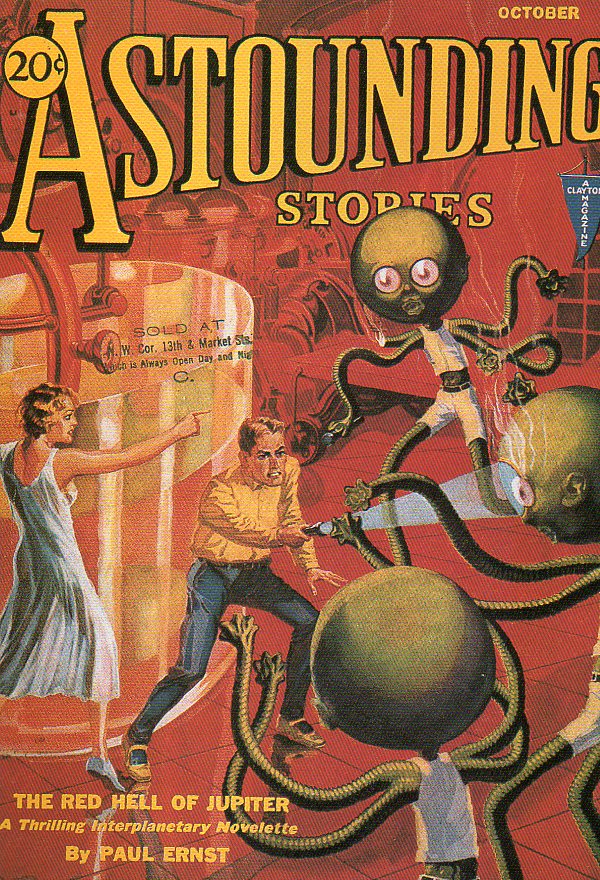
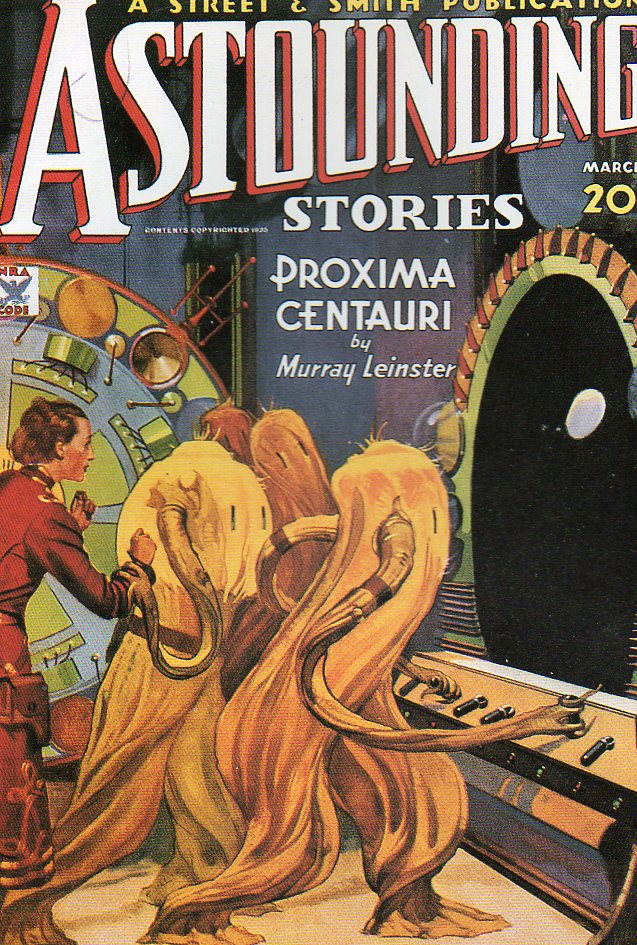
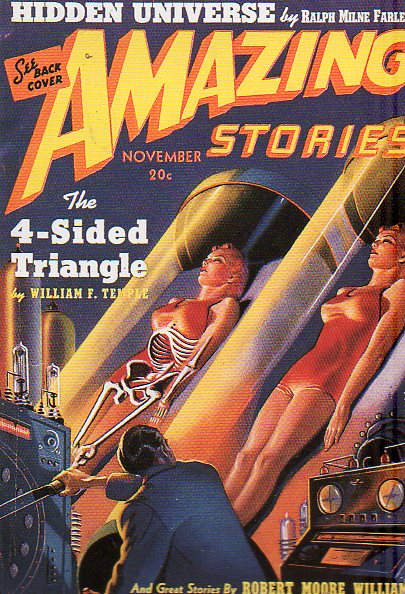
  • Steampunk Anatomy–Cancer Holes, Nut and Bolts, Oil, Outer Space Belly Shirts and Heavy Things of the Future

    JF Ptak Science Books  Post 1269

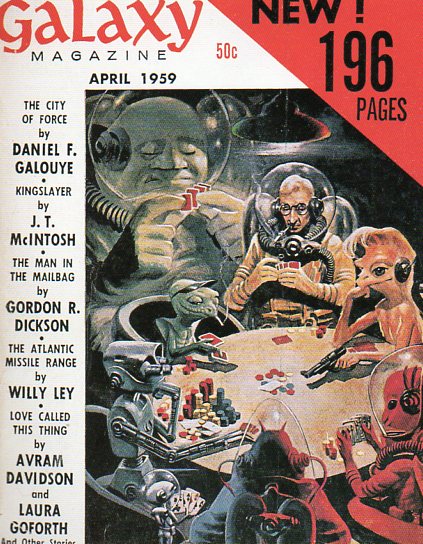
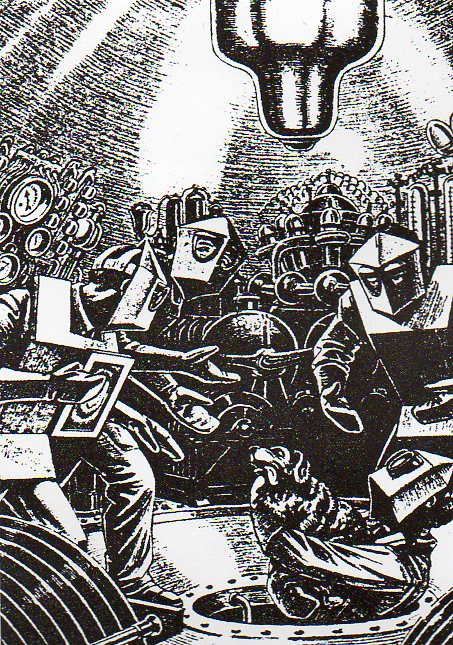
    What is it about science and the future and how the scifiction of the past (pre-1950’s) almost never could encapsulate the superior scientific innovation and discovery of its near future?  It is marvelous and wickedly magnificent to look at some cover art and illustration for the pulp and not-so-pulpy science ficton, images that not only have a certain look and feel, but also a smell, a particular bookstore/basement pulp-paper-not-exposed-in-forty-years smell.

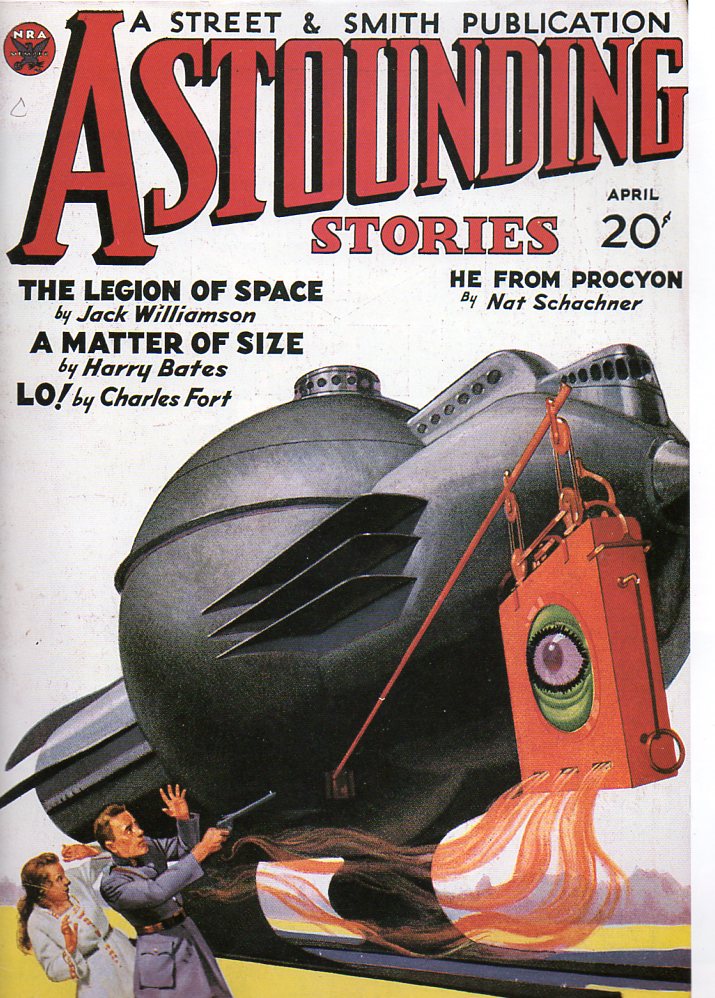
    Steampunk Eye–that enormous ship, governed by a long, long pole with a small box witn an eye in it, being raised and lowered on pulleys:

    Steampunk a077

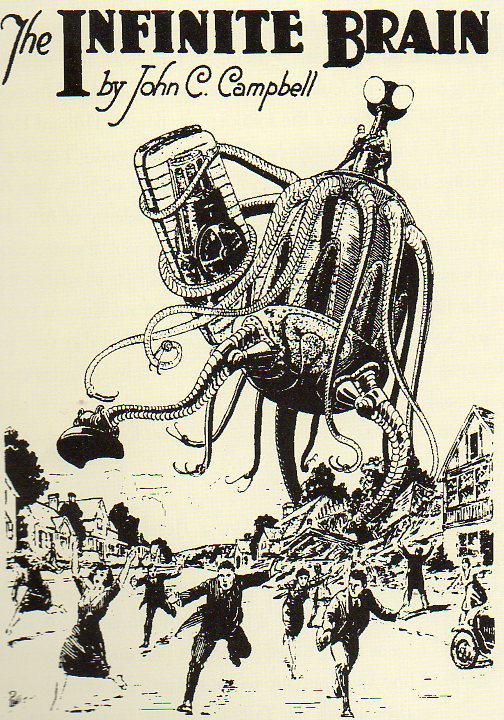
    The Steampunk Gigantic Enormous Stupendous Infinite Brain (also notice that folks are fleeing, running for their lives, witt heir arms thrown high into the air, running like SpongeBob SquarePants–its hard to run like that):

    Steampunk brain084

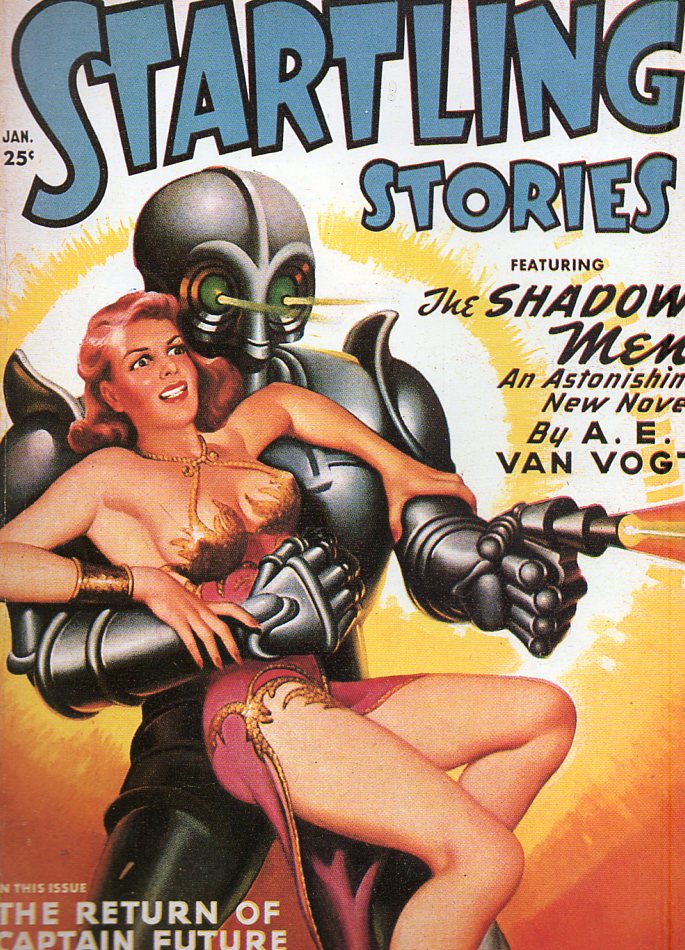
    Steampunk Lust:

    Steampunk lust085

    Steampunk Addiction & Cancer Hole:

    Steampunk cancer hole088

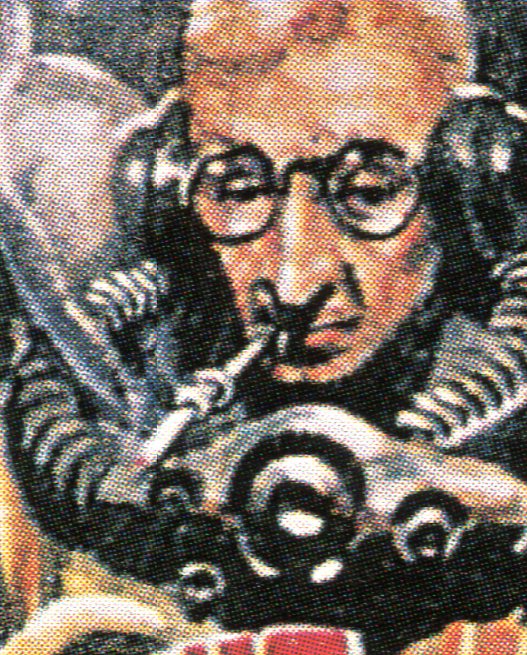
    And the Philip -Morris contribution for smoking in alien space:

    Steampunk cancer hole089
    Steampunk Humano-Robot Replicant:

    Steampunk human robot081

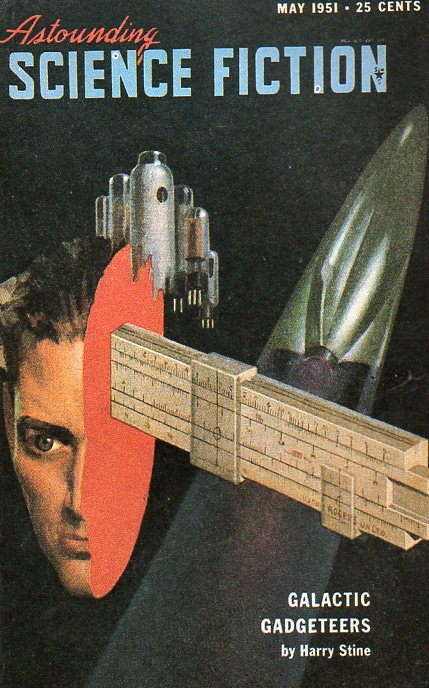
    Steampunk Thinking (the slide rule really didn’t give out until around 1970):

    Steampunk calculating086 Steampunk Legs:

    Steampunk legs083

    Steampunk Abs:  humans are surrounded by arm-waving large-headed belly-shirted aliens, the man using a flashlight for defense )burning the alien eye even though they’re all in bright light) while the woman points really hard:

    Steampunk abs090
    Steampunk Hair–and with all of that vast technology and futurismo, there are still unruly locks here and their:

    Steampunk hair082
    Electro/Steampunk Body Replicator

    Steampunk body replicator087


  • Reporting the Hiroshima Bomb the Day After, 7 August 1945. AND the First Graphic of NYC A-Bombed

    JF Ptak Science Books   Blog Bookstore  Post 1257 (continuing post 669)    Atomic and Nuclear Weapons Series

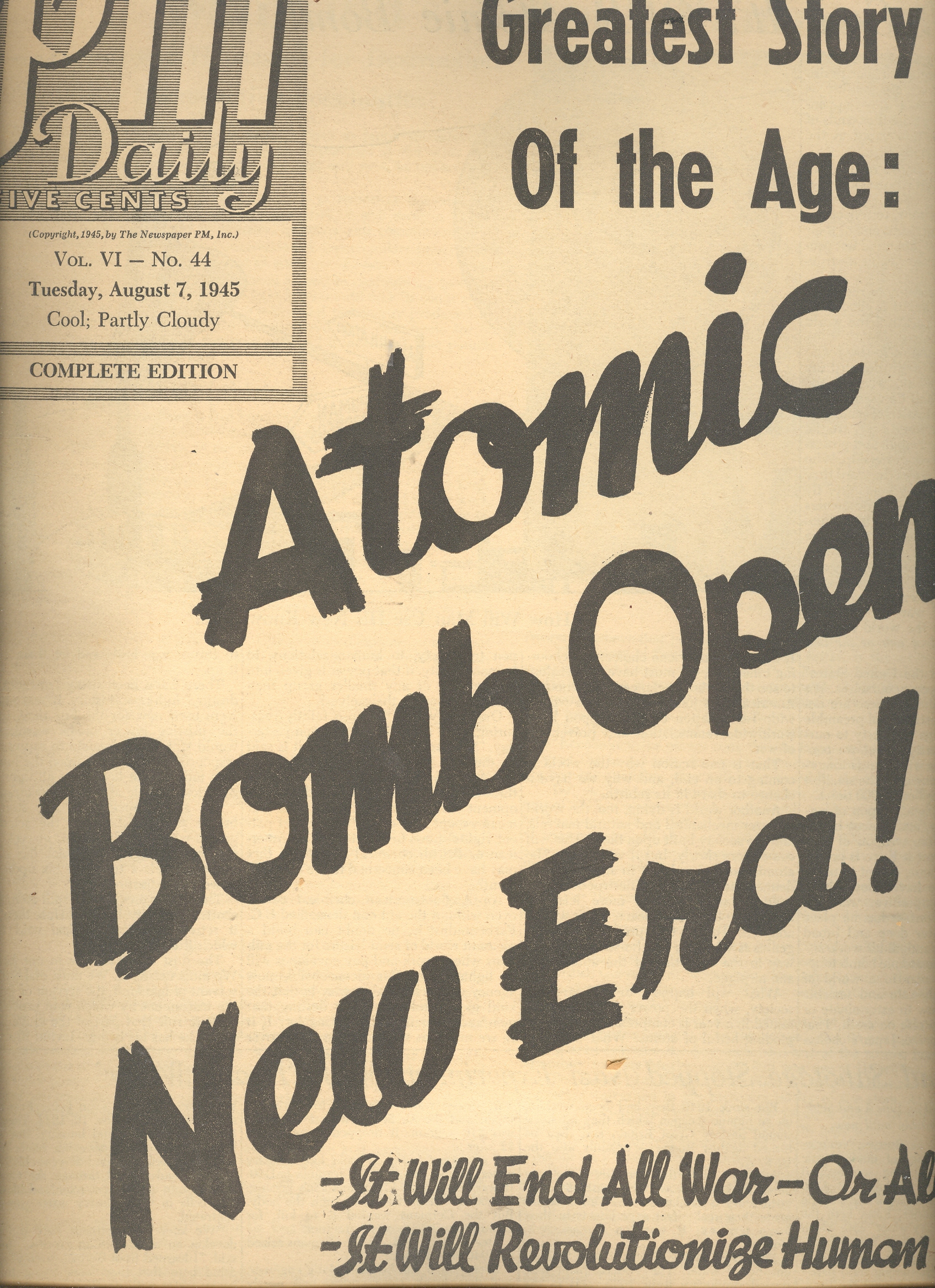
    ==Blog July 26=PM cvr bomb

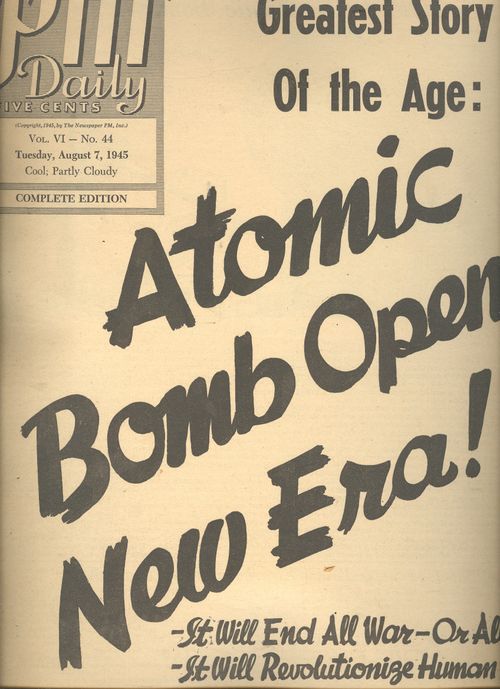
    The news coverage of the 6 August 1945 bombing of Hiroshima was covered in spectacular (all things and time considered) detail in the 7 August issue of the daily newspaper, PM.1  The entire issue of 12 pages (with no advertising2) was dedicated to the event—I have no idea, really, how they were able to put together this amount of good tough data so very quickly, nimbly and intelligently, as the bomb was detonated at Hiroshima only the day before. 

    It is odd how well the case is covered, and it is positively issued on the day after –it isn’t the case that it was issued for the week of 7 August and released on 13 August, which I thought was a possibility of explaining the deep coverage.  But there’s no mention of Nagasaki (which would come in two days), so I am certain that the coverage was all accomplished within 24 hours of the use of the weapon.  The newspaper distinguishes itself by not screaming something about the “Jap city” being wiped out (as so many other newspapers did), with its front page summarizing beyond the bomb.  (“It Will End all War—Or all Men” and “It Will Revolutionize Human Life” as sub-heads; the first being accurate, while the second being nearly so.) 

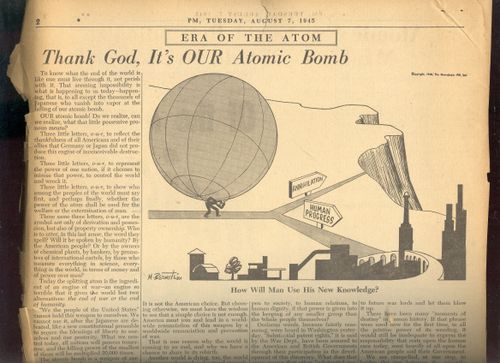
    The editorial, “Thank God its OUR Bomb”, by Irving Brant, is a lovely piece of thoughtful interpretation in the opening moments of the nuclear age. He writes: “America must join and lead in a worldwide renunciation of this worldwide renunciation and prevention of war”,and “What will happen to industry, to society, when the power of all the coal mined in a year is compressed into an exploding fistful of atoms?” And further:“There is no escape.  The split atom may shatter humanity, but not before then will it retreat into the physical void from which it came.  The dust of creation is in our hands.  We must master it.” Not bad stuff for having a few hours or so to think this  through. 


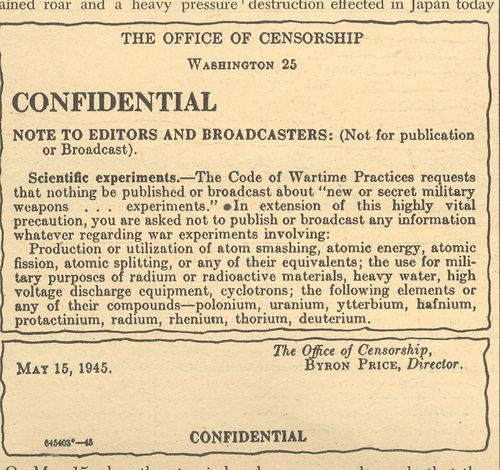
    ==Blog July 26=PM cvr bomb censor


    The other articles included “Bombs and Sabotage Stopped Nazi Experiment with Heavy Water”, “New Atomic Era Could Revolutionize Mankind’s Whole Manner of Life/Power Harnessed for Destruction Has Limitless Constructive Possibilities”, big two-page story “Stimson Reveals How Work on Bomb Was Organized”, “Bomb’s Death Range Believed to be 4 Miles”, “Four Scientists who Will Plan Postwar Uses of Atomic Energy”, “Harnessing of Atomic Power research Strengthens US Research”, “If a Piece of the Sun Were Placed on Earth”, “End Not Yet Truman Tells the Japanese”, and another 12 articles.

     ==Blog July 26=PM cvr bomb artoon

    There’s another baffling article “Steel Tower Vaporized in First Test”, discussing the shot at Alamagordo—it must have been the case that there was an enormous amount of material divulged by the government in the hours after the explosion at Hiroshima .  The work at Columbia is also chronicled, as is the personal life of the man in control, General Leslie Grove (and how completely in the dark his wife was, and so on). 

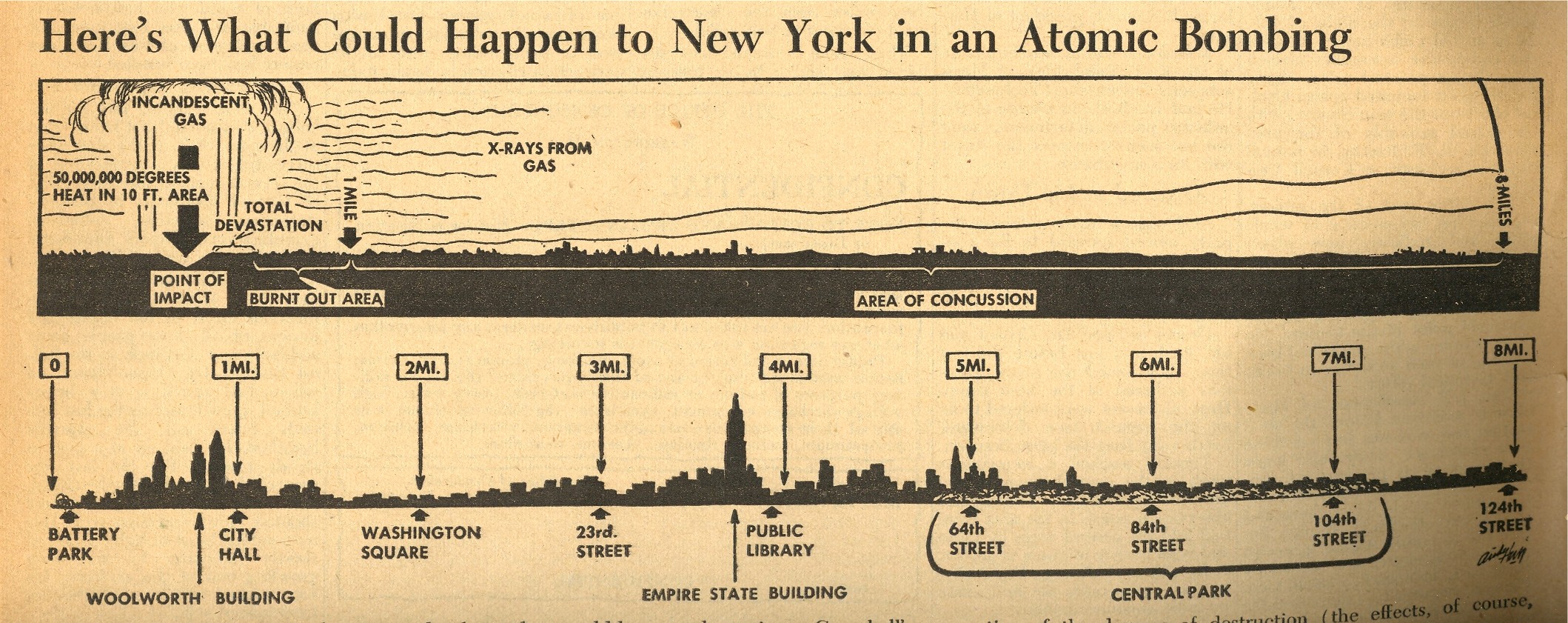
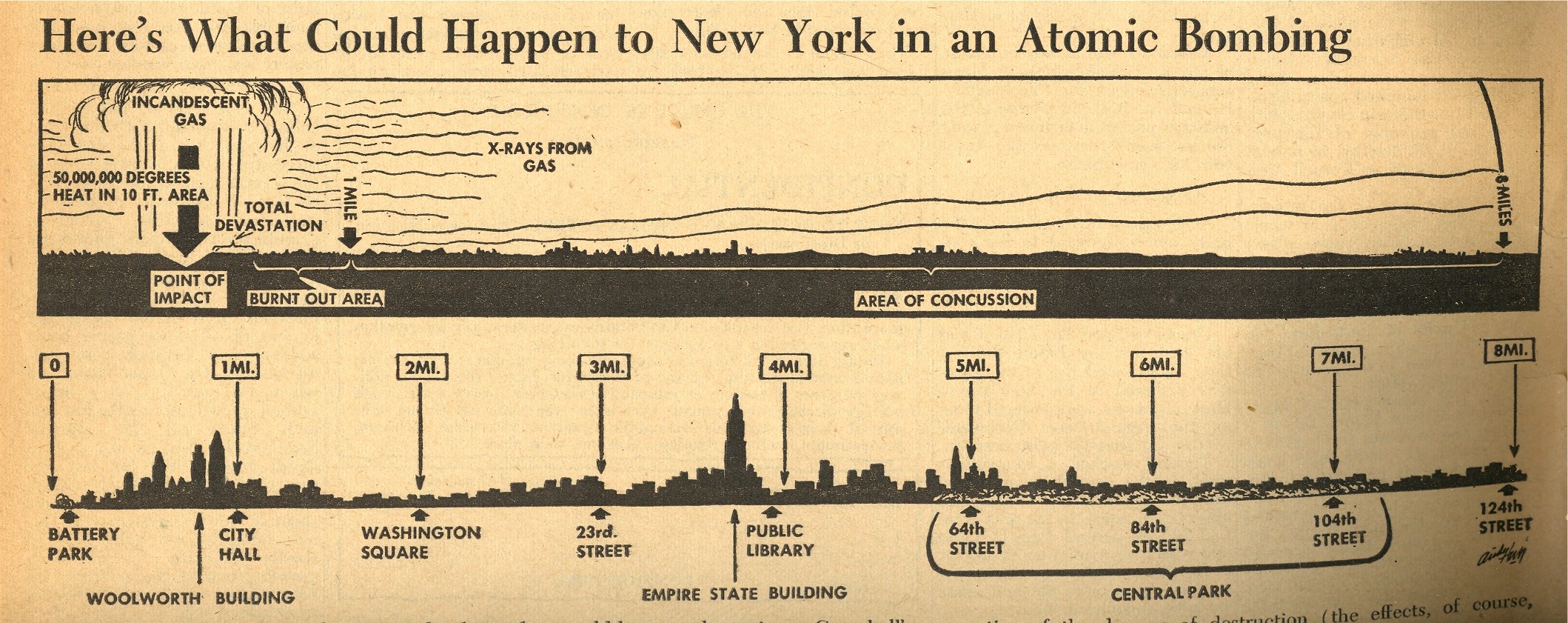
    One of the most interesting objects to me though is the small graphic on page 7 which shows what effect the Hiroshima atomic bomb would have if dropped on New York City—it was no doubt gigantically sobering to anyone who looked at it, and brought the power of the bomb and its destruction to a common, understandable point.  I’m not an historian of the first newspaper coverage of the bomb, but it strikes me that this may well be the first graphic to depict the effects of an atomic bomb exploded over NYC.

    ==Blog July 26=PM cvr bomb map
     

    In any event, the overall coverage of the event was stunning given the short amount of time to do the research, writing, and publication.  Truly a great effort. 

    Notes:

    1. PM (1940-1948) was a left-wing newspaper funded by Marshall Field III, and was home to excellent reporting.  See here for more details. Among the staff writers was I.F.Stone and staff photographers Margaret Bourke-White.  Other contributors included Heywood Hale Broun; James Thurber; (the great) Dorothy Parker; Ernest Hemingway; Eugene Lyons; Ben Stolberg; Malcolm Cowley; Tip O’Neill;and Ben Hecht.

    2. Actually, NO issue of PM had advertisements–it was entirely ad-free. (And even so it still came close to making money after 8 years.)

    PM‘s stated mission:

    PM is against people who push other people around.   PM accepts no advertising. PM belongs to no political party. PM is absolutely free and uncensored. PM’s sole source of income is its readers–to whom it alone is responsible.PM us one newspaper thayt can and dares to tell the truth.

    Theodore Geisel (Dr. Seuss) was a cartoonist for PM (see here for his War cartoons) as was the great Crockett Johnson.


  • The First American Race Riot: Harlem, 1935

    JF Ptak Scence Books  Post 1255–expanded

    “The Harlem riot of 1935, now the subject of a comprehensive report, demonstrated that ‘the Negro is not merely the man who shouldn’t be forgotten; he is the man who cannot safely be ignored’.” Alain Locke,  Survey Graphic, 1936.*


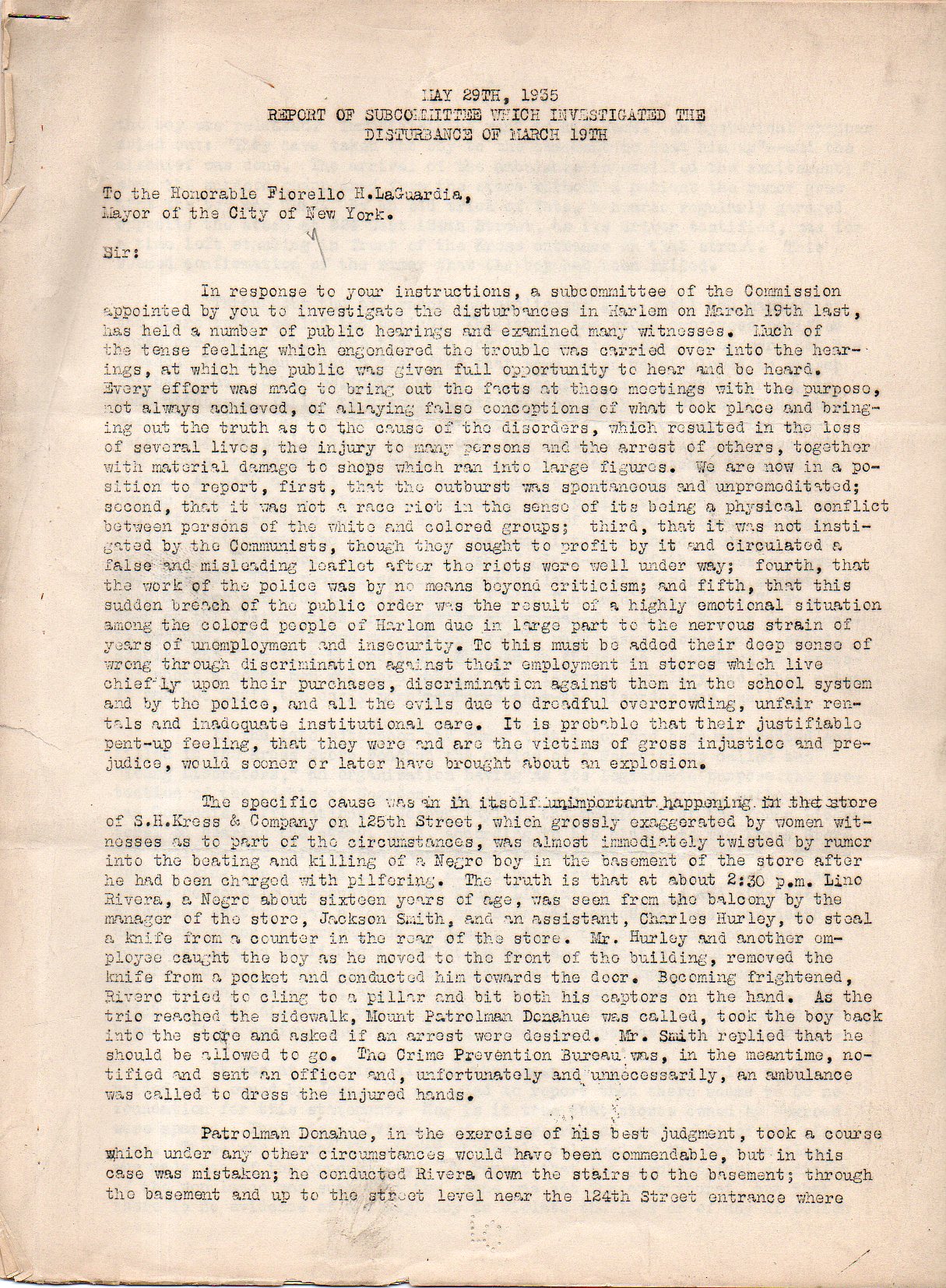
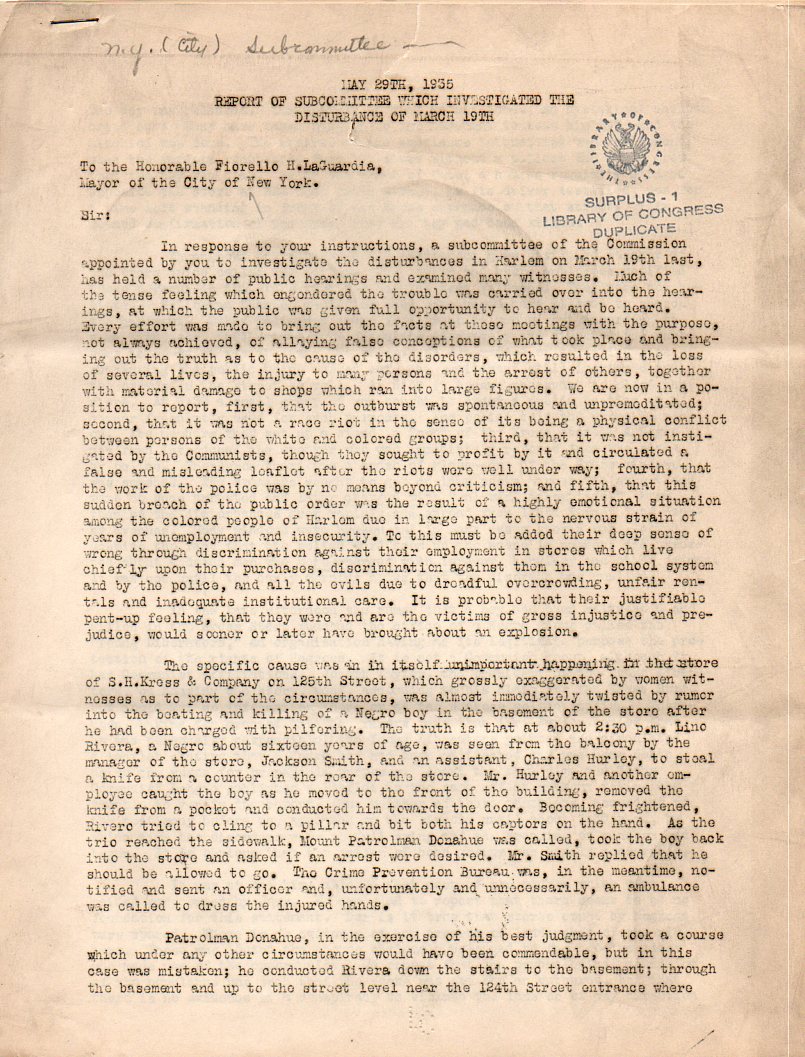
    This is a report to Mayor Fiorello LaGuardia (mayor of NYC from 1934-1945, a liberal Republican who was exactly what was needed in the city at exactly the right time) on what has come to be recognized as America’s first race riot.1 The damage was widespread, with hundreds of people injured, three killed, and $2 million 1935 dollars lost in during the Harlem event.   The action started at the S.H. Kress dime store on 256 W. 125th St. (just across from the Apollo Theater)   in Harlem, where a 16-year-old boy named Lino (described int his report as a “young Negro” though he was Puerto Rican) was detained by authorities in the store for shoplifting.  He was taken to the store’s basement and released to the backstreet unharmed, but a rumor spread violently and quickly that a young child had been taken to the basement of the store and beaten (or killed) for stealing a piece of candy.  Complications arose when the police arrived and when civic leaders’ questions went unanswered.  An odd and unfortunate twist of faith placed a hearse in front of the store during this build-up (from the business across the street from the store), inspiring outrage and “proof:” that the boy had been killed.2
    Race riot259

    In addition to the missing boy, the hearse, the police, and bad communications, were handbills distributed in the neighborhood printed by the Young Communist League and the black semi-militant Young Liberators, all helping to fan the flames of the crowds by the Kress store, which had swelled to several thousand people after just two hours–the riot came soon thereafter.

    The Report of Subcommittee Which Investigated the Disturbances of March 19th3 (and issued before August 15, 1935), was chaired by Arthur Garfield Hayes,analyzed the event in a surprisingly sympathetic way, recognizing that there was no organized response to the event, and finding that the response was understood to be a reaction to the long history of abuse of African Americans and poor governmental/police relations–and this all in eight quick pages.   LaGuardia said “We cannot be expected to correct in a day the mistakes and omissions of the past fifty years. But we are going places and carrying out a definite program. While the critics have been throwing stones, I have been laying bricks.”  It was surprising top me that the report was bi-racial, and that there was some real attempt to understand the problem and “do” something about it, rather than just chalk the whole thing up as something that could be simply solved with pure force.  [The original report is available for purchase from our blog bookstore.]

    As Locke wrote (below) the Riot of 1935 was the end of the Harlem Renaissance, and that a new era had begun.  For his part, LaGuardia at least opened a way to communicate about how to address the causes of such vast and repellent circumstances that eventually turned into the riot.

    Notes:

    * Locke continues: “Eleven brief years ago Harlem was full of the thrill and ferment of sudden progress and prosperity; and Survey Graphic sounded the tocsin of the emergence of a “new Negro” and the onset of a “Negro renaissance.” Today, with that same Harlem prostrate in the grip of the depression and throes of social unrest, we confront the sobering facts of a serious relapse and premature setback; indeed, find it hard to believe that the rosy enthusiasms and hopes of 1925 were more than bright illusions or a cruelly deceptive mirage. Yet after all there was a renaissance, with its poetic spurt of cultural and spiritual advance, vital with significant but uneven accomplishments; what we face in Harlem today is the first scene of the next act—the prosy ordeal of the reformation with its stubborn tasks of economic reconstruction and social and civic reform…” 

    1. Sociologist Allen D. Grimshaw called the Harlem Riot of 1935 “the first manifestation of a ‘modern’ form of racial rioting,” citing three criteria: “violence directed almost entirely against property”;  “the absence of clashes between racial groups”, and “struggles between the lower-class Negro population and the police forces”. “Harlem Renaissance”. Online Newshour Forum. PBS. February 20, 1998. http://www.pbs.org/newshour/forum/february98/harlem5.html.

    Another commission set to investigate the riot was headed by E. Franklin Frazier which produced a report, “The Negro in Harlem: A Report on Social and Economic Conditions Responsible for the Outbreak of March 19, 1935,” which found that the riot was not a controlled event and had happened spontaneously as a result of prolonged “injustices of discrimination in employment, the aggressions of the police, and the racial segregation”.

    2. Locke continues his observation on the Riot: “Curtain-raiser to the reformation was the Harlem riot of March 19 and 20, 1935; variously diagnosed as a depression spasm, a Ghetto mutiny, a radical plot and dress rehearsal of proletarian revolution. Whichever it was, like a revealing flash of lightning it etched on the public mind another Harlem than the bright surface Harlem of the night clubs, cabaret tours and arty magazines, a Harlem that the social worker knew all along but had not been able to dramatize—a Harlem, too, that the radical press and street-corner orator had been pointing out but in all too incredible exaggerations and none too convincing shouts.”

    3.  The commission was headed by Arthur Garfield Hayes and Charles H. Roberts, and was a bi-racial affair. “IMMEDIATELY after the March riot, Mayor La Guardia appointed a representative bi-racial Commission of Investigation, headed by an esteemed Negro citizen, Dr. Charles H. Roberts. After 21 public and 4 closed hearings conducted with strategic liberality by Arthur Garfield Hays…”

    4. Recommendations from the report:

    Increased hospital and health clinic facilities to combat disproportionate disease in the densely populated Negro areas.

    Recommended reorganization of Harlem hospitals and wider admission of Negro physicians to staff appointments, internee’ posts and educational facilities at all other municipal hospitals.

    New health center for Central Harlem District similar to East Harlem Center and a Negro supervisory health officer [the latter already agreed to by Commissioner Rice].

    Additional school buildings and extra educational facilities for vocational guidance, visiting teachers, and playgrounds. [The comparative absence of racial discrimination in the school system is one of the bright features of the report.]

    Housing legislation and additional low cost housing projects in line with recommendations of the report. Additional PWA and federal grants must be sought for such projects.

    Relaxing of the present tension in public opinion about the policy and attitude of the police in Harlem. The report recommends a Citizens’ Public Safety Committee not only to cooperate with the Police Commissioner as an advisory body but as a board of complaint in cases of suspected police brutality or reputed violations of citizens’ rights.
  • Polish Concentration Camps for Russians, 1920

    JF Ptak Science Books  Post 1255

    The name of the concentration camp comes to us from the (Second) Boer War, when the British imprisoned the Boers in what had first been described as refugees camps, and then in 1900/01 termed “concentration camps”.  They were hardly anything more than prisons, for men, women and children, entire families, communities.  These were the people who had escaped the systematic and revolting scorched earth policy initiated by Field Marshall Kitchener (who was in command of events after 29 November 1900), where the Boers were simply hunted and killed, or if not killed, then imprisoned; farms were destroyed, towns torched, livestock killed.  In general, the country of the Boers (all of whom were seen as guerrillas) was being taken and killed.  The survivors of this onslaught were sent to the concentrations camps. 

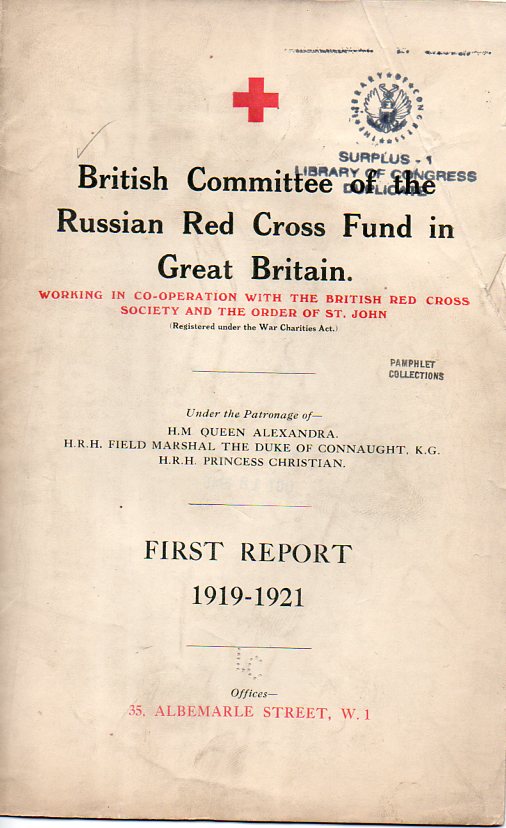
    Concentration camp009 This more modern 1921 reference to a concentration camp comes to us from British Committee of the Russian red Cross Fund in Great Britain, First report, 1919-1921.  This was a tough time for the people of Russia–the Soviet Union–who were on the beginning of a mostly long-arc downward.  Just seven years past the beginning of World War I they were experiencing enormous “hardships” brought about by fighting the war, complicated by the 1917 Bolshevik revolution and the resulting civil wars.  Then of course there was the end of the war, and the beginning fo the war with Poland in 1919/1920.  And then another in a series of natural/mostly-unnatural famines in 1921.  This particular famine–killing about 5 million people in this year–was brought about mostly by the Revolution and prodrazvyorstka–the practice of forcing peasant farmers into selling whatever “surplus” food they produced to the state at the state’s prices, and also by being forced to supply food to the Red Army and to urban areas.  Add a drought to this mix, and it lead to absolute disaster for the peasantry

    Russian Red Cross Fund wasn’t yet concerned with the Povolzhye Famine, not yet, addressing the plight of the country’s response to six long hard years of war, civil war and war again–a poor country made poorer and more miserable, this fund made some attempt at relieving at least a small burden of this impossible situation within the country. 

    What caught my eye was in the discussion of providing relief to the camps of Russian refugee expatriates, the report detailing some of those in Cyprus, Estonia, Latvia and Finland.  And Poland.  The Polish camp, however, was different, and described the attempt to send relief to the 140,000 in “the Concentration Camps”, and then describing another of 110,000 “Russians who have been interned according to the Riga Peace Terms, and that the Poles are quite unable to do anything for them”.    (This pamphlet is available for purchase through our lbog bookstore.)                     

    The reference took me by surprise–I knew a tiny bit about the Russia/Poland War at this time but hadn’t realized the extent of it, nor the extent of the Russian refugees in the country nor the amount of soldiers (and their families) within the concentration camps.  These are not the extermination camps that would appear in Poland two decades later, but the conditions of the people in the camps led to the deaths of thousands. 

    Notes:

    Kitchener (who full title without his bloody shoes on was Field Marshal The Rt. Hon. Sir Horatio Herbert Kitchener, 1st Earl Kitchener, KG, KP, GCB, OM, GCSI, GCMG, GCIE, ADC, PC) described his vision for ending the Second Boer War in the Parkenham’s history: his aim was to  “flush out guerrillas in a series of systematic drives, organized like a sporting shoot, with success defined in a weekly ‘bag’ of killed, captured and wounded, and to sweep the country bare of everything that could give sustenance to the guerrillas, including women and children…. It was the clearance of civilians—uprooting a whole nation—that would come to dominate the last phase of the war.”


  • Who Invented Walking? The Indoor Air Show, Empire Air Day, 1938

    JF Ptak Science Books  Post 1307

    I wonder who invented walking? 

    It was certainly one of the first inventions made by our deepest, oldest human cousins, walking,.  And it was probably invented in Africa. 

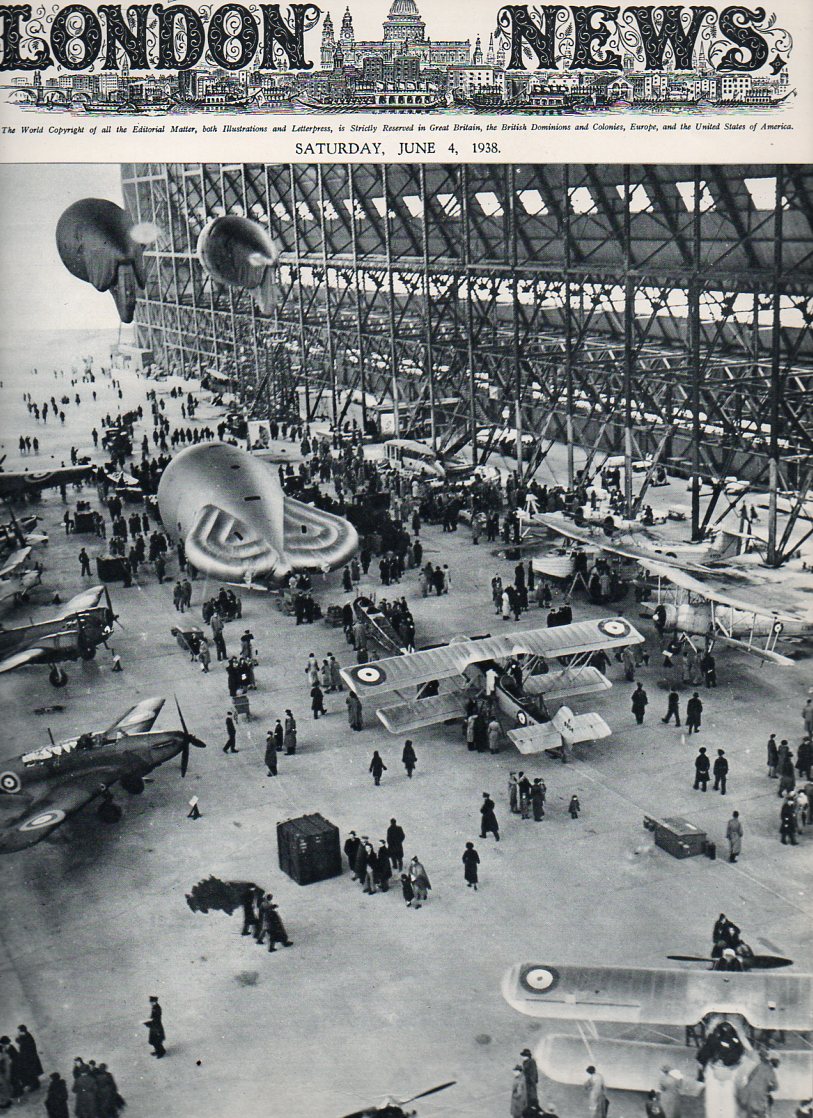
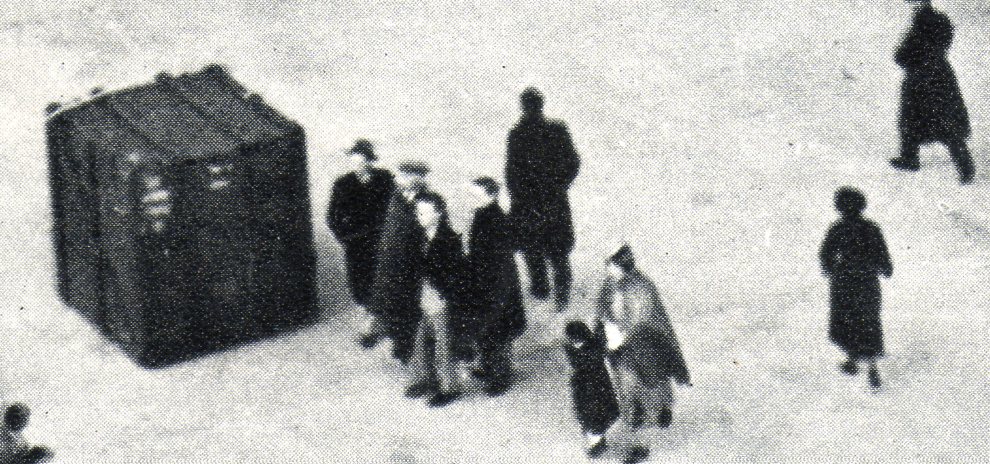
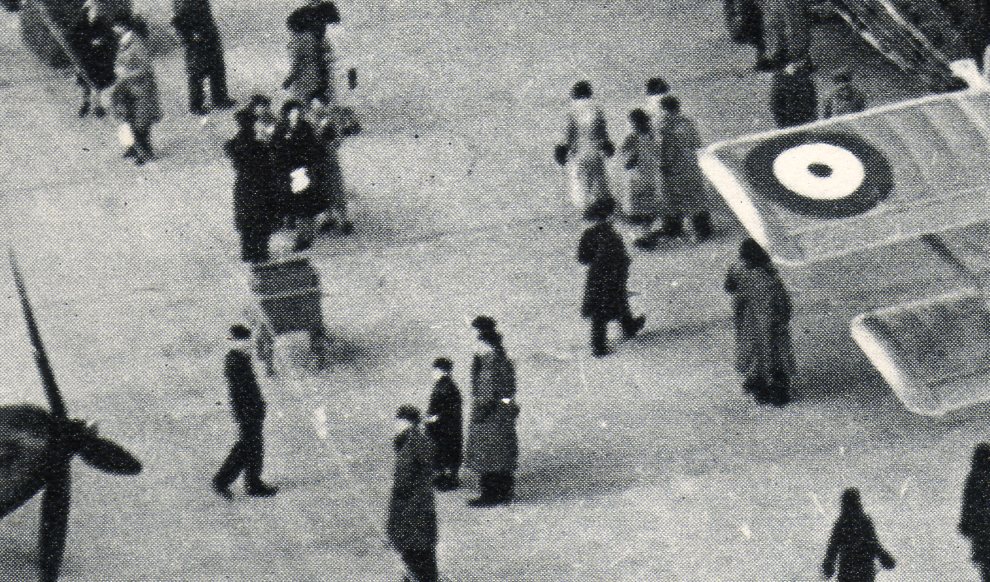
    This thought comes to mind looking at this great photo of the Empire Air Day, being celebrated in England in May 1938.  All of these folks walking around this enormous dirigible hangar (a form of flight that had left the RAF field of interest just a few years before, mostly forever) looking at the best of what was in the air.  The crowd actually looks a little thin to me–were people already getting a little used to having such magnificent things flying overhead, even just 30 years or so into the history of heavier-than-air flight?  It makes me wonder what will be remembered of the earliest days of flying 10,000 years from now.  The answer to that question may be as meaningless as the question I just asked above. 


    Air show-- cvr301

    (This image is available for purchase via our blog bookstore, here.)

    Air show-- cvr b302

    Air show-- cvr b303

    It is interesting to note the barrage balloons (three of which are shown here). The Nazis had only recently admitted that they had an air force, and of course by the middle of 1938 it was a considerable thing.  Hitler had shown his fangs of course and there was war in the air.  Wr doesn’t smell like a desert bloom.  But the Balloons were there, as were the rest of the aircraft, to show the hearts and minds at home that the RAF was a strong arm of the military establishment, and that the balloons were ready to be sent aloft to help protect London (at least) from the possibility of German/Nazi attack. 

    Here are some of the aircraft that were supposed to have been displayed: Armstrong Whitworth Whitley; Armsrong Whitworth Ensign -transport; Bristol Blenheim –  medium bomber; De Havilland Albatross; Fairey Battle – medium bombe; Gloster Gladiator – torpedo bomber; Handley Page Harrow –  bomber; Hawker Hurricane -; Shorts Empire Flying Boat; Vickers Wellesley – bomber; Vickers Wellesley – bomber; Vickers Supermarine Spitfire –  fighter Westland Lysander.


  • Selling and Costing-Out Digital Computers, 1959–When “Computers Didn’t Sell Themselves”

    JF Ptak Science Books   Post 1296

    “Computers do not as yet sell themselves.”–Lehman, 1959

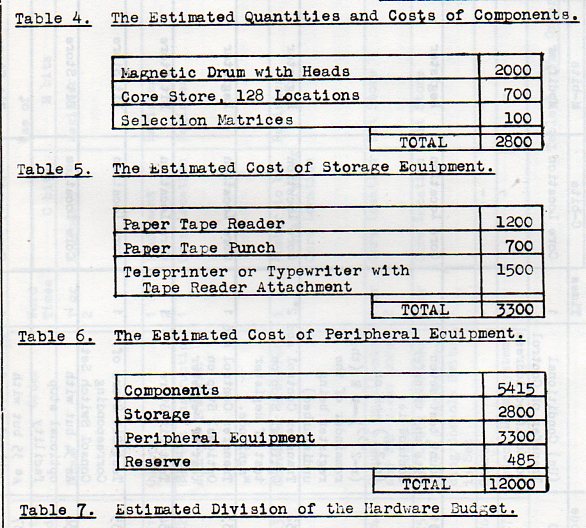
    Computer--lehman223 Question:  what had 1000 transistors, 5000 diodes, 2000 resistors and 1000 capacitors, a team of ten and took 18 months to build?  

    Answer: an inexpensive, $12,000 digital computer in 1959.  

    Mind you this is legions better than what was happening in the mid-1940’s, with teams of hundreds and costs in the many millions, and much better than in the early 1950’s, when these numbers were of an order of magnitude greater.

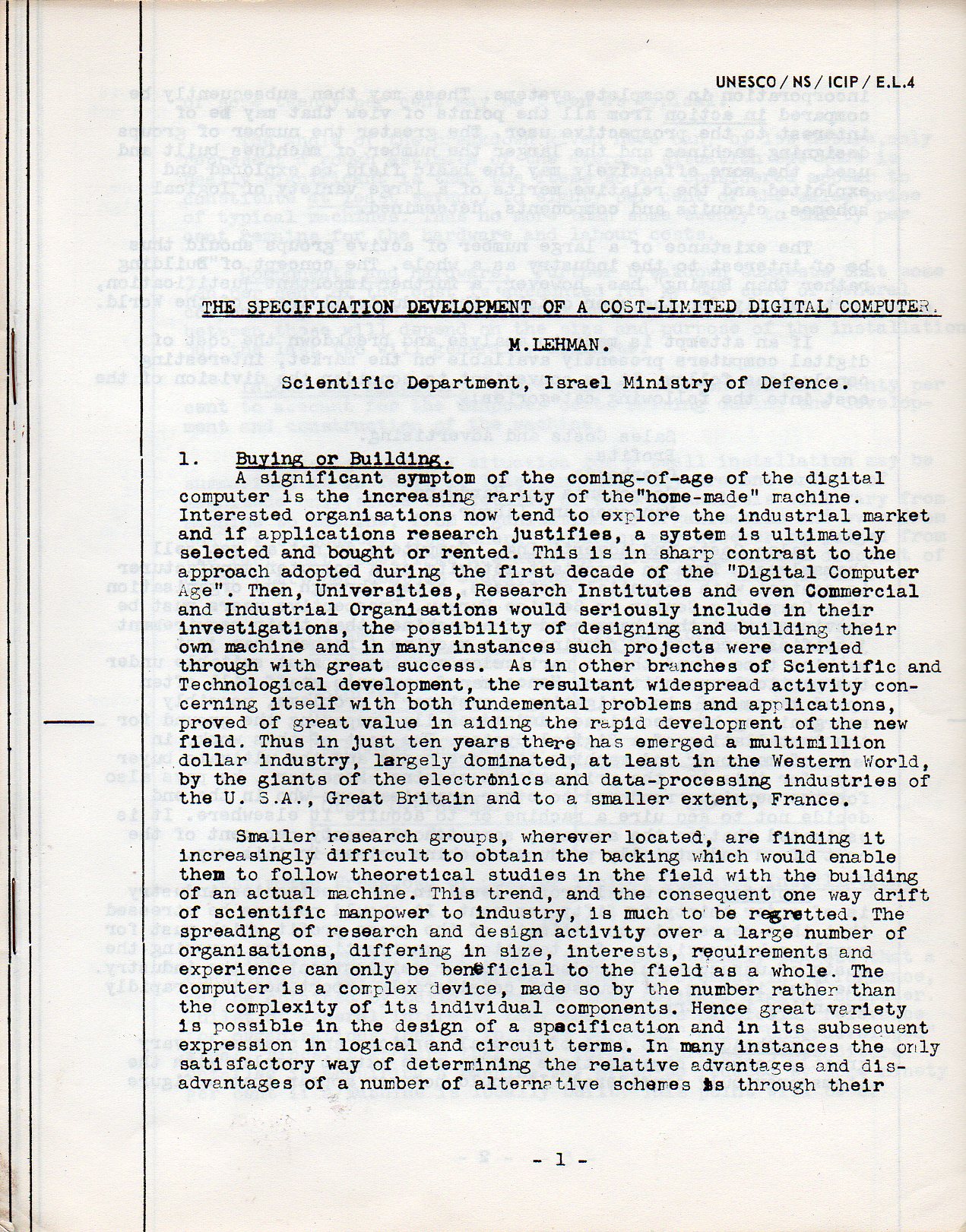
    It seems to me that this short 1959 paper is at the upper end of a beginning concern–costing -out the price of a digital computer for second-tier interests.  “The Specification Development of a Cost-Limited Digital Computer” (by M. Lehman of the Israeli Ministry of Defense, and available here for purchase) was written for those businesses and schools with a definite low-end budget, the upper range of which was set by Lehman at $12,000 for “peripherals, hardware and programming  (or about $125,000 in 2010 dollars, sort of1). This figure was also exclusive of maintenance outside of the cost (at 15-20% of the construction costs overall) of designing and building the machine.

    This was some new thinking on providing lower-cost digital computers to a new market:  “in just ten years there has emerged a multimillion dollar industry largely dominated….by the giants of the electronics and data-processing industries…”.  Lehman was saying that there was a new opportunity for business to supply computers to “smaller research groups” who were “finding it increasingly difficult to obtain the backing which would enable them…to build an actual machine”.  There were other ways of doing it, and Lehman laid out the basic understanding of that procedure.  

    Lehman’s leading quote for this post was accurate–computers needed to be “sold”, as in salesmen and businesses actively engaged in contacting clients who would (“might”) benefit from having computeriaed part of their business. The computer manufacturer’s “staff will often spend many months investigating customer’s problems, possibly reorganizing his techniques and generally preparing teh ground for the installation of a Digital System…”

      Computer--lehman224

    (The figures in the right column are indeed dollars.)

    Lehman was doing some groundbreaking work here at the end of the ’50’s, still far ahead of the time–and probably a full generation–where computers didn’t necessarily have to be shown as being ‘needed” let alone
    “necessary”.  The computer would be “selling itself” on the low-end of the market soon enough, but really not until the Reagan years when it was beyond question that the computer could be used by virtually any person or business–at affordable rates.  

    Notes

    1.  Sort of, indeed.  Straight CPI translation would put this figure at about $125,000, but the other cost of things in 1959 compared to 2010 is a different structure.  Sure, it might cost out to 125k, but that $12k in  1959 could’ve been traded for a decent working-class house in a big city; you couldn’t trade that $125k for the same thing today, no way, no how.  


  • The Rare Antique Vision of Looking Straight Down

    JF Ptak Science Books   Post 1295

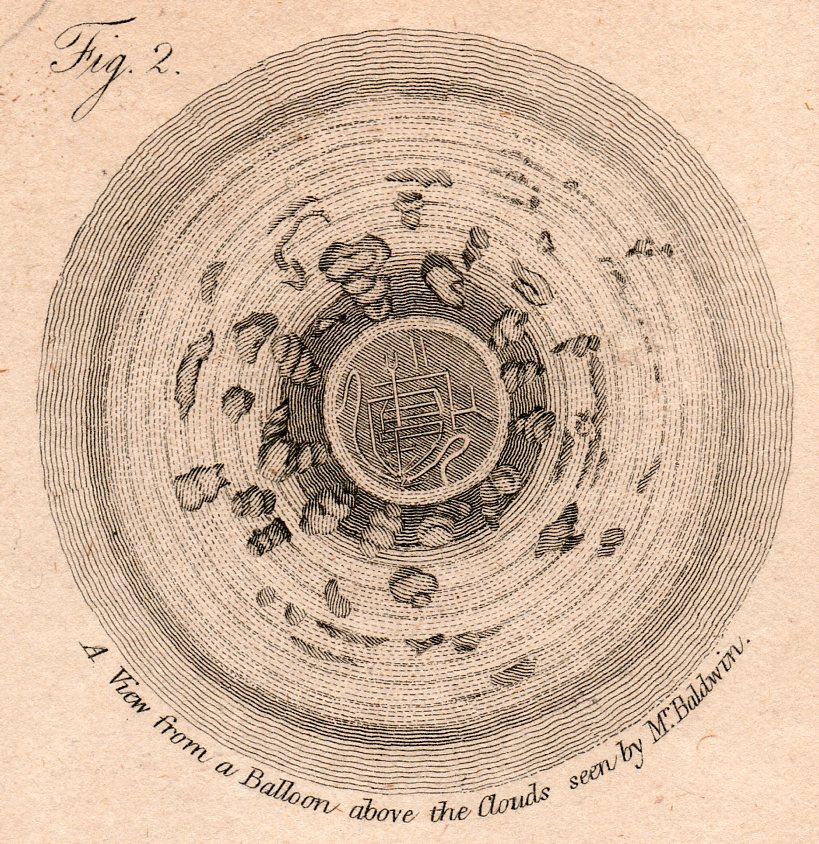
    The idea of representing a view straight down, of looking straight down from some height, is a relatively recent occurrence, this view being somewhat rare in the antiquarian world pre-balloon or pre-heavier-than-air flight.  The pre-human-flight reason for its scarcity is understandable, but even after the first Montgolfier ascension in 1787, there’s another 120+ years of scarcity yet to come before these views would start to pop up in common (and uncommon) literature..  Now I’m not talking about cartography, which is basically a straight-down view of the world—what I’m referring to is that same view but not as a map per se, but what you would see if you were dangling out of a plane or balloon.  The extraordinary map of Imola by Leonardo would certainly classify because of its you-are-there qualities:  essentially it would be like a bird’-eye or oblique view, but straight down.

    All of the images are available to purchase from our blog bookstore, here. 

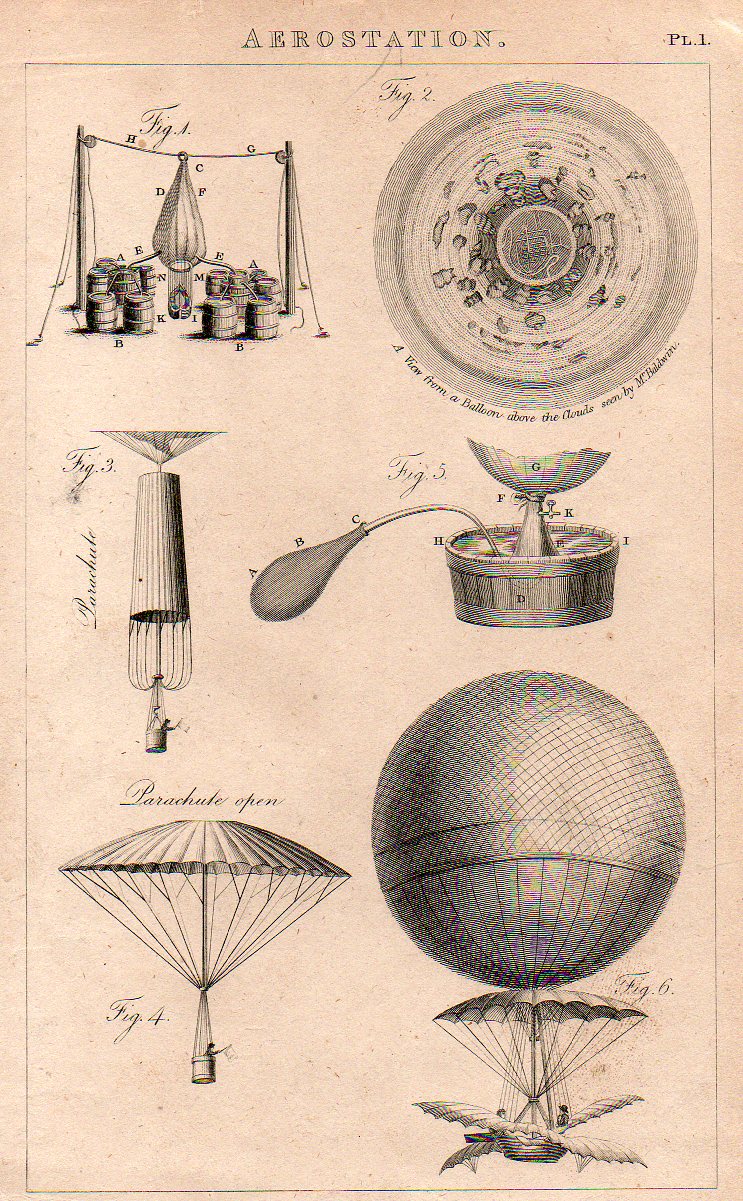
    The first image is that made from a balloon, a lighter than air affair, and engraved and printed around 1810 or so.  It has a very uncommon vertigo-ey affect, like a map of Dante’s leveled creations, though what we’re seeing is a very 

    Looking str8t Diwn-balloom det220 

    …which is a detail from this engraving, made in London around 1810. 

    Looking str8t Diwn-balloom219

    There are of course a number of other lovely design elements, not the least of which is the man in the parachute, bottom left.  (My guess is that the flag held by the man was not for patriotic reasons but rather for more practical concerns, light judging wind strength and duration.   

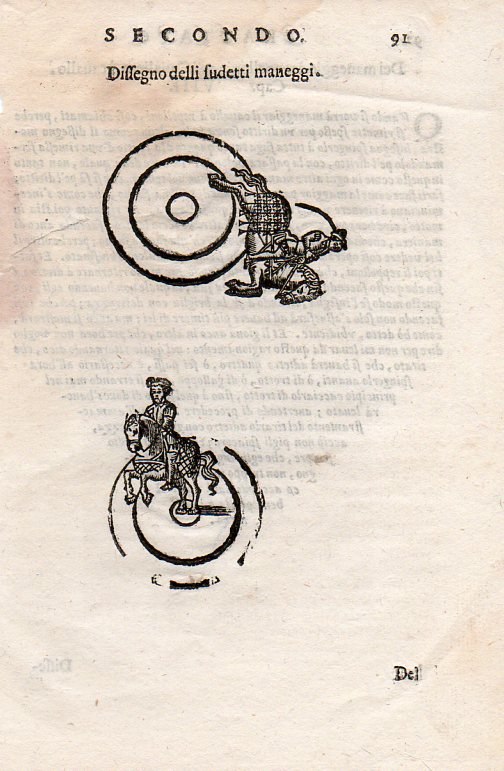
    Another interesting image is this instructional from a source printed around 1620 (I don’t know the source here, either–I purchased the print loose many years ago like many of the others here at Pageant Bookshop in NYC).  It shows a slightly oblique angle (below) and then the flat-perspective view at top: 

    Looking str8t Diwn-horse221
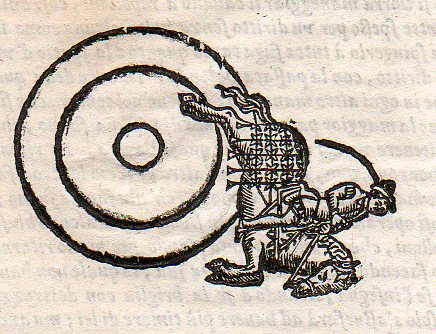
    And then the lovely detail:

    Looking str8t Diwn-horse222

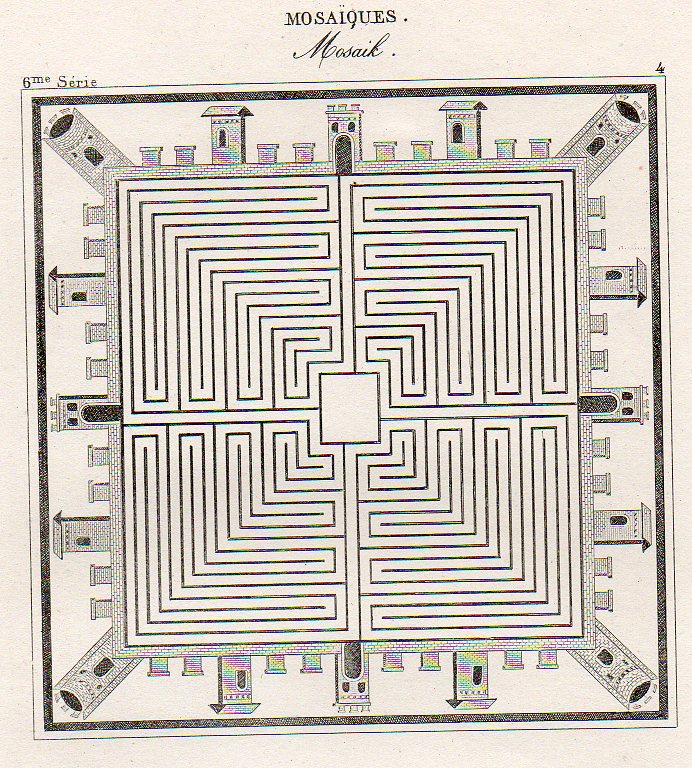
    Then there’s this beauty, showing an idealized town square, presented in mosaic as though seen from above, continuing this thread of flat-perspective–basically looking at some central part straight down, and then taking the objects surrounding the central figure and simply laying them on their backs, as so):

    Looking str8t Diwn--mosaic218

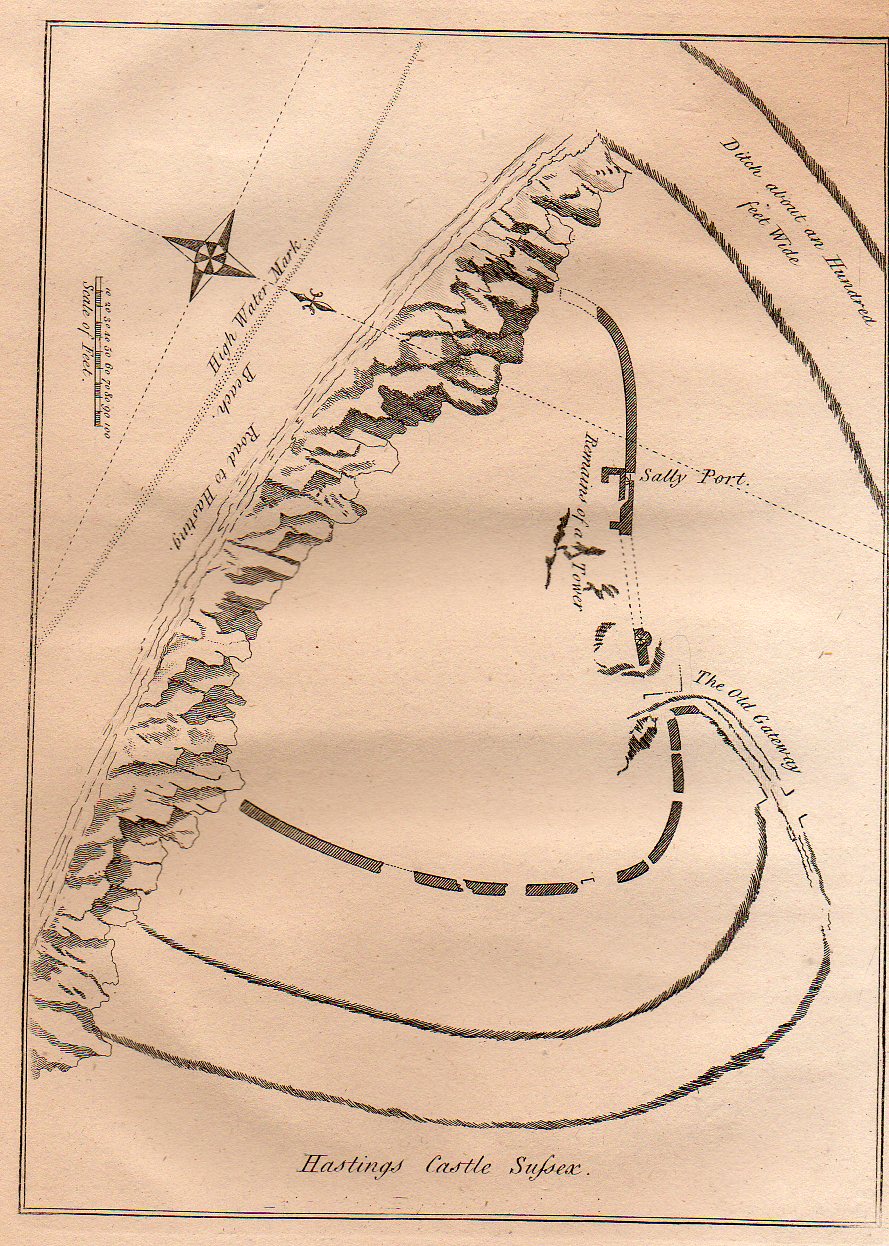
    Lastly for now is this quite flat persepective of the remains of the Hastings Castle (East Sussex), which was built right after 1066 but before the battle.  The (limestone) cliffs that did so much damage to the castle are clearly visible, though what was left of the castle is not.  The view of the area of the castle shows the grounds both in perspective and plan and also from directly above. Its a more-naive approach to imaging that was done so well (on occasion) by the U.S. Coast Survey when it rendered a coastline with an inset of what the coastline looked like from the water–both were superior efforts, but a little odd if you took the map at face value.  This map makes no pretense on perspective correctness, though it is overall a fine map, nicely displaying the necessary details accureately though not correctly (?)

    Looking str8t Diwn--hastings217


  • Future Steampunk in the Sea–1930’s Popular Science

    JF Ptak Science Books  Post 1278

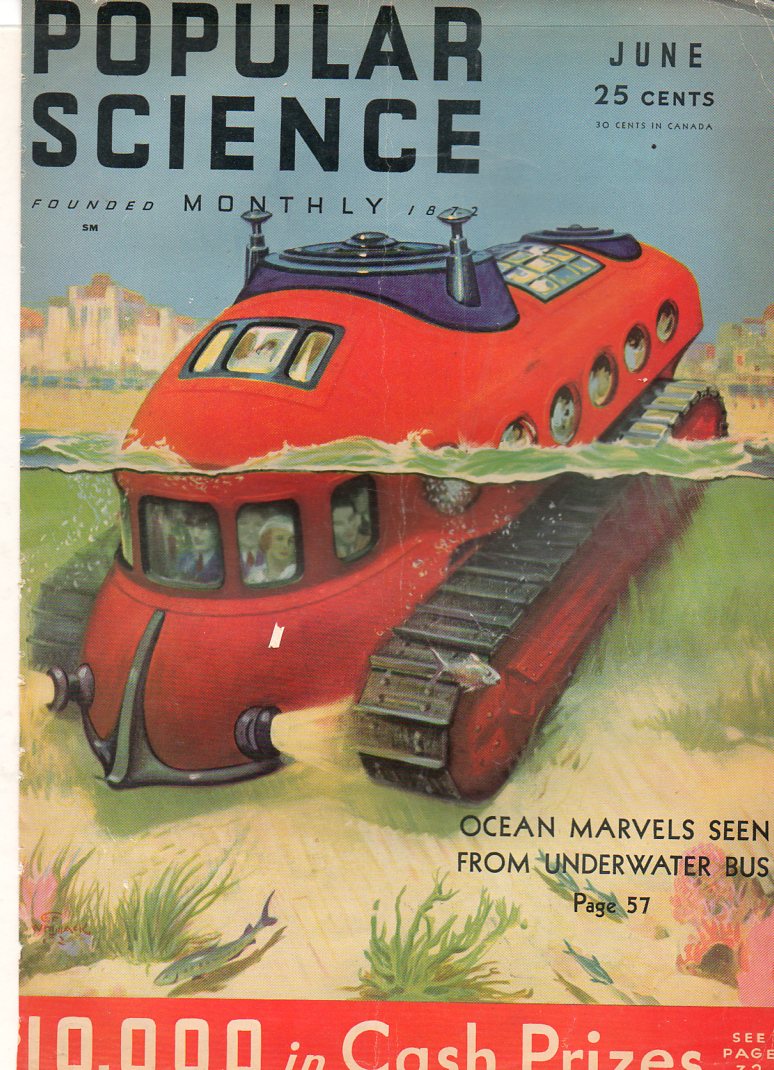
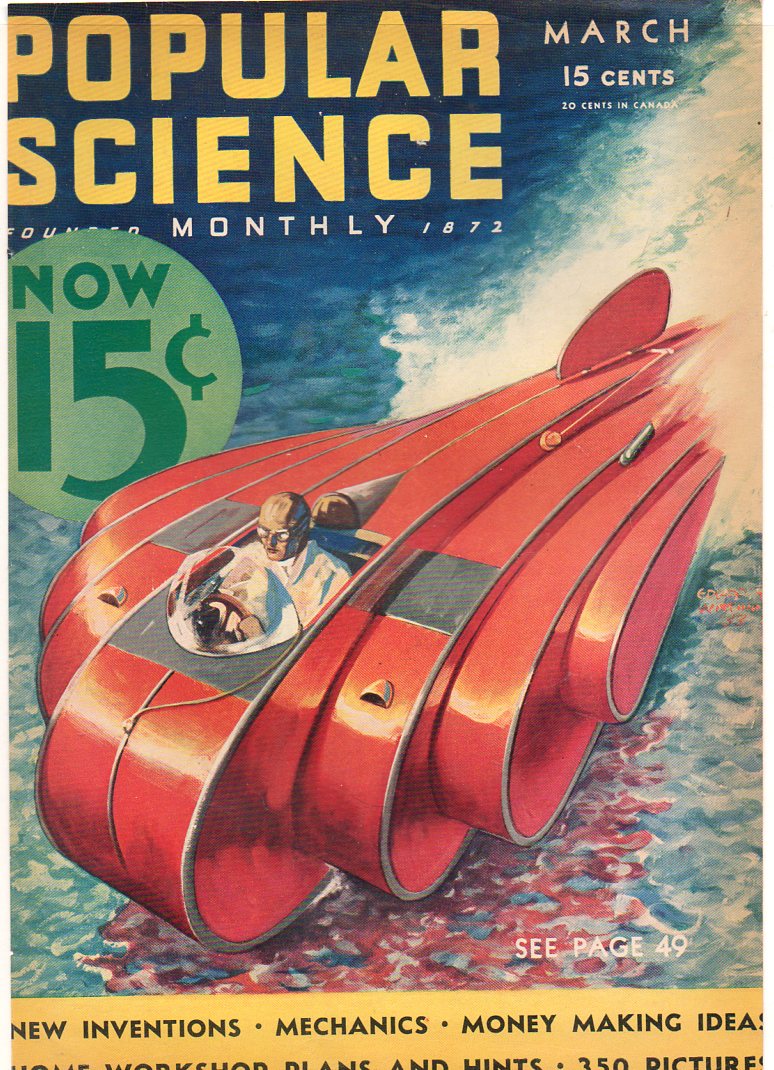
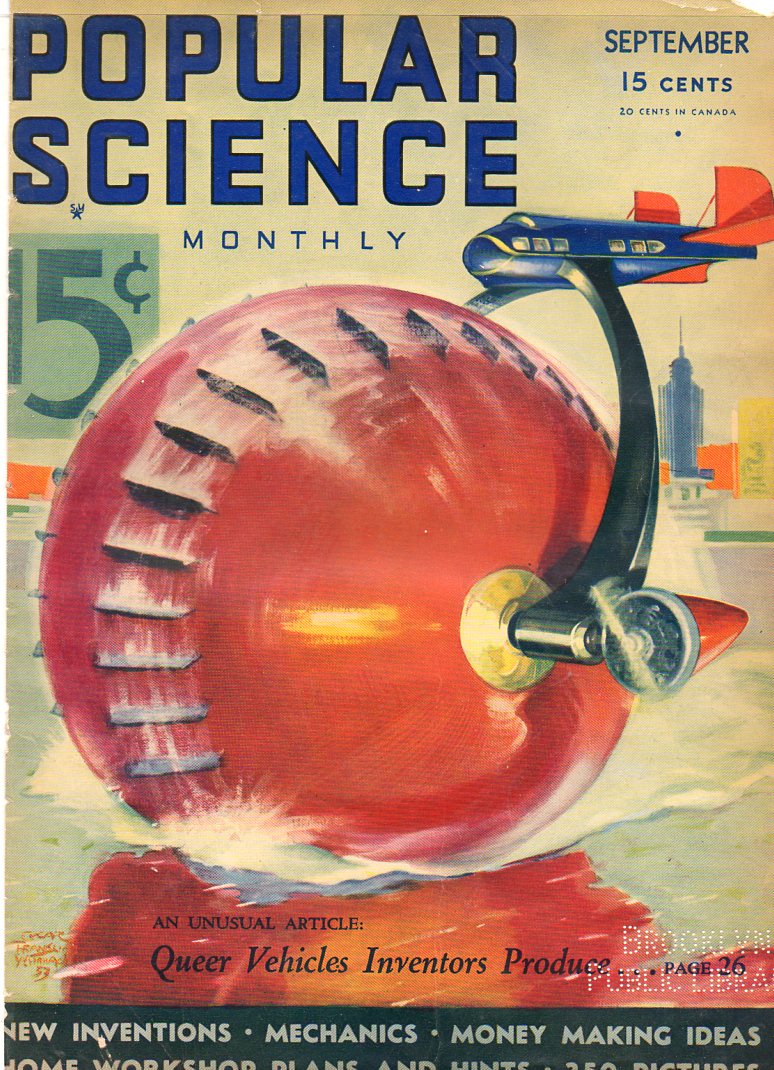
    In a continuing thread on Steampunk themes I’ve organized some of my 1930’s cover art into themes–first up, examples of waterborne-Steampunk, which will be followed by land- and then airborne-Steampunk.  (All of the examples coming up are available for purchase from my blog bookstore, here.)  Steampunk as a general idea is a class of technology that is large, clanging, oily, greasy, heavy, shiny, smoky, and usually driven by steam power, (though other power sources can be applied)  Some make sense today, some don’t–most of the machines addressed for a particular use have actually been implemented here in the not-too-distant future of the 1930’s, and usually much more elegantly than could’ve been imagined then (obviously).  But I must say that given the times and the tools, these people did a great job, if not for the reason of the invention but for pushing the idea-ball forward.  

    Steampunk--sea138
     Steampunk--sea137
    Steampunk--sea136

    More below:


  • The Origin of the Term “Intellectual Capital”, 1842

    JF Ptak Science Books   Post 1275

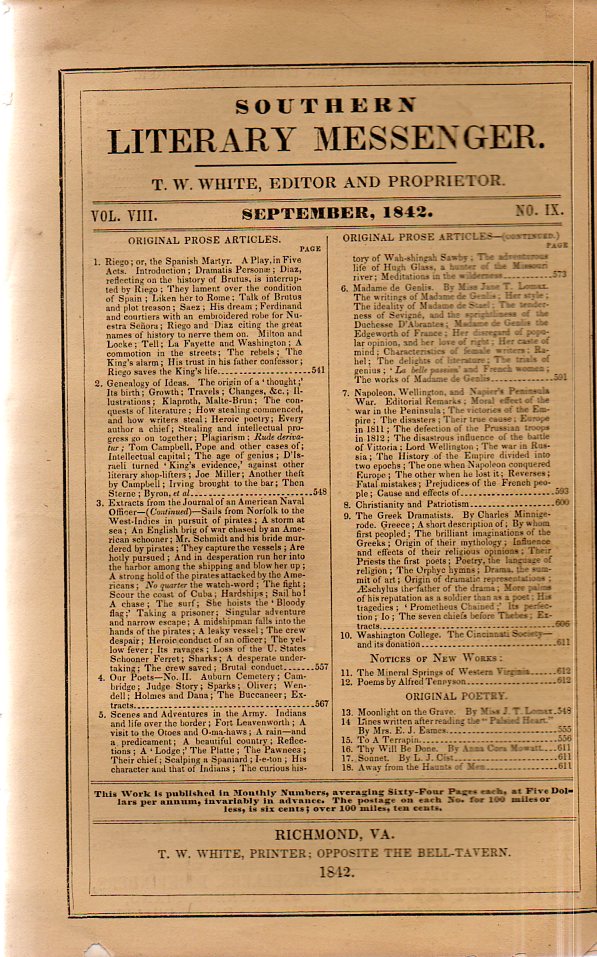
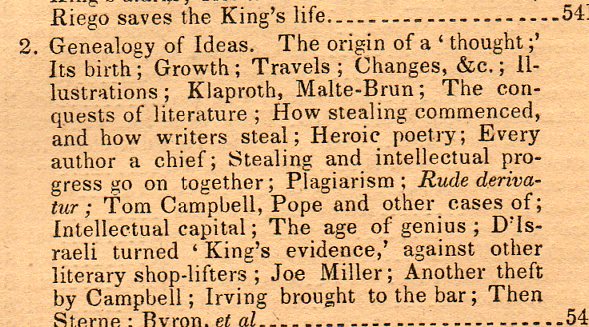
    Intel cap--cvr123   It seems that the first use of the term “intellectual capital” is seen to be with John Maynard Keynes in 1975; nice company of course, but the true first use seems to be much earlier.  It seems to appear in The Southern Literary Messenger (1834-1864) for September 1842, in an article “Geneaology of Ideas”, (pp 548-557) and written by “E.W.J.”, who turns out to be Edward William Johnston, writer/editor, born in Culpepper County in 1799 (or 1804), and brother of Confederate General Albert Sydney Johnston.  (It is also available from our blog bookstore.)

    Here it is:                   

    To resume now our historical deduction of matter Intellectual capital appears to be as capable of being amassed among a nation as materia1 wealth but by no means to follow the same laws –page 552

    If that isn’t what Keynes (and then everyone else) was talking about, I don’t know what is.

    Intel cap--cvr 2124The article is interesting for its dipping into the history of plagairism and finding it comfortably nestled somewhat undisturbed, comfortably even, in the general history of ideas:

    He who writes therefore steals as well as he can and as beggars when they can filch from no richer wardrobe purloin each others tatters so mean authors rob one another and go undetected partly because their works pass unscanned and parity because they from whom they borrow are unread So that after all the essential difference between the genius and the scribbler is not as to the fact of stealing nor even as to the quantity stolen but entirely as to the value of what they steal  (page 551)   

    Long intellectual history of borrowing and building, collection of tropes wound through entirely original work, based on some common building blocks that have been used over and over agian across the centuries.  When looking at the geneaology of ideas, the business of utter stand-alones is slim.  Shakespeare built upon Plutarch in bits and starts, for example, but everyone who knew everything at that time would’ve recognized the Plutarch shining through, Shakespeare himself finding it unnecessary to say any more about it.  Albert Einstein had not one footnote in the SRT paper of 1905, yet owed some intellectual heritage to Lorentz and Poincare.   Anyway Johnston writes about the fluid nature of the history of ideas with many fine examples (though not the two listed above), all of which can be read here in the full text of the article. 

    (This subject of plagiarism and forgery, of originality and copying, of recognizing what has come before and not, gets to be very knotty very quickly.  What is “real”, what is “original”, we are reminded, gets complicated and complex.)

    Notes:
     
    1.  The Southern Literary Messenger: Vols. I-XXXVI (August 1834 – June 1864, when it was eaten up by the war).  Even though it was an interesting journal with a good solid and long run, I guess many people will remember it for being edited for a short time by Edgar A. Poe, who also made a number of literary, critical reviews and poetical contributions to the magazine, though not in this issue for any of those three.


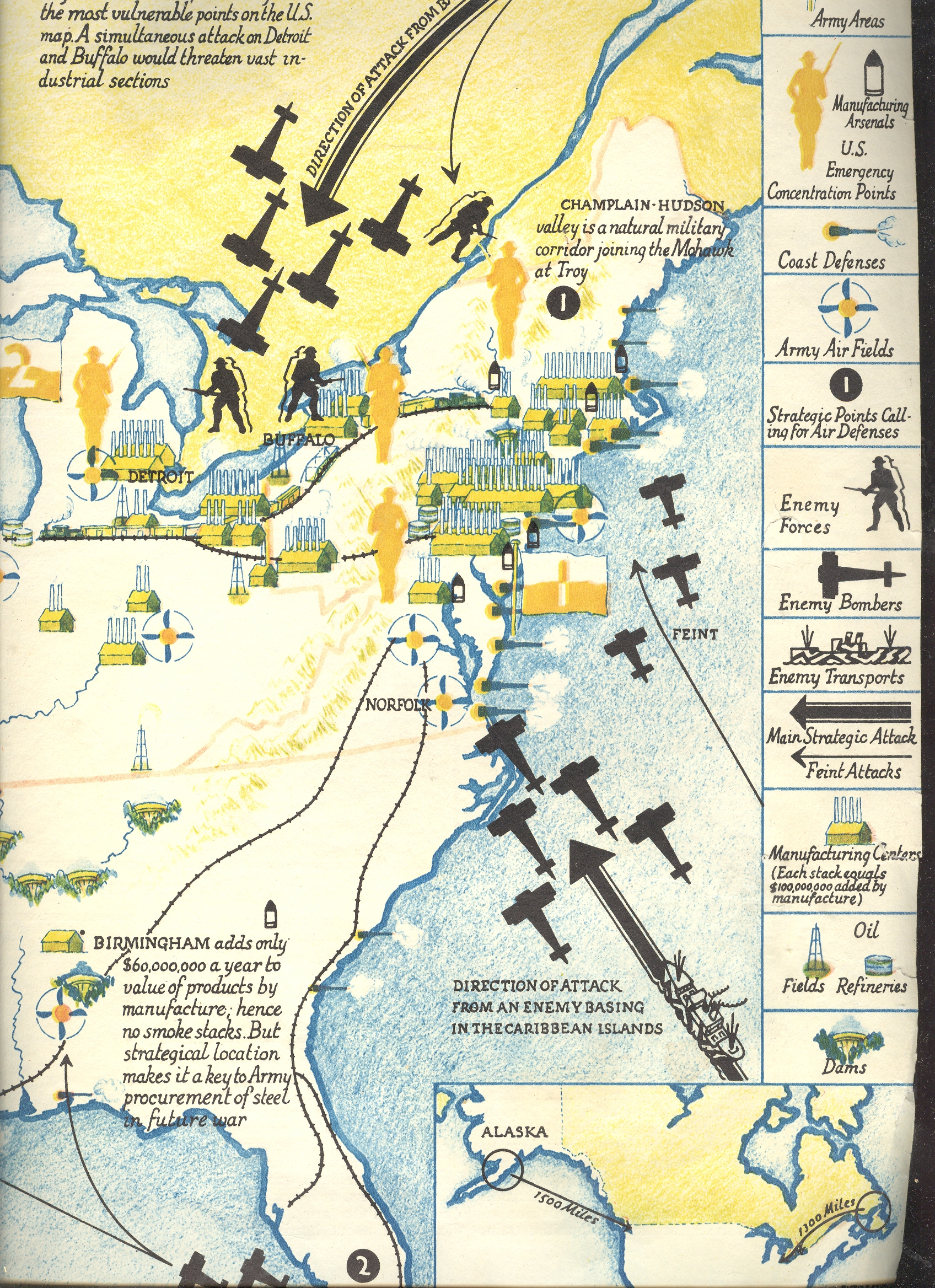
  • Maps of Invasions of Great Britain and the United States

    JF Ptak Science Books  Post 1274–Real and Imagined

    America has almost never been invaded. I should clean that statement up a bit: the United States has almost never been invaded.  America–which included North/Central/South once upon a time long in the dim past–was constantly invaded until the invasions no longer counted themselves as such, which I guess means that the “invasion” forces became  “resupply”. (Perhaps an invasion is over once you surpass a certain ratio of houses : forts.)

    “Invasion” does not include “attacks”.  A few guys getting off a Nazi sub and wandering around until they got picked up (with some (all?) being executed) does not an invasion make.  9/11 was not an invasion, though the subsequent invention of impending and pervading fear was–that’s why we have “storm centers” rather than “weather reports” on broadcast news–but even that fear business was more home-grown than anything else.

    The Japanese Army were on two small islands in the Aleutian chain (which may have been closer to Tokyo than NYC) for a bit in WWII–also does not make for an invasion, even if they were there for a long time.  Or even if they were still there.  Nor does sending hundreds or thousands of paper incendiary balloons across the Pacific an invasion make. 

    UFOs don’t count, either.  (I still find it remarkable that such a large percentage of the hundreds of thousands of “sightings” has the UFO with landing or whatever lights on it. I figured out at one point that there has been a report on one of these critters every ____ minutes since Roswell. And in all of those hundreds of thousands or reports, if you took them all and stacked them one on top of the other, they would reach perhaps the height of a grain of sand.)  The Beatles don’t count, either.   

    What also doesn’t count (but probably should) but which is not military–not really, though it may have the impact of a military force at some time in the future–are Chinese-made imports of, well, everything.   At Thanksgiving I wondered how much of a dinner could be composed of foods that were shipped from China and to no great amazement an almost-complete table of food could be set, plus napkins, flatware, plates, candles, tablecloths, tables, chairs, paper turkey decorations, carpet, flooring, wallpaper, paint for the walls and ceiling, screws for the Chinese-made door hinges, lighbulbs, tubes for the McIntosh preamps, all of the clothing worn by the guests, and so on.  The electricity is still American-made. The fact that Mott’s Apple Juice is coming from Chinese apples is a bad sniff of the future. The country of origin is usually on juice bottle necks-check it out.)  

    Certainly something that does count is the invasion by Great Britain of the United States in the War of 1812–they invaded long and deep enough to burn the White House and cause general havoc.  We won that one.  But of course the Brits were otherwise involved on the Continent.

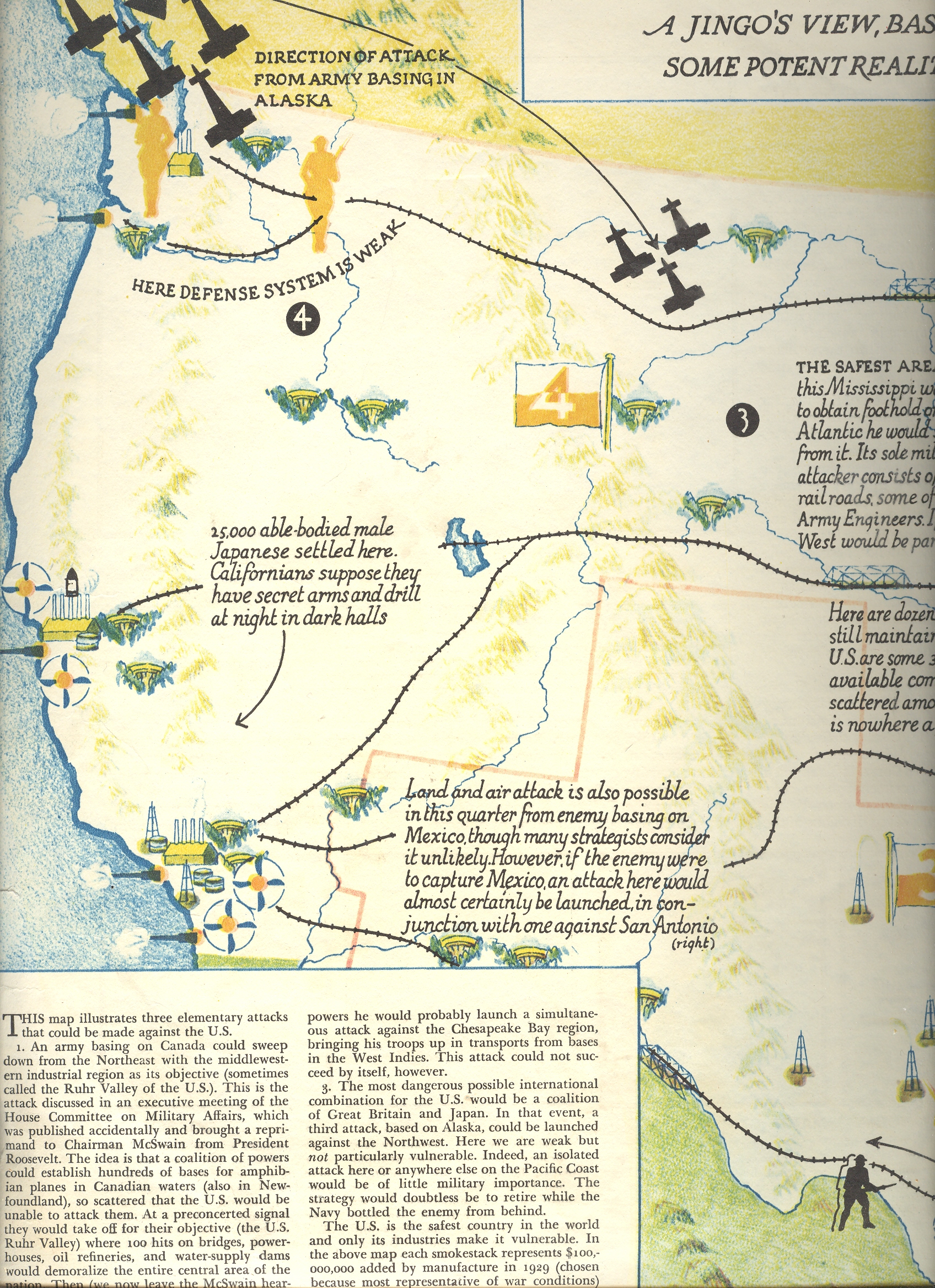
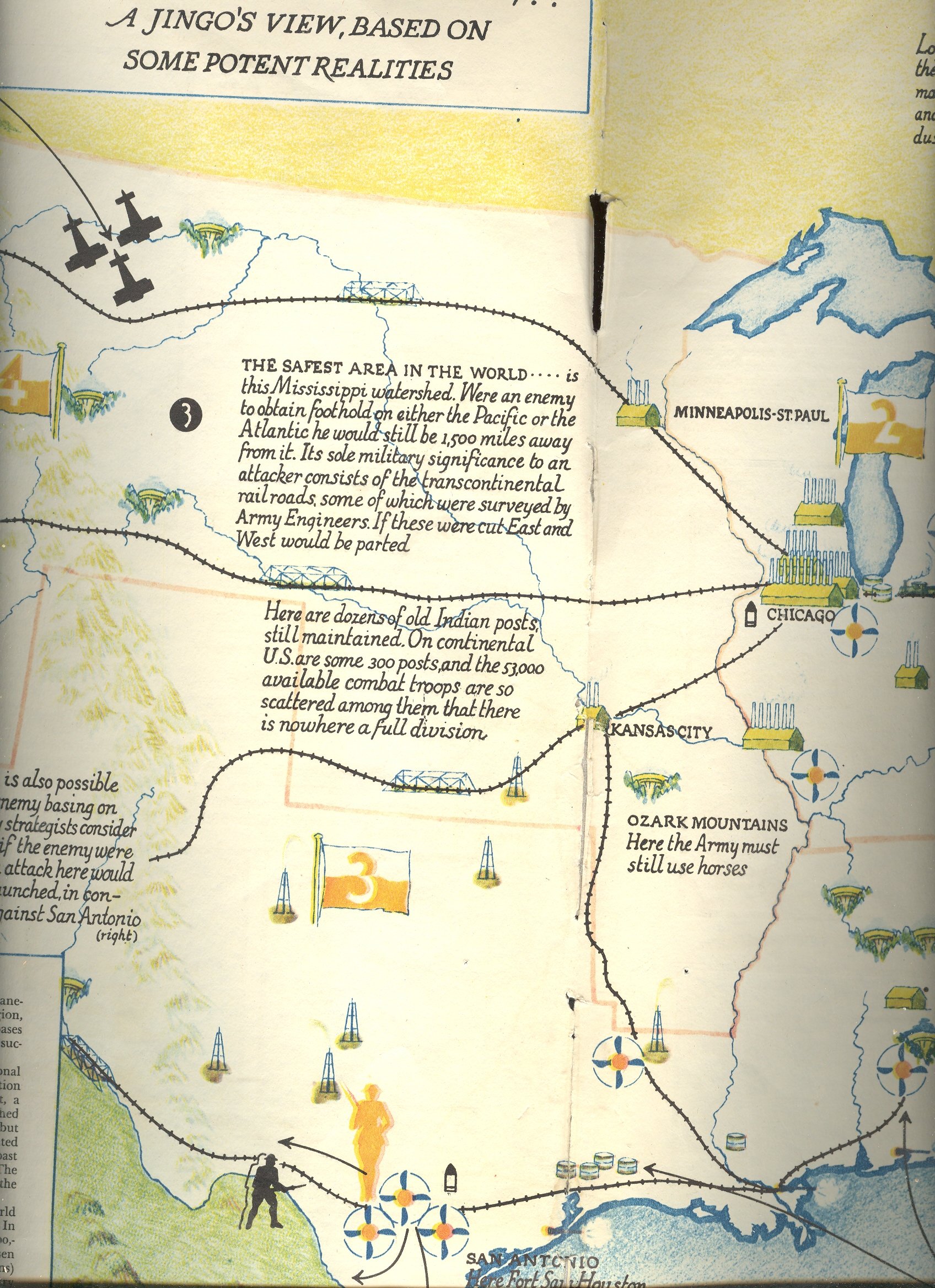
    Perhaps this non-invaded bit explains why the most-viewed post on this blog (with at last count was 400,000 views) was a LIFE magazine article from 1942 on the possible invasion routes to the U.S.  Maybe the volume was driven by war-gamers, though I suspect it was made up largely of the curious who weren’t used to seeing “Invasion of” and “America” together in a military sense.

    https://historyofideasblog.com/a/6a00d83542d51e69e20120a7a3225e970b-pi

    https://historyofideasblog.com/a/6a00d83542d51e69e2012876a5a4b4970c-pi

    https://historyofideasblog.com/a/6a00d83542d51e69e2012876a5a5e4970c-pi

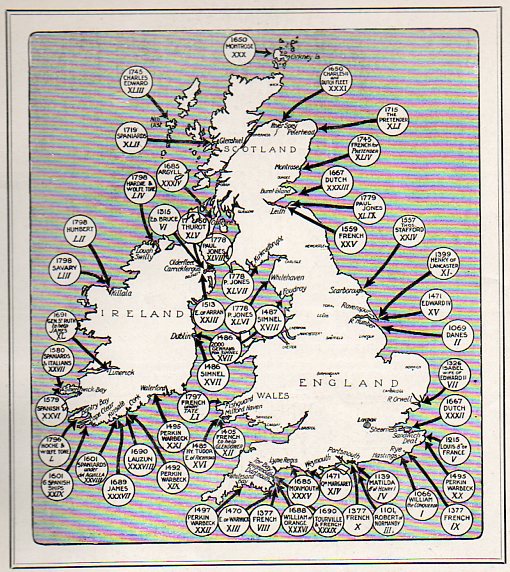
    But now for the  real stuff:  a map of the 54 invasions of Great Britain (and “the places at which foreign troops have landed on British soil since 1066 (and all that), seen in the Illustrated London News for 27 March 1909):

    Invasion--Us and England120

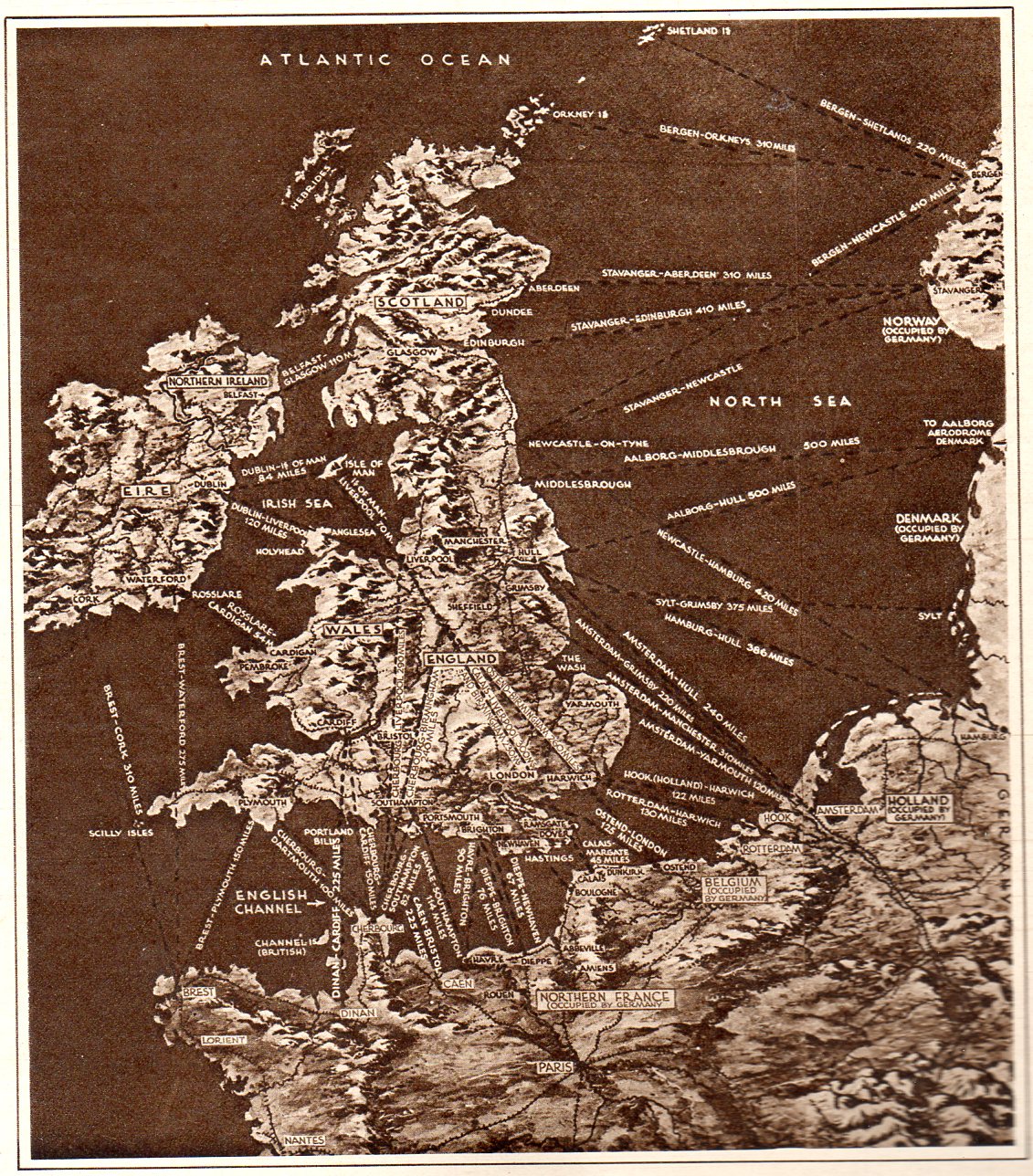
    And then this, where the WWII invasion routes were turned around: 

    Dunkerque124

    This map pretty well tells the story of the perilous situation of Europe and England at the beginning of June, 1940.  It appeared in the Illustrated London News on the heals of Churchill’s “Blood, Soil, Sweat and Tears” speech, and was a very frank presentation of the wearing of the war.  By this point in the war Nazi Germany had successfully invaded Belgium, France, Luxembourg and the Netherlands, sweeping across Europe in a broad westward movement, backing up British and French troops all the way to the sea at Dunkerque, where a monumental rescue operation (“Operation Dynamo”) saved them.  (There was an enormous amount of materiel left there on the beach, a devastating loss for the British Expeditionary Force, nearly crippling it.) This was a bad time for the Allies, this part of the war coined by Winston Churchill in 18 June 1940 in the House of Commons by:  “The Battle of France is over. I expect the Battle of Britain is about to begin”. There was very little good that came of these few months for the U.K and the Allies, though four things do stand out: (1) as I just mentioned, the saving of 300,000+ troops at Dunkerque; (2) the resignation of Neville Chamberlain, (3) the coming of Winston Churchill  as Prime Minister of the U.K., and (4) the first deciphering of the Enigma at Bletchley.  Other than that, the situation was dim, and these invasion routes (published at t he very time that Germany was studying such a feat in its “Operation Sea Lion“, or “Unternehmen Seelöwe”). The endgame at Dunkerque took place almost four years to the day of the invasion of Europe, when the intent (though not placement) all of these arrows were turned around for the Allied operation at the Normandy beaches on 6 June 1944..

    And so, there it is–a presentation of several maps showing invasions, real and imagined