A Daily History of Holes, Dots, Lines, Science, History, Math, Physics, Art, the Unintentional Absurd, Architecture, Maps, Data Visualization, Blank and Missing Things, and so on. |1.6 million words, 7500 images, 4.9 million hits| Press & appearances in The Times, Le Figaro, Mensa, The Economist, The Guardian, Discovery News, Slate, Le Monde, Sci American Blogs, Le Pont, and many other places… 5000+ total posts since 2008.

Category: History of the Future

  • Note on an Alphabet of Computer Names in Fiction

    JF Ptak Science Books   Post 1375

    First of all let me say that I know almost nothing about Science Fiction–this  list started out  while looking for questions asked of computers in works of fiction and movies, but the question on questions is far deeper than I can deal with in a simple sit-down, though I did collect some interesting names of fictional computers along the way.  For this very preliminary list of computers in fiction I include computers with actual names–therefore, and unfortunately, beasts like the NORC-like computer that let loose Hell’s Kitchens in Kubrick’s Dr. Strangelove…. is not included because so far as I can remember it has no actual name, and names are important when you’re creating an alphabet.  Also I tried to look for images of the computers themselves, but since I stayed mostly in the 1940’s-1960’s, there are not many of those. 

    So here this is and please take pity–again this is preliminary and I hope to start filling in what made these machines interesting quite soon. In the meantime there’s an excellent list compiled at Wikipedia, here.

    AM, from Harlan Elison’s short story I Have No Mouth, and I Must Scream (1967).  AM “speaks” via paper tape, as below, using International Telegraph Alphabet No 2 (ITA2), a (much) earlier pres-ASCII-ite language, in this case saying “I think, therefore I am”. 

    AM Talkfield #1
    ALPHA 60.   From the film Alphaville, Jean-Luc Goddard, 1960.


  • The Alpha and Omega of Computer Questions; Asimov, 1953 and 1955

    JF PTak Science Books  Post 1375

    Asimiv question087
     

    Following up on yesterday’s post on the world’s first (popularly-published) computer magazine (Computers and Automation)  is this Isaac Asimov short story on what might be the first great computer question.  The story in mind, “Question”, appeared in the March 1955 issue of this same magazine, a two-pager sandwiched between an ad for Remington Rand UNIVAC and an article on computers and weather prediction.  It is the first appearance too of Asimov’s massive computer of the future, Multivac, a giant machine with corridors and nooks where technicians could stop and have a seat to enjoy a cup of coffee.  And it seemed to at least one worker that it wasn’t quite right to be sitting inside the machine, that the billion-tube, two billion relay computer was more than just a flow of electrons. (The ENIAC, which was basically the world’s first computer, had 20,000+ tubes, so a billion as  conceived by Asimov would’ve been a very big machine indeed, a 500,000-ENIACs-sized behemoth.) And a very hot one.   The workers wondered if you could ever tell if the machine was alive, if it thought on its own, if it attacked aparat from its instructions and programs. 

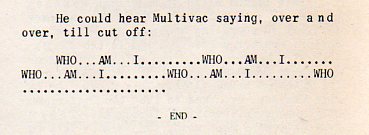
    As it turns out, the answer was positive, and not only that, but Multivac could speak.  Its answer to “the question” was “who…am…I…?”, repeated several times in the closing sentence of this rocket-fast short story.  I guess that that would give you pause, as it would anyone had the question come to them from their own computer while communicating along the spine of the great global “mind”, the Internet, and perhaps someday it will, at some time in the near-ish future when the height of our own computer-y heights looks as quaint to them as a half-million ENIAC idea of 1955’s premier scifi writer looks to us today.

    I know almost nothing about Asimov, but he seems to return to this idea of the Big Computer, Multivac, and ultimate question a few years later.  It seems as though there was an issue of serendipity involve with the structure of the “Question” story and that of another writer’s ending for a story called “Problem for Emmy” by Robert Sherman Townes. Asimov admitted the similarities but also maintained that he didn’t know of Townes and had never read his story–be that as it may, Asimov promised that he would never reprint the story, and it seems as though he never did.  But it looks as though he resurrected his idea somewhat, which is fine, because the whole idea of ultimate/penultimate questions and massive computers is a great genre. 

    Asimov wrote a story called “The Last Question” in 1956, a year later, writing about a trillion years of human history in the space of another terrifically-short short story, the short story that Asimov found to be his own favorite.  If “Question” posted the ultimate question put to the super-colossal Multivac computer,  ultimate question in “The Last Question” may well then be the ultimate answer.  You’ll have to see the ending of the story for yourself to see what it was–I can’t spoil it. 

    Notes:

    1.  I’m just a little surprised that Asimov was hung up on tubes in 1953–transistors had been in the air by 1947/8, published in 1948, and pretty-published by 1952.  I figure he should’ve been aware of them and how they would transform computer construction.  Maybe not. Perhaps he just wanted to write about a billion-tube computer. “Multivac ” stands for “muliple vacuum tubes”, and then “multiple vacuum tubes analog computer”, so using transistors might be a little at cross-odds with the name and the idea of the machine.  It woulod be interesting to put together a list of questions/answers of these early fictional machines, a longlist of which appears here.

    2. The two characters in the story by the way are named “Alexander Adell and Bertram Lupov”, both of which suggest the name Alexander Graham Bell to my head.


  • The World’s First Popularly-Published Computer Journal

    JF Ptak Science Books   Post 1374
    Computer history082

    Nothing quite gives you the taste for the ancient history of a very modern topic–like computers–than by looking through some of the earliest popular publications on the subject. This can actually be done pretty quickly if you wanted to just get a broad taste for the subject in its modern infancy–just reading the titles of the papers and taking in the advertisements might be enough. So here’s two volumes of a very scarce and interesting journal by old Edmund Berkeley that may do this job perfectly.  Berkeley was a bona fide mover and shaker in the early days of electronic computing in the United States–he had a lot on his mind, contributed many written words and ideas, and also tried to make a fair living while doing so (there was a bit of Sideshow Ed in him for some of the things he tried to sell.  

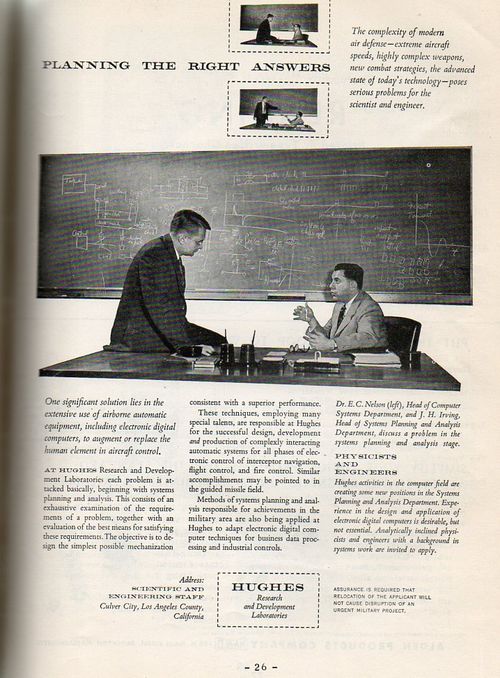
    Computers and Automation, the brainchild of the brainy not-child Edmund Berkeley, was the first popularly-published  magazine published regarding the computer, its applications, it programming, and really just about everything else.  (It appeared seven years after the Mathematical Tables and Aids to Computation  was published in 1943, almost entirely to the mathematics and engineering communities.) Computers was published by Edmund Berkeley & Associates in NYC beginning in 1952., beginning its publishing journey as The Computing Machinery Field, its name changing to Computers and Automation in February 1953 (in volume 2, number 2).   All issues have some fair space devoted to advertising, even though the issues generally ran between 32 and 40pp. Berkeley was a real-enough mathematician, engineer and computer pioneer, but he also had a pretty large taste for making these interests pay–which was essential, as the original print runs were not very large, though his advertisers were impressive. (According to the first issue, approximately 1200 people were on the mailing list for the journal, with around 2000 issues being printed each number. All told, this is not a large print run, and thus not many of the early issues have survived.)  He was not averse to being somewhat outre with his journal—in addition to having contributors like Grace Hopper and Alton Householder, he also had Fletcher Pratt and Isaac Asimov writing some pretty arresting pieces from the SciFi/Futurama point of view.
    Computer history083

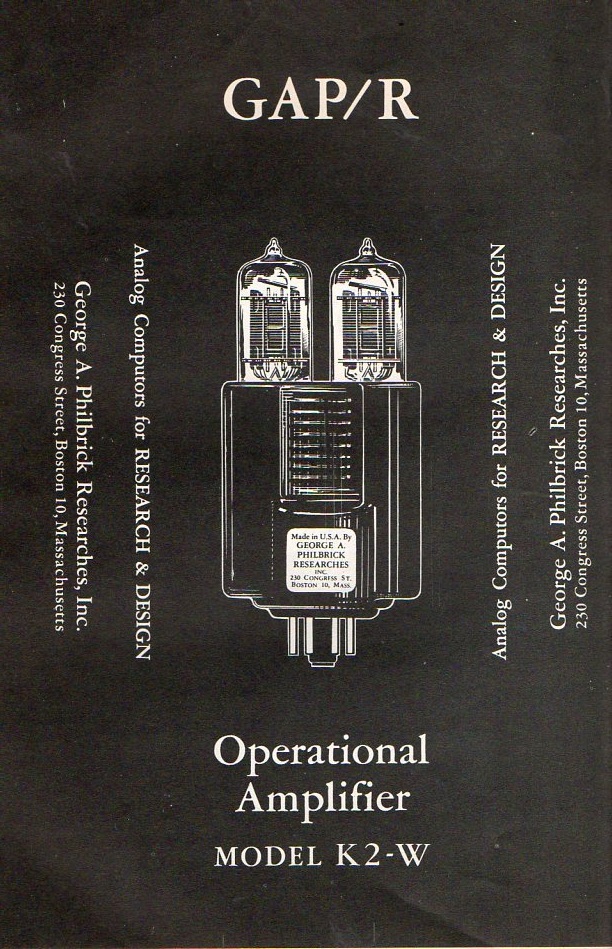
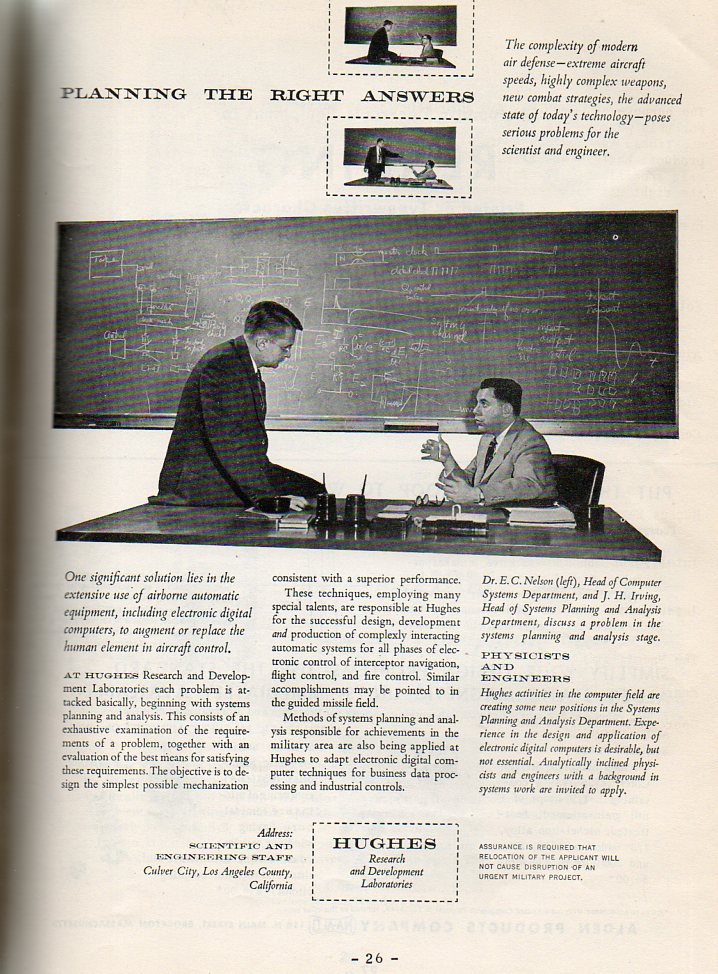
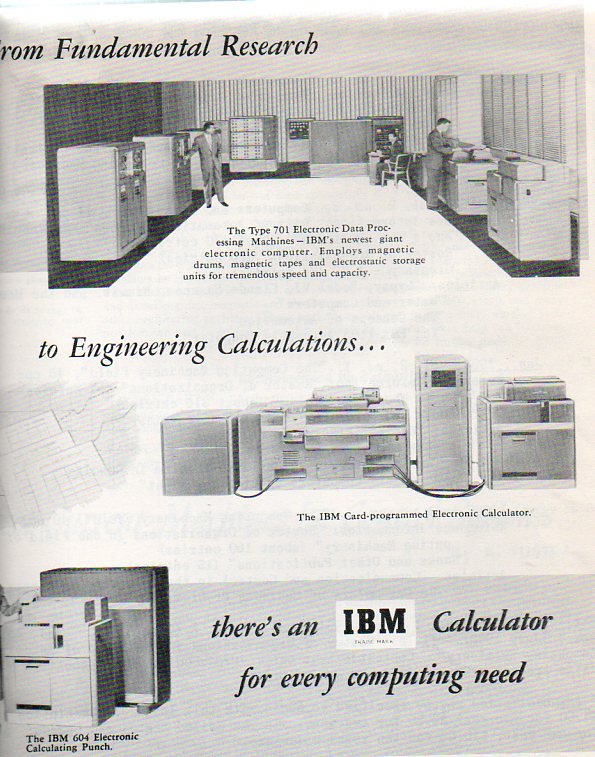
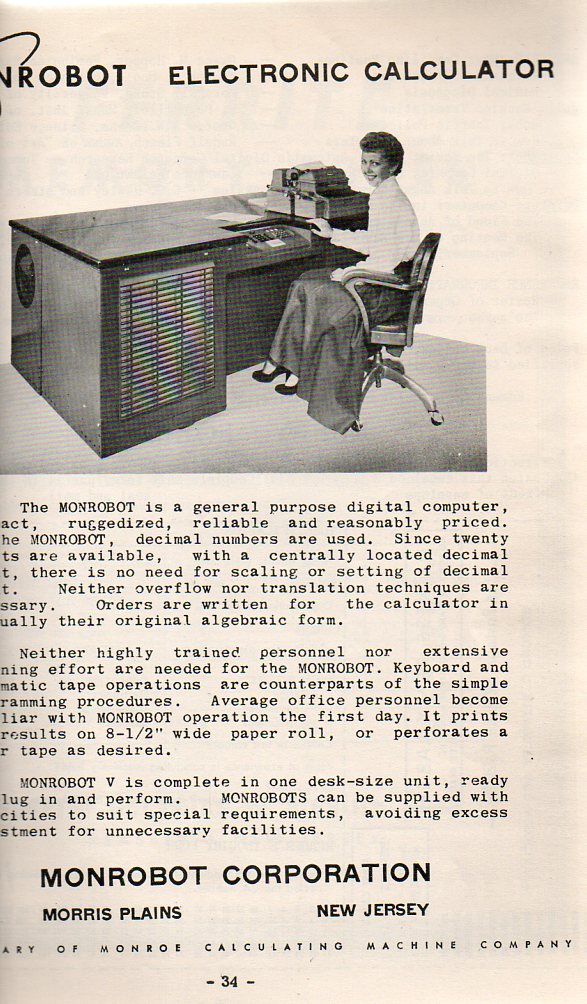
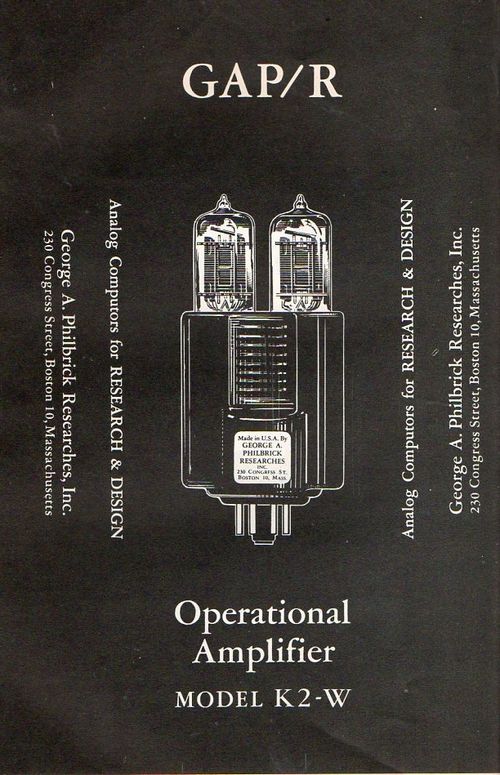
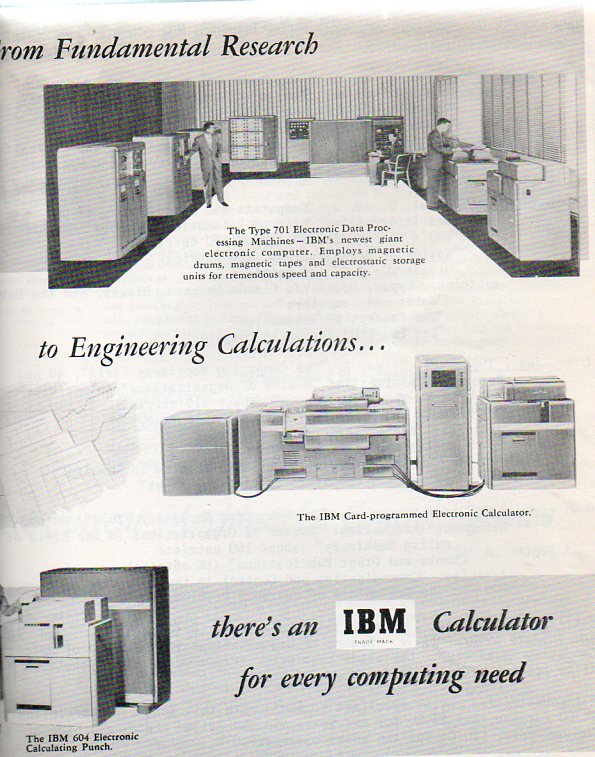
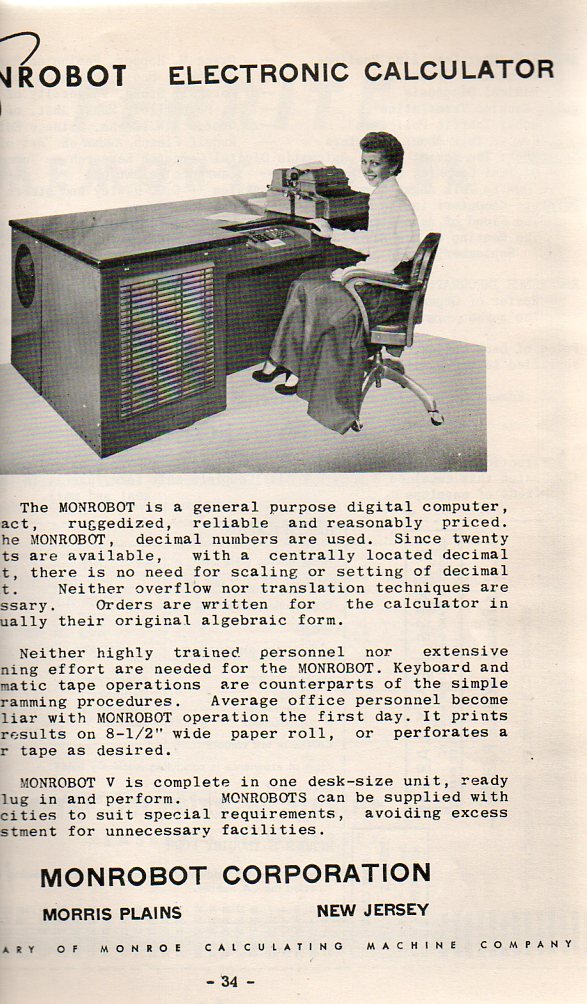
    A Note on the Advertisements: in short, they’re wonderful. For example, on the back cover of vol2/1 is Edmund Berkeley & Associates “SMALL ROBOTS”, advertising “Simon, the Mechanical Brains”, “Squee, the Robot Squirrel”, and other gadgets. To give you an example the other ads in this issue alone are for “The Circle Computer”, “General Ceramics Ferramic Cores”, “Magnetic Metals Co. Amplifier Cores”, Ross Ashby’s “Design for a Brain”, Consolidated Engineering’s SADIC System, Monroe Calculator’s Monrobot Electronic Calculator, George Philbrick’s “Computor (sic) products”, and a lovely two-page spread for Remington Rand. Further into the year are ads for Burroughs, IBM (604 ands 607), Electronic Associates Inc, Prokar capacitors, and many others.

    Some of the subjects include: The ERA 1103 computer, NIMWIT, Applications of the Computer, what the computer *is*, Admiral Grace Murray Hopper’s compiler, mechanical translation, Harper’s subroutines, the cost of coding, computer “self-repair”, automation at Ford, and so on.  Also includes perhaps the earliest announcement of the first all-transistor computer (October 1954, IBM’s “new experimental transistorized computer” , the earliest (?) printing of Asimov’s Three Laws of Robotics in a scientific journal, and more.
    Computer history086

    Each section generally has three of the following categories (per issue) : computer glossary, roster of member organizations, who’s who, an annotated books and journals section, and other aligned concerns.  For example, there’s this bit, an application (cut-out) card for “Who’s Who in the Computing Field for December 1952”–utterly simple, it seems as though anyone who filled out the card was in, the “who’s who” part of this that we normally celebrate with fame or achievement really was just telling the rest of the people in the field who was exactly who.

    Computer history084

    The contents:

    Volume 2/1, January 1953. 45pp.

    Householder, A.S. Brains, Electronic and Otherwise; Williams, S.B. (President, ACM) What Computers Do; Murphy, E.F. and E.C. Berkeley. Automatic Computers on Election Night.

    Volume 2/2 , March 1953. 37pp.

    Boehm, George A.W. Gypsy, Model VI, Claude Shannon, Nimwit and the Mouse; Paynter, Henry. Water and Computers; and the editor Berkeley, The Concept of Automation, and Berkeley (with Neil Macdonald, Berkeley’s other name). The ERA 1003 Automatic Computer

    Volume 2/3, April 1953. 40pp.

    Fletcher Pratt, The Art of Solving Secret Ciphers and the Digital Computer; Berkeley, Avenues for Future Development in Computing Machinery;  Gene Hegedus, Hungarian Prelude to Automation..

    Volume 2/4. May 1953. 33pp.

    Grace Murray Hopper,  Compiling Routines; A.D. Booth, Mechanical Translation; Marshall Stone,  Medical Diagnosis.

    Volume 2/5. July 1953.

    Yehosuha Bar-Hillel (the great logician),  Machine Translation; George Boehm, Robot Traffic Policemen; Rudolf Flesch,  How to Talk to Computers.

    Volume 2/6. September 1953.

    Tommaso Fortuna,  The Soviet Union: Automatic Digital Computer Research.; Wainwright, Lawrence Wainwright,  Digital Computer Questionnaire; and a general DISCUSSION: “How to Talk About Computers”, with GG Hawley, Samuel Scharff, C.B. Crumb, and EC Berkeley.

    Volume 2/7. October 1953. 36pp.

    Brown, David W. Brown Computers in the Factory; Neil (Berkeley) Macdonald,  The Flood of Automatic Computers. 

    Volume 2/8. November 1953. 40pp.

    John W.Carr  III. Who Will Man the New Digital Computers?; E.F. Cooley,  Electronic Equipment Applied to Periodic Billing; Glenn.Hagen,  Air-Floating: a New Principle in Magnetic Recording of Information.

    Volume 2/9 December 1953. 36pp.

    Clippinger, Richard Clippinger, How a Central Computing Laboratory can Help Industry; R.T. Wiseman, “Combined” Operations in a Life Insurance Company instead of “fractured operations”.

    These are the contents for 1953; the volume for 1954 bulks up a little, but is still under an inch thick.   The MTAC journal stays quite slender throughout its pre-1960 life (it has virtually no advertisement and is entirely academic), and there are more and more computer articles appearing in old stand-by associated journals like the Proceedings of the Institute of  Radio Engineers (which by 1959 will published a massive supplemental volume called “the Computer Issue” which I’ll talk about soon.  For the time being, I just wanted to make an inroad into this journal–I’ll expand on he articles in just a bit. 
    Computer history085


  • The Tipping Point of Degeneracy: a Look Back at Robert Oppenheimer’s Black Hole that Wasn’t his Post War Existence

    JF Ptak Science Books   Post 1354

    Its easy to forget about the pre-Los Alamos Oppenheimer, especially for those who aren’t necessarily interested in the history of 20th century physics. I was preparing to write something about a very brief window that seemed to have been opened in the 72 hours or so after the second atomic bomb was dropped….or perhaps from the time of he Hiroshima bomb.  In any event, it was a short period, measurable in terms of dozens of hours, where people–even Robert Oppenheimer–had a sense of a sea-change regarding the bomb and peace, and that perhaps the thing was so terrible and so controllable that it might bring about the end of war.  But the gloom of the reality of the future of the weapon–and the future weapon systems–settled in, and that illusory window was closed, if indeed it was ever actually open, which it really wasn’t.  

    Not long after this, Oppenheimer was shuttled into the Oval Office to meet for the first time with President Truman–it must’ve been a worlds-in-collision moment, though it seems Oppenheimer was no quite himself, not quite as filled up as he should’ve been.  Depressed, I’m sure, after having just gone through a bit of rough business as to who would be controlling the future of the bomb.  Anyway, he met with Truman on 25 October 1945, in there with Truman for a 10:30 appointment, and things did not go well.  Truman “asked” (apparently rhetorically) Oppenheimer his opinion on when the Soviets would develop the bomb.  Oppenheimer simply said that he didn’t know.  Truman shot back “never”, that the Soviets would never develop the bomb.  I have no idea if Truman believed this or just was pissed with what he thought of his meeting with a “cry baby” Oppenheimer.  Truman evidently told a number of different versions of this story, but one thing was for certain:  he did say that he “never wanted to see that son of a bitch again”.

    If Oppenheimer wasn’t depressed when he went into the Oval Office at 10:30, he was when he was promptly shuttled out for Truman’s 11:00 meeting, which was with the postmaster of Joplin Missouri, Mr. Leslie Travis.  My feeling (completely unsubstantiated) was that equal weight was given by Truman to both the 10:30 and the 11:00.But the man was a definite force in the relatively short time he spent in the high community, from the late 1920’s to about 1942. 

    But just four years before, and the decade or so preceding it, Oppenheimer was a brilliant new force in the American physics community, a  remarkable, brilliant talent with a big insight.  And this is what brought m back to Oppenheimer on the first day of WWII.

    People tend to think of black holes as a Stephen Hawking-era phenomenon while the facts of the matter are that they began perhaps hundreds of year earlier, probably with Cambridge John Michell (1724-1793), back in the year of the end of the American Revolution, 1783 (and perhaps before).  His famous experiment (known as the “Cavendish Experiment”) was really only rediscovered in the 1970’s in Michell’s correspondence with Henry Cavendish.  In those pages he hypothesized that there may evolve a star so massive (which he referred to as a “dark star’ in Newtonian theory) that light itself might not be able to escape fro it, that the escape velocity for the light could never be reached, and that its phenomenal gravity would make the star impossibly dense.  This was very similar to the dark star hypothesis of Simon Pierre de Laplace in his epic Exposition du Systeme du Monde which was published in 1796. Karl Schwarzchild’s 1916 paper using Einstein’s relativity paper of the same year discussed the possibilities of singularity (the Schwazchild limit of the diameter of black holes), as did (the beautiful) Subrahmany Chandrasekhar (one of the last men able to know everything) in 1928. 

    In hunting for a number of Richard Feynman papers here at the warehouse I happened to find this extraordinary effort by J. Robert Oppenheimer and G.M. Volkhoff in the 15 February 1939 issue of America’s greatest journal contribution to physics, The Physical Review.  Here (along with a preceding paper by Richard C. Tolman, issued in the same issue just above Oppenheimer, which were the analytic analysis used by O+V to base their estimates of nuclear forces) was established the Tolman-Oppenheimer-Volkhoff limit, which stated that if the state of evolution of  neutrons forming a degenerate Fermi gas of extremely dense masses in neutron stars was more  massive than .07 solar masses that it would collapse into a black hole or exotic/quark star; if the mass was below that limit, the star would not collapse due to the degeneracy pressure of neutrons and the strong force.  The black hole part was left really to a second paper of 1 September 1939 (the day that the Nazis attacked Poland and the fighting began in World War II in Europe) when Oppenheimer teamed up with Hartland Snyder to write “On Continued Gravitational Contraction”, when the two wrote about the singularity of the event.  the paper met with little appreciation at the time, though the two papers today have lead to some of the most progressive ideas in 21st century astrophysics. (This paper is available at our blog bookstore, here.)


  • Extra Earths and Manhattan Under Attack–Addition, 1939

    Notice of addition

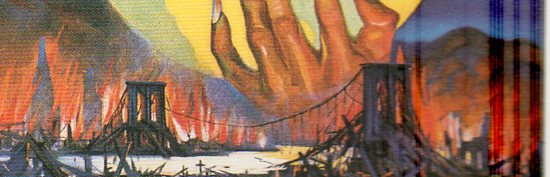
    I’ve found another excellent New York City under attack image to complement those in an earlier post here (New York City: Attacked by Tentacled Flying Saucers, Giant Flying Snakes, Glaciers, and Mining Missile Space Aliens, 1929-1941), this time by a 3-Earth-tall Gagantua. Actually this image fits into another, smaller, even more odd sub category, Extra Earths–images showing Earth-based scenes with (somehow) the Earth in the background. 

    Giants--marvel474And the detail of the Brooklyn Bridge and what was left of the Manhattan skyline:

    Giants--marvel475

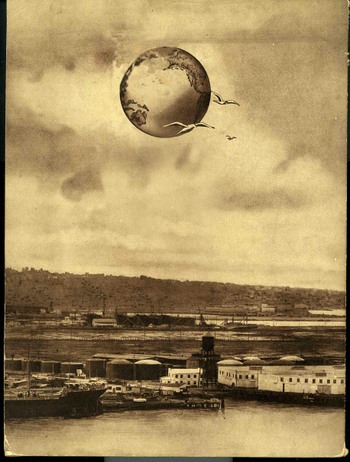
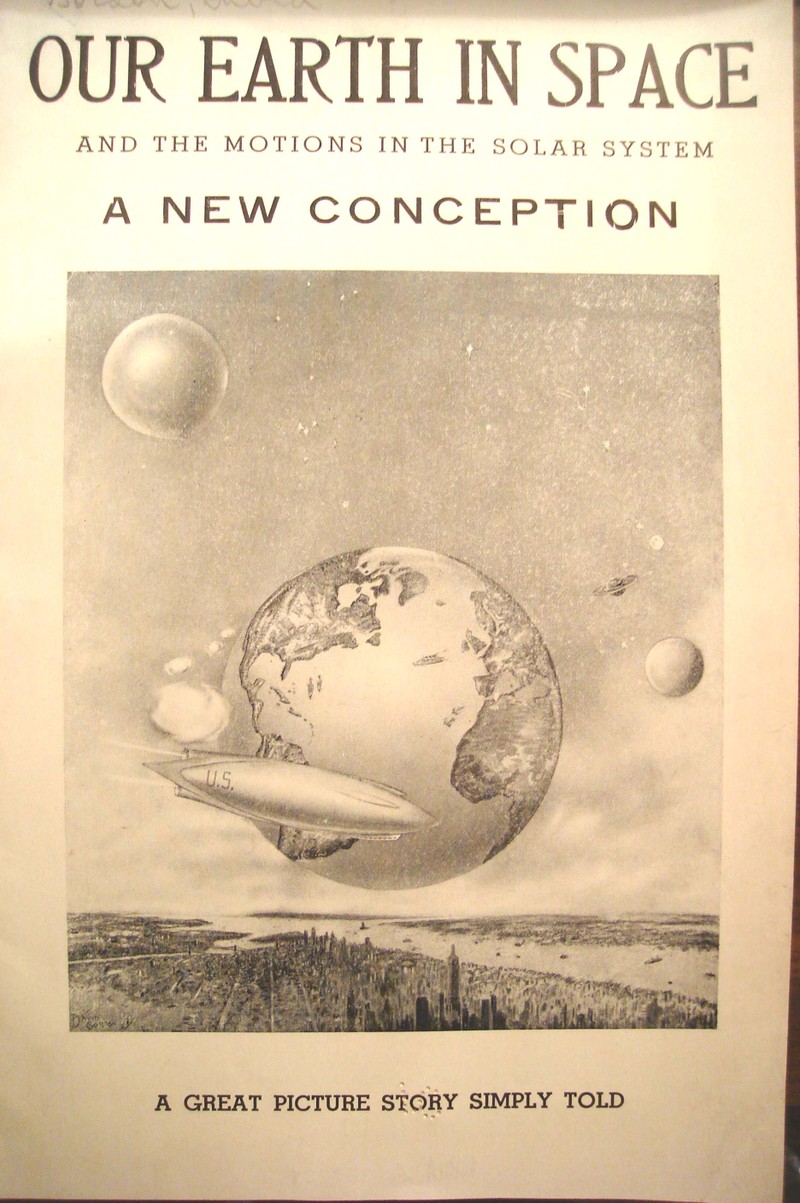
    Just for the record, here are some examples of Extra Earths which I’ve written about elsehwere on this blog):

    Blog1sept_10_floating_earthclean

    Photo


    0--blog---Nov 29 into this world149


  • The pre-pre-Internet? The SAGE Defense System, 1959-1983.

    JF Ptak Science Books   Post 1341

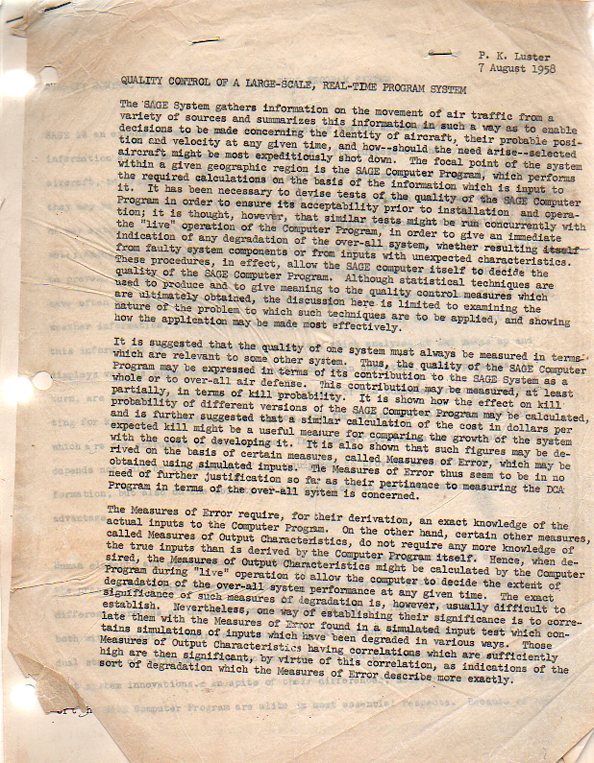
    Quality Control of America’s Anti-Bomber Defensive “Shield”: the SAGE System, 1958

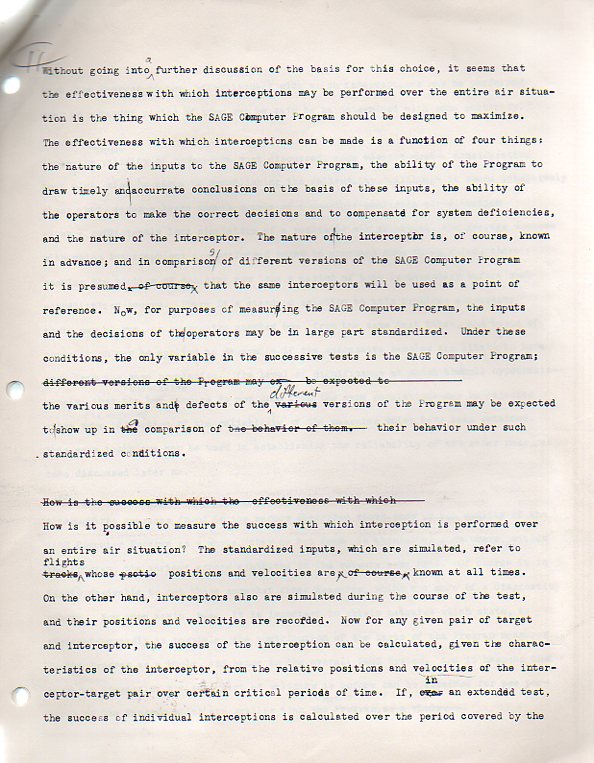
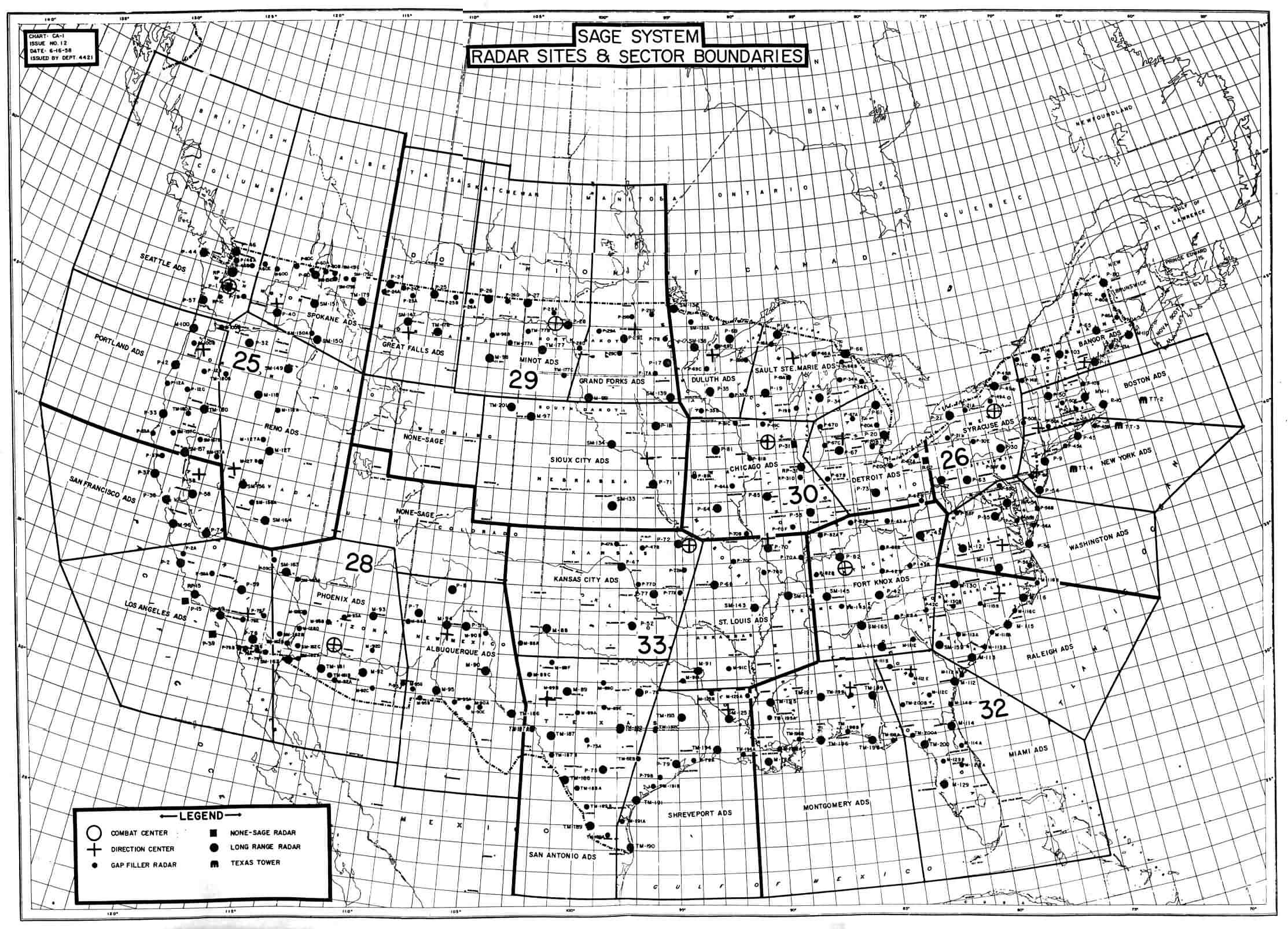
    SAGE403 The SAGE  (The Semi-Automatic Ground Environment) was an “air traffic control device”1 that was used to detect enemy aircraft, relate their position and speed to interceptors which would destroy the threat.  It was basically the air defense shield against attack of North America by Soviet bombers (in the pre-ICBM days of MAD). The MIT/IBM SAGE system was enormously important in the history of computing because of its many real-time, interactive and online aspects–it was an enormously successful and futuristic system, one of the “best” computers ever built. This paper on the computer’s ability to self-reference and check itself, by P.K. Luster, was written in 1958 and serves as an interesting insight into quality control for the world’s first nation-wide computer communication network.

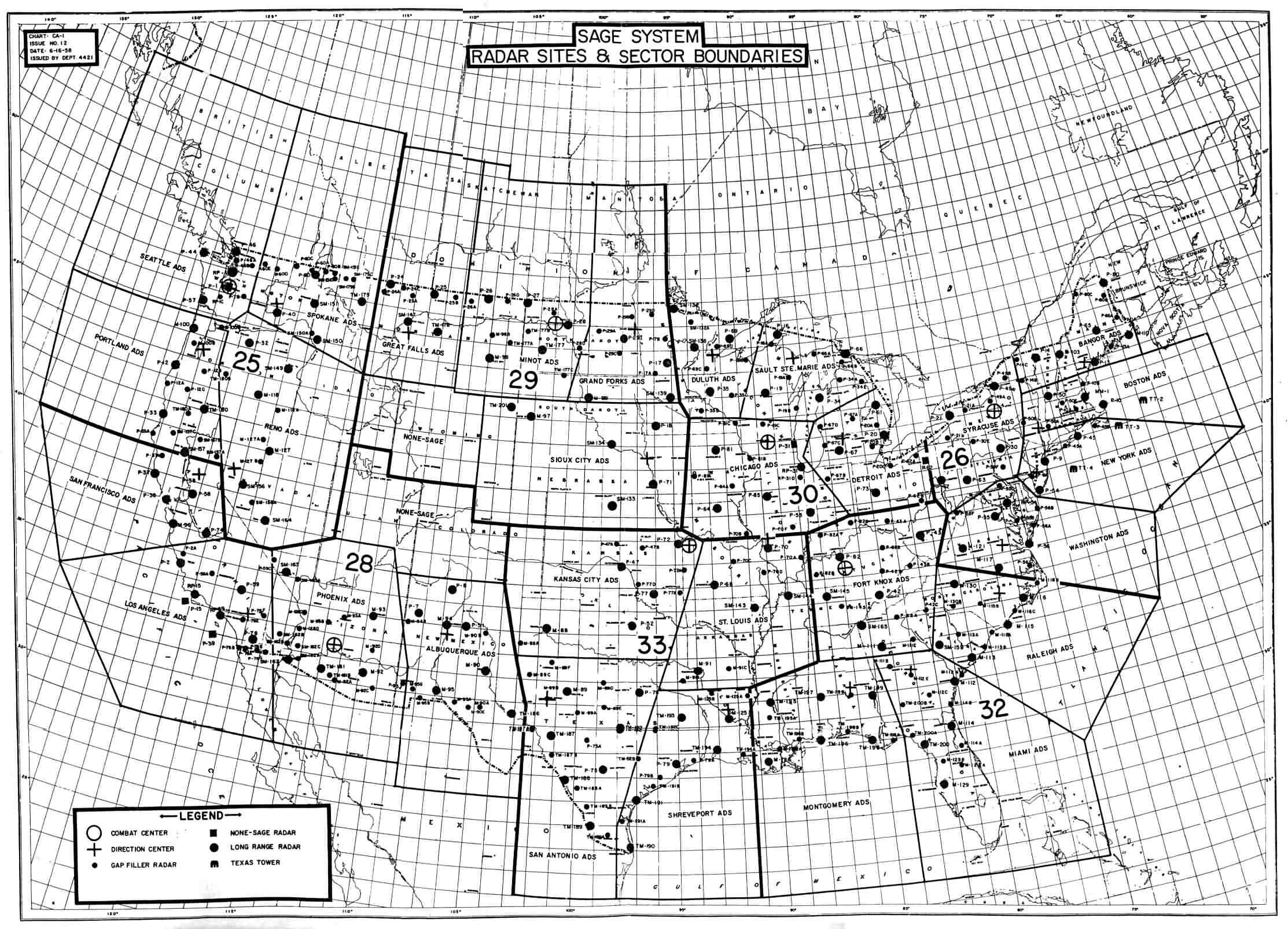
    Luster (who at one time worked for a contractor in Arlington, Virginia, named the John D. Kettelle Corp) was one of hundreds of programmers who worked on the system, and in this case, for this effort of his, he looked at various ways for selecting the proper way for a SAGE to monitor itself in real time and make assessments of its own reliability.  This was a very tricky bit, of course.  SAGE was the largest computer ever built–it had 23 installations in the U.S. (And one other in Canada) each given the possibility of tracking about 400 aircraft at one time.  SAGE would track these developments, coordinate all efforts in response, and then if the flights were determined to be hostile /Soviet forces, would destroy the buggers with responses from “nuclear tipped” BOMARC and Nike missiles. (The Boeing Michigan Aeronautical Research Center and Nike missiles each carried a 1-5 kiloton warhead, enough so that if it was near its target it would be able to destroy it.The BOMARC looked like a jet aircraft; the Nike looked like a multi-finned, very sleek ultimate 1950’s imaginatively-styled rocket ship, but real.) Trying to insure that the system was accurate was a major consideration. (This document is available for purchase from our blog bookstore.)

    From Luster’s  paper:

    “It has been necessary to device tests of the quality of the SAGE computer program in order to ensure its acceptability prior to installation and operation…also to run it “live” in order to give an immediate indication of any degradation of the overall system.  In effect, allow the SAGE computer itself to decide the quality of the SAGE computer program…The discussion here is limited to examining the nature of the problem to which such techniques are to be applied, and showing how the application may be made most effectively.”

    SAGE402
    The SAGE system was of course functional, highly reliable, and ws used until 1983.  IT was a kind of early version of the Star Wars defense system envisioned by President Reqgana nd Edward Teller, among others.  Except that SAGE existed and worked.

    It is interesting too to think of it in terms of a sort of pre-ARPANET pre-internet, a pre-pre-internet, in that the system has 24 remote nodes which communicated among themselves.  It doesn’t bear much resemblance to J.C.R. Licklider’s  Memorandum For Members and Affiliates of the Intergalactic Computer Network (1963)–the true first modeling suggestion for a working internet in which all of the main pieces of the internet are present, but it is at least in the neighborhood, as SAGE was the first operational nation-wide real-time computer network. ( It should also be pointed out that Licklider and other of the creators of ARPANET were programmers for SAGE.)  SAGE was in-place by 1959 and operating by 1963, but it had severe limitations as a national defense shield and was ill-equipped to counter ICBMs and SLBMs, but it was kept alive until 1983.   

    Sage network


     Notes

    1.  SAGE did become the template for SABRE as well as for the national air traffic control ssytem.


  • The Future of Sucking: Vacuum Express Train, NYC to Philly, 1945

    JF Ptak Science Books    Post 1315
    Follow Me on Pinterest


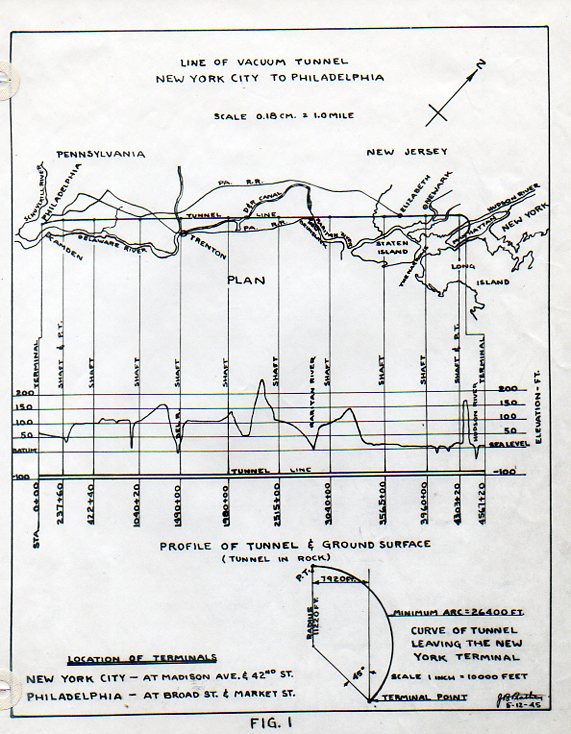
    John B. Prather launched an idea in 1945 for building a high-speed pneumatic passenger/freight train connecting New York City to Philadelphia.  His New York-Philadelphia Vacuum Tunnel, Preliminary Design Features and Economic Analysis (the original available on our blog bookstore) was exceptionally hearty. The idea is interesting in a removed, lets-not-do-it way because, well, it just doesn’t seem to make sense in the long run, at least beyond the building of the thing to show that it could be done.  And I don’t doubt that could be the case–I just don’t know why it was necessary. 

    Vacuum tunnel318 Mr. Prather’s approach seems to be the work of an engineer, or at least he had some help.  I doubt though that he had any help from a structural engineer or site geologist–his proposal was to build this tunnel 100′ down through bedrock when it could be found, a level hundred-feet  below the surface, from NYC to Philadelphia.   The tube would accommodate an aluminum-shelled  400′-long train that would be hauling 350 people and 175 tons of freight at speeds of 400-600+ mph, making the run between the two cities in about 20 minutes.  Not bad.  He figures too that all of the freight could be offloaded in 7.5 minutes.  This would make for  a very busy train, though Prather doesn’t tell us how many runs a day it would be making. This was all preliminary.

    The 16.2′-wide  tunnel would be 456,720 feet long, and would cost $173 million to excavate and $41 million to line with cement–according to the author.  The total cost for the ordeal would be about $334 million and would take 6 years, start to finish–that includes all of the tunneling, which would swallow/excavate/face 300′ per day. 

    I don’t see, really, how this could be so narrow a tunnel–I’m not an engineer but it would seem that wear, heat and the abuse and so on that a massive and dense 400′-long missile going 400+mph would require something that was more than 125% of the width of its trains. 

    There is however  precedence for a massive tunnel of something like this size being built in something like this time–the Delaware Aqueduct is 82 miles long and 13 feet wide, and was built during the Second World War (1939-1945) , so, perhaps if enough people and money were thrown at a project like the vacuum tunnel could actually be built (barring geological problems). 

    But it would all be worth it:  Prather suggests that the overall revenue from the operation of the train to be $196 million/year with $32 million in yearly operating expenses.  Which means that the whole thing could be paid for in three years or thereabouts.  So if the things was started in 1946, it would all be finished and paid for by 1956.

    I can understand his thinking, though, especially when you consider the impact of the year (1945) in which this paper was written.  The U.S. was came away from WWII by far more strong than any country on Earth, with its GDP being about 50% of that of the entire world–on the other hand, the federal deficit was 125% of the GDP, so perhaps in addition to being in an extraordinary position, investment was also somewhat gunshy.  And of course there’s the problem of whether Prather’s idea made any sense at all.  But I can understand the high times during which his project was announced. 

    I’ve looked at a number of proposals like this over the course of this blog–like almost filling up the Narrows between Staten Island and Manhattan with an airport and seaport, and making a series of transoceanic airports for flights between the continents, and dropping a gigantic shell filled with people from the top/interior of the Eiffel into a narrow hole filled with water, and covering Midtown Manhattan with a rooftop airport, and covering Midtown Manhattan with a glass-ish dome, and so on–and I know that it is good for at least one thing:  superb classroom discussion fodder of why something like this does or doesn’t make good physical/economic etc. sense.


  • The First American Government Publication on Gassing at Auschwitz and Its High-Ranked Google Deniers

    JF Ptak Science Books   Post 1314

    In November 1944 under the direction and auspices of the War Refugee Board the first official U.S. government acknowledgment of the gassing of Jews at Auschwitz and Birkenau was published.  German Extermination Camps-Auschwitz and Birkenau1,  received scant distribution, and despite its rather splashy appearance in the New York Times2 of 26 November 1944, it seems to have been directly, immediately relegated to various archives, a scarce thing when it was new3.  Dusty On Arrival, DOA–a disappearance that looks like a censorship.

    Auschwitz Birkenau317 Reports of mass killings were not new in 1944; indeed in Roosevelt’s only meeting of the war with Jewish leaders in late 1942 he was told in no uncertain terms that millions of Jews were being rounded up and killed. There were no other meetings.  In spite of other evidence and hundreds of newspaper articles, November ‘44 was the best that we could do in saying something about the gassing.

    When I was researching a French edition (which I have available for sale at my blog bookstore) of this publication, which was published in Paris in mid-1945, I did a quick Google search under its title, “Les Camps d’Extermination Allemands Auschwitz et Birkenau” .   I was surprised to see that about half of the hits were for references to crackpot Holocaust deniers who fancied themselves as “revisionist historians”–the sites looked “normal”, and had sort-of academic-y names with “truth” and “accuracy” in their titles.  They looked like any other web/blogsite, even calling up references from other web/blogsites, though those sites were just more of the same.  And there’s one of the major problems of info-gathering on the internet–vetting accuracy. 

    This search result is not achieved if you remove the quotation marks and search in general under the title’s words as single entities–but for the title as a  phrase in itself, the results of the search were crackpot-heavy. 

    Searching Google for “Holocaust” and “Auschwitz” and similar words buries the denier-people, though not deep enough for my taste.  Still it is very disturbing to search the title of the publication and find all of these looney people–what does that mean, exactly?  Is this result due to these sites writing more about this particular title than respectable sites?  Or–since these people regard this pamphlet as the key publication in beginning what they call the ‘myth” of the Holocaust–they have somehow constructed their use of the phrase to better appease the Google algorithm?  My guess is that the denier people have simply written more on this one title than on any other, and have written on it more than bona fide historical sites, and thus come up higher in Google findings.  But whatever they’ve done these sites have managed to occupy a hefty percentage of Google hits when searching for the title of perhaps the first prime indictment against the Nazis as extraordinarily vicious murderers with that counter claims that the publication is nothing but a fraud.  And that’s nothing but disgusting.

    ____________

    1. The original, government publication was reviewed thus at the Simon Wiesenthal site:  “THE FIRST REPORT ABOUT AUSCHWITZ by JOHN S. CONWAY. At the Nuremberg trials, one of the principal documents used was a fifty-nine-page mimeographed report published in November 1944 by the War Refugee Board in Washington, D.C.1 It consisted of two eyewitness accounts, “both received from a representative close to the scene,” the first based on the experiences of two young Slovakian Jews who escaped from Auschwitz in April 1944 (Part 1, pp. 1-33), and the second by a non- Jewish Polish major (Part II, pp. 1-19). “

    2. U.S. BOARD BARES ATROCITY DETAILS TOLD BY WITNESSES AT POLISH CAMPS, New York Times, 26 November 1944.

    3. “Copies of the English edition are to be found in Yad Vashem, Jerusalem (in Hungarian), in the files of the World Jewish Congress, Geneva (in German), and in the Roosevelt Library, Hyde Park, New York: War Refugee Board report, Box 61: General Correspondence of R. McClelland: F: Miscellaneous Documents and Reports re Extermination Camps for Jews in Poland (in German).” And not many more other places. 

    Only four copies of the French version are located on WorldCat OCLC: WAKE FOREST UNIV; France AIX-MARSEILLE1-BU LETTRES; France    BIBLIOTHEQUE NAT & UNIV STRASBOURG; France    BIBLIOTHEQUE NATIONALE DE FRANCE     
    France;  BNU STRASBOURG, RCON PROJ


  • Dividing by Zero: David Byrne and Herman (“the Fat Man”) Kahn Sing the Future Blues

    JF Ptak Science Books  Post 1312

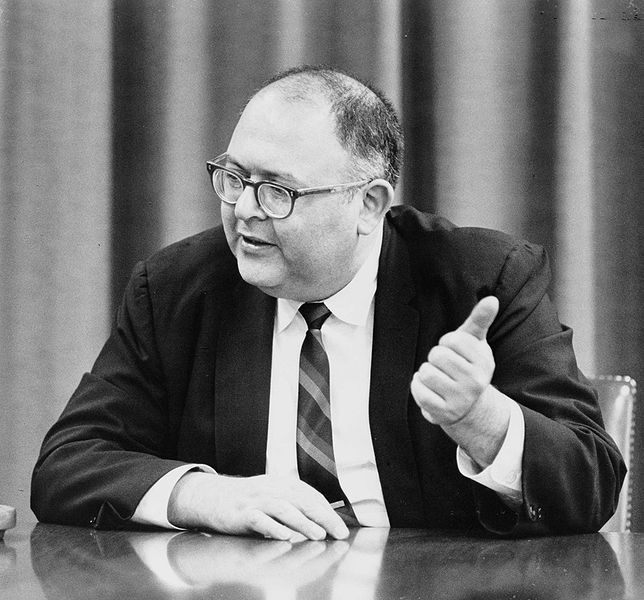
    Earlier in this blog, about two years ago, I wrote a piece on David Byrne’s beautiful Knee Plays, which included a song “In the Future”.  The post was about Byrne’s vision of the future which was bounced off the belly of “futurist” Herman Kahn, a man who was widely influential and whose thinking (I do believe) was widely incorrect.  He was also a proponent of possible first-strike (that is, American-initiated) nuclear warfare, deeming the scenarios “winable”., a broad thinker on Thinking-the-Unthinkable, and coiner of the word “megadeath” when used in conjunction with his nuclear end-game games. A main component of the template for Dr. Strangelove in Kubrick’s movie by that name,  Kahn and the think tank he helped found (the Hudson Institute) had the ear of the Reagan administration, among others, and it shows.

    Here’s the revised post, expanded some.

    0-blog-dec 3 byrne David Byrne, former Talking Heads member, produced a series of twelve short pieces to be used in the Philip Glass (and Robert Wilson*) Opera CIVIL warS  in 1985. (“Opera” may not be the right word for this piece, as I think it was one only in so far as the composition needed an opera house to be performed in.)   The Byrne pieces, called ”Knee Plays”, were meant to fill in the spaces, the spaces in-between,  place holders, between the sections of the day-long multimedia production..  Glass had used this idea of inter-pieces to the whole earlier in 1976 in his at-the-edge Einstein on the Beach, in which the connective elements were meant to not only join the pieces of the production together, but were also meant to stand alone, as a cohesive unit, if removed from the opera.  (Glass said they were “short connecting pieces which appear throughout the work much as prelude, interludes and post-ludes. Taken together they form a play in themselves”)

    0-blog-Dec 3 David_Byrne1991

    One of the Knee Plays, “In the Future” (Knee Play Number 12) is a slippery, stacatto brass section accompanying Byrne’s 51 sophisms about life in the future.  About thirty years earlier, “futurist” and think-tank-filler (or maybe it was “Think Tub”?) Herman Kahn (1922-1983), occupying a lot of space at the RAND and Hudson Institutes  (he was also known in many circles as the “Fat Man”), diligently recorded his myopic views of the future. He is generally regarded as a systems theory and military strategy guy, and is most remembered for (as he claims, perhaps) introducing the term “Vietnamization” which described the ultra-failed de-escalation (?) process and withdrawal for the United States from Vietnam (attention Obama administration).  Superluminarily speaking though his contribution to thought on constructing and implementing thought regarding nuclear weapons exchange (pointless to refer to this as “war”) in several books, including On Thermonuclear War (1960), Thinking About the Unthinkable (1962) and, On Escalation (1965), where he famously put The Bomb on the table of use possibilities.  In addition to these books—which he is busily trying to forget out there in his afterlife, somewhere, maybe in a penitential place where you are forced to think endlessly about paths-to-bad-decisions) is that 1967 peek into the future, The Year 2000.  Petroleum and oil are not issues.  Computers are of minor societal importance.  And then other things of no importance happen.

    0-blog-dec bryne kahn When you take Byrne’s Knee Play 12 and place it next to Kahn and other mis-spent prognosticators, the musician looks positively brilliant.  Some of the stuff has come to pass, some hasn’t; some will, and some won’t.  Some are open to a little interpretation, and some, a lot.  Overall, though, if you think through these little future bullets a little carefully, David Bryne looks very good.  Byrne’s lyrics/list is below.

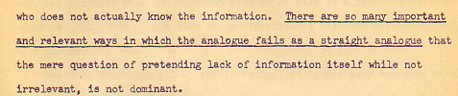
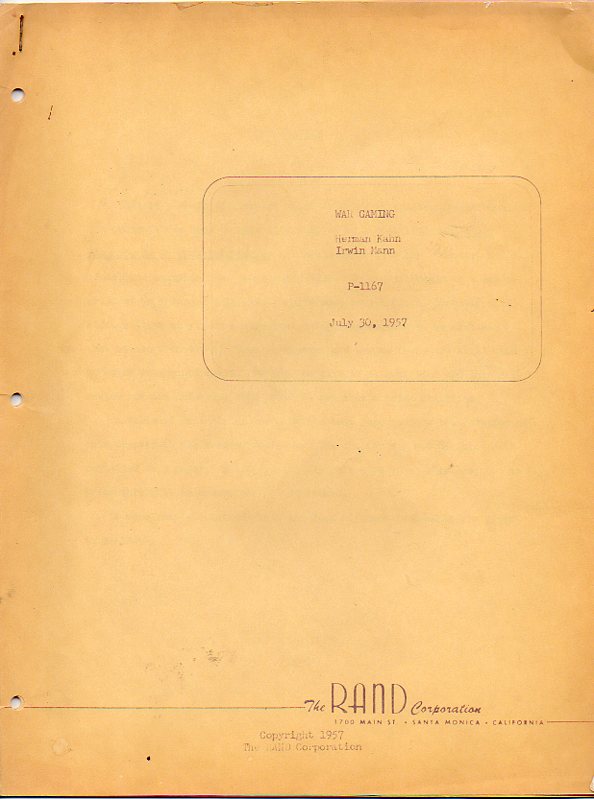
    Kahn’s writing is necessarily less elegant than Byrne’s, and probably less elegant than most other people in general including those who don’t write, though it does lower itself to some height of governmental semi-speak.  For example, from his July 1957 RAND paper “War Gaming” (available at our blog bookstore, HERE), we find this nugget:

    Kahn314

    Kahn315

    I have no doubt that Kahn looks like a warrior to many people–he no doubt was something of one, so long as that warrior could wear a white button-down shirt and not get dirty.  Simply because a person is thought of as a “warrior” doesn’t make them a ‘good” one, either, and I think that I would nominate Herman Kahn as an example of one:  in my own approximation of Kahn-speak, he would  “generate the apparent non-non appearance in definable though undefined parameters as  a non-good non-warrior in circumstances that defined or not define him/them in this semi-stable manner”.

    I think it is important to look at documents like this–documents that helped establish military policy–to see how their authors were able to convince people in government that they could divide by zero.


    *Robert Wilson is a phenomenal conceptualist and theatrical designer.  On the liner notes to CIVIL warS is found the interesting note on Wilson and Byrne:  “At first, Robert Wilson asked David to compose pieces for several sections of The CIVIL warS, but on account of David’s limited time, he composed only The Knee Plays part. The CIVIL warS was supposed to be played in its complete form at the Olympic Games in Los Angeles, but if one plays every part, it takes at least eight hours. There was also a financial problem for playing every part. So only some parts of it were staged there. David himself was very interested in composing for such a play and dance and this time again he enjoyed this work very much. Last time, for The Catherine Wheel, he used recorded tape, but this time he made musicians play on the stage.”

    (Featuring a prominent role for The Tuba)

    IN THE FUTURE (KNEE PLAY 12)

    In the future everyone will have the same haircut and the same clothes
    In the future everyone will be very fat from the starchy diet
    In the future everyone will be very thin from not having enough to eat
    In the future it will be next to impossible to tell girls from boys, even in bed


  • Protopunk: Steampunk during the High Steam/Low Electric Age

    JF Ptak Science Books  Post 1270

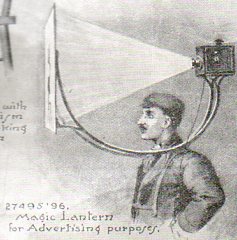
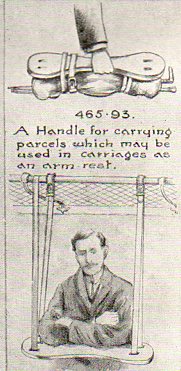
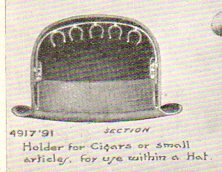
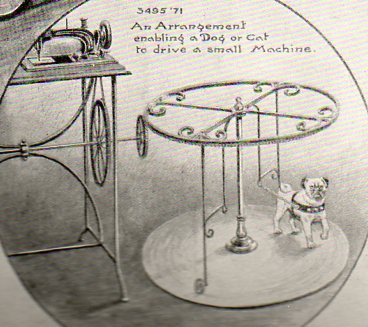
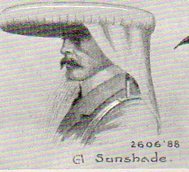
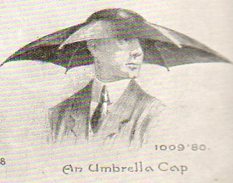
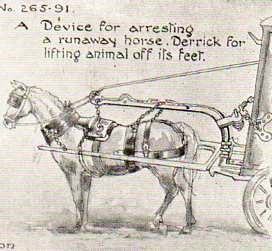
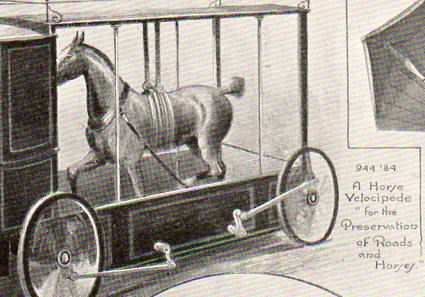
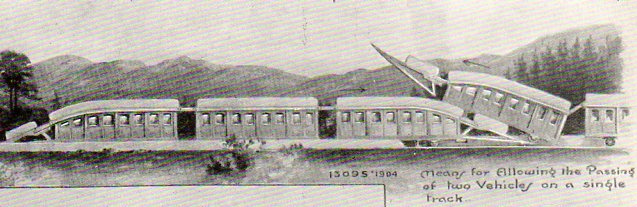
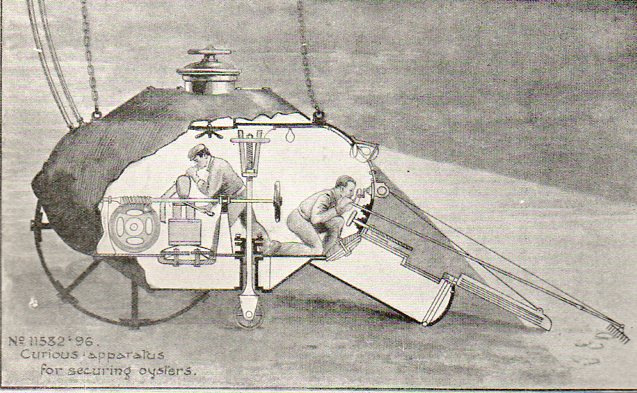
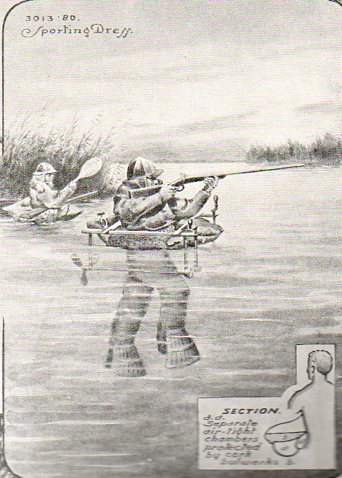
    I was drawn to this Steampunky collection of inventions because they were semi-futuristic inventions done at the time when the inventions could actually be fabricated–the idea was there and so was the material and expertise.  The only thing left was the will to do it and the fortitude to use it.  Perhaps the only thing lacking in all of it was that last part. 
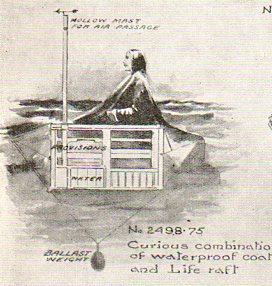
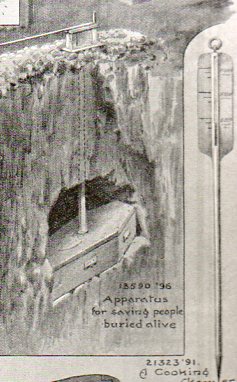
    Certainly people were getting used to technical and physics breakthroughs when these images were published in 1908:  the advancement of powered heavier-than-air flight since 1903, wireless transmission across the Atlantic in ’01, quanta in 1900, X-Rays in ’95, radium in ’98, automobiles, motion pictures, electric toasters, Gilette’s disposable razor (use and throw away!), and so on  (I’ll not mention Einstein because he wasn’t really in the public eye in 1908), so taking an extra and probably unnecessary step in these inventions seen below felt natural.  They were just a little on beyond necessary.
    Steampunk 2  magic lantern104

    Steampunk 2 armrest094
    Steampunk 2 cigar holder095

    Steampunk 2 dog walker102
    Steampunk 2 hat a096
    Steampunk 2 hat b097
    Steampunk 2 horse093
    Steampunk 2 horse b101
    Steampunk 2 lsingle train trac100
    Steampunk 2 oyster collection091
    Steampunk 2 shooting103
    Steampunk 2 watrproof coat092

    Steampunk 2  burial105