A Daily History of Holes, Dots, Lines, Science, History, Math, Physics, Art, the Unintentional Absurd, Architecture, Maps, Data Visualization, Blank and Missing Things, and so on. |1.6 million words, 7500 images, 4.9 million hits| Press & appearances in The Times, Le Figaro, Mensa, The Economist, The Guardian, Discovery News, Slate, Le Monde, Sci American Blogs, Le Pont, and many other places… 5000+ total posts since 2008.

Author: JF Ptak

  • The History of Dots: anti-Dots, Bubbles and Circles

    JF Ptak Science Books   Post 1433

    This blog’s series on the History of Dots needs to be folded into the History of Circles section–it seems that whenever I see interesting circles that I am seeing dots, and vice versa; and after all, aren’t circles just unfilled dots?  An anti-dot (or at least so in two dimensions)?  I like the idea, especially since one of the great and revolutionary ways in which particles were found was with the device pioneered by D.A. Glaser (Nobel physics, 1960), the bubble chamber, which through the use of superheated hydrogen (usually) it was possible to track electrically charged particles, often producing dots in their signatures.

    Which leads me to bubbles and anti-bubbles.  We all know what a bubble is–at least a physical one–but what about its opposite?  Its not quite that, really, though there are bubbles that are liquids surrounded by gas rather than the much more conservative and popular way.  And so it is this way that I came to the anti-dot, the circle, and then of course one of its three dimensional relatives, the bubble (and the sphere).

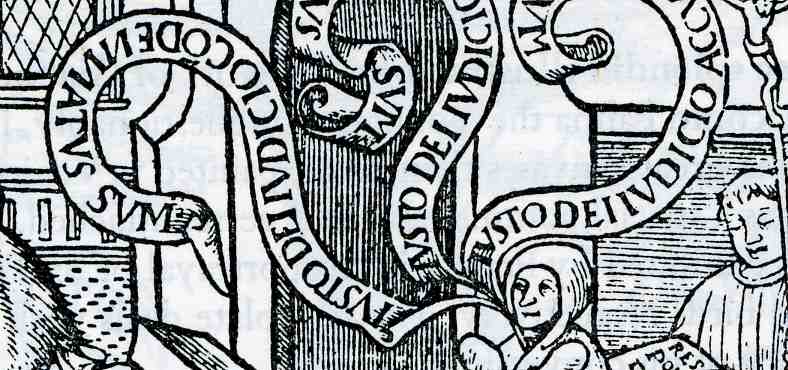
    Earlier in this blog I’ve written a few times about the speech and though bubble/balloon, which was a fantastic invention, enabling to make literal the thinking of the subjects in a painting (and seen probably for the first time in a printed book in 1523, in this work about Bruno Carthasisienna):
    0 blog feb 18 balloon599


    I’m sure that there must’ve been some number of people who regarded it as base and retrograde, that the view of a print or painting should by the art’s elements know what the characters might be thinking, and that by showing the specifics of thought, by boldly stating the thought or speech itself, that the experience is removed from the viewer’s imaginations.  Perhaps these thoughts were common to the people who considered the telephone as an affront to communication as an attempt to replace the written letter, and so on to fax to email to tweet and so on. 

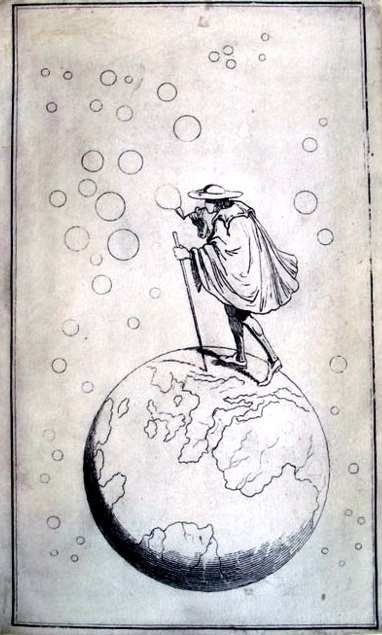
    I have no idea when the first bubble as a bubble appeared in print, though a gorgeous version of a bubble-maker is seen on the cover of another “first”:  the first full-cover illustration on the front cloth cover of a published book1, Sir Francis Bond Heads (1793-1875) Bubbles from the Brunnens of Nassau, which was published by in 1834 by John Murray of London, who 25 years later would publish Darwin’s Origin (where the word “bubble” by the way does not appear).
    Dots  bubbles princeton
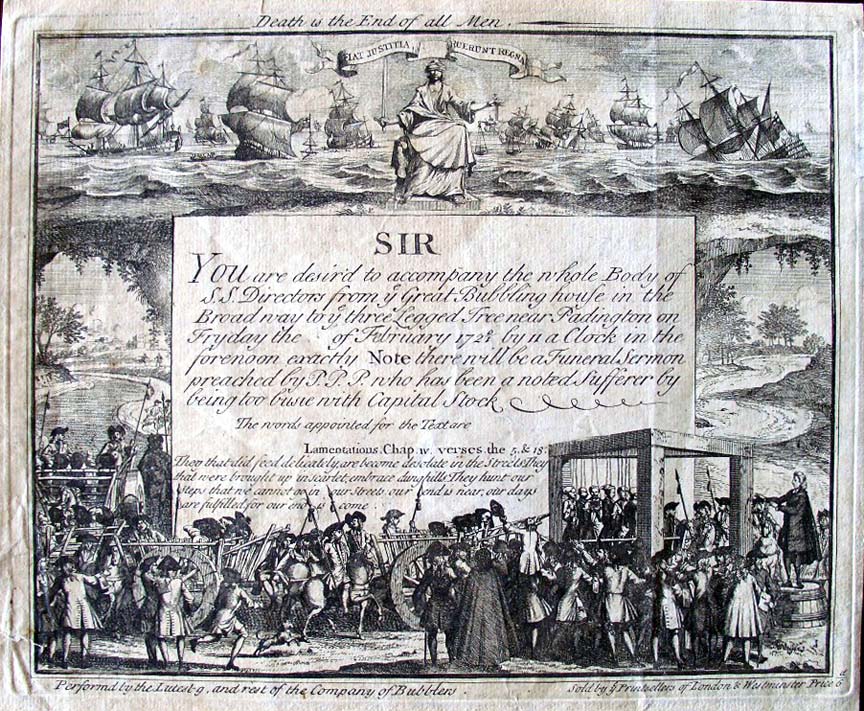
    There are many illustrations and paintings of people blowing bubbles–I’m not sure which one is the most famous but Gerit Dou (1613-1675) certainly comes to mind (with his Still Life with a Boy Blowing Bubbles).  Perhaps a ittle more unusual and also involving a great scientist is the economic bubble, which is the subject of this great print called “A Bubbler’s Funeral”.  An economic bubble is one in which the value of a share of stock in a company or interest becomes hyper-inflated, expanding outward until the price bubble found its pin, and once contact is made, the whole thing goes to shamble, and anyone left holding the enormously inflated stock finds themselves with a stock worth next to nothing. 
    Dots bubbler funeral
    This image was a satire on the Ages of Man, professing to be a ticket for a Bubblers funeral, and was in 1720 aimed at the directors of the South Sea Company, a notorious early 18th century bubble, which had just burst.  Many people lost fortunes in this, including the aged Sir Isaac Newton.   The invitation was for a funeral profession to  “accompany the whole Body of S.S. Directors from ye Bubbling house in the Broad way… to ye three Legged Tree near Padington on Fryday the of February 1720/1″.

    And so ends this first bot on folding the story of circles and bubbles  into this blog’s History of Dots.  I should point out that one of the great bubbles of the last hundred years or so imploded only a dozen yers or so ago–the dot coms. 

    I wonder if the History of Holes thread should also be folded in?

    Notes:

    1. From Princeton University:  “Ellen Morris puts it in anything way, “This period also produced the first full-cover designs: John Murray’s 1834 issue of Bubbles from the Brunnens of Nassau is reputedly the earliest publisher’s cloth binding with a full pictorial design on its cover.” (The Art of Publishers’ Bookbindings 1815-1915).


  • Maps of Things Not There: Eden.

    JF Ptak Science Books  Post 1431

    The tale of the Garden of Eden is told in the Old Testament, and although it described, its location is left to mystery1, even though its legend is ground zero for the Fall of Man, the eternal disgrace for which humanity still pays. I suppose it would be nice to have a tombstone for the grave. Over time—and particularly in the Middle Ages and then in the Renaissance—the location was fixed in the eastern reaches of the known Euro-world, and then in and about Mesopotamia.

    Eden 2359

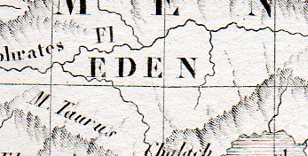
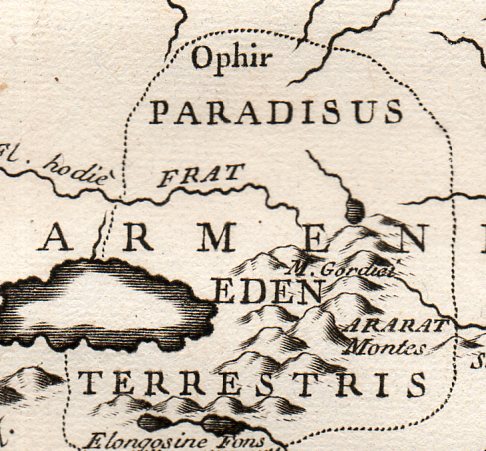
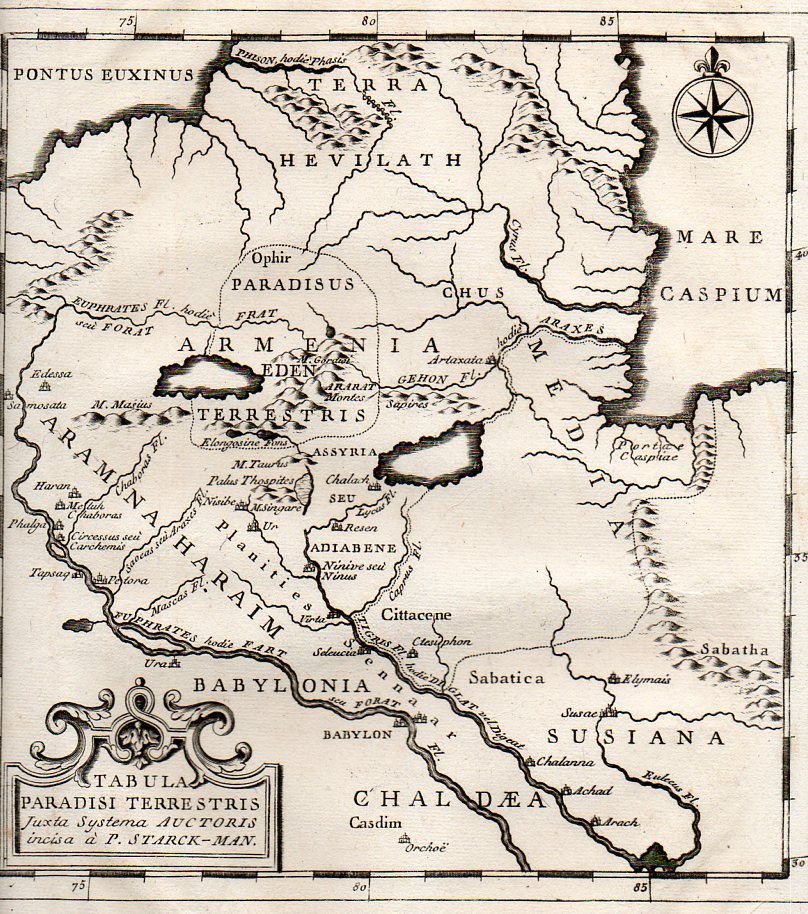
     The map Tabula Paradisi Terrestris justa Systema Auctoris incisa a P. Stark-Man was printed late in the 18th century, probably around 1775, and locates the GOE far in the north country, near the Dead Sea, deep in old Armenia, near Mount Ararat (where Noe and his family were supposed to have landed after the creator flooded the world killing everything, where everything else, young and old, infant younger, men women children, beasts and ants, were killed by a wrathful OT maker.).  

    Eden 2358

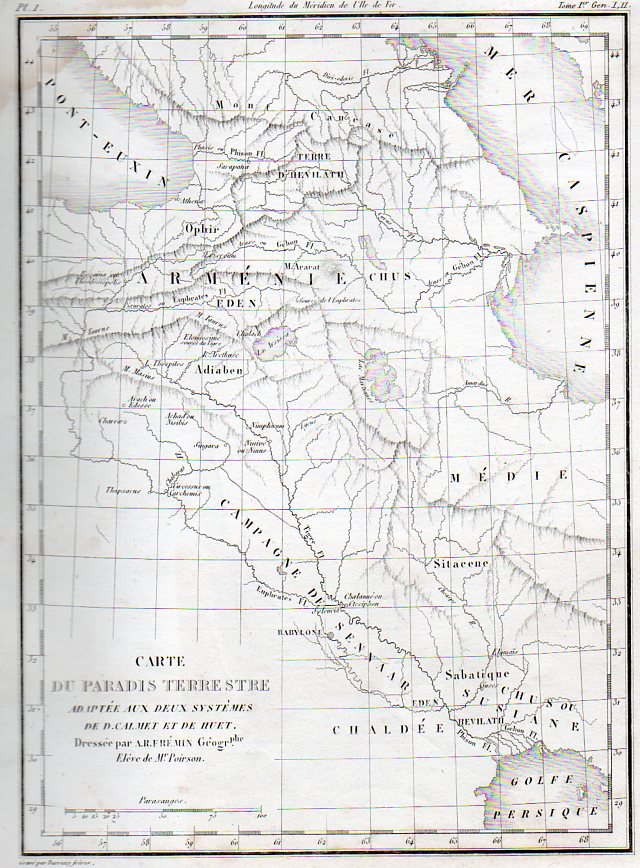
    The very finely engraved map by A.R. Fremin, Carte du Paradis Terrestre, printed 1839 (in Paris, by Félix Locquin et Cie, for  l’Atlas de la Sainte Bible)., again locates the Garden much further north than the great majority of other maps that I have seen, coming  (as with the map above) nearly to the Dead Sea.
    Linoleum italian274

    This image is a detail from:

    Linoleum italian273


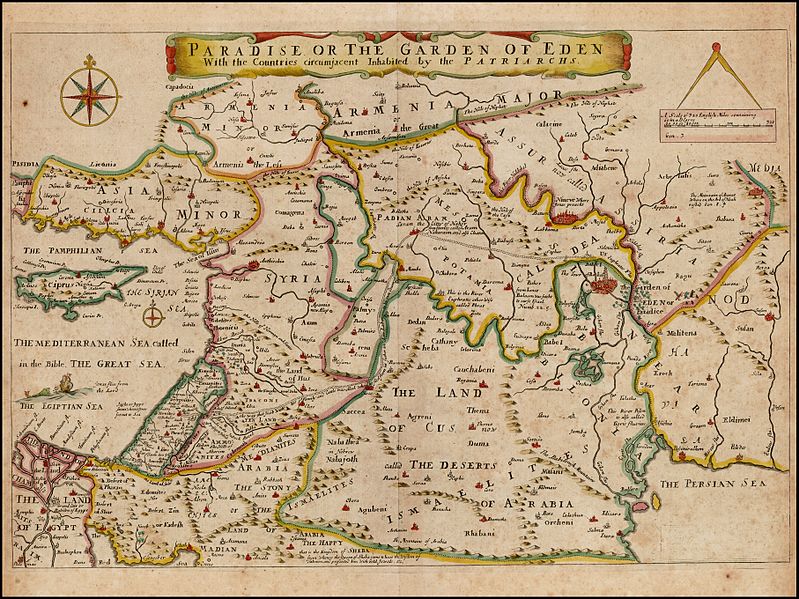
    Joseph Moxon’s Paradise of the Garden of Eden with the Countries circumjacent inhabited by the Patriarchs, printed in 1690,  shows the GOE as just to the east of Babel and not far due north from the Persian Gulf, just on the Euphrates in the Land of Nod, which is quite different from our two samples above. 

    Garden of eden Moxon

    [Source–https://commons.wikimedia.org/wiki/File:Paradise_or_the_Garden_of_Eden_With_the_Countries_circumjacent_Inhabited_by_the_Patriarchs,_Joseph_Moxon_1660.jpg]
     
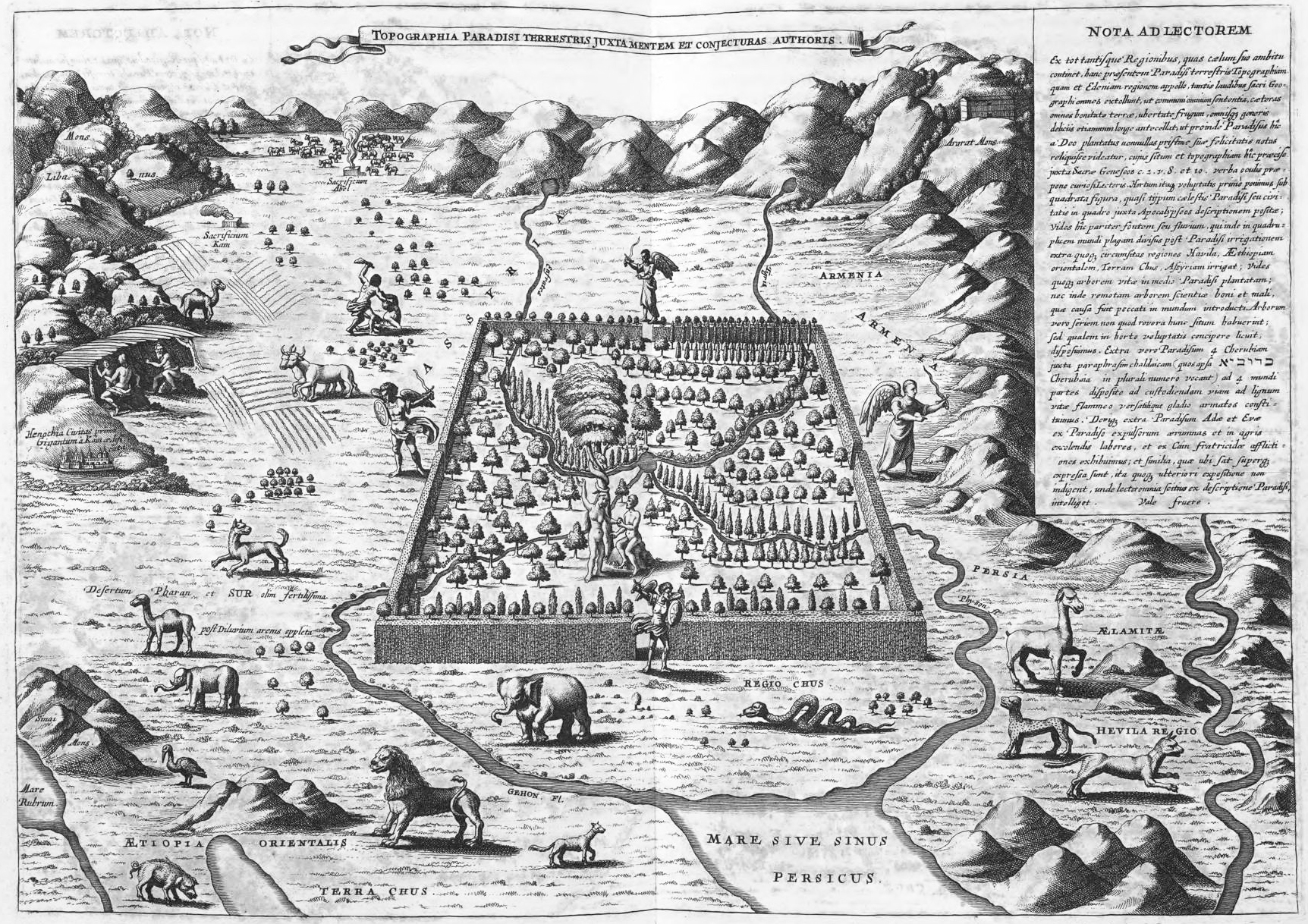
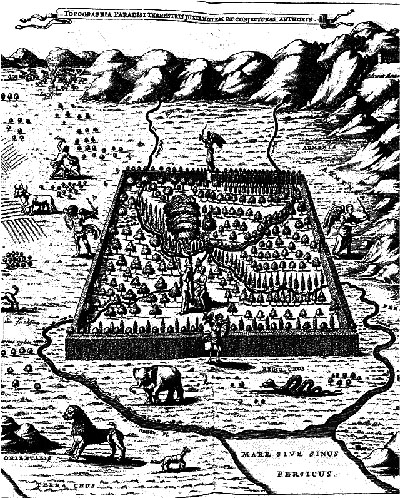
    The polymathic and semi-problematical Jesuit genius Athanasius Kircher suspected the location of Eden to be along the Tigris and Euphrates Rivers, in southern Iraq, and published his idea in this map Topographia Paradisi Terrestris in his book Arca Noe in 1665. It is of course a highly idealized map, Eden taking up a disproportionate amount of land, larger than life, bigger than legend almost, a monstrous overstatement of the lost land. Eden is shown here with four gates guarded by angels, but it does its occupants little good, as we can see that Adam and Eve are already stepping up to Satan in the tree of knowledge, and that outside Cain is killing Abel, all harm already being done.

    Garden of Eden Kircher

    [Source: the website The City as a Project, here: http://thecityasaproject.org/2011/07/paradise/]


    There continue to be differences of opinion on this matter of location, particularly in the modern age, when there are many laying claim to the position of Eden, including a number of half-hearted attempts to locate the place or its idea/ideal in the United States.  There are at least 14 Edens in the U.S.– Eden  City/Isle/Town/Valley/Prairie/Village/–in twelve different states (Idaho, Louisiana, Maryland, Minnesota, Mississippi, New York, North Carolina, South Dakota, Texas, Wisconsin, Wyoming and thankfully Hawaii),but for some reason they are fairly sparely populated, eight of them having populations of under 1000 people.  I don’t know what that means.

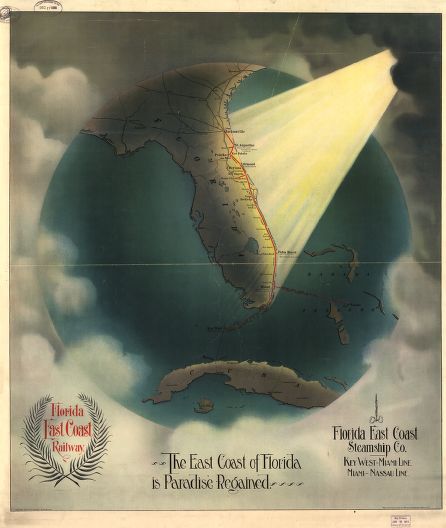
    Then there is this terrific example, coming from Florida (which does not seem to actually have anyplace in the state named Eden), in 1898, being a transorbital bird’s-eye view of the east coast of Florida receiving  pure holy light, announcing yet another newish Eden.

    Paradise florida

    [Image source: Library of Congress, Geography and Map Division.]

    Notes

    1. “And a river went out of Eden to water the garden; and from thence it was parted, and became into four heads. The name of the first is Pison: that is it which compasseth the whole land of Havilah, where there is gold; And the gold of that land is good: there is bdellium and the onyx stone. And the name of the second river is Gihon: the same is it that compasseth the whole land of Ethiopia. And the name of the third river is Hiddekel: that is it which goeth toward the east of Assyria. And the fourth river is Euphrates.” (Genesis 2:10-14 KJV)


  • A Square of Horse–Naming Groups of Animals (“A Murder of Crows”, continued)

    Horses

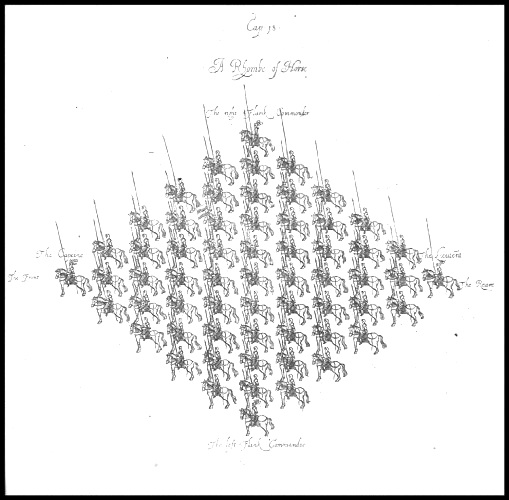
    Aelianus (Tacitus) The Tactiks of Aelian Or the art of embattailing an army after ye Grecian manner. Englished & illustrated with figures throughout & notes upon ye chapters of ye ordinary motions of ye Plalange by J.B…  

    The “J.B.” here is the author John Bingham, whose book was published in 1616. The “Square of Horses” seems to me to be a fine addition to a named bestiary, in addition to a “murder” of crows and an “unkindness” of ravens (and a “crush” of rhinos, and on and on, as we can see below). 

    Names given the collectives or gatherings or units of animals are useful and informative, and occasionally fabulous and bizarre.  It seems to me that such characterizations could be made with people as well,  Why should humans have such a uniform label for collective employment members (a “group” of lawyers, a “gathering” of architects, and so on) when animals have such a rich vocabulary to draw from?  Admitedly, animals don’t go out and get lawyers when they feel maligned by a broadly advanced descriptor, so there’s little chance that more appropriate upfittings could be applied to different job classifications.  Unless of course you consider the “managed corporate associate monetary inventorialist” (cashier) as an example—but that is not what I’m talking about. 

    In the animal world, for example, a group of gorillas is a simple “band”, chicks a “clutch”, and quail a “covey”, which is simple enough.  The names get more adventurous as things progress in the food chain:  hippos are a “bloat”, a word which seems to identify a characteristic of the animal, especially when they’re half-submerged, watching the sun move across the sky with their eyes just above the waterline..  Ferrets are a “business”, semi-inscrutable in their nervous activity. Hyenas are a “cackle”, hawks are a “boil” and finches are a “charm”.

    A group of rhinos are beautifully referred to as a “crash”, and squirrels are poetically announced as a “scurry”

    Perhaps the second greatest of all of these names is that for a gathering of crows, called a “murder”.  It is probably the crow which, among all animals, may be the only one “smart” enough to commit the crime—it is an undoubtedly intelligent animal, with a brain-to-body mass ratio third to that of humans (behind apes) and have been shown to work in concert with one another toward a common end, and have also used tools in the pursuit of food.  They have also been depicted for thousands of years in mythology and story as intelligent, crafty creatures.  My choice for the most fabulously-named:  an “unkindness” of ravens.   These birds enjoy a similar heritage to the crow, but have a greater literary heritage.  Unkindness and Poe seem to go together quite nicely. 

    A leap of leopards, a gulp of cormorants, a romp of otters, a parliament of owls.  An ostentation of peacocks, a prickle of porcupines, a stand of flamingoes, a pride of lions, a wake of buzzards, a tower of giraffes: all seem to fit quite nicely. 

    What would the human equivalent be?   A “grotesque” or a “provident” of attorneys,  a “shushing” or “shepherding” of librarians, a “scribble” or “release” of writers, an “envy” or “relief” of actors?  I think it needs to be Latin and deep for the politicians.  Very deep. 

    (A directory of names follows in the continued reading section)


    A band

    Gorillas

    A bevy, covey

    Quail

    A bevy, wedge (in flight)

    Swans

    A bloat

    Hippopotamuses

    A brace, flock (in flight), raft (on water) team, paddling (on water), badling

    Ducks

    A brood; clutch

    Chicks (of many species)

    A building

    Rooks

    A business

    Ferrets

    A cackle

    Hyenas

    A cast, kettle (flying in large numbers), boil (two or more spiraling in flight)

    Hawks

    A cete

    Badgers

    A chain

    Bobolinks

    A charm

    Finches

    A clowder, a pounce; for kittens…A kindle, litter, an intrigue

    Cats

    A colony

    Bats

    A colony

    Gulls

    A colony

    Penguins

    A colony, warren, nest, herd (domestic only), litter (young); specific to hares…A down, husk

    Rabbits

    A company

    Parrots

    A company

    Widgeons

    A congregation, wing (in flight)

    Plovers

    A convocation

    Eagles

    A cover

    Coots

    A covey

    Partridge

    A covey

    Ptarmigans

    A crash

    Rhinoceroses

    A deceit

    Lapwings

    A descent

    Woodpeckers

    A dray, scurry

    Squirrels

    A drift, drove, litter (young), sounder (of swine), team, passel (of hogs), singular (refers to a group of boars)

    Pigs

    A drove, flock, herd

    Sheep

    A drove, herd

    Cattle

    A dule, pitying (specific to turtle doves)

    Doves

    A fall

    Woodcocks

    A flight

    Swallows

    A flock, gaggle (on the ground), skein (in flight)

    Geese

    A gang

    Elk

    A gang, an obstinacy (I suspect these refer to old world buffalo; use “herd” for American bison)

    Buffalo

    A gulp

    Cormorants

    A herd

    Elephants

    A herd, bevy (refers only to roe deer)

    Deer

    A host

    Sparrows

    A labor

    Moles

    A leap

    Leopards

    A leash, skulk, earth

    Fox

    A litter (young), pack (wild), cowardice (of curs); specific to hounds…A cry, mute, pack, kennel

    Dogs

     A murder, horde

    Crows

    A murmuration

    Starlings

    A muster, an ostentation

    Peacocks

    A mustering

    Storks

    A nest, nide (a brood), nye, bouquet

    Pheasant

    A pace

    Asses

    A pack (in late season)

    Grouse

    A pack, rout or route (when in movement)

    Wolves

    A pack, span, barren

    Mules

    A parliament

    Owls

    A party, scold

    Jays

    A pod, gam, herd

    Whales

    A pod, herd

    Seals

    A prickle

    Porcupines

    A pride

    Lions

    A rafter, gang

    Turkeys

    A richness

    Martens

    A romp

    Otters

    A sedge

    Bitterns

    A sedge

    Cranes

    A sedge, a siege

    Herons

    A Shrewdness

    Apes

    A sloth, sleuth

    Bears

    A sord (in flight), brace

    Mallards

    A spring

    Teal

    A stand

    Flamingos

    A streak

    Tigers

    A team, harras, rag (for colts), stud (a group of horses belonging to a single owner, string (ponies)

    Horses

    A team, yoke

    Oxen

    A tiding, gulp, murder, charm

    Magpies

    A tower

    Giraffes

    A tribe, trip

    Goats

    A trip

    Dotterel

    A troop

    Kangaroos

    A troop, barrel

    Monkeys

    A wake

    Buzzards

    A walk, a wisp

    Snipe

    A watch

    Nightingales

    An exaltation

    Larks

    An unkindness

    Ravens


  • Monumentally Bad Writing: Recovery from Thermonuclear War, Loan Forgiveness, and Taxes, 1966

    JF Ptak Science Books   Post 1430

    In the entirety of the text of Social and Behavioral Factors in the Implementation of Local Survival and Recovery Activities (written by William Chenault, Richard Engler and Peter G. Nordhie in August 19671) there is little evidence that its authors fought to rid themselves of their Thesaurus of Obfuscation.  A dissected version of their effort would’ve made for good, clean fun, adding their bits to a Menckenian database of extraordinarily-written governmentese, but since all of this involved surviving thermonuclear war, the “fun” part is obliterated.  What, exactly, was it that the authors were trying to accomplish?  Perhaps in all of it they weren’t constructing anything devious at all–perhaps their incredible assault on meaning was simply written in a language understood by their audience.  That, or they really didn’t intend to have heard what they were trying to say,, if there was anything that was being said at all. (This report is available from our blog bookstore.)

    Nuclear war surviva;355

    The baseline to this pamphlet is this:  that in a post-thermonuclear war United States there will be survivors; the survivors will have “hardships”, but the hardships will be overcome; the key issue is to get survivors to work together to put the country back on its feet militarily and economically;  survivors will need “incentives” to work together; the strong will survive, and others will have to be thrown under the bus.  There will be worries about compensation for destroyed property, shipping schedules, trust in money, and a certain amount of debt forgiveness.  There will be tax–sales tax.

    There is no mention of the amount of death or the continuation of the dying in the year or two post-attack, but there is a graph, and the graphs not pretty.  It doesn’t get very much mention. 

    “…communities of [nuclear] disaster struck individuals need to define their needs and activities in the immediate context of the community”. pg. 5.

     “The tendency of nuclear disaster is to isolate communities..” pg 6

    I’ve written often on this blog1 about spectacularly bad thinking in planning for post-Apocalypse thermonuclear war America, mostly on government/agency reports that write about the impossible being done by survivors in impossible ways, painting the specter of impossibility and liquid death in turgid, unprovable prose.

    This study reports of the ways in which American society can survive and rebuild following a devastating nuclear/thermonuclear war. The authors list five consequences of “severe attack”:

    #1. Tremendous destruction of property…

    #2. Disruption of transportation and shortage of fuel for motive power together with an associated disruption of regional specialization and significant breaks in geographical continuity.

    #3. Drastic reorientation of effective economic demand”

    #4 . General disruptions of normal interindustry flows

    #5. Shortages of technical and professional manpower in some fields.

    I particularly like #3. Also the use of words like “shortages” and “disruption”.  And why they stopped there I really don’t know. 

    Much of the report is an examination of how to get the surviving elements of society back on its feet via carrot-and-stick methods, coaxing people into working together, with the eventual goal of restructuring the country, building America back again, observing capitalism, the tax codes, exchanging labor exchange units for goods and services.

    “Personal and group motivations would continue to be related to economic organization and production as they are in the preattack society” (pg 1)

    “It follows that the nature and direction of many recovery activities will be determined by national, not local, requirements” (pg 3)

    “Individuals must be motivated to implement policies and perform activities dictated by national economic interests”. (pg 4)

    It is assumed that the character of the post-attack country would be pretty much the same as it was before thermonuclear war, and that we all want to return there. The report states that one of the most important elements of that society is the military and its capacity to protect people and industry. Therefore the survivors of nuclear war must be induced to work on a national scale to maintain the military and thus the stability of whatever was left of society, in spite of the fact that “in the heaviest attack, the loss of familiar landmarks, relationships and dependencies would be unsettling to survivors”.  (I’m not sure what “dependencies” relates to, whether they are child or the need for pharmaceuticals or the need to watch the news on television. This is unclear.)

    Generally, there are a host of activities suggested to compel compliance, depending on where a community is in a 9-part destruction grid. There are incentives like food and water, medical treatment, and of course loan forgiveness. These inducements must be considered because enforcing compliance militarily is not an option, as the report states:

    “It is doubtful whether a very widespread employment of a force to secure participation in recovery activities is feasible” (pg 7)

    Meaning I guess that the U.S. Armed Forces will no the enforcing mandatory compliance schedules for recovery—or at least they weren’t writing about it “preattack”.

    But the authors clearly assume that there will be something approximately preattack life in the post-attack world. Amidst the horror and chaos, we read that

    “Businessmen, in particular, but others as well, would experience disturbing and subtle changes in familiar institutions and in such bases of mutual trust as methods of establishing or verifying credit…or estimating delivery dates”–pg 11.

    “Disturbing and subtle” changes to delivery, indeed.

    We further read of “widespread readjustments of status, status symbols, and values” (page 11) which no doubt would come if all of your possessions were burned up, or lost or destroyed in some way, along with the owner. It is definitely difficult to maintain status relationships in the evidence of no status and no relationships. Of course this whole deal is complicated by the issue that status symbols are also relationships and associations, much of which could also be gone in the same fire cloud.

    If your valuables and house and such weren’t destroyed, then you were expected to go out and work for the community, and not spend your time inside your house protecting it from people who didn’t have anything.  This issue is sort of addressed here:

    “Measures for the control of displaced persons, obviating the necessity of individuals devoting their time to the protection of their homes, represent one form of indirect influence on the motivation of potential workers to abandon maintenance activities.” (pg 50).

    Which means, I think, that there will be some sort of control or protection so that people don’t need to spend their time securing their possessions. 

    But the thing that will make people work for the greater good, the compliance with the orders of rebuilding the country, will be “economic incentives…or a penalty for nonparticipation)”.  Payment would be made with money or food.  The next incentive:  housing, or “more desirable dwelling places for those participating in recovery activities”.    It remained to be seen though in this report what it was specifically that represented “recovery activities” or how the compensation per work bit was handed out. 

    One way to raise the necessary capital to fund this post-attack world was through taxes, “a structure of indirect taxes could be developed, with higher rates applied to non-essential goods”.  (pg 53).    On the other hand, just a few paragraphs later, the authors discuss getting rid of an income tax in favor of direct taxes, which means that taxes survive  the atomic nightmare. 

    This continues on and on, a cascade of some wincing ideas tumbling over themselves, settling into a confusing mist of wording and logic that is difficult to translate.  Perhaps that was the inention.  Perhaps not.  There’s not much left in the bottom of a smoking, radioactive hole, except for smoke and radiation.

    Lastly, I wonder why “post-attack” is hyphenated in these reports and “preattack” isn’t?

    Notes

    1. See for example Bad Grandeur, Predicting Post-Nuke USA (1966) and the Loss of 76% of all Authors

    The Nonsense of Strategically Meaningful Phrases, Finding Pillows int eh Post-Nuclear Attack World, 1968

    Ueber-Spectacular Understatement Department, the Happy Post-Apocalyptic America and the “Awkwardness of Nuclear Holocaust, and others.)


  • Wheels of Fortune and Destiny–Beautiful Circles of Robert Fludd, Lorenzo Spirito and Sigismondi Fanti (continued)

    JF Ptak Science Books   Post 1429

    Fludd
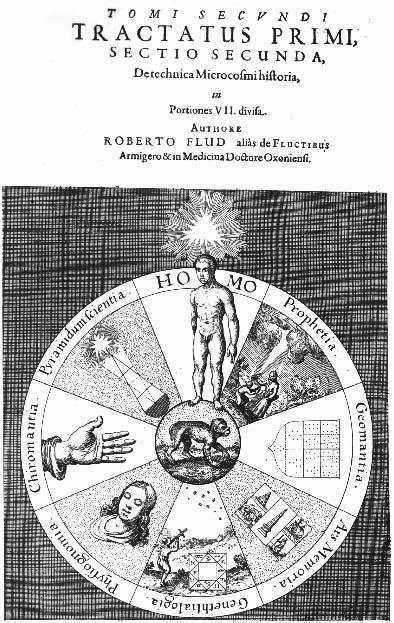
    (1)  Destiny
    Robert Fludd’s (1574-1637), title page for his  Utriusque Cosmi . . . Historia (1617) features this complicated astrological wheel with a Vitruvian-man-like image at the vortex of the imaged pulls and pushes of the cosmos.  In addition to everything else, real and imagined, Rosicrucianism and astrology and puffy-birds, Fludd, who was  an English physician, delved deeply into the real stuff of the world in this book in addition to all of the other make-believe–optics, the musical intervals, perspective drawing, hydraulic engineering, construction of lifting machines, military engineering and many other interesting, physical science topics.  But this drawing, right there on the title page, reveals Fludd’s real interests and shows what governs what he does.  Everything else, the math and and the physics, services this need.  Of course the image is beautiful, which is why it is here, but it is also a deeply personal, exploitative, cover-all for the things that Fludd *wanted* to find. 

    Fludd 3

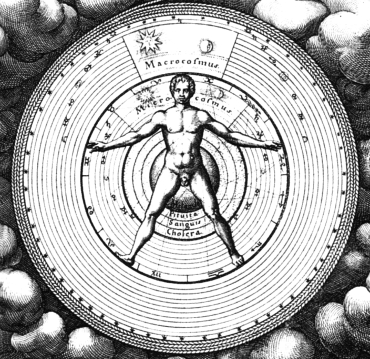
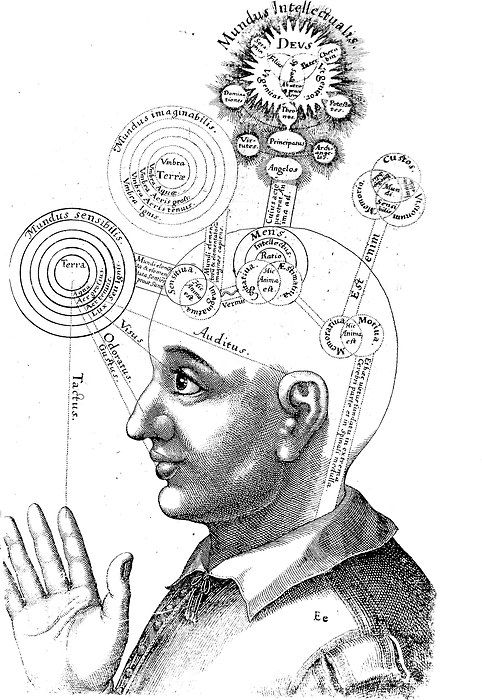
    I can’t resist adding the following Fludd image, which appears in the same book and may be one of the most iconic images of the Fludd opus, these beautiful circles showing the areas of thought and consciousness of the human being:

    Fludd 4

    (2)  Wheels of Forture
    Circlespirito
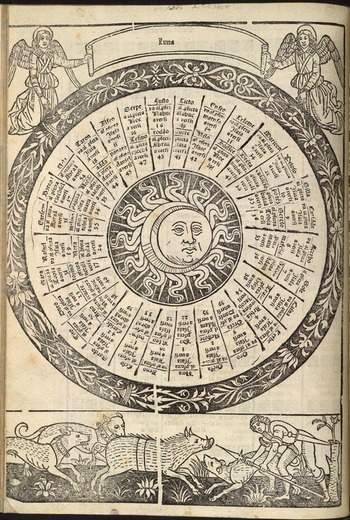
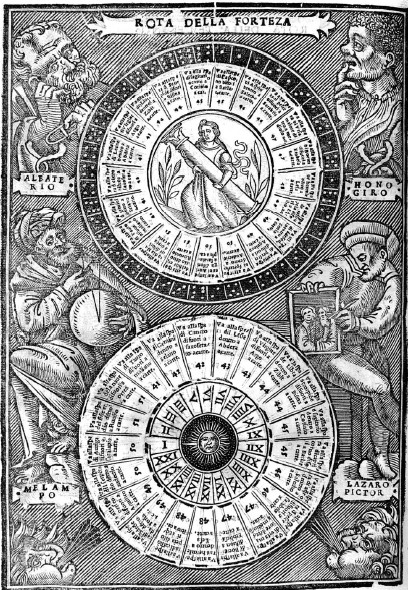
    In Le Passetemps de la Fortune des dez, written by Lorenzo Spirito in the late 15th century1 and published in this pictured format in 1559–a delightful little book with many2 zodical illustrations and the first printed illustrated book on fortune-telling—appears this gorgeous wheel of fortune wood engraving.

    “There are 20 questions, grouped around a wheel of fortune on which are represented four men; to each man a reference is added to a list of kings… These 20 kings in their turn guide the enquired to 20 planets; the table of dice casts attached to these planet contain 56 references to the 20 spheres of the planets. After one has found their way through these stages, they finally reach 20 prophets who each have 56 three-line answers to give….”

    The wheel sends the reader to a king; the king to a sign; the sign, with a throw of dice, to a wheel; the wheel to a prophet, and then to the peek into the future.

    Artikelbild: Losbuch des Lorenzo Spirito von 1482 bot Antworten auf Fragen nach dem Schicksal szmtag

    Spirito 2

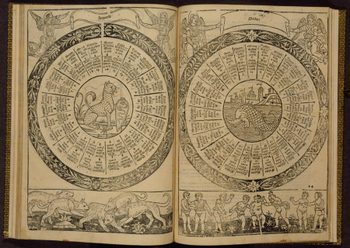
    Referring to the image below: “In this opening, the leopard (left) is cut in a thick outline and modeled with precise curved lines. The leopard’s formal pose is particularly appealing because it projects a dignity commensurate with the animal’s position in the hierarchy of the animal kingdom. The dolphin (right) is similarly cut and set within a sea of curved lines against a well-defined architectural background. The dolphin’s design reflects classical

    Spirito_2_2
    origins. The animal projects an aggressive attitude, suggesting the dolphin’s importance as protector of the city of Venice. The well-designed woodcut borders of the hunt (left) and the putti at play (right) are symbols of the vagaries of life, in which good fortune and calamity are equally possible.

    (3) Wheels of Destiny 2

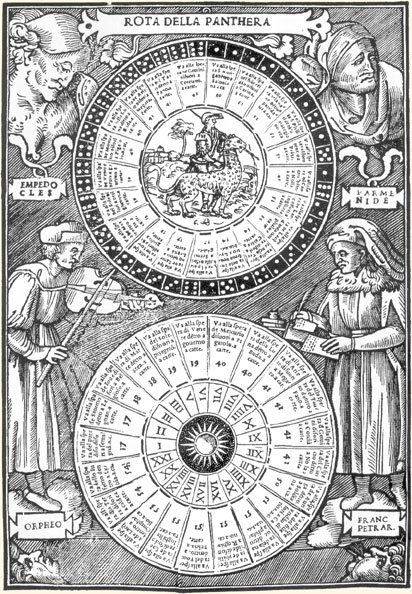
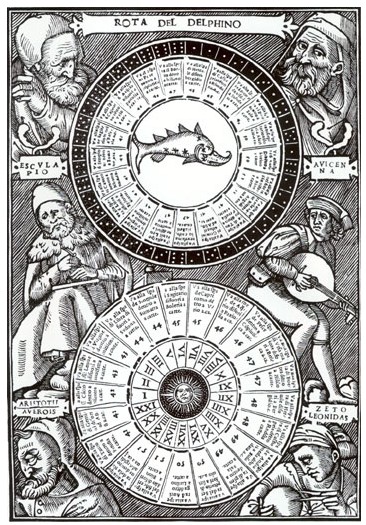
    In Sigismondo Fanti’s Triompho di Fortuna (Triumph of Fortune), printed in Venice in 1526, the second illustrated fortune-telling book to appear in print.  Fanti’s book, like Spirito’s, functions as a game in which the seeker follows cues that lead from figures of Fortune to houses and then to wheels, spheres, and astrologers, the path determined by either a throw of the dice or the time of day at which the book is consulted.

    Fanti 2As this is not really an area I know very much about I’ll just quote the commentary on this illustration from the Metropolitan Museum of Art:

    “When the reader reaches the indicated page, a choice must be made between two wheels. The upper one represents all the possible combinations (twenty-one) to result from a throw of the dice, while the lower is bordered by the first twenty-one hours of the day. If no dice are handy\—and it’s not too late at night\—the seeker can turn to the lower wheel and choose the segment that corresponds to the current hour.”

    Fanti “The pages representing wheels are bordered by eight alternating frames containing a series of musicians, astronomers, artists, writers, popes, rulers, and other distinguished figures of the past and present, labeled differently at each appearance. Among the artists named are Andrea Mantegna, Raphael of Urbino, and Baldassare Peruzzi, the designer of the frontispiece. On the page shown here, at right, the astronomer and artist are identified respectively as the book’s author, Sigismondo Fanti, and the painter Dosso Dossi (died 1542), who was also from Ferrara and who has been plausibly credited with the design of the figural borders.”

    Fanti3
    NOTES

    1.  Lorenzoi Spirito’s book was very popular, going into at least five printings in the 15th century alone following the first printed edition of 1482.  Fortune-telling works such as this were extremely popular and well-used–so much so that it has led experts in this area to conclude that the books were basically worn out of existence, which might explain why so few of them have survived to the present day.

    2.Description of the Spirito book from Christie’s auction house:  38 leaves. Roman type. 56 lines and headline. 2 woodcut full borders (one incorporating Da Ponte device) repeated to 6 impressions, full-page woodcut wheel of fortune, 20 woodcut portraits of kings from 15 blocks printed 4 to a page, 20 pages of dice throws with 20 woodblocks of signs, 20 circular woodcuts of signs within wheel of text set within one of two borders, 20 portraits of prophets and other Biblical figures.”


  • Dentists and Mushroom Clouds–the Nuclear Mundane in Planning for the Thermonuclear Post-Apocalypse

    JF Ptak Science Books  Post 1428    Part of a long series on Atomic and Nuclear Weapons History

    How can a person–how can I–write about Nuclear Holocaust as being mundane? When it comes to reading how some people mundanely responded to planning for surviving it.

    It is a very deep Disturbia into which people fall when writing about the millions of details in accounting for the unaccountable, writing about the medical/physical/psychical consequences of surviving a bomb when dozens might well be detonated at the same time, the millions of details overtaken by billions of other details not mentioned and perhaps not imagined. 

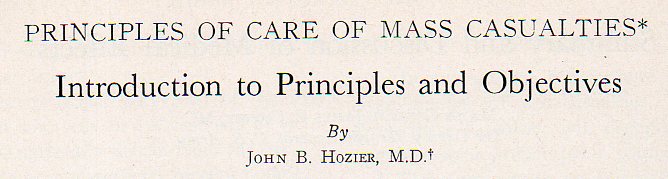
    I’ve collected some wide non sequiturs dealing with the matters of the nuclear apocalypse from a publication called Military Medicine in an article entitled “Mass Casualties, Principles Involved in Management”,  which were papers delivered at the 62nd annual convention of the Association of Military Surgeons, 1956.  Sometimes the chapter heading says it all, giving wide pause; and sometimes you have to wade in a little, but you don’t need to go very far, or very deep.  Overall the issue of the absolutely overwhelming devastation and the impossibility of dealing with the human consequences of nuclear war do absolutely get written about, but it occurs somewhere inside each contribution, which is front-loaded with pop-iconic understatement and then followed up with vast simplification. 

    Then of course there is the official-speak in quietly stating screamingly bad things: “a wide disparity will in all probability exist between patient load and medical resources”.  There’s so much like that in this publication that it is hard to keep up, like differentiating sands on a beach. 

    [I resisted including the section on the use of dentists in the post apocalypse–it was too painful, and I ran out of steam.]

    Nuke--nuke detonation313  Nuke--nuke detonation315

      Nuke--mass cas priciple320
    Nuke--mass cas priciple321


  • A Note on Teaching Math, Unexpected Art, and Picturing Things Differently

    JF Ptak Science Books   Post  1427

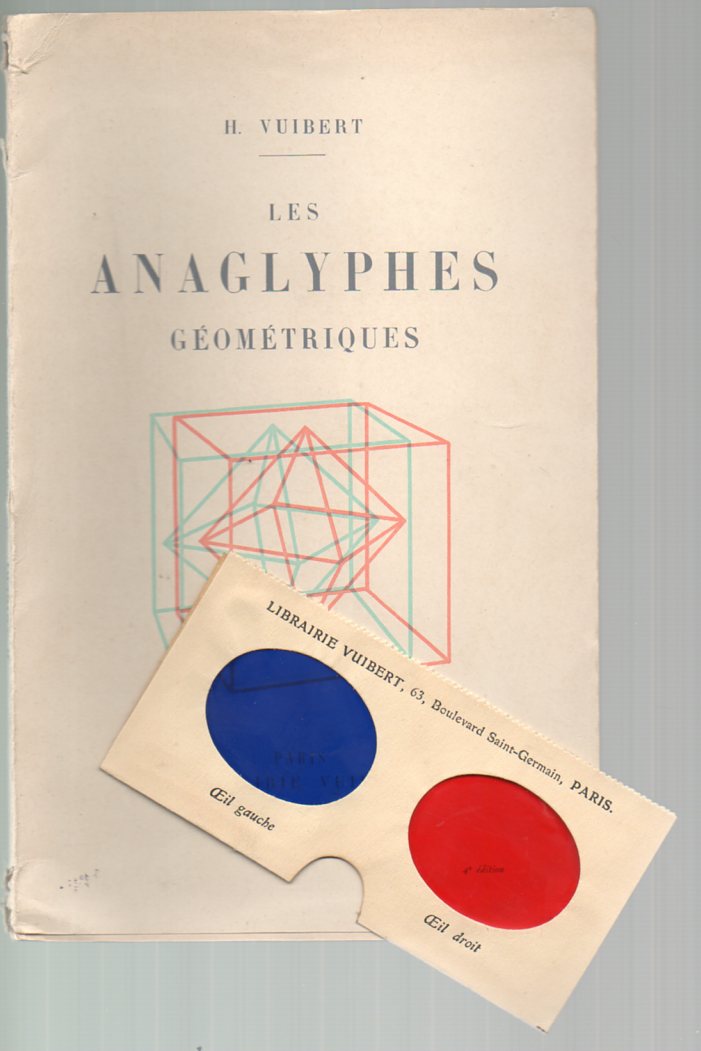
    Vuibert308 Stereo viewing geometrical figures may or may not be useful–I find it a little off-putting, creating a slight dizzying effect, though I’m sure it helps others (particularly children?) see complex geometrical figures a little more easily., especially when it comes to crystalography images. Education was certainly what Henry Vuibert , the author of Les Anaglyphes Geometriques had in mind when he published the work in 1912.  He had a long history in mathematics education, having founded the firm that bears his name back in 1877, a publishing house specializing in school texts in the maths, physics and general sciences.  (We offer the book for purchase at out blog bookstore.)

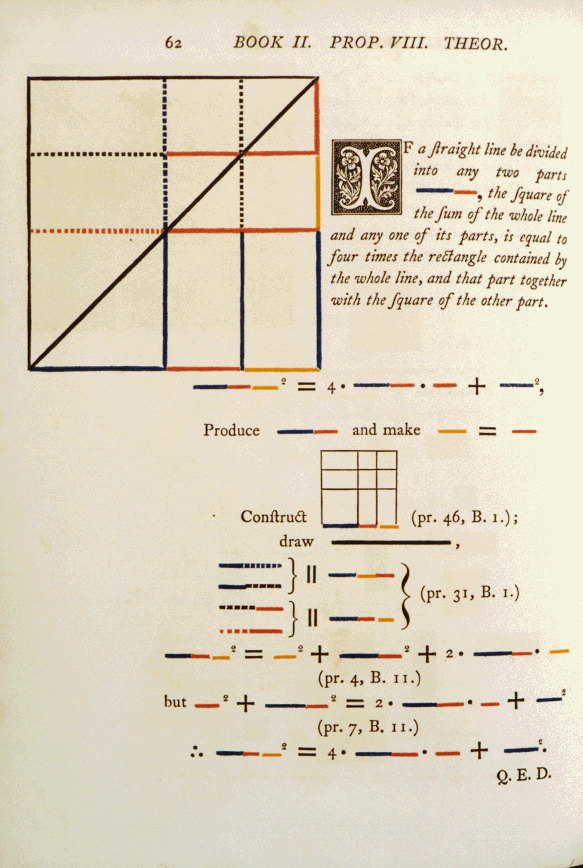
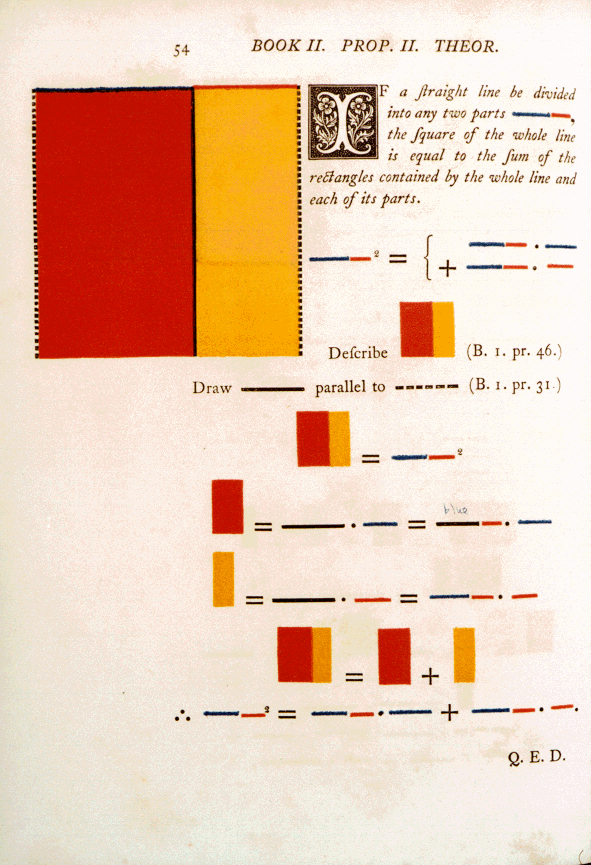
    Vuibert’s book is a very early example of the use of the anaglyphe–examples of the use of the method go back to the 1850’s, when d’Almeida used a version of the idea to punctuate lectures using a magic lantern; the (printing) process of the anaglyphe wasn’t patented until the 1890’s by L.D. DuHaron.  It does confuse me or remind me quite a bit of Oliver Byrne’s beautiful monster The First Six Books of Euclid in which coloured diagrams and symbols are used instead of letters for the greater ease of readers… printed at the Chiswick Press by C. Whittingham for William Pickering in 1847.  The book is, well, unusual and probably not at all usefu11.  Bryne replaced all of the algebraic notation, identifying letters and almost all of the descriptive text with color and color codes, leaving Euclid mysterious, hidden, awkward, impervious, and, yes, beautiful2. As a matter of opinion this work presages the cubists (and especially Piet Mondrian) by 60 years, and all by accident artwork. 

    Byrnes 11.8


    There are certainly much earlier works that tried to get at a fuller representation of geometrical objects, not the least of which was a 16th century Elements of Euclid in which the figures were cut-out paper, pasted into the book and attached to a string so that the reader could pull out the illustration and see it displayed in three dimensions. The elements of geometrie of the most auncient philosopher Euclide of Megara. Faithfully (now first translated into the Englishe toung…3, printed in London in 1570, was no doubt a great and exasperating labor of love, a complex “pop-up” book accomplished with sixteenth century technology.  (The photo below shows the Smithsonian Institution’s copy.)

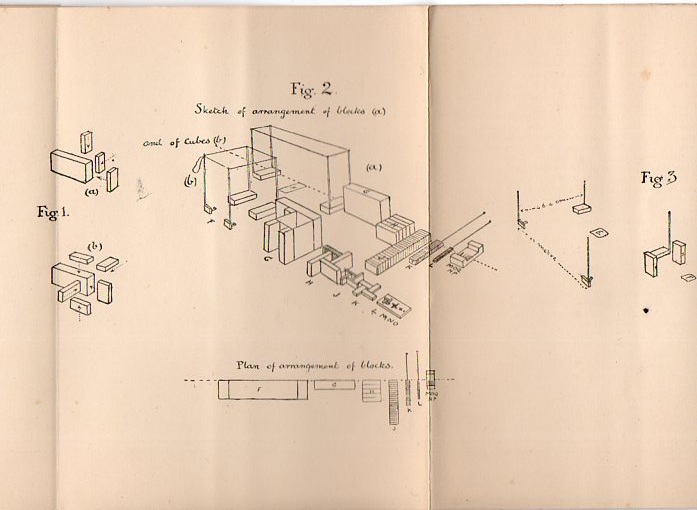
    Of course there’s the very old fashioned way of representing mathematical concepts, and that’s with sticks and stones and blocks and such.  For visceral memory and practical applications, the idea is hard to beat, unless of course, you really beat it , which is difficult to do.  But to me that’s just what Major G. Mackinlay did in his Realistic Arithmetic,  for Teaching Children the Elements of Arithmetic by Means of Special Blocks4, published in London in 1900–his ideas for the use of blocks was very sound and stable; his instructions (and in particular his illustrations) for what to do with the blocks was not.  I am reminded of inscrutable, badly translated and designed instructional manuals for tech stuff that need a manual for the manual. 

    Here’s one of the folding plates describing how to assemble the blocks:

    Math blockis309

    Then there are other sorts of wooden (and etc.) three-dimensional models, such as the (600+) gorgeous geometric designs housed in the Institute Henri Poincare, transferred there from the laboratory of geometry of the Faculty of Sciences of the University of Paris in 19285.  Most of these models were constructed around the time of vast change in mathematics and art (1900-1920), which means that many of them predate the revolutionary ascensions of  Cubism and non-representational art.

    And as long as were at the point of unintentional and under-recogniozed epochal works, I think that there is a broad book that could be done on exactly this topic, calling into play such examples as Georgina Houghton, Victor Higo, Emily Vanderpoel, and many others. 

    Georgina Houghton, for example, produced this non-representational painting in 1870 (or thereabouts):

    Georgiana

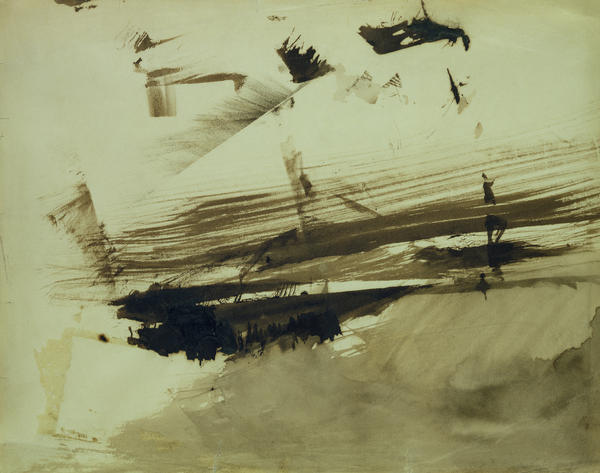
     And Victor Hugo, from the 1860’s

    Evocation of an island Painting  - Evocation of an island Fine Art Print

    And Emily Vanderpoel (1900 or so):

    Art-vanderpoel186
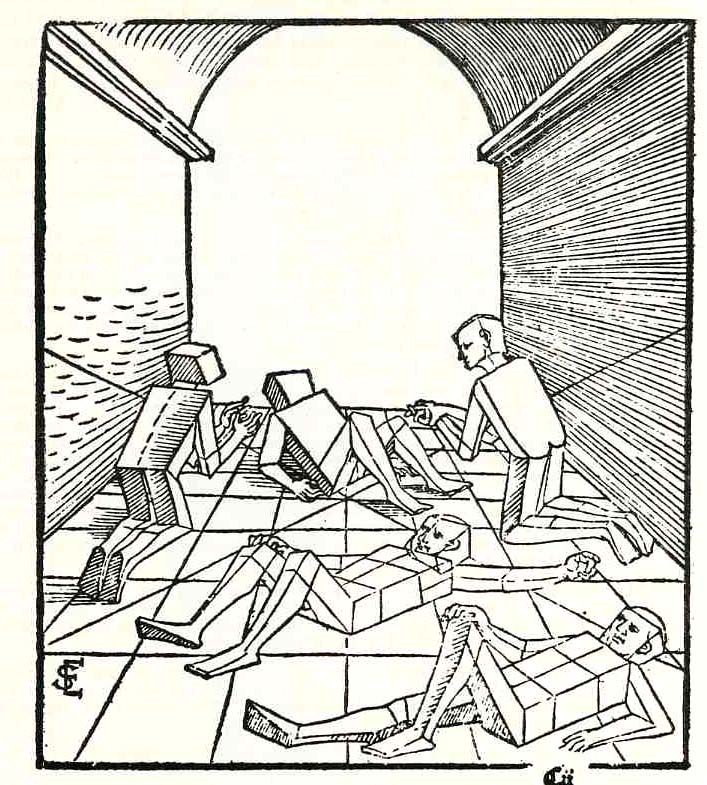
    In another, much earlier case of removing detail and adding abstraction for the sake of simplicity in representing an idea,  Erhard Schoen, in his Unnderweissung der proportzion und stellung der posssen liegent und dtehent, printed in Nurenberg  in 1538, presented these cubed figures (below).  He used simplified geometric form to stand in for the curvy humans, replacing them with proportional stacks of boxes which would more easily explain to the younger reader how to represent the human body in space and in proportion to other things. 

    Schoen

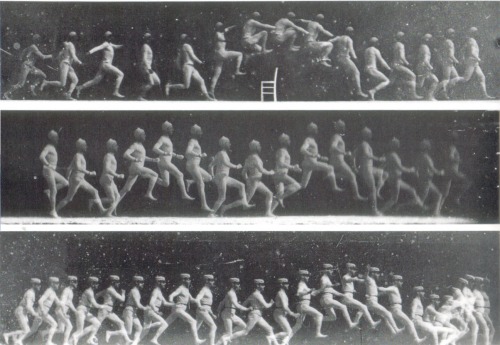
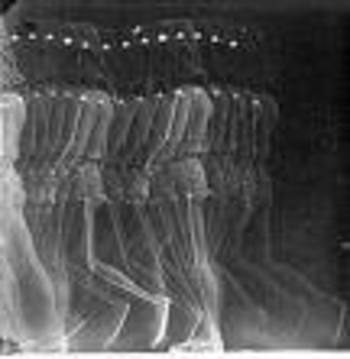
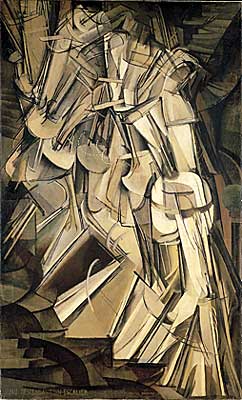
    I think that these were monumentally combative images showing humans in a radical, previously unknown way, much like the moving-through-space-and-time photographs of the somewhat forgotten Etienne Marey, who in the 1870’s created what was essentially the world’s first “slow motion” device. One iteration of Marey’s apparatus was basically a long series of ganged cameras recording a motion for a Marey12 simple task at a given time frame and presented on a continuous strip of photographic paper, sort of like a motion picture with the camera speed set at three frames per second. The resulting images were phenomenal and showed people for the first time the exactness of all manners of simple motions–motions that no longer looked so “simple” once all of its aspects could be studied from captured photographic evidence.  Even the act of hopping over a small stool or bending to pick up a bucket of water were enormously revealing in a way like Robert Hooke’s Micrographia displayed the great detail and complexity of the seemingly simple fly.  Perhaps the most famous of Marey’s series of images was that of a galloping horse, which also for the first time revealed what exactly the horse’s legs were doing and proving that almost every painter in the history of art represented the galloping horse incorrectly.  His series of photographs (as in this sample below) show a fairly close fit to the work of the futurists (like for example Duchamp) who would come into being after another four decades. 

    Marey  And Duchamp’s Nude Descending (1912):

    Duchamp


    I do want to make it clear that this is just a simple note, a thinking-out-loud piece on how attempts to visualize things differently for the sake of explanation or education can come “unintentionally” close to what would become epochal works.  More later.

    Notes

    1. Augustus De Morgan, mathematician and logician, wrote a very highly critical book A Budget of Paradoxes in which he describes hubbub, fakirs, frauds, perpetual motion machines, squaring the circle efforts, millstones and other useless books in the maths, and in here he sniffily dismisses Byrne’s work. At best, to De Morgan, the Byrne book is “curious”. But useless and curious, as I have seen many thousands of times, does not mean that it can’t be attractive and beautiful, and the Byrne book is probably the leading candidate in the Bad & Beautiful category.

    2. In his Victorian Book Design McLean calls the Byrne book “…one of the oddest and most beautiful books of the whole century…a decided complication of Euclid, but a triumph for Charles Whittingham [the printer]”.

    3.  This is also the first appearance of Euclid in English.  The full title: The Elements of geometrie of the most auncient philosopher Euclide of Megara faithfully (now first) translated into the Englishe toung by H. Billingsley, citizen of London; whereunto are annexed certaine scholies, annotations, and inventions, of the best mathematiciens, both of time past and in this our age; with a very fruitfull praeface made by M.I. Dee, specifying the chief mathematicall scieces, what they are, and whereunto commodious; where, also are disclosed certaine new secrets mathematicall and mechanicall, untill these our daies, greatly missed. London, Imprinted by I. Daye, 1570.

    4.  From the Report of the Annual Meeting of the British Association for the Advancement of Science, 1906:


    5.  From the IHP website:  “Most of the models  were created by Martin Schilling in Leipzig between 1900 and 1920 and  a few of them  (in wood)  were made between 1912 and 1915 by J. Caron, Professor of Descriptive Geometry in charge of  the “graphic work” course at the ENS at the beginning of the century (between 1912 and 1915).”

    Also this:   “In the thirties, the surrealists, led by Max Ernst, were interested in these geometric objects. André Breton alludes to them in  “Crise de l’objet” , an article  in the magazine  Cahiers d’Art (May 1936, No. 1-2, p. 21-26.). Man Ray took photographs of the models, which where published in same issue. He would later use them to compose what he called  “Shakespearean Equations”. Many artists, painters, architects and sculptors drew inspiration from them.”


  • German Military Medical Retreat, Coastal Poland, 1915

    JF Ptak Science Books  Quick Post

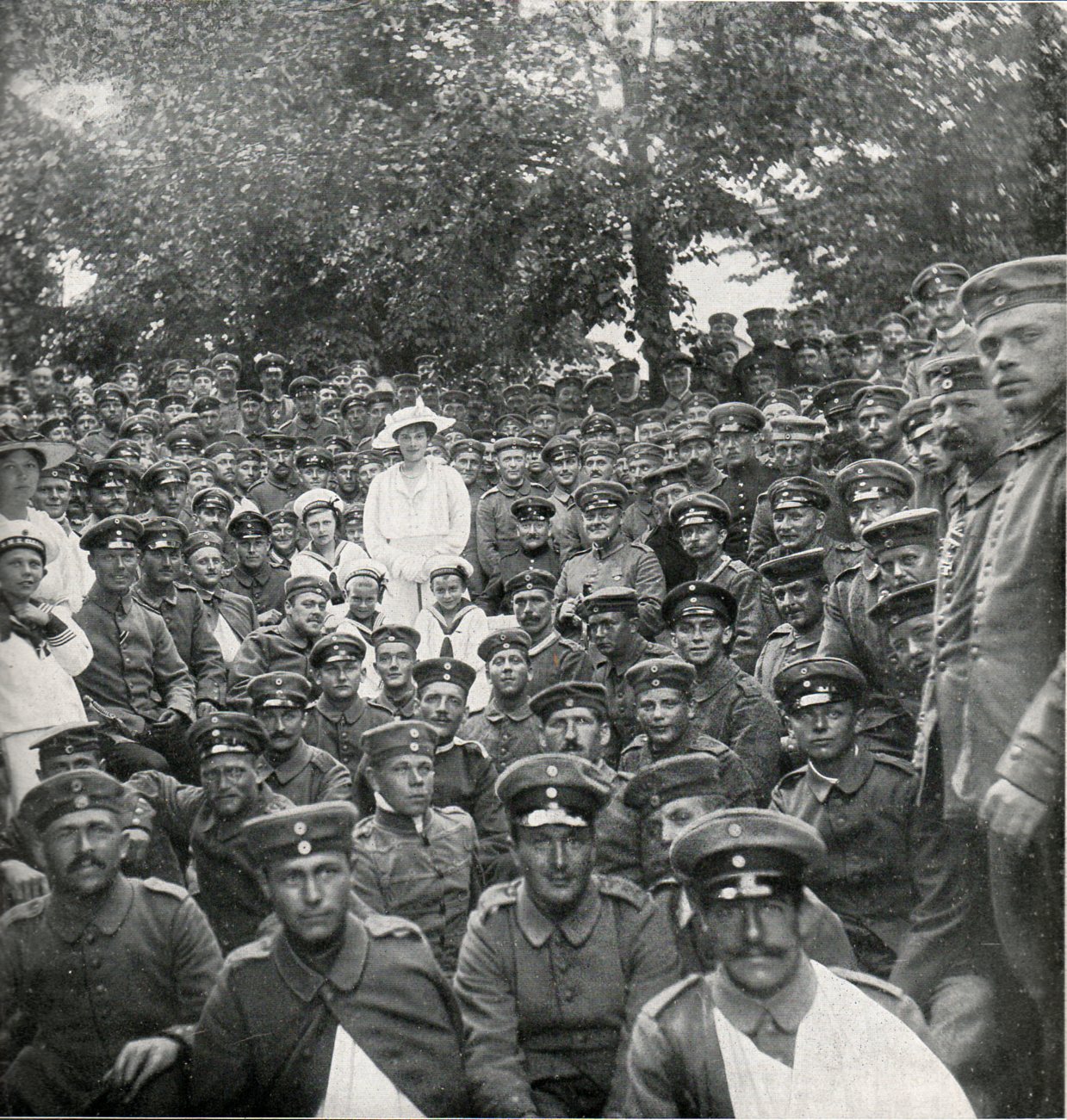
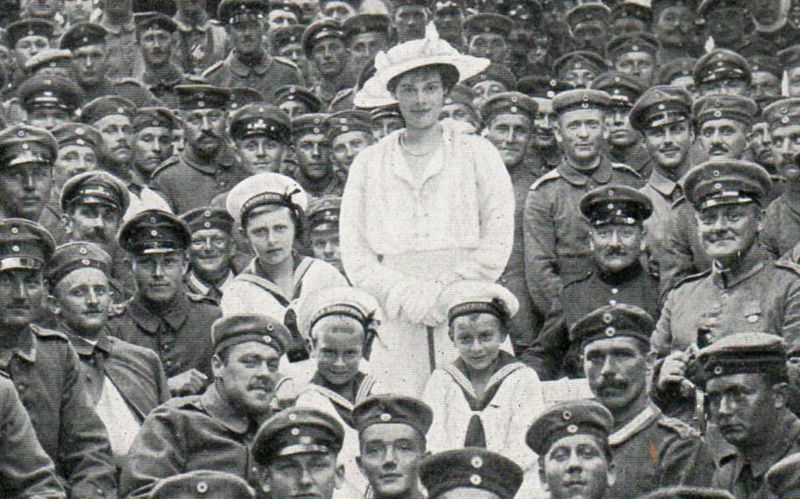
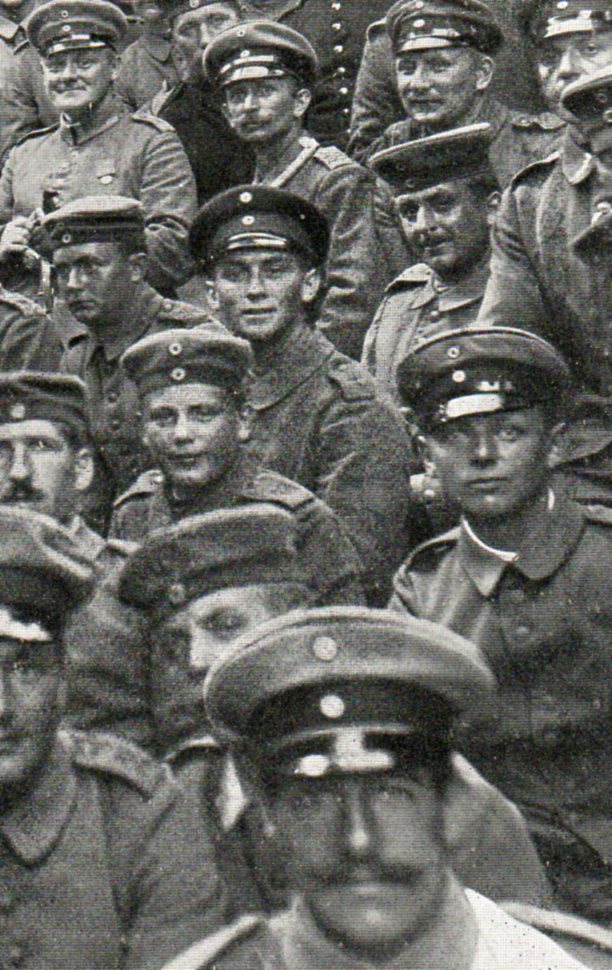
    This image, from the 22 Juli 1915 issue of the Illustrirte Zeitung (Leipzig) shows a collection of German soldiers that were treated at a medical aidstation.  The woman in white is the German crown princess, accompanied by her four navy-uniform-clad sons, are adrift in a sea of wounded and recovering soldiers who I guess were given leave from the war, celebrating their survival at the old spa and vacation spot Ostseebad, in Zoppot (Sopot, Poland).  (The issue may be purchased at our blog bookstore.)

    Wwi german red cross304

    And the detail:

    Wwi german red cross305

    And another:

    Wwi german red cross306

    ·Posted by :

    ·in:

    — —

  • Miss Atomic Bomb: the A-Bomb in Popular Culture–Comics, Cakes and the Will of God

    JF Ptak Science Books   Post 1425 
    Follow Me on Pinterest


    I’ve written dozens of posts on this blog about atomic bomb history and where the bomb has shown up in popular culture.  This installment is on the bomb in very popular culture

    Miss Atomic Bomb is an icon of some sort for the relationship of the bomb with society, or, perhaps the bomb and Vegas, which is where this picture was taken. I guess there are reasons to put pretty women in front of computers (in the 1950’s/60’s), cigarettes and automobiles–why not with The Bomb?

    Atomic Bomb Miss
    The atomic cake (with matching headware):

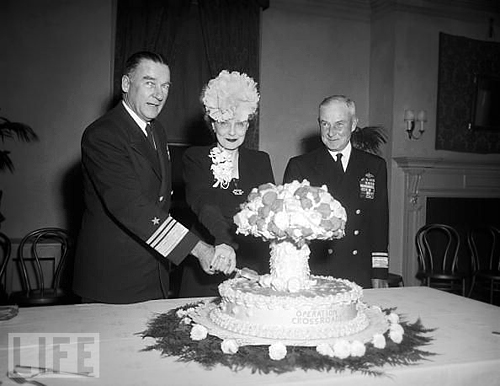
    Atomic cake

    The caption to this story from Life magazine (1946) reads: “U.S. Navy Vice Admiral William H. P. Blandy, his wife, and Rear Admiral Frank J. Lowry cut a cake made in the shape of a mushroom cloud at a reception for Operation Crossroads, November 6, 1946.”  Actually Blandy was an early (August 1945 or thereabouts) forward thinker about how to deal with the U.S. owning the bomb and  international control.  I have little doubt that he probably thought that the cake was a bad idea, but, well, he did what he needed to do.

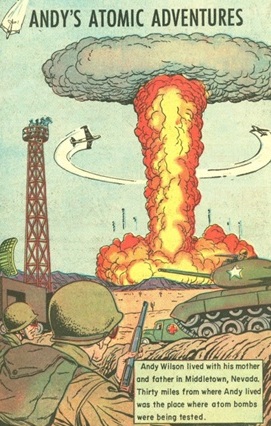
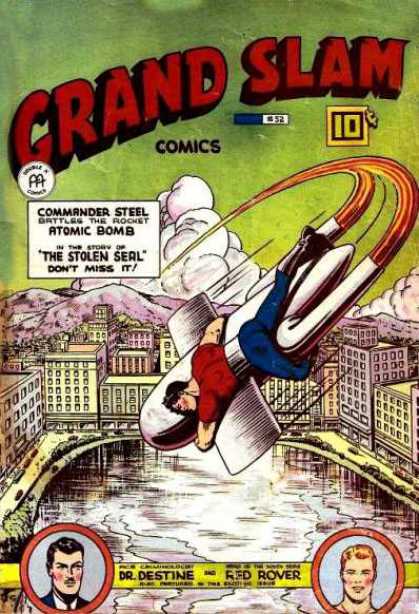
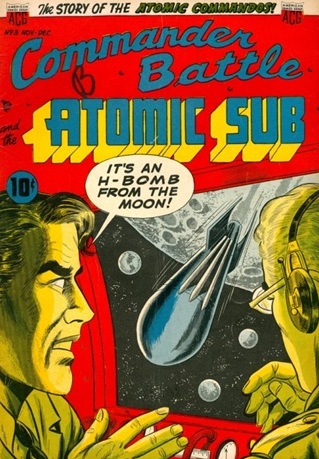
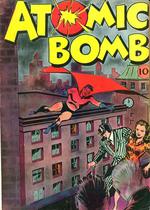
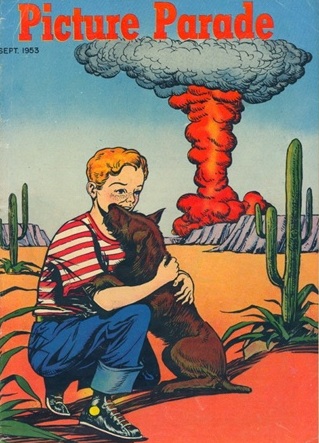
    There were all sorts of comic book adventures dealing withe the atomic bomb, right from the very beginnig (as it seems the earliest of them appears a month after the Hiroshima bombing).  These are just a few examples with the a-bomb on the comic’s cover(s):

    Atomic andy

    Atomic grand slam
     
    Atomic  h bomb from moon

    AtomicbombBizarro–I don’t know the story of this image in Picture Parade, only having the cover graphic–perhaps that’s enough, perhaps we don’t need anything more, perhaps the backstory would spoil a perfectly bizarre image with something perfectly benign.  Or perhaps not. 

    Atomic bomb biazzaro
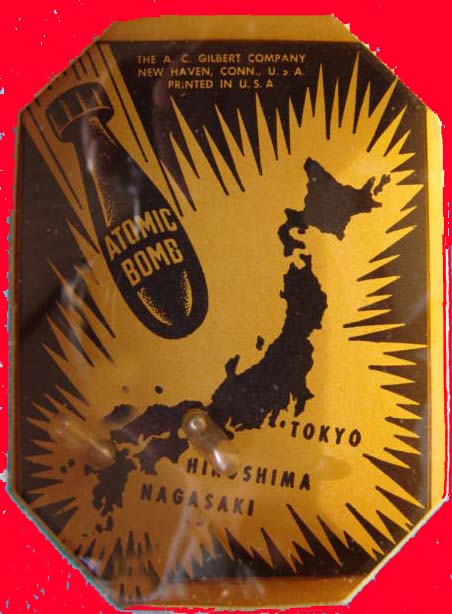
    Bizarre but for different reasons–a pocket-sized ball bearing patience game. Tokyo is included as a target for this game but in actuality was not considered atomic-bomb-worthy, mainly because it was decimated,  blanketed with a firebombing  that destroyed a host of the city just weeks before the first blast. (On March 9-10, 1945, 339 B-29’s dropped 2000 tons (4 million pounds, about 496,000 bombs) of the incendiary M-69 on Tokyo.  Two initial passes were made on the city, marking a large, burning “X” in the city.  Each plane had the capacity to cover a drop area of 350 feet by 2000 feet, which means a much greater area was affected. The citizens of Tokyo met their ends with buckets of water and brooms in defense. Hours later fifteen square miles of the city were destroyed.  In the months prior to Hiroshima and Nagasaki, 66 cities were bombed with M-69, killing about a million people, and wounding more.)  Fresh cities were needed for the atomic weapons so that there effectiveness could be judged against a palette of a normal. intact city, and not one that had been previously attacked. 

    Atomic Bomb dexterity game
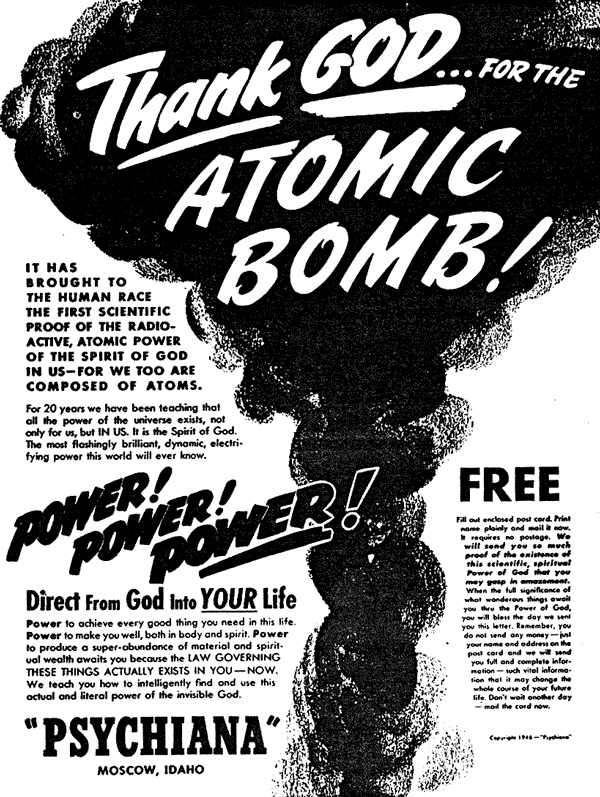
      And still more bizarre, when you combine all of the aspects of the race to the bomb with the race to god and the people who would believe such a thing.  This advertisement belonged to a mail order religico empire builder, Frank B. Robinson, (1886-1948), who claimed himself to be a prophet of god, had conversations with the Creator, and in general used whatever was of interest in the newspapers to drive interest in his ministry by mail.  It looked like his creation–Psychiana–wasn’t much more than a feel-good, self affirming, positive-thinking enterprise driven by a man with a personality big enough to be on speaking terms with the god, who in the ad below somehow was selling “the atomic power of the spirit of god in us”  because we are composed of atoms.

    Atomic bomb thankgod

    And of course on the other end of this:

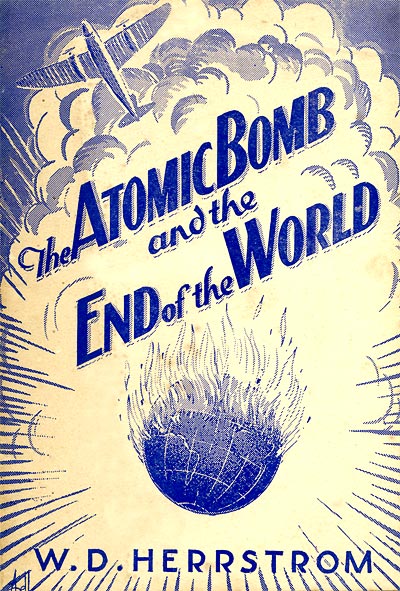
    Atomic_bomb_end_of_world

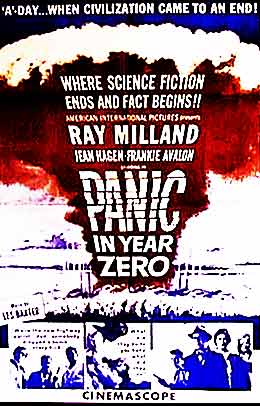
    This is an example of a host of end-of-the-world, post apocalypse movies (and books, and short stories, and so on) made to scare and entertain.  Judging from the trailer the more-modern television series Jericho owes a lot to Ray Milland. 
    Atomic panic-in-year-zero

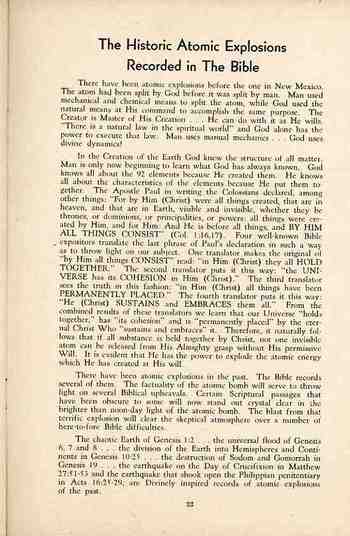
    Mel Morris  published God’s Atomic Bomb  in 1945, which means he must’ve worked a little feverishly to pump up his bible prophesy and history to include the new atomic weapon to replace whatever else he had been using as a prophecy for end of times.  (As it turns out, “God’s Atomic Bomb” was more tempest and disaster in the bible, and not (whew!) the bomb itself.  Though as we’ve learned from scientologists and the sort-of creative mind of Ron Hubbard, a civilization came to the earth thousands of years ago and pummeled it with “atomic bombs” and other nastiness, polluting humans for milennia to come.  But that’s another story–suffice to say that Morris found many dozens of examples of “God’s Atomic Bomb” being used in the deep biblical past, and that the use of the real atomic bomb in 1945 was pre-ordained, and not without its figurative historical counterparts.  I’m not sure why any of this was necessary outside of proving to some small minority that these preachers could at least be contemporary and topical. 

    Blogsept_2_atomic_bomb_god_2txt483

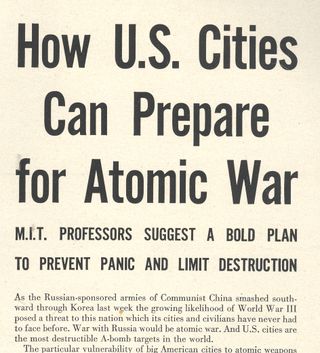
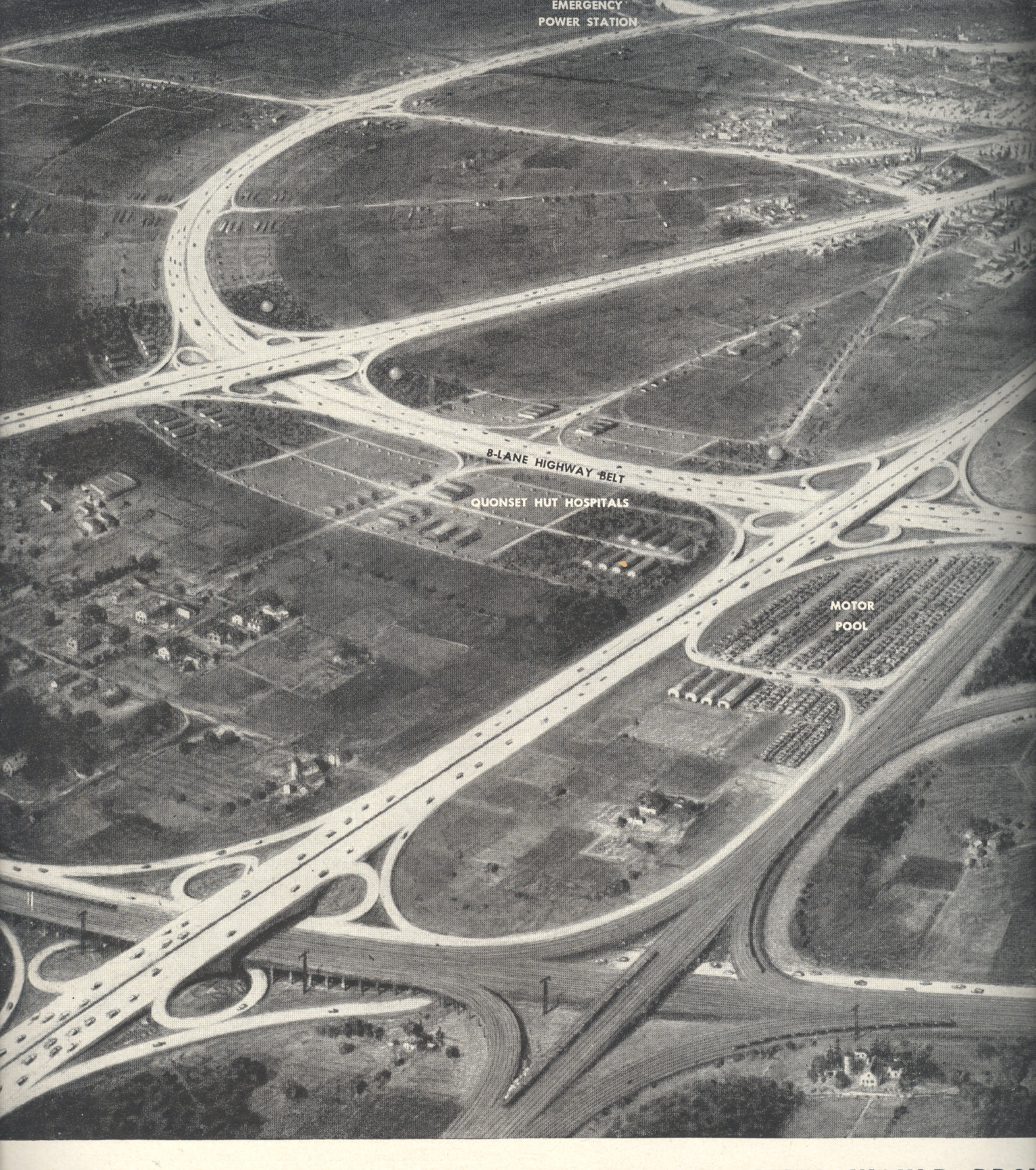
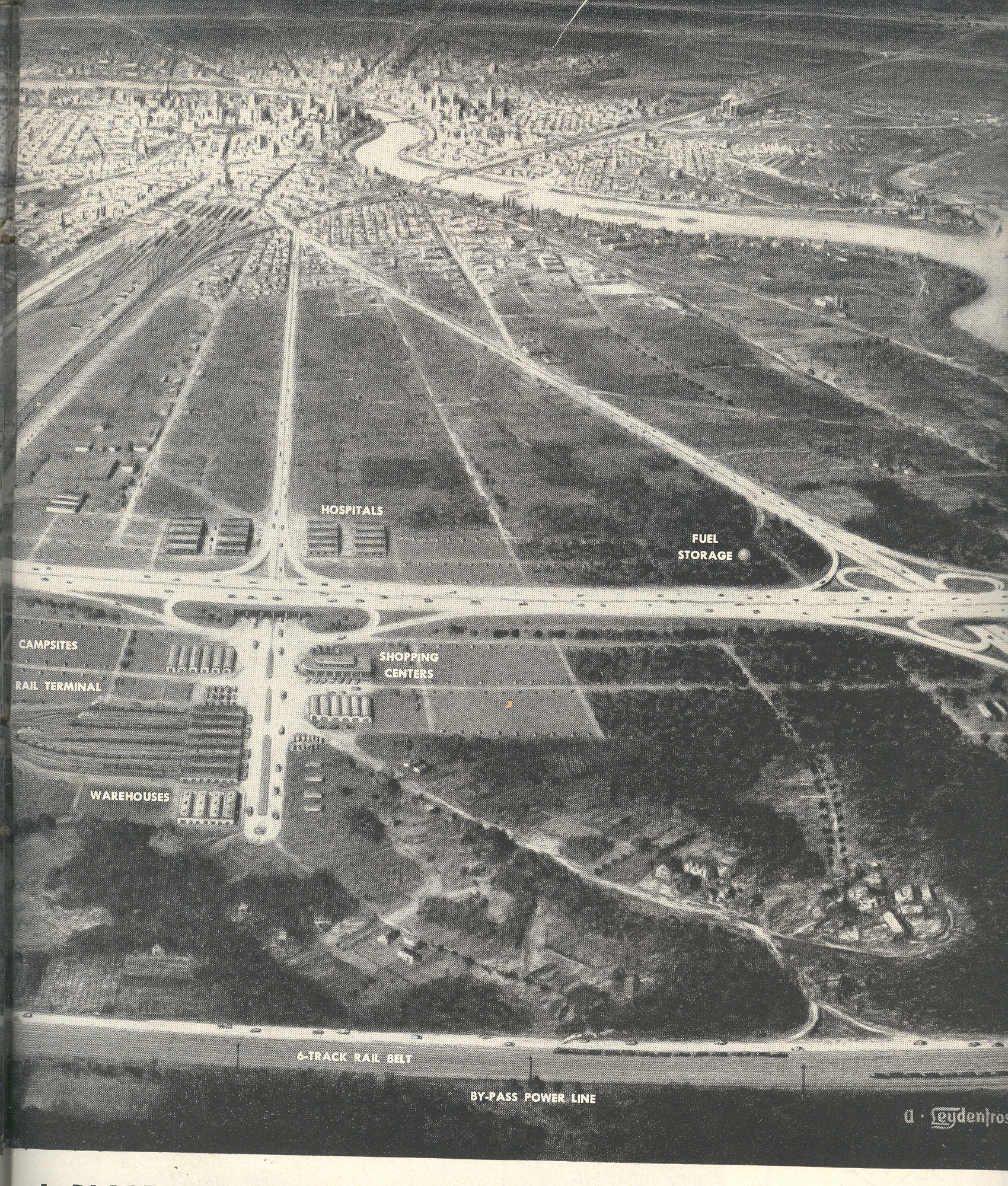
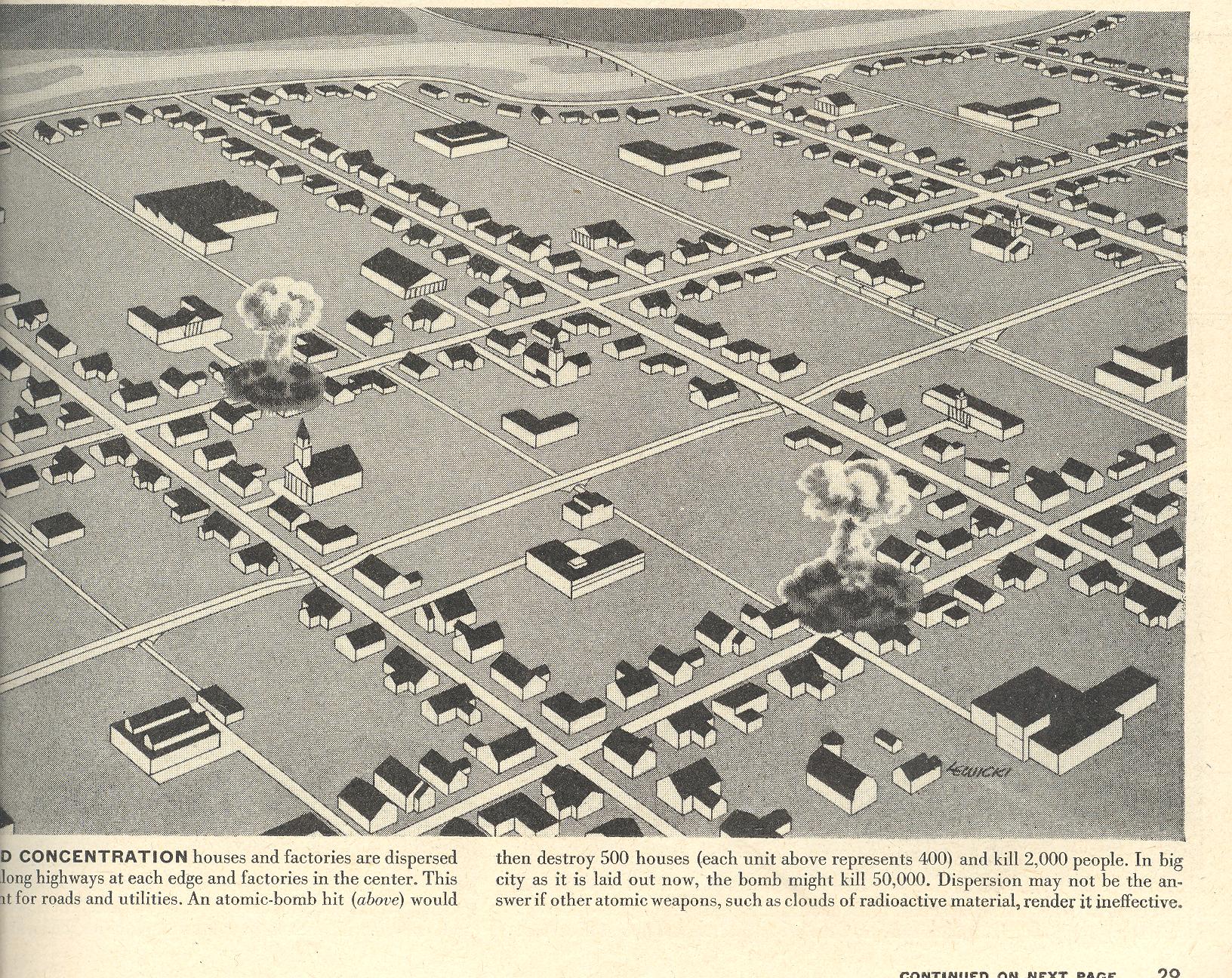
    The following is not the worst idea regarding the survival of nuclear holocaust, though it is an extremely bad one.  (Atomurbia, which makes the entire country a suburb to itself and therefore nothing, and which I write about below, is perhaps the worst idea that I have seen on combating the Soviet menace.)   But this one, which appeared in Life magazine in 1950, does come close, setting up post-attack suburbs (for “refugees”) and which takes some pre-attack city planning into some account.  There is a lot of planning for people in cars to make their way out of the city, which reminds me of the evacuation maps of Washington D.C. (which were still being handed out in the early 1980’s), which sends people on their way east and west depending upon the last digit of their car’s license plate being an odd or even number. 

    Atomic city plan war

    ==Blog July 27=wiener left

    One reaction to impending Doomsday was to construct concentric outer highways around metropolitan areas, “life belts around cities (which) would provide a place for bombed-out refugees to go”. In the birds eye view provided here, we see the plan in action, the main parts of which are an 8-lane “express” highway belt 10 miles away “from the built up edges of the city” , and a 6-track railway belt five miles further out, these accompanied by various feeder arms stretching straight-away from downtown.  In between the two outer rings would be land that would be kept free of development, so that farms and tent cities could be constructed after the attack. There would also be major collections of hospital and fuel depots in the greenbelt area.  Infrastructure would already be in place (gas and electricity, supplied with power from who-knows-where).   Shopping centers and a giant “motor pool:” would also already be in place, waiting for the Doomsday clock to strike midnight. 

    ==Blog July 27=wiener right

    This idea of city planning was one of many offering the prospect of safety from nuclear attack by spacing out the population of the United States so that the Soviet Union wouldn’t have enough nuclear warheads to take everyone out.  It called for the redistribution and resettlement of virtually everyone in the country, and is one of the most spectacularly bad ideas that I have come across in this field.  (I wrote about it earlier in this blog, here.)

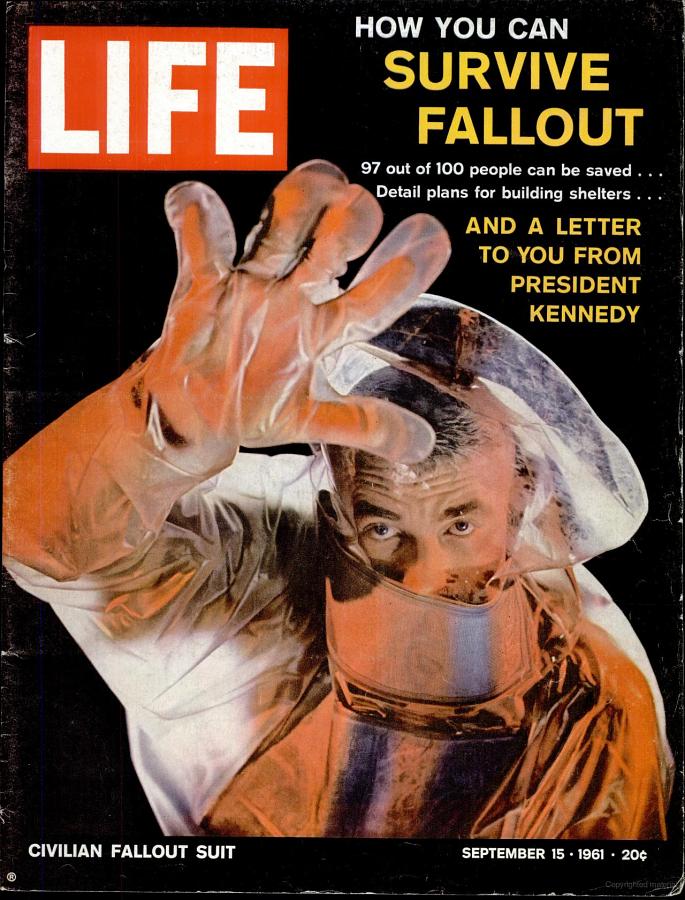
    1-may 3-atomic 4

    This issue of Life offered the possibility of hope that 97% of the American population could survive a nuclear attack by the Soviet Union. It was a hard sell of a bad idea of insane optimism.

    Books_004


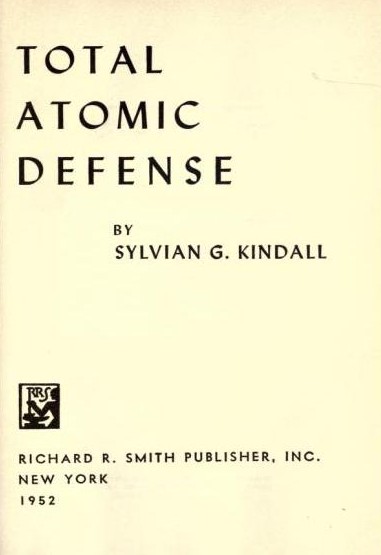
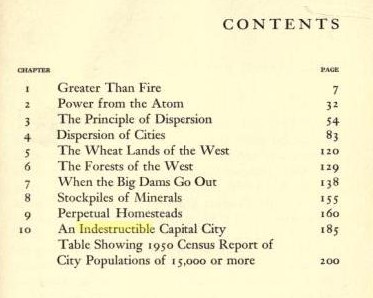
     Sylvian Kindall’s Total Atomic Defense (published by a very severely right-wing publisher in 1952) is one of a series of books made for a deceived American population, offering the general reader both fear and hope, often from the same, exact source. But Kindall has a  somewhat diffident approach, offering his belief that the country and its population can largely  survive an all-out nuclear waBlog--untinkable tpr–intact.  Chapter 10 tells the remarkable story of how to make the captial city of America atom-bomb proof, mostly by digging it into the side of a mountain.

     
    Blog--unthinkable


    Again, this is just the barest touch of the top of a huge pile of such stuff–and I’ve not even mentioned duck-and-cover films.


  • The First X-Ray of an Atomic Explosion Inside a Person? Superboy/Superman & the Atomic Bomb, 1945-1964

    JF Ptak Science Books  (Continuing  Post 1140)

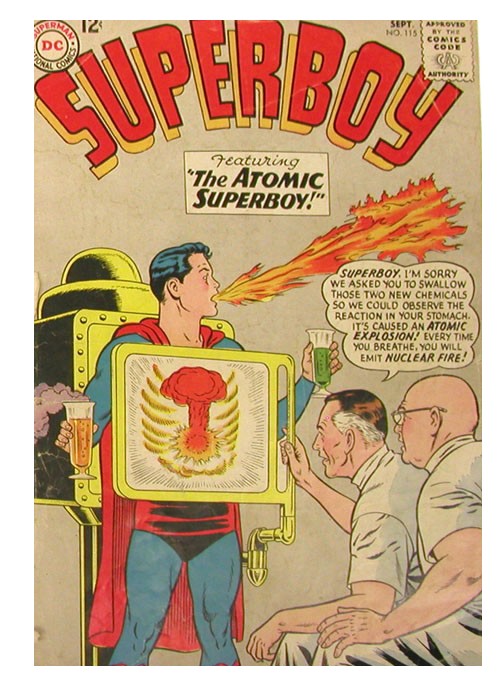
    I don’t know why, but I cannot remember ever having seen an x-ray of an atomic explosion taking place inside of a person, before today.  I guess that Superboy’s body is susceptible to x-rays but is also at the same exact time capable of preventing a nuclear explosion from escaping his body–all except for the “nuclear fire” coming from his mouth.Now that’s some sort of body control! The men in white seem pretty confident, being so close to the Trinity-like action and all.

    Atomic explos superboy
    Superboy evidently needs fewer ribs than humans, and it looks like the detonation point is right on the transpyloric plane, taking out kidney, liver, gall bladder and just about everything else.  And his spine doesn’t show up, either–along with a lot of other innards.

    Atomic explos superb deta 

    The original (published in September 1964) comes from the Oak Ridge Associated Universities, and they point out that this issue comes right after the signing of in-air nuclear weapons testing ban (after a speech by JFK in June 1963, marked by a memorial that was about 10 feet away from where I used to practice the shot put in D.C.)

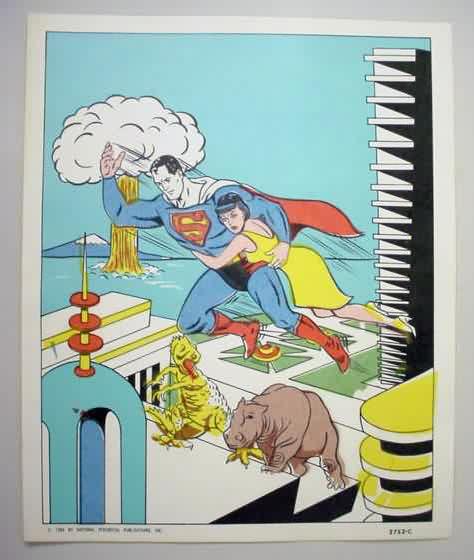
    This mushroom cloud doesn’t take place inside of Superman, but it does seem to take place, well, oddly–there was no text that I could find that accompanied this image, so we’ll have to leave the story arc to imagination. 

    Supermanrubon-rhinoclean

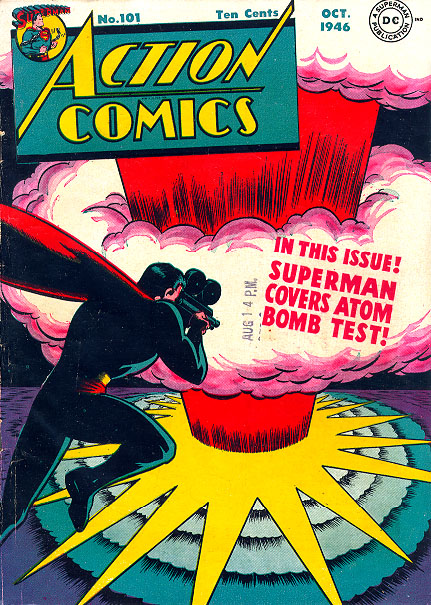
    And, well, if you’re not having an atomic explosion in your stomach and not combating one, I guess as Superman you could cover one (image found here):

    \Atom Action#101Med

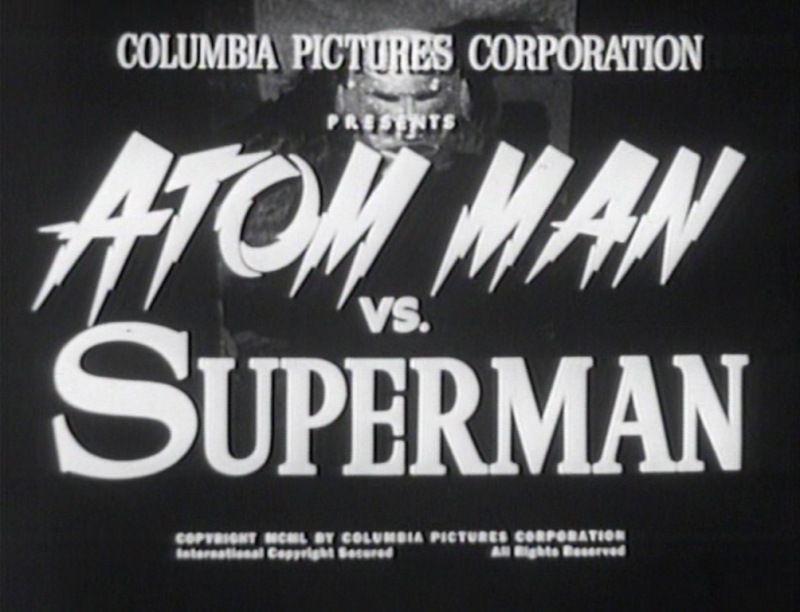
    Atomic Superman50Title