A Daily History of Holes, Dots, Lines, Science, History, Math, Physics, Art, the Unintentional Absurd, Architecture, Maps, Data Visualization, Blank and Missing Things, and so on. |1.6 million words, 7500 images, 4.9 million hits| Press & appearances in The Times, Le Figaro, Mensa, The Economist, The Guardian, Discovery News, Slate, Le Monde, Sci American Blogs, Le Pont, and many othr places… 5000+ total posts since 2008.

Author: JF Ptak

  • A New Class of Scientific Image? Synesthesia, Francis Galton and Picturing Thought

    JF Ptak Science Books LLC  Post 9

    A Quick Note on an Interesting Image:
    Is this the First Published Illustration of the Mental Imaging of an Active Thought?
    Prestogalton_vis_closeup
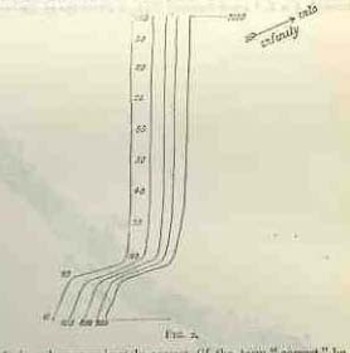
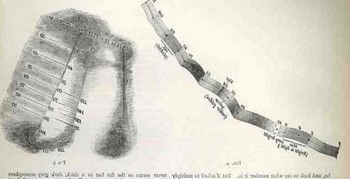
    I was stumbling through my collection of Nature (A Weekly Illustrated Journal of Science, London) magazine when I found a fantastic article by Francis Galton  (“Visualized Numerals”, Thursday, January 15, 1880) concerning (in one aspect)  the mental visualization of the act of doing mathematics. That is to say, what images people formed in their brains as they performed mathematical functions–this was even illustrated (!)

    Fascinating!  Scholars have pointed to this article as perhaps the earliest scientific effort on synesthesia , but what strikes me is how he tried to describe the intimate or logical function with the visualization of the act….I think that is what makes this effort so spectacular.

    I’m not associating memory devices (like the memory palaces of Matteo Ricci or Robert Fludd’s spectacular creations from his Ars Memoriae, or the beautiful schematic of Civlio Camillo’s memory theater,  for example which are more (basely speaking) Prestogalton_closeup_2
    visual aids for restructuring already-completed thought patterns) with this question; l I’m not so sure that it applies. These are more issues of phylogenic memory, and concerned with memetics and semitoics rather than the actual formation of an idea.

    People have certainly written on images in the mind before Galton–the question is if anyone has illustrated what they think this process looks like? I’m also not so sure if this directly relates to Aristotle’s elements/colors affirmation or Pythagoras’s numerals and colors or Scriabins music and color associations, or Cardano and his color/flavor and the planets associations….
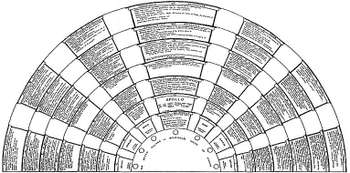
    Galtoncamillo
    I guess the question is—where does this image fall in the history of the illustration of abstract thought?  I’m not including famous examples of the physical aspects of sight as with Descartes etc; just the image of what people see in their heads as they are formulating thoughts and ideas.

    We’ll have more later.  I just wanted to put something up here as people have wanted to see the Galton article and Nature (1880) is not a terribly common thing to find. 
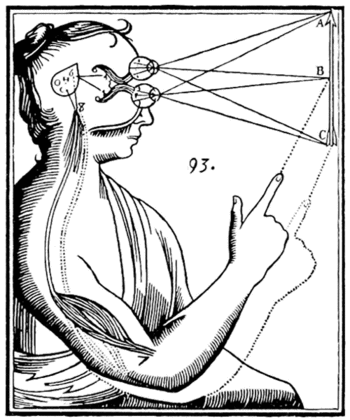
    Galtondescartes

    It would also be just plain wrong not to mention two things at this point—the works of Frances Yates , which is a gorgeous and insightful work on memory.  And secondly, I need to acknowledge the work of Barbara Stafford (University of Chicago) who for decades has produced the most beautiful and the most interesting works on what scientific images *are*. 
    ·Posted by :

    ·in:


  • Things That Almost Were But Weren’t–Photography in 1839 and Television 1924

    JF Ptak Science Books  

    Here are two examples of Things That Almost Were But Weren’t:  Photography (1839) and Television (1928). The first item contains a woodcut of a heliotype (being the first image of a photograph produced by non-photographic means); the second displays the method for receiving images of radio shows but is not a television. 

    First:  The first published non-photographic image of a non-photograph or “sunpicture”) from a collection of papers on the basics of photography, published early in the birth-year of photography, 1839.  


    .

    Golding Bird’s  (1814-1854) “A Treatise on Photogenic Drawing”, published in  The Mirrour,  London, 1839, contains five1 significant and extremely early papers on the photographic process (appearing in The Mirrour numbers  945, 946, 947, 949 & 950, April 20-May 25, 1839). [A much larger, more detailed image is available here; I didn’t want to lay the book flat on the scanner to get a more detailed image of the copy here at hand.]

    Bird photograph148_edited-1

    It is page 241 (issue no. 945, Saturday April 20) that really peaked my imagination–it contains the first facsimile woodcut of a photogenic drawing, which is essentially the first publication of an image produced by any sort of photographic process. (The image is referred to as “iconic”2 by the Metropolitan Museum of Art, this via the wonder Luminous Lint blog for historical and contemporary photography, here.  The process here is the ‘sun picture”, and while not exactly considered a photograph per se, it is a photographic process, making this the first image of a non-photographic photograph.  It predates the first mass-published photograph by four years and the first (entirely) photographically illustrated book (The Pencil of Nature) by six years.  The sun picture, or heliotype, was first described in print in 1801 by both Thomas Wedgewood and Humphrey Davy, and although the process was at least 39 years old at this time there are no recorded published images produced by that process. (The woodcut is much larger than usual for The Mirrour, and is also of a unique brown/red color, and of a different hue than any other woodcut that we have seen in any of the issues of the first 45 years of this publication. I was concerned at one time that this image was a photographic process of some sort, but it isn’t, and I’m convinced that it is a woodcut–a very unusual species of woodcut for this publication, but a woodcut nevertheless.)


  • The First American Map Showing Elevations at Which Trees are Found

    JF Ptak Science Books LLC  Post 7

    U.S. Western Botanical Profile of Forest Tress, 1854. 

    U.S. Pacific Rail Road Explorations and Survey, War Department.  Botanical Profile Representing the Forest Trees along the Route Explored by A.W. Whipple…From Fort Smith to San Pedro….

    Published in Washington, D.C.:  1854.  Prepared by J.M. Bigelow (botanist of the Expedition), and printed by Wagner and McGuigan by lithograph in Philadelphia.  47”x21”, printed in many colors.

    (Here we see a detail of a 2×3″ section for the map for the San Francisco Mountains range.) 
    Dsc04524

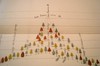
    This spectacular map presents the forest trees encountered by Whipple on his expedition for the USPRR from Fort Smith (Arkansas) to San Pedro ( actually Los Angeles, California).  The profile shows the trees and their leaves at the elevations encountered—actually the trees are graphically represented by either their shape or their leaves, each of which stand no more than ¼ inch tall.   There is a key explanation to the tree symbols at bottom left identifying 42 different trees—including the Cereus Giganteus, which first identified only a few years earlier.  There are three levels of graphical representation depicting the route containing more than 250 small images of trees.  This is a charming and informative graphical display of data, and is one of the first published efforts to share this information–it certainly seems to me that this is the first representation of the elevation at which trees in the United States and territories might be found.  Humboldt’s map is certainly earlier, and there are occasional mentions of tree regions (worldwide and in general) that can be found in the atlas to accompany von Humboldt’s Kosmos, but there is certainly nothing this large and detailed and exactly.  This is just a very cool map. 


  • Advancing Modernity, 1965: the Enormous Footprint of the UNIVAC 490 Computer

    JF Ptak Science Books LLC  Post 6

    The State of the Art in Advanced Computing, 1965

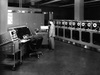
    Six-Foot-Long Blueprint for the Installation of an UNIVAC 490 at the UNIVAC Headquarters in Herkimer, NY

    UnivacThis is a rare blueprint for the layout of the new
    UNIVAC 490 computer for installation at
    the UNIVAC Utica (NY) headquarters. What
    makes this blueprint particularly interesting is that it gives an overview for
    the placement of the entire 490 system. The central attractive feature of this blueprint is the church-like feel
    of the placement of the components, with the “control console” being roughly in
    the center of the plan. The operator
    would sit at the central console facing about 25 feet worth of Uniservos, with
    the 490 itself located 18 feet away on the left; various drums (about 20 feet
    worth) were located behind the CC as were various processors and the 1004
    (card) punch. The whole plan seems to
    incorporate something like an 18×40 foot space, *plus* five exterior rooms
    (manager, confernece, tape storage, tab room, and (my favorite, service and
    repair).

    This fills me with memories of Victorian steam whistle
    designs (lovely, ornate) and water-driven mills in
    Lowell (long and narrow, utilizing river bank and available sunlight). It is a document that speaks of its time,
    elegantly portraying the size and scope of one of the leading computers of the
    day and its placement at one of its
    maker’s principal headquarters. 


  • Bean-counting in 4-space–a Census of Articles relating to Quantum Theory and Relativity

    JF Ptak Science Books LLC Post 3

    A census of articles relating to quantum theory and relativity.

    We offer for a casual amusement this search that we did on
    the FANTASTIC American Physical Society website section PROLA (Physical Review
    Online Archive) http://prola.aps.org/  We simply searched all years of the Physical
    Review for the appearance of the words “relativity” or “quantum” in the
    published titles and/or abstracts. It is
    curious to see how long it actually took for these articles to appear in this
    journal.  The PROLA page is endlessly interesting and a big help to whatever it is that we’re doing  here.

    RELATIVITY
    Physical Review articles with the word “relativity” in the
    title or abstract:

    2007
    (1,012)
    2006
    (971)
    2005
    (968)

    ·Posted by :

    ·in:


  • Alonzo Church’s Great Mathematical Logic

    JF Ptak Science Books LLC  Post 2

    Church’s Mathematical Logic is offered here in a rarely seen format–namely, the one that was produced, printed and distributed by the members of the class.  At the end of the description is an insightful story told by Albert Tucker about the mechanics of producing such a work. 

    Church,  Alonzo:  Mathematical Logic, Lectures
    by
    Alonzo Church,
    PrincetonUniversity,
    October 1935-January 1936;
      Princeton:
    ,  1936.  1st edition.    124 leaves  4to.
    Original printed wrappers.  Very good condition.     $2,000.00

    This is the Library of Congress’ copy, with the original
    mimeographed LC callcard laid in. +++Lecture notes of Church’s class taken by
    six of his graduate students (Ficken, Landau, Ruja, Singleton, Steenrod, Sweer,
    Weyl) in the fall term of 1935 at the Institute for Advanced Studies at
    Princeton.

    The following is an interview between William Aspray and
    Albert Tucker on the publication (so-called) of this work, taken from the Princeton University website on the Princeton mathematics community in the 1930’s. Needless to say, Church was an enormous
    influence, changing the entire face of mathematical logic. (It should be noted
    to that A.M. Turing came to study with Church at Princeton and particualry in
    this course in the fall of 1935.)