A Daily History of Holes, Dots, Lines, Science, History, Math, Physics, Art, the Unintentional Absurd, Architecture, Maps, Data Visualization, Blank and Missing Things, and so on. |1.6 million words, 7500 images, 4.9 million hits| Press & appearances in The Times, Le Figaro, Mensa, The Economist, The Guardian, Discovery News, Slate, Le Monde, Sci American Blogs, Le Pont, and many other places… 5000+ total posts since 2008.

  • Courses for Union Organizers (1938)

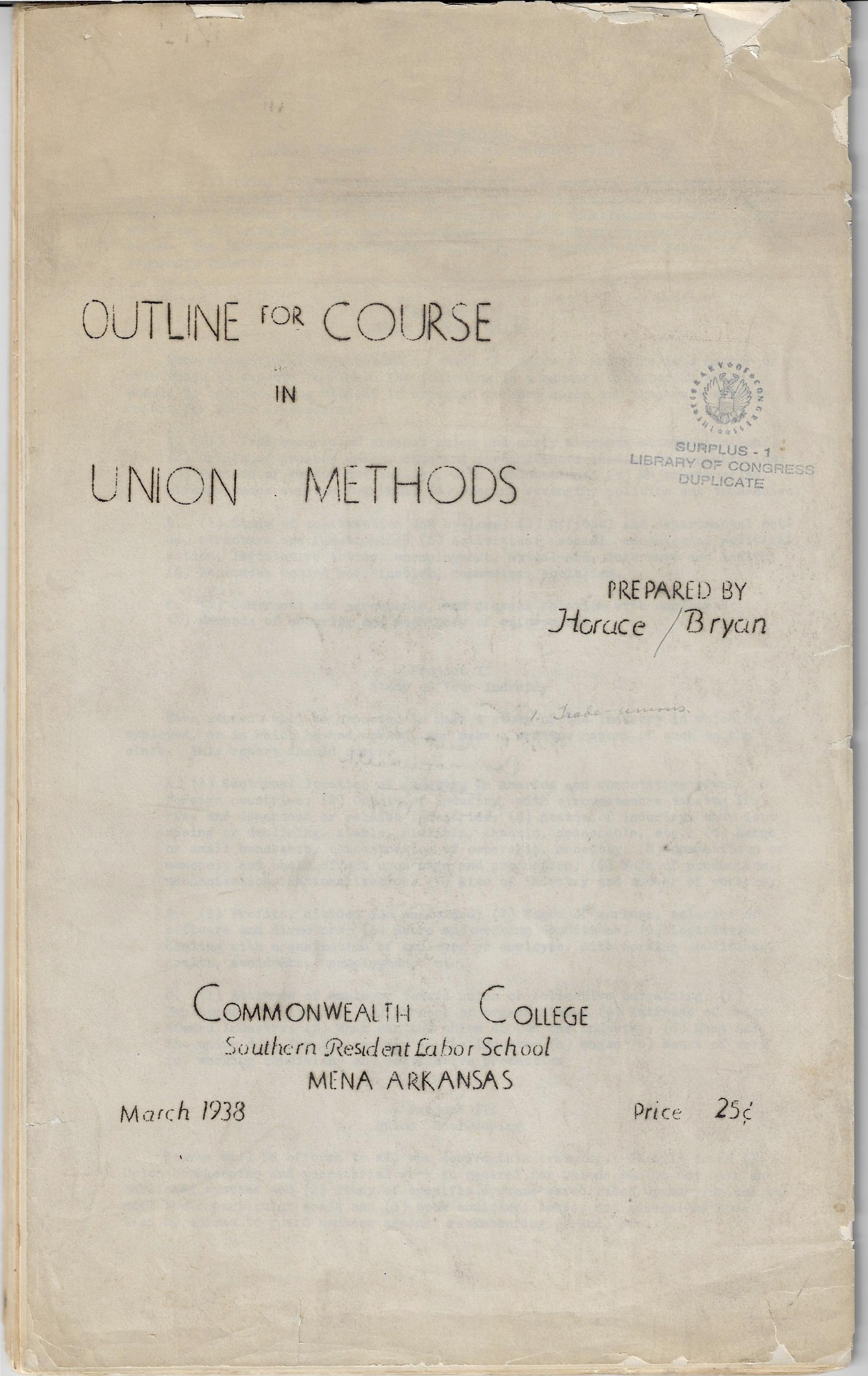
    Books  commonwealth CollegeHorace Bryan, Outline for Course in Union Methods. Printed at Commonwealth College (Southern Resident Labor School, Mena, Arkansas, March 1938. 13.5×8.5″, 35 mimeographed sheets, staple bound at top. Each sheet runs about 600 words, or 20,000 words or so for the document.   There are six sections: Union Methods, Craft and Industrial Unionism, Job Organization, Organization and Conduct of Strikes (the longest section), Collective Bargaining, and Union Activity and Law.  Condition: Good, overall. The title page is dusty and has been detached; there are several short tears here and there in the text, and the last section (each section being stapled together) is detached from the whole. Provenance: Library of Congress, with their rubber stamp surplus/duplicate on the cover, as well as the tiny “LC” perforated stamp on the bottom of page 1.   Rare–only one copy listed in WorldCat/OCLC.  250.00

    “Commonwealth College was started in 1923 to recruit and train people to take the lead in socio-economic reform and prepare them for unconventional roles in a new and different society.”–Wiki It ceased operations in 1940, and was a labor studies school in a similar standing of the Highlander Folk School, Work People’s College, Brookwood Labor College, and others. “Christian socialist the Reverend Claude Williams, “the preaching hillbilly”, then served as director from 1937 until 1940. Several people identified with Commonwealth were actively involved during this period in organizing the Southern Tenant Farmers’ Union, which aimed to unite the economic interests of tenant farmers, both black and white, and with the Congress of Industrial Organizations (CIO).”–Wiki, again. 

    ·Posted by :

    ·in:

  • New York City East River Houses, 1941


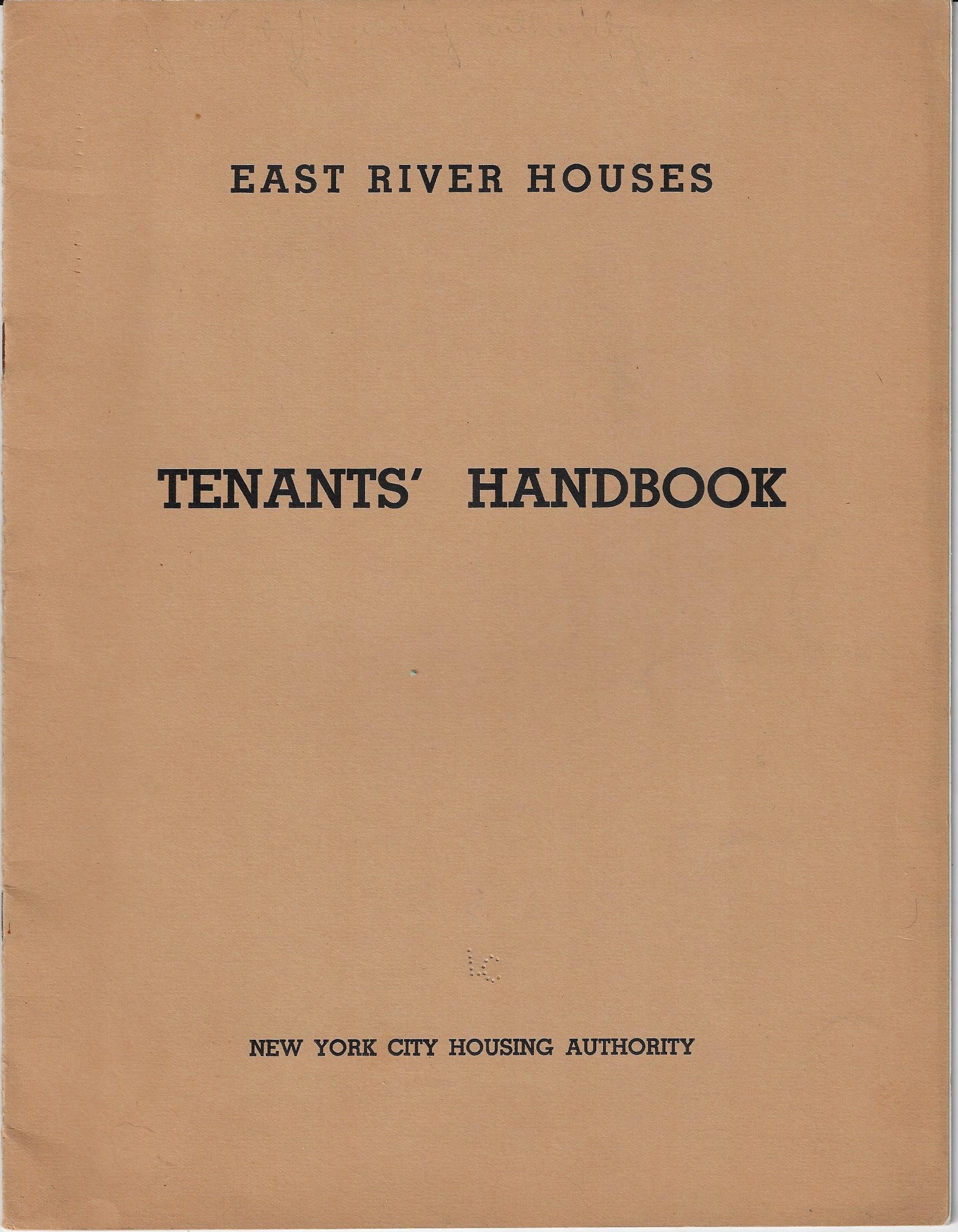
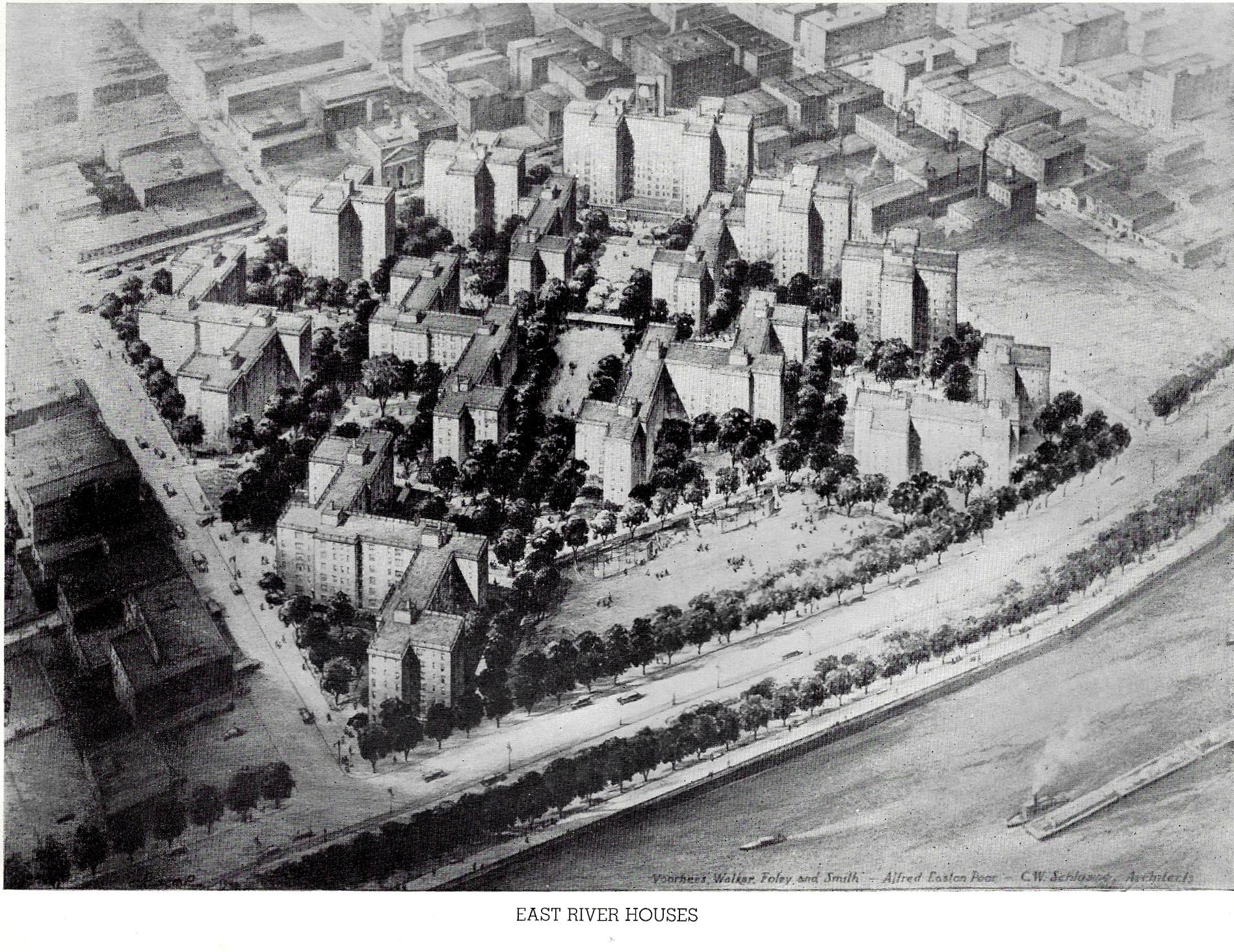
    Architecture east river housesEast River Houses Tenants’ Handbook
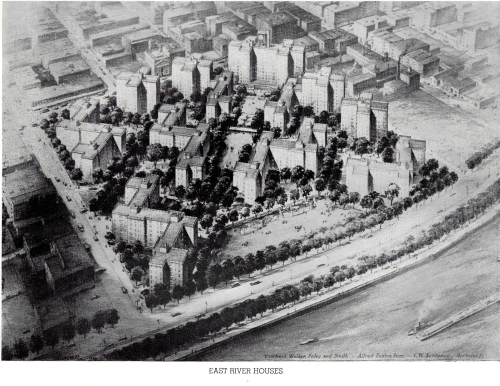
    . New York City Housing Authority, 1941. 11×8″, 15pp, including a nice bird’s-eye view of the newly opened  development. Original wrappers. A lovely copy.  Provenance: Library of Congress, with their surplus/duplicate rubber stamp on the interior of the front cover.  Also, there’s a 6mm perforated “LC” stamp on the front cover bottom.  

    WorldCat/OCLC locates only two copies, both at Harvard.  $75

    This is the handbook given to the tenants of the massive new project (11 acres, 1150 apartments, 2400 residents) and outlines the whys/wherefores of living there, including suggested bulb wattage for different locations in the apartment.  

    Architecture

    ·Posted by :

    ·in:

  • On the Future of Cities: Portland, Oregon, by Lewis Mumford (1939)

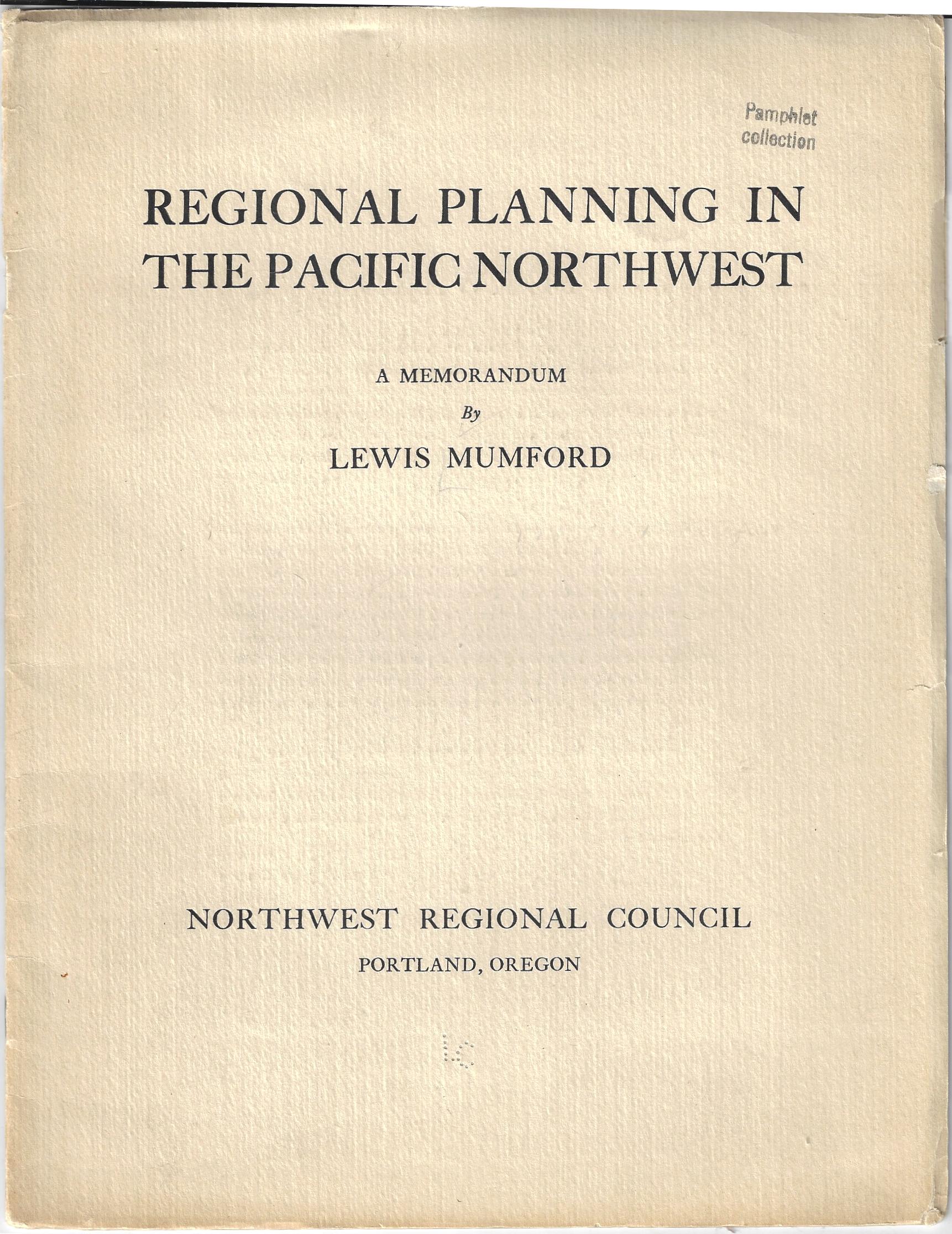
    MumfordLewis Mumford, Regional Planning ht the Pacific Northwest, a Memorandum by Lewis Mumford. Northwest Regional Council, Portland, 1939.  

    10×8″, 20pp. Original wrappers. Uncommon.

    Provenance: given by the Council to the Library of Congress; deaccessioned by the LC around 1997. 

    Condition: very nice copy. There’s a 6mm “LC” perforated stamp on the front cover, as well as a small “Pamphlet Collection” stamp as well; finally there is a LC surplus/duplicate stamp on the rear cover.  Fresh and crisp.  $125

    “Portland boosters invited Lewis Mumford and Robert Moses to Portland to comment on the growth of the city and the region in the years surrounding World War II. Mumford emphasized regionalism and a dispersal of the population to new towns, which would be satellites to the central city, strengthened as a regional centre. Moses, coming to Portland just five years later than Mumford, stressed freeway, bridge and park development, with a mind toward girding the city for post-war growth. In the mid-century, Portlanders were more inclined to adopt Moses’ suggestions, almost all of which were eventually implemented. A shift in political culture in the 1960s and 1970s, however, brought a renewed commitment to the ideals Mumford had espoused and, today, the Portland area’s regional planning agency, Metro, has adopted a Regional Framework Plan that embraces the Mumfordian vision, with an almost blatant rejection of Moses’ commitment to freeways, bridges and other types of massive investment in auto-accommodating infrastructure.” Martha J. Bianco in Planning Perspectives, 16 (2001) 95–114


    ·Posted by :

    ·in:

  • William H Smyth Was An Engineer And Social Outsider Y Visionary Who Broadly Outlined An Ideal Society Governed By Scienti

    Two contributions by William H. Smyth, who was an engineer and social (outsider-y?) visionary who broadly outlined an ideal society governed by scientists and somehow via a democratic means. Perhaps the only thing remembered about his proposal was the word he coined (in 1919) to refer to this new form of government, “Technocracy”.–(noted by Beverly H. Burris, Technocracy at Work, p. 27)

    • Technocracy, National Industrial Management, Practical Suggestions for National Reconstruction. (1931/2) 9×6, 7pp. Signed presentation copy to Miss Belle Sherwin, who at the time was president of the League of Women Voters
    • Technocracy, First and Second Series. Social Universals, 1921. 9X6”, 67pp.

    Provenance: first title, League of Women Voters and then to the Library of Congress; second title, Carnegie Institution, and then Library of Congress. Both copies are similarly bound. They each have a 6mm “LC” perforated stamp at the bottom of the front cover, and the LC surplus stamp on the rear cover. Both are Good/VG.  $195/pair

    “The technocratic movement has its origins with the progressive engineers of the early twentieth century and the writings of Edward Bellamy,[15] along with some of the later works of Thorstein Veblen such as Engineers And The Price System written in 1921. William H. Smyth, a Californian engineer, invented the word “technocracy” in 1919 to describe “the rule of the people made effective through the agency of their servants, the scientists and engineers”, and in the 1920s it was used to describe the works of Thorstein Veblen.”

    ·Posted by :

    ·in:

  • Freeman J Dyson Heisenberg Operators In Quantum Electrodynamics I Offprintthe Physical Review Vol 82 No 3 Pp 428 439

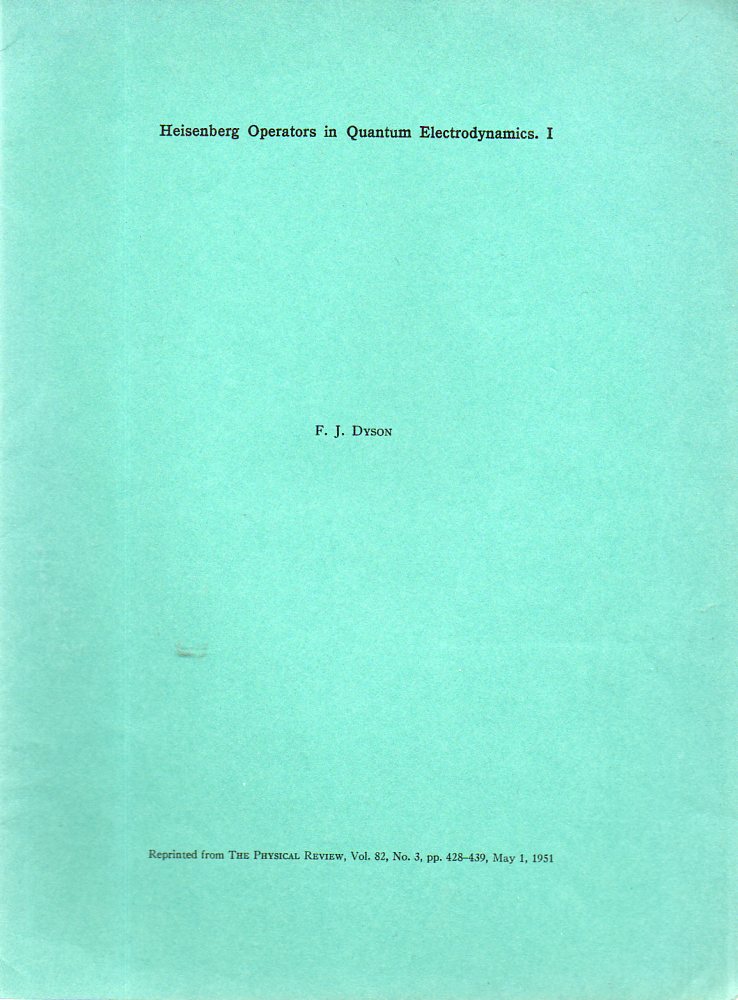
    Freeman J. Dyson.  “Heisenberg Operators in Quantum Electrodynamics, I.”  Offprint: The Physical Review, vol 82, no 3, pp 428-439, May 1, 1951.  Fine copy in the original wrappers.  $175  

    • “A new analytic continuation principle is described, by means of which the calculation of matrix elements of Heisenberg operators in any quantized field theory is greatly simplified. By a “Heisenberg operator” is meant an average over a finite space-time region of a field operator in the Heisenberg representation of the theory. The analytic continuation is made by varying the characteristic masses of the fields through real values. In this way a Heisenberg operator with the physically occurring masses is derived from an operator calculated with very large fictitious masses. In the region of large masses, where real creation of particles is impossible, the operator is identical with the S-matrix for a suitably chosen scattering problem. The calculation reduces to the calculation of an S-matrix, to which the techniques of Feynman are directly applicable. “–Physical review Journals abstract online.
    • Also see Silvan S. Schweber,  QED and the Men who Made it: Dyson, Feynman, Schwinger, and Tomonaga, p 556.

    Note: the faint white vertical stripe was made by the scanner and does not exist on the original. 

    Dyson314

    ·Posted by :

    ·in:

    —
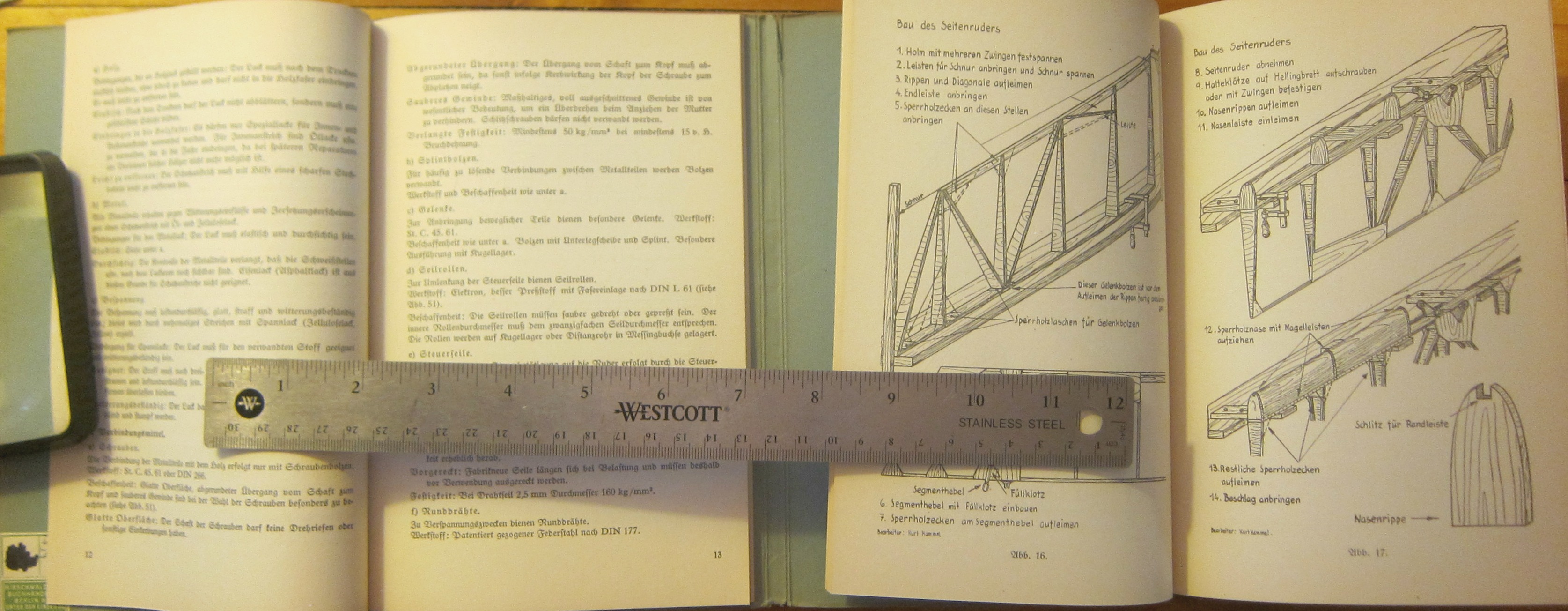
  • An Unusually-formatted Book on Aircraft Construction

    Jupp v.d. Sanden. Der Gleitflugzeugbau. Karl Lange Verlag, Duisberg, 1935.  21xc15cm, 39pp, 52 illustrated plates.  Stiff wrappers. Very Good condition. WorldCat/OCLC locates only 5 copies of this work. $95   This is a DIY for glider construction, with everything from fashioning your workplace to cutting the wing struts from large pieces of lumber to hardware selection. It seems to me as though everything you need to do the job is here. 

    This book is actually two-in-one, the whole opening first to a bi-fold, the left half opening as text and the right containing the illustrations.  The first opening reveals the book to be 21x30cm,, and when the book is fully opened it becomes about 21x520cm. It is an attractive design, though I think it is more problematic to work with the book printed in this manner. 

    Here’s the work opened:

    Aviation Sanden _1_

    ·Posted by :

    ·in:

  • A Breakthrough in Chemistry (1817)–The Isolation of Pure Morphine from Opium

    Friedrich W. Sertürner, (1783-1841).  “Über das Morphium, eine neue salzfähige Grundlage, und die Mekonsäure, als Hauptbestandteile des Opiums“, in Annalen der Physik, I/25, pp 56-90, 1817.  Offered in an individual issue of the Annalen, in the original wrappers, removed from a bound volume, 120, plus one plate.  Very Good condition. $500

    “Rational drug discovery from plants started at the beginning of the 19th century, when the German apothecary assistant Friedrich Sertürner succeeded in isolating the analgesic and sleep-inducing agent from opium which he named morphium (morphine) after the Greek god of dreams, Morpheus. He published a comprehensive paper on its isolation, crystallization, crystal structure, and pharmacological properties, which he studied first in stray dogs and then in self-experiments…This triggered the examination of other medicinal herbs, and during the following decades of the 19th century, many bioactive natural products, primarily alkaloids (e.g., quinine, caffeine, nicotine, codeine, atropine, colchicine, cocaine, capsaicin) could be isolated from their natural sources”–Atanas G.Atanasova, et alia, “Discovery and resupply of pharmacologically active plant-derived natural products: A review”, Biotechnology Advances, Volume 33, Issue 8, December 2015, Pages 1582-1614.

    “(Serturner’s) determination now of the alkaline nature of morphine marks an important step in the beginnings of alkaloid chemistry. Its isolation is the first isolation of an alkali with a vegetable origin”–Claire Parkinson, Breakthroughs, p. 264. 

    Also in this volume: Chladni, “Ueber die sprungweise gehende Bewegung mancher Feuerkugeln, nebst einigen Folgerungen”, pp 91-102  

    ·Posted by :

    ·in:

  • The Basis of Cloud Nomenclature (1805)

     “Euery Cloud engenders not a Storme.”–Shakespeare, Henry VI, Pt. 3 (1623) v. iii. 10

     “Vapour, previously unseen, makes its appearance as cloud, or mist, or fog.”–T. H. Huxley Physiogr. (ed. 2) 40  

    “But Howard gives us with his clearer mind
    The gain of lessons new to all mankind;
    That which no hand can reach, no hand can clasp,
    He first has gain’d, first held with mental grasp.
    Defin’d the doubtful, fix’d its limit-line,
    And named it fitly.—Be the honour thine!
    As clouds ascend, are folded, scatter, fall,
    Let the world think of thee who taught it all.”–Goethe, “Howards Ehrengedächtnis”, 1821

    HOWARD, Lucas. “Ueber die Modification der Wolken”, in Annalen der Physik, I/21, 10th Stuck, 1805, pp 137-159, with the original wrappers, removed from a larger bound volume. Very Good condition.  $500

    The great cloud pioneer Luke Howard (1772-1864) first published on his cloud classifications in his papers “On the Modifications of Clouds and on the Principles of their Production Suspension and Destruction being the Substance of an Essay read before the Askesian1 Society in the Session 1802-3″ in 1803, launching him from general normal obscurity into the ranks of the internationally known. He had done what Aristotle and many others down the years hadn’t–classified (his “Modifications” of the title of his 11k-word effort) the moving mountains in the sky, making him a Linnaeus/Godfather of clouds, his nomenclature quickly adopted worldwide. 

    Howard, a pharmacist/chemist/meteorologist2 invoked a Latin nomenclature for his classification, which was a very smart idea, as Latin was already Latin (as it were) and didn’t need to face the difficulties and obstructions of being translated into other languages, as was the case with the problematic Lamarckian system introduced just a year earlier which was phrased out in French and which encountered many problems in translation. Howard’s universal nomenclature and his creative and poetic descriptions following deep study and endless sketches3 created a static environment from what was seen as an impossibly dynamic flow of changes in the structure of clouds.

    According to the Dictionary of Scientific Biography (the entry written by Richard Hambyn, the only person to write a book on Howard’s naming of clouds), “…he proposed that every cloud belonged to one of three principal families, to which he had given the Latin names: cirrus (meaning “fiber” or “hair”), cumulus (“heap” or “pile”), and stratus (“layer” or “sheet”). In recognition of the essential instability of clouds, Howard also introduced a sequence of intermediate and compound modifications, such as cirrostratus and stratocumulus, in order to accommodate the regular transitions occurring between the cloud types…”

    Notes:

    1.  “Askesian”, meaning “philosophical exercise”, was “…a practically oriented and largely non-conformist group dedicated to natural and experimental philosophy”.  http://journal.sciencemuseum.ac.uk/

    2.  According to the OED, “meteorology” goes back quite a way as a word, popping up in 1563; “meteoroloician” appears in 1580, and “meteorologist” in 1683.)

    3.  “The location of many of the sketches gives us an initial hint of their Romanticism. For many years Howard traveled between London and the Lake District in order to capture the full range of what he termed ‘cloud modifications’, training himself in the notoriously difficult art of depicting clouds, of fixing them as they changed  “
    ·Posted by :

    ·in:

  • Unusual Work by Walter Elsasser

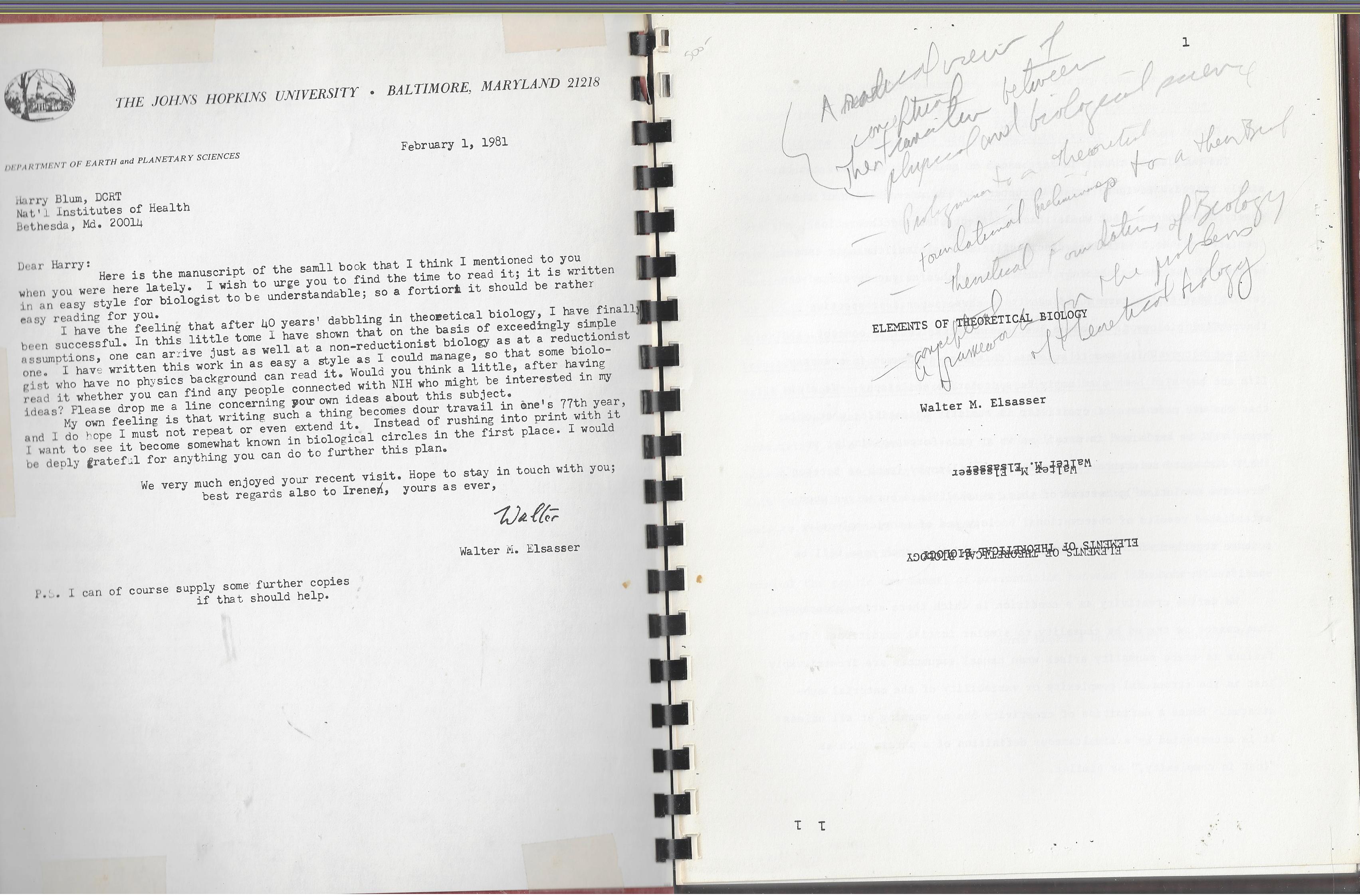
    Walter M. Elsasser, Elements of Theoretical Biology.  Offset printed, 133pp (printed back and front). GVC bound, the top two plastic links are broken. Bound in a thick manila stock paper, with home-made title taped on the cover and spine. Condition: Very Good.  $350  This work may or may not have been published–at teh very least there are no copies of it located in WorldCat/OCLC worldwide library holdings.  

    There’s a photocopied cover letter from Elsasser to the document’s recipient Harry Blum (a pioneer int he field of artificial intelligence). (“Here is the manuscript of the small book…” though not a true manuscript, it is certainly a work-in-progress

    The following biographical note is from Wiki: “Walter Maurice Elsasser (born March 20, 1904, in Mannheim, Germany; died October 14, 1991, in Baltimore) was a physicist and is considered “father” of the geodynamo theory. Long before he became known for his geodynamo theory, while in Göttingen in the 1920s, he has suggested the experiment to test the wave aspect of electrons. This suggestion of Elsasser was later communicated by his senior colleague from Göttingen (Nobel Prize recipient Max Born) to physicists in England. This explained the results of the Davisson-Germer and Thompson experiments later awarded with the Nobel Prize in Physics. In 1935, while working in Paris, Elsasser calculated the binding energies of protons and neutrons in heavy radioactive nuclei. Wigner, Jensen and Meyer received the Nobel in 1963 for work developing out of Elsasser’s initial formulation. Elsasser therefore came quite close to a Nobel prize on two occasions. Over 1946-1947, Elsasser published papers outlining the theory that the Earth’s electromagnetic field is powered by eddy currents at the planet’s liquid core. This had been developed from around 1941 onwards, partly in his spare time during his scientific war service with the US Signal Corps. In his later years, Elsasser became interested in what is now called systems biology and contributed a series of articles to Journal of Theoretical Biology. The final version of his thoughts on this subject can be found in his book Reflections on a Theory of Organisms, published in 1987 and again posthumously with a new forward by Harry Rubin in 1998….”

    Elsasser _2_

    ·Posted by :

    ·in:

  • The World’s Most Beautiful 1930’s Work on Traffic Signals (?)

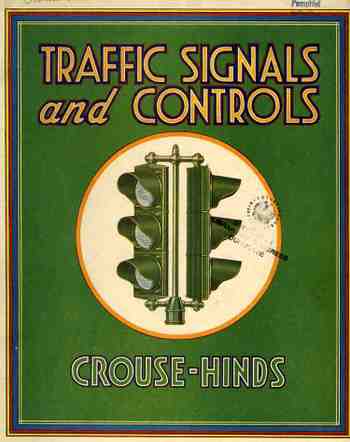
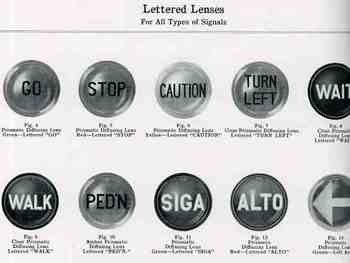
    • Is this *really* the most beautiful traffic signal catalog of the 1930’s? I don’t know, but it is (1) beautiful and (2) the only traffic signal catalog that I have ever seen.

    Crouse-Hinds Company, Syracuse, NY: Traffic Signals and Controls. Catalog 226, December 1, 1936. 27x21cm, 130pp.

    Profusely illustrated. Includes the following section, each with a printed tab divider: traffic signals, 26pp; Beacons and Flashers, 6pp; timing switches, 16pp; traffic controls, 10pp; traffic flow regulator, 10pp; accessories, 12pp; ornamental poles, 10pp; signal replacement parts, 8pp; color sequences, 12pp;and two other sections for pricing.

    Heavy stiff decorated wrapper, brass tack bound, printed on glossy papers. Very Good condition. Provenance: Library of Congress, with their surplus rubber stamp on the front cover. Scarce: WorldCat locates 2 copies of this catalog; the next iteration (#227) has 14 listings in WorldCat; after this, there are no other listings for any other editions from Crouse-Hinds. Lovely! $250

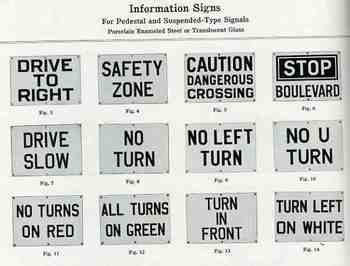
    • These images are about as basic as it gets for the common, everyday, overlooked objects from the disappeared past. They come from the Course-Hinds manufacturer’s catalog for traffic lights and other control systems called, yes, Traffic Signals and Controls, published in Syracuse (NY) in 1936. It is a beautifully designed catalog—excellent illustrations laid out perfectly on their pages, with all of the data you’d ever need to order these things for your municipality. What I find so fascinating about the images here is that they depict ubiquitous objects that today would today—given their ephemeral nature—be exceptionally difficult to find. Given this catalog, today they are not. 

    Traffic signals

    Traffic signals _2_

    Traffic signals _3_

  • Relativity, 1915

    A.W. Conway. Relativity. London, G. Bell & Sons, 1915. Edinburgh Mathematical Tracts No3.  215x140mm, 43pp. Stiff wrappers. Good/Very Good copy. $150 This is one of the earliest separately-published works on the theory of relativity. Interestingly, Einstein’s name appears only twice in the text, in this sample (below) and at the end.

    “Here we have at once a result at variance with our hypothesis  that the aether is at rest. An explanation was put forward independently by 
    Fitzgerald and Lorentz, and developed in detail by the (... the Fitzgerald- Lorentz contraction) could compensate for the difference of
    path in such a way that the null effect of the Michelson-Morley experiment would be adequately explained. The mathematical treatment
    of this theory in the hands of Lorentz and Larmor shows that all experiments on the relative motion of matter and ether must give
    approximately a null result."
    "The interpretation of these experiments received a different
    treatment from Einstein, whose paper in the " Annalen der Physik,"
    4te Folge. 17, 1905, gave rise to most of the recent theoretical investigations which are included under the head of "Relativity."
    I shall now proceed to the deduction of the fundamental equations of this theory, following the above-named paper...”

    ·Posted by :

    ·in:

    —

Recent Posts

Archives

Categories