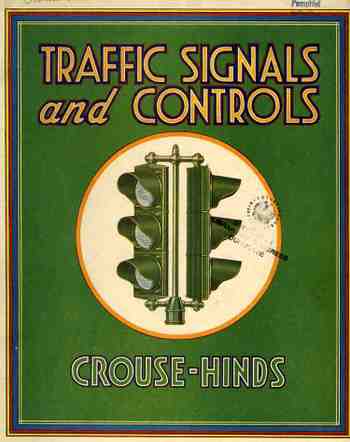
- Is this *really* the most beautiful traffic signal catalog of the 1930’s? I don’t know, but it is (1) beautiful and (2) the only traffic signal catalog that I have ever seen.
Crouse-Hinds Company, Syracuse, NY: Traffic Signals and Controls. Catalog 226, December 1, 1936. 27x21cm, 130pp.
Profusely illustrated. Includes the following section, each with a printed tab divider: traffic signals, 26pp; Beacons and Flashers, 6pp; timing switches, 16pp; traffic controls, 10pp; traffic flow regulator, 10pp; accessories, 12pp; ornamental poles, 10pp; signal replacement parts, 8pp; color sequences, 12pp;and two other sections for pricing.
Heavy stiff decorated wrapper, brass tack bound, printed on glossy papers. Very Good condition. Provenance: Library of Congress, with their surplus rubber stamp on the front cover. Scarce: WorldCat locates 2 copies of this catalog; the next iteration (#227) has 14 listings in WorldCat; after this, there are no other listings for any other editions from Crouse-Hinds. Lovely! $250
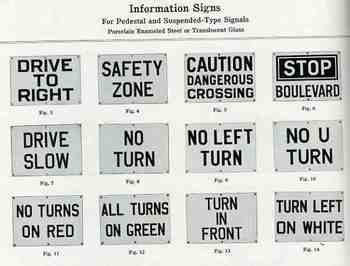
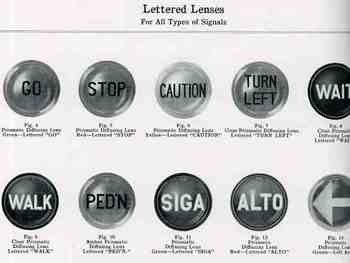
- These images are about as basic as it gets for the common, everyday, overlooked objects from the disappeared past. They come from the Course-Hinds manufacturer’s catalog for traffic lights and other control systems called, yes, Traffic Signals and Controls, published in Syracuse (NY) in 1936. It is a beautifully designed catalog—excellent illustrations laid out perfectly on their pages, with all of the data you’d ever need to order these things for your municipality. What I find so fascinating about the images here is that they depict ubiquitous objects that today would today—given their ephemeral nature—be exceptionally difficult to find. Given this catalog, today they are not.