A Daily History of Holes, Dots, Lines, Science, History, Math, Physics, Art, the Unintentional Absurd, Architecture, Maps, Data Visualization, Blank and Missing Things, and so on. |1.6 million words, 7500 images, 4.9 million hits| Press & appearances in The Times, Le Figaro, Mensa, The Economist, The Guardian, Discovery News, Slate, Le Monde, Sci American Blogs, Le Pont, and many other places… 5000+ total posts since 2008.

  • The Background of the Big Bang (1948)

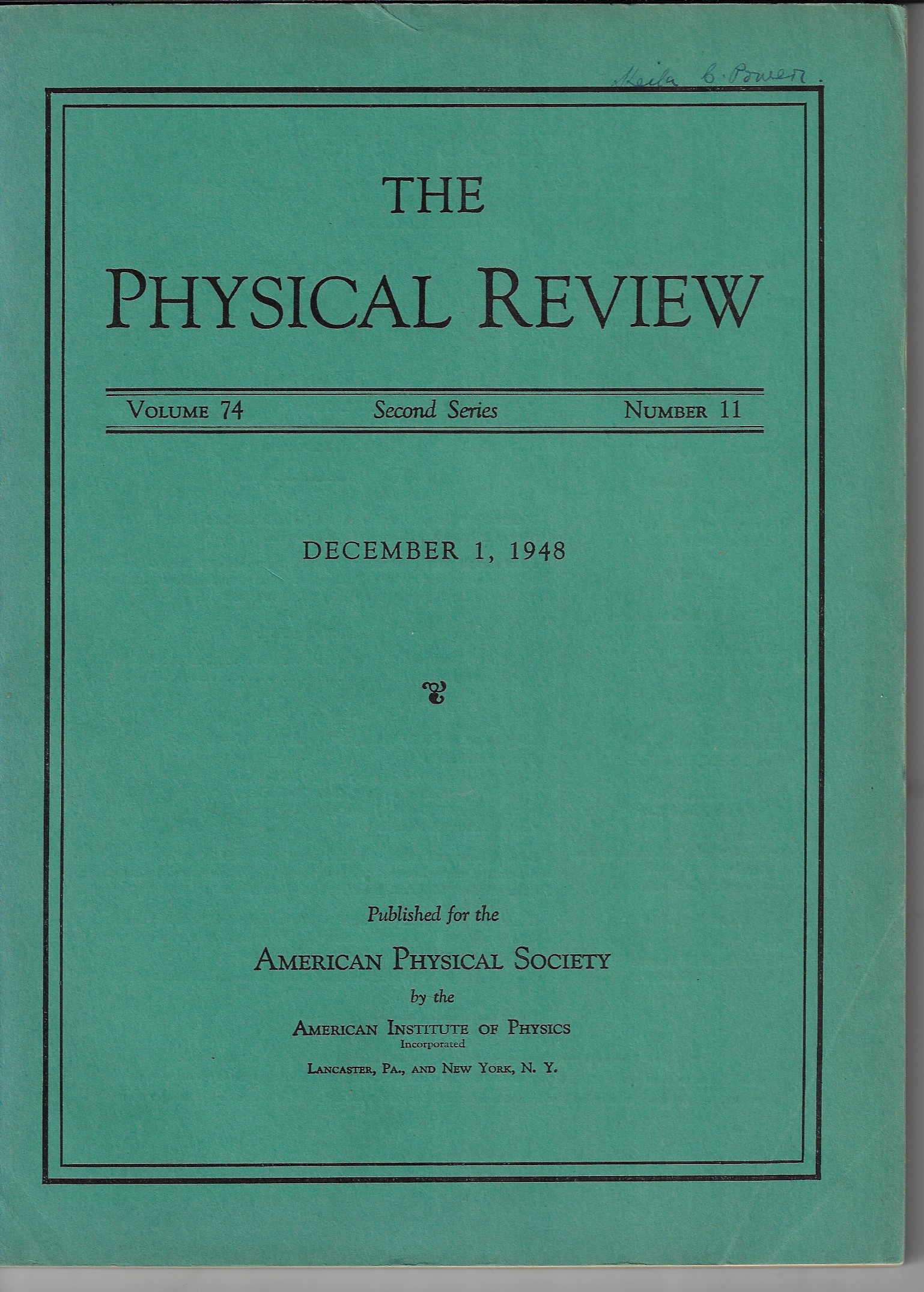
    PR 1948 DW AlpherRalph Alpher, “A Neutron-Capture Theory of the Formation and Relative Abundance of the Elements”, in Physical Review 74 No. 11 pp. 1577–1589, December 1, 1948.Original wrappers; old fold in the corner-right-bottom of the front cover, a near-fine copy. $250

    This is Alpher’s doctoral dissertation touching on some of the thinking  for the great αβγ Alpher/ Bethe/ Gamow paper, “The Origin of the Chemical Elements”, (Physical Review 73 (1948), 803, also available from this store] in which Alpher and Gamow suggested that the light elements were created by hydrogen ions capturing neutrons in the hot, dense early universe.”–Wikipedia (“Big Bang Nucleosynthesis”)

    “From 1944 through 1955, he was employed at the Johns Hopkins University Applied Physics Laboratory… In 1948 he earned his Ph.D. in Physics with a theory of nucleosynthesis called neutron-capture, and from 1948 onward collaborated with Dr. Robert C. Herman (Ph.D. in Physics, 1940, Princeton University, under E. Condon), also at APL, on predictions of the Cosmic Microwave Background Radiation.”—Wikipedia (“Ralph Alpher”)

    • The copy of Sheila C. Power [Tinney], with her name (signed?) at top right front cover. 

    From the Royal Irish Academy: “Erwin Schrödinger described [Power] as among the ‘best equipped and most successful of the younger generation of theoretical physicists in this country’,”

    (“Power”)…went to the University of Edinburgh to work on a doctorate [under Max Born]…and worked with him on the stability of crystal lattices, and was awarded a Ph.D. by Edinburgh in 1941. She is believed to be the first Irish woman to receive a doctorate in the mathematical sciences….In 1941 she was appointed to an assistant lectureship in UCD, at the age of 23, and also held a part-time fellowship in the Dublin Institute for Advanced Studies (DIAS). A year later, she was the only woman attending an international colloquium in the institute, at which the Nobel prize winner Paul Dirac lectured on quantum electrodynamics. From September 1948 to June 1949 she took leave of absence to go on a fellowship to the Institute for Advanced Study in Princeton, New Jersey, where she worked on aspects of nuclear physics…”–https://www.ria.ie/news/dictionary-irish-biography-public-engagement-stem-education/100th-anniversary-birth-sheila
    ·Posted by :

    ·in:

    —
  • Julian Schwinger Quantum Electrodynamics Ii Vacuum Polarization And Self Energy In Physical Reviewvol 75 No 4 Feb


    PR 1949 DW SchwingerJulian Schwinger, Quantum Electrodynamics II. Vacuum polarization and self-energy. In: Physical Review, Vol. 75, No. 4, February 15, 1949 pp 651-679. Original wrappers. Fine copy. $200

    This is the second paper (of three) of Schwinger’s great and Nobel Prize effort (shared with Richard Feynman and Sin-Itiro Tomonaga in 1965 “for their fundamental work in quantum electrodynamics, with deep-ploughing consequences for the physics of elementary particles” ) in the renominalization of QED.

    • The copy of Sheila C. Power [Tinney], with her name (signed?) at top right front cover. 

    From the Royal Irish Academy: “Erwin Schrödinger described [Power] as among the ‘best equipped and most successful of the younger generation of theoretical physicists in this country’,”

    (“Power”)…went to the University of Edinburgh to work on a doctorate [under Max Born]…and worked with him on the stability of crystal lattices, and was awarded a Ph.D. by Edinburgh in 1941. She is believed to be the first Irish woman to receive a doctorate in the mathematical sciences….In 1941 she was appointed to an assistant lectureship in UCD, at the age of 23, and also held a part-time fellowship in the Dublin Institute for Advanced Studies (DIAS). A year later, she was the only woman attending an international colloquium in the institute, at which the Nobel prize winner Paul Dirac lectured on quantum electrodynamics. From September 1948 to June 1949 she took leave of absence to go on a fellowship to the Institute for Advanced Study in Princeton, New Jersey, where she worked on aspects of nuclear physics…”

    https://www.ria.ie/news/dictionary-irish-biography-public-engagement-stem-education/100th-anniversary-birth-sheila
    ·Posted by :

    ·in:

    —
  • Viktor Weisskopf On The Self Energy And The Electromagnetic Field Of The Electron In Physical Review 56 No 1 Pp 72

    PR 1939 DW WeisskopfViktor Weisskopf, “On the Self-Energy and the Electromagnetic Field of the Electron”, in (Physical Review 56 No. 1 pp. 72–85, July 1, 1939 . Also bound in the same issue with:  Philip Abelson, “Investigation of the Products of the Disintegration of Uranium by Neutrons”, pp 1-9. In the bi-monthly issue of pp 1-124.  Original wrappers, generally in VERY GOOD condition except that there has been some wear along the top end of the spine which in two 10mm spots is all the way through the paper spine covering.  $200

    “Weisskopf demonstrates that QED diverges at all levels of perturbation theory.”  “Weisskopf was a major figure in the golden age of quantum mechanics, who made seminal contributions to the quantum theory of radiative transitions, the self-energy of the electron, the electrodynamic properties of the vacuum, and to the theory of nuclear reactions.”– “Vicktor Weisskop 1908—2002”  by J. David Jackson and Kurt Gottfried, in Memoirs of the National Academy of Sciences.

    This paper reproduced in full as paper 6 in Julian Schwinger’s Selected Papers on Quantum Electrodynamics. See also Jo Bovy (Ghent University), “The Self-energy of the electron: A Quintessential problem in the development of QED” online.

    ·Posted by :

    ·in:

  • Eugene Wigner On The Mass Defect Of Helium Physical Review 43 No 4 Pp 252 257 15 February 1933 And With By Milt

    PR 1933 Wigner DWEugene Wigner , “On the mass defect of helium”, Physical Review 43 No. 4 pp. 252-257, 15 February 1933. AND WITH:  by Milton G. White and Ernest O. Lawrence , “Disintegration of Boron by Swiftly Moving Protons” in the same issue, pp. 304-305. Original wrappers.  Beautifully and expertly rebacked (quite seamless) with a plain paper perfectly matching the wrapper color. Wrapper edges are slightly sunned.  $195

    • “Eugene Wigner discovered that the force binding nucleons together is weak when the distance between them is great but strong when they are close together in the atomic nucleus. White and Lawrence confirm the first nuclear reaction (carried out by Cockcroft and Walton earlier in the year) with another element, Boron.”–David Wenner, author of A History of Physics, the Wenner Collection.     

    See also: Wigner, “The Neutron: The Impact of Its Discovery and Its Uses”, part of  Wigner Collected Works,  volume B / 7.

    ·Posted by :

    ·in:

  • With a Rare semi-Utopian View of the Arkansas Valley

    Theodore W. Gulick, Commercial Value of Arkansas River Improvement in Arkansas and Indian Territory, Government and Commercial Reports.  Published by the Muskogee Commercial Club, Muskogee, Indian Territory, ca. 1907.  8.5” x 6”, 17pp. Original wrappers, detached. Provenance: Bureau of Corporations, dept of Commerce, 1907; Library of Congress, with their surplus stamp. Good copy. SOLD

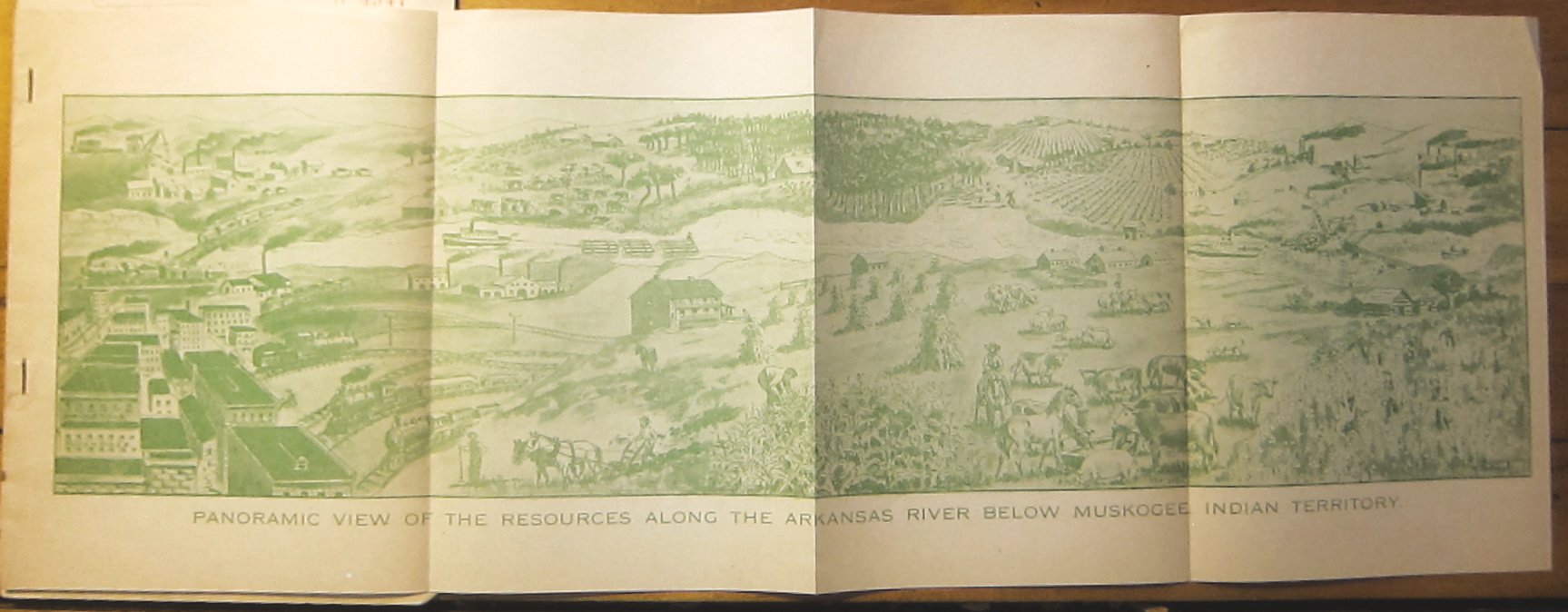
    Muskogee panorama

    Includes a folding map “Commercial Map of the Arkansas River Valley (26″x8.75”, which has been repair along the length of three folds.

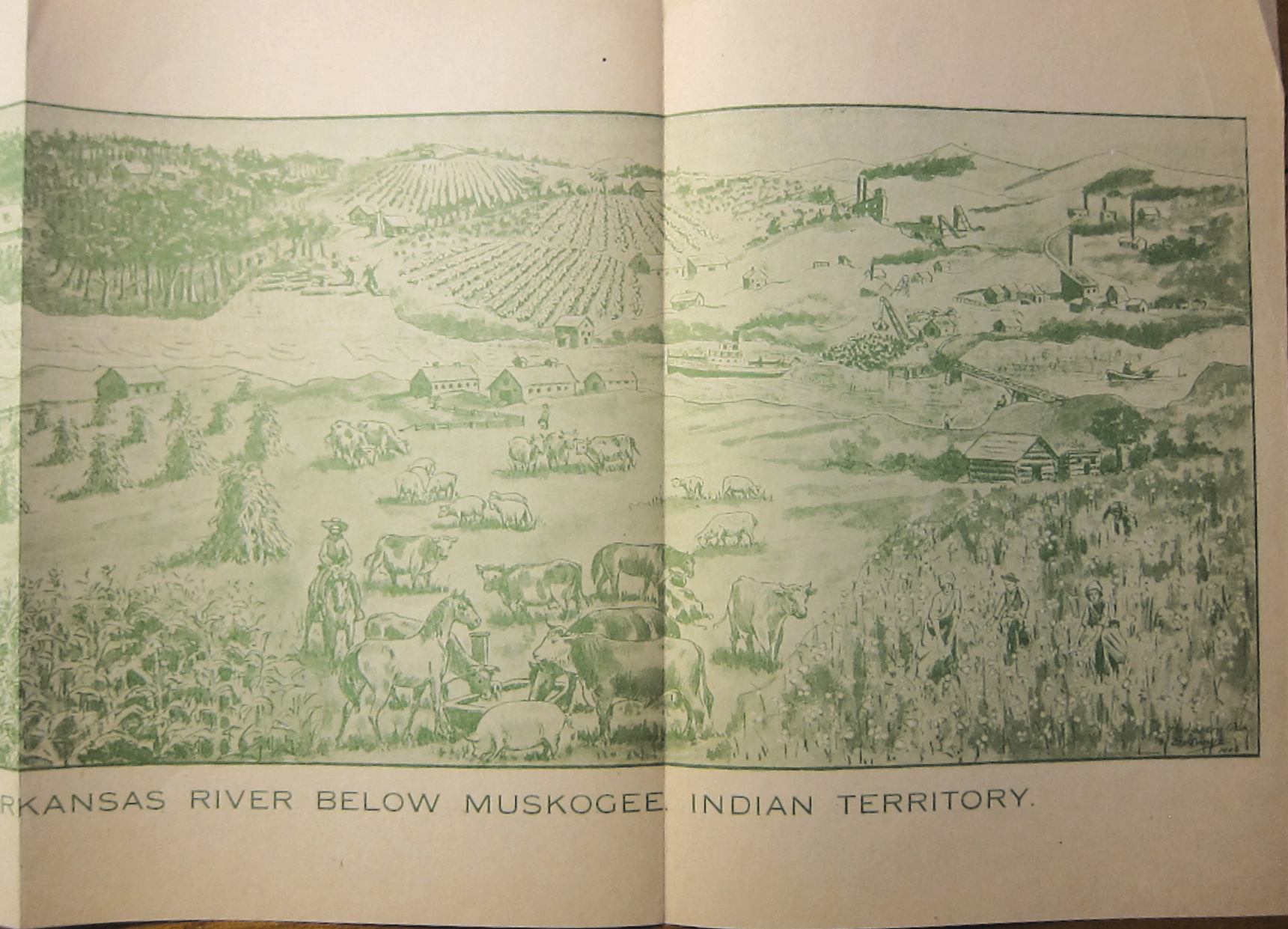
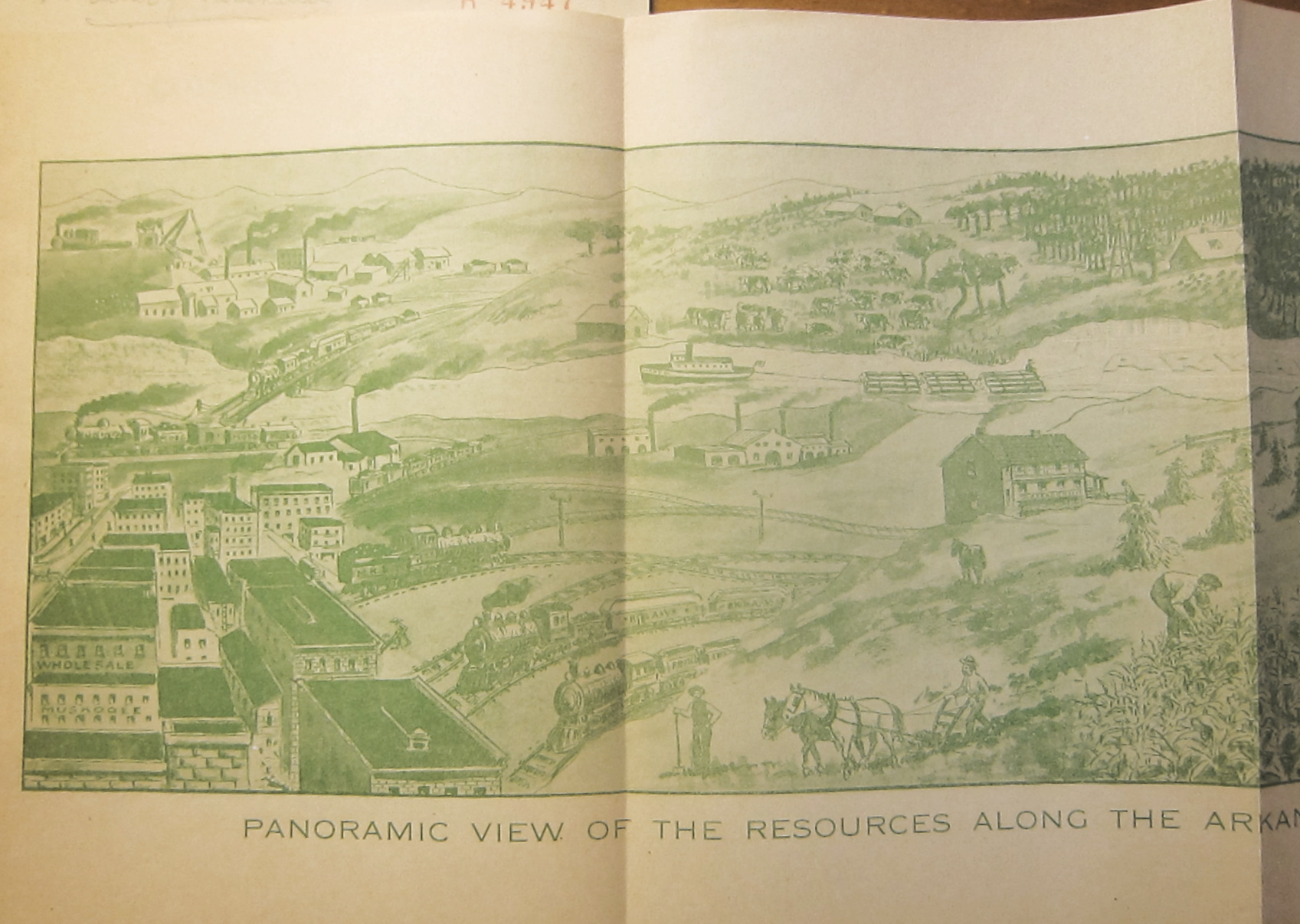
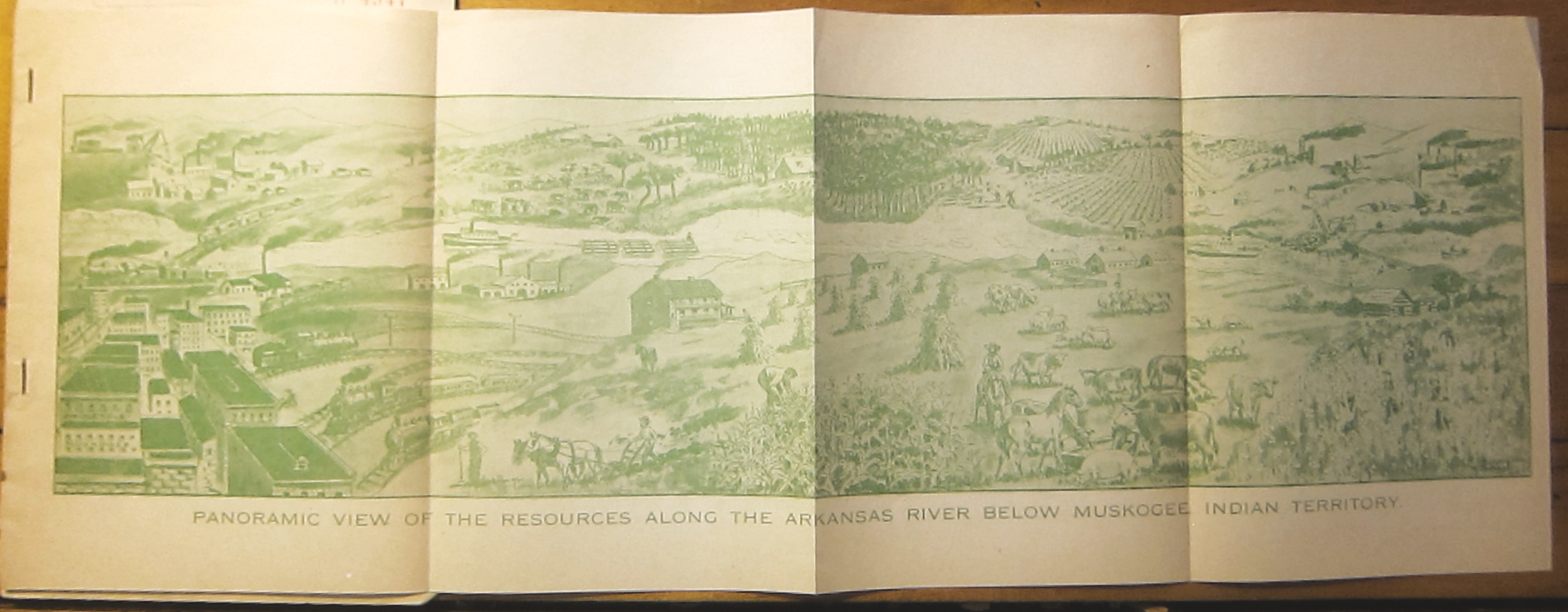
    ALSO: includes an 8″x22″ view, “Panoramic View of the Resources along the Arkansas River Below Muskogee Indian Territory”, printed in green. It shows the best of all possible worlds–a green utopia–flourishing along the Arkansas River.  

    I cannot find this title in the usual places, nor are there any references to it in WorldCat/OCLC, nor is there any mention of the panoramic view or the map. I’d say this was scarce.

    “…Theodore W. Gulick [d. 1913], an early newspaper editor. He is credited with establishing the Muskogee Evening Times which was Muskogee s first daily newspaper. He is also credited with reorganizing the Muskogee Commercial Club into the Chamber of Commerce and served as an officer of the Chamber for many years.”–Muskogee Phoenix

    There must’ve been one of the land rushes in the 1900-1909 period as the Muskogee as the population exploded from 4,500 to 25,000.

    Muskogee Pano right
    Muskogee Pano right

    ·Posted by :

    ·in:

    —
  • A Miserable Story Demeaning Frederick Douglass

    History of the General Assembly of North Carolina, January 9-March 15, 1895, inclusive. E.M. Uzzell, Raleigh, 1895.  160pp. Original wrappers. Front wrapper chipped. The pamphlet was printed on a cheap newsprint, which has not fared well over the years—hence the chipping and general fragility. The book is intact but if you turn the pages without care they will indeed tear.  Provenance: Duke University sent this to the Library of Congress in 1932, with the LC releasing it 65 years later. There is a LC surplus stamp on rear cover.  Not a pretty copy, but only 6 copies are located in WorldCat/OCLC, which was a surprising find. $125

    Well, this title sounds as dry as the pamphlets dry and brittle pages, but this is not the case—the thing is well written, and done so in a narrative style, a bit breezy and familiar but still getting the story across.

    There are some interesting finds in the daily comings and goings, several of which are truly remarkable. Take, for example the terrible entry entitled  “The Douglass Infamy”—this discusses over a few pages the “humiliation of the white people of the south” caused by the General Assembly of the legislature adjourning out of respect for “the miscegentionist Fred. Douglass, whose death occurred during the session”.  It gets worse, citing N.C. members of the NY Cotton Exchange being jeered the next day by other members over the action taken by the legislature. So deep was the disgust that it was reported that significant parties denied that it happened, and then tried to explain it away once the event was shown to be true.  The was a significant amount of hateful nonsense in this entry, railing against Douglass, who in their view wrote terrible untruths about white people and who was “also guilty of miscegenation”, having married a white woman. “Republican domination meant, in one form or another, negro [sic]domination. The Douglass incident reveals the animus of that party and is a menace of its aims”.

    “Thoughtful Democrats who have looked beyond the present moment and who have preferred to bear such party ills as they had, if such there were, rather than fly to others they knew not of, predicted that the fusion with Republicans of any considerable number of those who were formerly Democrats meant Republican domination, and that Republican domination meant, in one form or another, negro [sic] domination. The Douglas incident reveals the animus of that party and is a menace of its aims. (After the official declaration of the Fusionists, the General Assembly did not adjourn in honor of the birthday of Robert E. Lee, a legal holiday, but did adjourn out of respect for the memory of Frederick Douglas.)”

    ·Posted by :

    ·in:

  • Rare Italian Futurist Publication, 1934

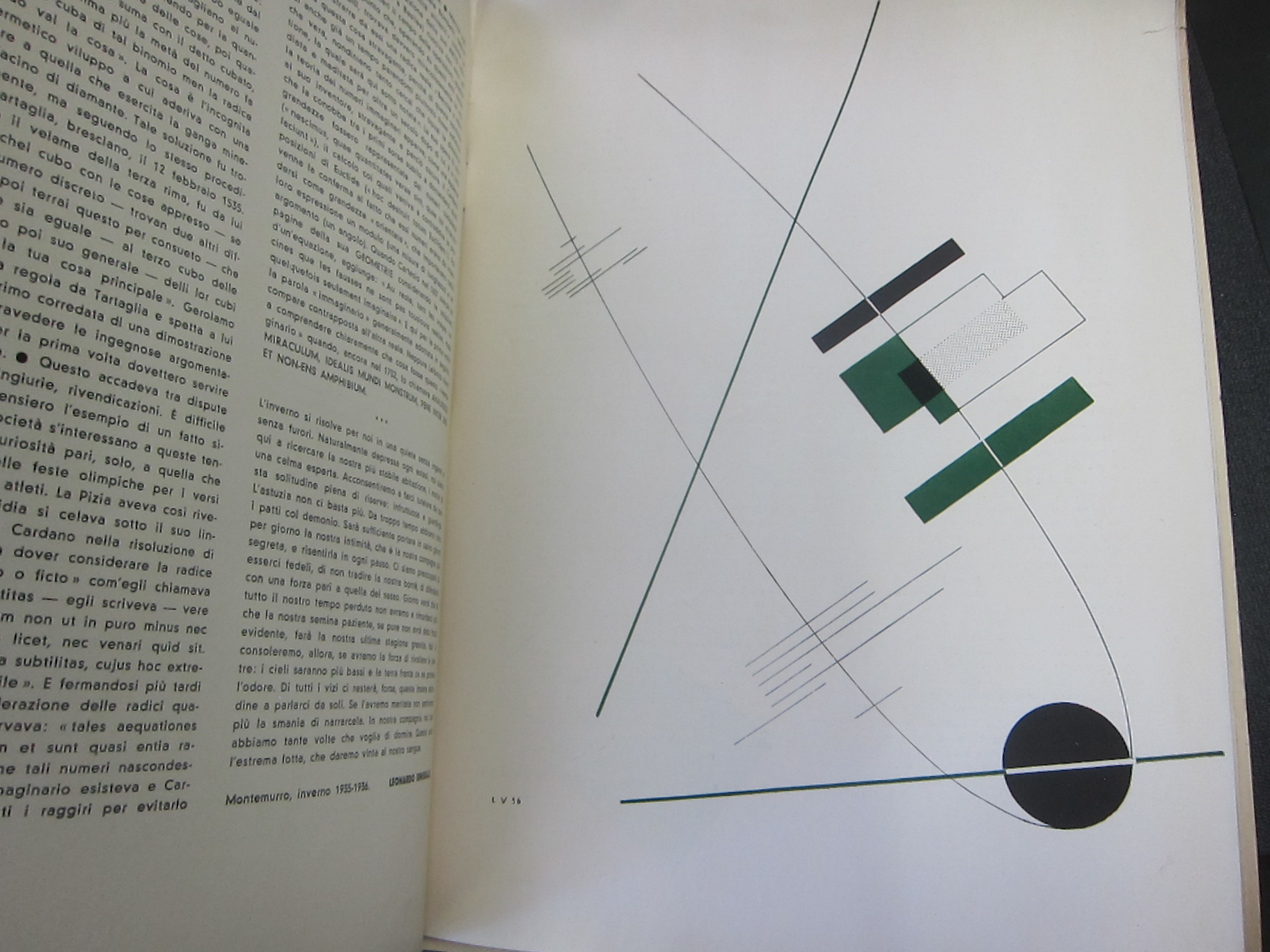
    (VERONESI, Luigi.) Sinisgalli, Leonardo. [On last page: “Quaderno di geometria. Testo di Leonardo Sinisgalli. Tavole di Luigi Veronesi. (Estratto dalla rivista”,  Campo Grafico, Numeri 9-10-11-12.)] 1934

    345x245mm; 8, (2)pp., 6 color plates (printed in green and black). Original wrappers. $350

    Only one copy located in WorldCat/OCLC.

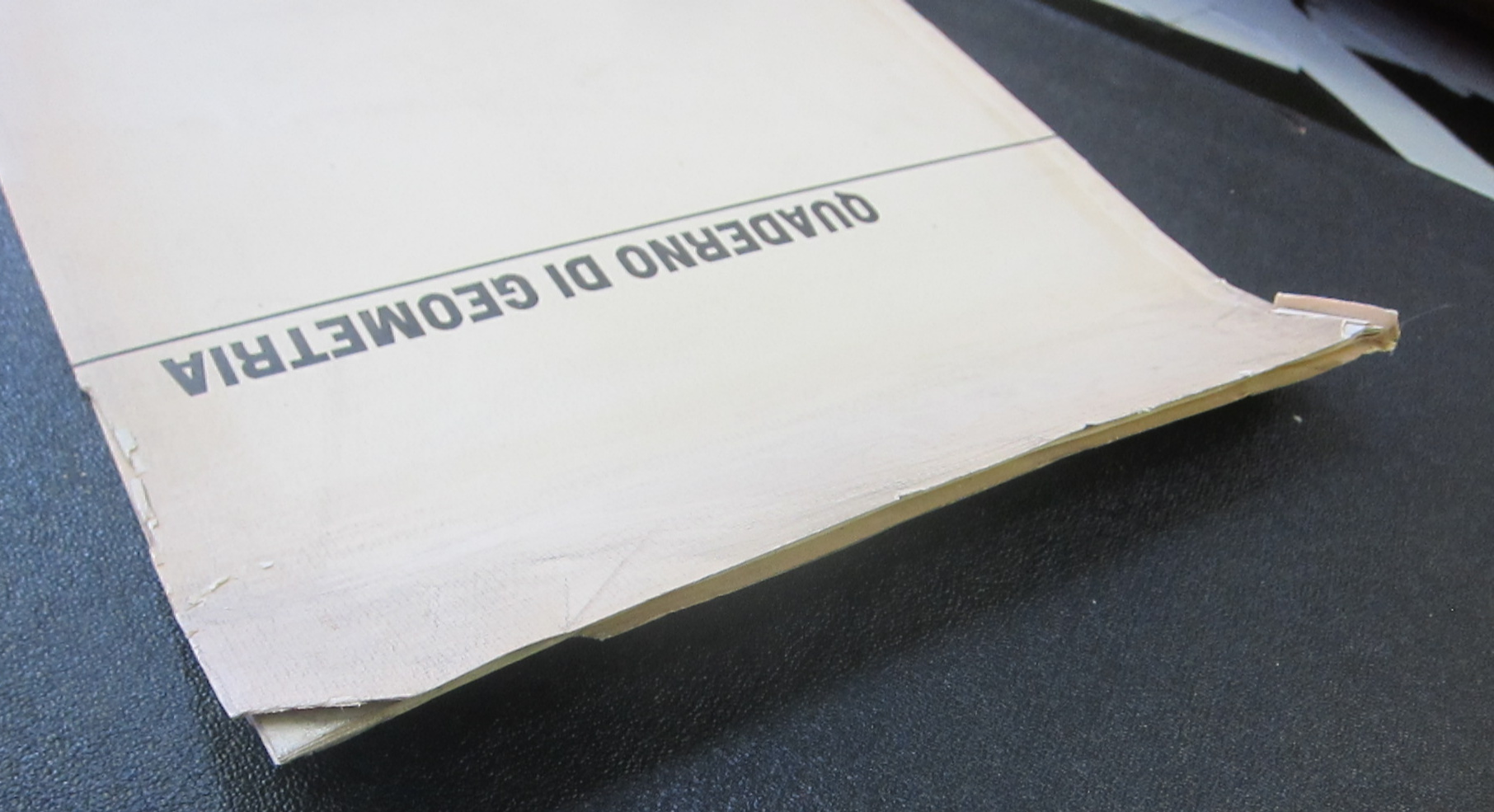
    • Condition: this is a challenged copy. The cream-colored wrappers are dusted and dirty, with chips along the edges here and there. Also the top 15% or so has an old bend in it (see photos). GOOD copy, at best. 

    Provenance: this is a gift made by the artist Veroesi to the Library of Congress (so noted in pencil on the back of the title page and dated 1937). Also, someone has written the aritst’s address on the bottom inside of the front wrapper. This is one of 90,000 pamphlets (“the Pamphlet Collection”) that I purchased of the Library of Congress some time ago.


    Italian future _7_

    ·Posted by :

    ·in:

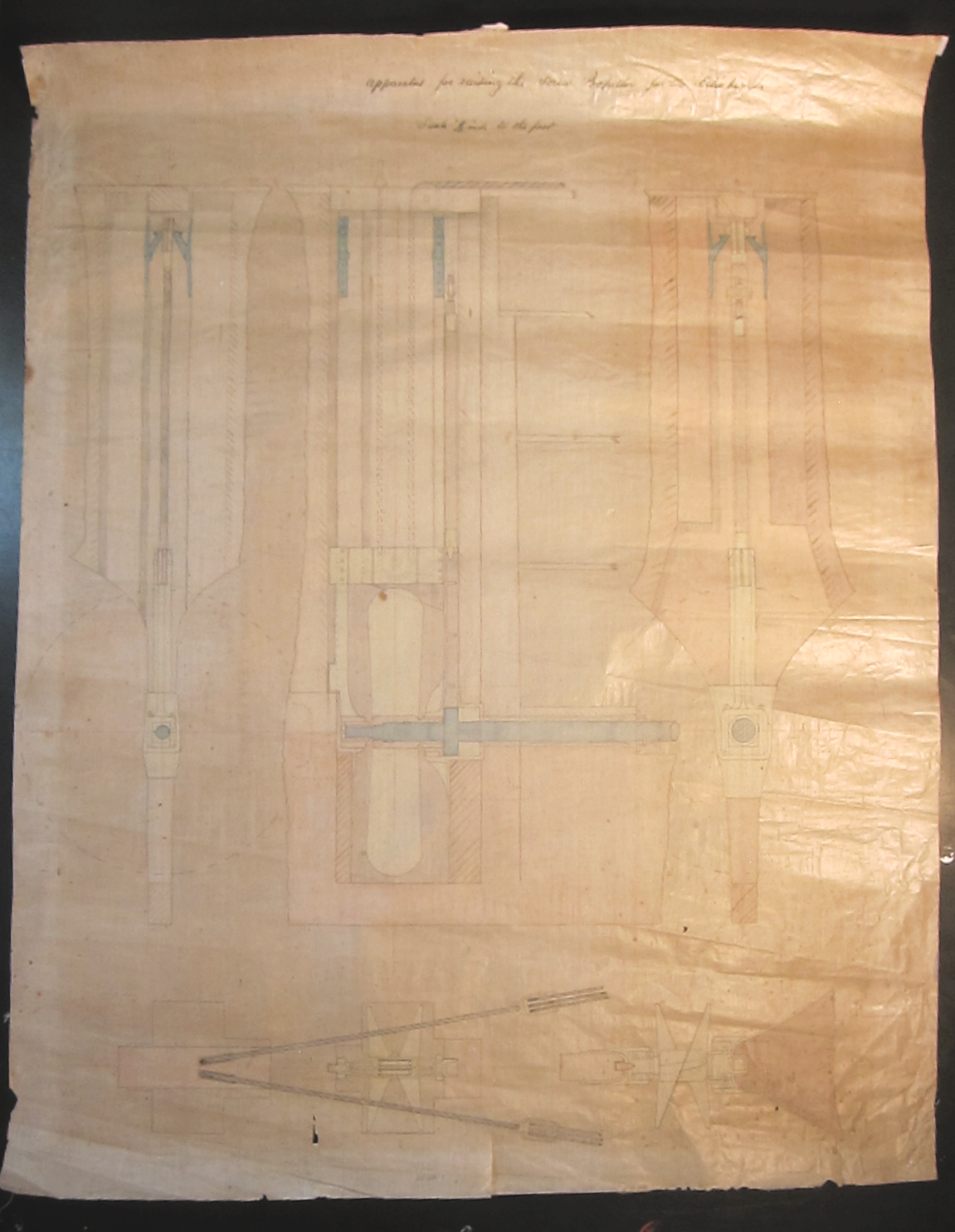
  • Original Drawing for Raising a Screw Propeller of the HMS Esk (1854)

    Original drawing on oilskin of a device used to raise the propeller of the HMS Esk, an early-use example of a modern screw propeller, 1854. 

    32×24″, in original color. There are some nicks and short tears, but in overall GOOD (or better) condition. $2250

    Esk full“HMS Esk was a 21-gun Highflyer-class screw corvette launched on 12 June 1854 from J. Scott Russell & Co., Millwall…She served in the Mediterranean Station between 1854 until 1856 and was in the Black Sea during the Crimean War. She was part of the East Indies Station between 1856 until 1863, where she participated in Second Opium War at Canton. Afterwards she went to the Australia Station, where she participated in the attack on Gate Pā during the Tauranga Campaign in New Zealand. Her commanding officer Captain John Fane Charles Hamilton was killed in the attack. She left the Australia Station on 2 July 1867.”–wikipedia

    The words of the Admiralty Order stated she should be “a wood screw vessel complete of Highflyer’s… In common with other screw corvettes of the time, she was envisaged as a steam auxiliary, intended to cruise under sail with the steam engine available for assistance. Commensurately she was provided with a full square sailing rig. Her oscillating two-cylinder inclined single-expansion steam engine…drove a single screw.”

    –28 October 1854-25 February 1856: commanded  by Captain Thomas Francis Birch in the Baltic during the Russian War.
    –1 March 1856-26 June 1861: commanded by Captain Robert John le Mesurier McClure, East Indies and China (Pacific).
    –22 May 1863-29 April 1864: commanded by Captain John Fane Charles Hamilton, New Zealand.


  • Geronimo, Finally Defeated by Miles and the Sun (1886)

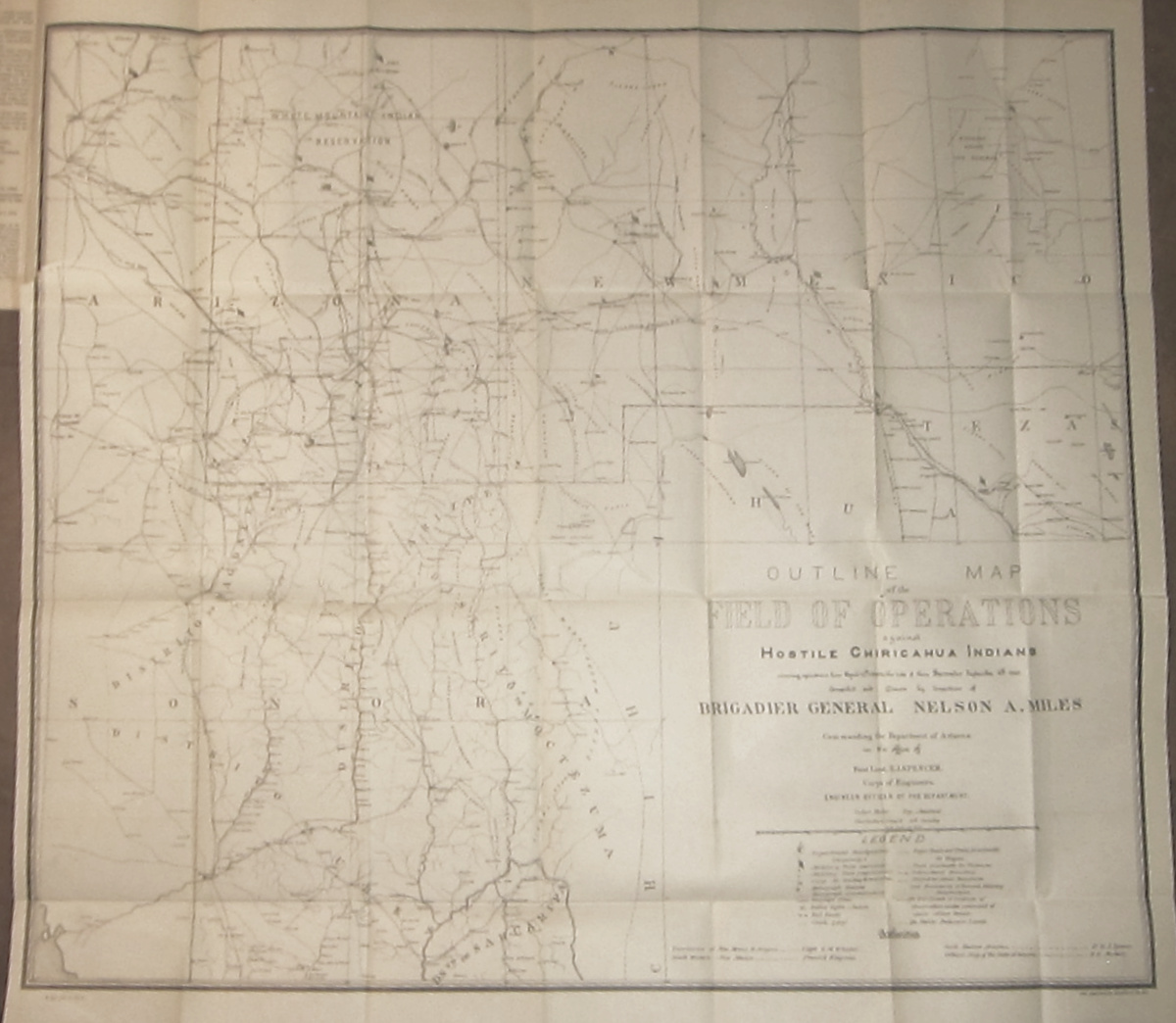
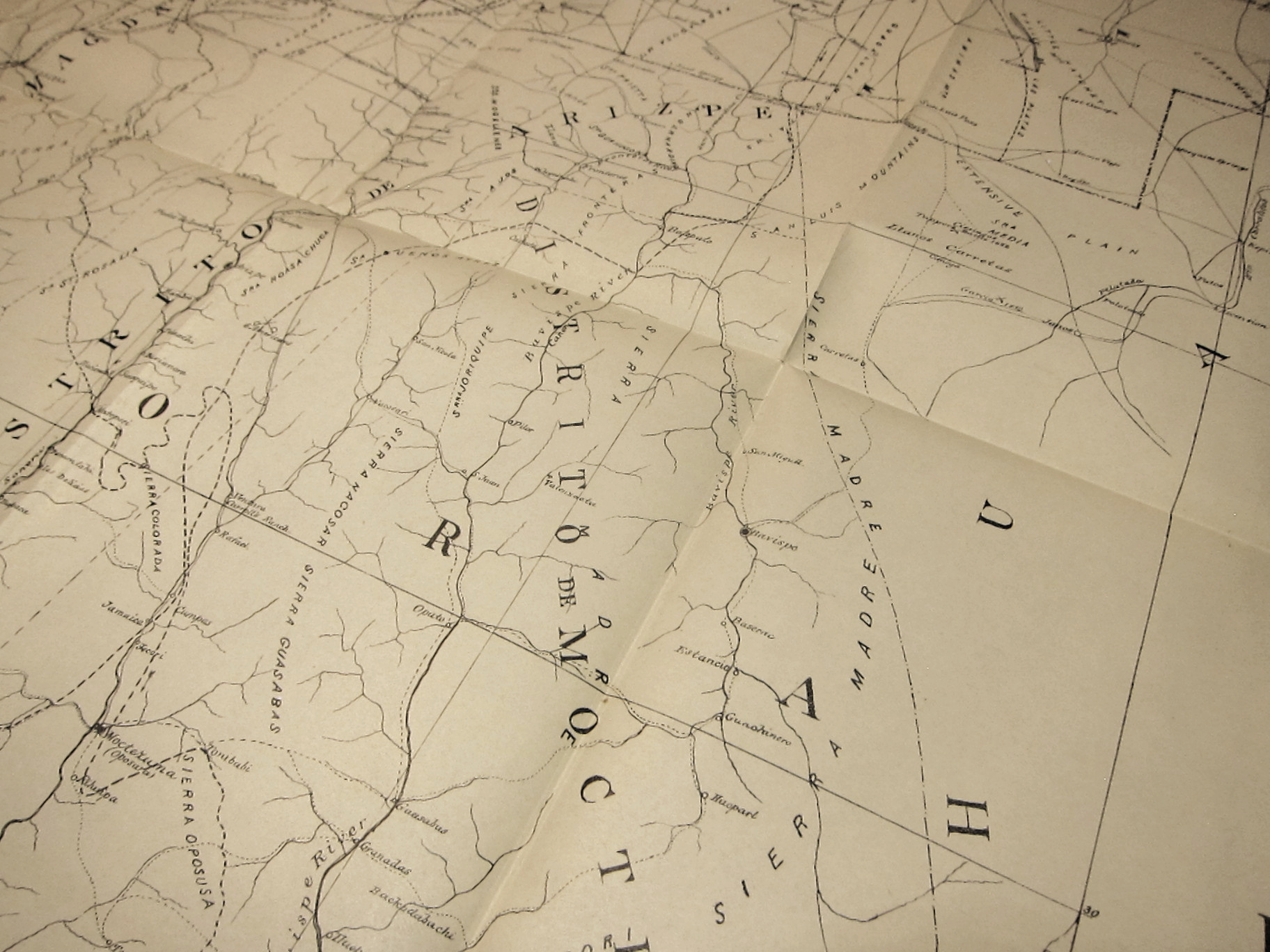
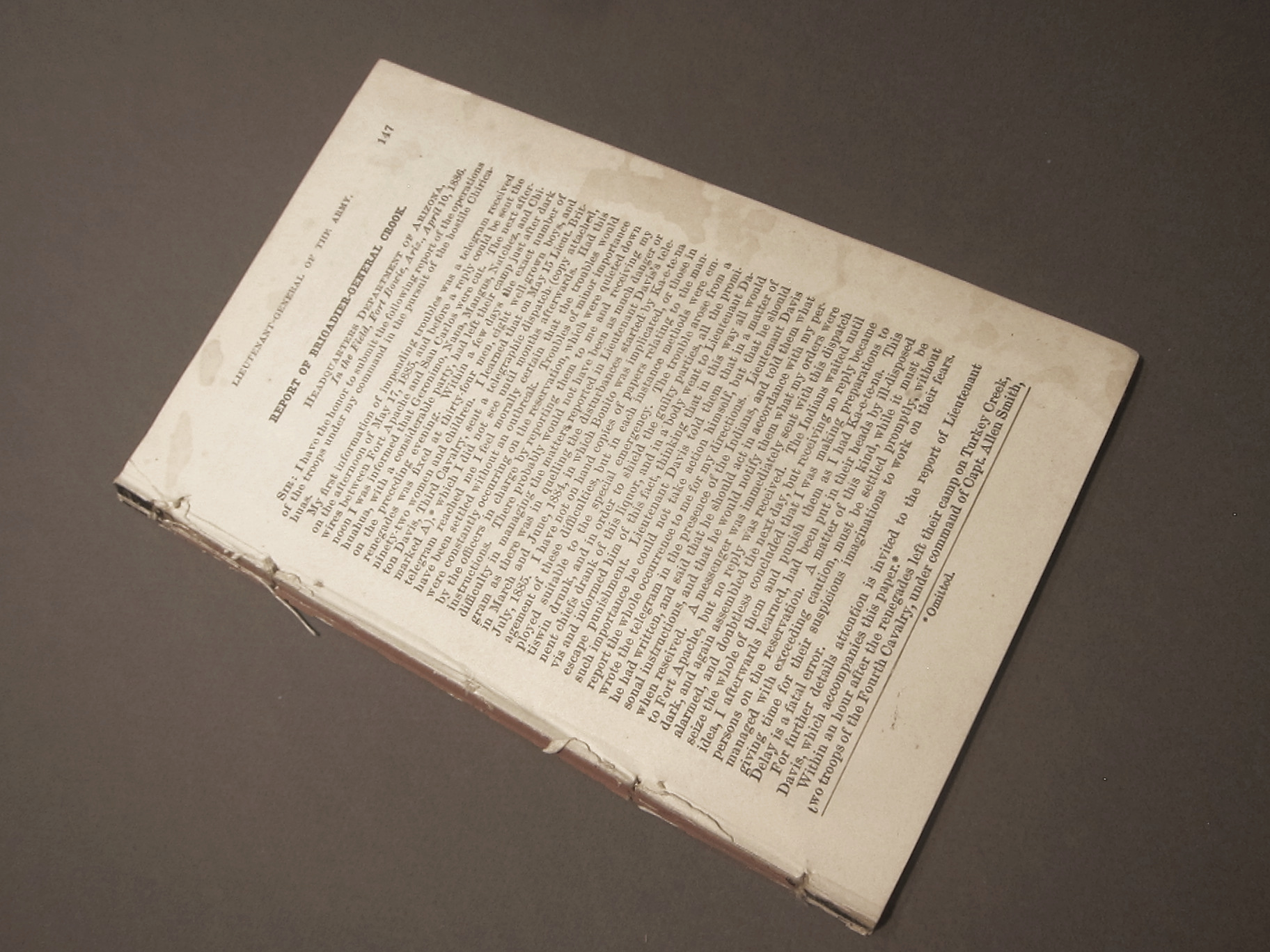
    Report of Brigadier-General Crook. Headquarters, Department of Arizona, in the Field, Fort Bowie, Ariz., April 10, 1886. Washington D.C., War Department publication, 1886, pp 147-196. Disbound from larger volume, with last signature disbound (but present) from this report.  Contains the following terrific map:

    Geronimo _1_ full
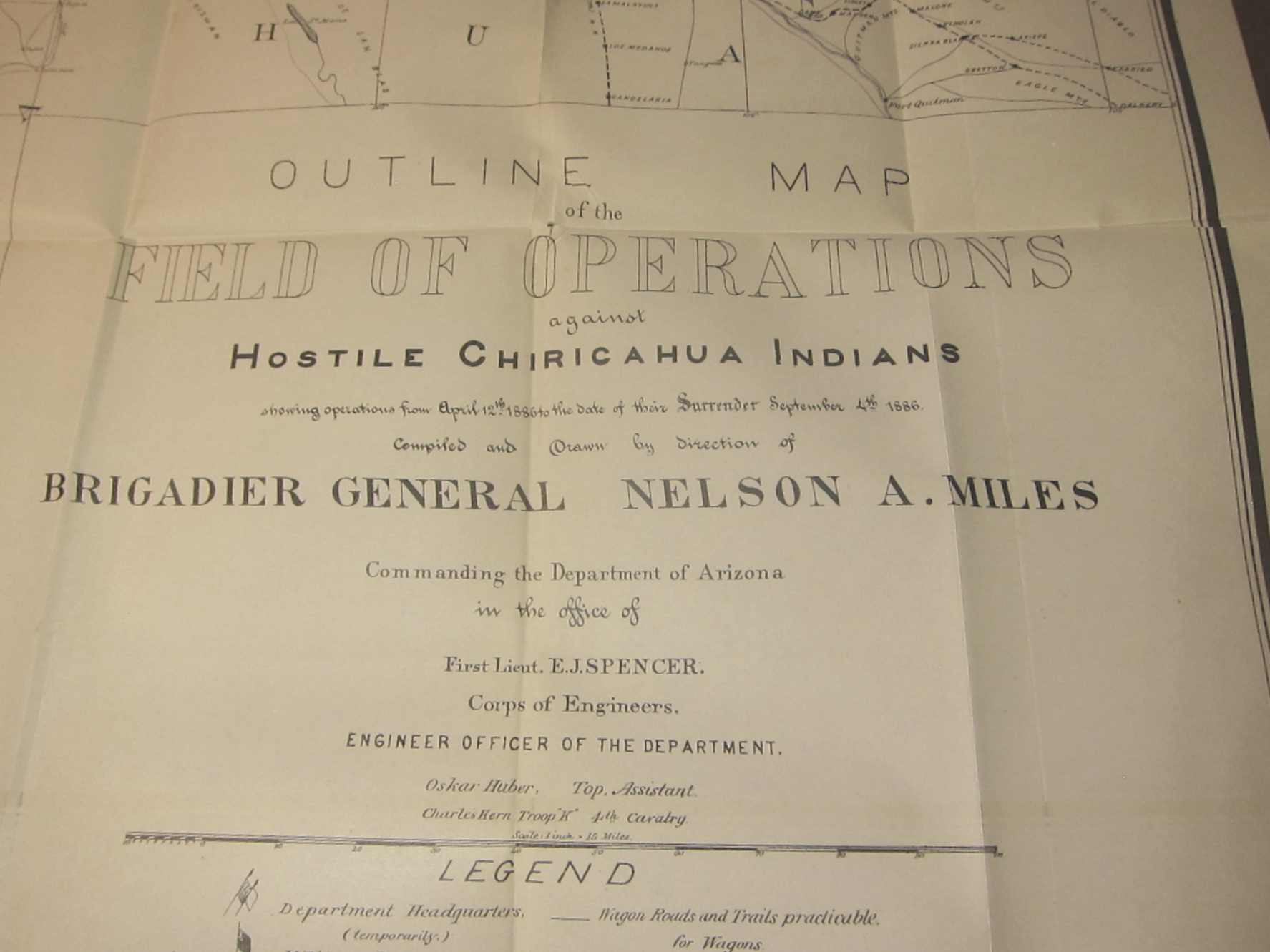
    Outline Map of the Field of Operations against Hostile Chiricahuan Indians showing operations from April 12th, 1886 to the date of their Surrender 4th, 1886. 
    A large, 29×25-inch folding black and white map lithographed by the American Graphic Company.  (The map’s condition is about Fine–there are a few tiny tears at the meeting of the folding joints along the top row, and then a 1″ tear from where it was carelessly opened rom the pamphlet–otherwise, this is in great condition.)

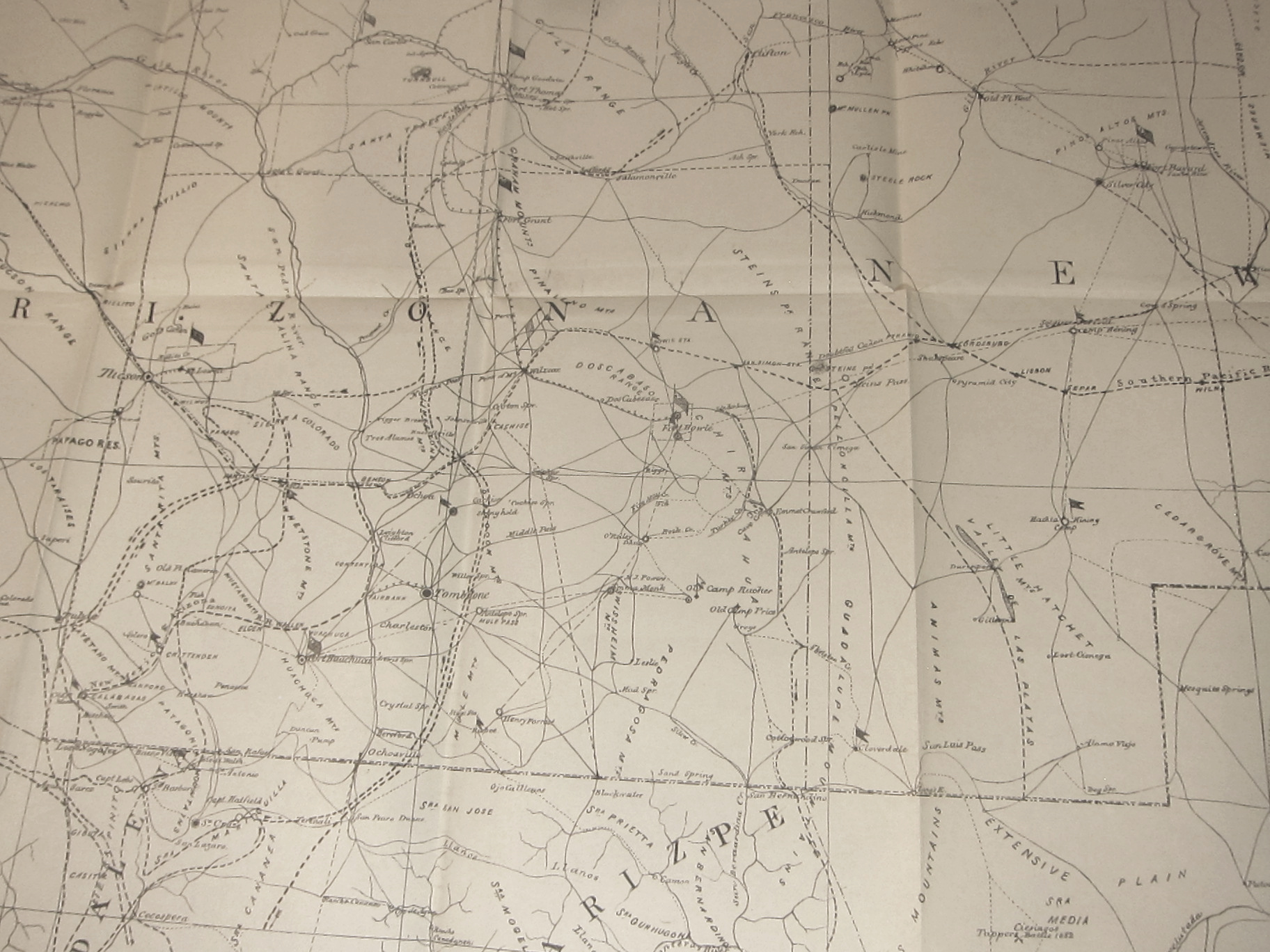
    The map covers all of Arizona and New Mexico south of 34 degrees N, from Phoenix on the west to not quite Roswell on the east, northern Sonora to well below Hermosillo, and extreme west Texas.  On this detailed (1″=15 miles) map are located at least 40 army forts, camps and posts, as well as innumerable railroad whistle stops, ranches, and water holes.  And of course locations of heliographic stations. Fine copy.  SOLD

    The Chiricahuan Apache leader and chief, Geronimo (1829-1909), famously led a progressively diminishing band  through the  Apache Wars of the 1850’s-1880’s.  For thirty  years of so he quirted the U.S. Cavalry, darting here and there in great exploits and famous escapes, evading the armies of the United States and Mexico.  In the end, by 1886, there were just dozens who were following him, including women and children, and the elderly, ragged, tired, hungry, and pretty much, finally, beaten.

    Geronimo _2_

    I think what finally did Geronimo in were the miles of pursuit and the sun. 

    The sun got to him via the heliographic communication network established by Major W.J, Volkman under the direction of General Nelson Miles (the other “miles” of this equation of defeat), which allowed the pursuing American army to communicate instantaneously over great distances, over hundreds of miles, without the need for runners or men or horseback or cutable telegraph wires or time  The heliograph is an ancient instrument, used for more than two thousand years–in this case, they were very highly polished mirrors that reflected brilliant signals between stations, getting their light source from the sun. It allowed the army an enormous advantage, and one that finally caught up to Geronimo.

    The “miles” were just those, the thousands of miles Geronimo was tracked and retracked over that very difficult terrain in the southeastern part of Arizona and into northern Mexico, sharp mountains, endless badlands, caves, heat, height, cold….very difficult. (I’ve been there on treks.. .its tough land.)

    The capitalized “Miles” was the surname of General Nelson A. Miles who sent out  with Lt. Col. George F. Crook to track down and capture Geronimo–and they almost did, again, in late MArch, 1886, when Geronimo presumably surrendered, but then fled to Mexico. After another five months and 1,600 miles, Miles came upon Geronimo om in Sonoran mountain camp, and induced him for the final time in September, 1886, at Skeleton Canyon, Arizona.

    The details of the capture and surrender are told in many places by many others–I just wanted to surface the role of the sun in the capture of Geronimo.

    The old man was shipped east,  never to see Arizona again. He died after being thrown from his horse and contracting pneumonia as a result of being unable to help himself to safety through a long cold night, died in a bed as a prisoner in Ft. Sill, Oklahoma.

    Geronimo _4_
    Geronimo _4_
    Geronimo _4_

    ·Posted by :

    ·in:

  • Early Television Bibliography, 1939


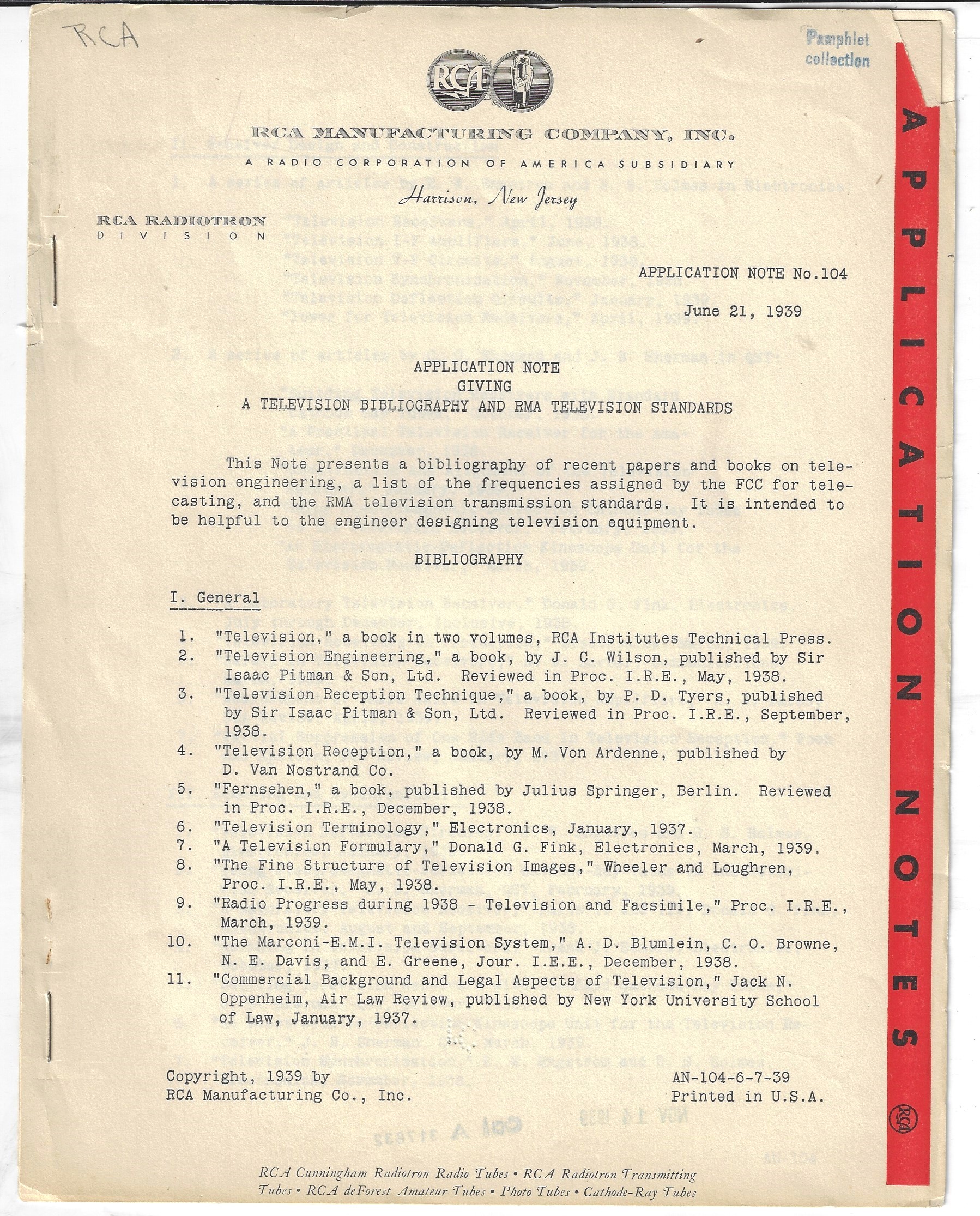
    Application Note Giving a Television Bibliography and RMA Television Standards. RCA Manufacturing Company, RCA Radiotron Division, Application Note No. 104, June 21, 1939.  11” x 8”, 7 leaves. Wrappers, staple bound. VG condition.  Very early bibliography for television. $95

    Tv bibliography

    ·Posted by :

    ·in:

  • Lovely Illustrations of Renaissance Plates

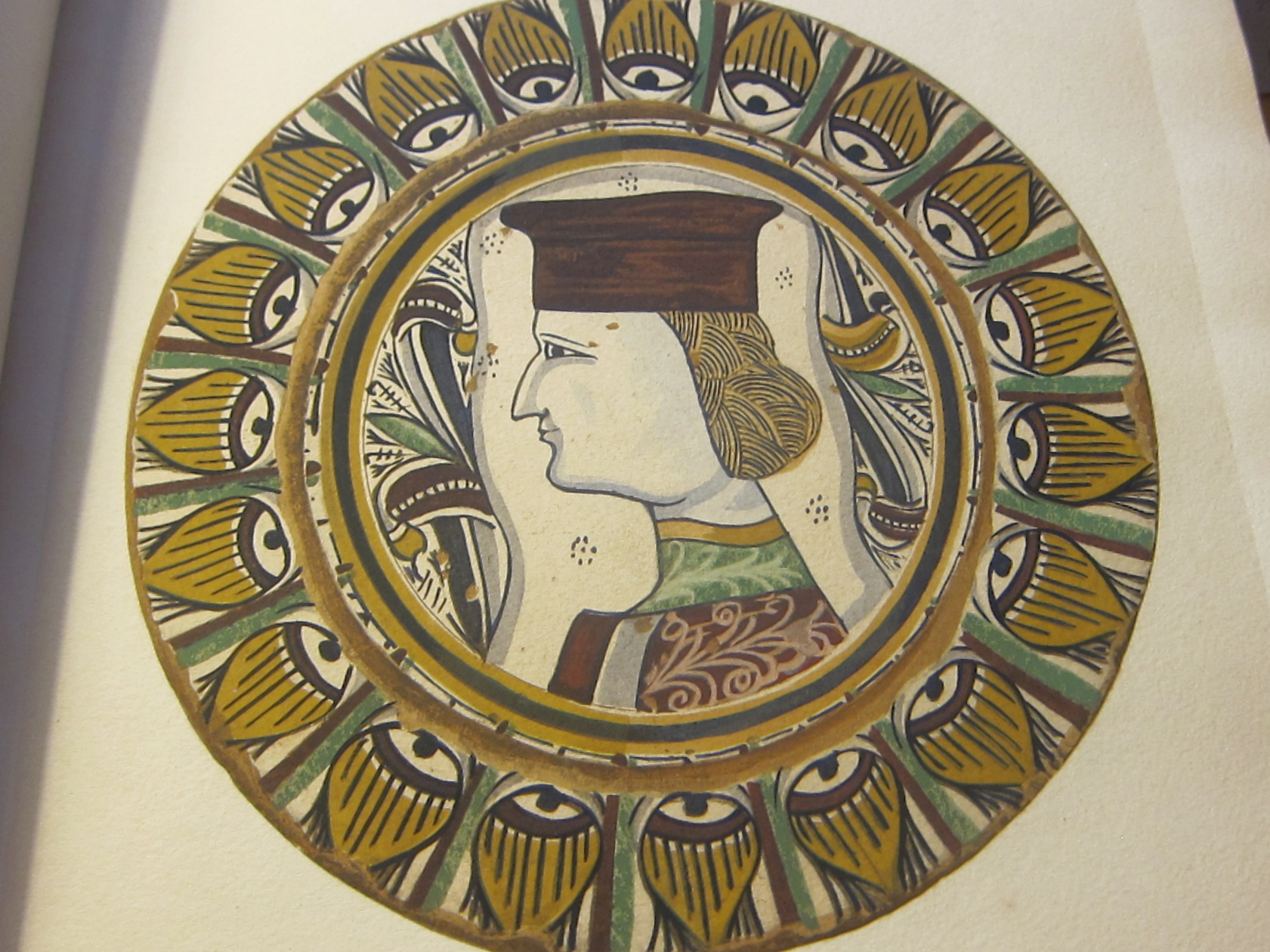
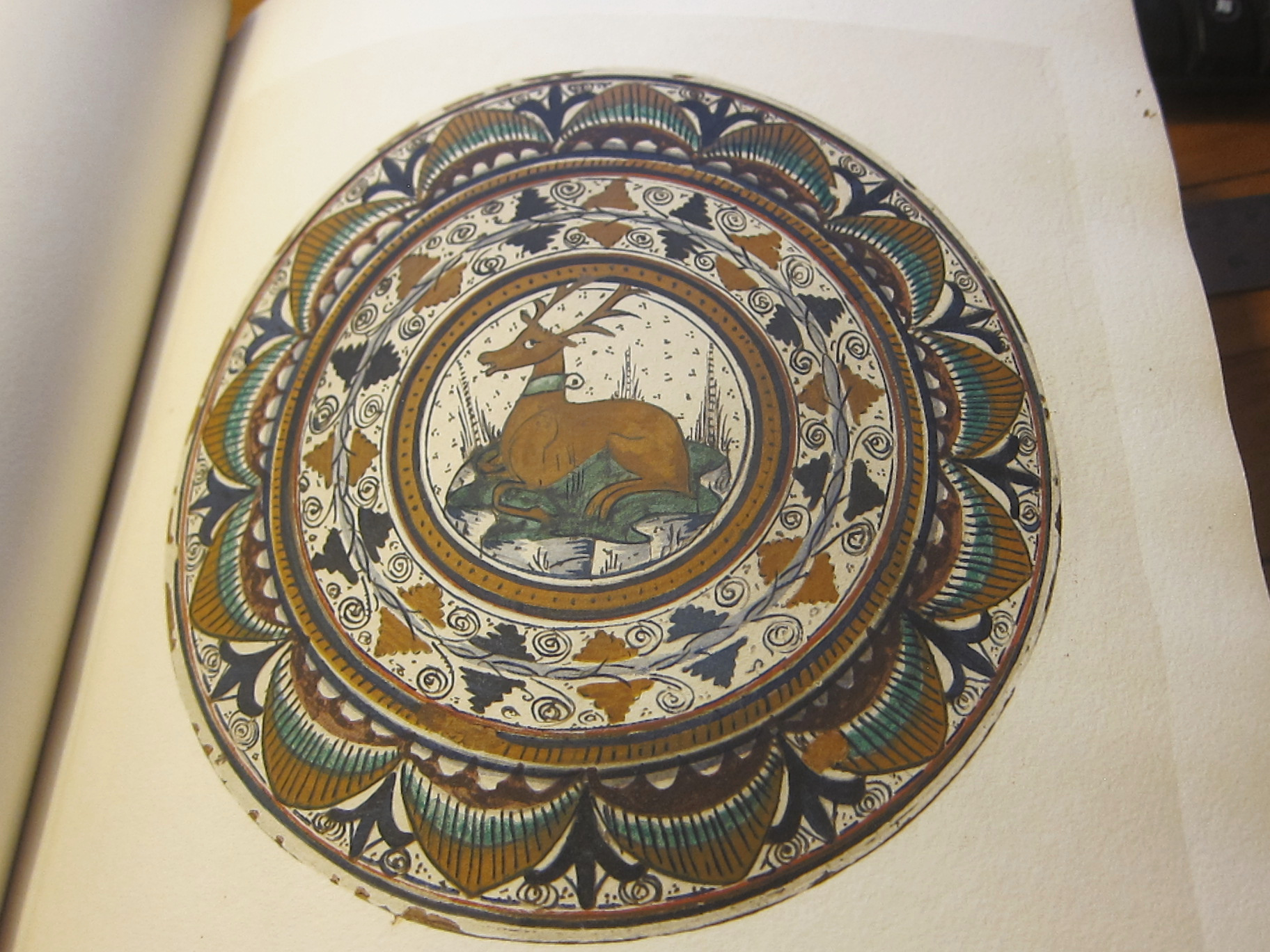
    Bardac _1_(Henri Leman). Collection Sigismond Bardac, Faiences Italiennes du Xve Siecle, Objets de Haute Curiosite Moyen Age et Renaissance. Pairs, Librarie Centrale des Beaux-Arts, 1913. 12.75” x 10”, 50 beautiful plates printed on a deluxe paper, with 50 leaves of descriptive text. This was evidently an exceptional collection of Renaissance plates. As I said, the plates are lovely and sumptuous. $250

    Ex-library, rebound in a heavy cloth, with title in spine in gilt along with the call number at bottom. There are a few perforated stamps from the library on descriptive text leaves, with none on the plates themselves. The binding is very serviceable and the book received very little attention over the years of this scarce book. (Of the four editions of this work there are only 12 copies located in WorldCat/OCLC.)

    This is being offered as a “scholar’s copy”–the interior is about-fine and the binding—though very sturdy and intact—is quite ordinary. There are other more prettily-bound copies available online.

    Note: overseas shipping on this is expensive given the weight of the book.


    Bardac _3_


    ·Posted by :

    ·in:

Recent Posts

Archives

Categories