A Daily History of Holes, Dots, Lines, Science, History, Math, Physics, Art, the Unintentional Absurd, Architecture, Maps, Data Visualization, Blank and Missing Things, and so on. |1.6 million words, 7500 images, 4.9 million hits| Press & appearances in The Times, Le Figaro, Mensa, The Economist, The Guardian, Discovery News, Slate, Le Monde, Sci American Blogs, Le Pont, and many other places… 5000+ total posts since 2008.

  • Rare and Early Version of a Significant Work on Electrodynamics and Antennas

    KING, Ronald W.P. An Introduction to Advanced Electrodynamics for Physicists and Engineers, Part I, General Theory. Part II, Antennas. Two volumes, 261, xv+207,2pp.  Mimepographed from typed originals. Croft Laboratory, Harvard University, 1940.  Very Good condition. $200

    Bound in manila  wrappers, brass gather pin for the binding.  This is an unusual publication, with only ONE copy of each found in WorldCat (Part I at Kansas State and Part II at Diban Library, Santiago,Chile. The volumes together are unlocated.) Part I contains chapters 1-5; Part II contains 6-9.


    ·Posted by :

    ·in:

  • Tyndall’s Experiments with Greenhouse Gases (1861-2)

    John Tyndall. Two papers, as follows:

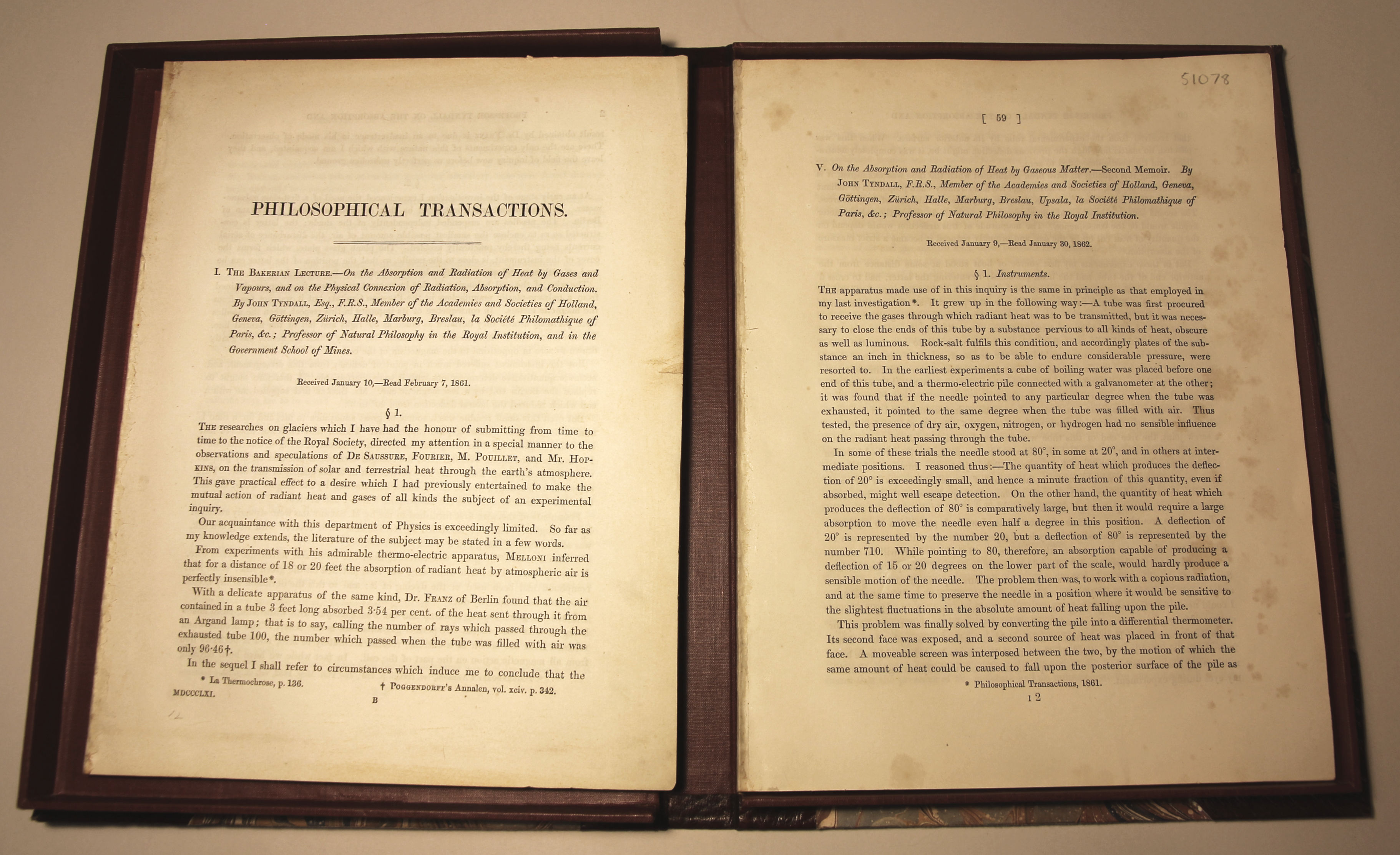
    “The Bakerian Lecture: On the Absorption and Radiation of Heat by Gases and Vapours, and on the Physical Connexion of Radiation, Absorption and Conduction” , in Philosophical Transactions of the Royal Society 151, pp 1-36, 1861.

    • And with:

    “On the Absorption and Radiation of Heat by Gases and Vapours—Second Memoir”, Philosophical Transactions of the Royal Society of London 152 pp. 59-97, 1862.

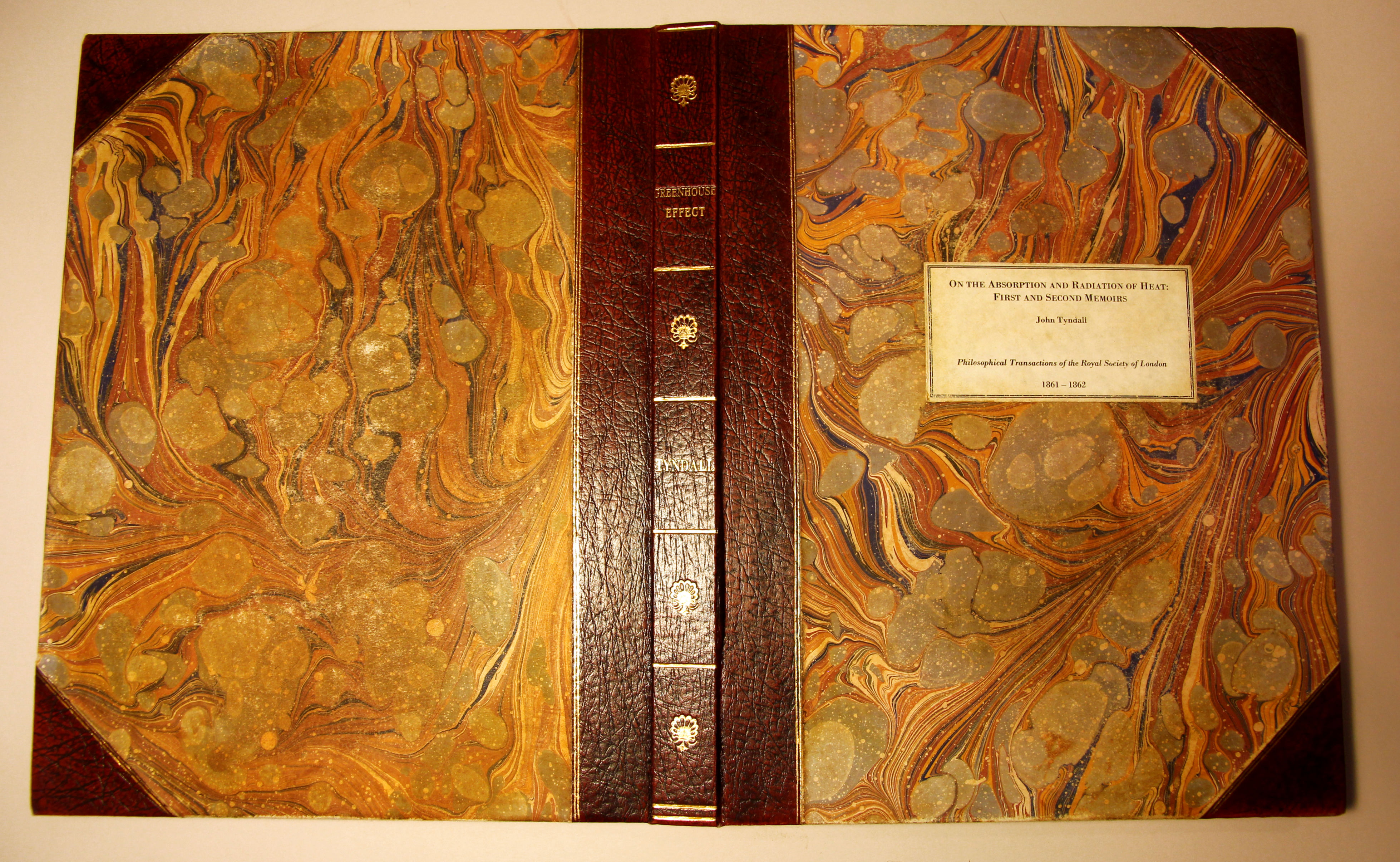
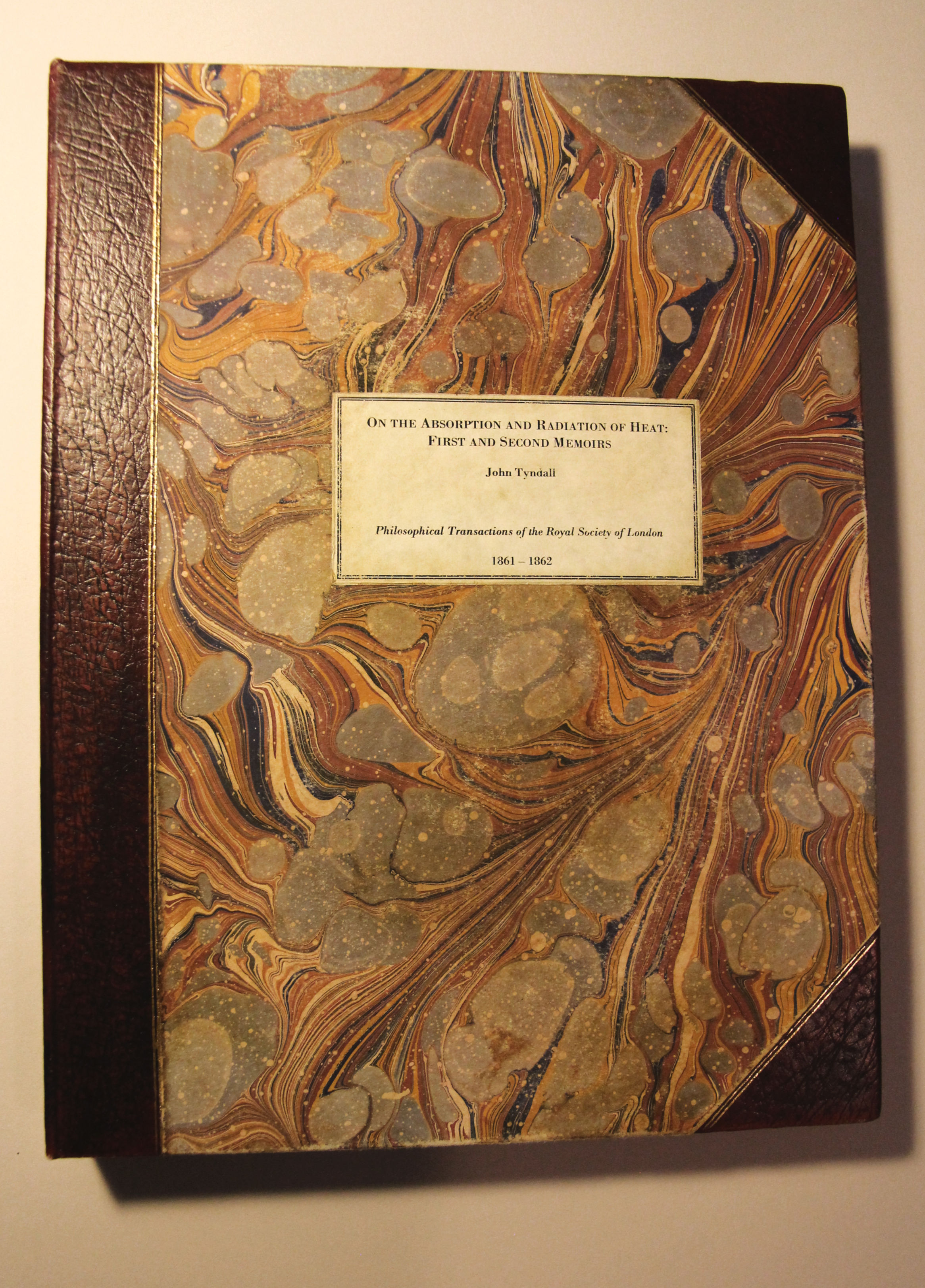
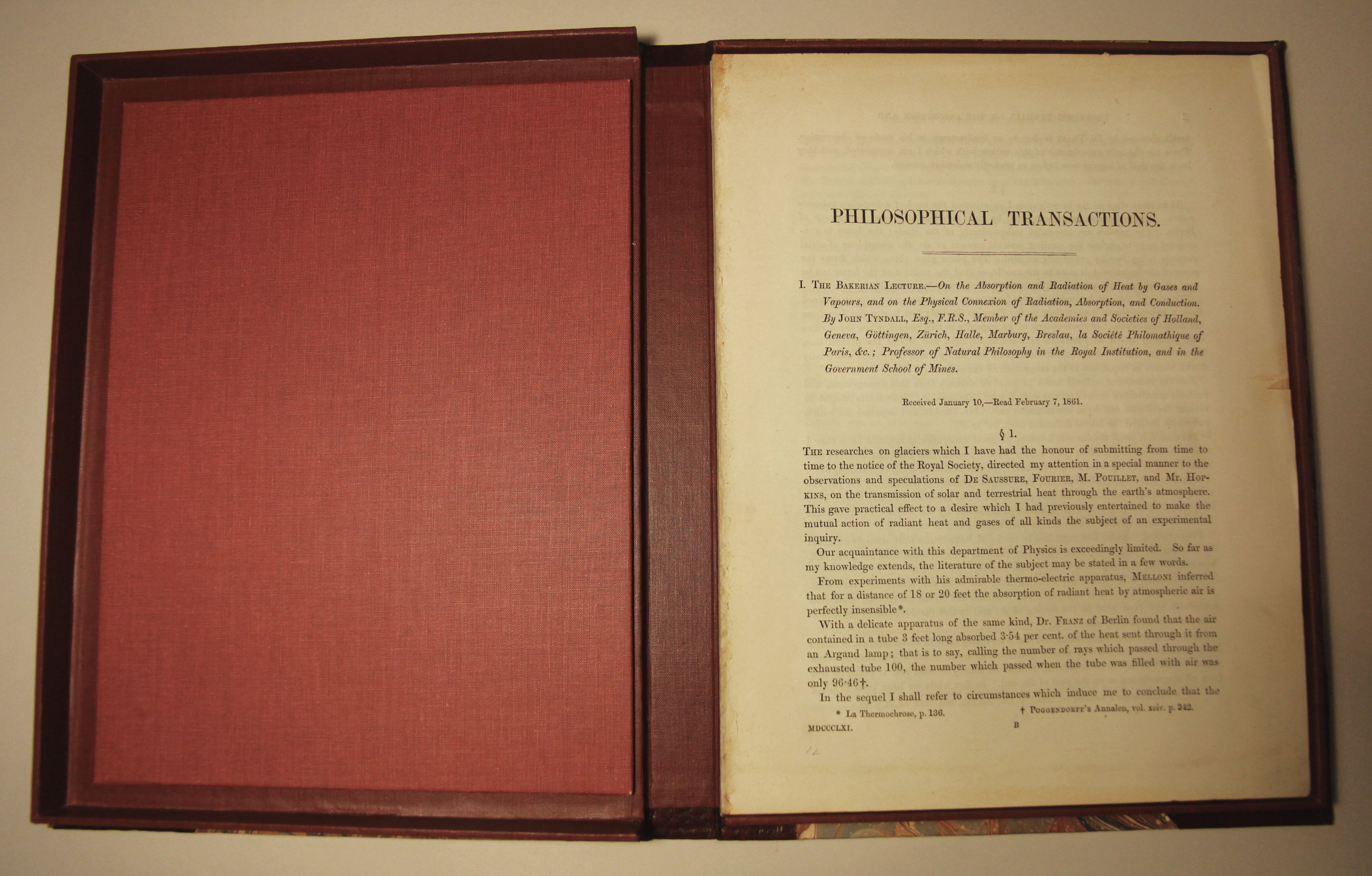
    Both papers, extracted from the bound volume, and housed in a luxurious clamshell box, bound in calf-backed paper covered boards, leather corners. Lovely, and in Very Fine condition. $1100


    Tyndall greenhouse _2_

    “Tyndall described the most important findings and conclusions from his greenhouse gas experiments in [these two] papers…John Tyndall was an English physicist best known for his study of thermal radiation. In 1852, Tyndall developed the first “ratio spectrophotometer” and used it to test the heat absorption of gases. He found that only a few gases, water vapor and a few trace gases (CO2 and hydrocarbon vapors like methane and ozone), absorb infrared radiation to any measurable degree. He also found that these gases also re-emit this heat, creating the reflection/absorption/re-reflection cycle that causes the greenhouse effect.”–David Wenner, History of Physics Collection

    Tyndall greenhouse _2_

    “The enormous range of Tyndall’s inquiries reflected many different intellectual influences. An explicit discussion of these influences in their context has yet to be undertaken. We lack any comprehensive review of Tyndall’s work on optical and crystalline structure; on magnetism, radiation, and mountaineering; and on the relationship between his several research programs. Tyndall is remembered chiefly for his efforts to verify the high absorptive and radiative power of aqueous vapor; to measure the absorption and transmission of heat by many different gases and liquids; to explain the selective influence of the atmosphere on different sounds; and to establish the principle of “discontinuous heating”–Complete Dictionary of Scientific Biography, online

    Tyndall greenhouse _2_

    “His work suggested the possibility that by altering concentrations of these gases in the atmosphere, human activities could alter the temperature regulation of the planet. Tyndall could forsee such a possibility already in 1861. Changes in the amount of any of the radiatively active constituents of the atmosphere may have produced all the mutations of climate which the researches of geologists reveal (Tyndall, 1861), although he was a long way from developing a coherent account of how human actions could induce significant changes in climate on much shorter timescales.”–Mike Hulme, “On the origin of ‘the greenhouse effect’: John Tyndall’s 1859 interrogation of nature”, in Royal Meteorological Society, 27 April 2009.

    Tyndall greenhouse _2_

    ·Posted by :

    ·in:

    —
  • With Views from the Surface of the Moon (1868)

    Henry Morton, “Sunlight and Moonlight”, an 11-part article over two volumes in Journal of the Franklin Institute, vol 56 (third series) vol 76 (overall), 1868, 426pp overall. Bound in half calf and marbled boards. Ex-library with a few stamps on title page. The binding has a set of problems, mainly with the front board being nearly detached, and the first two pages are detached. Fair/Good condition. Two volumes, $225

    The Morton occupies is located on pp 59-64 (with a lovely plate showing a view across the crater Copernicus), 131-136 (with folding photographic map of the Moon), 201-203 (with a plate of lovely lunar shadows), 274-277 (with a beautiful plate of a lunar vista on the surface of the Moon), 349-351 (with a plate of Mars), and continued in the next volume.

    C.S. Lyman, “A New Form of Wave Apparatus”, pp 187-194.

    Octave Chanute, Pneumatic Bridge Foundations, continued from a previous vol and here occupying pp 17-28 (with three plates), 89-99; Chanute is mainly remembered for his work in aeronautics and his influence on the Wright brothers, though some of his technical work wound up being incorrect, something the Wright’s discovered on their own but were loathe to publish on it.

    John Mayer, “Nitro-Glycerine: its Claims as a New Industrial Agent”, pp 40-45, 119-123.

    And many others.

    Morton, Henry. Sunlight and Moonlight”, in the Journal of the Franklin Institute, vol 57 (third series) vol 77 (whole series), 1869, 424pp complete.  Half calf and marbled boards; nice condition, ex-library with a few stamps on the title page. G-VG condition.  The Morton article is continued from p. 418 vol 56, and occupies pp 65-69 (with a plate), 133-135, 204-208 (with a plate), 274-275, 344-347 (and a plate), 414–420 (concluded).

    De Volson Wood, “History of the Investigation on the Resistance of SOlid Bodies, pp 100-110;

    Charles Emery, The Best Modes of Testing the Power and Economy of the Steam Engine, pp 110-120, 177-184;

    Lewis Leeds, Lectures on Ventilation,  continued from vol 56, pp 65-69, 135-139, 199-204, 276-280,

    J. Norman Lockyer, “Spectroscopic Observations of the Sun”, pp 266-267;

    Total Eclipse of the Sun *August 18, 1868), with a plate, pp 268- 273

    Clemens Herschel, Gauging the Flow of Rivers, pp 305-315, with a plate of the device.


    ·Posted by :

    ·in:

    —
  • Longish Report on NYC Central Park by the Chief Engineer (1867)

    William H. Grant, “The New York Central Park”, in: Journal of the Franklin Institute, 1867, third series vol 53 (vol 73 all together), 426+vpp. Half calf and marbled boards; ex-library (with some ghost remnants of a spine label, and that’s about it save for a few stamps on the title page and a bookplate). Very nice copy. $135  The Grant article occupies pp 11-14, 100-107, 153-161, 233-238, 297-304, 390-397.

    Also in this volume (among many other contributions) are:

    • Fleeming Jenkin, “Submarine Telegraphy”, pp 42-46, 122-180,
    • Henry Morton, “Lectures on Electricity and Light”, pp 48-54, 200-203, 356-358; 413-414
    • “The Magic Lantern as a Means of Demonstration”, pp 47-58, 204-206, 282-284, 354-356, 409-412,
    • “The USS Armored Frigate New Ironsides”, pp 73-81;
    • George A. Parker, “The Susquehanna Bridge”, pp 239-249, with two folding plates, one being a map and the other a long profile of the bridge.
    • The Electric Light, pp 289-294;
    • John Tyndall, “On Sounding and Sensitive Waves”, pp 260-263, 346-349.
  • IBM Scientific Computation Forum 1948

    COMPUTERS. Grosch, H.R.J., editor. Proceedings Scientific Computation Forum, 1948. Published by IBM, NYC, 1950. 11″x8.5″, 126.  Cloth, in the original plain brown dj. FINE copy in an excellent dust jacket.  $200

    Contributors include: Frank Verzuh, H.R.J. Grosch, Cuthbert Hurd, Francis J. Murray, L.H. Thomas, and numerous others. There is also an unusual paper by George Gamow, Jack Belzer, and Geoffrey Keller, “Dynamics of Elliptical Galaxies”, on pp 67-69.  Much of the content is on the application of computers–as in the use of computers at Naval Proving Ground, Aberdeen, Nautical Almanac Office, Beech Aircraft Corp., GE, Census, and others.

    ·Posted by :

    ·in:

    —
  • An Early Appearance of an Applied Hexadecimal System (1863)

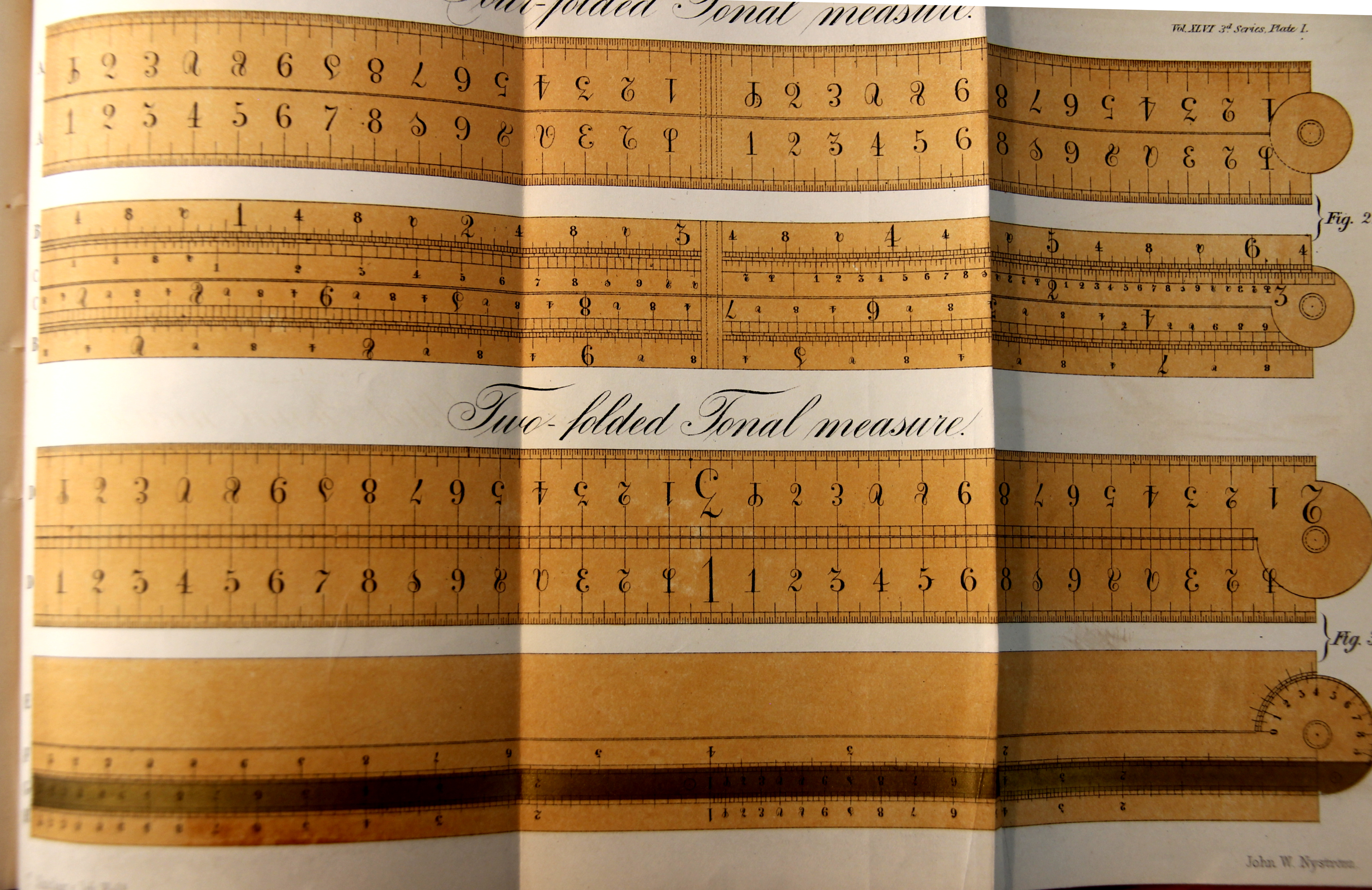
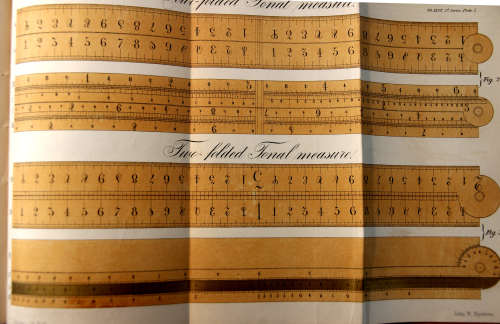
    John Nystrom, “A New System of Arithmetic and Metrology, called the Tonal System”, pp 263-275, 337-348, 402-407 (concluded), and illustrated, including a folding plate. In Journal of the Franklin Institute, third series vol 46 overall vol 76, July-December 1863, 432pp. Half-calf and marbled boards. The spine is rubbed, and the corners of the boards are quite worn. The text is bright and crisp—overall, this is a GOOD copy. $250
    Nystrom 1863 _3_

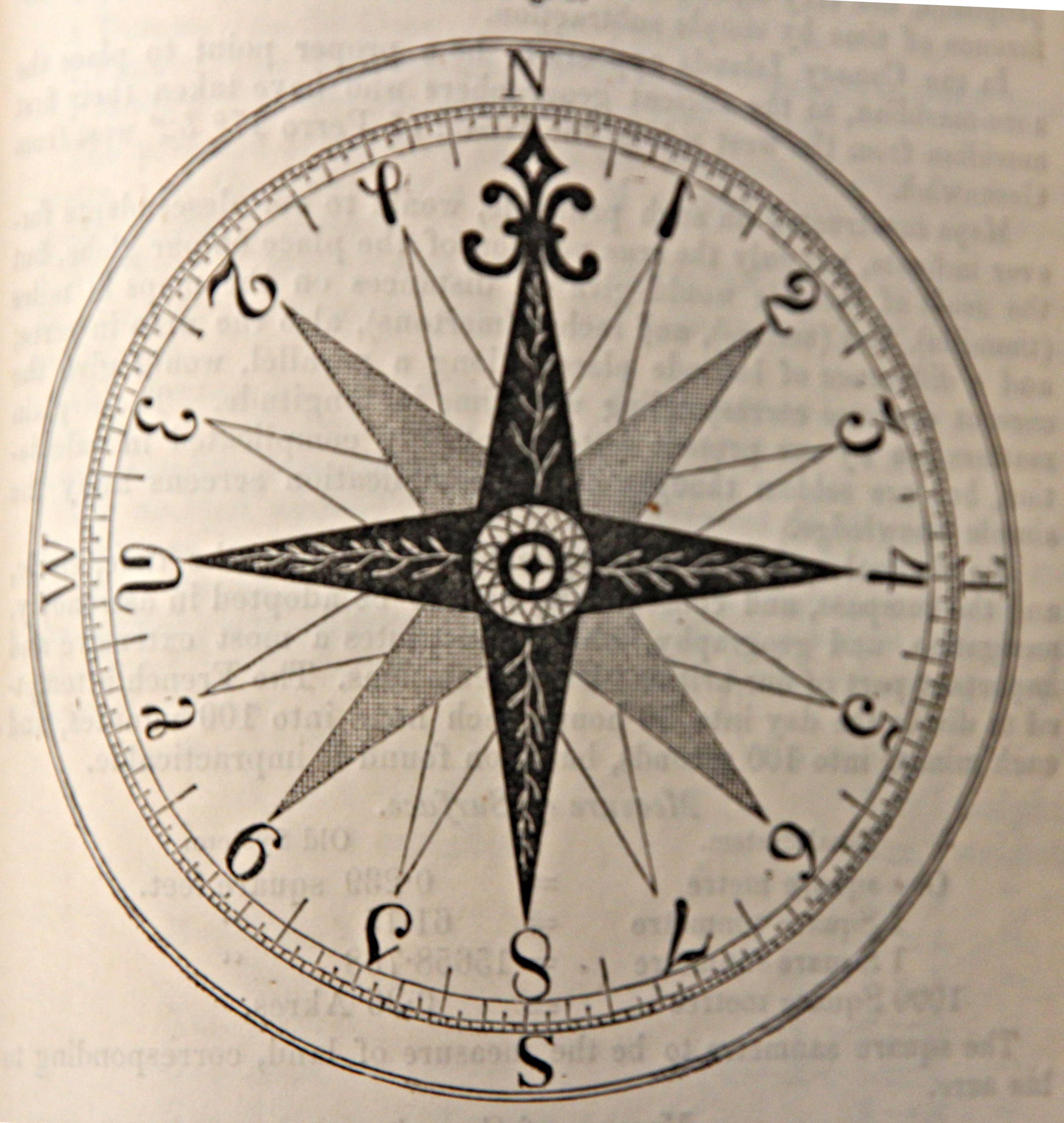
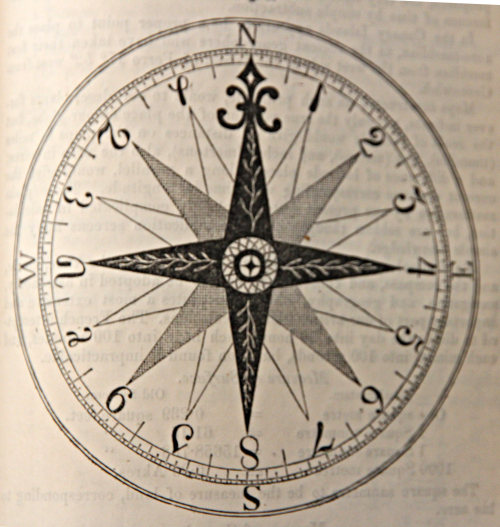
    This is a very early entry in the history of the application of the hexadecimal system. Nystrom’s plan included converting to a hex arithmetical system, and then expanded the idea to the calendar, musical notation, geography, time—an overall shift in metrology. His idea did not extend to calculators, and his name does not seem to be referenced by any of the modern compsci folks (with the major exception of Donald Knuth). Probably base-16 was not employed in programming until, I guess, around the early 1960’s. All that said, this is still a remarkable paper. ALSO: the paper is illustrated with a beautiful color-highlighted folding plate of divider-like instruments that translated hex to denary.

    “John Williams Nystrom (Swedish: Johan Vilhelm Nyström) (1825–1885) was a Swedish born, American civil engineer, inventor, and author. He served as an assistant Secretary and Chief Engineer of the United States Navy during the American Civil War. Nystrom received many patents for inventions such as a marine steam engine, a refrigerator, and calculating machines…

    Nystrom is most notable for his proposal to switch from decimal to hexadecimal as defined in his 1862 publication titled . In 1859, Nystrom proposed a hexadecimal (base 16) system of notation, arithmetic, and metrology called the Tonal system. In addition to new weights and measures, his proposal included a new calendar with sixteen months, a new system of coinage, and a hexadecimal clock with sixteen hours in a day.”–Wikipedia
    Nystrom 1863 _3_

    (“Hexadecimal is a base/positional number system used in mathematics and computer science. … Hexadecimal is an easier way to represent binary values in computer systems because they significantly shorten the number of digits, as one hexadecimal digit is equivalent to four binary digits.”)

    “If the Arabic notation employed in our present decimal arithmetic had been suggested to Moses when he wrote the ten commandments on Mount Sinai he would surely have made similar remarks as that made on the tonal system that such curious looking characters could not be understood by his people….My manuscript on the tonal system has been sent to a great many places for publication The Franklin Institute thought it would have a very serious effect on the number of subscribers of their journal The Smithsonian Institute would not publish it because they had so much of the same kind before The US Coast Survey stated they would publish it if recommended by a member of Congress And lately the Society of Philadelphia has rejected it perhaps on the remarks herein replied to but Mr D recommended its publication.”–John William Nystrom, Project of a New System of Arithmetic, Weight, Measure and Coins: Proposed ...(1862)  (Quotation: John W. Nystrom, ca. 1863) The Art of Computer Programming section 4.1, Donald Knuth.
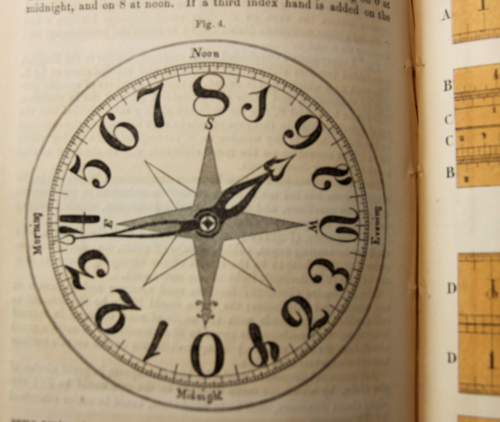
    Nystrom 1863 _3_

     “…a prominent Swedish-American civil engineer named John W. Nystrom decided to carry Charles XII’s plans [radix-8 arithmetic] a step further, by devising a complete system of numeration, weights, and measures based on radix-16 arithmetic. He wrote, “I am not afraid, or do not hesitate, to advocate a binary system of arithmetic and metrology. I know I have nature on my side; if I do not succeed to impress upon you its utility and great importance to mankind, it will reflect that much less credit upon our generation, upon our scientific men and philosophers.” Nystrom devised special means for pronouncing hexadecimal numbers; for example, (C0160)16 was to be read “vybong, bysanton.” His entire system was called the Tonal System, and it is described in J. Franklin Inst. 46 (1863), 263–275, 337–348, 402–407. A similar system, but using radix 8, was worked out by Alfred B. Taylor [Proc. Amer. Pharmaceutical Assoc. 8 (1859), 115–216; Proc. Amer. Philosophical Soc. 24 (1887), 296–366].

    On the Nystrom calculator: “In an article of Scientific American the device was hailed as the most important one ever brought before the public. Despite all of the accolades however, it was never widely accepted, and no more than 100 devices were ever produced. This may have been because the cost (there were $10, $15, and $20 models, a huge sum in 1850s), or because the instrument was never well advertised or marketed. –history-computer.com
    ·Posted by :

    ·in:

    —
  • Classic and Significant Paper in the History of Helicopters

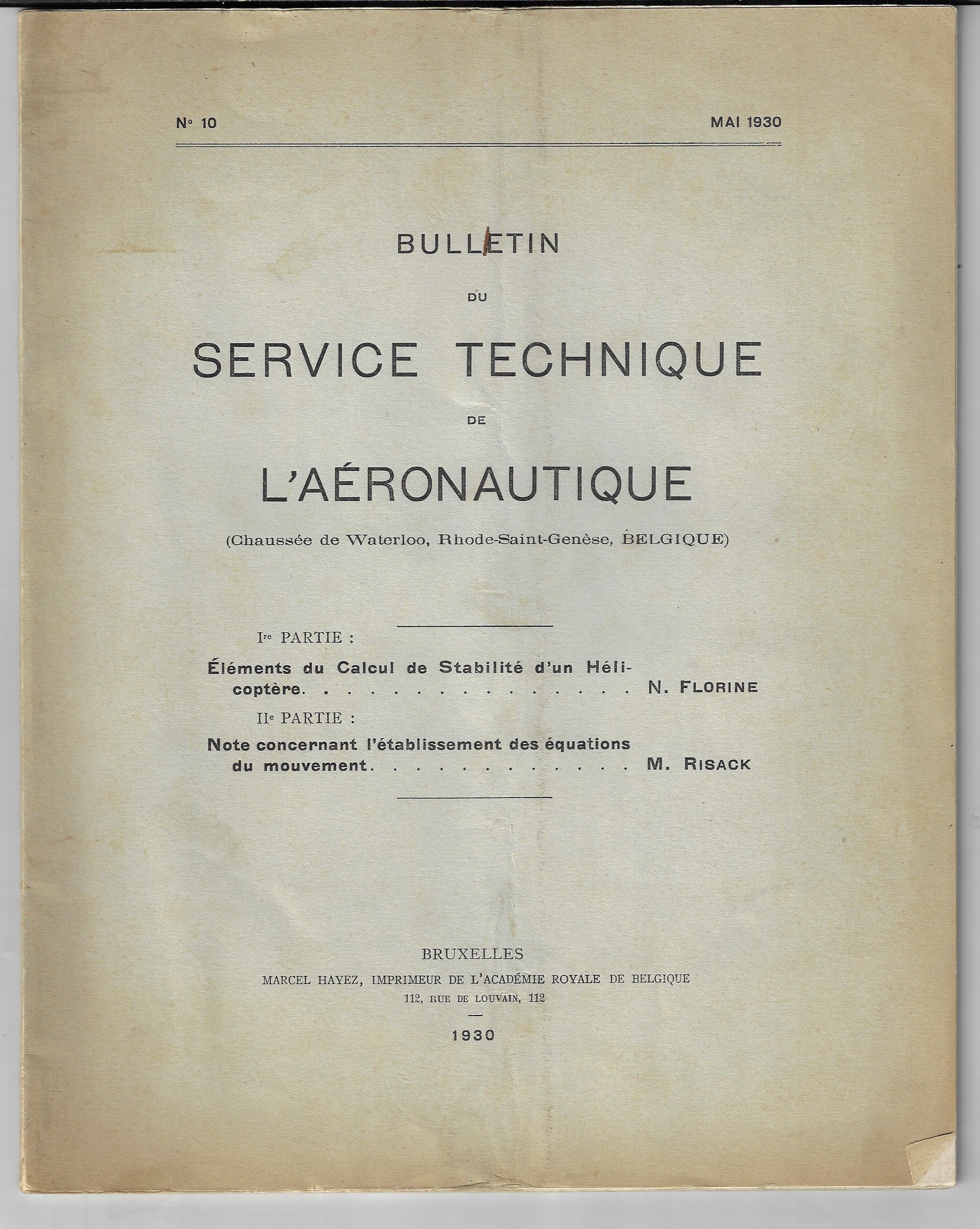
    Florine, N. “Elements du Calcul de Stabilite d’un Helicoptre” in Bulletin du Service de l’Aeronautique. No. 10, May 1930, pp 1-50. Also with M. Risack, “Note Concernant de l’Etablissement des Equations du Mouvement” on pp 51-55. Original wrappers. There’s an old fold going through the center vertically through the publication, otherwise the publication is a solid VG. Scarce. $200

    • “Nicolas Florine worked at l’Administration de l’aéronautique, based in the buildings of the Hotel des Monnaies in Saint-Gilles (Brussels). In 1926 he was responsible for initiating the Centre d’aérodynamisme …He was involved in the creation of Belgium’s first wind tunnel…The studies Florine performed…in 1926 led to patents related to helicopter control and in particular how to counteract the torque resulting from using two rotors. The results of the studies were published in the article “Eléments du calcul de stabilité d’un hélicoptère”. Herein, the principle was described of a helicopter with two rotors. These rotors turned in the same direction, in contrast to the current tandem helicopters…This publication formed the basis of all his designs that would follow.”—Wikipedia

    Helicopter florine stability 1930


  • The Fight against the IWW and Unions (1930)

    The Centralia Case, a Joint Report on the Armistice Day Tragedy at Centralia, Washington, November 11, 1919. Issued October, 1930, by the Department of Research and Education. 9” x6”, 48pp. Provenance: from the library of the League of Women Voters (pencil notation on rear of the title page), and the Library of Congress (with their rubber stamp on the rear wrapper). Some very short tears and bumps in the covers, otherwise a VG copy.  $50

    Issued by a varigated wide front of religious organizations, including: Churches of Christ, National Catholic Welfare Conference, Central Conference American Rabbis.

    ·Posted by :

    ·in:

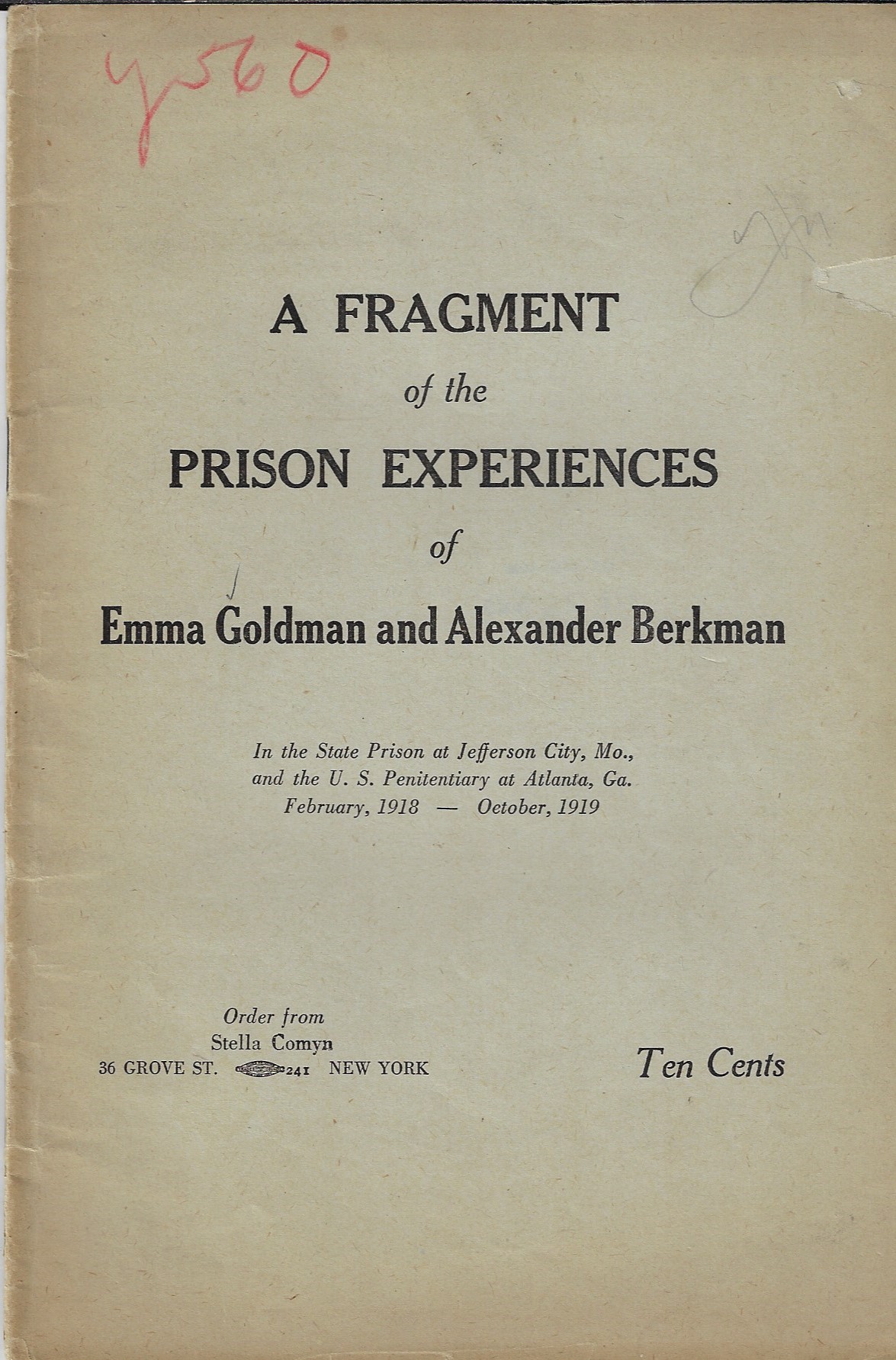
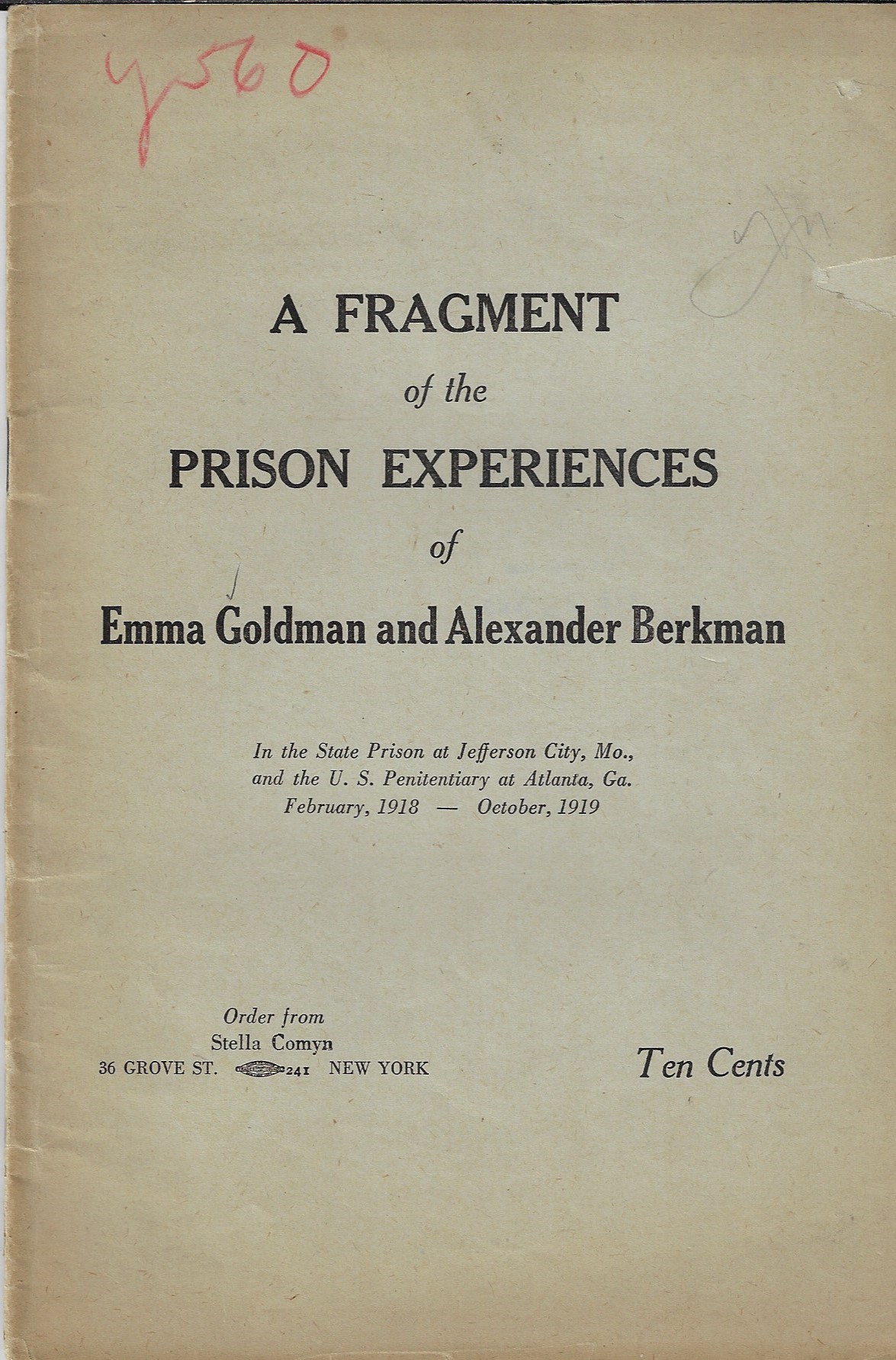
  • Goldman Emma 1869 1940 Fragment Of The Prison Experiences Of Emma Goldman And Alexander Berkman In The State Prison At Je


    Goldman Emma Alex Berkman Goldman, Emma, 1869-1940. Fragment of the prison experiences of Emma Goldman and Alexander Berkman in the State Prison at Jefferson City, Mo., and the U.S. Penitentiary at Atlanta, Ga., February, 1918-October, 1919. New York : S. Comyn, [1919?] 9“ x 6”, 25pp. Original wrappers.  $250

    Provenance: Library of Congress, with their 95%-faded away rubber stamp on the rear cover. Good condition. This was printed on inexpensive paper from the start, which was susceptible to nicks and short tears. This copy has a 10mm square bit missing from front cover top/right; there’s also a 1”-long tear in an ad leaf at rear. Otherwise this is a pretty nice copy. Scarce: only 6 copies located in WorldCat , or so it seems that this is the case—I checked numerous records for this in its original and reprint, and that seems to be the correct number).

    ·Posted by :

    ·in:

  • A Key Advance in Number Theory (1873)

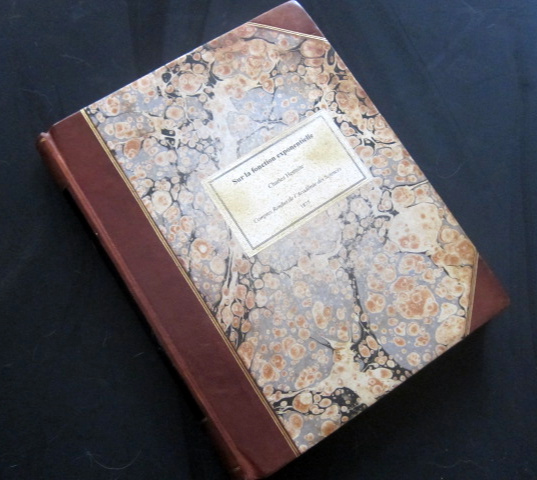
    HermiteCharles Hermite, “Sur la fonction exponentielle”, a five-part paper in Comptes Rendus Hebdomadaires des Seances de l’Academie des Sciences, 1873, vol 77, Nos 1-5, 380pp, (with the Hermite paper in issues 1,2,4,5).

    Paris: Gauthier-Villars, 1873. The Hermite papers occupy pp.18-24, 74-79, 226-233, and 285-293.

    The five issues are rebound in a finely executed half-calf and marbled boards binding, with an antiqued paper label on the front board; new end papers. Lovely binding. The text is crisp though there is some browning (not making the paper brittle by any means). The paper label on the front board is misprinted as “1875” instead of “1873”. Fine copy. $950

    • First appearance of Hermite’s very important work on the transcendence of e. “1873. Charles Hermite (1822-1901) proves that the base of natural logarithms, e = 2.718…is transcendental. This is the first familiar number to be transcendental.”–Parkinson, Breakthroughs, a Chronology of Great Achievements in Science and Mathematics.

    “One of the best-known facts about Hermite is that he first proved the transcendence of e (1873). In a sense this last is paradiematic of all of Hermite’s discoveries. By a slight adaptation of Hermite’s proof, Felix Lindemann, in 1882, obtained the much more exciting transcendence of π. Thus, Lindemann, a mediocre mathematician, became even more famous than Hermite for a discovery for which Hermite had laid all the groundwork and that he had come within a gnat’s eye of making. If Hermite’s work were scrutinized more closely, one might find more instances of Hermitean preludes to important discoveries by others, since it was his habit to disseminate his knowledge lavishly in correspondence, in his courses, and in short notes.  …Hermite’s most important results have been so solidly incorporated into more general structures and so intensely absorbed by more profound thought that they are never attributed to him. Hermite’s principle, for example, famous in the nineteenth century, has been forgotten as a special case of the Riemann-Roch theorem. Hermite’s work exerted a strong influence in his own time, but in the twentieth century a few historians, at most, will have cast a glance at it.”–by Hans Feudenthal, Complete Dictionary of Scientific Biography (online)


    ·Posted by :

    ·in:

  • The Next Generation ICBM (1957, RAND)

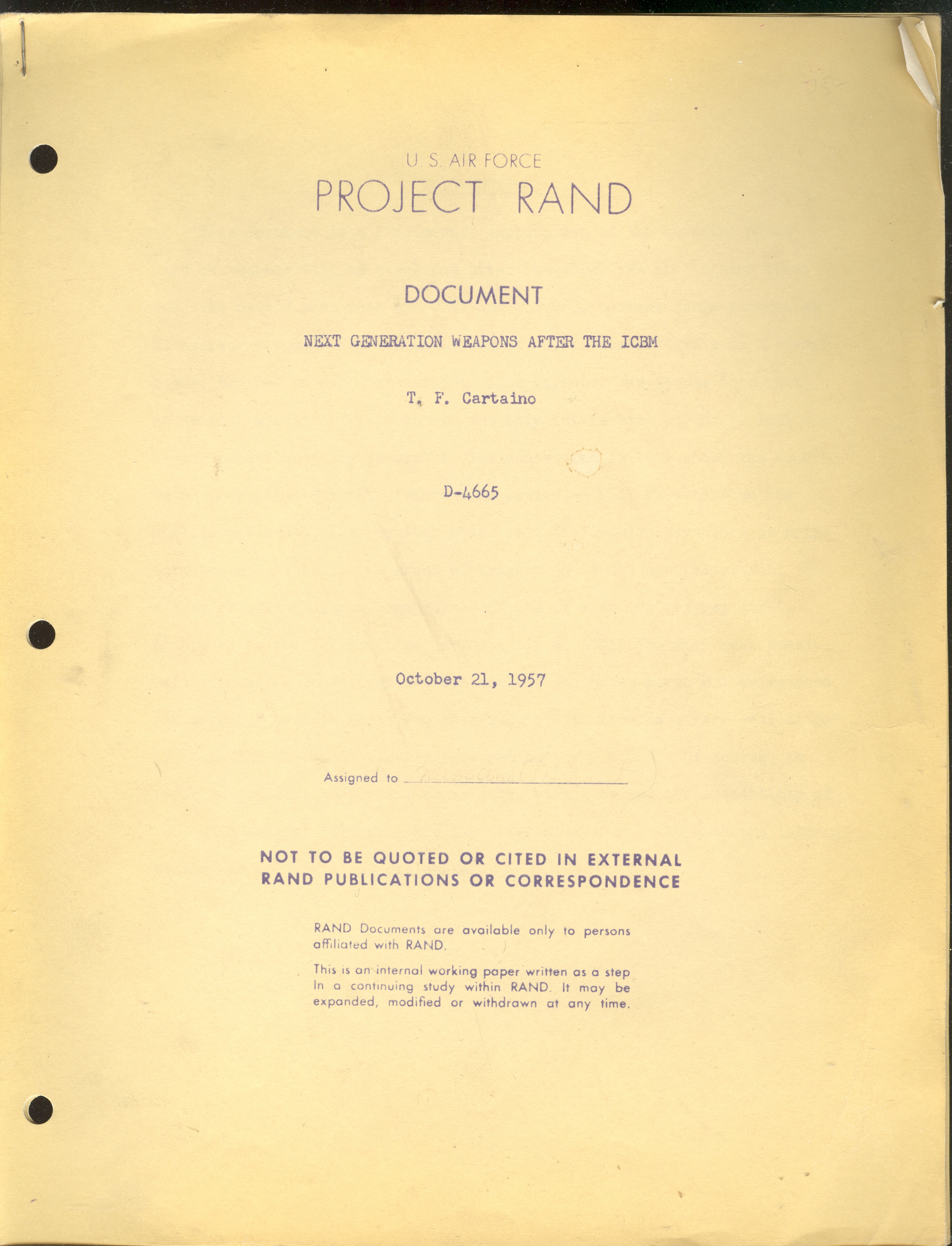
    Cartaino, T.F.  Next Generation Weapons After the ICBM.  Project RAND, D-4665, October 21, 1957.  11×8.5″, 4 leaves. Offset (or mimeographed?) paper “not to be quoted or cited in external RAND publications or correspondence”. And: “RAND documents are available onto to persons affiliated with RAND”. VG copy. Scarce.  $125

    RAND ICBM 1957The RAND Corporation (Research And Development) is a think tank originally formed in 1946 by the US Army Air Force as part of a contract to the Douglas Aircraft Company.  After 1948 RAND Corp was funded by a number of different sources, private and governmental, and left the sphere of being a direct arm of the U.S. military. (Maybe.)  It still did enormous amounts of work on behalf of the military, and seems to have been their chief  theoreticians during this period.  It was also the time that the policy of Mutually Assured Destruction (MAD) was formulated at , partially under the direction of we’ll-see-him-again-down-the-road Robert McNamara.  And of course much else. 

    This publication is an internal RAND document, not meant for the eyes of the outside world, at least in 1957.  I own a number of these reports, and I must say that this one is odd—it is rather flippant, sometimes oddly and darkly (dare I say it?) funny.  It is also short (four pages) and gets to the very meaty part of the issue immediately.  The author(s) assume that the US and the USSR will have achieved a point of stasis such that it would make absolutely no sense for either actor to actually employ their arsenal (and excluding “the possibility of the button pusher ‘flipping his lid’ “.  The paper attempts then (“let’s jump right in and assume we find ourselves in this stalemated period”) to envision the next kind of war in which the ICBM would not be an active factor. “We therefore postulate here that the kind of war we will be engaged in…in the period of nuclear stalemate of the non-violent war, the opening phase of which has been called the cold war.”

    The tools of war in this non-violent war, the report speculates, included: (1) the State Department as a Weapon, issuing “an aggressive, imaginative foreign policy”. (2) Economic Weapons, which interestingly included “inflate USSR economy by surreptitiously flooding the country with undetectable counterfeit currency”.  (I remember that the late Sen. Patrick Moynihan suggested in the first Iraq war, televise don the floor of the U.S. Senate in the final debate on engagement, that we do this exact thing in Iraq…especially since the Iraqi dinar was being printed in London.) The third section was “Psychological Weapons”, and was very tongue-in-cheek short (?), suggesting “ideas a la Hitchcock, e.g., turn Stalin [dead in 1953] over in his grave some dark night, etc.” I’m not sure what to make of that, especially as the paper finishes on this line: “This list is open for additions and suggestion.”  Indeed.  Out of all of the internal reports that I’ve read from RAND this is the only one that approached its topic with such dark familiarity and removed humor. 

    ·Posted by :

    ·in:

Recent Posts

Archives

Categories