A Daily History of Holes, Dots, Lines, Science, History, Math, Physics, Art, the Unintentional Absurd, Architecture, Maps, Data Visualization, Blank and Missing Things, and so on. |1.6 million words, 7500 images, 4.9 million hits| Press & appearances in The Times, Le Figaro, Mensa, The Economist, The Guardian, Discovery News, Slate, Le Monde, Sci American Blogs, Le Pont, and many other places… 5000+ total posts since 2008.

Category: Technology, History of

  • Beautiful Technical Shadowing, 1880

    JF Ptak Science Books    Quick Post

    Techno art wheel488

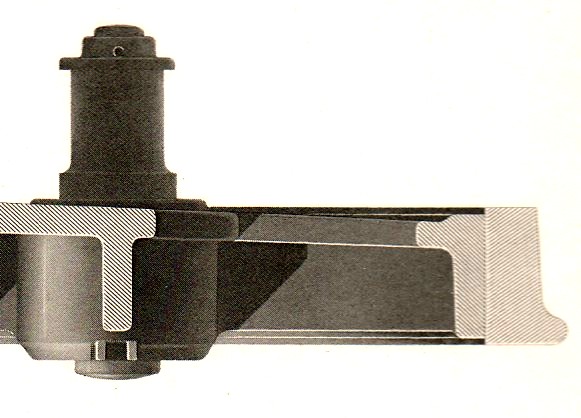
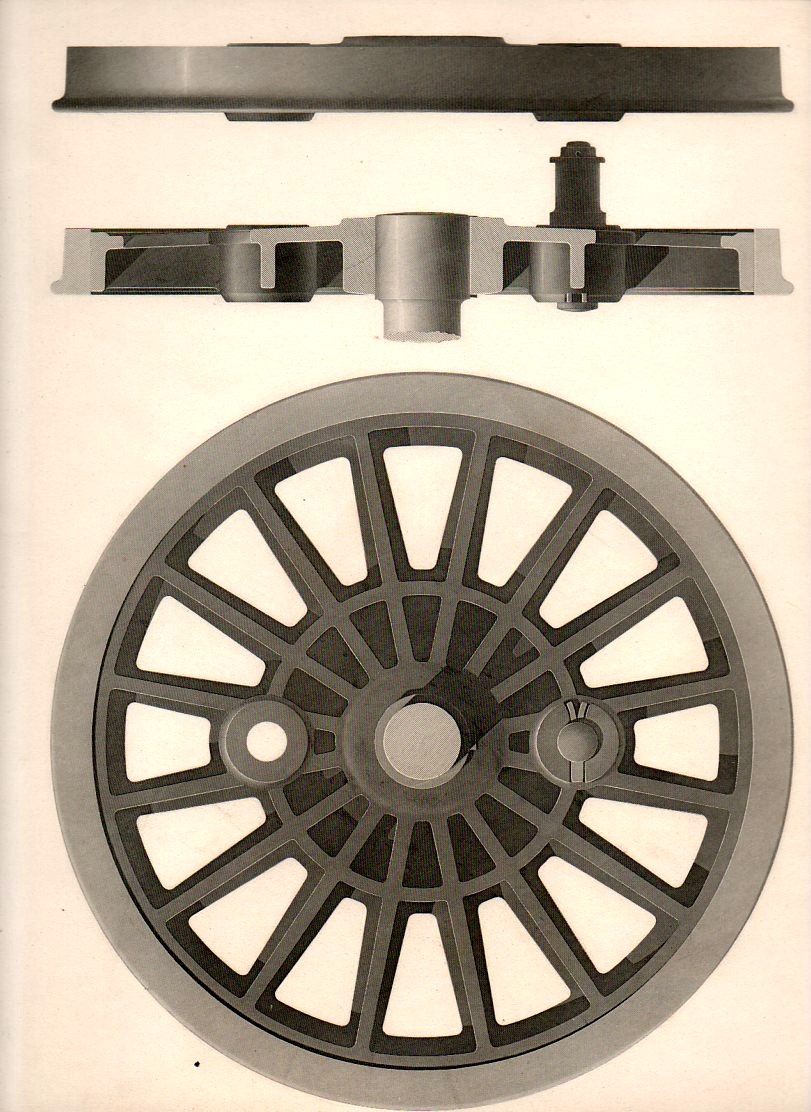
    This superb engraving, “Examples of Finished Shading, Locomotive Wheels” (source unknown) was engraved by J.W. Lowry after the original of C.J. Wallis, and published by Blackie & Son of Edinburgh and London around the year 1880.  The work is detailed yet spare, heavy yet elegrant, beautiful, and of course perfectly shadowed.  Splendid. The details (above and below) could be almost anything, but the first does have a certain pull of the 18th century masters of Fench visionary architects (Boullee, Leduc & co.) to it. The full engraving (which is available at our blog bookstore) is follows the following.

    Techno art wheel489
    And the full engraving: Techno art wheel487


  • Found Sound: Kircher, Pythagoras, Blacksmiths & Earbones

    JF Ptak Science Books  Post 1358

    [Above:  a gorgeous display of ear bones of humans and animals: reading across the top:  man, cow, hors,e dog, leopard, cat, rat, pig and sheep, coming from Athanasius Kircher’s book on sound and acoustics, and about the first of its kind:  Musurgia Universalis, printed in Rome in 1650.  Image from Special Collections of the University of Glasgow library, and which is the bottom half of the engraving reproduced int he “notes” section1.]

    It seems that almost all of human history’s hearing has been impressionistic–a collection of aural landscapes that would disappear as soon as they were ended, unless of course someone was there to write down what was heard on papyrus or sand or mud or clay or paper.  Finding the sound was important because, well, it was a single-shot phenomenon, unless it was repeated by the presenter, or someone else copied the presentation, or wrote it down so that it could be read and interpreted later.  It was a phenomenal invention of Mr. Edison’s that brought the possibility capturing sound so that it could be played over and over again, the experience becoming a simple piece of technology available to anyone who could afford it.

     The odd thing now is that virtually everything is findable, recordable, archivable.  We can also hear just about anything from just about anywhere.  Before the telephone–invented by Mr. Bell only 135 years ago–in order to hear something from a distance beyond the normal auditory range, a person would’ve needed the assistance of objects such as these “propagation horns” from Kempsten’s Phonurgia nova (of 1673, pictured at left).  Sir Samuel Morland, a fantastic English polymath (1625-1695) also produced an instrument similar to this in his stentoro-phonica, constructed in the 1660’s  It is in a way similar to the giant listening devices devised and constructed by the Imperial Japanese Army in the earliest days of WWII, prior to their use of radar.   Or, if one was a monarch or other highly placed aristocratic or ruling class person, one could have used something like Kircher’s listening device, found again in his Musurgia Universalis of 1650 so that a little eavesdropping might go on from one far-placed room to the next. 


    Wheel-mounted acoustic locators for detecting enemy aircraft over Japan in the 1930s
    [Kircher’s device, below.]
    If one were to construct a monument to “found sound” certainly an important element of it would have to involve Pythagoras, who by virtue of walking past a group of blacksmiths heard something in their pounding that struck him deeply, exciting his foundational ideas about pitch.
    We see him featured prominently in the frontispiece to the Kircher work mentioned above–well, that and a lot of other symbolism as well.

    The blacksmiths are seen at middle bottom, and the man to their left is Pythagoras, pointing to them with a staff, seeming to lean on a marble pillar, but what that really is is a manuscript of his theorem regarding pitch.  reigning over all is a sun representing the Holy Trinity, its rays anointing the earth in the forms of light and angels, the world scene in the center, surrounded by the zodiac and hosting the seated Musica, all representing the ealier beliefs of mathematical/artistic/musical relational proportions, the music of the spheres. [There are other interesting appearances:  musical instruments at the feet of Pythagoras, Pegasus (perhaps?) at the top of the stairs at middle-right, mermaids in the distance, and of course the figure at right, surrounded by all sorts of musical instruments as well as a golden owl.  Of lesser importance but of high interest is the figure just to the right of Pythagoras’ elbow, a figure who seems to be singing, or yelling, or attempting to hear an echo,]
    Perhaps the most significant manufactured found sound–in the tradition of Swift and later that of Burroughs and Gysin–was Kircher’s absolutely fabulous  music-making machine, the arca musarythmica.  It was with a device such as this that any person of any (in)sensibility could compose a slightly pre-arrnaged piece of music, combining previously tranbscribed scores together at random to produce a wholly new musical composition. As described  on the Glasgow Library site, the instrument functioned so: 


    The arca musarythmica is a device by which a non-musician could compose a piece of four-part music using prearranged musical fragments inscribed in wands arranged in columns inside the box. Each type of wand corresponded to a particular metrical unit e.g. 4, 5, or 6 syllables, and on each wand there were examples of florid counterpoint on one side and more simple note-against-note settings on the other. Once the phrase to be set had been analyzed into its fundamental syllabic units, each of these could be set to an example taken from a wand of the appropriate type

    I don’t reckon that I’d like the music much (have there been any recordings of anything ever “composed” in this way?) but I sure would like the object. 
    Notes:

    1.

  • World War I Photographs–Full Metal Jacket, 1917

    JF Ptak Science Books       Quick Post

    WWI Photos Blindfold077

    WWI Photos Blindfold078

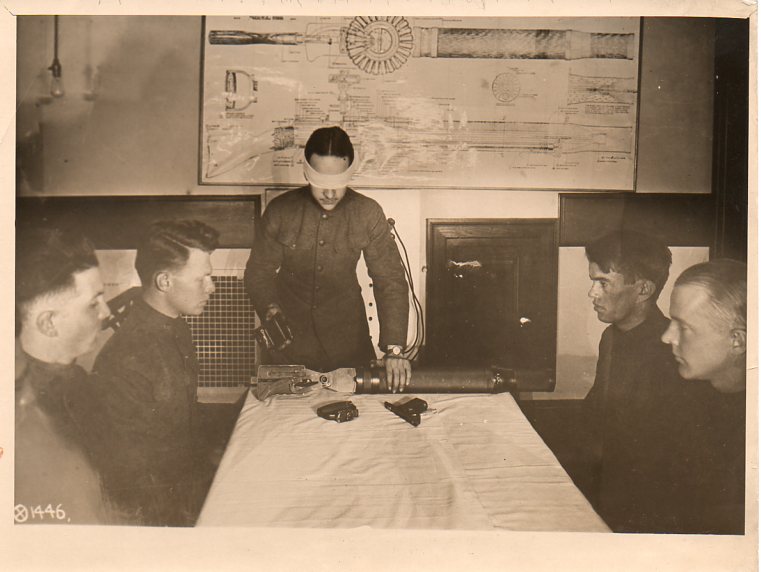
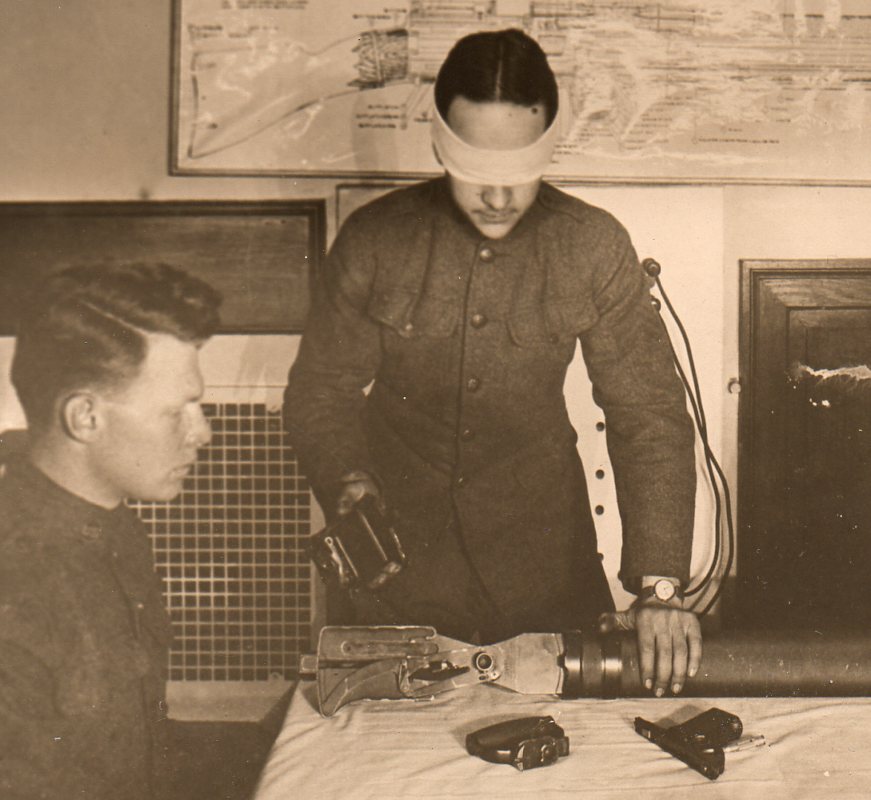
    I do believe that this is a Lewis Machine Gun, one of the most popularly-used automatic weapons by the BEF (and of American design). It was a gas-operated weapon firing a .30-06 Springfield at 500/600 rpm with an effective range of about a half-mile.  The drum magazine (not present here so far as I can see) held 47 and 97 rounds.  These soldiers were all business.

    The original is available here.


  • Note on an Alphabet of Computer Names in Fiction

    JF Ptak Science Books   Post 1375

    First of all let me say that I know almost nothing about Science Fiction–this  list started out  while looking for questions asked of computers in works of fiction and movies, but the question on questions is far deeper than I can deal with in a simple sit-down, though I did collect some interesting names of fictional computers along the way.  For this very preliminary list of computers in fiction I include computers with actual names–therefore, and unfortunately, beasts like the NORC-like computer that let loose Hell’s Kitchens in Kubrick’s Dr. Strangelove…. is not included because so far as I can remember it has no actual name, and names are important when you’re creating an alphabet.  Also I tried to look for images of the computers themselves, but since I stayed mostly in the 1940’s-1960’s, there are not many of those. 

    So here this is and please take pity–again this is preliminary and I hope to start filling in what made these machines interesting quite soon. In the meantime there’s an excellent list compiled at Wikipedia, here.

    AM, from Harlan Elison’s short story I Have No Mouth, and I Must Scream (1967).  AM “speaks” via paper tape, as below, using International Telegraph Alphabet No 2 (ITA2), a (much) earlier pres-ASCII-ite language, in this case saying “I think, therefore I am”. 

    AM Talkfield #1
    ALPHA 60.   From the film Alphaville, Jean-Luc Goddard, 1960.


  • The Alpha and Omega of Computer Questions; Asimov, 1953 and 1955

    JF PTak Science Books  Post 1375

    Asimiv question087
     

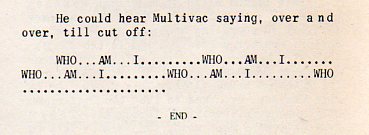
    Following up on yesterday’s post on the world’s first (popularly-published) computer magazine (Computers and Automation)  is this Isaac Asimov short story on what might be the first great computer question.  The story in mind, “Question”, appeared in the March 1955 issue of this same magazine, a two-pager sandwiched between an ad for Remington Rand UNIVAC and an article on computers and weather prediction.  It is the first appearance too of Asimov’s massive computer of the future, Multivac, a giant machine with corridors and nooks where technicians could stop and have a seat to enjoy a cup of coffee.  And it seemed to at least one worker that it wasn’t quite right to be sitting inside the machine, that the billion-tube, two billion relay computer was more than just a flow of electrons. (The ENIAC, which was basically the world’s first computer, had 20,000+ tubes, so a billion as  conceived by Asimov would’ve been a very big machine indeed, a 500,000-ENIACs-sized behemoth.) And a very hot one.   The workers wondered if you could ever tell if the machine was alive, if it thought on its own, if it attacked aparat from its instructions and programs. 

    As it turns out, the answer was positive, and not only that, but Multivac could speak.  Its answer to “the question” was “who…am…I…?”, repeated several times in the closing sentence of this rocket-fast short story.  I guess that that would give you pause, as it would anyone had the question come to them from their own computer while communicating along the spine of the great global “mind”, the Internet, and perhaps someday it will, at some time in the near-ish future when the height of our own computer-y heights looks as quaint to them as a half-million ENIAC idea of 1955’s premier scifi writer looks to us today.

    I know almost nothing about Asimov, but he seems to return to this idea of the Big Computer, Multivac, and ultimate question a few years later.  It seems as though there was an issue of serendipity involve with the structure of the “Question” story and that of another writer’s ending for a story called “Problem for Emmy” by Robert Sherman Townes. Asimov admitted the similarities but also maintained that he didn’t know of Townes and had never read his story–be that as it may, Asimov promised that he would never reprint the story, and it seems as though he never did.  But it looks as though he resurrected his idea somewhat, which is fine, because the whole idea of ultimate/penultimate questions and massive computers is a great genre. 

    Asimov wrote a story called “The Last Question” in 1956, a year later, writing about a trillion years of human history in the space of another terrifically-short short story, the short story that Asimov found to be his own favorite.  If “Question” posted the ultimate question put to the super-colossal Multivac computer,  ultimate question in “The Last Question” may well then be the ultimate answer.  You’ll have to see the ending of the story for yourself to see what it was–I can’t spoil it. 

    Notes:

    1.  I’m just a little surprised that Asimov was hung up on tubes in 1953–transistors had been in the air by 1947/8, published in 1948, and pretty-published by 1952.  I figure he should’ve been aware of them and how they would transform computer construction.  Maybe not. Perhaps he just wanted to write about a billion-tube computer. “Multivac ” stands for “muliple vacuum tubes”, and then “multiple vacuum tubes analog computer”, so using transistors might be a little at cross-odds with the name and the idea of the machine.  It woulod be interesting to put together a list of questions/answers of these early fictional machines, a longlist of which appears here.

    2. The two characters in the story by the way are named “Alexander Adell and Bertram Lupov”, both of which suggest the name Alexander Graham Bell to my head.


  • The World’s First Popularly-Published Computer Journal

    JF Ptak Science Books   Post 1374
    Computer history082

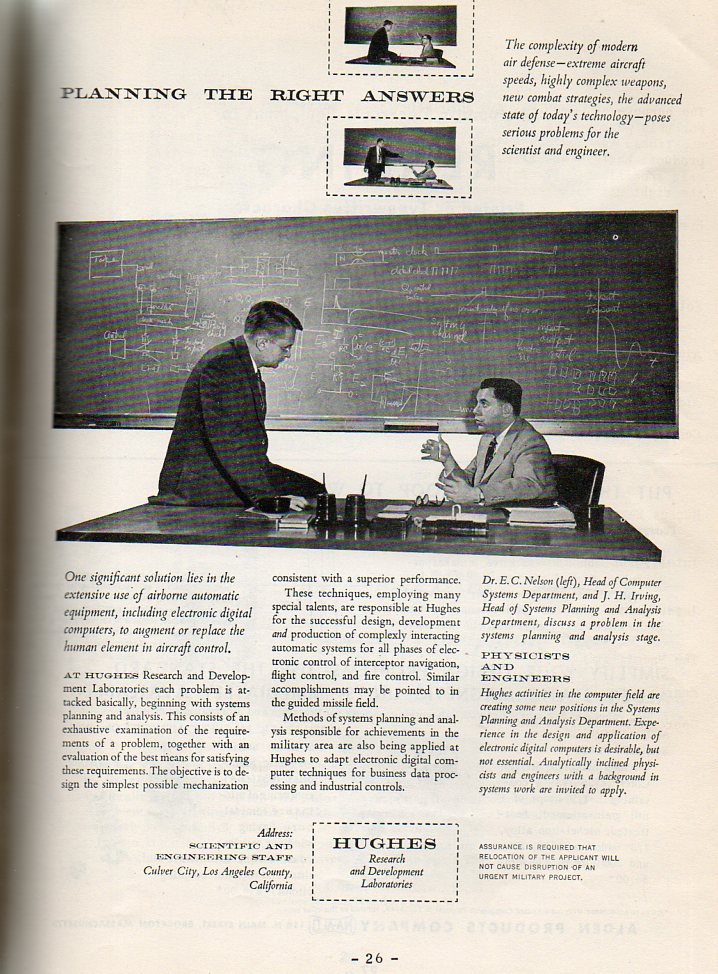
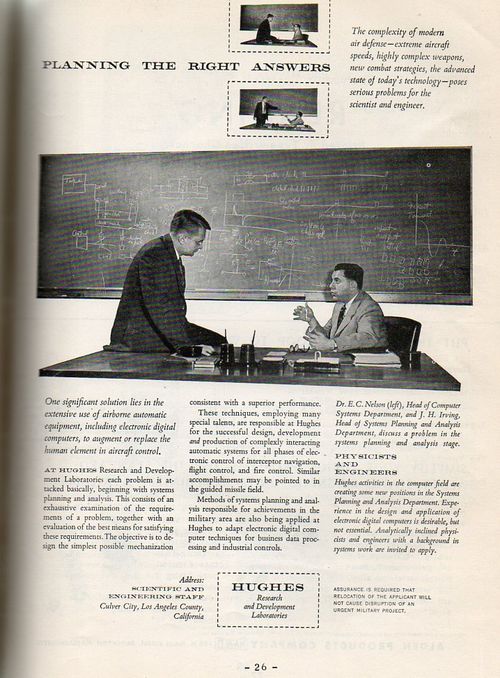
    Nothing quite gives you the taste for the ancient history of a very modern topic–like computers–than by looking through some of the earliest popular publications on the subject. This can actually be done pretty quickly if you wanted to just get a broad taste for the subject in its modern infancy–just reading the titles of the papers and taking in the advertisements might be enough. So here’s two volumes of a very scarce and interesting journal by old Edmund Berkeley that may do this job perfectly.  Berkeley was a bona fide mover and shaker in the early days of electronic computing in the United States–he had a lot on his mind, contributed many written words and ideas, and also tried to make a fair living while doing so (there was a bit of Sideshow Ed in him for some of the things he tried to sell.  

    Computers and Automation, the brainchild of the brainy not-child Edmund Berkeley, was the first popularly-published  magazine published regarding the computer, its applications, it programming, and really just about everything else.  (It appeared seven years after the Mathematical Tables and Aids to Computation  was published in 1943, almost entirely to the mathematics and engineering communities.) Computers was published by Edmund Berkeley & Associates in NYC beginning in 1952., beginning its publishing journey as The Computing Machinery Field, its name changing to Computers and Automation in February 1953 (in volume 2, number 2).   All issues have some fair space devoted to advertising, even though the issues generally ran between 32 and 40pp. Berkeley was a real-enough mathematician, engineer and computer pioneer, but he also had a pretty large taste for making these interests pay–which was essential, as the original print runs were not very large, though his advertisers were impressive. (According to the first issue, approximately 1200 people were on the mailing list for the journal, with around 2000 issues being printed each number. All told, this is not a large print run, and thus not many of the early issues have survived.)  He was not averse to being somewhat outre with his journal—in addition to having contributors like Grace Hopper and Alton Householder, he also had Fletcher Pratt and Isaac Asimov writing some pretty arresting pieces from the SciFi/Futurama point of view.
    Computer history083

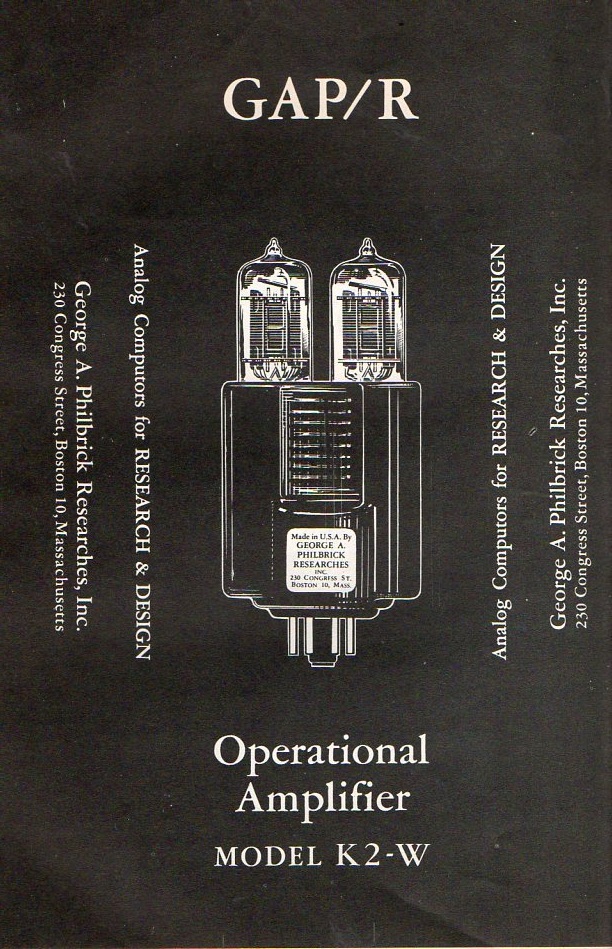
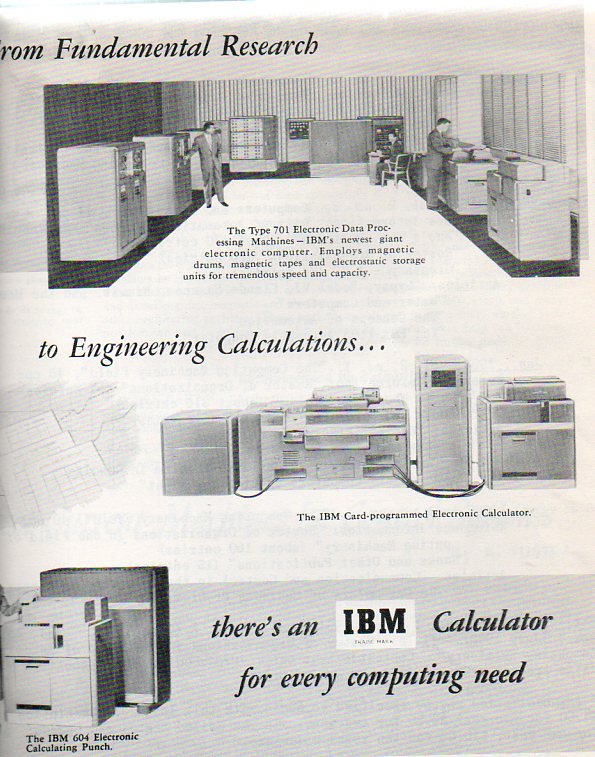
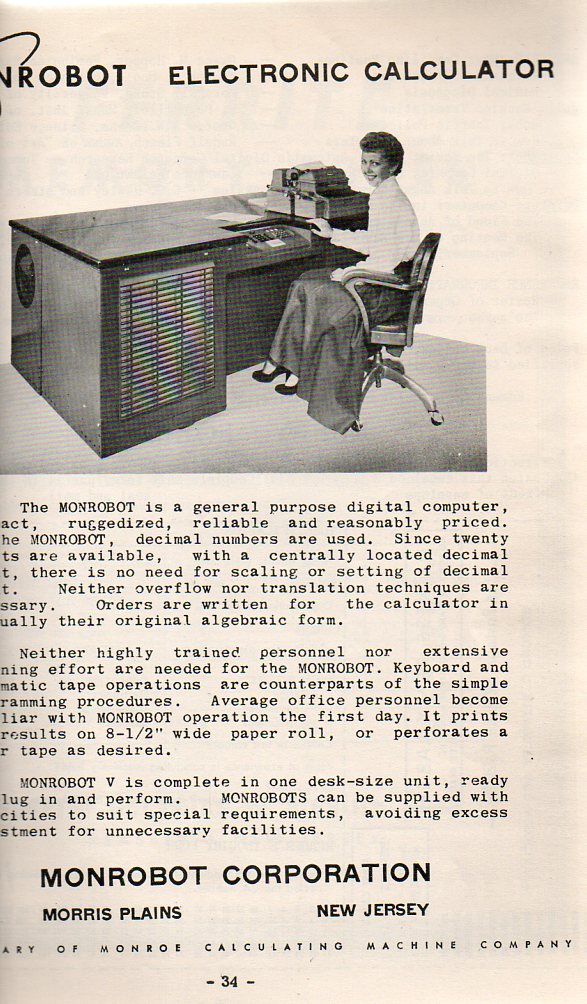
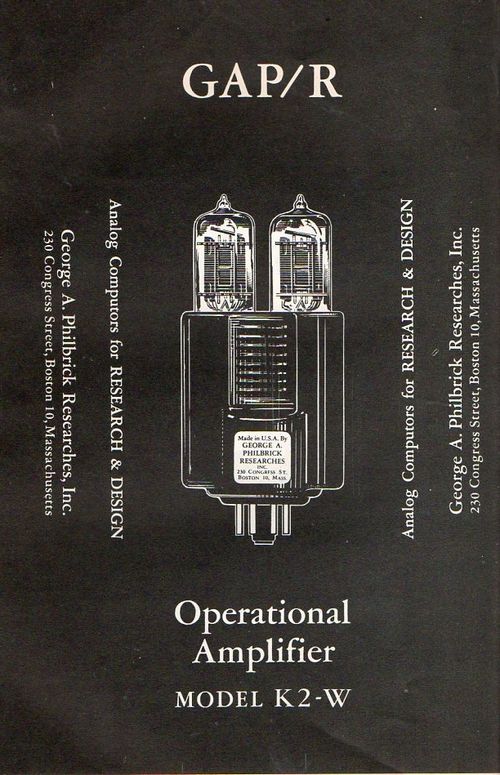
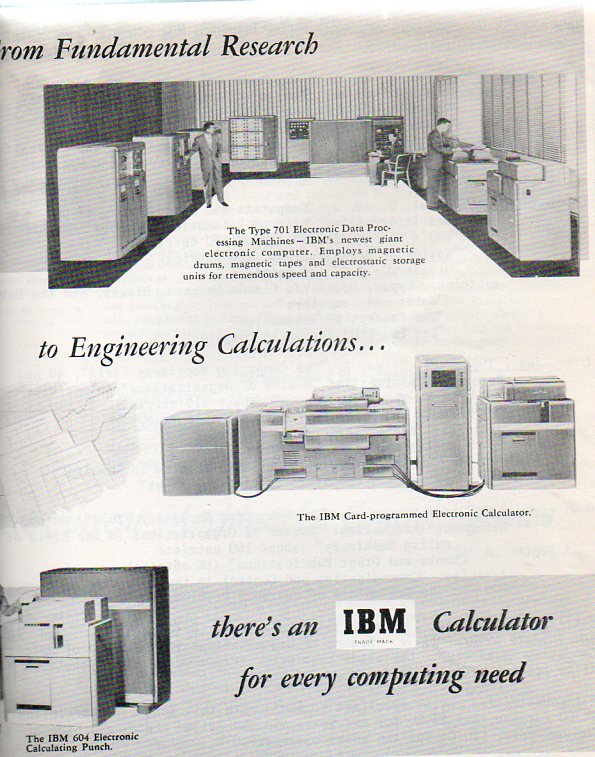
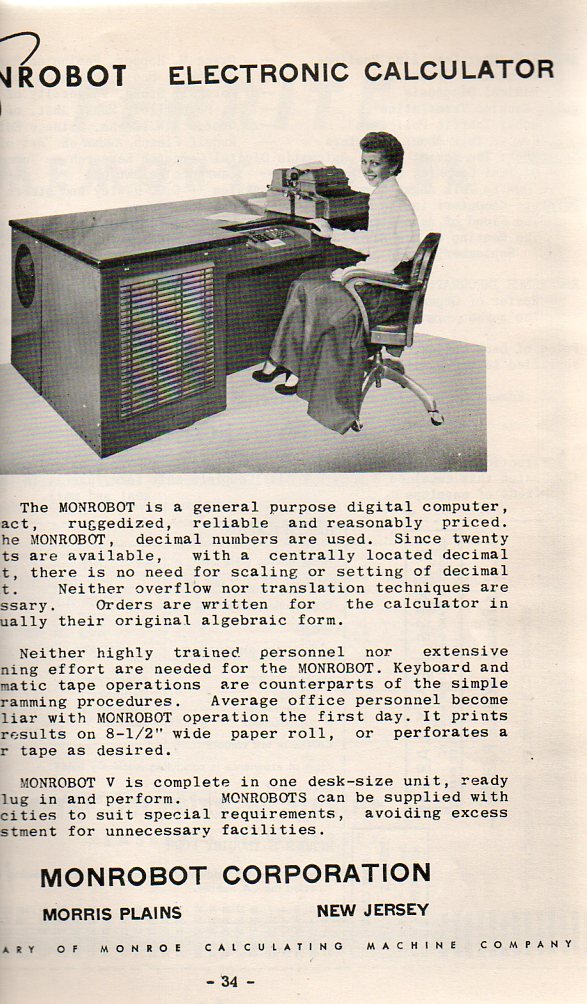
    A Note on the Advertisements: in short, they’re wonderful. For example, on the back cover of vol2/1 is Edmund Berkeley & Associates “SMALL ROBOTS”, advertising “Simon, the Mechanical Brains”, “Squee, the Robot Squirrel”, and other gadgets. To give you an example the other ads in this issue alone are for “The Circle Computer”, “General Ceramics Ferramic Cores”, “Magnetic Metals Co. Amplifier Cores”, Ross Ashby’s “Design for a Brain”, Consolidated Engineering’s SADIC System, Monroe Calculator’s Monrobot Electronic Calculator, George Philbrick’s “Computor (sic) products”, and a lovely two-page spread for Remington Rand. Further into the year are ads for Burroughs, IBM (604 ands 607), Electronic Associates Inc, Prokar capacitors, and many others.

    Some of the subjects include: The ERA 1103 computer, NIMWIT, Applications of the Computer, what the computer *is*, Admiral Grace Murray Hopper’s compiler, mechanical translation, Harper’s subroutines, the cost of coding, computer “self-repair”, automation at Ford, and so on.  Also includes perhaps the earliest announcement of the first all-transistor computer (October 1954, IBM’s “new experimental transistorized computer” , the earliest (?) printing of Asimov’s Three Laws of Robotics in a scientific journal, and more.
    Computer history086

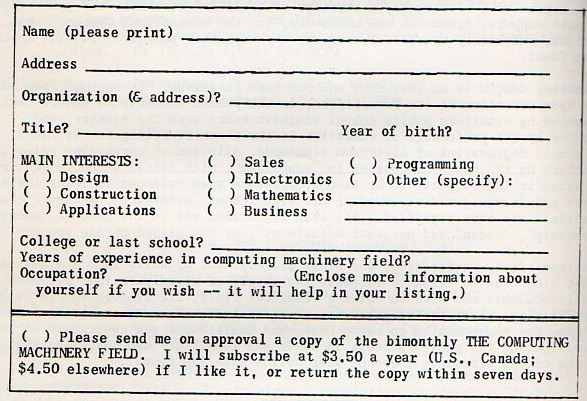
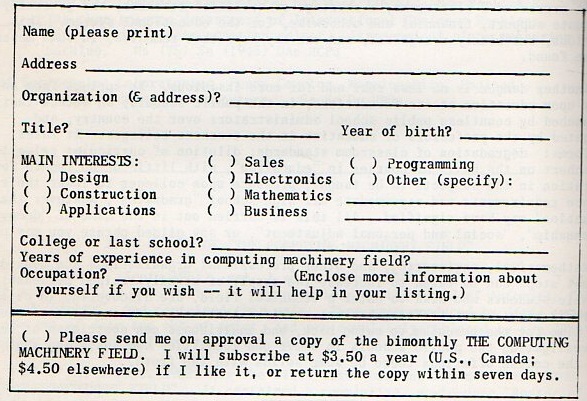
    Each section generally has three of the following categories (per issue) : computer glossary, roster of member organizations, who’s who, an annotated books and journals section, and other aligned concerns.  For example, there’s this bit, an application (cut-out) card for “Who’s Who in the Computing Field for December 1952”–utterly simple, it seems as though anyone who filled out the card was in, the “who’s who” part of this that we normally celebrate with fame or achievement really was just telling the rest of the people in the field who was exactly who.
    Computer history084

    The contents:

    Volume 2/1, January 1953. 45pp.

    Householder, A.S. Brains, Electronic and Otherwise; Williams, S.B. (President, ACM) What Computers Do; Murphy, E.F. and E.C. Berkeley. Automatic Computers on Election Night.

    Volume 2/2 , March 1953. 37pp.

    Boehm, George A.W. Gypsy, Model VI, Claude Shannon, Nimwit and the Mouse; Paynter, Henry. Water and Computers; and the editor Berkeley, The Concept of Automation, and Berkeley (with Neil Macdonald, Berkeley’s other name). The ERA 1003 Automatic Computer

    Volume 2/3, April 1953. 40pp.

    Fletcher Pratt, The Art of Solving Secret Ciphers and the Digital Computer; Berkeley, Avenues for Future Development in Computing Machinery;  Gene Hegedus, Hungarian Prelude to Automation..

    Volume 2/4. May 1953. 33pp.

    Grace Murray Hopper,  Compiling Routines; A.D. Booth, Mechanical Translation; Marshall Stone,  Medical Diagnosis.

    Volume 2/5. July 1953.

    Yehosuha Bar-Hillel (the great logician),  Machine Translation; George Boehm, Robot Traffic Policemen; Rudolf Flesch,  How to Talk to Computers.

    Volume 2/6. September 1953.

    Tommaso Fortuna,  The Soviet Union: Automatic Digital Computer Research.; Wainwright, Lawrence Wainwright,  Digital Computer Questionnaire; and a general DISCUSSION: “How to Talk About Computers”, with GG Hawley, Samuel Scharff, C.B. Crumb, and EC Berkeley.

    Volume 2/7. October 1953. 36pp.

    Brown, David W. Brown Computers in the Factory; Neil (Berkeley) Macdonald,  The Flood of Automatic Computers. 

    Volume 2/8. November 1953. 40pp.

    John W.Carr  III. Who Will Man the New Digital Computers?; E.F. Cooley,  Electronic Equipment Applied to Periodic Billing; Glenn.Hagen,  Air-Floating: a New Principle in Magnetic Recording of Information.

    Volume 2/9 December 1953. 36pp.

    Clippinger, Richard Clippinger, How a Central Computing Laboratory can Help Industry; R.T. Wiseman, “Combined” Operations in a Life Insurance Company instead of “fractured operations”.

    These are the contents for 1953; the volume for 1954 bulks up a little, but is still under an inch thick.   The MTAC journal stays quite slender throughout its pre-1960 life (it has virtually no advertisement and is entirely academic), and there are more and more computer articles appearing in old stand-by associated journals like the Proceedings of the Institute of  Radio Engineers (which by 1959 will published a massive supplemental volume called “the Computer Issue” which I’ll talk about soon.  For the time being, I just wanted to make an inroad into this journal–I’ll expand on he articles in just a bit. 
    Computer history085


  • The First Photo Inside of the Information Revolution–the Transistor, 1949

    JF Ptak Science Books  Post 1370

    Transistor 066

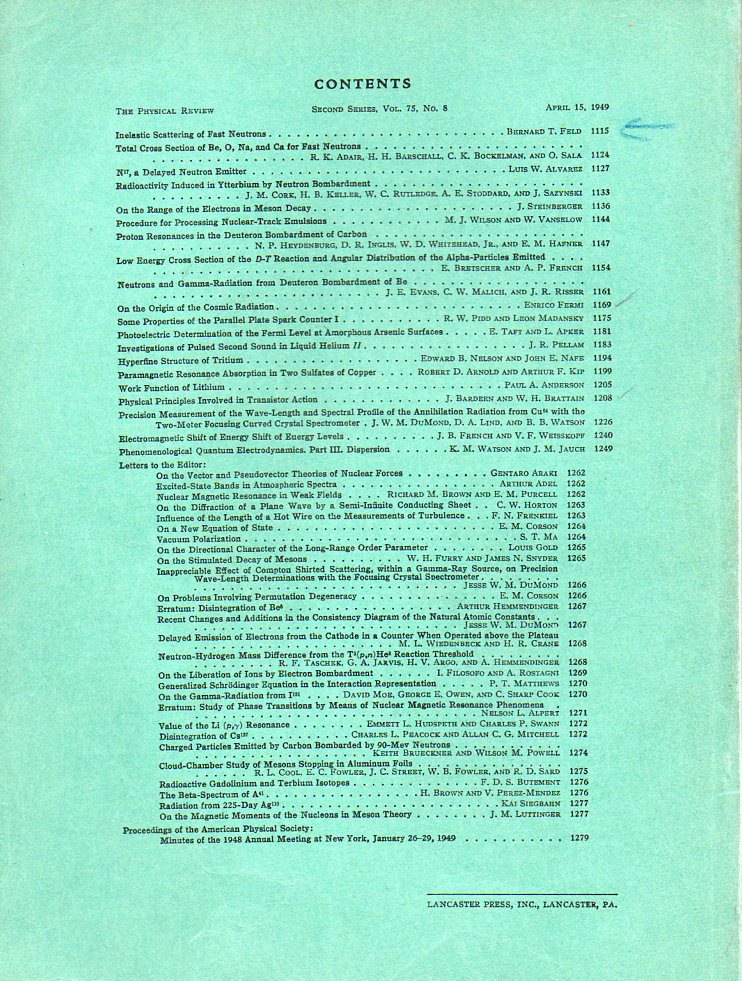
    One of the things I love about working my way through old scientific journals is when I find the issue that I’m looking for and scroll down the list of contributors to find the significant article that I want.  Long list, usually; and then, after making my way through 30 or 40 lines of tight type of the index I find it. [This by the way is one of those experiences that is being replaced by the digital library.]   Even though the paper on pp 1208 through 1226  of the 15 April 1949 issue of The Physical Review looks like any other, it is today seen as revolutionary. The entry for “Physical Principles Involved in Transistor Action” by John Bardeen (two-time Nobel in physics) and Walter Transistor 064 Brattain (Nobel ’72) shows up about halfway down the index, sandwiched in some very good company (Enrico Fermi’s “Origins of Cosmic Radiation” and a number of others), and does not show up bolded, or highlighted, or with an asterisk.  Such is the nature of publication in the academic journal world, everything delivered with equal weight. (The original publication is available for purchase here at our blog blookstore.)
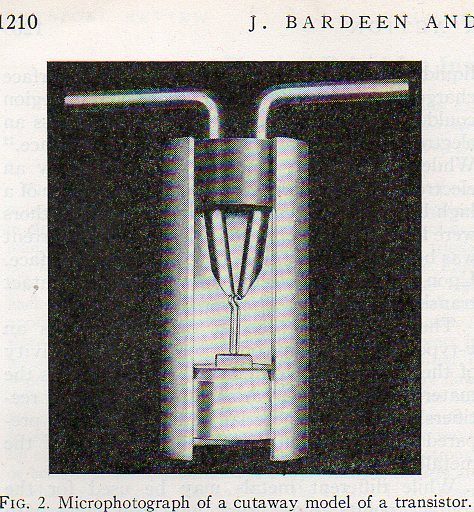
    It makes me wonder though how it would’ve felt to open this journal for the first time back there in mid-April ’49, turning to page 1210 to see the microphotograph of the cutaway of a model of the transistor.  This was the defining technical publication on the transistor1, which was the first massive step towards microminiaturization and the explosive new growth in the computer, allowing far more powerful machines to be designed in far less space, in far less amounts of time, and on and on.  It is one of the first steps in the Information Revolution, moving the computer from massive racks of electronic tubes to more simple, elegant, nimble and by-far faster circuit boards with transistors (and resistors, capacitors, inductors, diodes, etc.) to make an electronic circuit.  This would be the standard for computer construction, only supplemented by Jack Kilby (TI)  and Robert Noyce (Fairchild Camera) in 1958/9 with the integrated circuit, where transistors are made smaller still and produced in groups on circuit boards rather than individually.

    The photo above shows a cutaway of the transistor, and is the first time it was published–the first photo of what was one of teh 20th century’s greatest inventions. 

    Transistor 065

    Notes

    1.  The paper was published simultaneously in the Bell System Technical Journal; Bardeen and Brattain were with the Bell Labs.  The Bell journal also contained another revolutionary paper in the same volume, Claude Shannon’s “Communication Theory of Secrecy Systems”, which is one of the most important early papers on electronics and cryptology.  (We also have a copy of this classic paper for sale at our blog bookstore site.)


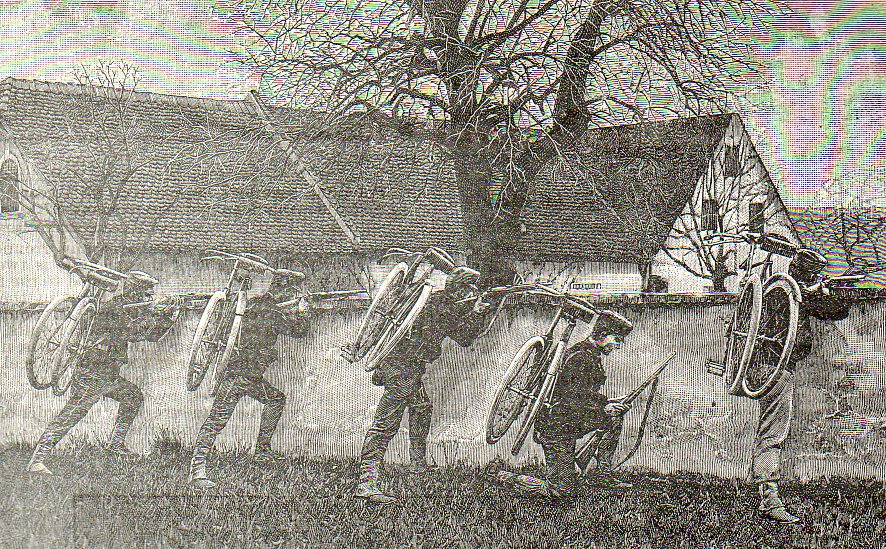
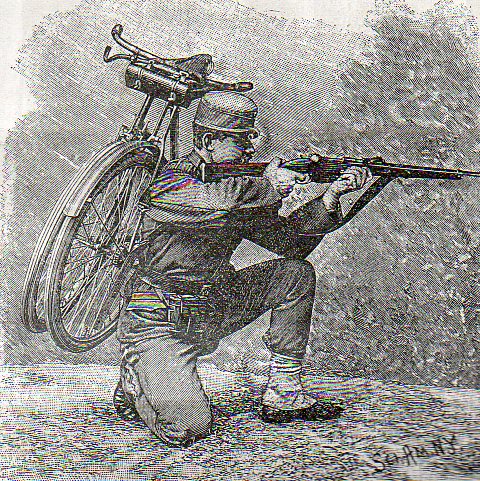
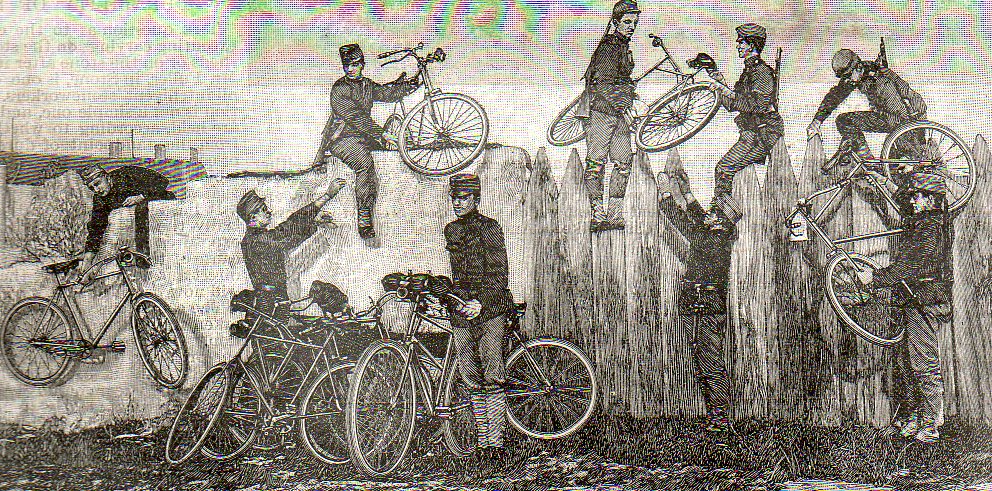
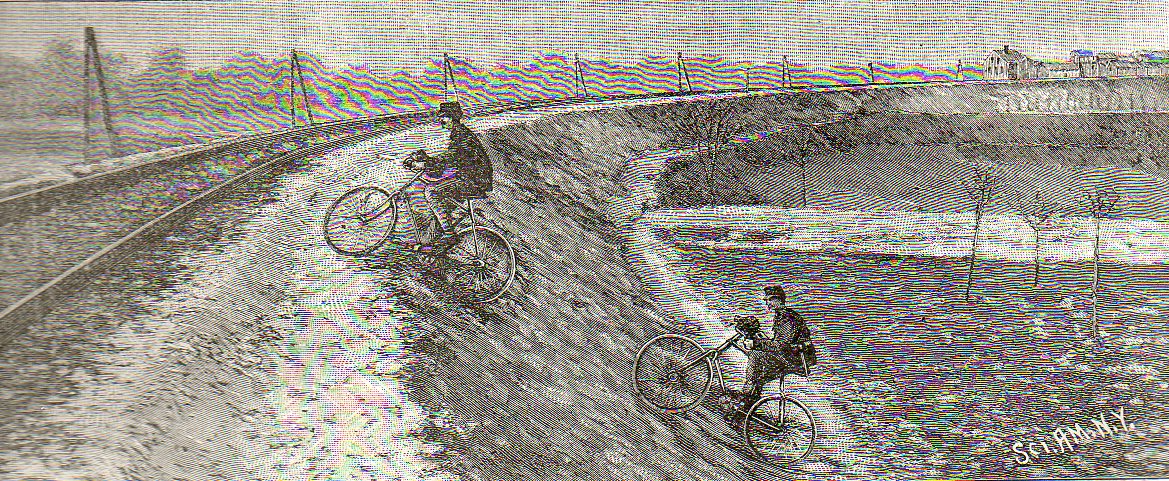
  • Fantastic Contrivances of Massive and Unneeded Difficulty–Bikes in War, 1897

    JF Ptak Science Books   Post 1345

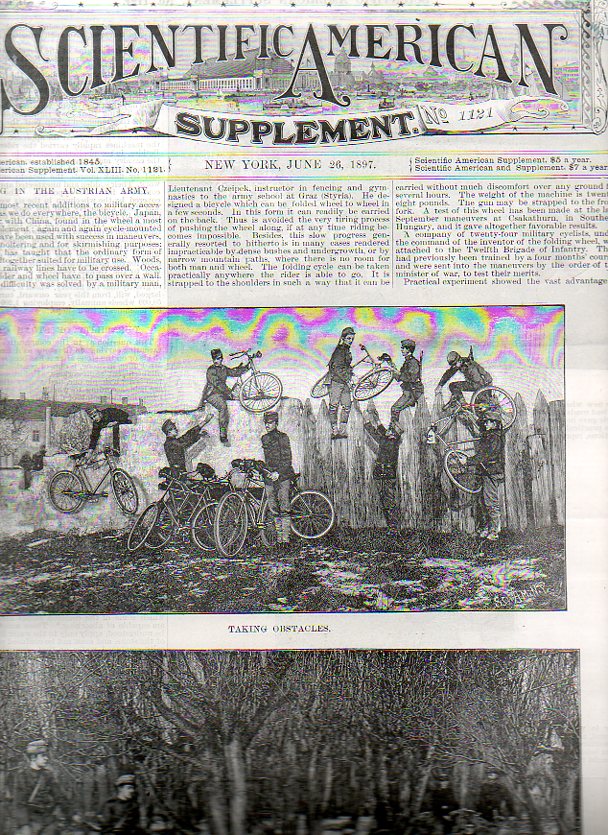
       Bike army 439

    When I see images like this, I can feel a symphony of bad ideas rattling  my bones.

    Of contrivances great and unnecessary,  that of bringing the bicycle into the field of war–banking on a fabulous interest in the machine and riding a wave of enthusiasms enjoyed by millions–is among the loftiest of lofty unnecessaries of the past 150 years or so. When these pictures were published in 1897 interest in the bicycle was shattering; it was a popular conveyance, and then in just two or three years, an explosion:  millions of people suddenly needed one.  Bikes seemed to be everywhere,  which forced people to imagine new and different uses for the machine.  And so the Austrian army came up with a plan to include the bike in its plans of war, and it proved to be as about as useful as a double-decker horse.  And just like that–poof–the fragility of the bike’s expansive uses fell right off the table, along with the popular interest in it, which by the turn of the century saw the millions who had turned towards the bike turn away. 

    Bike army 440
    It is difficult to image a more unpleasant (real) use for the bike than this.  The pictures seem as though they are part of a Monty Python montage, but they were indeed deadly serious–though I do need to credit someone, anyone, who came up with the idea of a folding bike to make it slightly more transportable.  (Overall though it seems almost as useful as a folding tuba.  Or sousaphone.)  If employed I think the idea would’ve proved to be more deadly to the biker than whomever the biker was attacking.  Or, more likely, fleeing.

    Bike army 436
    One can only shudder and what it must’ve been like, sitting on top of that fence, handing bikes (with lights and horns) from one side to the other, bullets flying, attempting an attack with 75 pounds of cumbersome trouble slapped to your side.  It must have felt insane.

    Bike army 441

    (The original print is available from our blog bookstore, by the way.)

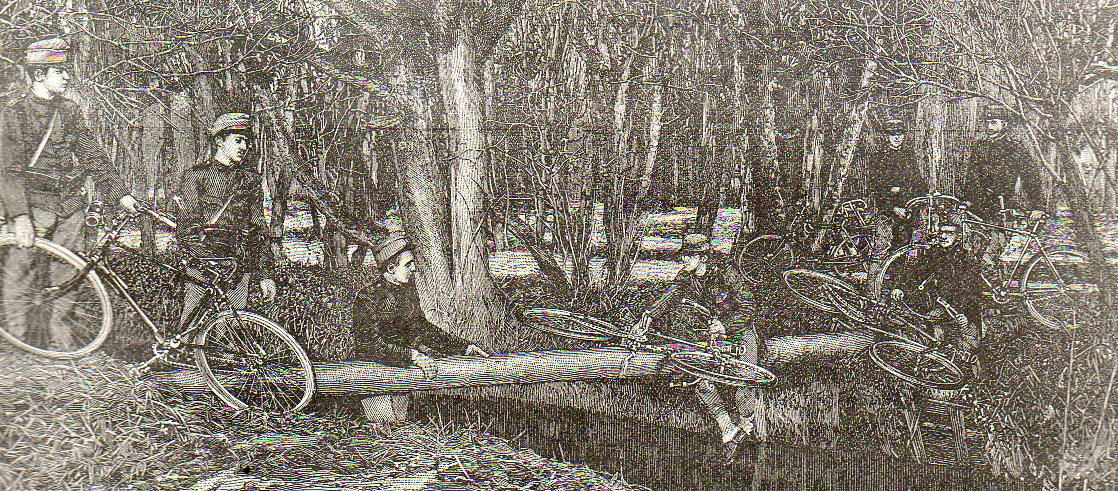
        Bike army 435

    Bike army 437

    I think these men would have heard the music too as they slogged their ways through brush and trees and muck and the like, sliding their bikes along that log to keep them dry while the men stood in the wet. They would’ve heard the music too, a short little symphony played on folded instruments, which sounded as bad as it looked.


  • Proust Suits and Pressurized Cabins

    JF Ptak Science Books   Post 1341


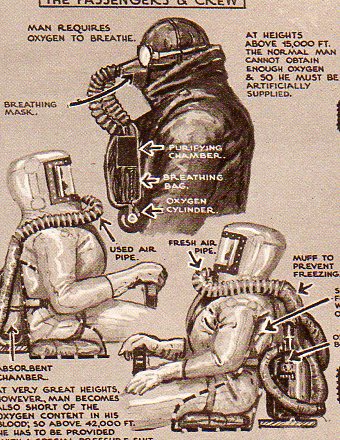
    If I put my literary specs on and do a little free-association,  what I see in these two figures is a Proustian thing, characters in search of time, freezing time, preserving it. Time, and everything else, everything that can be associated with a human experience captured and recaptured, recirculated, resuscitated, replayed, re-envisioned, remembered, recognized, over and over again.  Kind of like a memory hell, in a way, only in Proust’s hands it all sounds and tastes so beautiful. Another peek without those wicked mega-specs and I see two robots from a pulsing Disney film, actions in search of characters–the possibilities are endless, particularly if you develop a little narrative. The real story of what is happening here is complex version of a simpler solution.

    Pressure404

    And the key to it all: hypoxia.

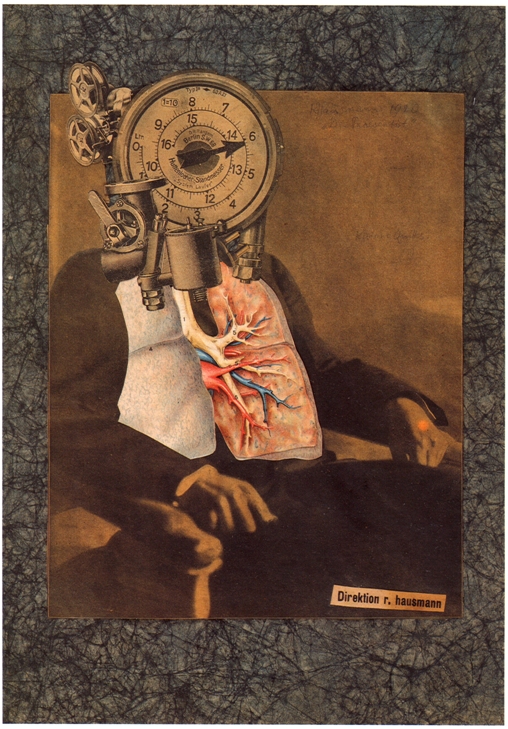
    But I can’t leave this without at least a mention of Raoul Hausmann, whose “Self Portrait of a Dadasoph” is related to this line of collecting consciousnesses:

    hausmann

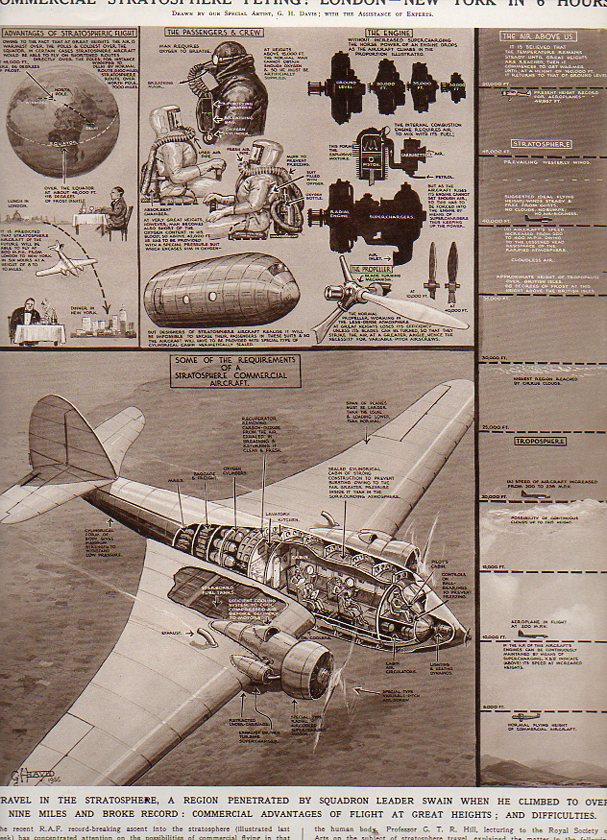
    When this next image was published in the Illustrated London News in October 1936 the practical application of tropospheric flight was just about a reality.  I should really say “popular” more so than “practical”.  It presented two approaches to a looming problem in the progress of aviation–reaching altitudes in excess of 10,000 feet begins to present a host of problems to the passenger of that aircraft.  The solution was to combat the pressures of high altitude flight, one of which was to pressurize each passenger and crew member in their own “space suit”.  The combination of the artist G.H. Davis1 and the technical assistant compared this solution to the problem with a more simple and elegant solution.
    Pressure405
    And that was relatively simple, at least in thought experiments: rather than pressure everyone individually, you could place everyone in a pressurized environment within the aircraft.  And this is the point that the artist/techie make–earlier engineers came up with simple solutions to traveling at high altitudes–they just weren’t simple enough.  And compared with the better design, the initial, simple, designs look a little monstrous.
                                   
    Notes:

    1. I include Mr. Davis as an iconic figure in the history of 20th century technical illustration–he has been featured on this blog many times.


  • Brevity and Complexity–Radio Programming, 1940

    JF Ptak Science Books   Post 1320

    Radio Ballot c cvr323   I think that if a grown-up kid in 1940 was offered the chance to have a working-man’s Super Power,to be suddenly endowed with a non-heroic Super Something, a popular choice could have been to possess  radio repair vision (RRV).  Or that’s what it seems like.  The popularity of radio was so fantastic that ownership of radio sets doubled in the United States from 1931 to 1938, when houses with radios rose from 40% to 80%. Radio was everything.  There were many contributory factors to this phenomenal increase in popularity, not the least of which was the Great Depression–once you got your radio the listening was basically free except for the power that it cost to run the radio.  Recorded disks on the other hand suffered tremendously, with sales falling from $75 million in 1929 to 23 million in 1938 (with a low point of $5 million in 1933), and that would be due to the Depression and the the popularity of free stuff on the wireless, as well as other things.

    Radio Ballot a321

    People maintained their radios, kept them in good order, tinkered with them, cleaned the tubes, replaced the tubes, kept things going.  Those early units were pretty hearty, overall, but there was a certain percentage of folks who couldn’t do the basics for themselves, and so would bring in their radio repair man.  He was an important fixture in a community–not quite like the milk man or the ice man, who would be seen everywhere every day, but popular enough.  TO be able to fix radios with supervision and kept millions of people connected would’ve been a big deal, especially if you thought about it with the mind of a ten year old.

    Radio Ballot b322

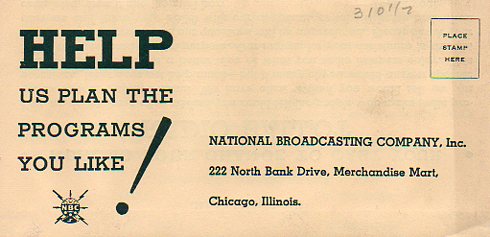
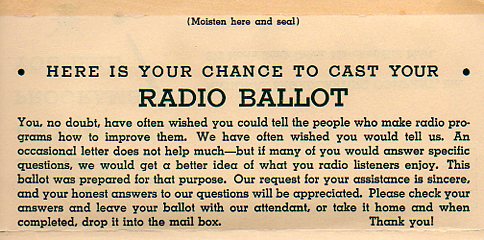
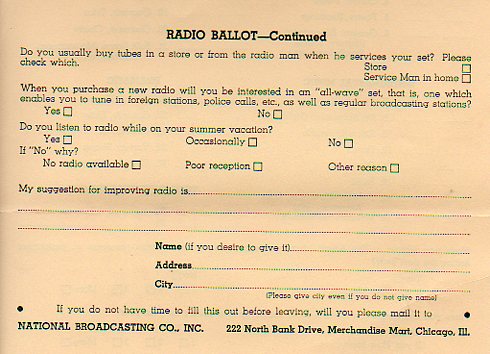
    I’m just trying to establish the popularity of radio with this aside to get at the main point of this post–how radio executives at NBC tried to access the common knowledge base of what people wanted to hear on the radio, and when.  And one aspect of that was seen on this single piece of paper: [The original is available for purchase at our blog bookstore.]

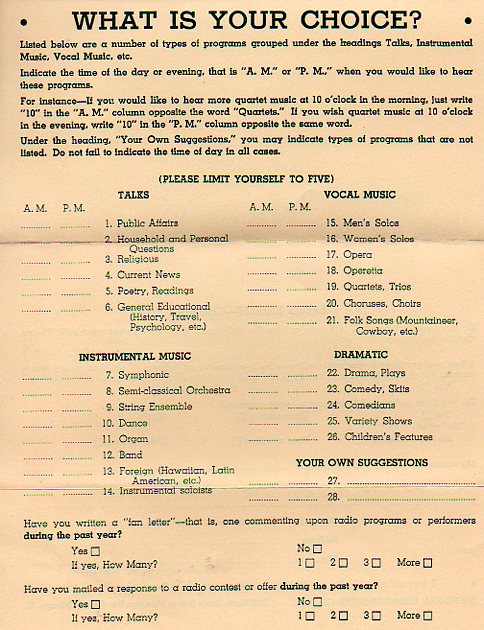
    The National Broadcasting Company sent out self-adhesive mailers to people to probe their listening needs.  This would seem prehistoric by today’s standards of estimating what television/video watching people were like and what they would want to see, and perhaps to pay for.  But in 1940*–or perhaps a little earlier–this was one method of making this determination, with a gentle survey about what the listener wanted to hear, and when.   And they were expected to pay for the privilege, as well, as these self-,mailers weren’t pre-stamped. 

    On the questionnaire of listed types of programs we find 26 examples, including six for “talk radio”, sixteen for music (eight for  instrumental and seven for vocal!), and then only five for the dramatic stuff (comedy shows, drama, variety shows, and even one for children. (An historian of radio programming would probably know instantly the age of this flyer given the number of slots slated for the drama shows, I’m sure.) The division  of the music is also interesting, particularly for me since “string ensemble”  is one of the 26 overall programming selections, though I doubt that they were talking about the late quartets of Beethoven–I think they might have been referring to sweeping, thousand-string “beautiful” music.  Also the division of “opera” and “operetta” is unusual.
    Radio Ballot d324

    The “brevity” part of listen surveys is certainly attained here–the complexity part will come a little later.  Radio surveys became very sophisticated in the mid-1950’s when radio’s existence was threatened by television, which completely dominated the market for talent and advertising dollars and listeners by the late’50’s. 

    Notes

    There’s no direct mention of FM radio, which came into some restricted use by 1938-1940 and which is not mentioned explicitly here.  Perhaps this means that this was issued before FM–or perhaps it is later, as I said, and simply just not mentioned.