A Daily History of Holes, Dots, Lines, Science, History, Math, Physics, Art, the Unintentional Absurd, Architecture, Maps, Data Visualization, Blank and Missing Things, and so on. |1.6 million words, 7500 images, 4.9 million hits| Press & appearances in The Times, Le Figaro, Mensa, The Economist, The Guardian, Discovery News, Slate, Le Monde, Sci American Blogs, Le Pont, and many other places… 5000+ total posts since 2008.

Category: Technology, History of

  • Discovering Something Not Discovered–or, How to Best Figure Out What You’ve Got Left After Being Nuked

    JF Ptak Science Books   Post 1300

    Bomb damage261

    The spoiler answer to this:  make sure to account for the nukes dropped on you  when figuring out what you’ve got left to work with.

    This seems a tautologically  tongue-twisting, not-quite-right title for this post, and indeed it might be.  But that’s the way the pamphlet I’m reporting on read, a sometimes resilient-to- inspection rubbery beastie whose basis for being written was to report on an great oversight that doesn’t really want to be recognized, even if it is the title of the work.

    The Bomb Damage Problem, AFAPA-4-4, published in 1954 by the Directorate of Management Analysis (DCS/Comptroller at the  Headquarters of the U.S. Air Force) is a pamphlet of discovery–or rather, the discovery of the lack of discovery.  (The pamphlet is available from our blog bookstore, here.)

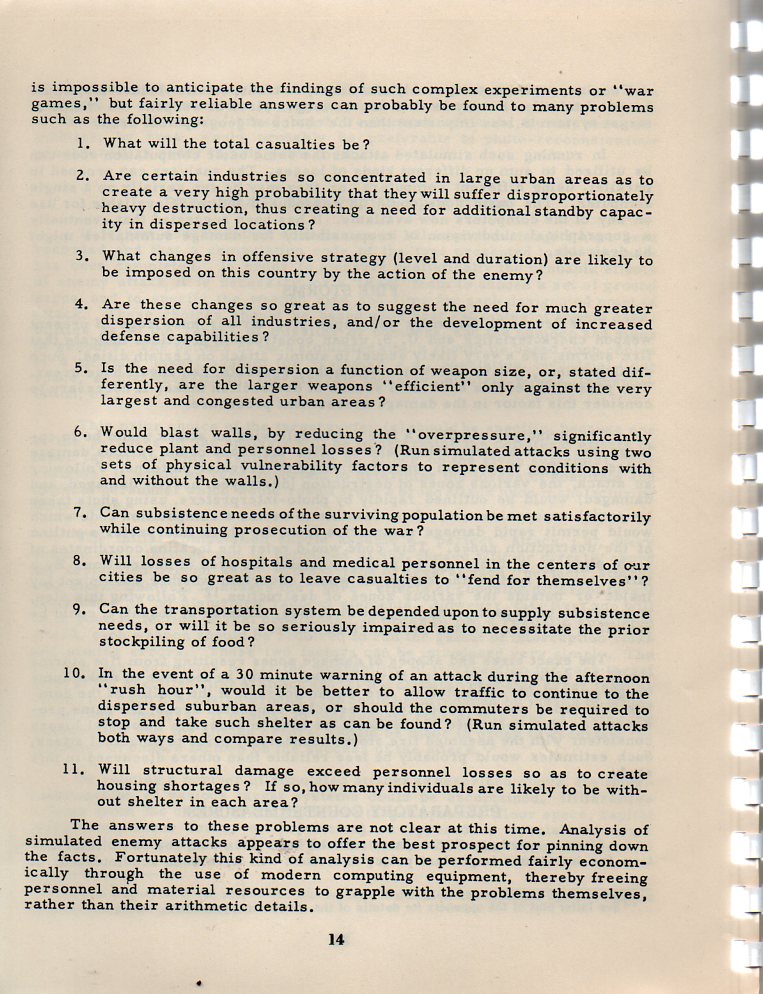
    The work is an introduction to some aspects of  nuclear exchange post-attack predictive capacity–particularly with the ability of American industry “to support a war plan”. 

    The anonymous pamphlet gets straight away to the discovery part–that previous predictions of post-attack capacity were “probably completely unrealistic” because “[they] did not take account of the likely bomb damage to the U.S. production facilities”. 

    I would think that even at this relatively early point of planning for possible Soviet nuclear attack that war game scenarios would have taken bomb damage to industry a”and accompanying manpower losses” into account of how the war machine would react after the bombs began to explode.  Though it seems not. I’ve looked to see how I could be misreading this thing because it seems like too monumental an oversight to make. But I can’t find where I’m making my interpretative mistake. 

    Ultimately the authors focuses on saving the corpus of the overall works, saying that this oversight does not damage the “important thinking” that had gone on it spite of this error.

    The word “error: is not used in the text of course.  This is how it is described: “In connection with this critical new obstacle to intelligent military planning, it is essential that speculation be minimized.” The error is actually redefined as a “critical new obstacle” the effect of which heightens “speculation”.   Which is all true.

    I suppose what is really going on his the formation of some bedrock stuff formulating information gathering for creating a computer program for deeper analytical study of the effects of nuke warfare on post-attack industry.  1954 is about right for the time for this to happen, and the DMA–as the home for the creation of linear programming among countless other things–would’ve been the place for this work to happen. 

    But I keep coming back to what seem to be enormous understatements–even giving plenty of allowance for the time–that keep cropping up in the pamphlet.  Perhaps it is just stating the obvious for the first time that makes all of these seem so potentially underwhelming, like this nugget:   “numerous measures of the importance of each target may eventually be needed….” (Page 7). 

    There’s plenty of more detail though that occurs in the pamphlet, as in figuring out damage to structures by the yield of the explosion and distance from the target and the composition of the target’s structure, and so on.

    And then we get back to the obvious: “the principal effect of a fire storm following an attack would be to enlarge the area of destruction and to alter the shape of the various damage zones, changing them from concentric rings to irregular patterns. “.  As I said, maybe it is just a case of a “Call me Ishmael”, or stating that lines and points in space exist for the purpose of geometry.  Still, it rubs me the wrong way, all over.

    And just to make this point perfectly clear:  the “bomb damage” problem is to take into account bomb damage to U.S. war-making, bomb-producing capacity, in a sort of BIBO (bomb in, bomb out)  version of a SISO (shit in, shit out).
    Bomb damage b262


  • A Girl and Her Submarine, 1918

    JF Ptak Science Books   Post 1299

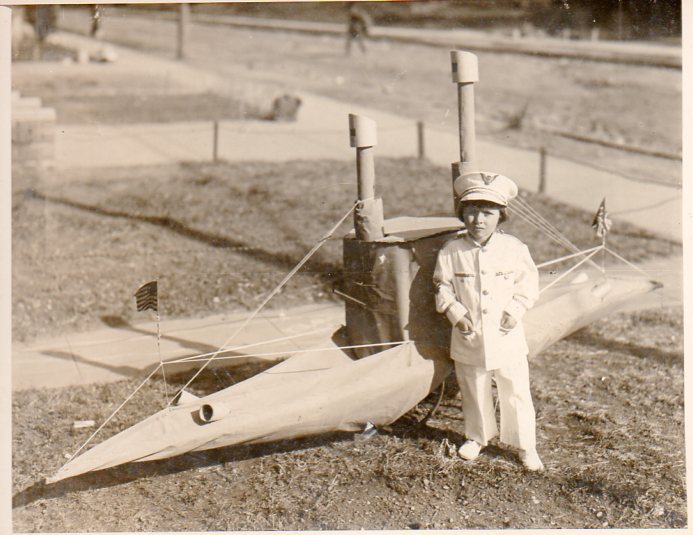
    I could hardly resist this 1918 image:  the young girl, the hands in her pockets, the ribbons on her chest, her submarine fashioned over a tricycle, the two flags (Stars and Stripes and the Union Jack).

    WWI photo--girl submarine249

    The sun is low, rising or setting, and it is catching the girl in the face, the home-fashioned cardboard visor of her home-grown officer’s headgear doing nothing to shade her eyes.  She’s in her dress whites, maybe proud of someone else’s handiwork on her ten foot long submarine.  [The photo is available on our blog bookstore site, here.]

    The image comes from a small archive of WWI  news service photos, this one no doubt intended to stir some home fires to help raise money or spirits.  I have no idea of the image was ever published. 

    And of course the details:

    WWI photo--girl submarine250

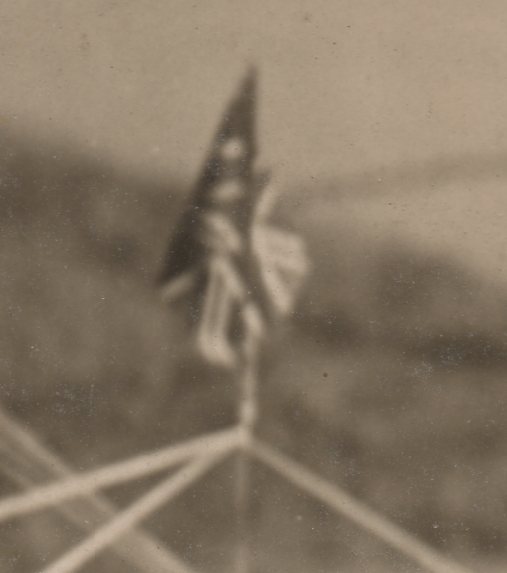
    And this of the stern flag, the Union Jack:

    WWI photo--girl submarine251

    And this, with the hand-sewn eagle on the hand-made jacket, with all of the trimmings a creation of mom, or someone else as kind:

    WWI photo--girl submarine252


  • Protection from Aircraft, Part 3: the 1930’s and Anti-Aircraft Philosophy

    JF Ptak Science Books   Post 1281

    Bloglondonballoon

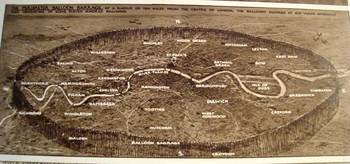
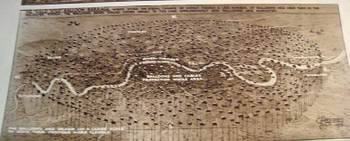
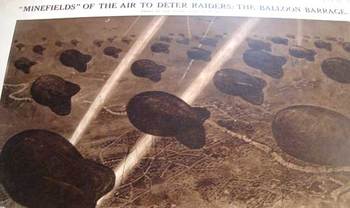
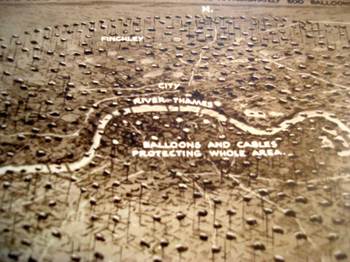
    This series of drawings, published in the Illustrated London News 16 July 1938,  by the incredibly prolific and detail-oriented G.H. Davies depicts one segment of the city defense program being formulated by the British government in the last year  or two leading up to the beginning of the European end of World War Two. (I own 150 or so of these images by Davies–he never fails to provide the detail where you need it.)   The overall plan for defending major British cities consisted of anti-aircraft guns, searchlights, R.A.F. fighter squadrons and interceptors, and the “Balloon Barrage”.  London and suburbs are featured here, all to be protected by a series of ten squadrons of fifty balloons each, handled by a crew of ten.  The thinking was that it would make low-level bombing by fighter aircraft (?!) impossible, and force any aircraft attempting such an approach to a higher altitude where they would be theoretically susceptible to the interceptor squadrons. 

    Bloglondonballoonbottom

    I’m not terribly sure why the thinking was against low altitude attack, but my best guess is that the planners were thinking about the He-111Bs and Ju52s or other such aircraft that the Nazis checked and tested out against the Spanish Republicans during the Civil War. Perhaps freshest of all memories of the German operation Feuerzauber (Magic Fire) was the Guernica raid, just a year or so before the publication of these images, where that militarily insignificant town was attacked from the air in twenty minute intervals over three hours, destroying it in a terror blitz.  If I was sitting around a big table at 10 Downing, I’d have that picture in my head.  .

    Bloglondonballoondetail

    Be that as it may, the “air mine field” looks terribly inefficient and vulnerable to me, sort of like an exposed Maginot Defense Line, but without the very deep misunderstandings that went along with the horrible French effort. 

    Explanation of the Images:

    a)    The first image shows the incredible perimeter defense network, which extended ten miles around St. Paul’s; the balloons were moored at 100 yard intervals, making for 1100 or so balloons to “fence” the perimeter.
    b) The second image shows  London center and immediate suburbs, with another 500 balloons in a smaller circle inscribed in the larger.
    c)  The third image Bloglondonballoonsbotto is a close-up of the balloons, looking down;  seems as though they were tethered at about 2000 feet or so
    d)  The last image is a close-up of London center.  .


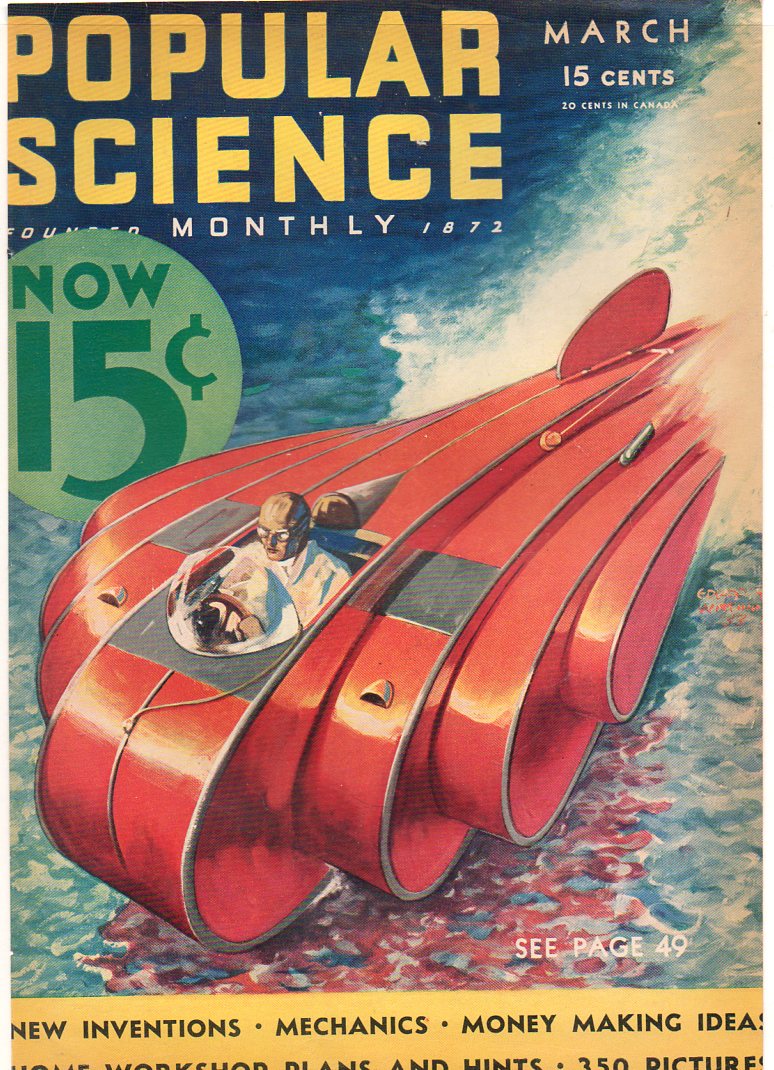
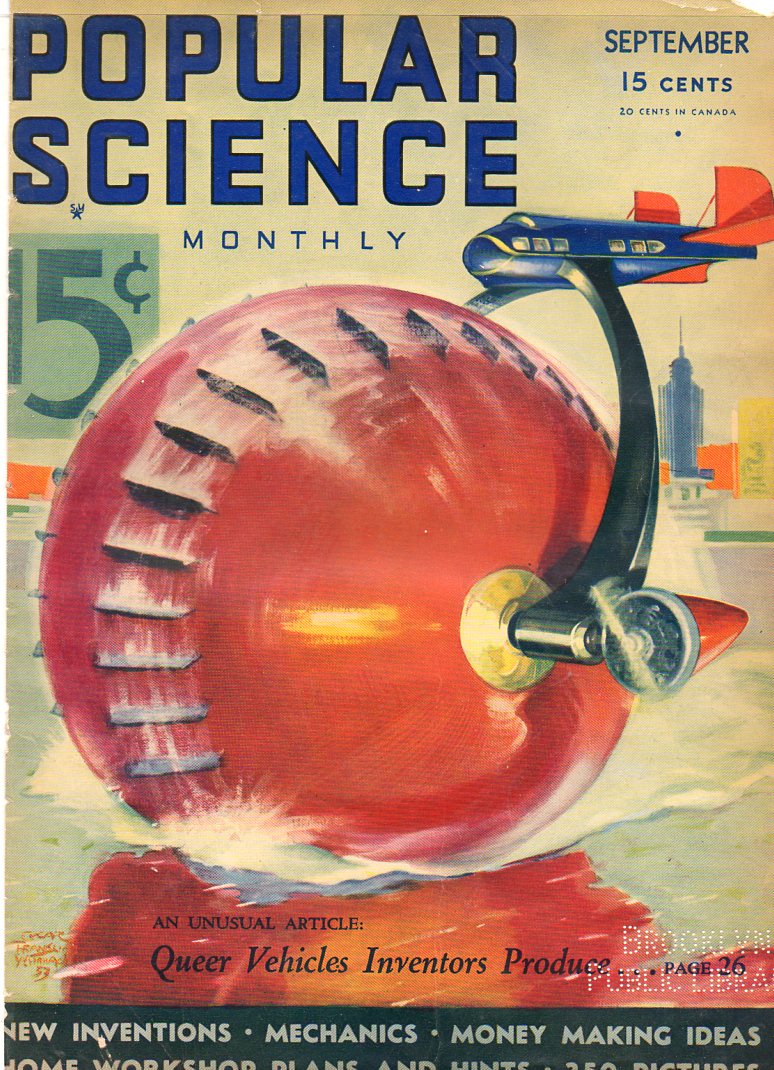
  • Future Steampunk in the Air-1930’s/1940’s Popular Science

     JF Ptak Science Books   Post 1279

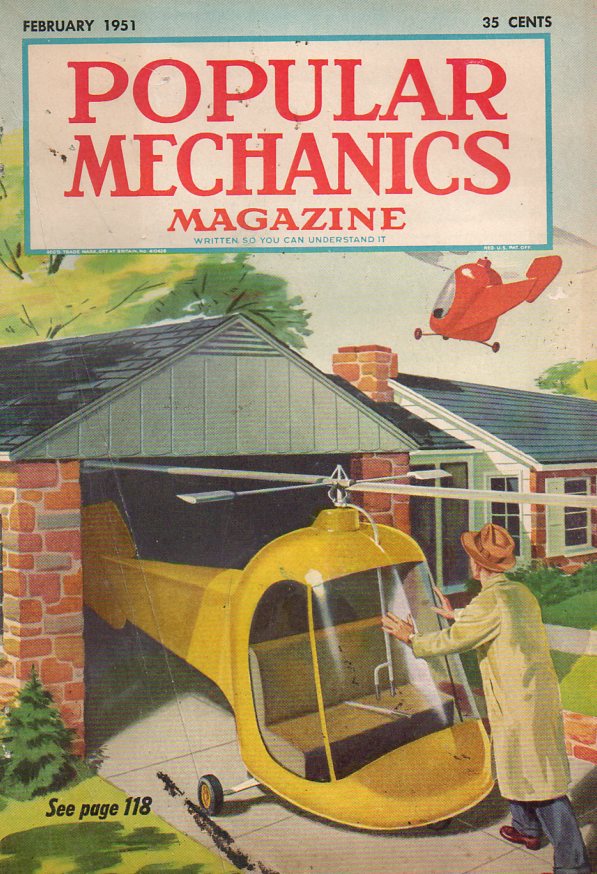
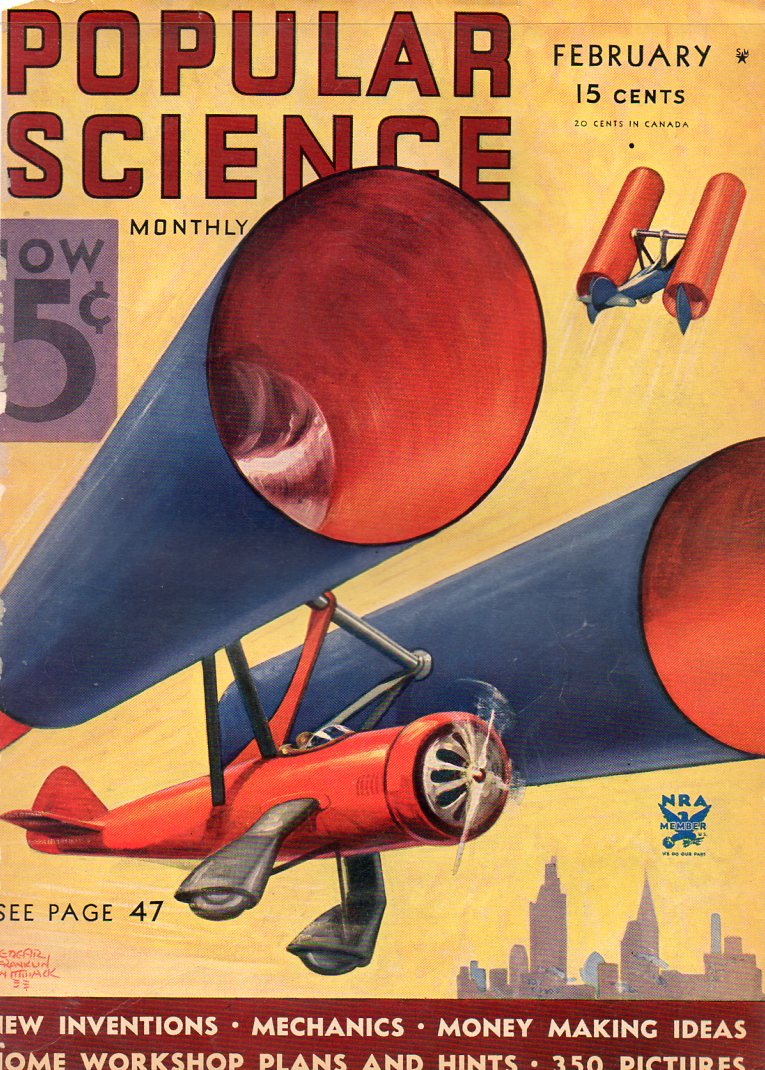
    In a continuing thread on Steampunk themes I’ve organized some of my 1930’s cover art into themes–first up were examples of waterborne-Steampunk, which is now followed by an airborne-Steampunk, and then by Steampunk Land and Steampunk WTH(?)   (All of the examples coming up are available for purchase from my blog bookstore, here.)  Steampunk as a general idea is a class of technology that is large, clanging, oily, greasy, heavy, shiny, smoky, and usually driven by steam power, (though other power sources can be applied)  Some make sense today, some don’t–most of the machines addressed for a particular use have actually been implemented here in the not-too-distant future of the 1930’s, and usually much more elegantly than could’ve been imagined then (obviously).  But I must say that given the times and the tools, these people did a great job, if not for the reason of the invention but for pushing the idea-ball forward.  

    Steampunk--air139

    Steampunk--air149


  • Future Steampunk in the Sea–1930’s Popular Science

    JF Ptak Science Books  Post 1278

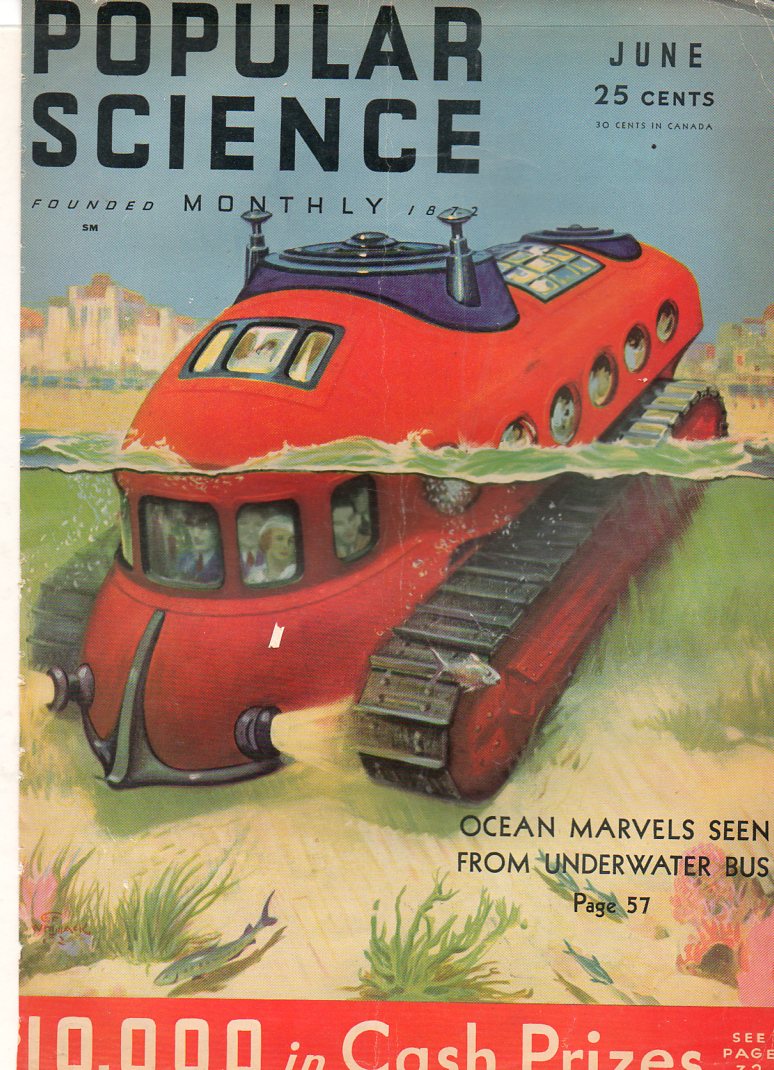
    In a continuing thread on Steampunk themes I’ve organized some of my 1930’s cover art into themes–first up, examples of waterborne-Steampunk, which will be followed by land- and then airborne-Steampunk.  (All of the examples coming up are available for purchase from my blog bookstore, here.)  Steampunk as a general idea is a class of technology that is large, clanging, oily, greasy, heavy, shiny, smoky, and usually driven by steam power, (though other power sources can be applied)  Some make sense today, some don’t–most of the machines addressed for a particular use have actually been implemented here in the not-too-distant future of the 1930’s, and usually much more elegantly than could’ve been imagined then (obviously).  But I must say that given the times and the tools, these people did a great job, if not for the reason of the invention but for pushing the idea-ball forward.  

    Steampunk--sea138
     Steampunk--sea137
    Steampunk--sea136

    More below:


  • Protopunk: Steampunk during the High Steam/Low Electric Age

    JF Ptak Science Books  Post 1270

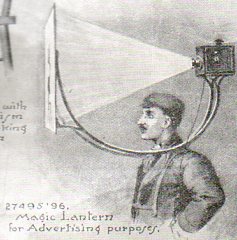
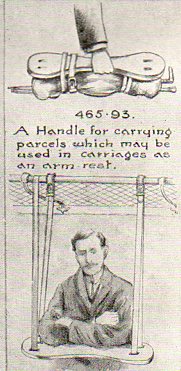
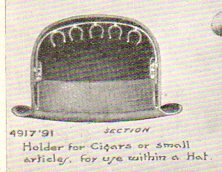
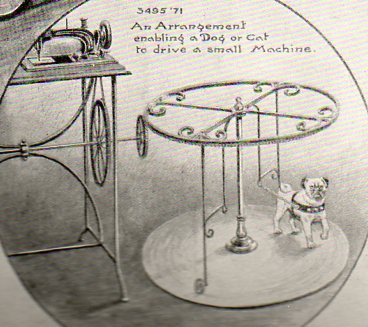
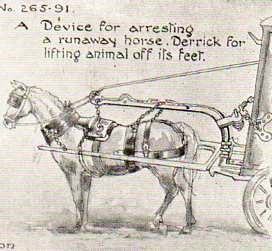
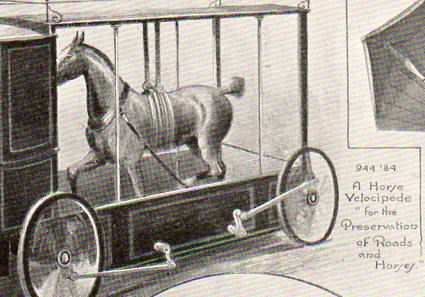
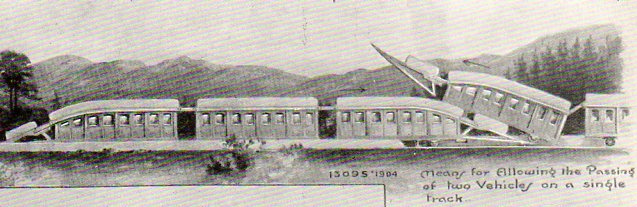
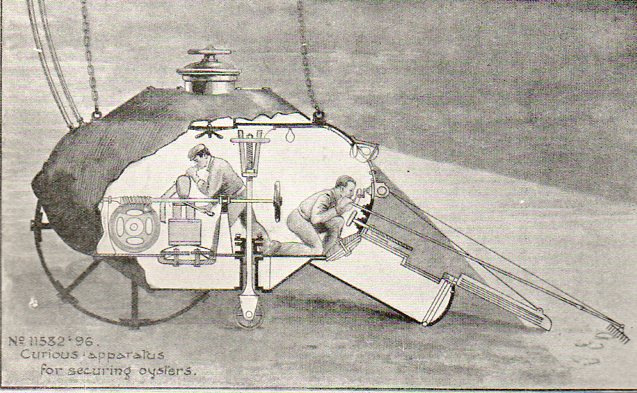
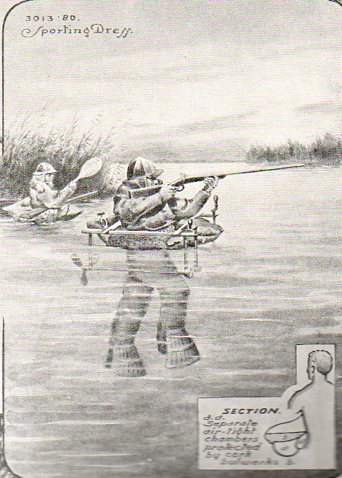
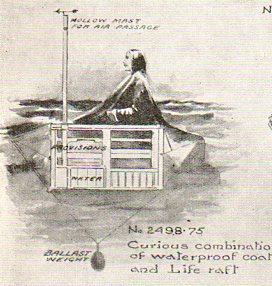
    I was drawn to this Steampunky collection of inventions because they were semi-futuristic inventions done at the time when the inventions could actually be fabricated–the idea was there and so was the material and expertise.  The only thing left was the will to do it and the fortitude to use it.  Perhaps the only thing lacking in all of it was that last part. 

    Certainly people were getting used to technical and physics breakthroughs when these images were published in 1908:  the advancement of powered heavier-than-air flight since 1903, wireless transmission across the Atlantic in ’01, quanta in 1900, X-Rays in ’95, radium in ’98, automobiles, motion pictures, electric toasters, Gilette’s disposable razor (use and throw away!), and so on  (I’ll not mention Einstein because he wasn’t really in the public eye in 1908), so taking an extra and probably unnecessary step in these inventions seen below felt natural.  They were just a little on beyond necessary.

    Steampunk 2  magic lantern104

    Steampunk 2 armrest094
    Steampunk 2 cigar holder095

    Steampunk 2 dog walker102
    Steampunk 2 hat a096
    Steampunk 2 hat b097
    Steampunk 2 horse093
    Steampunk 2 horse b101
    Steampunk 2 lsingle train trac100
    Steampunk 2 oyster collection091
    Steampunk 2 shooting103
    Steampunk 2 watrproof coat092

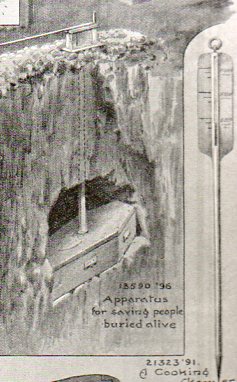
    Steampunk 2  burial105


  • The Beauty of Ball Bearings

    JF Ptak Science Books  Post 1268

    When I look at something like this–an advertisement for a company that produced precision instruments–I think instantly of industry, automation, Dada and Duchamp, who along with Cubists and Precisionist and Futurists whobrought out the extreme beauty of industrial, technical, instrumental form.  At the same time its probably possible to unthink Engels and Marx who thought that the new coming art form of Communism would be purely functional, to be used in design and implementation only.  And I’m not talking about the way that the Victorians added their Victorian crowns and laces and altars in the design of machines and machine parts, worshiping as they did at the shrine of tech science.  Marx and Engels had something different in mind, a non-art of simple, employable, straightforward applied design.

    This ad is just beautiful.

    Ball bearingsb076

    Which is a detail from this image (available from our blog bookstore, here):

    Ball bearings075

    Ball bearings are exceptionally important and have a long history, I mean, long stretching back more than 2000 years (in its most primitive form), finding formative articulation in the Renaissance, and then their first patent in 1869–long and off the point for right now, just long and a little complicated.  I just want to say–I find this image to be quite lovely.


  • Finding Unseen Things In and From the Air

    JF Ptak Science Books  Post 1131

    Seeing more deeply--air weather det853

    Finding the hard-to-find, the invisible, the “hidden”, is an essential aspect of, well, mostly everything.  Whether it is Newton separating light with a prism to find its constituents, or Hooke investigating the formerly quasi-real microscopical world to reveal worlds within worlds, or Galileo using his telescope to quash the ideas of the unaided-eye-visible night sky as an unaltering perfection of creation, or Roentgen seeing through his wife’s skin, or Fraunhoefer finding the complex spectrum, or Henry Draper determining a chemical constituent of the sun, or the invention of the zero or negative numbers or subtraction, of finding Black Holes or other planets or the remnants of the Big Bang, or (Kandinsky) finding the nonrepresentational aspect of art, or Duchamp finding in an upturned urinal that art had no boundaries…the list goes on and on.

    One aspect of this “finding something in nothing” business that is interesting to look at because it is so local and discernible–and recent–is in air navigation and detection.  And I’ll do this using a series of excellent illustrations from The Illustrated London News, all of which are from the 1927-1938 period. 

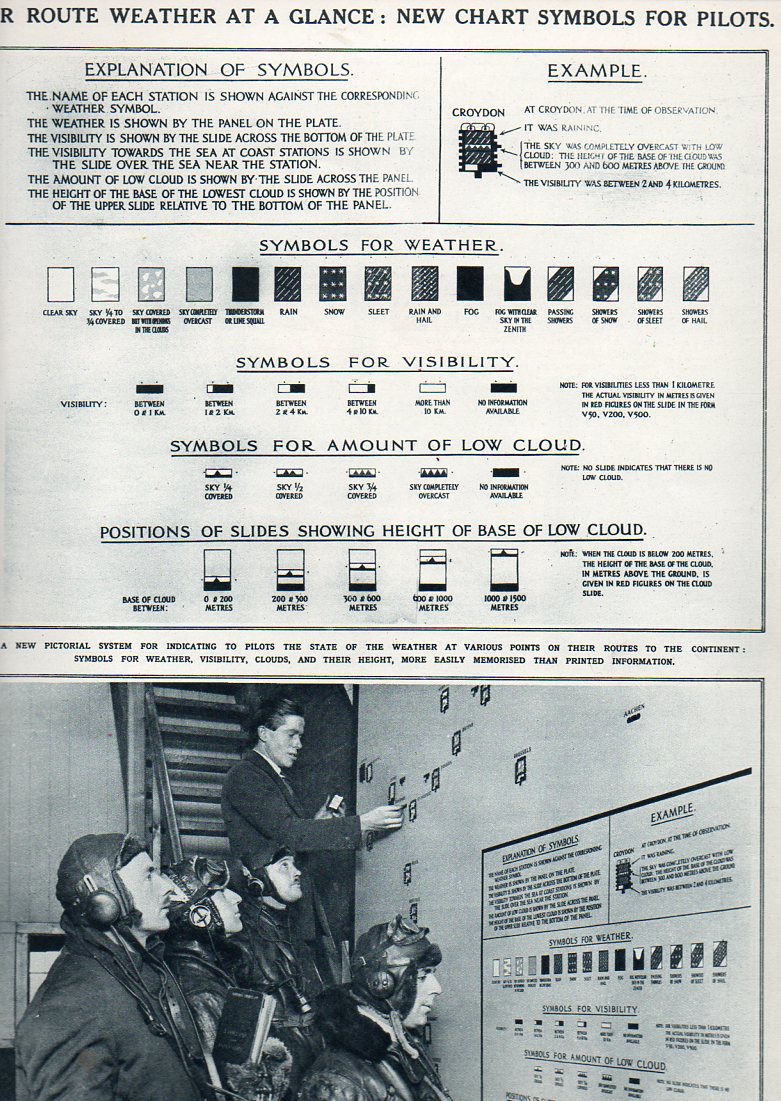
    The first is relatively simple, at least simple from here in the year 2014, which shows four pilots being briefed on weather conditions with a aerial chart for conditions along intercontinental routes.  The placement of these symbols represented a vast improvement over the earlier systems of readying pilots for what weather lay ahead, if indeed there were any communications at all.  This represents an early look at a codification of conditions and expectations for air travelers–a display of new and important data in 1927. 

    Seeing more deeply--air weather852
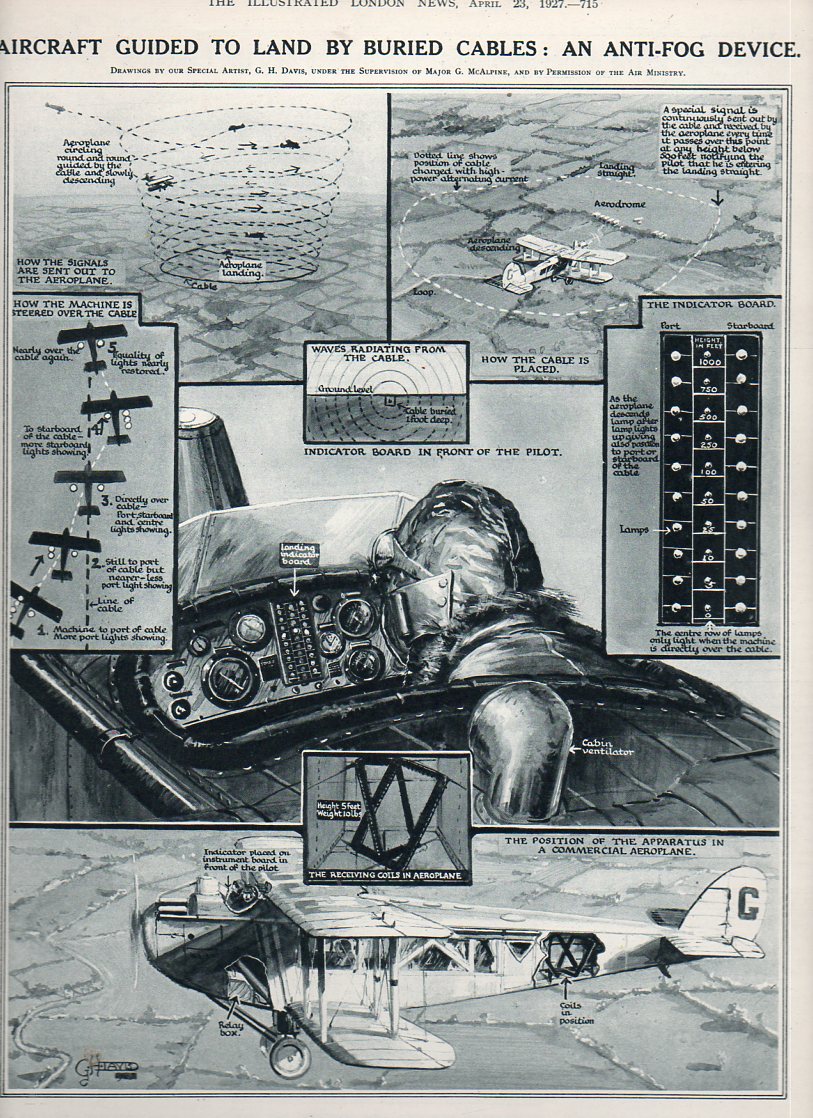
    Next is a brilliant device for assisting pilots to land in foggy and dark conditions–actually on how to find the ground safely.  In 1927 (again) a RADAR-like system was put into place on aircraft that involved receiving the signals of an ac-pulsed buried electrical cable that surrounded an airport.  The receiver (seen here on the flight panel of the pilot in an open-air cockpit) would be read to reveal proximity of the airport, the pilot making wider and then closer spirals in descent until his was basically within the buried airport cables and thus able to land.

    Seeing more deeply-anti-fog855
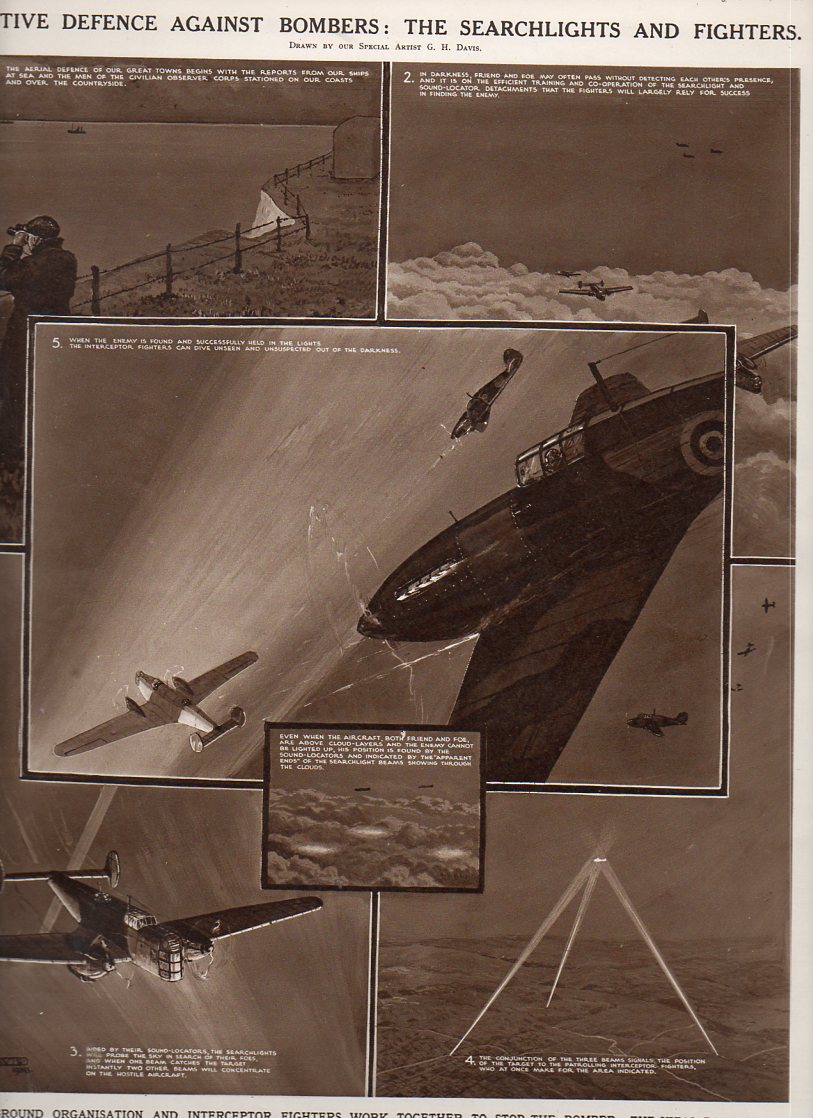
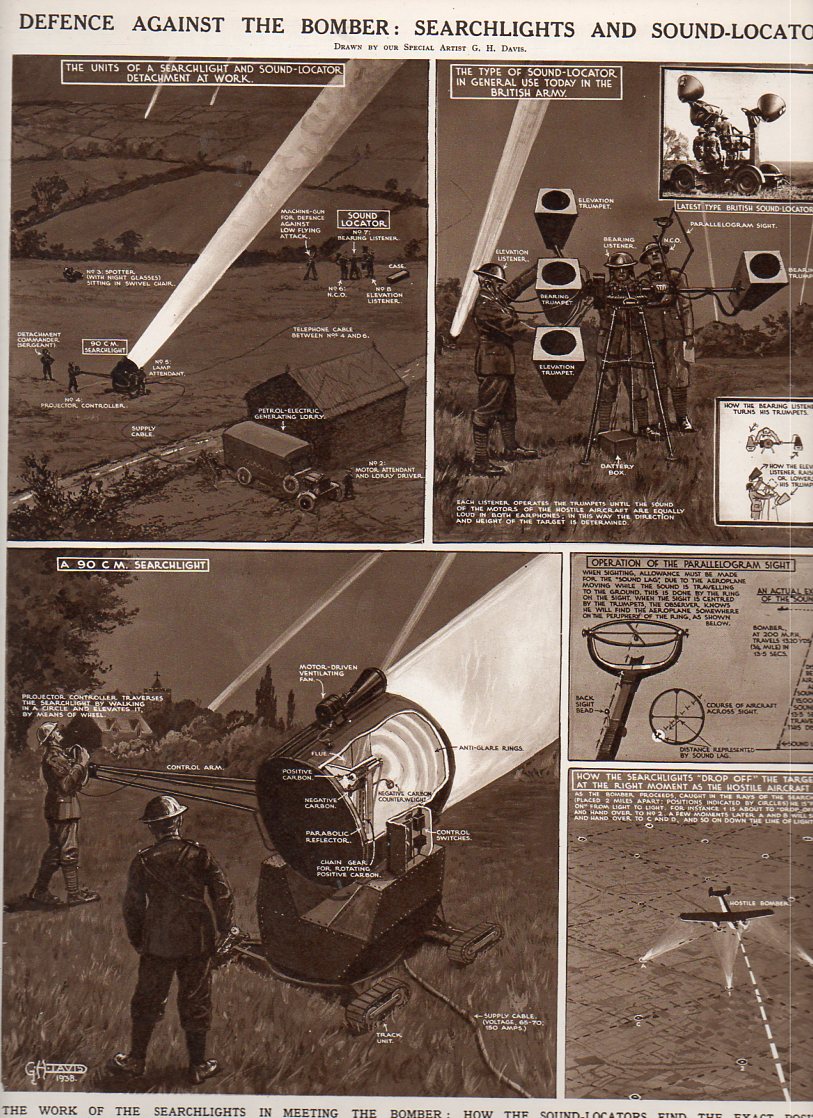
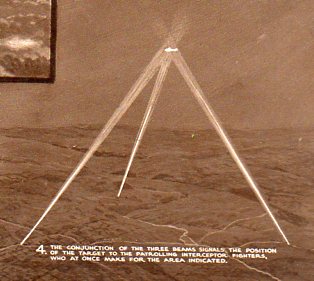
    Prior to WWII RADAR1 was somewhat functional but still in development, and as we see in this set of 16 July 1938 illustrations, the key methods for finding enemy aircraft at night (in order to shoot it down of course) was an audio-visual method, using “sound-locators” to find the approaching bombers and then spotlights to illuminate and track them to their destruction.  

    Seeing more deeply-searchlight856

    Seeing more deeply-defence against bomber854

    These images represent some idea of the state of the art of being able to find things–like the ground at night or approaching enemy aircraft–in the 1927-1938 period, all of which would be drastically changed in just the next two years.

    Seeing more deeply-searchligh detail857

    NOTES

    1. RADAR was coming very close to being developed in the early 1930’s–and in 1935 the process of experimentation and implementation was at a peak.  The development of this new technology was an international property, though perhaps no one owned it more in this period than the British, with Watson Watt giving his experimental ideas on RADAR to the Air Ministry on 12 February 1935 in a secret report titled “The Detection of Aircraft by Radio Methods”. Int his years alone there was feverish work being done by  Rudolf Kühnhold (Scientific Director at the ‘Kriegsmarine  Nachrichtenmittel-Versuchsanstalt) who in 1933-1935 established a RADAR-hunting company called Gesellschaft für Elektroakustische und Mechanische Apparate, or “GEMA”; there was also elements of the Royal Navy, Telefunken, Standard Elektrik Lorenz, Philips Company’s  (of Eindhoven, Netherlands) Natuurkundig Laboratorium, the Research Office of Nippon Electric Company, and even in the Soviet Union (until the key figures involved were murdered in Stalin’s purges–this one distinguished from others and referred to now as The Great Purge– of 1937), the French Compagnie Générale de Télégraphie Sans Fil (CSF), and  the Italian Regio Instituto Electrotecnico e delle Comunicazioni (RIEC, Royal Institute for Electro-technics and Communications) to name a few.  The United States of course had been long working on the project, at least since 1922 at the NRL, with considerable private (and federally funded) work done by RCA

    .
    Whipping ahead into WWII a very significant “battle of the beams” began between the U.K. and Germany, especially during the Battle of Britain, involving countermeasures, espionage, propaganda and false-positives in regards to the use and development of radio-based tracking and detection–the U.K. particularly making use of this technology in a wide-spread air defense system.  But it was in the United States in 1940 (and really by the U.S. Navy) that RADAR got its name (for RAdio Detection And Ranging) as well as its great impetus for development and deployment.


  • A Paper Mirror and the History of Blank Things–Illusory (Sea) Power

    JF Ptak Science Books  Post 1228

    [This is a part of our History of Blank, Empty and Missing Things series.]

    Mirrors don’t necessarily have to reflect something to show  reflection–they merely need to offer you a picture of something that can show the difference of something real versus a false image of that same thing.  “Through a glass darkly” (1 Corinthians 13:12) isn’t necessarily a reflecting surface though it is a reflective one; neither is the painting in The Picture of Dorian Gray.  Harry Potter’s Erised mirror does act like a mirrorish mirror, and Narcissus does come to a bad and wasted end in front of his pondside reflection (the “perilous mirror”of the Romance of the Rose).  The queen’s mirror in the tale of Sleeping Beauty doesn’t reflect but does give advice, and Alice’s Adventures…  in 1871 begin with wondering what was on the other side of a mirror (“looking-glass”) above her mantel–in a similar vein Kurt Vonnegut introduces a mirror as a “leak” into another dimension rather than a reflection.   Sometimes you get a hand-held thing with glass, and sometimes you just get a piece of paper.

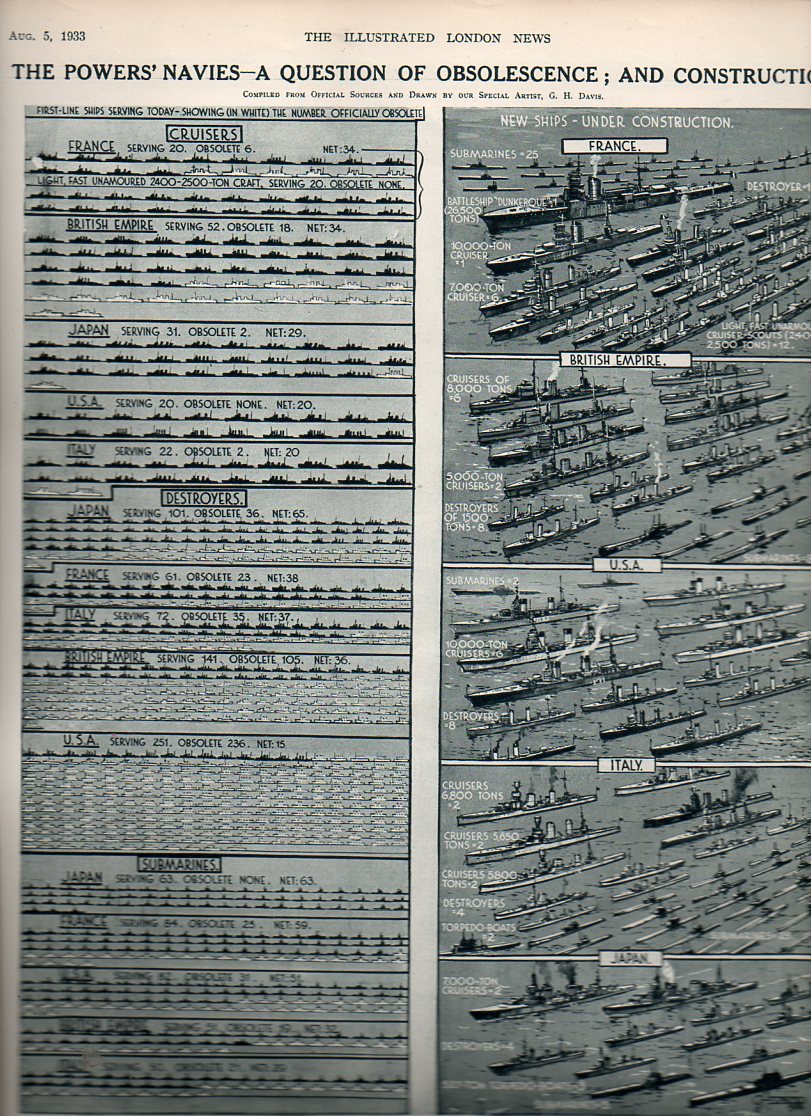
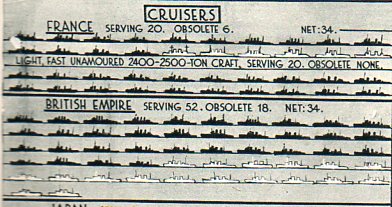
    Navy obsol818 This graphic from The Illustrated London News (5 August 1933, and available for purchase here) is an interesting case in point for a paper mirror.  It is interesting in how it presents a reported state of affairs and its actual condition.  In this case, the artwork shows the supposed/reported strength of the navies of the five major seafaring powers (France, British Empire, Japan, United States and Italy) and what those navies wpuld look like if the outmoded and obsollete ships were removed.  The modern and servicable ships are shown in black silhouette; the numbers of obsolete vessels were shown in white.  The dipiction of blank or empty of missing ships was a very convincing tool depicting the actual state of the major powers’ navies compared to a more romantic means of reporting naval strength. It must have been an excellent wake-up  to thopse with the capacity to see the truth, presented on one piece of paper, a mirror by any other name.

    Navy obsol cruisers819


  • Strange Things in the Sky Department: Aircraft, 1919

    JF Ptak Science Books   Post 1222

    Blog--May 20--minerveA

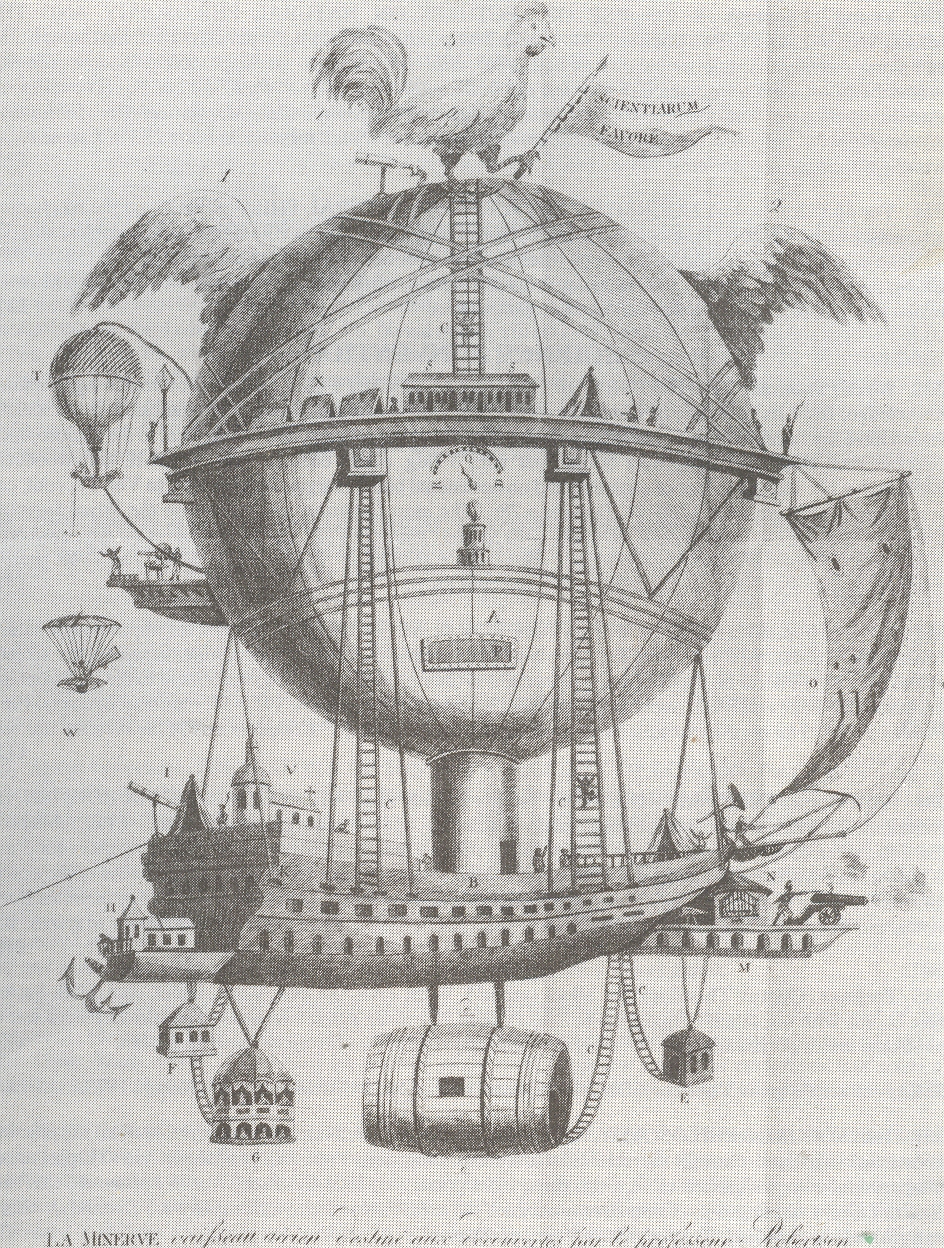
    I’ve written earlier in this blog about odd things found in the sky, some of which is imagined  (holes, extra Earths, blank Heavens, disembodied hands/feet/eyes/ears,proto-human empty aliens,  rat) and some of which were/are possibily real (like this fabulous aircraft with an escape pod for women, located here). [Both of these images are available from our blog bookstore, here.]

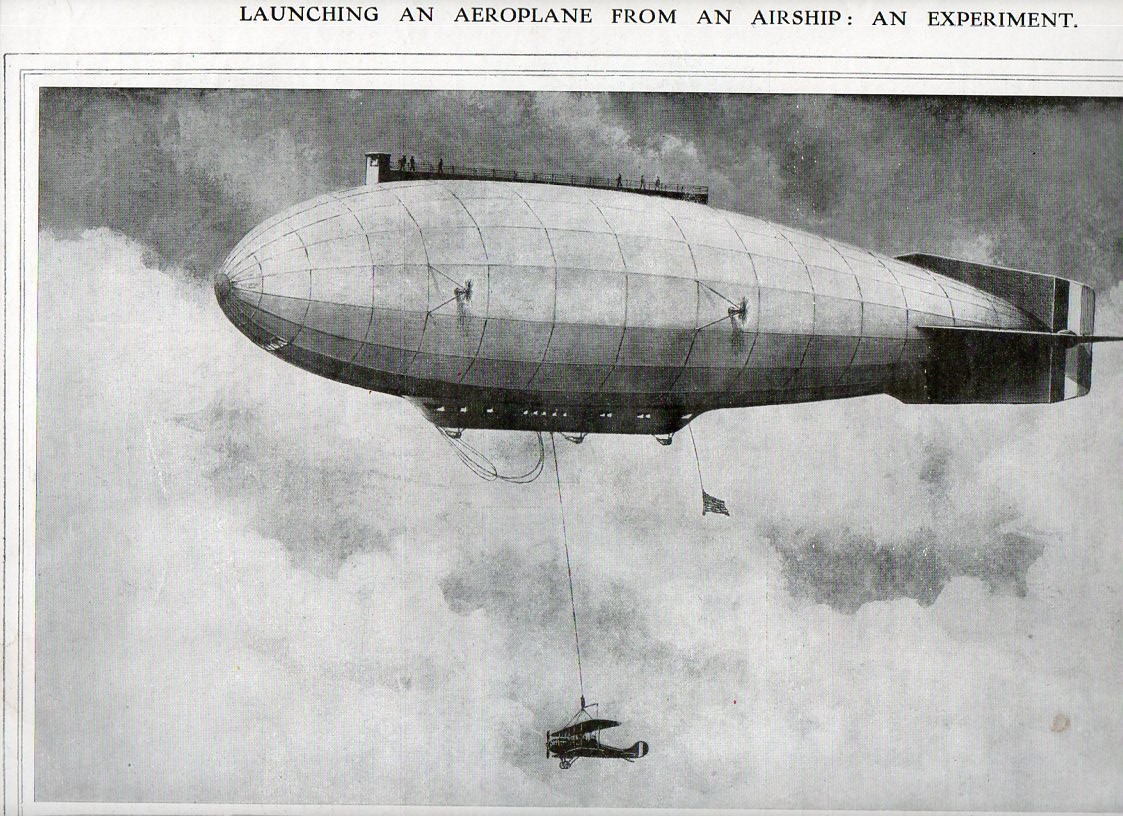
    These images present incredible, indelible ideas to us here in 2010, images of creations that look more like created steampunk for a retro-futurist novel than something real.  But they were actually state-of-the-art techno advances for their times, decent ideas, solutions for knotty problems that had no better answers than those presented. 

    Strange sky--launch plane839

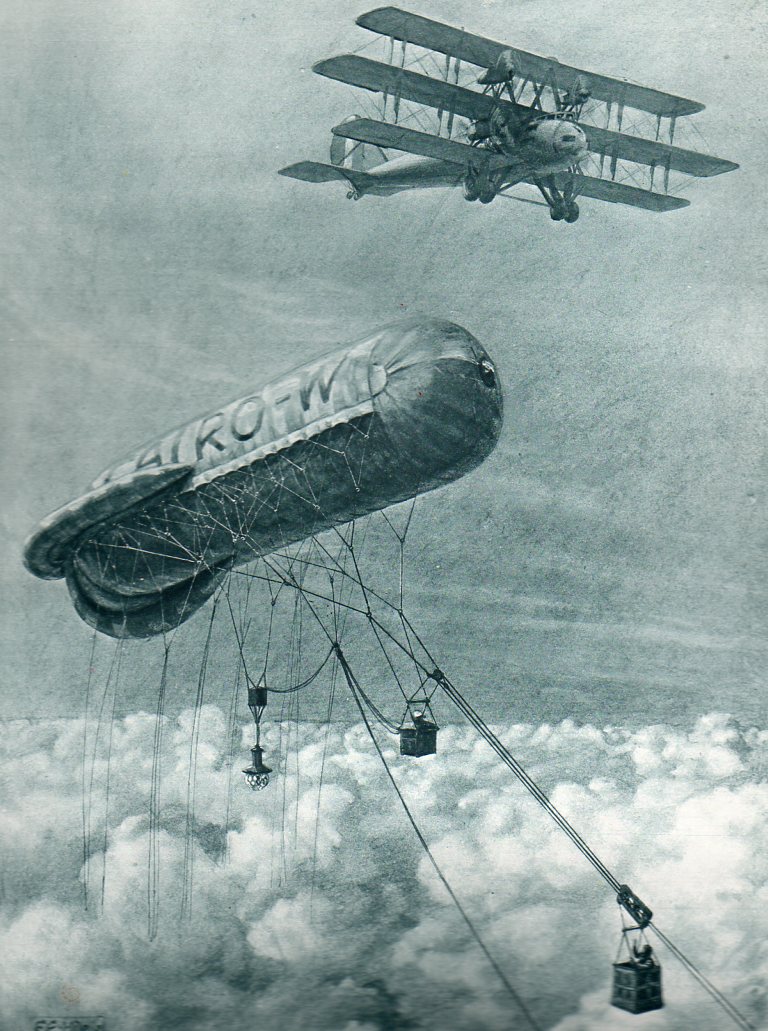
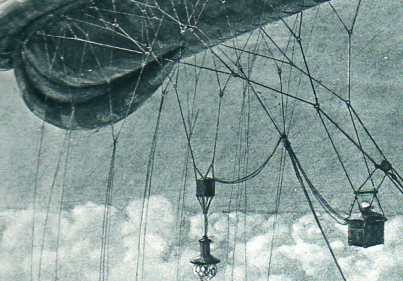
    The first is “The Clapham Junction of the Air, a Cloudland Signal-box”, seen in The Illustrated London News for 15 March 1919.  The idea was simple–cloud cover prevented aircraft from seeing their objective (lacking RADAR, which wouldn’t appear for another 23 years) and so something needed to be done to communicate with them above the clouds to relay data on ground conditions.  And so we have the tethered kite balloon with a mobile travelling car, the man in which would relate the necressary info to the waiting aricraft above.  (The description of the image notes that the aircraft is “one of a coming type”.)

    Strange sky--launch plane crowd det840

    Strange sky--launch plane det841

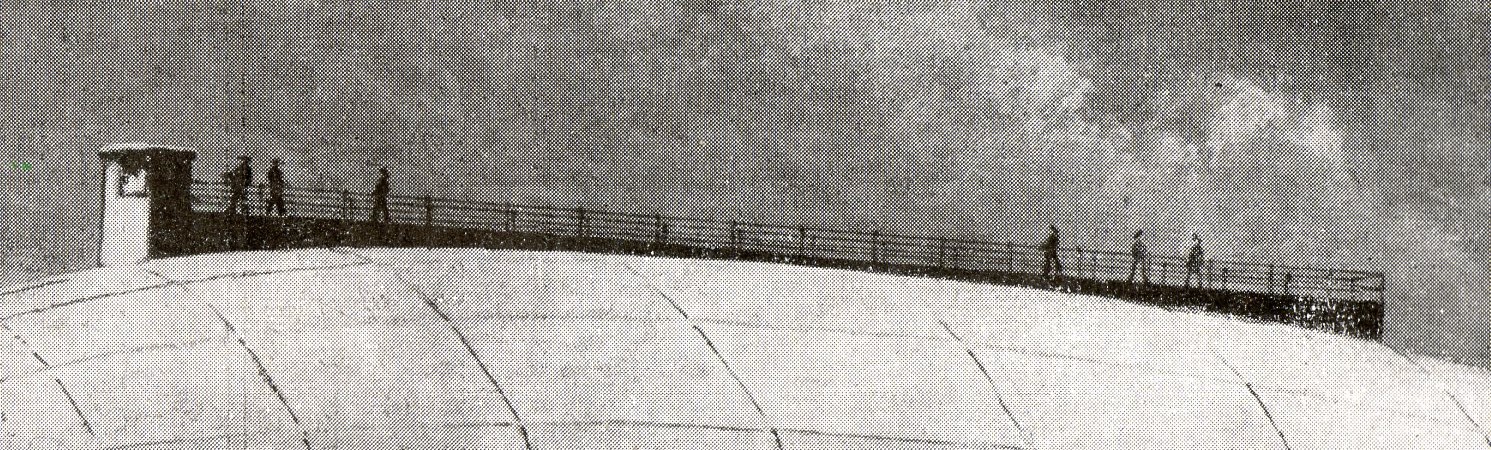
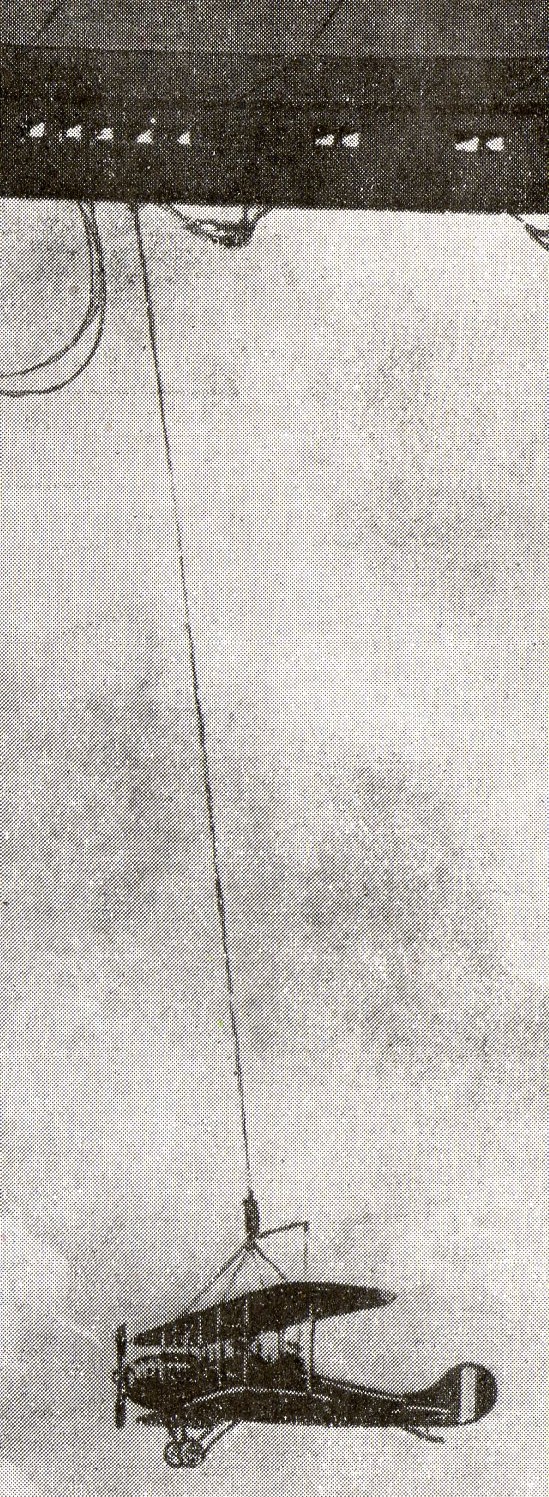
    The second image appears in The Illustrated London News for 1 March 1919 and is entitled “Launching an Aeroplane from an Airship, an Experiment”, and shows a helium-filled airship (“of the near future”) about to drop an aircraft.  The airship would have risen to some height with the aircraft already at tether, travelled a distance far beyond the normal range of the airplane-in-tow, and then release it–after a fall of a thousnad feet or so, the engines would start, and the plane would be operational.  that was one way of advancing air cover far beyond what woul dhave normally been feasible. 

    The set of problems encountered here woul de remedied in relatively short order, say with a few years of the publication of these pictures–but for teh time being, in 1919, this was the best that could be offered. 

    Strange sky--lmessages842
    Strange sky--lmessages det843