A Daily History of Holes, Dots, Lines, Science, History, Math, Physics, Art, the Unintentional Absurd, Architecture, Maps, Data Visualization, Blank and Missing Things, and so on. |1.6 million words, 7500 images, 4.9 million hits| Press & appearances in The Times, Le Figaro, Mensa, The Economist, The Guardian, Discovery News, Slate, Le Monde, Sci American Blogs, Le Pont, and many other places… 5000+ total posts since 2008.

Category: Technology, History of

  • Nazi Propaganda–the Big Lie and Germany Surrounded, 1933

    JF Ptak Science Books  1174

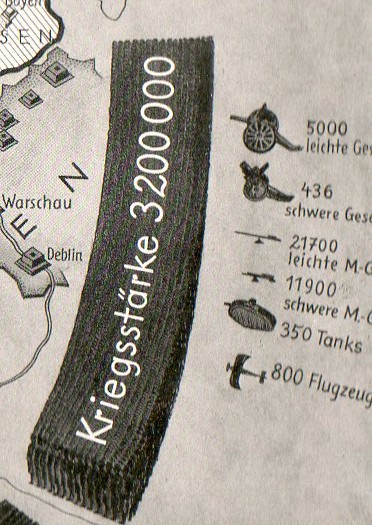
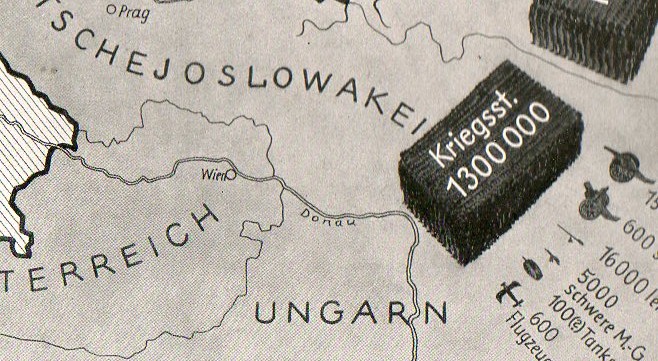
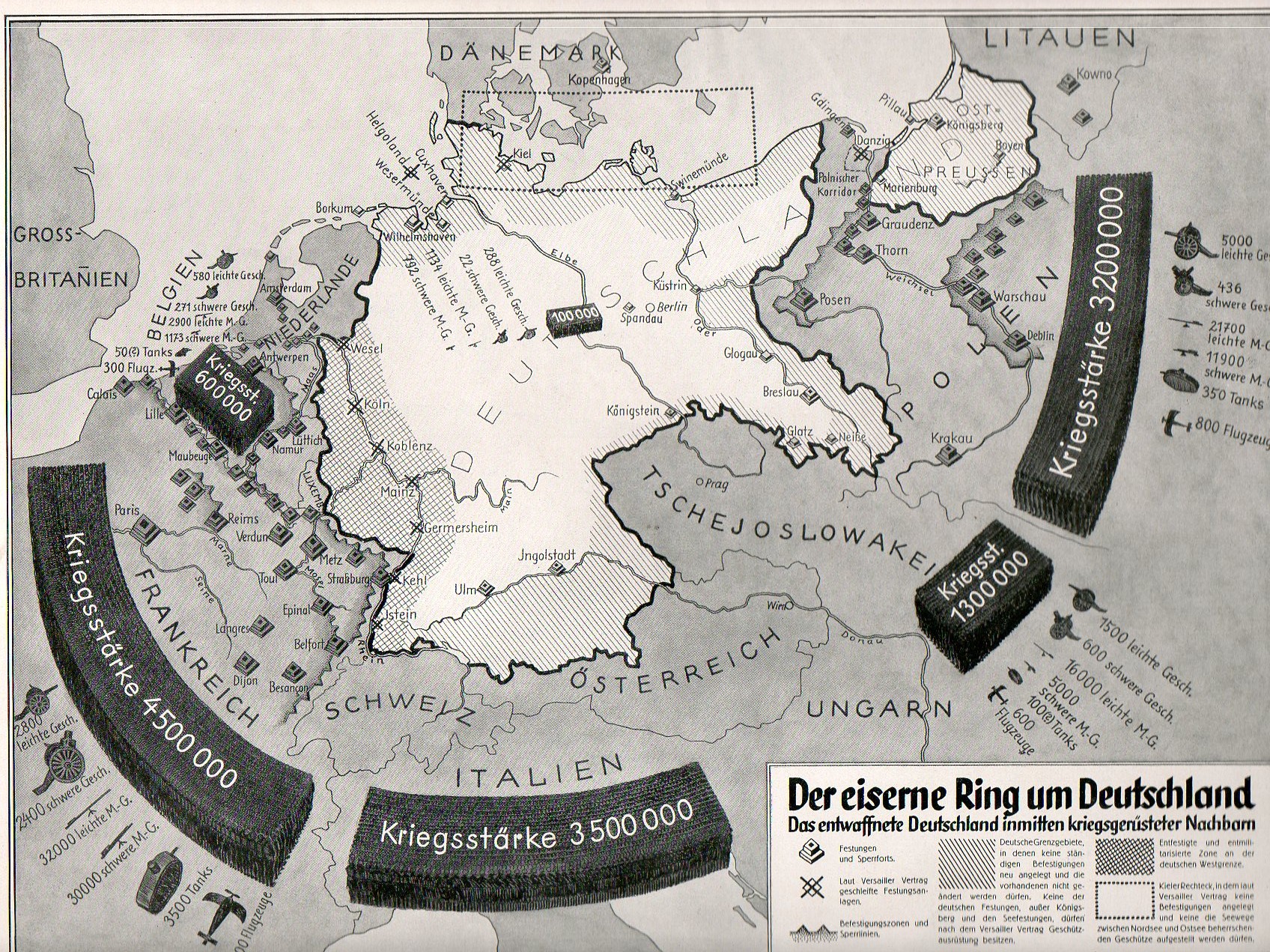
    The newly-elected NSDAP government lost little time in putting forward a case to the German people that the Treaty of Versailles left Germany in a defenceless postion, surrounded by forboding armies and air foprces of its neighbors, the forces of France, Italy, Czecholovakia, Belgium and Poland forging a tight and formidible strangelhold on the weakened Germany.  This image comes from the late November 1933 issue of the Illustrite Zeitung1 (Leipzig), and its relates to the casual and general reader the de-militarized and tenuous situation of the country–its design is effective enough so that the voice of he illustrations is well heard even if no on actually bothered to stop and read its legend–it was all about threat and impending doom, and the words for those emoptions weren’t necessary in this artwork.
    Nazi Prop surrounded538

    Campaigns like this were a first step in the Nazi consolidation of the public spirit, attempting to unify the population under Hitler and the NSDAP by presenting a threat so common that it could not help but to draw everyone into the big tent.  This was a simple message of natural survival, a wide threat to the German state, a threat that was so simple and so devastating and so opaque that there would be virtually no resistence to unifying against it. (J.W. WHeeler-Bennet wrote about this in his superb and still-classic book The Nemesis of Power, the Germany Army in Politics, 1918-1945, published in 1954.)

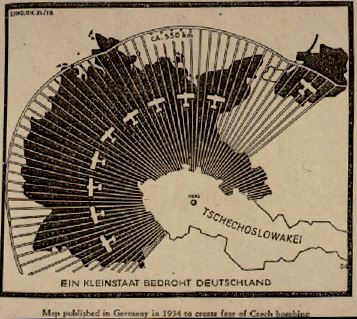
    Here’s another example from about the same time, again showing the devastating effects of imagery–this displays the non-existent threat from Czechoslovakia:
    Blog jan 3 czech air


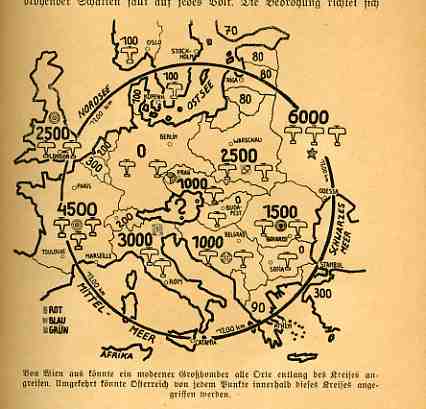
    And another, showing the encircling imagery again:
    https://historyofideasblog.com/a/6a00d83542d51e69e20120a7a04f7a970b-pi

    Getting back to the first image–curiously Great Britain and Russia don’t make the Enelmies Liest here, though in 1933 they certainly loomed as an enemy as much as any other.  (Well, perhaps not neessarily so for the Soivet Union, but close.)

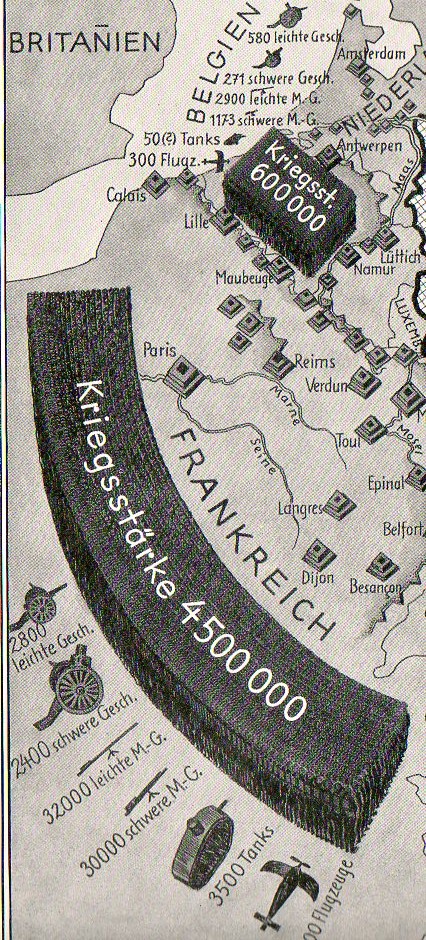
    Someone who actually read the article and looked closer at the full-page ilustration would see the details of t he European threat, like this for France (and Belgium), with bloated figures for WWI-era ordnance and an extremely effectively articiulated represntation of what was seen as the standing army:
    Nazi Prop surrounded france539

    And this for Poland:

    Nazi Prop surrounded poland542

    And of course, Czechoslovakia: Nazi Prop surrounded czech541

    Among other things the signing of the Treaty of Versailles in 1919 limited the German armed forces to less than 100,000; limited the Navy to 15,000; prohibited the manufacture of submarines, armed aircraft, tanks, armored cars, Maxim guns and of course poison gas. There was assignment of guilt, heavy reparations (in what today would translate into something like a half-trillion dollars, without though translating buying power), and much more that was aimed at keeping Germany vanquished if not somewhat pastoral.  Many have seen the Treaty as being the bridge and greatest impetus to WWII, an opportunity lost and squandered by the Allies–maybe so. A year after the end of the incredibly violent and ripping four-year onslaught in which millions were killed and so much destroyed it would’ve been difficult for all parties to the Treaty to have a great forward vision in how to best deal with Germany.

    The Treay did provide a unifying front for Hitler; the Nazi Party using choice aspects of it in hearts-and-minds propagandizing methods like the one above:  the military restrictions were true, but the portrayed threat of attack from Poland and Czechoslovkia and Belgium and Italy and even France were part of the building of the Big Lie.  The “Big Lie” was something that Hitler identified in his 1925 Mein Kampf, and then used in his own terror campaigns–it is a lie so colossal and so impudent, so fantastic, that it is perceived as being true because no one would lie so gigantically.  As  George Orwell put it in his 1948 novel 1984, the Big Lie was “…to tell deliberate lies while genuinely believing in them, to forget any fact that has become inconvenient, and then when it becomes necessary again, to draw it back from oblivion for just so long as it is needed….”  The perception of imminent threat was one of the starting points for the Big Lie; the mechanics and people behind the manufacture of the invasion, of the Treaty of Versailles, of the German economic meltdown, and so on was already laid down in Hitler’s ridciulous book, and much of that lay at the feet of the Jewish people. 

    But first the Nazis needed to address the issue of their entirely weak and vulnerable military position by proposing the threat from much of the rest of Europe, this in order to rail against Versailles and break the German obligations to non-militarism.  The foundations for rebuilding the German war machine started in earnest in 1933; by 1935 most of the restrictions of Versailles had been broken, and Germany (which in 1933/4 had bene secretive about it) had gone public with its new obligations to itself (introducing the Luftwaffe to the rest of the world in March1935).  Reactions from the Allies to generating the new war machine were weak, and Germany rolled right into WWII. 

    Notes:

    1. I’ve written many times here about the Illustrirte Zeitung–it was basically the German equivalent of the Illustrated London News, Paris Match, and LIFE magazine, a better, mid-level weekly magazine that was well-written, very-well illustrated, approachable and affordable to folks of nearly all classes.  It was an expedient way of sending across the government’s message from te beginning of the Nazi ouccpation of German politics.



  • Thinking Deep about St. Paul’s and the Eiffel Tower–Presenting the Depths of the Oceans in Plaster and Steel,1910

    JF Ptak Science Books   Post 1173

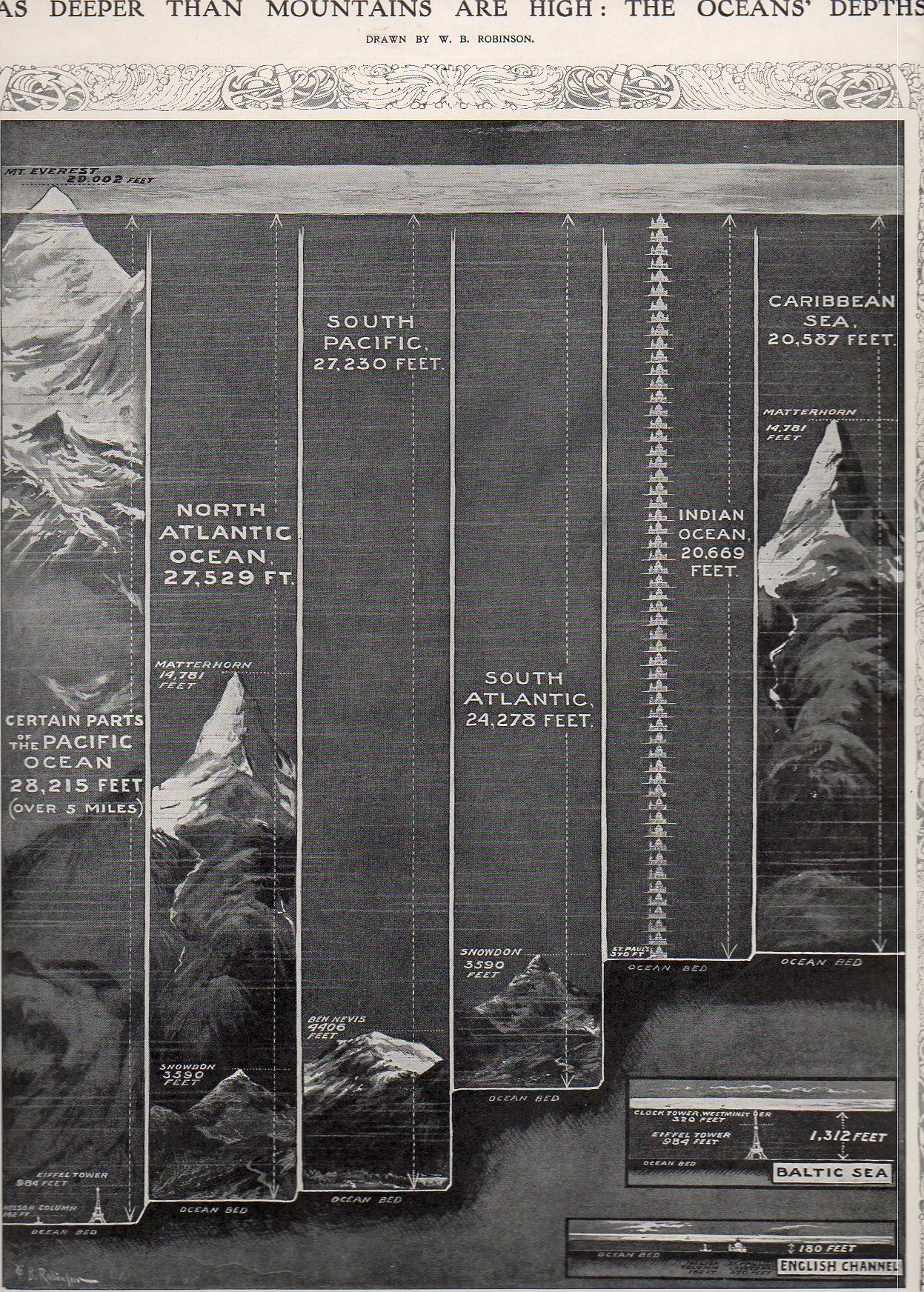
    Although maps showing the depths of the oceans existed from about the mid-19th century (through the pioneering work of the American father of oceanography, Virginia’s Matthew Fontaine Maury1) few casual readers would have ever seen a more approachable representation of information than what appeared in the Illustrated London News for 8 October 1910. Although Maury’s maps are elegant, they didn’t receive nearly as wide a distribution as this ILN image–also they weren’t nearly quite as relational as the 1910 version.

    Sea depths533

    Granted, the 1910 comparison chart only displays one statistic–the supposed greatest dept of five oceans, two seas and the English channel–it does so in such a way as to make those numbers immediately approachable to any reader, which is always an issue in relating scientific information to the general reader.

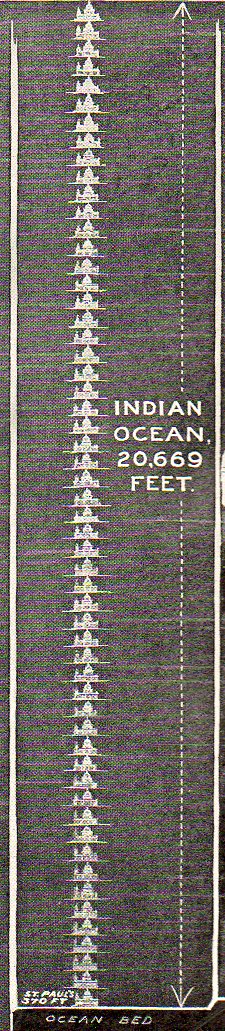
    Sea depths ist pauls537 {One of the standard unit of measurement for the purpose of this display was St. Paul’s Cathedral.]


     What W.B. Robinson presented was a way of looking at an invisible entity through very visible means–comparing depth to the heights of things that everybody in 1910 knew: the Eiffel Tower (relatively newly constructed out of 18,000 prefabricated highly-engineered pieces) and St. Paul’s Cathedral. So rather than stating that the Pacific Ocean is 28,000 feet deep, Robinson chose to replace feet with Nelson’s Column–174 of them. Or 29 Eiffel Towers. The 20,000-foot deep Indian Ocean was actually 56 St. Paul’s deep, while the Baltic Sea was deep enough to not quite cover one Eiffel Tower with one Westminster Bell Tower on top (ha!); and the English Channel at its deepest wouldn’t quite cover St. Paul’s.
    This is really the way to display data in my book, especially to kids.  This is one of the few ways of making the information accessible and understandable across almost all age ranges. 

    Notes:
    1.  Actually the work goes back a century before Maury with Buache, who produced this map of the English Channel in 1737–the data points are veyr numerous, but this is the very first time that such information was available on a map.

    Sea depths idouth pacific536 Sea depths indian535


    NOAA Photo Library Image - map00004

    And Maury again with this first map of an oceanic basin, published in 1853:

    NOAA Photo Library Image - map00001

     And in 1752, Philippe Buache produced this fantastic and first-of-its-kind map for the depths of the English Channel:

    NOAA Photo Library Image - map00186

    Here’s an extraordinary cross sectrion of a part of the ocean floor produced in 1857 by the HMS Cyclops in preparation for laying the Atlantic Cable:

    NOAA Photo Library Image - map00010


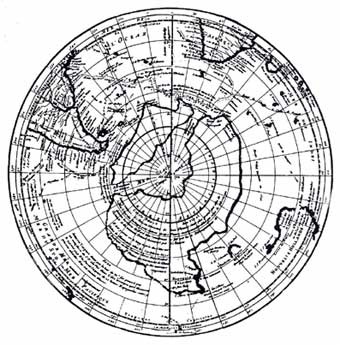
    Its also interesting to note here Buache’s work on this map of Antarctica, published in 1737.  Buache put together all of the known (to him) information about the mass in the South, bits taken from other maps, and accumulated them into what was the best-possible guess on what was down there in the Antiopode.  Pretty good detective work given the amount of material that he could work with.


  • The Kryha Cipher Machine. 1929 [Quick Post]

    JF Ptak Science Books  Post 1169

    [I wrote an earlier post on this blog on ciphers here: Books of Shadows—”Trithemius, Bacon, Porta, & Falconer vs. a Make-Believe Derrida on How to Make Something Unintelligible. Secret Writing and Ciphers”.]

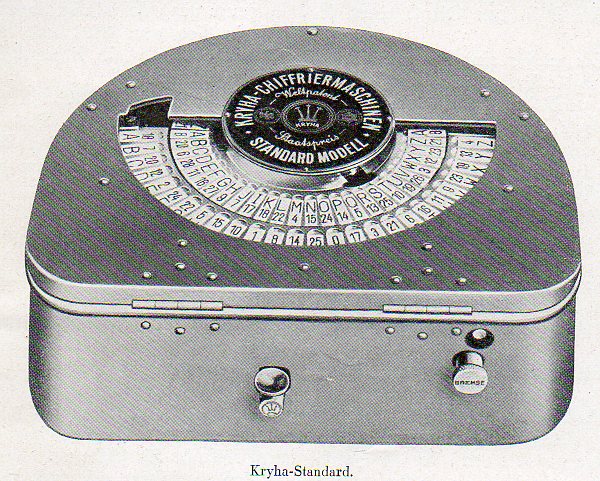
    The Kryha ciphering/enciphering machine was invented by Ukranian Alexander Kryha (d. 1955) and was capable of coding about 350 characters a minute.  It was used to enforce secrecy in business transactions, and was used in conjunction with (at least) Siemens telegraphic equipment.  I found these images (except for the patent drawings) of the Kryha machines in several issues of the Illustrirte Zeitung (Leipzig) for 1929, all of which are unusual and evidently not findable as good copies online–and so I’m simply reposting them here.

    Kryha big527

    Kryha  529


  • German Propaganda, 1929–a Call to Militarization

    JF Ptka Science Books  Post 1168

    [One of a long series of posts on propaganda–enter this term in the search box at left to see the listing.]

    Germany  1928 tanks det526

    Germany  1928 tanks525
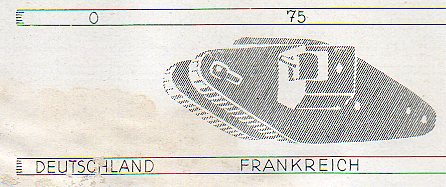
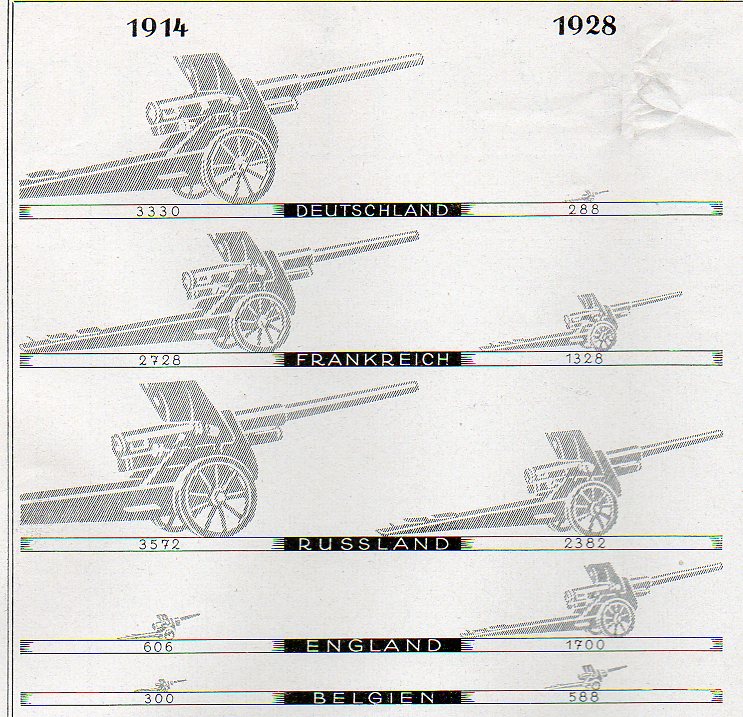
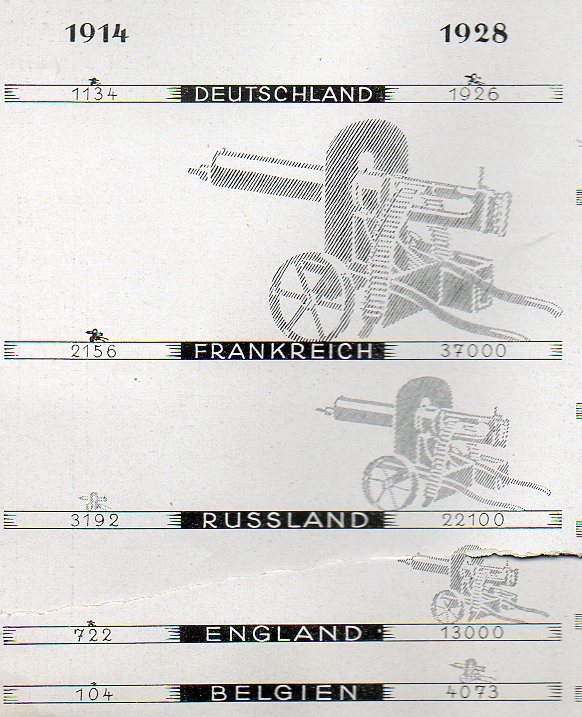
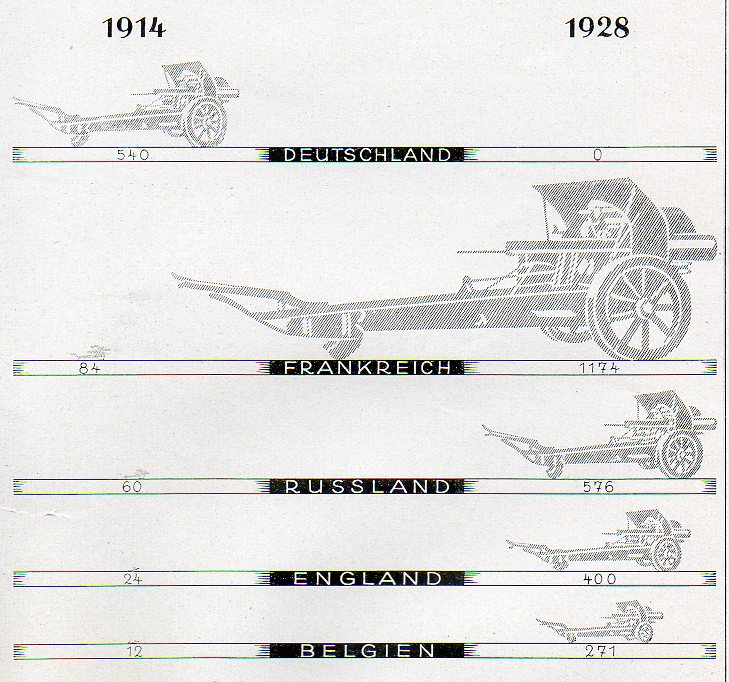
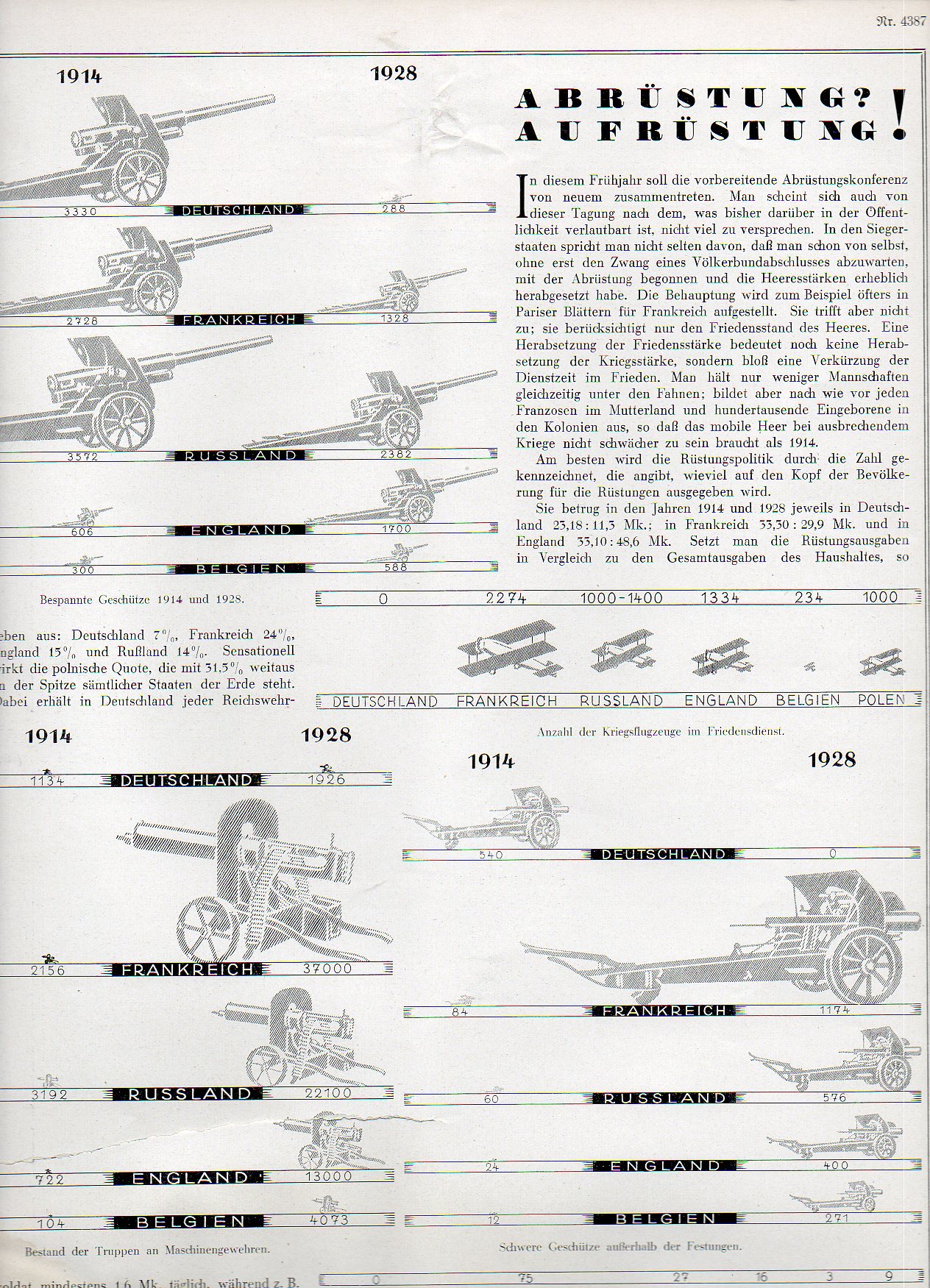
    In my “reading” of the Illustrirte Zeitung (Leipzig) I found this full-page illustrative representation of data (11 April 1929), one of the earliest propoagandist pieces (to my mind) in that magazine, showing the state–and great height–of militaristic weakeness in Germany, one of the lowest points that it reached in the breathing space between the two wars. It was really a picture of nothingness, a mention of the lost possibilities, and also what needed to be done–it was an early call to attention, to arms, to the reconsider of the Paris agreement, of doing “something”. Four years later the rearming business would be kicking into action, six years and five months later, the Second World War would start in earnest.

    Germany  1928  airforce523
    “Abruestung? Aufruestung!” is the name of the article-ette (roughly shouting Disarmament? ARMAMENT!, or Disarm? ARM!), basically stating that enough was enough, and that now was the time to start the process of having a military again.

    Every Germany (basically) would’ve known these facts, but seeing the representations of their zero-strength force of planes and tanks would’ve been an enormous blow.  And it was intended to be so.

    Germany  1928  cannons521
    Germany  1928  machine guns522
    Germany  1928 canon 2524
    Germany  1928520


  • WWII Aircraft Cross Sections–Spitfire, Hurricane, Beaufighter, Lancaster (!) and Stirling.

    JF Ptak Science Books    Post 1165

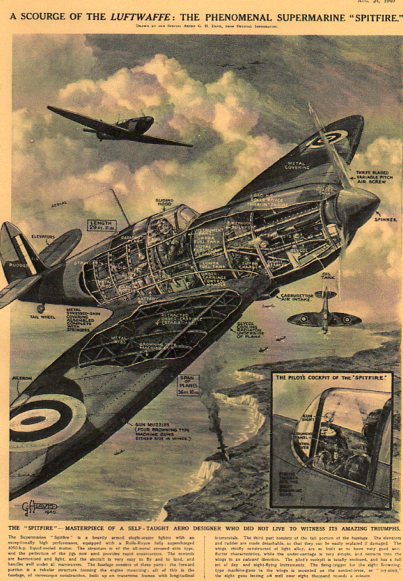
    Here are some fabulous examples of technological cross sections from the collection here–this part concenrtrating on some of the British WWII aricraft.  The drawings are just superb, and you can easily get lost in them, following the geogrpahy of engineering detail from one logical place to the next. All of these images were published in The Illustrated London News and appeared 1940-1943.

    X-Sect  SPitfire507

    And the detail (sorry for that–the originals are much larger than the scanning bed would allow…)


  • The Speed of History–a Note on Change in Aviation, 1905-1915

    JF Ptak Science Books   Post 1163

    Being at the airport yesterday to watch the glorious EAA B-17f take off and land (and to see our 7- year-old climb through it and the Blackhawk that suddenly appeared) put me in mind of the extraordinary advances in flying in the earliest history of heavier-than-air flight.  I picked up a volume of The Illustrated London News for 1909 to check out the popular reporting of the aeroplane and as usual got a very sharp reminder of how fast everything happened in the 1905-1915 period.
    Cody flight503

    In the earliest stages of the development of heavier-than-air flight (powered and not, 1848-1906) there were major innovations and essential experiments from a dozen countries:  England, the U.S., Poland, France, South Africa, Russia, Germany, New Zealand, Australia, Brazil, Romania, Sweden, Norway and  Denmark.  Even with all o f this directed work, the methods weren’t necessarily made public or when so were not well distributed, with many of the aviation/engineers working in obscurity and without contact with their peers.  (Examples of the major players in the history of heavier-than-air early flight include John Stringfellow, England, 1848; George Cayley, England, 1853;  Matias Perez, Cuba, 1856; Jean-Marie Le Bris, France, 1856; Jan Wnek, Poland, 1866; Goodman Household, South Africa, 1871;  Félix du Temple de la Croix, France, 1874; Victor Tatin, France, 1874; John Joseph Montgomery, US, 1883; Alexander Feodorovich Mozhaiski, Russia, 1884; Clément Ader, France,1890;  Otto Lilienthal, Germany, 1891; Lawrence Hargrave, Australia, 1894;  Hiram Stevens Maxim, United Kingdom, 1894; Shivkar Bapuji Talpade, India, 1895; Samuel Pierpont Langley, US, 1896; Octave Chanute, US, 1896; Carl Rickard Nyberg, Sweden, 1897; Gustave Whitehead, US, 1899; Percy Pilcher, U.K. 1899;  Augustus Moore Herring, US, 1899; Wilhelm Kress, 1901; Orville & Wilbur Wright, US, 1902;  Richard Pearse, New Zealand, 1903;  Karl Jatho, Germany, 1903;  Orville & Wilbur Wright, US, December 17, 1903 (finally for the first recorded controlled, powered, sustained heavier than air flight);  Orville & Wilbur Wright, US, 1904 (in the Wright II, making the first turn, and then later in September making the first circle); Horatio Phillips, UK, 1904; John Joseph Montgomery and Daniel Maloney, US 1905; Wilbur Wright, US, October 5, 1905 (circular flight of 24 miles in 39 minutes); Traian Vuia, Romania, 1906; Alberto Santos-Dumont, Brazil, 1906.)

    By 1909 there were many dozens of different aircraft flying around, just about but not quite getting to the sophisticated stage.  In just a few short years, by 1915, there would be an enormous increase in the capacity and numbers of airplanes –pushed along of course by the needs of war. Which is a little odd as some of te earliest fliers’ ideas and planes  were rejected by the military establishment.  The Wright fliers for example were not at first a welcomed idea to the U.S. Army (for numerous reasons, the Army saying “no” in 1905 but renewing their interest in 1907 and finally buying the plane in 1909) ; nor were the Brits interested in continuing funding for Samuel Cody (from Birdville, Texas) , pulling support for him just a few months after he had succeeded in flying the first British-built airplane in Great Britain (the British Army Aeroplane 1B).  That of course would all change in just a few years with the guns of August.

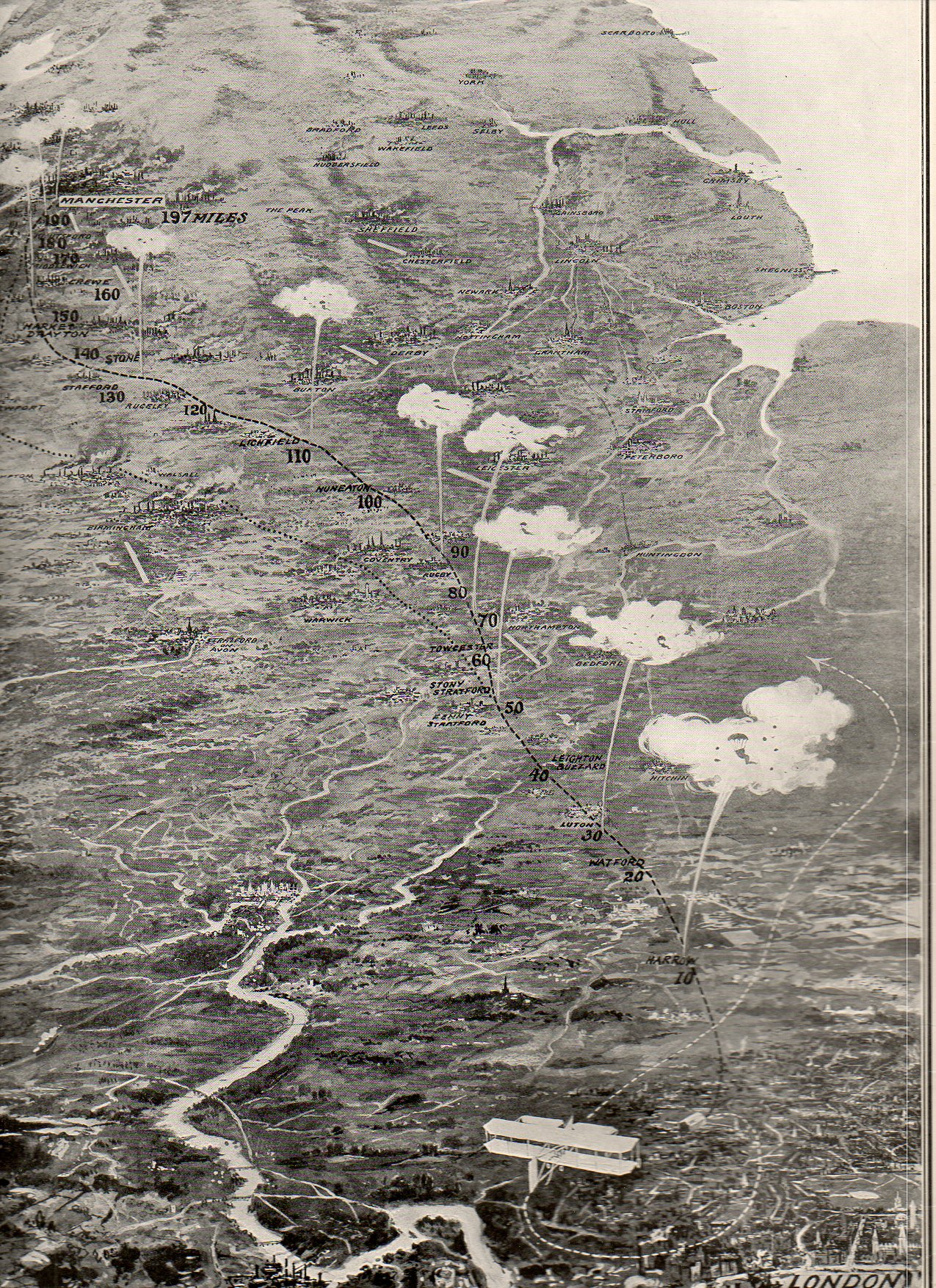
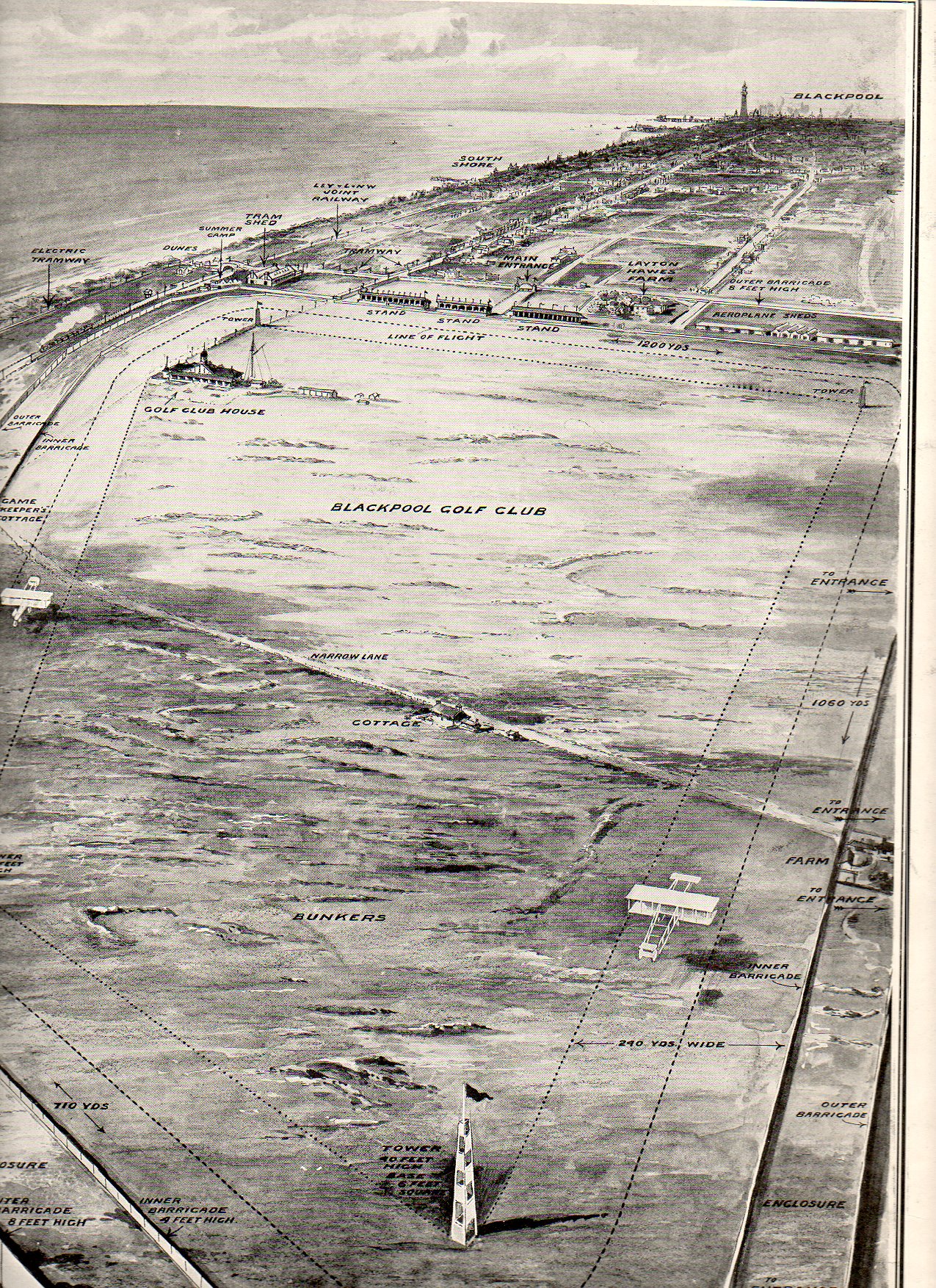
    Seeing this plan (above) for Samuel Cody’s flight from London to Manchester would’ve been a breathtaking achievement, had he made it.  The event had the trappings of An Enormous Situation, with smoke bombs and 450′-long white cloths to show him the way.  As particularly thrilling as this event was in 1909 it would be overshadowed in short order. In perspective, it was only six years earlier that the Wrights engaged in the first powered heavier than air flight.

    In 1903 the Wrights flew 121 feet; in just six years, Louis Bleriot would fly across the English Channel (on 25 July 1909); six years later Alcock and Brown would make the first transatlantic flight.  In  1911 Cal Rodger (11 De3cember1911) made the first American transconteintal flight (completed over the course of 50 days, with 3 days 10 hours in actual flying time).  11 Years later Jimmy Doolittle flew from Florida to California in just 21 (with one stop for refueling); the next year would see the record for transcontinental flight broken with a nonstop effort of 26 hours; in 1930 the time would go down to 12 hours and by 1945 the time was an extraordinary 5 hours 17 minutes.  (The retiring Blackbird flew the length of the country in 1990 in 64 minutes.)
                   
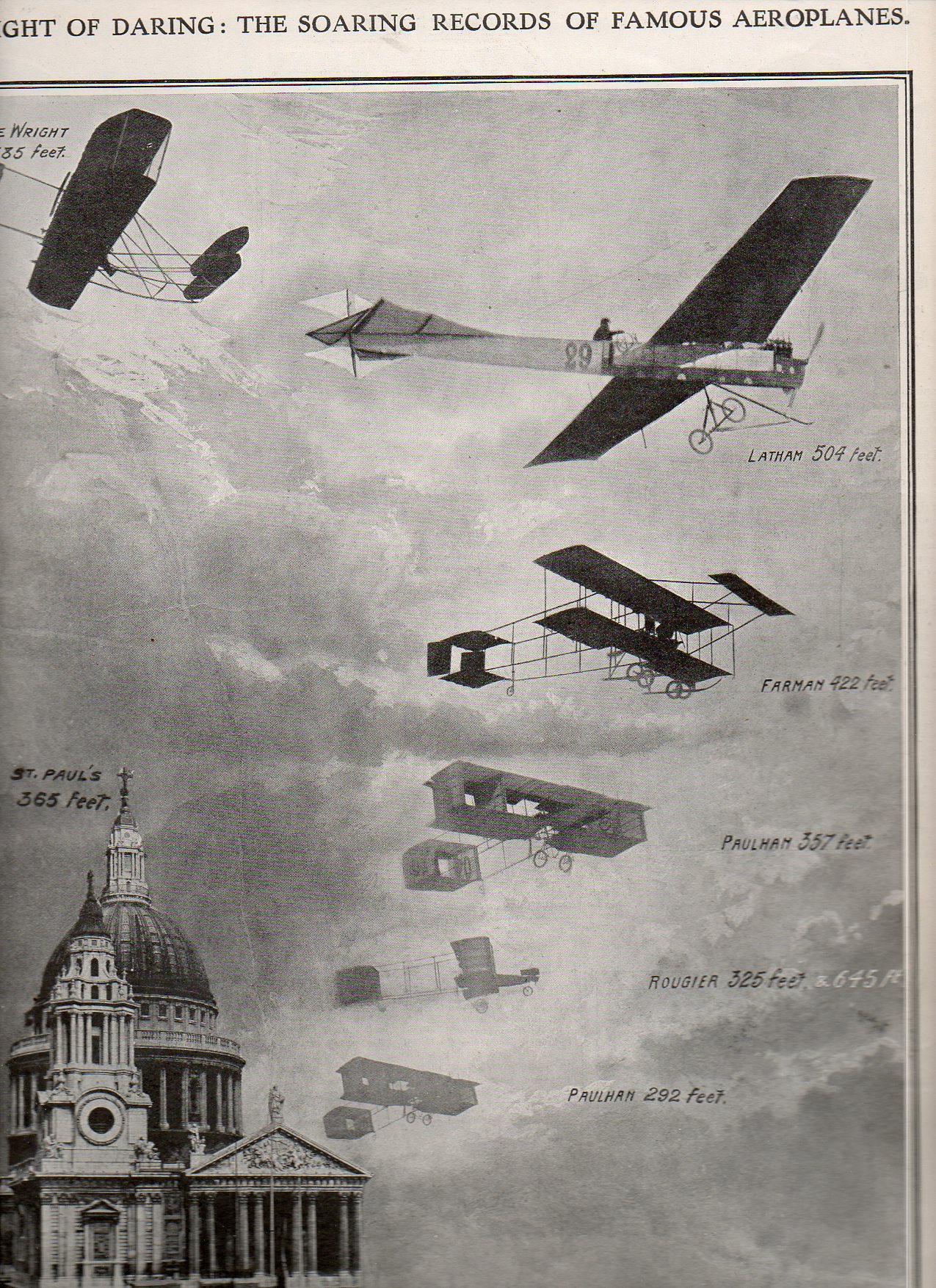
    The next image showing the altitude records for aviation in 1909 is just as phenomenal. The record at this point still stood with the Wrights at 585 feet, less than double the height of St. Paul’s.  It was a huge achievement, the other contenders coming to within hundreds of feet of their accomplishment but not quite doing enough to become the new world record holders,.  Ion just the next year improvements in the quality of aircraft and engines and control made it possible fo r Louis Paulhan to achieve 3,018 feet in January 1910,   Walter Brookins top climb to  a record of 4,603 feet (7 July 1910), and Ralph Johnsonte to 8,471 on 20 October 1910.  .  It must have bene a shocking development to have seen aeronautics to advance so quickly, breaking the old altitude record by a more than an order of magnitude in one year.  The speed record is a more difficult matter, but after recording speed records in the 30/40mp range in the 1903-1909 period, it broke to 66 mph 1910, 134 mph in 1914 and over 300 mph by 1928.  The difference in aviation in those 25 years is similar to that between the computing now and that of 1985 (and certainly 1979).
    Cody flight  Hieght sof flight aerodrome505

    I’m just saying that it is good to remember the enormity of change that took place in that early period of 1906-1919 or thereabouts–they were simply revolutionary developments that must’ve appeared  to the folks of those times.   
    Cody flight  Blackpool aerodrome504

    Notes:

    Cody was one of the most colorful figures in the history of early aviation in the U.K.  Born in 1867 and self-styled after Colonel William F. Cody, he was an inate adventurer and experiential bon vivant, who loved what he did and made sure that everyone else knew it, if nothing else. All that aside, he was a significant figure, important in the development of flight in England, and he died young for his pursuit. He appeared in the LA Times of 14 September 1907 (page 14) saying that the future of war would be in the air, and that the airship would “effect commerce as well as war”.  


  • Zippers, Part Two: a Big Lesson from the Humble Zipper

    JF Ptak Science Books   Post 1154

    Blogaugust_28zipper469_2

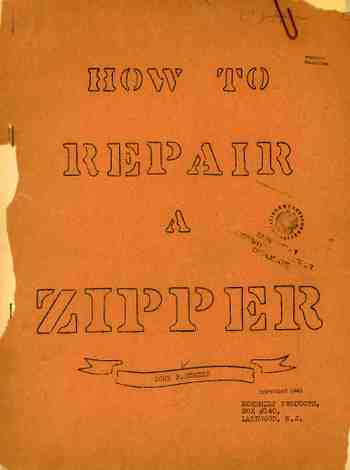
    Earlier in this blog I made a post about the Ulysses of zipper repair.  How to Repair a Zipper was one of those great, unknown classics of American technolit that stands the test of time, a great manual on how to approach n-problems with a faulty zipper–if only there were zippers worth repairing.  There are different grades of zippers, just as there are different grades of any other fastening device or automobile or wine.  Of course the zipper seems a ridiculous subject unless the lives of people–say the lives of soldiers–are dependent on their zippers working when the going got tough, 
    when soldiers’ jackets really needed to stay closed, tight, protecting them from the rain or cold.  Just ask the soldiers in 
    Zipper trouble465

    the Napoleonic army when their coats refused to stay closed because the threads that held on their  buttons that held their jackets closed failed, leading to the death of many due to exposure and cold.  Suddenly, fasteners are a big deal.  Just try it the next time you’re out on the frigid trail–unzip your jacket and try to keep the thing closed and you warm.  Its a bad story. 

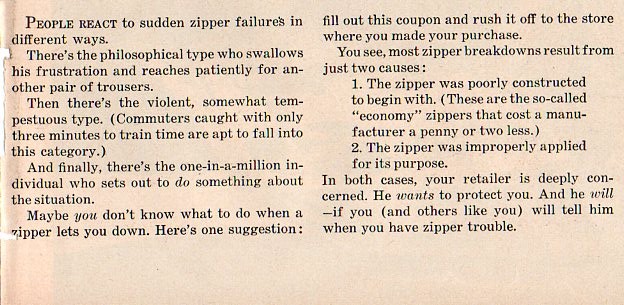
    So the initial reaction to this ad that appeared in Life magazine in 1953 is some laughter to a non-sequitor, but once you gave it a little thought, it can be appreciated just like any other piece of good craftsmanship.  In this ad, the manufacturer of Conmar Zippers (located in the once-mighty, once-leading American city of Newark, in New Jersey) plead with the reader of the full-page ad to pay attention to the zippers on their apparel.  If the zippers fail , they should use the blank form to send to their appropriate retail in complaint, and to replace the zipper with a high-quality, unconditionally guaranteed Conmar zipper, made to never fail. 

    This is attention to the small detail that would do us a world of good today. I love the idea of the Conmar Zipper.

    Zipper trouble 2466


  • Airport in the Sky, Airborne Zeppelin Airfield, 1925

    JF Ptak Science Books  Post 1101

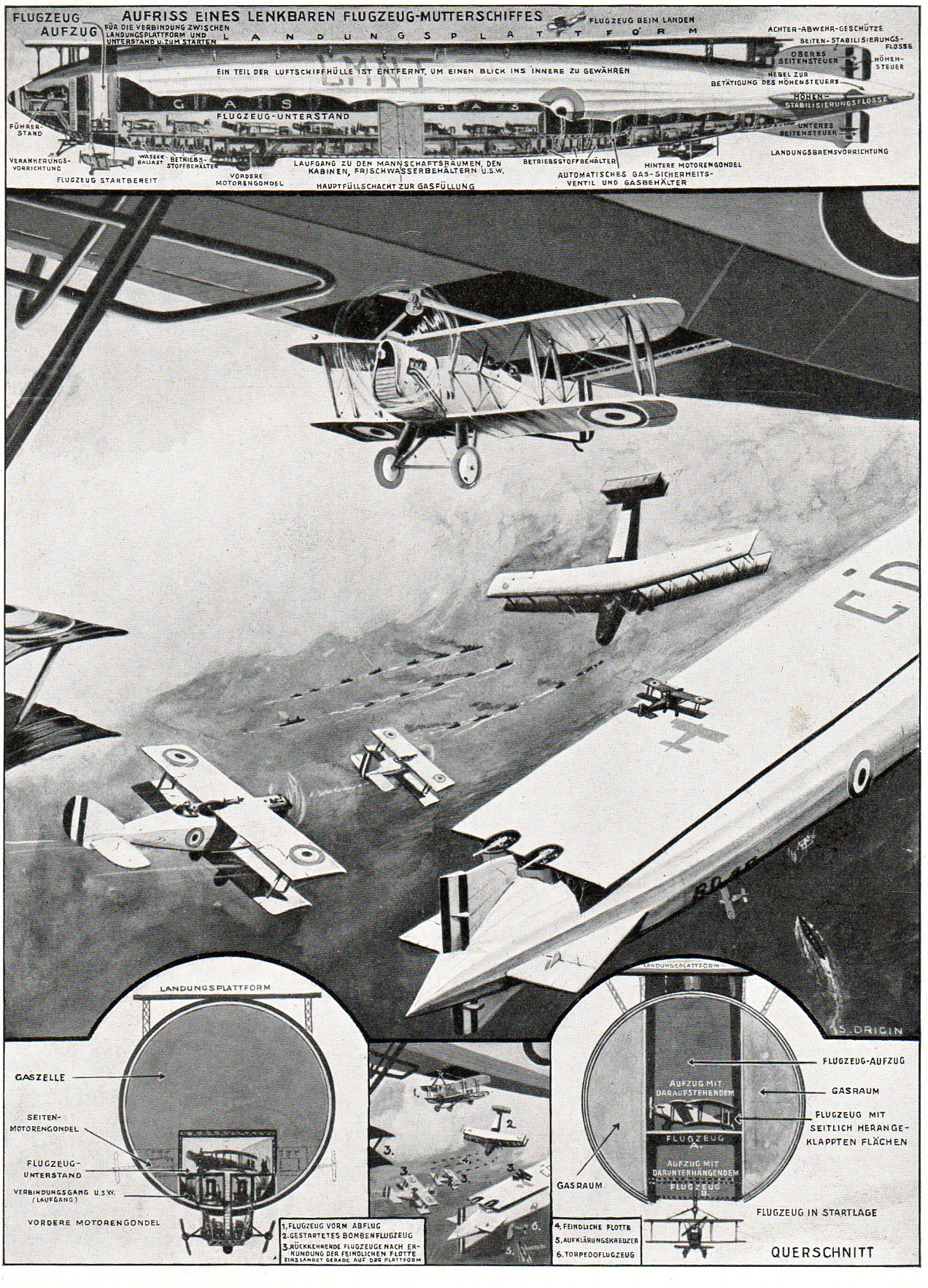
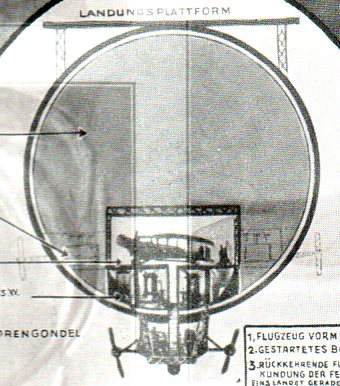
    This interesting image comes from the Illustriete Zeitung (Leipzig) for July 1925 (“Zeppelinsche Riesenluftschiffe” by Dr. Hildebrandt), and shows a British proposal for a dirigible outfitted as a sea-going airborne airport for military planes. 

    Airport--dirigible241

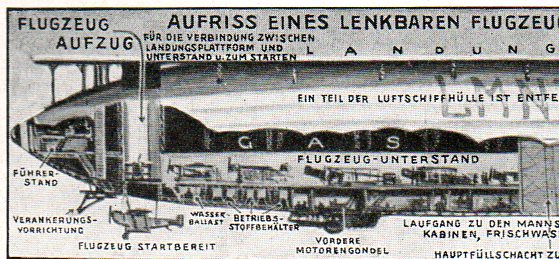
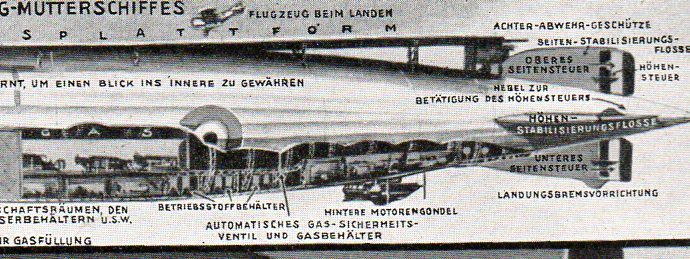
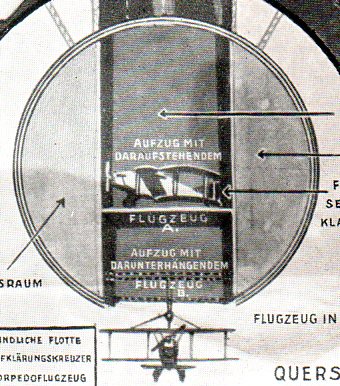
    The aircraft would land aft, and then proceed forward to an elevator that would lower it belowdecks to a hangar (looking as though it could accommodate 11 or 12 aircraft).  Once refueled and re-outfitted, the planes could be lowered from the body of the dirigible and launched into space. 


    Airport--dirigible a243

    Airport--dirigible b244

    And of course some cross sections:

    Airport--dirigible c245 

    Airport--dirigible d246


  • The Revolutionary Importance of the Non-Cookie Toll House

    JF Ptak Science Books   Post 1121    

    Toll House339
    I think that in a way the introduction of the toll house was as a significant a development in the history of the industrial revolution as the toilet.  Without the toilet, you can’t really have a concentrated population to run industries–or at least without making everyone sick because of unsanitary and pestilential conditions. If you create the possibilities for having industries that employed 100 or so people, and had a bunch of them in a city setting, it wouldn’t much matter if you didn’t have the people to run them, and you can’t have the people far-flung and living apart if there’s no way for them to get to their work.  Concentrated living called for lots of innovation, and perhaps the most important of those was how to get rid of human waste. 

    Without good roads you can’t get your produced goods to a market outside of the one you’re in, isolating chances for growth and development.  If you have a good serviceable, dependable road to transport your stuff, then you have an expanded market; that means you can sell more, produce more, and theoretically charge less, which means you expand your consumer base, and on and on.  But that means you have to be able t depend on your road.  And a good road needs to be paid for.  And one of the chief ways of funding these early roads was by a toll, which called for a toll house and a little gate.  And a person to collect the money.  Merchants figured out very quickly that it was much cheaper to pay a toll to use a good road than it was to use a bad road for free and have to depend on the graces that it be maintained; and since the graces weren’t kind, there would be all sorts of repairs necessary because of the poor road: harnesses, wheels, wagons, horses, and the like, not to mention food and such that could spoil along the way, or goods damaged in transport. 

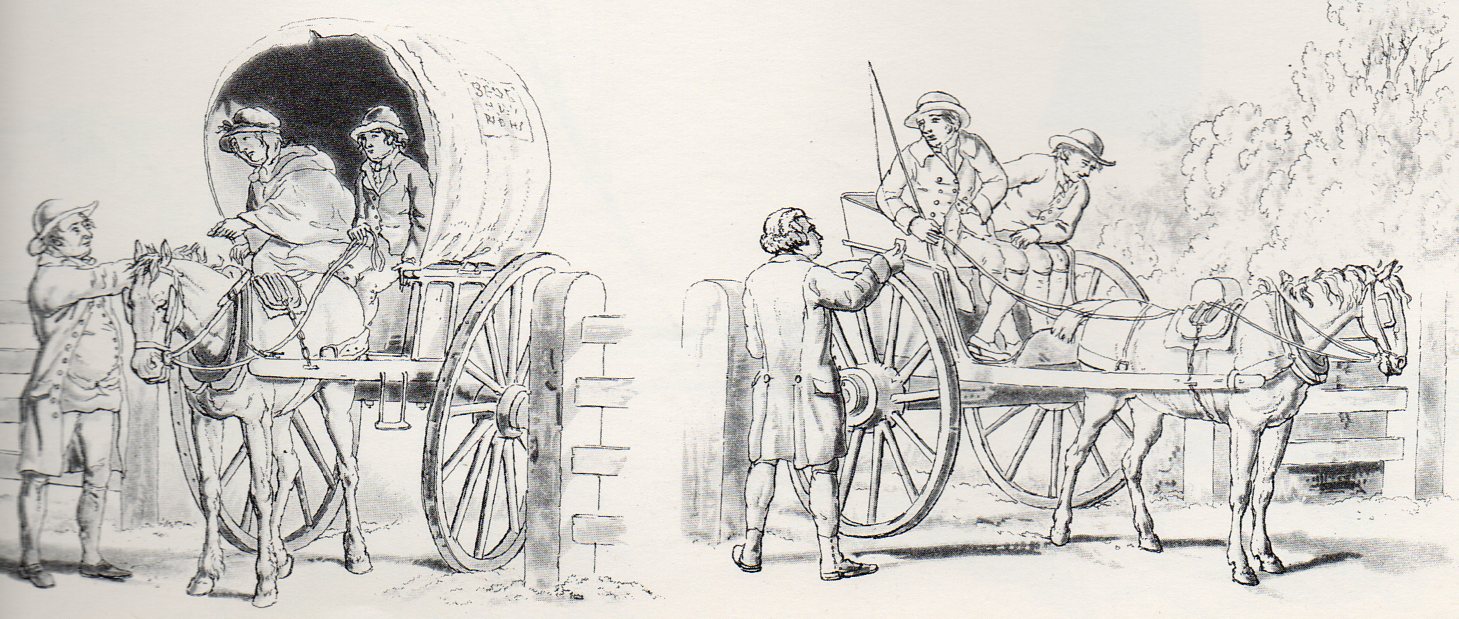
    This all comes up from looking at a curious book by WH. Pyne1, who provided a thousand or so images of “picturesque” (meaning “working or laboring) life that could be used by artists to populate more general images of landscapes or cityscapes or seascapes.  I’ll address this in a later post. It was several small pictures of toll houses that caused this thinking about the industrial revolution….pictures of things intended for gentle artists who may never have seen such sights in their life, and who might need to fit a curious little image of a gate-keep in their picture of some prosaic cow-filled landscape.

    In the 17th and 18th centuries the introduction of serviceable roads over old trails and bad roads that connected towns wound up expanding markets for farmers and cottage industries, lowering prices because of easier availability of the product, and creating more consumers.  And so on.

    I realize that this might very well be a “turtles all the way down” argument, but since I’ve already named one turtle in a post here, I might as well name two. 

    Notes
    1. William Henry Pane (1769-1843), Picturesque groups for the embellishment of landscape : in a series of above one thousand subjects : comprising the most interesting accessories to rural and domestic scenery, shipping and craft, rural sports, pastimes and occupations, naval, military and civil employments, implements of trade, commerce and agriculture, etc. , the whole forming an encyclopaedia of illustration of the arts, agriculture, manufactures, &c. of Great Britain  Publisher: London (Bedford Street, Covent Garden) : M.A. Nattali, 1845.


  • Elevated, Rooftop Inner-City Circular Airports, 1919

    JF Ptak Science Books  Post 1102

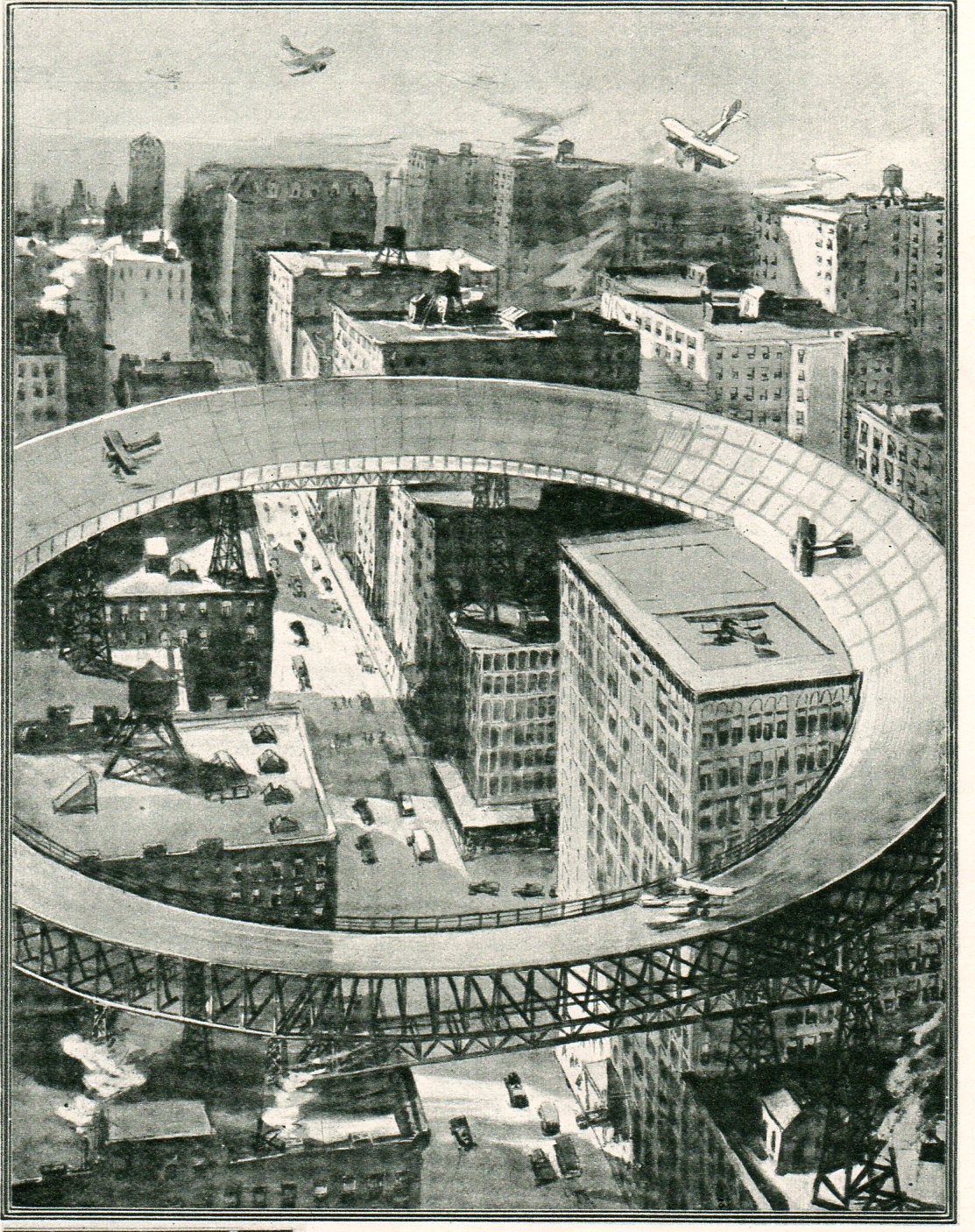
    The presumption of this Illustrated London News article (“On the Impulse to Fly Commercially”, 18 October 1919) on the growing popularity of commercial flying for business and pleasure was correct, but the placement of the airports to service the growing community of flyers was, well, not.  

    Airport--round 247

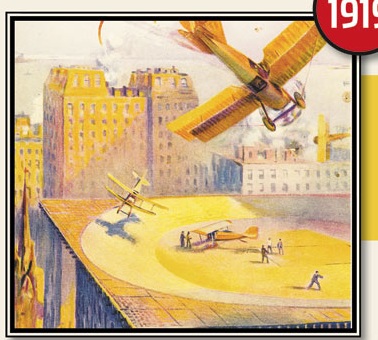
    This is a prototype, of sorts, for many dozens of proposals that would appear in magazines like  Science and Popular Science and Popular Mechanics and so on, suggesting inner-city airports that could be easily accommodated by the city bustle by placing the airport on top of buildings (as above), and these other closely-related ideas (below):

    [Picture source: Paleofuture.com]

    and this:

    Aircraft
    [Picture source, again, from Paleofutue.com]

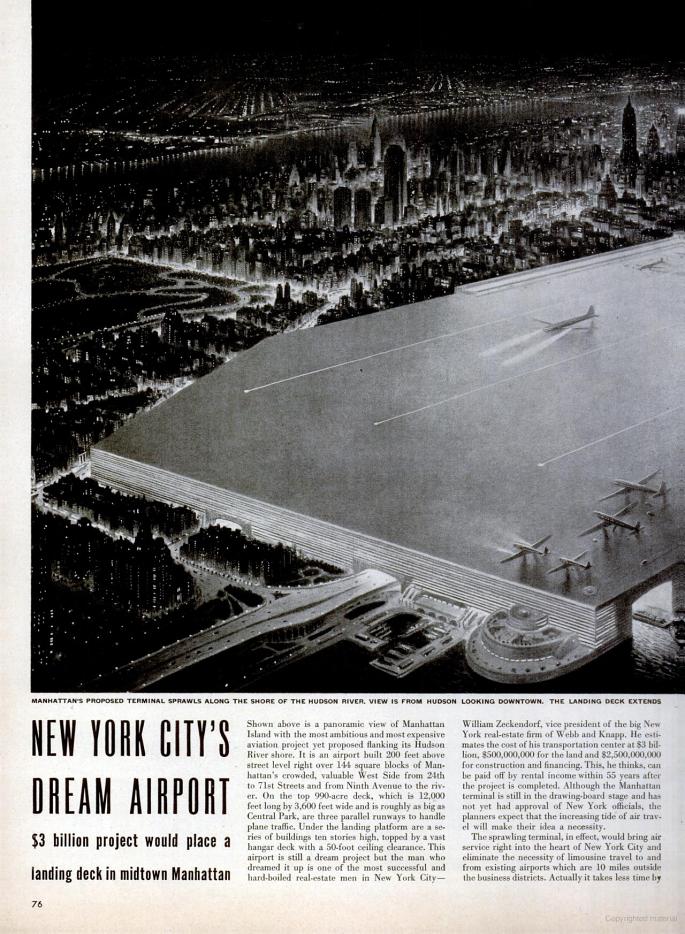
    These terrible ideas were also seen in building enormous platforms over entire sections of the city (like Zecendorf’s massively bad 1946 idea)

    Books

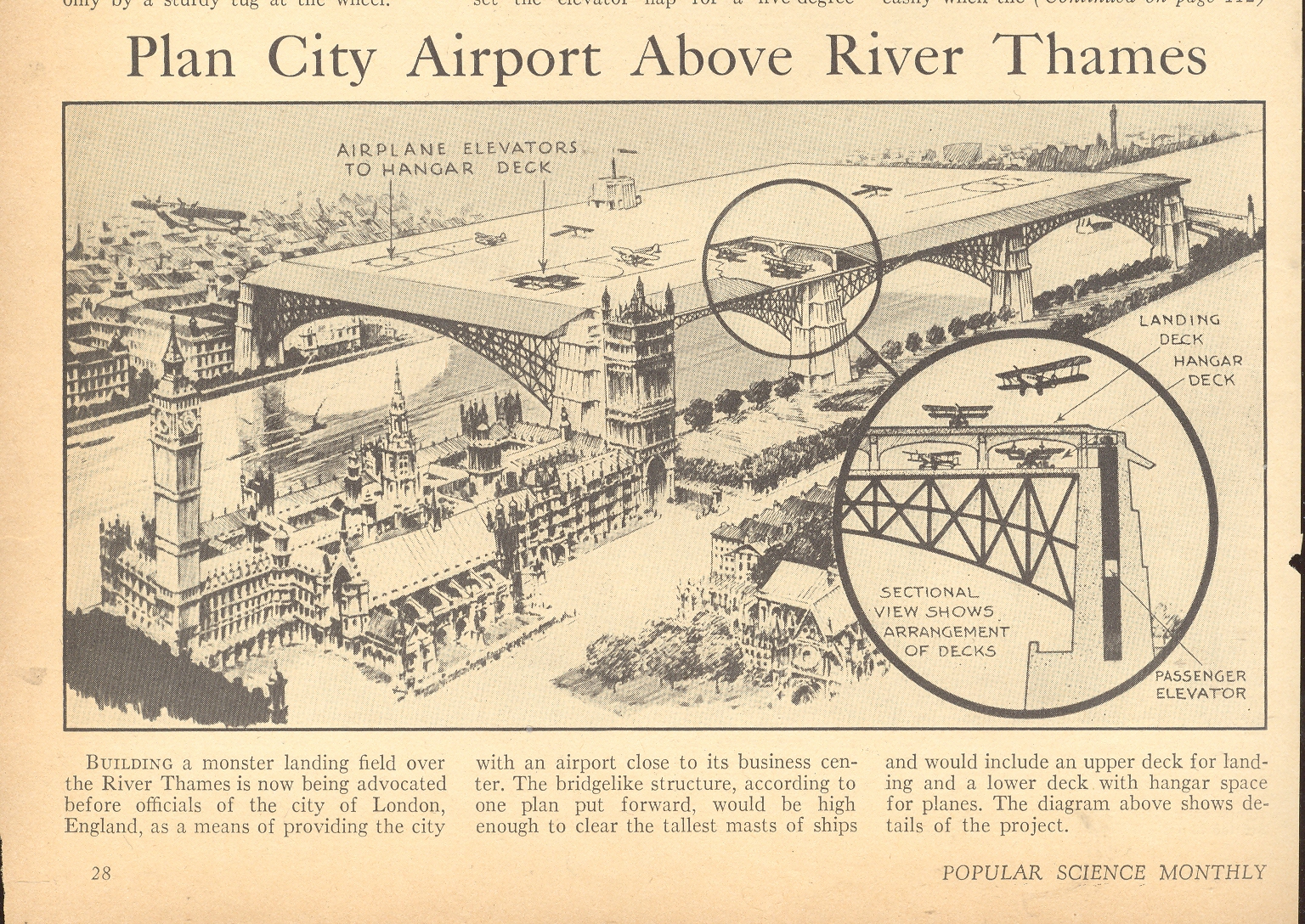
    or massive flyovers on rivers (which I also wrote about here),

    Blog Dec 17 thames airport

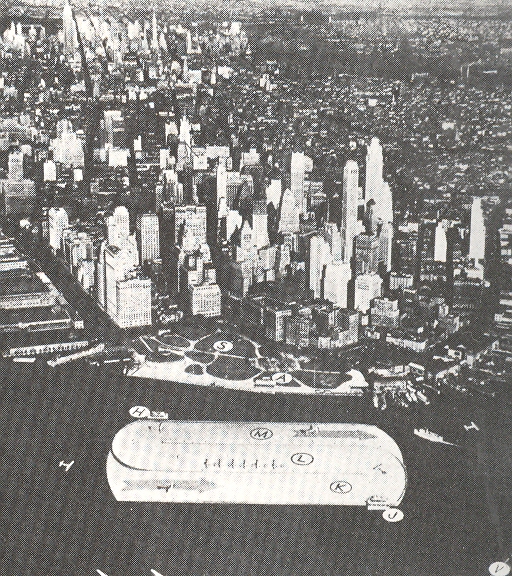
    or enormous floating airport islands (like that proposed by Norman Bel Geddes at the tip of Manhattan,  

    1--bel geddes airport 2 

    and of course a series of airports that stretched across the Atlantic.

    https://historyofideasblog.com/a/6a00d83542d51e69e2012876bef533970c-500wi

    But they all had to start somewhere, and perhaps this Illustrated London News entry for 1919 was among the first wave of these proposals.